RSS
 

Posts Tagged ‘Lens’

Adapted Lens Talk: Readers’ Showcase and new forum!

28 Dec

Adapted Lens Talk

With the ever-growing popularity of using mirrorless cameras with lens adapters, we are pleased to announce the opening of a new forum: Adapted Lens Talk. Thanks to the proposal and volunteer work of its moderator, Tom Caldwell, the forum has taken off dramatically and is full of vintage lens deliciousness.

The forum also features discussions on experiences with different adaptors, focal reducers, strange mounts, and anything else one might run in to when trying to make a non-native piece of glass play nice with their shiny new mirrorless. Enjoy this slideshow of images and commentary generously provided by members of the Adapted Lens Talk forum, all taken with adapted glass. Check it out, and if you’ve fit grandpa’s old lens to your digital camera, be sure to share your shots and experiences!

Adapted Lens Talk


Jupiter 37A (135mm f/3.5), with generic M42 to EF adapter plus Mitakon Lens Turbo II EF-FX focal reducer. Shot with Fujifilm X-E1. 1/250 sec., f/5.6, ISO 1000.

Photographed by Helga Birkenstock:

‘The lens used for this particular image is the Jupiter-37A. It’s a 135mm f/3.5 lens built in the Soviet Union during the Cold War era. My copy was built in 1982 but I’ve only had it for two months; I purchased it on eBay for $ 61 including postage. I usually use it with a focal reducer on an APS-C camera (Fuji XE-1) to get the full image circle projected onto the sensor. This effectively changes the lens properties to 98mm f/2.5. The advantages of this lens is that it’s all metal construction is still very light (362g) and balances well with my small mirrorless camera. Best of all, it has 12 aperture blades so you have beautifully round bokeh at any aperture. My (limited) experience is that it’s not as sharp and has poorer contrast compared to modern lenses so images need more work in post production. Images convert to black and white quite well and have an old world image feel.

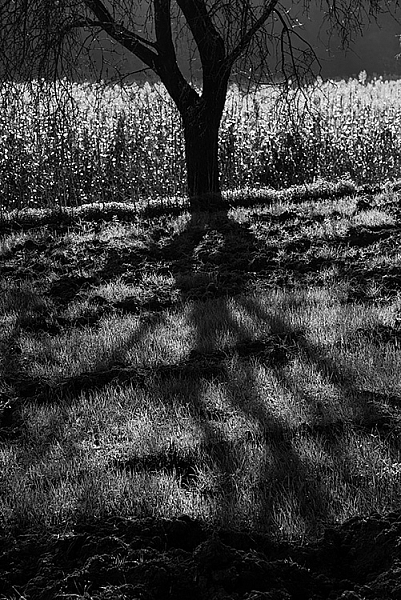
This image was taken as part of a “monochrome garden” project that I’m doing. I chose this lens because I could stop down the lens and still get round “bokeh balls”. However, focus becomes more difficult when stopped down because focus peaking works best when the lens is wide open, but I use the distance scale on the lens and the wider depth of field to mitigate these challenges.

I love the sharpness and autofocus of modern lenses but there is something to be said about slowing down the process through manual focus and the unique character in the images from adapting old lenses.’

Adapted Lens Talk


Contax G 90mm, with Kipon Contax G to Sony E adaptor. Shot with Sony NEX 5N. 1/1000 sec., f/8, ISO 400.

Photographed by Tim Zhou:

‘I took my little Sony mirrorless camera and the longest lens I had – 20 years old Contax G 90mm f2.8 hoping to take some shots during an air show in Swansea, UK this Summer. After having found a vintage point, I set the camera on aperture priority mode, the aperture to f8 and focused to infinity. As Contax G lenses do not have own focusing rings (they require a helicoid adaptor to focus), so I used camera’s magnify focus to make sure the focus was spot on. The rest of job was just press the shutter button.

My mirrorless camera has a little longer shutter lag compared to my previous DSLR, so I did need to anticipate and press a little early. Generally speaking, I find using adapted lenses far more rewarding, not only do I now have access to a large number of excellent legacy lenses, such as my Contax G, but also I have learnt to have more control over the process of capturing images.’

Adapted Lens Talk


SMC Pentax 28mm f/3.5K, with Fotodiox Pentax K to Sony E adapter. Shot with Sony a7R. 1/60s, f/16, ISO 100.

Photographed by Timothy S. Devine:

‘This photograph was taken with a SMC Pentax 28mm f/3.5 K mount lens, not the Takumar that came before it, or the Pentax M version that came after (both are of different designs.) It was only produced for two years (1976-1977), and is my favorite 28mm lens for landscape shooting. I’ve tried quite a few other 28mm primes over the past couple, but I find the Pentax has the best mix of qualities that I look for. From great color and contrast, to low CA and an amazing ability to fight off diffraction when stopping down, it holds up amazingly well on today’s modern digital sensors. I’ve tried a few copies of this lens, and while they were all sharp, some of them exhibited increased depth of field in the foreground, I assume due to towards the camera field curvature. This particular copy exhibits this behavior, and I often take advantage of this behavior in my shooting.

For this particular photograph I chose a perspective of Pemaquid Point Light that I had shot many times over the years. But I have to say that on this trip everything really came together. The sky was absolutely incredible, and I used a circular polarizer to help accentuate it. The Pentax was very much up to the task, and I think it showcases the strengths I mentioned above. For those that have handled true manual focus lenses, the Pentax doesn’t disappoint. As with many older lenses, it is built like a tank and the focus ring is very well dampened. Many landscape shooters use live view and focus manually with autofocus lenses anyway, so manual focus with this lens doesn’t bother me… In fact I have to say I probably prefer it.’

Adapted Lens Talk


Porst 50mm f/1.2 with Raynox DCR 150 macro conversion lens, with Fuji X to Sony E mount adapter. Shot with Sony a6000. 1/800 sec., f/1.2, ISO 2000.

Photographed by Scott Hills:

‘This is my first 50mm f/1.2, and a bargain too. This is actually the same as the Fuji 50mm f/1.2 EBC, just a rebranded porst. The quality is excellent, and this shot was one of the first I’d taken with it. It’s not easy to work with the tiny DOF an f/1.2 gives you, but it does open up interesting possibilities since it just dissolves backgrounds.

I added a raynox DCR 150 for this shot to get a bit closer and really allowed me to interrogate the flower and fill the frame with it. The colour rendering from this lens is stunning, I’ve been very impressed with it and for £130 including an adapter you can’t go wrong, I mean where else will you find a 50mm f1.2 for that price!?!’

Adapted Lens Talk


Nikon 24mm f/2.8 AIS with Fotasy Nikon G to Sony E adapter. Shot with Sony a7. 30 sec., f/16, ISO 100.

Photographed by Matt Parvin Photography:

‘Oak Island NC, October 2015. I’m fortunate that this pier and beach are about 5 blocks from my office. I’ve shot it plenty over the past couple of years and this is one of my two or three favorites. This was shot with a 10 Stop ND Filter. Having a proper aperture ring is great with these filters, at f/2.8 you get enough light to focus even with the filter mounted. Stop it down to f/16 and you get a 30 second exposure at sunset.

I really started in photography with Nikon Series E 50mm & 100mm lenses on a D40. Manually focusing is much, much easier on mirrorless bodies, and using these old primes is even more enjoyable. I really think it makes you a better photographer as well, since it forces you to slow down and see what you can create an image out of, rather than just snapping away with an AF zoom.’

Adapted Lens Talk


Pentax Super-Takumar 85mm f/1.9 with Fotodiox M42 to Micro Four-Thirds adapter. Shot with Panasonic G3. 1/160 sec., f/1.9, ISO 1600.

Photographed by K. A. Rodriguez:

‘The Super-Takumar 85mm f/1.9, not being one of the Super-Multi-Coated (SMC) lenses, doesn’t always get its due, but it can produce rich imagery as seen here. With five elements in four groups, six aperture diaphragm blades, a 58mm filter diameter, and weighing in at 12 oz (340g), it weighs as much as or more than current pro level m43 lenses, and that doesn’t include the metal adapter! Nonetheless this solid metal lens fits nicely on the Panasonic G3 and does not feel out of balance.

The lens focuses down to 2.75 feet, however the throw from infinity to closest focus is very long, almost an entire revolution of the focus ring! Using it with the large magnified EVF on the G3 is a dream. With the lens wide open and the magnifier turned on, it is very easy to focus, once the ring has been turned enough! (I probably should estimate the distance first, then pre-focus using the distance scale before putting it up to my eye…) The aperture dial has settings from f/1.9 to f/22, even one for f/2 which is at a surprising distance from 1.9.

I normally like to stop down for greater sharpness but the problem of poor lighting on stage and the limits of pushing the ISO in a m43 camera made me keep the lens open, probably at f/1.9. With m43 in particular, it is essential to shoot the full frame and not rely on cropping later. The 85mm length (in effect 170mm on m43) is a good length for shooting from onstage without being right on top of the performers, while still being able to fill the frame. Surprisingly, currently there are no native m43 lenses made in this length (Samyang/Rokinon 85s are much larger FF lenses modified to fit m43), and none of the available zooms are this fast, so adaption is the only way to go. Fortunately this lens, which I originally bought sometime in the 70s, sold to my dad in the 80s, and after his death had boomerang back to me in the 10s, has found purpose again.’

Adapted Lens Talk


Canon FD 500mm f/4.5L, with generic Canon EF to Micro Four-Thirds adapter. Shot with Olympus OM-D E-M10. 1/2500 sec., ISO 320. Photgraphed by Danny Young:

‘This is the “Sacred Kingfisher” taken in New Zealand doing a small crab toss. The staple diet at the main estuary I like to shoot Kingfisher in is small crabs and there are plenty of them. Beautiful little bird I’ve spent nearly 3 years getting closer to. They are fast and deadly accurate on a dive into water or sand for a small meal.

Lens used is the 30 year old manual focus Canon FD 500 F/4.5L which is the favorite lens mounted on my Olympus E-M10. The 500 F/4.5L is always hand held and shot wide open at F/4.5. It has smooth internal focus that only needs a slight shift to focus. The 800 F/5.6L is my only lens that goes on a tripod.

Mirrorless was picked to use the MF lenses so I can use the magnifying function in the EVF on a static bird. For birds in flight I use the old technique of focusing backward or forward slightly when you find the bird in the EVF. It’s an old technique that has always been used and still works for me.

Personally manual focus just simply feels right and somehow it makes me feel more connected to the image in a way. With the right lenses with internal focus it may be easier than some people think.’

Adapted Lens Talk


Contax/Yashica Carl Zeiss Disatgon 18mm f/4, with Contax/Yashica to Sony E adaptor. Shot with Sony a7. 1/1000 sec., f/8, ISO 200.

Photographed by Timur Haracic:

‘This lens, the Contax/Yashica CZ Distagon 4/18 is my favourite wide angle lens for its very low distortion, classic/painterly rendition, and because it is great for architecture; cityscapes and dramatic low angle shots like this one. I’m mostly taking pictures low from the ground or so called ‘frog perspective.’ It’s optical design I believe goes back to 60’s. It’s been used for Contarex cameras. Old adapted lenses are great when perfection is not needed, you want to achieve some special look or when you have no other options.’

Adapted Lens Talk


Reverse mounted Canon FD 50mm f/1.8 with Canon FD Autobellows and Fotodiox Canon FD to Canon EOS adapter. Shot with Canon EOS 5D Mark II. 90 sec., f/8, ISO 100.

Photographed by Alexander Olshansky:

‘In this image, as is the case with all of my photographs, I try to touch the viewer emotionally without using any visually recognizable anchors. I have discovered a while ago that macro photography allows me to easily abstract and to remove all of the visually recognizable elements from my photographs.

A lens is a means to that end. I’ve adapted my Canon FD Autobellows along with the FD 50mm f1.8 lens to my Canon EOS 5D MkII because this combination allows me the versatility I need and the quality I demand.

I am able to achieve magnifications far beyond anything that’s available to me in the Canon EOS native format by switching lenses as needed. Greater magnification means greater flexibility and greater abstraction. I am able to preset my aperture and then focus with the aperture wide open and close it right before taking a shot with the help of the Canon Macro Auto Ring and a cable release. This set up also allows me to easily perform stopped down metering for ambient light and then take a flash reading and calculate the flash exposure compensation based on my magnification.

As time and technology march forward, sometimes it’s the old tools that make things possible.’

Adapted Lens Talk


Voigtlander 75mm f/2.5 Color-Heliar (LTM) with 39 to M and Novoflex M to Sony E adapter. Shot with Sony a7II. 1/160 sec., f/2.5, ISO 500.

Photographed by Tom aka. tommiejeep:

‘I started in photography in late 60’s with a Nikkormat while I was in Vietnam (68-72). Shot mostly documentary in B&W. Shot various Nikons through ’79 (also a Pentax Spotmatic and Olympus OM-1). Left SLRs and used a number of P&S film cameras until 2007. Decided to get back into photography in 2007 and used the DPR forums to decide where to go. I went with a D200. I have been shooting mostly Nikon. Primarily sports, birds, documentary and street. Bought an Olympus EM5 when it came out then EM1 and a second EM1. I recently bought the Sony a7II primarily to use adapted lenses. I use old Nikkors on the Df and started to re-learn manual focus. Fun.

The image was shot in the crowded Friday Market in Goa. Very hot and crowded. I only took 2 shots for this one and had to wait for the guy on the left to clear before I could get the two women.

The Silver CV 75 f2.5 Color-Heliar (LTM) is a joy to use. Very quick to MF, more than sharp enough and good colours. A very small, light lens. I have not noticed any weakness but have not really tried to use flare (or noticed Flare to be a problem). I paid approx. $ 375 for it with 39-M adapter. I use the Voigtlander M-NEX adapter.

I tend to take Candids at a bit of distance so that they are candid. I shoot many events and prefer not to be part of the image. Too many people see a camera (any camera) and start posing. There are times when interaction with the subjects is fun and desirable. Then I will shoot a 25mm, 35mm up to a 105mm.’

Adapted Lens Talk


Minolta 50mm Macro with Fotasy Minolta to Micro Four Thirds adapter. Shot with Olympus OM-D E-M10. 1/640 sec., ISO 200.

Photographed by Bruce Reiger:

‘This is a picture of a mimosa tree in bloom taken with a Minolta MC Macro 50mm f/3.5 lens adapted to an Olympus E-M10 camera. As I’ve practiced, I’ve come to enjoy manual focusing and this is my go to lens for anything up close. I’ve found that manual focusing isn’t that difficult to do with the tools that the camera provides: focus peaking and/or magnification and image stabilization. It comes with a matching extension tube (not used with this image) for very small subjects.’

Adapted Lens Talk


Yashica ML 50mm f/1.4 with Contax/Yashica to Sony E mount adapter. Shot with Sony NEX 5R. 1/2500 sec., f/2.8, ISO 100.

Photographed by Scott Hills:

‘The Yashica ML f1.4 was my first f1.4 lens, I found it attached to an old Yashica SLR in a junk shop, it was in immaculate condition and only £25. It’s on another level in terms of IQ to any of my native E mount lenses and I always carried it in my camera bag. I often look for this sort of shot and like to play with shadows from above, I spied this guy from a multi story Car park and the sun was at the perfect angle to give his shadow a good shape, I’m glad I had the Yashica for this shot as it resolved so much detail.’

Adapted Lens Talk


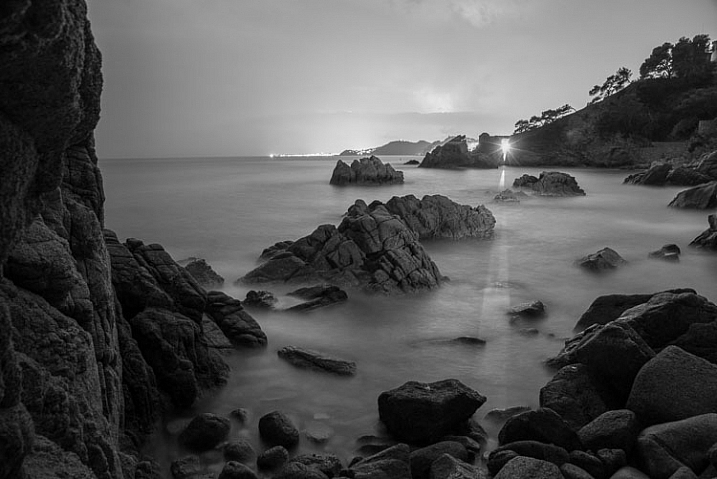
Minolta M-Rokkor 40mm f/2 (pictured in headline image) with Vello M to Sony E adapter. Shot on Sony a7II. 1/400 sec., f/8, ISO 640. Photographed by DPReview staff writer Dan Bracaglia.
Articles: Digital Photography Review (dpreview.com)

 
Comments Off on Adapted Lens Talk: Readers’ Showcase and new forum!

Posted in Uncategorized


Writer’s Favorite Lens – Canon 50mm f/2.5 Compact Macro

20 Dec

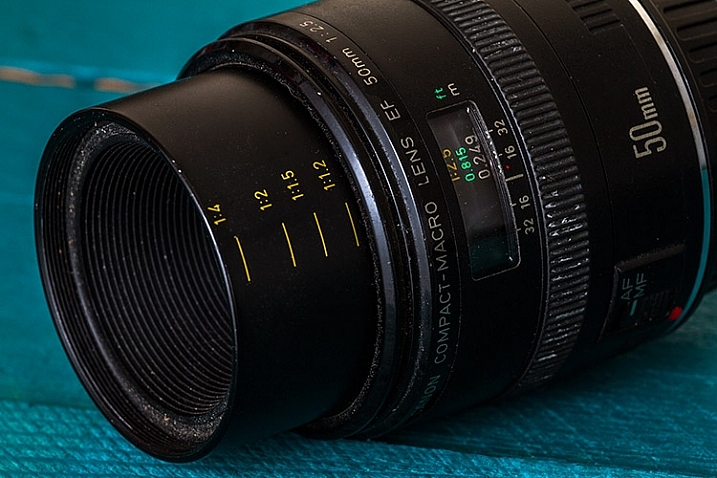
Canon 50mm f/2.5 Compact Macro

Sometimes, picking a favorite is hard. If you ask me to choose a favorite song or movie, it just can’t be done. Lenses; however, are different beasts. Ask most photographers what their favorite lens is, and you’ll probably get little hesitation before they start gushing and waxing lyrical.

At least that’s how I am, and when it comes to picking my favorite, all you have to do is ask which lens is probably on my camera body right now. That is almost always the Canon 50mm f/2.5 Compact Macro.

This lens is a gem that offers great quality in terms of sharpness, ease of use, durability and versatility, and even though I’ve acquired some fairly serious glass since I bought it 12 years ago, it’s still my go-to lens.

Making the choice

Regarding lens choice, one of the most common things new photographers are told is to start with a 50mm f/1.8, often referred to as “thrifty fifties”. The logic here is more or less irrefutable. These lenses are cheap, reliable, versatile, and their large aperture makes them much faster than anything else in that price range. Their versatility makes them perfect for portraits and most other subjects outside of the extremes such as landscapes, which favor wide-angle lenses, and sports, which favor telephoto lenses.

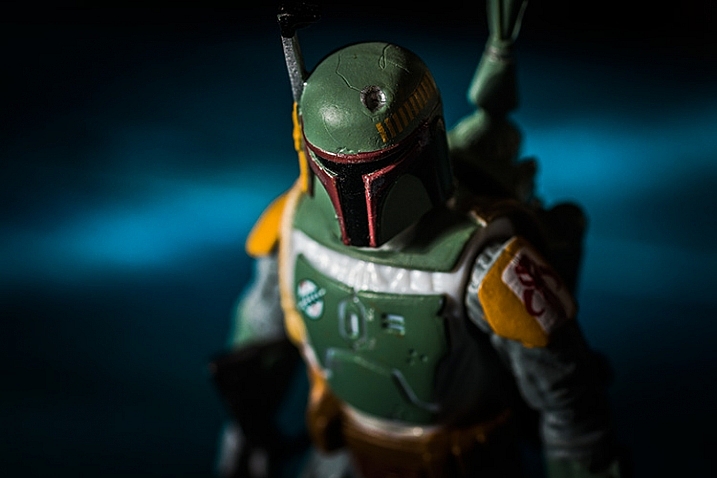
Boba

When I was starting out, I spent a lot of time photographing things like food, flowers, toys, and other small things with fine details. I had little interest in other types of photography, and no interest in portraiture.
As such, the biggest limitation I got from my kit lenses was the focusing distance. I was forever trying to get closer to my subjects using the long end of kit lenses, and falling short every time.

When it was time to consider upgrading that first lens, research made it clear that neither the thrifty fifty nor the 85mm f/1.8 would do much good towards those aims. On the other hand, a dedicated 100mm macro lens was far out of my price range. Because of all this, I put off upgrading my kit lenses for a long time.

It was only by chance that I eventually found the 50mm Compact Macro while browsing through Canon lenses on a retailer’s site. To be honest, there wasn’t a lot of research involved. I saw the lens, the price, and the focusing distance of nine inches, and I bought it within the week.

Pros and cons

The Canon 50mm Compact Macro is the workhorse of my camera bag and it’s certainly been put through its paces over the past decade. For my purposes, there are no flaws; however, it does have a few qualities that may make it unsuitable for some photographers.

Pro – Build quality

It can’t be helped that the first thing you notice about this lens is the build quality. This is particularly true if your previous experiences are with kit lenses. The solid metal casing makes it feel sturdy and the extra weight feels great in your hand.

It may be worth mentioning that when I did get to use a 50mm f/1.8 a few years ago, I thought that I was being handed a Holga lens. This isn’t in any way an attempt the demean the 50mm f/1.8, but rather as an illustration of how far apart these lenses are in terms of build quality.

Pro – Durability

favourite-lens-canon-50mm-macro-2081

Durability may fall under build quality, but experience makes me feel it’s worth mentioning separately.

This lens has been dropped on concrete, cobble stone, and Tarmac, and it has been in the ocean. It has been in ash storms, torrential rain, hail storms, and there was one terrifying incident where it was left to stew in a half litre puddle of shower gel for a few hours. Despite all of this, this lens has not once shown any performance issues.

Pro – Sharpness

As should be expected from a lens created for the purpose of macro photography, the Canon 50mm f/2.5 Compact Macro cannot be faulted in terms of sharpness. While I’m unable to compare it to the other 50mm offerings from Canon, I can compare it with the excellent 85mm f/1.8 and 70-200 f/4 L IS USM. The differences are almost indistinguishable.

Pro – Large aperture

The compact Macro may have a smaller aperture than Canon’s other 50mm lenses, but it is still a fast lens and works well in all but the dimmest of settings.

In terms of background blur, if you take into account that depth of field is also affected by the distance of the camera from the subject (the closer you are, the shallower the depth of field) you can see that you will achieve a comparable amount of blur to the faster lenses.

Pro – Focusing

Whether it’s in auto focus or manual focus, it’s really hard to find fault with this lens. In normal situations, the auto-focus is fast and accurate. The large aperture of f/2.5 allows for a bright image in the viewfinder, making manual focus easy and quick.

Pro – Focus distance

Uke

With a focusing distance of just nine inches (23cm), you can get extremely close to your subjects. Yes, this may be the sole reason for this lens’ existence, but the versatility this adds is wonderful. For example, you are able to take a close-up of someone’s eye, then move a few steps back and take a normal 50mm portrait seconds later.

Cons

As mentioned, it wasn’t easy to come up with any negative aspects of this lens. There are; however, a few considerations that could mean this may not fit your specific photographic needs.

Con – Weight

At 9.88 ounces (280 grams), the Compact Macro weighs more than twice as much as Canon’s 50mm f/1.8 lens (4.6 ounces/ 130g). If you’re trying to keep your kit bag as light as possible, and the macro functionality isn’t that important, then you may want to consider the alternatives.

Con – Price

While I will attest that this lens offers tremendous value for the money, at $ 299 it is a big jump in price from the 50mm f/1.8 at $ 125. If you’re just starting out, and do not yet know what subjects you’re interested in, or whether or not you will stick with photography for long, it may be worth considering a more wallet friendly option.

Editor’s note: at the time of this article the 50mm f/2.5 Compact Macro lens is listed on Canon’s site as Out of Stock. You may be able to find it used on Amazon.com or go for the even higher priced 60mm f/2.8 Macro at $ 419 USD.

Con – Light

There is a slight downside to the lens’ closest focusing distance. When you’re standing that close to your subject, you and the camera effectively block any light coming from the front. Often, this is easily countered with side lighting techniques, or by using a dedicated macro ring flash, but it can be tricky to overcome at other times.

Con – Magnification

What may be considered as a deal breaker for a lot of photographers is that the 50mm f/2.5 Compact Macro is not a true macro lens. With a magnification ratio of 1:2, it only creates images at half life-size. This can be rectified with a converter that allows for 1:1 magnification.

favourite-lens-canon-50mm-macro-5347

In the end

I know I’ve been gushing quite a bit, but my experiences with this lens have been outstanding, despite the heavy use and torture I put it through. If you’re in a position where you’re deciding to buy a 50mm, and you like the idea of getting really close your subjects, do consider the Canon 50mm f/2.5 Compact Macro. It really is a treat.

googletag.cmd.push(function() {
tablet_slots.push( googletag.defineSlot( “/1005424/_dPSv4_tab-all-article-bottom_(300×250)”, [300, 250], “pb-ad-78623” ).addService( googletag.pubads() ) ); } );

googletag.cmd.push(function() {
mobile_slots.push( googletag.defineSlot( “/1005424/_dPSv4_mob-all-article-bottom_(300×250)”, [300, 250], “pb-ad-78158” ).addService( googletag.pubads() ) ); } );

The post Writer’s Favorite Lens – Canon 50mm f/2.5 Compact Macro by John McIntire appeared first on Digital Photography School.


Digital Photography School

 
Comments Off on Writer’s Favorite Lens – Canon 50mm f/2.5 Compact Macro

Posted in Photography


Sigma 18-300mm F3.5-6.3 DC Macro Lens Review

18 Dec

It seems that in the world of photography today the demand for lighter, and more versatile, gear is at an all time high. The average photographer (if there is such a thing) wants to be able to cover a huge variety of subjects, and carry as few lenses as possible. Shooting quick and light has become the goal of many. In addition, even the hobbyist photographer has become more knowledgeable and more discerning about what cameras and lenses they choose to use. This has lead to an increased demand for all-in-one lenses that are built to higher performance standards than we’ve saw since, well, ever.

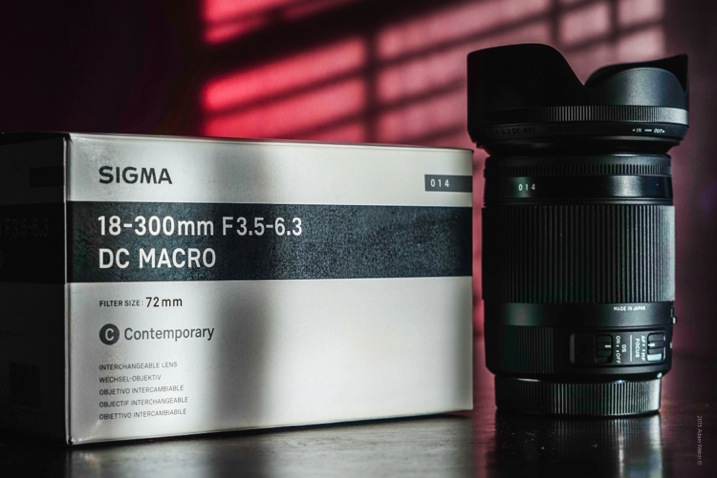
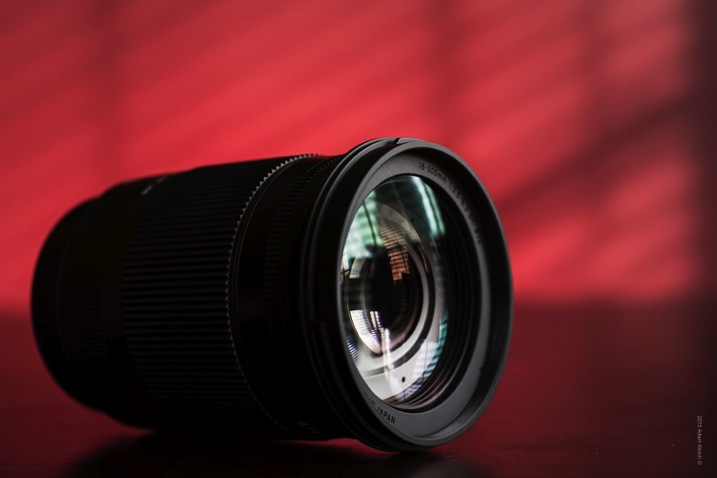
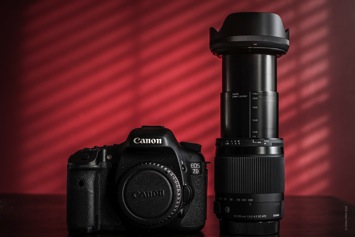
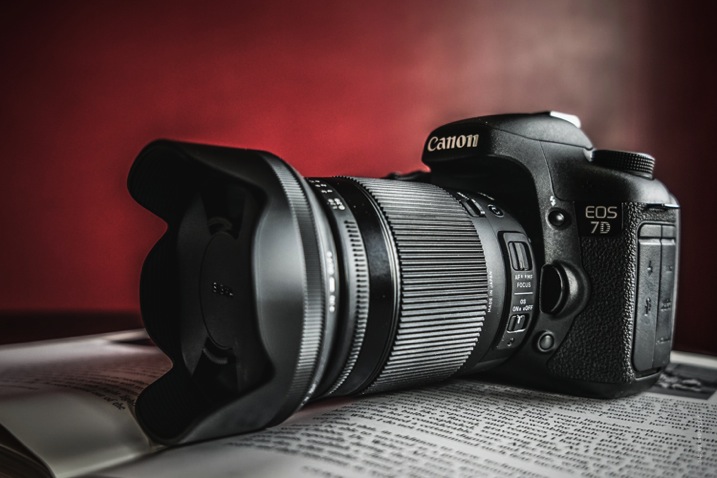
Enter the Sigma 18-300mm F3.5-6.3 DC Macro OS HSM C Lens

Lens 1

Now, take a mental breath after reading that title and then we’ll continue. Don’t let the name for this lens (which I will shorten to Sigma 18-300mm) trouble you, because we’ll talk more about all those letters and their meanings soon. Sigma has attempted to squeeze a lot of features, versatility, and performance into a lens that won’t break the bank. Let’s see if the good folks over at Sigma have succeeded.

The lengthy title for the Sigma 18-300mm is simply a road map so that you know exactly what the lens brings to the table.

  • The DC of course means that it is intended for digital camera bodies.
  • OS designates the lens is equipped with image stabilization technology.
  • HSM relays that the lens sports a hypersonic motor drive autofocusing mechanism.
  • The macro designation means that it has a relatively close minimum focusing distance and is capable of producing macro images (1.0x or 1.1x magnification).
  • Lastly, C stands for indicated this lens is part of Sigma’s Contemporary series. This lens is designed to be mounted only to APS-c(cropped) sensor cameras.

Down to business…

Lens 4

Build Quality and Function

The lens arrived well packaged from Sigma. The optics were all clean and free of smudges and dust. First handling of the lens proved to be immediately impressive.
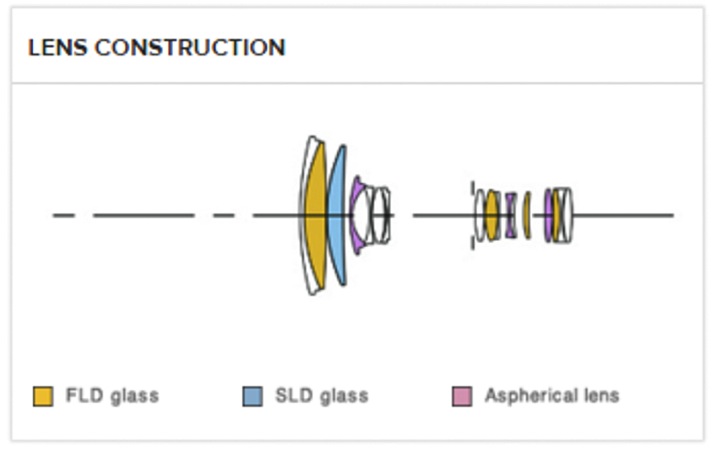
Lens Elements

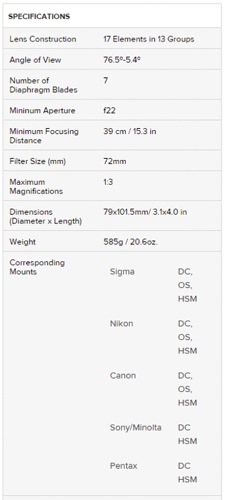
Specs

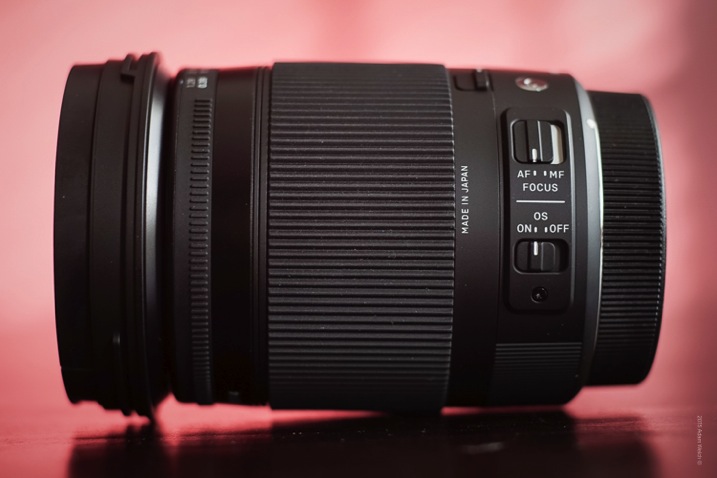
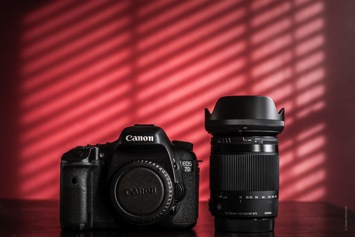
The lens felt very solid but in no way overly heavy. Both the focus and zoom rings are rubberized, and provide a suitable grip for cold or damp fingers. Everything is exceptionally tight and smooth. Some telephoto lenses of this type arrive a little too tight and require some use before the zoom ring operates easily, but the Sigma 18-300mm was just right out of the box. Autofocusing performed very well and was quite fast using my Canon 7D, but the image stabilization was not the best. It became virtually unnoticeable at longer focal lengths, so it remained off for the majority of the test images.

The overall body of the lens is finished with a very understated yet attractive matte black appearance, in case you love form as much as function. Included in the box is quality petal-type lens hood, which fits the lens perfectly and mounts in reverse for storage. Sigma also placed a small rubberized ring at the base of the hood which really helps in the on/off application. It’s a small detail but worth mentioning.

Speaking of details: The effort (or lack thereof) a manufacturer puts towards the little things is of great importance. Here are a few small points that stand out about the Sigma 18-300mm.

  • Zoom-Lock: The zoom-lock switch is a great feature for any zoom lens in my opinion, by preventing gravity from gradually extending the lens while carrying your camera on a strap.
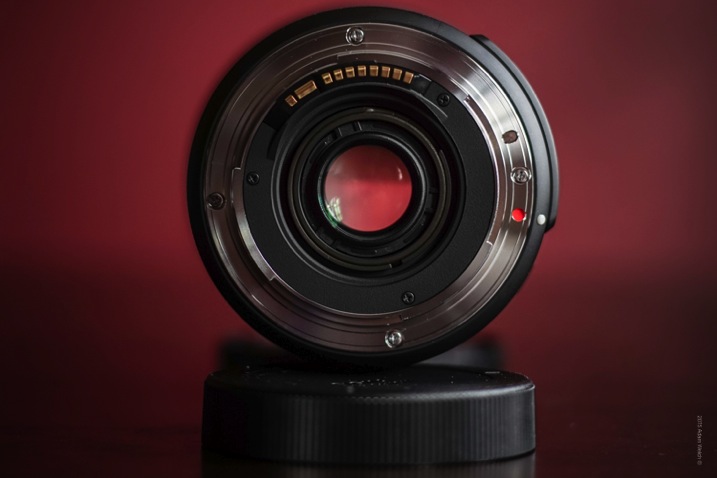
  • Raised mounting indicators: Attaching your lens to your camera can be difficult in low light or if you’re in a hurry. Sigma has chosen to use a small white bead embedded into the lens body instead of merely paint. It makes lining up the lens much easier, and is longer lasting.
  • Lens Hood Indicators: In addition to the rubberized ring, the lens hood also has mounting markings to help mount the hood on the go or in low light.

Lens 3

Lens 9 Lens 10

Lens 8

Lens 12

Image Quality

Sharpness and Distortion

Test images showed that sharpness is acceptable/good across all apertures for a lens in this range, and likewise with contrast. Each of these images were shot at 18mm, at apertures ranging from f/3.5 to f/22. Maximum sharpness seemed to be achieved between f/8 and f/16.

F3 5

Shot at f/3.5

F5 6

Shot at f/5.6

F8

Shot at f/8

F16

Shot at f/16

F22

Shot at f/22

There is some moderate softening at the corners, and minor vignetting at 18mm, but it’s not overly distracting. Very minimal, if any, distortion was encountered even at the shortest focal length.

Wide

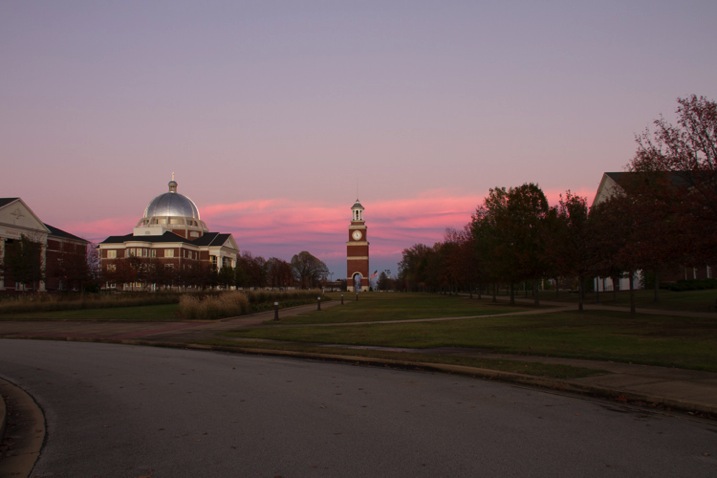
This is a scene shot at the shortest focal length of 18mm and at f/6.3.

For comparison, here are two images shot from the previous vantage point, after zooming to 300mm (shot at f/6.3).

300mm 1

300mm 2

Color

Color rendition is very good with the Sigma 18-300mm. Colors came through true to life, and quite crisp across all focal lengths. However, it had a significant amount of chromatic aberration which was quite apparent, and worsened towards the edges of the frame. Fortunately, it was easily removed with one click using Lightroom, so all is not lost.

Macro Use

After-all, this lens bears the designation of a macro lens so let’s talk a little about how it truly performs as such. Dedicated macro lenses produce images with a magnification factor of around 1.0 or 1.1x (meaning the subject is life size on the camera sensor). The Sigma 18-300mm has a maximum magnification factor of 1.3x. Though it may not be considered a true macro lens, it performs astonishing well for a lens with such a large focal range.

Macro

Sigma lists the minimum focusing distance at around 15.3 inches (39cm), but in my tests focus was achieved even closer. You can really get up close and personal using this lens. In addition, there is an optional macro adapter (great build also) available for this lens which will further enhance its macro capabilities.

Macro Adapter

Extras

An interesting accessory available for this, and most Sigma glass, is a USB dock which can be used for tweaking the parameters of your particular lens. This could be of some use to the sports and wildlife crowd. Here is a description of the docking station provided by Sigma.

“The Sigma USB dock works in conjunction with Sigma Optimization Pro software in order to connect a photographer’s lens to their personal computer to update firmware, calibrate the lens and other customizations such as the focus parameter. For the Sports category, changes can be made to: Autofocus speed, focus limiters, manual focus override and optical stabilization functionality. Updating the firmware can be done via the internet. Sigma Photo Pro is available for Mac and PC computers.”

Summary

Overall, the Sigma 18-300mm lens does a fantastic job of combining high telephoto zoom capabilities with macro functionality. While not perfect, it performs well in many ways.

Here’s what you’ll probably like:

  • Great focal range for a multitude of shooting situations.
  • Low optical distortion.
  • Surprisingly acceptable macro performance.
  • Build quality is absolutely fantastic.
  • Attention to detail and usability is superb.
  • Good sharpness for a lens in this price range.
  • Fast autofocus.
  • Silky smooth operation of zoom and focusing rings.
  • Available USB Calibration Dock.

Lens 14

Here’s what you may not like:

  • Moderate but resolvable chromatic aberration.
  • Image stabilization performance is questionable.

The Sigma 18-300mm F3.5-6.3 DC Macro OS HSM C is a more than capable lens option for those where are seeking to combine the local focal range of a telephoto lens, with the close-up capabilities of a macro.

Does this lens offer the best of both worlds? No.

Does this lens bring you a little bit of both, while offering great image quality at an affordable price? Yes.

Sigma has produced a very capable lens option which will delight those who maintain realistic performance expectations from their gear. It is an impressive lens at a budget price. Give it a try!

Have you tried this lens or any other all-in-one? What are your thoughts?

googletag.cmd.push(function() {
tablet_slots.push( googletag.defineSlot( “/1005424/_dPSv4_tab-all-article-bottom_(300×250)”, [300, 250], “pb-ad-78623” ).addService( googletag.pubads() ) ); } );

googletag.cmd.push(function() {
mobile_slots.push( googletag.defineSlot( “/1005424/_dPSv4_mob-all-article-bottom_(300×250)”, [300, 250], “pb-ad-78158” ).addService( googletag.pubads() ) ); } );

The post Sigma 18-300mm F3.5-6.3 DC Macro Lens Review by Adam Welch appeared first on Digital Photography School.


Digital Photography School

 
Comments Off on Sigma 18-300mm F3.5-6.3 DC Macro Lens Review

Posted in Photography


Sigma Announces Protective Lens Made of Clear Glass Ceramic

16 Dec

Sigma has created an all-new protective filter, the Sigma Water Repellent (WR) Ceramic Protector, using Clear Glass Ceramic with water and oil repellent coating. This is the first filter to use such a material in its construction. It promises both lighter weight and higher strength than normal protective filters with minimal effects on transmittance and sharpness.

It will be available in common filter thread sizes between 67mm and 105mm. See the press release below for more info, or take a look at it on their website at: http://www.sigmaphoto.com/wr-ceramic/


Press Release:

SIGMA CORPORATION ANNOUNCES WORLD’S FIRST PROTECTIVE LENS MADE OF CLEAR GLASS CERAMIC

RONKONKOMA, NY — December 16, 2015 – Sigma Corporation of America, a leading DSLR lens and camera manufacturer, today announced the new Sigma Water Repellent (WR) Ceramic Protector, a lens filter that features new Clear Glass Ceramic material and provides enhanced protective qualities. Pricing and availability is not yet available.

This shock- and scratch-resistant Clear Glass Ceramic was developed specifically for Sigma in partnership with a glass manufacturer. Made with a special heat treatment that evenly precipitates microcrystalline spinel throughout the materials, the Clear Glass Ceramic is 10 times stronger than a conventional protective filter and three times the strength of a chemically strengthened filter. The lens protector also contains WR coating, which repels water, dust and oil, and allows fingerprints to be easily removed. This enhanced protection helps to preserve the lens and ensure long-term, top-notch image quality.

“The Sigma WR Ceramic Protector is the latest example of Sigma’s dedication to innovative and first-to-market photography equipment,” said Mark Amir-Hamzeh, president of Sigma Corporation of America. “The new Clear Glass Ceramic protector is the first of its kind and the strongest material used in the industry. It will enable photographers to safeguard their lenses, while maintaining the impressive sharpness offered by high-quality glass, like our Global Vision line of lenses.”  
Key features of the Ceramic Protector include:

  • Scratch-resistant – Sigma’s Clear Glass Ceramic offers a Vickers hardness number of 700HV. The strength of the Clear Glass Ceramic is much stronger than chemically strengthen glass and is; 10 times stronger than conventional filters
  • Thinner and lighter – This new protector is up to 50 percent thinner and is up to 30% lighter than previous Sigma filters
  • High transmittance – Sigma’s Clear Glass Ceramic offers very high transmittance, making it ideal for use as optical glass
  • Water- and oil-repellent coating – The water repellent coating reflects only 0.24 percent of visible light, thereby minimizing flare and ghosting. Its ability to repel both water and oil is also excellent, with water drops bouncing right off, and fingerprints easily to remove

This filter is offered in the most popular filter thread sizes, and is compatible with all Sigma lenses and other lenses that accept front filter threads that are 67mm-105mm diameters. Compatible lenses in Sigma’s Art line include: 35mm F1.4 DG HSM, 30mm F1.4 DC HSM, 18-35mm F1.8 DC HSM, 24-35mm F2 DG HSM, 24-105mm F4 DG OS HSM, 50mm F1.4 DG HSM, 24mm F1.4 DG HSM, 19mm F2.8 DN, 30mm F2.8 DN and 60mm F2.8 DN. Compatible lenses in the Sports line include the 120-300mm F2.8 DG OS HSM and 150-600mm F5-6.3 DG OS HSM. Compatible lenses in the Contemporary line include the 17-70mm F2.8-4.0 DC OS HSM, 18-200mm F3.5-6.3 DC OS HSM, 18-300mm F3.5-6.3 DC OS HSM and the 150-600mm F5-6.3 DG OS HSM. As with all of Sigma’s lenses, the filter is checked with Sigma’s own Modulation Transfer Function (MTF) measuring system, “A1,” in the company’s factory in Japan. 

For information about Sigma, go to www.sigmaphoto.com or follow the company on Twitter, Instagram and Facebook.

Articles: Digital Photography Review (dpreview.com)

 
Comments Off on Sigma Announces Protective Lens Made of Clear Glass Ceramic

Posted in Uncategorized


My Favorite and ONLY Lens: The Canon EF 50mm f/1.2 L USM

09 Dec

I operate my photography business on a shoe string budget. This started out of necessity, but continued because it became abundantly clear to me early on, that I would rather spend the money I earn from photography towards black t-shirts, home décor, five dollar lattes, and bills. Mainly bills, but no sense in pretending the other indulgences don’t factor into my take-home pay.

lynseymattingly2

I started my portrait business with a Canon Rebel, kit glass, and a prayer. As my business grew I invested in a 30D, and later a 5D. One particularly good tax refund, and a little generosity from my mother around my birthday, found me the proud new owner of a Canon 50mm L-series lens. I didn’t even know what the L stood for (to be honest, I still don’t), I just knew that all the photography blogs I read at the time called it the end-all, be-all lens. The It Lens. The Portrait Lens. I also had a seasoned pro tell me that I should spend as much money as possible on good glass, and it doesn’t get any better than this one.

It’s also important to mention that I was at a place with both photography, and my confidence, that I would listen to just about anyone who even pretended they knew what they were talking about. Had she told me that my pictures would be better if I carried a frog in my pocket, I would have carried two, and a lizard in my shoe just in case.

lynseymattingly7

I am going to tell you all a secret. I am going to answer the question I always get asked when I pull out my big, fancy lens that is mounted to my camera body, which to be clear is the Canon 5D model from 4 models ago: does that snazzy lens make photos better? Brace yourselves because, yes. Yes, it does. So much so in fact that I don’t even own another lens.

I had a fixed 24mm lens for a few years, but it did nothing more than take up space in my bag. Space that I prefer to give to gum and bug spray. So I sold it to increase my coffee and black yoga pants budget. Zoom lenses have never been my favorite, so that narrows down my choices considerably, and a 50mm just feels like the right length for me—I’m close to my subjects but not breathing in their face, even if my breath is minty fresh from my bulk gum purchases.

lynseymattingly4

Can you live without a lens that costs three times what my first car did? You bet. But I’ll tell you another thing—you can live without an entire bag of lenses just as easily. A back-up body and lens is nice—some may even say essential (particularly if you are a wedding photographer), and I suppose if you do certain types of photography, you may need a few different lenses. But I am here to tell you that I have operated a very successful portrait and wedding photography business with my one, albeit super fancy, lens and done just fine, thank you very much. I can count on one hand the times I’ve needed a different lens, and each time it was easy to either borrow or rent, and much more cost effective.

lynseymattingly1

I know my 50. I named my 50, if we are being honest (its name is Seth—it work well with Nancy my MacBook, and Monte my iMac). At this point it just feels like an extension of my arm, or eyeball. I know what I will see in the viewfinder by the time I get my camera to my face. Since my feet are the zoom, I know exactly where I need to stand to get the frame I want.

Prime lenses are fast and sharp. If this means I have to walk around a bit more, then I can call it my exercise for the day (okay, fine: week) as well. The bulk of my business is photographing kids, so no matter what, I am going to be on the move. I’d just rather know that upfront, than mess with a zoom and continuously risk less than tack-sharp focus. This isn’t even counting the fact that by not spending a great deal on equipment I am able to be well caffeinated on expensive coffee during shoots, and sit at a very pretty desk while I edit.

lynseymattingly3

The other plus of counting on one great lens for everything? I invest my money back into my business in other places, beyond expensive equipment. Places that I feel reach farther than a bag full of stuff. I have a bold website and eye-catching business cards. My clients get their images in top-of-the-line professional packaging. I have a ShootSac and buy lollipops in bulk. I wear the most expensive contact lenses on the market, and you should see my hair tie-back selection.

I can only afford these things because I’m not up to my expensive contact lens-wearing eyeballs in debt over fancy equipment. Additionally, my fees are not so outrageous that my client base is only a select few. My overhead being lower than average, allows me to continue photographing the families that supported my business when I was just starting. Families that otherwise may not be able to afford my services if I was dealing with extraordinary costs.

lynseymattingly6

My mom taught me to buy quality; to save my money and buy a good pair of jeans, instead of the cheapest pair that fit. Sadly this lesson didn’t stick and at this very moment I am dressed head to toe in Target. However, it’s true here; buy the nicest lens you can afford and make it work for you. It’s your paintbrush, your potters wheel, your knives (I’ve heard big-time chefs bring their own knives to everything); make it the best possible one and make it the only one you need.

lynseymattingly5

Have you invested in top quality lenses or “glass”? What is your go-to lens and why?

googletag.cmd.push(function() {
tablet_slots.push( googletag.defineSlot( “/1005424/_dPSv4_tab-all-article-bottom_(300×250)”, [300, 250], “pb-ad-78623” ).addService( googletag.pubads() ) ); } );

googletag.cmd.push(function() {
mobile_slots.push( googletag.defineSlot( “/1005424/_dPSv4_mob-all-article-bottom_(300×250)”, [300, 250], “pb-ad-78158” ).addService( googletag.pubads() ) ); } );

The post My Favorite and ONLY Lens: The Canon EF 50mm f/1.2 L USM by Lynsey Mattingly appeared first on Digital Photography School.


Digital Photography School

 
Comments Off on My Favorite and ONLY Lens: The Canon EF 50mm f/1.2 L USM

Posted in Photography


Phase One buys Mamiya, gains ownership of camera and lens production

03 Dec

Digital medium format brand Phase One has bought the whole of the Mamiya Digital Imaging Company and has taken over Mamiya’s Saku factory for its Japanese HQ. The Danish company has had a long-standing relationship with the Japanese camera and lens manufacturer, and since 2009 has owned 45% of the company’s shares. Phase One sold customised Mamiya bodies and redesigned lenses under its own brand name, with the 645DF+ being a very close relation to the Mamiya 645AFD III – cameras the two companies launched simultaneously in 2012. 

For Phase One the move will almost certainly be about acquiring a closer control over the manufacturing side of its business so the company can enjoy a freer reign over what happens in the factory. What Phase One has been able to do in terms of the bodies it offers has so far been dependent on what Mamiya could or was prepared to do, and with no products of its own Mamiya may not have been able to invest sufficiently to develop significantly different new cameras. 

The new president of Phase One Japan, Makoto Honda, hinted that optical design and lens upgrading would also be a major focus in comments in the press release: ‘Phase One Japan is committed to developing new and custom designed masterpiece leaf shutter optics in close partnership with top photographers, imaging companies and long term design partner Schneider Kreuznach.’ 

At the moment lenses branded ‘Phase One’ are made by Mamiya and require in-body focal plane shutters. All the compatible leaf-shutter lenses are made with help from Schneider in Germany. That may not change, of course, but the buyout gives Phase One more control of what can and can’t be done. What the deal will mean for the future products of the company we’ll have to wait and see. 

Mamiya was started by camera designer Seiichi Mamiya in 1940, and produced the wonderful Mamiya Six rangefinder series and then the equally fabulous Mamiyaflex TLRs in its first ten years. Having started in medium format the company went on to produce rangefinder and SLR cameras for 135 film, as well as slim pocket compacts for the miniature ‘spy’ 16mm format film. The modern 6×4.5cm format cameras were introduced in 1975, and it was these that went on to become the basis of the current Phase One digital bodies. Perhaps some of the best loved and revered models the company made were the RB and RZ 6x7cm studio cameras, which were big and heavy but lovely to use. 

The company struggled on its own in the digital market and its 2004 ZD integrated digital camera, and the ZD back for Mamiya film bodies didn’t achieve great success. Phase One bought a large stake in the company in 2009, and in 2012 formed the Mamiya Leaf medium format brand. 

The original company was also a producer of fishing rods and reels until 2000. 

For more information on Phase One see the company’s website. 


Press release: 

Phase One acquires Mamiya Digital Imaging (MDI) assets & establishes Phase One Japan

COPENHAGEN, December 2, 2015 — Phase One, A/S, the leading provider of open-platform, high-end camera systems and solutions, today announced that it has acquired the assets of Mamiya Digital Imaging Company, Ltd (MDI) and has appointed Makoto Honda as the new president of Phase One Japan. Terms of the transaction were not disclosed.

Mamiya has held a long and established reputation in the camera sector.  As a 45 percent shareholder in MDI since 2009, Phase One has developed detailed insight into the camera & lens design and production process and engineered important improvements through its close collaboration with the MDI team in Japan. With this transaction, Phase One now also takes total ownership for all aspects of design and development of medium format camera systems, central shutters & lenses.

“Phase One is now the only medium format camera company that has full internal control of all critical components in a world class imaging system,” says Niels V. Knudsen Phase One’s Image Professor. “This is the best news in many years for quality-focused photographers and imaging companies as Phase One works to consistently raise the bar in medium format photography.” 

“The very successful introduction of the Phase One XF Camera System in June 2015 illustrates the power of our collaboration,” says Henrik Håkonsson Phase One President & CEO.  He added, “The Phase One XF Camera System is the new much improved standard for medium format photography, with the incorporation of significantly enhanced technology.”

Phase One’s mission is to keep pushing the limits for ultimate camera systems and imaging quality, meeting the demand of the world’s leading photographers and industrial imaging companies. 

Makoto Honda President of Phase One Japan said: “Phase One Japan is committed to developing new and custom designed masterpiece leaf shutter optics in close partnership with top photographers, imaging companies and long term design partner Schneider Kreuznach.” 

About Phase One

Phase One is the leading provider of open-platform, high-end camera systems and solutions. Phase One camera systems and lenses are designed to deliver superior quality image capture and investment value. Phase One’s Capture One Pro and Media Pro software help streamline capture and post-production processes for both medium format and 35mm cameras. Phase One products are known for their quality, flexibility and speed enabling pro photographers and industrial imaging companies shooting in a wide range of formats to achieve their creative visions without compromise. 

Phase One is based in Copenhagen with offices in New York, London, Tokyo, Cologne, Hong Kong, Shanghai, and Tel Aviv. Phase One and Capture One are registered trademarks of Phase One A/S. Mamiya is a trademark licensed by Phase One A/S. All other brand or product names are trademarks or registered trademarks of their respective holders.

About Mamiya Digital Imaging

Mamiya Digital Imaging is the digital successor to the reputable Mamiya brand, an innovative company fresh with enthusiasm and dedicated to continuing a legacy of excellence. Mamiya has consistently been a forerunner in medium format camera design, and Mamiya lenses, manufactured following a tradition of precision and quality, are celebrated worldwide. Mamiya Digital Imaging is headquartered in Tokyo with a factory in Saku, Japan and totals a team of 80 dedicated engineers and technicians, and distributors in more than 100 countries. 

Articles: Digital Photography Review (dpreview.com)

 
Comments Off on Phase One buys Mamiya, gains ownership of camera and lens production

Posted in Uncategorized


dPS Writer’s Favorite: Sigma 24-105mm F4 Lens

02 Dec
24-105mm-f4-dg-os-hsm-a-635-e73

Image: Sigma Photo

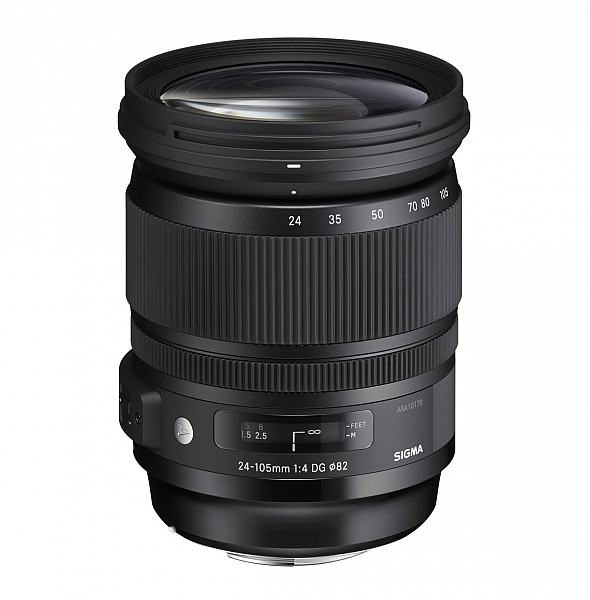
Perhaps you’ve heard of Sigma’s Art series of lenses? After years spent making relatively mediocre lenses, the Japanese manufacturer has stepped up their game to create some beautiful gems that outshine the lenses made by the camera companies themselves.

The 50mm f/1.4 and the 35mm f/1.4 were both on my list, but I seem to have ended up with the Sigma 24-105mm f/4 Art lens, and while my artistic conscience might try to persuade me of the superiority of prime lenses, it’s currently my favourite.

Zoom versus Prime Lenses

The prime lenses I like are big and heavy, because of the large maximum aperture. Assuming that my assistant carried them everywhere and could change them instantly, I might be less keen on the versatility of the Sigma. But that’s not the case, and often a zoom is the better choice. Zoom lenses used to be too much of a compromise. The Sigma 24-105mm lens compromises just enough, and delivers a lot. It’s a slow lens at f/4, but the optical stabilization is good, and the high ISO capabilities of current cameras means that I’ve never felt too limited by this. It’s certainly a compromise compared to a prime, but at f/8, I bet you couldn’t tell the difference. The bokeh for this zoom, necessarily a matter of personal taste, and not as amazing as some of the prime lenses, is good enough too.

Sigma 24-105mm lens

Bokeh at f/4, 105mm

But I want Nikon/Canon, I want the best…

Canon has an equivalent 24-105mm f/4 lens from their premium L-series. It’s a versatile lens, and I know several professional photographers who use it almost exclusively. I use Nikon, but I’ve seen comparisons that demonstrate that optically, the Sigma Art series lens is sharper. The Canon is weather-sealed though, which the Sigma is not. Nikon has a 24-120mm lens that isn’t as sharp as the Sigma either. If image quality is what you want most, the Sigma is the best among the three lenses. Of course, both Nikon and Canon make 24-70mm lenses that are sharper, though at the expense of the longer telephoto reach.

Sigma 24-105mm lens

We photographers love our lenses

Why choose the 24-105mm focal length over a 24-70mm?

Forgetting prime lenses, the main competition for my affections were the Nikon 24-70mm and the Tamron 24-70mm lenses. There’s also a Tokina 24-70mm available that I didn’t consider. I decided against the Nikon because it doesn’t have optical stabilization (OS). While the larger f/2.8 aperture is attractive, it doesn’t make as much difference in low light for static subjects as the OS on the Sigma. Moreover, the stabilization is useful for on-the-go filming too. The Tamron however, has the larger f/2.8 aperture and is also stabilized.

I chose the Sigma lens because of the longer reach. 70mm, for me, is not as flattering for headshot portraits as the 85-105mm focal lengths that the Sigma provides. I find I use the extra reach quite often. On the other end, 24mm seems to be wide enough for the majority of situations on a full-frame body. If I need a larger field of view, or shallower depth of field, I can often stitch multiple photos together.

Sigma 24-105mm lens

That 105mm short telephoto is useful

Space for a whinge

It’s not a perfect lens, and there are a few omissions that I’d like to have a moan about to help round out the My Favourite Lens angle. While the lens is sharp, it does have noticeable distortion and a fair bit of vignetting too, especially at larger apertures. This is an issue that I’m happy to accept because the RAW photo conversion software does a good job of correcting these flaws.

The bigger issue is the lack of weather sealing, which I’d have happily paid a bit more for. It makes you think twice when photographing in the rain or by the sea. The thoughts are usually, “I wonder if the lens will survive this?” and, “I wonder if I’ll buy the Nikon if it doesn’t?”. Showers aside, the lack of weather sealing does mean that the lens attracts more dust – it veritably sucks it up, and distributes it liberally amongst its inner optics, safe from my lens cleaning cloth. The build quality is good, but not as solid as the Canon L-series lens, for example, and after some abuse, the focal length numbers on mine wore off as they are not etched into the lens. Sigma were good about fixing this though.

Sigma 24-105mm lens

Distortion and Vignetting even At 62mm, f/8

Conclusion

I’ve tested a huge number of lenses, and also read pretty much most of reviews of the others, to keep up to date. I chose to buy the Sigma 24-105mm f/4 OS, and it lives on my camera pretty consistently. It’s photographed a range of genres from landscapes, to portraits, and fashion, and the image quality has been good.

As photographers, there’s a tendency to fuss over MTF charts and such like; but having the right focal length available immediately is far more important, and as for overall sharpness and rendering compared to primes, it’s usually only experienced photographers who, occasionally, may notice the difference.

DSC_2741

googletag.cmd.push(function() {
tablet_slots.push( googletag.defineSlot( “/1005424/_dPSv4_tab-all-article-bottom_(300×250)”, [300, 250], “pb-ad-78623” ).addService( googletag.pubads() ) ); } );

googletag.cmd.push(function() {
mobile_slots.push( googletag.defineSlot( “/1005424/_dPSv4_mob-all-article-bottom_(300×250)”, [300, 250], “pb-ad-78158” ).addService( googletag.pubads() ) ); } );

The post dPS Writer’s Favorite: Sigma 24-105mm F4 Lens by Ben Evans appeared first on Digital Photography School.


Digital Photography School

 
Comments Off on dPS Writer’s Favorite: Sigma 24-105mm F4 Lens

Posted in Photography


2015 Roundup: High-end Interchangeable Lens Cameras $2000+

26 Nov

This category has something for everyone, whether it’s ultra-high resolution, 4K video, high dynamic range, and super-fast burst rates. For the enthusiast or pro who refuse to compromise, here’s a look at cameras priced over $ 2000.  Read more

Articles: Digital Photography Review (dpreview.com)

 
Comments Off on 2015 Roundup: High-end Interchangeable Lens Cameras $2000+

Posted in Uncategorized


Sigma US goes public with Black Friday lens deals

21 Nov

Sigma is getting Black Friday started early this year, offering discounts on five of its lenses online now through Monday, November 30th including the 50mm F1.4 DG HSM Art. Savings range from $ 100 up to $ 300 off individual lenses – and considering the current results of our readers’ poll, a few of you may be interested. Read more

Articles: Digital Photography Review (dpreview.com)

 
Comments Off on Sigma US goes public with Black Friday lens deals

Posted in Uncategorized


2015 Roundup: Interchangeable Lens Cameras $1200-2000

20 Nov

In the latest of our roundup we’re looking at interchangeable lens models ranging from roughly $ 1200 – $ 2000. This price range spans sensor sizes from Four Thirds to full-frame, and contains a diverse range of cameras geared toward fast-action still shooting, ultimate resolution, great video and more. If you are considering this price range for a camera, you have an opportunity to choose the camera that is really right for you based on features, size and operation. Read more

Articles: Digital Photography Review (dpreview.com)

 
Comments Off on 2015 Roundup: Interchangeable Lens Cameras $1200-2000

Posted in Uncategorized