RSS
 

Posts Tagged ‘Lens’

Sony patents contact lens camera with blink-triggered shutter

05 May

Sony has patented a contact lens that comes with an integrated miniature camera module and all its components, such as image sensor, lens, processor, storage and even a wireless module to transfer images to a smartphone or other connected device. The camera is triggered by a “conscious” eyelid aperture and closure. A sensor measures the pressure of your eyelid, and other settings such as aperture and zoom can be controlled via eyelid movement as well. A display unit allows you to view captured images directly on the lens. The patent document says the following about the camera module:

“The image pickup unit includes, for example, a lens system including the image pickup lens, an aperture stop, a zoom lens, a focus lens, and the like, a drive system that causes the lens system to perform focusing operation and zooming operation.”

There is even a digital image stabilization system to counteract image blur caused by motion of the eyeball. Google and Samsung have filed for similar patents before but with its range of controls the Sony variant is, at least on paper, the most advanced so far. It’s impossible to know if a product like this will ever hit the market but if it does, it’s certain to raise even more privacy concerns than Google Glass at the time. You can read the full document here. 

Via: Sony Alpha Rumors | Via: PetaPixel

Articles: Digital Photography Review (dpreview.com)

 
Comments Off on Sony patents contact lens camera with blink-triggered shutter

Posted in Uncategorized


Sony patents contact lens camera with blink-triggered shutter

30 Apr

Sony has patented a contact lens that comes with an integrated miniature camera module and all its components, such as image sensor, lens, processor, storage and even a wireless module to transfer images to a smartphone or other connected device. Read more

Articles: Digital Photography Review (dpreview.com)

 
Comments Off on Sony patents contact lens camera with blink-triggered shutter

Posted in Uncategorized


Interchangeable lens camera sales steady as Canon profits plunge

27 Apr
Canon calls out the EOS 80D as a driver for strong unit sales in the interchangeable lens camera market.

Canon Japan reported flat ILC unit sales as one of the bright points in first quarter reports that saw a 17.5% fall in net income. A strengthening Yen, poor performance in the laser printer business and continued decline in compact camera sales combined to give the company a tough quarter.

Overall, digital camera sales are down 12%, due in large part to a 22% decline in the dying compact camera market, though Canon cites its G-series as a bright spot. Interchangeable lens camera sales were flat compared to Q1 2015, propped-up by strong sales of the EOS 80D and gains for the M3 and M10 mirrorless cameras in Asia. Interchangeable lens cameras account now account for 49% of total unit sales and 84% of the company’s revenue.

While delivering ‘flat’ numbers might not sound very positive, figures provided by the Camera & Imaging Product Association show a nearly 10% year-on-year industry-wide decline in ILC unit shipments, as well as 17% YoY reduction in SLR shipments. In other words, Canon isn’t doing quite as poorly as it may sound just looking at the numbers.

Looking ahead to 2016 as a whole, Canon expects compact camera sales to drop 24%, though more expensive models like the G-series will help protect margins. The company states that it hopes to increase profitability of this line ‘through the standardization of parts and other measures.’ It also says it expects unit sales of ILCs to fall by 7% across the year. But, while it has slightly lowered its projections for income from its imaging business for 2016, nearly all of the reduction comes from the expectation that the Yen will stay strong, lowering the value of overseas sales.

For more details, have a look at Canon’s Q1 2016 financial statement.

Articles: Digital Photography Review (dpreview.com)

 
Comments Off on Interchangeable lens camera sales steady as Canon profits plunge

Posted in Uncategorized


Surprisingly sharp: Inmacus 18mm HD Wide Angle Kit lens review

22 Apr

Don’t write off smartphone camera accessories just yet – a three-lens bundle from Singapore-based Inmacus produces surprisingly good results. Read more

Articles: Digital Photography Review (dpreview.com)

 
Comments Off on Surprisingly sharp: Inmacus 18mm HD Wide Angle Kit lens review

Posted in Uncategorized


My Favourite Travel Lens – The Tamron 28-300mm

20 Apr

Last year I was given an incredible opportunity to travel to the US for three and half weeks just to take photos. My trip was sponsored by an amazing woman, which spurred me to try and get other sponsors for my photography. When you are travelling you can’t take everything with you, so being able to get a lens that could handle a lot of the scenes that I wanted to shoot was very handy. To be able to go from a wide angle view, then zoom right in, was going to be a great lens for travelling, I hoped.

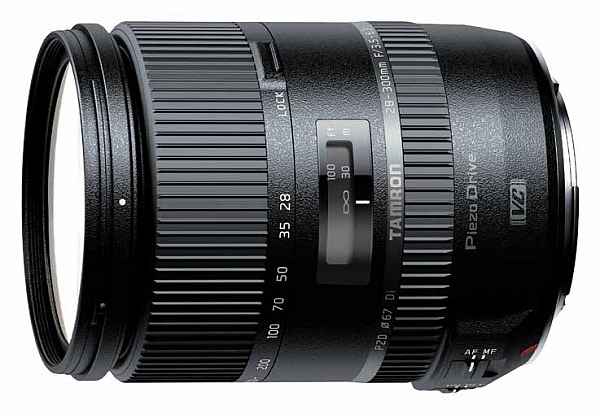
LeanneCole-tamronlens-28-300mm

Tamron 28-300mm Lens – image courtesy of Tamron for both Canon and Nikon mounts.

I had read about the Tamron 28-300mm lens, and how it was a good for travelling. I decided to contact Tamron Australia to see if they would loan me the 28-300mm for my trip, and they did. It is a full frame lens and if you have a cropped sensor then you need to remember that you won’t be able to get 28mm (more like 42mm), and that it will be far longer than 300mm (similar to 450mm).

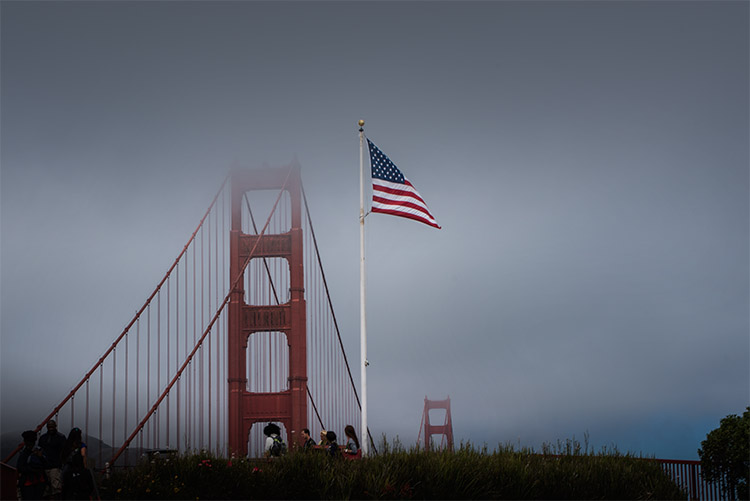
LeanneCole-tamronlens-goldengatebridge-65mm

Golden Gate Bridge with US Flag, taken through a car window. Focal length 65mm

Physical Size

The first thing I noticed when I opened the box was the size. For a lens with such a big zoom length, it’s quite small. It isn’t a heavy lens either. Straight away it seemed like the perfect lens to carry, that wouldn’t contribute to breaking my back.

It fits nicely into any camera bag, due to its compact size. The bag I used on my trip was quite small, and it was easy to pack. The light weight meant I didn’t have to worry about making my bag heavier. Imagine how your back would feel if you had to carry a bunch of other lenses to cover that range!

LeanneCole-tamronlens-bodieghosttown-122mm

Some of the old building at the ghost town in Bodie, CA, focal length 122mm.

Versatility

When travelling you can’t always get close to places to get the best angles, and having a lens that allows you to take photos when you are close, or far away, is an advantage. You can take an image of a building and get most of it in, then zoom in to get some details of it as well.

The following images of the Flatiron Building in NYC, show how you can take a photo of the whole building, and then a close up of some detail using the 28-300mm lens.

LeanneCole-tamronlens-flatiron-28mm

The Flatiron Building in New York, focal length 28mm.

LeanneCole-tamronlens-flatiron-300mm

Detail of the Flatiron Building, focal length 300mm.

There is also the advantage of not having to constantly change your lens. If it is busy, or crowded, you won’t have to stop, get out another lens and change it. This compact lens is great for most situations.

LeanneCole-tamronlens-beemountain-300mm

A bee on a flower, taken at 300mm.

Compromises

With any lens that has this kind of focal length range, you are going to have to compromise somewhere.

Sharpness

When you take photos at 300mm, the images are not as sharp as they are at 150mm. This is a common problem with most lenses, and more so with ones that have longer lengths such as the Tamron 28-300mm.

Slower Lens

A lens is judged by the size of the largest aperture. A fast lens has a large aperture of f/2.8 or, as is the case with some of the prime lenses, maybe f/1.4. The largest aperture means that when there is lower light you can get a faster shutter speed, which makes it a faster lens.

This Tamron 28-300mm lens has an aperture range of f/3.5 – 6.3, which translates to being able to have the faster aperture of f3.5 at 28mm, but when you zoom out to 300mm the fastest (widest) one you can get is only f/6.3. Most of the time it isn’t a problem, and only becomes one when the light is low, or when shooting indoors. The compromise is, when those conditions arise you have to put up your ISO, which introduces noise into your images, or, in old terms, grain.

Vignetting when zoomed out

One of the things I found, was that there was some vignetting when the lens was zoomed all the way out to 300mm. I was a bit annoyed initially, but when I was given an opportunity to try out the Nikon 28-300mm I noticed it did the same. It is just one of the disadvantages working with lenses such as these.

LeanneCole-tamronlens-NewYork-300mm

A view of New York Skyline from Staten Island ferry. Focal length 300mm,

The Other Factors

Weight

The lens weighs just over half a kilogram or 19oz. Compare it with the Nikon lens which is 800 grams or 28.2oz. As stated previously, it is quite a light lens, and an easy one to carry around and store.

LeanneCole-tamronlens-yosemite-28mm

One of the many mountains at Yosemite, focal length 28mm.

Price

The lens is around US$ 850, which makes it a good price for the versatility that you get. It makes it an affordable lens, and a very good option for a beginner who wants to find one lens that will suit almost any situation or occasion.

In conclusion

This was a perfect lens for travelling. I found it so versatile, and to tell the truth, while I took a couple of other lenses, this one was on my camera 80% of the time. I didn’t want to take it off. It was very sad when the lens had to be returned to Tamron, I know when I can get the money together, it will be the next lens in my kit.

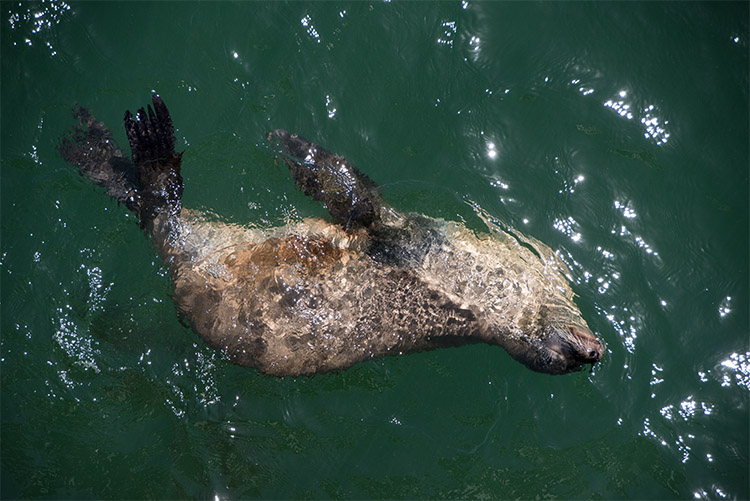
LeanneCole-tamronlens-santacruz-135mm

Seal at Santa Cruz Boardwalk. Focal length 135mm.

googletag.cmd.push(function() {
tablet_slots.push( googletag.defineSlot( “/1005424/_dPSv4_tab-all-article-bottom_(300×250)”, [300, 250], “pb-ad-78623” ).addService( googletag.pubads() ) ); } );

googletag.cmd.push(function() {
mobile_slots.push( googletag.defineSlot( “/1005424/_dPSv4_mob-all-article-bottom_(300×250)”, [300, 250], “pb-ad-78158” ).addService( googletag.pubads() ) ); } );

The post My Favourite Travel Lens – The Tamron 28-300mm by Leanne Cole appeared first on Digital Photography School.


Digital Photography School

 
Comments Off on My Favourite Travel Lens – The Tamron 28-300mm

Posted in Photography


Meyer-Optik launches Kickstarter campaign for 50mm ‘Soap Bubble Bokeh’ Trioplan lens

15 Apr

$ (document).ready(function() { SampleGalleryV2({“containerId”:”embeddedSampleGallery_3223429076″,”galleryId”:”3223429076″,”isEmbeddedWidget”:true,”standalone”:false,”selectedImageIndex”:0,”startInCommentsView”:false,”isMobile”:false}) });

German optical manufacturer Meyer-Optik Gorlitz has begun a Kickstarter campaign to raise funds to produce a modern 50mm F2.9 version of its Trioplan lens. The Trioplan design is known for its exaggerated circular bokeh which earned it the nickname ‘Soap Bubble Lens’ in its original version. The company has recently released a 100mm F2.8 Trioplan after a similar Kickstarter campaign that raised almost $ 360,000. On this occasion the company is hoping to reach an initial target of $ 50,000 – which is going swimmingly, as it met that goal within hours of the campaign going live.

The new lens will be an updated version of the company’s original 50mm Trioplan but using glass from the Schott factory and with modern coatings and production standards. The new 50mm Trioplan also has a movable front element that allows much better close focusing and a maximum reproduction ratio of 1:4.

The lens uses a basic Triplet design with three elements in three groups with a 12-bladed iris designed to help produce smooth and circular out-of-focus highlights at all apertures.

Meyer Optik plans to produce the manual focus lens in mounts for:

  • Canon EF
  • Nikon F
  • Sony
  • FujiX
  • Micro Four Thirds
  • M42
  • Leica M (rangefinder not supported/focusing via live view)

The expected price is $ 1299 though discounts can be had by backing the Kickstarter campaign. For more information visit the Meyer-Optik Gorlitz website.


Press release:

Today Is the Day.
Support the Historic and Innovative Trioplan 50 Now!  

We just launched our Kickstarter for the Trioplan f2.9/50, a special new lens that returns the tradition of a versatile soap bubble bokeh lens to the Meyer Optik line up. Order the art lens that you will always keep attached to your camera body now!  In addition to its regular focus element, the Trioplan f2.9/50 features a second front focus element that opens a whole new horizon of creativity to the world of photography.

These elements and the quality of the glass used takes the legendary Trioplan 50mm soap bubble bokeh lens to a wider variety of creative photographic situations, including events, travel, street, nature, portraits, macro and so many more scenes.  

The new Trioplan f2,9/50 is the one lens you can use for every situation. It is ultra compact and features an innovative front focusing element putting incredible amounts of creative opportunity into the palm of your hand. The movable front lens reduces the minimum focusing distance to less than 30 cm (under 12 inches) and raises the image ratio up to 1:4.

This feature takes the Trioplan 50 into the Macro-Spheres.  Carrying a heavy set of lenses is something that most photographers choose to shed at some point, but they do not want to cut back on their creativity. We give you the best of both worlds in one lens – with only 200 g or about 7 ounces — it has never felt so light to be this prepared.

The Trioplan 50 produces smaller, finer soap bubbles that turn into a small swirl effect in the corner of the image. Sharpness and contrast are also the highest yet of any Trioplan lens.  

Surprisingly, for a 50 mm lens it is a perfect tool for portraiture especially including awesome landscapes in the image. Moreover the possibilities in street photography are awesome and the macro capabilities are stunning. This is more than just a nostalgic art lens. It is the most modern innovative lens you can imagine.

The lens will be available with mounts for
* Canon EF
* Nikon F
* Sony
* FujiX
* Micro Four Thirds
* M42
* Leica M (rangefinder not supported/focusing via live view)

The most creative historic lens you have ever held in your hands is available to Kickstarter Backers starting at $ 449!

The lens is estimated list price is $ 1299. Restore 100 Years of Tradition with the Most Versatile Soap Bubble Bokeh Lens.

What better way to bring back the Trioplan lens than with the most versatile version possible, the f2.9/50 with its new innovative front variable element? Innovating upon the classic, modernizing the traditional, extending soap-bubble bokeh creativity to a new modern era. Help us bring back the Trioplan 50. Pledge your support now !  Click the Link to visit our Kickstarter campaign.

Sincerely,
Dr. Stefan Immes and the whole MOG team.

Articles: Digital Photography Review (dpreview.com)

 
Comments Off on Meyer-Optik launches Kickstarter campaign for 50mm ‘Soap Bubble Bokeh’ Trioplan lens

Posted in Uncategorized


Swirly bokeh: Lensbaby announces Twist 60 lens

12 Apr

Lensbaby has announced the Twist 60, a new lens for creative photography. From what we can see, the Twist 60 is all about bokeh. The 12 aperture blades and a maximum aperture of F2.5 should give a soft, well-rounded bokeh with good separation of the subject from the background, but the real ‘twist’ is just that – the twist. Specifically the twisty, swirly bokeh. Lensbaby claims the lens is modeled after Joseph Petzval’s Classic 19th-century design, giving photographers the ability to introduce and control that distinctive circular bokeh that is unique to Petzval-type lenses.  

We are interested to see how this lens performs, as it is almost half the price of similar lenses recently announced and it is available (via the Lensbaby Optic Swap System) in a wide variety of mounts.

$ (document).ready(function() { SampleGalleryV2({“containerId”:”embeddedSampleGallery_1483721425″,”galleryId”:”1483721425″,”isEmbeddedWidget”:true,”standalone”:false,”selectedImageIndex”:0,”startInCommentsView”:false,”isMobile”:false}) });

The Twist 60 is available for pre-order starting April 12, 2016 and is currently offered in Canon, Nikon, and Sony E mounts. It is priced at $ 279.95/£196 for the full lens or $ 179.95/£126 for the Twist 60 Optic (for use with other Lensbaby Optic Swap System lenses).


Press release:

Lensbaby’s New Twist 60 Lens Exudes Pure Magic of Vintage Photography

Company’s love of old lenses inspires new creativity with classic image elements optimized for full frame photographers
 
Portland, OR – April 12th, 2016 – Lensbaby, makers of award-winning creative effects lenses, optics and accessories, today announced the availability of the Twist 60 lens. Twist 60 helps creative photographers find their visual voice by seeing the world differently.
 
This metal-bodied 60mm f/2.5 lens with gold anodized accents creates powerful portraits, spotlighting subjects by freeing them from their background and surrounding them with swirly blur and enhanced vignette. The brighter the aperture, the greater the swirl and the greater the vignette.
 
“Twist 60 embodies our love of old lenses and their unique ways of helping photographers discover creative possibilities,” said Craig Strong, Lensbaby Co-Founder & Chief Creative Officer. “True to an 1840 design by Joseph Petzval, this lens reveals striking separation between subjects and their background, a quality that modern lens designs lack.”
 
Twist 60 Lens specs:
? 12 blade f/2.5-22 aperture
? 60mm focal length
? Twisty, swirly blur
? Recommended for use on full frame cameras
? Available in Canon EF, Nikon F, and Sony E mounts
? 4 elements in 3 groups
? Filter threads: 46mm
? Black anodized body with gold anodized aperture ring
? Minimum focus distance – 18”
 
Availability
Twist 60 lens retails for $ 279.95 and is available via pre-order beginning April 12, 2016 (shipping May 5th, 2016). Twist 60 Optic will also be sold separately for use with other Lensbaby Optic Swap System-compatible lenses. It retails for $ 179.95. For best results, when using it in a tilting Lensbaby such as the Composer Pro, photographers should shoot with Twist 60 pointed straight ahead. Lensbaby products are available at lensbaby.com, B&H, Adorama, and from select specialty photo stores worldwide.
 
About Lensbaby
For over a decade, photographers have relied on Portland, Oregon based Lensbaby to help them break free of routine, tinker, and open themselves up to unexpected results – dancing, playing and delighting in what’s possible with a creative lens and their imagination.

Lensbaby makes award-winning creative effects lenses, optics and accessories that follow this philosophy, including the Velvet 56, a versatile portrait and macro lens; their unique Optic Swap System, which lets photographers swap their optic and tilt their lens for limitless effects; and mobile lenses that transform everyday smartphone photography. Lensbaby products are sold and distributed worldwide. For more information, visit www.lensbaby.com

Lensbaby Twist 60 specifications

Articles: Digital Photography Review (dpreview.com)

 
Comments Off on Swirly bokeh: Lensbaby announces Twist 60 lens

Posted in Uncategorized


Lomography Daguerreotype Achromat 2.9/64 Art Lens launches on Kickstarter

07 Apr

$ (document).ready(function() { SampleGalleryV2({“containerId”:”embeddedSampleGallery_6775714931″,”galleryId”:”6775714931″,”isEmbeddedWidget”:true,”standalone”:false,”selectedImageIndex”:0,”startInCommentsView”:false,”isMobile”:false}) });

Lomography is seeking funds in its latest Kickstarter campaign to bring into production a Daguerreotype Achromat F2.9 to F16 65mm Art Lens, a recreation of the first photographic optic lens from 1839. The lens is designed to work with modern analog and digital cameras, and will be available in Canon EF and Nikon F mounts with support for ‘multitudes of other cameras using adapter mounts.’

The 64mm Daguerreotype Achromat Art Lens will be available with black and brass finishes, and will support Micro Four Thirds cameras, the Fujifilm X-Pro1, Sony Alpha cameras and others using adapter mounts. An array of special effects are produced via Waterhouse Aperture plates; they range from what is described as an ‘ethereal soft focus’ at apertures below F4 to sharper effects with deep contrasts at aperture F5.6 and greater.

The special effects are created by inserting Waterhouse Aperture plates into a slot in the lens, positioning the plate in front of the lens elements. Three sets of plates are supported: Standard, Lumière, and Aquarelle. The latter two sets, Lumière and Aquarelle, were created by Lomography for this particular lens to create different effects in out-of-focus highlights.

By pledging to Lommography’s Kickstarter, supporters can reserve an early copy of the Daguerreotype Achromat Art Lens, though certain backing options have been sold out, such as the brass ‘super early bird’ launch deal. Remaining pledge options include $ 400 for a brass or black-finish lens, $ 500 for a low serial number Nikon mount brass lens and $ 550 for an earlier September 2016 shipment rather than the later December shipment, among others.

Articles: Digital Photography Review (dpreview.com)

 
Comments Off on Lomography Daguerreotype Achromat 2.9/64 Art Lens launches on Kickstarter

Posted in Uncategorized


Fujifilm releases several camera and lens firmware updates

06 Apr

In addition to the X-Pro2 firmware update we reported on last week, Fujifilm has released a number of firmware updates for several lenses and camera bodies: the X-Pro1, X-Pro2, X-M1, X-E1, X-A1, and X-A2, as well as the XF 50-140mm F2.8 and XF 100-400mm F4.5-5.6 R LM OIS WR lenses. Changes and firmware versions vary based on model, but most camera body updates simply add support for a focus limiter function on the XF 100-400mm F4.5-5.6.

  • X-A1 Ver.1.40: Supports focus limiter function for XF100-400mmF4.5-5.6 R LM OIS WR
  • X-A2 Ver.1.20: Supports focus limiter function for XF100-400mmF4.5-5.6 R LM OIS WR
  • X-E1 Ver.2.60: Supports focus limiter function for XF100-400mmF4.5-5.6 R LM OIS WR
  • X-M1 Ver.1.40: Supports focus limiter function for XF100-400mmF4.5-5.6 R LM OIS WR
  • X-Pro1 Ver.3.60: Supports focus limiter function for XF100-400mmF4.5-5.6 R LM OIS WR
  • X-Pro2 Ver.1.01: Fix of auto reset to the factory default setting; improvement of image quality of the long exposure mode.
  • XF50-140mmF2.8 R LM OIS WR Ver.1.11: Improvement of AF function used with X-Pro1 and X-E1
  • XF100-400mmF4.5-5.6 R LM OIS WR: Ver.1.01: Improvement of AF function used with X-Pro1 and X-E1

Articles: Digital Photography Review (dpreview.com)

 
Comments Off on Fujifilm releases several camera and lens firmware updates

Posted in Uncategorized


Pros and Cons of Photographing Dogs with a Prime Lens

05 Apr

DPS article 6

Dogs, by their very nature, are excitable creatures. Of course, they like nothing more than being outside and running around, chasing sticks, balls, and other dogs. All this can’t be conducive to prime lens photography, right? You want a good zoom lens for a job like this, surely? Well, not me. I love shooting my pet portrait sessions with my trusty Canon f/1.4 50mm prime, and I’m going to go through what I consider to be the advantages of doing so, and how best to overcome the disadvantages.

Pros – or advantages

Prime lenses are as quick as the dogs they’re snapping!

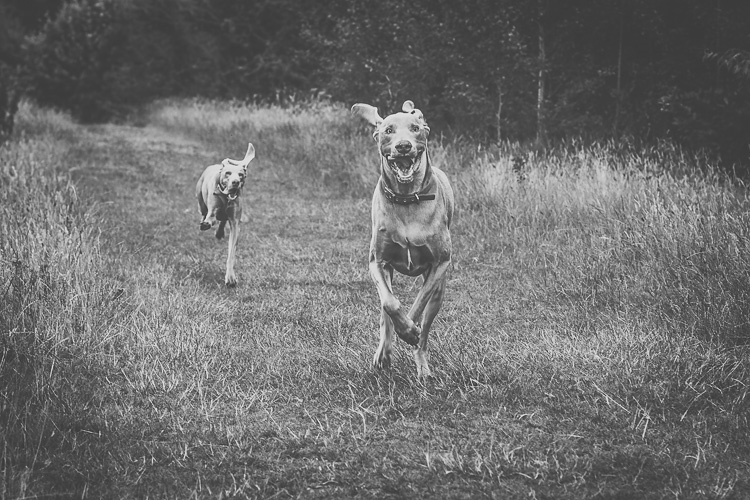
We’ll start with the obvious benefit of shooting with a prime lens – speed. The wider maximum aperture allows for faster shutter speeds, which means that you can freeze your sprinting pooch in action and get pin sharp images as they run (below).
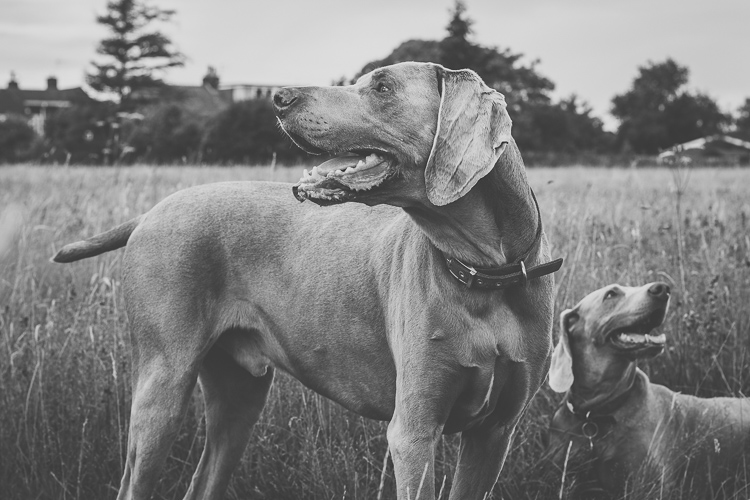
DPS article 9
These two Weimaraners were sprinting full pace towards me. Fortunately my shutter speed was fast enough to freeze their movements in full flight.

Let’s not forget that the light conditions aren’t always going to be favourable. On dull, overcast, days you’ll be thankful for that extra couple of stops, rather than having to boost the ISO and bring noise into the equation.

Bearing this in mind, it’s also important to remember that as you’re widening your aperture to improve your shutter speed, you’re also narrowing your depth of field, so it’s about striking the right balance for the situation.

Image quality and sharpness

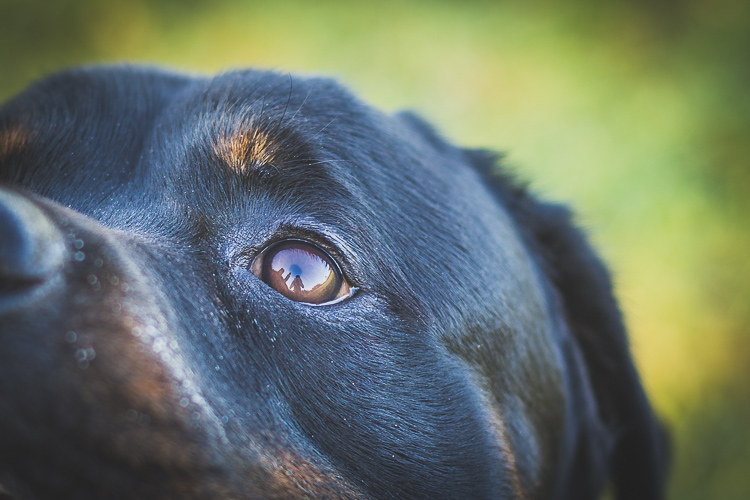
Another well-known advantage of shooting with a prime lens is the image quality. Prime lenses are much more simple than zoom lenses in terms of the components that make them, and the mechanisms that operate them. All in all, it’s widely acknowledged that prime lenses consistently offer an extremely high level of image quality.
DPS article 1

Sharper images are going to be a positive thing in any situation, but when you’re editing your images and you can zoom in to see all the details in the fur of your subject, and the glint in their eye, then you will really appreciate that image reliability.

You’re forced to focus on composition

This is an interesting one, and certainly an argument that crops up time and time again when talking about the benefits of prime lenses. If you only use zoom lenses, there can often be a level of complacency that sets in, especially if you’re relatively new to photography.
DPS article 4
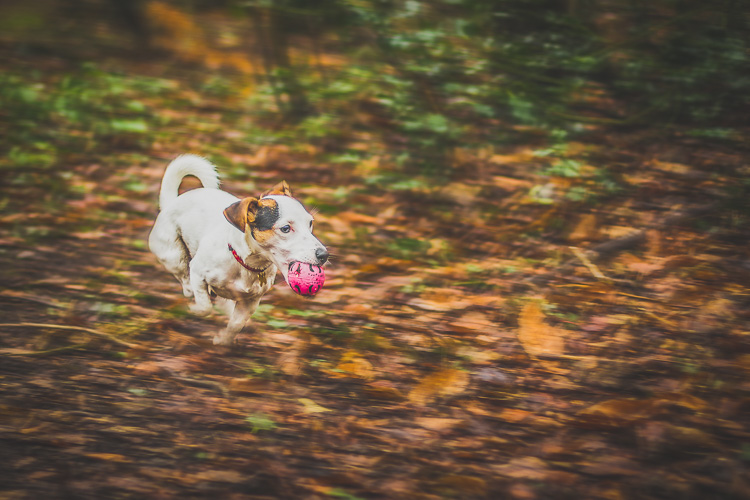
caption: If I’d been using a zoom lens on this shoot there’s a good chance I would have zoomed in for a tighter composition, with the subject in the middle of the shot. With that option unavailable to me I was able to think about it, and ended up giving the subject plenty of room on the right to run into, improving the overall composition of this image.

When you’re using a lens with a fixed focal length, you have no choice other than to move around with your subject. You’ll be constantly looking for different angles and opportunities, and eventually you will find yourself in the perfect position, one that you may never have found yourself in, if you weren’t using a prime lens.

Narrow depth of field

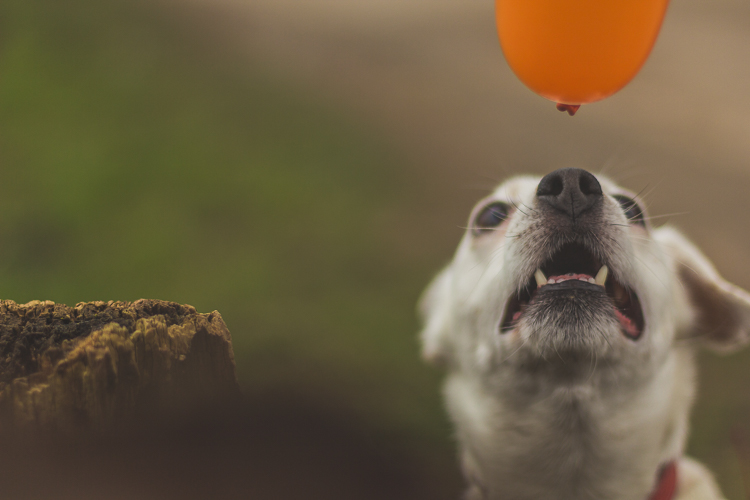
If you want to make the pictures of your dogs stand out, then a really tight depth of field is a great way to go about it. A prime lens will allow you to open your aperture to f/1.4 or wider, and really blur out that background, making your subjects pop.

The real benefit of this when you’re taking pictures of dogs is that, unlike human subjects, most of the time you’re not going to get the opportunity to place your dog in position with the ideal background. When you’re photographing dogs, more often than not you’re going to have to work with what you’ve got, and having the ability to blur out background distractions is a huge advantage.
DPS article 3

caption: I was at f/1.4 here, which allowed me to focus on the subjects mouth and nose, while completely throwing everything is the background out of focus.

Cons – or disadvantages

Having subjects that can move faster than you

So you’re out with your dog, and he’s running around at full pace for the best part of an hour. Trying to photograph a subject that is constantly moving around can be very tiring, and when you’re looking at your images and seeing a large percentage that will be unusable, it can be a little discouraging.

Something you need to be prepared for when taking pictures of dogs, is that you’re going to have a higher amount of rejects than usual. Unfortunately, this is the nature of pet photography. However, if you learn to embrace this, then you can get some really rewarding shots. Make sure you set your camera to high speed continuous burst mode, set your focus point over the necessary area on your subject, and fire away. Yes, you’re probably going to throw away 75-80% of them, but the ones you keep are going to be well worth it.

DPS article 8

Difficulty positioning yourself

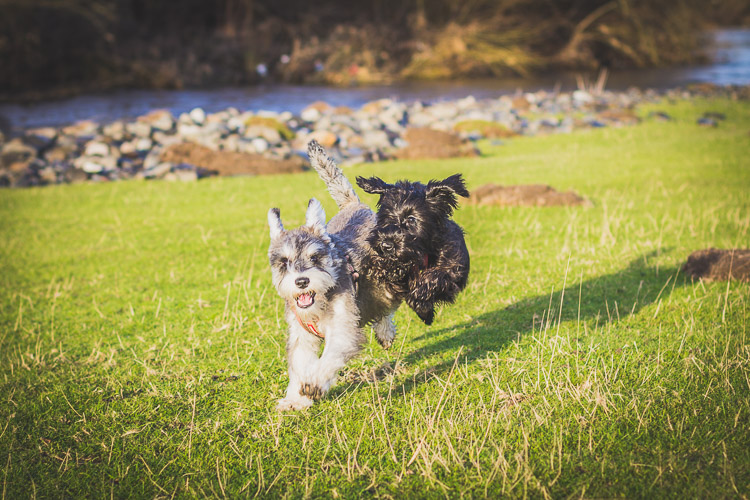
You may find that one of the most daunting aspects of dog photography is knowing where to position yourself. You don’t have the option to zoom in, so where you are physically positioned is vital to getting the shot.

In order to limit the amount of opportunities you miss, you need to think a couple of steps ahead at all times. Where are your subjects likely to run next? If they’re going to head over there, then where will you need to be to get the best shot? Should you try to get higher than your subject, or should you prepare to get low in order to get down to their level? These are all questions that you should always ask yourself.
DPS article 7

caption: These two Schnauzers were bundles of fun, but they never stopped moving. I constantly had to guess where they would be next. Often you’ll get it wrong, but sometimes you’ll get it right and nail the shot.

If you’re doing a pet portrait session then you could stand relatively close to the owner, ask them to throw a stick or ball (or pretend to). While the dogs are running away, get into position, and be ready for when they inevitably run back towards you.

Remember, your subject is likely to always be moving, so set your focus mode to AI Servo for Canon cameras, or AF-C for Nikon. These focussing modes are designed to continuously adjust focus on moving subjects to ensure that you have the best chance of nailing each shot.

DPS article 5

You end up too far away and have to crop heavily in post-processing

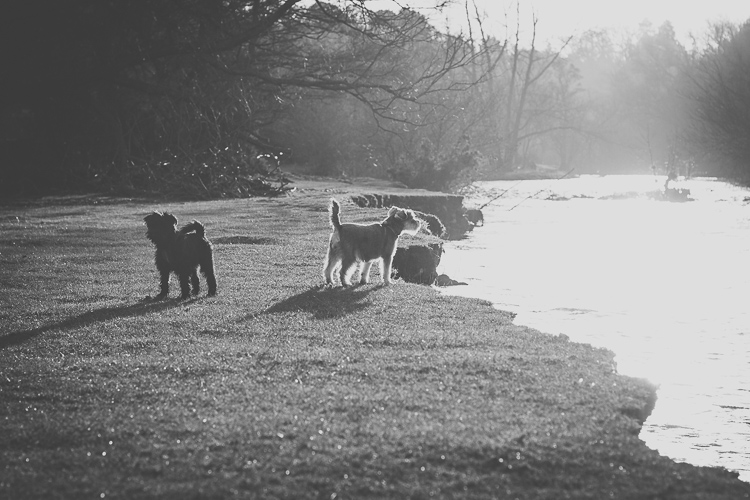
You don’t always need to get a close crop of your subject to end up with a great image. It’s fantastic when you can see their expressions close-up, or the actions of their body and legs as they run, but sometimes a picture of the dog playing in the distance, with a picturesque backdrop of an open field or wooded area, may be the perfect way to portray the scene.
DPS article 10

caption: Not zooming in on this shot allowed me to capture a greater sense of the atmosphere in this winters morning portrait session.

In summary

Hopefully this is enough to persuade anyone with an interest in pet photography to give prime lenses a try. You can pick up a nifty fifty prime for the fraction of the price of a decent zoom lens, and you’ll have real fun getting the most out of it. At the very least, you’re guaranteed an excellent workout!

DPS article 2

Do you photograph dogs or pets? Have you ever tried using a prime lens? Please share your results, thoughts and comments below.

googletag.cmd.push(function() {
tablet_slots.push( googletag.defineSlot( “/1005424/_dPSv4_tab-all-article-bottom_(300×250)”, [300, 250], “pb-ad-78623” ).addService( googletag.pubads() ) ); } );

googletag.cmd.push(function() {
mobile_slots.push( googletag.defineSlot( “/1005424/_dPSv4_mob-all-article-bottom_(300×250)”, [300, 250], “pb-ad-78158” ).addService( googletag.pubads() ) ); } );

The post Pros and Cons of Photographing Dogs with a Prime Lens by Ben Hughes appeared first on Digital Photography School.


Digital Photography School

 
Comments Off on Pros and Cons of Photographing Dogs with a Prime Lens

Posted in Photography