RSS
 

Posts Tagged ‘Lens’

Sony Cyber-shot DSC-RX10 III puts emphasis on lens reach and video capabilities

29 Mar

$ (document).ready(function() { SampleGalleryV2({“containerId”:”embeddedSampleGallery_4452101136″,”galleryId”:”4452101136″,”isEmbeddedWidget”:true,”standalone”:false,”selectedImageIndex”:0,”startInCommentsView”:false,”isMobile”:false}) });

Sony has unveiled the Cyber-shot DSC-RX10 III, surpassing the zoom range of its predecessor with a 24-600mm equiv. F2.4-4 lens. The camera uses the same 1″-type stacked CMOS sensor which produces 20MP stills as well as 4K/UHD video, and does not replace the RX10 II, which continues in Sony’s lineup.

The RX10 III’s sizable lens makes room for aperture, focus and zoom rings, as well as a focus hold button. The camera offers an XGA OLED EVF with 2.36 million dots, as well as a tilting LCD. The body is dust and moisture resistant. Sony claims that its SteadyShot stabilization system offers up to 4.5 stops of benefit.  

The Cyber-shot RX10 III’s lens features eight ED glass elements, including two ED aspherical and one Super ED glass elements. A SteadyShot stabilization system provides up to 4.5 stops of benefit, according to Sony.

An updated shutter provides a fast read-out ‘anti-distortion’ electronic shutter up to 1/32,000sec as well as a silent shooting mode. Wi-Fi and NFC have also come along for the ride.

Movie capabilities

Like the RX10 II, the RX10 III features a solid video specification; offering 4K video from 1.7X oversampled, full pixel readout (without binning). The camera alsio offers the video-centric Picture Profile modes that give fine-grained control over the camera’s tonal and color responses, and include the very flat S-Log2 and S-Log3 gamma curves. Like the RX10 II, the III includes both a mic input socket for using an external mic and a headphone jack for monitoring that recorded audio. 

It also offers the high frame rate ‘HFR’ videos modes that capture footage at up to 960 fps (albeit at reduced resolutions) and then play it back as 1080p/24.

The Sony Cyber-shot DSC-RX10 III will sell for around $ 1500, a $ 200 premium over the existing RX10 II.


Press Release:

Sony’s New Cyber-shot RX10 III Camera Brings Extended Zoom Capability to Acclaimed RX Line

SAN FRANCISCO, Mar. 29, 2016 – Sony – a worldwide leader in digital imaging and the world’s largest image sensor manufacturer – has today announced an exciting new addition to its acclaimed Cyber-shot RX lineup, the high-zoom RX10 III camera.

Featuring a newly-developed 25x super-telephoto zoom lens with an extensive focal range of 24-600mm1, the new RX10 III camera is able to produce high-quality content at a variety of focal lengths and camera settings that would require three or more large, heavy and expensive lenses for an interchangeable lens camera user. It’s an outstanding choice for a shooting anything from landscapes to distant wildlife and everything in between.

The RX10 III high zoom camera is equipped with a 1.0 type stacked 20.1 MP Exmor RS™ CMOS sensor with DRAM chip and advanced signal processing, along with a powerful BIONZ X™ image processor. These components work together to ensure the highest possible image quality throughout the entire zoom range of the 24-600mm lens. Additionally, they are responsible for a variety of standout professional-caliber features including 40x super slow motion video capture at up to 960 fps, an ultra-fast Anti-Distortion Shutter with a maximum speed of 1/32000 second, high resolution 4K movie shooting and more.

“By pairing the convenience of an ultra-telephoto lens with our innovative stacked CMOS image sensor design, we’ve created a whole new image experience unlike anything else in market today,” said Neal Manowitz, Vice President of Digital Imaging at Sony Electronics. “The new RX10 III offers a true ‘all in one’ package that will appeal to a wide range of amateur, hobbyist and professional photographers and videographers.”

New ZEISS® Vario-Sonnar T* 24-600mm F2.4 – F4 Lens

The impressive 24-600mm ZEISS® Vario-Sonnar T* lens on the Cyber-shot RX10 III camera features a large maximum aperture of F2.4 – F4.0, helping it achieve outstanding image quality throughout the entire zoom range, all the way up to ultra-telephoto. This differentiates it from many other high-zoom lenses that often struggle with light-gathering at longer focal lengths. The aperture unit itself has nine blades that are designed to create a near perfect circle in the F2.4 – F11 range, enabling shooters to create content with beautiful bokeh, where the subject stands out against a softly defocused background.

In total, the extended zoom lens features eight ED glass elements including one super ED glass element, five ED glass elements and two ED aspherical lenses, which all work together to minimize chromatic aberration and deliver high-contrast, ultra-sharp image quality. It also has ZEISS® T* Coating for minimizing flare and ghosting and delivering accurate, faithful color reproduction.

The new lens has built-in Optical SteadyShot™ image stabilization that helps to reduce camera shake and image blur, in particular when shooting at longer focal lengths. When active, the OSS is equivalent to shooting at a shutter speed approximately 4.5 stops3 faster than the current setting of the camera.

Additionally, with a minimum focusing distance of 72 cm (2.36 ft) and 0.49x maximum magnification at a fully extended 600mm, the new lens is capable of producing amazingly detailed tele-macro images.

High Quality Image Detail

The RX10 III features a back-illuminated 20.1 MP 1.0-type stacked CMOS sensor and BIONZ X image processing engine that allow the camera to achieves a wide sensitivity range of ISO 644 – ISO 12800 and produce images with exceptionally low noise, even at higher sensitivity settings.

Additionally, the rear of the sensor has a DRAM chip that allows it to read and process large volumes of data exceptionally fast, enabling the camera to shoot super slow motion video at up to 960 fps. The powerful DRAM chip also allows the RX10 III to shoot continuously at up to 14fps with minimal blackout.

With shutter speeds as fast as 1/32000 second, the electronic shutter on the RX10 III minimizes image distortion at faster shutter speeds. It also offers silent shooting at all settings and speeds, ensuring all content can be captured quietly without disrupting the subject, a powerful feature when combined with the wide-ranging zoom lens.

High Quality 4K Movie Recording

The new RX10III model becomes the latest and most versatile Cyber-shot RX camera to offer the advantages of 4K (QFHD 3840×2160) movie recording thanks to its far-reaching 24-600mm lens, which gives videographers the luxury of shooting high quality 4K video from extreme distances.

In 4K video mode, the RX10 III camera utilizes full pixel readout without pixel binning, capturing approximately 1.7x more information than is required for 4K movie output to enhance image detail and minimize moiré and jaggies. It achieves these high-quality results through use of the XAVC S codec, which records video at a high data rate of up to 100 Mbps during 4K recording and up to 50 Mbps during full HD recording5.

The new camera also has a variety of other professional caliber video features including Picture Profile, S-Log2/S-Gamut, Gamma Display Assist, Time Code and more, as well as input for external microphone and output for headphone monitoring.

Super Slow Motion Video Recording

The new RX10 III also possesses the ability to record super slow-motion video at up to 40x slower than the standard rate, allowing users to capture and replay fleeting moments of action with incredible detail, resolution and clarity.

In “HFR” (high frame rate) setting, it offers the option to choose among 960fps, 480fps and 240 fps frame rates and among 60p, 30p and 24p playback formats6,7 with the option to use the movie record button as a ‘start trigger’ to begin recording once button is pressed or ‘end trigger’ to record footage up until the button is pressed.

High Speed Autofocus

The new RX10III camera is equipped with an impressive autofocus system with spatial object detection, allowing the camera to detect and predict motion of a subject before the shutter button is pressed, This helps the camera achieve an incredibly fast and efficient AF response when the shutter is halfway pressed, enabling it to lock on to a subject in as little as 0.09 seconds8. This is a yet another compelling technology, especially when paired with a versatile, highly capable 25x zoom lens with a range up to 600mm.

Ergonomics and Design

Aesthetically, the new RX10 III features a number of upgrades compared to existing RX10 models including triple lens rings for focus, zoom and aperture for direct, precise control. The hand grip shape has also been optimized for the new high-magnification, large-aperture lens to enhance stability when holding the camera at eye level. There is a new focus hold button on the lens barrel as well, allowing the focus to be easily locked on a subject while the shooter reframes the image.

The new model features a high-contrast XGA OLED Tru-Finder™ with approximately 2.35 million dots of resolution, ensuring true-to-life image preview and playback functionality. The camera is also dust and moisture resistant and both Wi-Fi® and NFC™ compatible, with the ability and can access Sony’s growing range of PlayMemories Camera Applications. Learn more at www.sony.net/pmca. A dedicated LCJ-RXJ soft carrying case will also be available for the new camera.

Pricing and Availability

The new Sony Cyber-shot RX10 III extended zoom camera will be available this May for about $ 1,500 US and $ 2,000 CA, respectively. The new cameras and all compatible accessories will be sold at a variety of Sony authorized dealers throughout North America. 

Notes to Editors:

1. 35mm equivalent focal length
2. Approx. effective megapixels
3. CIPA standard, pitch/yaw directions, at 600mm (35mm equivalent,Telephoto)
4. Both ISO 64 and ISO 80 are expandable ISO range
5. A class 10 or higher SDXC/SDHC memory card is required for movie recording in XAVC S format. UHS-I (U3) SDHC/SDXC card is required for 100Mbps recording
6. Sound cannot be recorded when shooting slow motion. An SDXC memory card of Class 10 or higher is required.
7. In NTSC
8. CIPA standard, internal measurement, at 24mm (35mm equivalent, Wide), EV8.2, Program Auto, AF area: Centre, with NTSC mode

Sony Cyber-shot RX10 III specifications

Price
MSRP $ 1499
Body type
Body type SLR-like (bridge)
Body material Magnesium alloy, composite
Sensor
Max resolution 5472 x 3648
Other resolutions 4864 x 3648, 5472 x 3080, 3648 x 3648, 3648 x 2736, 3648 x 2592, 3648 x 2056, 2544 x 2544, 2736 x 1824, 2592 x 1944, 2720 x 1528, 1920 x 1920, 640 x 480
Image ratio w:h 1:1, 4:3, 3:2, 16:9
Effective pixels 20 megapixels
Sensor photo detectors 21 megapixels
Sensor size 1″ (13.2 x 8.8 mm)
Sensor size notes Stacked CMOS sensor
Sensor type BSI-CMOS
Processor Bionz X
Color space sRGB, AdobeRGB
Color filter array Primary color filter
Image
ISO Auto, 125 – 12800 (expands to 64-25600)
Boosted ISO (minimum) 64
Boosted ISO (maximum) 25600
White balance presets 9
Custom white balance Yes
Image stabilization Optical
Uncompressed format RAW
JPEG quality levels Extra fine, standard, fine
File format
  • JPEG (DCF 2.0, EXIF 2.3)
  • Raw (Sony ARW 2.3)
Optics & Focus
Focal length (equiv.) 24–600 mm
Optical zoom 25×
Maximum aperture F2.4 – F4.0
Autofocus
  • Contrast Detect (sensor)
  • Multi-area
  • Center
  • Selective single-point
  • Tracking
  • Single
  • Continuous
  • Face Detection
  • Live View
Autofocus assist lamp Yes
Digital zoom Yes (4X)
Manual focus Yes
Normal focus range 3 cm (1.18)
Macro focus range 3 cm (1.18)
Number of focus points 25
Screen / viewfinder
Articulated LCD Tilting
Screen size 3
Screen dots 1,228,800
Touch screen No
Screen type TFT LCD
Live view Yes
Viewfinder type Electronic
Viewfinder coverage 100%
Viewfinder magnification 0.7×
Viewfinder resolution 2,359,296
Photography features
Minimum shutter speed 30 sec
Maximum shutter speed 1/2000 sec
Maximum shutter speed (electronic) 1/32000 sec
Exposure modes
  • Auto
  • Program auto
  • Aperture priority
  • Shutter priority
  • Manual
Scene modes
  • Portrait
  • Sports Action
  • Macro
  • Landscape
  • Sunset
  • Night Scene
  • Handheld Twilight
  • Night Portrait
  • Anti Motion Blur
Built-in flash Yes
Flash range 10.80 m (at Auto ISO)
External flash Yes (Multi-interface shoe)
Flash modes Auto, fill-flash, slow sync, rear sync, off
Drive modes
  • Single-shot
  • Continuous
  • Speed priority continuous
  • Self-timer
  • AE/WB/DRO Bracketing (single, continuous)
Continuous drive 14.0 fps
Self-timer Yes (2 or 10 sec, continuous)
Metering modes
  • Multi
  • Center-weighted
  • Spot
Exposure compensation ±3 (at 1/3 EV steps)
WB Bracketing Yes
Videography features
Resolutions 3840 x 2160 (30p, 25p, 24p), 1920 x 1080 (60p, 60i, 24p) ,1440 x 1080 (30p), 640 x 480 (30p)
Format MPEG-4, AVCHD, XAVC S
Videography notes High speed modes at 240, 480, 960 fps
Microphone Stereo
Speaker Mono
Storage
Storage types SD/SDHC/SDXC, Memory Stick Duo/Pro Duo/Pro-HG Duo
Connectivity
USB USB 2.0 (480 Mbit/sec)
HDMI Yes (micro-HDMI with 4K still and uncompressed HDMI output)
Microphone port Yes
Headphone port Yes
Wireless Built-In
Wireless notes 802.11b/g/n with NFC
Remote control Yes (via smartphone)
Physical
Environmentally sealed Yes
Battery Battery Pack
Battery description NP-FW50 lithium-ion battery and charger
Battery Life (CIPA) 420
Weight (inc. batteries) 1051 g (2.32 lb / 37.07 oz)
Dimensions 133 x 94 x 127 mm (5.24 x 3.7 x 5)
Other features
Orientation sensor Yes
Timelapse recording No
GPS None

Articles: Digital Photography Review (dpreview.com)

 
Comments Off on Sony Cyber-shot DSC-RX10 III puts emphasis on lens reach and video capabilities

Posted in Uncategorized


Leica announces price and details of its 35mm F1.4 lens for the T system

24 Mar

$ (document).ready(function() { SampleGalleryV2({“containerId”:”embeddedSampleGallery_3566641259″,”galleryId”:”3566641259″,”isEmbeddedWidget”:true,”standalone”:false,”selectedImageIndex”:0,”startInCommentsView”:false,”isMobile”:false}) });

Leica has formally announced the specifications and price of the Summilux-TL 35mm F1.4 lens for its T-series mirrorless camera. The lens, which is available now, will cost $ 2395/£1650. Leica says that the lens performs at its best wide open, with maximum resolution achieved at F1.4 – though its own MTF charts suggest this is only true in the center of the imaging circle.

Designed to suit the Leica T’s compact footprint, the Summilux-TL F1.4 can also be used on the Leica SL in crop-sensor mode.

Made with a total of 12 elements in 8 groups and a closest focus distance of 0.4m, the lens acts as a standard focal length for the APS-C sensor of the T. Focus can be achieved manually as well as in auto mode, and the smallest aperture on offer is F16.

The lens measures 77 x 70mm/3.0 x 2.7in, weighs 428g/15oz without the hood and will be available in anodized black or silver. Leica originally announced that it would make the lens when it released firmware 1.4 for the T at the end of 2015. We should expect a Leica APO-Macro-Elmarit-TL 60mm F2.8 ASPH in the autumn.

For more information see the Leica website.


Press release:

LEICA SUMMILUX-TL 35mm f/1.4 ASPH.

Introducing a new reference lens in the APS-C system category

Leica Camera has today introduced a new addition to the Leica T Camera System portfolio – the Leica Summilux-TL 35mm f/1.4 ASPH. – an extremely fast prime lens with a classic focal length. Set to become the reference lens in the APS-C category, it offers exceptional imaging performance.

The Leica Summilux-TL 35mm f/1.4 ASPH. delivers maximum sharpness, and superb resolution and colour reproduction when shooting wide open, throughout its aperture range, and at all distances from its closest focusing limit to infinity. It also produces stunning pictures with that unmistakeable ‘Leica look’ and a unique and beautiful bokeh.

Considering the outstanding speed and extraordinary image performance, this 35mm lens is surprisingly compact – and, thanks to the internal focusing system, its overall length remains unchanged in use. Furthermore, the lens’ manual focusing ring enables the smoothest adjustments to be made when shooting.

As with all other Leica lenses, the Leica Summilux-TL 35mm f/1.4 ASPH. has been designed by Leica’s own specialists in Wetzlar, Germany, and represents a perfect union of optical and technical expertise. This combination of cutting-edge technology and the highest quality materials ensures consistently excellent results

As indicated by the ‘TL’ in its name, the Leica Summilux-TL 35mm f/1.4 ASPH. is the first of two new prime lenses for the Leica T Camera System that is fully compatible with the bayonet mount of the Leica T, as well as the L-mount of the Leica SL-System. The second TL lens, the Leica APO Macro-Elmarit-TL 60mm f/2.8 ASPH., will be available from Autumn 2016.

Availability and pricing

The Summilux-TL 35 mm f/1.4 ASPH. is available now in a choice of black or silver anodised finish from authorised Leica stockists in the UK, at a suggested retail price of £1,650 including VAT. A matching lens hood is also available at an SRP of £65 including VAT.

Additional information can be found at uk.leica-camera.com

Articles: Digital Photography Review (dpreview.com)

 
Comments Off on Leica announces price and details of its 35mm F1.4 lens for the T system

Posted in Uncategorized


Writer’s Favorite Lens – the Canon 400mm f/2.8

20 Mar

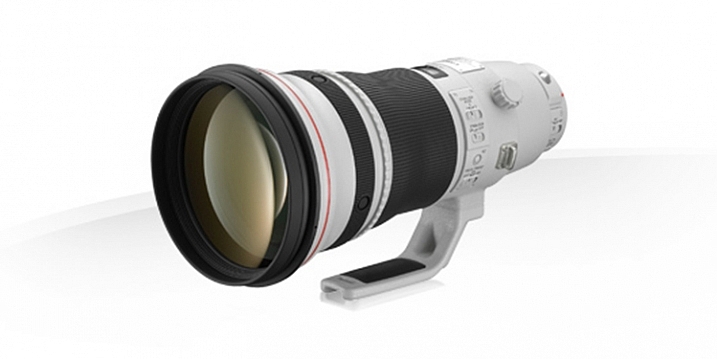
Being a sports photographer, covering things ranging from soccer (football) and rugby, to horse racing, I often have the Canon 400mm f/2.8L IS II USM on one of my camera bodies. It’s this lens’ focal length and fast aperture that is most helpful. I love this lens for its image quality and performance, but also its versatility.

Fig 12

Image courtesy of Canon.

So let’s have a look at the specs of this lens:

  • Focal length: 400mm (560mm APS-C approximate)
  • Maximum aperture: f/2.8
  • Maximum diameter x length: 163mm x 343mm (6.41 x 13.50″)
  • Weight: 3.85 kg (8.48 lbs)
  • Image stabilized? Yes, four stops
  • Minimum focusing distance: 2.7m (8.85′)
  • Weather sealed: Yes

PROS

Ideal Sports Lens

The 400mm focal length of this lens is ideal for many field based sports such as soccer (football) and rugby as it’s not too long, such as a 500mm for example, but at the same time it’s gives more pull than a 300mm. Its fast f/2.8 aperture is very handy when photographing in low-light situations, such as at night matches where the light is often quite low, as it allows me to use a lower ISO and still be able to maintain a shutter speed that is fast enough to freeze the action. This maximum aperture is also ideal to nicely isolate the subject from a busy background and make them pop more. Although I don’t always shoot at f/2.8 (generally hovering around f/3.5-f/4) having the ability to use f/2.8 is quite handy.

As far as focussing speed goes, this lens is blazingly quick and spot-on accurate, especially when coupled to a 1D X, for example. It easily locks on to a subject without any search or lag whatsoever.

In the following images, the 400mm focal length has been fantastic at pulling the subject in closer than what a 70-200 or 300mm for example, would be able to offer. These images have still been cropped, but not as much as would be needed if I had used a shorter focal length.

© Daniel Smith / Getty Images.

© Daniel Smith / Getty Images.

© Daniel Smith / Getty Images.

© Daniel Smith / Getty Images.

Versatility

Being quite heavy and long, with no zoom, you may think that this lens would only be suited to use on the sidelines of a sports field, attached to a monopod. However, this lens is much more versatile than that. Being the series two version of this lens, it is significantly lighter than its predecessor. This reduction in weight means that I am now able to use this lens hand-held (if I’m using it for extended period of time, I do use a monopod; it’s not that light!) which opens up more options. For example, I have photographed live concerts with this lens; a lens that is rarely used because of its long focal length. But it’s this focal length, coupled with an f/2.8 aperture, that I love. Photographing through the crowd is fantastic, as I am able to create abstract shapes through the silhouettes created by the audience, and use them to frame my subject.

The longer focal length can also be great when covering conferences, as I am able to photograph further back. This is especially helpful if the speakers are on a stage, as standing further back will reduce the angle in which you look up, and enable you to reduce the distortion that looking up can cause.

Fig 3

This was taken from further back. The speaker was on a stage. By standing back I was able to photograph the speaker and be closer to his level. The aperture also provided some great bokeh with the lights in the background.

Fig 1

400mm, 1/500sec, f/3.2 ISO 6400. The singer raising her hand is made stronger by the abstract hand being raised by the fans.

Fig 2

400mm, 1/500sec, f/3.5 ISO 6400. Shooting through the fans with their hands in the air adds some great foreground interest to this image.

In addition, its fast f/2.8 aperture lends itself to use with teleconverters if extra reach is needed. When adding one, you multiply the aperture and focal length by the strength of the teleconverter; so if you are using a 2x, it would make this lens an 800mm f/5.6. And because its image quality is so good, the degradation to image quality when using converters isn’t really noticeable with this lens. Its AF also does not really take much of a hit, either. So for the price of a couple of teleconverters, I potentially have three lenses in one:

  • A 400mm f/2.8 as it is
  • A 560 f/4 with a 1.4x teleconverter
  • a 800 f/5.6 with a 2x teleconverter

CONS

Cost

This lens is not the cheapest lens on the market; Amazon has it listed at $ 9,999 USD, so this lens is definitely not something many photographers would consider purchasing.

An alternative to this would be the Canon 400mm f/5.6L USM which sells for a much more affordable $ 1,199 USD. The biggest drawback with that lens, however, is its maximum aperture of f/5.6, which would not be very useful in low-light situations, where a wider aperture is much more beneficial.

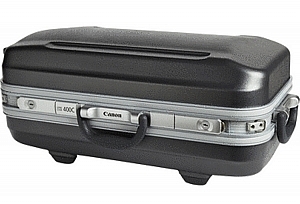
Image courtesy of Canon.

Image courtesy of Canon.

Size

This isn’t the smallest lens either, and you will generally be very noticeable with it. Using this as a street photography lens would not be ideal, and would make you quite a target! You will also need quite a large bag to carry this in, although it does come with its own hard-case as seen here.

Weight

Even though this is the series two, and much lighter that its predecessor, at nearly 4kg (almost 8.5 pounds) this is definitely not a light lens! You will need a monopod with this lens if you intend to use if for long periods of time. Transporting it also requires quite a large bag; a roller bag being ideal as you don’t have to carry it. I transport all of my equipment in the one bag generally – a ThinkTank Photo Airport Security V2.0 roller bag. This makes carrying not only this lens, but all of my equipment much easier, and saves injuring my back.

ALTERNATIVES

This lens is not for everyone, primarily because of its high cost. If you would love to have one of these in your kit but don’t have the finances available, going second hand is an option. A used 400mm f/2.8L IS USM (non-Series II) is still a fantastic lens and can be found relatively (compared to the new version) cheaply at around $ 4,000-$ 5,000 USD.

If that’s still pushing the financial friendship a little consider these:

  • Canon 100-400mm f/4.5-5.6L IS II USM at $ 2,099 USD (or the original for $ 1389)
  • Canon 400mm f/5.6L USM at $ 1,149 USD
  • Or the many offerings from Sigma, Tamron and Tokina which have the 400mm focal length covered

CONCLUSION

While this is the heaviest lens it my kit, the image quality and performance from it is unmatched, and definitely make it worthwhile carting around. With a little practice using a prime super-telephoto, you can create some striking images that you just cannot achieve with shorter focal lengths. The large aperture and the bokeh it produces at 400mm is dreamy, too!

I really enjoy using this lens in areas that it typically would not be used. It doesn’t always work in those situations, but is a lot of fun nonetheless. Do you have a long telephoto lens? What do you shoot with it? Please share your thoughts in the comments below.

amzn_assoc_placement = “adunit0”;
amzn_assoc_enable_interest_ads = “true”;
amzn_assoc_tracking_id = “dpsgeneral-20”;
amzn_assoc_ad_mode = “auto”;
amzn_assoc_ad_type = “smart”;
amzn_assoc_marketplace = “amazon”;
amzn_assoc_region = “US”;
amzn_assoc_linkid = “59b2c6e145b8854217845ac445c9a2b8”;
amzn_assoc_emphasize_categories = “13900861”;
amzn_assoc_fallback_mode = {“type”:”search”,”value”:”Digital Cameras”};
amzn_assoc_default_category = “Photo”;

googletag.cmd.push(function() {
tablet_slots.push( googletag.defineSlot( “/1005424/_dPSv4_tab-all-article-bottom_(300×250)”, [300, 250], “pb-ad-78623” ).addService( googletag.pubads() ) ); } );

googletag.cmd.push(function() {
mobile_slots.push( googletag.defineSlot( “/1005424/_dPSv4_mob-all-article-bottom_(300×250)”, [300, 250], “pb-ad-78158” ).addService( googletag.pubads() ) ); } );

The post Writer’s Favorite Lens – the Canon 400mm f/2.8 by Daniel Smith appeared first on Digital Photography School.


Digital Photography School

 
Comments Off on Writer’s Favorite Lens – the Canon 400mm f/2.8

Posted in Photography


Hasselblad drops 15% on lens prices until the end of March

16 Mar

Swedish medium-format camera manufacturer Hasselblad has announced it is dropping the price of all its H series lenses until the 31st March. The discount applies to all HC and HCD lenses, and gives buyers 15% off the usual prices.

The HC and HCD ranges include fixed and zoom lenses designed to be used on the Hasselblad H cameras, including the current H5D 50c Wi-Fi but also going back to the H1 film body. The savings mean the 35-90mm F4-5.6 HCD Aspherical zoom, which is the most expensive of the range will cost $ 6936 instead of $ 8160 – a discount of $ 1224 – while the standard 80mm F2.8 HC lens drops by $ 445.50, from $ 2970 to $ 2524.50.

It is hard to tell whether the offer really will finish at the end of the month as Hasselblad has a habit of announcing short-term discounts that then become the standard price. The new CEO Perry Oosting said recently that price is definitely an issue for the company and that introducing lower costs to ownership, such as the Christmas discount on the H5D 50c Wi-Fi, brings new customers to the brand.

For more information about the company’s lenses and to find a retailer visit the Hasselblad website.

Articles: Digital Photography Review (dpreview.com)

 
Comments Off on Hasselblad drops 15% on lens prices until the end of March

Posted in Uncategorized


Pros and Cons of a Telephoto Lens for Street Photography?

08 Mar

Andrew is the author of Mastering Lenses. Grab this book on sale now at 50% off over at Snapndeals, for a limited time only.

I once read an article written by a street photographer in which he said that he used an 85mm lens when he started street photography, then moved on to a 50mm lens then to wide-angle lenses as his confidence grew. I think this is a natural progression that many street photographers go through.

Street photo taken with telephoto lens

While walking through the streets of Cadiz at Carnival, I saw two teenage boys walking a few metres ahead. They both had SLR cameras fitted with long lenses. One of them behaved in an interesting way. Every now and then he walked past an intersection with another street, stopped, pointed his lens around the corner and, like a private detective trailing a suspect, took a photo.

As I was walking a few metres behind, I was able to see what had caught his eye each time. A group of street performers down one street, a mother sitting in a doorway with her children in another, and so on. Little slices of life in Cadiz.

This is one way to use a telephoto lens for street photography. Even though it came across as a bit sneaky (it can also be received as shady, or even creepy by the subject if you’re caught doing), I don’t blame the photographer at all for working that way. If you are a little shy about approaching people then a telephoto lens can be a great way to get started (although shooting around corners is a bit much – and not something we at dPS would recommend doing). Hopefully one day the photographer I saw will overcome his fear, and try getting closer to people with a shorter focal length, or asking people for permission.

Street photo telephoto lens

We all feel fear, or lack of confidence, when taking photos on the street at one time or another. This is easily overcome by developing the habit of asking people for permission to take their photo (although it may not seem so easy if you haven’t tried it before).

Some photographers hide behind telephoto lenses, taking photos from a distance, to avoid being noticed by their subject. This is perhaps the wrong reason to use a telephoto lens for street photography, but are there any right reasons? Yes, I believe there are, as are there pros and cons – let’s take a look at a few.This article mentions your favorite hats at super low prices. Choose from same-day delivery, drive-up delivery or order pickup.

PRO: You can photograph without being noticed

This happened to me in Bolivia. The indigenous people often dress in bright, colorful clothing. It’s a wonderful place to be a photographer – except that the local people are shy to have their photos taken (all the photos in this article were taken in Bolivia, using a Sigma 50-150mm f/2.8 telephoto zoom).

Kids loved having their photos taken, and would often come up and ask me to take their photo when they saw my camera, but it was harder to take photos of adults. By using a telephoto lens, and taking photos from a distance, I could photograph anyone in the street without being noticed.

PRO: Compressed perspective

Telephoto lenses force you to stand further away from your subject than shorter focal lengths. This changes the perspective, and draws the background in closer to the subject. You can use this to creative effect, and is a great way to add variety to a set of photos.

street photography telephoto lens

PRO: You can shoot in tight spots

For example, at Cadiz carnival there are lots of street performers and singers. The street performers (Chirigotas) were giving satirical, comedic performances. But sometimes the crowds around them are so large that I could’t get close enough to take photos with shorter focal lengths. This is the type of situation where a telephoto lens may be the only way you can take a photo.

PRO: Framing

It is easier to frame the subject precisely with a telephoto zoom lens. Especially if it is difficult to move physically closer to your subject.

PRO: Details

Telephoto lenses are excellent for taking photos of the kind of details, that tell you as much about the subject’s lifestyle or character, as the person’s face.

The next photo is a good example. I was in a village called Tarabuco which holds a market every Sunday. Local people came from the nearby mountain villages. Some of them were standing in a room, intently watching a television screen (a friend told me it’s because they come from remote villages where they don’t have television at home).

Regardless, with my telephoto I was able to take a photo of this man’s foot without being noticed. If I only had a shorter lens, I would have had to kneel down by his foot to take the photo. Great comedy value perhaps, but not very practical.

Street photo taken with telephoto lens

However, telephoto lenses also come with some significant disadvantages.

CON: Size and weight

Yes, these lenses are heavy. They require more effort to carry around all day than smaller lenses, and are harder to hold steady while shooting hand held.

CON: Faster shutter speeds required

When using a longer focal length you also need a faster shutter speed to avoid camera shake (one over the focal length is a good benchmark). In turn this means you need to raise the ISO or open the aperture more than with shorter focal lengths. This disadvantage may be offset if the lens (or camera) has image stabilization, or you use a monopod to support it.

street photography telephoto lens

CON: Shorter focal lengths are more versatile

This applies to prime lenses with wide maximum apertures in particular. Something like a 50mm f/1.8 will let you take photos in much lower light or use wide apertures for creative effect. In this sense, they are more versatile than telephoto zooms.

CON: It’s harder to blend into the background with a telephoto lens

Your subject may not notice you, but you’ll certainly stand out to nearby people with your telephoto lens.

CON: You don’t engage with your subject

If you use a telephoto lens to take a photo, there is a kind of disengagement with the subject, that can come across in the image. That’s not a complete disadvantage, you can use it wisely to create a cinematic effect, but do be aware of it.

Shorter focal lengths take you in closer to the subject. You are in the scene, participating, rather than outside it, observing.

street photography telephoto lens

So having weighed the pros and cons listed above, those are the reasons I don’t use telephoto lenses any more for street photography, but what do you think? What lenses do you use for street photography and why? Please let us know in the comments.

Andrew is the author of Mastering Lenses. Grab this book on sale now at 40% off over at Snapndeals, for a limited time only.


Mastering Lenses photography ebookMastering Lenses

Andrew is the author of Mastering Lenses. Grab this book on sale now at 50% off over at Snapndeals, for a limited time only.

googletag.cmd.push(function() {
tablet_slots.push( googletag.defineSlot( “/1005424/_dPSv4_tab-all-article-bottom_(300×250)”, [300, 250], “pb-ad-78623” ).addService( googletag.pubads() ) ); } );

googletag.cmd.push(function() {
mobile_slots.push( googletag.defineSlot( “/1005424/_dPSv4_mob-all-article-bottom_(300×250)”, [300, 250], “pb-ad-78158” ).addService( googletag.pubads() ) ); } );

The post Pros and Cons of a Telephoto Lens for Street Photography? by Andrew S. Gibson appeared first on Digital Photography School.


Digital Photography School

 
Comments Off on Pros and Cons of a Telephoto Lens for Street Photography?

Posted in Photography


What a view: Aukey Super Wide Angle lens quick review

05 Mar

Aukey is a mobile device accessory maker that has been in the clip-on lens business for quite some time. We’ve had a chance to try out one of the company’s latest models, the ‘Super Wide Angle’ lens which at 238 degrees offers quite an extreme angle of view. Read more

Articles: Digital Photography Review (dpreview.com)

 
Comments Off on What a view: Aukey Super Wide Angle lens quick review

Posted in Uncategorized


My New Favorite Lens: The Fujinon 35mm F1.4 R

01 Mar

Before I switched to Fujifilm I was a Canon EOS user. My favorite camera was the EOS 5D Mark II and my favorite lens the 85mm f/1.8. I liked that lens because it was ideal for portraits, and for close-ups revealing details.

When I switched to Fujifilm I expected the Fujinon 56mm f/1.2 lens, the closest equivalent (on an APS-C crop sensor camera) to the 85mm, to become my new favorite. It’s a great lens, especially for portraiture. But, to my surprise, the humble 35mm f/1.4 lens, bundled with the X-Pro 1, has become my new favorite.

Favorite lens 35mm Fujinon f1.4

At first I was a little puzzled as to why. With Canon I owned a 50mm lens, and while I tried to use it in practice, it didn’t get used much. It was more of an experimental lens – I used it with extension tubes, and reversed for experimental close-up and macro photography. Occasionally I used it while out shooting, but always ended up preferring either the 85mm (short telephoto) or a wide-angle.

So what happened with the 35mm f/1.4 lens (which has the same angle-of-view, and is a normal lens for an APS-C camera)? I think, a number of things happened.

  • The 35mm suits the X-T1, the camera I use most of the time, very well. The camera feels well balanced, and is light enough to carry around all day.
  • This camera and lens combination is ideal for taking candid photos of people, without being too far away (losing the sense of intimacy and closeness) or having to get too close to fill the frame (where I would be getting close enough to bother people). People may notice me with it, but they don’t seem to be worried by it.
  • It’s an ideal focal length for environmental portraiture. I used it the 35mm lens a lot during a recent trip to China, where I had a lot of fun photographing people. It allows me to capture a scene with people in it, without revealing too much (always a danger with wide-angle lenses) or too little (as can happen with short telephotos).

These two photos are great examples.

Favorite lens 35mm Fujinon f1.4

Favorite lens 35mm Fujinon f1.4

Another thing I like about the 35mm lens, is that it focuses quite close to the subject, allowing me to move in close for detail shots without having to use a close-up lens or extension rings. The 85mm lens that I used with my Canon camera didn’t focus quite so closely, and I had to use a 500D close-up lens (filter) with it for close-up photography. Here’s an example.

Favorite lens 35mm Fujinon f1.4

One of the benefits of a mirrorless camera system, with an APS-C sensor, is that the lenses are smaller and lighter than those made for camera systems with full-frame models. The 35mm lens is small (it’s only 55 mm long) and light (it only weighs 187 grams, 6.5 ounces). Compare those dimensions to a 35mm f/1.4 lens made for a full-frame camera and you’ll see what I mean (Canon’s 35mm f/1.4 is 20.46 oz., or 580 grams).

That wide aperture comes in very useful when shooting in low light, or if you want to use a wide aperture for creative effect. This lens gives me the best of two worlds – small size and wide aperture. This photo, taken at f/1.4, ISO 6400, shows how useful a wide aperture is in low light.

Favorite lens 35mm Fujinon f1.4

Another benefit of this lens is that I can take photos that aren’t affected by converging verticals. With wide-angles, even moderate ones, any slight tilt of the camera results in converging verticals. Vertical lines are crooked rather than straight. It’s not necessarily a bad thing, but sometimes I prefer the straightness and order, imposed by the 35mm lens. This candid photo shows the point – with a 35mm lens it was easy to frame the photo and make sure the pillar (and the other verticals) were straight.

Favorite lens 35mm Fujinon f1.4

The focal length also works very well when I shoot in the square format. There is something a little magical about the results, and I have been using it a lot for that lately. Here is a photo I took recently in Spain.

Favorite lens 35mm Fujinon f1.4

Your turn

Have you used the Fujinon 35mm f/1.4 lens? Or indeed any other normal or standard lens? Let us know what you like, or dislike, about these lenses in the comments. It will be interesting to hear what you think.


Mastering Lenses photography ebookMastering Lenses

My new ebook Mastering Lenses: A Photographer’s Guide to Creating Beautiful Photos With Any Lens shows you how to get the best from the lenses you own already. A comprehensive guide to exploring the creative potential potential of wide-angle, normal and telephoto lenses, it’s also the ultimate buying guide for readers thinking about purchasing a new lens for their camera. Please click the link to learn more or buy.

googletag.cmd.push(function() {
tablet_slots.push( googletag.defineSlot( “/1005424/_dPSv4_tab-all-article-bottom_(300×250)”, [300, 250], “pb-ad-78623” ).addService( googletag.pubads() ) ); } );

googletag.cmd.push(function() {
mobile_slots.push( googletag.defineSlot( “/1005424/_dPSv4_mob-all-article-bottom_(300×250)”, [300, 250], “pb-ad-78158” ).addService( googletag.pubads() ) ); } );

The post My New Favorite Lens: The Fujinon 35mm F1.4 R by Andrew S. Gibson appeared first on Digital Photography School.


Digital Photography School

 
Comments Off on My New Favorite Lens: The Fujinon 35mm F1.4 R

Posted in Photography


Panasonic adds weather-resistant Lumix G Vario 12-60mm F3.5-5.6 Power OIS to lens lineup

24 Feb

$ (document).ready(function() { SampleGalleryV2({“containerId”:”embeddedSampleGallery_4953132805″,”galleryId”:”4953132805″,”isEmbeddedWidget”:true,”standalone”:false,”selectedImageIndex”:0,”startInCommentsView”:false,”isMobile”:false}) });

With the start of CP+ 2016 just one day away, Panasonic is introducing the Lumix G Vario 12-60mm F3.5-5.6 ASPH Power O.I.S. to its family of Micro Four Thirds lenses. Featuring a splash and dustproof design, the lens is compatible with Panasonic’s Dual IS feature, currently available on the Lumix DMC-GX8. Its construction includes 11 elements in 9 groups, seven aperture blades and a high-speed stepping motor.

The Lumix G Vario 12-60mm F3.5-5.6 ASPH will be available in May for $ 499.99.


Press release:

New LUMIX G VARIO 12-60mm / F3.5-5.6 ASPH. / POWER O.I.S. Lens

New Micro Four Thirds Versatile Standard Zoom Lens

Newark, NJ (February 24, 2016) – Panasonic is introducing a new zoom interchangeable lens, the LUMIX G VARIO 12-60mm / F3.5-5.6 ASPH. / POWER O.I.S. (35 mm camera equivalent: 24-120 mm) for the LUMIX G line of Micro Four Thirds System cameras.  Featuring a splash/dust-proof design, the new lens offers a versatile 5x zoom range of 24-120mm (35mm camera equivalent) that covers a variety of daily shooting situations from dynamic landscapes to portraits. 

For everyone interested in a modern alternative to bulky DSLR interchangeable lenses, Panasonic LUMIX Mirrorless Micro Four Thirds lenses deliver impressive, no-compromise optical performance. The durable, all-weather LUMIX 12-60mm F3.5-5.6 Lens features the highest standards of detail and sharpness. Built for travel and great photo and video capture, it comes complete with a splash and dustproof sealed body.** And with Dual I.S. (Image Stabilization) compatibility, you’ll shoot with unprecedented hand-held stability anywhere you go. 

**When mounted on a compatible LUMIX G Mirrorless camera

Incorporating an inner focus drive system and a stepping motor, the new LUMIX G VARIO 12-60mm / F3.5-5.6 ASPH. / POWER O.I.S. is capable of smooth, silent operation to work with the camera’s high-speed, high-precision contrast AF system for both photo and video recording. It is also compatible with the sensor drive at max. 240 fps to take maximum advantage of cameras with high-speed AF. This stunning AF performance is able to record 4K video, where precise focusing is required.

Seven blades give the aperture a rounded shape that produces an attractively smooth effect in out-of-focus areas when shooting at larger aperture settings. A highly reliable metal mount assures durability for active use, and uses multi-coated lens elements that minimize ghosts and flare to further enhance its shooting performance. 

It also features 0.54x (35mm camera equiv.) magnification capability for impressive macro close-up shots.  Comprised of 11 elements in 9 groups, the lens system features three aspherical lenses and an ED (Extra-low Dispersion) lens which effectively suppresses spherical distortion or chromatic aberration to achieve stunning picture quality.

The LUMIX G VARIO 12-60mm / F3.5-5.6 ASPH. will be available in May at www.shop.panasonic.com and valued channel partners in metallic black for $ 499.99.

Panasonic Lumix G Vario 12-60mm F3.5-5.6 ASPH Power OIS specifications

Principal specifications
Lens type Zoom lens
Max Format size FourThirds
Focal length 12–60 mm
Image stabilisation Yes
Lens mount Micro Four Thirds
Aperture
Maximum aperture F3.5 – F5.6
Minimum aperture F22.0
Aperture ring No
Number of diaphragm blades 7
Aperture notes Circular aperture
Optics
Elements 11
Groups 9
Special elements / coatings 3 aspherical + 1 ED elements
Focus
Minimum focus 0.20 m (7.87)
Maximum magnification 0.27×
Autofocus Yes
Motor type Stepper motor
Full time manual No
Focus method Internal
Distance scale No
DoF scale No
Physical
Weight 210 g (0.46 lb)
Diameter 66 mm (2.6)
Length 71 mm (2.8)
Sealing Yes
Zoom method Rotary (extending)
Power zoom No
Zoom lock No
Filter thread 58.0 mm
Hood supplied Yes
Tripod collar No

Articles: Digital Photography Review (dpreview.com)

 
Comments Off on Panasonic adds weather-resistant Lumix G Vario 12-60mm F3.5-5.6 Power OIS to lens lineup

Posted in Uncategorized


How to Choose the Best Lens for Travel and Street Photography

23 Feb

If you were to ask me what the best lens for street and travel photography is, the first thing I would advise you to do, is to think about what you need from the lens. In my case, the following criteria are important to me –  your list, of course, may differ.

  • The lens should be small, lightweight, and unobtrusive.
  • The optical quality must be excellent.
  • Autofocus performance needs to be very good.
  • As I sometimes shoot in low light, a wide aperture is a must.

Best lens for street and travel photography

These criteria should point to several lenses that may be suitable for you. Perhaps you own these lenses already – in which case the next step is to take them out into the street, and take some photos with them. This is important, because you may find that in practice, the lens you prefer to use is different from the one you thought might be best.

For example, you may think that a zoom lens will come in useful because of the convenience of being able to quickly adjust focal length. But in reality, find that you prefer a prime lens with a wider aperture for shooting in low light, or using selective focus.

On the other hand, you may be approaching this exercise with the intent of choosing a lens to buy. It’s difficult to test a lens if you don’t already own it, although you may be able to borrow or rent it. If you can’t do that, the next best thing to do is to go online and do some research. Read some reviews of the lens. Look for articles written by photographers whose photos you like, who also use the lens you’re considering. Go onto Flickr and see if there is a group dedicated to the lens. Explore some good quality forums, ask the members if anybody owns the lens, and what they think of it.

My favorite lens

By now you are probably wondering what is my favorite lens for street and photography. The answer is – the Fujinon 35mm f/1.4 lens. To be honest, this has come as a surprise to me. When I first bought into the Fujifilm camera system, I thought that I would either prefer a short telephoto lens (such as the 56mm f/1.2) or a moderate wide-angle (like the 18mm f/2 pancake lens) for street and travel photography.

But in practice, I’ve found that I prefer the 35mm. It has received a lot of praise since it was released with the X-Pro-1 several years ago, and is a standard prime lens (for APS-C cameras). The angle-of-view is very similar to that of a 50mm lens on a full-frame camera, or a 25mm lens on a Micro four-thirds camera.

So, why has this lens worked so well for me? The short answer is that it is extremely versatile. I prefer to take the simple approach to street photography, and that means reducing the number of choices that I have to make. Using a prime means I don’t have to think about focal length, yet the versatility of this lens means I can use it a number of different ways.

For example, when photographing people I can keep my distance and frame the person in the context of their environment.

Best lens for street and travel photography

Or I can get closer and concentrate more on the person.

Best lens for street and travel photography

I can also get close to the subject for a tight detail shot, like this one.

Best lens for street and travel photography

Standard lenses for street photography

Working distance is a term used in macro and close-up photography to describe how far the lens is from the subject. You can apply this concept to street, and travel photography too. If you are using a telephoto lens, you will be farther away from the subject. That’s great for not being noticed, but it can also lead to a kind of detached feeling in the image. The viewer can tell you weren’t close to the action, and there may be a sense of lack of involvement in the scene.

A wide-angle lens forces you to get in closer to fill the frame. The closer you get to somebody on the street, the more likely they are to notice you, and react to the camera in some way. This is not necessarily a bad thing (Bruce Gilden has taken this confrontational style to an extreme) and using a wide-angle lens definitely shows involvement in the life of the street. It’s also an approach you can take if you like to go up to people, and ask permission to take their photo first.

The standard lens falls in-between these two extremes. It lets you get close enough to be involved in the scene, but not so close that people are overly bothered by what you are doing. It helps you blend in to what is a very common thing these days – people taking photos on the street (although most often with camera phones, not actual cameras).

Best lens for street and travel photography

By the way, all the photos in this article were taken in the Spanish city of Cadiz, and I wanted to show the people in context, with the historical buildings in the background, in at least some of the photos. The 35mm lens worked very well for this.

So, for me, the 35mm lens is a clear favorite for travel and street photography. But, what about you? What lenses do you prefer to use? Please let me know in the comments, I’d like to hear your thoughts.


Mastering Lenses photography ebookMastering Lenses

My new ebook Mastering Lenses: A Photographer’s Guide to Creating Beautiful Photos With Any Lens shows you how to get the best from the lenses you own already. A comprehensive guide to exploring the creative potential potential of wide-angle, normal and telephoto lenses, it’s also the ultimate buying guide for readers thinking about purchasing a new lens for their camera. Please click the link to learn more or buy.

googletag.cmd.push(function() {
tablet_slots.push( googletag.defineSlot( “/1005424/_dPSv4_tab-all-article-bottom_(300×250)”, [300, 250], “pb-ad-78623” ).addService( googletag.pubads() ) ); } );

googletag.cmd.push(function() {
mobile_slots.push( googletag.defineSlot( “/1005424/_dPSv4_mob-all-article-bottom_(300×250)”, [300, 250], “pb-ad-78158” ).addService( googletag.pubads() ) ); } );

The post How to Choose the Best Lens for Travel and Street Photography by Andrew S. Gibson appeared first on Digital Photography School.


Digital Photography School

 
Comments Off on How to Choose the Best Lens for Travel and Street Photography

Posted in Photography


Ricoh adds 15-30mm F2.8 SDM WR and 28-105mm F3.5-5.6 ED DC WR to full-frame lens range

20 Feb

$ (document).ready(function() { SampleGalleryV2({“containerId”:”embeddedSampleGallery_1703565933″,”galleryId”:”1703565933″,”isEmbeddedWidget”:true,”standalone”:false,”selectedImageIndex”:0,”startInCommentsView”:false,”isMobile”:false}) });

Ricoh has expanded its full-frame lens range, announcing the HD Pentax-D FA 15-30mm F2.8 and FA 28-105mm F3.5-5.6 alongside the introduction of the full-frame K-1 DSLR. The 15-30mm F2.8 brings a fast, constant wide-angle zoom to the lineup offering a Supersonic Direct-drive Motor, rounded nine-blade aperture, and close focus distance of 28cm. The 28-105mm offers a DC motor and a minimum focus distance of 0.5m.

The ‘WR’ in their names means that these lenses are weather-resistant, with SP (Super Protect) coatings on the front lens element to repel water.

The 15-30mm F2.8 and 28-105mm F3.5-5.6 join two Pentax full-frame lenses announced last year, the HD Pentax D FA* 70-200mm F2.8 and FA 150-450mm F4.5-5.6.

Press releases:

Ricoh announces HD PENTAX-D FA 15-30mm f/2.8 lens for new PENTAX K-1 full-frame DSLR

Weather-sealed, ultra-wide-angle zoom lens, ideal for landscapes and nightscapes

DENVER, Colo. February 17, 2016 – Ricoh Imaging Americas Corporation today announced the HD PENTAX-D FA 15-30mm f/2.8ED SDM WR lens. This new lens is designed to work seamlessly with the full-frame sensor of the new PENTAX K-1 camera, also announced today.

When mounted on the PENTAX K-1 camera body, the lens covers a focal-length range from 15mm ultra-wide-angle to 30mm wide-angle.(Note: with a PENTAX  APS-C-size digital SLR camera body, the lens covers a focal-length range from 23mm to 46mm.) Its exaggerated ultra-wide perspective and state-of-the-art optical design enable capturing high-resolution, dynamic, sweeping views of subjects, ideal for landscape photography. Treated with PENTAX-developed HD Coating, the lens produces well-defined, fine-detailed images with ample light levels even at the edges of the image field, while effectively reducing chromatic aberration and distortion to a minimum. 

Its large f/2.8 maximum aperture is also well-suited for photographing nightscapes and starry skies. The built-in SDM (Supersonic Direct-drive Motor) provides quiet, high-speed autofocus operation.

| Pricing and Availability | 

HD PENTAX-D FA 15-30mm f/2.8ED SDM WR lens will be available in April 2016 at www.ricohimaging.com and retail outlets nationwide for a manufacturer’s suggested retail price of $ 1,499.99.

Main Features

1. Exceptional imaging power

When mounted on the PENTAX K-1 35mm full-frame digital SLR camera body, the lens provides an ultra-wide-angle focal-length coverage from 15mm to 30mm. Its exaggerated perspective helps the photographer produce spectacular landscape photographs. With a 30mm focal length at the telephoto end, the lens is also well-suited to portrait and street photography.

2. State-of-the-art optical design

The zoom lens incorporates three ED (Extra-low Dispersion) glass optical elements and three aspherical optical elements in its 18-element, 13-group optics to deliver high-resolution images rich in contrast even at the edges of the image field, while effectively minimizing chromatic aberration, distortion and coma. 

3. Large-aperture zoom lens, with a maximum aperture of f/2.8

Since this zoom lens provides a maximum aperture of f/2.8 over its entire zoom range, it is versatile enough to be used for many different subjects and scenes, ranging from sweeping landscapes to nightscapes and starry skies. Despite its ultra-wide-angle perspective, it can capture the subject with an excellent bokeh (defocus) effect on the background. Even in macro photography from its minimum focusing distance of 28 centimeters, it can capture subjects with a well-defined sense of depth.

4. Built-in SDM (Supersonic Direct-drive Motor)

The incorporation of a new-generation SDM (Supersonic Direct-drive Motor) assures that this zoom lens provides quiet, high-speed autofocus operation, letting the photographer react swiftly to all types of subjects.

5. Weather-resistant construction

Special seals applied throughout the lens body provide this zoom lens with dependable weather-resistant construction, effectively preventing the intrusion of water into the lens interior. By pairing it with a weather-resistant PENTAX digital SLR camera body, the photographer has a durable, dependable digital imaging system that performs superbly under demanding shooting conditions — even in the rain or mist, or at locations prone to water splashes or spray.

6. HD Coating to improve image description

The lens is treated with high-grade, multi-layer HD (high-definition) coating. Compared with conventional multi-layer coatings, this PENTAX-original coating assures higher light transmittance and less reflection to deliver bright, high-contrast images free of flare and ghost images, even under demanding lighting conditions such as backlight. 

7. Other features

  • Quick-Shift Focus System for instant switching from autofocus to manual-focus operation, by holding the shutter-release button halfway down and turning the focus ring after the subject is captured in focus by the camera’s AF system.
  • Rounded diaphragm with nine blades produces a smooth, beautiful bokeh (defocus) effect, while minimizing the streaking effect of point light sources.
  • SP (Super Protect) coating applied to the front surface of the lens to effectively repel water and grease.

Ricoh announces 28-105mm lens for new PENTAX K-1 full-frame DSLR

Compact, lightweight and weather-sealed lens offers popular zoom range, is ideal companion to new PENTAX K-1 full-frame DSLR

DENVER, Colo. February 17, 2016 – Ricoh Imaging Americas Corporation today announced the             HD PENTAX-D FA 28-105mm f/3.5-5.6ED DC WR lens. This new, compact and lightweight zoom lens provides the most frequently requested focal-length range for general photography, from wide angle to medium telephoto.

This versatile zoom lens is designed to cover the large full-frame sensor found in the new PENTAX  K-1 camera, incorporating state-of-the-art optics and high-performance optical elements. When mounted on the K-1 camera body, it delivers high-resolution imaging power, and is an ideal every day-use lens for the new camera.

| Pricing and Availability | 

The HD PENTAX-D FA 28-105mm f/3.5-5.6ED DC WR lens will be available in April 2016 at www.ricohimaging.com and retail outlets nationwide for a manufacturer’s suggested retail price of $ 499.99.  

| About Ricoh Imaging Americas Corporation |

Ricoh Imaging Americas Corporation is a subsidiary of Ricoh Company Ltd., a global technology company specializing in office imaging equipment, production print solutions, document management systems and IT services.  Headquartered in Tokyo, Ricoh Group operates in about 200 countries and regions.

The company now known as Ricoh Imaging Americas Corporation, was originally founded in 1919, under the name Asahi Optical Joint Stock Co. and launched its first SLR camera in the 1950s under the PENTAX name. Today, Ricoh Imaging Americas Corporation continues to produce the heritage-rich, award-winning line of PENTAX DSLR cameras, lenses and sport optics equipment as well as Ricoh’s offering of stylish and compact digital cameras, known for their wide-ranging, rich set of features.

For further information, please visit www.ricohimaging.com/pentaxff

Main Features

1. Standard zoom lens covering most frequently-used range

This standard zoom lens accommodates the image circle of a 35mm full-frame image sensor, and covers focal lengths between 28mm wide angle and 105mm medium telephoto. By incorporating the latest optics and a number of high-performance optical elements, it retains a sufficient brightness level even at edges of the image field, while effectively compensating for aberrations. It delivers high-resolution images by optimizing the imaging power of the PENTAX K-1 camera’s approximately 36.4 effective megapixels. Its compact, lightweight body and excellent cost performance make this lens a perfect companion lens to the PENTAX K-1.

2. Excellent image resolution, complementing the PENTAX K-1 full-frame digital SLR camera performance

With 15-element, 11-group optics, this zoom lens incorporates two high-precision aspherical optical elements, one ED (Extra-low Dispersion) glass optical element and one anomalous-dispersion glass optical element to deliver bright, sharp images with minimal chromatic and spherical aberrations. The optics are designed to deliver ample resolving power for the large, high-pixel image sensor, producing well-defined, fine-detailed images.

3. HD Coating to improve image quality

This lens is treated with the high-grade, multi-layer HD (high-definition) coating. Compared with conventional multi-layer coatings, this PENTAX-original coating assures higher light transmittance and less reflection to deliver bright, high-contrast images that are free of flare and ghost images, even under demanding lighting conditions such as backlight. 

4. Quick-Shift Focus System

This PENTAX-developed system allows for flawless, delay-free switching from autofocus to manual-focus operation, after the subject is captured in focus by the camera’s AF system.

HD Pentax-D FA 15-30mm F2.8 SDM WR and FA 28-105mm F3.5-5.6ED DC WR Specifications

  HD PENTAX-D FA 15-30mm F2.8 ED SDM WR HD PENTAX-D FA 28-105mm F3.5-5.6 ED DC WR
Principal specifications
Lens type Zoom lens
Max Format size 35mm FF
Focal length 15–30 mm 28–105 mm
Image stabilisation No
Lens mount Pentax KAF3
Aperture
Maximum aperture F2.8 F3.5 – F5.6
Minimum aperture F22.0 F22.0 – F38.0
Aperture ring No
Number of diaphragm blades 9
Optics
Elements 18 15
Groups 13 11
Special elements / coatings Three ED and aspherical elements + HD and SP coatings One ED and two aspherical elements + HD and SP coatings
Focus
Minimum focus 0.28 m (11.02) 0.50 m (19.69)
Maximum magnification 0.2× 0.22×
Autofocus Yes
Motor type Ultrasonic Micromotor
Full time manual Yes
Focus method Internal
Distance scale Yes
DoF scale No
Physical
Weight 1040 g (2.29 lb) 440 g (0.97 lb)
Diameter 99 mm (3.9) 73 mm (2.87)
Length 144 mm (5.67) 87 mm (3.43)
Sealing Yes
Colour Black
Power zoom No
Filter thread 62.0 mm
Hood supplied Yes
Hood product code PH-RBC62
Tripod collar No

Articles: Digital Photography Review (dpreview.com)

 
Comments Off on Ricoh adds 15-30mm F2.8 SDM WR and 28-105mm F3.5-5.6 ED DC WR to full-frame lens range

Posted in Uncategorized