RSS
 

Posts Tagged ‘Lens’

Buying a second lens: what lens should I buy next?

15 Jan

Why do I need another lens?

So you’ve just bought your first interchangeable lens camera? That’s excellent. Whichever camera you’ve bought, it’s likely to be able to support you in taking some great photos. Your camera probably already came with a lens and it’s likely to be totally fine, so why would you need to buy more?

Essentially, the different lenses can extend the kinds of photographs you’re able to take. Different lenses can allow you to take better photographs of different subjects or in different circumstances. It’s all a question of what you want to shoot.

What are the options?

At first glance, looking at additional lenses can be daunting: there are lots of options, their names appear to be written in an obscure code and it’ll quickly become apparent that seemingly small changes in these numbers can equate to a vast difference in price.

An important thing to remember is that you don’t need a ‘complete’ set. So don’t worry about that huge pile of lenses that probably appears on the camera maker’s website or in the back of the sales catalogue; you’re not going to need to buy them all.

You don’t need to collect them all. Most people will only benefit from having a couple of these lenses. The question is: ‘which ones are right for you?’
Image courtesy of Canon

Your specific interests and photographic style will dictate which lenses you need (or, at least, want). And, though there’s always some risk that your photography gets shaped by which lenses you have and haven’t got, there’s nothing that says you need lots of lenses to achieve everything you want to achieve.

The effect of focal length (and aperture) depends on the sensor size you mount it in front of. We’re only going to discuss general classes of lenses in this articles, not specific examples.

The two main properties of a lens are its focal length/s (which defines the view of the world it gives) and the maximum aperture value/s (which defines how much light it can let in). Here’s what different focal lengths look like on a Full Frame camera, shot from the same position:

21mm 24mm 28mm 35mm 50mm 85mm 100mm 200mm

Prime and zoom lenses

Most common lenses, including the ‘kit’ zoom that probably came bundled with your camera are zoom lenses. These have complex mechanisms that allow them to offer a range of focal lengths, meaning they can be zoomed in and out to change the magnification of your subject and what you include or exclude from your image. Zooms are highly flexible.

A zoom lens will list the widest and longest focal lengths it offers (eg 18-55mm), and will also list how wide and bright the aperture can go, first at the widest focal length, then at the longest (eg F3.5-5.6), the lower the number, the more light it can let in.

The alternative to zooms are prime lenses. These only offer a single focal length: the lens can’t been zoomed in or out. Why would anyone want such a restrictive lens? From a practical perspective, it’s easier to design a prime lens with good optical performance and a bright maximum aperture, to let in lots of light, since the design only has to do one thing. And, from a creative perspective, many photographers find a prime lens forces them to consider the composition of their images more carefully.

What’s a telephoto lens?

Although the term has a specific meaning, most people use ‘telephoto’ lens to mean anything longer than about 50mm equivalent. Essentially, anything significantly more ‘zoomed-in’ than looking at the world with the naked eye.

Telephoto lenses with long focal lengths can make your photos seem closer to the action, so they lend themselves particularly well to wildlife and sports photography.

Many camera brands offer a telephoto zoom lens that can be bought as part of a ‘twin lens kit’ when you buy the camera. Like your standard kit zoom, this is likely to be an F3.5-5.6 variable aperture lens. Like your kit zoom, this will be perfectly effective in a lot of situations but won’t necessarily be the sharpest lens or the most effective as the light starts to fall.

A short to moderate telephoto lens can be perfect for portrait shooting.
Photo by Dan Bracaglia

Telephoto lenses can be used for all sorts of things. Short to moderate tele lenses are great for portraiture, allowing you to stand a sensible distance from your subject while including your subjects head or head and shoulders. Longer telephoto lenses can be ideal for various types of sports shooting, and super-long telephotos tend to be specialist lenses for birding.

If your budget will stretch to it, the best quality telephoto zooms tend to be the ‘constant aperture’ models, which maintain the same F-number throughout their zoom range. 

If you find that the long end of your kit zoom doesn’t get you close enough to the action, it’s worth looking into a telephoto lens.

What’s a wide-angle lens?

As you can probably deduce, wide-angle lenses are the opposite of telephotos: they are lenses with short focal length that offers a wider view than you see with the naked eye.

Wide-angle lenses let you capture a wide field-of-view, making them ideal for landscape work or shots that give a dramatic perspective on the world.

These lenses can be used for all sorts of landscape and environmental photography and can lens a dramatic effect to your images. If you often find yourself shooting at the widest setting on your kit zoom and backing away from your subject, you might find a wide-angle lens is a good first choice.

What’s a macro lens?

Macro lenses are specialist lenses that are designed so that they can focus very close-up, enabling high magnification photography. These are especially popular with photographers who want to shoot insects, flowers and other small, fine detail.

Macro lenses allow you to shoot small objects close-up.
Photo: Wenmei Hill

If your kit zoom refuses to focus and your chosen subject always ends up looking tiny in the frame, it might be worth looking more closely at a macro lens.

What about your kit zoom?

A common mistake is to assume that because you already have a zoom that covers the moderate-wide to moderate-tele range, there’s no need to buy a new lens in this range. Actually, the opposite may be true.

Kit zooms let you to go out shooting, the moment you open the camera box but they’re often built to very low cost. This can mean patchy optical performance and slow maximum apertures that can limit your camera’s low light capability and little opportunity to shoot with shallow depth-of-field.

‘Normal’ lens shows approximately the view you see with the naked eye: neither zoomed-in nor zoomed-out. They’re great for capturing the world around you, so you may find it makes sense to buy a sharper or brighter lens that covers the same range as your kit zoom.
Photo by Dan Bracaglia

For many people, the ‘normal’ range covered by the kit lens ends up including the focal lengths that are most often useful, so there’s an argument for buying a better lens to replace or augment your kit zoom. For instance, many companies make relatively inexpensive prime lenses in this region that have a brighter maximum aperture than the kit lens. These can provide a first taste of shallow depth-of-field and are ideal for low light work. 

The prime lens used here gives more ability to blur the background than the zoom lens that comes kitted with most cameras.

Alternatively, companies such as Sigma, Tamron and Tokina make constant F2.8 zooms that are often sharper and more versatile than the lens that came in the box.

Get out there and try it

If you’re worried about whether you’ll find it useful, try renting a copy before you buy. Alternatively, search around for second-hand options (though this often entails doing increased research to ensure no nasty compatibility surprises).

Whichever choice you make, it can take some time to adjust your minds-eye to ‘see’ the photos that your new lens will let you take. Give it some time, keep shooting with it and you’ll find you start to get an almost instinctive feel for a new angle-of-view.

And, even if you change your mind, a good lens will tend to retain a good portion of its value if you look after it, so you can always sell up and try again, if your mood or style changes.
Articles: Digital Photography Review (dpreview.com)

 
Comments Off on Buying a second lens: what lens should I buy next?

Posted in Uncategorized


Review of the New Sigma 500mm F4 DG HSM OS Sport Lens

10 Jan

The Sigma 500mm F4 is a big lens. I shoot with bigger lenses because I need the longer focal lengths when I’m on the wild horse ranges but this is a really big lens – the biggest I’ve ever used, actually. It’s a big ticket item too, as my dPS editor Darlene gently reminded me. Be extra careful.

Sigma has their lens safely back and I didn’t trip, fall, drop or dunk it so I guess it’s okay to share now that I’m very hard on my gear. This lens withstood two weeks with me and emerged unscathed. Bonus points to Sigma. This lens is built like a tank.

Sigma 500mm F4 Sport Lens Review 7

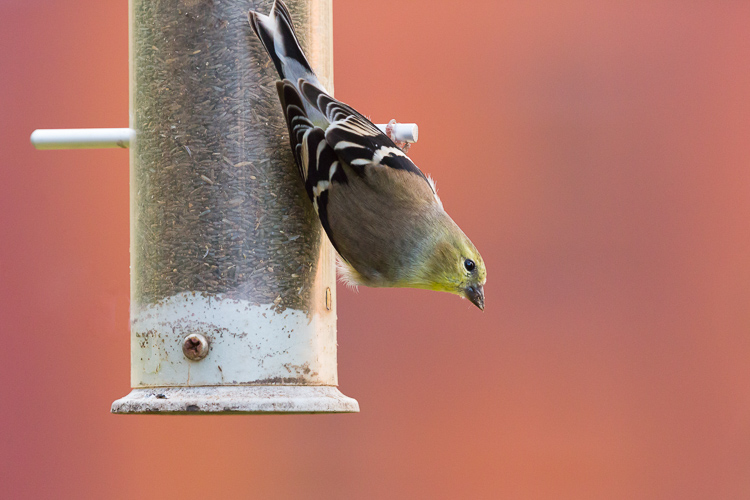
Finch on feeder, Chicago Botanic Garden, Glencoe, IL
Canon 5DIII, Sigma 500mm F4, ISO 6400, 1/1000th, f/8, monopod with a gimbal head.

What I really wanted to know when I tested this lens

When I tossed my name in the hat as a reviewer for this lens, what I really wanted to know was if a large 500mm prime lens is a practical focal length for the rigors of photographing horses, birds, and wildlife? How is it to shoot using support, rather than hand held as I normally do? Is the autofocus responsive? Does the lens make ultra sharp images?

I tested it in as many situations as possible in the limited time that I had it, starting with a few birding trips to the Chicago Botanic Garden. Birding was followed by visits to the Lincoln Park Zoo to get up close with the lions and tigers. I wrapped everything up by using it for the “at liberty” portion of an equine portrait session with four polo ponies. I love my results. Read on to find out why.

Sigma 500mm F4 Sport Lens Review 5

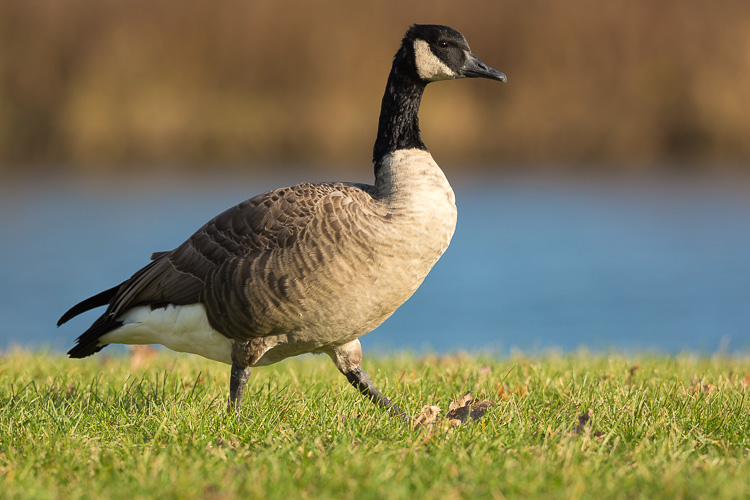
Striding goose, Chicago Botanic Garden, Glencoe, IL
Canon 5DIII, Sigma 500mm F4, ISO 400, 1/1000th, f/6.7, monopod with a gimbal head.

A few technical specs

  • Weight/Size: 7.3 pounds (3.3 kg), approximately 5.7″ wide x 15″ long (144.8 x 380.3 mm)
  • Focal length: Fixed 500mm prime, the lens does not extend further when focusing.
  • Maximum aperture: F/4.
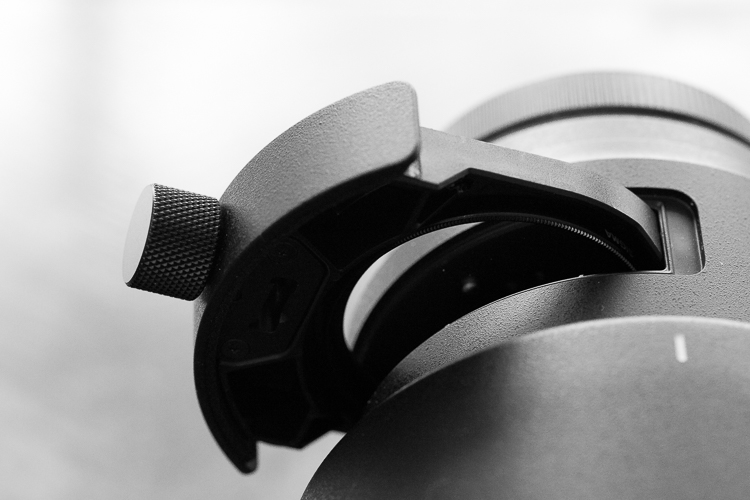
  • Filter: Rear drop-in, 46mm.
  • Mount: Available for Canon, Nikon, and Sigma
  • Recommended uses: Nature, wildlife, sports and action
  • Price: $ 5999 USD
  • Release date: December 2016, shipping January 2017.

You can read more detailed specifications here.

Shop for the Sigma 500mm F4 for Canon or for Nikon mount at B&H Photo Video.

Sigma 500mm F4 Sport Lens Review 11

Detail of Sigma 500mm drop-in rear filter slot.

Supporting the lens

When photographing animals, birds, and wildlife, your typical gear is probably similar to mine. I mostly use the affordable Canon EF 100-400mm f/4.5-5.6L IS II USM lens with either the Canon 7D Mark II or Canon 5D Mark III. If I’m a bit further from my subject, I add a Canon Extender EF 1.4X III. Normally I shoot handheld.

Sigma 500mm F4 Sport Lens Review 9

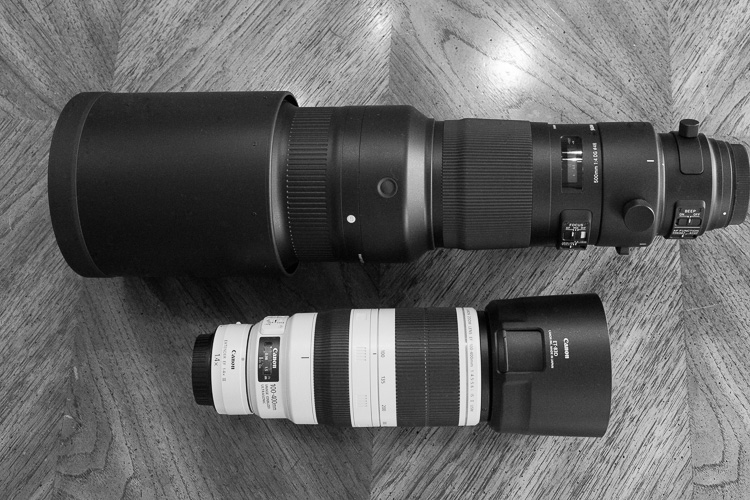
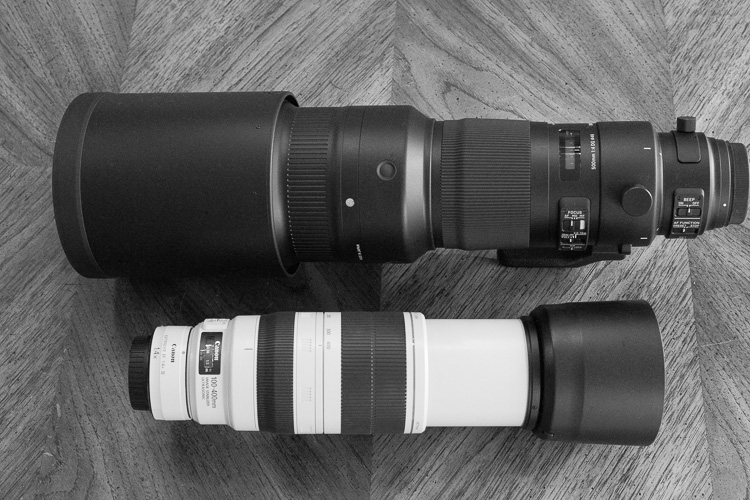
Comparison of my 100-400mm lens with the Sigma 500mm F4.

Sigma 500mm F4 Sport Lens Review 10

Comparison of my extended 100-400mm with the Sigma 500mm F4.

The Sigma 500mm lens with my Canon 5D Mark III (which also has an L-bracket on it) weighed approximately 10 pounds. That’s about three pounds more than my typical gear. It initially seemed possible to hand hold but fatigue and a resulting loss of sharpness set in quickly. My solution was to use a quick release plate to attach the foot of the Sigma 500mm F4 DG HSM OS Sport lens to my heavy-duty Feisol monopod with a Jobu gimbal head.

This combination supported the weight of the lens/camera combination while allowing me to position the lens exactly where I wanted it. It wasn’t as flexible as hand holding, but far more so than using a tripod.

Sigma 500mm F4 Sport Lens Review 6

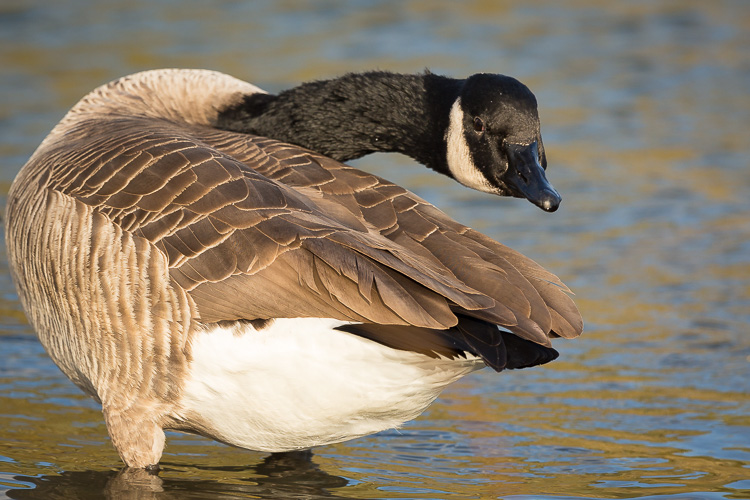
Backward glancing goose, Chicago Botanic Garden, Glencoe, IL
Canon 5DIII, Sigma 500mm F4, ISO 400, 1/1000th, f/6.7, monopod with a gimbal head.

Using support, I was able to shoot for a lot longer without fatigue – and without the shaky shots that come from fatigued hands. I also found the gimbal/monopod combination very portable and easy to maneuver when using this lens.

I would recommend using a sturdy tripod (rather than a monopod) to anyone setting up in a blind, with the intention of waiting for wildlife to approach a known watering hole or feeding spot. Over time, balancing this lens and camera combination on a monopod did take its toll on my shoulders. You wouldn’t want to miss a shot that you’d been waiting hours for, because your body was too fatigued from supporting your gear on a monopod, so use a tripod in that situation.

Sigma 500mm F4 Sport Lens Review 14

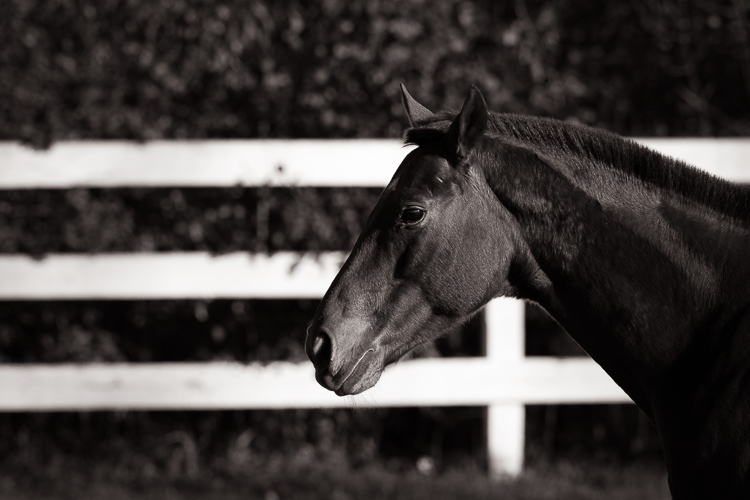
Horse profile with fence, Somewhere in Suburbia, IL
Canon 5DIII, Sigma 500mm F4, ISO 500, 1/1000th, f/8, monopod with a gimbal head.

Sigma 500mm F4 Sport Lens Review 15

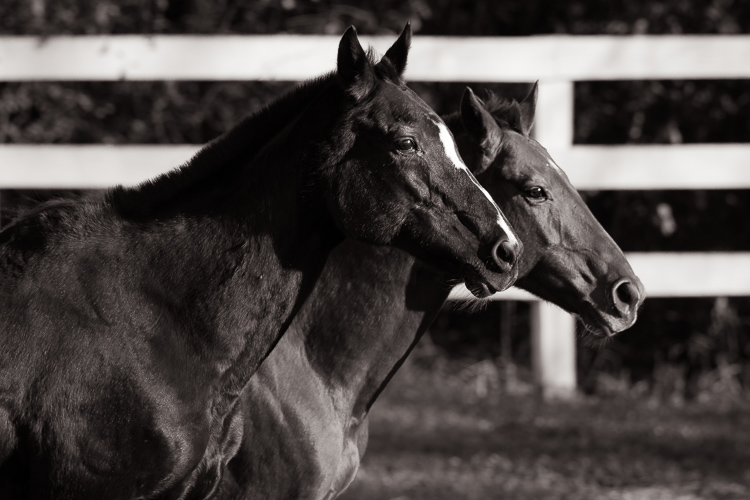
Profile of two horses with fence, Somewhere in Suburbia, IL
Canon 5DIII, Sigma 500mm F4, ISO 500, 1/500th, f/8, monopod with a gimbal head.

Sigma 500mm F4 Sport Lens Review 17

Three “guilty” horses II, Somewhere in Suburbia, IL
Canon 5DIII, Sigma 500mm F4, ISO 500, 1/500th, f/8, monopod with a gimbal head.

Performance in adverse weather

Illinois in the fall is mainly cool. It’s rainy sometimes but more dry than humid. It is also often very windy. I did not have a chance to test the Sigma 500mm F4 DG HSM OS Sport lens in rainy conditions but it shot flawlessly in the cold (the coldest temperature tested was about 30 degrees Fahrenheit, -1 celsius). Wind was more of a factor because of the large profile of the lens. Some gusts would really grab it and that movement caused a loss of sharpness.

Of course, this isn’t an issue specific to this lens – any larger, longer focal length lens will be affected by gusty winds. Solutions would be to shoot in a more protected area, to use higher-than-normal shutter speeds, or to wait for a less windy day to shoot (which is what I would have done if I wasn’t reviewing the lens in a limited timed frame).

Sigma 500mm F4 Sport Lens Review 8

Japanese Macaque (Snow Monkey), Lincoln Park Zoo, Chicago, IL
Canon 7DII, Sigma 500mm F4, ISO 800, 1/100th, f/10, monopod with a gimbal head.

Autofocus performance

The autofocus on the Sigma 500mm F4 DG HSM OS Sport lens is flawless.

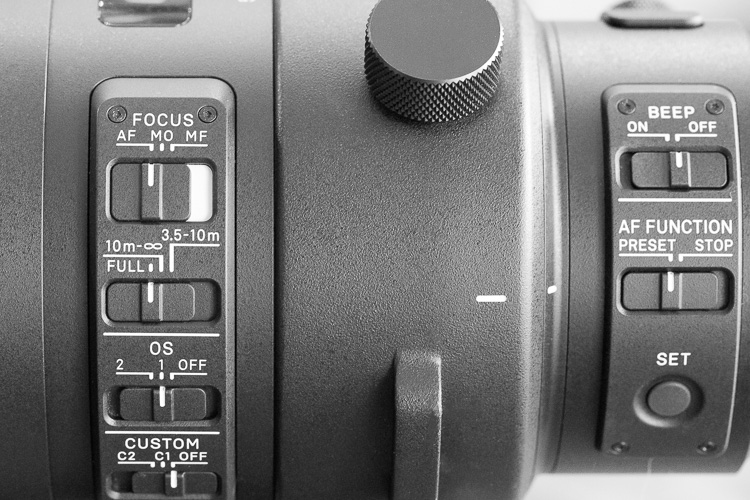
First, you can turn the annoying autofocus beep off with a simple switch right on the barrel of the lens. Turning the autofocus beep off is essential when photographing wildlife since the noise can make your subjects anxious. Thumbs up to Sigma for putting this feature in such an accessible location.

Sigma 500mm F4 Sport Lens Review 13

Detail of Sigma 500mm F4 option switches.

There are also settings for autofocus, manual focus, and manual override. The point of the manual override mode is to have the lens in auto but be able to easily switch it into manual by grabbing the focusing ring. Because I could manually override the autofocus at any time, even when the lens was in auto mode, that’s the mode I preferred to use.

Stabilization

I tested the Sigma 500mm F4 DG HSM OS Sport lens with and without the stabilization turned on. There are two options; OS1 for handheld photography, and OS2 for panning and tracking. While using my monopod and gimbal head, I didn’t see a noticeable difference in sharpness between OS1 and OS2. There was, however, a noticeable difference in sharpness when OS was turned to the off position. Ultimately I switched it to OS1 and left it there.

More convenience at your fingertips

In addition to the stabilization, beep, and autofocus options there is a “focus limiter.” This switch allows you to choose within which range you need the lens to focus. For example, if you know you aren’t focusing on anything close to you, you can set the lens to focus only from 10 meters to infinity. Setting this limiter allows the lens to focus a smidge faster and that gives you a better chance of sharply capturing fleeting moments.

My favorite feature

Sigma 500mm F4 Sport Lens Review 12

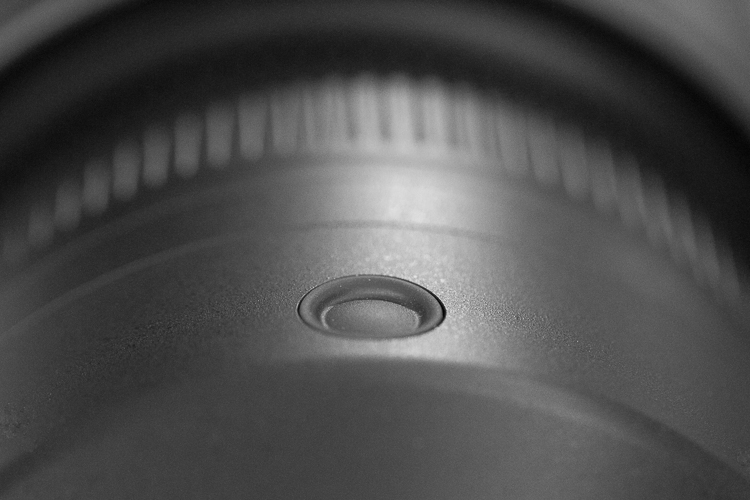
Detail of the Sigma 500mm F4 Recall Button.

Perhaps my favorite feature is the group of four rubber buttons circling the front of the lens.

To use them, find a location you want to have as a primary focusing point, hold down one of the buttons and hit the set button on the lens barrel. This action programs the lens to focus on the specific point you selected. The focus lock on that point is based on distance so if you move, you need to reset your buttons.

If you are stationary, sitting in a blind photographing birds or wild animals, this is an amazing feature. You can essentially compose four different shots in four different locations by assigning one of these buttons to each location. When a bird lands in one of your four locations, press the button for that focus point, press the shutter and grab your shot. I tested this with some of the spunkier zoo inhabitants and it worked like a charm.

Again, the advantage here is that this is a little faster than asking the lens to refocus. That millisecond is a precious advantage when photographing wildlife.

Sigma 500mm F4 Sport Lens Review 4

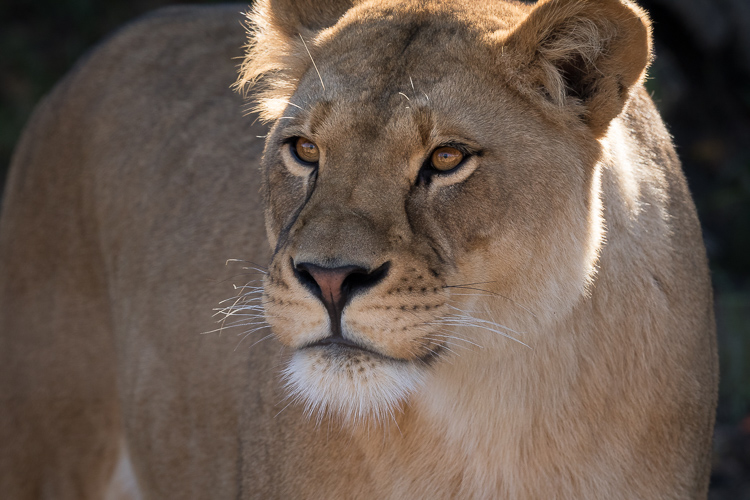
Approaching lion, Lincoln Park Zoo, Chicago, IL
Canon 7DII, Sigma 500mm F4, ISO 1000, 1/640th, f/8, monopod with a gimbal head.

Image quality

Image quality is a subjective thing but without it, state-of-the-art features and well-placed buttons don’t mean a thing. I was blown away by the images I produced with this lens.

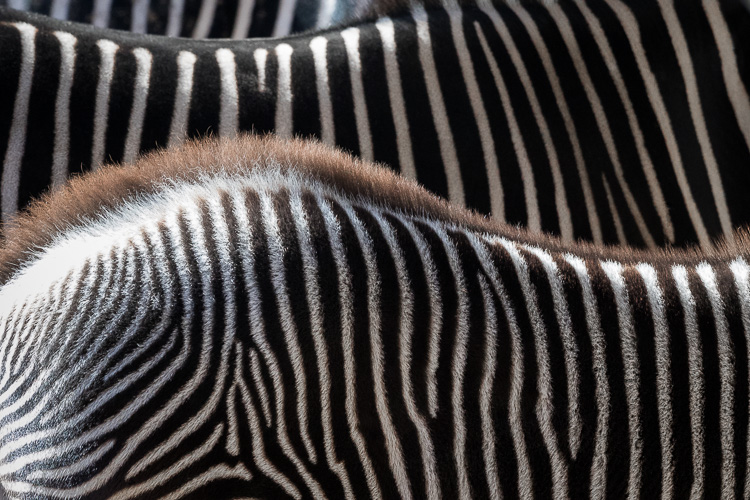
Straight out of camera the colors rendered beautifully. They were soft, nuanced and creamy. Backgrounds blurred softly away creating a clean canvas for wildlife compositions. The separation between elements was also phenomenal. I had a lot of fun experimenting with “layering,” like the series of four monochrome equine images above and the zebra image below.

Sigma 500mm F4 Sport Lens Review 3

Layered zebras, Lincoln Park Zoo, Chicago, IL
Canon 7DII, Sigma 500mm F4, ISO 2500, 1/640th, f/8, monopod with a gimbal head.

Images made with this lens are tack sharp. Details of eyes, fur, and feathers are crisp and well-structured. There is no visible distortion and only very minimal vignetting. For wildlife images, I prefer the  range of f/8 to f/11 but I didn’t find any unusable apertures. I could have happily shot at f/4 if the circumstance called for it.

Because I was so happy with the quality, all of the wildlife and bird images included in this review were very minimally processed in Lightroom CC. I sharpened the RAW files, adjusted the white balance, and made a few targeted adjustments to enhance details.

Transporting and carrying the lens

While the weight and length of Sigma’s 500mm F4 lens aren’t unusual for this lens category (the Canon version is almost exactly the same weight and dimensions, and also $ 3000 more!) it is a factor when using it. First, you need to be careful about how you carry a large lens like this to prevent damaging your camera’s lens mount. During a typical shoot you might normally hold your camera by its grip, and let the weight of the lens hang off of the camera body. With a lens this large, that isn’t recommended. Instead, make it a habit of holding onto a lens of this size by the foot, and support the camera’s weight with your other hand. You can also cradle the lens like a baby, which I did often (I didn’t sing it any lullabies, though).

You also need to consider carefully the logistics of hiking to your destination with such a large lens. Investing in a special large lens backpack like this one might be a solution for ease of carrying. Lastly, if you have weight and bag restrictions when you travel, you’ll have to find a workaround for that.

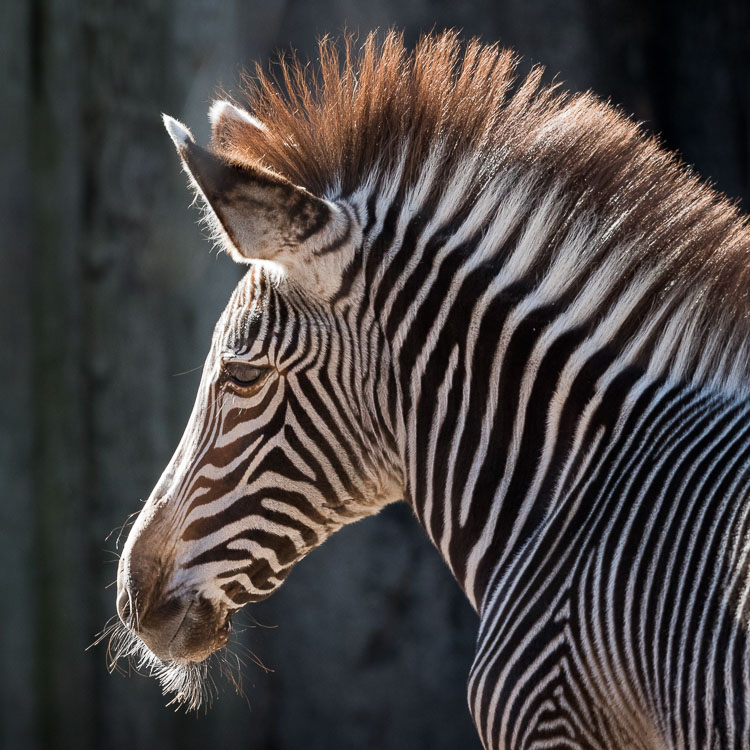
Sigma-500mm-F4-Sport-Lens-Review-2.jpg

Baby zebra portrait, Lincoln Park Zoo, Chicago, IL Canon 7DII, Sigma 500mm F4, ISO 1600, 1/640th, f/8, monopod with a gimbal head.

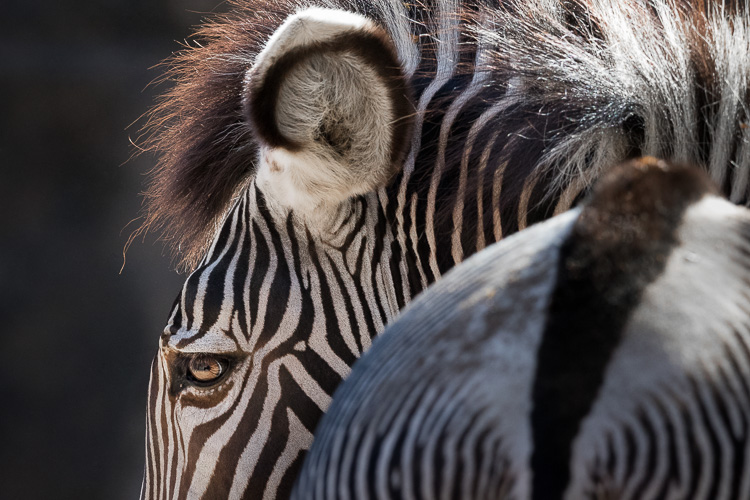
Sigma 500mm F4 Sport Lens Review 1

Zebra with turned head, Lincoln Park Zoo, Chicago, IL
Canon 7DII, Sigma 500mm F4, ISO 2000, 1/640th, f/8, monopod with a gimbal head.

Bottom line

This lens performed very well for me. Images were sharp and overall quality was excellent. For me, because I am often hiking (or recently, biking!) to locate and then keep up with very mobile herds of wild horses, the size and weight of the lens were a bit difficult to manage. Horses are also unpredictable and I often need a shorter focal length to capture all of their behaviors as their curiosity overcomes them and they start to approach me.

If you’re like me, I’d recommend the Canon 100-400mm I mentioned earlier in this review. For an affordable option with an even longer focal length, try Sigma’s own 150-600mm that weighs in at around 4 pounds for under $ 1000.

I would recommend the Sigma 500mm F4 DG HSM OS Sport lens for a birder, or any type of wildlife photographer that stations herself in a blind, and waits for the animals to come into view. If you’re that photographer, sign up at B&H to be notified when this lens will ship (here for Canon mount, or click here for Nikon) to ensure you get one of the first copies. You won’t be disappointed.

googletag.cmd.push(function() {
tablet_slots.push( googletag.defineSlot( “/1005424/_dPSv4_tab-all-article-bottom_(300×250)”, [300, 250], “pb-ad-78623” ).addService( googletag.pubads() ) ); } );

googletag.cmd.push(function() {
mobile_slots.push( googletag.defineSlot( “/1005424/_dPSv4_mob-all-article-bottom_(300×250)”, [300, 250], “pb-ad-78158” ).addService( googletag.pubads() ) ); } );

The post Review of the New Sigma 500mm F4 DG HSM OS Sport Lens by Lara Joy Brynildssen appeared first on Digital Photography School.


Digital Photography School

 
Comments Off on Review of the New Sigma 500mm F4 DG HSM OS Sport Lens

Posted in Photography


Kamerar ZOOM is a lens attachment for the iPhone 7 Plus dual-camera

26 Dec

With the 28 and 56mm equivalent lenses of its dual-camera, the iPhone 7 Plus offers more flexibility in terms of focal length than most smartphones. If that’s still not enough, the Kamerar ZOOM is now the first lens attachment designed for the iPhone’s dual-camera. 

The system includes two lens attachments that slide into a special case and over the iPhone’s built-in camera lenses. One combines a fisheye lens for the iPhone’s wide-angle camera with a tele-converter for the 56mm lens. The other improves the macro capabilities of both lenses.

In the product images the tiny lenses and the attachment don’t have the same premium look as some of the high-end smartphone lenses, for example from Moment or Zeiss. However, at only $ 45 plus import duties the Kamerar Zoom could be an inexpensive way of widening the creative potential of the iPhone 7 Plus even further. It can now be ordered on the Kamerar website. 

Articles: Digital Photography Review (dpreview.com)

 
Comments Off on Kamerar ZOOM is a lens attachment for the iPhone 7 Plus dual-camera

Posted in Uncategorized


Fresh out of the box: getting started with your first interchangeable lens camera

25 Dec

Fresh out of the box: Getting started with your first ILC

For the more established and experienced photographers of the internet, I will borrow the dedication page to Mark Z. Danielewski’s “House of Leaves:”

This is not for you.

This article is for your elderly neighbor, your young nephew or niece, or anyone whose photographic journey up to now begins and ends with a smartphone.

If this describes you, then hello. Welcome. You, budding photographer, have decided to embark on a new hobby, or an extension of something you’ve enjoyed on a mobile device, and this holiday season you have purchased (or been gifted) an interchangeable lens camera of your very own. You may not  know why exactly you wanted or needed one – or even that some cameras come with lenses that detach in the first place.

Let’s unravel the basics here, so you can get from the box-opening to the picture-taking as quickly and as free from headaches as possible.

Opening the box

In most interchangeable lens camera kits, you will have the following:

  • Camera body
  • Lens (or two)
  • Charger
  • Battery
  • Neck strap
  • Software CD (how quaint)
  • User manual
  • Warranty registration card

The first thing to do is to remove the charger and set the battery on to charge. No point in being frustrated at not being able to take photos because of a low battery.

The second task is to remove the camera and lens, remove the body cap from the camera and the back-end cap from the lens (it will be on the end with a metal or plastic mount with electrical contacts – the front of the lens will likely have the brand name and some other writing on it), and attach them.

There will be red or white markings denoting where to line the lens up relative to the camera, and normally, you’ll turn it clockwise to lock it in – with Nikon lenses, however, you rotate the lens counter-clockwise to attach it.

Get Strapped

Now is also a great time to attach the included camera strap, because nothing is quite so effective at ruining complicated electronics and optics as an accidental tumble onto cement (it happens to the best of us). Also, very few cameras actually come with memory cards these days, so you’ll want to go pick one up – no need to go crazy, a decent 16GB memory card will be plenty for casual shooters, and should be affordable.

Lastly, instead of throwing out that warranty card, fill it out. Cameras are complicated, and should you encounter any strange issues of yours that aren’t directly your fault, the warranty will help you out there.

You can also add your camera to your homeowners’ (or renters’) insurance policy, which may cover theft, accidental damage, or more.

Let’s take some pictures

Okay, now that you’ve sat staring at your camera for a while and have killed the time by reading a couple more online reviews on it, let’s put the charged battery in and actually turn the thing on.

You’ll be prompted to go through and set the date and time, which is advisable – when you go to put the photos on your phone, computer or the internet, the ‘date taken’ is a common method of keeping your images organized. If you notice any odd (read: buggy) behavior from the camera, go ahead and check the manufacturers’ website to see if there have been any firmware updates – and they’ll have easy instructions for installing them.

Which mode?

Keep the camera in fully ‘Automatic’ mode, which is usually the only option on the mode dial that’s green (the ‘Mode Dial’ will usually have P, A, S, M options among other icons such as a floating head for the ‘portrait’ preset, some small mountains for ‘landscape,’ and so on). On Olympus cameras, there’s a setting called i.Auto on the mode dial, and on Fujifilm cameras, you’ll want to flip the ‘Auto’ switch, or on the lower-end models, go to ‘SP+’ mode.

The half press

Unlike a smartphone, most interchangeable lens cameras provide you with a two-step process for taking a single picture. You’ll want to press the shutter button (it should be logically placed under your index finger while you hold the camera) very lightly – we call this a ‘half-press.’ What this does is signal to the camera that you’re intending to take a picture, at which time it will focus on whatever is in front of you, and it will pick an exposure (it will decide how bright to make the resulting image). Press the shutter down all the way now, and you’ll be greeted with some sort of shutter noise indicating that a photo has been taken. Yeehaw!

Flash

Many interchangeable lens cameras have flashes that you, the user, must pop up yourself if you wish to use them. General rule of thumb? If your photos are coming out too dark, too blurry or too grainy, pop up the flash. The camera should know to use it when it’s popped up and you’re in an automatic mode.

On some cameras, such as Nikon and Canon models, the camera will choose for you whether to pop the flash up or not. They’re often wrong about this, particularly with subjects that are very far away (the flash isn’t that powerful). However, if you are shooting a photograph of a person on a bright day with the sun overhead, the flash pop will fill in some shadows on your subject’s face – this is called ‘Fill Flash,’ and it’s usually a good thing. The flash can also handy if you’re trying to take family photos indoors and are getting blurry or grainy results.

In any case, those flash-happy Canon and Nikon models have a setting right next to the ‘Auto’ setting on the mode dial, that looks like a crossed-out lightning bolt. That’s the same automatic mode as before, but the camera will refrain from popping up the flash at all.

Easy as that

What’s next? Well, start taking pictures. They can be of anything, don’t worry about it. Take photos of things you find pretty, or funny, or just because you like them. Cats! Always take pictures of cats.

Experiment with putting your subject slightly off-center (look up the Rule of Thirds for more on this – though it’s more of a guideline than an actual rule). It’s a common temptation to zoom in to a subject, instead of using your feet to actually get closer – experiment with both. Think about fun places to go in your own town that you can bring your camera to – a friend’s barbecue, or the zoo, a park, a museum (check photography rules beforehand, though). Be sure and keep the front of your lens clean, preferably with a microfiber cloth – you’ll inevitably get fingerprints and dust on it, which is fine, but they can make everything look a bit hazy.

When you get a little more comfortable, start thinking about using lines to lead a viewer’s eye through the scene. Pay attention to contrast between light and shadow, and look out for interesting textures. There’s tons of free resources on the internet to help you out here.

The most important thing you can do with that spiffy new camera, though? Just use it and have fun

Articles: Digital Photography Review (dpreview.com)

 
Comments Off on Fresh out of the box: getting started with your first interchangeable lens camera

Posted in Uncategorized


Updating a classic: Canon EF 16-35mm F2.8L III USM lens review

20 Dec

The Canon 16-35mm F2.8L II has been one of the most coveted lenses amongst landscape photographers for a fairly long time. The legendary sunstar was one of the major selling points of the lens and it was one of the major characteristics that really separated the Canon lens from the rest of the field.

When we first heard that Canon was going to release an updated version of the lens we were pretty darn excited. The Mark II was a fantastic piece of glass, but struggled in terms of corner sharpness and control of chromatic aberration along the edges and in the corners of the frame. The upgraded version of the Canon lens promised to correct a number of those issues while still holding onto some of the characteristics of the previous version that made it so appealing to landscape shooters around the world.

With that said, the real question is; how does the updated Canon lens compare to its predecessor? The previous iteration of this lens had a number of issues that we will discuss in this review while we compare and contrast the two versions. The fundamental questions that we will be addressing in this review is; if the upgrade warrants the price increase and if the performance from the new design is convincing enough to justify the upgrade.

APS-C

With an equivalent focal length of 25.6-56mm and an equivalent aperture of F4.5 there are better wide-angle APS-C options on the market such as the Tokina 11-16mm F2.8 AT-X116 Pro DX II Lens or the Sigma 18-35mm F1.8 Art DC HSM that can really take advantage of a fast aperture for a fraction of the price. For this reason we’re not going to consider this lens for use on the APS-C platform in this review.

Canon 16-35mm F2.8L III USM Headline Features

  • Fully weather-sealed construction
  • F2.8 maximum aperture
  • 16-35mm focal range
  • Sub-wavelength Coatings (SWC) and Air Sphere Coatings (ASC) to eliminate lens flare and ghosting
  • Two large-diameter double-surface GMo lenses plus a ground aspherical lens to help decrease distortion, curvature of field and astigmatism
  • Two UD lenses help to reduce chromatic aberration

Specifications Compared

  Canon 16-35mm F2.8L II USM Canon 16-35mm F.28L III USM
MSRP $ 1599.00 $ 2199.00
Lens Type Wide-Angle Zoom Wide-Angle Zoom
Focal Length  16-35mm 16-35mm

Filter Thread 

82.0mm 82.0mm
Image Stabilization  No No
Lens Mount Canon EF Canon EF
Aperture Ring No No
Maximum Aperture  F2.8 F2.8
Minimum Aperture F22 F22
Minimum Focus  0.28m (11.02″) 0.28m (11.02?)
Diaphragm Blades 7 (rounded)  9 (rounded)
Elements  16 16
Groups  12 11
Special Elements/Coatings 2-Ultra-low dispersion glass lenses, 3 high-precision aspherical lens elements; ground, replica and GMo, Super Spectra lens coatings 2 large-diameter double-surface GMo lenses and a ground aspherical lens, Sub-wavelength Coatings (SWC) and Air Sphere Coatings (ASC)
Autofocus  Yes Yes
Motor Type Ring-type Ultrasonic Ring-type Ultrasonic
Full Time Manual  Yes Yes
Focus Method Internal Internal
Distance Scale  Yes Yes 
DoF Scale No No
Full Weather Sealing Yes Yes
Zoom method  Rotary (internal) Rotary (internal)
Weight  635 g (1.4 lb) 790 g (1.74 lb)
Dimensions

111.6mm (4.39″) x 88.5mm (3.48″)

128 mm (5.02?) x 89 mm (3.48?)
Hood Included (EW-88D) Included (EW-88D)

Articles: Digital Photography Review (dpreview.com)

 
Comments Off on Updating a classic: Canon EF 16-35mm F2.8L III USM lens review

Posted in Uncategorized


New 20mm F2 4.5x macro lens released by Mitakon

20 Dec

$ (document).ready(function() { SampleGalleryV2({“containerId”:”embeddedSampleGallery_8795135265″,”galleryId”:”8795135265″,”isEmbeddedWidget”:true,”standalone”:false,”selectedImageIndex”:0,”startInCommentsView”:false,”isMobile”:false}) });

Chinese optical manufacturer Mitakon has announced a macro lens with a maximum magnification ratio of 4.5:1. The Zhongyi Mitakon 20mm F2 4.5x Super Macro offers the opportunity to fill the frame of a 35mm-sized camera with objects four and a half times smaller than the camera’s sensor and can focus as close as 20cm, according to the company’s specification sheet.

The lens is manual focus, has apertures from F2 to F16, and uses a 3-bladed iris. The construction is of six elements in four groups with a metal barrel and a total length of only 60mm. The lens can’t be used for normal infinity focusing and the lowest magnification factor is 4x, so it is solely for macro use.

$ (document).ready(function() { SampleGalleryV2({“containerId”:”embeddedSampleGallery_4872648991″,”galleryId”:”4872648991″,”isEmbeddedWidget”:true,”standalone”:false,”selectedImageIndex”:0,”startInCommentsView”:false,”isMobile”:false}) });

Mitakon says the lens is available in mounts for Canon EF, Nikon F, Sony FE, Sony A, Pentax K, Sony E, Fujifilm X and Micro Four Thirds cameras, and costs $ 199. For more information visit the Mitakon website.

Press release

ZY Optics releases the Zhongyi Mitakon 20mm f/2 4.5X Super Macro Lens for high magnification shots

Zhongyi Optics (ZY Optics) has released a new compact Super Macro Lens for full frame cameras, the Zhongyi Mitakon 20mm f/2 4.5x Super Macro Lens and it features a high reproduction ratio up to 4.5:1.

Zhongyi Mitakon 20mm f/2 4.5X Super Macro Lens is very compact in its class which allows photographers to capture extremely fine details or patterns with ease. The lens is capable of creating unbelievable macro images ranging from 4x to 4.5x magnification. Users no longer need to DIY or use any extension tubes to reach high magnification shooting. It incorporates a 6pcs of elements in 4 groups structure which delivers impressive resolution from corners to corners. Weighing merely 0.5 lbs (230g) and 6cm long, it is a perfect companion for wildlife and outdoor shooting. The wide angle of view and close focusing distance allows you to compose creative images with more information included into the frame. Greater magnification (up to 13:1) can also be achieved by stacking extension tubes or bellows. The high magnification is also extremely useful for scientific purposes.

The enclosure of the lens is made of metal to strengthen its durability. Canon EF, Nikon F, Sony FE, Sony Alpha, Pentax K, Sony E, Micro Four Thirds, Fuji X mounts are available.

Pricing & Availability

Zhongyi Mitakon 20mm f/2 4.5X Super Macro Lens is now available to ship and purchase at ZY Optics authorized resellers and at our official website (http://www.zyoptics.net/). The Recommended Retail price is USD 199.

Articles: Digital Photography Review (dpreview.com)

 
Comments Off on New 20mm F2 4.5x macro lens released by Mitakon

Posted in Uncategorized


Updating a classic: Canon 16-35mm F2.8 III lens review

20 Dec

The Canon 16-35mm F2.8L II has been one of the most coveted lenses amongst landscape photographers for a fairly long time. The infamous sunstar was one of the major selling points of the lens and it was one of the major characteristics that really separated the Canon lens from the rest of the field.

When we first heard that Canon was going to release an updated version of the lens we were pretty darn excited. The Mark II was a fantastic piece of glass, but struggled in terms of corner sharpness and control of chromatic aberration along the edges and in the corners of the frame. The upgraded version of the Canon lens promised to correct a number of those issues while still holding onto some of the characteristics of the previous version that made it so appealing to landscape shooters around the world.

With that said, the real question is; how does the updated Canon lens compare to its predecessor? The previous iteration of this lens had a number of issues that we will discuss in this review while we compare and contrast the two versions. The fundamental questions that we will be addressing in this review is; if the upgrade warrants the price increase and if the performance from the new design is convincing enough to justify the upgrade.

APS-C

With an equivalent focal length of 25.6-56mm and an equivalent aperture of F4.5 there are better wide-angle APS-C options on the market such as the Tokina 11-16mm F2.8 AT-X116 Pro DX II Lens or the Sigma 18-35mm F1.8 Art DC HSM that can really take advantage of a fast aperture for a fraction of the price. For this reason we’re not going to consider this lens for use on the APS-C platform in this review.

Canon 16-35mm F2.8L III USM Headline Features

  • Fully weather-sealed construction
  • F2.8 maximum aperture
  • 16-35mm focal range
  • Sub-wavelength Coatings (SWC) and Air Sphere Coatings (ASC) to eliminate lens flare and ghosting
  • Two large-diameter double-surface GMo lenses plus a ground aspherical lens to help decrease distortion, curvature of field and astigmatism
  • Two UD lenses help to reduce chromatic aberration

Specifications Compared

  Canon 16-35mm F2.8L II USM Canon 16-35mm F.28L III USM
MSRP $ 1599.00 $ 2199.00
Lens Type Wide-Angle Zoom Wide-Angle Zoom
Focal Length  16-35mm 16-35mm

Filter Thread 

82.0mm 82.0mm
Image Stabilization  No No
Lens Mount Canon EF Canon EF
Aperture Ring No No
Maximum Aperture  F2.8 F2.8
Minimum Aperture F22 F22
Minimum Focus  0.28m (11.02″) 0.28m (11.02?)
Diaphragm Blades 7 (rounded)  9 (rounded)
Elements  16 16
Groups  12 11
Special Elements/Coatings 2-Ultra-low dispersion glass lenses, 3 high-precision aspherical lens elements; ground, replica and GMo, Super Spectra lens coatings 2 large-diameter double-surface GMo lenses and a ground aspherical lens, Sub-wavelength Coatings (SWC) and Air Sphere Coatings (ASC)
Autofocus  Yes Yes
Motor Type Ring-type Ultrasonic Ring-type Ultrasonic
Full Time Manual  Yes Yes
Focus Method Internal Internal
Distance Scale  Yes Yes 
DoF Scale No No
Full Weather Sealing Yes Yes
Zoom method  Rotary (internal) Rotary (internal)
Weight  635 g (1.4 lb) 790 g (1.74 lb)
Dimensions

111.6mm (4.39″) x 88.5mm (3.48″)

128 mm (5.02?) x 89 mm (3.48?)
Hood Included (EW-88D) Included (EW-88D)

Articles: Digital Photography Review (dpreview.com)

 
Comments Off on Updating a classic: Canon 16-35mm F2.8 III lens review

Posted in Uncategorized


Tokina FiRIN 20mm F2 FE MF lens to begin shipping January 27

13 Dec

Tokina launched the FíRIN 20mm F2 FE MF lens for Sony E mount just prior to Photokina this year, and has announced that the lens will go on sale at the end of January. The wide-angle lens features three super-low dispersion elements alongside a pair of aspherical elements, an F2 to F22 aperture range, and a nine-blade diaphragm. In addition to full-frame Sony E mount cameras, this lens can also be used with APS-C models.

$ (document).ready(function() { SampleGalleryV2({“containerId”:”embeddedSampleGallery_2569809841″,”galleryId”:”2569809841″,”isEmbeddedWidget”:true,”standalone”:false,”selectedImageIndex”:0,”startInCommentsView”:false,”isMobile”:false}) });

According to Tokina, its new FiRIN lens supports in-camera assist functions, and includes both manual focus up to a minimum 11-inch distance and aperture control. The lens sports a multi-layer coating for minimizing ghosting and lens flare, as well as printed distance and depth of field scales on the lens barrel.

The lens is slated for release on January 27 with a retail price of ¥108,000. Pre-orders are available through B&H Photo for $ 799.

Via: Tokina

Articles: Digital Photography Review (dpreview.com)

 
Comments Off on Tokina FiRIN 20mm F2 FE MF lens to begin shipping January 27

Posted in Uncategorized


Zeiss ExoLens PRO lens lineup updated with support for iPhone 7 phones

13 Dec

$ (document).ready(function() { SampleGalleryV2({“containerId”:”embeddedSampleGallery_6073214240″,”galleryId”:”6073214240″,”isEmbeddedWidget”:true,”standalone”:false,”selectedImageIndex”:0,”startInCommentsView”:false,”isMobile”:false}) });

Zeiss has announced a new ‘Edge’ bracket that brings iPhone 7 family support to the maker’s ExoLens PRO with Optics by Zeiss smartphone lenses. The bracket features half a dozen device inlays that support both the iPhone 7 and the iPhone 6 phones, as well as a cold shoe mount for attaching secondary accessories such as lighting instruments.

According to Zeiss, a bracket specifically for the iPhone 7 and the ExoLens optics is available now from camera stores, as well as a wide-angle ‘accessory lens.’ The Edge bracket, meanwhile, will be available at camera stores starting in the end of January. The company recommends that iPhone 7 Plus owners use either the ExoLens PRO Macro-Zoom or Wide-Angle lenses since the device already offers a 2x telephoto camera, however, all of the lenses are said to be ‘generally compatible.’

The iPhone 7 bracket is available now for $ 59.95 / €64.95, and the Edge bracket will be available starting next month for $ 49.95 / €59.95. The Wide-Angle lens recommended for the iPhone 7 Plus is $ 149.95 / €179.95, and the Macro-Zoom lens is $ 149.95 / €179.95.

Via: Zeiss

Articles: Digital Photography Review (dpreview.com)

 
Comments Off on Zeiss ExoLens PRO lens lineup updated with support for iPhone 7 phones

Posted in Uncategorized


Have Your Say: Best Zoom Lens of 2016

09 Dec

Have Your Say: Best Zoom Lens of 2016

The end of the year is almost upon us, and as usual, 2016 saw plenty of new lenses released, including several excellent zooms. We’ve used a lot of them and tested some, but we want to hear from you – what were your favorite zoom lenses of 2016? 

For the sake of a manageable list, we’ve omitted ‘kit’ zoom lenses and most variable-aperture telezooms from this poll. If there’s a particularly high-performing example of either type which you’d like to see represented in our final selection, or a late 2015 release that you think should be under consideration, leave a comment!

Click through this slideshow for a reminder of the major releases and a chance cast your vote. Voting ends at midnight on December 31st.

Canon EF 16-35mm F2.8L III USM

The Canon EF 16-35mm F2.8L III USM is the third revision of Canon’s well-known ultra-wide zoom lens. It has 16 elements, one of which is dual surface aspherical, while the other is ground aspherical. The lens has a fluorine coating and is dust and water resistant. The minimum focus distance is 0.28m.

Our early impressions of this lens are very positive indeed. It’s  costly piece of glass, but for Canon photographers looking for a versatile wideangle zoom, the 16-35mm F2.8 III is hard to beat. Is this one of your lenses of the year? Cast your vote and let us know.

See full specifications, user reviews and more

Olympus M.Zuiko Digital ED 12-100mm F4.0 IS Pro

The M.Zuiko Digital ED 12-100mm F4 IS Pro is a powerful carry-everywhere zoom lens (24-200mm equiv.) that offers incredible versatility in a relatively small package. Combined with Olympus’ 5-axis IBIS in the new OM-D E-M1 II, it can offer up to 6.5 stops of image stabilization.

On top of that, the minimum focus distance at the 12mm end is a miniscule 1.5cm from the front element of the lens, and 27cm at the telephoto end of 100mm. All of that power is housed in a splashproof, dustproof, and freezeproof body. Is this powerful zoom on your wishlist? Cast your vote and let us know.

See full specifications, user reviews and more

Nikon AF-S Nikkor 70-200mm F2.8E FL ED VR

The Nikon EF-S Nikkor 70-200mm F2.8E FL ED VR is the company’s latest fast telephoto zoom. It offers up to four stops of shake reduction, a Silent Wave Motor, and assignable buttons on the lens barrel. It has six ED, one Flourite and one HRI elements as well as Nano Crystal and Fluorine coatings to make it easy to remove moisture and smudges from exposed elements. The lens is constructed of magnesium alloy and is sealed against dust and moisture.

Early test results suggest that this lens is a high performer, but the swapping of focus and zoom rings has angered some commenters. What do you think? 

See full specifications, user reviews and more

Sigma 50-100mm F1.8 DC HSM Art

Sigma’s 50-100mm F1.8 DC HSM Art provides a 75-150mm focal length range on the APS-C format DSLRs for which it’s designed. Offering a fast maximum aperture and standard ‘Art’-series construction quality the 50-100mm is solid, heavy and luxuriously engineered. 

The 50-100mm features three FLD (F Low Dispersion) glass elements, one SLD (Special Low Dispersion) glass element, and one high-refractive index, high-dispersion glass element. Is it one of your favorite lenses of 2016?

See full specifications, user reviews and more

Sigma 12-24mm F4 DG HSM Art

The Sigma 12-24mm F4 DG HSM Art is an ultra-wide-angle zoom for full-frame DSLRs, which features the largest aspherical glass molded element in the industry. The 12-24mm F4 also features lens elements made with FLD (“F” Low Dispersion) glass, which Sigma claims is equivalent to calcium fluorite in performance. 

The 12-24mm is a big lens, measuring 132mm long, with a diameter of 102mm and a weight of 1,150g (40.6oz) but optically, we’ve been very impressed by its performance. Is this the third-party wideangle you’ve been waiting for? Cast your vote and let us know. 

See full specifications, user reviews and more

Sony FE 24-70mm F2.8 GM

The Sony FE 24-70mm F2.8 GM is a premium standard zoom for the Sony A-mount. Construction comprises 18 elements in 13 groups, and features three aspherical elements, including an extreme aspherical (XA) element. An ED (extra low dispersion) and Super ED glass element help minimize chromatic aberration while maintaining high resolution and bokeh characteristics.

It’s big, it’s costly, and it’s built to last. Is Sony’s FE 24-70mm F2.8 GM one of your picks for best zoom of 2016?

See full specifications, user reviews and more

Sony FE 70-200mm F2.8 GM OSS

Sony had a big year this year, and alongside the 24-70mm F2.8 FE, it also released theFE 70-200mm F2.8 GM OSS telephoto zoom. Like the 24-70mm GM, this lens features XA, Super ED, and ED glass elements to help achieve high resolution and desirable bokeh characteristics. Construction comprises 23 elements in 18 group, and a ‘Nano’ anti-reflective coating ensures reduced flare and ghosting. An additional fluorine coating to the front of the lens help keep it clean, and the lens is dust and moisture resistant.

Like it’s 24-70mm cousin, this 70-200mm F2.8 zoom is a premium lens, with construction (and price) to match. Does it make your list of standout zoom lenses of 2016? Click to the next slide and cast your vote!

See full specifications, user reviews and more

Vote Now!

.


Have your say

$ (document).ready(function() { Poll({“pollId”:”0973815126″,”openForVoting”:true,”mainElementId”:”poll1″,”slot”:null,”isSingleChoicePoll”:false,”minNumberOfChoices”:1,”maxNumberOfChoices”:3}); })

Have Your Say: Best Zoom Lens of 2016
Your answers
1. Required
2. Optional
3. Optional
You need to login to vote

Canon 16-35mm F2.8L III

Olympus M.Zuiko 12-100mm F4.0

Sigma 12-24mm F4 Art

Sigma 50-100mm F1.8 Art

Sony FE 24-70mm F2.8 GM

Sony FE 70-200mm F2.8 GM

Nikon AF-S Nikkor 70-200mm F2.8E

Voting is easy – you pick your favorite products by dragging and dropping. You can pick up to three, and rank them in order of priority.

Poll Rules:

  1. This poll is meant to be a bit of fun. It’s not sponsored, promoted or paid for in any way and DPReview staff don’t care how you vote, so please don’t start a flame-war in the comments. I.e., please don’t be a troll.
  2. It’s fine to vote for products that you haven’t used (some aren’t yet shipping, after all) but please don’t vote purely just to sandbag another product or brand. I.e., please don’t be a troll.
  3. Please only vote once, from a single account. Creating and voting from multiple accounts for a community poll of no consequence is a silly thing to do with your time. See points 1 and 2, above, about not being a troll.

Articles: Digital Photography Review (dpreview.com)

 
Comments Off on Have Your Say: Best Zoom Lens of 2016

Posted in Uncategorized