RSS
 

Posts Tagged ‘Lens’

Have your say: Best prime lens of 2016

09 Dec

Have your say: Best prime lens of 2016

It’s a great time to be a photographer. Based on reader interest and preferences, we’ve rounded up a total of twelve prime lenses that were released in 2016 for your consideration in this poll. They run the gamut in terms of lens mount, focal length, maximum aperture, and of course, use case. 

Which of these prime lenses is most exciting to you? Which do you already have, or are looking to add, to your particular kit? Let us know by casting your vote in the poll at the end of the slideshow. For now, let’s dig in and take a look at this year’s contenders. 

Please note that for the sake of a manageable list, we have excluded some of the more exotic manual focus primes from the likes of Zeiss, and several third-party MF options (Samyang/Rokinon etc). If you feel that a particular lens of this kind deserves consideration, feel free to leave a comment.

Canon EF-M 28mm F3.5 Macro IS STM

The announcement of Canon’s EOS M5 was largely welcome news, but came with a side of grumbling – the Canon EF-M lens lineup is still, for many, sorely lacking. This 28mm F3.5 Macro is looking to address that somewhat. Offering an equivalent focal length of 45mm, this lens won’t offer you much in the way of working distance, but with a 1.2x magnification super-macro mode and built-in LED lights, the EF-M 28mm Macro is a unique offering in the marketplace and comes with an affordable MSRP to boot.

Does this lens have you looking closer at the Canon M system more closely than before? Has the 1.2x magnification made a difference to your macro photography? Let us know by casting your vote for it in the poll.

See full specifications, user reviews and more

Fujifilm XF 23mm F2 R WR

Fujifilm’s ever-growing lens lineup continues to impress us, and the XF 23mm F2 R WR is no exception. The company’s existing 23mm F1.4 is quite good, but also quite large and makes no mention of weather resistance – two aspects this newer design is meant to address. You lose a stop of light, but you also gain a noticeable speed boost when it comes to continuous autofocus (and you can save a few pennies with this model, too). Lastly, for X-Pro users, the barrel design is intended to keep the lens from intruding too far into the hybrid viewfinder when used in ‘optical’ mode.

Is this the game-changing 35mm equivalent lens you’ve been waiting for? Let us know by casting your vote in the poll at the end of the slideshow.

See full specifications, user reviews and more

Nikon PC Nikkor 19mm F4E ED

This one’s been a long time coming. Nikon’s line of PC lenses, which stands for ‘perspective control,’ is all about offering tilt and shift capabilities for those that need it. As an example, it allows for correction of converging vertical lines if you’re photographing a tall building and must point your camera slightly up, and it also allows more control over your depth of field by allowing you to adjust the actual plane of focus. While this lens still isn’t as wide as Canon’s TS-E 17mm lens, it does offer Nikon users a focal length usefully wider than the existing 24mm PC lens – but being a specialized tool, it comes with a hefty price tag.

Is this lens enough to satisfy your needs for wide-angle tilt-shift photography? Does it allow you to get significant images you just couldn’t get before? Let us know by casting your vote in the poll at the end of the slideshow.

See full specifications, user reviews and more

Nikon AF-S 105mm F1.4 E ED

Few lenses have created as much of a stir around the DPReview offices as Nikon’s 105mm F1.4 E ED when it was announced. As the first ever 105mm lens with this wide of an aperture, it’s a much-needed update (though some might argue, not a replacement) for Nikon’s older 105mm and 135mm F2 DC (defocus control) designs, which date back to the ’90s. It’s quite well-built, comes with some weather sealing and has been shown to have staggeringly good optics, even wide open. 

Has Nikon created the ultimate bokeh-licious portrait lens? Let us know if this lens takes the cake by casting your vote in the poll at the end of the slideshow.

See full specifications, user reviews and more

Olympus M.Zuiko Digital ED 25mm F1.2

This lens is perhaps most significant in that it’s the first Olympus prime lens to carry the ‘Pro’ designation. Along with tank-like build quality, the ‘Pro’ label is a reliable indicator of overall optical quality, including sharpness and smooth out-of-focus character. That it’s also insanely fast to focus doesn’t hurt, either. It costs a pretty penny, but the 25mm F1.2 is one of our favorite pairings with Olympus’ new E-M1 Mark II. For those that want the fastest lens for their Micro 4/3 system that is also the toughest, it stands alone.

Is the 25mm F1.2 Pro the lens you’ve been waiting for within the Micro 4/3 universe? Let us know by casting your vote in the poll at the end of the slideshow.

See full specifications, user reviews and more

Olympus M.Zuiko Digital 300mm F4 IS Pro

The Olympus M.Zuiko Digital 300mm F4 IS Pro is one of only two Olympus lenses at the time of this writing to offer built-in image stabilization – this is because most Olympus bodies already offer impressive in-body image stabilization, but with their newer models, these image stabilized lenses can work in tandem with the existing stabilizer to offer up to a claimed 6.5 stops of hand-holdability. Our favorite part? This is a figure Olympus says is limited by the rotation of the Earth. In any case, this 300mm lens is sharp wide-open, built like a tank, incredibly fast to focus and we’ve been able to get reliably sharp shots with shutter speeds as slow as 1/15 of a second when paired with the E-M1 II. No, that isn’t a typo.

Has the Olympus 300mm F4 Pro changed the way you shoot Micro Four Thirds? Let us know by casting your vote in the poll at the end of the slideshow.

See full specifications, user reviews and more

Panasonic Lumix G Leica DG Summilux 12mm F1.4 ASPH

In addition to having the longest name in this group, this Panaleica 12mm F1.4 has the distinction of being the fastest wide-angle autofocus lens in the Micro Four Thirds universe. And with ‘Leica’ in the name, you’re going to pay for it – but for those heavily invested in the system, it’s worth it (and it’s weather-sealed, at least). I’s great for some subject isolation at wide apertures and also for shooting in available light, but it also produces gorgeous sunstars, and predictably, is very sharp.

Has this lens become your go-to for available light Micro Four Thirds shooting? Let us know by casting your vote in the poll at the end of the slideshow.

See full specifications, user reviews and more

Sigma 30mm F1.4 DC DN | C (E-Mount / M43 Mount)

Sigma has been on a roll over the past several years, with its revamped Art, Contemporary and Sports lineups. With the 30mm F1.4 Contemporary, they’ve continued this roll, offering absolutely excellent performance on Sony’s E-Mount (and for a fraction of the price of any first-party competitor), and above average performance on Micro Four Thirds. The length of the lens might look a little awkward on smaller bodies, but the lightweight build ensures a good balance without feeling cheap at all.

Is this the fast, standard prime you’ve been waiting for? Let us know by casting your vote in the poll at the end of the slideshow.

See full specifications, user reviews and more

Sigma 85mm F1.4 DG HSM Art

The Sigma 85mm F1.4 Art is, unquestionably, a beast – but appropriately, it offers beastly optical performance as well. It’s a bargain compared to first-party equivalents, and though (as always) you’ll want to watch out for copy variation, it’ll give those more expensive competitors a run for their money when used wide open. If you’re in the market for a fast-aperture lens for reportage or some shallow depth-of-field for portrait isolation, the Sigma 85mm Art deserves a look.

Are you a Sigma Art convert? Did you save a ton of money over first-party options by picking one up for yourself? Let us know if this prime lens is your pick for the best of 2016 by casting your vote in the poll at the end of the slideshow.

See full specifications, user reviews and more

Sony FE 85mm F1.4 GM

The Sony FE 85mm F1.4 GM continues 2016’s tradition of ‘bigger and better.’ It’s not quite the behemoth that is the Sigma 85mm F1.4 Art, but it’s close – and for good reason. Sony has said that it’s designed the G Master lenses, including the 85mm, to ‘last forever’ – they’re over-engineered when it comes to sharpness, and rely on optical corrections for characteristics like lateral chromatic aberration, as opposed to relying on software. The rounded aperture blades provide circular out-of-focus highlights even as you stop down, and the lens offers environmental sealing as well.

Are you an E-mount shooter that’s finally found your perfect portrait lens? Let us know by casting your vote for the Sony FE 85mm F1.4 GM in the poll at the end of the slideshow.

See full specifications, user reviews and more

Tamron SP 85mm F1.8 Di VC USD

Noticing a pattern yet? This is the third 85mm lens in a row in this category, but it does plenty to differentiate itself from its Sigma and Sony counterparts. First, yes, the Tamron does offer a slower maximum aperture. It makes up for that somewhat, though, by being the only stabilized 85mm prime lens on the market. It’s fully weather-sealed, something that is universal to Tamron’s SP line, and universally absent from Sigma’s Art line. It’s also the smallest of this year’s newly announced 85mm lenses, and impressively sharp wide-open.

Has Tamron’s 85mm F1.8 VC tempted you away from other first-and-third party lens options? Let us know by casting your vote for it in the poll at the end of the slideshow.

See full specifications, user reviews and more

Tamron SP 90mm F2.8 Di VC USD 1:1 Macro

Tamron has been making 90mm F2.8 macro lenses for decades, but its latest redesign is more than just slapping the same old optical formula into a shiny new design. They’ve added their trademark Vibration Compensation technology as well as increasing the speed of autofocus. A new fluorine coating on the front element will repel dust, water and fingerprints more effectively, and as with all members of Tamron’s revamped SP line, is fully dust-and-moisture sealed. Not everyone needs a macro lens, but the Tamron has also proven to be a solid portrait lens as well.

Did you update to the new SP Macro from an older Tamron model, or even a first-party macro lens? Let us know by casting your vote in the poll on the next slide.

See full specifications, user reviews and more

Vote now!

.


Have your say

$ (document).ready(function() { Poll({“pollId”:”3280338150″,”openForVoting”:true,”mainElementId”:”poll0″,”slot”:null,”isSingleChoicePoll”:false,”minNumberOfChoices”:1,”maxNumberOfChoices”:3}); })

Have Your Say: Best Prime Lens of 2016
Your answers
1. Required
2. Optional
3. Optional
You need to login to vote

Canon EF-M 28mm F3.5 Macro

Fujifilm XF 23mm F2

Nikon PC Nikkor 19mm F4E

Nikon AF-S Nikkor 105mm F1.4E

Olympus M.Zuiko 25mm F1.2 Pro

Olympus M.Zuiko 300mm F4 Pro

Panasonic Leica DG Summilux 12mm F1.4

Sigma 30mm F1.4 C

Sigma 85mm F1.4 Art

Sony FE 85mm F1.4 GM

Tamron SP 85mm F1.8

Tamron SP 90mm F2.8

Voting is easy – you pick your favorite products by dragging and dropping. You can pick up to three, and rank them in order of priority.

Poll Rules:

  1. This poll is meant to be a bit of fun. It’s not sponsored, promoted or paid for in any way and DPReview staff don’t care how you vote, so please don’t start a flame-war in the comments. I.e., please don’t be a troll.
  2. It’s fine to vote for products that you haven’t used (some aren’t yet shipping, after all) but please don’t vote purely just to sandbag another product or brand. I.e., please don’t be a troll.
  3. Please only vote once, from a single account. Creating and voting from multiple accounts for a community poll of no consequence is a waste of everyone’s time. See points 1 and 2, above, about not being a troll.

Articles: Digital Photography Review (dpreview.com)

 
Comments Off on Have your say: Best prime lens of 2016

Posted in Uncategorized


Meyer-Optik-Görlitz reveals Nocturnus 50 F0.95 II lens for Sony E-Mount

08 Dec

German lens maker Meyer-Optik has launched the Nocturnus 50 F0.95 II, a super-fast manual-focus standard lens for the Sony E-Mount that is optimized for use with full-frame sensors, but also works with APS-C cameras. 

The lens comes with a focal length of 50mm and an aperture range from F0.95 to F22, offering lots of flexibility, both when shooting in low light and in terms of depth-of-field. The lens design features 10 elements in 7 groups and ensures high levels of sharpness in the focus-plane. Meyer-Optik says the 15 aperture blades with anti-reflective coating create a pleasant bokeh with circular highlights. The Nocturnus has a minimum focus distance of 50cm and weighs 680 grams. Manual focus control and the stepless aperture ring operate almost silently, making the Nocturnus an interesting option for video applications. 

The Nocturnus 50 F0.95 II will be available from January 1st for €3000 (approximately $ 3225). More information is available on the Meyer-Optik-Görlitz website.

Nocturnus 50 F0.95 II samples provided by Meyer-Optik

$ (document).ready(function() { SampleGalleryV2({“containerId”:”embeddedSampleGallery_1858460089″,”galleryId”:”1858460089″,”isEmbeddedWidget”:true,”standalone”:false,”selectedImageIndex”:0,”startInCommentsView”:false,”isMobile”:false}) });
Articles: Digital Photography Review (dpreview.com)

 
Comments Off on Meyer-Optik-Görlitz reveals Nocturnus 50 F0.95 II lens for Sony E-Mount

Posted in Uncategorized


4 Tips to Leverage Natural Light Using Just your Camera and One Lens

29 Nov

In photography light is everything. Without light, whether that be artificial or natural, there is no photography. The problem is that sometimes there is just too much or too little, and in both cases, artificial light may need to be added. But what if you don’t have any artificial light available to you? And what if all you have is literally a camera with a lens and nothing else? This article focuses on how you can leverage natural light using just one lens and working without a reflector or a speedlight.

#1 Position your subject in relation to the light

Let’s take a look at these photos below. It was a very sunny day and I wanted to capture the blueness of the sky and the sea as well as the people in the shots. I had a D700 which has a base ISO of 200 and the 50mm 1.4 lens. I have provided the settings below for each photo.

creative-ways-available-light-with-the-50mm_0000

f/5.6 ISO 200, 1/2000th

creative-ways-available-light-with-the-50mm_0000

f/5.6 ISO 200, 1/1250th

creative-ways-available-light-with-the-50mm_0000

f/6.3 ISO 200, 1/2000th

These settings are okay on a very sunny day if you shoot with the sun positioned behind you shining towards your subject. In this case the sea and sky, which also illuminated the people that I wanted to be in the photo.

Lighting position

While these photos are fine, there are a few issues. First, put simply, when this is the lighting position, anyone, and any camera can take these types of photos. You can shoot in automatic mode and the photos would look the same. Mobile phones nowadays can take even more amazing photos in this situation where there is a huge amount of light hitting the subject and the background directly.

I love these types of photos for travel photography, high contrast shots and snapshots that would make me remember such scenes. But if I am after portraits, would I hire a professional photographer who would give me photos that anyone can take? Definitely not! Sure, the occasional lifestyle snapshot in this lighting is acceptable such as this one directly below shot at f/2.5 ISO 200, 1/2500th. But I would not want proper portraits of my family to be taken in this lighting situation.

creative-ways-available-light-with-the-50mm_0000

creative-ways-available-light-with-the-50mm_0000

creative-ways-available-light-with-the-50mm_0000

Harsh shadows

The second issue is the harsh shadows. As a professional photographer, this would never be my lighting position for people or portraits. Even if the sun was coming in at a side-angle, undiffused sunlight directly hitting the subject still produces harsh shadows and hotspots. I would prefer for the sun to be behind the subjects, also known as backlighting, rather than directly in front of them.

If your intention is to take nicely lit portraits with a background that is not blown out, for backlighting to work, you would need to have a big enough flash or reflector to illuminate your subject to avoid silhouettes. Conversely, you can simply expose for your subject but you will have to blow out (overexpose) the background. Therefore, you end up with a white sky rather than a blue sky.

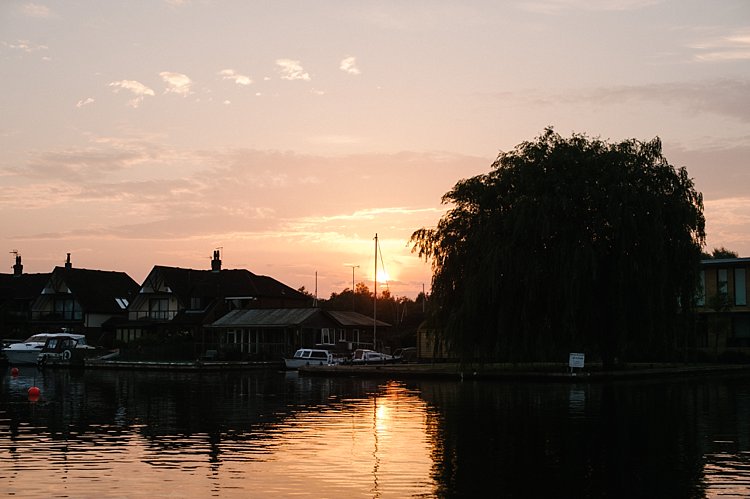
An example of backlighting is this sunset photo below. The houses and the boats were not illuminated. I was too far away for my pop-up flash to be of any help, and I didn’t have a tripod for a long exposure and smaller aperture. But I still wanted to capture some of the soft sky color along with the sunset. Balancing the exposure was tricky and I ended up shooting this image with the following settings; f/5, ISO 200, 1/320th. While the ambient light of the sunset was captured, the other elements in the photo were too dark and ended up almost like silhouettes.

creative-ways-available-light-with-the-50mm_0000

What if you have nothing else but a camera and lens with you? You do not want all your photos to be silhouettes when shooting backlit, or too dark when shooting in the shade. So what you can do is leverage your surroundings by positioning your subject carefully in relation to the light. If you have to shoot backlit portraits in a situation similar to above, shoot an intentional silhouette or use your flash for fill light (more on this below).

If you’re doing portraits where you want to focus on well-exposed faces, avoid positioning your subject where they are facing the sun which results in harsh light and shadows. On a very sunny day, you may want to wait for the golden hour – the time shortly after sunrise or before sunset –  when the sun is much lower on the horizon and the light is much softer. This yields a light that is much more flattering for portraits. If it is a bright but overcast day, the clouds act as a huge diffuser and the shadows are not as harsh so it is easier to photograph portraits in those conditions.

#2 Look for ideal light

Ideal light is often indirect, reflected, or subtractive light. This can take various forms:

  • Indirect lighting can be the soft diffused light coming from a window.
  • Reflected light can be that bouncing off a white floor, wall, bright sand, or from white or light-colored clothing you are wearing.
  • Subtractive light can be achieved by blocking the light with a diffuser, umbrella or a flag (any flat black object large enough to block any direct light hitting your subject).

Get out of the sun

As this article does not involve any equipment other than your camera and lens, instead of blocking the light, I positioned my subject in the shade. So that instead of subtracting light from my subject, I subtracted my subject from the light and put her in the shade.

In this example below, it was a very bright day and I did not want any direct light falling on my daughter’s face. I put her completely in the shade but deliberately next to the caravan wall which was light beige. There is some reflected light from the side that helps illuminate her face and the generally shadowed area we were in.

creative-ways-available-light-with-the-50mm_0000

In this photo below taken in the zoo, there was no natural light at all. A fluorescent light illuminated the box where the snake was. You can see this white light reflected on the top part of the snake’s eye (catchlight). I waited for the snake to get into this position and used the light which was bouncing from the ceiling onto him to get this shot.

creative-ways-available-light-with-the-50mm_0000

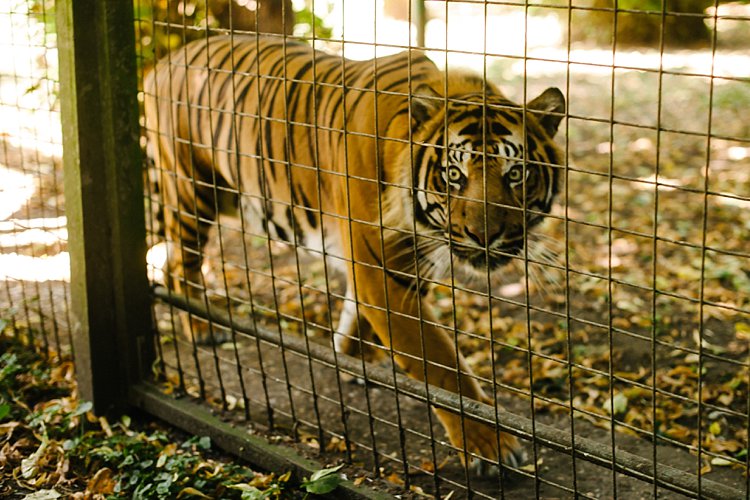
In this photo below, there was no ideal light! We were in a pretty darkly shaded area and the enclosure was mottled with spots of sun and shade. I positioned myself where I knew I could catch a good close up of the tiger in complete shade and waited for it to pass by.  The contrast between the light and shade was so strong that had I taken the photo of the tiger with his body in half sun and half shade, it would not have come out well at all.

creative-ways-available-light-with-the-50mm_0000

#3 Use your pop-up flash as fill light

Now I know that photographers are sometimes funny (and snobby) about using the camera’s built-in pop-up flash. I am one of those photographers, with good reasons. The camera’s pop-up flash blasts light directly onto your subject. It gives you a rather flat and unflattering light with a harsh shadow around the jaw and head to boot. Unless your intention is to shoot like this such as some fashion houses do (and they do it so professionally by the way), then this is a no-no in portrait photography. Ideally, you want the light bounced and angled – anything but aimed directly from the camera toward the subject.

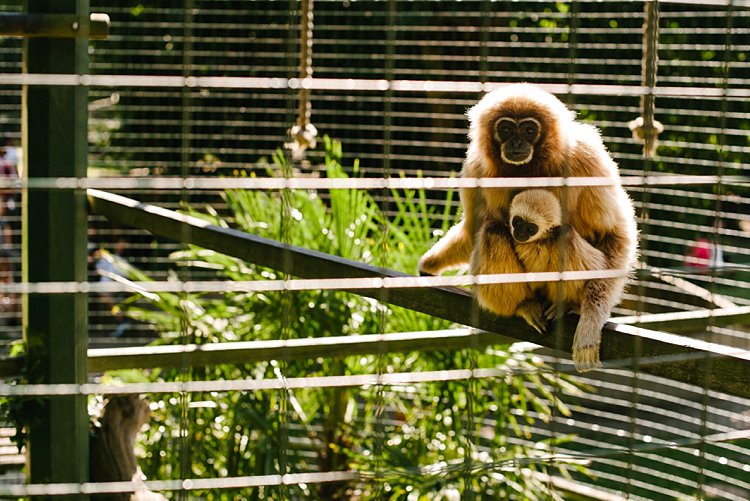
However, I do use my pop-up flash quite a bit! In fact, I use it when I don’t have a flash gun (speedlight) and I’m shooting backlit, especially when the sun is strong. And I have no qualms using it as a direct light in this situation because the camera’s flash is not strong enough to overpower the sun anyway. So the most you get out of it is a little bit of fill light.

Take this photo of the monkeys below. Had I not used my pop-up flash, there would have been no detail captured on the monkey’s face at all. The sun was too powerful that the pop-up flash could never have flattened the face and created harsh shadows anyway, and I was also too far away from the monkeys for that to happen.

creative-ways-available-light-with-the-50mm_0000

Using the pop-up flash is a fast and easy way to add light. Just be mindful of the caveats and be circumspect when using it.

#4 Try long exposures to capture natural light

Shutter speed has everything to do with ambient light regardless of whether you are doing long exposures or using on-camera, off-camera, or pop-up flash. In fact, with regards to the latter three, flash exposure is completely unaffected by shutter speed.

With long exposures, you can take photos even when very little light is available. You need a tripod, or something steady and flat to rest your camera on like a table or chair, and you’re good to go. So why would you want to slow down your shutter speed and when must you do it? Do it when you want to capture the ambient light.

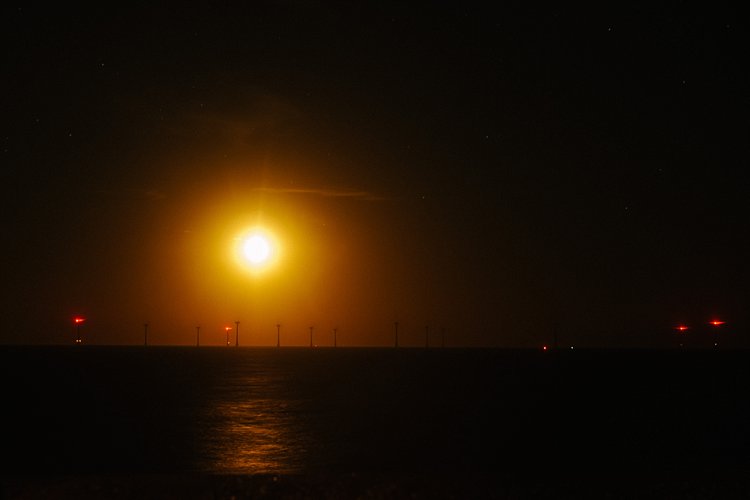
Armed with just a 50mm and the camera placed on a steady surface, I slowed my shutter speed right down to a few seconds using the bulb setting. I may have captured the moon rising but the sky is pitch black and not enough ambient light was captured. My shutter speed might have been slow but not slow enough. Ambient light was very crucial here because there were stars in the sky.

creative-ways-available-light-with-the-50mm_0000

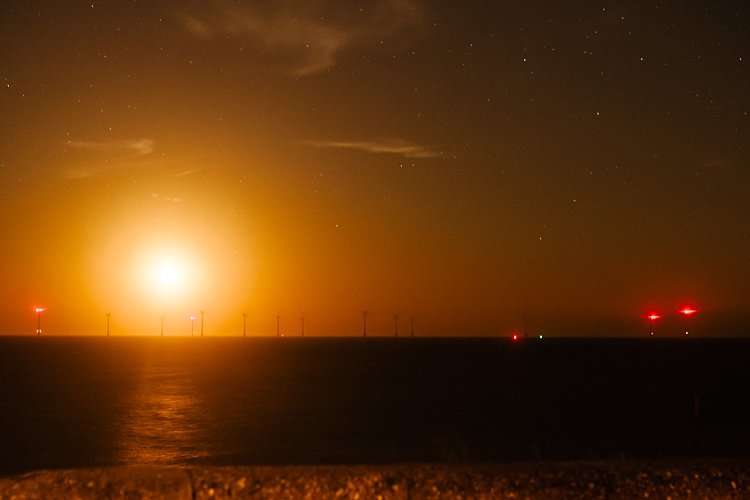
In contrast to the above, the photo below is the same scene photographed with a much slower shutter speed so that the stars are visible.

creative-ways-available-light-with-the-50mm_0000

Even with just the 50mm you can photograph the starry sky such as below. However, don’t go over 10 seconds as you would then start capturing the star trails.

creative-ways-available-light-with-the-50mm_0000

Using shutter speed wisely and skillfully is a great tool for capturing mood, color, and ambient light, even when there is very little of it. There is some light you don’t ever want to kill such as the soft evening light just after sunset. These photos were taken simply with a camera with a 50mm lens at a slow shutter speed, a wide aperture, and a fairly high ISO (as I was on a slow moving boat). These images were shot at;  f/2.5, ISO 2500, 1/100th. A faster shutter speed would have killed this light and rendered the sky pitch black. Too slow I would have run the risk of blurry photos due to the moving boat.

creative-ways-available-light-with-the-50mm_0000

creative-ways-available-light-with-the-50mm_0000

creative-ways-available-light-with-the-50mm_0000

creative-ways-available-light-with-the-50mm_0000

googletag.cmd.push(function() {
tablet_slots.push( googletag.defineSlot( “/1005424/_dPSv4_tab-all-article-bottom_(300×250)”, [300, 250], “pb-ad-78623” ).addService( googletag.pubads() ) ); } );

googletag.cmd.push(function() {
mobile_slots.push( googletag.defineSlot( “/1005424/_dPSv4_mob-all-article-bottom_(300×250)”, [300, 250], “pb-ad-78158” ).addService( googletag.pubads() ) ); } );

The post 4 Tips to Leverage Natural Light Using Just your Camera and One Lens by Lily Sawyer appeared first on Digital Photography School.


Digital Photography School

 
Comments Off on 4 Tips to Leverage Natural Light Using Just your Camera and One Lens

Posted in Photography


Sigma 12-24mm F4 DG HSM Art Lens Review

23 Nov

The Sigma 12-24mm F4 DG HSM Art was first announced September 16th, 2016. This is Sigma’s widest zoom lens offering to date and joins Sigma’s growing list of Art lenses. The lens is priced at just under $ 1600, which makes it a fierce competitor to Canon’s EF 11-24mm F4L USM lens which is priced at just under $ 3,000.

The Sigma is available in Canon, Nikon F (FX) and Sigma SA Bayonet mounts and will most likely appeal to landscape and architecture photographers that are looking for an extremely wide field-of-view (12mm gives around a 122° diagonal field of view).

The looming question is: does the extreme difference in price effect the build quality and performance of the Sigma? In this review we will be looking at the Sigma’s performance and just how it stacks up against the Canon 11-24mm F4L.

APS-C

If you’re an APS-C shooter, the Sigma can be utilized on that platform with an equivalent focal length of 19-38mm and an equivalent aperture of F6.4. It’s worth noting however that Sigma already offers a considerably less expensive 10-20mm F3.5 which would be a 16-32mm F5.6 equivalent, which would be a much better wide-angle option. For this reason we’re not going to consider this lens for use on APS-C in this review.

Sigma 12-24mm F4 DG HSM Art Headline Features

  • 12-24mm focal length
  • F4 maximum aperture
  • Ring-type Ultrasonic Focusing
  • Available in Canon EF, Nikon F (FX) and Sigma mounts

Specifications Compared

  Sigma 12-24mm F4 DG HSM Art Canon EF 11-24mm F4L USM
Price (MSRP) $ 1,599.00 $ 2,999.00
Lens Type Wide-Angle Zoom Wide-Angle Zoom 
Focal Length 12-24mm 11-24mm
Filter Thread  None None (rear insert-type)
Image Stabilization No No
Lens Mount Canon, Nikon F (FX), Sigma SA Bayonet Canon EF
Aperture Ring No No
Maximum Aperture F4  F4 
Minimum Aperture F22 F22
Minimum Focus 0.24 m (9.45?) 0.28m (11″)
Diaphragm Blades   9 (rounded) 9 (rounded)
Elements   16 16
Groups   11 11
Special Elements/Coatings Super Multi-Layer Coating, F-Low Dispersion and aspherical elements, including an 80mm large-diameter molded glass aspherical element

Super UD, UD, and 4 Aspherical Elements, SWC, Air Sphere, and Fluorine Coatings, Rear element fluorine coatings

Autofocus Yes Yes
Motor Type Ring-type Hypersonic Ultrasonic
Full Time Manual Yes Yes
Focus Method Internal Internal
Distance Scale  Yes Yes
DoF Scale No No
Weather Sealing  Dust and Splash Proof Construction with rear rubber gasket Full Weather Sealing
Zoom Method  Rotary (extending) Rotary (internal)
Weight 1151g (2.54 lb) 1180g (2.60 lb)
Dimensions 132mm (5.2″) x 102mm (4.0″) 132 mm (5.2?) x 108 mm (4.25?)
Hood Included Yes (built in) Yes (built in)

The Sigma and the Canon share a rather large number of the same features with respect to lens design. The main differences between the two lenses are highlighted in green. The Canon has a slight edge over the Sigma in terms of build quality with full weather sealing, where the Sigma offers a ‘moisture resistant’ rubber gasket on the lens mount and water-repellent coatings on the front and rear lens elements.

Both lenses are very heavy and are nearly identical in size and shape, and both feature built-in lens hoods. Neither lens accepts standard screw type filters, but the Canon has a slot to accept rear gel filters. The Sigma has that familiar Art build that feels very robust in hand but lacks the same ‘sealed’ feeling that the Canon lens provides due to its water resistant external construction.

The Canon has a slight advantage over the Sigma in terms of the zoom method as the Sigma has an external extending zoom whereas the Canon’s is internal. Being that the Sigma isn’t fully weather sealed this could be a weak point in the design in terms of moisture penetrating the lens during adverse or wet weather conditions. 

With these specifications in mind, we will now be looking at how well the Sigma performs to determine how it fairs in our head-to-head comparison with the Canon 11-24mm F4L. 

Articles: Digital Photography Review (dpreview.com)

 
Comments Off on Sigma 12-24mm F4 DG HSM Art Lens Review

Posted in Uncategorized


2016 Roundup: Interchangeable Lens Cameras $900-1200

11 Nov

These days, many (if not most) consumers are likely to shop based on price and capability, rather than according to whether a certain model contains a mirror, or not. We think this is a good thing; with all the increased competition, cameras are improving more and at a faster rate than ever before. From the gear perspective, it’s certainly an exciting time to be a photographer.

In this category, you’ll find both mirrorless and DSLR cameras that are highly capable under a variety of shooting situations, offer built-in high-spec viewfinders – either optical and electronic – and an extensive array of external controls. The biggest differences in performance tend to come down to autofocus sophistication and video capability, but neither of those is dictated by the presence or lack of mirror.

The contenders are:

  • Canon EOS 80D
  • Canon EOS M5
  • Canon EOS Rebel T6s
  • Nikon D7200
  • Olympus OM-D E-M5 II
  • Panasonic Lumix DMC-G85
  • Panasonic Lumix DMC-GX8
  • Pentax K-3 II
  • Sony Alpha a77 II
  • Sony Alpha a6300

Most of the cameras in this roundup are built around either Four Thirds or APS-C sensors. Sensor size plays a large part in determining the image quality a camera is ultimately capable of and, in general, the larger a camera’s sensor, the better the image quality and the more control you have over depth-of-field. APS-C sensors are larger than Four Thirds chips, but the differences are rarely huge.

Of course, the sensor sizes and image quality of these cameras are not the only thing that varies; the feature sets and performance of each camera are also quite different across the board. Within this category you’ll find weather-sealed cameras, cameras that can capture 4K video, cameras that can shoot bursts at incredibly high speeds with autofocus, and cameras that are simply well-balanced all-rounders. Which one should you buy? Read on to find out…

Articles: Digital Photography Review (dpreview.com)

 
Comments Off on 2016 Roundup: Interchangeable Lens Cameras $900-1200

Posted in Uncategorized


2016 Roundup: Interchangeable Lens Cameras $500-900

10 Nov

The $ 500-900 category (based roughly on US MSRP) features quite a few strong offerings, some of which should satisfy first-time camera buyers with easy-to-use interfaces and point-and-shoot style functionality. Others are aimed more at seasoned-enthusiasts, offering direct manual controls and high-end features.

At this price point, all of the cameras use either Four Thirds or larger APS-C-sized sensors and all can shoot Raw. And while a larger sensor can mean the potential for better image quality and more control over depth-of-field, the difference in size between APS-C and Four Thirds is not enormous. As such, small differences notwithstanding, the vast majority of cameras in this roundup have what we would consider to be very good image quality.

All of the cameras in this selection are reasonably small in size (compared to pricier ILCs), but the number and arrangement of control points, grip size, build quality and weight all vary quite a bit. As do the inclusion of features like like 4K video capture and in-body image stabilization.

Let’s take a look at the currently available interchangeable lens cameras that fall into the $ 500-900 price range (give or take).

  • Canon EOS M3
  • Canon EOS Rebel T6i
  • Fujifilm X-E2S
  • Fujifilm X-T10
  • Nikon D5500
  • Olympus OM-D E-M10 II
  • Panasonic Lumix DMC-GX85
  • Pentax K-70
  • Sony Alpha a6000

Articles: Digital Photography Review (dpreview.com)

 
Comments Off on 2016 Roundup: Interchangeable Lens Cameras $500-900

Posted in Uncategorized


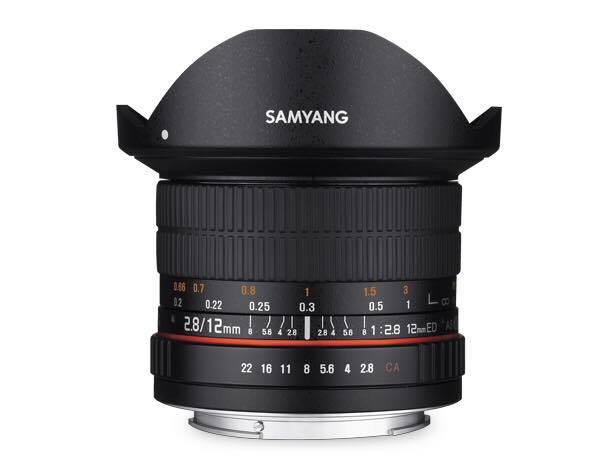
Overview of the Samyang 12mm F2.8 ED AS NCS Fisheye Lens

09 Nov

There is nothing quite like seeing the world through a fisheye lens. The way it bends straight lines and creates curves where there were none. You get to see more of the world through it than you can with your own eyes, well that is unless you turn your head. Recently I was loaned the Samyang 12mm F2.8 ED AS NCS Fisheye lens to play with and I have been having a lot of fun seeing what it can do.

leannecole-samyang-12mm-fisheye-30

Samyang 12mm F2.8 ED AS NCS Fisheye lens

Price out this lens on Amazon and B&H Photo.

Fisheye lenses have been around for a long time. But for most of us, they have not been something that we thought would be worth spending all that money on. However, the 12mm fisheye from Samyang is affordable and can give your photography a new look.

How wide is it?

There is nothing like using a wide angle for the first time and having objects fit into your frame like never before. This lens is very much like that. The first reaction most people have when they look through the viewfinder for the first time is “wow”. It is incredible what you can fit into it.

You get an 180-degree view with it. It really does fill the frame with all that you can see, including your periphery vision. While this is a good thing, there is also a downside. You can end up with unwanted distractions in the image. If you point the lens down too far you may end up with your feet in the image. Or if your camera bag on the ground is not behind you, it too will be included. Going out with friends to take photos means constantly asking them to step back behind you. If they are good friends, they won’t mind.

leannecole-samyang-12mm-fisheye-38

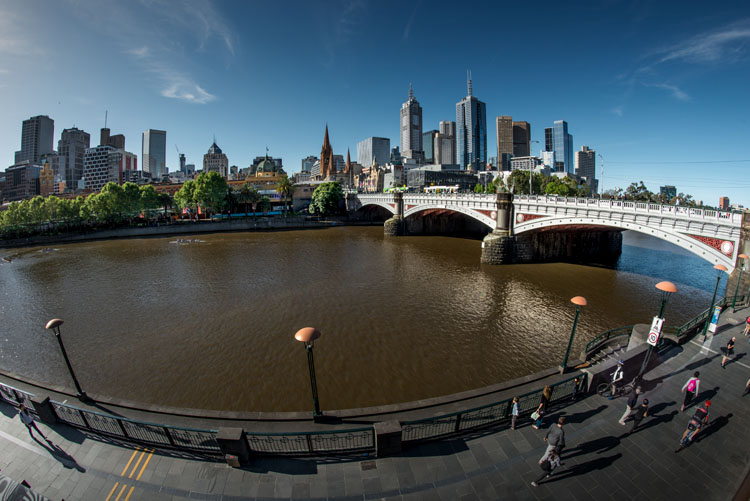
Melbourne from across the river.

This lens won’t break the bank

When you consider how much other lenses with an f/2.8 aperture cost, you would think this one would also be very expensive, a thousand bucks or so. But it retails for around USD$ 500 (less if you have a mirrorless system) so it makes it a lot more affordable than the top brand fisheye lenses. It is a good quality lens and is a great alternative for those that can’t afford the pricier top brand ones.

leannecole-samyang-12mm-fisheye-33

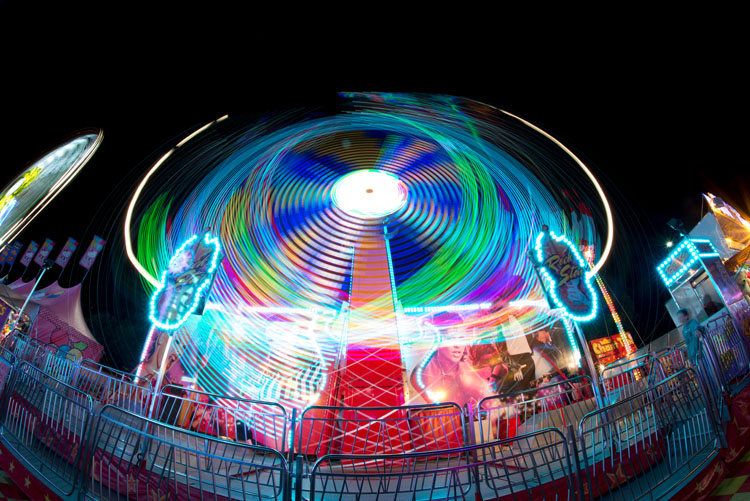
One of the rides at the Royal Melbourne Show

This lens is fun!

Without a doubt, this is a fun lens. It can have real uses, but in the end, I dare anyone to put the lens on their camera and not have a great time seeing what they can get with it. It is amazing to watch how the world is transformed through it.

I was first loaned the lens one day while in the city and I wouldn’t take it off my camera. I really enjoyed seeing what it could do and how much I could see with it. It was a challenge to see how I can make the world make sense with it. In the end you have to let that go and just take photos.

leannecole-samyang-12mm-fisheye-32

One of the rides at the Royal Melbourne Show.

It is small

For a fisheye, it is very small which is great because it means it’s easy to carry around with you. You would expect a fisheye to be a large bulky lens with big bulbous glass on the front. The Samyang fisheye is a lot smaller and not much bigger than a normal 50mm lens. Don’t let the size fool you, as it still takes a great image.

Full frame lens

Surprisingly for the cost, it is a lens for a full frame camera. It seems that many lenses for these are usually a lot more expensive. You are going to get much wider images with the full frame, and if you put the lens on a cropped sensor that aspect will suffer and you won’t get as wide an angle (about like an 18mm), though you should still get the fisheye effect.

First time mounting the lens

When you first put the lens on your camera you can get some strange numbers coming up on your camera display. If that happens you need to change the aperture ring on the lens. Turn it all the way around until you can see the aperture on your camera.

leannecole-samyang-12mm-fisheye-35

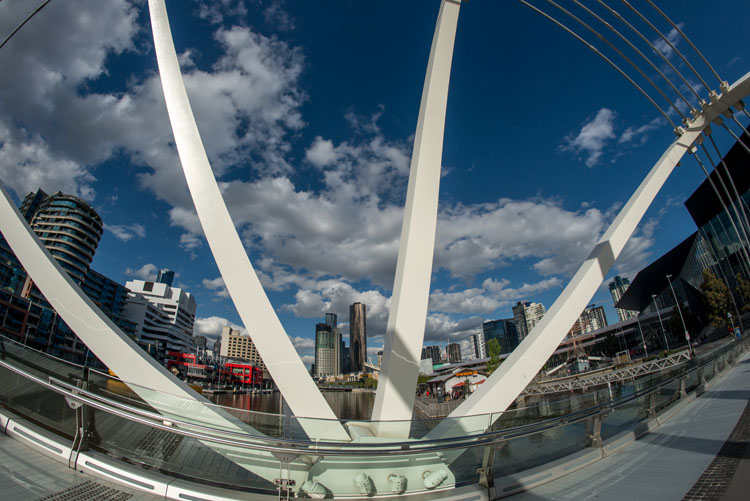
Looking at the city through the Seafarers Bridge.

It distorts the world around

For many the distortions may be too much and maybe the lens won’t be for them. The first time I posted a few photos I took with it, some people pointed out that I could get rid of the weird curves. My first thought was why would I, isn’t that the reason for using a fisheye in the first place?

It is a manual focus lens

For many people, the manual focusing for the lens is a negative. We have gotten used to autofocus, and having to go back to do it manually again can seem too hard. However, it is amazing how quickly you can adapt to it. The more you do it the easier it really does get. I seem to be using a lot of lenses lately that are manual focus and I don’t have an issue with it now.

One of the benefits with the Samyang fisheye is that for most subjects they are going to be several feet or meters from you so you can put the focus ring on infinity and just click away. It is rare than anything you shoot will be too close for that. Obviously if something is close you will need to focus the lens, but for the most part you can put it on infinity and just go for it. Just remember that it is on that setting and don’t forget to keep checking that the image is focused (zoom in on the image playback).

leannecole-samyang-12mm-fisheye-31

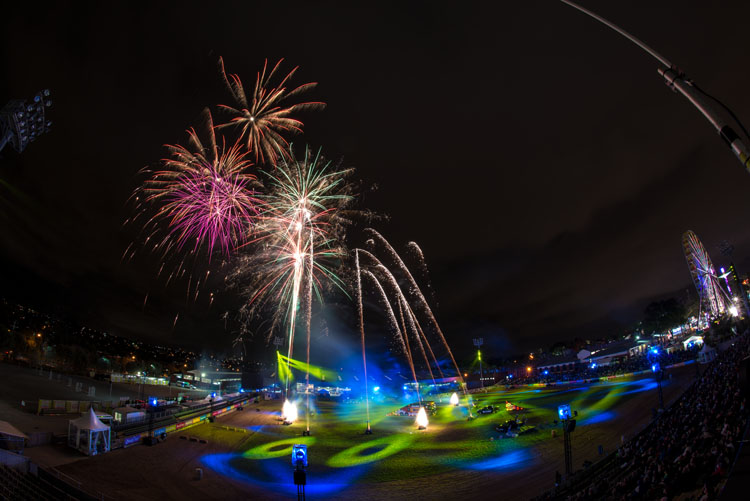
Fireworks at the Royal Melbourne Show.

Conclusions

Working with the lens

If you have purchased the fisheye then it would seem you are looking for more than just a wide angle lens. The lens is known for its distortions, so work with that. Find subjects that will be enhanced due to the curve of the lens. If you are somewhere like in a city, try different compositions to see which will work the best.

If you want something to appear straight, like the bridge, if you put that more in the centre of the image the distortion is far less. The same is true for the horizon. If you put the horizon line in the center of the frame then it will stay straight, but if you move it up or down it will get a curve to it. That can be really effective as well.

leannecole-samyang-12mm-fisheye-34

Looking down a pier into the night sky at Sorrento. See the horizon is almost straight as it is closer to the middle of the image.

Applications

The lens is perfect for astrophotography and that is mainly where it is used. You can get a lot of sky into a fisheye image and the distortions wouldn’t matter so much. You can get brilliant shots of the Milky Way, or great star trails. Samyang Australia tends to market it to aurora hunters too, but it has other uses as well.

Architecture is a great subject for this lens. It does give many of the lines a curved shape, and in people’s minds they know they are meant to be straight. But you can use those distortions to create unique images.

leannecole-samyang-12mm-fisheye-36

Some of the new architecture down at Docklands.

Many sports photographers could also find it useful. Not for everything, but for some special images. Cycling photographer Graham Watson often uses a fisheye for unique views of races like the Tour de France. With cycling ,you can get very close to the cyclists. So the fisheye would be perfect for some races, especially for a criterium when they are going around corners.

As the lens is so wide, there are many types of photography that it is not well suited for. Landscapes could work, but you need to have something in the foreground, otherwise everything would be too far away. The use of leading lines is important for that type of photography.

leannecole-samyang-12mm-fisheye-37

The full curve of the Webb Bridge in the Docklands.

Who is this lens for?

The most obvious answer to this would be astrophotographers and aurora hunters, but there are others who would also benefit from it as well, like sports and architectural photographers. Perhaps others who want to add something unique or different to their images. For the price and size, it could be a great addition to any photographer’s kit.

If you are looking for a challenge in your photography, or perhaps you want to start looking at the world in a different way, I would highly recommend the Samyang 12mm F2.8 ED AS NCS Fisheye lens. It’s a fun and not too expensive piece of kit. While you may not use it a lot, you will get it out and take photos with it from time to time. We all have lenses that we don’t use a lot, but enjoy using them when we do.

Price out this lens on Amazon and B&H Photo.

googletag.cmd.push(function() {
tablet_slots.push( googletag.defineSlot( “/1005424/_dPSv4_tab-all-article-bottom_(300×250)”, [300, 250], “pb-ad-78623” ).addService( googletag.pubads() ) ); } );

googletag.cmd.push(function() {
mobile_slots.push( googletag.defineSlot( “/1005424/_dPSv4_mob-all-article-bottom_(300×250)”, [300, 250], “pb-ad-78158” ).addService( googletag.pubads() ) ); } );

The post Overview of the Samyang 12mm F2.8 ED AS NCS Fisheye Lens by Leanne Cole appeared first on Digital Photography School.


Digital Photography School

 
Comments Off on Overview of the Samyang 12mm F2.8 ED AS NCS Fisheye Lens

Posted in Photography


Yongnuo shows off familiar-looking 100mm F2 lens for Canon EOS

02 Nov
The Yongnuo Y100mm F2 on the left, and Canon’s EF 100mm F2 USM on the right

Chinese photo equipment manufacturer Yongnuo is set to launch a new 100mm F2 lens that not only uses a Canon EF mount but which also looks just like Canon’s own 100m F2. According to websites Photo Rumours and Photo Gear News the full-frame lens will be priced at around $ 170/€160.

The lens has been made to resemble the Canon version inside and out it seems, as both feature eight elements, have a maximum magnification of 0.14x and an aperture range of F2 to F22. The Yongnuo lens arranges its elements in five groups though while Canon’s own model used eight in six. Canon’s EF 100mm F2 USM also has eight blades in its iris, against the nine in the Yongnuo version.

Price is also a significant differentiator as the Canon lens costs $ 500. Nikon Rumours expects the lens to also become available in a Nikon mount.

Yongnuo already sells 35mm F2 and 50mm F1.8 lenses in Canon and Nikon mounts with each mount having a corresponding barrel design to match of the camera brand’s own.

Articles: Digital Photography Review (dpreview.com)

 
Comments Off on Yongnuo shows off familiar-looking 100mm F2 lens for Canon EOS

Posted in Uncategorized


3 Tips for Taking Portraits with a Kit Lens

27 Oct

One of the first things that new photographers often hear is “your kit lens is garbage.” While there are certainly benefits to upgrading your glass as your budget allows, it’s also important to know that there is so much you can do with your kit lens if you understand how to use it to your advantage! In this case, let’s talk about portraits.

Most photographers quickly upgrade to a 50mm or 85mm prime lens for portraits, and with good reason. These lenses are sharp, and can typically shoot as wide as f/1.4 or f/1.8, which means that it’s easier to achieve that nice blurred background in portraits.

Taking Portraits with a Kit Lens

Canon 50mm lens at f/2.0, 1/160th sec, ISO 100.

If you plan to spend any significant amount of time taking portraits, I would absolutely recommend upgrading to at least a Nifty Fifty lens. When it comes to portraits, I almost always find myself reaching for my 50mm prime lens, and I really do think it’s worth the money. That said, when we’re living in the real world, there are a whole plethora of reasons why you might not upgrade lenses right away. Perhaps it’s a budget issue. Perhaps you’re still trying to decide which type of photography really interests you. Or maybe you just opened the camera box for the first time today and want to have a better understanding of your camera before you purchase anything else. Regardless of the reason, I’ve got good news for you–you can take great portraits with a kit lens!

In this article, we’ll explore a couple of limitations when it comes to taking portraits with a kit lens, as well as some tips for working around those limitations and capturing the best portraits possible with the equipment you already have.

1. Use Depth of Field to your advantage

As I mentioned before, one of the benefits of using a prime lens for portraits is the ability to shoot as wide as f/1.4 or f/1.8 to easily achieve that nice blurry background (called bokeh) in almost any location. Most kit lenses can only shoot as wide as f/3.5 (at 18mm) and f/5.6 (at 55mm) which won’t blur the background as much as new photographers are typically hoping. That is unless they understand that aperture isn’t the only important factor in creating that nice blurry background for portraits.

Taking Portraits with a Kit Lens

Another key aspect in creating a blurry background is the distance from the subject to the background. The further the subject is from the background, the blurrier the background will be in the photograph.  So, to create the blurry background when using your kit lens, one of the easiest things to do is to position your subject as far away from the background as possible.

Typically, when I use a 50mm lens to photograph my kids in the backyard, I have them sit on the grass about two or three feet away from our back fence. When using a kit lens, I have them sit about 30 feet away from the fence, as you can see in the image above. Then, I zoom-in to somewhere between 35-55mm, and shoot at the widest aperture the lens will allow for that focal length, in order to produce the most blur in the background possible.

Taking Portraits with a Kit Lens

Canon Kit Lens that came bundled with the Rebel XS. This image was shot at 37mm and f/4.5.

2. Change your perspective

Taking Portraits with a Kit Lens

Both images were taken with a kit lens at f/5.6.

If you can’t place your subject far away from the background and/or the background isn’t something you’d like to incorporate into your photograph, another option to consider is to change your perspective. Stand up, and have your subject sit on the ground, photographing them from above. Grass, cement, asphalt, and sand all photograph well from above, and can often be more visually pleasing in a portrait than a background that cannot be blurred as much as you’d like.

Taking Portraits with a Kit Lens

Shot with a kit lens at 55mm, f/5.6.

Bonus Tip: When shooting from above, try converting to black and white! When converted to black and white, grass reads as a dark background that can be a nice contrast for lighter skin tones. Likewise, concrete often reads as a light background that can be a nice contrast for darker skin tones. Converting to black and white when shooting from above can be a great way to work around the inability to blur a background as much as you’d like in portraits.

3. Try candid or semi-posed portraits

Taking Portraits with a Kit Lens

Shooting at f/4 or f/5.6 means that more of each image is going to be in focus than it would be if you were shooting at f/1.4 or f/1.8. Rather than consider this a disadvantage, think about the things that are easier to capture at those apertures.

For example, at f/5.6, you have the freedom to capture images with a little more movement without risking a lot of blur from motion. This is a great opportunity to try taking portrait-style images that are candid or semi-posed. Try photographing kids running toward you or siblings mid-hug. Have your subject twirl or jump. Ask mom or dad to tickle their child. Though these images may be slightly different than the head-and-shoulders images that the word “portrait” often brings to mind, they often invoke emotion and movement in a way that is really compelling and valuable in photographs.

Taking Portraits with a Kit Lens

Shooting from a slightly wider angle than just head and shoulders also allows you to incorporate aspects of the surroundings into your images to tell a story. Perhaps it’s a handful of flowers at the park, a bunch of balloons for a child’s birthday, or even an ice cream cone on a hot summer day. The cold hard facts are that the story and emotion make the portrait, not the bokeh in the background.

Using a kit lens in a nutshell

My suggestion to you is to fudge the expectation of head-and-shoulders images when it comes to kit lens portraits. Instead, focus on capturing emotions and telling a story, while getting as close as you reasonably can. If you can move the subject far away from the background in order to create a nice blur, absolutely do so. If you can’t, consider changing your perspective to create a more uniform background that’s reasonably free from distractions so that the viewer will be able to focus solely on your subject.

Taking Portraits with a Kit Lens

Does a kit lens have limitations when it comes to portraiture? Absolutely. However, recognizing the limits of a kit lens when it comes to portrait photography isn’t prohibitive. Rather, it allows you to recognize the situations and applications that will be most effective in creating the images you want with the equipment you already have, and that’s always a good thing!

Do you have a great portrait taken with a kit lens? Please share it in the comments below!

googletag.cmd.push(function() {
tablet_slots.push( googletag.defineSlot( “/1005424/_dPSv4_tab-all-article-bottom_(300×250)”, [300, 250], “pb-ad-78623” ).addService( googletag.pubads() ) ); } );

googletag.cmd.push(function() {
mobile_slots.push( googletag.defineSlot( “/1005424/_dPSv4_mob-all-article-bottom_(300×250)”, [300, 250], “pb-ad-78158” ).addService( googletag.pubads() ) ); } );

The post 3 Tips for Taking Portraits with a Kit Lens by Meredith Clark appeared first on Digital Photography School.


Digital Photography School

 
Comments Off on 3 Tips for Taking Portraits with a Kit Lens

Posted in Photography


Google acknowledges lens flare issue on Pixel camera, promises software fix

27 Oct

Since the Google Pixel and Pixel XL smartphones have become available for purchase, there have been several reports about the camera of the devices, despite stellar scores in the DxOMark ranking, being very prone to lens flare with the sun at a certain angle to the camera lens. Now a group of affected Reddit users has described the problem in the Google Product Forum and got a quick reply from a Google employee:

‘First, for some background — flare is a property of ALL camera lenses. It comes in a ton of different shapes and sizes and can even be used for creative effect — good and bad :-). The shape, color, amount, etc. of flare is related to dozens of different parameters of the lens structure and inclement light. However, we have seen reports about this “halo/arc flare”. This is the specific kind of flare that appears as a bright/low-contrast arc in the corners of the frame.
 
You can expect a software update in the next few weeks that will improve the effects of this issue. We’re working on some algorithms that recognize the halo/arc flare, characterize it mathematically, and then subtract it from the image. 🙂 You will need to use HDR+ to see the benefits of this software.’
 
So it appears Google is planning to solve a hardware problem with a software solution and bake an algorithm, that mathematically removes the flare from the image, into the Pixel camera’s HDR mode. This means the measure will only be effective when shooting in this mode and it remains to be seen if there is any impact on noise and/or image detail in the affected areas of the image. We will certainly have a closer look at the Pixel’s flare behavior in our own test of the device.

Articles: Digital Photography Review (dpreview.com)

 
Comments Off on Google acknowledges lens flare issue on Pixel camera, promises software fix

Posted in Uncategorized