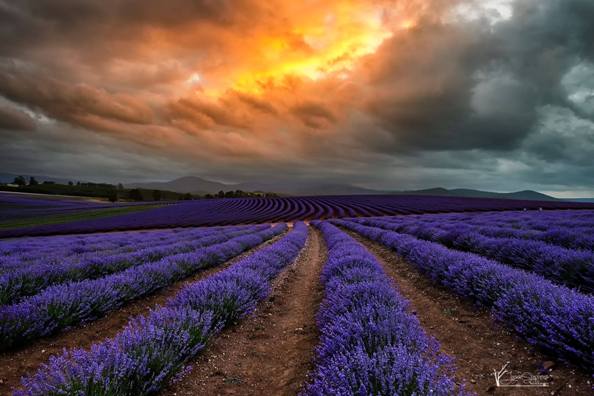
Tag: Landscape

  • Weekly Photography Challenge – Black and White Landscape

    Earlier today I shared a bunch of stunning black and white landscape images.

    Now I want you to show me what  you got in this week’s challenge:

    Weekly photography challenge – black and white landscape

    Here are few more to get your creative ideas flowing. Keep in mind a landscape can be urban or natural.

    By Wendell

    more words

    By Jason Mrachina

    By Nana B Agyei

    By Thomas Hawk

    By Jason Mrachina

    By Jason Mrachina

    By L.

    By howpin

    By Jesse Clockwork

    By Pam Link

    By Tiago Vidal Dutra

    By Mark Stevens

    If you check out last week’s collection – flowers – you’ll find some good black and white ideas in there too.

    Share your black and white landscape images

    Simply upload your shot into the comment field (look for the little camera icon in the Disqus comments section as pictured below) and they’ll get embedded for us all to see or if you’d prefer upload them to your favourite photo sharing site and leave the link to them. Show me your leading lines using pathways and roads in this week’s challenge.

    More tips – a new dPS ebook

    For more tips on shooting and processing great black and white images, check out our newest dPS ebook The Essential Guide to Black and White Photography.

    black-white-ebook

    The post Weekly Photography Challenge – Black and White Landscape by Darlene Hildebrandt appeared first on Digital Photography School.


    Digital Photography School

  • 101 Landscape Visionary Insights Not To Miss – A New eBook & Video Series

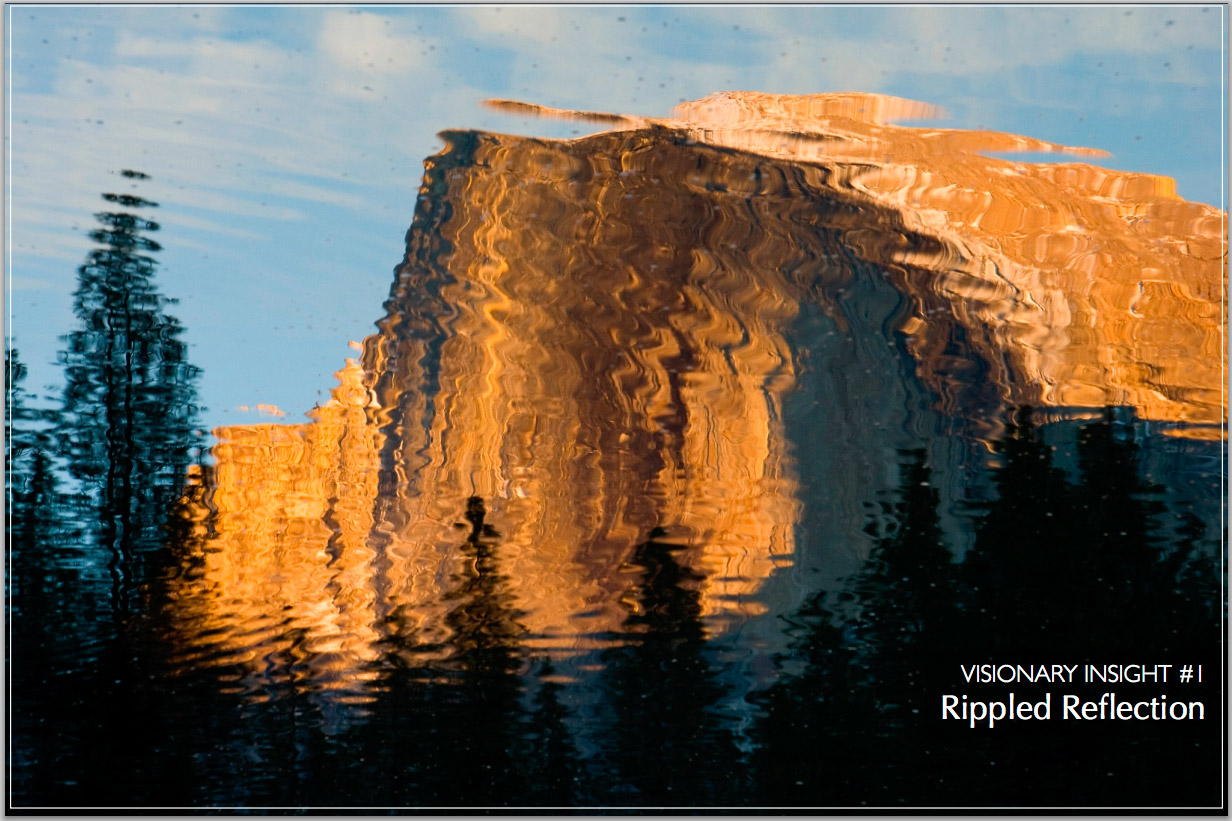
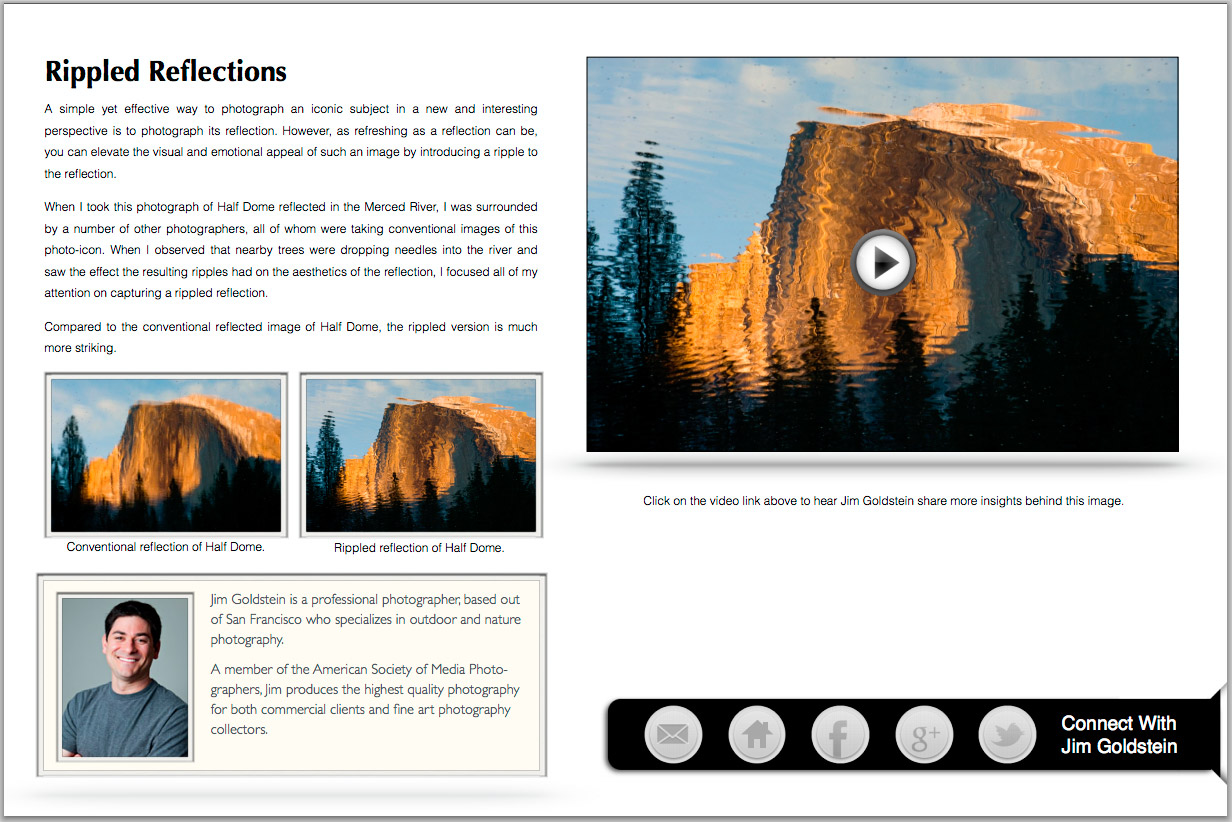
    If you love outdoor photography and are hungry to learn more from seasoned professionals then there is a great eBook and video series that has just been launched: 101 Visionary Insights. 10 professional photographers, including myself, discuss inspiring and creative techniques to improve your photography and get the most out of your time in the field.

    Download a free eBook with 10 tips today

    If you like what you see in the sample eBook linked above be sure to purchase the full ebook and video series for as little as $ 12. You’ll find insights from myself Jim M. Goldstein, Gary Crabbe, Ian Plant, Bob Holmes, David H. Wells, Jay & Varina Patel, Karen Hutton, Moose Peterson and Joshua Holko. A sample page from the eBook can be found below and to see more sample content grab the free 10 tip eBook linked above.  I highly recommend the video course as I put together some important tips that I’ve yet to share publicly on my blog, podcast or social media updates. Enjoy and happy shooting!


    101 Visionary Insights eBook & Video series - featured Jim M. Goldstein


    Copyright Jim M. Goldstein, All Rights Reserved

    101 Landscape Visionary Insights Not To Miss – A New eBook & Video Series

    The post 101 Landscape Visionary Insights Not To Miss – A New eBook & Video Series appeared first on JMG-Galleries – Landscape, Nature & Travel Photography.


    Related Stories

    • 101 Landscape Visionary Insights Not To Miss – A New eBook & Video Series – Enclosure
    • The Insightful Landscape – A New Landscape Photography Book
    • Save 25% on my eBook and Star Trail Webinar Now Through Dec. 2nd
    Feed Ads by FeedBlitz
    powered by ad choices


    JMG-Galleries

  • The Insightful Landscape – A New Landscape Photography Book

    The Insightful Landscape - A New Landscape Photography Book

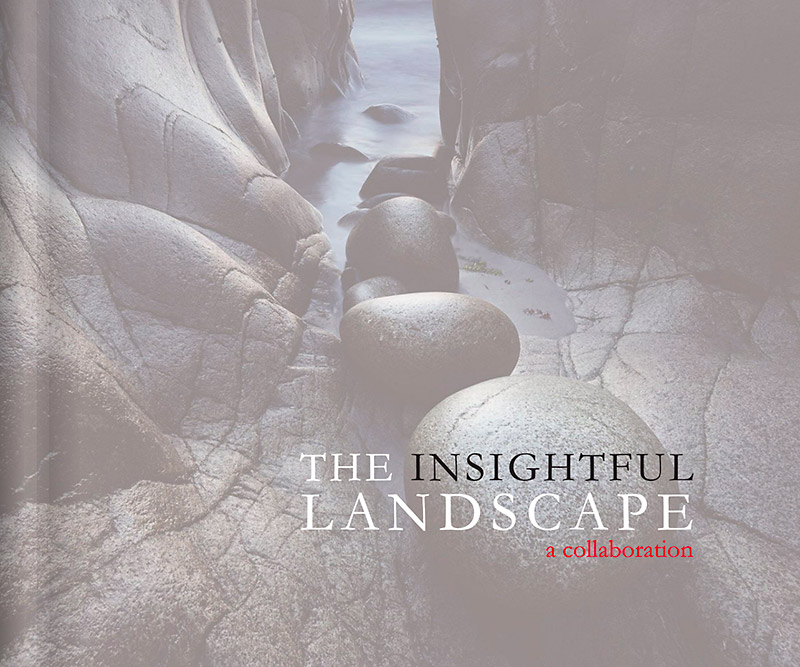
    Announcing a new landscape photography book: The Insightful Landscape

    A very special collaboration has been made by 26 highly talented landscape photographers including Guy Tal, Michael E. Gordon, Andy Biggs, Tim Parkin, Gary Crabbe, Floris van Breugel, Richard Wong, Alister Benn, myself and many more. (see the complete list below)

    If you love Landscape Photography then you’ll want to pick up a copy. This book was put together to share our passion for nature and help make a chartable donation to the Cystic Fibrosis Foundation on behalf of a participating photographer’s son, who is fighting the disease.

    Purchase The Insightful Landscape in print or digital format today


    Complete Contributing Photographer List:

    Dan Ballard

    Alister Benn

    Andy Biggs

    Floris van Breugel

    Peter Carroll

    Bill Chambers

    David Chauvin

    Gary Crabbe

    Ken Cravillion

    Matthew Cromer

    David Fantle

    Jim Goldstein

    Michael E. Gordon

    Jack Graham

    David Leland Hyde

    Youssef Ismail

    Joseph Kayne

    Chuck Kimmerle

    Colleen Miniuk-Sperry

    Lon Overacker

    Tim Parkin

    Rafael Rojas

    Jim Sabiston

    Scott Schroeder

    Guy Tal

    Richard Wong

    Copyright Jim M. Goldstein, All Rights Reserved

    The Insightful Landscape – A New Landscape Photography Book

    The post The Insightful Landscape – A New Landscape Photography Book appeared first on JMG-Galleries – Landscape, Nature & Travel Photography.


    Related Stories

    • 101 Landscape Visionary Insights Not To Miss – A New eBook & Video Series
    • 101 Landscape Visionary Insights Not To Miss – A New eBook & Video Series – Enclosure
    • Wilderness Protection – Only As Strong As The Wilderness Act
    Feed Ads by FeedBlitz
    powered by ad choices


    JMG-Galleries

  • How to Create Amazing Urban Landscape and Street Photography Images

    A stitched panorama in a city can make a great scene!

    A stitched panorama in a city can make a great scene!

    Many of us live in cities nowadays, in fact almost 80% of the world’s population lives in, or near, a large city. While it is fantastic to be out in nature, photographing the remote seascape scenes or the snow capped mountains, that is not possible for most photographers, everyday. That might mean that you don’t photograph for weeks at a time. As you probably know by now, to make big improvements in your photography you need to practice, practice, and practice some more.

    Living in a city has its own scenes that are great to photograph, this is why street photography is such a popular genre of photography. These urban landscapes can not only be interesting, but you can make some very powerful images in an urban or city setting. Here are some pointers on how to create amazing urban landscape and street photography images.

    1. Urban landscapes are the same as rural landscapes

    Ok, not visually maybe, but in the way you approach them. In traditional landscape photography you will use a leading line to draw the eye into the scene. You will make sure that there is foreground interest that holds the viewers eye. You will use composition guidelines to set up your shot. This is all true for urban landscapes too. Visually design your scene as you would when you photograph a landscape scene. Be sure that the scene has a good background, a strong mid ground and a compelling foreground. This is not a rule, but it will help when you set up your shot.

    2. The mundane becomes unusual

    We have all seen pretty much all the objects in a city. The fire hydrants, the mailboxes and the scenes all look familiar to us city dwellers. In urban landscapes it’s not only about the architecture or the street scenes, it is about making those well know objects look different or interesting. Think of the time of day that you photograph. Late afternoon sunlight, warm light can make a fire hydrant or mailbox look somehow magical. Graffiti can look gritty, textured, and interesting in the soft light. Look at how you can change the angle or lines in a normal scene. Come from a different angle and see how that change makes all the difference to making mundane objects seem different.

    Look for a way to make mundane scenes look different

    Look for a way to make mundane scenes look different

    3. Textures and close up

    Every city has literally thousands of different textures, including: walls of buildings, cobbled streets, paved walkways, wooden walkways, benches, grass, the list goes on. Each of these surfaces has texture which are great for urban landscape photography. To emphasize texture, you will want to be shooting in side light conditions. The side light will emphasize the granularity of the surface of the street, or the grain in the wooden bench. Textures can be a whole theme on their own. Think of the textures on the sidewalks, the brick walls, the concrete buildings, the glass surfaces (reflections are amazing too).

    Try this, go out into your city and try and shoot 24 photographs of different textures, at different times of the day. The range of different images will amaze you, and it will open up your eyes to what is possible when you focus on just one theme. Secondly, try and isolate some subjects in the scene. Get in closer to what you are shooting. By doing this, you will isolate part of the scene and make it look more intriguing.
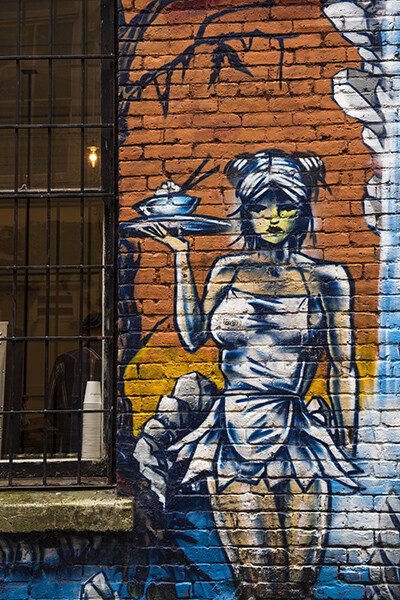
    This graffiti art looks amazing, but the textures and grittiness make the image more impactful

    This graffiti art looks amazing, but the textures and grittiness make the image more impactful

    4. Use colour

    We all photograph in colour nowadays, and then convert that image to black and white (if you don’t, you should!) but shooting for colour in your city can be a lot of fun. Decide on a colour you want to photograph and go out and look for all the different scenes you can find that contain your colour. To make it more challenging, try and isolate that colour to make 80% of your image the chosen colour. This will help you see beyond subjects and look at colour in a whole new way. You can also try and get the different colours in a scene into a cohesive arrangement, your primary colours (reds, yellows and blues) will be immediately powerful in a shot. A fire hydrant can become more interesting because of the redness of it. A blue wall becomes an abstract image, colour is a good theme to use in your urban images.
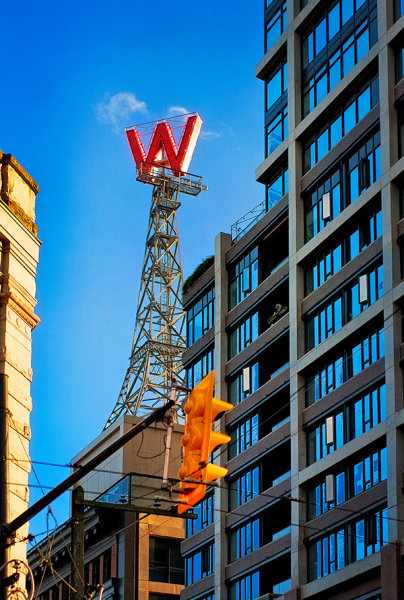
    Vibrant colours can make your image pop!

    Vibrant colours can make your image pop!

    5. Photographing people

    Cities are built for people, there are lots of them in any city.  It is always fun to see how people interact with the city. Do they use the park benches, do they take time to look around them in the city or do they simply march on to work. Look for opportunities to capture photos of people doing everyday stuff, but try and find a great backdrop to shoot against. A graffiti wall or a moving bus can make the perfect setting, good architecture too! Always be aware of people’s reaction to being photographed. I generally try and photograph people when they are not camera aware. If they spot me taking the shot, I will walk over to them, show them the image and explain why I shot it. Sometimes, people are not happy to be photographed, be respectful of this and be friendly. It’s amazing what a smile and a relaxed attitude can do.
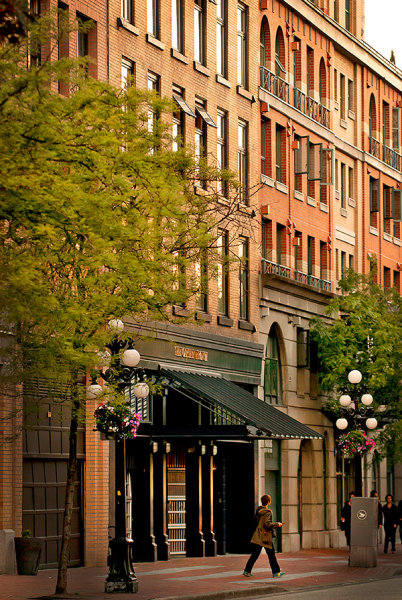
    Use the city buildings as a backdrop to the people in the image

    Use the city buildings as a backdrop to the people in the image

    Your turn

    Photographing in your city can be fun. Of course, always be aware of your surroundings. Be careful not to step off the sidewalk into the street without looking at the traffic (trust me, this happens). Also, be aware of where you are wandering. You may have innocently wandered into the “rough” neighbourhood which might be a bad idea with a large SLR around your neck.

    Apart from being aware of your safety, photograph with abandon. Try and capture the essence of the city. Try and photograph the well known places in a new and fresh way. Above all, get out and photograph. As I said earlier, it may not always be possible to go out and shoot in some amazing natural setting, but you can get some really great images just outside your front door, in your home city.

    Here is a fun exercise, choose a time to go out and get some urban shots. Select a theme and shoot five images, choose another theme and shoot another five, and so on. Once you have done this a few times, upload your favourite image to the comments below and let’s see how creative the shots are. I look forward to seeing your city through your eyes!
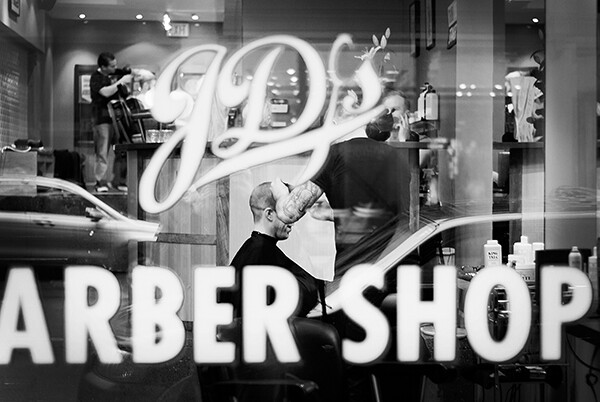
    Look for refections, shapes and everyday life!

    Look for refections, shapes and everyday life!

    The post How to Create Amazing Urban Landscape and Street Photography Images by Barry J Brady appeared first on Digital Photography School.


    Digital Photography School

  • Readers’ showcase: Landscape photography

    In all the talk about new gear, and which brands are best it’s easy to overlook the end result of our shared passion – the pursuit of stunning images. Among our large community there are some incredibly talented photographers who share their work in our forums, galleries and photo challenges. From time to time we like to showcase some of the best work on our homepage. This week we challenged users of the landscape photography forum to submit their strongest shots, and the results were impressive. Click through to see more.

    Articles: Digital Photography Review (dpreview.com)

  • 33 Inspiring Websites of Landscape & Travel Photographers

    Landscape and travel photography are closely intertwined with each other. Travel photography, as many sub-genres of art and photography are, is largely undefined and encompasses a wide range of people, locations, cultures and ideas, including landscape photography. Such kinds of photos express the feeling of time and place, its mood and atmosphere without geographic limitations. The borders between amateur and Continue Reading

    The post 33 Inspiring Websites of Landscape & Travel Photographers appeared first on Photodoto.


    Photodoto

  • 23, June 2014 – Landscape Aerial Photography Using Unmanned Aerial Vehicles


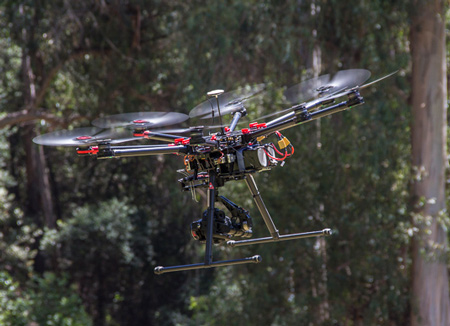
    Unmanned Aerial Vehicles (UAVs) have been making a lot of headlines lately within the photography community.  These remotely controlled aircraft have enabled photographers a new way to gain new perspectives on a scene.  They have also caused a lot of controversy in regards to safety and privacy.  Stephen Wheatcraft’s article Landscape Aerial Photography Using Unmanned Aerial Vehicles introduces you to this new method of making images. 

    Last week Kevin Raber and Chris Sanderson spent the week on the road working on a new video tutorial with William Neill in Yosemite and Mono Lake areas.  More on this new video in the near future.


    The Luminous Landscape – What’s New

  • Using Balance in Your Landscape Photography Composition

    How to use Balance in your landscape photography

    If you want to take your landscape photography to the next level, it’s time to start thinking about how you balance your subjects. The most powerful compositional tools that you have at your disposal are your knees, and your feet.

    Simply stepping to the side a couple of feet can change your landscape compositions drastically. Take things one step further (weak pun intended) and bend those old knees to get a lower point of view. Now things might start to look more interesting.

    The reason why I say this is because horizontal and vertical movement will allow you to achieve the ideal balance of subjects in your landscape images. If you’ve got a camera with one of those flippable LCD screens, you’ll be able to get right down on the ground or way up high on your tripod. Nice.

    So what do I mean by ‘balance’?

    Composition basics - using balance in your landscape photography

    Something Wicked

    I’m referring to how you balance subjects in your image on the horizontal and vertical planes. Simply plonking your interesting subject slap bang in the centre of your image might work, but there are times when you might get a better composition by placing it to one side of your image, and counter balancing that with something on the opposing side.

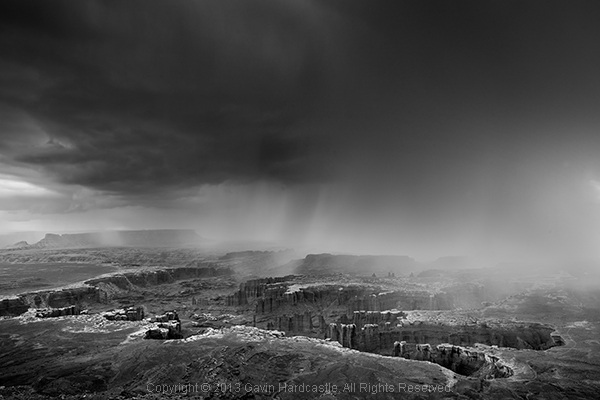
    With my image above ‘ Something Wicked’, I wanted the moody storm clouds to be the main subject but it was essential to capture it bearing down on the mesa. By devoting the lower third of the frame to the mesa and the upper two thirds to the menacing clouds above, I balanced the subjects to my liking.

    Subjects can’t move but you can

    There may be times when you actually use interesting space to counterbalance your main subject, don’t assume that your spaces have to be filled with obvious subjects. I like to invite my viewers to think about what’s in that space, drawing their eye to what at first appears to be nothing, but upon closer inspection reveals something interesting.

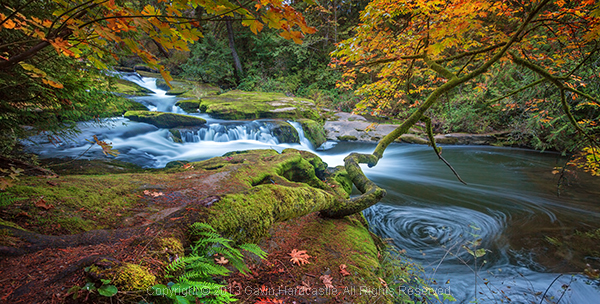
    Balancing subjects in images that feature reflections is really important. Perhaps you want to give more emphasis to the reflected elements? Movement from left to right, or up and down, can really place those elements exactly where they need to be. Moving one foot to the left might eliminate a pleasing mountain ridge in the distance. Dropping down a few inches might bring it back.

    How to balance reflections in landscape photography - Gavin Hardcastle

    With my image of Mono Lake above, I found that if I got too low to the ground, I lost some of the mass in the reflected clouds. The ideal vertical position was at an agonizing semi crouch that had my quads screaming. If I’d moved a little more to my right I would have lost the foreground tufa mound that you see in the lower left corner, which adds depth to the image.

    I’ve done this so many times that I no longer think about doing it, something just clicks and I know the shot is in the bag. When you’re starting out however, this might require a bit of conscious thought, so here are two tips I always teach to my workshop students.

    Do the Squat

    After you’ve taken a shot with your camera at normal height on the tripod, squat down for a few seconds and survey the scene from a lower perspective. Make it a habit and I can virtually guarantee* that you’ll see a better shot around 50% of the time.

    Do the Cobra

    Rather than shuffling left to right, I often like to crack out my Cobra impersonation and move my head from side to side while trying to maintain the same height. By doing this I can see how my foreground subjects move around the subjects in the distance. If you see some bloke with a tripod on a cliff edge who looks like he’s doing some type of shamanic dance, that’s me setting up a shot.

    This sounds really obvious, but I notice a lot of photographers don’t bother with these two basic moves. There’s more to composition than your standard tripod setup.

    Composition tips for landscape photography

    My shot of Los Arcos Park in Cabo San Lucas (Mexico) is a prime example of how ‘doing the Cobra’ helped me to visualize the ideal composition for having El Capitan (the central sea stack) positioned so that it fits just right in that gap. If I’d moved just 12 inches left or right I would have lost that pleasing ‘equidistant’ position. If I’d moved lower (the Squat), that foreground rock would have obscured the footsteps in the sand that lead your eye towards El Capitan.

    Go Handheld

    Yes, yes, I realize I’m a one man tripod enforcement unit but I’ll often start a shoot without the tripod so that I’ve got the freedom of movement to find the best compositions. Once I’ve discovered that ideal balance of subjects along the vertical and horizontal planes, I’ll grab the tripod and take the shot. This will save you a lot of fiddling around with the tripod, especially if you’re rocking one of those flimsy box store tripods that belong in the recycling bin.

    Try it out

    Go out and try the ‘Squat and Cobra’, then post your comments here to let me know your results. Being conscious of how you balance your subjects will give you better landscape images, and with practice, will become automatic.

    ** Guarantee is virtual and only worth the paper on which it is written.

    For more articles on composition try these:

    • Composition, Balance and Visual Mass
    • A New Photographer’s Guide to Composition
    • Perspective in Photography – Don’t just stand there move your feet!

    The post Using Balance in Your Landscape Photography Composition by Gavin Hardcastle appeared first on Digital Photography School.


    Digital Photography School

  • The Insightful Landscape – A New Landscape Photography Book

    The Insightful Landscape - A New Landscape Photography Book

    Announcing a new landscape photography book: The Insightful Landscape

    A very special collaboration has been made by 26 highly talented landscape photographers including Guy Tal, Michael E. Gordon, Andy Biggs, Tim Parkin, Gary Crabbe, Floris van Breugel, Richard Wong, Alister Benn, myself and many more. (see the complete list below)

    If you love Landscape Photography then you’ll want to pick up a copy. This book was put together to share our passion for nature and help make a chartable donation to the Cystic Fibrosis Foundation on behalf of a participating photographer’s son, who is fighting the disease.

    Purchase The Insightful Landscape in print or digital format today


    Complete Contributing Photographer List:

    Dan Ballard

    Alister Benn

    Andy Biggs

    Floris van Breugel

    Peter Carroll

    Bill Chambers

    David Chauvin

    Gary Crabbe

    Ken Cravillion

    Matthew Cromer

    David Fantle

    Jim Goldstein

    Michael E. Gordon

    Jack Graham

    David Leland Hyde

    Youssef Ismail

    Joseph Kayne

    Chuck Kimmerle

    Colleen Miniuk-Sperry

    Lon Overacker

    Tim Parkin

    Rafael Rojas

    Jim Sabiston

    Scott Schroeder

    Guy Tal

    Richard Wong

    Copyright Jim M. Goldstein, All Rights Reserved

    The Insightful Landscape – A New Landscape Photography Book

    The post The Insightful Landscape – A New Landscape Photography Book appeared first on JMG-Galleries – Landscape, Nature & Travel Photography.


    Related Stories

    • 101 Landscape Visionary Insights Not To Miss – A New eBook & Video Series
    • 101 Landscape Visionary Insights Not To Miss – A New eBook & Video Series – Enclosure
    • Exhibit & Book Not To Miss – Carleton Watkins: The Stanford Albums
    Feed Ads by FeedBlitz
    powered by ad choices


    JMG-Galleries

  • Winners of the ViewBug Landscape Photography Contest

    The wait is FINALLY over!!! The Winners of the ViewBug Landscape Photography Contest Are…

    Grand Jury Winner

    Grand Jury Winner – Church Mountain Falls

    A BIG thank you to everyone who entered our recent Landscape Photo competition. The winners receive Year Long PRO Subscriptions from our friends at ViewBug.

    ViewBug LogoThe response was amazing with THOUSANDS of entries. The response was so great that the team at ViewBug wants to invite ALL of the Digital Photography School readers to register for a free basic membership to ViewBug. Start participating in all theViewBug photography contests now! To register now, click HERE.

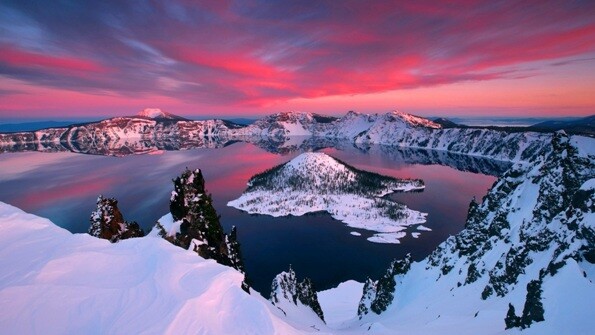
    But first – here are the winners of the competition, and an extra special thank you to Guest Judge, professional photographer, Chris Burkard:

    • Grand Jury Winner “Church Mountain Falls – Redux” by Scott Don Schikowski
    • Runner Up “Dune Rise” by Tra Rader
    • Runner Up “Crater Lake Winter” by Lugji Photography
    • People’s Choice Winner “Lavender Delight” by Jason L. Stephens

    And now, the Winning Photographs!

    Grand Jury Winner – Church Mountain Falls

    Grand Jury Winner

    Runner Up – Dune Rise

    Runner Up 1 Tra

    Runner Up – Crater Lake Winter

    Runner Up 2 Lugji

    People’s Choice Winner – Lavender Delight

    People s Choice

    Thanks again to everyone for entering and to ViewBug for sponsoring this competition. Don’t forget to sign-up for your complimentary basic membership here.

    The post Winners of the ViewBug Landscape Photography Contest by Darlene Hildebrandt appeared first on Digital Photography School.


    Digital Photography School