RSS
 

Posts Tagged ‘Landscape’

Deal 11: $10 Landscape Photography eBooks (Save 66%)

24 Dec

Today is day 11 in our 12 days of Christmas and we’ve saved one of our best deals til 2nd last!

Today you can pick up either of our Landscape Photography eBooks for just $ 10 (they are normally $ 29.99 each).

These two landscape photography eBooks were written in the last 18 months by the talented New Zealand photographers Todd and Sarah Sisson.

Together they make one of the most comprehensive and practical guides to creating beautiful landscape images we’ve come across.

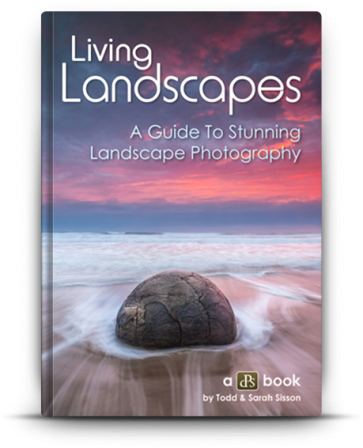
Living Landscapes: A Guide to Stunning Landscape Photography

living_landscapes3-363x448

The first of the two eBooks is all about taking landscape images that help you to capture and share the beauty of the world around you.

It received many great reviews from around the web and is one of the most beautifully written and illustrated eBooks we’ve ever published.

Normally $ 29.99, today it’s yours for $ 10.

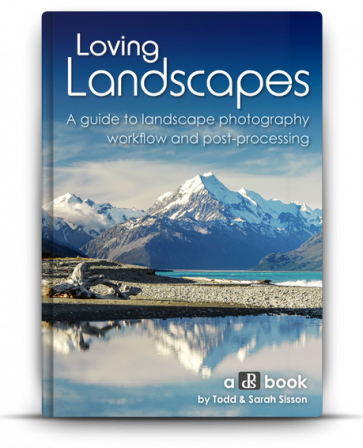
Loving Landscapes: A Guide to Landscape Photography Workflow and Post-Processing

LovingLandscapesCover-363x448

If you’ve ever been frustrated that the landscape photos from your camera don’t portray the magical scenes you witnessed, then this is eBook will open up a new world of creative possibilities and teach you how to transform your dull RAW files into breaking images.

In this eBook Todd and Sarah demystify the landscape photography workflow and share how they create the beautiful images that they do.

It’s 200+ pages of practical information that has helped many of our readers improve what they do. You also get a set of 10 Lightroom presets with this eBook to help you on your way (these require you to have Lightroom software to use them).

Normally $ 29.99, today it’s yours for $ 10.

Want them Both? Get This Bonus!

For those of you who want to pick up both of Todd and Sarah’s eBooks – there’s a bonus for you.

These eBooks are normally $ 69.98 but today they’re yours for $ 19 – plus we’ll throw in a specially developed set of 51 Lightroom Presets that have never been released before (worth $ 19.99).

Note: these bonus 51 presets require you to have Lightroom software to use them.

This bundle is worth $ 79.97 but today is yours for $ 19 (a saving of 76%).

googletag.cmd.push(function() {
tablet_slots.push( googletag.defineSlot( “/1005424/_dPSv4_tab-all-article-bottom_(300×250)”, [300, 250], “pb-ad-78623” ).addService( googletag.pubads() ) ); } );

googletag.cmd.push(function() {
mobile_slots.push( googletag.defineSlot( “/1005424/_dPSv4_mob-all-article-bottom_(300×250)”, [300, 250], “pb-ad-78158” ).addService( googletag.pubads() ) ); } );

The post Deal 11: $ 10 Landscape Photography eBooks (Save 66%) by Darren Rowse appeared first on Digital Photography School.


Digital Photography School

 
Comments Off on Deal 11: $10 Landscape Photography eBooks (Save 66%)

Posted in Photography


Using Graduated Neutral Density filters for Landscape Photography

23 Dec
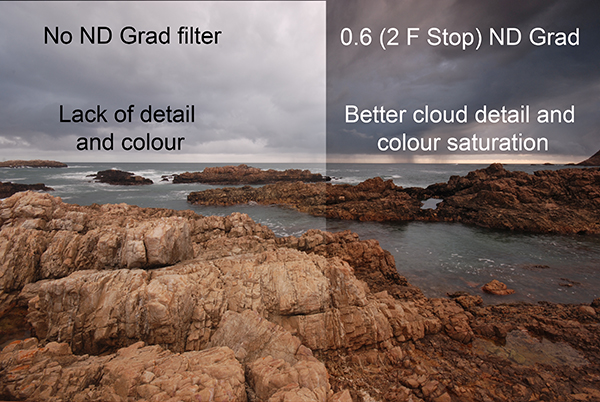
You can see the effect an ND Grad has on the scene

You can see the effect a graduated neutral density filter has on the scene

One of the biggest challenges in photography is managing the light in your scene. It is for this reason that many landscape photographers love to be out shooting during the golden hours or blue hour when the light is beautiful and the contrast is manageable. Contrast is tough to manage on bright days and in certain scenes, but there are a few ways to work around this. In this article we are going to look at the usefulness of using neutral density gradient filters (aka ND grads). These filters have been around for a long time, most landscape photographers will have a set of them in their camera bag.

Filters or Photoshop?

In recent years, there has been an ongoing debate around whether it is better to use filters or to bracket the images and blend them in Photoshop afterwards or even use HDR to capture all the different tonality and light in a scene. In many cases this is a personal preference, and I switch between the two depending on the scene or the vision I have of the image I want to make.

If I am shooting during golden hour I will most often use an ND grad filter. If I am doing a starscape, I will take two images and blend them, one for the sky and one for the foreground. The reason is this. At golden hour, I can expose for the ambient light and use a filter to keep the detail in the sky. If I want a starscape (not a star trail) I need to push my ISO up really high and if there is something in the foreground of the scene that is a little too bright, it will overexpose. My first shot will be an image that will expose the the scene properly. For my second shot, I will expose the sky to capture a starscape shot. Afterwards, I will blend them in Photoshop, which really works well.

In some cases, there is no substitute for an ND grad. If you want the waves in a seascape scene to become silky smooth or a river to look soft and white, then you will need to use ND grads. This effect cannot be made in Photoshop (not yet anyway). The best part about using ND grads is the surprise you get when you see the image on the screen. You will be amazed at the effect of capturing the blurred movement of different elements in your image.

What is a graduated neutral density filter (ND Grad)?

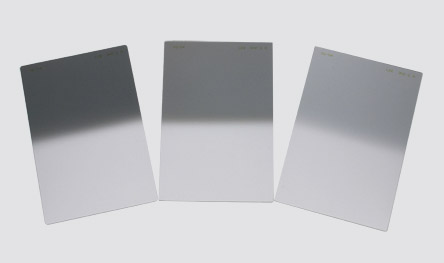
Essentially it is a rectangular, optically correct piece of resin or glass with a gradient from dark to light. It is called “neutral” because the dark part of the filter should not make any colour differences, or add a colour cast to the scene. This is not always true of cheaper filters, but the well established filter brands (Lee, Singh-Ray) leave very little colour cast on the final image. The reason behind using an ND filter is to hold light back so that the part of the scene that is brightest (usually the sky) does not overexpose. This effect creates a pleasing image. The sky is well exposed and the foreground is correctly exposed as well.

If you were to expose the scene without using an ND grad filter, very often, the foreground would be well exposed while the sky may simply be overexposed or, if you were to expose for the sky, the foreground would be very dark. As I said earlier, you can do blending in Photoshop, but sometimes, you may not capture all the detail in the sky and using a filter to capture the scene may be useful. Also, you will be able to spend more time shooting and less time editing afterwards!

A set of ND grads in varius strengths

A set of ND grads in varius strengths

When should you use an ND grad filter?

Most landscape photographers will use them at sunrise or sunset, during the golden hour. You can also use them during the day to slow the shutter speed to make water smooth and silky. Blurring moving objects such as people, cars, buses or even trees blowing in the wind is also an option. What you will get is a well exposed, daylight scene with some blurred movement. This can look really interesting and dynamic in your image.

The reason you will want to use an ND grad filter is that there can be a substantial difference, light wise, between the sky and your foreground. If you have more than a two stop difference, you will probably need an ND grad filter to correct that and get a good, well balanced exposure. This not a rule, but if you try and average the exposure and you are finding that your foreground looks too dark and your sky is too bright, maybe it is time to use the filter.

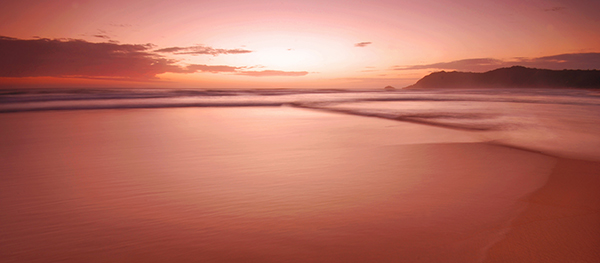
An ND Grad was used in this image to expose the sky and clouds correctly

An ND grad was used in this image to expose the sky and clouds correctly

Types of ND grad filters

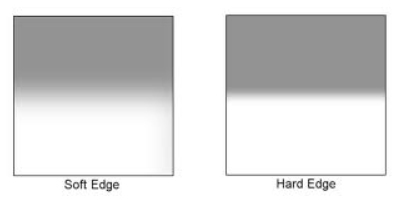
ND grad filters have a few variables. The first is whether the filter has a hard or soft edge. There is a reason for this and both types are useful. The hard edge filter has a very definite transition between the dark gradient part of the filter and the part that is clear. The soft edge filter gently blends the gradient across the filter, so the line is less obvious. Each one of these filters are used on different scenes. For example, the hard edge filter is really useful if you have a very definite horizon line (i.e. a seascape or a landscape scene where the horizon is pretty flat and straight). The soft edge filter is used for scenes where there is no clear horizon (i.e. a forest or street scene). Learning when to use which type of filter takes some practice, but once you can visualise what the result will look like, it is pretty easy.

Hard Edge and Soft Edge ND Grads

Hard Edge and Soft Edge ND Grads

ND grads come in different strengths

The filters are made in different strengths to compensate for different lighting conditions. Depending on the dynamic range (the difference between highlights and shadows) in your scene you can choose an ND grad filter that will be darker or lighter. Darker filters hold back more light and lighter filters, hold back less light. ND Grads are made in the following strengths 0.3 or one f-stop of light, 0.45 or 1.5 f-stops, 0.6 or two f-stops, 0.75 or 2.5 f-stops, 0.9 or three f-stops. The important calculation to remember is to try and keep your sky and your foreground within one stop of one another. Also, ND grads can be stacked if the light is really bright, so you can make the sky even darker, depending on the effect you want.

How do I use an ND grad filter?

It is easier than you might think. There are some technical details to think of, but once you have used grads a few times, it is really quite simple. Here is a process that works pretty well in most lighting conditions:

  1. Set up your camera on a tripod and take a light meter reading of the foreground. Making sure that your camera is on Manual, point it down and fill the viewfinder with the foreground to take the reading.
  2. Take a light meter reading in the same way as above, of the sky.
  3. Work out the difference between the two exposures and use an ND Grad to get your scene to within one stop of light difference. As an example, if the sky is three stops brighter than the foreground, you can use an ND Grad that blocks two f-stops of light or a 0.6 ND Grad.
  4. Slide the ND grad filter into place in front of the lens and determine the best position for the gradient to be in your image. If it is a hard horizon (i.e. a seascape scene) use a hard edge grad, if it is a forest scene, use a soft edge grad.
  5. Expose for your foreground and make the shot.
  6. Check the result on your LCD screen, zoom in on the image to make sure everything is properly exposed. Make any adjustments and shoot another image if necessary.

That’s it, simple really. Of course, as I said earlier, it takes a fair amount of practice to become adept at using these filters, but the results are worth it.

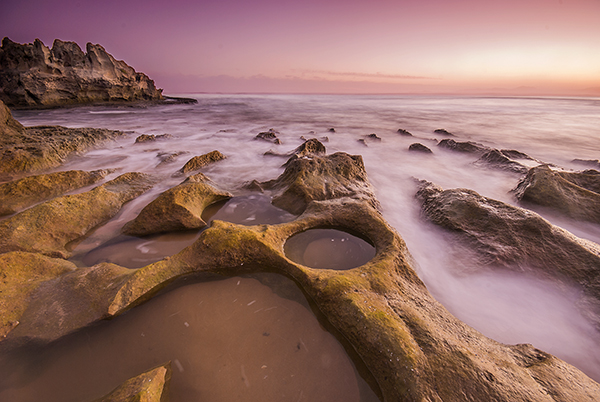
In this scene, the ND grad allowed the sky to be exposed properly and slowed the shutter speed won enough to blur the water

In this scene, the ND grad allowed the sky to be exposed properly and slowed the shutter speed down enough to blur the water.

Image editing

Once you have captured your well exposed scene, you will want to take it into Lightroom or Photoshop to put the finishing touches to the image. There are many different ways to enhance the image and make it really pop. I am not going to go into all the different adjustments you could make to the image except for one piece of advice. I will generally select the sky and the foreground separately and make a layer for each of them, then make separate adjustments to each. You may want to make the sky even more foreboding if it was a cloudy day, or perhaps brighten up the foreground a little more to show the detail. By doing this you will get the most out of the the light in the scene. Many photographers will convert their ND grad images into black and white because the movement and softness of the water in the scene can look very compelling in monochrome. The choice is yours.

What’s next?

To do this kind of photography, you will need to buy an ND grad or two. Some of the cheaper ND grads are a good place to start, brands like Cokin are good, and they are not especially pricey. The more expensive brands offer top quality, and in some cases the filters are hand made. If you find that you really love the effect these filters give, then you may want to invest in some Lee filters or Singh-Ray. These are top filter brands and the results from these products are amazing.

The most important thing to remember is to invest the time in getting the technique right and knowing how to use the equipment. Photography is all about practice and getting the technique right. Yes, good equipment helps, but the most important thing is practice. Once you have mastered the technique with a cheaper filter, then consider making the investment in the more expensive ones.

A final image after being processed in Photoshop

A final image after being processed in Photoshop

googletag.cmd.push(function() {
tablet_slots.push( googletag.defineSlot( “/1005424/_dPSv4_tab-all-article-bottom_(300×250)”, [300, 250], “pb-ad-78623” ).addService( googletag.pubads() ) ); } );

googletag.cmd.push(function() {
mobile_slots.push( googletag.defineSlot( “/1005424/_dPSv4_mob-all-article-bottom_(300×250)”, [300, 250], “pb-ad-78158” ).addService( googletag.pubads() ) ); } );

The post Using Graduated Neutral Density filters for Landscape Photography by Barry J Brady appeared first on Digital Photography School.


Digital Photography School

 
Comments Off on Using Graduated Neutral Density filters for Landscape Photography

Posted in Photography


3 Tips to Take Better Landscape Photos Regardless of the Weather

26 Nov

Photographers are a special type of people that usually pay a lot of attention to detail. They’re also known to be patient and perseverant. However, in my opinion, landscape photographers are a unique breed. I’m sure that only a hand full of people are willing to hike 10 miles with 25 pounds of photography gear on their back, just because they hope to seize the perfect moment.

Golden Hour in Pyramid Mountain  Jasper National Park  Alberta  Canada

Generally, in photography, practice leads to improvement. However, practicing landscape photography is a bit trickier since you don’t have control over the light setup, the weather, or the subject. Sometimes, you might plan a trip for three months; you research the best spots, and you bring all your equipment. Then, when it’s show time, you walk outside to face a cloudy, rainy day, if not a snowy mess. All that can be very frustrating. Over the years I’ve learned a few tricks to deal with that. In this article, I will share three simple tips to help improve your images and take better landscape photos, regardless of the weather.

1. Using clouds to avoid harsh light

Let’s start by talking about one of the most important topics in photography, light. Usually, landscape photographers revolve their schedule around the Golden Hour, meaning the early morning or late afternoon. Photographers choose those portions of the day to take full advantage of the magical, warm, rich, natural light available. Yet sometimes, you cannot reach the planned location by car, making a strenuous hike of 10 miles the only available option to get to the desired place. Hiking is great, and if you love landscape photography you probably love the close contact with nature, but sometimes this passion doesn’t translate into mountain exploration at 3:30 a.m. Occasionally, you will find yourself starting your day hike around 6:00 a.m. to reach the desired area around 10:00 a.m., meaning that you will have to work with hard sunlight.

Portrait photographers have an easy fix for that problem, move the model to the shade. I’ve tried using the same approach in landscape; but I’ve never had any luck trying to move mountains and lakes around. Another approach that portrait photographers use to avoid hard light is using light modifiers such as diffusers and softboxes. Unfortunately I don’t believe you can buy one of those big enough to use on a mountain. What you can certainly do is use the clouds as a light diffuser, thus avoiding the harsh sunlight from midday. Depending on how you capture your image, clouds can also help improve your composition by adding depth or a sense of movement. After I grasped this concept my mindset shifted, now I’m always hoping for the perfect cloudy day.

Bald Hills  Maligne Lake  Jasper National Park  Alberta  Canada

2. It’s all about the drama

If this tip wasn’t enough to make you enjoy a cloudy day, let me tell you about a second trick that involves clouds when capturing landscape images. We all like to go online to wonder around photo sharing communities, looking for inspiration, a different point of view or even a new technique. I’m no different. I like to believe that I’m very active in some of those social media channels, however, when I look through pictures, I avoid focusing on landscapes. I like to explore portraits, Black and White, macro, pretty much anything but landscape. I can imagine you asking yourself, “Why would a landscape photographer do that?”. The answer is quite simple; I like to borrow successful techniques used in other fields. Sometimes, when I’m trying to capture an image of a mountain, I don’t face it as a landscape. I try, for example, to approach that image as a portrait. Once you learn how to repurpose techniques from one type of photography to another you will notice an improvement in your art.

In most types of photography, the most striking photos are those with strong contrast; images that harmonize shadows and highlights seamlessly. One side effect of the current advances in digital photography, sensors, and the digital darkroom, is that a lot of landscape artists try to capture everything in one single image. Some will use HDR to bring up the shadows, others will use masking and blending to create a final image. I was no different.

Lately, inspired by the work of great masters such Ansel Adams and Henri Cartier-Bresson, I’m trying to play with the shadow to highlight ratio in my images. Portrait photographers are very good at using artificial light (strobes or speedlights) to create dramatic images. In landscape it might be a bit more difficult to position the sun at a different angle. Still you can use clouds as a light filter, concealing light from distracting spots while revealing patches of bright sunlight that will accentuate your main subject. Once you start to play with this idea you will be able to create very dramatic images during those dreadful cloudy days.

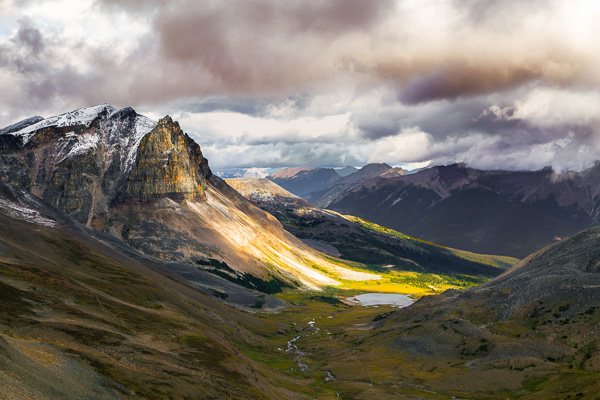
Tekarra Mountain  Skyline Trail  Jasper National Park  Alberta  Canada

3. The path of balance

Finally, keeping up with the idea of creating a dramatic image, photographers must be able to understand an important concept called balance. Not only the shadow and highlights balance, but also color balance, subject positioning, overall image balance and so forth. I remember some of the first photos I took, very often I liked the concept behind the photo, but the final image just didn’t convey what I had envisioned. That was when I discovered the concept of balance.

This concept is very basic, yet extremely powerful. A well-balanced image will stand out on its own and will captivate your audience. Balance, simply put, is how you distribute the elements, colors, and brightness in the frame. There are countless ways to achieve balance, so many that we would probably need another entire article just to talk about it. As a general rule though, a well-balanced picture aims to distribute the elements evenly throughout the image. So next time you are out capturing an image, try noticing how you arrange the elements in the frame. Check if the amount and position of the shadow and highlight are reflecting what you want to show in your photograph. Finally, before you press the shutter, ask yourself if all the elements in the frame are contributing to the overall image. Sometimes, you can get overwhelmed by the landscape, and in an attempt to capture all the beauty you end up with a busy, unbalanced, and unappealing image.

Silence  Banff National Park  Alberta  Canada

I will leave you here, but next time you’re out there during a cloudy day, instead of complaining about it, just try your luck. You might be surprised by what you can achieve when you open your mind to work with whatever mother nature throws at you.

Mountain tops  Banff National Park  Alberta  Canada

Do you have any other cloudy day or landscape tips? Please share in the comments below.

The post 3 Tips to Take Better Landscape Photos Regardless of the Weather by Diego Lapetina appeared first on Digital Photography School.


Digital Photography School

 
Comments Off on 3 Tips to Take Better Landscape Photos Regardless of the Weather

Posted in Photography


UK Landscape Photographer of the Year winners announced

15 Nov

The winners of the UK’s Take a View 2014 competition have been announced. Taking the title Landscape Photographer of the Year and a £10,000 prize, photographer Mark Littlejohn beat around 20,000 entries with his picture of a temporary stream created by heavy rain tumbling down the side of a Glencoe mountain, in Scotland. See gallery

Articles: Digital Photography Review (dpreview.com)

 
Comments Off on UK Landscape Photographer of the Year winners announced

Posted in Uncategorized


Europe’s Landscape Photography Event of the Year – Streamed Live

13 Nov


Image By Joe Cornish

onLandscape magazine’s landscape photography conference takes place amongst some of Britain’s most dramatic countryside in the English Lake District on 22nd and 23rd November 2014.

Billed as Europe’s biggest landscape photography event of the year it brings together some of the continent’s best known and loved photographers and the entire weekend is to be beamed out live via satellite and streamed around the world by StreamScape.

Luminous-Landscape is happy to announce that our readers can stream the video from the conference or download segments all for a special price. (see below)

Speakers

The Swedish photographer Hans Strand tops the bill talking about the opportunity and inspiration Iceland has given him in his photography. Rafael Rojas the Spanish photographer, now living in Switzerland, who runs whytake.net, a massively popular photographic website, will be looking at which ingredients are needed to produce fine art landscape photographs.

While Britain’s best loved landscape photographer Joe Cornish pushes photographers to think at a higher level about their photographs, discusses some lesser known works and provides some thought provoking concepts for landscape photographers to take on-board.

Other speakers include the critically acclaimed Jem Southam whose work has been displayed in the Victoria & Albert Museum, Alan Hinks OBE, the only British photographer to climb all 14 of the world’s mountains over 8,000 meters.

The list goes on with David Ward, Paul Gallagher, David Clapp and Paul Wakefield all offering inspiration and insight any landscape photographer would love to hear.

Streamed Live

The streamed event will give internet viewers the opportunity to question the speakers in special internet only “Green Room” interviews after each of their presentations. Particular need to viewers who are in different time zones has also been taken into account with special DVR functions allowing viewers to tune in at any time and rewind to the start of the day.

For those who are unable to watch over weekend all the videos will be available to watch on-line or download for at least 1 year after the event.

The cost of the streaming weekend pass with the Luminous-Landscape discount code is £12.95 – just over US$ 20 and offers amazing value. Tickets to actually attend the event are still available at £225 (US$ 375). 

The Luminous-Landscape discount code is LL35 and active till the end of the conference.

To book your weekend pass and for more information visit streamscape.uk


The Luminous Landscape – What’s New

 
Comments Off on Europe’s Landscape Photography Event of the Year – Streamed Live

Posted in News


Lee Filters introduces Landscape Polariser with built-in warm-up

28 Oct

British filter manufacturer Lee Filters has announced a new polarising filter that features a built-in warm-up effect that it says is aimed at landscape photographers. The 105mm Landscape Polariser has been designed with a shallow mount and with a 105mm diameter so that it will be useful for wide angle views, with the company suggesting it will be compatible with focal lengths as wide as 16mm on full frame SLRs. Read more

Articles: Digital Photography Review (dpreview.com)

 
Comments Off on Lee Filters introduces Landscape Polariser with built-in warm-up

Posted in Uncategorized


Elevate Your Landscape Photography Skills To The Next Level With These Easy Tips

25 Oct

My experience has taught me that landscape photography is great for everyone who’s just starting out with photography because landscapes give you the chance to improve your photography skills without annoying a model or someone else. This is how I started with photography after all. Ladscapes are also great for learning the basics of photography, since you have all the Continue Reading

The post Elevate Your Landscape Photography Skills To The Next Level With These Easy Tips appeared first on Photodoto.


Photodoto

 
Comments Off on Elevate Your Landscape Photography Skills To The Next Level With These Easy Tips

Posted in Photography


5 Tips for Newbie Landscape Photographers

07 Oct

It doesn’t matter if you are a seasoned photographer or a beginner, most photographers want to learn how to make great landscape images. Once you have shot a few hundred sunset shots and a few sunrise shots, you may think you know how it’s done. Then you get out into the wild on a crisp early morning, before sunrise, and try and get some dramatic mountain scene or amazing seascape. Suddenly it’s not that easy. Landscape photography requires more than simply setting up and waiting for the shot. Sometimes you have to go back to a scene four or five times to get the shot you want.
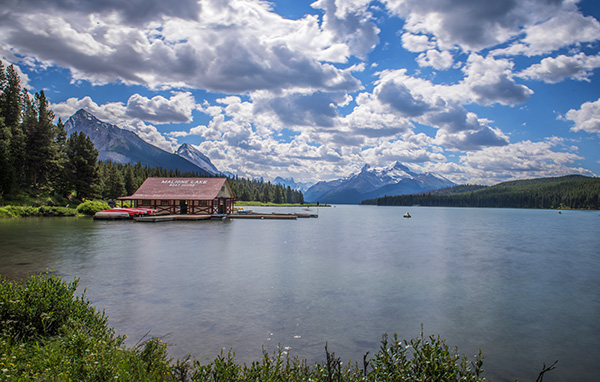
Canadian Rockies DL1_2975 LR

The majestic beauty of the Canadian Rockies

Landscape images can be seductive. When done properly, those viewing the image are transported to that place, they can feel the crisp mountain air or the warmth of the desert. So, you might be asking “How do I get those kinds of shots?” or “I think landscape photography is too difficult, am I good enough?” This article will answer these questions and a few more hopefully. The truth is, landscape photography is not difficult, but it does require dedication and passion. It will often require being up before sunrise, staying out late into the evening, or even early hours of the morning. It also requires good knowledge of your gear. Let’s take a look at how you can start getting better landscape images.

1. How to find good landscape photography locations?

Depending on where you live, you may have to drive somewhere to get some great landscape scenes. That may not be far, or you may need to get out of your city or suburb. What I often do before I visit a new place is google the area for dramatic landscapes. I will do a search like landscape scene canadian rockies and see what comes up. Sometimes you will see a vista that you didn’t know was in the area and you can start getting some ideas of what you will able to shoot.You can do the same on 500px or even Flickr; do a quick search for the name of the place you are visiting and see what comes up. From there you can narrow down what type of scene you want to shoot. Maybe you want to shoot from the mountain tops overlooking the city, a seascape, or even a forest scene.

Once you have some idea of what you want to shoot you then need to figure out the lighting. My go to tool is The Photographer’s Ephemeris. What I love about it is that I can simply drop a pin on a map and immediately see where sunrise and sunset will be, as well as moonrise. It gives me the direction of the sun and what time sunrise and sunset will happen. You can decide what time of day will work best for the shot you are planning.

2. What time of day is best for landscapes?

The Golden Hours are the best time for dramatic colours in landscape photography. You can also use blue hour to make some beautiful shots too; I prefer it for cityscapes, the city lights contrast beautifully off the blue sky. Golden Hour is your guide here. You will need to shoot at sunrise, sunset, or both, but plan beforehand though. There is nothing more frustrating than arriving at a scene, only to find out that as the sun is setting and your subject is in shade. If possible, visit the scene the day before at the time you anticipate shooting and watch where the light moves, that way you will know exactly where to set up your shot.
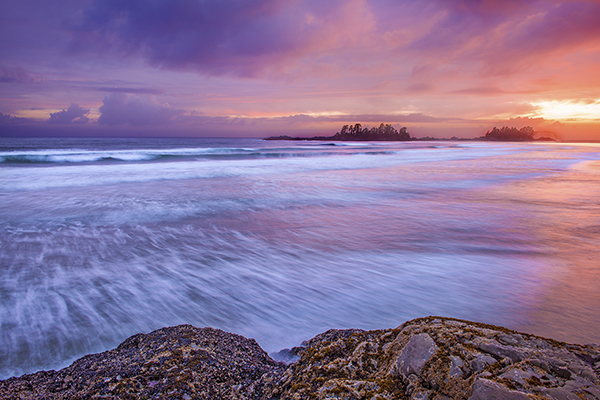
Moving water and a warm sunset make for a great landscape scene

Moving water and a warm sunset make for a great landscape scene

3. What camera gear do I need for landscape photography?

A Camera

Of course, this is a critical part of the whole formula, however, getting great landscape images does not require a 40 megapixel camera. You can shoot landscapes on any DSLR with 10 megapixels and more. The reason you don’t want to be shooting landscapes on a four megapixel camera is that you might shoot a great scene. Afterwards, you may want to print the shot nice and big and hang it on your wall, but if the resolution is too low, you may struggle to print a decent size image.

A Tripod

Yes, you will need a tripod. If you are shooting at sunrise or sunset, the amount of light will be minimal. You need to shoot at longer shutter speeds so you need to have your camera on some sort of support. A sturdy tripod will make all the difference. The beauty about a tripod is that once you have set up your composition, you can simply keep clicking away and not worry about composing your image each time, unless you move the tripod.

A Cable Release

I took a while to buy a cable release (remote trigger) when I first started photography, but once I had it, I wondered why I took so long to get one. A cable release allows you much more freedom. You can simply hold it in your hand, stand away from the camera and release the shutter whenever you want. Also, I like to observe the whole scene, rather than just looking through the viewfinder. I connect my cable release (I use a wired one), step away, and start shooting. Be sure that once you have locked focus to switch your camera to manual focus (or use back button focus),  especially if you are shooting at sunset. If you don’t, what can happen is that as night falls, the camera may struggle to lock focus and this could waste time. The best idea is to set your focus while the scene is still well lit, click it onto manual focus and then shoot away.

Filters

Graduated Neutral Density filters have long been the tool of choice for landscape photographers. This is still largely true, however, in recent years, many photographers have started to do more blended images. What that means is that you will expose for the bright part of the scene and take the shot, you will then expose for the dark part of the scene and take that shot. Very often, the bright part will be the sky and the dark part the foreground. Afterwards in Photoshop, you can then blend the two best exposed shots together. This is a very effective technique in tricky lighting conditions and sometimes can work better than a filter. I use a combination of both techniques. I will take some shots with a filter, then take some at different exposures and see what works best afterward.

The important thing is to make sure you get the best shots while you are out in the field. There is nothing worse than coming back from an early morning or late evening shoot to see that your images did not work out well because you exposed incorrectly. Getting the exposure right in the camera is key. It takes practice, so your first attempts may not be very dramatic. Keep working on it though, you will learn how to see the light, how to use the filters, and how to expose correctly if you practice enough.
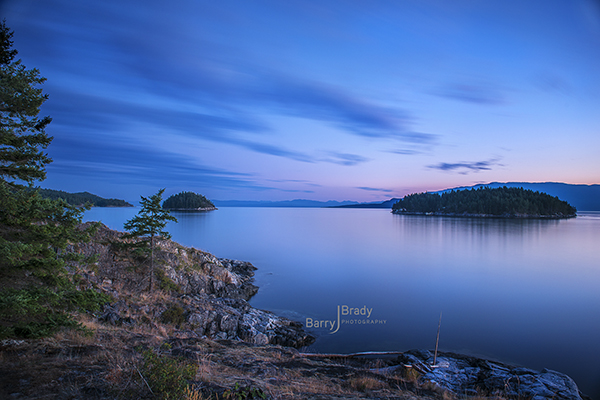
A neutral density filter was used to make the exposure longer  and to soften the water

A neutral density filter was used to make the exposure longer and to soften the water

Lenses

For the most part, a wide angle lens will work best for landscapes. You want to capture as much of the scene as possible in your shot to make the image look majestic and sweeping, and a wide angle lens creates that effect. Be careful not to use a fisheye lens; the distortion may not work well in a landscape shot. When you use a wide angle lens, it is a good idea to have foreground interest, that means, have something in the foreground that anchors the image. If you don’t have foreground interest, thats okay, you can still get some good shots. You will find though, the images with foreground interest tend to work better. You may also want to shoot landscape images with a zoom lens. This can work well, but not on every scene. Try it out, but if it’s not working, switch back to a wider angle lens.
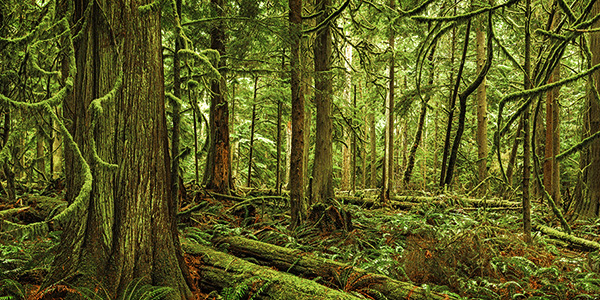
Stitched Panorama

This was not a wide angle shot, but it still works well

4. What settings should be used?

Exposure settings

There are no formulas for how to get the best landscape shot; there are a few guidelines though. First, you will generally want everything in your scene to be in focus. That means your aperture should be at f/8, f/11 or f/16. Once that is set, then you will need to set your shutter speed accordingly. You may have to take your shutter speed down to a few seconds to get a properly exposed shot. Thats okay, it adds to the image. Long exposures work really well when there is moving water or clouds in the scene; the water becomes soft and silky as do the clouds. Sometimes, the trees in your scene may wave in the breeze and the blur from that can work well too.

Another setting to look out for is your ISO. I recommend not to shoot in Auto ISO. This will create all kinds of problems especially at sunset. Your camera will see that the light is fading and it will simply bump up the ISO to compensate for the loss of light, this may result in digital noise, not very good for your landscape scene. Set your ISO to 100 (or as low as your camera goes) and keep it there. Only adjust your shutter speed to make sure you get the shot and of course, you will need to be on that trusty tripod!

White Balance

This is a creative choice. Start out shooting your scene in daylight white balance. Avoid using auto WB as this function will try and neutralize the colours in your scene. You want as much colour depth in your scene as possible, so start off with the daylight preset. You can then use the white balance creatively, for  example, using the Fluorescent preset will add magenta to your scene, Cloudy and Shade will add orange or red, and Tungsten will add blue. If you want to emphasize any of these colours in your scene, switch to the WB that will boost that. So, if you are shooting a sunset, use cloudy or shade to boost the reds and oranges. If these don’t work well for the scene, stick to daylight as it will render the colours in the scene correctly.

5. What’s next?

Once you return from your shoot, download your images and take a look through them. Normally, you will be doing this very late at night, so it is best to leave them until the next before you start editing them. Whatever your editing suite of choice is (Lightroom or Photoshop) you can get to work on them there. If you have shot some bracketed shots, you can do all that blending in Photoshop. The only guideline here is to take your time editing the images. Choose only the best images to be edited. You may find that you will shoot 100 images but only three or four are worth editing, thats okay. Edit only the best images and spend time making them look as dramatic as the scene you saw! For some quick tips on how to get your images to pop take a look at this article, you can also browse through this list of articles on Photoshop to get some in depth techniques.
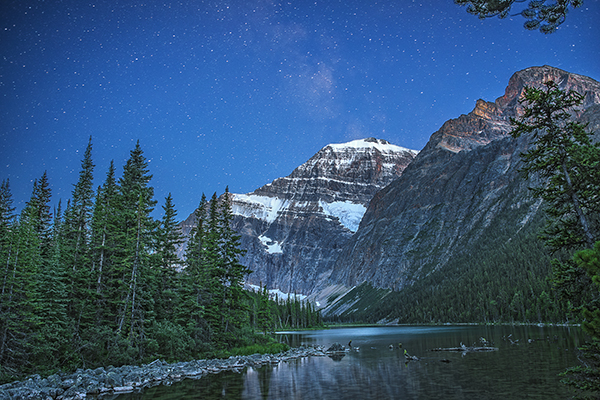
A blended shot, the foreground was shot earlier in the evening and the stars much later. This was blended in Photoshop afterwards

A blended shot, the foreground was shot earlier in the evening and the stars much later. This was blended in Photoshop afterward.

So, to wrap it all up, landscape photography is a combination of skill and patience. Skill takes time to develop, and patience enables you to wait for the right scene to unfold. In this fast paced digital life, there is something calming about shooting landscapes. You have no control over the weather, you have no control over the light, you simply have to be there, and press the shutter release if the conditions are right. The beauty is that, if the conditions do work out, the reward will be unreal. You will have some great images and you will have spent some quiet time in nature, enjoying a beautiful sunrise or sunset. The most important tip is to take your time. Don’t rush the process, don’t pack up until you are certain you cannot get a better shot than the last one you just made. Always go out and have fun, even if the light doesn’t play along or the weather is not what you hoped for, use it as a practice session and pretty soon, you will be capturing those breathtaking scenes with ease!

The post 5 Tips for Newbie Landscape Photographers by Barry J Brady appeared first on Digital Photography School.


Digital Photography School
 
Comments Off on 5 Tips for Newbie Landscape Photographers

Posted in Photography


Tips From a Landscape Photographer

21 Sep

B&H Photo Video is a huge mega camera store in New York City, but they also have a great selection of helpful videos. In this video Robert Rodriguez Jr. gives you some tips and insight into what it’s like to be a landscape photographer.

  • Capturing something that means something to you
  • Capturing emotion in photos is the essence of being creative
  • Compositions with layers to add depth
  • Why going back to one place again and again can help you take better photos of it
  •  The 4 a.m. filter
  • Printing your work, making it tangible

“Before you can think out of the box, you have to start with a box” – Twyla TharpThe Creative Habit: Learn It and Use It for Life

How will you get outside your box and be more creative?

Check out Living Landscapes and also Loving Landscapes, two dPS eBooks on this subject!

The post Tips From a Landscape Photographer by Darlene Hildebrandt appeared first on Digital Photography School.


Digital Photography School
 
Comments Off on Tips From a Landscape Photographer

Posted in Photography


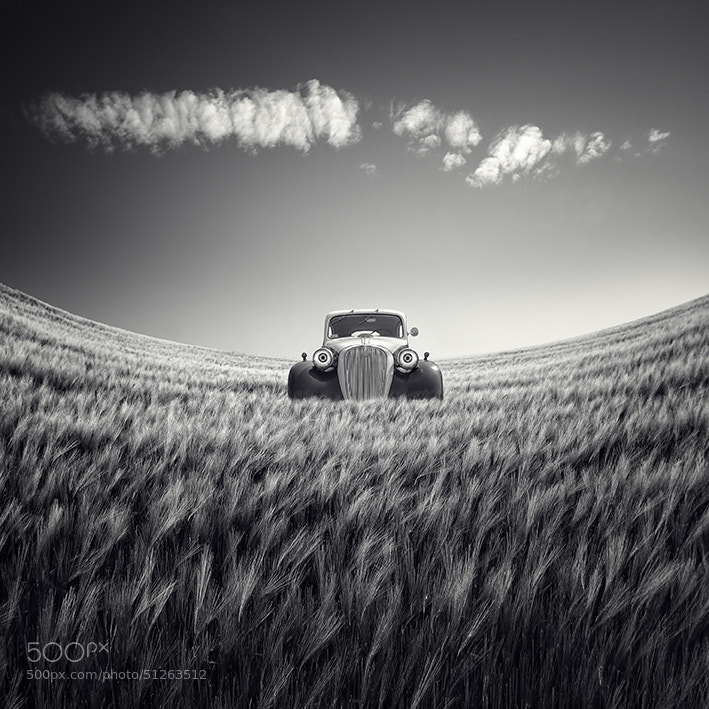
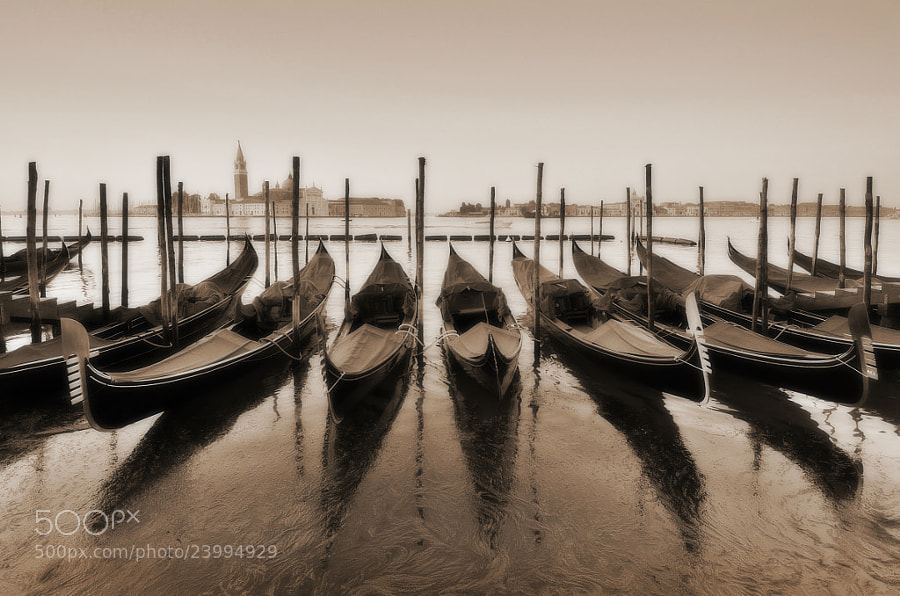
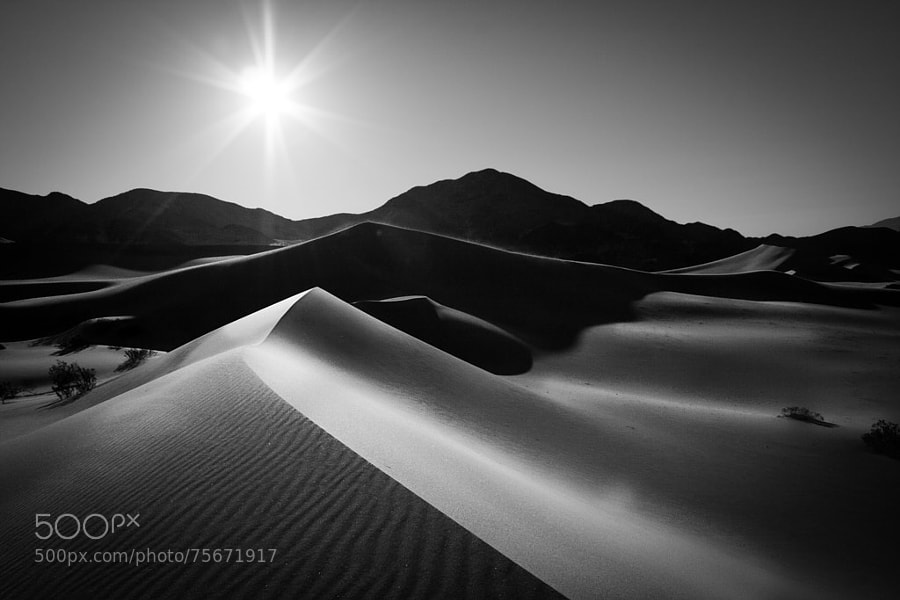
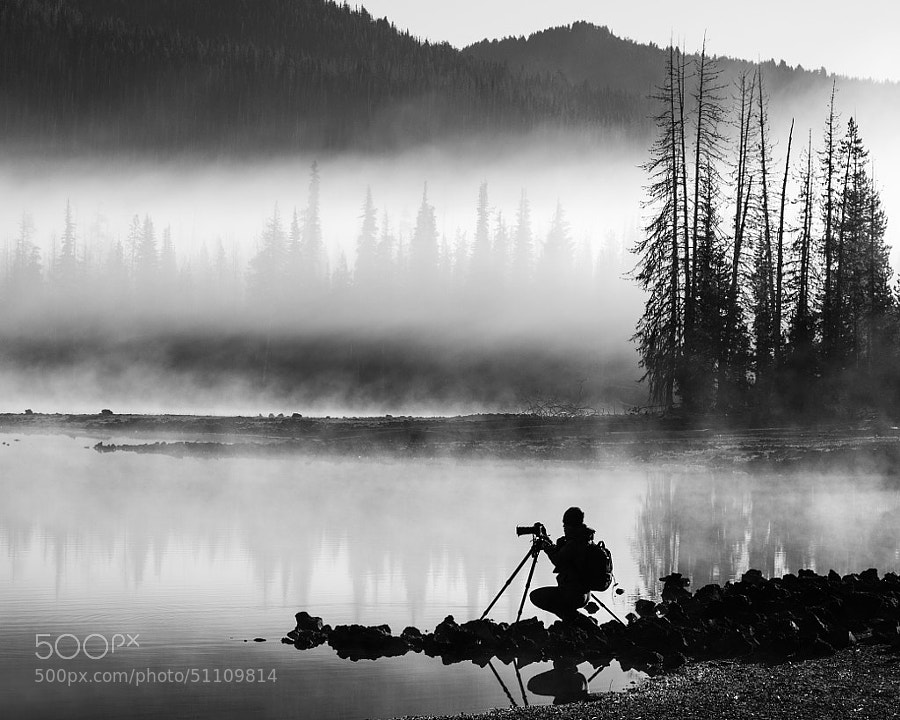
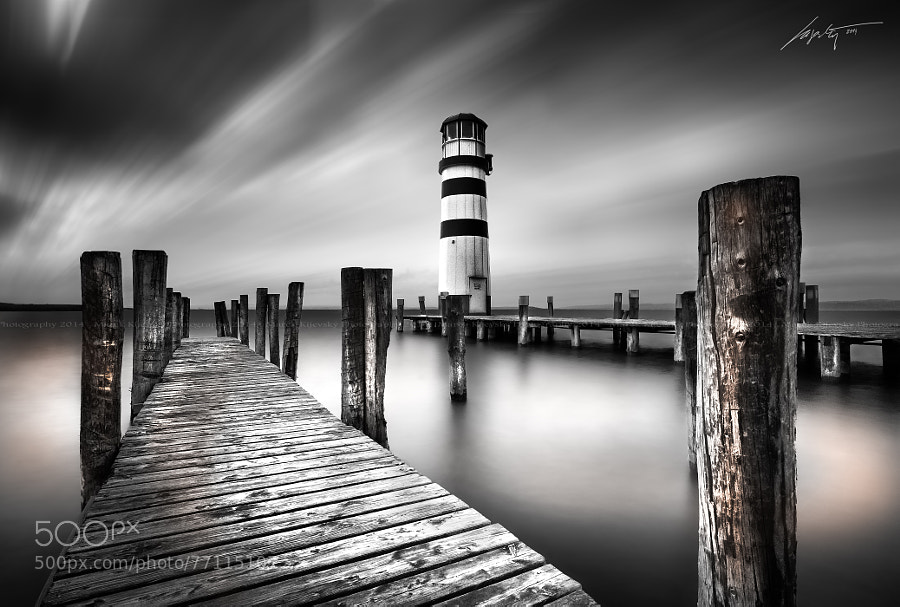
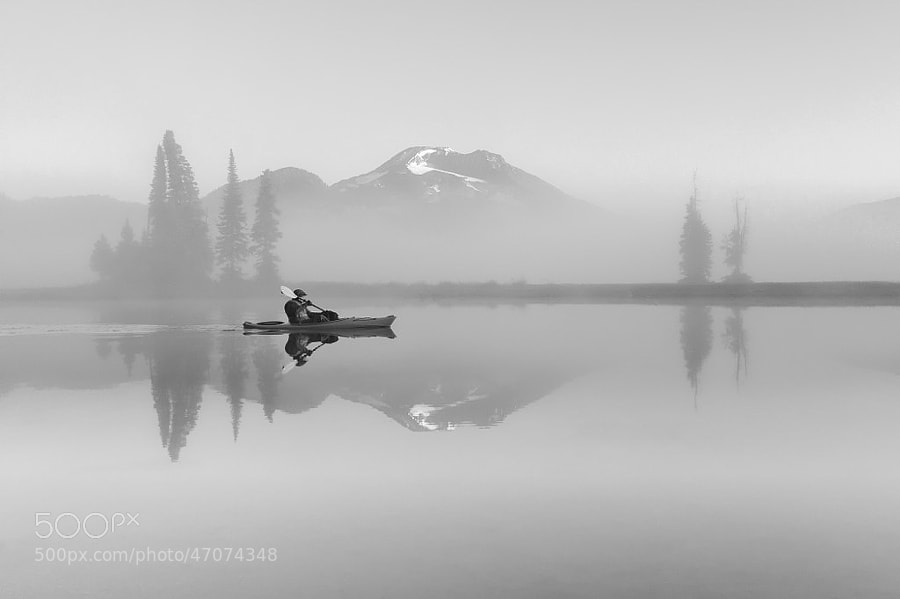
Some Punchy Black and White Landscape Photos to Oooo and Aaah Over

30 Aug

Recently we released our newest dPS ebook The Essential Guide to Black and White Photography. 

So I thought it would be fitting if we had a look as some great black and white images. I don’t know what it is but I’m really attracted to a great black and white image. It’s something about the contrast and the style and makes you really focus on the light and composition in the image – there’s no tricks it’s just an image is the simplest form.

So in this set I’ve found some amazing black and white landscape photos for you to enjoy – please let the oooing and aaaahing commence!

Photograph The Last Ride by Rob Dweck on 500px

The Last Ride by Rob Dweck on 500px

Photograph Dignity by Martin Mattocks on 500px Dignity by Martin Mattocks on 500px

Photograph road by ömer yücel on 500px

road by ömer yücel on 500px

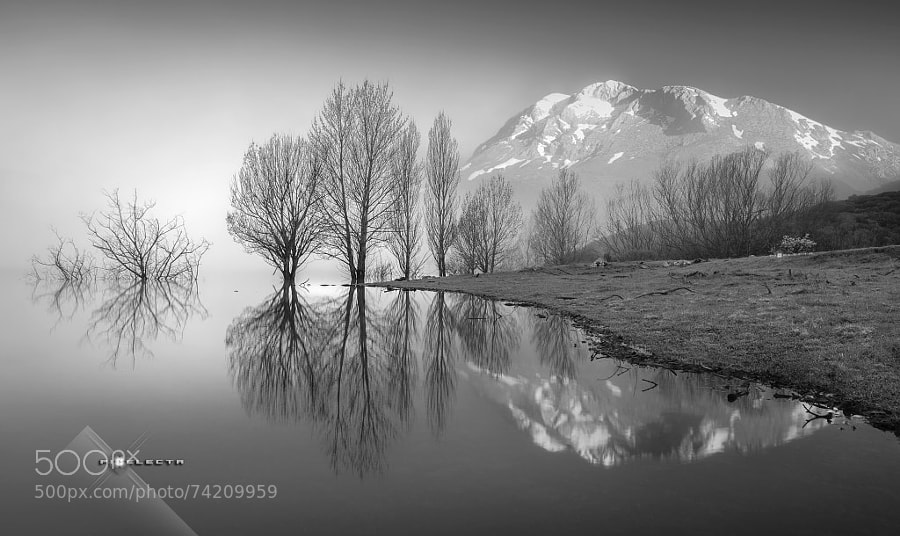
Photograph "MAGIC IN ESPIGÜETE" / "MAGIA A LOS PIES DEL ESPIGÜETE" by Juan PIXELECTA on 500px “MAGIC IN ESPIGÜETE” / “MAGIA A LOS PIES DEL ESPIGÜETE” by Juan PIXELECTA on 500px

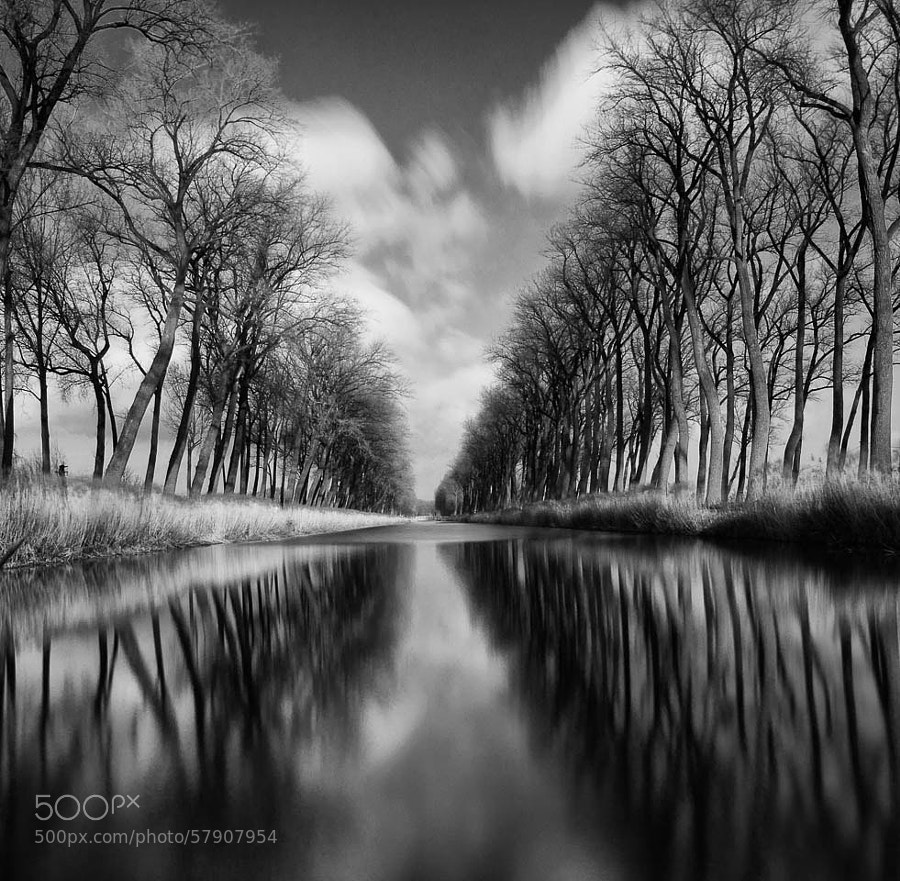
Photograph Smooth River by Johan Vanreybrouck on 500px

Smooth River by Johan Vanreybrouck on 500px

Photograph Silver Reflections 2 by Joe V on 500px Silver Reflections 2 by Joe V on 500px

Photograph Tree & Clouds by Carsten Meyerdierks on 500px

Tree & Clouds by Carsten Meyerdierks on 500px

Photograph Age Old by Chris Fletcher on 500px Age Old by Chris Fletcher on 500px

Photograph Untitled by Luis Beltrán on 500px

Untitled by Luis Beltrán on 500px

Stop for a minute

I’m going to stop you for a second. If you’re scrolling through these quickly, stop. Take the time to really look at each one – one at a time. Do you see the common thread here?

  • Simple
  • Clean
  • No distractions

    Okay, carry on!

Photograph Venice Nostalgia by Csilla Zelko on 500px Venice Nostalgia by Csilla Zelko on 500px

Photograph In the Days Still Left by Rob Dweck on 500px

In the Days Still Left by Rob Dweck on 500px

Photograph Ibex Sunrise by Grant Thompson on 500px Ibex Sunrise by Grant Thompson on 500px

Photograph Parched by James Crawford on 500px

Parched by James Crawford on 500px

Photograph Herringfleet by George Johnson on 500px Herringfleet by George Johnson on 500px

Photograph Moment by Majeed Badizadegan on 500px

Moment by Majeed Badizadegan on 500px

Photograph --In Motion-- by Marek Kijevský on 500px –In Motion– by Marek Kijevský on 500px

Photograph Tranquil Dawn by Majeed Badizadegan on 500px

Tranquil Dawn by Majeed Badizadegan on 500px

Photograph Tranquility of Morning by Abi Arga Hadityarista on 500px Tranquility of Morning by Abi Arga Hadityarista on 500px

Photograph B e a c h e d by Chris Oliphant on 500px

B e a c h e d by Chris Oliphant on 500px

Photograph on the road by adam smigielski on 500px on the road by adam smigielski on 500px

Photograph A rural morning by Margareta   on 500px

A rural morning by Margareta on 500px

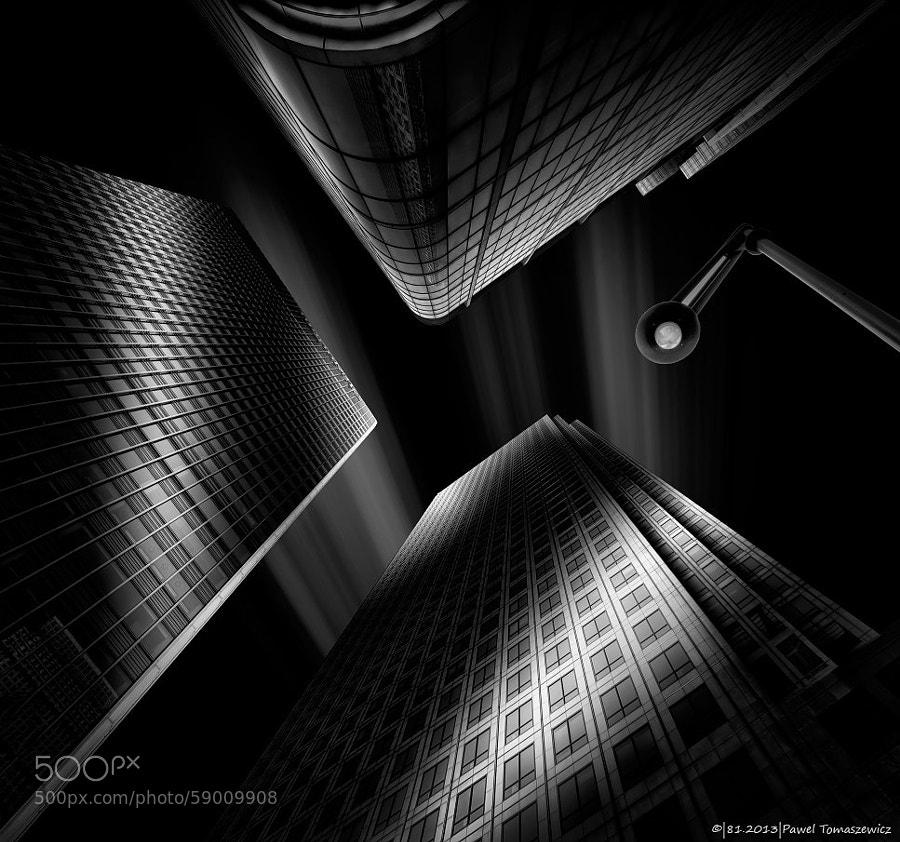
Photograph 81.2013 - B&W- Light Reflections ... by Pawel Tomaszewicz on 500px 81.2013 – B&W- Light Reflections … by Pawel Tomaszewicz on 500px

Photograph named by lennon baksh on 500px

named by lennon baksh on 500px

Photograph dark master´s crown by Ronny Behnert on 500px dark master´s crown by Ronny Behnert on 500px

Photograph NYC thoughts by RACKHAM  on 500px

NYC thoughts by RACKHAM on 500px

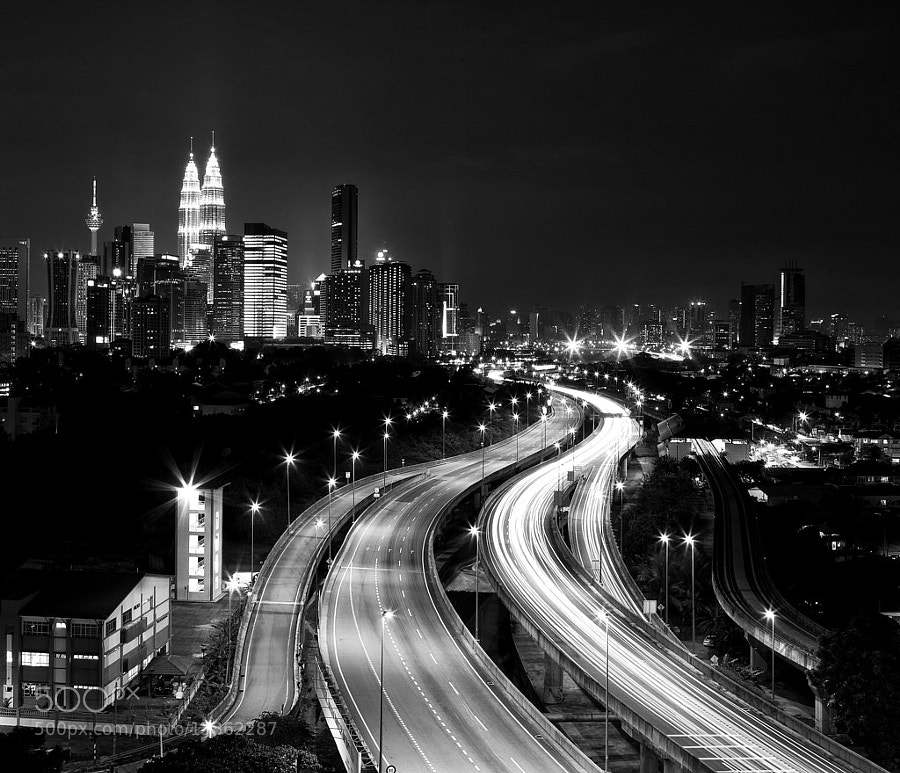
Photograph Kuala Lumpur by Tashi_Delek Nakata on 500px Kuala Lumpur by Tashi_Delek Nakata on 500px

Photograph Dark#04# by Andreas Paehge on 500px

Dark#04# by Andreas Paehge on 500px

Photograph SZEMPONT by Shady S. on 500px SZEMPONT by Shady S. on 500px

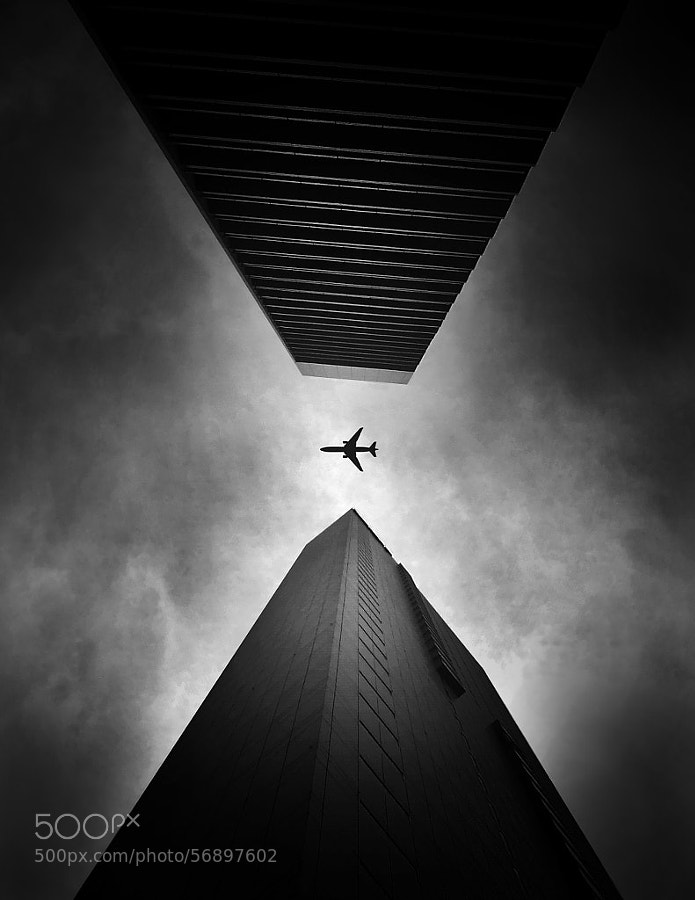
Photograph Chrysler Building II by pixeldreamer  on 500px

Chrysler Building II by pixeldreamer on 500px

Photograph entrap by tet bautista on 500px entrap by tet bautista on 500px

Photograph One Light Only by Sam Commarato on 500px

One Light Only by Sam Commarato on 500px

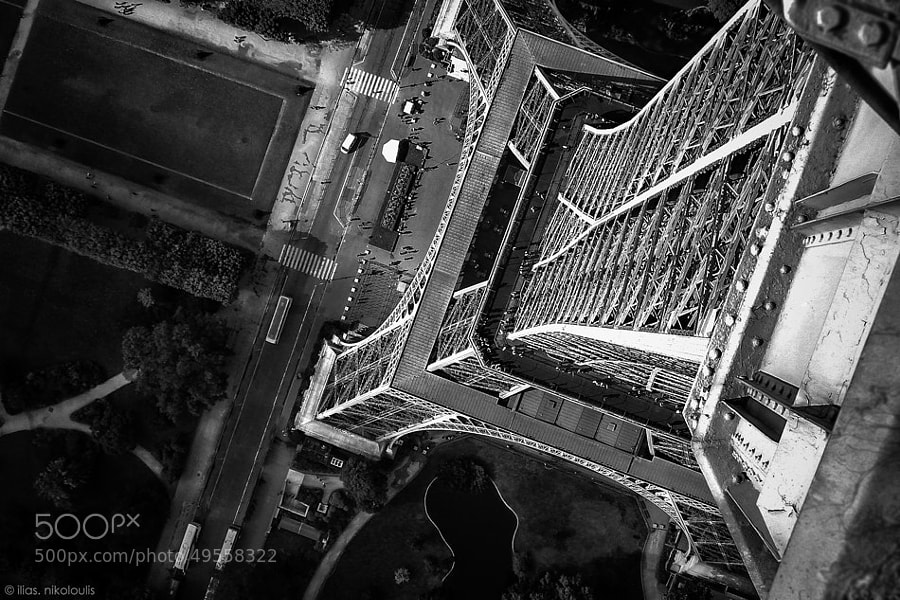
Photograph ..on The 'Tripod' by ilias nikoloulis on 500px
..on The ‘Tripod’ by ilias nikoloulis on 500px

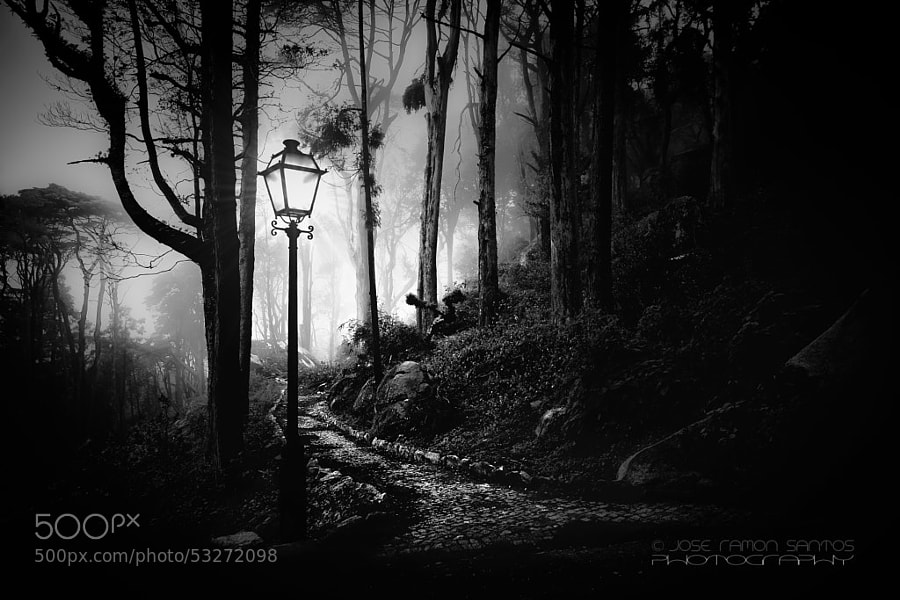
Photograph Foggy path by Jose Ramon Santos Mosquera on 500px

Foggy path by Jose Ramon Santos Mosquera on 500px

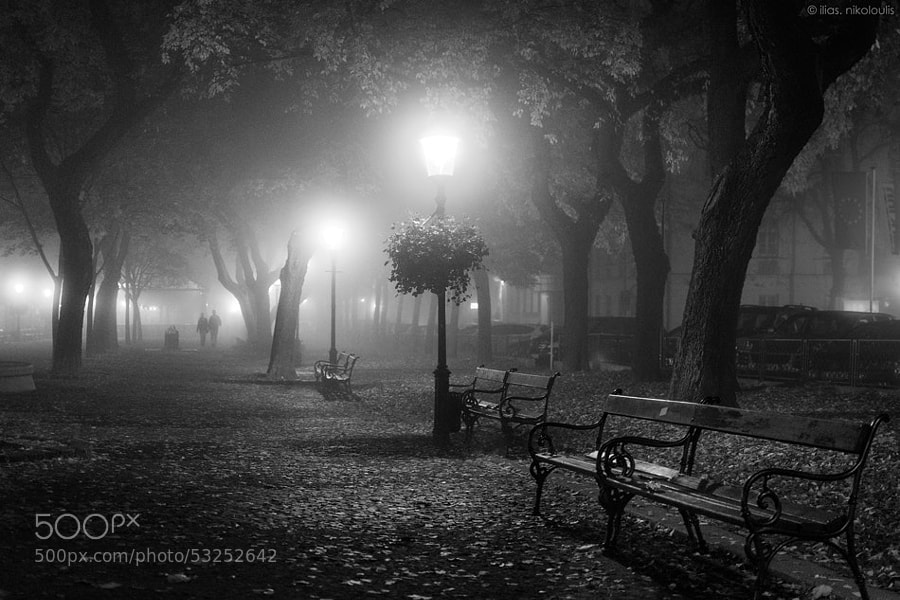
Photograph Foggy Day by ilias nikoloulis on 500px
Foggy Day by ilias nikoloulis on 500px

Photograph Dark Beauty by Jayme Hagen on 500px

Dark Beauty by Jayme Hagen on 500px

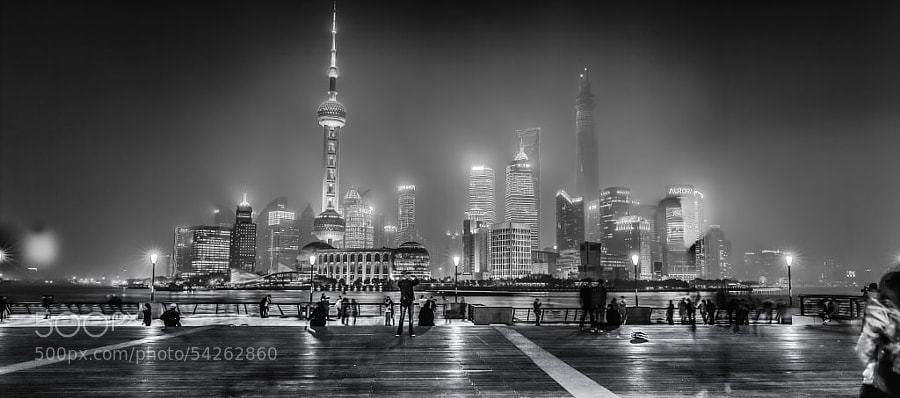
Photograph Shanghai- Bund by Hill Gas on 500px
Shanghai- Bund by Hill Gas on 500px

Photograph Mutianyu by John Crux on 500px

Mutianyu by John Crux on 500px

The post Some Punchy Black and White Landscape Photos to Oooo and Aaah Over by Darlene Hildebrandt appeared first on Digital Photography School.


Digital Photography School
 
Comments Off on Some Punchy Black and White Landscape Photos to Oooo and Aaah Over

Posted in Photography