RSS
 

Posts Tagged ‘Landscape’

DEAL: 2 Amazing Courses to Improve Your Landscape Photography

21 Dec

Our 6th deal of our 12 Days of Christmas Sale brings you two amazing online video courses that will improve your Landscape Photography – at 60% off the regular price.

NewImage

Today only you can pick up these two courses for just $ 54 (normally $ 188).

This value packed Landscape Photography bundle includes:

Creating Impact Course by Varina Patel
Go beyond the basic rules to build stronger compositions with visual impact. The Creating Impact course will help you to establish your creative vision, develop a solid workflow that will make that vision a reality and help you take beautiful landscape photos.

This course normally sells for $ 134.

Practical Lightroom Tutorials by popular dPS writer and renowned Landscape Photographer Anne McKinnell.

Anne will teach you how to stop being overwhelmed by Lightroom and to start using it to transform the Landscape (and other) images that you take. Anne authored our popular ultimate guide to Landscape Photography article, and we’re sure you’ll enjoy these lightroom tutorials just as much!

This course normally sells for $ 49.

This Deal Won’t Last

You are going to love these courses – they have been developed by two of our favourite landscape photographers and contain so much practical information that will help you to take some beautiful photos.

Grab both of these courses today – with hours of video training and 40 online videos – for just $ 54. A Saving of $ 129!

This offer won’t last because tomorrow’s is just 24 hours away – so avoid disappointment and pick it up today here.

googletag.cmd.push(function() {
tablet_slots.push( googletag.defineSlot( “/1005424/_dPSv4_tab-all-article-bottom_(300×250)”, [300, 250], “pb-ad-78623” ).addService( googletag.pubads() ) ); } );

googletag.cmd.push(function() {
mobile_slots.push( googletag.defineSlot( “/1005424/_dPSv4_mob-all-article-bottom_(300×250)”, [300, 250], “pb-ad-78158” ).addService( googletag.pubads() ) ); } );

The post DEAL: 2 Amazing Courses to Improve Your Landscape Photography by Darren Rowse appeared first on Digital Photography School.


Digital Photography School

 
Comments Off on DEAL: 2 Amazing Courses to Improve Your Landscape Photography

Posted in Photography


4 Tips For Doing Eye-Catching Landscape Photography

20 Dec

Landscape photography is everywhere today and for good reason – the world is beautiful! However, because landscape photography is so popular, it can be difficult for your photographs to grab the eyes of your desired viewers. While there’s no way to predict exactly what image will stand out in the crowd, you can use these four techniques to give your photography the edge when it comes time to grab some eyes.

Landscape Photography

#1. Define your vision

As a photographer you are not only taking a photograph, you are sharing a vision – your vision. It’s important to remember this concept every time you’re capturing an image. This is important because if you are aware of why you’re attracted to a scene, and why you want to share it with others, the easier it will be for your viewers to connect with what you saw.

This does not mean that you have to stick with the same definition of vision through every photograph you take. Instead, you should try to adapt and evolve your vision each time you go out to take photographs. Letting your experiences influence the choices you make in your photography will allow your photography to express your individuality as a person.

#2. Perspective

Landscape Photography

It’s easy to see a beautiful landscape and take a photograph of what you see, but that is often not enough to grab the eye of your viewer. After you’ve defined your vision for a specific photograph it’s time to answer some questions about the perspective you wish to convey.

Do you want to photograph from a low angle or from above the scene? Are you thinking of using a super wide-angle lens or would your scene be better suited for the compressed look of a telephoto? You can even begin to think about what type of post-production techniques you will use. Will it be HDR, black and white, vibrant and saturated, or muted?

Each photograph you take is going to be unique in its answers to these questions. There’s no one-answer-fits-all solution here, it’s just a matter of finding out what works and learning from experiences over time.

#3. Be purposeful in the choices you make

Landscape Photography

If you’re going to overexpose a photograph, have a reason why. If you’re going to post-process an image using the HDR technique be sure do it because it makes sense, not because you want it to be HDR. Making purposeful decisions in your photography will make every photograph you take better.

In regards to post-production in general, be sure to use it as a tool to elevate your great photographs to the next level, and not to save your misfires from the trashcan. Post-production is not what makes a photograph great, it can only enhance an already great photograph allowing it to stand out, above the crowd.

#4. Subject matter, light, and the basics

Landscape Photography

Finally, a boring landscape, shot in bad light, with the wrong techniques is not going to win any love from the peanut gallery so brush up on the basics first. Learning how to photograph in the right lighting conditions, how to properly use a tripod, and how to achieve the perfect exposure of your scene will allow you to create more eye-catching photographs.

What else?

Do you have some other tips for achieving eye-catching landscape photographs? Share them with us in the comments below!

googletag.cmd.push(function() {
tablet_slots.push( googletag.defineSlot( “/1005424/_dPSv4_tab-all-article-bottom_(300×250)”, [300, 250], “pb-ad-78623” ).addService( googletag.pubads() ) ); } );

googletag.cmd.push(function() {
mobile_slots.push( googletag.defineSlot( “/1005424/_dPSv4_mob-all-article-bottom_(300×250)”, [300, 250], “pb-ad-78158” ).addService( googletag.pubads() ) ); } );

The post 4 Tips For Doing Eye-Catching Landscape Photography by John Davenport appeared first on Digital Photography School.


Digital Photography School

 
Comments Off on 4 Tips For Doing Eye-Catching Landscape Photography

Posted in Photography


How to Convert a Camera to Infrared for Black and White Landscape Photography

13 Dec

Get Andrew’s The Black and White Landscape eBook bundle at 30% off now over at Snapndeals, only until December 20th (AUS time).

Do you have an old digital camera that you don’t use much anymore? If you do, one way to make it useful again is to convert it to infrared for black and white landscape photography.

How to Convert a Camera to Infrared for Black and White Landscape Photography

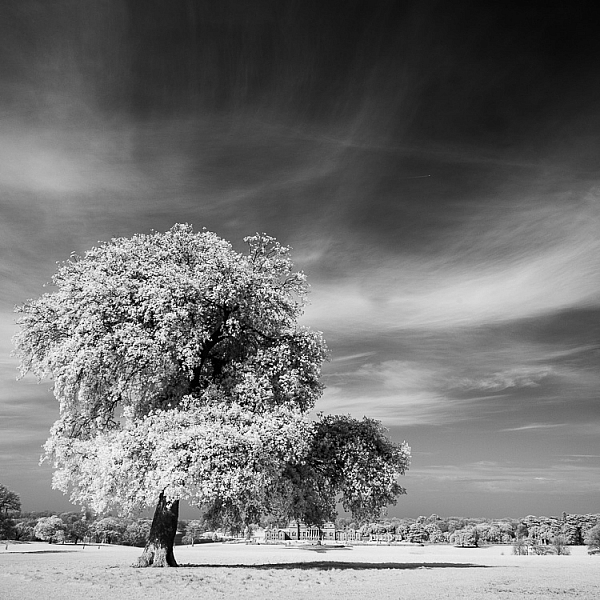
Why would you want to do this? For me, the main reason is that it gives me a new way of working in black and white. Yes, infrared converted cameras can give you color images as well as black and white ones, but for me, the strange colors are more of a gimmick than a useful tool. With black and white, it’s different. In infrared photography, the tonality of the photo changes, giving you new and interesting ways to capture the landscape.

What is infrared photography?

The simple (non-technical) explanation is that infrared light is a kind of invisible light, formed of electro-magnetic waves that are undetectable to the human eye.

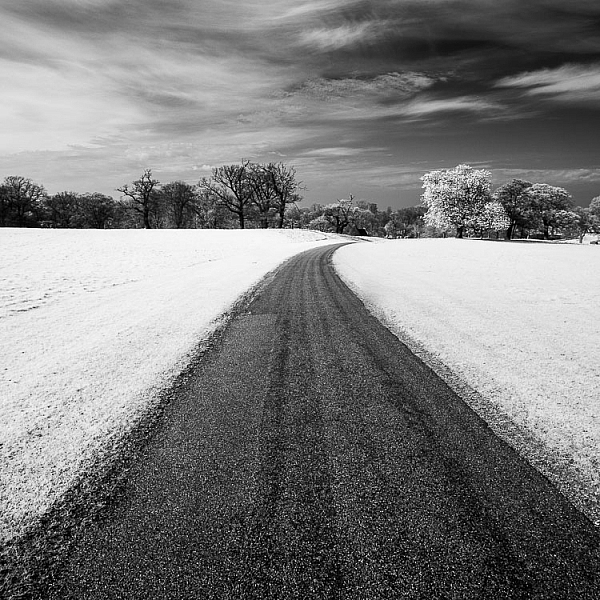
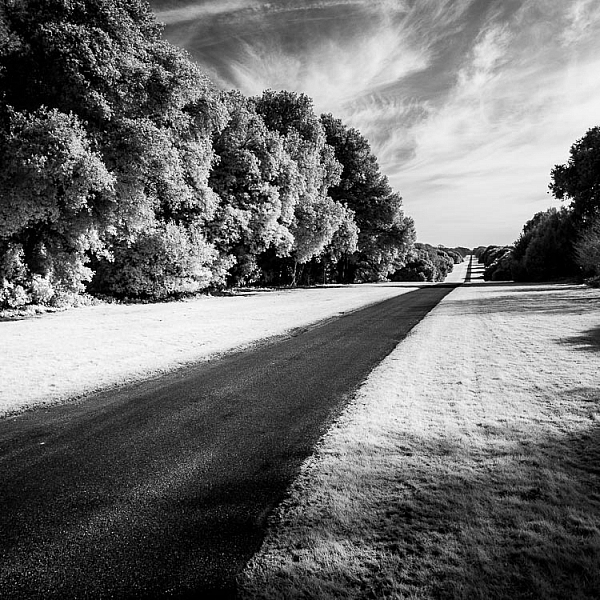
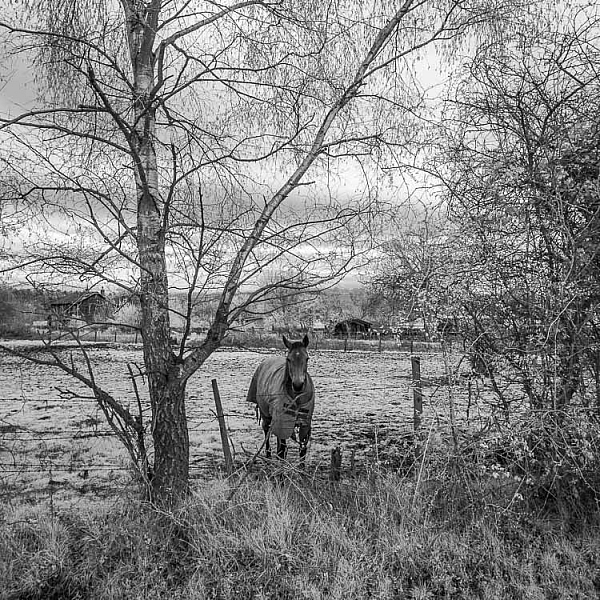
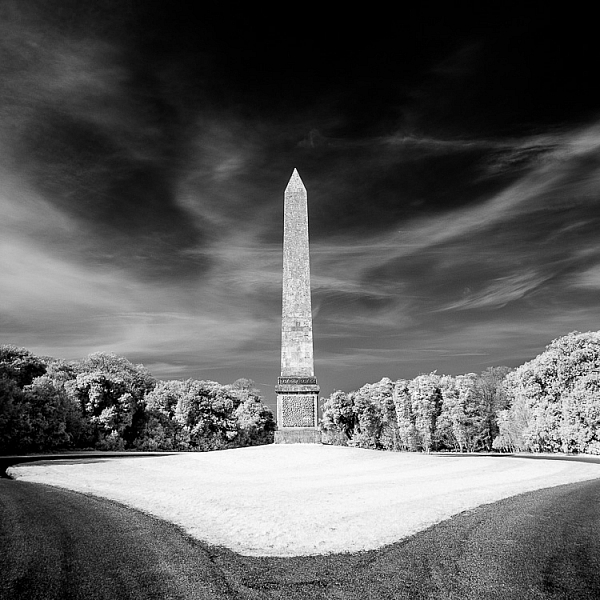
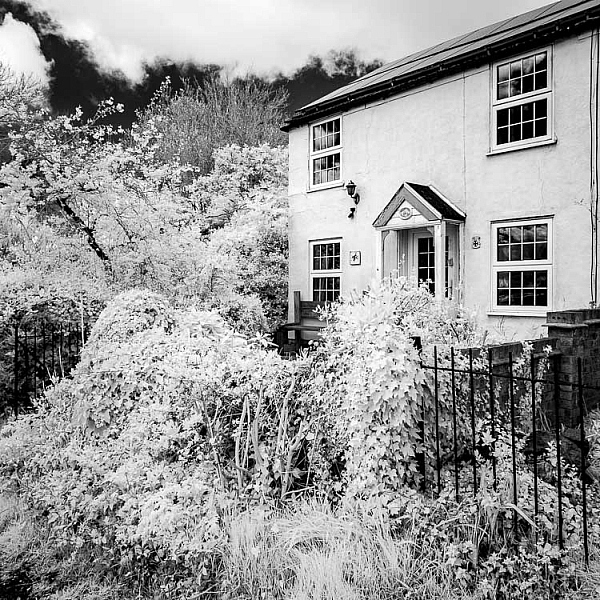
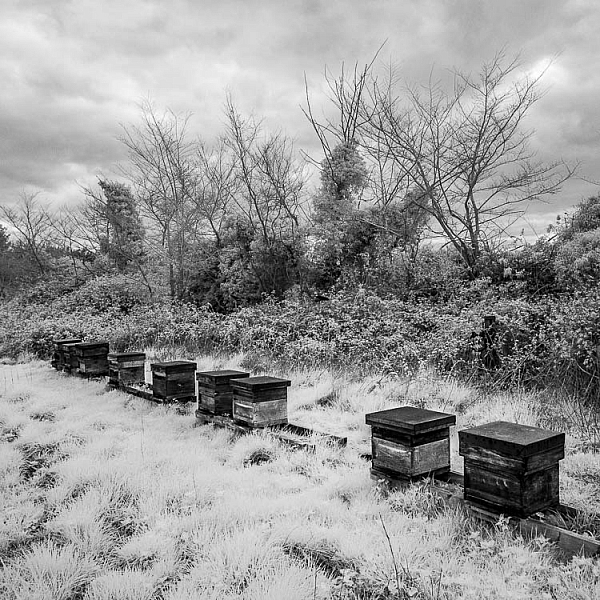
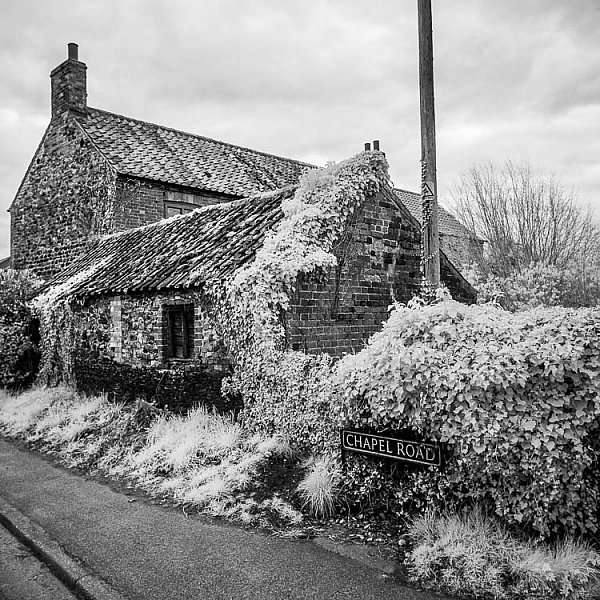
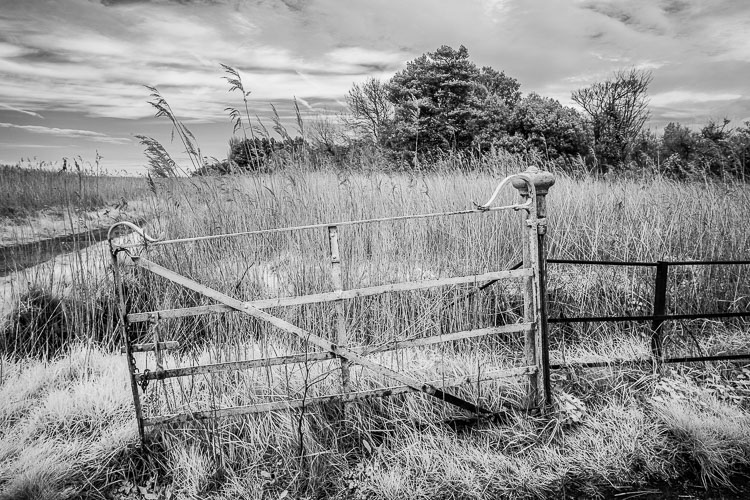
Human skin reflects a lot of infrared light, so does vegetation. These these things appear very bright in black and white infrared photos. Inanimate objects, such as roads, stones, and buildings, don’t reflect as much infrared light and can look remarkably similar to regular black and white photos when photographed in infrared.

How to Convert a Camera to Infrared for Black and White Landscape Photography

What is an infrared conversion?

Digital camera sensors are sensitive to ultraviolet (UV) light and infrared light as well as the visible wavelengths of light. Because of this, digital cameras have filters to block both ultraviolet and infrared light. The infrared filters on most cameras do let some infrared light through, but not enough to affect the image.

During an infrared conversion the technician removes the infrared filter so that the sensor can now see infrared light, and replaces it with a filter that blocks visible light, so the sensor can only see and record infrared. The process isn’t complex, and because of that isn’t particularly expensive. If you are technically minded you could even try it yourself. There are videos on YouTube that explain how. You just need the right tools and parts.

The usual caveats apply. If your camera is still under warranty that will be voided, and bear in mind that you can damage your camera if you don’t know how to do it properly. You should only attempt it if you know what you are doing!How to Convert a Camera to Infrared for Black and White Landscape Photography

The infrared conversion on my camera was done by Protech Photographic in the UK (they also handle orders from mainland Europe). LifePixel and Kolarivision are US based companies that also do infrared conversions. If you know of any other reliable companies, please let us know in the comments section below.

Types of infrared conversion

There are several types of infrared conversion. These are some of the most common.

Full spectrum conversion

The UV and infrared filters are removed. Your camera’s sensor can now see UV and infrared light as well as visible light. You control the effect by using filters (on the lens) to block different amounts of visible and/or infrared light. This may be interesting if you like to experiment, but the disadvantage is that you need to buy filters, adding to the cost. Filters also block light, so you need to use slower shutter speeds or higher ISOs to compensate.

infrared-camera-conversions-6

720nm conversion

The technician places a filterin front of the sensor that blocks all wavelengths under 720nm (nm = nano-meter and is a unit of measurement equivalent to 1/1,000,000,000 meter used for measuring wavelengths of light). In other words, it only lets infrared light through. It’s the type of conversion best suited for landscape photography, giving you a color image that’s easy to convert to black and white. This is probably the most common type of infrared conversion and the one you should go for unless you have a specific need for one of the other types.

830nm conversion

The sensor is fitted with a filter that blocks all wavelengths under 830nm. This gives a more intense type of infrared effect, with very little color. It’s ideal for dramatic black and white landscape photography.

Some companies offer different types of conversion in addition to these, so check their websites for details.

How to Convert a Camera to Infrared for Black and White Landscape Photography

Camera types and infrared conversions

When it comes to converting digital SLRs to infrared there is something you need to bear in mind. Infrared light focuses at a different point to regular light. Your camera is calibrated to focus visible light, which means that if you try to focus on something using a wide aperture (which gives less depth of field) then your focus may not be accurate. It is possible to calibrate a lens to focus accurately with infrared, so check with the company that is going to handle your infrared conversion for details.

But for landscape photography, where most photographers use wide-angle lenses and stop down the aperture for sharp focus, it is not so important. If your camera offers some sort of contrast detect autofocus in Live View (where the camera focuses by taking a reading from the sensor rather than using the camera’s phase detection autofocus system) then you will have accurate focusing in Live View (just not when using the viewfinder).

infrared-camera-conversions-5

Mirrorless advantage

Mirrorless cameras have an advantage over digital SLRs for infrared because they are able to focus from the camera’s sensor. That means that if you plan to hand-hold the camera and look through the viewfinder to take photos (rather than put the camera on tripod and use Live View) then a mirrorless camera is an excellent choice as you won’t get any focusing errors.

Another advantage of cameras with electronic viewfinders is that when you set the camera to its black and white mode the camera displays the scene in black and white in the viewfinder. This makes it easy to visualize how the photo will come out in black and white with the infrared effect applied.

infrared-camera-conversions-7

Lenses and infrared photography

Another consideration is that not all camera lenses are suitable for infrared photography. Older lenses in particular tend to show a hot spot at the center of the frame, especially at wide aperture settings. Before converting your camera you should check and see if there are any reported problems with the lenses you intend to use with it. Kolarivison have a comprehensive list of infrared compatible lenses.

Infrared filters

Another option, if you don’t want to convert a camera to infrared, is to buy an infrared filter that blocks out visible light and just lets infrared light reach the camera’s sensor. The Hoya R72 filter is a great option and not very expensive, especially if you have smaller lenses. It blocks wavelengths below 720nm, just like a 720nm infrared conversion.

Note: shop for the Hoya R72 Filter on Amazon.com or on B&H Photo’s site. 

infrared-camera-conversions-8

You may remember that digital cameras have a filter that blocks most infrared light. An infrared filter is opaque, so the result is that not much light reaches the sensor. In effect, an infrared filter is a strong neutral density filter as well as an infrared filter.

The strength varies according to the camera used, but don’t be surprised if you lose 16 stops of light. A tripod is essential. Luckily, this is not necessarily a bad thing for landscape photographers. If you are prepared to work within this limitation then an infrared filter could be for you.

infrared-camera-conversions-11

Test first

The infrared filter on some cameras is so strong that no light reaches the sensor at all. This makes using an infrared filter impossible. There’s a simple way to check to see if your camera’s sensor can detect infrared light. Do this test first before buying an infrared filter.

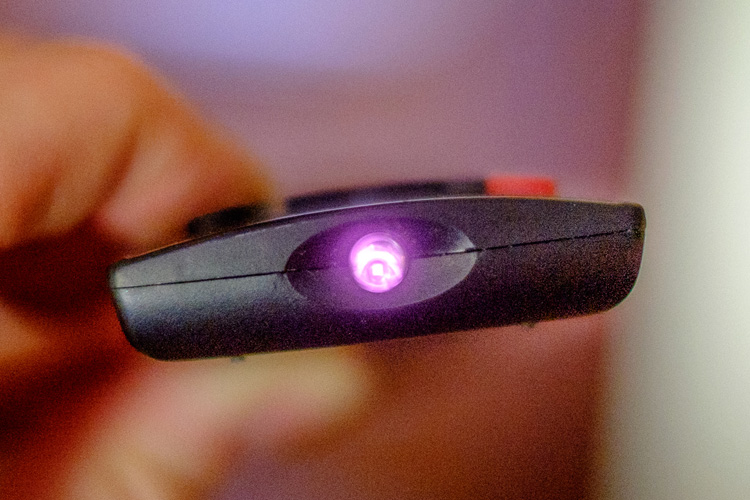
Set your camera to Live View and focus on the end of a television remote control while pushing down one of the buttons. If you can see a light (the infrared communication in action) then it is sensitive enough to infrared light to use with a filter. It’s probably easiest if you ask somebody to hold the remote control for you.

Black & white infrared landscape photograph

This photo (below) was taken with a Hoya 72 filter. It required a shutter speed of 180 seconds, even though the cliffs were lit by the light from the setting sun.

Black & white infrared landscape photograph

All the other photos in the article were taken with a Fujifilm X-Pro 1 converted to infrared.

Conclusion

That concludes our overview of converting cameras to infrared for black and white landscape photography. Have you tried this yourself? What camera did you have converted and how did it work out? Please let us know in the comments.

Get Andrew’s The Black & White Landscape eBook bundle at 30% off now over at Snapndeals, only until December 20th (AUS time).

googletag.cmd.push(function() {
tablet_slots.push( googletag.defineSlot( “/1005424/_dPSv4_tab-all-article-bottom_(300×250)”, [300, 250], “pb-ad-78623” ).addService( googletag.pubads() ) ); } );

googletag.cmd.push(function() {
mobile_slots.push( googletag.defineSlot( “/1005424/_dPSv4_mob-all-article-bottom_(300×250)”, [300, 250], “pb-ad-78158” ).addService( googletag.pubads() ) ); } );

The post How to Convert a Camera to Infrared for Black and White Landscape Photography by Andrew S. Gibson appeared first on Digital Photography School.


Digital Photography School

 
Comments Off on How to Convert a Camera to Infrared for Black and White Landscape Photography

Posted in Photography


Video: Breathtaking drone footage of Oregon’s landscape

09 Dec

Michael Shainblum is a skilled professional landscape photographer known for his time-lapse footage and incredible still work. In 2015, he decided to take his photography to the skies to begin working on a drone project.

All told, he shot 16 hours of footage with DJI 3 and DJI 4 drones to produce this breathtaking 4K aerial montage filmed all over the state of Oregon. Be sure to turn the lights down, the sound up and HD mode on to really enjoy this short film.

Articles: Digital Photography Review (dpreview.com)

 
Comments Off on Video: Breathtaking drone footage of Oregon’s landscape

Posted in Uncategorized


The dPS Ultimate Guide to Landscape Photography

01 Dec


Download “The Ultimate Guide to Landscape Photography”

We respect your email privacy

Introduction

Landscape photography is one of the most challenging and most rewarding hobbies a person can have. One of the things I like most about it is that there is always more to learn. It keeps our brains active! Between learning about what type of gear you need, how to use it, understanding light and composition, and learning to process your photos, you will quickly come to the realization that making a striking landscape photograph involves a number of essential ingredients.

Note: this is one of the most comprehensive articles we’ve written – get a free downloadable copy to print and/or refer to later above.
DPS ultimate landscape photography guide 12

The goal of this guide is to touch on each of these essential ingredients because you need to know a little about each one before you’ll start making the quality of images you are after.

My journey in landscape photography began 25 years ago, and since then I’ve constantly thought about what makes a truly great landscape image. I hope that you will take what I have learned over the past 25 years and use it to jump start your own journey in photography and start making striking images you are proud of.

Gear Essentials

I want to emphasize that gear is not the most important factor in landscape photography. The other chapters outlined in this guide are all more important when it comes to making striking images. However, you do need some gear, and it can be hard to make the right choices when you are just getting started. This chapter will help you understand the most important things to look for when buying your gear.
DPS ultimate landscape photography guide 14

Your Camera

There are three basic categories of digital cameras: point-and-shoot; digital single lens reflex (DSLR); and mirrorless.

Point and shoot cameras are the small digital cameras that most people start with. These cameras do not have interchangeable lenses, and they have tiny sensors that have limited image quality. Point-and-shoots are used for making snapshots. If you are getting serious about your photography, you’ll want a camera that has a bigger sensor for better image quality, manual functions, and one that accepts a variety of different lenses.

DSLRs are the most popular type of camera for landscape photography for a number of reasons. They allow you to shoot in RAW format for maximum data capture (more about that later). They have a variety of shooting modes including fully manual. DSLRs have large sensors and you can use a huge variety of lenses with them.

DPS ultimate landscape photography guide 08 DPS ultimate landscape photography guide 09

Mirrorless cameras are relatively new technology. They have all the same features as a DSLR, but they don’t have the internal mechanism that includes the mirror, which is why the camera bodies are smaller and lighter. However, they are not cheaper! But if weight and size are important factors to you, you may want to check out a mirrorless system.

Sensor size

When it comes to image quality, the only thing you should concern yourself with is sensor size. Megapixels are not nearly as important as sensor size.

The largest sensor is known as a Full frame because it is the same size as a 35mm film negative. You’ll pay the highest price for a system with a full frame sensor, whether it is a DSLR or mirrorless system.

Sensor sizes smaller than full frame are known as Cropped (or Crop) Sensors. The largest cropped sensor is an APS size. You’ll find a wide variety of cameras with these types of sensors at a more affordable price.
DPS ultimate landscape photography guide 10

The next smaller size is the four-thirds sensor. There are actually quite a number of sensor sizes in between the three I have mentioned, but these are the most common. Sensors smaller than these three are what you find in point-and-shoots and mobile phone cameras.

Personally, I use a mirrorless camera with an APS sensor for my landscape photography because the weight of the kit makes a huge difference for me when carrying my gear on long hikes.

I recommend that when you are choosing a camera, you pick the sensor size you can afford, then choose the camera that feels good in your hands and has a menu system that makes sense to you. These days, all of the DSLR and mirrorless cameras available are capable of making great images so don’t worry about whether Canon, Nikon, Sony or another brand is better. They are all good.

Lenses

DPS ultimate landscape photography guide 11 DPS ultimate landscape photography guide 17

Once you have your camera picked out, you’ll want to pick a few quality lenses that give you good focal range from wide-angle, which puts everything in your field of view into the frame, to telephoto, which will allow you to zoom in to something in the distance.

Lens choice is important because your photograph is influenced much more by your lens than by your camera. Sharpness, contrast, depth of focus, clarity, and detail are all determined almost exclusively by the glass (lens). It forms the image, while the camera simply captures it.

While it may seem absurd to spend more on a lens than on the camera itself, most photographers agree that they would always prefer to have a less expensive camera with a quality lens, rather than the other way around. And because lenses don’t depreciate in price as quickly, the investment is far more worthwhile.
DPS ultimate landscape photography guide 13

Prime versus zoom lenses

Lenses come in two forms; prime and zoom. A prime lens has one fixed focal length, such as 35mm. A zoom lens has a focal range, such as 18-55mm. Prime lenses are often slightly sharper than zoom lenses. However, zoom lenses are much more versatile and allow you to carry fewer lenses in your bag.

I recommend that you start out with three zoom lenses that cover a focal range from 10mm to 200mm for maximum versatility. These are the three that I use for my landscape photography:

  • Wide Angle Zoom 10-18mm
  • Regular Zoom 18-55mm
  • Telephoto 55-210mm

DPS ultimate landscape photography guide 15

Tripod

For landscape photography, a tripod is an essential piece of gear. When you have lots of light, you might get away with hand holding your camera. But if you want to make images in low light situations such as sunrise or twilight, you’ll need a tripod so that you can use longer shutter speeds.

This is the purchase where everyone seems to make the same mistake. Buy cheap, buy twice. Most landscape techniques require long shutter speeds – sometimes very long. A bargain bin tripod is not strong enough to hold your camera steady with a telephoto lens on it. It’s not strong enough if there is any wind. It’s a waste of money. On the other hand, if you purchase a sturdy, well-built tripod from a reputable brand it can last you a lifetime.

Make sure you check the load capacity of your tripod and ensure it can handle your camera with its longest (heaviest) lens attached. Expect to spend as much money on your tripod as you did on your camera.

Filters

Many landscape photographers also carry filters, which can help you enhance your images. The two most commonly used are a Polarizing Filter and a Neutral Density (ND) filter. Graduated ND filters can be helpful as well, but become tricky to use if you do not have a clean, straight horizon.

  • Circular polarizing filter – This is an essential piece of equipment when photographing water to allow you to remove reflections and glare from the water’s surface and allow you to see through the water to any interesting rocks underneath.  It can also help enhance the richness of a clear blue sky, or remove reflections from windows and other shiny surfaces in urban settings.
  • Neutral density (ND) filter – If you decide to shoot a long exposure and it happens to be the middle of the day when there is a lot of light, you will need this gray-tinted piece of glass placed in front of your lens. It blocks some of the light from hitting your sensor, allowing you to use a slower shutter speed. These are sold in varying strengths, and can be stacked for different levels of light absorption.

Make sure to get the right filter size for your lenses. Better yet buy one for your biggest lens (look inside your lens cap for the filter size) and step down rings to your smaller ones.

Recommended Camera Settings
DPS ultimate landscape photography guide 19

Shooting in RAW

Most people are used to shooting pictures that come out as JPG (jay-peg) files since this is the default setting on most cameras. JPG is a compressed format meaning that some of the data the camera captures is discarded to make a smaller file size. Raw format, on the other hand, is completely uncompressed with no information thrown away.

What results from this is a digital negative – a large file that can only be accessed through Adobe Camera Raw, Lightroom, Photoshop and other compatible image editing software products. We’ll talk more about processing your photos later, but start off by capturing a RAW file so you have more information to work with when you process your photos.

Shooting Mode

Your camera will likely have a mode dial on the top where you can choose your shooting mode from one of the following; auto; aperture priority; shutter priority; program; or manual. For landscape photography, I highly recommend shooting in aperture priority mode, likely marked on your camera’s mode dial as “A” or “Av”.
DPS ultimate landscape photography guide 30

The reason for using aperture priority is because aperture controls the depth of field in your image – the amount of the scene (in your image) that will be in focus. Generally, for grand landscapes, you will want everything from the foreground to the background sharp, so you’ll pick an aperture like f/11 or f/18. But sometimes, you might want only your subject to be sharp and everything else to be blurred and out of focus. For this, you might pick f/4 or f/5.6.

More information about how aperture affects depth of field is coming up in the chapter on exposure below.

Using aperture priority shooting mode allows you to make this choice based on your artistic vision and the camera will choose the corresponding shutter speed to give you a good exposure.

Metering Mode
DPS ultimate landscape photography guide 27

Evaluative or Average metering is the most common metering mode to use in landscape photography because the camera reads the light information from the entire frame. This is your best bet most of the time when the highlights and shadows are spread relatively evenly throughout the scene.

However, if there are very dark blacks or very bright whites, this can throw your camera’s meter off. In this case, you might want to switch to Spot Metering. Using Spot Metering, your camera will take its reading based on one single spot in the frame, which you choose. Choose the most important part of the image, likely the main subject, and let the rest of the scene fall where it may.

Note: Just a word of caution. Make sure you are familiar with how your camera meter works and how to do Spot Metering before you attempt this. Remember, your camera meter will always try to measure for medium or 18% gray. Therefore, if you meter off something that is black or really light in tone, your camera will compensate and try and make it gray. So you will need to adjust accordingly by using Exposure Compensation. 
DPS ultimate landscape photography guide 22

Focus Mode

Your camera likely has at least four focus modes, they are; single shot autofocus; automatic autofocus; continuous autofocus; and full manual focus. If you have good eyes and focusing comes easy to you, use manual focus. For the rest of us, one of the autofocus modes is better.

For landscape photography, single shot autofocus is the best option because it will focus the camera once (and lock on) when the shutter button is pressed halfway down. The other focus modes are good when you have something moving in the frame that you want to lock on to, as you would with wildlife photography.

Location Scouting

Now that you have your equipment sorted out, you’re ready to do some shooting! But how do you find those specific spots where you can make images with impact?
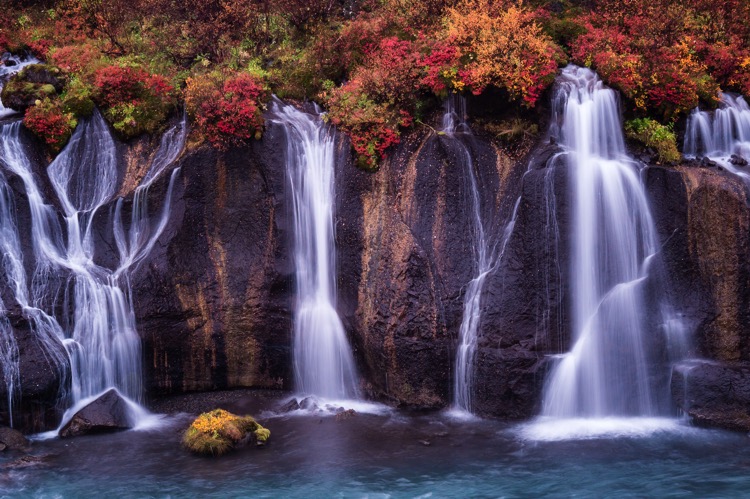
DPS ultimate landscape photography guide 26

The first step is to research the location to get a good overview of the place and see what kinds of scenes are on the menu. These days, my favorite tool for doing this type of research is Pinterest. Keyword searches on Pinterest will bring up loads of photos of any given location. You can create a Pinterest board, which is like a virtual scrapbook, where you can collect these images in one place for future reference.

The next step is to map out the specific locations you have chosen so you know how to get there on the ground. You can look on Google Maps or pick up a hard copy map at a visitor center.

Next, visit the location in person and have a walk around looking for good compositions. I like to do this during midday when I’m not likely to be photographing due to the bright, harsh, light. Finding your spot during the day means you will know exactly where to go and you’ll be ready during the limited hours on the edges of the day when the light is just right.
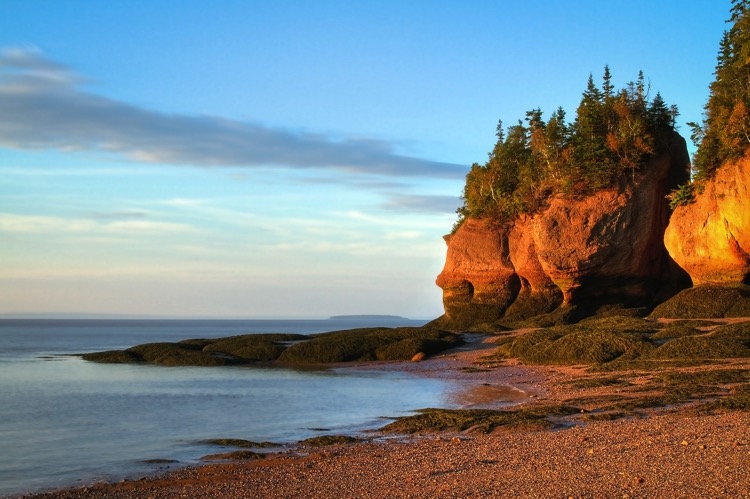
DPS ultimate landscape photography guide 28

Helpful apps

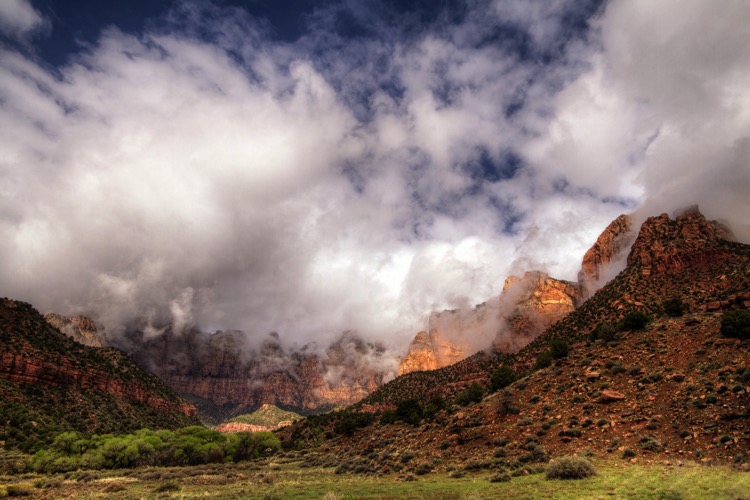
Speaking of good light, the final tool you can use in your location scouting is something that will tell you sunrise and sunset times, when moonrise and moonset occur, and the direction that those things will take place. This will help you immensely when thinking about the direction the light will be coming from on the edges of the day.

My favorite tool for this part of my research is an app called The Photographer’s Ephemeris. You can use it on your desktop or mobile device. It will tell you exactly what is happening in the celestial sky at a particular time. So if you want to get a photo of the full moon rising behind a bridge, you can find out when the full moon is, exactly when it will rise, its position in the sky and then it will calculate where you have to be to get the point of view you want.
DPS ultimate landscape photography guide 36

Making the Most of Natural Light

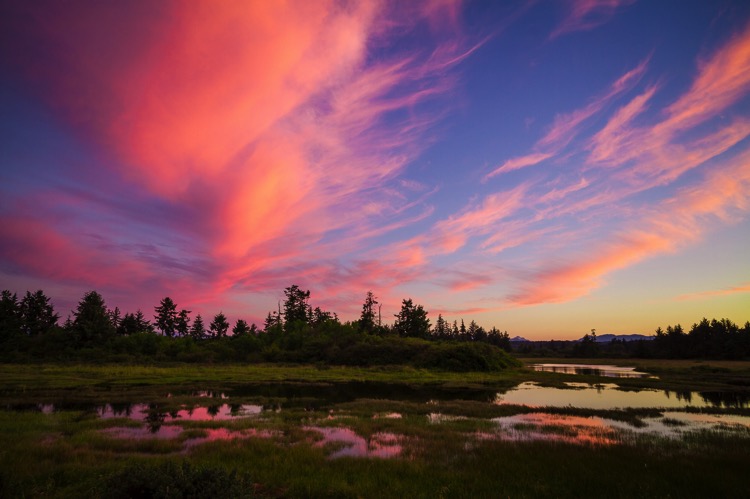
Understanding natural light is a critical aspect of landscape photography. Even when you’ve done everything else right, if the light isn’t right for your scene, your photos are not going to look their best. That is not to say there is such a thing as “good light” and “bad light”. You just have to know what to do with various types of lighting situations.

Remember, you can change the direction of light simply by moving around your subject. Or, you can photograph subjects that are in the shade.
DPS ultimate landscape photography guide 20

Sidelight

Sidelighting occurs when light hits your subject on one side casting a shadow on the other. It is often thought to be the most pleasing type of light for landscape photography because the contrast between light and dark emphasizes texture and shape.

If you have a round object with light hitting it on the side, it will have a shadow on the other, and the gradation of light will emphasize the round shape. Similarly, subjects with textures will have shadows that serve to emphasize the texture. Without the shadows, the texture will be more difficult to convey in an image.
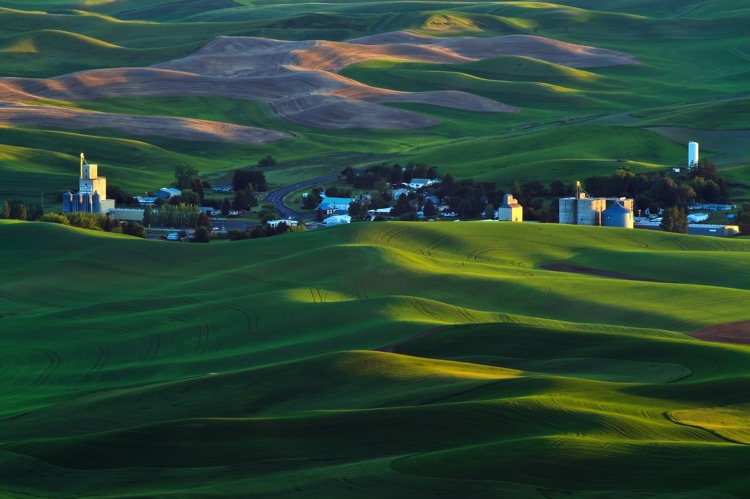
Ultimate landscape photography guide 01

In this photograph from the Palouse region in Washington, sidelight emphasizes the curves in the hillside.

Backlight

Backlight occurs when the light source is directly in front of you, hitting your subject from behind. It is a bit more difficult to create a good exposure in these kinds of high contrast situations, though.

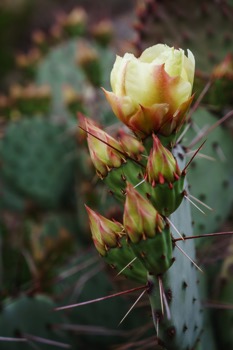
Backlighting is wonderful when your subject is somewhat transparent, like the petals of a flower for instance, because it will make your subject appear to have an inner glow (image below left). This is especially effective when you have a dark background. In this situation, make sure you meter on your subject and allow the rest of the image to fall into shadow.

Ultimate landscape photography guide 02 Ultimate landscape photography guide 03

Backlighting is also useful when you have a subject with a great shape that you can make into a silhouette (image above right). To do this, meter on the sky portion of your frame so the sky will have a proper exposure and your subject will go completely black.

When you have backlight and you want to meter on a specific portion of the frame, this is a good time to use spot metering instead of evaluative metering mode. It’s a little bit more difficult but well worth the effort for the dramatic images you can create using this method.

Front Light

Front light occurs when the sun is behind you hitting your subject directly in front of you. This is my least favorite type of light because it is often intense and unforgiving causing a scene with a lack of texture and depth.

However, used at the right time it can be the best kind of light! When the sun is low in the sky, such as at sunrise and sunset, the light is not so harsh and it can cast a golden glow on your subject, especially when your subject is tall such as a mountain or a cityscape. The golden light will fall on the tallest part of the scene, casting its golden glow, while the rest of the scene remains in shadow creating a dramatic shot.
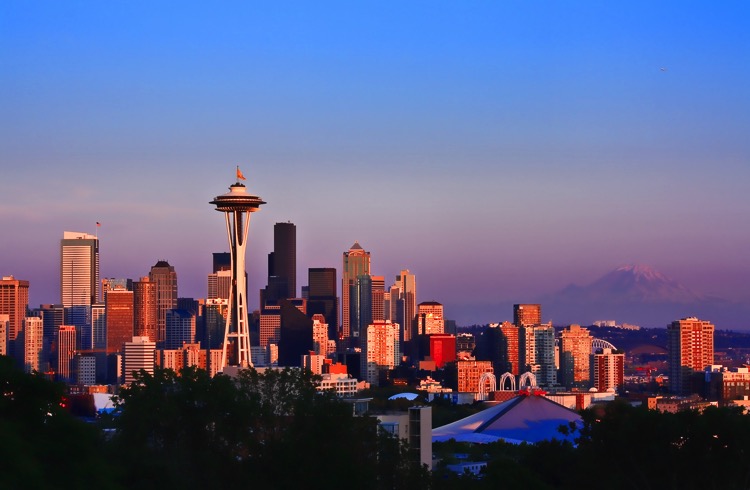
Ultimate landscape photography guide 04

Diffused Light

Diffused light happens on an overcast day or when your subject is in the shade. Under this type of light, your subject will have soft pastel colors and soft or no shadows. You will not get the same sense of shape and texture that you would under different types of lighting situations. As well, your scene will have very low contrast.

However, this is the best type of light for creating soft, gentle images. For example, flowers and colorful scenes work especially well under diffused light.
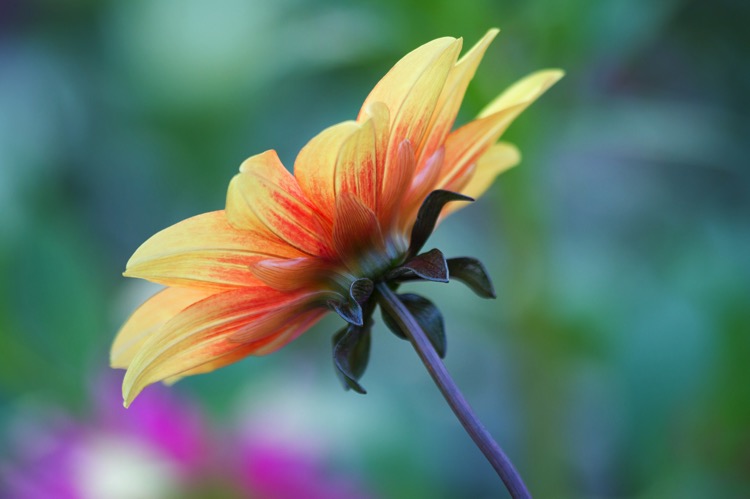
Ultimate landscape photography guide 05

But remember, when you have a bright overcast sky, it is best to exclude it from the frame and get in closer to your subject.

Getting a Good Exposure

Getting a good exposure means using a balanced aperture, shutter speed, and ISO so that you don’t have any areas of the frame that are too bright (known as blown out highlights). The problem is that if you have blown out highlights, there is nothing you can do in post processing to fix it. It will forever be a white spot. You may also want to make sure that you don’t have any areas that are too dark unless solid blacks are what you are after as in the example of creating a silhouette.

When you make an image, you can see the areas of light and dark using your camera’s histogram. Using a histogram is easy! It is simply a graph with the darks on the left and the brights or white on the right.
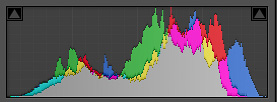
Ultimate landscape photography guide histogram good

All you really need to do is make sure there is not a spike on the right edge of the graph. If it spikes before the edge, that’s okay. You only need to be concerned if the spike touches the right edge. If your image is too bright, you can use your camera’s exposure compensation to reduce the brightness.

The Aperture is Key in Landscape Photography

So, how do you get the right exposure balance? For landscape photography, we are usually most interested in aperture because it affects the depth of field of the photo, so let’s start with selecting the correct aperture for the scene.

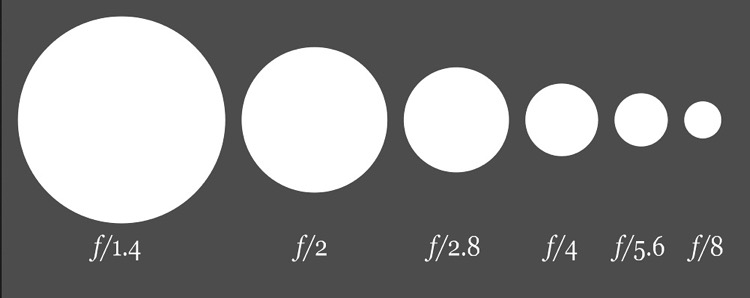
Aperture is the variable opening through which light travels to your camera’s sensor and its size is expressed in f-stops.

The smaller the f-stop number, the larger the opening. That’s kind of confusing, isn’t it? It’s because the f-stop number is actually a ratio. But I don’t want to get into too much mathematics here, just remember it’s like a fraction and 1/2 is bigger than 1/8 so f/2 is bigger than f/8.
Ultimate landscape photography guide aperture

The larger the opening the more shallow the depth of field. In other words, the amount of your scene that will be sharp, measuring from the object you focused on, is smaller.

Here are three images that illustrate the effect of aperture on the depth of field.
Ultimate landscape photography guide aperture f4point5Aperture: f/4.5 Ultimate landscape photography guide aperture f11Aperture: f/11 Ultimate landscape photography guide aperture f29Aperture: f/29

Once you have the aperture selected, the other two factors in exposure are ISO and shutter speed. ISO is the sensitivity of your sensor to light. A low ISO is good when you have lots of light. A high ISO might be necessary if you are shooting hand-held in low light situations. However, increasing the ISO causes noise in your image, so for landscape photography, we usually use the lowest ISO and if we need more light we reduce the shutter speed and use a tripod.

When you are in the field, set your ISO to 100. This is usually the lowest setting on most cameras. Then set your camera to aperture priority shooting mode and set the aperture you want for the depth of field you desire in the image. Then, the camera will calculate the appropriate shutter speed to create a balanced exposure. Remember to keep your eye on what that shutter is, because if it is any slower than about 1/100th of a second, you’ll need to use your tripod.

Composition Tips
DPS ultimate landscape photography guide 33

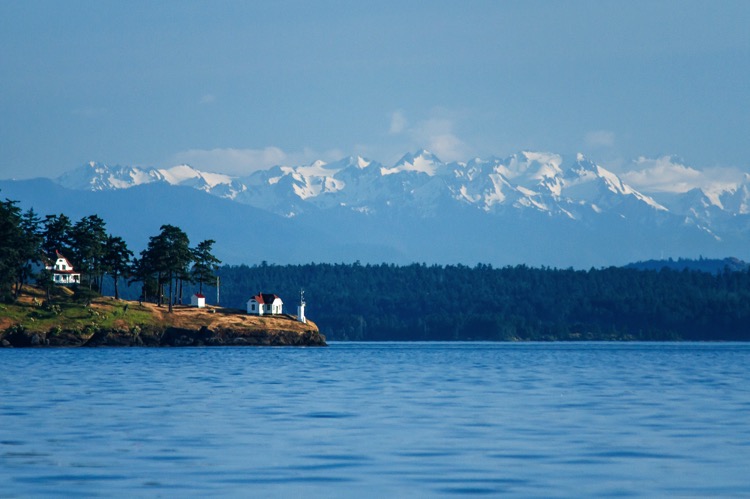
When you are just getting started in landscape photography, it can be hard to know what to include the frame to make a compelling composition. In this chapter, I’ll show a few different types of compositions to help get you started so you know what to look for in the field.

Of course, there are many more composition options than these to explore, and some that you’ll discover on your own through experimentation. But this will give you a starting place on which to base your own vision in photography.

Rule of Thirds

The rule of thirds is probably the most well-known “rule” in photography. I like to think of it as more of a guideline. As you grow in your photography, you’ll probably start to break these rules and come up with your own unique ways of composing images. But you have to understand the rule before you can break it.

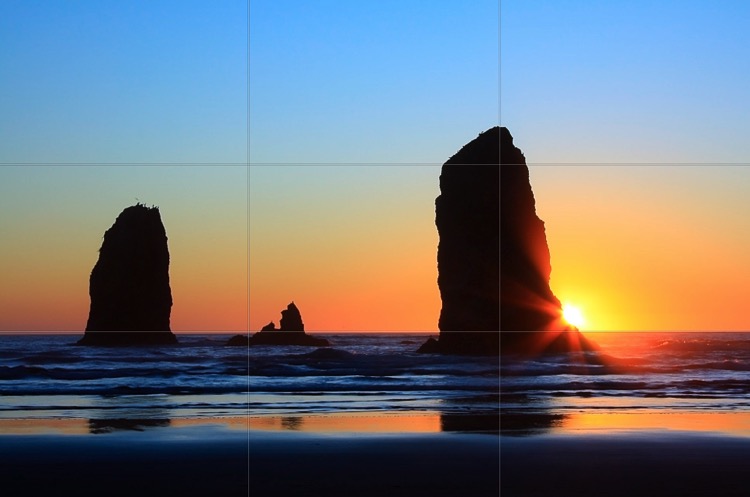
Using the rule of thirds, the frame is divided into three vertical and three horizontal sections, like a tic-tac-toe game. The idea is that your main subject should fall on one of the lines in order to create a dynamic and interesting composition. Locating your subject on the intersection of two lines is ideal.
Ultimate landscape photography guide rule of thirds

A centered horizon gives equal importance (visual weight) to both the sky and land portions of your image, and the viewer is left with no direction where to look. For example, by placing the horizon along the bottom third line, you will give more visual weight to the sky area and direct the viewer’s eye to that area. A higher horizon placement will have the viewer’s eye going to the bottom of the image where there is more emphasis.

Symmetry

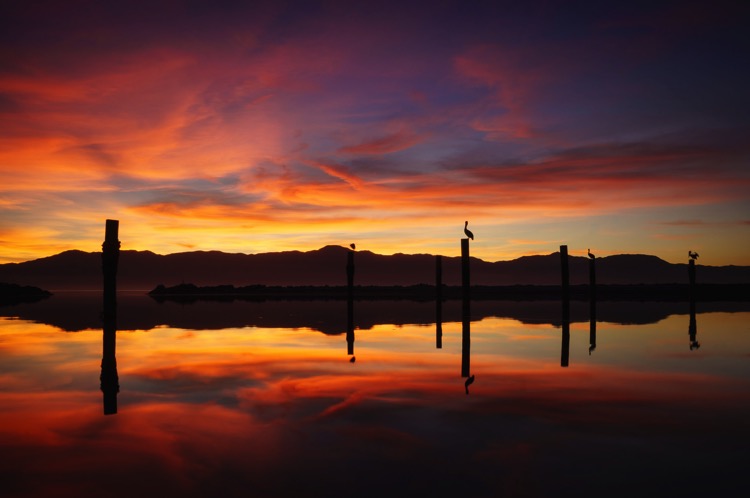
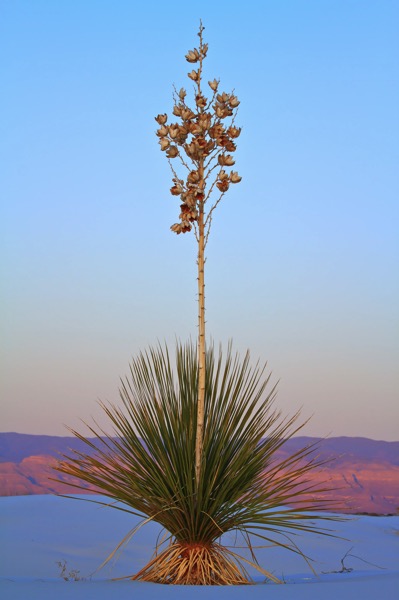
Symmetry is the exact opposite of the rule of thirds. A symmetrical composition has the center of the subject exactly in the middle of the frame with equal weight on either side. The two sides of the image are often a mirror image of each other. This works especially well with subjects that are naturally symmetrical like plants or architecture.

Another way to use symmetry is to put a shoreline in the center of the frame, especially when you have a reflection to balance out the image.
Ultimate landscape photography guide 06

DPS ultimate landscape photography guide 29

Leading Lines

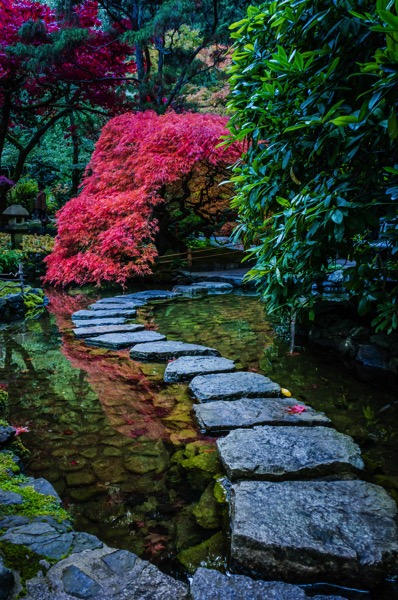
Another effective type of composition uses leading lines to draw the viewer’s eye to the main subject. The lines can be man-made such as roads, fences, or bridges, or they can be natural elements such as rivers, shorelines or rocks.

Usually, the lines start from the bottom of the frame and move upward and inward to draw the eye into the image, connecting the foreground and background, and often leading to the main subject.

In the field, when you find a subject you want to work with, take a look around and see what lines you can use in your composition that would lead up to the subject creating depth and perspective in your image.
Ultimate landscape photography guide 07

Processing Your Photos

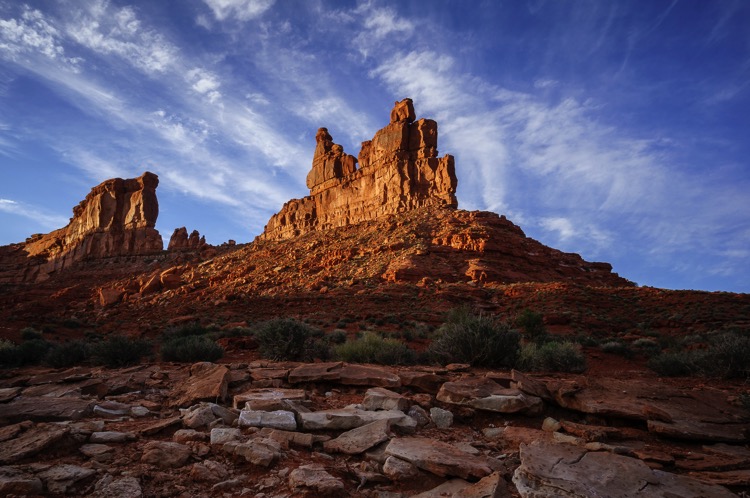
Processing your photos is an important part of digital photography. In the old film days, the lab technicians who processed the negatives and printed made a lot of decisions about color and contrast that affected the final outcome. These days, that job has become yours. If you find that your photos look gray and dull, it’s probably because you haven’t processed them.

When you shoot in RAW format, as mentioned earlier, you have collected the highest amount of data you can which will help you when it comes to processing. You’ll need to use Adobe Camera Raw, either on its own or within Lightroom, Photoshop or other Raw compatible software.

I recommend that you go with Lightroom. Not only does Lightroom include Adobe Camera Raw for processing your photos, but it also provides an excellent way to keep your photos organized and accessible. I do all of my basic processing in Lightroom and only use Photoshop if I want to do something unusual with my image.

Note: check out the dPS course Lightroom Mastery here.
DPS ultimate landscape photography guide 37

Using the sliders in Adobe Camera Raw, you can make subtle adjustments that will have a huge impact on the end product. For most of my images, I make adjustments to the following settings:

  • White Balance
  • Contrast
  • Vibrance and Saturation
  • Sharpening
  • Noise Reduction
  • Cropping

A little processing can go a long way. With solid ingredients like good composition and effective use of light, a little processing can turn a good image into a great one.

Taking it to the Next Level

If you want to take your landscape photography to the next level, beyond just snapshots and postcard-like images here are a few places to start, and links to articles on this topic in more depth.

Add a Foreground Element

One of the biggest hurdles in photography is the fact that our majestic three-dimensional scene is rendered into a mere two-dimensional image, and the physical depth that we experience in real life is lost. To resurrect this spacious feeling, we can create the illusion of depth where there is none, by using strong elements in the foreground.

Read more about how to add a foreground element to your images here: How to Use Foreground to Create Depth in Your Images.
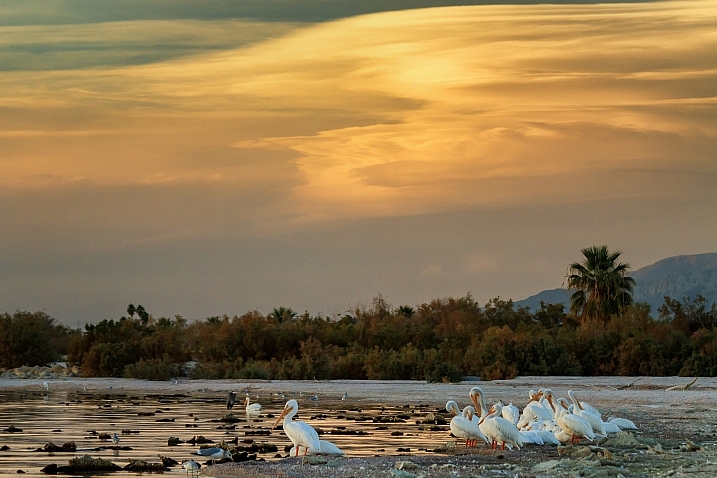
Ultimate landscape guidebook foreground

Use Shadows to add Depth to Your Images

In music, they say the spaces between the notes are just as important as the notes themselves. Similarly, in photography, it is the spaces that are not in the light that can add impact to an image. Shadows help tell a story and enhance the mood and visual power of a photograph. In fact, they can be so interesting, that they “overshadow” the subject itself!

By focusing your attention on the shadows, you can create beautiful compositions full of contrast, form, and minimalist simplicity. An object and its shadow will strengthen each other. Sometimes you might even want to cut the object out entirely, and play with capturing only the interesting shadows that are cast by it.

Read more about how to use shadows in your images here: Add Impact to Your Photos by Including Shadows.

Summary

DPS ultimate landscape photography guide 32 DPS ultimate landscape photography guide 25

Landscape photography can be a fun and rewarding endeavor. Use these tips as a starting point for your journey and continue exploring this wonderful world and all it has to offer and share your images with others to enjoy as well.

Remember, photography is a journey, so continue to learn and grow as a photographer. Look back on your work from a year ago and see how far you’ve come. Then think about what you can learn and master next. Have fun, and enjoy the ride.


Download “The Ultimate Guide to Landscape Photography”

We respect your email privacy

googletag.cmd.push(function() {
tablet_slots.push( googletag.defineSlot( “/1005424/_dPSv4_tab-all-article-bottom_(300×250)”, [300, 250], “pb-ad-78623” ).addService( googletag.pubads() ) ); } );

googletag.cmd.push(function() {
mobile_slots.push( googletag.defineSlot( “/1005424/_dPSv4_mob-all-article-bottom_(300×250)”, [300, 250], “pb-ad-78158” ).addService( googletag.pubads() ) ); } );

The post The dPS Ultimate Guide to Landscape Photography by Anne McKinnell appeared first on Digital Photography School.


Digital Photography School
 
Comments Off on The dPS Ultimate Guide to Landscape Photography

Posted in Photography


Cut Grass: Sutured Landscape Installation Stitches Open Lawn Back Together

27 Nov

[ By WebUrbanist in Art & Installation & Sound. ]

ground-stitching-art

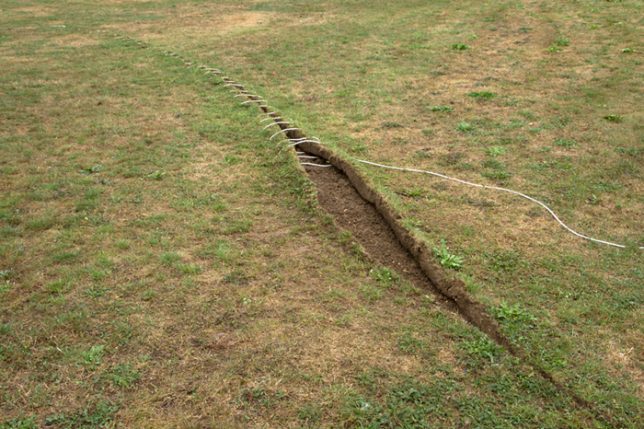
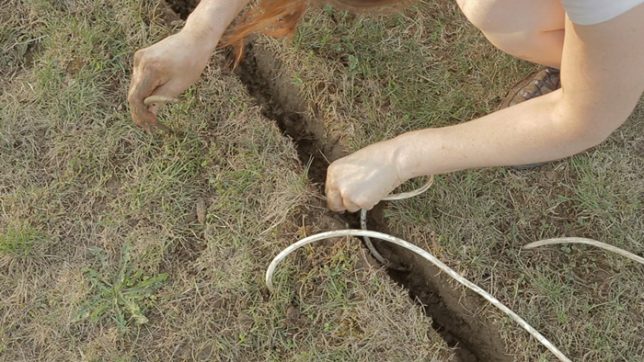
Ground Operation is a conceptually simple earthwork: an incision made in a grassy landscape is pealed back then stitched back together, much like an open wound after an injury or surgery.

earthwork-stitching-ground

French artist Estelle Chrétien sliced open the ground then wrapped electrical cables through it like shoelaces, either in the process of being tied or becoming undone (a mystery left for the observer to unravel, as it were). Her use of cabling is also very intentional, meant to raise questions about what we put into the Earth and how we use it — a surfacing of the secret infrastructure that lurks below.

boot-on-tree

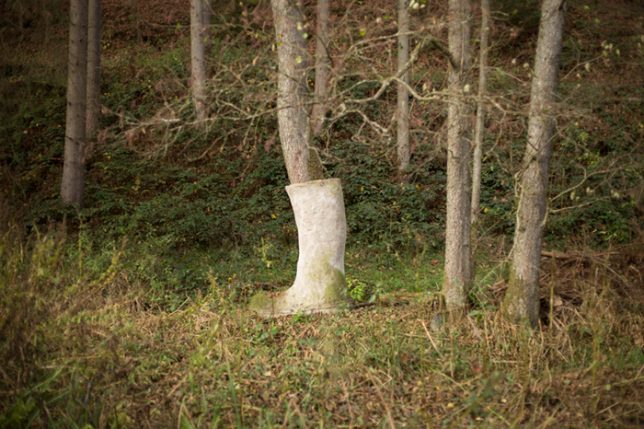
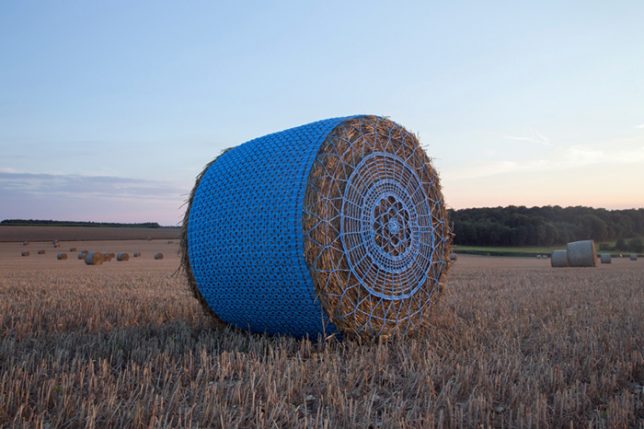
Similar techniques, themes and materials can be found in other works by the same artist, who has wrapped hay bales in crocheted covers and put boots on trees.

crocheted-hay-bale

“While in Portugal, I learned how to crochet, and I had this piece of blue agricultural baler twine in a box and the idea of [making a hay bale wrap] came to me,” she says. “When I went back to France, I made it and put it in a field just before farmers stored their bales. I liked working in the middle of a barley field, but most of the work was made at home, so I decided to work outside with my hands more often after that.”

Share on Facebook


[ By WebUrbanist in Art & Installation & Sound. ]

[ WebUrbanist | Archives | Galleries | Privacy | TOS ]


WebUrbanist

 
Comments Off on Cut Grass: Sutured Landscape Installation Stitches Open Lawn Back Together

Posted in Creativity


How to Give Your Landscape Photos Extra Punch in One Easy Step

09 Nov

Have you ever felt that your landscape photography is missing a little punch? You look at other photographers’ images and their colours have a very appealing amount of contrast. But no matter how much you play around with HSL (Hue, Saturation, Luminance), Contrast, Vibrance or Saturation, your colours just don’t get the same depth and contrast and end up looking fake and oversaturated.

The quality of the lens being used affects color greatly (more expensive lenses generally give a much better colour contrast than entry-level lenses). But there is a step that you can do when post-processing your recent landscape photos to give the colours an extra little bit of punch and contrast and more importantly, keep them from looking overcooked.

before-after

Color space

You may be aware of a term Colour space which essentially determines how devices represent colour. The two most common colour spaces are Adobe RGB and sRGB. Adobe sRGB is used on the web and for many smart devices. Adobe RGB is a little bigger than sRGB and can show more colors. However, these are not the only colour spaces around. Lightroom, for example, uses one of the largest (able to produce a larger amount of colours) called ProPhoto RGB.

But enough about colour spaces! I can already see your eyes glazing over, mine are already as I type this. But knowing that there are different colour spaces can be helpful. Knowing exactly how they work isn’t necessarily all that important.

Convert to Lab Color

The colour space that you’ll want to recognize is LAB Color. How does it work? Doesn’t really matter. But how can you use it give your images that extra punch? In this article, I’ll explain how a very simple step (and I mean simple!) that will help give your images that extra punch using the LAB colour space in Photoshop.

Okay, so first up you’re going to want to bring your image into Photoshop. Before you do this, you may need to develop the image a little in Adobe Camera Raw or Lightroom. Fix up any exposure issues, correct the white balance, etc.

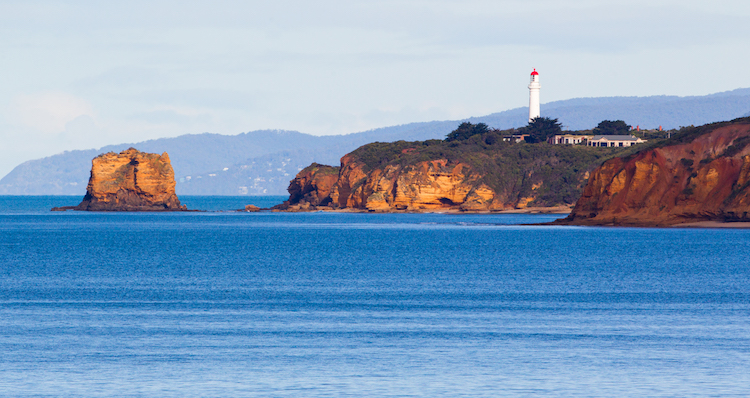
This is the image that I’ll use as an example.

before

This image has had very little done to it prior to Photoshop. A simple crop, general contrast and exposure correction were all that was applied.

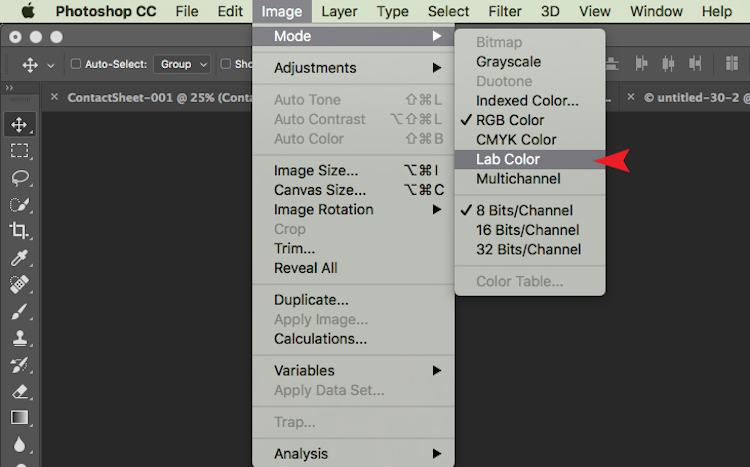
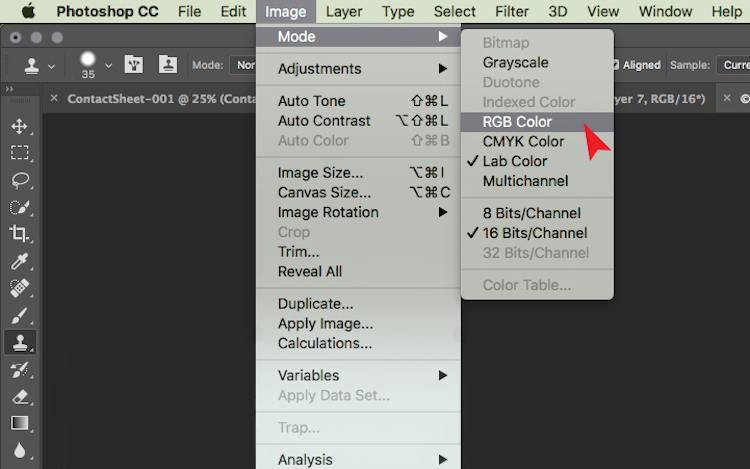
Now that your images is open in Photoshop, the very first thing you need to do is convert it from Adobe RGB or sRGB (depending on what you have set as the working colour space in Photoshop) to LAB Color.

To do this, go to: Image > Mode > Lab Color.

The tick next to RGB Color means that Adobe RGB is currently being used.

The tick next to RGB Color means that Adobe RGB is currently being used.

Now Photoshop is using LAB instead. You won’t notice a change at all at this step because nothing has changed on your end. All you have simply done is tell Photoshop which method to use to display colours.

Add a Curves Adjustment Layer

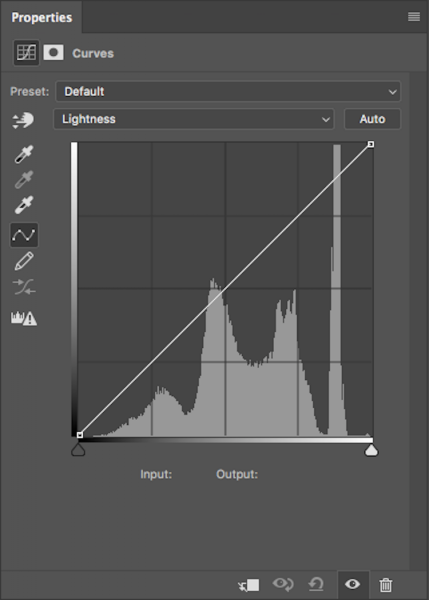
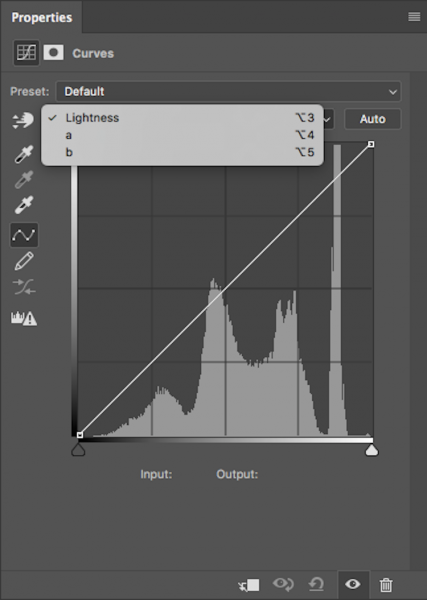
With your image in LAB Color, the next step is to create a Curves Adjustment Layer. Once this layer has been created, you should see something like this:

lab-curves1

Generally, this doesn’t look any different to any other Curves Adjustment Layer except for one thing. Instead of having RGB in the drop down menu, you will see Lightness.

With this adjustment layer created, the next step is to click on the Lightness drop down menu. This brings up Lightness, A, B; which is what LAB is short for!

lab-curves

Adjust Channel A

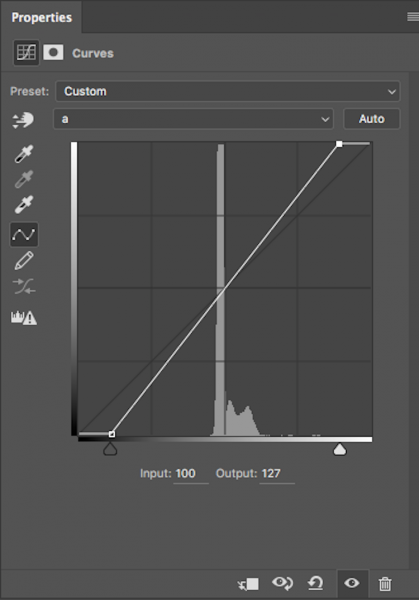
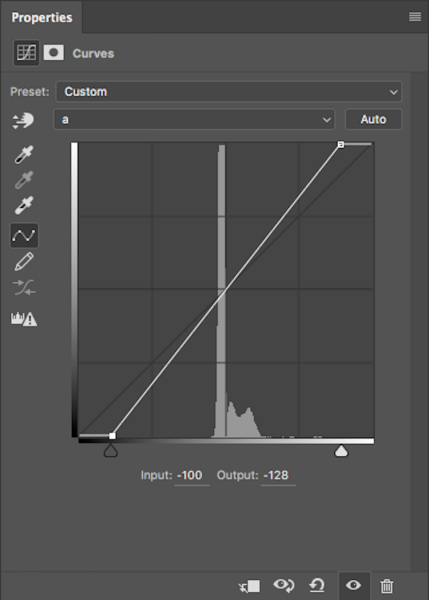
Now, you need to select the A-channel. With the A-channel selected, bring in the shadows anchor point at the bottom-left corner toward the bottom-centre. You will notice the Input numbers increasing from -128. As a starting point, I like to bring this value to -100. Now, find the highlight anchor point (top-right) and bring that toward the top-centre by the same value; for -100 set it to 100.

Notice the anchor points have moved toward the centre equally?

Notice the anchor points have moved toward the centre equally?

You’ll notice strange things happening to your colours as you slide the anchor points along. Don’t panic – this is supposed to happen.

Adjust Channel B

Now do the same steps by the same values for both shadows and highlights for the B-channel.

Same steps have been done for Channel B

Same steps have been done for Channel B

NOTE: make sure your Output value remains at -128 for the shadows and 127 for the highlights. If these numbers are altered it means that the anchor point is being lifted from the bottom for shadows and dropped from the top for highlights. You just want to drag the sliders along horizontally (not move them up or down).

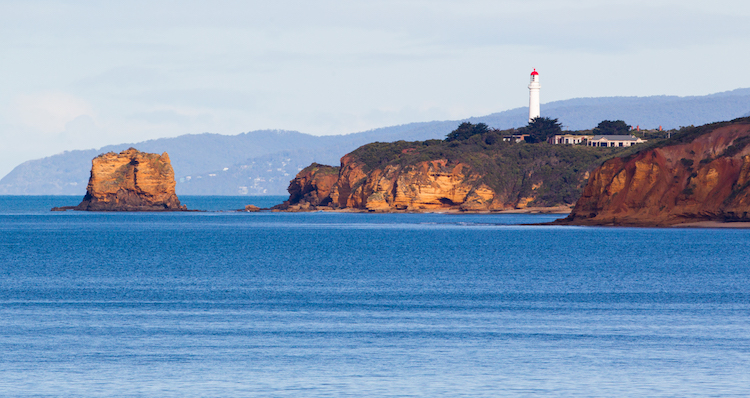
With both A and B channels having been done now, the colour and colour contrast of your image should look different from the original. This is how my original image looks after these steps.

This is after setting A/B shadows to -100 and highlights to 100.

This is after setting A/B shadows to -100 and highlights to 100.

Fine tuning

For me, that is looking a little overdone. But no problem! To change this, all you have to do is reduce the amount you moved the anchor points in both A and B channels. I generally find going by increments of 10 is most helpful.
If you feel your image needs more punch, then you will want to bring the anchor points closer to the centre. Just remember to keep each value across the shadow/highlight, A/B channels the same.

After increasing the numbers in my images, I felt that -110/110 in A/B worked the best (see below).

after-110

Convert back to RBG

Once you are happy with how your image looks, it’s time to change it back to RGB. To change your image from LAB to RGB, go to: Image > Mode > RGB color.

change-to-rgb

You’ll be alerted that changing modes will discard adjustment layers, but that is fine. Select OK and you’ll be brought back into RGB. You’ll notice that the Curves Adjustment layer is now gone and that your image is now the background layer. However, the effect on the colours should remain. Now you’re free to go about editing the photo as much as you like.

So that’s a very simple technique to add more colour punch in your images. Just remember these two points:

  • This is something that you should do at the beginning of editing your image in Photoshop and not the end as you will lose all your adjustment layers when changing modes.
  • Remember to alter the anchors points from A/B b by the same value to eliminate strange things happening to your colours.

googletag.cmd.push(function() {
tablet_slots.push( googletag.defineSlot( “/1005424/_dPSv4_tab-all-article-bottom_(300×250)”, [300, 250], “pb-ad-78623” ).addService( googletag.pubads() ) ); } );

googletag.cmd.push(function() {
mobile_slots.push( googletag.defineSlot( “/1005424/_dPSv4_mob-all-article-bottom_(300×250)”, [300, 250], “pb-ad-78158” ).addService( googletag.pubads() ) ); } );

The post How to Give Your Landscape Photos Extra Punch in One Easy Step by Daniel Smith appeared first on Digital Photography School.


Digital Photography School
 
Comments Off on How to Give Your Landscape Photos Extra Punch in One Easy Step

Posted in Photography


Announcing the winners of USA Landscape Photographer of the Year 2016

01 Nov

USA Landscape Photographer of the Year 2016 Winners

Sunrise light illuminates Mount Rainier as it rises above low clouds, seen from high above Tipsoo Lake, Washington. Adult Overall Winner 2016. Photo by Alex Noriega
Nikon D600, 35mm, ISO 100, F11, shutter speed unknown

We’re pleased to announce the winners of the 2016 USA Landscape Photographer of the Year Awards! From thousands of entries, Oregon-based Alex Noriega’s photo of a misty Mount Rainier at sunrise was selected as the overall winner. Youth winners were also selected for the comptetitions categories, with Hawaii’s Raiatea Arcuri taking the overall Youth award for a stunning image of water flowing over coastal lava tubes.

We’re also excited to co-present a Special Award category, Life in Landscape. You can see the winner of that category and all of the other winning images by flipping through the slides above. For more information about the contest, visit their website. 

Press release:

The winners are announced
1st November 2016

A visually stunning and dramatic view of Mount Rainier has won the top prize in this year’s search for USA Landscape Photographer of the Year’s winning entry. Portland based photographer, Alex Noriega becomes the third person to win the overall title and the $ 15,000 prize. His picture of Mount Rainier as it rises above low clouds, seen from high above Tipsoo Lake was chosen, by the judges, from the thousands of entries received from over 40 countries across the globe, all celebrating the beauty and free spirit of the American landscape.

Charlie Waite, one of Britain’s leading landscape photographers and founder of the Awards spoke about this year’s competition:

“Apart from the pleasure I enjoy from my own landscape photography, there can be few experiences that come near the huge enjoyment and admiration that I have had from looking at photographs submitted to the USA Landscape Photographer of the Year.

I have been truly overwhelmed by the high quality, considered and finely crafted images that we have seen from so many talented photographers who have contributed for the third USA Landscape Photographer of the Year 2016.

From the start of the contest, the standard of landscape photography has been as high as it ever has been. The wonderful images that I have seen are testament to not only every photographer’s passion but for the obvious joy they receive from their creativity and indeed from fully engaging with some of the greatest landscapes on the planet.”

The Young Landscape Photographer of the Year title has been awarded to Raiatea Arcuri, who captured coastal lava tubes along the Kona coast on the Island of Hawaii. Raiatea said of his image “What makes the Big Island special is the presence of lava tubes around the island. Some of these lava tubes at the coast will make amazing water motion as the waves push water in and out. It can be quite an epic experience capturing it. The water can easily surge up to your waist level and quickly recede back into the tube, creating a nice waterfall.”

For the first time this year, the Awards are being held in association with DPReview and Amazon. Life in the Landscape, The Digital Photography Review Special Award was offered for the photograph judged to best convey how people interact with the American landscape. Michael Shainblum’s Endless which saw Michael endure extreme heat as it was about 105 degrees fahrenheit, certainly met the requirements for this Award and captures a truly magical moment.

Congratulations also goes to the winner of this year’s other Special Award. Wild Landscape, The Future Publishing Award was won by Terrence Bond for his photograph The Real Duck Dynasty which was taken on the Clarence Canon Wildlife Refuge, Annada, Mo on the migratory highway, on the west side of the Mississippi River.

2016 Results:

Adult Winner – Alex Noriega – Sunrise light illuminates Mount Rainier
Winner – Classic View – James Menzies – Main Strike, Grand Canyon National Park
Runner Up – Classic View – Long Nguyen – Lost, Boardman Farm, Oregon
Winner – Black and White – Terry Koyama – Waimea Bay Beast, Hawaii
Runner Up – Black and White – Michael Ryan – Waimea Bay Beast, California
Winner – My USA – Az Jackson – A lone figure of a man on Brooklyn Bridge, New York Runner Up – My USA – Michael Shainblum – Thunder Mountain, Eastern Sierra Mountains Winner – Urban – Souvik Dutta – Caged, Orlando, Florida
Runner Up – Urban – Jennifer Vahlbruch – 75 Stages of Life, Miami, Florida
Winner – Environmental Value – Terry Koyama – Mammatus Makers, Kansas
Runner Up – Environmental Value – Yoshiki Nakamura – Sunset flight in Fir Island, Mt Vernon
Winner – DPReview Special Award – Michael Shainblum – Endless, Fonts Point, Anza Borrego Desert
Runner Up – DPReview Special Award – Sapna Reddy – Escape the Ordinary, Mt Tamalpais, Marin County
Winner – Future Publishing Special Award – Terrence Bond – The real Duck Dynasty, Missouri
Runner Up – Future Publishing Special Award – Ashish Varma – Autumn fog over Grand Tetons, Wyoming

Youth Winner – Raiatea Arcuri – Coastal lava tubes in Kona, Hawaii
Winner – Classic View – Mark Rivera – Lamar Valley, Autumn Foliage, Yellowstone National Park, Wyoming
Winner – Black and White – John Morris – Sunset Light Show, California
Winner – My USA – Raiatea Arcuri – Plume Cloud from the active Halemaumau Crater, Hawaii
Winner – Urban – Kyle Wolfe – The Golden Gate Bridge as seen from Fort Point, San Francisco, California
Winner – Environmental Value – Mark Basarab – Fiery Sunset Yosemite National Park, California
Winner – DPReview Special Award – Mark Basarab – Point Reyes Slanted Tree, California Winner – Future Publishing Special Award – Kyle Wolfe – Navajo Sandstone of Antelope Canyon, Arizona

Contact: info@usalpoty.com for images to accompany this release or to organize interviews with Awards founder, Charlie Waite, and/or Award winners.

Please note that all images and/or logos supplied by or on behalf of USA Landscape Photographer of the Year remain the copyright of their respective photographers. They may only be used for press/promotional purposes in direct connection with the USA Landscape Photographer of the Year Awards and must be credited.

More information: www.usalpoty.com

USA Landscape Photographer of the Year 2016 Winners

Coastal lava tubes in Kona, HI cause the water to flow in and out creating beautiful water motion. Youth Winner 2016. Photo by Raiatea Arcuri 

Sony A6000, ISO 100, 0.4 sec, F11, 12mm (Rokinon 12mm)

USA Landscape Photographer of the Year 2016 Winners

Waimea Bay Beast, Oahu, Hawaii. B&W Winner. Photo by Terry Koyama

Canon 5D Mark III with Canon EF200-400mm F4L lens 1/640 sec, F5.6, ISO 800

USA Landscape Photographer of the Year 2016 Winners

Sunset Light Show. B&W Winner Youth. Photo by John Morris

Nikon D800, 1/250th, F9, ISO 160

USA Landscape Photographer of the Year 2016 Winners

Main Strike. Grand Canyon National Park. Classic Winner. Photo by James Menzies

Canon EOS 5D Mark III. ISO 320, F10, focal length 26mm on a 17-40mm Wide lens. Bolt occurred during 19.9 second exposure

USA Landscape Photographer of the Year 2016 Winners

Lamar Valley, Autumn Foliage, Yellowstone National Park, Wyoming. Classic Winner Youth. Photo by Mark Rivera

Nikon D750, Nikkor 300mm lens, F6.7 for 1/640 second, ISO 250

USA Landscape Photographer of the Year 2016 Winners

“Endless” This image is a self portrait taken at Fonts Point in the Anza Borrego Desert. DPReview Special Award. Photo by Michael Shainblum

Canon EOS 6D, Rokinon 14mm F2.8 25sec F2.8 ISO 3200

USA Landscape Photographer of the Year 2016 Winners

Point Reyes Slanted Tree, California. DPReview Special Award Youth. Photo by Mark Basarab

Canon Rebel T3i 1/1000sec F3.5 ISO 800

USA Landscape Photographer of the Year 2016 Winners

Mammatus Makers, Kansas. Environmental Value. Photo by Terry Koyama

Sony a7R II with Sony Vario-Tessar T* FE 16-35mm F4 ZA OSS 1/4sec, F8.0, ISO 100

USA Landscape Photographer of the Year 2016 Winners

Fiery Sunset Yosemite National Park, California. Environmental Value Youth Winner. Photo by Mark Basarab

Panasonic Lumix G5 1/400sec F3.5 ISO 160

USA Landscape Photographer of the Year 2016 Winners

The real Duck Dynasty. Future Publishing Special Award Winner. Photo by Terrence Bond

Canon EOS 1D Mark IV, Canon EF 600mm F4L IS, 7.5 MB, JPEG, ISO 125 840mm, F7.1 1/400 sec

USA Landscape Photographer of the Year 2016 Winners

A mysterious lone figure with an umbrella walking from the arches of the Brooklyn Bridge in New York City. My USA Winner. Photo by Az Jackson

Canon 5D Mark II – ISO: 800, F5.6, 1/40 sec. – Focal Length: 24mm

USA Landscape Photographer of the Year 2016 Winners

An interesting plume cloud from the active Halemaumau Crater with steam pluming from the vents below in Kilauea Iki Crater in Volcanoes National Park. My USA Youth Winner. Photo by Raiatea Arcuri

Sony A7S, ISO 500, 20 sec, F2.8, 24mm (Rokinon 24mm)

USA Landscape Photographer of the Year 2016 Winners

Caged (Orlando). Urban Winner. Photo by Souvik Dutta

Canon EOS 70D 1/1328 sec, F8, ISO 200, Focal Length 10mm (16 mm – 35 mm equivalent)

USA Landscape Photographer of the Year 2016 Winners

The Golden Gate Bridge as seen from Fort Point in San Francisco. The eye is led into this circular composition by the careful placement of a rustic metal chain. Urban Winner Youth. Photo by Kyle Wolfe 

Sony A7, Sony 28mm F2, B+W 10 stop ND filter Manual exposure, F22, 30 seconds, ISO 64, 28mm

Articles: Digital Photography Review (dpreview.com)

 
Comments Off on Announcing the winners of USA Landscape Photographer of the Year 2016

Posted in Uncategorized


Starling vortex wins £10,000 Landscape Photographer of the Year prize

25 Oct

2016 Take a View Landscape Photographer of the Year winners

Landscape Photographer of the Year 2016 Matthew Cattell – Starling Vortex, Brighton, East Sussex, England

The winners of the 2016 Take a View Landscape Photographer of the Year competition have been announced, with a shot of a flock of starlings flying in front of Brighton Pier taking the top prize. The competition, which accepts entries from around the world of pictures taken in the UK, is in its tenth year, and is run by landscape photographer Charlie Waite.

There are ten main categories for manipulated and un-manipulated images taken by adults and by those 17 years and under, as well as additional competitions for supported by sponsors – such as railway company Network Rail’s Line in The Landscape, Adobe and the Visit Britain tourist service. The top prize is £10,000 and category winners receive £1000 or £500 for the youth prizes.

Commended and runner up photographers get their images published in the Landscape Photographer of the Year book, and an exhibition of selected images runs at London’s Waterloo station for 12 weeks from 21st November.

For more information and to see more of the winning images visit the Take A View website. You can also read our interview with Charlie Waite.

2016 Take a View Landscape Photographer of the Year winners

Adult Classic view – Winner Dougie Cunningham – Shelter from the Storm, Loch Stack, Sutherland, Scotland

2016 Take a View Landscape Photographer of the Year winners

Adult Classic view – Highly commended Scott Robertson – Binnein Beag through Steall, Scottish Highlands

2016 Take a View Landscape Photographer of the Year winners

Adult Classic view – Runner-up Scott Robertson – Stob Dearg, Buachaille Etive Mor, Glencoe, Scotland

2016 Take a View Landscape Photographer of the Year winners

Network Rail ‘Lines in the Landscape’ Award – Winner Francis Taylor – Sunshine breaks through, Ribblehead Viaduct, North Yorkshire, England

2016 Take a View Landscape Photographer of the Year winners

The Sunday Times Magazine Award – Winner Rachael Talibart – Maelstrom, Storm Imogen, Newhaven, East Sussex, England

2016 Take a View Landscape Photographer of the Year winners

Adult Living the view – Winner Martin Birks – Chrome Hill, Peak District, Derbyshire, England

2016 Take a View Landscape Photographer of the Year winners

The GREAT Britain #OMGB Award – Winner Mark Gilligan – Finding Gold, Wast Water, Cumbria, England

2016 Take a View Landscape Photographer of the Year winners

The Adobe Prize – Winner Damian Ward – Caister-on-Sea, Norfolk, England

2016 Take a View Landscape Photographer of the Year winners

Adult Your view – Winner Tony Higginson – Shifting sands, Silverdale, Lancashire, England

2016 Take a View Landscape Photographer of the Year winners

Adult Your view – Runner-up Daniel Pecena – A82, Glen Coe, Highland, Scotland

2016 Take a View Landscape Photographer of the Year winners

Young Landscape Photographer of the Year 2016 Hannah Faith Jackson – Mirror Bar, Glasgow, Scotland

2016 Take a View Landscape Photographer of the Year winners

Youth Living the view – Winner Rowan Ashworth – Sunset Explorer, Hushinish, Isle of Harris, Scotland

Articles: Digital Photography Review (dpreview.com)

 
Comments Off on Starling vortex wins £10,000 Landscape Photographer of the Year prize

Posted in Uncategorized


Rolling Landscape: Driverless Geodesic Garden Hits the Streets of London

10 Oct

[ By WebUrbanist in Conceptual & Futuristic & Technology. ]

geodesic-mobile-garden

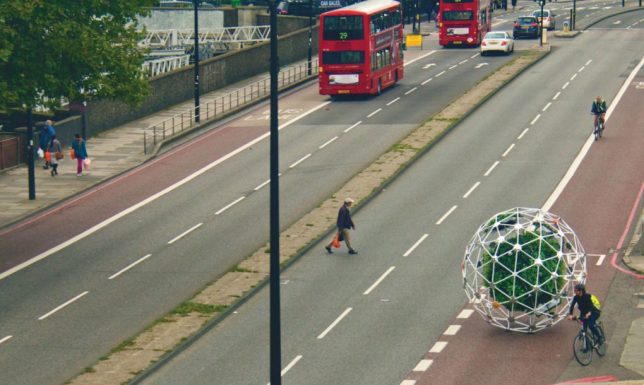
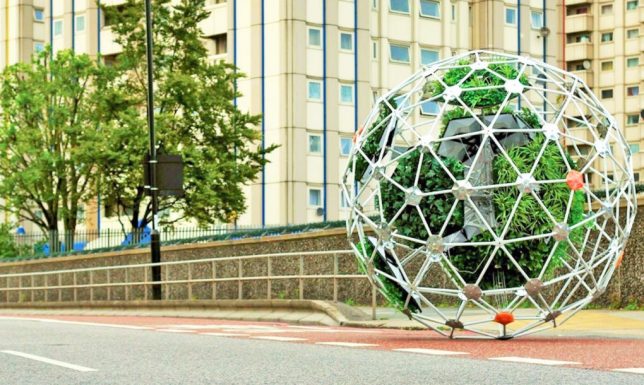
As robotic cars take to the streets, designers are beginning to see possibilities for urban mobility that go beyond human and cargo transport. What if plants, for instance, could be moved around automatically, seeking out sun, filtering dirty air and providing fresh greens within cities?

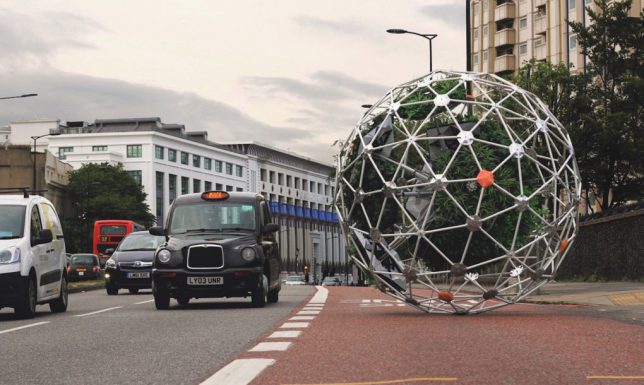
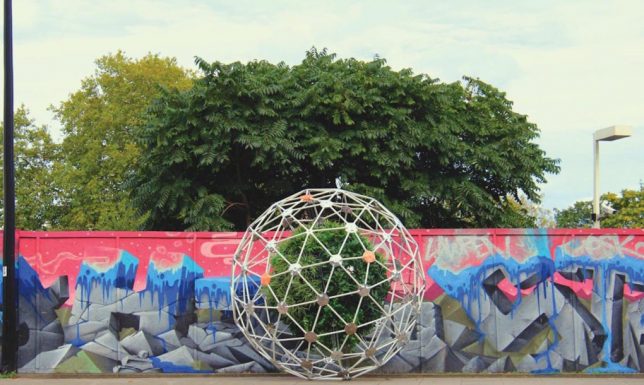
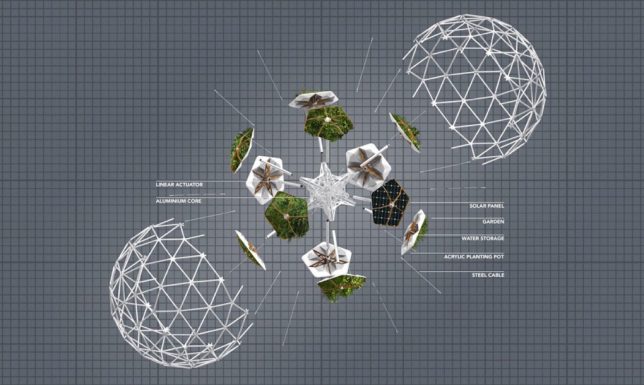
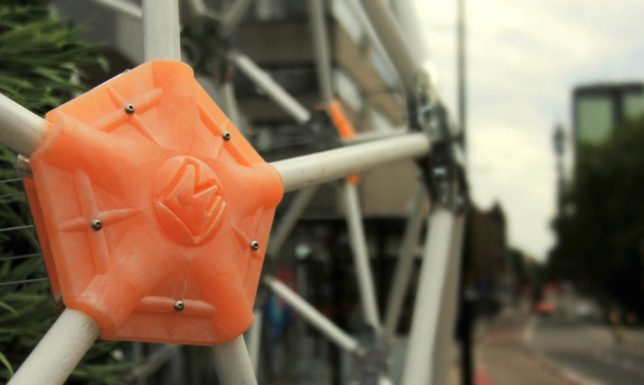
Inspired by Buckminster Fuller’s geodesic domes and Operating Manual for Spaceship Earth, the Interactive Architecture Lab at the University College London has designed and built Hortum Machina B (the last letter short for Bucky).

rolling-garden

An aluminum core houses the technology’s robotics, monitoring plants on the periphery and changing rotation and position to accommodate their needs. On-board water storage supplies moisture for growth while the ball stays in motion.

garden-sphere

This novel mobile ecosystem is solar-powered, so its search for sunlight fuels not only the plants on board but the system itself. With efficient water reclamation, the garden could stay on the move indefinitely.

garden-module-prototype-plan

The internal computer system not only keeps the plants healthy but serve as part of a larger set of smart-city initiatives. For instance, sensors can detect and seek out areas with poor air quality, letting the plants provide filtration on demand.

urban-farm-rolling

The sphere could also roll itself through urban food deserts, allowing people to pick edibles as it winds its way through a city. Of course, this shape may not be the most efficient manifestation of the idea, but as a conceptual model could inspire similar and more sustainable typologies.

solar-garden-london

street-garden-design

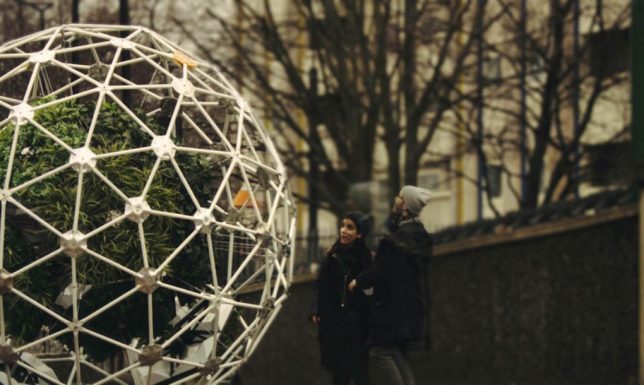
Presumably, in a future world of autonomous vehicles, there will be both mechanisms and space to accommodate driverless gardens as well as cars. Freed-up streets could be used to transport all kinds of things, not just conventional goods and people but also micro-ecosystems and other stuff we have yet to think of. For now the, the robotic garden has been tested in London and remains prototype. It might not be as productive per square foot of space as many new urban farm designs, but perhaps it makes up in novelty and mobility what it lacks in terms of strict productivity.

Share on Facebook


[ By WebUrbanist in Conceptual & Futuristic & Technology. ]

[ WebUrbanist | Archives | Galleries | Privacy | TOS ]


WebUrbanist

 
Comments Off on Rolling Landscape: Driverless Geodesic Garden Hits the Streets of London

Posted in Creativity