RSS
 

Posts Tagged ‘into’

New Artificial Lighting Tricks Human Brain into Seeing Sunlight

18 Feb

[ By WebUrbanist in Design & Fixtures & Interiors. ]
skylight

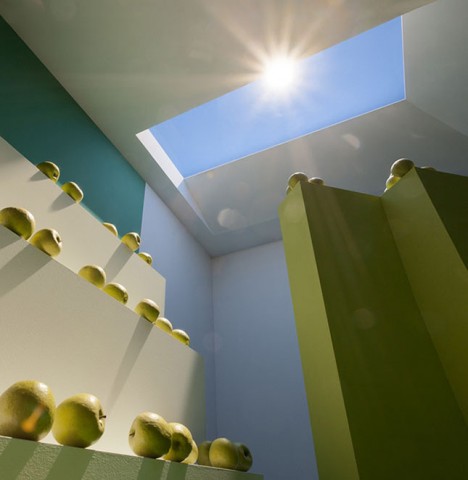
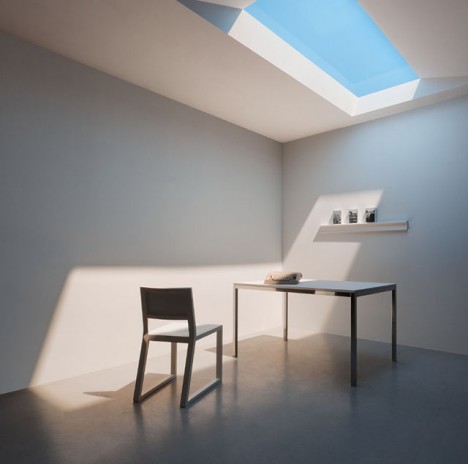
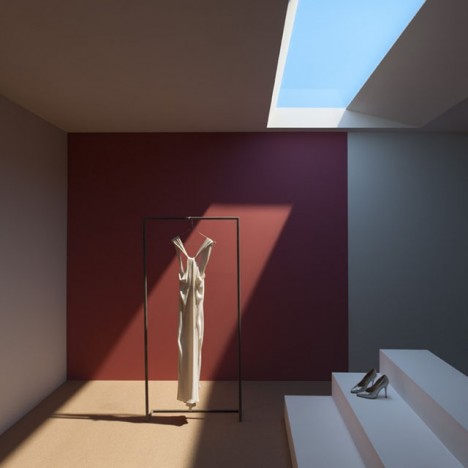
Access to natural daylight has long been one of the biggest limiting factors in building design – some solutions involve reflecting real daylight from the outdoors, but until now no solution has been able to mimic natural refraction processes and fool our minds into thinking we are surrounded by actual sunlight.
artifical snlight interior image

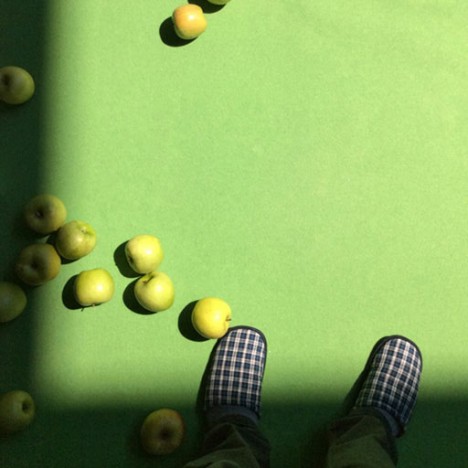
Developed by CoeLux in Italy, this new form of artificial light is able to dupe humans, cameras and computers alike using a thin coating of nanoparticules to simulate Rayleigh scattering, a natural process that takes place in Earth’s atmosphere causing diffuse sky radiation. It was not enough to make the lights brighter or bluer – variegation and other elements were needed as well.


artficial skylight system design

light bring to market

The result is an effect that carries the same qualities we are used to experiencing outside, from color to light quality. The company also boasts that these photos are untouched and that their fake skylights in showrooms fool people in person just as effectively, appearing to have infinite depth just like one would expect looking up into the sky (James Turrell’s skyspaces and this work by Christo come to mind).


artificial light photo shoot

daylight light soucre innovation

The potential applications are effectively endless, from lighting deep indoor spaces to replacing natural light in places where winters drag on and daylight hours are short. The company sees opportunities in areas like healthcare facilities where it may not be possible to put patients near real windows for spatial or health reasons.
lux live winner award

light real simulation design

Currently, three lighting types are on offer to simulate various broad regions – Mediterranean, Tropical and Nordic – featuring various balances of light, shade, hue and contrast. They are also working on additional offerings, including simulated daytime sequences (sunrise through sunset) and color variations to reflect different kinds of weather conditions.

Share on Facebook


[ By WebUrbanist in Design & Fixtures & Interiors. ]

[ WebUrbanist | Archives | Galleries | Privacy | TOS ]


WebUrbanist

 
Comments Off on New Artificial Lighting Tricks Human Brain into Seeing Sunlight

Posted in Creativity


Kinetic Desk Rises to Nudge You Into a Standing Position

03 Feb

[ By Steph in Design & Furniture & Decor. ]

kinetic desk 1

Ready or not, it’s time to stand up when this kinetic desk starts to rise on its own, ensuring that you don’t spend too much time in an unhealthy seated position as you work. Studies have shown that parking ourselves in chairs for eight hours or more per day can lead to organ damage, foggy brain, a strained neck, muscle degeneration and other negative effects. Experts recommend alternating between sitting and standing – and now there’s a high-tech desk that will help you do just that.

kinetic desk 2

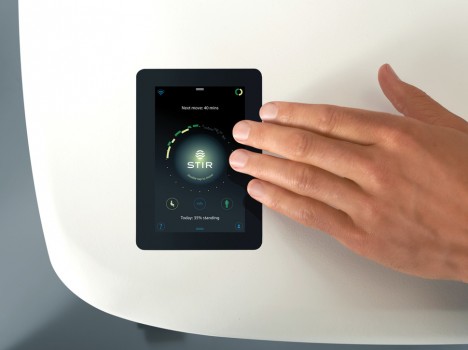
The Stir Kinetic Desk gently raises and lowers itself at pre-set intervals, to custom heights of your choice. A built-in touch screen on the desk surface enables you to check your daily stats, telling you how long you’ve spent in each position and when your next adjustment should be.

kinetic desk 3

kinetic desk 4

You just double-tap the home screen to move the desk to its next position when desired, using a slider to create your desk height presets. A function called ‘Whisperbreath’ creates a gentle one-inch rise and fall of the desk surface to signal you that it’s time to stand up so you don’t have to stop what you’re doing.

kinetic desk 5

The creator calls it a “non-wearable wearable,” i.e. a fitness-tracking gadget that works in a similar way to smart watches and Fitbits. You can also synch other fitness tech to track how many calories you burn while standing. The cost of “the world’s most advanced desk” clocks in at $ 2,990.

Share on Facebook


[ By Steph in Design & Furniture & Decor. ]

[ WebUrbanist | Archives | Galleries | Privacy | TOS ]


WebUrbanist

 
Comments Off on Kinetic Desk Rises to Nudge You Into a Standing Position

Posted in Creativity


How to Break Into the Photography Business with dPS Writer Gina Milicia

11 Jan

Our very own dPS writer Gina Milicia was recently interviewed and asked about her thoughts on how to break into the photography business.

She talks openly about how she got her break in the business and some of her struggles. I can totally relate to what she says about just wanting to do the thing you enjoy, no matter if you you get rich or make a living from it or not. Watch the video and see if you can relate to what she says too:

“Just keep showing up every day and do something.” – Gina Milicia

In this second video you can see the resulting images from some of the behind the scenes clips in the one above.

Do you have any additional tips for someone just starting in the photography business? Please tell us in the comments below.


Gina is the author of four dPS eBooks including:

  • Portraits: Making the Shot
  • Portraits: Striking the Pose
  • Portraits: Lighting the Shot
  • Portraits: After the Shot

You can buy one for $ 19.99 or grab the whole bundle for only $ 49.99 (save 38%) from any of the links above.

googletag.cmd.push(function() {
tablet_slots.push( googletag.defineSlot( “/1005424/_dPSv4_tab-all-article-bottom_(300×250)”, [300, 250], “pb-ad-78623” ).addService( googletag.pubads() ) ); } );

googletag.cmd.push(function() {
mobile_slots.push( googletag.defineSlot( “/1005424/_dPSv4_mob-all-article-bottom_(300×250)”, [300, 250], “pb-ad-78158” ).addService( googletag.pubads() ) ); } );

The post How to Break Into the Photography Business with dPS Writer Gina Milicia by Darlene Hildebrandt appeared first on Digital Photography School.


Digital Photography School

 
Comments Off on How to Break Into the Photography Business with dPS Writer Gina Milicia

Posted in Photography


Long Now: Future-Proof 10,000 Year Clock Built into Mountain

26 Dec

[ By WebUrbanist in Gadgets & Geekery & Technology. ]

longnow clock face

Founded by futurists to engage in truly long-term thinking, the Long Now Foundation is best known to many for Long Bets or its recent placement of a Rosetta Disk on a comet, but the organization has an array of amazing projects designed to last hundreds of generations, including a 10,000 Year Clock. Something to consider before we go any further: civilization as we know it is arguably only around 5,000 years old – we are talking here about an technologically sophisticated endeavor aiming to span (and keep track of) twice that period of time.

longnow clock top

longnow clock tunnel

Designers and builders are used to thinking in terms of decades, perhaps even centuries, but are rarely called upon to consider millennia in their plans and calculations. In the case of the 10,000 Year Clock, environment is critical – in addition to robust materials and geological stability, predictable temperatures and relative isolation are key ingredients in siting the mechanism. Towering 500 feet vertically and with gears weighing up to 1,000 pounds each, the first clock is being built high and dry inside a West Texas mountain on property owned by Amazon CEO Jeff Bezos. Another is planned for Nevada – both are sited to avoid excessive rain or freeze-and-thaw cycles that could damage it over time.

longnow clock design sketch

longnow clock path

In the conceptual design stage of the project, polymath inventor Danny Hillis said of his aspirations: “I want to build a clock that ticks once a year. The century hand advances once every 100 years, and the cuckoo comes out on the millennium. I want the cuckoo to come out every millennium for the next 10,000 years.” Indeed, the experience of the clock has even more unique twists than initially envisioned: each time it chimes the sound is unique – with 3.5 million melodies in store, it will not repeat itself for the next ten thousand years.

10000 year clock face

piece of long now clock

Located in a separate space from the clock’s inner workings, the face of the clock “displays the natural cycles of astronomical time, the pace of the stars and the planets, and the galactic time of the Earth’s procession.” Prototype parts of the clock are on display in some places, like the Long Now’s bar and event space in San Francisco known as The Interval, where this author recently saw Kevin Kelly, board member of Long Now and founding editor of Wired, speak about his book and history with the organization.

Perhaps most impressive of all: the clock can keep itself going for the entirety of is planned existence. While it will not display the time unless wound it will continue to keep track, using the sun and stars for guidance and temperature differentials for power. “Thermal power has been used for small mantel clocks before, but it has not been done before at this scale. The differential power is transmitted to the interior of the Clock by long metal rods. As long as the sun shines and night comes, the Clock can keep time itself, without human help. But it can’t ring its chimes for long by itself, or show the time it knows, so it needs human visitors.”

longnow clock prototype design

While this kind of working technology over such a long time period has almost no precedent, there are many examples of things surviving for such long periods – human-made ceramics have lasted up to 17,000 years along with other artifacts. The biggest worries? Some moving parts will not shift for generations, so making them able to work after a millennium without motion may be tricky. And then there are human visitors, well known for vandalizing and stealing from historical sites over time – we may, once again, be our own worst enemies.

As shown in the video above, “This system will be suspended 400ft down in the 500ft deep shaft that was carved using a raise bore drill last year. The large structural elements and gears are made from marine grade 316 stainless steel, most smaller pins and rollers are titanium, and the bearings are all made from an industrial ceramic. The entire system uses no lubrication, but the first tests have shown that over 93% of the energy put into the system, comes back out to go to the Clock.”

Share on Facebook


[ By WebUrbanist in Gadgets & Geekery & Technology. ]

[ WebUrbanist | Archives | Galleries | Privacy | TOS ]

WebUrbanist

 
Comments Off on Long Now: Future-Proof 10,000 Year Clock Built into Mountain

Posted in Creativity


dPS is Going into Holiday Mode

26 Dec
Wbeem

By wbeem

If you are like many of us on the dPS team you may be traveling somewhere for either Christmas or New Year’s or both. I am personally heading up north a bit to a small town called Jiquilillo here in Nicaragua. It’s a fishing village and we expect to see lots of fireworks on the beach and drink a few beverages.

Travel safe if you are taking a journey. Or if you’re sitting at home wondering what to do with your time, we’ll be taking a bit of a break or our regular article schedule. It will go like this:

From now until New Years – the best of dPS 2014

I’ll be digging through the year’s worth of articles and finding the best of the best for you. Starting off tomorrow with the hottest landscape articles of 2014 (which ones you guys liked the most) I’ll have a new topic each day with several articles for you to read or review.

Starting off 2015 – getting back into the groove slowly

After the fireworks have long since subsided we’ll get back to our regular schedule of two articles a day on January 3rd (Australia time). For the first couple days you’ll see the wrap-up of the best of series and just one post per day.

Relax, reflect and recharge

Take some time off to do the three R’s: relax, reflect on the past year, and recharge your batteries ready to the next one. It’s going to be a good one so let’s make sure we’re ready for it and firing on all cylinders. See you on the flip side (dare I date myself)!

Paul Mullett

By Paul Mullett

Sonny Abesamis

By Sonny Abesamis

googletag.cmd.push(function() {
tablet_slots.push( googletag.defineSlot( “/1005424/_dPSv4_tab-all-article-bottom_(300×250)”, [300, 250], “pb-ad-78623” ).addService( googletag.pubads() ) ); } );

googletag.cmd.push(function() {
mobile_slots.push( googletag.defineSlot( “/1005424/_dPSv4_mob-all-article-bottom_(300×250)”, [300, 250], “pb-ad-78158” ).addService( googletag.pubads() ) ); } );

The post dPS is Going into Holiday Mode by Darlene Hildebrandt appeared first on Digital Photography School.


Digital Photography School

 
Comments Off on dPS is Going into Holiday Mode

Posted in Photography


Fungi Farm Prototype Turns Waste Plastic into Edible Treats

15 Dec

[ By WebUrbanist in Conceptual & Futuristic & Technology. ]

fungi muratium toxic waste

Breaking down one of the most difficult types of trash, this incredible working incubator turns sterilized plastic remnants into nutritional biomass humans can consume and digest, in short: food. Texture, taste and flavor depend upon the strain of fungus, but reportedly can be quite strong as well as quite sweet.

fungus growth system

fungi plastic utensil set

fungi eating good

Livin Studio, an Austrian design group known for innovative work on insect farms, has built a working model of this growth sphere (dubbed the Fungi Mutarium) that takes parts of mushrooms usually left uneaten and grows them into fresh snacks.

fungi eating growth sphere

From the creators: “We were working with fungi named Schizophyllum Commune and Pleurotus Ostreatus. They are found throughout the world and can be seen on a wide range of timbers and many other plant-based substrates virtually anywhere in Europe, Asia, Africa, the Americas and Australia. Next to the property of digesting toxic waste materials, they are also commonly eaten. As the fungi break down the plastic ingredients and don’t store them, like they do with metals, they are edible.”

fungi incubation chamber diagram

In terms of the process, “Fungi Mutarium is a prototype that grows edible fungal biomass, mainly the mycelium, as a novel food product. Fungi is cultivated on specifically designed agar shapes that the designers called FU.  Agar is a seaweed based gelatin substitute and acts, mixed with starch and sugar, as a nutrient base for the fungi. The FUs are filled with plastics. The fungi is then inserted, it digests the plastic and overgrows the whole substrate. The shape of the FU is designed so that it holds the plastic and to offer the fungi a lot of surface to grow on. “

fungus diagram design

For now, the digestion is a relatively slow process, taking up to a few months for a set of cultures to fully mature, but by the standards of plastic biodegrading in nature this is still an extraordinary feat. The team continues to work with university researchers to make the process faster and more efficient. “Scientific research has shown that fungi can degrade toxic and persistent waste materials such as plastics, converting them into edible fungal biomass.”

fungi edible grown creaiton

fungi plastic eating design

This novel application comes just a few years after a group of Yale students discovered a species of fungi on a trip to Ecuador as part of a Rainforest Expedition and Labratory led by a molecular biochemist. Even in the absence of light and air, the species they examined thrived in landfill environments, suggesting potential near-future and larger-scale solution for existing waste sites as well.

Share on Facebook


[ By WebUrbanist in Conceptual & Futuristic & Technology. ]

[ WebUrbanist | Archives | Galleries | Privacy | TOS ]


WebUrbanist

 
Comments Off on Fungi Farm Prototype Turns Waste Plastic into Edible Treats

Posted in Creativity


Shop in a Swimming Pool: Neglected Space Turned into a Store

13 Dec

[ By Steph in Architecture & Offices & Commercial. ]

swimming pool store aoyama 1

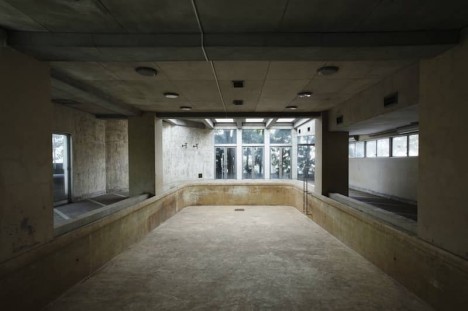
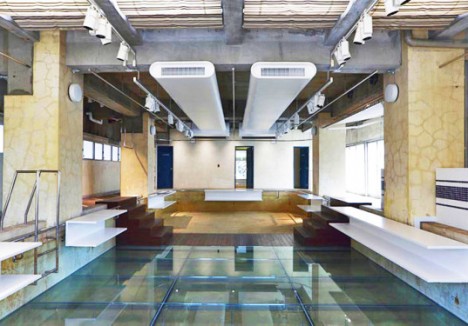
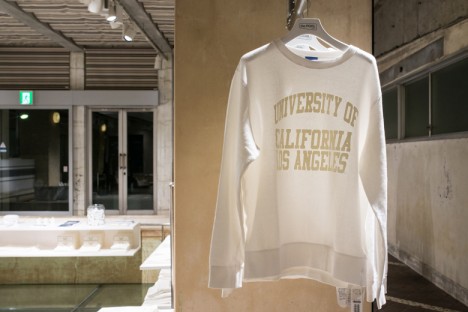
Until recently, this indoor swimming pool on the vacant ground floor of a 1970s apartment building in Tokyo was just an empty space, dry and disused for years. Now it’s a pop-up shop by Nobuo Araki known as ‘The Pool Aoyama‘ hawking clothing, accessories and swim-themed promotional items. The designers left the pool almost entirely intact, installing a glass floor that mimics the look of water.

swimming pool aoyama 5

swimming pool store aoyama 8

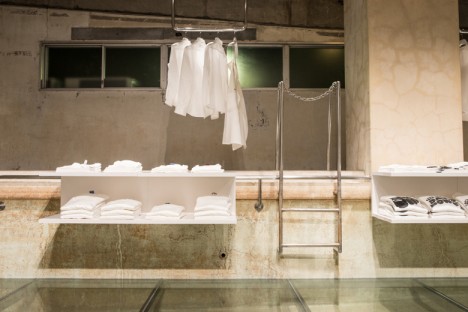
The shell of the abandoned pool and its steel ladder have become key elements of the final design, with the pool walls defining the space of the shop. Wooden stairs on either side of the pool meet to create a sort of bridge across the glass. White shelving units are mounted along the edges to display goods, and U-shaped stainless steel clothing racks hanging from the ceiling echo the look of pool hand rails.

swimming pool store aoyama 2

swimming pool store aoyama 3

The designers were drawn to the soft light, charm and quirkiness of the space, and the shallow depth of the pool lends itself well for adaptation into a showroom. A newly installed glass ceiling floods the room with natural light, and the bathrooms were turned into fitting rooms.

swimming pool aoyama 4

swimming pool store aoyama 6

swimming pool store aoyama 10

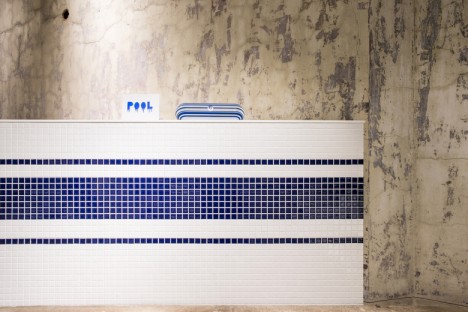
Entering the shop feels a bit like gaining access to a secret underground space that few are savvy to, as the door is simply marked with an inconspicuous sign reading ‘The Pool.’

Share on Facebook


[ By Steph in Architecture & Offices & Commercial. ]

[ WebUrbanist | Archives | Galleries | Privacy | TOS ]


WebUrbanist

 
Comments Off on Shop in a Swimming Pool: Neglected Space Turned into a Store

Posted in Creativity


Urban Transformer: Bus Unfolds into Mobile Fresh Food Market

07 Dec

[ By WebUrbanist in Technology & Vehicles & Mods. ]

mobile food market bus

Bringing healthy and organic fruits and vegetables into low-income areas of Toronto lacking grocery stores, this converted bus is much more than a normal food truck – it looks like an ordinary vehicle until it stops and deploys its colorfully-stocked shelves (images by Laura Berman).

converted food truck side

As in many cities, there are ‘food deserts’ in Toronto in which it is hard to find fresh seasonal produce. Using a vehicle donated by the Toronto Transit Commission, LGA Architectural Planners helped convert this vehicle to address this issue.

Mobile Good Food Market bus launch

“Even in a city as dynamic as Toronto, there remain neighbourhoods where residents are unable to access the foods essential to a healthy diet. This happens for a variety of reasons, including low-income, lack of access to public transit, and long distances to groceries and markets. Such conditions make it extremely difficult for individuals and families without access to a vehicle to find and purchase healthy foods. Senior citizens who might be less mobile are hit especially hard by this type of isolation.”

mobile food desert vehicle

Lettuce, berries, okra, yucca, broccoli, apples and more fill the fold-out shelves extending out from the side of the Mobile Good Food Market. Inside, bins of additional veggies and fruits can be accessed by walking or wheelchair, a handy feature for cold and wet weather.

mobile food interior exterior

The project  was commissioned by FoodShare Toronto in partnership with the City of Toronto and United Way Toronto in a joint effort to help supplement unhealthy local options in neighborhoods starved for good and fresh foods.

Mobile Good Food Market bus launch

“The design also offered the opportunity to shop from the inside in inclement weather,” notes Dean Goodman of LGA, pointing out that as a former Wheel-Trans bus, ramps for ease of entry and exit were already in place. “Good food is beautiful when displayed well, so when we decided we wanted this to be a feature we worked out the mechanism so one person could fold out the shelves, restock as necessary and display the food so it was attractive.””

Share on Facebook


[ By WebUrbanist in Technology & Vehicles & Mods. ]

[ WebUrbanist | Archives | Galleries | Privacy | TOS ]


WebUrbanist

 
Comments Off on Urban Transformer: Bus Unfolds into Mobile Fresh Food Market

Posted in Creativity


Herringbone House: Tiny Tokyo Residence Split into 7 Levels

29 Nov

[ By Steph in Architecture & Houses & Residential. ]

tiny house japan 1

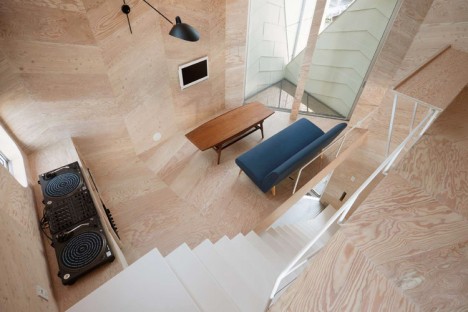
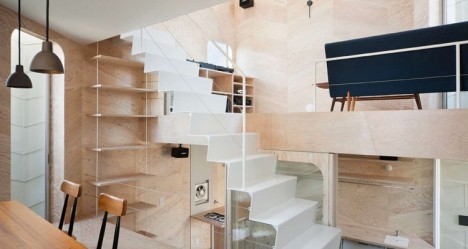
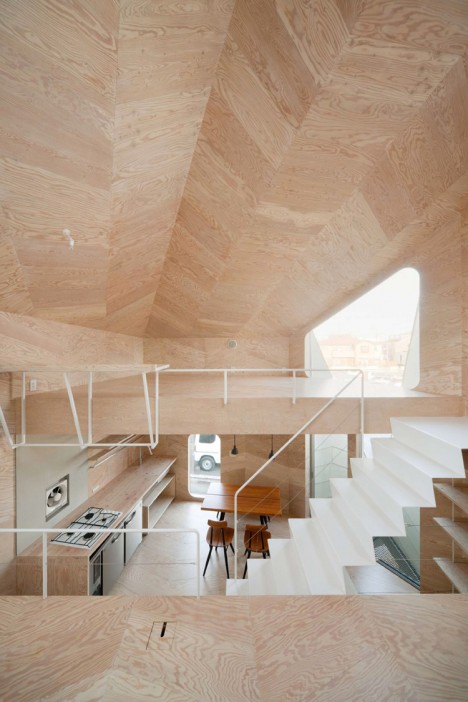
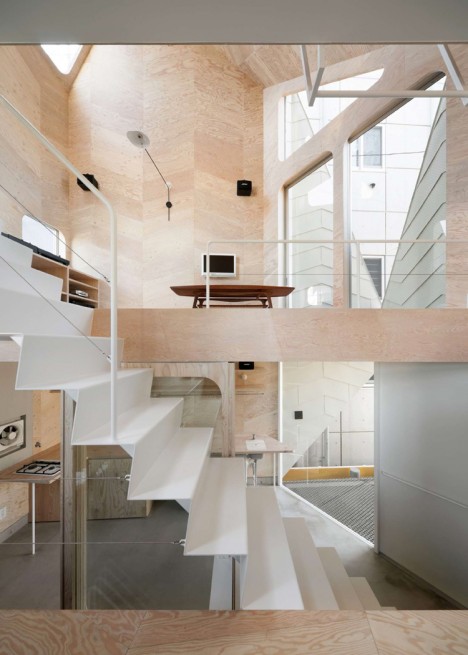
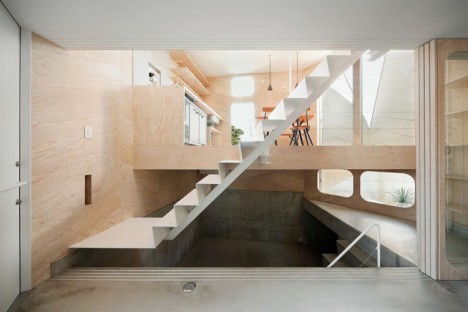
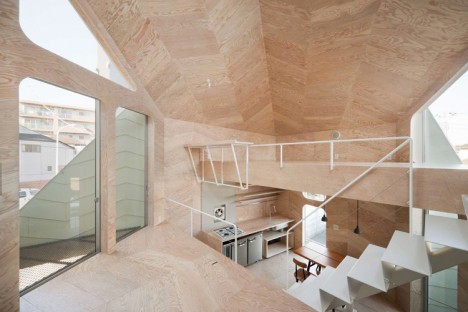
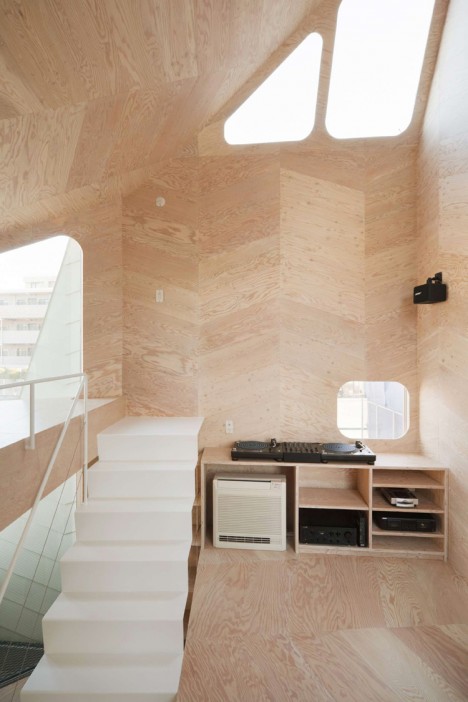
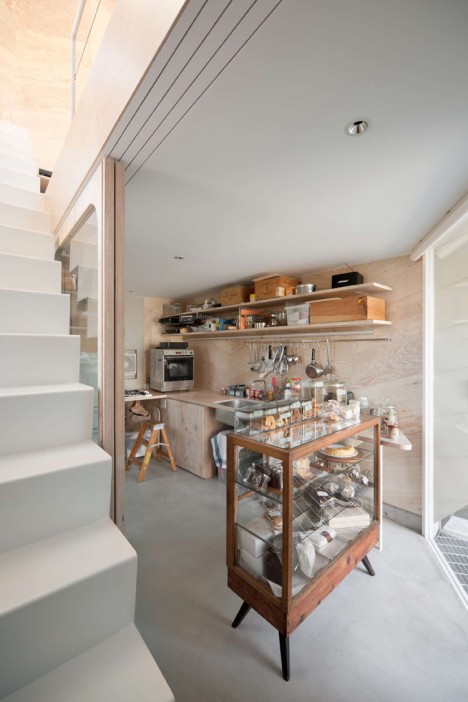
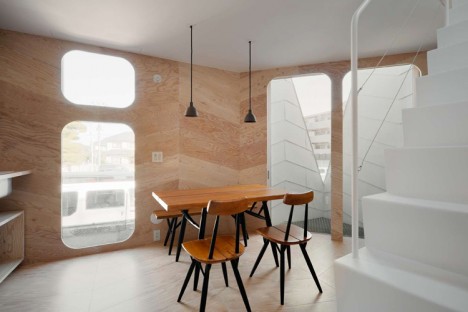
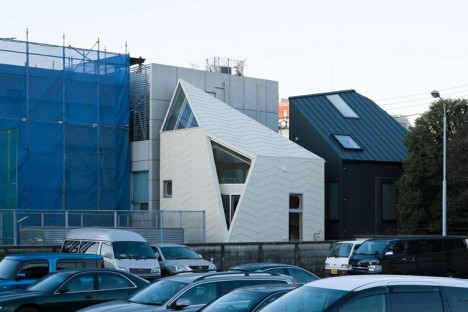
Measuring just 280 square feet, this tiny house in Tokyo by architecture firm Flathouse includes a public biscuit shop on the first level and manages to fit a lot of function into an irregularly shaped footprint by taking advantage of vertical space. Built on a system of parallelograms that create a herringbone pattern both inside and out, the home has no interior walls, dividing the rooms with a series of staggered platforms instead.

tiny house japan 2

tiny house ajapan 6

tiny house japan 9

For privacy-obsessed Westerners, this may seem like a strange move, but interior walls aren’t seen as a necessary part of a home in many areas of Japan. In this case, eliminating these dividers keeps a small space open and encourages rapid movement from one area of the home to the next. The shop owner can quickly move from the personal areas of the home to serve a customer on the first floor, and back again.

tiny house japan 3

tiny house japan 4

tiny house japan 8

All levels are connected by a central staircase. The dining room, living area and private rooms are all set on small platforms with barely enough room for the furniture required in each. The shop and bathroom are tucked into a concrete basement level, while the rest of the home is lined in a light and airy larch plywood.

tiny house japan 5

tiny house japan 7

tiny house japan 10

This approach uses the full available height of the property, creating a comfortable space despite the restrictive dimensions of the plot, a common architectural challenge in Tokyo.

Share on Facebook


[ By Steph in Architecture & Houses & Residential. ]

[ WebUrbanist | Archives | Galleries | Privacy | TOS ]


WebUrbanist

 
Comments Off on Herringbone House: Tiny Tokyo Residence Split into 7 Levels

Posted in Creativity


Iconic Camouflage: Painted People Disappear into Cityscapes

28 Nov

[ By WebUrbanist in Art & Photography & Video. ]

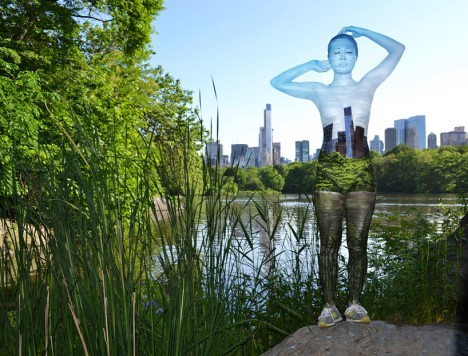
body paint central park

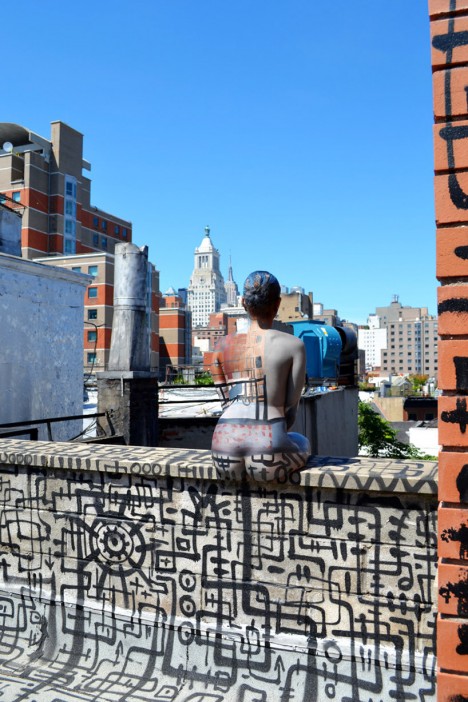
Unlike some other prominent artists working with more seamless urban camouflage in strange or offbeat settings, this work in NYC by Trina Merry allows for curves and distortions, and operates with the interplay between painted nudes in more public and iconic surroundings.

body paint manhattan skyline

body paint brooklyn bridge

In this series, her work features backdrops that are prominent points of interest and world-famous landmarks of New York City, from famous architecture and infrastructure (the Guggenheim Museum, Empire State Building and Brooklyn Bridge) to urban and organic landscapes (like Coney Island and Central Park).

body art coney island

body painted guggenheim museum

Thanks to the prominence of these locations, this colorful work naturally becomes a live spectacle beyond the sculptural photographs taken of the models in place.

body painted empire state building

body painted art photography

Other body paintings by Trina range from referential to abstract, with blank black or white backgrounds in some cases and period or modern artwork in others.

body with manhattan bridge

From the artist: “my surface is living, breathing human beings, making this a highly relevant & immediate. I use non-toxic hypoallergenic paint applied with a brush or airbrush. the painting is temporary like a Tibetan sand painting, beginning to [shift] into another work as soon as I stop painting, changing texture and color.”

Share on Facebook


[ By WebUrbanist in Art & Photography & Video. ]

[ WebUrbanist | Archives | Galleries | Privacy | TOS ]


WebUrbanist

 
Comments Off on Iconic Camouflage: Painted People Disappear into Cityscapes

Posted in Creativity