RSS
 

Posts Tagged ‘into’

Put the Fun Back into Your Photography with a Cow Safari

05 Aug

Whether you are a pro photographer or a dedicated amateur, sometimes when you are photographing a lot you can get so caught up in achieving the perfect image, that you lose the sense of fun that got you interested in the first place.

Actively putting the fun back in can not only help you to enjoy your regular photography work more, and assist in getting your photo mojo back, but can inspire new ideas you otherwise might not have come up with. My favourite way to do this is a Cow Safari. It’s kind of like an African safari, but with cows.
Fun-photography-safari-01
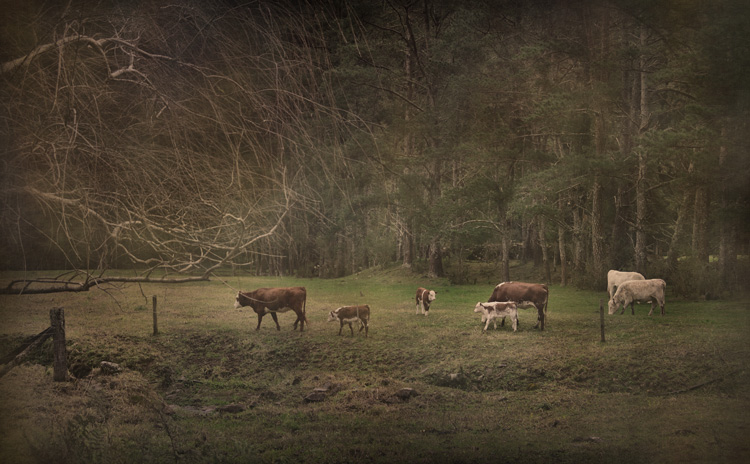
Why cows? Well, for a start they tend not to eat you as much as lions and it’s much cheaper than a trip to Africa. Cows are not the most athletic of creatures, they tend to just stand around a lot and are not well camouflaged, so are pretty easy to capture in a photo. They generally hang out in very picturesque areas, perfect for a day out photographing.
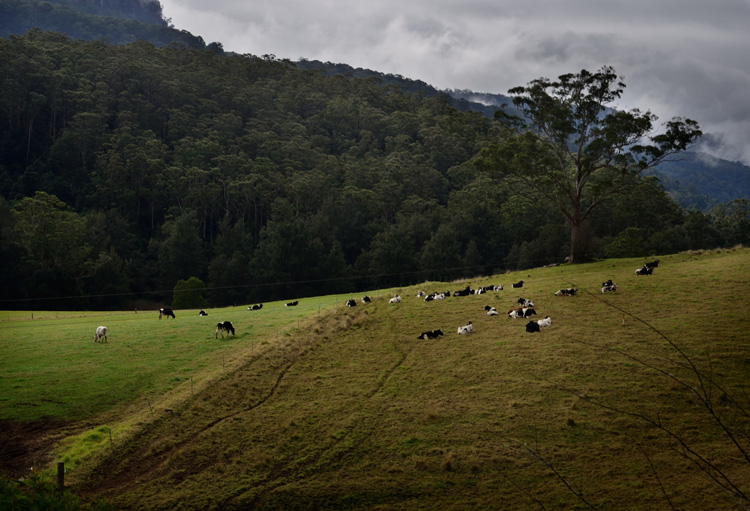
Cows generally hang out in very photogenic areas.

Cows make a great safari subject and are generally vegetarian so your risk of getting eaten by one is fairly low. Can’t say the same for lions.

However, if you don’t live close enough to a cow hang out, you can make up your own safari. For example; if you’re in the city, maybe a pigeon safari, or seagulls if are near the beach. Perhaps a people walking their dogs safari, or even a flower safari – it doesn’t really matter, just so long as you can find your subject in various different places that you can travel around to easily over a few hours, a day, or even a road trip weekend.

My first safari was some years ago by the seaside with my father, the subject was seagulls. We set up a small wager, winner gets bragging rights. There has been no definitive winner, because the safari still continues years later. Even when we’re in different parts of the country, there is an occasional exchange of seagull photographs. It’s been inspirational, I’ll be bogged down in the photographic process and my phone will light up with something like this:

It's all about fun with these safaris.

A photograph sent to me by my father while on a seagull safari. I don’t think that seagull is very well, in fact I don’t think it is actually a seagull, I suspect foul play! Photo credit: Chris Hawkins

The main point of the safari is to step away from your usual photography routine and just enjoy taking photographs for the sheer sake of doing so. No planned images, no trying to achieve anything or get that perfect shot, just fun photographic play time with the idea of loosening and lightening up a bit as a photographer, and not taking yourself or your images too seriously.

Once you take the trying hard part out of the picture, you can get back to experimenting, and maybe surprise yourself, just like you did when you first fell in love with photography. Of course you may not end up with anything worth saving, and that’s not the point of the exercise. But, then again, you never know what you might come across in your travels.
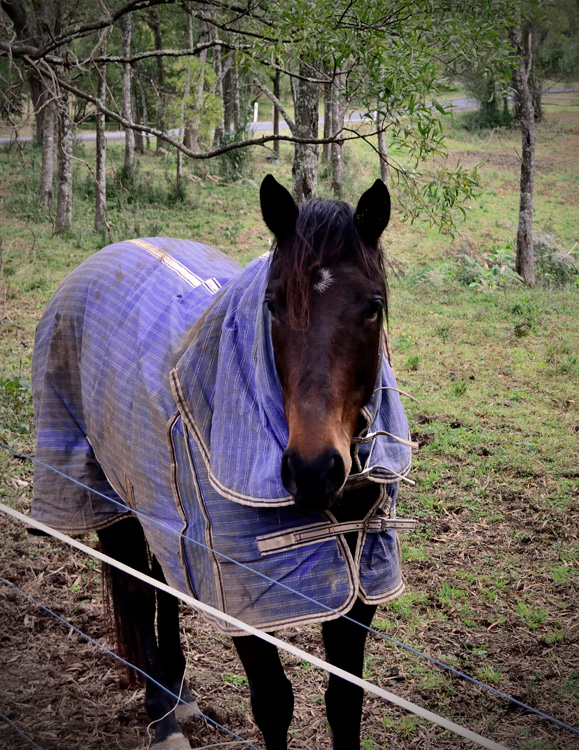
You never know what you might find on your safari.

Had I not been out on a cow safari, I may have missed the opportunity to capture this cow doing a remarkably good impersonation of a horse.

Your safari is a great time to experiment with things you might not normally try when you’re too busy trying to get that perfect shot. Try the lens you haven’t really played with yet, test out some of the features on your camera you haven’t gotten around to trying. If you are a pro who is dedicated to manual setting, maybe just try out some of the Scene Modes, or vice versa, play with manual settings if it’s something you have not really tried. Maybe even pick up one of those cheap disposable film cameras, or test out some different mobile phone apps.
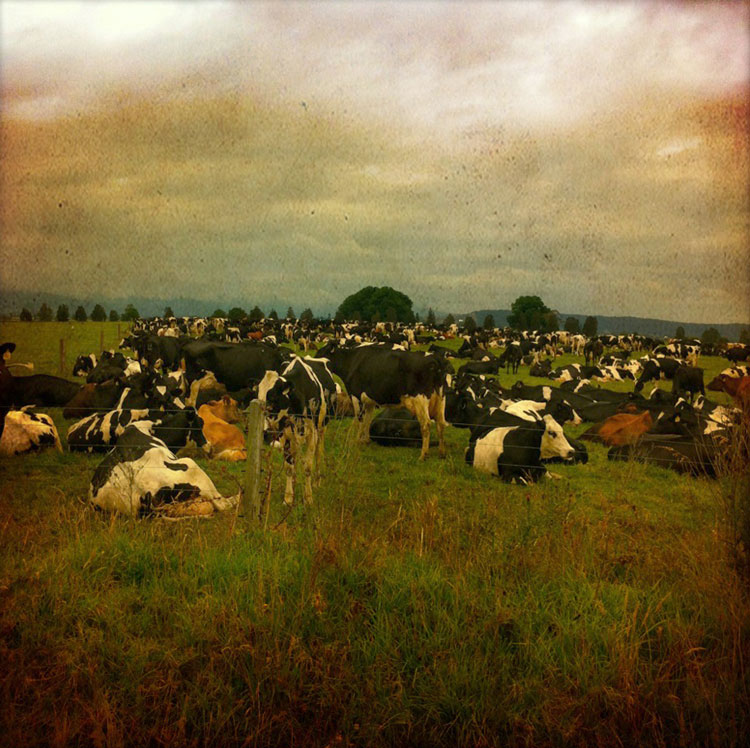
A safari is a great time to experiment with your gear.

Use the photographic time-out to slow down and experiment with things like mobile phone photography apps. 

How to Conduct Your Safari

Step 1: Grab a fun friend or two

They don’t necessarily need to be photographers, although I’m willing to bet they’ll end up taking a shot or two on their phones. Encourage them to bring a camera, or bring one for them. They could also come in handy as a model.
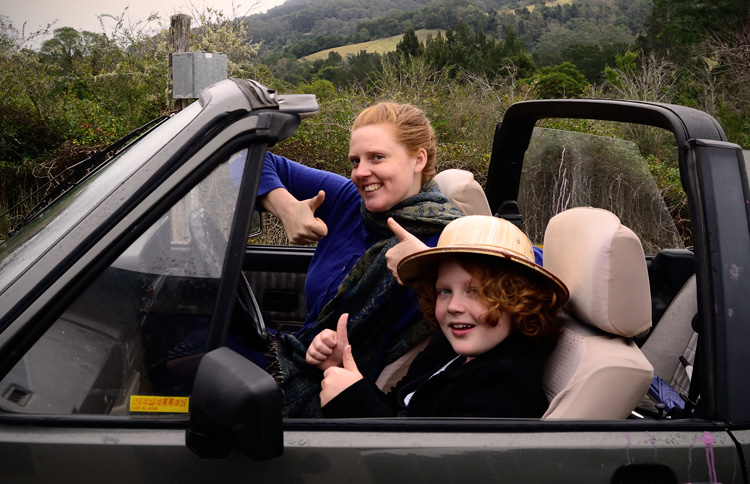
Take some friends, photographers or non photographers, it doesn't matter, it's about fun!

Safari fun is best shared.

Step 2: Bring some supplies

Depending on where you conduct your safari, you may not be close to a convenient cafe or food place, so why not take your own. Pack a few sandwiches or a whole picnic.

Supplies are a good idea, less time hunting for food places, more time to photograph.

Maybe pack a healthy picnic for your safari. It’s all healthy as long as there’s some fruit right?

Step 3: Get out there and have fun

Jump in the car, on your bikes, the train, or get your walking shoes on and head out. You can map your trip beforehand, or perhaps toss a coin for which direction to go, as you step out the front door. Just so long as you travel around a bit, and have a few different spots to stop and take some photographs.
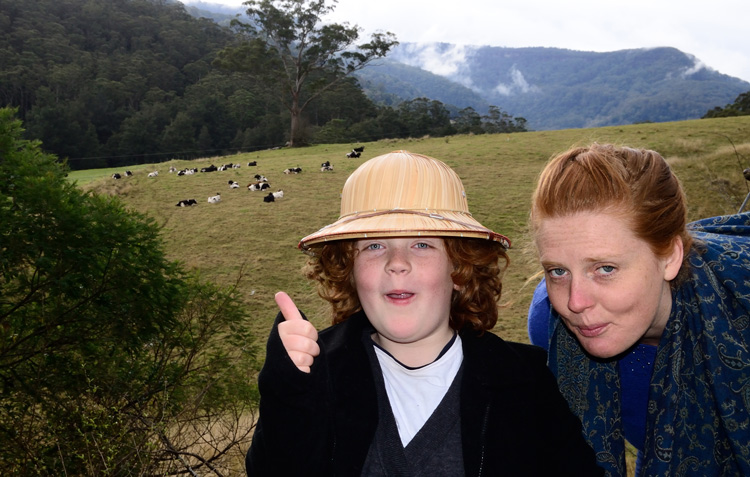
Taking time out to have photographic fun with friends or family  is worth it, and not just for your own photography.

It’s thumbs up for the cow safari. My little friend here really got into the spirit of the day. He even took some great photographs and video on his portable gaming device. By the end of our safari he wanted to know how much he had to save up to buy a camera. Safari success!

Safari Tips:

  • Experiment: Use the safari to experiment with different lenses, settings, or cameras.
  • Go Mobile: Don’t disregard the phone camera, even if you are not a fan of phone photography.
  • Do variations: Try all versions of the above at each place you stop. See how each setting/lens/app deals with the same situation.
  • Don’t trespass on properties, as much as you might be tempted to slip under a fence to get that perfect cow shot, these animals can be dangerous, as can farmers who don’t appreciate trespassing.
  • Don’t hassle the cows. If they are close to the fence, keep a distance and approach very slowly. If they start to get up and move, back off. No shooting off a flash in their moo-ey faces.  The same applies to other subjects. Just be kind and respectful.
  • Set up a challenge with your co- safarians (I think I just made that word up), such as best, funniest, or worst pic of the day. Just don’t get too serious about it!
  • Keep it going in the processing stage: The fun doesn’t have to stop when you get home from your safari, take the same approach to editing. Use some of your images from the day to experiment in your editing program with different effects and techniques that you wouldn’t normally try.
  • Take it global: You could do your safari with online friends, just set up a date or an event on Facebook. In this day and age of instant online access, you can safari with friends from around the world.
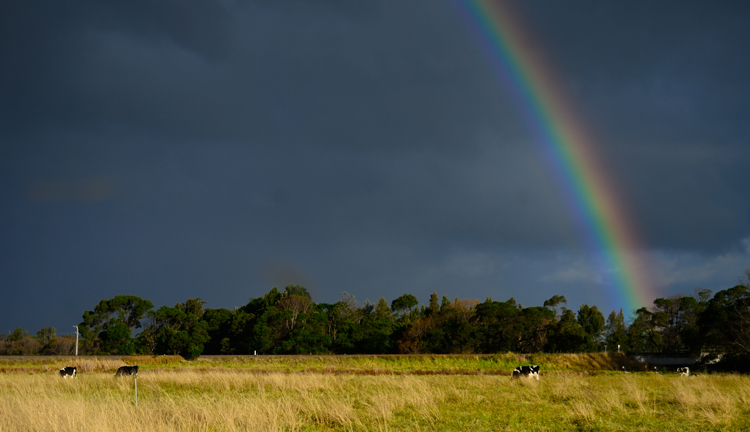
Get out there and start having some photographic fun!

The final shot on our cow safari, taken through the car window on the way home.

Above all, have fun, relax, enjoy, laugh, play. This is about taking a photographic break of sorts and getting outside your normal photography practice. You never know, you may end up with that coveted perfect shot in the process. Or, maybe not. It doesn’t matter, as long as you were having fun with your camera. Although I am sure you will end up with at least one shot that makes you smile, and I would love to see that shot or any others you take on your safaris.

Please do share in the comments below, any safari shots inspired by this article or from a previous safari, or any tips or safari ideas you might like to share with fellow safarians (yup, it’s a word now). They don’t have to be great shots! It’s about sharing the experience and having fun with your photography.

googletag.cmd.push(function() {
tablet_slots.push( googletag.defineSlot( “/1005424/_dPSv4_tab-all-article-bottom_(300×250)”, [300, 250], “pb-ad-78623” ).addService( googletag.pubads() ) ); } );

googletag.cmd.push(function() {
mobile_slots.push( googletag.defineSlot( “/1005424/_dPSv4_mob-all-article-bottom_(300×250)”, [300, 250], “pb-ad-78158” ).addService( googletag.pubads() ) ); } );

The post Put the Fun Back into Your Photography with a Cow Safari by Lea Hawkins appeared first on Digital Photography School.


Digital Photography School

 
Comments Off on Put the Fun Back into Your Photography with a Cow Safari

Posted in Photography


LxMeter transforms your smartphone into a light and flash meter

05 Aug

The LxMeter from Italian manufacturer Optivelox has introduced an accessory that turns your smartphone into a light meter. It’s similar to the Lumu light meter, but provides flash meter functionality and is capable of working with Android devices via a dedicated app. Read more

Articles: Digital Photography Review (dpreview.com)

 
Comments Off on LxMeter transforms your smartphone into a light and flash meter

Posted in Uncategorized


BIG Plans to Turn 4 London Power Plant Chimneys into Tesla Coils

03 Aug

[ By WebUrbanist in Architecture & Cities & Urbanism. ]

battersea square

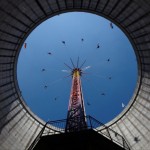
Danish firm BIG Architects has a feasible strategy for converting four iconic smokestacks in the center of London into a series of gigantic pedestrian-powered Tesla coils. These would be the tallest of their kind and their visual effect would be nothing short of stunning, generating arcs of energy to bridge between the 300-foot-high towers at predetermined times.

big tesla coil project

Bjarke Ingels Group was commissioned to create a sizable public plaza space adjacent to the disused building as part of a larger redevelopment plan, but announced during a lecture that they had much larger design ambitions in mind. Going public with this plan may have come as something of a shock to their client, who had not yet be apprised of the scheme. In defense of the architects: they wished to make sure what they were proposing was actually possible before any announcement. “We’re working with experts in Tesla coils, looking into how to incorporate it into the chimneys so essentially we might celebrate the transformation from carbon footprint to human footprint.”

giant tesla coils

Currently, the world’s largest Tesla coils are in the 100-foot-high range, so depending on how much of each tower was turned toward this function, these could conceivably become the tallest coils ever constructed (in addition to being the highest-reaching).

battersea power project

Piezoelectric pavement would slowly generate energy from those passing through the square (estimated at 50,000 people per day), which would be collected and deployed in periodic bursts. “We imagine it like Big Ben, when the clock strikes the hour, we can have this celebration of human energy and human life.”

battersea power station

The two pairs of towers are extremely tall relative to their surroundings and arguably an iconic part of the neighboring urban landscape, jutting up out of a power plant complex that is nearly a century old. The Battersea Power Station will be rebuilding the chimneys regardless, so it is just a matter of whether they will adopt this enhancement in the process. Already populated with colorful enhancements and unusual architecture, bolts of electricity arcing across the sky would still certainly stand out in London’s bright nighttime cityscape (tesla coil image by Clarence Risher).

Share on Facebook


[ By WebUrbanist in Architecture & Cities & Urbanism. ]

[ WebUrbanist | Archives | Galleries | Privacy | TOS ]


WebUrbanist

 
Comments Off on BIG Plans to Turn 4 London Power Plant Chimneys into Tesla Coils

Posted in Creativity


Road Blocks: LEGO-Like Modular Roads & Paths Snap Into Place

21 Jul

[ By Steph in Conceptual & Futuristic & Technology. ]

road blocks lego 1

New roads could be quickly and easily slotted into place, piece by piece, with a new Lego-like modular plastic system that makes the building process feel more like playtime. Prototypes of the PlasticRoad concept will soon be tested in a collaboration with the city of Rotterdam in the Netherlands, potentially replacing asphalt and tar with a strong, corrosion-resistant recycled aggregate made of plastic waste removed from the oceans.

road blocks lego 2

According to manufacturer VolkerWessels, these modular components can withstand temperatures between -40 and 176 degrees Fahrenheit and other harsh weather conditions, and are ideal for roads built upon structurally unsound ground like sand. It’s unclear whether they would shift around on surfaces like that over time, however, or how cars would handle on their surfaces when it’s rainy, snowy or icy.

road blocks lego 3

They’re hollow, so cables and utility pipelines can be installed under the surface, protected from the elements and easy to maintain. Quick installation means far briefer periods of disrupted traffic during construction, and the prefabricated panels can simply be transported to the sight and lowered into place. If they pass the tests, the PlasticRoad project could see its first real-life installation in Rotterdam within three years.

smart highways

The concept is reminiscent of other asphalt alternatives that have been proposed over the years, like ‘smart highways’ covered with dynamic paint providing useful information to drivers (pictured above) and heated, LED-light-embedded solar roadways. The latter concept has been dismissed by many critics as unrealistic, considering the vast expense involved in manufacturing and maintaining them and the likelihood that they would draw power from the grid anytime it’s not sunny.

Share on Facebook


[ By Steph in Conceptual & Futuristic & Technology. ]

[ WebUrbanist | Archives | Galleries | Privacy | TOS ]


WebUrbanist

 
Comments Off on Road Blocks: LEGO-Like Modular Roads & Paths Snap Into Place

Posted in Creativity


Tiny in Tokyo: Ultra-Narrow House Slotted into an Alley

16 Jul

[ By Steph in Architecture & Cities & Urbanism. ]

tokyo narrow house main

At just six feet wide, this incredibly narrow residence inserted into an alley in dense urban Tokyo is the latest example of Japanese architects thinking way outside the box when it comes to building new housing. The city is so developed, there’s almost no land left to build anything new, so they tend to get incredibly creative with even the oddest-shaped plots.

tokyo narrow house 2

tokyo narrow house 5

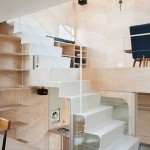
The four-story house by YUUA Architects and Associates extends about 36 feet into a former alley between two older buildings, and while the street-facing facade features floor-to-ceiling windows to maximize daylight and views, intimate spaces like bedrooms, bathrooms and main living areas are tucked into the back for privacy.

tokyo narrow house 6

tokyo narrow house 4

The minimalist interior design scheme includes floating platforms at various levels for a sense of openness, some of them made of metal mesh to let as much light pass through the house as possible. While such tiny residences are often kept bright white to create an illusion of extra space, YUUA makes an unusual choice with dark-painted walls.

tokyo narrow house 3

tokyo narrow house 7

There’s a semi-sunken basement for storage, and the first floor features a study area facing the street and a bedroom in the back. The third floor is comprised of an open-plan kitchen, living room and dining area, while the uppermost floor contains a bathroom, bedroom and terrace. Considering it’s only about as wide as an average adult male is tall, the house looks surprisingly livable.

Share on Facebook


[ By Steph in Architecture & Cities & Urbanism. ]

[ WebUrbanist | Archives | Galleries | Privacy | TOS ]


WebUrbanist

 
Comments Off on Tiny in Tokyo: Ultra-Narrow House Slotted into an Alley

Posted in Creativity


Course Correction: Deserted Golf Greens into Solar Power Plants

12 Jul

[ By WebUrbanist in Abandoned Places & Architecture. ]

abandoned golf green solar

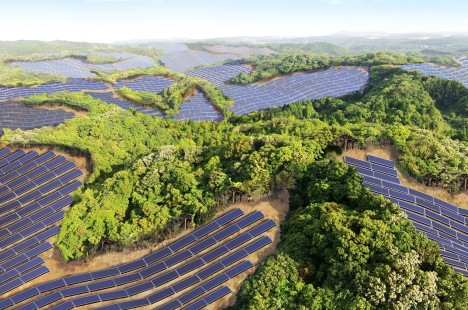
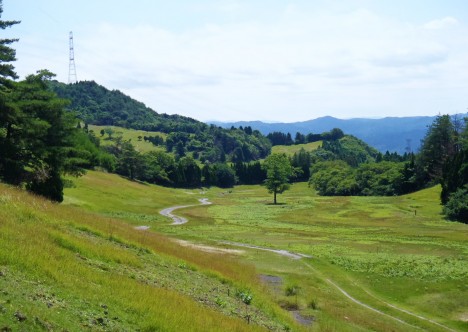
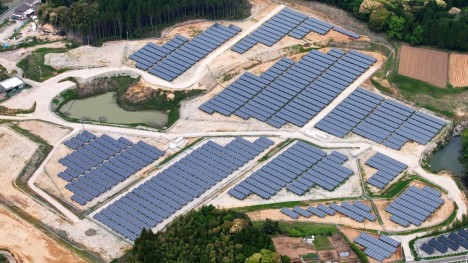
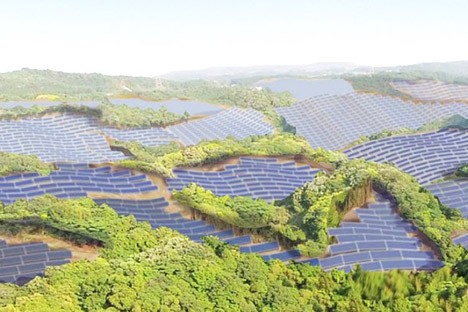
Derelict putting greens will be put to greener uses in Japan, where an abandoned golf course near Kyoto is being converted to the area’s largest solar energy-generating facility.

Solar power production represents an ideal type of landscape reuse in this context for many reasons: expansive areas with little shade and high sun exposure are perfect for laying out panels for maximum effect and efficiency. Developed by Kyocera, “the plant will generate an estimated 26,312 megawatt hours (MWh) per year — enough electricity to power approximately 8,100 typical local households.”

golf green conversion

Also under construction, a similar project in the Kagoshima Prefecture is being located on an area originally cleared for a golf course that was never finished and occupied. Critical to a country facing power issues in the wake of the Fukushima nuclear incident, these projects are also a sign of land use awareness and changing times. Just a few decades ago country club memberships sold for millions in Japan, but “overdevelopment of golf properties during the real-estate boom of the 1990’s and 2000’s has led to hundreds of idle courses today that are now under analysis for repurposing or redevelopment.” 

green golfing

Of course, closed golf courses are also an international problem well beyond the Japanese archipelago, giving this solution potentially global applications as well, particularly in the United States. Together, these projects should help inspire other countries to turn some of the most environmentally unsound landscapes toward more productive and sustainable uses.

Share on Facebook


[ By WebUrbanist in Abandoned Places & Architecture. ]

[ WebUrbanist | Archives | Galleries | Privacy | TOS ]


WebUrbanist

 
Comments Off on Course Correction: Deserted Golf Greens into Solar Power Plants

Posted in Creativity


Cliff Diving: Dramatic Concrete Home & Pool Cut into Precipice

07 Jul

[ By Steph in Architecture & Houses & Residential. ]

casa brutale main

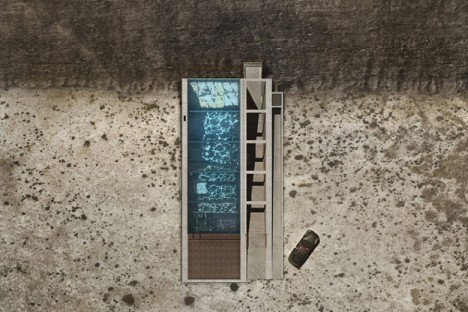
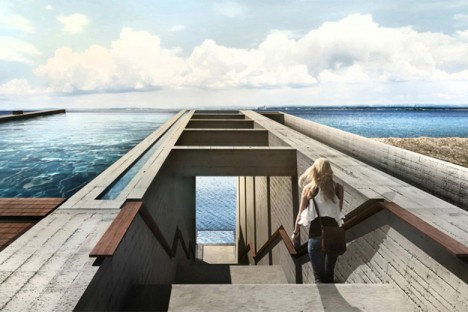
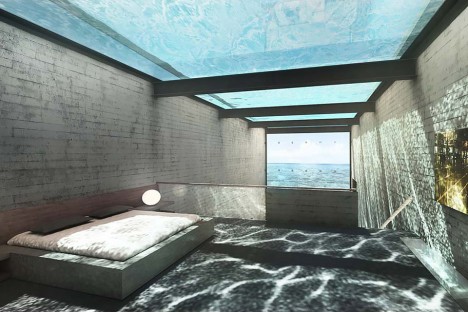
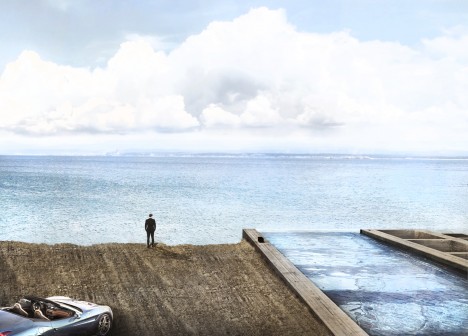
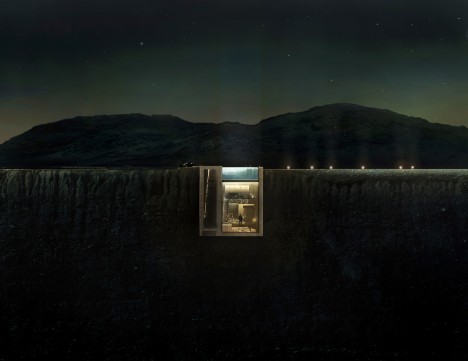
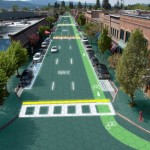
File this dramatic cliff-hanging, swimming-pool-topped home called Casa Brutale under ‘fit for a villain in every possible way.’ Practically begging to be used as a base for unsavory characters in a film, this concrete residence set into the craggy hills overlooking the Aegean Sea is surprisingly modest and spare, free of flashy luxuries.

cas brutale 6

casa brutale 2

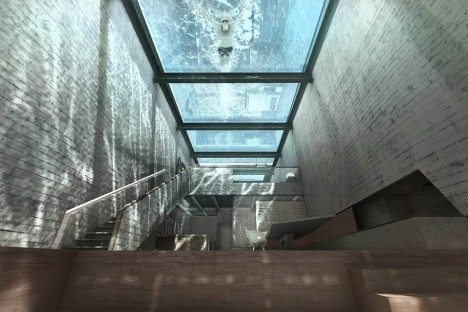
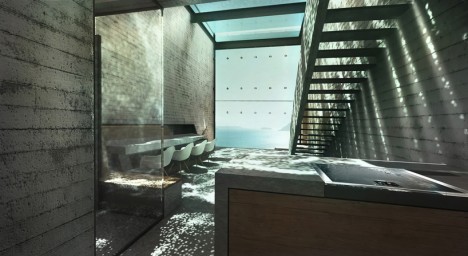
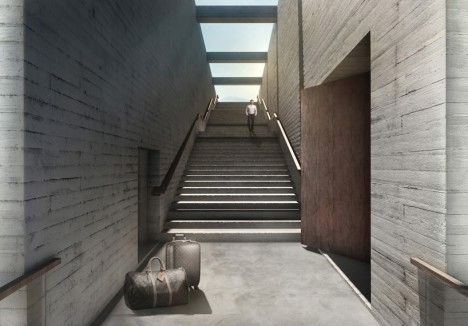
It doesn’t need to show off, really, when its very existence in this location packs such a powerful visual impact. You enter the home from a stairway on the ground level, descending into an interior that’s shielded from the sky only by the glass-bottomed swimming pool.
casa brutale 3

casa brutale 4

casa brutal 10

Anyone who swims in the pool is instantly turned into entertainment for the people watching from below, and the watery reflections cast over every surface are the main defining characteristic of the simple, open interior spaces. The entire cliff-facing facade is also made of glass further opens the home to the shimmer of water, this time from the sea.

casa brutale 9

casa brutale 7

OPA (Open Platform for Architecture) clearly heard the cries of ‘James Bond villain lair’ when their initial drawings were released, so they’ve worked a nod or two into the new renderings, including a requisite Ferrari.

casa brutale 5

“Case Brutale is a geometrical translation of the landscape,” say the architects. “It is an unclad statement on the simplicity and harmony of contemporary architecture. It is a chameleonic living space, created to serve its owner and respect the environment… in literal groundbreaking integration, Casa Brutal penetrates the landscape.”

Share on Facebook


[ By Steph in Architecture & Houses & Residential. ]

[ WebUrbanist | Archives | Galleries | Privacy | TOS ]


WebUrbanist

 
Comments Off on Cliff Diving: Dramatic Concrete Home & Pool Cut into Precipice

Posted in Creativity


Mind Mining: Subterranean Library Descends Into Darkness

02 Jul

[ By Steph in Art & Installation & Sound. ]
subterranean library 1

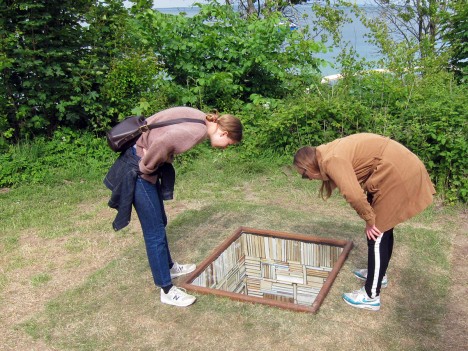
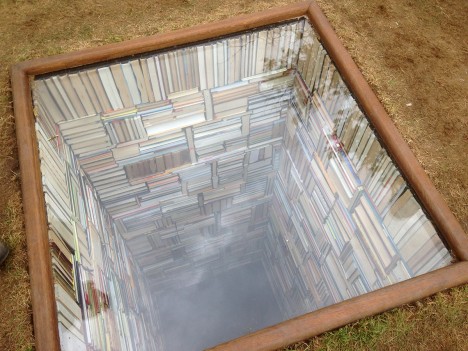
A fragile layer of glass is all that prevents you from falling, Alice-in-Wonderland-style, into a tunnel of books that seems to descend deep below the surface of the earth, its bottom shrouded in darkness. Roughly the size of a mine shaft, this miniature subterranean library hides all of its titles from view, the spines of the books turned inward, making it all the more mysterious.

subterranean library 2

Entitled ‘When My Father Died It Was Like a Whole Library Had Burned Down,’ the intriguing installation by Swedish artist Susanna Hesselberg has been dug into the sand on a Denmark beach for the biennial Sculpture by the Sea art festival. The name references a line in the song World Without End by pioneering experimental electronic musician Laurie Anderson. Hesselberg previously installed the piece as a tower of books rising into the air, rather than plummeting under the surface of the earth.

subterranean library 3

We previously covered another entry into the show, ‘New Horizon,’ a wooden observation point that perfectly frames views of the sky and sea. Check out the rest of the 56 site-specific exhibits, including large-scale architectural sculptures on land and on the water, currently lining the coast of Aarhus, Denmark. Sculpture by the Sea is the nation’s largest outdoor sculpture exhibition, occurring every two years and featuring artists from two dozen countries.

Share on Facebook


[ By Steph in Art & Installation & Sound. ]

[ WebUrbanist | Archives | Galleries | Privacy | TOS ]


WebUrbanist

 
Comments Off on Mind Mining: Subterranean Library Descends Into Darkness

Posted in Creativity


Black Gold: Turning Oil Tankers into Giant Land Architecture

09 Jun

[ By WebUrbanist in Conceptual & Futuristic & Technology. ]

black gold ship reuse

For an inevitable future when oil gives out in the Middle East (or nautical supply chains are replaced by pipes), a series of designers have envisioned creative ways to reuse the behemoths that currently ship this infamous commodity around the world.

oil tanker at night

oil tanker permanent dock

The Black Gold Project proposes a different kind of design revolution for an area of the world currently striving to build the tallest and most stunning structures on the planet: pragmatic conversions of shipping vessels into functional land structures.

oil tanker inteiror design

oil tanker open space

A joint project of  Chris Collaris Design, Ruben Esser, Sander Bakker, and Patrick van der Gronde, the resulting renderings take advantage of the versatility found inside such huge and open interior volumes.

oil tanker at sunset

oil tanker section diagram

Cultural exhibitions, shopping centers and art museums could all be housed inside these massive hulls, not to mention residential and office spaces. The decks above could become public parks and performance spaces.

oil shipping frieight conversion

oil tanker aerial plan

There are practical drawbacks to be considered, however, including the impact of waves, saltwater and wind over time as well. Still, as a conceptual project, the idea is compelling (if more poetic than realistic): turn the very vessels responsible for the rise and fall of these oil-producing nations into something new that remains, at the same time, a monument to days gone by.

Share on Facebook


[ By WebUrbanist in Conceptual & Futuristic & Technology. ]

[ WebUrbanist | Archives | Galleries | Privacy | TOS ]


WebUrbanist

 
Comments Off on Black Gold: Turning Oil Tankers into Giant Land Architecture

Posted in Creativity


Converted Cockpit: Cockfighting Arena Turned into Sunken Garden

03 Jun

[ By WebUrbanist in Architecture & Public & Institutional. ]

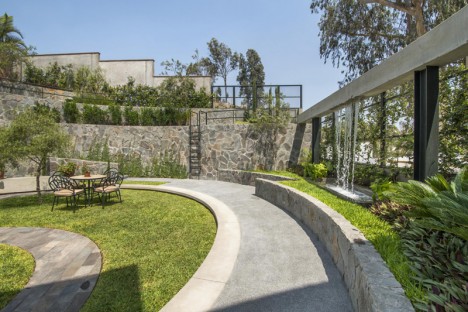
converted cockpit terraces greenery

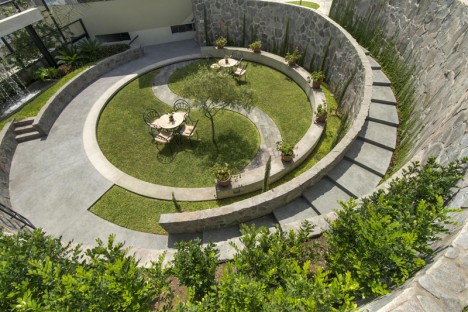
Traditionally legal in Peru, many citizens nonetheless find cockfights a morbid and gruesome affair and are thus celebrating the transformation of this sunken coliseum into a meditative and memorial public green space.

memorial terraces trees water

Paths, greenery and water features were added in part to lend the sensibilities of monuments and memorials to the place, commemorating the animals who suffered and died within the ring.

convertd cockpit side stairs

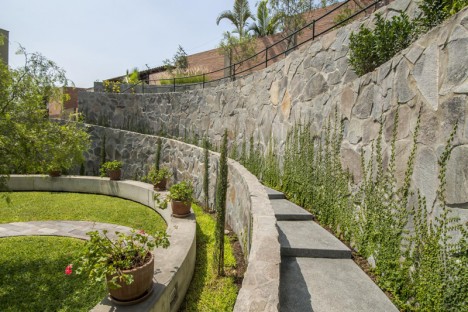
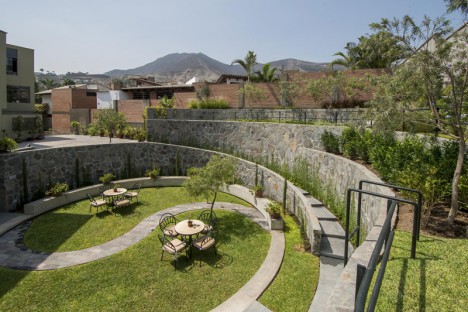
Remade by 2.8x Architects, this coliseum in Lima, Peru, has many preserved and reused elements, including large stones and cast concrete either left in place or redeployed on the property with new purposes in mind.

fighting pit ring memorail

Since cockfighting has been historically seen a sport in the region (and heavily bet upon), bird fighting pits (aka “cockpits”) in the country have been correspondingly prominent and well-constructed places, not the seedy sideshows one may imagine in locations where it is illegal. The driving idea was to reflect the history of the space in the form of preserved ruins while also providing a new experience in this unusually enclosed, semi-subterranean space.

convertd sunken cockpit

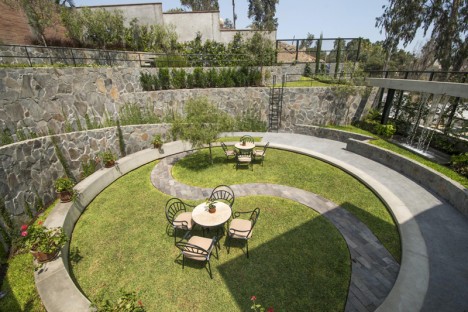
One can still imagine the historical horrors that took place before the conversion – armed with spurs for battle, cocks set about slashing and scraping one another, often resulting in the death of one or both combatants. At the same time, an abstracted yin-and-yang symbol at the center of the sunken circle and lush vegetation on all sides (filling the former stands and seats) conjure fresh and more optimistic feelings and associations among neighbors and visitors.

converted cockfighting arena

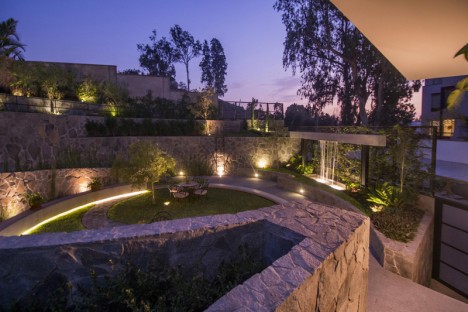
From the designers: “So the curved lines of the terraces contemplated in the project go on top of the remaining concrete stands, and the levels of these terraces try to maintain the original levels of some of the stands. This way the proportions of the coliseum continue. In the same way, the central space of the garden keeps the same dimensions and characteristics of the arena where the birds used to fight. The project has as background the hills of the residential area. It is because of the surroundings where the project is located, with hills all around, that we chose irregular “talamolle” stone as the main building material.”

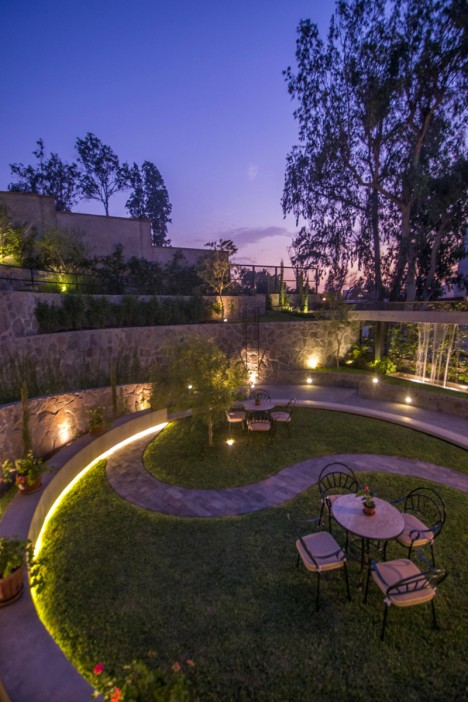
memorial garden at night

“We also used terrazzo, concrete, and green painted iron for some details like the fountain, the circular bench, the wire net, and the ramp at the entry among others. To reinforce the idea of a memorial garden and a place suitable for meditation, elements such as water, a circular ramp all around, and a curved path of stone crossing the central space were included. The path together with the central circular garden form the ying yang, that is the equilibrium center of the whole space. At night the diffused illumination has an important role too.”

Share on Facebook


[ By WebUrbanist in Architecture & Public & Institutional. ]

[ WebUrbanist | Archives | Galleries | Privacy | TOS ]


WebUrbanist

 
Comments Off on Converted Cockpit: Cockfighting Arena Turned into Sunken Garden

Posted in Creativity