RSS
 

Posts Tagged ‘into’

Plug & Play Homes: Mobile Modules Slot into Urban Frameworks

28 Oct

[ By WebUrbanist in Architecture & Houses & Residential. ]

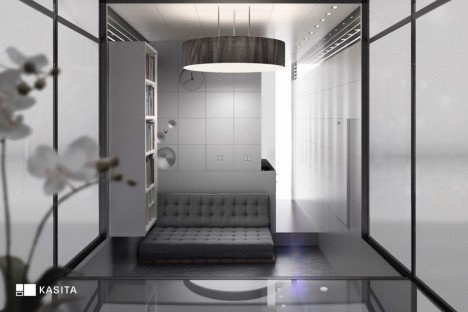
kasita slot box homes

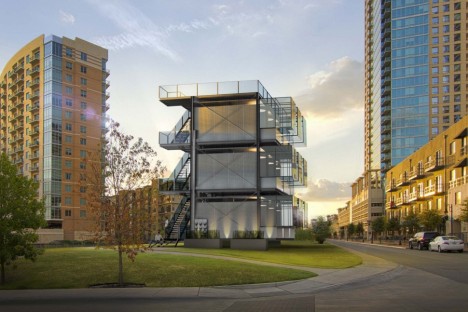
Coming to Austin next year, this mobile housing strategy takes portable living out of trailer parks, plugging you straight into the city grid and allowing you to easily hop metropolises on demand (at the tap of an app). Denver, Portland, Brooklyn, Stockholm, Seattle, Chicago, Los Angeles and Manhattan are also on the list.

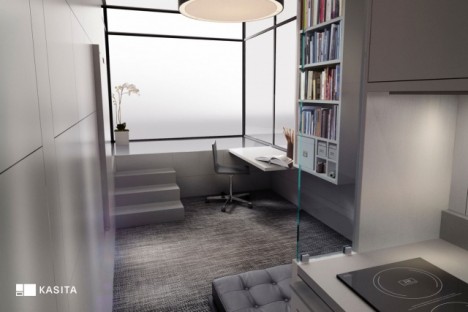
kasita home office cube

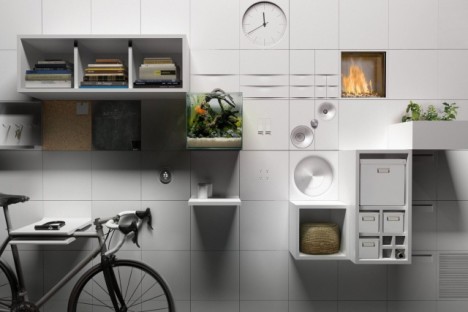
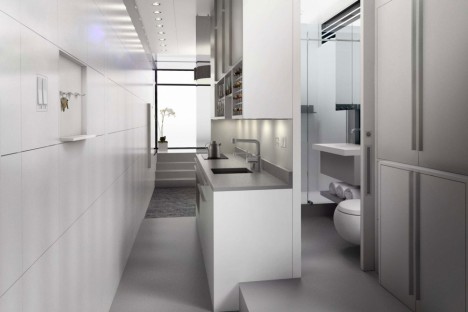
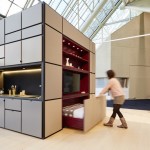
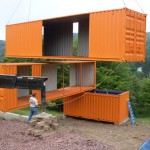
Kasita has created a system of prefabricated units that pack hideaway furniture but also a full kitchen, washer and dryer into a 208-square-foot living space. The real trick, though, is in the supporting framework – a grid-like structure into (and out of) which these units slot.

kasita modular wall panels

More than just a wrapper for a box, these allow external elements like staircases for circulation, patios and decks to remain in place while the core modules move around.

kasita kitchen bathroom

Initial deployment will take place in Austin, Texas, and the units will cost $ 600 a month, but as they roll out in other cities, the project will take on an additional dimension. Eventually, users will be able to swap into new slots in other cities on short notice and without packing a thing.

kasita modular interior design

kasitam modular urban houses

A collaboration between Professor Jeff Wilson, a teacher already famous for living in a tiny dumpster for a year, and Frog, an industrial design firm, this project was inspired as much by the sleek simplicity of the iPhone as it was by other container-type home projects.

Share on Facebook


[ By WebUrbanist in Architecture & Houses & Residential. ]

[ WebUrbanist | Archives | Galleries | Privacy | TOS ]


WebUrbanist

 
Comments Off on Plug & Play Homes: Mobile Modules Slot into Urban Frameworks

Posted in Creativity


Built of Bombs: Unexploded Ordinance Turned Into Boats & Homes

16 Oct

[ By WebUrbanist in Culture & History & Travel. ]

A legacy of living in the most-bombed country per capita in world history, Laotian citizens have spent decades since the Vietnam War dealing with close to 100 million undetonated objects of local destruction.

In the 1960s and 1970s, the US covertly dropped hundreds of millions of bombs on the country, at an average rate of one bomb per eight minutes. Today, converted bomb remnants are visible across the country, used virtually intact to loft houses above flood planes, hollowed out and turned into watercraft or containers, or stripped down for scrap.

bomb architecture scrap lift

An entire (now shrinking) nationwide industry has grown up around finding, stripping and transforming cluster bombs into metal pieces and parts deconstructed or refit for various new uses. In many villages, bombshells are visible throughout the built environment.

Photographer Mark Watson took a cross-country bike trip and documented these remarkable cases of reuse. “Scrap from such widespread bombing has been utilized in people’s homes and villages,” Watson said, “for everything from house foundations to planter boxes to buckets, cups and cowbells.”

bomb boat riverfront

While it may sound at first like an uplifting story of turning swords into ploughshares, there is a dark side to this tale. To this day, over 100 people die annually from accidental detonations, either from bombs still loose in the countryside or in attempts to deactivate or convert found ordinance.

Non-profit organizations working to clear the country of this danger estimate it may yet take another century to complete the cleanup process (via Inhabitat and Mark Watson of Highlux Photography).

Share on Facebook


[ By WebUrbanist in Culture & History & Travel. ]

[ WebUrbanist | Archives | Galleries | Privacy | TOS ]


WebUrbanist

 
Comments Off on Built of Bombs: Unexploded Ordinance Turned Into Boats & Homes

Posted in Creativity


Light L16 packs 16 cameras into a single portable body

09 Oct

US-based startup Light has officially introduced its L16, a portable device packed with 16 individual cameras, ten of which capture an image at the same time at different fixed focal lengths. The resulting photograph is a composite of all the individual images combined, with a final resolution of up to 52 megapixels. An earlier prototype of this camera was shown off this past April. Read more

Articles: Digital Photography Review (dpreview.com)

 
Comments Off on Light L16 packs 16 cameras into a single portable body

Posted in Uncategorized


Countdown to PIX 2015: Dixie Dixon and breaking into fashion photography

01 Oct

We’re less than a week away from PIX 2015, and we’re taking the opportunity to introduce you to some of our talented re:FRAME speakers. Dixie Dixon acquired her first camera, a Nikon FG, when she was just 12 years old. Now she’s made a name for herself in fashion and commercial photography – find out a couple of her tips on breaking in. Read more

Articles: Digital Photography Review (dpreview.com)

 
Comments Off on Countdown to PIX 2015: Dixie Dixon and breaking into fashion photography

Posted in Uncategorized


How to Import Photos into Lightroom

27 Sep

If you are new to Lightroom, the first thing you need to do after installing the software, opening it up, and taking a look around is import some photos.

As Lightroom is a database you can’t open photos in it the same way you can in Photoshop – instead, you have to import your photos before you can view, or process them. The import process adds photos to the Lightroom Catalog (Adobe’s name for the database that the program uses) and generates a preview of the image for you to view. Once imported, images stay in the Lightroom Catalog forever (or until you remove them from the Catalog yourself).

The Lightroom modules

Lightroom is modular software, there are seven of them: Library, Develop, Map, Book, Slideshow, Print and Web. You can only work in one module at any one time, but you can move around between them as often as you want.

The Library module is the heart of the system. This is where you view photos, organize them into Collections and carry out searches. The Library module is your window to the Lightroom Catalog ,and all the information that it holds about your images.

Importing and viewing photos happens entirely within the Library module.

The Lightroom module layout

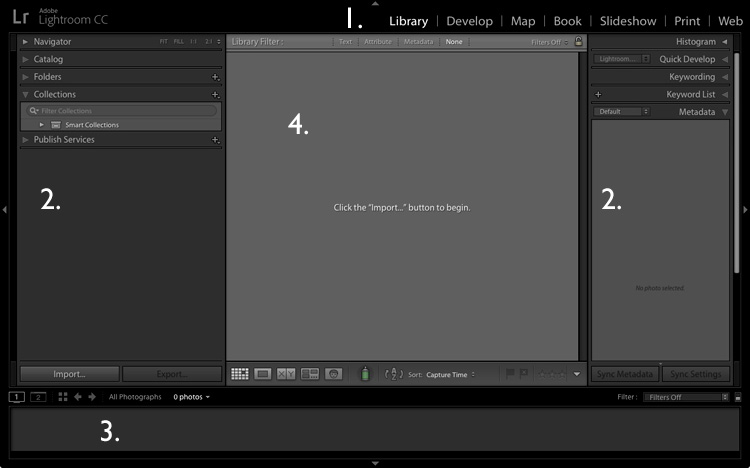
The screenshot below shows the Library module layout. If you haven’t imported any photos into the Lightroom Catalog yet this is what it will look like.
Importing photos into Lightroom

1. Module selector
2. Side panels
3. Filmstrip
4. Content area

The screen is divided into four areas.

1. The Module selector: This is the bar at the top that tells you which module you are in (in this case, the Library module). You can make it disappear by clicking the white arrow at the top of the screen, freeing up screen space.

2. The left- and right-hand panels: These contain all the Library module tools. You can click the arrow on either side to make them disappear and reappear.

3. The Filmstrip: Displays thumbnails in the currently selected Folders, Collections or search results. If there are no photos in your Catalog it will be blank. Click the white arrow at the bottom of the screen to show/hide it.

4. The Content window: This is the central display area. After you have imported some photos into Lightroom you can view them here. If you hide all four side panels (use the keyboard shortcut Shift+Tab) it will fill your screen.

Importing photos

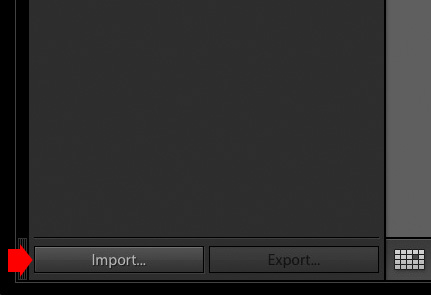
To get started, free up some screen space by hiding the Module Picker, Filmstrip and right-hand panels. Click the Import button in the bottom left-corner of the left-hand panel.
Importing photos into Lightroom

If this is your first import you are likely to be importing your photos from your hard drive, but you can also import them directly from a memory card, or connected camera.

It is best to import your photos one folder at a time, so you can organize them as you go along. It is more difficult if you import all your image files in one go. Plus, Lightroom will make you wait a long time while it carries out the import process!

The Import window

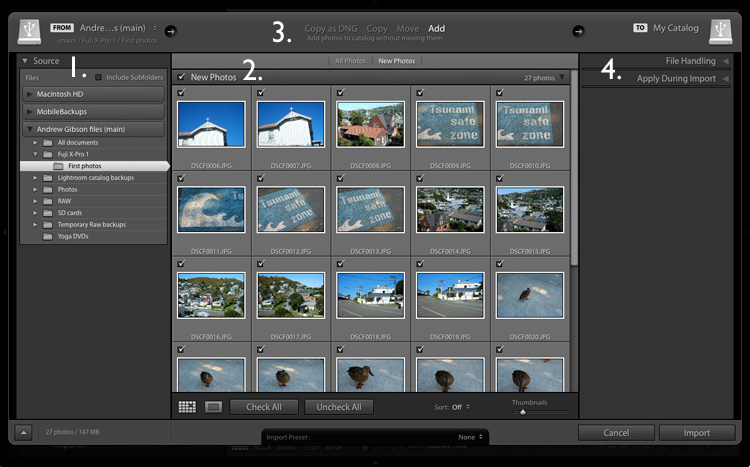
When you click the Import button Lightroom takes you straight to the Import window. It is divided into four sections (marked below).
Importing photos into Lightroom

1. Source 
2. Photo thumbnails
3. Import options
4. Destination

1. Source (left panel): This is the folder(s) from which you are going to import the photos. You can navigate through all hard drives, cameras, or memory cards connected to your computer.

2. Photo thumbnails (middle section): Here Lightroom displays thumbnails of the photos in the selected source folder or folders. The photos are ticked to show that Lightroom will import them into the Catalog when you press the Import button (you can untick any that you don’t want to import).

3. Four import options which tell Lightroom what to do with the photos (top middle): They are:

  • Copy as DNG: When you select this option Lightroom converts your Raw files to Adobe’s DNG format (non-Raw formats such as JPEG and TIFF are not converted). This is the most time consuming option as Lightroom has to first copy your photos then convert them to a new format. Make Lightroom Faster by Using DNG explains the advantages of the DNG format. If you’re new to Lightroom leave this option alone for the moment, as it’s for more advanced users.
  • Copy: Lightroom copies your files from their current location to a new one, without changing the file format. This is ideal for importing photos from a memory card, as it leaves the original files intact on the card.
  • Move: Lightroom moves your files from their current location to a new one, without changing the file format. However, it does delete the original files after they have been moved. This is ideal when you want to move photo files from one folder to another on a hard drive.
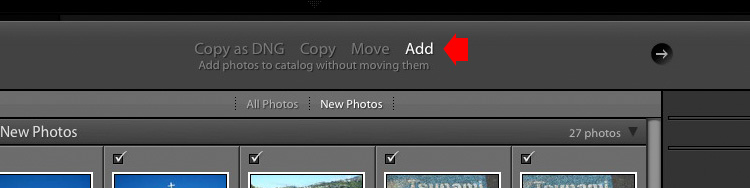
  • Add: Lightroom imports your photos into the Catalog, without moving or copying them from their current location. Select this option if you are importing photos from your hard drive and don’t want to change their location.

4. Destination (right panel): This is where you tell Lightroom what to do with the photos (and where to put them) during the import process. If you select the Add option you will see two panels here (File Handling and Apply During Import). If you select Copy as DNG, Copy, or Move, Lightroom also displays the File Renaming and Destination panels.

Putting it together

Ready to import your first photos into Lightroom? These are my recommended settings – you can start with these and adjust the workflow to suit your needs as you become more comfortable with Lightroom’s settings.

1. Navigate to the folder containing your photo files on the left and select the Add option from the top.
Importing photos into Lightroom

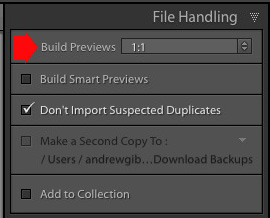
2. On the right open the File Handling panel (click on the heading to open and close panels) and set Build Previews to 1:1.
Importing photos into Lightroom

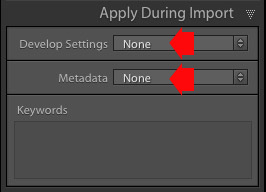
3. Open the Apply During Import panel and set Develop Settings and Metadata to None. The idea is to keep your first import simple – you can learn how to use Develop Presets and Metadata presets later (this article How to Create Your Own Lightroom Presets will get you started).
Importing photos into Lightroom

4. Click the Import button (bottom right). Lightroom returns to the Library module and starts the import process. It takes Lightroom a while to build the 1:1 previews, but the wait is worth it, as it makes viewing them in the Library module much quicker.
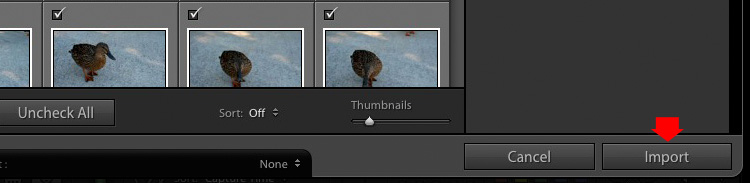
Importing photos into Lightroom

Once Lightroom has imported your photos, you can view them in the Library module. These articles Making Sense of Lightroom’s Grid View and The Hidden Secrets of Lightroom 5’s Loupe View (yes it applies to Lightroom 6 and Lightroom CC too) will get you started.

Importing photos from a memory card

Once you’ve carried out your first import, at some stage you will want to import photos directly from a memory card into Lightroom. There are a couple of extra steps in this process. Start by selecting Copy (instead of Add) at the top of the Import window.
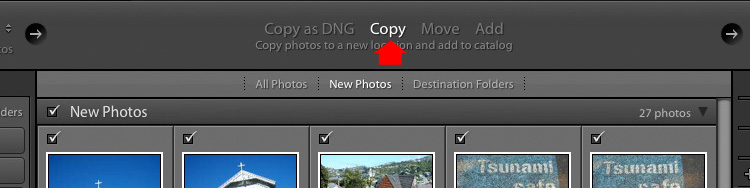
Importing photos into Lightroom

Set the File Handling and Apply During Import panel settings as above. Ignore the File Renaming panel (another advanced topic).

In the Destination panel, select the folder where you would like to save the imported images (you can create a new folder by right-clicking on an existing one and selecting Create New Folder). The selected destination folder is marked in white.
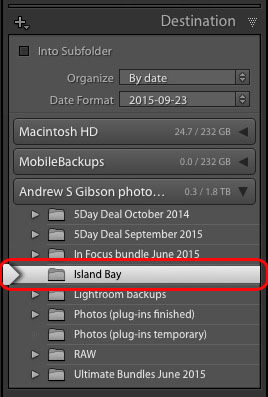
Importing photos into Lightroom

Click the Import button when you’re ready.

After the import

It’s important to understand that the import process doesn’t physically add your photo files to the Lightroom Catalog. The Catalog contains previews of your photos, plus information about them, including the location where they are saved. The photo files themselves remain on your hard drive.

The next task is to organize your newly imported photos. I’ll show you how to do that in a future article.

Do you have any questions regarding this process? Please let me know in the comments.


Mastering Lightroom Book One: The Library Module

Mastering Lightroom ebookMy latest ebook Mastering Lightroom Book One: The Library Module (second edition) is a complete guide to using Lightroom’s Library module to import, organise and search your photo files. You’ll learn how to tame your growing photo collection using Collections and Collection Sets, and how to save time so you can spend more time in the Develop module processing your photos.

googletag.cmd.push(function() {
tablet_slots.push( googletag.defineSlot( “/1005424/_dPSv4_tab-all-article-bottom_(300×250)”, [300, 250], “pb-ad-78623” ).addService( googletag.pubads() ) ); } );

googletag.cmd.push(function() {
mobile_slots.push( googletag.defineSlot( “/1005424/_dPSv4_mob-all-article-bottom_(300×250)”, [300, 250], “pb-ad-78158” ).addService( googletag.pubads() ) ); } );

The post How to Import Photos into Lightroom by Andrew S. Gibson appeared first on Digital Photography School.


Digital Photography School
 
Comments Off on How to Import Photos into Lightroom

Posted in Photography


Floating Blue: Bold Plan to Expand Dense Cities into Open Seas

23 Sep

[ By WebUrbanist in Conceptual & Futuristic & Technology. ]

floating ocean city ecosystem

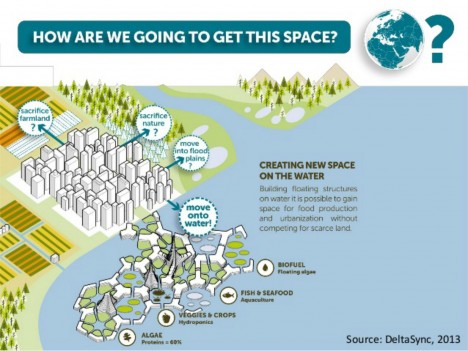
Ocean cities are a longstanding Utopian dream, but many such schemes fail to address the immediate need of cramped urban centers, many of which around the world are bordered and constrained by large bodies of water.

floating city design strategy

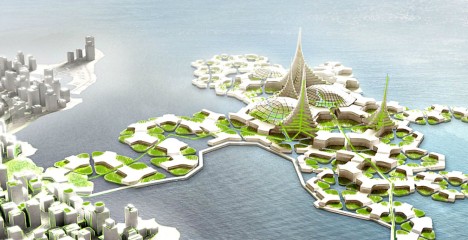
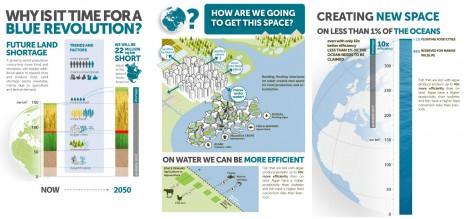
Blue 21, a Dutch architecture and design group, aims to sustainably extend such cities into adjacent lakes and oceans, alleviating the stress on existing metropolitan areas and providing vital resources (like space to grow food) in close proximity to urban cores. The team has experience building floating homes in the Netherlands but wants to take their experience global and work at a larger scale.

floating city on the water

These modular buoyant extensions can be added to over time and used to grow algae, veggies, crops and seafood, producing food and biofuels to support existing populations on land.

floating city blue revolution

At the same time, they can serve to productively process and recycle city wastes and absorb emissions, becoming a productive rather than consumptive part of the regional ecosystem. “As an integrated concept it proposes floating development that can be ‘plugged in’ to existing cities and help them recycling waste nutrients and CO2 that often end up in the environment, polluting it.”

While Blue 21 may not be a solution on the immediate horizon as yet, it represents an approach that bridges the gap between fantastical floating cities and more realistic solutions that engage accessible stretches of ocean. “We are Blue21, starting a Blue Revolution. This is how: by building world’s first floating city with a positive impact on nature. Because we believe our future is on the water for seven reasons: 1. We are running out of land, 2. Cities on land are vulnerable, 3. Water will save us from our addiction to fossil fuels, 4. Water is the new oil, 5. Water is an innovation playground, 6. We can actually have a positive impact, 7. We can do this, now.”

Share on Facebook


[ By WebUrbanist in Conceptual & Futuristic & Technology. ]

[ WebUrbanist | Archives | Galleries | Privacy | TOS ]


WebUrbanist

 
Comments Off on Floating Blue: Bold Plan to Expand Dense Cities into Open Seas

Posted in Creativity


40-Foot Cargo Container Turned into World’s Tallest Periscope

18 Sep

[ By WebUrbanist in Art & Installation & Sound. ]

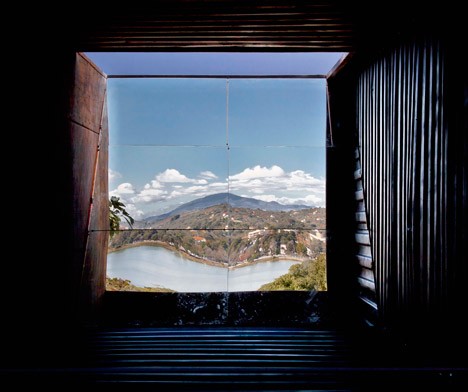
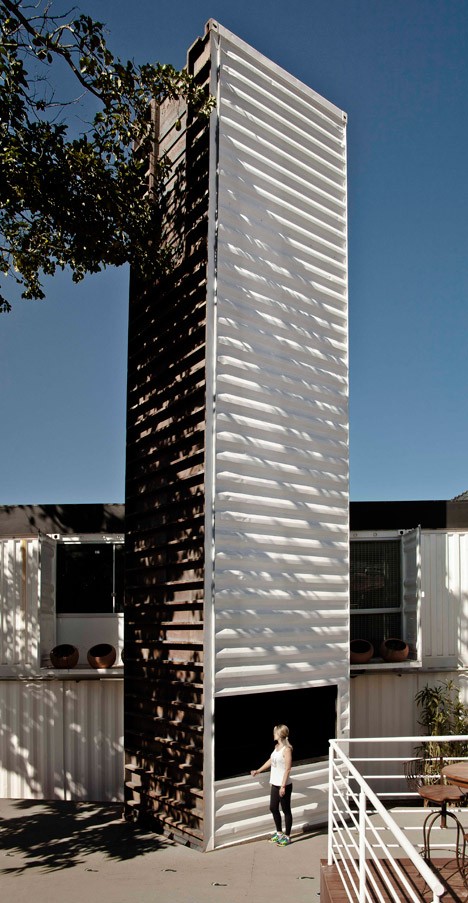
cargo periscope

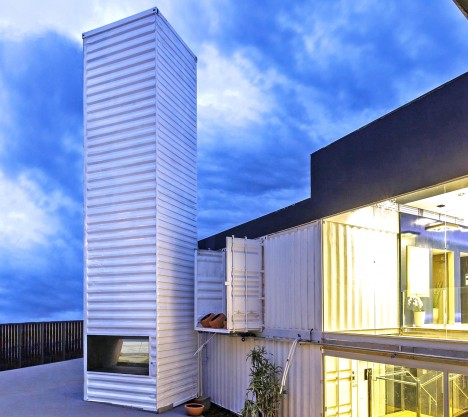
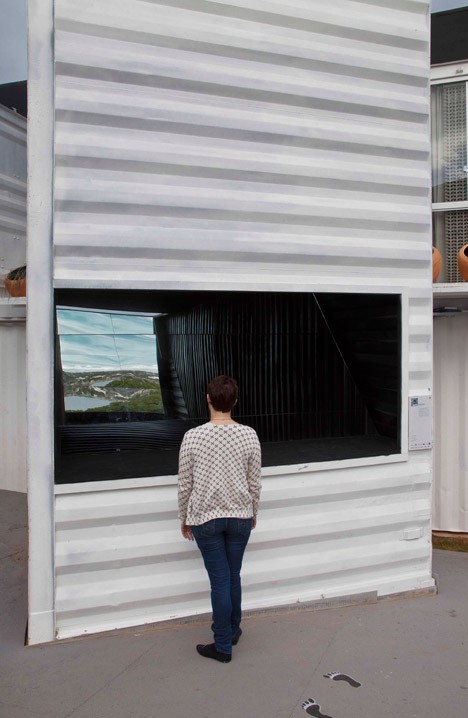
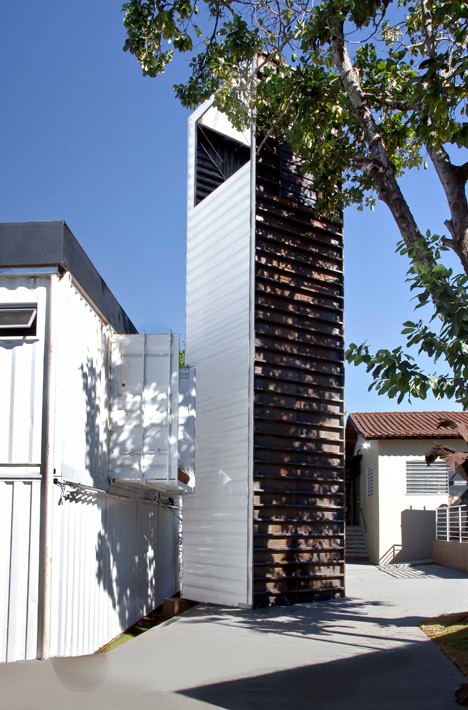
A brilliantly low-tech way to provide a unique view of the surrounding landscape, this massive yet cost-efficient shipping container periscope uses the same elementary construction principles as those childhood do-it-yourself milk carton equivalents.

cargo tower view port

cargo 45 degree mirrors

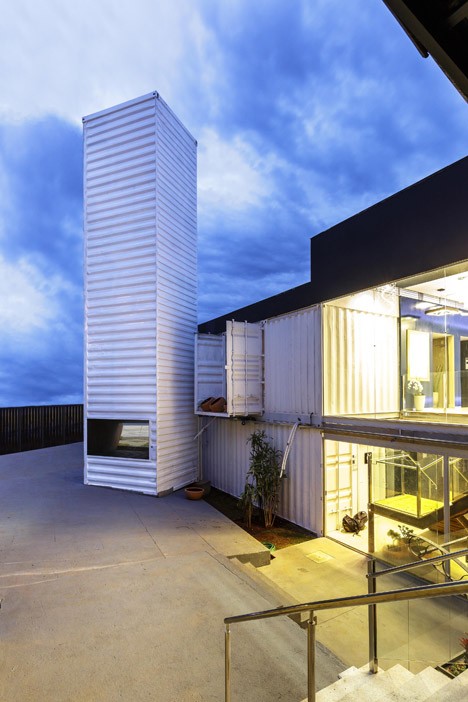
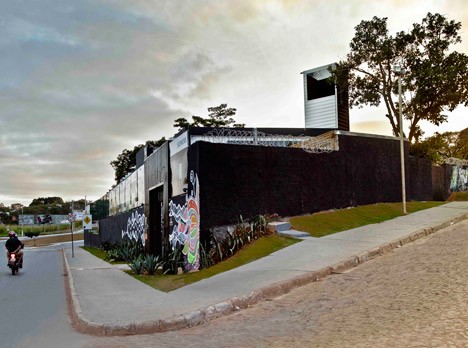
Framing a clear vista of the nearby Lagoa Santa, a Brazilian lagoon, this upturned container designed by Pedro Barata e Arquitetos Associados sits alongside a structure likewise built in part from containers.

cargo shipping tower

Though a one-off idea for now, this would be a great low-cost solution for sites where excellent views are close but building permanent staircases and decks would not be feasible.

cargo building in context

cargo container periscope

Analogous to the traditional role of a fireplace and chimney inside a home, the tall structure is also a natural focal point for outdoor gatherings.

cargo container building adjacent

A simple system of wood supports and set of mirrors tilted at 45 degree angles reflects the view above for onlookers below. It is ultimately designed to travel, set up to similarly enable views elsewhere, before coming to rest in a final spot yet to be determined.

cargo upturned container view

The architect is pleased with resulting reactions so far: “there’s always someone peeking through the vertical tunnel, trying to understand the ‘technology’ allowing them to do so. By connecting directly two different and faraway spaces, the Superiscope introduces people to architecture as hypertext”

Share on Facebook


[ By WebUrbanist in Art & Installation & Sound. ]

[ WebUrbanist | Archives | Galleries | Privacy | TOS ]


WebUrbanist

 
Comments Off on 40-Foot Cargo Container Turned into World’s Tallest Periscope

Posted in Creativity


Astropad Mini turns your iPhone into a graphics tablet

29 Aug

The makers of the Astropad iPad app have launched a version for the iPhone, aptly called Astropad Mini. Like the iPad version, the new app allows you to use your Apple device as a graphics tablet when working with imaging applications such as Adobe Photoshop or Lightroom using Astropad’s LIQUID technology for communication with the Mac. Read more

Articles: Digital Photography Review (dpreview.com)

 
Comments Off on Astropad Mini turns your iPhone into a graphics tablet

Posted in Uncategorized


Loki camera rig transforms into four ultra-portable forms

20 Aug

UK company Scratch Ideas is seeking £25,000 in funding on crowdsourcing site Kickstarter for a new camera mount it’s calling ‘Loki’. Loki can be transformed into a dolly, underslung rig, shoulder rig, and cage, and folds up into a portable rectangular brick about the size of a battery grip for transportation and storage. Click through for more details

Articles: Digital Photography Review (dpreview.com)

 
Comments Off on Loki camera rig transforms into four ultra-portable forms

Posted in Uncategorized


Class Is In Session! Turn Photos Into School Supplies
13 Aug

Can it be? Summer’s almost over? It feels like it just started.

Guess that means it’s time to switch sunbathing for school supplies. But hey, that’s not a bad thing. Really!

Just check out our list of DIY school supplies that you can make out of your very own photos and you’ll see what we mean.

Now go get crafty and make all your classmates jelly!
(…)
Read the rest of Class Is In Session! Turn
Photos Into School Supplies (445 words)

© Taylor for Photojojo, 2015. |
Permalink |
No comment |
Add to
Photos Into School Supplies”>del.icio.us
Post tags:


Photojojo

 
Comments Off on Class Is In Session! Turn Photos Into School Supplies

Posted in Equipment