RSS
 

Posts Tagged ‘into’

Leica releases 60 rare Pandas into China – limited edition M-P rangefinders, that is

27 Jan

In a move intended to honor the giant panda – a Chinese national treasure – German camera manufacturer Leica has produced a limited edition version of its M-P (Typ 240) rangefinder that is finished in black and white. The ‘Panda Edition’ will consist of a pair of kits that include the camera body along with either a Summicron-M 28mm F2 ASPH lens or a Summilux-M 35mm F1.4 ASPH. 

The lower parts of the bodies will be covered with the traditional black leather trim of the Leica M cameras, but the metal areas above the lens, and the base plate, will be finished in a ‘special’ white paint. The black and white color scheme is designed to remind us of the giant panda, and the white paint will symbolize calm.  

A panda logo will decorate the rear of the metal portion of the upper body, along with the engraving ‘CHENGDU CHINA’. Chengdu is an area in the Sichuan province that is considered home to the endangered giant panda, and where the majority of those still left in the wild live. The region is also home to the Chengdu Research Base of Giant Panda Breeding and the world’s largest giant panda nature reserve in the Wolong Valley. 

Disappointingly the lenses will be in the regular silver finish, but the traditional red dot will be replaced with a rare black one – perhaps to symbolize a panda’s eye. 

Leica will produce just 30 units of each of the two editions – reflecting the rarity of the giant panda itself, according to the press release – and the cameras will only be available from within the Chinese market, including the stores in Hong Kong and Macau. The kits will cost HK$ 110,000 ($ 14,000 / £10,000) for the 28mm lens version, and HK$ 120,000 ($ 15,000 / £11,000) if you prefer the 35mm lens. 

The only store is advertising the camera kits is the Leica Store Hong Kong, but more pictures can be found on the Leica Rumours website.


Press release: 

German technology encounters Chinese National Treasure: Leica M-P ”Panda Edition” 

Leica Camera AG, Wetzlar, presents a new limited edition: Leica M-P “Panda Edition”. This special limited edition is offered in two different sets, with a Leica Summicron-M 28mm f / 2 ASPH lens or Leica Summilux-M 35mm f / 1.4 ASPH lens.  There are only 30 sets for each edition and are available for sale only in the Chinese market. The number is extremely rare, reflecting Leica camera’s pursuit of exquisite craftsmanship, profound interpretation of environmental protection, peace concepts, and its cultural connotation to high oriental esteem; the perfect crystallization of the Leica Spirit and Chinese elements.

Following the launch of the “Revolution Centenary” commemorative edition in 2011, Leica camera launches the special edition featuring the Chinese-style again. German technology combined with the traditional national treasure – the panda. Timeless symbols of a black body is a classical tradition while highlighted with flawless white calm, brings unique color and imagery of the Chinese national treasure; the panda. This cleverly echoes past Oriental artistry.

Leica cameras’ century-old brand history devotes each set of these extraordinary and unique limited products to the photographer and collector as an indispensable part of their collection.  Leica M-P “Panda Edition” digital rangefinder camera uses a special combination of black and white color design. The metal part of the body is colored with a special white paint coating, matched with high-quality black leather trim, and on top of the machine’s operating dial, shutter button, and each key, are an all-black design.  

The rear of the camera body is engraved with a distinctive black and white panda logo. Under the logo, the word of “CHENGDU CHINA” is also engraved. This special edition is not only a camera with the premium quality, but also valuable to any collection.

Leica M-P “Panda Edition” consists of the Leica M-P (Typ 240) and is accompanied by a Leica Summicron-M 28mm f / 2 ASPH lens or a Leica Summilux-M 35mm f / 1.4 ASPH. Both silver lenses are made with metal and the lens’ red dot features an extremely rare black design, so this special edition has a unique, simple, and elegant exterior design.

The front end of the two special edition lenses are equipped with a full metal hollow design, retro round hood, and a special bond spin-tunnel installed in the lens which encourages the use of filters. The lens cover is also made from metal; every detail of the product highlights Leica’s meticulous use of materials and the pursuit of the most sophisticated production processes. German advanced technology coupled with the highest quality materials with meticulous craftsmanship, not only to ensure the quality of products, but also increases the product’s durability.

This special limited edition is offered in two different sets, with either a Leica Summicron-M 28mm f / 2 ASPH lens or Leica Summilux-M 35mm f / 1.4 ASPH lens.  There are only 30 sets for each edition, and will only be available at the Leica Store in China, Hong Kong and Macau. The recommended selling price in Hong Kong is HK$ 110,000 and HK$ 120,000. The same camera and lens special edition features the same technical specifications as the normal versions.

“Panda” theme fable

As a “living fossil,” the panda is a 300-year-old animal, it still retains many of the ecological structures of the most original features. The panda won the people’s heart around the world and are now known as the animal kingdom’s superstar. The Pandas in China mainly live in Sichuan Province, their numbers are extremely rare and they are referred to as China’s national treasure, therefore, making them a gift with deep meaning when presented as China’s gift to the world. 

Choosing “Panda” as the design theme of this special limited edition is not only because the panda is a national treasure of China, but also because of its image representing Chinese people’s love for peace and kindness to others, strong-will and resilience to environmental change.

Articles: Digital Photography Review (dpreview.com)

 
Comments Off on Leica releases 60 rare Pandas into China – limited edition M-P rangefinders, that is

Posted in Uncategorized


Digging into the Fujifilm X-Pro2: Studio analysis and full-production sample gallery added

25 Jan

Our Fujifilm X-Pro2 First Impressions just got a significant update. With a production-ready camera in hand, we’ve been able to send it through our studio scene and dynamic range tests, make some judgements about image quality from its new 24MP X-Trans image sensor and put together a fresh sample gallery. Compare the X-Pro2 to its peers and take another look at what Fujifilm’s newest flagship can do.


Articles: Digital Photography Review (dpreview.com)

 
Comments Off on Digging into the Fujifilm X-Pro2: Studio analysis and full-production sample gallery added

Posted in Uncategorized


Fujifilm X70 puts 28mm equivalent F2.8 lens into compact X100-style body

17 Jan

$ (document).ready(function() { SampleGalleryV2({“targetContainerClass”:”sampleGalleryImageViewerContainer”,”galleryId”:”0302545666″,”isEmbeddedWidget”:true,”selectedImageIndex”:0,”startInCommentsView”:false,”isMobile”:false}) });

Fujifilm has announced the X70, a fixed-lens compact camera designed in the spirit of the company’s X100-series.

The X70 takes the design of the X100, shrinks it down, and adds a 28mm equivalent F2.8 lens (compared to the 35mm equiv. F2 optics on the X100). The cool hybrid viewfinder from the X100 is gone, but in exchange users get Fujifilm’s first touchscreen LCD (3″ in size), which can also tilt 180 degrees. The X70 has direct controls for aperture, shutter speed and exposure compensation, just like its big brother.

The guts of the camera are similar to that of the X-T10, meaning that the X70 has a 16.3MP X-Trans CMOS II sensor and Hybrid AF system. The AF system offers 49 points in single-point mode and 77 in zone and wide/tracking modes. The lens itself has nine rounded aperture blades and a minimum focus distance of 10cm. The mechanical shutter stops at 1/4000 sec but the electronic shutter goes all the way to 1/32000 sec.

The X70 has a standard ISO range of 200-6400, which expands to 100-51200. It can shoot continuously at 8 frames per second, though only for ten photos. Naturally, it has the full set of Film Simulation Modes, save for the new ACROS mode on the X-Pro2. Video can be recorded at 1080/60p, with a maximum bitrate of 36Mbps. As one would expect, the X70 also has built-in Wi-Fi with remote control from your smartphone.

The X70 will be available in all-black or silver and black in February at a price of $ 699.95.

Online resellers are selling the X70 for $ 799 – Fujifilm tells us that the $ 699 price in the press release is indeed correct.

FUJIFILM ANNOUNCES NEW ADDITIONS TO THE X-SERIES LINE OF CAMERAS AND LENSES

X-Pro2, X-E2S, X70 and XF100-400mmF4.5-5.6 R LM OIS WR join the X-Series; all-weather FinePix XP90 gets the shot from sand to slopes

Valhalla, N.Y., January 14, 2016 FUJIFILM North America Corporation, a leader in digital imaging, today announced new additions to the award-winning X-Series line of premium fixed and mirrorless cameras, and ultra-high quality lenses, including: the FUJIFILM X-Pro2, FUJIFILM X-E2S, FUJIFILM X70 and FUJINON XF100-400mmF4.5-5.6 R LM OIS WR.  Fujifilm also introduced the new rugged and waterproof FinePix XP90, perfect for capturing amazing images everywhere, from underwater to mountain tops.

FUJIFILM X70

The FUJIFILM X70 is a newly designed premium fixed lens digital camera that features a FUJINON 18.5mmF2.8 lens (28mm in 35mm format equivalent), suitable for a range of applications from landscapes to everyday snapshots. The new X70 elegantly combines simple manual operation with superior image quality and versatile picture-taking functions, and is the first X-Series camera to offer a touchscreen display that rotates 180 degrees, enabling users to shoot from up high, down low and capture selfies.

The compact FUJIFILM X70 uses a 16.3MP APS-C X-Trans CMOS II Sensor for extraordinary image resolution, and gives photographers milled aluminum dial controls, as well as aperture settings in 1/3 stop increments, and the new Auto Mode Switch lever for selecting its fully automatic Advanced SR Auto mode. In this mode, the camera automatically chooses the optimum settings for great results on any scene.

The new FUJIFILM X70 features a responsive touchscreen – a first for the X-Series. Now, photo enthusiasts can use the Touch Panel for operations during shooting and playback modes. For shooting, users can select their focus area and touch-to-shoot. During playback, users can swipe their finger to scroll through images, double-tab to enlarge images, and drag to view different points on the picture, and pinch-out and pinch-in to enlarge and reduce the image view.
Users can also disable the touchscreen functions at any time by turning the Touch Panel Settings to “off.”

FUJIFILM X70 key features:

  • 16.3MP APS-C X-Trans CMOS II Sensor
    • Fast AF of up to 0.06 seconds
    • Start-up time of 0.5 seconds
    • Shutter time lag of 0.05 seconds
    • Shooting interval of 0.5 seconds
  • Uses the FUJINON 18.5mm F2.8 lens with 7 elements in 5 groups, and  2 high-performance aspherical elements
    • 9 blade aperture
    • FUJINON’s unique HT-EBC coating
  • High-definition, touchscreen 3” tilting (180o) LCD display with 1.04 million dots
  • Maximum ISO performance up to 51200 sensitivity
  • New  AF system offers the 49-point Single Point mode for fast, precise focusing, and a  new Zone and Wide/Tracking modes with a 77-point area to capture moving subjects
  • Up to ±3 stops of exposure compensation on the top-plate dial
  • 8 function buttons (1 customizable)
  • Latest CLASSIC CHROME Film Simulation mode that delivers muted tones and deep colors
  • Interval timer for shooting time-lapse sequences of one second to 24 hours, up to 999 frames
  • Completely silent electronic shutter capable of exposures up to 1/32,000 second
  • Digital teleconverter offers additional focal ranges of 35mm and 50mm
  • Full HD video 1080p at 60fps; bit rate of 36Mbps for clear capture of delicate movements; frame rates of 60 fps, 50fps, 30fps, 25fps and 24fps, supporting worldwide motion picture formats
  • Free FUJIFILM Camera Remote application and Wireless Communication function allows users to remotely shoot images from smartphones and tablets via WiFi
  • Photos can be sent to the INSTAX Share Printer using the free INSTAX Share App (iOS and Android) SHARE Smartphone Printer
  • Advanced creative filters


The FUJIFILM X70 will be available in February 2016 for USD $ 699.95 and CAD $ 899.99.

Fujifilm X70 specifications

Price
MSRP $ 799/£549
Body type
Body type Large sensor compact
Sensor
Max resolution 4896 x 3264
Other resolutions 3:2 (3456 x 2304, 2496 x 1664), 16:9 (4896 x 2760, 3456 x 1944, 2496 x 1408), 1:1 (3264 x 3264, 2304 x 2304, 1664 x 1664)
Image ratio w:h 1:1, 3:2, 16:9
Effective pixels 16 megapixels
Sensor photo detectors 17 megapixels
Sensor size APS-C (23.6 x 15.6 mm)
Sensor type CMOS
Processor EXR Processor II
Color space sRGB
Color filter array X-Trans
Image
ISO Auto, 200-6400 (expandable to 100-51200)
Boosted ISO (minimum) 100
Boosted ISO (maximum) 51200
White balance presets 7
Custom white balance Yes
Image stabilization Unknown
Uncompressed format RAW
JPEG quality levels Fine, standard
File format
  • JPEG (Exif v2.3)
  • Raw (RAF format, 14-bit lossless compressed or uncompressed)
Optics & Focus
Maximum aperture F2.8 – F16.0
Autofocus
  • Contrast Detect (sensor)
  • Phase Detect
  • Multi-area
  • Center
  • Selective single-point
  • Tracking
  • Single
  • Continuous
  • Touch
  • Face Detection
  • Live View
Autofocus assist lamp Yes
Digital zoom Yes (35mm, 50mm digital teleconverter)
Manual focus Yes
Normal focus range 10 cm (3.94)
Number of focus points 77
Screen / viewfinder
Articulated LCD Tilting
Screen size 3
Screen dots 1,040,000
Touch screen Yes
Screen type TFT LCD
Live view Yes
Viewfinder type None
Photography features
Minimum shutter speed 30 sec
Maximum shutter speed 1/4000 sec
Maximum shutter speed (electronic) 1/32000 sec
Exposure modes
  • Program
  • Shutter priority
  • Aperture priority
  • Manual
Built-in flash Yes
Flash range 7.90 m (at ISO 1600 (5.5m at ISO 100))
External flash Yes
Flash modes Auto, Forced Flash, Slow Synchro , Suppressed Flash, Commander
Drive modes
  • Single
  • Continuous (hi/lo)
  • Self-timer
  • Interval
Continuous drive 8.0 fps
Self-timer Yes (2 or 10 secs)
Metering modes
  • Multi
  • Center-weighted
  • Spot
Exposure compensation ±3 (at 1/3 EV steps)
AE Bracketing ±1 (at 1/3 EV, 2/3 EV, 1 EV steps)
WB Bracketing Yes
Videography features
Resolutions 1920 x 1080 (60p, 50p, 30p, 25p, 24p), 1280 x 720 (60p, 50p, 30p, 25p, 24p)
Format MPEG-4, H.264
Microphone None
Speaker None
Storage
Storage types SD/SDHC/SDXC
Connectivity
USB USB 2.0 (480 Mbit/sec)
HDMI Yes (micro-HDMI)
Microphone port No
Headphone port No
Wireless Built-In
Wireless notes 802.11b/g/n
Remote control Yes (Wired or via smartphone)
Physical
Environmentally sealed No
Battery Battery Pack
Battery description NP-95 lithium-ion battery & charger
Battery Life (CIPA) 330
Weight (inc. batteries) 340 g (0.75 lb / 11.99 oz)
Dimensions 113 x 64 x 44 mm (4.45 x 2.52 x 1.73)
Other features
Orientation sensor Yes
Timelapse recording Yes
GPS None

Articles: Digital Photography Review (dpreview.com)

 
Comments Off on Fujifilm X70 puts 28mm equivalent F2.8 lens into compact X100-style body

Posted in Uncategorized


How to Use Blender Pen to Turn Your Photos Into Art Objects

15 Jan

When you discover that you can easily transform your digital photos into some unique creative art with just the magic touch of a digital pen, it opens up a whole world of imaginative possibilities. In this article you can find some handy tips on how to use a blender pen for the best results. How it works If you remember Continue Reading

The post How to Use Blender Pen to Turn Your Photos Into Art Objects appeared first on Photodoto.


Photodoto

 
Comments Off on How to Use Blender Pen to Turn Your Photos Into Art Objects

Posted in Photography


New York Public Library releases thousands of images into public domain

12 Jan

The New York Public Library has released more than 180,000 digitized items into the public domain, making them freely available for anyone to use for any purpose. These items include scans of manuscripts from well-known authors, copies of sheet music, more than 40,000 stereoscopic photographs and more than 20,000 atlases and maps.

The NYPL announced the release last week, saying it “represents both a simplification and an enhancement of digital access to a trove of unique and rare materials.” The materials are available as high-resolution downloads through the library’s public domain remix. As of this latest release, there are 672,186 digitizations available in the NYPL Digital Collections.

Via: NYPL

Articles: Digital Photography Review (dpreview.com)

 
Comments Off on New York Public Library releases thousands of images into public domain

Posted in Uncategorized


Sound Sculptures: Music Translated Into Transforming Objects

03 Dec

[ By Steph in Gadgets & Geekery & Technology. ]

sound sculptures 1

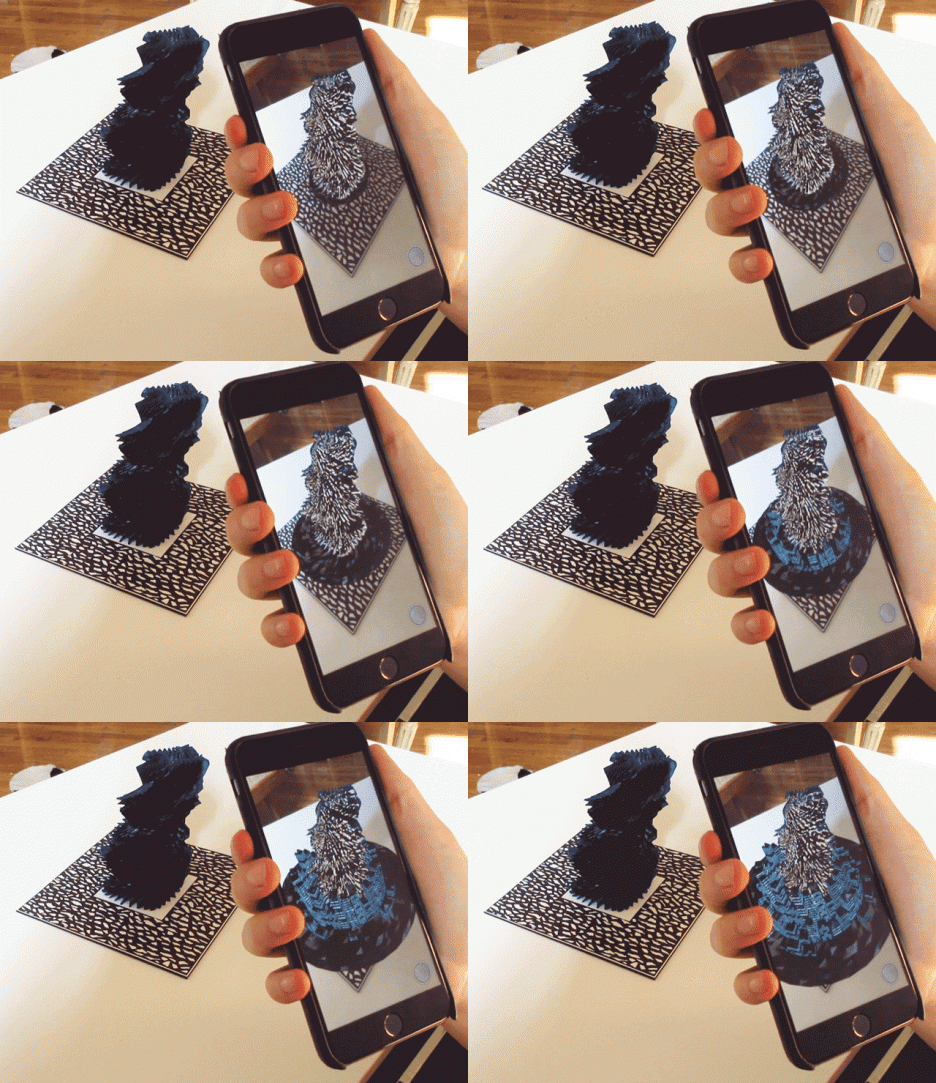
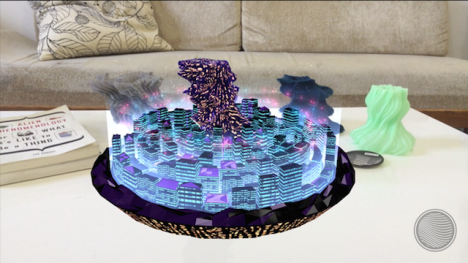
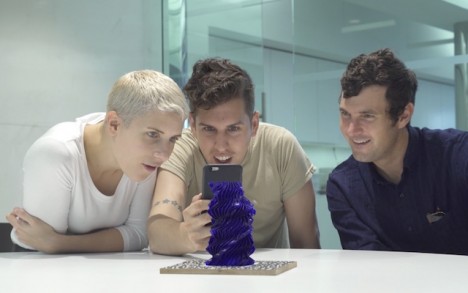
An experiment in intentional synesthesia, this combination of sculpture, music and technology enables us to actually see the physical form of individual songs. ‘Reify’ is a collaborative project that creates a new way to experience music, transforming it into a tangible object that transforms before our eyes. So-called ‘totems’ are made to visually represent an artist’s song, and encoded with music and interactive visual experiences that can be viewed on a smartphone or tablet.

sound sculptures 2

Musicians, sculptors and app designers got together to build a platform that lets artists express their music in physical form. Each totem is a sculptural object in its own right, entirely unique in shape, 3D-printed from plastic or cast in bronze. Simply gazing upon these visual translations of sound is cool enough, but then comes the app that truly brings them to life.

sound sculptures 3 sound sculptures 4

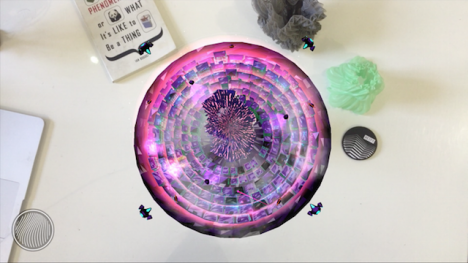
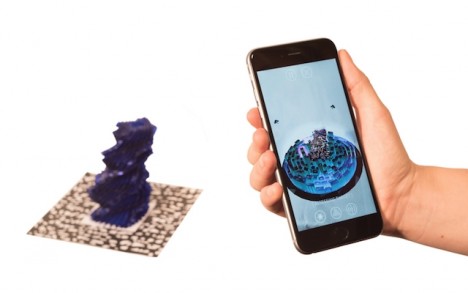
Load up the Stylus app, point your mobile device at the totem and you’ll be treated to an interactive visual experience that plays along with the song. “Each experience is unique in style and content,” say the designers. “Some are game-like. Some are conceptual explorations. Others are both… and neither. All are direct expressions of the artist’s creative vision.”

sound sculptures 5 sound sculptures 6

While a Kickstarter campaign held in July didn’t raise enough funds to move forward with the project, it’s a really cool look into how various forms of creative expression will continue to evolve along with technology, and the potential for more crossover. Check out another cool project exploring what music looks like in 3D.

Share on Facebook


[ By Steph in Gadgets & Geekery & Technology. ]

[ WebUrbanist | Archives | Galleries | Privacy | TOS ]


WebUrbanist

 
Comments Off on Sound Sculptures: Music Translated Into Transforming Objects

Posted in Creativity


Subway Angels: Painted Figures Spliced into Contemporary Cities

11 Nov

[ By WebUrbanist in Art & Drawing & Digital. ]

historic bored bus scene

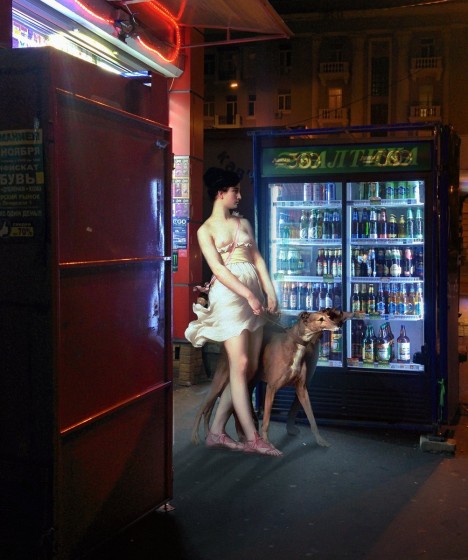
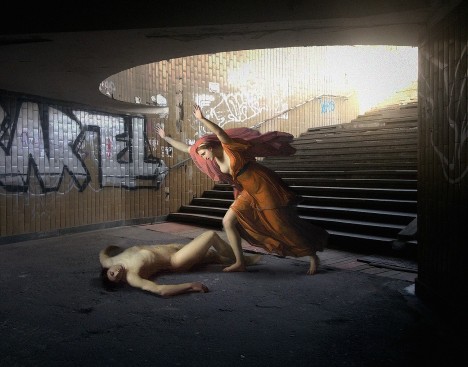
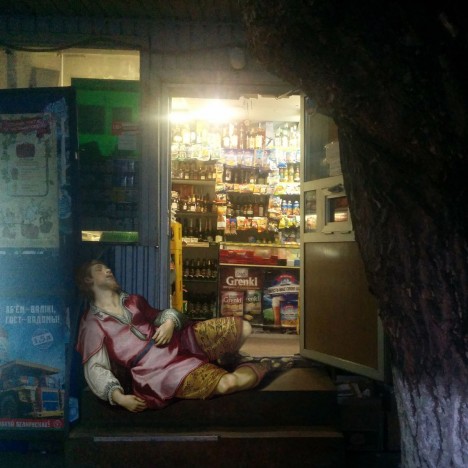
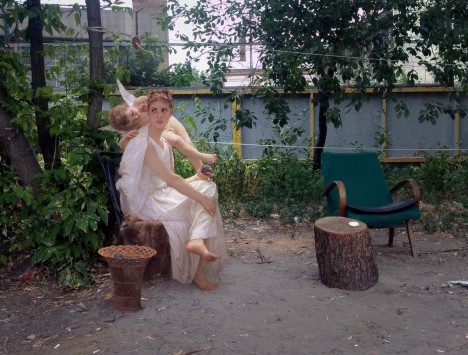
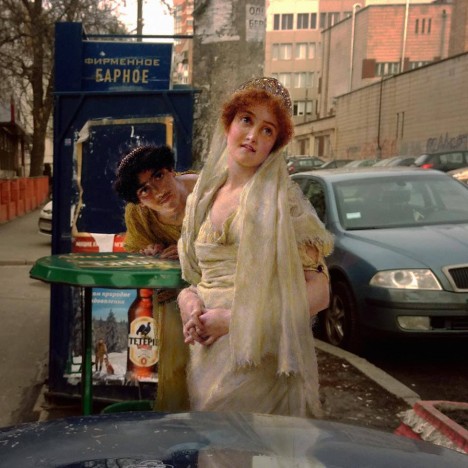
Gods, angels, cherubs and human mortals from famous historical artworks can be found browsing the beverage display at the corner store, passed out in front of the liquor shop, or riding the bus with an aptly bored expression in these clever remixes.

historic shopping corner store

historical attack subway setting

In his ongoing series Art History in Contemporary Life, Ukrainian artist Alexey Kondakov continues to document a fictional world in which ancient figures find themselves transplanted into modern cityscapes.

subway nude

historic mother child lamb

historical drunk liquor store

Among his hacks: Cesar van Everdingen’s Bacchus, Caravaggio’s David and Goliath and William-Adolphe Bouguereau’s Nymphs and Satyr, all hacked to fit into new times and places.

historical park cherub sitting

historical streetscape sidewalk scene

historical painting modern city

The scenes are so expertly edited it is left to the figures themselves to stand out from each setting through their actions or attire. Madonna, child and lamb are, for instance, a bit of a strange find in an old apartment staircase and cherubs generally aren’t seen on the Earthly plane, at least by ordinary people.

Share on Facebook


[ By WebUrbanist in Art & Drawing & Digital. ]

[ WebUrbanist | Archives | Galleries | Privacy | TOS ]


WebUrbanist

 
Comments Off on Subway Angels: Painted Figures Spliced into Contemporary Cities

Posted in Creativity


Into the woods: Samsung NX500 Field Test

10 Nov

It’s not often we get to eat what we photograph, but that’s what we did in our latest Field Test. We took the Samsung NX500 into the woods with pro photographer and mycology enthusiast Eirik Johnson to forage for some wild mushrooms. While providing a keen eye to make sure we didn’t try to eat anything poisonous, Eirik also helped us try out the NX500’s imaging and 4K video features. Read more

Articles: Digital Photography Review (dpreview.com)

 
Comments Off on Into the woods: Samsung NX500 Field Test

Posted in Uncategorized


New Spin: Rotating & Sliding Walls Turn 1-BR Apartment into 3

02 Nov

[ By WebUrbanist in Design & Fixtures & Interiors. ]

modular rotating wall home

A combination of walls on wheels and sliding wall panels make this modular home infinitely adaptable, able to transform from a spacious single-family abode to a series of divisible spaces for guests on demand.

rotating living room wall

PKMN Architectures deployed this solution as part of their ongoing Little Big Houses initiative (Pequeñas Grandes Casas), a series of designs addressing usability in small spaces.

rotating wlal interior design

rotating bedroom demand

This particular home in Mexico serves a couple but is also made to accommodate visits from extended family, able to support three bedrooms that can be added in less than a minute.

rotating floor plan

rotating configuration floor plan

While there are intended ways of using the modular components, the real beauty of the system is in its versatility – hanging partitions and thicker structural-and-storage walls can be combined in all kinds of configurations.

rotating second wall

rotating partition system

From the architects: “María José y Enrique viven en México pero viajan mucho a Europa. Querían una segunda casa en Asturias que pudiera ser un apartamento para la pareja y para toda la familia al mismo tiempo. A través de unos muebles giratorios los dos dormitorios de la casa pueden aparecer y desaparecer en un minuto. La casa tiene así tres posiciones, una casa con dos dormitorios, con un dormitorio o sin ninguno de ellos. Así la vivienda se convierte en un lugar para celebrar una gran fiesta para los más pequeños o un espacio tipo loft cuando María José y Enrique están solos. Es el lujo de tener un salón de casi 50m2 en una casa de 70m2.”

Share on Facebook


[ By WebUrbanist in Design & Fixtures & Interiors. ]

[ WebUrbanist | Archives | Galleries | Privacy | TOS ]


WebUrbanist

 
Comments Off on New Spin: Rotating & Sliding Walls Turn 1-BR Apartment into 3

Posted in Creativity


Phonetikana: Embedding English into Japanese Characters

01 Nov

[ By WebUrbanist in Design & Graphics & Branding. ]

phonetikana phonetic japanese alphabet

Nothing gets lost in translation with these embedded English pronunciations, tied directly into the Japanese typographic style Katakana. While the letterforms of Katakana create an effectively phonetic alphabet, its characters are still difficult for some foreigners to read, at least until now.

word

p8

Like many design solutions, this one looks easy in retrospect: simply tuck an English-legible phonetic articulation guide using a capped alphabet inside the Japanese characters. The result: Phonetikana, a potentially very powerful tool for communication, teaching and learning, or even signage in places like international airports or multinational conventions.

p3

p4

From the creators: “Multiple trips to Japan and constant frustration at being unable to read the language has sparked off an unusual typographic project at johnson banks. Earlier in the year we started seeing if we could combine the English language and Japanese script in some way.”

p9

p7

p5

p6

The firm went a step further as well, embedding words and phrases inside symbols to create a children-legible introductory guide to Japanese, reinforcing connections between each sound and symbol set. Meanwhile, the hybrid typography remains a work in progress, but definitely on the right linguistic track.

Share on Facebook


[ By WebUrbanist in Design & Graphics & Branding. ]

[ WebUrbanist | Archives | Galleries | Privacy | TOS ]


WebUrbanist

 
Comments Off on Phonetikana: Embedding English into Japanese Characters

Posted in Creativity