RSS
 

Posts Tagged ‘into’

Flat-Pack Wall Furniture Folds into its Own Isometric Projection

02 Jun

[ By WebUrbanist in Design & Furniture & Decor. ]

3d wall flat pack

This furniture series not only folks up to pack flat for shipping or storage, but also hangs on the wall, each piece in the shape of a two-dimensional isometric drawing of itself.

De-Dimension by Jongha Choi uses a set of hinges and locking pins to fold out and lock into position, providing support when the pieces are used as seats and tables. Like other flat-pack furniture designs, this set boasts reduced weight and space requirements, though arguably at the expense of long-term durability and stability (depending in part on hidden bracing and the quality of components used).

3d furniture designs

The set is in part a commentary on representation versus reality, two-dimensional forms versus three-dimensional figures. From the designer: “Even the advent of 3D printing skills shake our fundamental notion of the image. Unlike the past, we are not only seeing the image as a means of reproducing objects, but also giving essential identity to the image itself. In other words, though the image still shows its visual effect on a flat plane, it is not just an expression of representation, but a making real an experience.

3d wall furniture

“In our current situation, in which modern society experiences the image, in relation to advertising, image circulation and the internet, why do we not question an images’ confinement to a flat surface. Why don’t we try to get more stereoscopic and attempt for direct experience with the image. My question started with this point and I tried several experiments in order to realize this idea from a personal point of view.”

Share on Facebook


[ By WebUrbanist in Design & Furniture & Decor. ]

[ WebUrbanist | Archives | Galleries | Privacy | TOS ]


WebUrbanist

 
Comments Off on Flat-Pack Wall Furniture Folds into its Own Isometric Projection

Posted in Creativity


Ready for takeoff: GoPro records rocket trip into space

06 May

While you’re waiting for Space X to get you into orbit, there’s an easier way to enjoy an otherworldly view. A GoPro HERO 4 camera was used to record a UP Aerospace Inc. SL-10 rocket’s travel into space, showing the flight at speeds of up to Mach 5.5 from Earth to an altitude of 120,700m / 396,000ft and back again. The video was recorded on November 6, 2015 during a mission to deploy the Maraia Capsule designed by NASA, and was recently showcased by GoPro on its YouTube channel.

This isn’t the first time GoPro’s action cameras have been used to record space missions. In April 2015, for example, NASA published a pair of videos showing astronauts on a spacewalk, both of which were recorded using the small action cameras. A GoPro was also used to record Felix Baumartner’s ‘Red Bull Stratos,’ a space jump that took place 24 miles above Earth. 

Articles: Digital Photography Review (dpreview.com)

 
Comments Off on Ready for takeoff: GoPro records rocket trip into space

Posted in Uncategorized


Helium Core turns iPhone into fully-fledged imaging rig

27 Apr

A sleek iPhone case with plenty of room for mobile photography and videography attachments is seeking crowd-funding on Kickstarter. Read more

Articles: Digital Photography Review (dpreview.com)

 
Comments Off on Helium Core turns iPhone into fully-fledged imaging rig

Posted in Uncategorized


Depth-Defying Art: 3D Chalk Characters Blend into City Streets

26 Apr

[ By WebUrbanist in Art & Street Art & Graffiti. ]

chalk hidden mouse

Bringing a certain subtly and sense of humor back to three-dimensional chalk art, David Zenn creates highly-contextual scenes using an array of animal characters, all interacting with urban environments.

crack dog rescue

For decades, he has used chalk and charcoal to feature pieces that tie into their surroundings, relating to anything from fallen flowers to cracks in the sidewalk.

interactive chalk figures copy

Rats, bears, lizards, dogs and other less-identifiable animalian hybrids can be found lounging around, floating balloons or hiding in imagined holes, like refugees from a wild children’s book.

trapped cat

chalk mouse warrior

chalk mouse player

wall mice

reading light

Over time, a cast of regular characters has evolved, appearing in different places, telling a story through each sequential work of art. Some of his archival prints are for sale, as well as his book Temporary Preserves (via Colossal).

Share on Facebook


[ By WebUrbanist in Art & Street Art & Graffiti. ]

[ WebUrbanist | Archives | Galleries | Privacy | TOS ]


WebUrbanist

 
Comments Off on Depth-Defying Art: 3D Chalk Characters Blend into City Streets

Posted in Creativity


5 Good Reasons to Add People into Your Landscape Photography

25 Apr

Are you looking for a way to spice up your landscape photography? Many times when we think of making great landscapes image,s we try not to include people. Sometimes we even wait for long periods of time for other sightseers (or other photographers) to exit our view. There are many times this is the best technique for shooting a landscape photo, but adding the human element to a scene can be just the extra touch needed to create a great image. Let’s take a look at 5 reasons to add people to your landscape images.
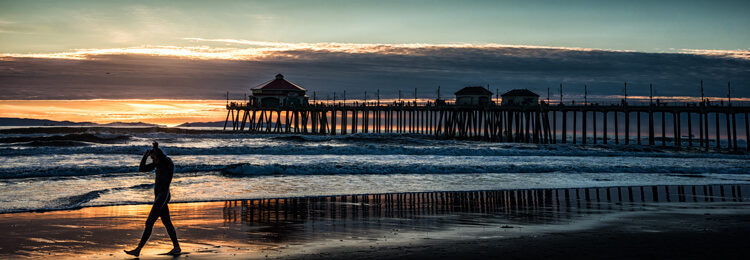
Sometimes breaking the rules can work. Here the man walking out of the image seems to work with the image of the end of the day on the beach.

This surfer is done for the day. Normally it is preferable that a person faces into the photo, but exceptions may work too.

#1 Tell a Story

Adding a person to your landscape can help your image tell a story. People, or even a single individual, may add mystery and adventure to your landscape, causing your viewers to wonder who, what, and why about the person in your image. When your viewers ask these questions, their eyes will stay engaged with your image, adding entertainment value to the photo. An image of a person standing in front of a grand mountain range may cause the viewer to wonder what that individual is doing there. If the person has a backpack and a walking stick, the viewer may imagine a hike in the mountains is about to commence. Or maybe the person in your shot is carrying a rifle and wearing camouflage, leading the viewer to imagine a hunter heading into the woods in search of adventure. A person can be the subject of the image or interact with the landscape of the image; but either way, if the person fits into the image’s story, your landscape will draw the viewer in and the photo will tell a successful tale.
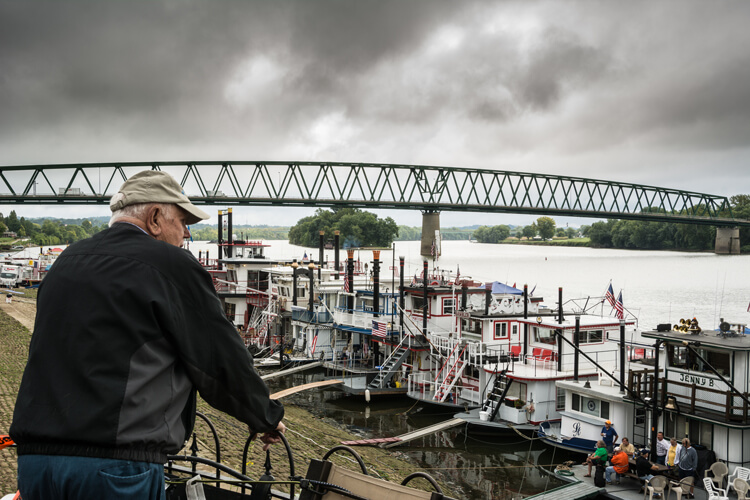
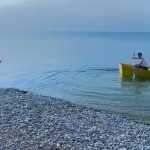
This image seems to tell the story of a man thinking about the yester-years working on a river boat.

This image tells the story of a man thinking about his former career working on a river boat.

#2 Composition

Placing a person or persons in an image in negative space can add balance to your landscape. A person in the foreground, or mid-way into your scene, will help create a sense of depth in the image. When you have the opportunity to position the person, take care to place them in the image in a way that draws the viewer into the image. Place your subject off to the side, preferably on a rule of thirds point, with them facing into the open space. It is almost never a good idea to have a person looking or facing out of your image, as this will cause a viewer’s eye to leave the image rather than explore the image fully. Nevertheless, with every rule of composition there are exceptions that will work. Knowing the rules of composition, when to use them, and when to break them, will help you when adding a person to your image.
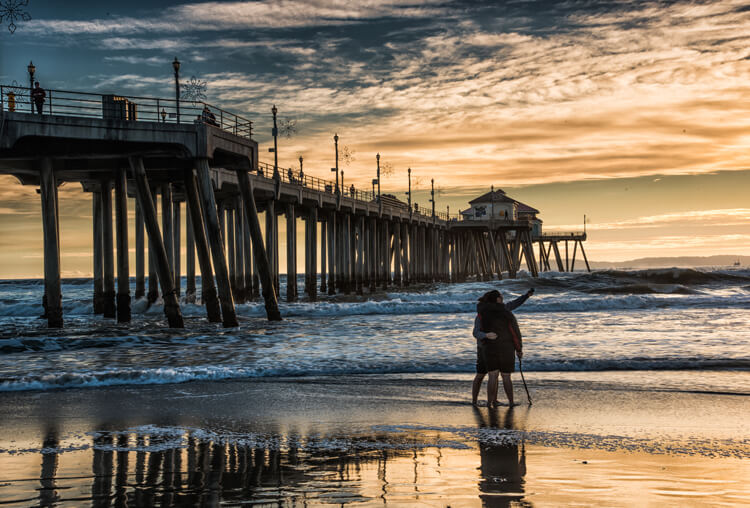
The couple taking a selfie is placed in a rule of thirds position and fills a negative space on the beach.

This couple taking a selfie is placed in a rule of thirds position, and fills a negative space on the beach.

#3 Scale of Size

Adding a human to an image is a great way to reveal the size and scale of objects in your image. Without the person in many images, objects like trees and rocks may lack a scene of scale. The addition of a person immediately gives your viewer a point of reference and scale to the landscape.
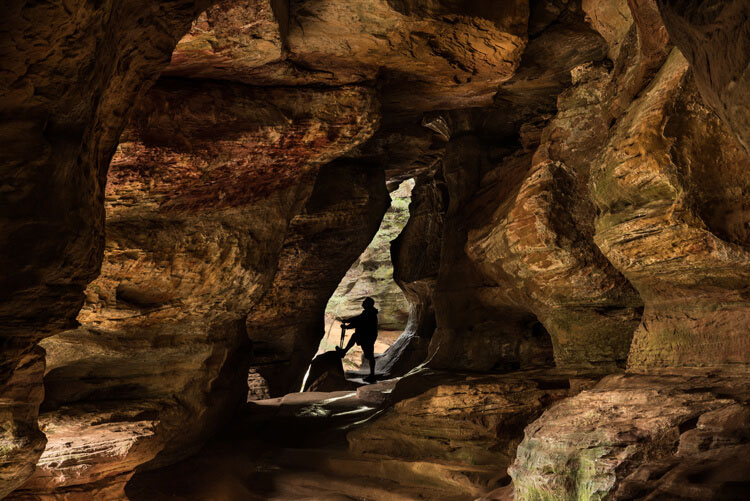
In this image of Rock House in Hocking Hills State Park in Logan Ohio adding the Silhouetted figure at the end of the cave adds a sense of scale and also adds a focal point to the image.

Adding the silhouetted figure at the end of the cave gives a sense of scale and also adds a focal point to the image.

#4 Drama and Excitement

Silhouetting someone against a sunset or other backlit view, is a perfect example of how a person can help create a more dramatic image. Even the simplest of landscapes can become more interesting and exciting by adding people within the image. Photographing a couple holding hands as they interact with the landscape can add the drama of romance to your image.
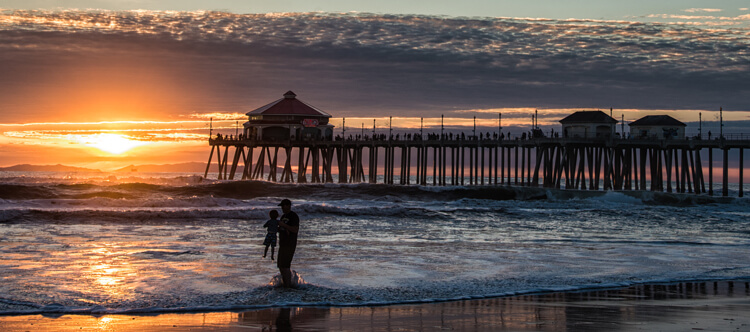
This image tells a story of a Father and son playing in the surf at sunset. The sillouhetted figures add drama to an image that could just be another sunset at the beach.

A silhouetted father and son playing in the surf at sunset add drama to an image that would otherwise be just another sunset along the shore.

#5 Focal Point

A successful photo needs a focal point that gives the viewer’s eye a place to land to hold their attention, and adding people can achieve that. It is important to add a point of interest that will change a boring landscape into a striking one. Most landscapes have natural features or buildings as a point of focus, but adding a person can sometimes make for a much more interesting image. As mentioned earlier, at times you may have negative space in the foreground of your landscape, and by adding a person into your scene that negative space is filled, and your image will benefit from the balance. As a focal point, the person in your image can be the subject of the scene, or a complement to your landscape.
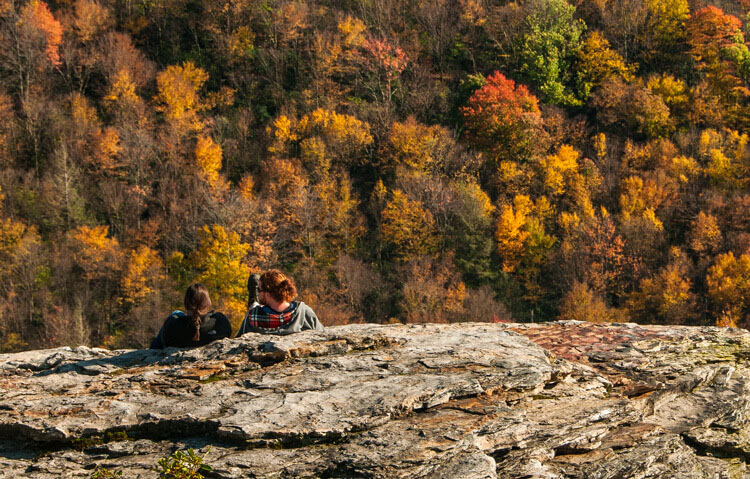
A couple sitting on a rock enjoying the Autumn view adds a romantic drama to the fall colors of the West Virginia Mountains

This couple sitting on a rock enjoying the fall color,s placed on the rule of thirds, creates romantic drama.

Tip: When adding a person or persons to your landscape, try to keep their face (s) obscure. This will allow the viewer to imagine themselves as the participant in the image.

Conclusion

Many times adding a person to your landscape image can be as serendipitous as people just wandering into your viewfinder, especially if you are visiting a park or popular scenic area. But if you are out alone in an interesting area, use yourself as the person in the scene. Place your camera on a tripod, set the timer, then add yourself into the image. Next time you are engaged in a landscape photo shoot, look for opportunities to add one or more persons to one of your images, and see if you like the results. You may be surprised at the difference you see.

Many landscape locations are powerful enough to stand on their own, but if your image needs a little spice, try adding a human. What other kinds of landscape scenarios do you think could benefit from adding a person to create a more interesting image? Leave your ideas in the comments below.

People photography week

This week on dPS we’re featuring articles all about different kinds of people photography including portrait, event and travel photography. See all the previous ones below, and watch for more people photography articles over the next few days.

  • How to Take Low Key Head-shots
  • How to Do a One Light Portrait Setup and Use it as Your Back-up Plan
  • Travel People Photography – Tips and Pitfalls
  • 8 Tips for Photographing Men
  • 24 Diverse Images That Showcase People Photography
  • Weekly Photography Challenge – People Photography
  • Tips for Getting Yourself to Relax as a Photographer and Have More Successful Portrait Sessions

googletag.cmd.push(function() {
tablet_slots.push( googletag.defineSlot( “/1005424/_dPSv4_tab-all-article-bottom_(300×250)”, [300, 250], “pb-ad-78623” ).addService( googletag.pubads() ) ); } );

googletag.cmd.push(function() {
mobile_slots.push( googletag.defineSlot( “/1005424/_dPSv4_mob-all-article-bottom_(300×250)”, [300, 250], “pb-ad-78158” ).addService( googletag.pubads() ) ); } );

The post 5 Good Reasons to Add People into Your Landscape Photography by Bruce Wunderlich appeared first on Digital Photography School.


Digital Photography School

 
Comments Off on 5 Good Reasons to Add People into Your Landscape Photography

Posted in Photography


Beastgrip expands into UK and Japanese markets, announces plans for high quality lenses from Kenko Tokina

13 Apr

$ (document).ready(function() { SampleGalleryV2({“containerId”:”embeddedSampleGallery_4199009759″,”galleryId”:”4199009759″,”isEmbeddedWidget”:true,”standalone”:false,”selectedImageIndex”:0,”startInCommentsView”:false,”isMobile”:false}) });

US mobile phone rig and lens mount manufacturer Beastgrip has started distribution of its Beastgrip Pro smartphone grip in the UK and Japan, and announced it is working on new ‘high quality’ lenses with Kenko Tokina. The Beastgrip Pro is an adaptable smartphone housing that uses adjustable clamps and a sliding lens mount assembly to fit conversion lenses over the camera of any model – Beastgrip claims.

The system uses a 37mm threaded lens mount that accepts conversion lenses from Beastgrip’s own collection as well as those from independent manufacturers. The company also offers what is calls a DOF (depth-of-field) adapter that allows Canon EF-mount lenses to be used on the rig in front of the smartphone lens to achieve a shallow depth of field.

The rig also features a cold shoe and tripod thread for attaching accessories such as microphones and lights, as well as a number of mounting threads.

While the company offers its own wide, ultra-wide and fisheye conversion lenses the partnership with Kenko Tokina promises some extra interesting lenses. Kenko’s own line of smartphone conversion lenses includes a 7x telephoto lens that would convert most smartphone focal lengths to 196mm – but that’s not to say it would be also produced to fit the Beastgrip Pro.

The system will be distributed by Kenko Tokina in Japan and Intro2020 in the UK. The price of the rig on its own is $ 139.99/£139.99, and kits are available that include wide and fisheye conversion lenses. For more information visit the Beastgrip website.


Press release:

Beastgrip Pro – the world’s first universal lens adapter and camera rig for smartphones

With immediate effect, Intro 2020 has been appointed sole UK distributor of BEASTGRIP PRO.

Beastgrip Pro is the world’s first universal lens adapter and camera rig system for smartphones. It is the ultimate tool for photographers, videographers and the rapidly growing live streaming market.

The Beastgrip Rig features an adjustable lens mount with spring loaded clamps to ensure a secure grip and perfect fit with virtually any smartphone on the market. It is a modular rig system with a removable lens mount assembly and handle that allows the user to modify the Beastgrip Pro to their own personal preference. It comes with industry-standard photography mounts and an ergonomic grip, allowing you to attach all kinds of photography gear and take a better shot.

There are 3 kits in the product range, including 2 with lenses, as follows:

Beastgrip Pro Rig
Universal/adjustable and works with virtually any camera phone on the market. It is simple and convenient to use and works with or without a protective phone case. It features a standard 37mm threaded lens/filter mount and is compatible with wide variety of conversion lenses and filters. It also features a cold shoe mount for attaching LED lights, microphones, and other accessories plus comes with five standard ¼”-20 threaded mounts for attaching to supportive photo/video gear such as tripods, stabilizers, sliders and other accessories.

Beastgrip Pro Rig plus Wide Angle Lens
This set includes a 37mm 0.43x Extreme Wide-Angle lens, which nearly doubles the field-of-view in your photo/video, letting the user see much more in the frame than a standard phone camera. It’s perfect for shooting large scenes like landscapes, concerts, sports, family photos etc.

Beastgrip Pro rig plus Wide Angle and Fish-eye lenses
Includes the Beastgrip 37mm 0.43x Extreme Wide-Angle lens and an ultra wide-angle lens that produces strong visual distortion, i.e. the classic “fisheye” circle, and an immersive 180° field-of-view. It’s perfect for action sports like skateboarding, biking, snowboarding/skis, etc.

SUGGESTED RETAIL PRICES:
•    Beastgrip Pro Rig £139.99 including VAT
•    Beastgrip Pro Rig plus Wide Angle Lens £169.99 including VAT
•    Beastgrip Pro Rig plus Wide Angle & Fisheye Lenses £199.99 including VAT

All units are available immediately.

Articles: Digital Photography Review (dpreview.com)

 
Comments Off on Beastgrip expands into UK and Japanese markets, announces plans for high quality lenses from Kenko Tokina

Posted in Uncategorized


Expanding the ISS: Inflatable Space Hotel Room Sent into Orbit

13 Apr

[ By WebUrbanist in Boutique & Art Hotels & Travel. ]

space hotel room

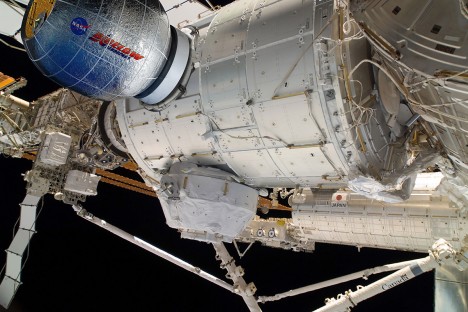
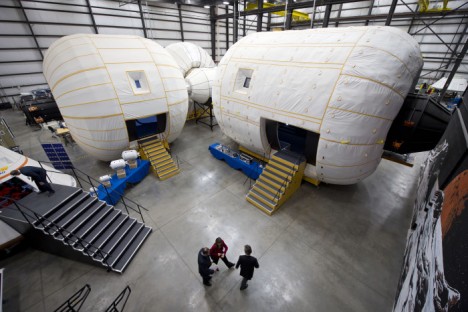
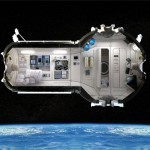
A new space hotel room will be the first addition to the International Space Station in years, part of a test to see whether inflatable rooms can serve as more compact and space architecture on demand, unlike rigid frame space hotel concepts.

The Bigelow Expandable Activity Module (BEAM) developed by an aerospace company in Las Vegas is comprised primarily of a light and flexible fabric that unfolds when inflated, creating a bubble-shaped room. The eventual plan: use this as a prototype for space tourism, creating housing when and where it is needed both attached to and beyond the ISS.

NASA Deputy Administrator Lori Garver is given a tour of the Bigelow Aerospace facilities by the company's President Robert Bigelow on Friday, Feb. 4, 2011, in Las Vegas.  NASA has been discussing potential partnership opportunities with Bigelow for its inflatable habitat technologies as part of NASA's goal to develop innovative technologies to ensure that the U.S. remains competitive in future space endeavors. Photo Credit: (NASA/Bill Ingalls)

Launched into orbit with help from SpaceX, the module is lighter and more compact, thus more cost- and fuel-efficient to ship, and, when not in use: it can also fold back down for storage. A testing period over the next few years will help researching astronauts evaluate its performance, including its ability to withstand micro-meteoroid impacts, radiation and temperature fluctuations.

Share on Facebook


[ By WebUrbanist in Boutique & Art Hotels & Travel. ]

[ WebUrbanist | Archives | Galleries | Privacy | TOS ]


WebUrbanist

 
Comments Off on Expanding the ISS: Inflatable Space Hotel Room Sent into Orbit

Posted in Creativity


CP+ 2016: Fujifilm gets new X-Pro2 and X70 into photographers’ hands

28 Feb

CP+ 2016: Fujifilm gets new X-Pro2 and X70 into photographers’ hands

Fujifilm didn’t announce any new products at CP+ this year, but the show is the first chance that a lot of Japanese enthusiast photographers have had to get their hands on the X-Pro2 and X70, which were unveiled last month.

CP+ 2016: Fujifilm gets new X-Pro2 and X70 into photographers’ hands

In an effort to get cameras into photographers’ hands, Fujifilm is running a rental service at this year’s show, where prospective X-series users can hire gear while they’re attending the show. 

CP+ 2016: Fujifilm gets new X-Pro2 and X70 into photographers’ hands

Here’s the camera that a lot of people at the booth have come to see – the 24MP X-Pro2. The long-awaited replacement for the X-Pro1 brings a higher resolution sensor, upgraded processor and significantly revamped autofocus system. 

CP+ 2016: Fujifilm gets new X-Pro2 and X70 into photographers’ hands

Ergonomically, the X-Pro2 is very similar to its predecessor but in terms of performance, it’s a totally different beast. The snappier processor, revamped ergonomics and higher-resolution viewfinder all make a welcome difference to the camera’s operation. 

CP+ 2016: Fujifilm gets new X-Pro2 and X70 into photographers’ hands

Less obvious are the changes that Fujifilm has made under the hood. The X-Pro2 is weather-sealed and – Fujifilm claims – more able to withstand punishment than its predecessor. This is what happens to an X-Pro2 after it has been aged in a simulated (i.e. sped up) process which appears to have involved rather a lot of sandpaper. Even with paint missing from pretty much all of its edges, the camera remained operational (we’re told). 

CP+ 2016: Fujifilm gets new X-Pro2 and X70 into photographers’ hands

Apologies for the poor quality photograph, but this camera is an early mockup of an ‘X-Pro1 S’, which ultimately became the X-Pro2. Cameras often go through several design changes during the course of their development but it’s unusual to be able to see any of the rejected versions. The X-Pro1 S is a little boxier, and a little more ‘classic’ looking than the eventual X-Pro2.

CP+ 2016: Fujifilm gets new X-Pro2 and X70 into photographers’ hands

And slimmer, too. Although of course it’s impossible to say whether the camera would have stayed quite so skinny by the time it entered production. We’re pretty sure that this prototype doesn’t actually contain any working electronics. 

CP+ 2016: Fujifilm gets new X-Pro2 and X70 into photographers’ hands

Again, sorry about the poor quality of this image, but if you look carefully at this exploded view of the X-Pro2 you’ll see various yellow lines around the body shell on the left of the picture. These are gaskets for weather-sealing. 

CP+ 2016: Fujifilm gets new X-Pro2 and X70 into photographers’ hands

Fujfiilm is really pushing the X-Pro2 at CP+, and has even created a gallery space showcasing images from its newest X-series camera. We must say, these prints (which are mostly around 20 inches in size) look great. 

CP+ 2016: Fujifilm gets new X-Pro2 and X70 into photographers’ hands

Let’s not forget about the X-70 though, Fujifilm’s new APS-C format compact camera. Essentially the X70 takes the imaging components from the X100T, and puts them into a smaller, more compact body. Gone is the X100T’s hybrid viewfinder (an optical one – shown here – can be added if you like) but new is a 28mm equivalent F2.8 lens. 

CP+ 2016: Fujifilm gets new X-Pro2 and X70 into photographers’ hands

The X70’s rear screen can tilt outwards, and up for shooting from low and high angles (and self portraits if you’re so inclined). It’s touch-sensitive, which allows for direct placement of AF point by touch, and quick swiping through images in review mode.

CP+ 2016: Fujifilm gets new X-Pro2 and X70 into photographers’ hands

A major booth at CP+ just wouldn’t be complete without some scantily-clad ladies to take pictures of, and Fujifilm has even created a nice little garden for them to stand in. How kind. 

CP+ 2016: Fujifilm gets new X-Pro2 and X70 into photographers’ hands

Meanwhile, photographers use Fujifilm’s new 100-400mm telezoom to snap overhead portraits of the ladies in their garden. . 

CP+ 2016: Fujifilm gets new X-Pro2 and X70 into photographers’ hands

Fujifilm isn’t focused completely on digital technology of course. The company still makes (and sells a lot of) instant film cameras. Instax had a prominent and very colorful corner of the Fujifilm booth at this year’s show.

CP+ 2016: Fujifilm gets new X-Pro2 and X70 into photographers’ hands

It looks like Rishi has found his favorite color – what’s yours?

Articles: Digital Photography Review (dpreview.com)

 
Comments Off on CP+ 2016: Fujifilm gets new X-Pro2 and X70 into photographers’ hands

Posted in Uncategorized


Lightweight & Portable Egg-Shaped Drone Folds Up Into Shell

28 Feb

[ By WebUrbanist in Gadgets & Geekery & Technology. ]

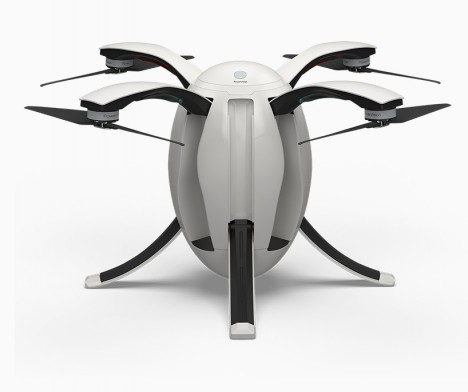
poweregg drone

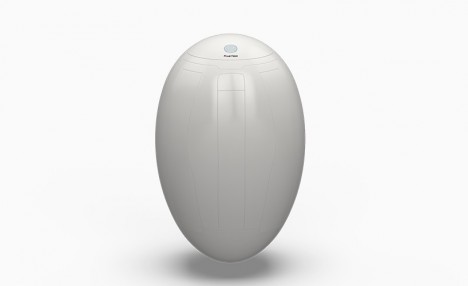
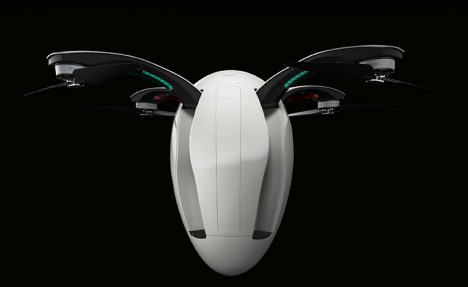
Boasting practical portability with an eye to aesthetics, the new PowerEgg stands out against its more ungainly competitors, able to fold up into a smooth oval when not in use.

powervision egg drone

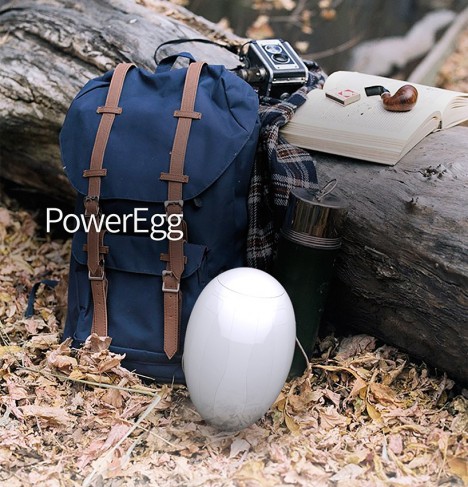
PowerVision “wanted to create a beautiful yet functional design for the poweregg,” explains CEO Wally Zheng. “The oval shape is not only clean and pure but also has the structural and functional benefits. This simple yet vital design means that this is more than a flying robot but a work of art.”

poweregg size

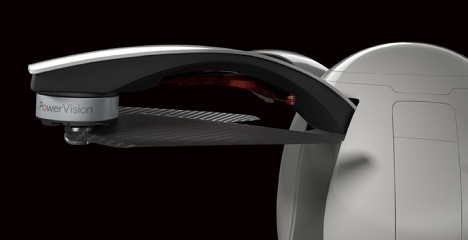
The device features a 360-degree panoramic HD camera able to relay long-range video, advanced optical flow sensors for indoor navigation and an easy-to-use remote control.

powervision detail

Developed over a year and a half, a great deal of work went into structural engineering, particularly making the moving parts work as it transforms to active from passive modes and back again.

poweregg deployed

“We want flying a drone to be child’s play, something even a five-year-old can do,’ continued Zheng. “With this next generation of drones, much like the internet expanded access to information in the virtual world, drones 2.0 led by innovations like the PowerEgg can expand access to the physical world and bring together humans and machines in this journey.”

Share on Facebook


[ By WebUrbanist in Gadgets & Geekery & Technology. ]

[ WebUrbanist | Archives | Galleries | Privacy | TOS ]


WebUrbanist

 
Comments Off on Lightweight & Portable Egg-Shaped Drone Folds Up Into Shell

Posted in Creativity


Bloomframe: Window Morphs Into a Balcony in Seconds

30 Jan

[ By Steph in Design & Fixtures & Interiors. ]

bloomframe

Transforming from a flat window into a balcony at the push of a button, the Bloomframe design is not only available for purchase after years of design refinements, it’s also set to be the defining feature of an entire apartment building. Amsterdam-based architecture firm Hofman Dujardin won the Red Dot Design Award back in 2008 for the concept, which manages to be both innovative and attractive, eliminating some of the bulk seen in similar designs.

bloomframe-gif

bloomframe 2

Think of it as the balcony version of a Murphy bed: you press a button and something useful pops out of the wall to offer you more space and functionality. Operated by remote control, the balcony looks like an ordinary window, except with an opaque metal panel where the lower pane of glass would normally be. Activate it, and an electric motor drive will extend out the top frame, pushing the lower one down into the balcony’s floor.

bloomframe 3

bloomframe 4

bloomframe 6

The whole process takes about fifteen seconds to complete, and the result is a real balcony with enough space for two people to sit down at a table and enjoy a meal. It was conceived specifically for spaces where traditional balconies aren’t logistically possible, like apartment renovations or warehouse conversions.

bloomframe 8

bloomframe

When a dozens of them are installed in a single apartment building, like Hofman Dujardin’s proposed housing block, the result is a dynamic, constantly changing facade pattern. “In the winter the facade is closed, during spring the facades open like a flourishing flower,” say the designers.

Share on Facebook


[ By Steph in Design & Fixtures & Interiors. ]

[ WebUrbanist | Archives | Galleries | Privacy | TOS ]


WebUrbanist

 
Comments Off on Bloomframe: Window Morphs Into a Balcony in Seconds

Posted in Creativity