RSS
 

Posts Tagged ‘into’

Rebuilding Blocks: Mobile Factory Turns Disaster Debris into Modular Bricks

26 Sep

[ By WebUrbanist in Architecture & Houses & Residential. ]
mobile-factory-homes-copy

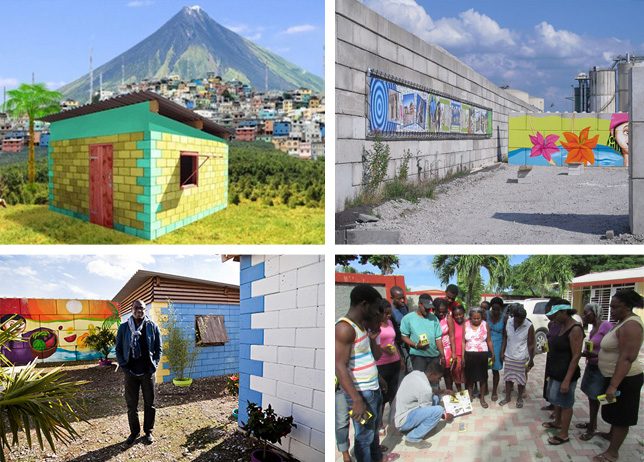
In the wake of intentional demolition or unexpected disasters, the Mobile Factory system can be shipped inside just two cargo containers and begin to turn rubble from ruins into building blocks for reconstruction.

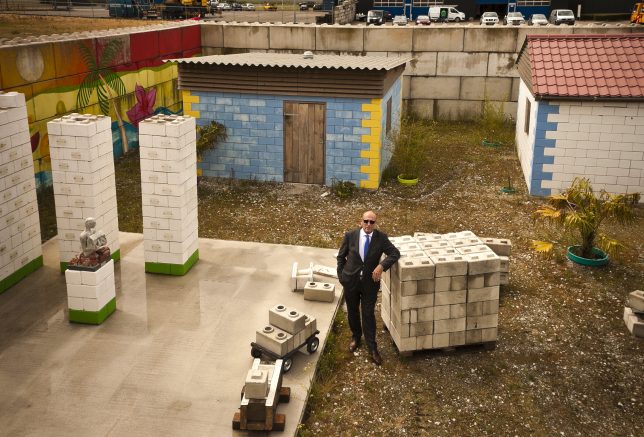
Developed in The Netherlands, the technology filters concrete from other rubble, which is then cast into interlocking blocks (like LEGO bricks) that require no joinery to form stable walls. These units can be stacked without specialized training or equipment, making it possible for communities to rebuild efficiently and cheaply.

The resulting structures are earthquake-resistant, held together in part by bamboo rods threaded through voids in a certain subset of the wall blocks (which can also be used to thread in utilities, including plumbing and electrical lines).
mobile-factory-walls

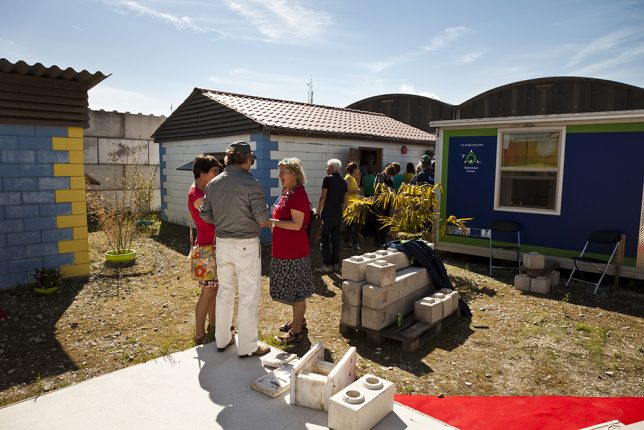
Since the system fits into a pair of shipping containers, it can easily be transported from site to site, building blocks close to where they will be used and reducing transit time and costs. The reversibility of this construction approach also means that temporary buildings can be erected quickly in the wake of a disaster. In turn, these can be disassembled or adapted easily in the weeks, months and years following an emergency situation.

Consider the 2010 earthquake in Haiti that left hundreds of thousands dead and millions homeless. Over five years later and the country is still littered with 25 million tons of construction debris, which technologies like this can help turn into affordable housing. Indeed, the Mobile Factory organization is looking into expanding their work in Haiti, Peru and other countries in need of this tech.
mobile-blocks

“In disasters, you have piles and piles of rubble and the rubble is waste. If you are rich, you buy more bricks and rebuild your home,” said one of the organization’s founders. “But what happens if you are poor? In disasters it is the poorest people who live in the weakest houses and they lose their homes first. I thought, what if you recycled the rubble to build back better homes for poor people?”

Beyond wars and tsunamis in nations further afield, there are potential urban applications in densely-built places like the Europe and the United States: cities like Baltimore and Detroit spend vast amounts of money demolishing buildings (and in some cases: entire blocks), then clear the rubble and put it in landfills. This technology suggests an alternative: reusing on or close to the demolition site, reducing material and energy waste as well post-demolition transportation costs.

Share on Facebook


[ By WebUrbanist in Architecture & Houses & Residential. ]

[ WebUrbanist | Archives | Galleries | Privacy | TOS ]


WebUrbanist

 
Comments Off on Rebuilding Blocks: Mobile Factory Turns Disaster Debris into Modular Bricks

Posted in Creativity


12 City Slides Turning Urban Settings Into Playgrounds for Adults

13 Sep

[ By SA Rogers in Destinations & Sights & Travel. ]

urban slide LA 2

Slides actually make a lot of practical sense in urban environments, potentially zooming over busy streets and transferring pedestrians from high ground to low ground faster than an escalator or set of stairs. That is, as long as people use them in an efficient manner and don’t clog them up. A mainstay on playgrounds around the world, slides can add a sense of fun to urban settings for adults, too. These examples of slides integrated into architecture, temporarily installed in city streets and doubling as public sculptures offer some exciting inspiration (take the hint, architects and city planners!)

Skyslide Los Angeles

skyslide

Zoom from the 70th floor of Los Angeles’ U.S. Bank Tower to the 69th in a fully transparent, 45-foot-long glass slide with thrilling (or terrifying, depending on your feelings about heights) views of the city below. The Skyslide opened this year on the West Coast’s tallest building, and though the glass is only 1 1/4 inches thick, the slide is said to be earthquake- and hurricane-proof.

Giant Water Slide in Bristol by Luke Jerram

city slides luke jerram 2

city slides luke jerram 3

city slides luke jerram 4

‘Park and Slide’ by UK-based artist Luke Jerram temporarily turned Bristol’s Park Street into a waterpark, drawing in 65,000 visitors to watch 360 lucky lottery winners ranging in age from 5 to 73 slide from one end of the street to the next. “This massive urban slide transforms the street and asked people to take a fresh look at the potential of their city and the possibilities for transformation,” says Jerram. “Imagine if there were permanent slides right across cities?”

Transfer Accelerator Slide for Commuters

city slides transfer accelerator

city slides transfera ccelerator 2

Designed as part of the Overvecht train station’s redevelopment, the Transfer Accelerator slide in Utrecht makes leaving the train station a little bit faster, and a lot more fun. The slide was integrated into the stairs outside the station as part of a push to encourage more commuters to take the train instead of driving.

Cliveden House Slide

city slides cliveden house

city slides cliveden house 2

This four-lane stainless steel slide at Cliveden House in Buckinghamshire, former home to Waldorf and Nancy Astoria, distracts visitors from ongoing restoration work and offers an alternative way to get back to lawn level rather than the scaffolding-covered stairs. It’s not often that you see a theme-park-worthy slide attached to a regal old manor house – it’s too bad it’s not a permanent feature.

Next Page – Click Below to Read More:
12 City Slides Turning Urban Settings Into Playgrounds For Adults

Share on Facebook


[ By SA Rogers in Destinations & Sights & Travel. ]

[ WebUrbanist | Archives | Galleries | Privacy | TOS ]


WebUrbanist

 
Comments Off on 12 City Slides Turning Urban Settings Into Playgrounds for Adults

Posted in Creativity


VW Doubleback: Hacked Camper Van Unfolds into Huge Mobile Home

09 Sep

[ By WebUrbanist in Technology & Vehicles & Mods. ]

doubleback huge

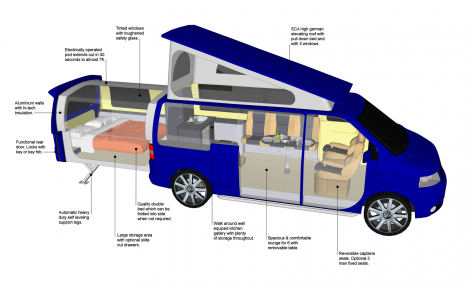
The recent comeback of modernized (and modified) mobile homes has seen many novel transformations of cars and trucks into various sizes of living space, but the Doubleback may have more secret additional area than any other vehicle of its size and class.

These modified T5 transports have a pop-up top, but also a slide-out back adding up to six feet of extra length – each of these extensions can sleep two people.

doubleback diagram

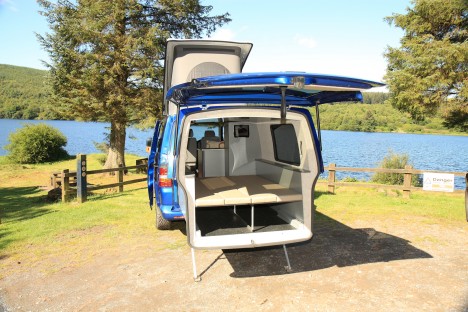
Self-leveling feet drop down from the rear extension, making sure the cantilevered zone remains level at all times, including on variegated terrain.

doubleback rear

Further exterior space can be covered as well via a roll-out canopy top or custom flip-up door, turning parking lots and campgrounds into cookout spaces and backyards.

doubleback interior

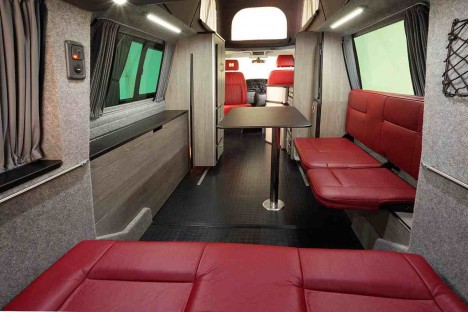
Various configurations are possible, sleeping up to four people (drop-down beds in the back and additional sleeping space above) and seating depending on the design details. Newer models also include space for a camping toilet and cooking amenities.

Share on Facebook


[ By WebUrbanist in Technology & Vehicles & Mods. ]

[ WebUrbanist | Archives | Galleries | Privacy | TOS ]


WebUrbanist

 
Comments Off on VW Doubleback: Hacked Camper Van Unfolds into Huge Mobile Home

Posted in Creativity


Sigma gets into the cinema lens game starting with 18-35mm T2 and 50-100mm T2 zooms

07 Sep

$ (document).ready(function() { SampleGalleryV2({“containerId”:”embeddedSampleGallery_5923700790″,”galleryId”:”5923700790″,”isEmbeddedWidget”:true,”standalone”:false,”selectedImageIndex”:0,”startInCommentsView”:false,”isMobile”:false}) });

Sigma has announced its own line of lenses for filmmakers. Sigma Cine Lenses are weatherproof and designed with an emphasis on optical performance and making the most of high-resolution sensors. An 18-35mm T2 and 50-100mm T2 for APS-C bodies will be the first introduced. 

A full-frame 24-35mm T2.2 and an assortment of primes will follow in 2017 and beyond. All lenses will be introduced in EF- and E-mounts, with PL versions coming later for each except the 24-35mm T2.2 FF. Pricing isn’t given at this time; Sigma says the first lenses will be available near the end of 2016 starting with Japan and the US.

Press release:

SIGMA ANNOUNCES NEW CINE LENSES

Amsterdam, The Netherlands — September 7, 2016 – The SIGMA CORPORATION is pleased to announce that it will enter into the cinema lens market with the release of its SIGMA CINE LENSES, designed specifically for cinematography. In the world of digital film production, there is an increasing demand for higher resolution, and SIGMA’s new lineup of high-performance lenses is compatible with the latest, high-resolution digital cinema cameras. SIGMA has developed its own production system by establishing the required technology for mass production of high-performance lenses for ultra-mega-pixel shooting. The company feels this valuable new lens line could create a fundamental change in digital film production, and provide a new solution for cinematographers.

  • Unbeatable value – the highest optical performance in its class and outstanding compact design
  • Wide range of lenses for professional use
  • Optimized for the latest digital moviemaking technology

For the first phase, SIGMA will release two zoom lenses in Japan and the USA for EF and E mount camera systems. Furthermore, another zoom lens and five prime lenses will be released to the market in sequence from 2017 onward. SIGMA plans to develop additional zoom and prime lenses as well as add support for PL mount camera systems. The latest release information will be sequentially updated on its official website.

High Speed Zoom Line
High Speed Zoom Line offers the constant aperture of T2 throughout the zoom range, and the optical performance is ready for high-resolution shooting such as 6K – 8K. Furthermore, while offering the highest image quality in its class, the High Speed Zoom Line has a compact construction and offers amazing value.

FF Zoom Line
FF Zoom Line is compatible with a full-frame image circle, and the optical performance is ready for high-resolution shooting such as 6K – 8K. It provides a rare option for cinematographers since very few lenses can cater to the requirements of the latest digital cinema cameras’ image sensor, which is larger than Super 35, and expand the range of compatible cameras. This is the cinema zoom lens offering the highest image quality and compact design. This lens is not available in PL mount.

FF High Speed Prime Line

The lineup ranges from 20mm to 85mm, and all five lenses are T1.5. They are compatible with full-frame sensors and, while being more compact, can offer superior resolution than other high-end prime sets do. With the five prime lenses from FF High Speed Prime Line, there is no need to change the lighting to shoot a variety of cuts. These lenses bring a consistent level of light to the production and offer greater consistency with regards to the film’s look and color/contrast before it enters post-production.

Each CINE lens model is weatherproof and has luminous paint markings to aid in changing and operating the lens in the dark. It touts a long focus rotation of 180 degrees and is guided by cams for smooth operation and accuracy. The CINE lens design features standardized essentials such as an 82mm front for ND filters* and a 95mm front diameter for matte box use and standard gear positions for accessories like follow focus. They also include a manual linear iris control and electronic mounts that provide vital camera metadata. Each lens is manufactured and inspected in the Sigma factory located in Aizu, Japan.

Availability/Pricing

Availability: toward the end of 2016 (in Japan and USA in the first phase)
Pricing: TBD
Mounts: Initially Canon-EF and Sony-E to be followed later by PL**

*20mm T1.5 FF doesn’t accept filters.
**24-35mm T2.2 FF is not available in PL mount. The appearance and specifications are subject to change without notice.

Articles: Digital Photography Review (dpreview.com)

 
Comments Off on Sigma gets into the cinema lens game starting with 18-35mm T2 and 50-100mm T2 zooms

Posted in Uncategorized


Architect Overboard: Rusted Ship Hull Flipped into Arts Pavilion

25 Aug

[ By WebUrbanist in Architecture & Public & Institutional. ]

rusted lead

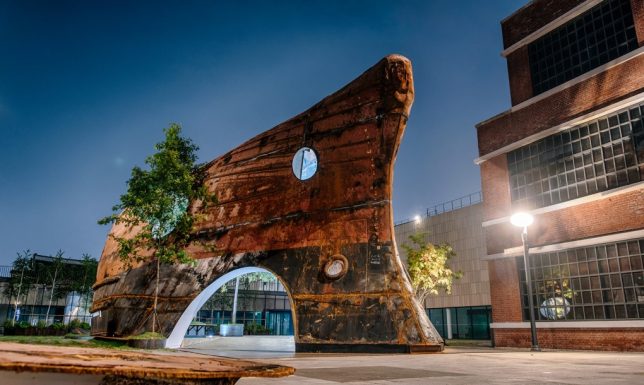
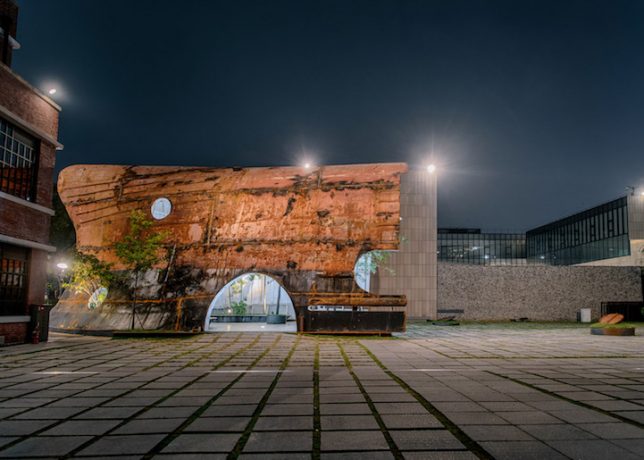
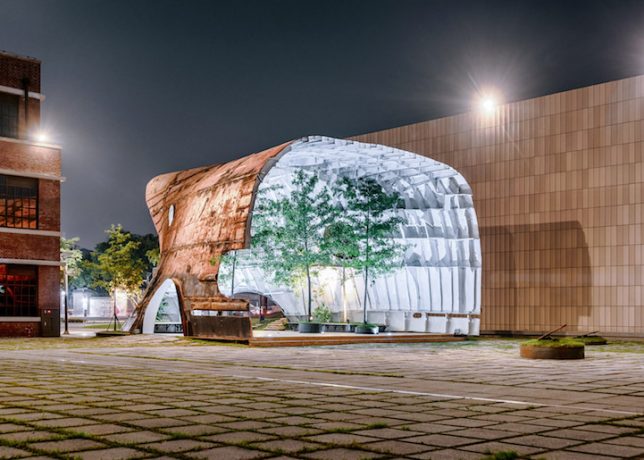
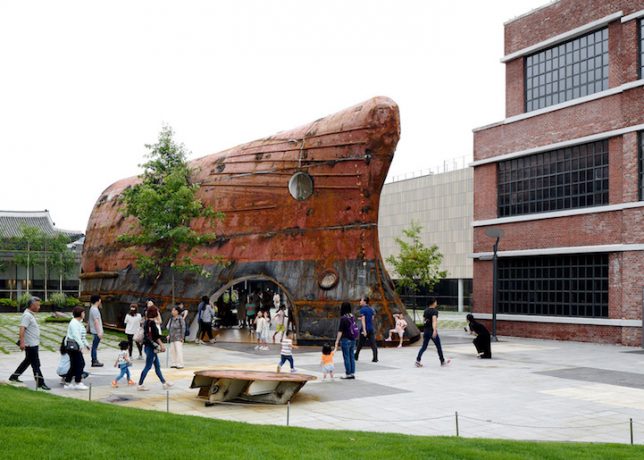
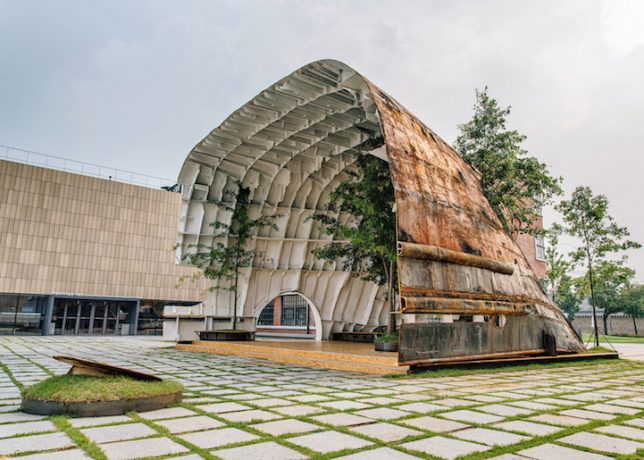
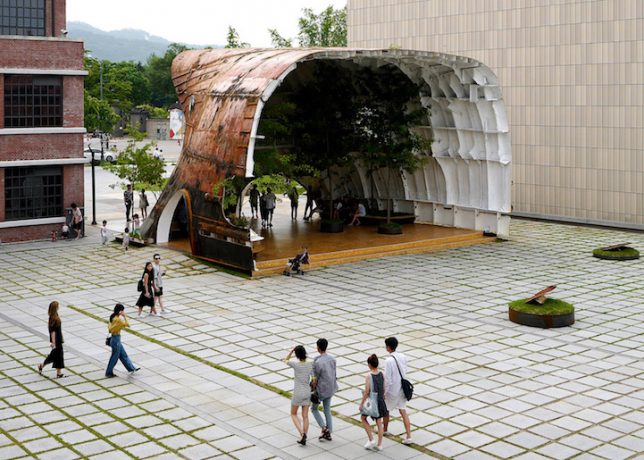
Cut from a massive decaying sea vessel, this hollowed-out section of hull has been transformed into a seating and performance space outside of the National Museum of Modern and Contemporary Art in South Korea.

rusted pavillion space

rusted gutted sea vessel

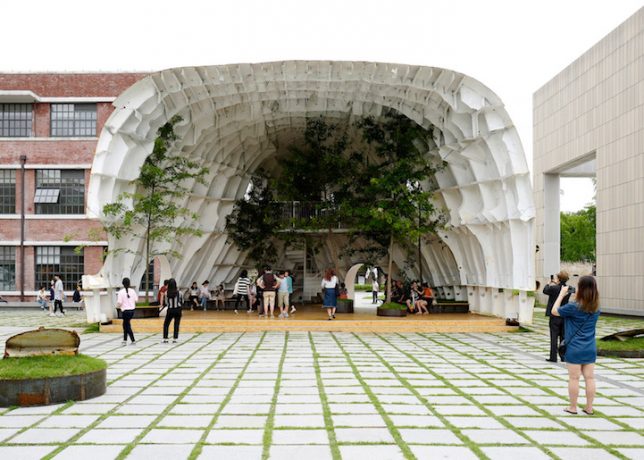
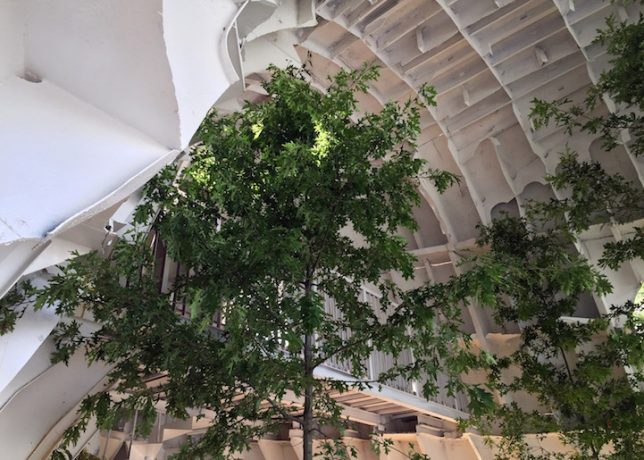
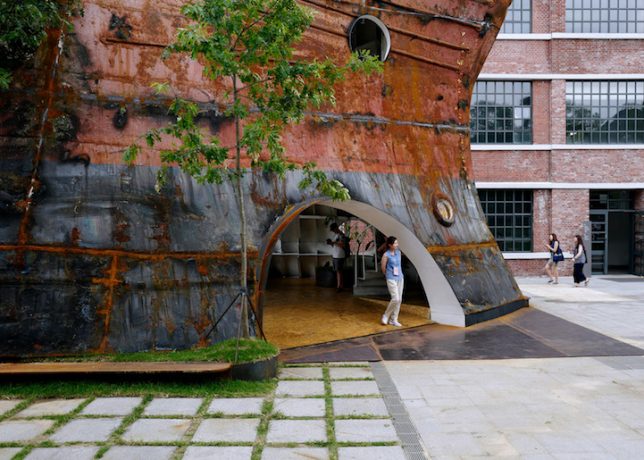
Located in Seoul, the Temp’L features an original corroding exterior that contrasts with its freshly-painted white interior and an array of greenery adorning it inside and out.

rusted museum seoul

A balcony and spiral staircase let visitors wind their way up inside this partial shell of the old ship, making their way to a semi-enclosed alcove shrouded by trees.

rusted old and new

The red-and-white theme plays off of concrete and brick on the adjacent museum building while the shape and texture set it starkly apart.

rusted exterior display

“Any great cultural vestiges can lose their function,” says Shinslab Architecture. “In the same way, a material can also lose its original value over time.”

rusted trees interior

“The fact that the destiny of cultural relics is to be dismantled, should make us reflect upon what we need to consider for future generations.”

rusted visitors

rusted entryeway

“Temp’L is designed from recycled steel parts from an old ship. It shows not only a beauty of structure, but it has also a recycling purpose…It provokes thought about beauty in our time, coming from a recent past.”

Share on Facebook


[ By WebUrbanist in Architecture & Public & Institutional. ]

[ WebUrbanist | Archives | Galleries | Privacy | TOS ]


WebUrbanist

 
Comments Off on Architect Overboard: Rusted Ship Hull Flipped into Arts Pavilion

Posted in Creativity


Prismatic Graffiti: Bending Light into a Spectrum of Wall Murals

20 Aug

[ By WebUrbanist in Art & Installation & Sound. ]

light art making

These intricately choreographed dances of light and color are at once static but ephemeral, lasting longer than conventional light graffiti but nonetheless made of impermanent light.

light wall art

light art graffiti

Stephen Knapp is a sculptor and muralist who has worked in metal and glass, but his latest array of light paintings turn the latter toward a new and more indirect purpose.

light in gallery museum

light art glass detail

His pieces are not sketched, programmed or otherwise visualized in advanced, but emerge as he begins cutting, polishing, shaping and places pieces of glass on the wall. Unlike many light graffiti artists, the work does not rely on a photographer capturing a fleeting moment, but can be put up on museum walls indefinitely.

light art prisms

light reflected art mural

“The fun of what I do with light, is that there is nothing in our visual memory that prepares us for what I’m doing,” says Knapp. “The fact that what I create can just be done with light, that there is no paint on these panels, is absolutely astounding to people. What I am trying to do most of all here is challenge any traditional notion of perception. What is it? Is it real? Is it not real? Does it matter?”

His work has been featured in galleries around the world from Boise to Naples and a solo exhibition is currently on display at the Pensacola Museum of Art.

Share on Facebook


[ By WebUrbanist in Art & Installation & Sound. ]

[ WebUrbanist | Archives | Galleries | Privacy | TOS ]


WebUrbanist

 
Comments Off on Prismatic Graffiti: Bending Light into a Spectrum of Wall Murals

Posted in Creativity


Urban Camo: Bus & Train Fabrics Turned into Wearable Textiles

15 Aug

[ By WebUrbanist in Art & Sculpture & Craft. ]

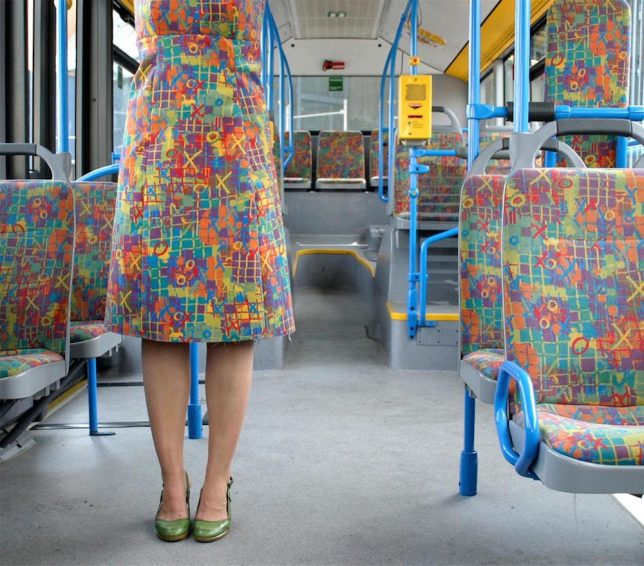
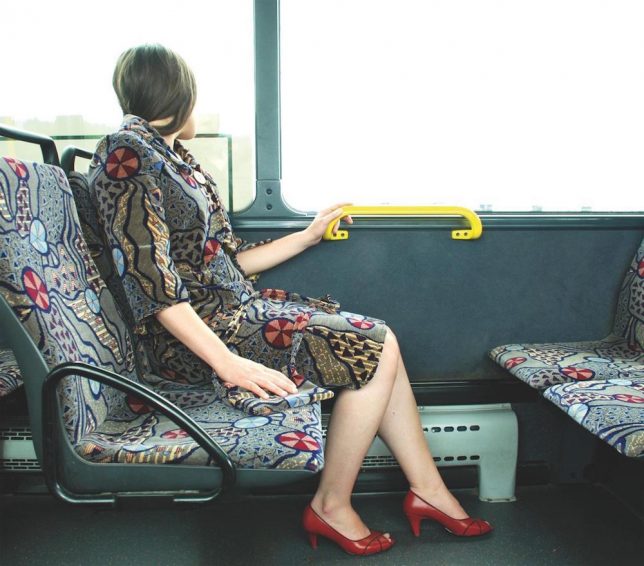
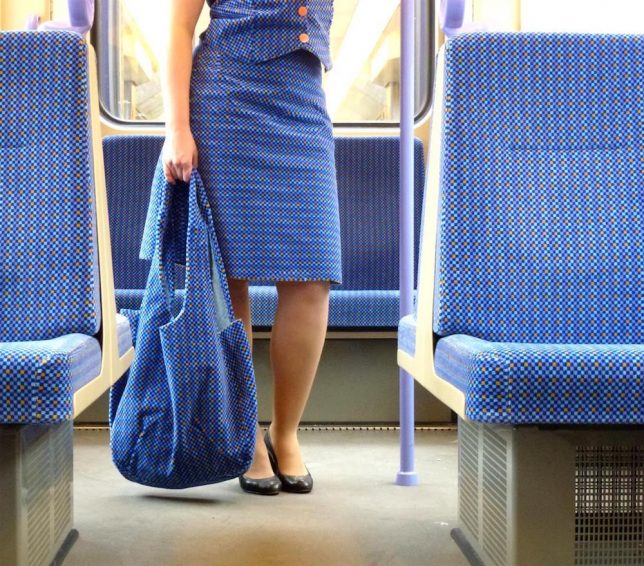
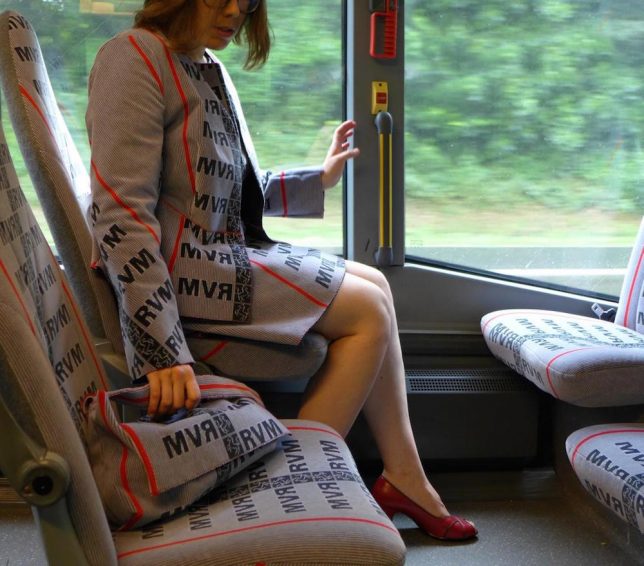
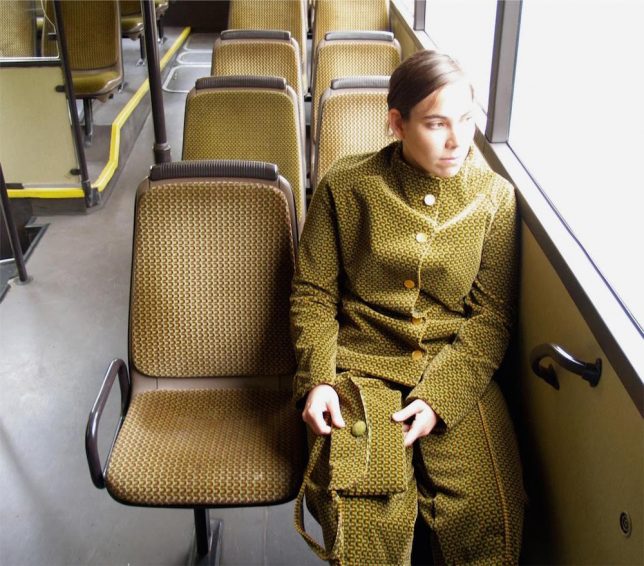
fabric matching transit dress

Transportation system patterns, right down to seat cloth details, are designed to last and look good even when stained by dirt and spilled drinks over time, making them an oddly suitable choice to turn into apparel.

transportation camouflage germany

Of course, what looks best under those strained conditions can also look downright strange when turned into suits for human wearers, as Germany artist Menja Stevenson explored firsthand.

fabric cloth outfit artist

“No matter how many subway lines, buses, trams, trains, and other public conveyances we ride, we are rarely left with a positive impression of the upholstery,” writes David Gibson of the BBC in discussing this art project. “As sure as roses are red and violets blue, transport fabric is a multihued graphic abomination, possibly crawling with pathogens.”

matching cloth

Stevenson contacted transportation officials and managed to get large enough sections and samples sent her way in order to start making her distinct urban outfits.

transit suit outfit

“For many years I had to take the bus to the academy where I studied art,” says the artist. “Such a pattern, like a lot of everyday things, imprints itself into our memory unconsciously without being actually perceived.Through my intervention the beholder (or passenger) becomes aware of the ‘invisible’ fabric.”

urban outfit

Of course, by outfitting herself in transit-mapping fabrics, Stevenson goes from being invisible to highly visible, inevitably generating conversations from curious onlookers who notice her fitting in while standing out (via Colossal).

Share on Facebook


[ By WebUrbanist in Art & Sculpture & Craft. ]

[ WebUrbanist | Archives | Galleries | Privacy | TOS ]


WebUrbanist

 
Comments Off on Urban Camo: Bus & Train Fabrics Turned into Wearable Textiles

Posted in Creativity


Concept To Creation: Turn Inspiration Into Concept

17 Jul


Turning Inspiration Into A Concept

miles-aldridge-vogue-italia-cat-story

Hey FashionPhotographyBlog.com readers.


Thanks for joining us on our Concept to Creation series where we walk you through the process of taking an idea into an image. If you were with us last time, we talked about talked about how to find inspiration for your shoots. On today’s we’re going to jump into discussing how to turn your inspiration into a concept.


Now, this right here is the most important step. You have an idea, great. How do you turn that idea into a set of images? Can it be turned into a picture narrative/story? Now that you have your base idea, it’s time to do some research! Doing an editorial based on the color red? What does the color red evoke? How have people pulled off red editorials in the past? While researching, plan your shoot. Is it in studio? Is it on location? One model or two? Blonde, brunette or redhead? Take this laundry list of ideas and findings and start turning it into a picture in your head.


For some people, it helps to sketch things out. For others, it helps to collage. I tend to collect images while I sit on an idea and then go straight into creating a moodboard.


Look at an editorial or a campaign, you’ll see that there is one main thing that binds all the images together – a concept. When flipping through the pages of a magazine, you can determine when one story ends and another beings purely based on the concept behind the images. You won’t find an editorial that consists of different girls wearing different types of clothing in locations that aren’t relevant to each other. That’s just not how it works.


A concept is what will bind your story together. And the way in which you handle it shows a bit of your voice. A concept goes further than “my model is wearing red in all the images”. That’s purely a way of styling the model. Put some imagination into it.


Hope you all enjoyed this dive into the thought process behind translating an inspiration into a concept. To help explain the points raised in this post further, the next article I’m posting, we’ll dive a little further by showing you some examples of how working fashion editorial photographers pull their inspiration and translating them into concepts.


Until then –

Alana


IMAGE SOURCE:

Feature image & image 1: Miles Aldridge for Vogue Italia


Fashion Photography Blog

 
Comments Off on Concept To Creation: Turn Inspiration Into Concept

Posted in Uncategorized


Concept To Creation: Turn Inspiration Into Concept

15 Jul


Turning Inspiration Into A Concept

miles-aldridge-vogue-italia-cat-story

Hey FashionPhotographyBlog.com readers.


Thanks for joining us on our Concept to Creation series where we walk you through the process of taking an idea into an image. If you were with us last time, we talked about talked about how to find inspiration for your shoots. On today’s we’re going to jump into discussing how to turn your inspiration into a concept.


Now, this right here is the most important step. You have an idea, great. How do you turn that idea into a set of images? Can it be turned into a picture narrative/story? Now that you have your base idea, it’s time to do some research! Doing an editorial based on the color red? What does the color red evoke? How have people pulled off red editorials in the past? While researching, plan your shoot. Is it in studio? Is it on location? One model or two? Blonde, brunette or redhead? Take this laundry list of ideas and findings and start turning it into a picture in your head.


For some people, it helps to sketch things out. For others, it helps to collage. I tend to collect images while I sit on an idea and then go straight into creating a moodboard.


Look at an editorial or a campaign, you’ll see that there is one main thing that binds all the images together – a concept. When flipping through the pages of a magazine, you can determine when one story ends and another beings purely based on the concept behind the images. You won’t find an editorial that consists of different girls wearing different types of clothing in locations that aren’t relevant to each other. That’s just not how it works.


A concept is what will bind your story together. And the way in which you handle it shows a bit of your voice. A concept goes further than “my model is wearing red in all the images”. That’s purely a way of styling the model. Put some imagination into it.


Hope you all enjoyed this dive into the thought process behind translating an inspiration into a concept. To help explain the points raised in this post further, the next article I’m posting, we’ll dive a little further by showing you some examples of how working fashion editorial photographers pull their inspiration and translating them into concepts.


Until then –

Alana


IMAGE SOURCE:

Feature image & image 1: Miles Aldridge for Vogue Italia


Fashion Photography Blog

 
Comments Off on Concept To Creation: Turn Inspiration Into Concept

Posted in Uncategorized


It was only a matter of time… new app turns your Instagram into virtual art gallery

08 Jun

Have you ever wanted to see your photographs on the wall of an art gallery? Come on – be honest. Your cat pictures deserve a wider audience, and the makers of new app ‘Instamuseum’ agree. 

Instamuseum converts any Instagram account into a 3D virtual reality experience, placing images (up to 90) from the feed on the walls of a computer-generated gallery space. There are four templates available (including ‘Louvre’) and the rendered space can be explored using VR goggles or using a more conventional pan / zoom interface in a desktop browser.

Instamuseum for @dpreview by barney.britton on Sketchfab

Coming in the same week as the actual Louvre gallery in Paris (into which we’ve placed DPReview’s Instagram feed, above) was evacuated due to historic flooding, we can’t help wondering if this is just another sign of the end times. Let us know what you think in the comments. 

Articles: Digital Photography Review (dpreview.com)

 
Comments Off on It was only a matter of time… new app turns your Instagram into virtual art gallery

Posted in Uncategorized