RSS
 

Posts Tagged ‘into’

CloudFisher: Low-Tech Net Turns Fog into Drinking Water for Morocco

04 Feb

[ By SA Rogers in Conceptual & Futuristic & Technology. ]

cloudfisher-main

In a semi-arid region of Morocco, where tap water is a luxury but fog is plentiful, a fog-harvesting net based on the structure of a spider’s web naturally collects moisture from the air. Engineer Peter Trautwein of the German Water Foundation volunteered his time to develop CloudFisher, a structure that looks like no more than a fence from afar. Get closer, and you’ll see a metal framework supporting the stretched nets, with gutters and tubing directing the collected droplets to tanks.

The nets are placed along the area around Mount Boutmezguida, which is known for being one of the driest parts of Morocco, but also the foggiest. When the wind blows, it pushes moisture into the complex woven netting, effectively trapping it. Rubber expanders holding the nets to the frames reduce the impact of wind pressure on the net to keep them from breaking.

cloudfisher-2

cloudfisher-3

CloudFisher is the result of many years of study, as Trautwein experimented with various structures of net to see which ones yielded the most water. Ultimately, monofilaments were the most effective. The netting’s tiny triangular openings fill with water, which then trickles down to the collector at the base.

cloudfisher-4

cloudfisher-5

The CloudFisher system was installed with the help of NGO Dar si Hmed and won the United Nations Framework Convention on Climate Change (UNFCCC) Momentum for Change Award. It’s capable of harvesting between four and fourteen liters of water per square meter of net, ultimately producing up to 36,000 liters (9,510 gallons) of water a day for the area’s 800 residents.

Share on Facebook


[ By SA Rogers in Conceptual & Futuristic & Technology. ]

[ WebUrbanist | Archives | Galleries | Privacy | TOS ]


WebUrbanist

 
Comments Off on CloudFisher: Low-Tech Net Turns Fog into Drinking Water for Morocco

Posted in Creativity


Plant Patterns: Living Roots Manipulated Into Nature-Based Art

02 Feb

[ By SA Rogers in Art & Sculpture & Craft. ]

plant-root-art

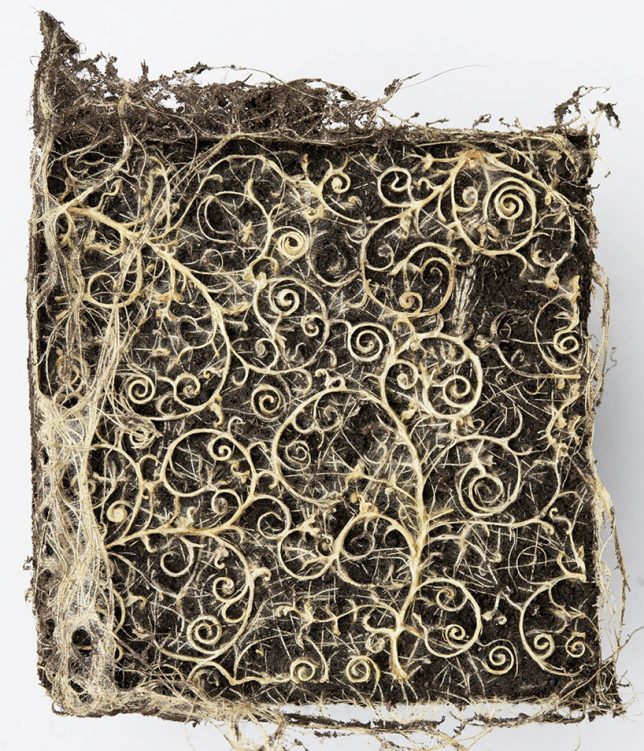
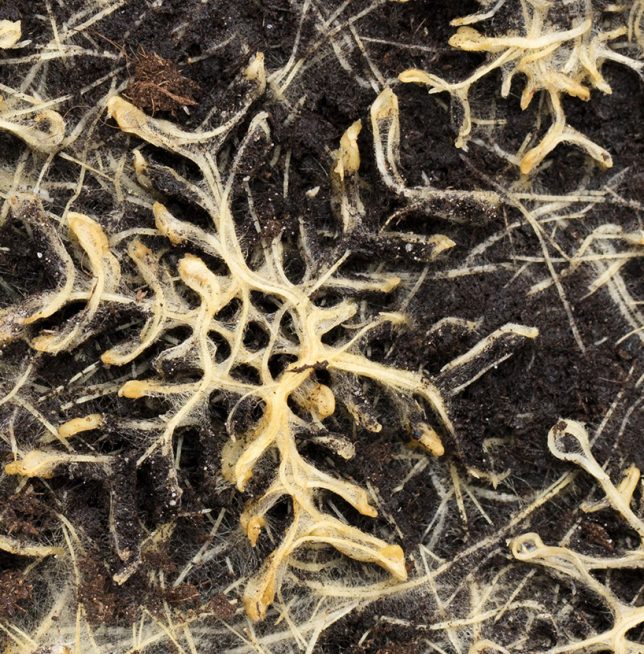
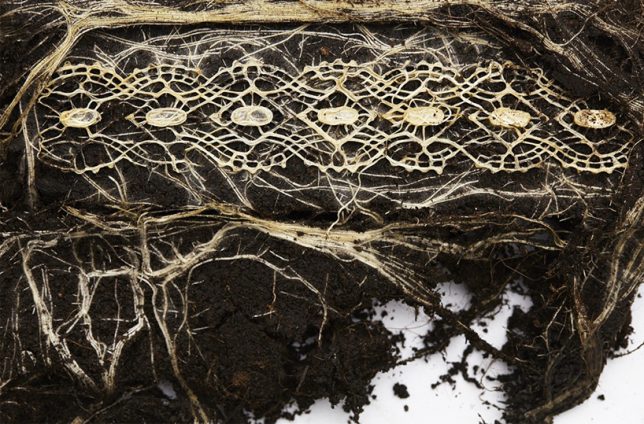
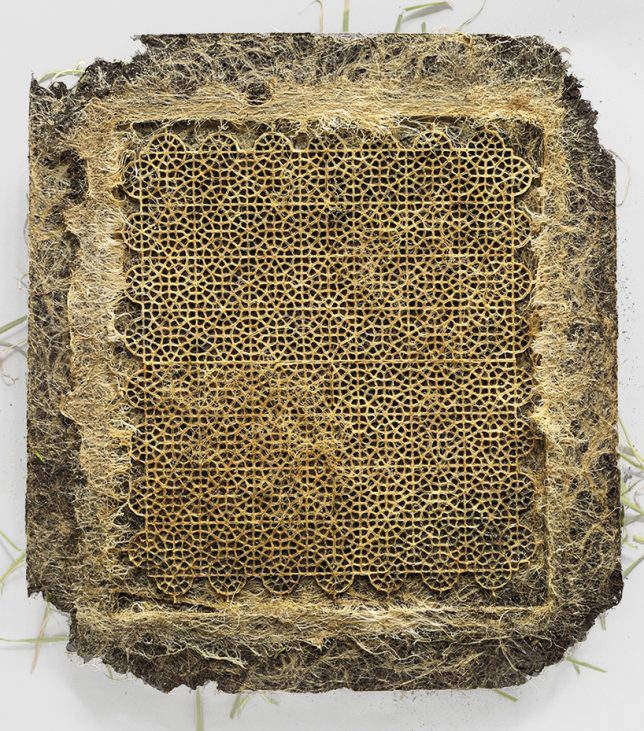
The intricacies of a plant’s secret life beneath the soil, where its roots grow and change almost constantly, become a true work of art when manipulated into specific patterns. Artist Diana Scherer collaborated with biologists and ecologists at Radboud University in Nijmegen, The Netherlands to develop a system that can create the same kinds of spirals and other motifs found in traditional woven textiles.

plant-root-art-2

Subterranean templates act like molds as the root systems expand, channeling them in certain ways to form thick mats, almost like living fabric. As the roots grow, they curl and braid around themselves, becoming stronger and reinforcing the patterns.

plant-root-art-3

plant-root-art-4

“In my work I explore the relationship man has with his natural environment and his desire to control nature,” says Scherer. “For the past few years my fascination has mainly been focused on the dynamics of below ground plant parts. I’ve been captivated by the root system, with its hidden, underground processes; it is considered to be the brain of the plant by plant neurobiologists.”

plant-root-art-5

“Charles Darwin was the first to watch the behavior of the plant roots. In his book The Power of Movements of Plants, he describes how roots do not passively grow down, but move and observe. A root navigates, knows what’s up and down, observes gravity and localizes moisture and chemicals. Darwin discovered that plants are a lot more intelligent than everybody thought. For contemporary botanists, this buried matter is still a wondrous land. There is a global investigation to discover this hidden world. I also want to explore it and apply the ‘intelligence’ of plants in my work.”

Share on Facebook


[ By SA Rogers in Art & Sculpture & Craft. ]

[ WebUrbanist | Archives | Galleries | Privacy | TOS ]


WebUrbanist

 
Comments Off on Plant Patterns: Living Roots Manipulated Into Nature-Based Art

Posted in Creativity


This time-lapse captures the awe-inspiring power of lava flowing into the ocean

25 Jan

Any seasoned landscape photographer can tell you that the moment spent actually pressing the shutter is just the tip of the iceberg – hours and even days are spent planning, getting into position and waiting for the right conditions. So the story behind Jack Fusco’s impressive new time-lapse, 61G Ocean Entry, might be familiar to landscape photo veterans.

Fusco and team traveled to Hawaii’s Big Island hoping to capture a somewhat rare occurrence: lava flowing into the Pacific Ocean from Kilauea Volcano. The goal was to capture a time-lapse of the stars along with the spectacular light show created by the flowing lava meeting ocean water.

If you watch the video above and you’ll see that Fusco’s mission was a success, but the behind-the-scenes story is equally fascinating. A rainy forecast and logistical challenges meant that the crew had to do a lot of thinking on their feet. All told, they came away with 1.3TB of data after 20 miles of hiking, hundreds of miles driven and very few hours spent sleeping. Was it worth the trouble? Take a look at the video and see for yourself.

Read the full behind-the-scenes story at Macphun’s blog.

Articles: Digital Photography Review (dpreview.com)

 
Comments Off on This time-lapse captures the awe-inspiring power of lava flowing into the ocean

Posted in Uncategorized


Flying your drone into the Space Needle can land you in jail

17 Jan

A small crew setting up for a fireworks display on top of Seattle’s famed Space Needle received an unexpected visitor on New Year’s Eve: a drone. The vehicle came crashing onto the Needle’s top platform in the afternoon of Saturday, December 31st and luckily, nobody was hurt. The footage above shows the drone hovering around the tower for several minutes before making a beeline toward the platform.

There are no city statutes prohibiting drone use in Seattle. Since nobody was hurt and there was no property damage the drone operator would not be charged on either of those counts. However, the pilot may face a charge of reckless endangerment – a gross misdemeanor that carries up to a year prison sentence and/or a $ 5,000 fine in the state of Washington. 

It seems that officials have tracked down the drone’s owner, and Geekwire may have found that person’s (now locked) Twitter account. A cached tweet appears to show the operator blaming DJI’s ‘return to home’ function for the crash.

Articles: Digital Photography Review (dpreview.com)

 
Comments Off on Flying your drone into the Space Needle can land you in jail

Posted in Uncategorized


Kodak CMO says the company is ‘looking into’ reviving Kodachrome

11 Jan
Photo by pittaya via Flickr. Used under CC license

During CES 2017, Kodak announced it would revive the film stock it discontinued in 2012, Ektachrome. The announcement was well received, and was itself the result of an uptick in professional film sales, something that has also spurred Kodak toward another possible revival: Kodachrome. Eastman Kodak’s President of Consumer Film division and Chief Marketing Office Steve Overman confirmed as much during a recent The Kodakery podcast.

The Kodakery team spoke with Overman from the Kodak booth during CES, and near the end of the discussion they mentioned the Ektachrome revival. That topic snowballed into a confirmation from Overman that Kodak is likewise looking into bringing Kodachrome back, but plans to do so haven’t been finalized at this time.

Overman works for US-based Eastman Kodak but it seems likely the company would follow the pattern seen with its recent Ektachrome announcement, and work with UK-based company Kodak Alaris to release a stills version of the film to photographic markets.

It took less effort and time to bring Ektachrome film back, Overman explained, which is why it was given precedence. He went on to say, though, that ‘people love Kodak’s heritage products and I feel, personally, that we have a responsibility to deliver on that love.’ 

Via: PetaPixel

Articles: Digital Photography Review (dpreview.com)

 
Comments Off on Kodak CMO says the company is ‘looking into’ reviving Kodachrome

Posted in Uncategorized


Turn your doodles into Google satellite images with Land Lines

05 Jan

Looking for a moment of zen? We suggest spending a couple of minutes playing with Land Lines, a game that draws on Google’s satellite images of Earth.

So maybe it’s not quite a ‘game.’ Its creators Zach Lieberman and Matt Felsen call it an experiment, one that analyzes basic scribbles (zig zags and curves, nothing fancy) and finds a satellite image of Earth with matching features. It runs on either a mobile or desktop web browser.

Lines that you draw with your finger or a mouse become roads, shorelines and runways before your eyes, almost instantaneously. It runs seamlessly, and it’s oddly soothing. Give it a try and learn more about how it all came together.

Articles: Digital Photography Review (dpreview.com)

 
Comments Off on Turn your doodles into Google satellite images with Land Lines

Posted in Uncategorized


7 Tips – How to Add Depth and Dimension into Your Photos

29 Dec

Photographers have the same dilemma that painters have faced for centuries – how to show a three-dimensional subject in a two-dimensional frame. When you add depth it helps create a sense of place and draw the viewer into your images. It also shows a deeper understanding of the principles of composition in photography.

The techniques and tips listed in this article will help you convey a stronger sense of depth in your photos.

1. Use leading lines

One of the easiest ways to convey depth in an image is to use a wide-angle lens and include lines that move from the bottom of the frame to the top. This technique is used mainly in landscape and architectural photos.
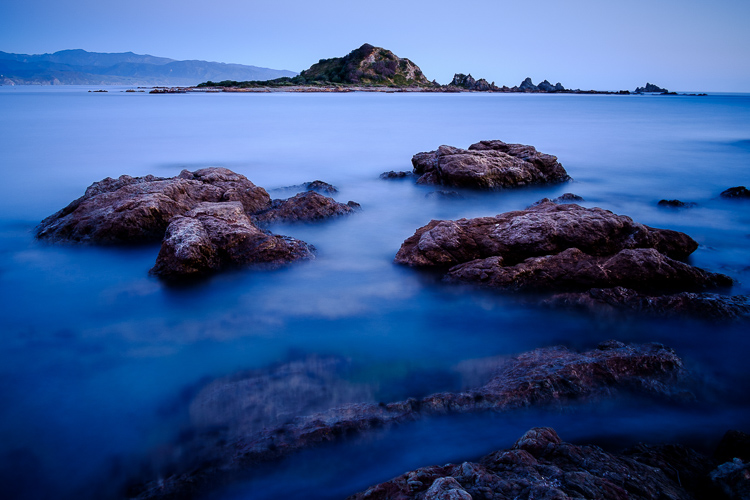
how to add depth and dimension in composition

The lines don’t have to be obvious. Take this photo as an example.

The rocks form natural lines that lead the eye from the foreground to the island on the horizon.
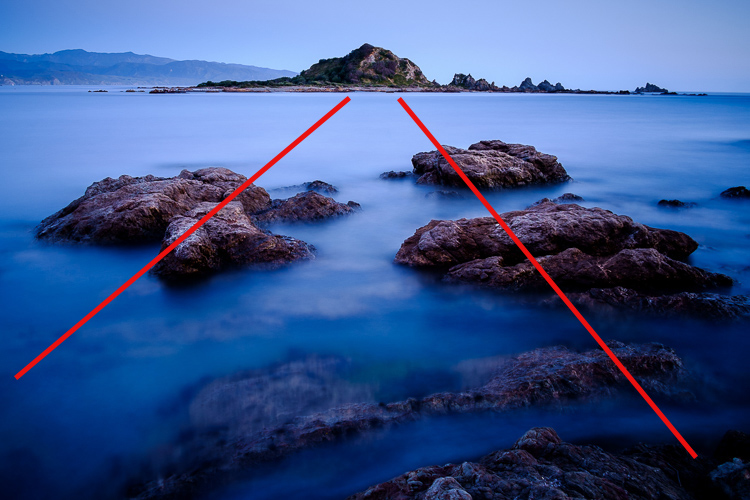
how to add depth and dimension in composition leading lines

In the image below, the waterways in the middle distance take the eye through the photo to the distant mountains. They are meandering, rather than straight, which helps give the image a more organic feel that fits well with the theme of landscape.
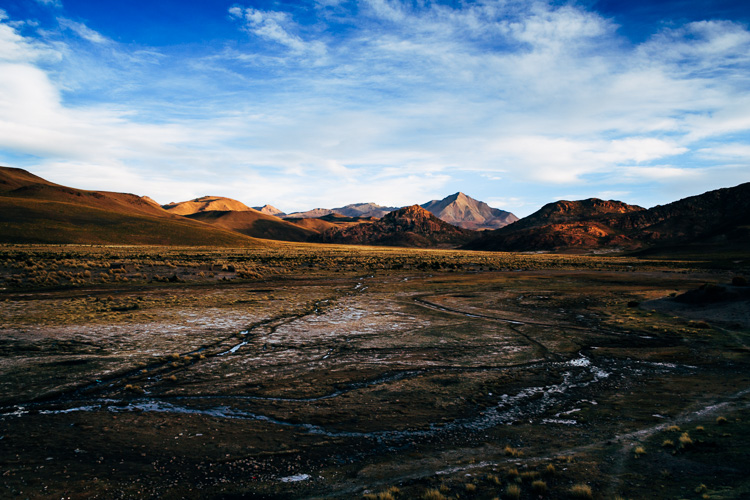
how to add depth and dimension in composition

2. Use perspective

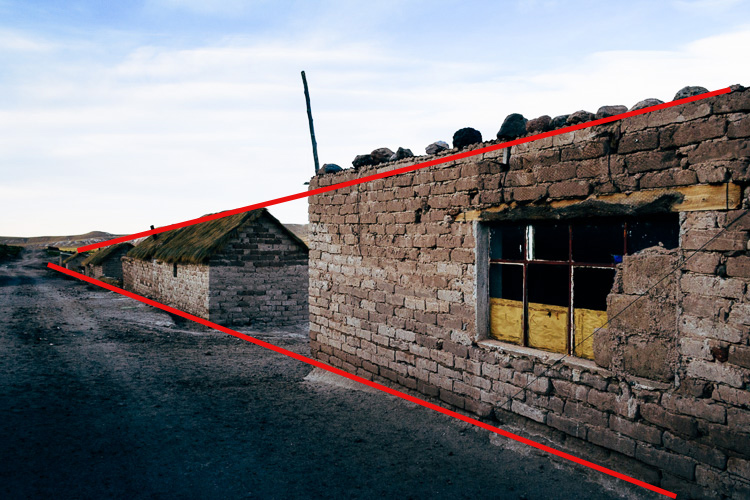
This photo demonstrates how lines can add depth in a different way.
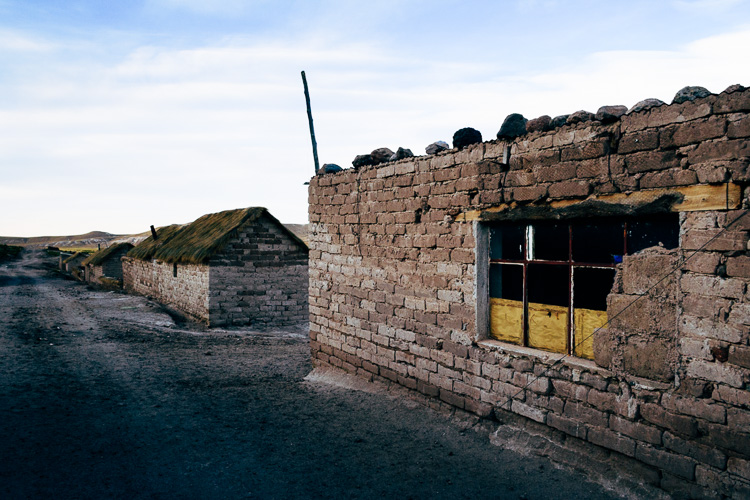
how to add depth and dimension in composition - perspective

The buildings form converging lines that disappear towards the horizon, creating a sense of depth very effectively. This technique is similar to an artist’s use of perspective. I’ve added lines so you can see how it works.
how to add depth and dimension in composition - perspective

3. Think foreground, middle ground, and background

Most photographers are familiar with the rule of thirds, but when it comes to conveying a sense of depth it is helpful to break the photo up into a different set of thirds – the foreground, middle ground, and background. What you’re looking for is a way of connecting the three that pulls the eye through the photo. Having three distinct zones in the image helps create a sense of depth, three dimensionality.

Leading lines are one way of doing this, but lines are not always present in a scene. When that happens you need to look for something else. Often, that simply means including something interesting in the foreground.

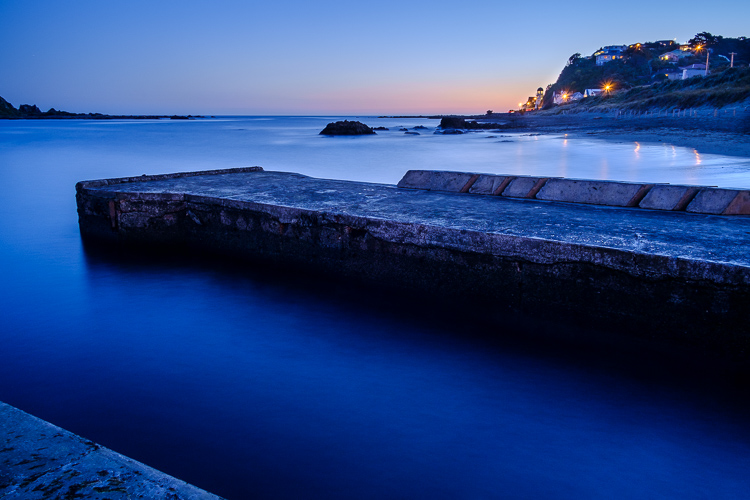
For example, in this photo, there are some buildings in the background, a concrete jetty in the middle, and the edge of another jetty in the foreground. I included the last one deliberately to help create a sense of depth.
how to add depth and dimension in composition

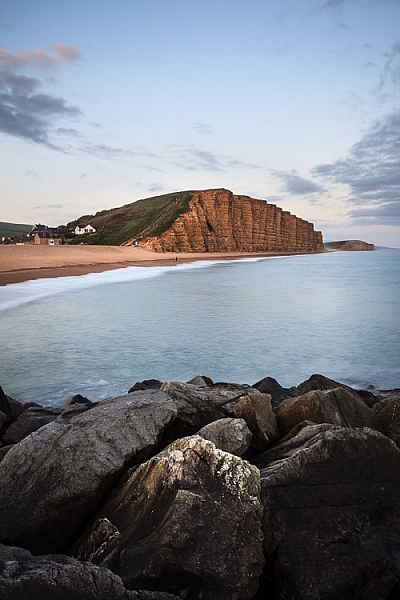
Here’s another example below. Including the rocks in the foreground creates a composition with three distinct zones (foreground, middle ground, and background) that the eye moves through, creating depth in the image. It helps that the wide-angle lens that was used makes the rocks seem quite large in comparison to the distant cliffs.
Depth and composition

4. Use aerial perspective

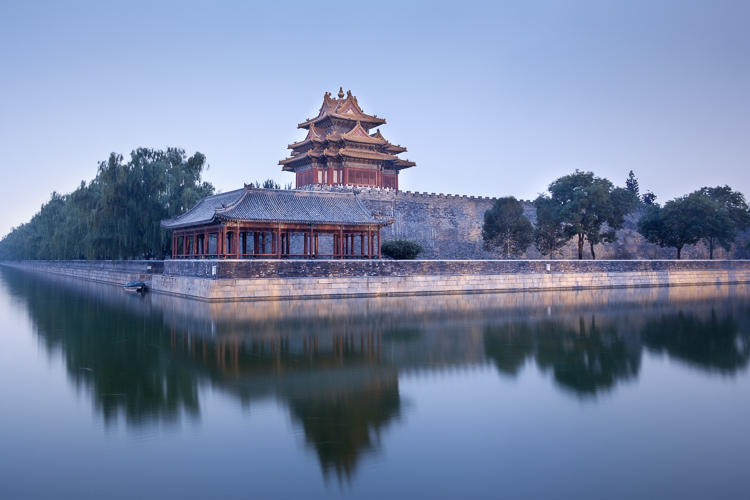
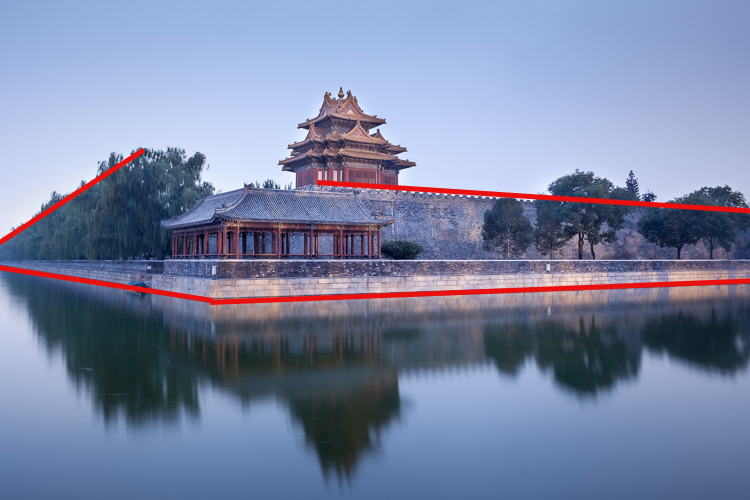
Another technique that helps convey a sense of depth is aerial (or atmospheric) perspective. This is where the atmospheric conditions make things in the distance appear hazy. When you see this occur, it is a good idea to see if you can find a way to include it in your composition. In this photo, taken in Beijing, you can see that the trees in the distance on the left side are obscured by atmospheric haze.
how to add depth and dimension in composition  - aerial perspective

This is reinforced by the converging lines formed by the walls. The two techniques are working together to show depth in the image.
how to add depth and dimension in composition  - aerial perspective and lines

5. Shoot through something

The techniques explored so far work best with wide-angle lenses. The nature of a telephoto lens is that it puts distance between you and the subject, which leads to a flatter perspective that doesn’t show depth as well as a wide-angle lens. But there are different techniques you can use with telephoto lenses to create a sensation of depth.

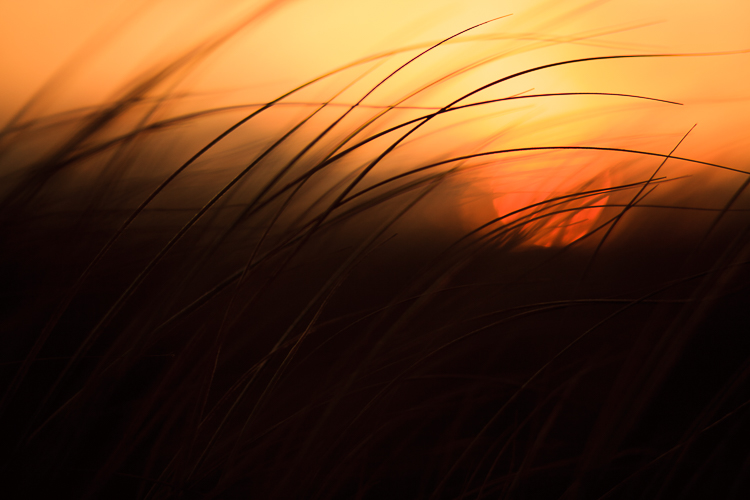
One method is to shoot through something that is between you and the subject. In the photo below, the subject is the setting sun. I shot through grass (and focused on the grass, throwing the sun slightly out of focus) to add a sense of depth to what otherwise could have been a very flat image.
how to add depth and dimension in composition  - telephoto

The photo also makes a good use of another technique, including shadows in the frame, to reinforce the depth.

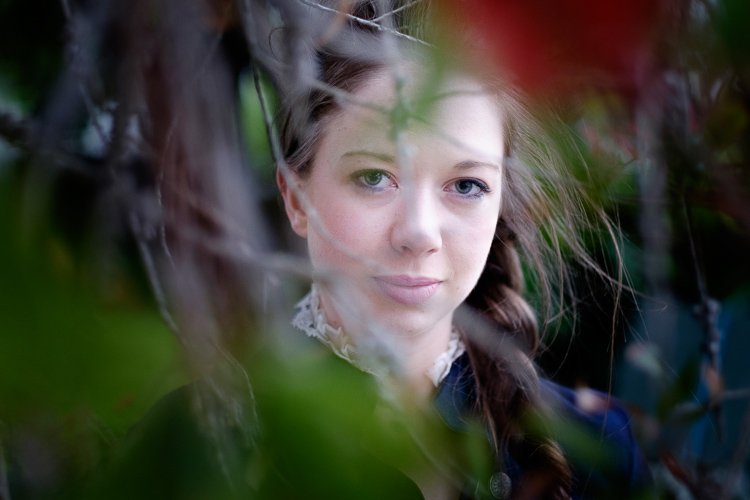
You can also use this technique with portraits. I created the portrait below by shooting through the branches of a tree.
Depth and composition

6. Use selective focus

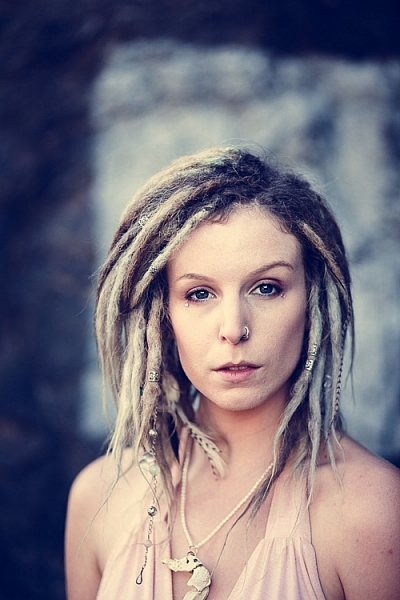
Both of the photos shown for the previous technique also use selective focus. That’s where you deliberately set a narrow aperture and focus on the subject, throwing the background out of focus. It’s especially effective with portraits, as the blurred background helps separate the model from the background, in turn creating a sense of depth. The following portrait was taken at f/2.0 with the lens focused on the model’s eyes.
Depth and composition

7. Convey depth through color

It’s also useful to think about what happens to colors in the background when you use a telephoto lens with a narrow aperture to make a portrait. When the background is out of focus, colors merge into each other. A good contrast between the colors in the background and those the model is wearing also helps convey depth.

For example, in the next portrait the use of color is very subtle. The background is nearly white, without any distracting colors. It is out of focus and doesn’t distract from the model’s face. His sweater is the most colorful part of the photo, and helps separate him from the background.

Depth and composition

You can take this idea to its extreme by using off-camera flash fitted with an orange gel. When you do this, the model is lit by orange light (from the gelled flash), but the background is lit by colder ambient light. This technique works well at dusk when the ambient light has a natural blue color.

In the example below, the model was lit by single Speedlite fitted with a 60cm softbox and a CTO (Color Temperature Orange) gel.

Depth and composition

Your turn

These seven tips should help you create stronger photos with more depth. What other ideas do you have for creating and adding depth into your photos? Please let us know in the comments below.


If you enjoyed this article and would like to learn more about composition then please check out my ebook Mastering Composition.

googletag.cmd.push(function() {
tablet_slots.push( googletag.defineSlot( “/1005424/_dPSv4_tab-all-article-bottom_(300×250)”, [300, 250], “pb-ad-78623” ).addService( googletag.pubads() ) ); } );

googletag.cmd.push(function() {
mobile_slots.push( googletag.defineSlot( “/1005424/_dPSv4_mob-all-article-bottom_(300×250)”, [300, 250], “pb-ad-78158” ).addService( googletag.pubads() ) ); } );

The post 7 Tips – How to Add Depth and Dimension into Your Photos by Andrew S. Gibson appeared first on Digital Photography School.


Digital Photography School

 
Comments Off on 7 Tips – How to Add Depth and Dimension into Your Photos

Posted in Photography


24 Festive Holiday Images to Get You Into the Spirit

29 Dec

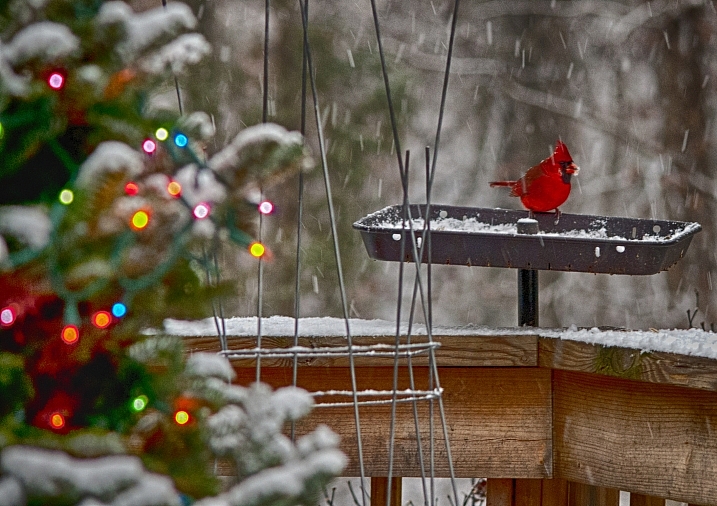
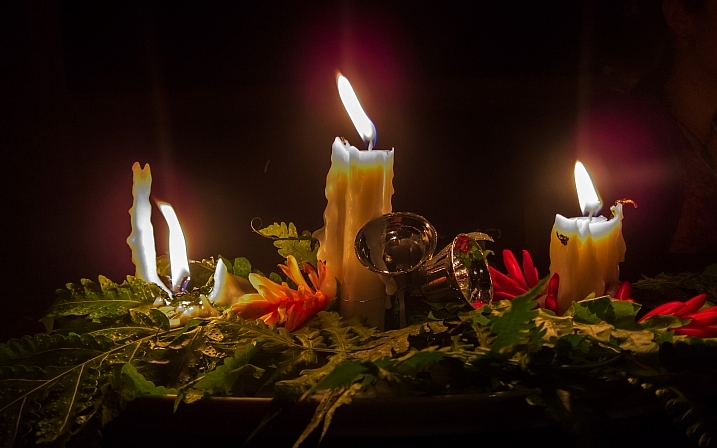
Christmas, Hanukkah, Fiesta of the Lady of Guadalupe, Day of the Virgin, and many other world holidays happen this month. Every religion and culture celebrate in their own unique way. Here in Nicaragua where I will be spending Christmas, they parade a statue of the Virgin Mary down a new street each night, complete with marching band and bombas (fireworks).

holidays-nicaragua-01

A festively decorated tree in Leon, Nicaragua.

holidays-nicaragua-02

The Virgin on display in Leon, Nicaragua.

Here are some more images of different holiday sights. Enjoy the season however you celebrate.

Michela

By Michela

Alan Cleaver

By Alan Cleaver

Mike Beales

By Mike Beales

David Bannister

By David Bannister

David Morris

By David Morris

Charlotte90T

By Charlotte90T

Nikos Koutoulas

By Nikos Koutoulas

J J

By J J

Stéphanie Kilgast

By Stéphanie Kilgast

Johnny Silvercloud

By Johnny Silvercloud

Denise Mattox

By Denise Mattox

Thomas Hawk

By Thomas Hawk

Theophilos Papadopoulos

By Theophilos Papadopoulos

Britt-knee

By Britt-knee

Cta Web

By cta web

Brett Kiger

By Brett Kiger

Scott Robinson

By Scott Robinson

Bunches And Bits {Karina}

By Bunches and Bits {Karina}

Robert Couse-Baker

By Robert Couse-Baker

Steve Snodgrass

By Steve Snodgrass

Messycupcakes

By messycupcakes

Thad Zajdowicz

By Thad Zajdowicz

googletag.cmd.push(function() {
tablet_slots.push( googletag.defineSlot( “/1005424/_dPSv4_tab-all-article-bottom_(300×250)”, [300, 250], “pb-ad-78623” ).addService( googletag.pubads() ) ); } );

googletag.cmd.push(function() {
mobile_slots.push( googletag.defineSlot( “/1005424/_dPSv4_mob-all-article-bottom_(300×250)”, [300, 250], “pb-ad-78158” ).addService( googletag.pubads() ) ); } );

The post 24 Festive Holiday Images to Get You Into the Spirit by Darlene Hildebrandt appeared first on Digital Photography School.


Digital Photography School

 
Comments Off on 24 Festive Holiday Images to Get You Into the Spirit

Posted in Photography


Mobile Remix: Cement Mixer Disco Ball Turns Streets into Night Clubs

16 Dec

[ By WebUrbanist in Art & Installation & Sound. ]

cementitious

Cladding a cement mixer in pixelated mirror squares, a French artist has created a giant glittering disco ball on wheels able to turn vacant lots and construction sites into instant party zones.

disco-party-ball

Benedetto Bufalino often adds fun to the mix when working with interactive and installation pieces (unusual sports courts and strange phone booth conversions), for instance, but rarely in quite such a dramatic way.

Parked for a time next to a building site in Lyon and given its own spotlight, the artist’s remixed mixer spins up and casts light in all directions. The idea driving the project is simple: bring together locals and passing pedestrians to mix and meet in the resulting rays.

cement-mixer

cement-mixed

Of course, it doesn’t hurt that the entire setup is mobile — for guerrilla party throwers, the mixer can set up shop then move if complaints mount or authorities arrive. Or it can simply cruise slowly down the street, making for a truly and permanently portable party.

mixer-under-construction

mixer-in-garage

mixer-by-day

Meanwhile, when not at work hosting parties, the vehicle can carry and pour concrete as usual — like many urban residents, it is a worker by day but a partier by night.

Share on Facebook


[ By WebUrbanist in Art & Installation & Sound. ]

[ WebUrbanist | Archives | Galleries | Privacy | TOS ]


WebUrbanist

 
Comments Off on Mobile Remix: Cement Mixer Disco Ball Turns Streets into Night Clubs

Posted in Creativity


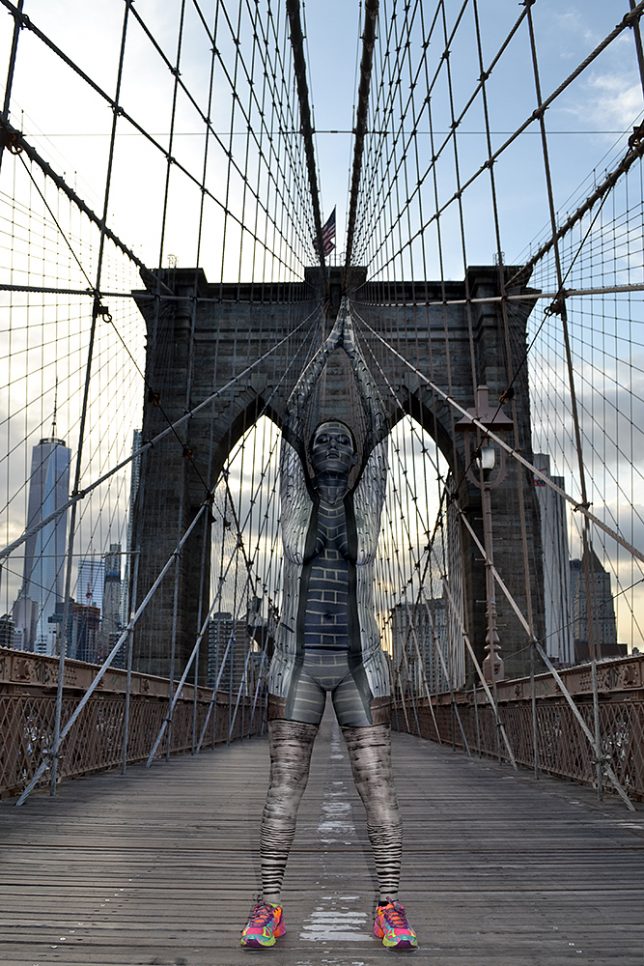
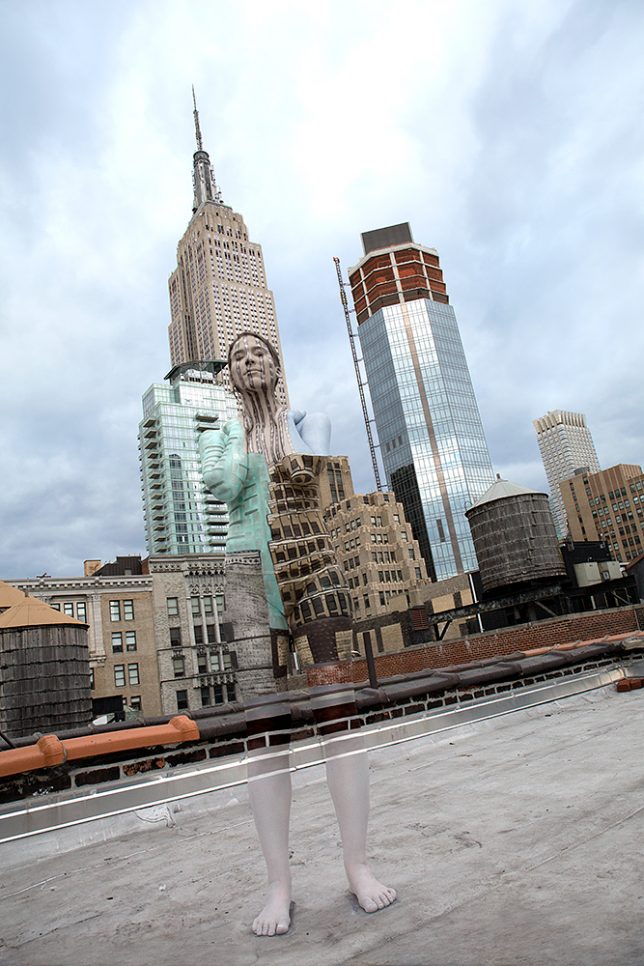
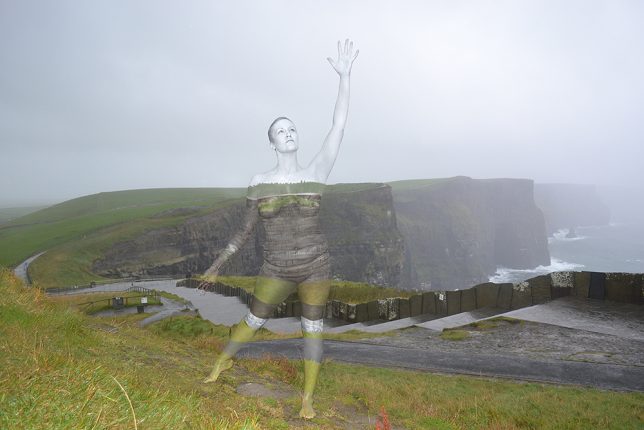
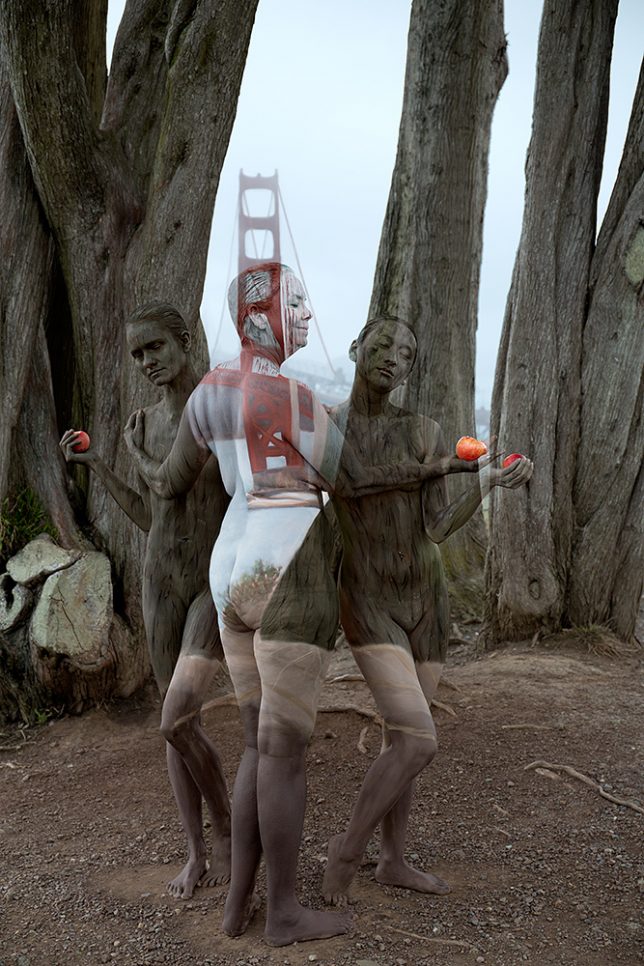
Urban Camouflage: Nude Body-Painted Models Blend Into Built Environments

13 Dec

[ By SA Rogers in Art & Photography & Video. ]

body-painting-san-francisco-2

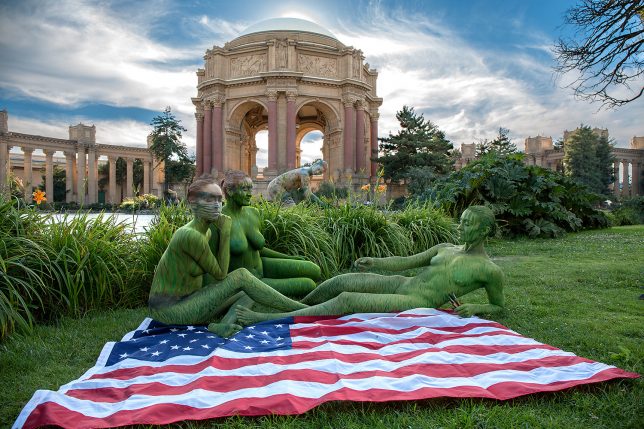
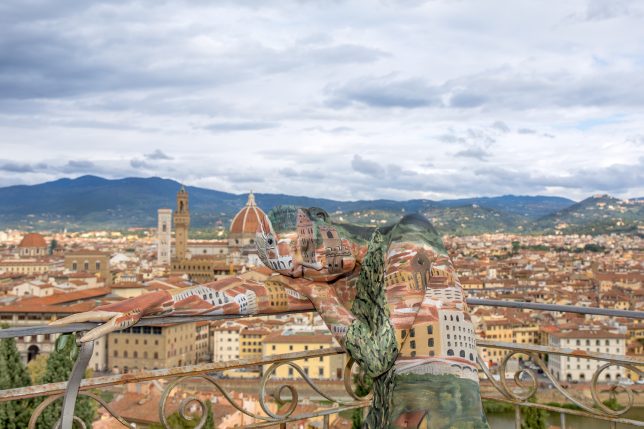
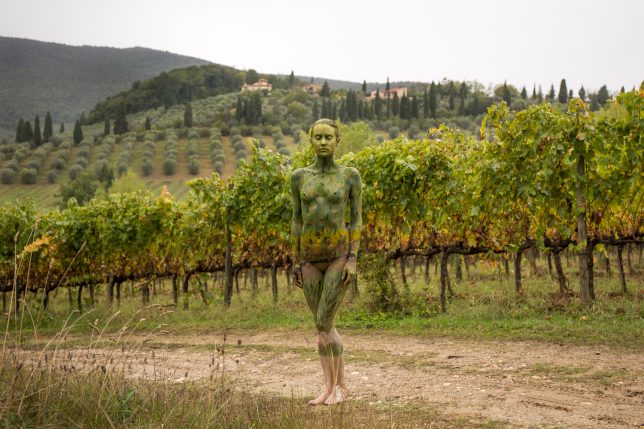
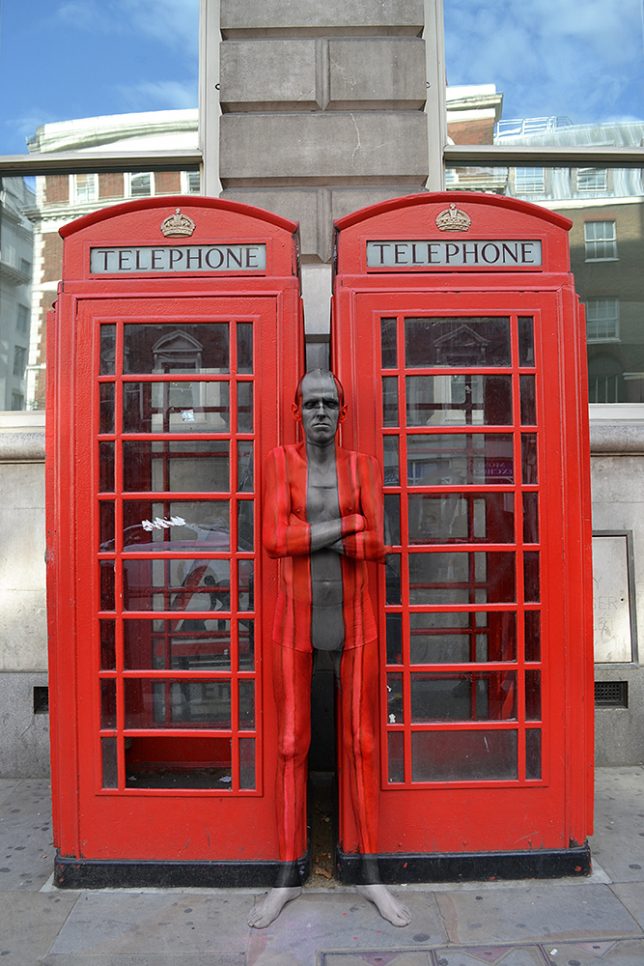
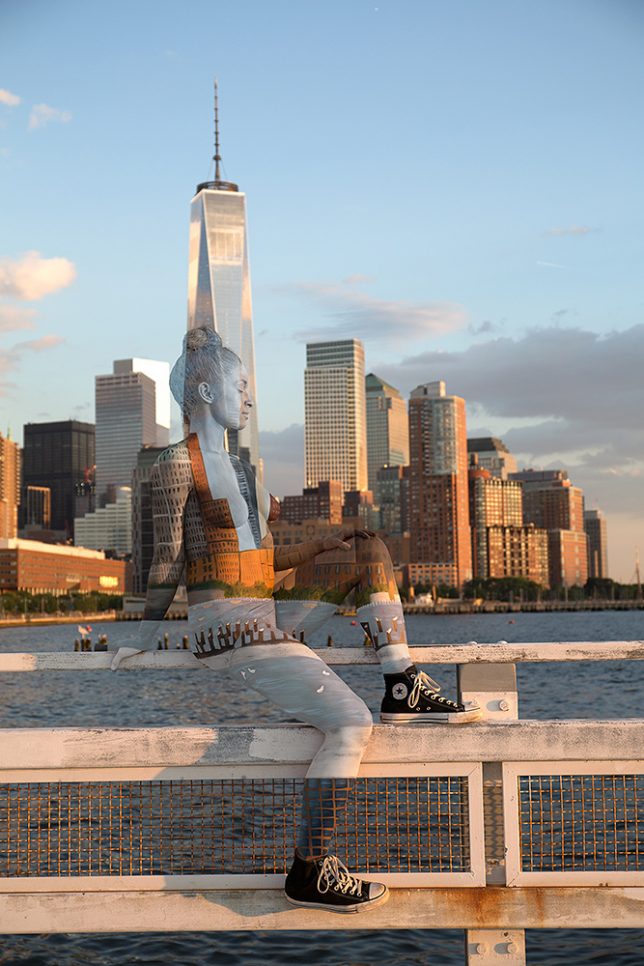
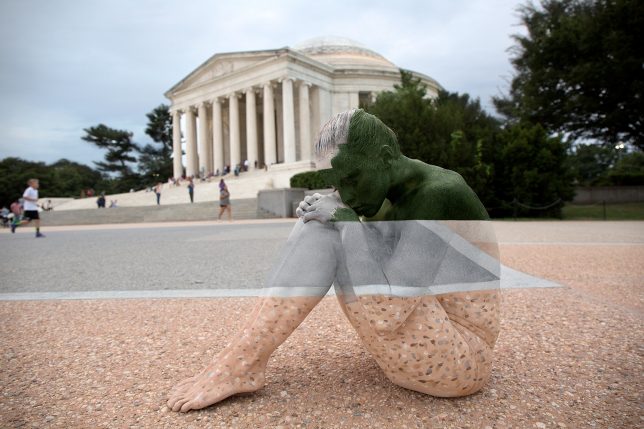
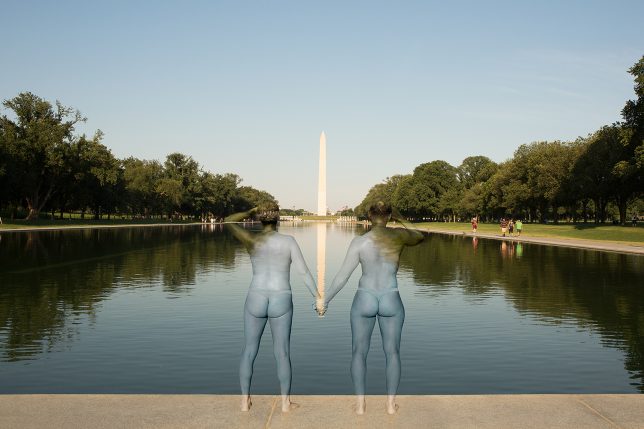
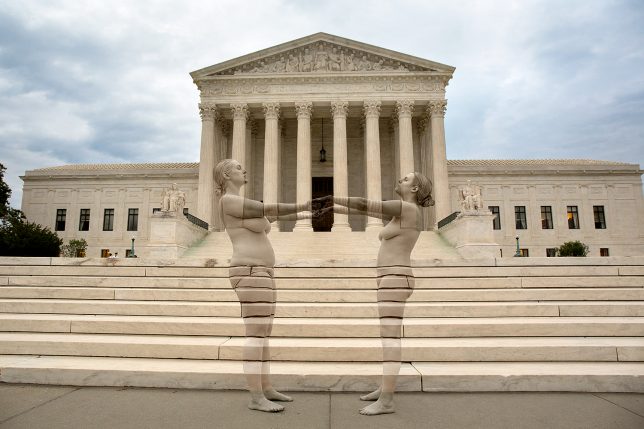
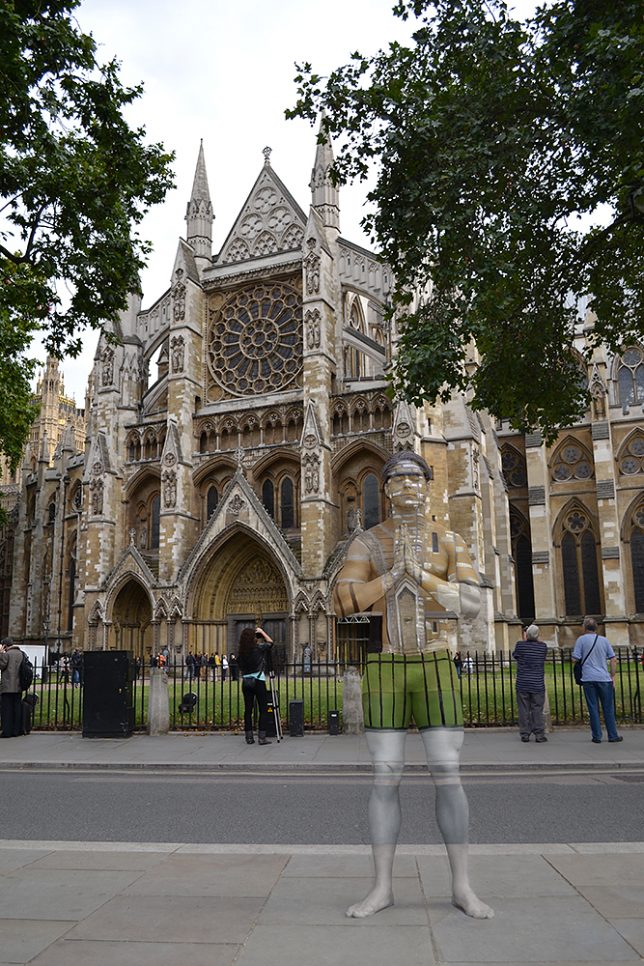
Nude human bodies seem to melt into their surroundings, expertly hand-painted to match their environments in an artistic form of urban camouflage. Artist Trina Merry dodges traffic, police, pedestrians and inclement weather to capture photographs of her subjects against such backdrops as the Florence skyline, the Washington Monument, the Brooklyn Bridge and Westminster Abbey.

body-painting-florence

Artist: Trina Merry - Model: Vitalia Abramova

body-painting-car

body-painting-london

Typically working guerrilla-style without the permission of authorities in most cases, Merry selects locations that can make a big visual impact and then paints her models in place. Getting all those angles right is no small challenge – the human body is three-dimensional, after all, and nobody can stand perfectly still for very long. But somehow, it all comes together in the final images of Merry’s work.

sweet-land-of-liberty-body-painting-series-1

sweet-land-of-liberty-2

sweet-land-of-liberty-3

sweet-land-of-liberty-4

sweet-land-of-liberty-7

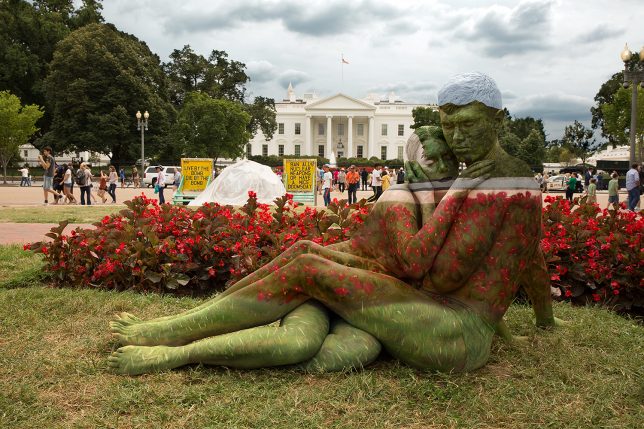
For her latest series, ‘Sweet Land of Liberty,’ Merry poses subjects in front of iconic patriotic landmarks like the White House and the Lincoln Memorial, asking her audience to think about what we have to be grateful for. Previous projects have been set in cities around the world, along with natural cliffs and meadows of Ireland and studio shoots. Many scenes are made even more complicated by the use of several models, contorted to create specific shapes. Some incorporate larger objects, like entire cars, as in a commission for Ford.

body-painting-london-2

body-painting-new-york

body-painting-new-york-2

body-painting-ireland

body-painting-san-fracisco

“Body paint is an ancient art form and the use of ochre on the skin dates back 425,000 years and has a deeper part in all of our cultures than people tend to realize,” says Merry. “Painting on the body is a distinctly human experience; it creates a special connection to a person that other visual art forms have trouble accomplishing. This work has a heartbeat and a breath – it is dynamically alive. The ephemeral nature of body paint forces focus and reflects on the reality of existence, which is an incredible thought that I find myself reflecting on frequently while working.”

Share on Facebook


[ By SA Rogers in Art & Photography & Video. ]

[ WebUrbanist | Archives | Galleries | Privacy | TOS ]


WebUrbanist

 
Comments Off on Urban Camouflage: Nude Body-Painted Models Blend Into Built Environments

Posted in Creativity