RSS
 

Posts Tagged ‘into’

Mini Living: Breathable Cylindrical Home Slots Into a Tiny Alleyway

07 Apr

[ By SA Rogers in Architecture & Houses & Residential. ]

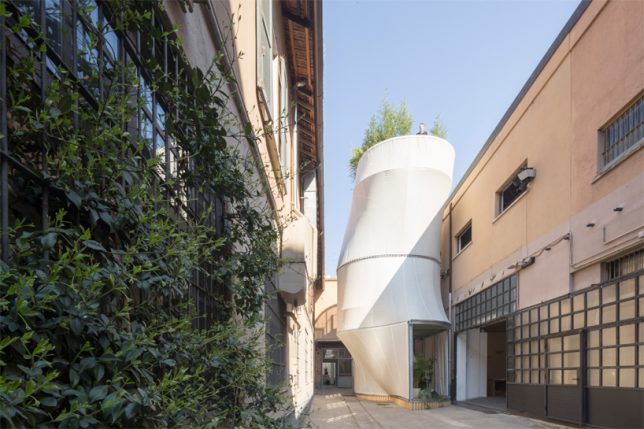
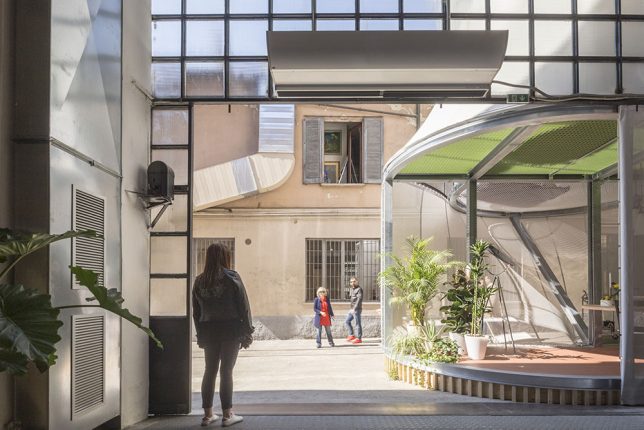
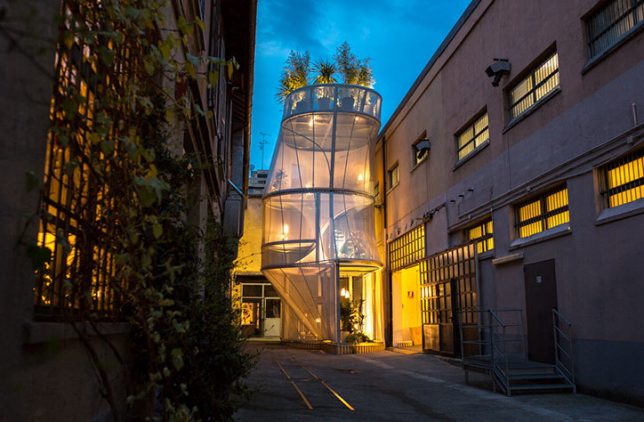
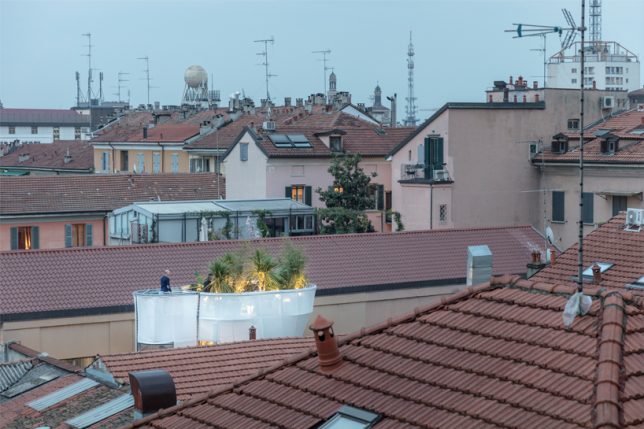
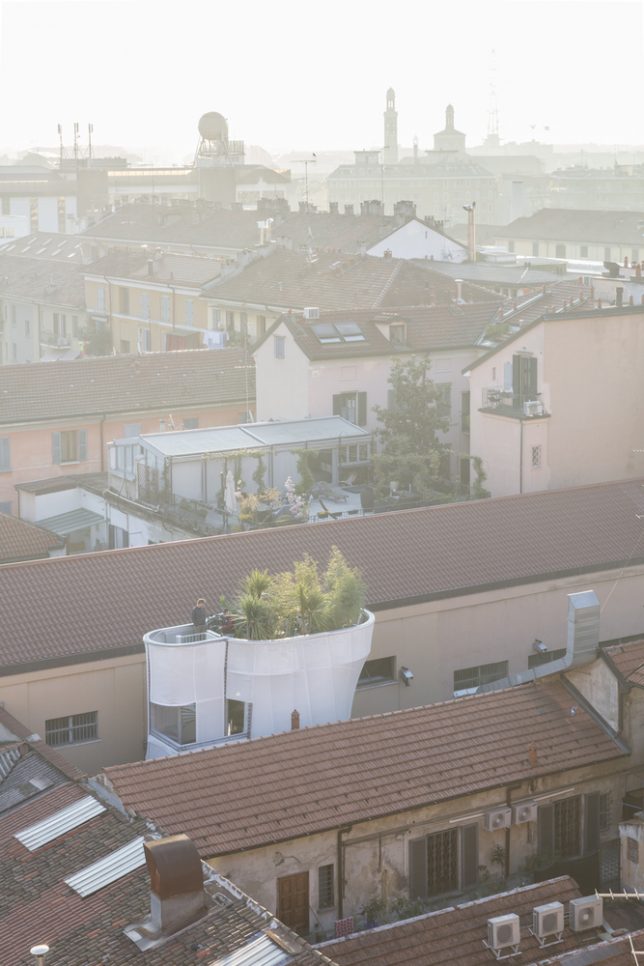
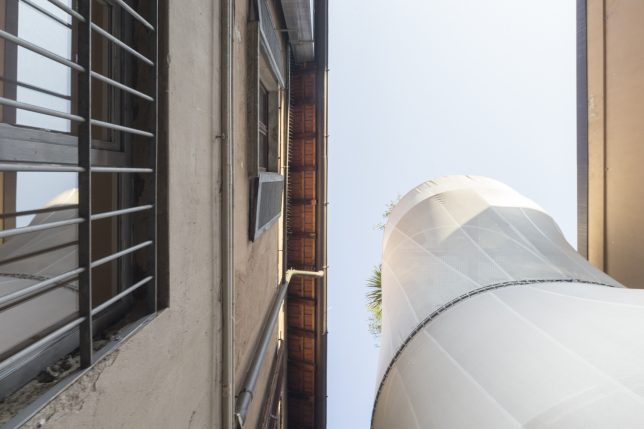
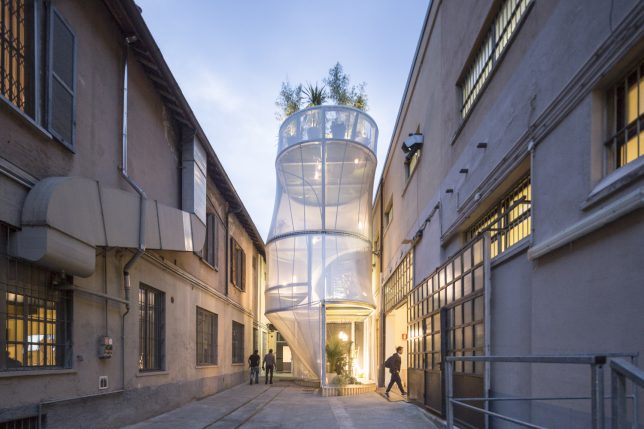
Extending beyond the existing rooftops like a fast-growing plant, this compact cylindrical home slotted into an unused urban plot in Milan features a breathable ‘skin’ connecting the interiors to the outdoors. Designed by New York-based architects SO-IL for Milan Design Week 2017, the MINI LIVING ‘Breathe’ installation is a response to the growing challenge to maximize available space in cities to comfortably accommodate more residences.

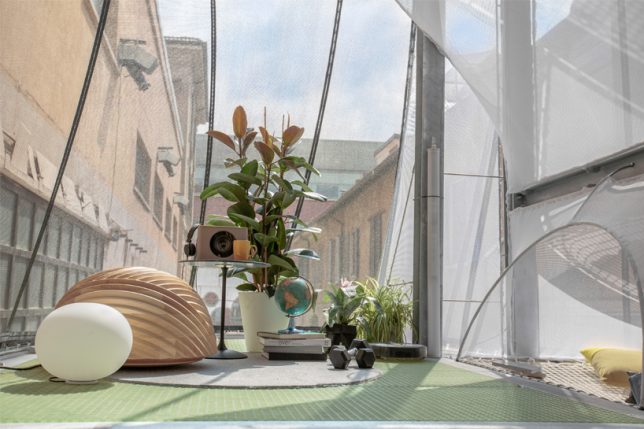
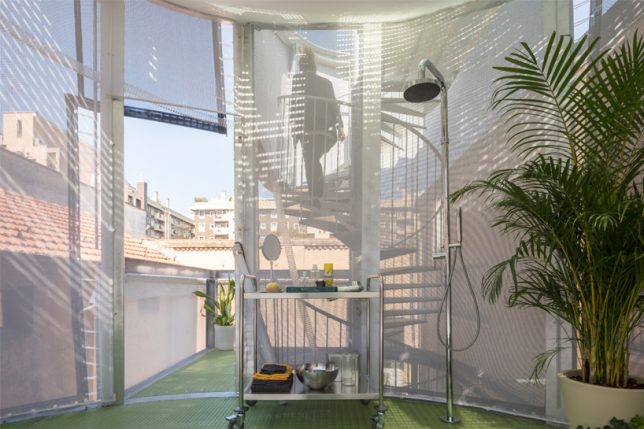
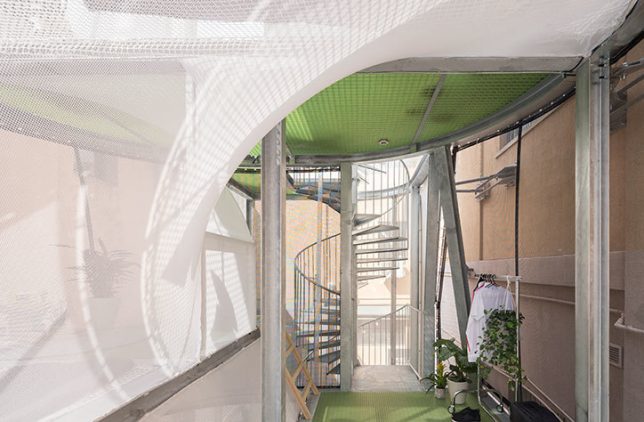
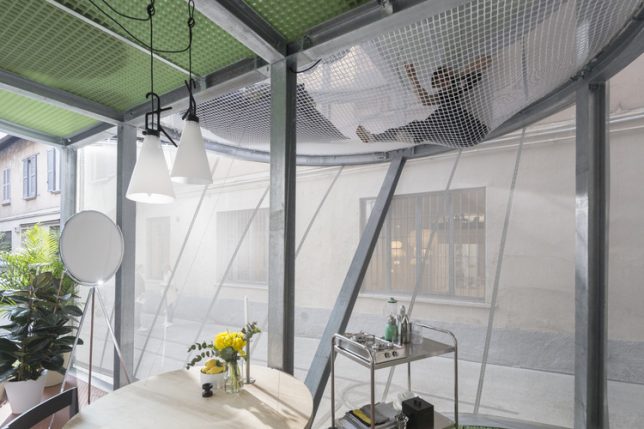
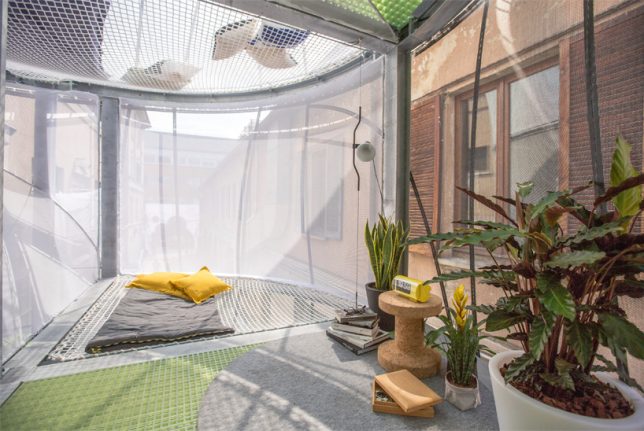
Built on a modular metal frame covered with a flexible, semi-translucent envelope that reacts organically to the environment, the home was designed for a family of three, and features six rooms and a lush rooftop garden. The ground floor is transparent to encourage interaction with the world outside; climb the spiraling staircase and you’ll find a series of private spaces for relaxation, work and sleeping, all separated by fabric canopies.

The outer skin lets in filtered sunlight, while the rooftop garden collects rainwater and helps filter the city air. Hammock-like nets suspended from the upper levels look out onto both the city outside and the interiors below. The architects describe the skin as a ‘jacket’ that can be zipped and arranged differently to protect against various external conditions. The more you layer it, the more privacy or water resistance it offers, so inhabitants can customize the needs of different rooms.

The idea, in part, was to ‘tune’ the interiors to the rhythms of the city, the weather and the sun outside, eliminating the closed-off feel that many homes tend to have. While the tent-like design may not be viable for many urban centers where cold weather, rain and theft might be a problem, it’s an intriguing idea for layering with more solid and secure materials like glass.

Share on Facebook


[ By SA Rogers in Architecture & Houses & Residential. ]

[ WebUrbanist | Archives | Galleries | Privacy | TOS ]


WebUrbanist

 
Comments Off on Mini Living: Breathable Cylindrical Home Slots Into a Tiny Alleyway

Posted in Creativity


Meyer-Optik announces move into high-end lenses for mirrorless cameras with Primagon 24

07 Apr

German lens manufacturer Meyer-Optik-Gorlitz has announced it is to produce a new premium 24mm lens that will come in mounts for all mirrorless camera systems. The Primagon 24 will feature a maximum aperture of F2.8 and will use seven elements including one aspheric. The company says that although the lens uses the Primagon name, it isn’t a recreation of a vintage model, but is a completely new design.

Meyer goes to some length to emphasize that the lens will be made in Germany from German-constructed parts and glass. It is said to be the first in a new series aimed at compact system users that will incorporate popular focal lengths and which aims at ‘best in class’ optical performance.

The information released by the company makes no mention of autofocus, so we should assume this will be another manual lens like the brand’s other optics. Meyer says it will allow 30 photographers the chance to buy the lens at half price before general production begins so they can give feedback to the lens designers so it can be improved or altered before it goes on general sale. We’d guess that those 30 will also receive a full-production model once they become available. To qualify for this opportunity, you need to already be a backer of the company’s Kickstarter campaign for the Trioplan 35+ lens, announced earlier.

The Primagon 24 is expected to be ready at the beginning of 2018, and will retail for approximately €4.999/$ 5,499 . For more information visit the Meyer-Optik-Gorlitz website.

Press release

Meyer-Optik Takes Quantum Leap with New High-End Primagon 24mm

Lens Maker Seeking Photographers to ‘Test’ Lens

With its latest Kickstarter campaign for the historic Trioplan 35+ successfully underway, Meyer-Optik is moving boldly into the world of high-end, high-performance photography with the newest addition to its lineup of hand-crafted lenses. Today, Meyer-Optik announced the new Primagon 24 mm f 2.8, which will have 7 individual lenses, including one aspheric lens. It will have an 84 degree angle of view and will impress with its image quality, compact size and weight of less than 9 ounces (about 250g). It will be available for practically all mirrorless cameras.

Even though the Primagon takes its name from a famous line of historic Meyer-Optik lenses, the new Primagon 24 is a totally new development. With this lens, the young Meyer-Optik brand strives for the highest image quality achievable, sticking to its guiding principles and guarantees that practically all mechanical and optical parts are made in Germany and the lenses will also be hand assembled as individual pieces of craftsmanship in Germany. With the help of world famous development engineers, the Meyer-Optik team has been working on the Primagon 24 for more than a year. The team is also working on several more lenses for this new series to cover the full range of the most needed and popular focal lengths. These lenses are all developed under the premise that they will provide the best in class high-performance tools for the ambitious photographer.

Even though photographers will have to wait until early 2018 to get a look at this lens, as one of the rewards for backing its Kickstarter for the Trioplan 35+, Meyer-Optik is allowing 30 photographers to receive the Primagon 24 for about half of its expected retail cost. The photographers will get a chance to use the lens months before it heads into serial production, allowing them to give Meyer-Optik feedback that the company could use to make final refinements. The “testing” promotion is a unique way to reward a select group of Kickstarter backers, while giving the company a chance to receive some feedback on how the lens performs in the “real world.”

“Even though the new lenses are already high performers, we want to listen and learn from the feedback of our users,” said Dr. Stefan Immes, founder of the revived Meyer-Optik brand.

“The opinion of the Kickstarter community and the direct feedback is very important to us. We are striving for technical perfection with this lens – but we will not make any compromises when it comes to the creative part of photography. Personality and character are the most important features of all our lenses. This starts right at the beginning of the development process and we are proud that some of the best engineers nationally and internationally are supporting our team in Goerlitz,” Immes said.

The new lens will be available at the beginning of 2018. It will be available for all mirrorless mounts. The suggested retail price will be 4.999,–€/5,499 US $ .

Articles: Digital Photography Review (dpreview.com)

 
Comments Off on Meyer-Optik announces move into high-end lenses for mirrorless cameras with Primagon 24

Posted in Uncategorized


Sony Digital Filter camera app merges parts of three images into one

19 Mar

Sony has announced the release of a new camera app called Digital Filter, giving photographers a way to merge parts from two or three different images into a single photo. It adds greater flexibility to a similar existing app called Sky HDR. Digital Filter is priced at $ 29.99 or $ 19.99 as an upgrade to Sky HDR.

Though they offer similar functionality, the biggest feature difference between Sky HDR and Digital Filter is that the new app supports merging sections of up to three different images, whereas Sky HDR only allows for two exposures. Sony merely states that, ‘The Digital Filter application offers functionality, ease of use and image quality that go beyond the features of Sky HDR.’

Digital Filter supports the following camera models:

  • Alpha a7
  • Alpha a7 II
  • Alpha a7R
  • Alpha a7R II
  • Alpha a7s
  • Alpha a7s II
  • Alpha a6000
  • Alpha a6300
  • Alpha a6500
  • RX100 III
  • RX100 IV
  • RX100 V
  • RX10 II
  • RX10 III
  • RX1R II

Sky HDR supports certain camera models Digital Filter doesn’t, including the a5100 and three NEX models.

Via: SonyAlphaRumors

Articles: Digital Photography Review (dpreview.com)

 
Comments Off on Sony Digital Filter camera app merges parts of three images into one

Posted in Uncategorized


Insta360 Air turns Android phones into 360-degree VR Cameras, now available in US and Europe

09 Mar

The Insta360 Air camera, which attaches to an Android smartphone via a microUSB or USB Type-C port, turns your phone into a 360-degree VR camera. It’s now available in the US and Europe. The Insta 360 Air uses, via a dedicated app, the smartphone display as a viewfinder and captures 360-degree stills and videos with its dual fisheye lenses.

The camera offers real-time image stitching and comes with integrated live-streaming to YouTube and other platforms. Content can be shared directly from the app to Facebook, Twitter, WhatsApp and other social media platforms. The app allows for viewing content on-screen or through a VR headset. 

The Insta360 Air can also be used as a 360-degree webcam on Skype and other video-chat applications after connecting to a PC’s USB 2.0 or 3.0 port. 360-degree webcam support for Mac should be provided soon via a software update. The Insta360 Air weighs only 26.5 grams and can capture 3K photos (3008 x 1504 pixels) and 2.5 K video (2560 x 1289 pixels) at 30 frames per second. The company also says real-time image stabilization will be introduced via a firmware update ‘in the coming weeks.’

The Insta360 Air is now available for $ 129 at retailers in the US. The device can also be purchased in the UK, Canada, Spain, Germany, Italy, France and Japan through Amazon. We are currently working on a review of the device, so watch this space. 

Press Release:

Insta360 Air Arrives in US and Europe, Turns Android Phones into 360° VR Cameras

Real-Time Image Stabilization on the Way
SHENZHEN, Mar. 7, 2017 – The Insta360 Air, a smartphone add-on that instantly turns Android phones into 360-degree cameras, is now on sale across the United States and Europe. 

“The Air is what we’re all about — cutting-edge technology that empowers people to capture and share experiences just the way they live them,” said J.K. Liu, CEO and co-founder of Insta360. “We can’t wait to see what the world’s Android users create.” 

Android and iOS account for more than 90 percent of the world’s smartphone users, and the release of the Air means all of them can now enjoy seamless 360-degree photography and live-streaming. The Insta360 Nano, launched last year, offers a plug-and-play 360 experience to iPhone users. 

The Insta360 Air’s simple, intuitive design makes capturing and sharing 360-degree content easier than ever. After connecting via USB Type-C or Micro-USB port, the Air uses a smartphone’s display as its viewfinder, allowing users to capture 360-degree stills and videos with the Air’s dual fisheye lenses and camera-interface app. 

With real-time image stitching and integrated live-streaming support for YouTube and other platforms, users can broadcast immersive experiences to the world or share 360-degree content to friends on a host of popular social media — including Facebook, Twitter, WhatsApp and Messenger — directly from the app interface. Users can explore content on a screen or through a VR headset for an even more immersive experience. 

The Insta360 Air experience isn’t limited to mobile. The Air also serves as a 360-degree webcam on Skype and other video-chat applications after connecting to a PC’s USB 2.0 or 3.0 port. 360-degree webcam support for Macs will also be introduced in a future update.

The Insta360 Air captures 3K photos (3008 X 1504 pixels) and 2.5 K video (2560 X 1289 pixels) at 30 frames per second. Weighing only 26.5 grams and with a diameter smaller than a ping-pong ball, the Air is also the most portable consumer 360-degree camera on the market. 

Real-time image stabilization coming soon 

Insta360 is committed to providing ongoing support to both devices and users well after purchase. Air users can expect regular updates to the Insta360 Air app and camera firmware. Among the most-exciting updates on the horizon for the Air is the planned addition of an all-new feature, real-time image stabilization. 

The advanced image-stabilization technology corrects unwanted vibrations and sudden directional changes as they happen, letting users capture smooth and steady live streams and video. 

The technology will mean a vastly improved experience for viewers using an immersive VR headset. And by reducing the variation between adjacent frames of a live-stream or video, it also offers big bandwidth savings. Real-time image stabilization is set to be released via app update in the coming weeks, and Insta360 Nano users can expect the feature as well. 

Priced at $ 129 USD, the Insta360 Air is now available via Amazon in the U.S., U.K., Canada, Spain, Germany, Italy, France and Japan. U.S. consumers can buy the Insta360 Air offline at B&H and Fry’s Electronics, with other regions also offering offline sales at select retailers.

Watch the Insta360 Blog for more updates.

Articles: Digital Photography Review (dpreview.com)

 
Comments Off on Insta360 Air turns Android phones into 360-degree VR Cameras, now available in US and Europe

Posted in Uncategorized


Urban Planet: How the Whole World Would Fit into a Single City or Structure

08 Mar

[ By WebUrbanist in Architecture & Cities & Urbanism. ]

life in one city

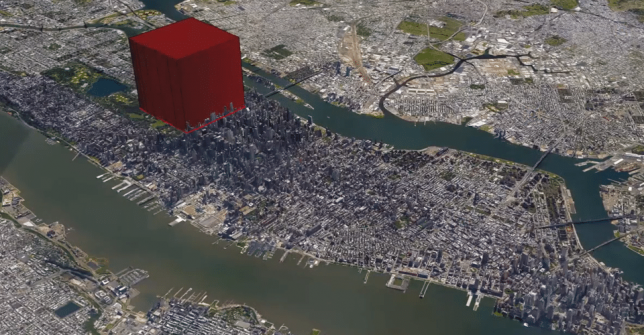
Cities often feel like dense and crowded places, and it is hard to imagine everyone on Earth living in urban environments let alone a single city or even (yes, it’s possible) one gigantic megastructure. In a series of videos, filmmaker Joseph Pisenti asks: what if everyone lived in one city? Then he takes it further with: what if everyone lived in just one building?

It sounds like an absurd proposition, but our planet’s population of billions could, in fact, but contained in a relatively small amount of space if needed (perhaps in case of a worldwide evacuation to space?). Images of single cities in the videos show places that already have populations in a single frame larger than countries like, say, Australia have spread across an entire continent.

A few billion cubic meters in a structure set on, say, Manhattan, could uncomfortably house the human race. It would be twice the height on the world’s largest building, but we would fit if we had to.

As the video series unfolds, its creator gets increasingly realistic with respect to actual needs for people beyond simply space to exist, imagining a world where we all could actually live on a small part of South America. Hopefully, of course, it will never come to this, but as sea levels rise it’s good to know we have options (and fun to engage in these thought experiments, regardless). By the time you finish watching this series, however, you may find you would rather simply escape it all:

Share on Facebook


[ By WebUrbanist in Architecture & Cities & Urbanism. ]

[ WebUrbanist | Archives | Galleries | Privacy | TOS ]


WebUrbanist

 
Comments Off on Urban Planet: How the Whole World Would Fit into a Single City or Structure

Posted in Creativity


Uninterrupted Views: Billboards Blended Into Their Natural Backdrops

03 Mar

[ By SA Rogers in Art & Installation & Sound. ]

desert X billboards 1

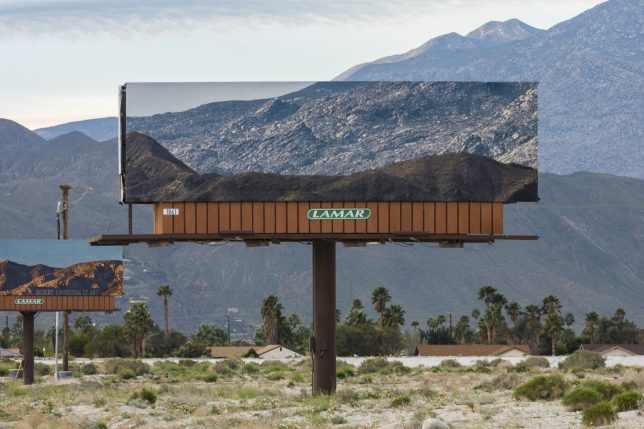
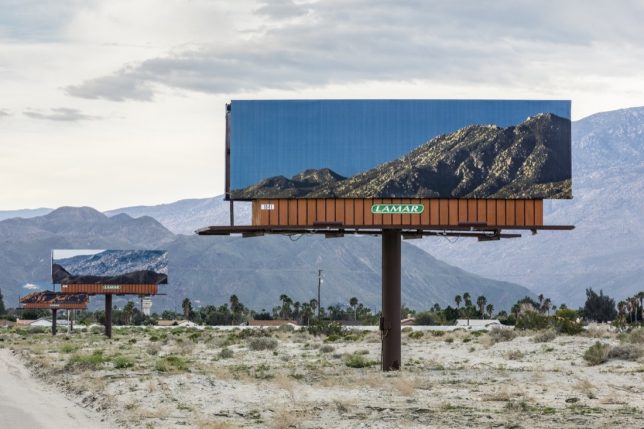
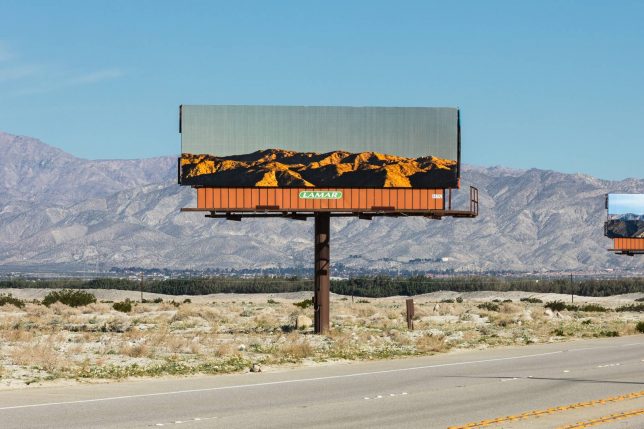
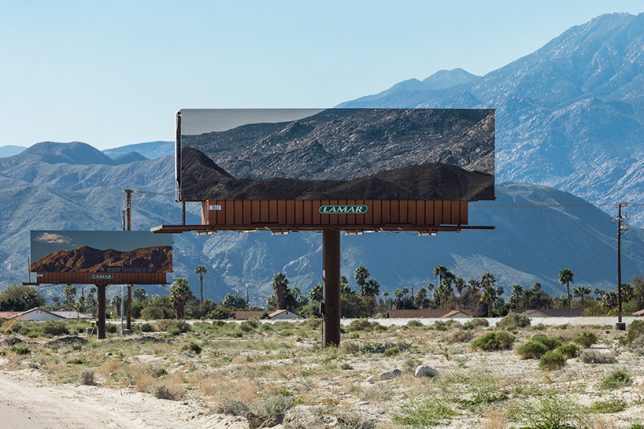
For just a split-second as you zoom by in your vehicle, you’ll catch the perfect alignment of 2D imagery on a billboard and the real, three-dimensional mountains in the background, eliminating advertising to refocus your attention on what’s really important. Set along Gene Autry Trail in California as part of Desert X, an outdoor exhibition of site-specific art installed across the Coachella Valley, the billboard series by Jennifer Bolande demonstrates an unusual form of camouflage.

desert X main

desert X billboards 2

The installation is particularly effective for the close placement of the billboards, which are glimpsed in quick succession. Real and artificial environments blend together in an illusion that’s particularly effective on a bright, sunny afternoon when the sky is at its bluest. The work is specifically made to be experienced from a passing car, drawing inspiration from an old Burma Shave ad that used sequential placement to create a message that could only be read from a moving vehicle.

desert x

‘Visible Distance/Second Sight’ is particularly effective in this desert environment, where most structures are low-lying and there are no towering trees. This setting ordinarily makes billboards pop out from the landscape even more than they would in a city.

circle of land and sky philip k smith

curves and zigzags

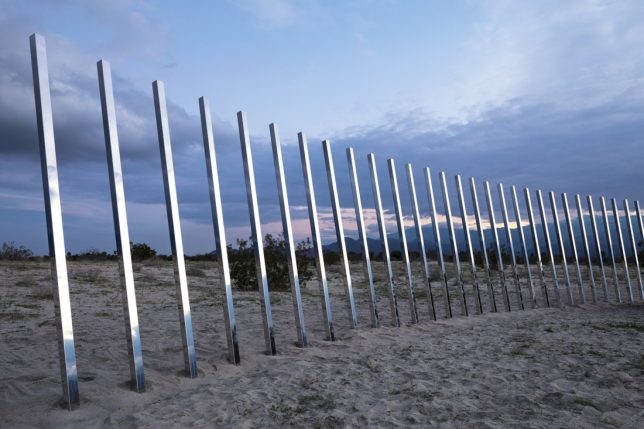
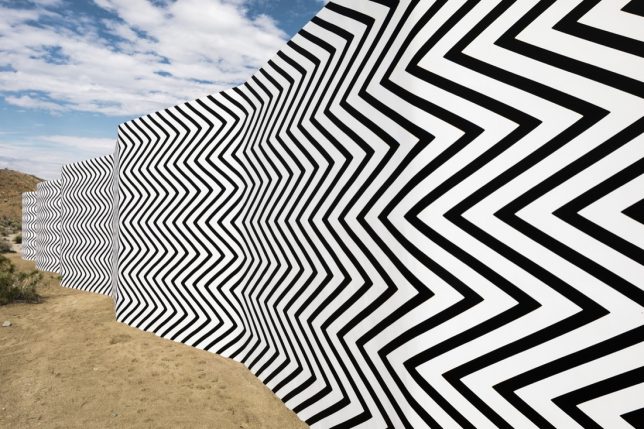
Other striking installations in the Desert X series include ‘The Circle of Land and Sky’ by Phillip K. Smith III, a composition of 300 geometric reflectors angled at 10 degrees to engage with the surrounding Sonoran Desert, and ‘Curves and Zigzags’ by Claudia Comte, a series of scuptural freestanding walls.

All photos by Lance Gerber Studio

Share on Facebook


[ By SA Rogers in Art & Installation & Sound. ]

[ WebUrbanist | Archives | Galleries | Privacy | TOS ]


WebUrbanist

 
Comments Off on Uninterrupted Views: Billboards Blended Into Their Natural Backdrops

Posted in Creativity


Neural network converts Game Boy Camera images into color photos

21 Feb

We’ve seen a lot of research lately that uses neural networks to upsample low resolution images and the results have been impressive – even a little creepy. Google recently showcased a system that can turn a low resolution 8×8 input image into a 32×32 sample that’s remarkably close to the original image. Inspired by recent breakthroughs, research engineer Roland Meertens found another application for neural networks – one that’s highly relevant to our interests. He created an application that turns low-res, monochrome Game Boy Camera images into photorealistic color images.

Original images in the center, Game Boy-ified images on the left and image generated by neural network on the right


A network must be trained, and training means feeding it input images. To create a training data set, Meertens gave some ‘real life images’ a Game Boy Camera treatment by re-creating them in four shades of black. By comparing the Game Boy-ified images with the originals, the network is ‘taught’ how to convert the images to color. With the network trained and ready, Meertens began testing it on celebrity photos as well as images from the Game Boy Camera (including the game’s mysterious character at the top of the page).

Finally, Meertens uses the application on an image taken with the Game Boy Camera. Naturally, it should be a selfie, as it is here. If you have all of the necessary components, taking a photo with the Game Boy camera is easy. Getting it onto your computer is another story. Lacking a specialized cable, Meertens did his best to photograph the Game Boy screen. As a result the lighting is slightly uneven, which affects the output from the network, but the re-creation is still pretty darn cool. Our hats are off to him.

Articles: Digital Photography Review (dpreview.com)

 
Comments Off on Neural network converts Game Boy Camera images into color photos

Posted in Uncategorized


Pixlplay turns a smartphone into a big, durable ‘camera’ for kids

11 Feb

A new Kickstarter project aims to make digital photography easily accessible to children, with a product that is relatively inexpensive and durable. Called Pixlplay, the device is essentially a smartphone case shaped like a classic 35mm film camera, and it includes moveable dials and knobs, as well as a functional shutter button.

The Pixlplay case features a pair of rubber handgrips, adjustable clamps for accommodating phones of various sizes, and a 3.5mm cable that plugs into the phone’s audio jack to power the case’s shutter button. Photos can be snapped through the phone’s built-in camera app using the shutter button, or by touching the phone’s screen (a touch-sensitive screen protector is built into the case). Camera settings can also be adjusted by touching the screen.

Pixlplay features child-resistant dual latches to help prevent children from removing the smartphone, which is offered some protection from drops and dirt while inside the case. Included activity sheets, meanwhile, teach kids the basics about photography, while a dedicated iOS photo editing app allows kids to add frames and silly stickers to their photos. There doesn’t seem to be an Android app, however the case itself can be used with Android and Windows phones.

The case’s maximum phone dimensions are 5.59 x 2.95 x 0.374 in / 142 x 75 x 9.5mm, making it suitable for the iPhone 7 and older models, as well as most Android smartphones. The product’s maker, Pixl Toys, is currently seeking funding for Pixlplay on Kickstarter, where it has raised about $ 13,000 of its $ 25,000 goal. A single Pixlplay camera is being offered to backers who pledge at least $ 25, with shipping estimated to start in June.

Via: VentureBeat

Articles: Digital Photography Review (dpreview.com)

 
Comments Off on Pixlplay turns a smartphone into a big, durable ‘camera’ for kids

Posted in Uncategorized


How to Turn Your Kids into Star Wars Characters Using Photoshop

10 Feb

Do your kids love Star Wars? Do you love photography? If so, here’s a great opportunity to join forces and turn your kids into Star Wars heroes or villains by giving them the ultimate Star Wars weapon, the lightsaber.
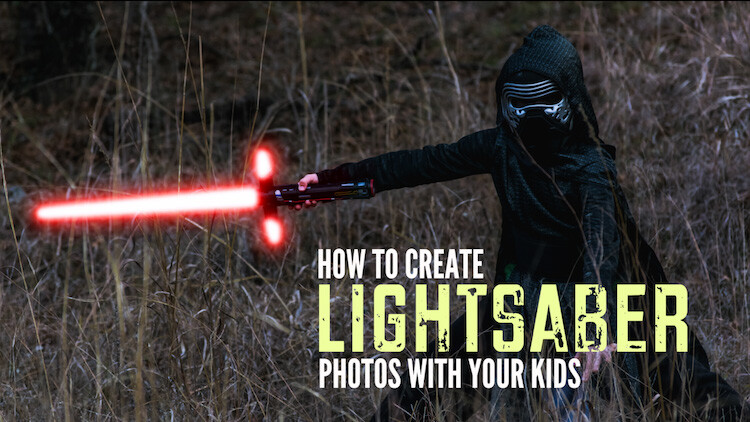
How to Turn Your Kids into Star Wars Characters Using Adobe Photoshop

All you need to awaken the force are these three steps:

  1. The setup
  2. Capturing the shot
  3. Light up your sabers using Photoshop

BONUS tip – The Jumping Jedi

Step #1 – The Setup

For the setup, you will want to make sure that the photographs of your kids look as close to a Star Wars scene as possible. Don’t just take a picture of your kids wearing a t-shirt standing in the kitchen. Luke Skywalker doesn’t light up his lightsaber in a kitchen. Your kids will have a lot of fun getting into character, so spend some time on the setup.

Costumes

You can buy costumes for your kids on Amazon. Here are the costumes used in this tutorial.

  • Luke Skywalker
  • Rey
  • Kylo Ren
  • Lightsabers
  • Total customs cost ~ $ 40-70

Location

For the location, you will want to find a place that looks like it could be a scene in any of the Star Wars movies. The easiest location to use would be a park with trees, and no noticeable man-made objects in sight.
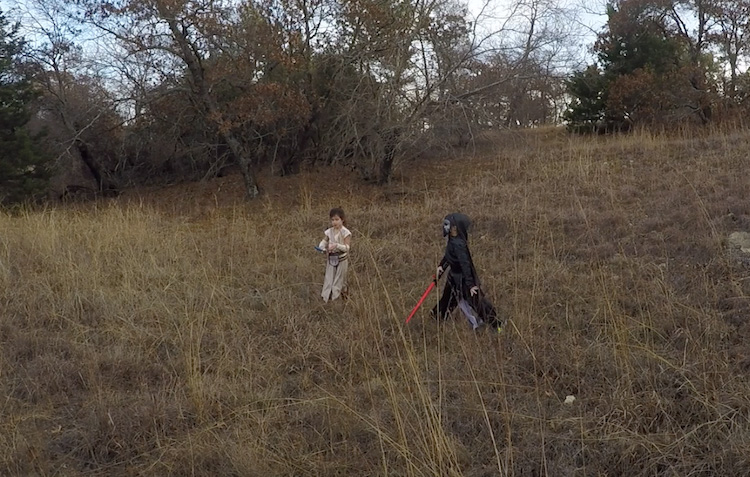
2 Location - How to Turn Your Kids into Star Wars Characters Using Adobe Photoshop

Step #2 – Capturing the Shot

Action shots

For action shots of a lightsaber battle, you will want to use a fast shutter speed of at least 1/500th of a second, and set your camera to continuous (burst) shooting mode. This will allow you to freeze the action of the battle and take multiple shots in sequence to ensure you capture the best of the action.
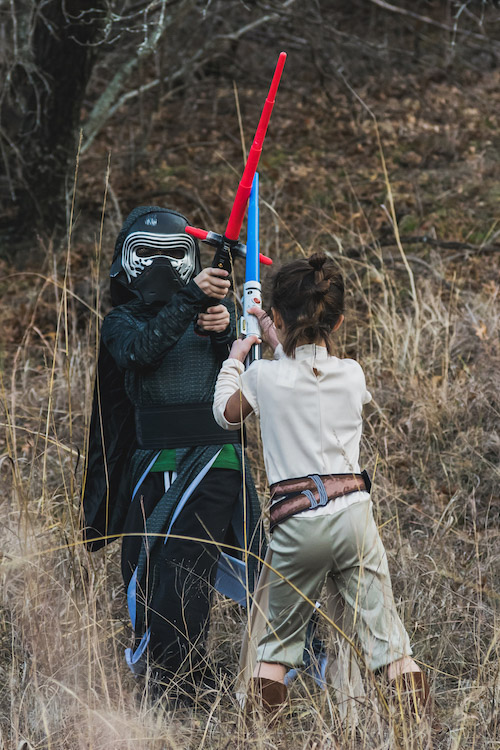
4 Action shot - How to Turn Your Kids into Star Wars Characters Using Adobe Photoshop

Shutter speed was 1/800th of a second.

Portraits

For the portraits, give your kids some epic poses to follow. To give you ideas for creative poses, do a Google images search for the Star Wars character of your choice. This will also help your child get more into the character. For example here are some for Rey.
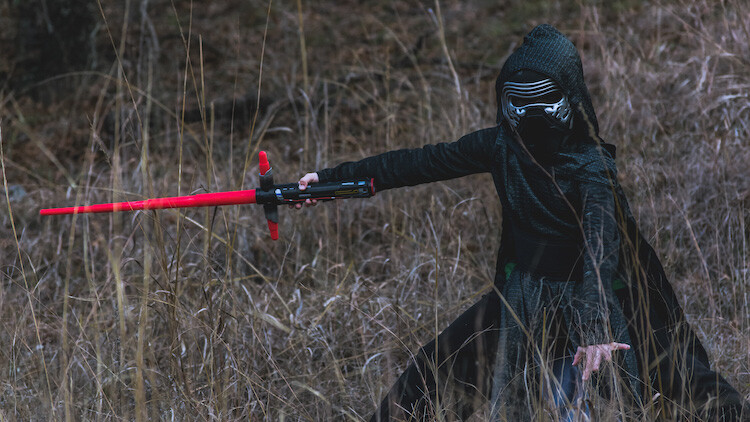
5 Portrait pose - How to Turn Your Kids into Star Wars Characters Using Adobe Photoshop

Do basic edits to the image

After you capture the image, you will need to make a few adjustments to the image to make it stand out. This can be done in Adobe Lightroom and is the final step before your photo is ready to go into Photoshop for the lightsaber effect.

For the look of Star Wars, a few basic edits, such as increasing the contrast and the clarity will help give it a rough and grungy look that Star Wars is known for.
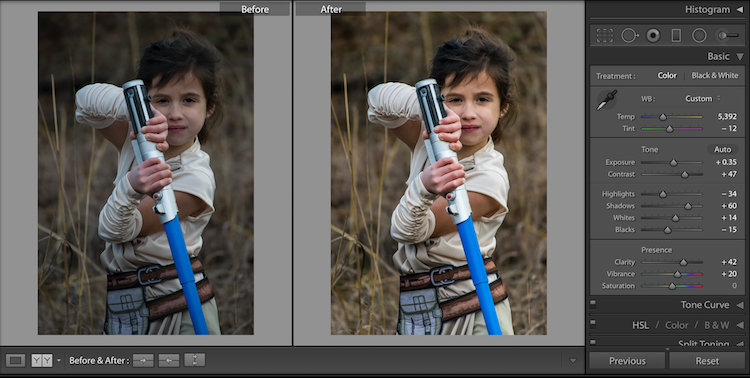
6 Before After Lightroom Edit Star Wars

Notice the differences between the before and after of this image by making a few basic edits in Adobe Lightroom.

Step #3 – Light your sabers up in Photoshop

Adding the lightsaber effect is the last and final step in making turning your kid into the Star Wars character of their dreams. This process should take about five minutes per photo once you have done it a few times.

Part 1: Prepare the layer

Start by creating a duplicate layer by pressing CTRL/CMD + J.
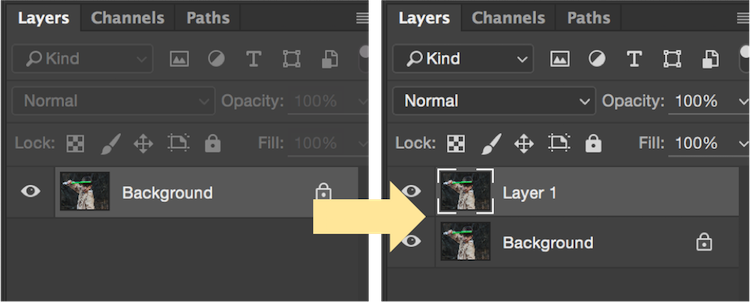
8 Duplicate layer - Star Wars character in Photoshop

Select the icon to create a new fill or adjustment layer, and from that menu select Hue/Saturation. Then, move the lightness slider to -100 to make it black.
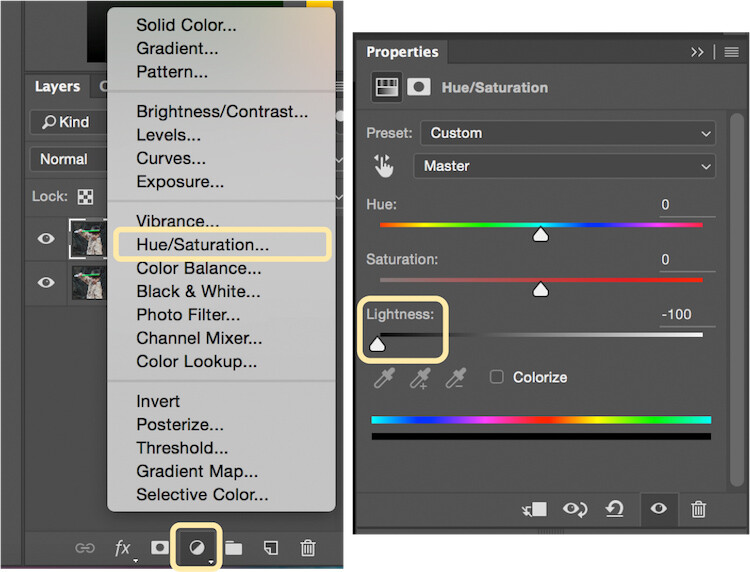
9 Hue Saturation

Select CTRL/CMD + E to merge the adjustment layer and duplicate layer. Next, set the blending mode drop down to Screen.
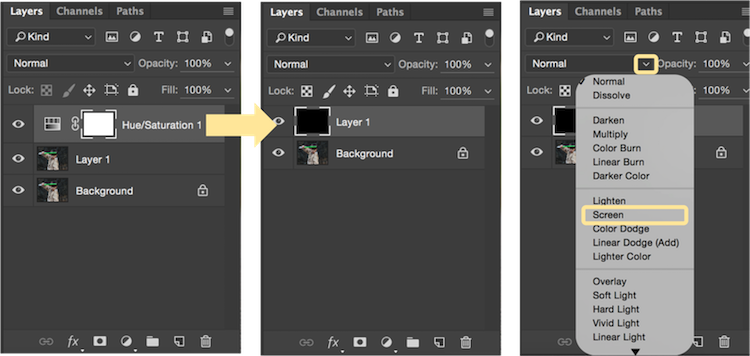
10 merge and screen Star Wars

At this point, your layers are prepped and ready to add the lightsaber.

Part 2: Add the lightsaber by using the brush tool

Select the brush tool, and adjust the size and hardness of the brush. The size of your brush will vary based on the size of the lightsaber and your image. Set the hardness of the brush to approximately 50%.
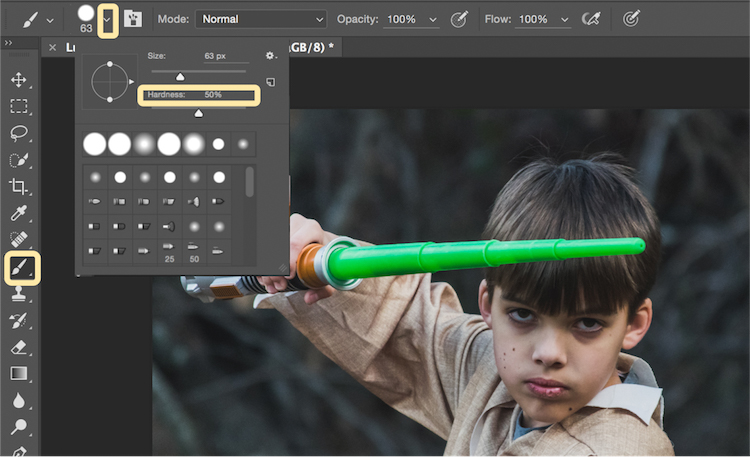
11 brush selection

Begin to add your lightsaber using brush strokes. Select the end point of the lightsaber, then hold down shift, and click the other end of the lightsaber to draw a straight line. Repeat these lines multiple times to fill in the lightsaber with brush strokes. You will likely need to add free-form brush strokes around the base of the lightsaber to fill it in.
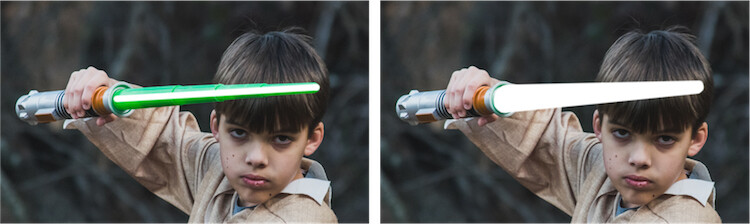
12 draw the saber

Illuminate the lightsaber

The next step allows you to illuminate the lightsaber. Create three duplicate layers of the lightsaber by selecting CTRL/CMD + J three times. For each layer, you will then select Filter > Blur > Gaussian Blur. But, each layer will be set to a different radius setting. For this image, we used 5, 15, 35, 75 for each respective layer. Note, that the amount of Gaussian Blur needed may vary based on the size of your image. Adjust these numbers as needed to ensure you have a nice glow from the lightsaber.
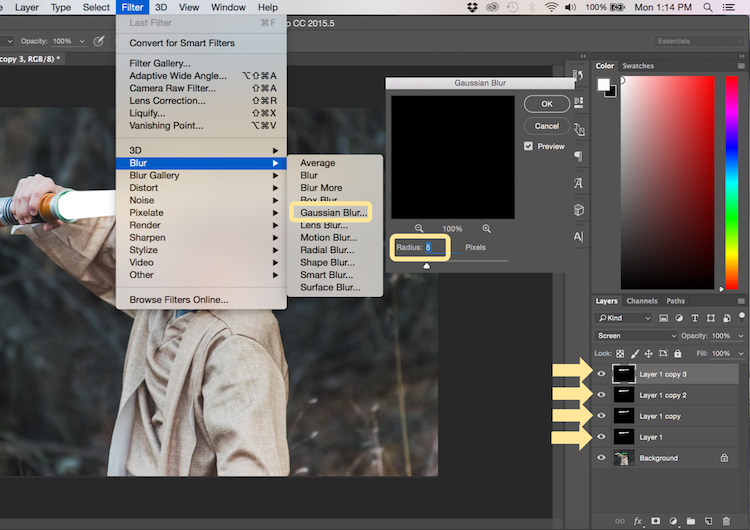
13 Gausian Blur

Select all of the duplicate layers (do not select the background), and merge them into one layer by pressing CTRL/CMD + E. Then set the blending mode to Screen.
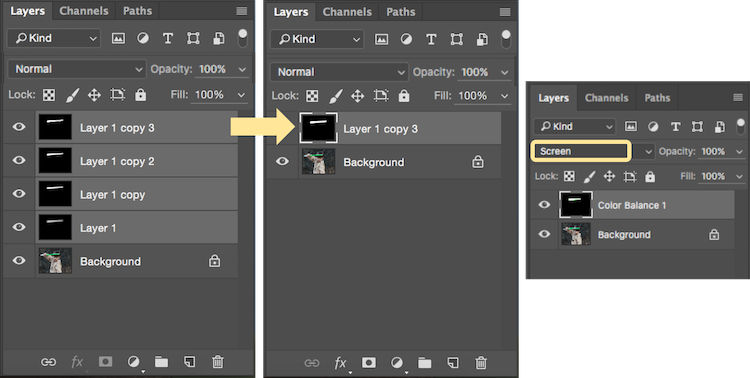
14 Merge and Screen

Add color to the lightsaber

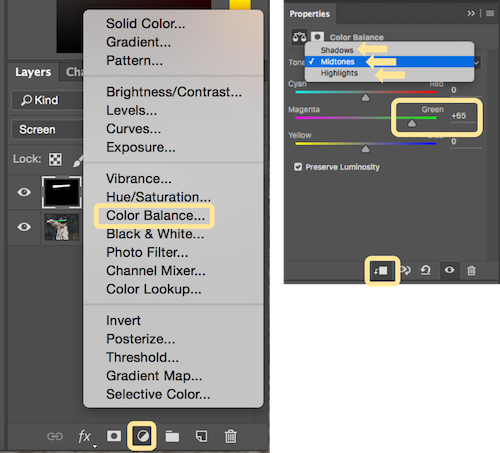
It’s now time to add color to your lightsaber. Select the icon to create a new fill or adjustment layer, and choose the option for Color Balance. Activate the clipping mask so that you only add color to the lightsaber, not the entire image. You can choose any color of your choice, but in this example, we are working with green.

You will want to add the color selection to each option for Shadows, Midtones, and Highlights. Adjust the color slider up or down based on the color preferences for your lightsaber. For this photo, we set shadows, midtones, and highlights to green at around +65.
15 Color Lightsaber

Your lightsaber is now complete, but there is still one more important step to get a realistic photo. You need to add some glow to the subject from the illumination coming off of the lightsaber.

Part 3: Add the reflective glow from the lightsaber

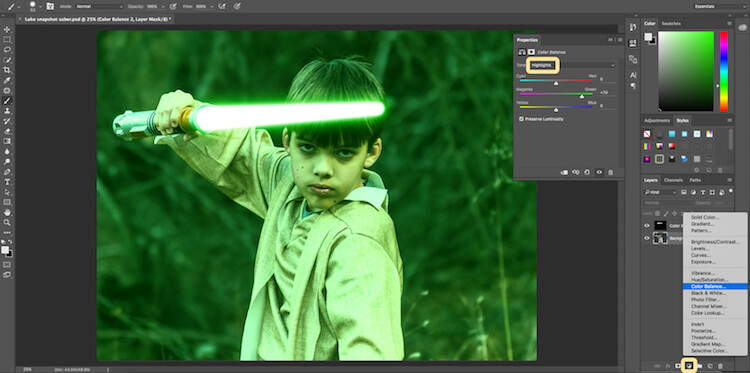
Select the background or base layer. Click the icon to create a new fill or adjustment layer, and choose the option for Color Balance. Choose the same color as you used for your lightsaber, but this time as you adjust the color for Shadows, Midtones, and Highlights, it will work best if you emphasize the color around the highlights more than the shadows or Midtones. For this photo, we used Shadows +32, Midtones +38, and Highlights +70
16 Color for Glow

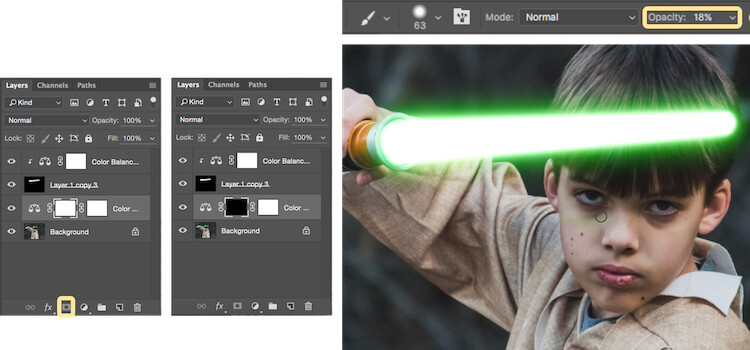
Add a vector mask and then select CTRL/CMD + I to hide all of the color balance. Select the brush tool, and make it a soft edge brush with an opacity around +18. This will allow you to brush in a soft reflection of glow to parts of the image that make it look realistic.
17 Brush in glow reflection

Bonus – Jumping Jedi

A bonus tip that you may want to use in your Star Wars photo shoot is a jumping Jedi. With a few simple tricks, you can give the illusion of your Jedi jumping high into the air over a swinging lightsaber.

First, make sure you use a tripod as you will need the camera to be completely stationary for two different shots. You can have your Jedi jump off a chair at the same time that his enemy swings his lightsaber. Then remove the chair and capture a shot of the exact same scene, but this time without the chair or characters in the shot (tripod use is important for image alignment later).

The second shot should be empty with the exception of the background because it will allow you to take the chair out of the original picture to create the illusion of a jumping Jedi.
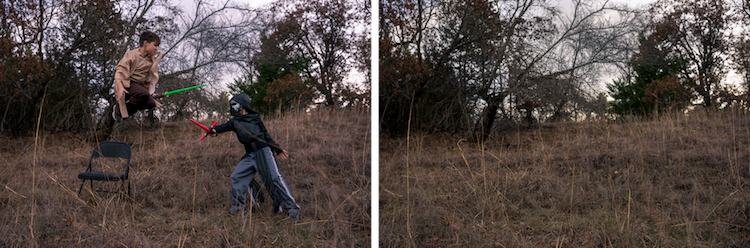
19 Jumping jedi tripod shots

Here’s how it’s done in Photoshop.

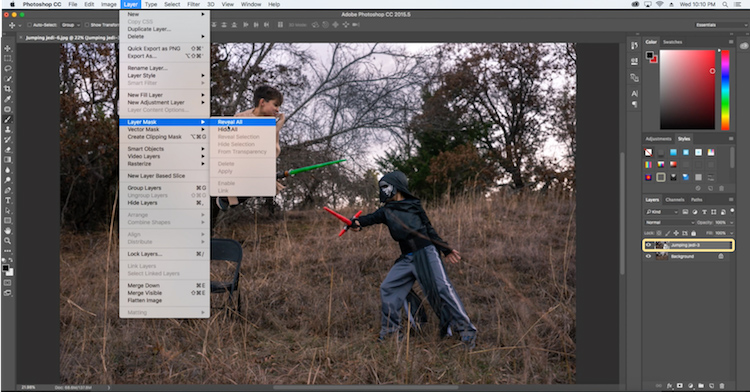
Start by opening both photos as layers. You will want the empty background shot to be set as the base layer and the action shot as the top one. Select the top layer of the action shot, and click Layer > Layer Mask > Reveal all.
20 Jumping Jedi mask

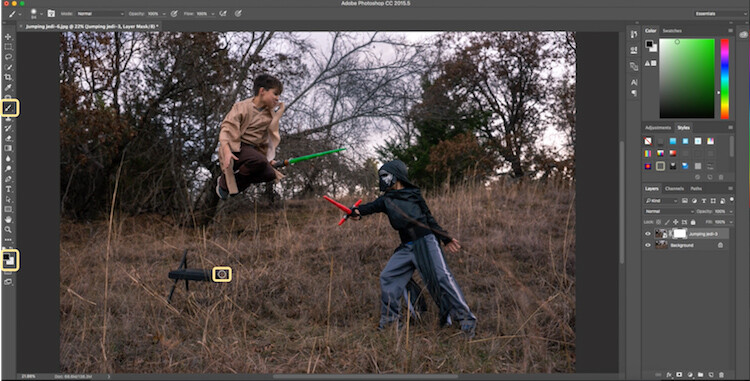
Select the brush tool, and make sure that your foreground color is set to black, which will allow you to brush away the top layer to reveal some of the base layer. If your foreground color is set to white as opposed to black you can switch it to black by clicking X. Simply brush over the chair (make sure you are painting on the mask NOT the layer) to make it disappear.
21 Jumping Jedi brush away

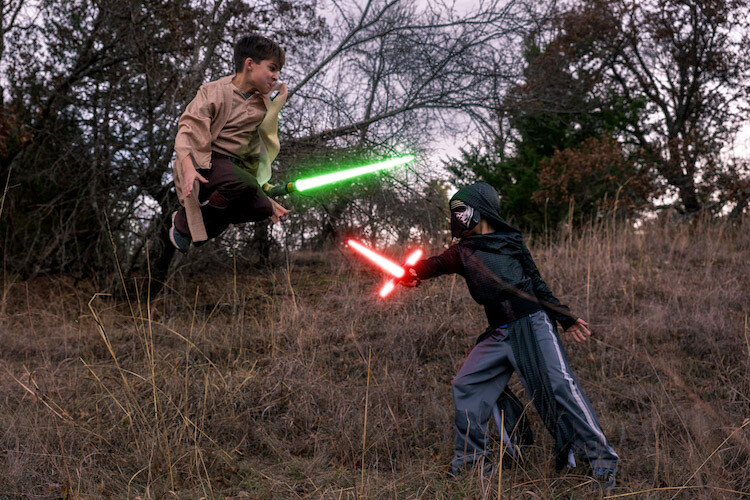
Add the lightsaber effect from above, and you have the illusion of a jumping Jedi.
22 Final photo Jumping Jedi

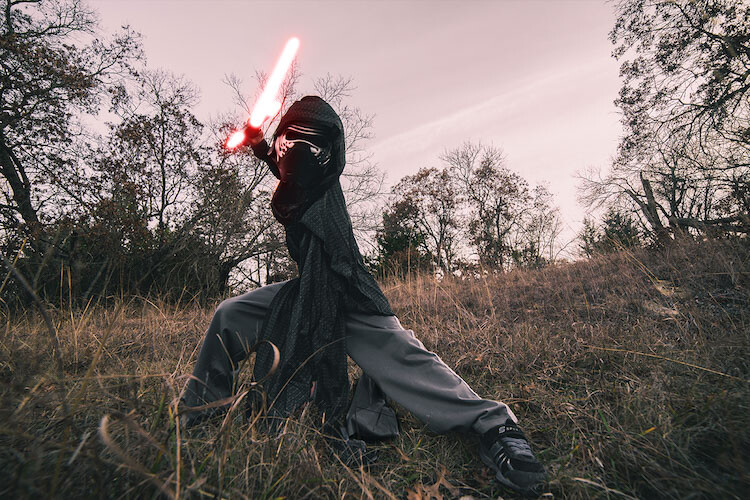
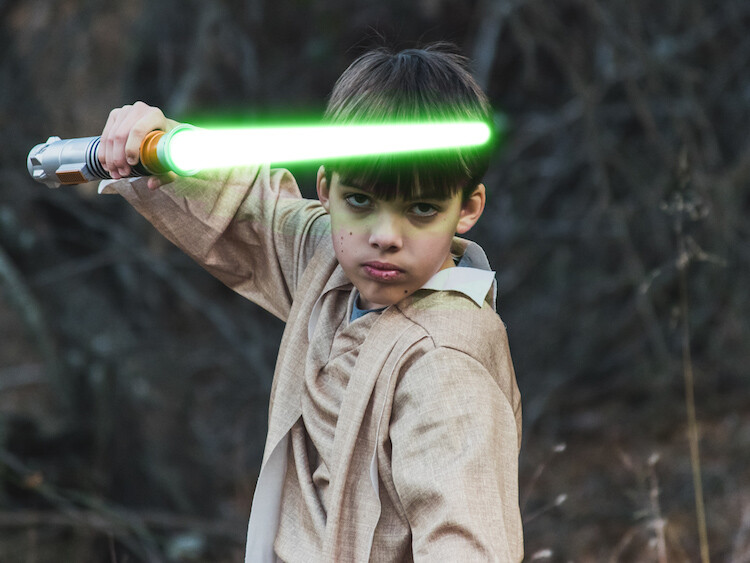
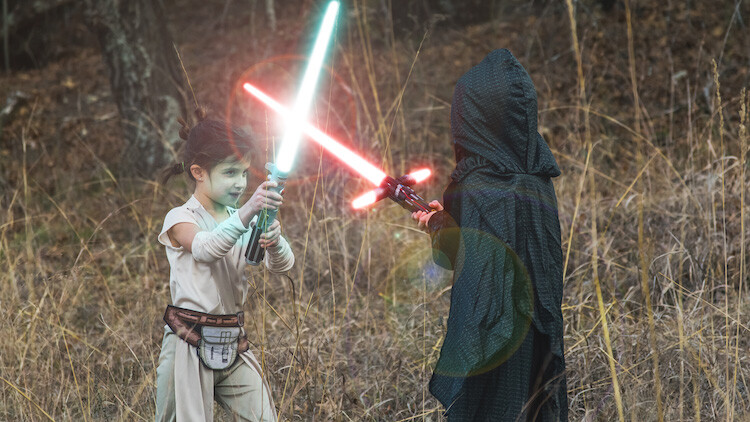
Below are some additional examples of the final images from this Star Wars project to give you additional ideas for action shots and portraits to bring your characters to life.
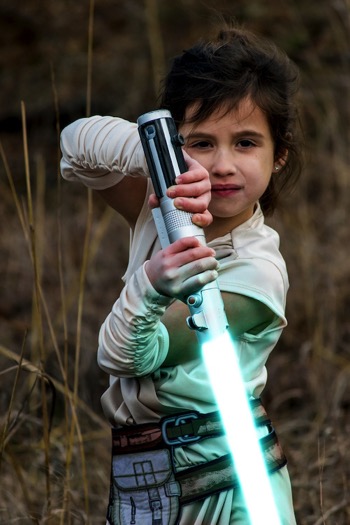
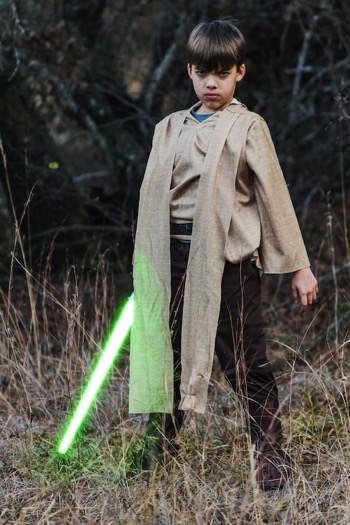
28 Final photo Rey portrait 29 Final Photo Luke portrait

30 Kylo Ren Red

27 Final photo saber battle

Finally

You can watch this whole process in the follow short video as well:

Note: thanks to my co-author on this article, David Kahl.

Try to awaken the force in your family by giving them a lightsaber and following this tutorial. In addition, leave a comment with any other fun photography projects that you have captured with your kids or family. Share your images if you give this a go, we’d love to see them!

googletag.cmd.push(function() {
tablet_slots.push( googletag.defineSlot( “/1005424/_dPSv4_tab-all-article-bottom_(300×250)”, [300, 250], “pb-ad-78623” ).addService( googletag.pubads() ) ); } );

googletag.cmd.push(function() {
mobile_slots.push( googletag.defineSlot( “/1005424/_dPSv4_mob-all-article-bottom_(300×250)”, [300, 250], “pb-ad-78158” ).addService( googletag.pubads() ) ); } );

The post How to Turn Your Kids into Star Wars Characters Using Photoshop by Paul Fontanelli appeared first on Digital Photography School.


Digital Photography School

 
Comments Off on How to Turn Your Kids into Star Wars Characters Using Photoshop

Posted in Photography


How to Turn Your Kids into Star Wars Characters Using Photoshop

09 Feb

Do your kids love Star Wars? Do you love photography? If so, here’s a great opportunity to join forces and turn your kids into Star Wars heroes or villains by giving them the ultimate Star Wars weapon, the lightsaber.

How to Turn Your Kids into Star Wars Characters Using Adobe Photoshop

All you need to awaken the force are these three steps:

  1. The setup
  2. Capturing the shot
  3. Light up your sabers using Photoshop

BONUS tip – The Jumping Jedi

Step #1 – The Setup

For the setup, you will want to make sure that the photographs of your kids look as close to a Star Wars scene as possible. Don’t just take a picture of your kids wearing a t-shirt standing in the kitchen. Luke Skywalker doesn’t light up his lightsaber in a kitchen. Your kids will have a lot of fun getting into character, so spend some time on the setup.

Costumes

You can buy costumes for your kids on Amazon. Here are the costumes used in this tutorial.

  • Luke Skywalker
  • Rey
  • Kylo Ren
  • Lightsabers
  • Total customs cost ~ $ 40-70

Location

For the location, you will want to find a place that looks like it could be a scene in any of the Star Wars movies. The easiest location to use would be a park with trees, and no noticeable man-made objects in sight.

2 Location - How to Turn Your Kids into Star Wars Characters Using Adobe Photoshop

Step #2 – Capturing the Shot

Action shots

For action shots of a lightsaber battle, you will want to use a fast shutter speed of at least 1/500th of a second, and set your camera to continuous (burst) shooting mode. This will allow you to freeze the action of the battle and take multiple shots in sequence to ensure you capture the best of the action.

4 Action shot - How to Turn Your Kids into Star Wars Characters Using Adobe Photoshop

Shutter speed was 1/800th of a second.

Portraits

For the portraits, give your kids some epic poses to follow. To give you ideas for creative poses, do a Google images search for the Star Wars character of your choice. This will also help your child get more into the character. For example here are some for Rey.

5 Portrait pose - How to Turn Your Kids into Star Wars Characters Using Adobe Photoshop

Do basic edits to the image

After you capture the image, you will need to make a few adjustments to the image to make it stand out. This can be done in Adobe Lightroom and is the final step before your photo is ready to go into Photoshop for the lightsaber effect.

For the look of Star Wars, a few basic edits, such as increasing the contrast and the clarity will help give it a rough and grungy look that Star Wars is known for.

6 Before After Lightroom Edit Star Wars

Notice the differences between the before and after of this image by making a few basic edits in Adobe Lightroom.

Step #3 – Light your sabers up in Photoshop

Adding the lightsaber effect is the last and final step in making turning your kid into the Star Wars character of their dreams. This process should take about five minutes per photo once you have done it a few times.

Part 1: Prepare the layer

Start by creating a duplicate layer by pressing CTRL/CMD + J.

8 Duplicate layer - Star Wars character in Photoshop

Select the icon to create a new fill or adjustment layer, and from that menu select Hue/Saturation. Then, move the lightness slider to -100 to make it black.

9 Hue Saturation

Select CTRL/CMD + E to merge the adjustment layer and duplicate layer. Next, set the blending mode drop down to Screen.

10 merge and screen Star Wars

At this point, your layers are prepped and ready to add the lightsaber.

Part 2: Add the lightsaber by using the brush tool

Select the brush tool, and adjust the size and hardness of the brush. The size of your brush will vary based on the size of the lightsaber and your image. Set the hardness of the brush to approximately 50%.

11 brush selection

Begin to add your lightsaber using brush strokes. Select the end point of the lightsaber, then hold down shift, and click the other end of the lightsaber to draw a straight line. Repeat these lines multiple times to fill in the lightsaber with brush strokes. You will likely need to add free-form brush strokes around the base of the lightsaber to fill it in.

12 draw the saber

Illuminate the lightsaber

The next step allows you to illuminate the lightsaber. Create three duplicate layers of the lightsaber by selecting CTRL/CMD + J three times. For each layer, you will then select Filter > Blur > Gaussian Blur. But, each layer will be set to a different radius setting. For this image, we used 5, 15, 35, 75 for each respective layer. Note, that the amount of Gaussian Blur needed may vary based on the size of your image. Adjust these numbers as needed to ensure you have a nice glow from the lightsaber.

13 Gausian Blur

Select all of the duplicate layers (do not select the background), and merge them into one layer by pressing CTRL/CMD + E. Then set the blending mode to Screen.

14 Merge and Screen

Add color to the lightsaber

It’s now time to add color to your lightsaber. Select the icon to create a new fill or adjustment layer, and choose the option for Color Balance. Activate the clipping mask so that you only add color to the lightsaber, not the entire image. You can choose any color of your choice, but in this example, we are working with green.

You will want to add the color selection to each option for Shadows, Midtones, and Highlights. Adjust the color slider up or down based on the color preferences for your lightsaber. For this photo, we set shadows, midtones, and highlights to green at around +65.

15 Color Lightsaber

Your lightsaber is now complete, but there is still one more important step to get a realistic photo. You need to add some glow to the subject from the illumination coming off of the lightsaber.

Part 3: Add the reflective glow from the lightsaber

Select the background or base layer. Click the icon to create a new fill or adjustment layer, and choose the option for Color Balance. Choose the same color as you used for your lightsaber, but this time as you adjust the color for Shadows, Midtones, and Highlights, it will work best if you emphasize the color around the highlights more than the shadows or Midtones. For this photo, we used Shadows +32, Midtones +38, and Highlights +70

16 Color for Glow

Add a vector mask and then select CTRL/CMD + I to hide all of the color balance. Select the brush tool, and make it a soft edge brush with an opacity around +18. This will allow you to brush in a soft reflection of glow to parts of the image that make it look realistic.

17 Brush in glow reflection

Bonus – Jumping Jedi

A bonus tip that you may want to use in your Star Wars photo shoot is a jumping Jedi. With a few simple tricks, you can give the illusion of your Jedi jumping high into the air over a swinging lightsaber.

First, make sure you use a tripod as you will need the camera to be completely stationary for two different shots. You can have your Jedi jump off a chair at the same time that his enemy swings his lightsaber. Then remove the chair and capture a shot of the exact same scene, but this time without the chair or characters in the shot (tripod use is important for image alignment later).

The second shot should be empty with the exception of the background because it will allow you to take the chair out of the original picture to create the illusion of a jumping Jedi.

19 Jumping jedi tripod shots

Here’s how it’s done in Photoshop.

Start by opening both photos as layers. You will want the empty background shot to be set as the base layer and the action shot as the top one. Select the top layer of the action shot, and click Layer > Layer Mask > Reveal all.

20 Jumping Jedi mask

Select the brush tool, and make sure that your foreground color is set to black, which will allow you to brush away the top layer to reveal some of the base layer. If your foreground color is set to white as opposed to black you can switch it to black by clicking X. Simply brush over the chair (make sure you are painting on the mask NOT the layer) to make it disappear.

21 Jumping Jedi brush away

Add the lightsaber effect from above, and you have the illusion of a jumping Jedi.

22 Final photo Jumping Jedi

Below are some additional examples of the final images from this Star Wars project to give you additional ideas for action shots and portraits to bring your characters to life.
28 Final photo Rey portrait 29 Final Photo Luke portrait

30 Kylo Ren Red

27 Final photo saber battle

Finally

You can watch this whole process in the follow short video as well:

Note: thanks to my co-author on this article, David Kahl.

Try to awaken the force in your family by giving them a lightsaber and following this tutorial. In addition, leave a comment with any other fun photography projects that you have captured with your kids or family. Share your images if you give this a go, we’d love to see them!

googletag.cmd.push(function() {
tablet_slots.push( googletag.defineSlot( “/1005424/_dPSv4_tab-all-article-bottom_(300×250)”, [300, 250], “pb-ad-78623” ).addService( googletag.pubads() ) ); } );

googletag.cmd.push(function() {
mobile_slots.push( googletag.defineSlot( “/1005424/_dPSv4_mob-all-article-bottom_(300×250)”, [300, 250], “pb-ad-78158” ).addService( googletag.pubads() ) ); } );

The post How to Turn Your Kids into Star Wars Characters Using Photoshop by Paul Fontanelli appeared first on Digital Photography School.


Digital Photography School
 
Comments Off on How to Turn Your Kids into Star Wars Characters Using Photoshop

Posted in Photography