RSS
 

Posts Tagged ‘Human’

Art Made Flesh: 35 Sculptures Rendered in Human Skin & Hair

16 Jul

[ By Steph in Art & Sculpture & Craft. ]
flesh art tian

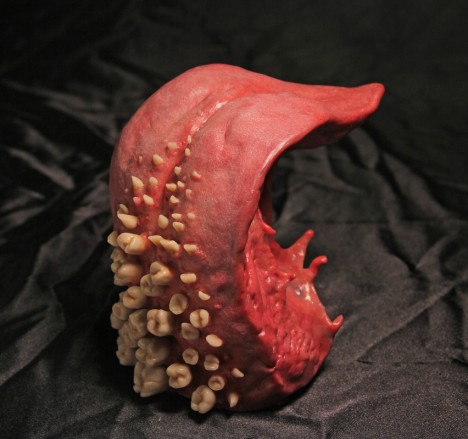
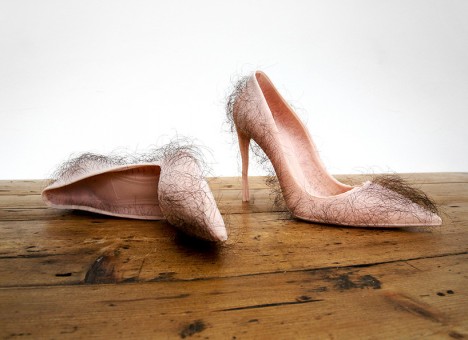
Do these fleshy works of art manipulating human body parts into unnatural shapes make you uncomfortable? That’s probably just what the artist was going for. It’s difficult for us, as humans, to look upon images of our own flesh with emotional detachment, seeing it as we would the meat of other animals, or even as an organic medium for art and architecture. Don’t worry – most of these are not made of actual humans, but rather silicone, polymer clay and wax. Read on for a tent modeled on human intestines, a pillow made of human skin and the world’s grossest pair of stiletto heels.

Jonathan Payne

flesh art payne 4

flesh art payne 3

flesh art payne 2

flesh art payne 1

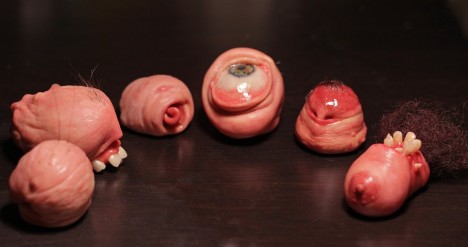
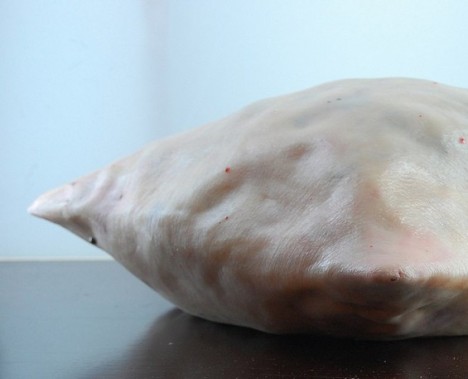
Jonathan Payne calls these deeply repulsive sculptures ‘FLESHLETTES,’ and that name says a lot. They’re basically lumps of human viscera, teeth, eyes and hair put together into little miniature packages. You probably never wanted to see a nipple with teeth, but here one is, nonetheless.

Andrea Hasler
flesh art tent 1

flesh art hasler 2

flesh art hasler 3

flesh art hasler 4

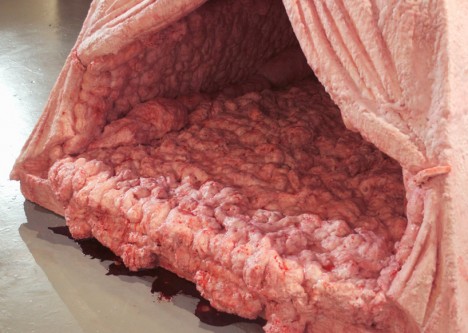
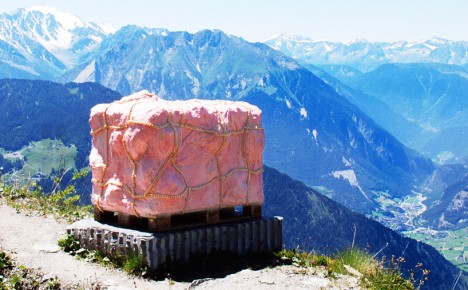
A tent made of flesh, a giant lump of what looks like human fat serenely overlooking a cliff, and a series of disgusting handbags are among the organic works of Swiss artist Andrea Hasler, who aims to humanize objects with ‘emotional surfaces.’ The tent was modeled upon human intestines and is made of polystyrene and wax as well as leather and real blood.

Felix Deac
flesh art felix deac 1

flesh art felix deac 2

flesh art felix deac 3

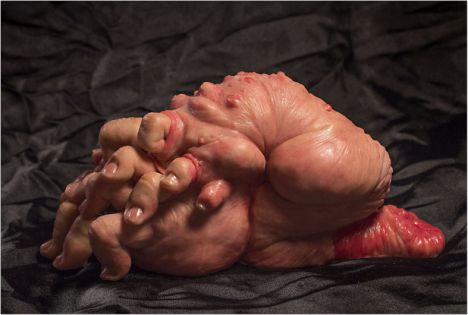
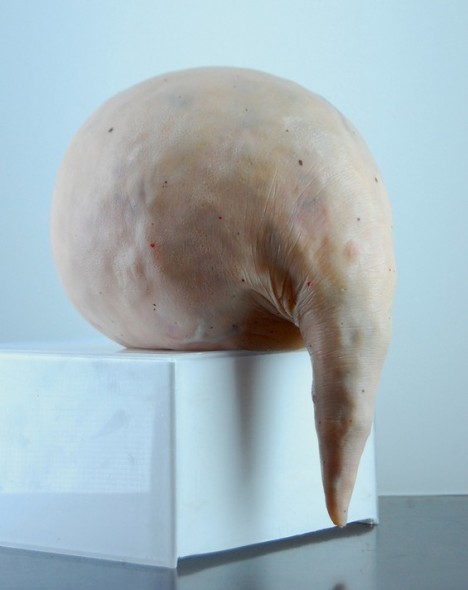
Romanian artist Felix Deac creates amorphous blobs of flesh replete with veins, moles, wrinkles and hair. While some might look like deformed human body parts, most are just abstract shapes reminiscent of nightmarish tumors that have taken on a life of their own.

Patricia Piccinini
flesh art piccinini 1

flesh art piccinini 2

flesh art piccinini 3

flesh art piccinini 4

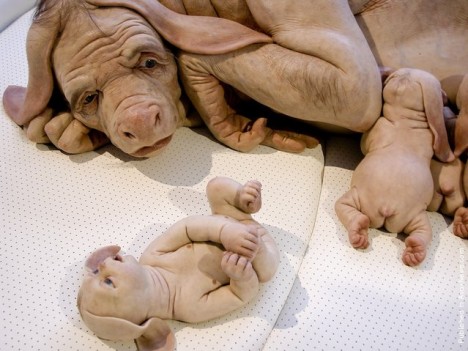
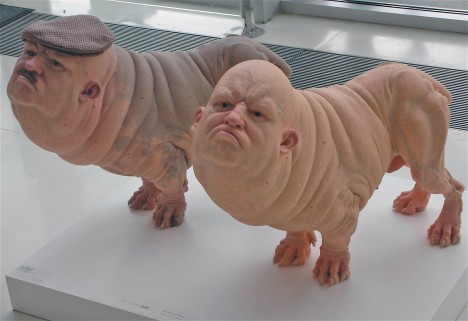
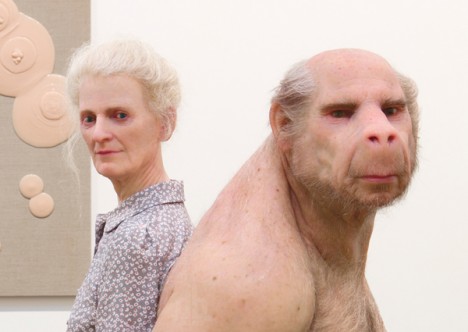
Patricia Piccinini’s work is so shockingly realistic, photographs of it are often passed around the internet as clickbait, with people wondering ‘what the heck am I looking at?’ The controversial Australian artist creates sculptures of fantastical creatures with extremely human-like skin and hair.

Next Page – Click Below to Read More:
Art Made Flesh 35 Sculptures Rendered In Human Skin Hair

Share on Facebook


[ By Steph in Art & Sculpture & Craft. ]

[ WebUrbanist | Archives | Galleries | Privacy | TOS ]


WebUrbanist

 
Comments Off on Art Made Flesh: 35 Sculptures Rendered in Human Skin & Hair

Posted in Creativity


How to Make Your Photos More Interesting with a Human Element

21 May

The human element in photography

I believe that when someone asks how to improve their composition, that what they’re really asking is how they can make their photos more interesting.

The skill of composition is in arranging the elements of the scene in such a way that the resulting image is aesthetically pleasing, and interesting to look at. Composition involves using techniques such as including leading lines, isolating the subject, exploiting tonal contrast, deciding what to leave out of the frame, and so on. But none of this matters much if your subject matter is boring.

The most effective way to create interesting images is to find an interesting subject. Composition becomes much easier when your subject is interesting. You are more likely to be enthusiastic about the photos, and put more effort into finding a good composition, if you are engaged with, or passionate about the subject.

Luckily, there are lots of interesting things to take photos of. But for me the most interesting subject of all is people.

The human element in photography

Unlike static subjects like the landscape, which change slowly or not at all, people are transient. They change. Jobs change. Towns and cities change. The ebb and flow of life creates many interesting and varied subjects for the curious photographer.

Many of the great photographers (and yes, there are exceptions) built their reputations taking photos of people. Masters like Steve McCurry, Sebastião Salgado, David Bailey and Annie Leibovitz predominantly photograph people and their affect on the world.

So, how do you add the human element in your photos? Here are some ideas.

1. Include human figures in the landscape to show scale and context

Including human figures in the landscape provides both a focal point and a guide to scale.

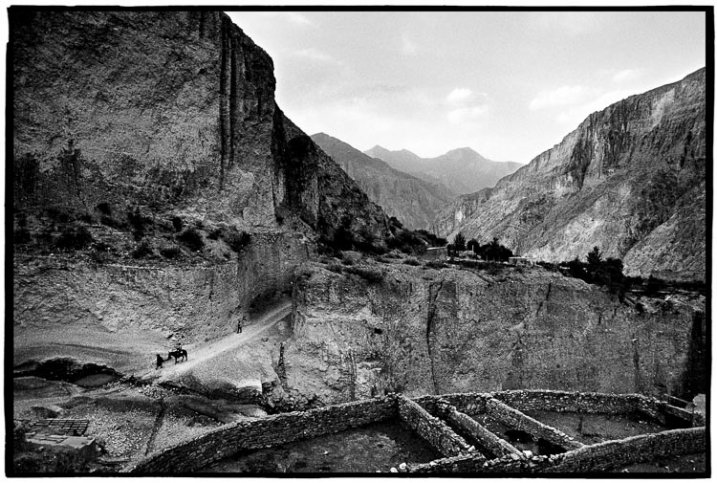
I took the following photo in a remote region of northwest Argentina. The scene caught my eye not just because it is spectacular, but because of the people walking in the middle ground. The presence of the figures reveals the height of the cliff face behind them. We know how big it is because we can compare its size to the them.

Even though the people are small in the frame they are still large enough for you to see they are wearing traditional dress. There are also some stone walls in the foreground, which are animal pens.

The human figures, and evidence of human activity, adds information, providing context about the relationship between the individuals in it and the landscape.

The human element in photography

2. Take environmental portraits

One way to create interesting photos of people is to take environmental portraits – photos that include information about the person’s surroundings. The person will be the focal point of the photo but really there are two stories being told here; one about the person, and another about their environment.

The photo below came about after I asked a friend of mine if I could take some portraits with her new gypsy caravan that she built herself from scratch. She loved the idea. This photo is as much about her caravan and the way she created a unique place for herself to live, as it is about capturing her likeness.

The human element in photography

3. Find interesting people to photograph

The easiest way to find interesting people to take photos of is to set yourself a project. One of my current projects is to take photos of local craftsmen. This led me to take photos of Eoin in his glass blowing studio.

After I had taken some photos of him blowing glass, we went outside to take some portraits. You can see one of the images below. He has a very interesting face, and was a great subject, but I would never have found him if it hadn’t been for the project.

The human element in photography

You may have read the story where a student asks photographer Jay Maisel how to take more interesting photos. The reply was,

“If you want to make more interesting pictures, become a more interesting person.” – Jay Maisel

Another way to find interesting people is to lead a more interesting life. The more hobbies and activities you participate in, the more people you will meet in everyday life. Some of them may make interesting subjects.

Your turn

Do you agree with my idea that people are the most interesting subject for photographers? Please let us know in the comments, I’m looking forward to hearing what you think.


Mastering Composition ebookMastering Composition

My new ebook Mastering Composition will help you learn to see and compose photos better. It takes you on a journey beyond the rule of thirds, exploring the principles of composition you need to understand in order to make beautiful images.

googletag.cmd.push(function() {
tablet_slots.push( googletag.defineSlot( “/1005424/_dPSv4_tab-all-article-bottom_(300×250)”, [300, 250], “pb-ad-78623” ).addService( googletag.pubads() ) ); } );

googletag.cmd.push(function() {
mobile_slots.push( googletag.defineSlot( “/1005424/_dPSv4_mob-all-article-bottom_(300×250)”, [300, 250], “pb-ad-78158” ).addService( googletag.pubads() ) ); } );

The post How to Make Your Photos More Interesting with a Human Element by Andrew S. Gibson appeared first on Digital Photography School.


Digital Photography School

 
Comments Off on How to Make Your Photos More Interesting with a Human Element

Posted in Photography


New Artificial Lighting Tricks Human Brain into Seeing Sunlight

18 Feb

[ By WebUrbanist in Design & Fixtures & Interiors. ]

skylight

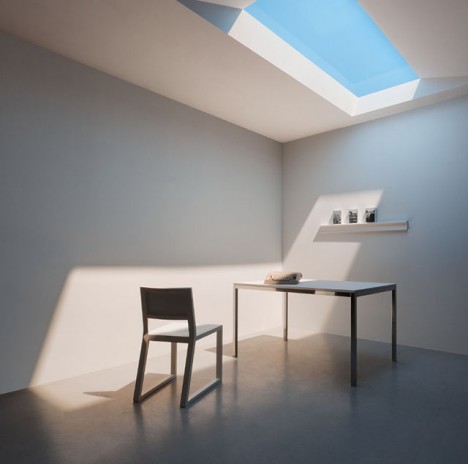
Access to natural daylight has long been one of the biggest limiting factors in building design – some solutions involve reflecting real daylight from the outdoors, but until now no solution has been able to mimic natural refraction processes and fool our minds into thinking we are surrounded by actual sunlight.

artifical snlight interior image

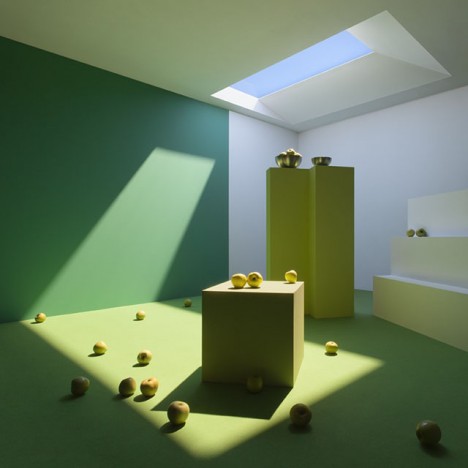
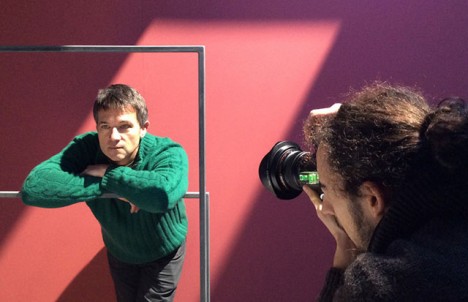
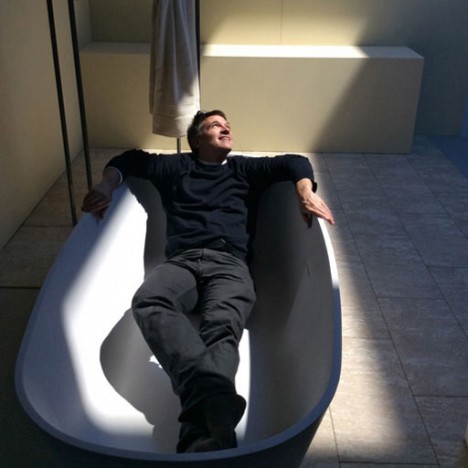
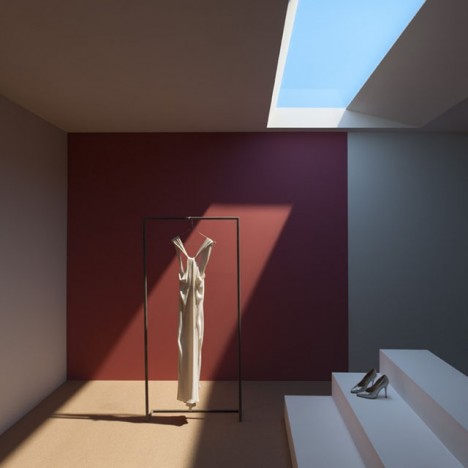
Developed by CoeLux in Italy, this new form of artificial light is able to dupe humans, cameras and computers alike using a thin coating of nanoparticules to simulate Rayleigh scattering, a natural process that takes place in Earth’s atmosphere causing diffuse sky radiation. It was not enough to make the lights brighter or bluer – variegation and other elements were needed as well.

artficial skylight system design

light bring to market

The result is an effect that carries the same qualities we are used to experiencing outside, from color to light quality. The company also boasts that these photos are untouched and that their fake skylights in showrooms fool people in person just as effectively, appearing to have infinite depth just like one would expect looking up into the sky (James Turrell’s skyspaces and this work by Christo come to mind).

artificial light photo shoot

daylight light soucre innovation

The potential applications are effectively endless, from lighting deep indoor spaces to replacing natural light in places where winters drag on and daylight hours are short. The company sees opportunities in areas like healthcare facilities where it may not be possible to put patients near real windows for spatial or health reasons.

lux live winner award

light real simulation design

Currently, three lighting types are on offer to simulate various broad regions – Mediterranean, Tropical and Nordic – featuring various balances of light, shade, hue and contrast. They are also working on additional offerings, including simulated daytime sequences (sunrise through sunset) and color variations to reflect different kinds of weather conditions.

Share on Facebook


[ By WebUrbanist in Design & Fixtures & Interiors. ]

[ WebUrbanist | Archives | Galleries | Privacy | TOS ]


WebUrbanist

 
Comments Off on New Artificial Lighting Tricks Human Brain into Seeing Sunlight

Posted in Creativity


That’s No Moon: Artists Launch Huge Human Head Balloon

11 Jan

[ By Steve in Art & Installation & Sound. ]

ojisora_human_head_balloon_Japan_main
A bizarre art installation based on a dream saw a 50-ft tall balloon become a bizarre “Man In The Moon” as it rose above the streets of Utsunomiya, Japan.

ojisora_human_head_balloon_Japan_1

ojisora_human_head_balloon_Japan_2

Residents of Utsunomiya, a smallish city roughly 60 miles (100 km) north of Tokyo, Japan, experienced the shock of their lives on the evening of December 13th, 2014 when they espied the full moon rising over the horizon.

ojisora_human_head_balloon_Japan_19

ojisora_human_head_balloon_Japan_20

ojisora_human_head_balloon_Japan_21

No doubt dozens of necks suddenly snapped in a group double-take as residents suddenly realized that’s no moon… it’s the enormous inflated head of one of their neighbors!

ojisora_human_head_balloon_Japan_3

ojisora_human_head_balloon_Japan_4

Give credit to Japanese art trio Me (in collaboration with the Utsunomiya Museum of Art) for the uniquely unusual “Ojisora” project, an artistic effort spanning over two years from conception to realization. Its origin rests with one of the three artists, Haruka Kojin (above, right), who as a junior high school student dreamed of an old man’s grossly enlarged and disembodied head floating over town and country .

ojisora_human_head_balloon_Japan_6

ojisora_human_head_balloon_Japan_5

Upon awakening from her dream, Kojin quickly sketched her recollection and then just as quickly forgot about it. Many years later, she came across her sketch and wondered… was there some way to recreate her dream in real life? After consulting with her two co-artists and with the support of the Utsunomiya Museum of Art, Kojin took the first step towards realizing – and sharing on a mass scale – her odd dream from so many years before.

Next Page – Click Below to Read More:
Thats No Moon Artists Launch Huge Human Head Balloon

Share on Facebook


[ By Steve in Art & Installation & Sound. ]

[ WebUrbanist | Archives | Galleries | Privacy | TOS ]

WebUrbanist

 
Comments Off on That’s No Moon: Artists Launch Huge Human Head Balloon

Posted in Creativity


12 December, 2014 – Special Antarctica Offer and An Article About Color and Human Vision Anomalies

12 Dec

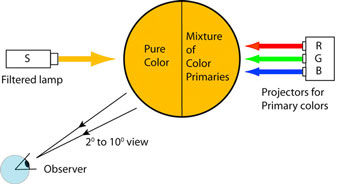
A few years ago I was traveling with LuLa’s good friend Bill Atkinson.  Over dinner one night we got into a conversation on color and how the human eye and mind see color.  It was quite fascinating not to mention mind boggling.  Bill is one of the industries experts on color. Over the years, we have published stories about Color and Human Vision.  The way the eye sees color is quite fascinating. Today Charles Johnson Sr. shares his article on Observing and Managing Color: Dealing With Human Vision Anomalies.   An interesting read on understanding how we see color especially when working photographically.

A Special Message from Michael Reichmann

The Luminous Landscape, together with John and Roxie Walker of Switzerland, have created an opportunity for one or two people to join our January 26th, 2015 photographic expedition to Antarctica (there are two berths available).  The Walkers were early registrants for this extraordinary odyssey, unfortunately for personal reasons they will now not be able to fulfill this dream opportunity.  However, in the spirit of the season and with a deep desire to advance the art and craft of photography, we are pleased to offer the following unique opportunity:

Rather than simply resell their two berths,  Kevin, the Walkers and I have found a "silver lining" in this unfortunate turn of events and, as a result, we are pleased to make these two berths available as a thank-you gift for a meaningful donation to The Luminous Endowment for Photographers.

READ THE DETAILS AND MORE INFORMATION. . . 


The Luminous Landscape – What’s New

 
Comments Off on 12 December, 2014 – Special Antarctica Offer and An Article About Color and Human Vision Anomalies

Posted in News


Smart Bricks: Life-Size LEGO-Style Blocks for Human Habitats

09 Jul

[ By WebUrbanist in Conceptual & Futuristic & Technology. ]

kite bricks building blocks

Aiming to revolutionize the most basic material units of construction, these building blocks snap together like LEGO bricks while leaving space for insulation and infrastructure inside and between them.

kite building block prototype

kite wall construction detail

Designed by Kite Bricks, a startup company with lofty aspirations, these Smart Bricks offer “high thermal control, full passage of pipes, wires, cables and the like, finishes for both indoors and outdoors, extraordinary tensile strength, ease of construction, safety of materials, and total application throughout a structure—floors, ceilings, and walls.”

Among other ecological and cost advantages, a core idea is to reduce the difficulty of construction and the equipment and debris associated with the building process. The bricks can be stacked by hand and are self-supporting from the start – no scaffolding needed.

kite brick window wall

kite lego like building block

As for applications: “The brick is amenable for building houses, buildings, bridges and more.. The block is constructed of high-strength concrete with unique properties that allow for … large savings in electricity expenses associated with seasonal heating and cooling. The block allows for faster, cheaper, more precise, and stronger building than is available through traditional building methods.”

kite life size lego

robotic construction blocks

Whether this approach will replace bricks as we know them remains to be seen, but the next step will certainly involve full-scale prototypes, albeit hopefully ones more creative and attractive than the rough-and-ready examples shown in the video above.

Share on Facebook


[ By WebUrbanist in Conceptual & Futuristic & Technology. ]

[ WebUrbanist | Archives | Galleries | Privacy | TOS ]


WebUrbanist

 
Comments Off on Smart Bricks: Life-Size LEGO-Style Blocks for Human Habitats

Posted in Creativity


Almost Human: 15 Frighteningly Realistic Robots & Androids

01 Jul

[ By Steph in Conceptual & Futuristic & Technology. ]

Creepy Androids Main

How would you react if you were chased down the street by a sprinting android wearing head-to-toe camouflage and a gas mask? Probably about the same way you’d react to finding a dead-eyed mannequin convulsing alone in a closet with blood streaming from its mouth. Android technology is getting more disturbingly realistic every year, and these 15 represent some of the most jaw-dropping examples yet.

World’s First Android Newscaster
Creepy Androids  Newscaster 1

Creepy Androids Robot Newscasters 2

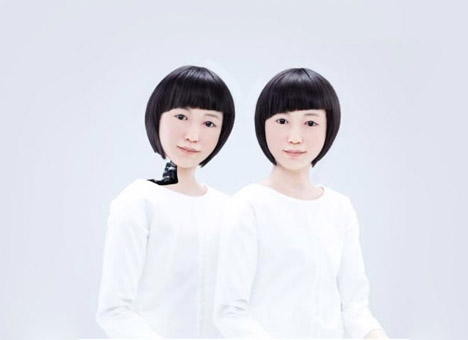
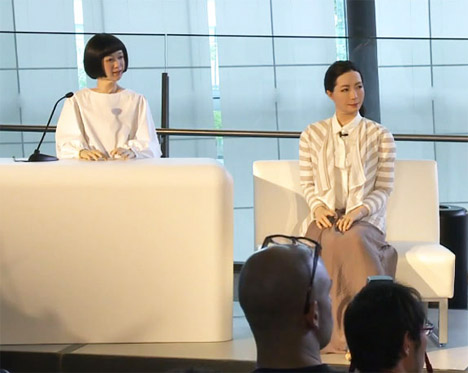
The world’s first news-reading android reported on an earthquake and an FBI raid in Tokyo on June 24th, 2014. The pair of remarkably realistic humanoid robots include a child (kodomoroid) that can recite reports gathered from around the world in a variety of voices and languages, and an adult woman (otonaroid) who will serve as a robot science communicator for Japan’s museum of emerging science and innovation.

BINA48

Creepy Androids BINA 1

The memories, beliefs and core personality of a real-life woman have been transferred to a robot called Bina48, who’s sophisticated enough to detect and reach to racism, discuss philosophy and tell jokes. The woman the android was modeled after, Bina Rothblatt, was interviewed for more than 20 hours on topics that ranged from her childhood to her career, and the conversation was transcribed and uploaded to an artificial intelligence database. Robot designer David Hansen crafted the bust-only robot for $ 125,000.

SimMan 3G Patient Simulator
Creepy Androids SimMan 1

Creepy Androids SimMan 2

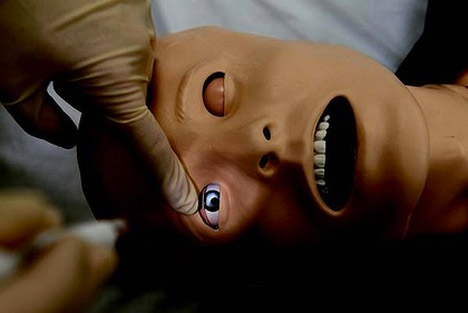
The SimMan 3G might be a great way for medical professionals to practice, but that doesn’t make it any less disturbing to look at, especially when it starts bleeding, convulsing, crying or foaming at its gaping mouth. It’s designed to simulate virtually every emergency medical situation in the book and it can withstand four hours of surgery. Just imagine being the cleaning person who opens a closet at the hospital to find this thing staring back.

Geminoid F
Creepy Androids Geminoid F 1

Creepy Android Geminoid F 2

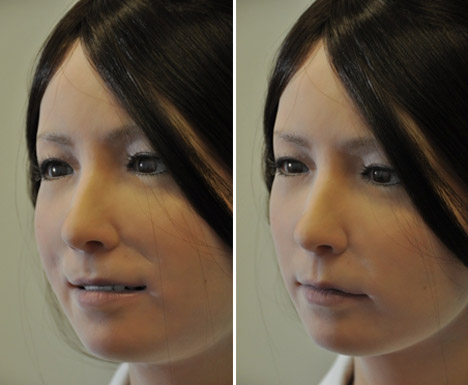
Japanese robot designer Hiroshi Ishiguro outdid himself with Geminoid F, a female android who can smile, furow her brows, talk and sing. Her face is equipped with 12 motorized actuators powered by air pressure to mimic human expressions, and she’ sso realistic she was actually used as an actress in a Tokyo play.

Geminoid DK
Creepy Androids Main

Creepy Androids Geminoid DK 1

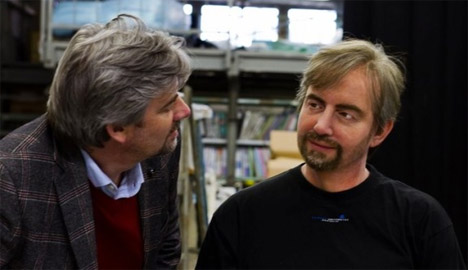
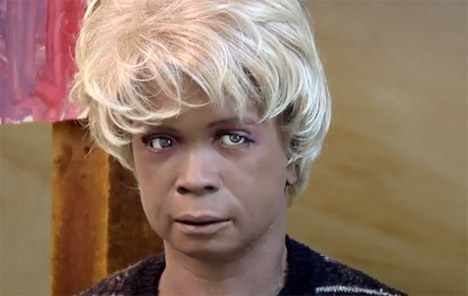
With Geminoid DK, Ishiguro made an android copy of Henrik Scharfe, an associate professor of Aalborg University in Denmark (the roboticist’s first non-Japanese creation.) The purpose, he explains, is to understand the ‘emotional affordances’ in human-robot interaction. In the video you can see just how realistic the robot’s facial movements are, blinking and moving its mouth.

Next Page – Click Below to Read More:
Almost Human 15 Frighteningly Realistic Robots Androids

Share on Facebook


[ By Steph in Conceptual & Futuristic & Technology. ]

[ WebUrbanist | Archives | Galleries | Privacy | TOS ]


WebUrbanist

 
Comments Off on Almost Human: 15 Frighteningly Realistic Robots & Androids

Posted in Creativity


7 Extreme Human Habitats & Unexpected Urban Wonders

18 Jun

[ By Steph in 7 Wonders Series & Travel. ]

Strangest Cities Main

Humans have established settlements in the strangest of places, from the base of an extremely lethal volcano in Japan to a platform of oil rigs built on the remains of seven ships in the Caspian Sea. These 7 cities are among the weirdest and most unusual in the world, requiring residents to wear gas masks or sort through trash for a living.

Gas Mask City: Lethal Japanese Settlement at the Base of a Volcano
Strangest Cities Miyake Gas Masks 1
Strangest Cities Miyake Gas Masks 2
Strangest Cities Miyake Gas Masks 3

Eerie black-and-white images depict groups of people – including a wedding party – gazing at the camera through the darkened eyeholes of old-fashioned gas masks. Were these created for some kind of movie or photography project? Nope. Wearing gas masks was part of everyday life for residents of Miyake-jima, a lethal settlement at the base of the extremely active Mount Oyama volcano in Japan. The volcano spews sulphuric gas even when it isn’t in the midst of an eruption, an air raid siren warning inhabitants to put on their masks when the levels get too high. An eruption in June 2000 forced the evacuation of all residents, and the island was closed to human habitation for more than four years, but nearly 3,000 people decided to return in 2005, retaking the abandoned structures they had left behind. A third of the island is still off limits to human travelers, and residents must undergo mandatory health checks.

Neft Dashlari: Floating City of Oil Workers in the Caspian Sea
Strangest Cities Oil Rocks 1
Strangest Cities Oil Rocks 2

Neft Dashlari (Oily Rocks) is – was – a Soviet city in the middle of the Caspian sea. Just after World War II, as Russia tried to recover from the Nazi invasion, the nation’s government began to daydream about the vast oil reserves believed to be far below the sea in what is now the independent state of Azerbaijan. In 1949, Soviet engineers struck top-quality oil at a depth of 1,100 meters below the seabed at a location mariners called “Black Rock.” Certain that they had found the answer to their problems, the Russian government began to build an entire city with the foundation consisting of seven sunken ships including ‘Zoroaster,’ the world’s first oil tanker. They constructed a network of oil platforms linked by hundreds of miles of roads, filled with apartment blocks for 5,000 oil workers, a cinema and even a park. For a while, it was a ‘Stalinist utopia for the working class,’ but with the collapse of the Soviet Union and the discovery of more accessible oil fields came neglect. Most of the workers left, and the waves began to claim the architecture. Today, a small number of oil workers continue to live and work there, and the settlement is closely guarded, but it’s only a matter of time before the entire network crumbles.

Makoko: Village on Stilts in the Lagos Lagoon
Strangest Cities Makoko 1
Strangest Cities Makoko 2
Strangest Cities Makoko 3

Highly dangerous for outsiders, Makoko is a shantytown in the Lagos Lagoon of Nigeria with a population of 250,000. The twisting canal system between hobbled-together houses has given sway to the tongue-in-cheek nickname ‘Venice of Africa,’ and while most the residents make a living from the traditional fisherman’s way of life, they’re also constantly at risk of disease from the cramped quarters as well as the threat of local gangs. What began as an 18th century village has ballooned thanks to an influx of new residents from Lagos, Nigeria’s largest city.

In 2013, the Nigerian government declared Makoko illegal and scheduled it for demolition. Men with chainsaws cut through the stilts holding up homes, schools and churches. Left homeless, many residents had no choice but to live in their boats. Can the community be saved? One project that offers some hope for the future is Makoko Floating School by architecture firm NLE, an ached floating structure that can accommodate up to 100 adults, even in bad weather conditions. Currently a school, the design could also be used for events spaces, clinics or markets.

Trash City: Cairo’s Neighbor is One Big Dump
Strangest Cities Garbage Cairo 1
Strangest Cities Garbage Cairo 2
Strangest Cities Garbage Cairo 3

Just on the edge of the largest city in the Arab world lies Manshiyat Naser, better known as ‘Garbage City,’ where residents make a living sorting and processing Cairo’s refuse. Trash is stacked on sidewalks and rooftops, propped against walls within dwellings, and spread out across the floors. It may sound unpleasant and unsanitary, but for the Zabbaleen – literally ‘garbage people’ – it’s a way of life. They recycle 80% of the trash and feed the remaining organic matter to pigs in an incredibly efficient system that’s unrivaled anywhere else in the world. The city has no running water, sewers, electricity or official governing body; it was established by Coptic Christians known for herding swine within the city. However, the pigs were removed by the Egyptian government in 2009 due to the threat of swine flu, putting the Zabbaleen’s system in danger of falling apart. Without the pigs, managing the trash has become much more of a challenge, especially as Cairo produces more waste than ever with each passing year.

Next Page – Click Below to Read More:
7 Extreme Human Habitats Unexpected Urban Wonders

Share on Facebook


[ By Steph in 7 Wonders Series & Travel. ]

[ WebUrbanist | Archives | Galleries | Privacy | TOS ]


WebUrbanist

 
Comments Off on 7 Extreme Human Habitats & Unexpected Urban Wonders

Posted in Creativity


900MP portraits show human face in extreme detail

20 Mar

megaportrait.jpg

‘Facial cartography’ is an apt description of Swiss photographer Daniel Boschung’s portraits. Folds, crevices and pores that are often invisible under normal viewing conditions are shown in extreme detail in his 900MP images. Each of his photographs is comprised of about 600 images captured by an ABB robot with a Canon 5D Mark II and a 180mm macro lens. Learn more

News: Digital Photography Review (dpreview.com)

 
Comments Off on 900MP portraits show human face in extreme detail

Posted in Uncategorized


Human Body Museum: Undulating Design Wins Competition

03 Dec

[ By WebUrbanist in Architecture & Public & Institutional. ]

museum of the human body

Its organic form fits its function as a Cité du Corps Humain (Museum of the Human Body) like a metaphorical glove – interlocked fingers were, in fact, part of the conceptual inspiration for this new museum in France.
museum site aerial view

museum curves design detail

With a medical school more than a millennium old, Montpellier is a fitting location for a nearly 10,000 square-meter place for people to “explore the human body from an artistic, scientific and societal approach through cultural activities, interactive exhibitions, performances and workshops.”
museum night curved path

museum exterior roof renderings

Working with local firm A+ Architecture, BIG was first shortlisted then selected to complete the project. Their ability to format compelling modes of visual communication no doubt helped improve their prospects with the jury.

museum natural shape diagram

museum city park connection

Weaving together nature and the city, a series of indoor and outdoor spaces interlock to shape programmatic and public areas. “The museum’s roof functions as an ergonomic garden – a dynamic landscape of vegetal and mineral surfaces that allow the park’s visitors to explore and express their bodies in various ways – from contemplation to the performance – from relaxing to exercising – from the soothing to the challenging.”

Next Page – Click Below to Read More:
Human Body Museum Undulating Design Wins Competition

Share on Facebook


[ By WebUrbanist in Architecture & Public & Institutional. ]

[ WebUrbanist | Archives | Galleries | Privacy | TOS ]


WebUrbanist

 
Comments Off on Human Body Museum: Undulating Design Wins Competition

Posted in Creativity