RSS
 

Posts Tagged ‘Human’

Human Harp: Suspension Cables on Bridge Make Music

27 Aug

[ By Steph in Art & Installation & Sound. ]

Human Harp Suspension Bridge Installation

A digital and mechanical module that fastens onto bridges and connects via retractable strings to a wearable suit creates a ‘human harp,’ a musical collaboration between the user and the bridge. The harpist moves in a sort of dance to pull the strings, creating the sounds, which are felt in real-time through vibrations on the bridge. The installation will travel to bridges around the globe, so pedestrians have a chance to try it out for themselves.

London-based artist Di Mainstone got the idea when looking at the Brooklyn Bridge during a residency in New York City, and seeing its similarity to the musical instrument. She envisioned a clip-on sound interface that would allow pedestrians to ‘play’ the bridge as if it were really a harp.

Human Harp Suspension Bridge Installation 4

The Human Harp was created by a collaborative team of artists, e ngineers and researchers using cutting-edge technology. The modules on the device utilize magnets in acrylic bubbles to detect the angle of the ropes. The movements are processed using software packages to generate the sounds. Watch the video to get an idea of the process.

Human Harp Suspension Bridge Installation 2

“As I listened to the hum of the steel suspension cables, the chatter of visitors and the musical ‘clonks’ of their footsteps along the bridge’s wooden walkway, I wondered if these sounds could be recorded, remixed and replayed through a collaborative digital interface? Mirroring the steel suspension cables of the bridge, I decided that this clip-on device could be harp-like, with retractable strings that physically attach the user or Movician’s body to the bridge, literally turning them into a human harp.”

Human Harp Suspension Bridge Installation 3

“We could imagine this process is a game of international research whispers, with information passing from one laboratory onto another.  All hubs will be integral to this dialogue, as the Human Harp develops and grows on its journey around the globe.”

Share on Facebook


[ By Steph in Art & Installation & Sound. ]

[ WebUrbanist | Archives | Galleries | Privacy | TOS ]


WebUrbanist

 
Comments Off on Human Harp: Suspension Cables on Bridge Make Music

Posted in Creativity


Human Interest: Homeless Dogs Given Hope-Filled Balloons

14 Aug

[ By WebUrbanist in Global & Travel & Places. ]

homeless dog urban intervention

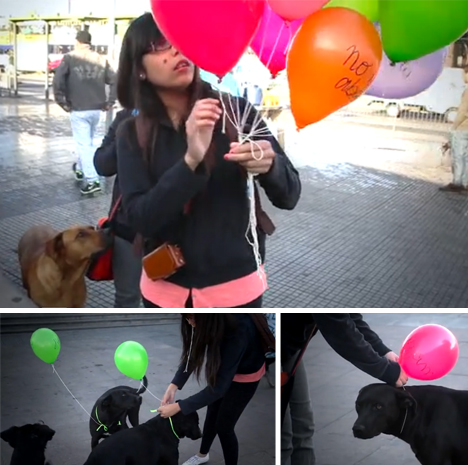
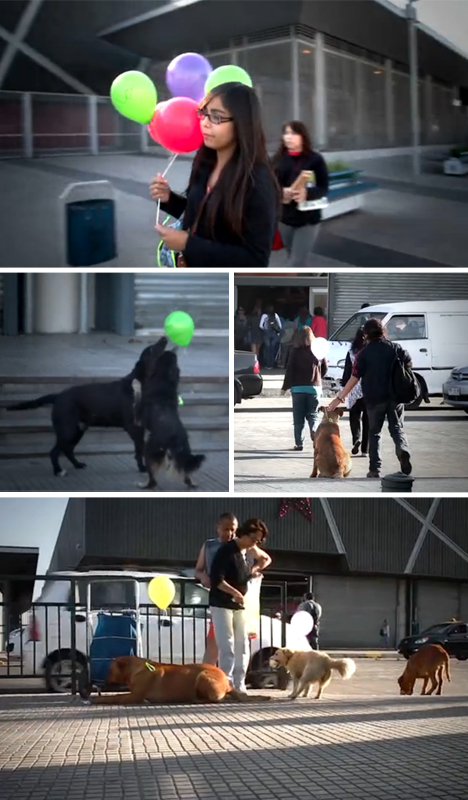
In a unique urban intervention, two college students took and attached a series of balloons marked with written phrases to stray canines Santiago, Chile. The messages encourage people to feed, pet and play with these ubiquitous animals, lost and in need of love. While one person carried the colorful balloon bouquet and attached the strings, the other of the pair filmed the fascinating results as pedestrians noticed and stopped.

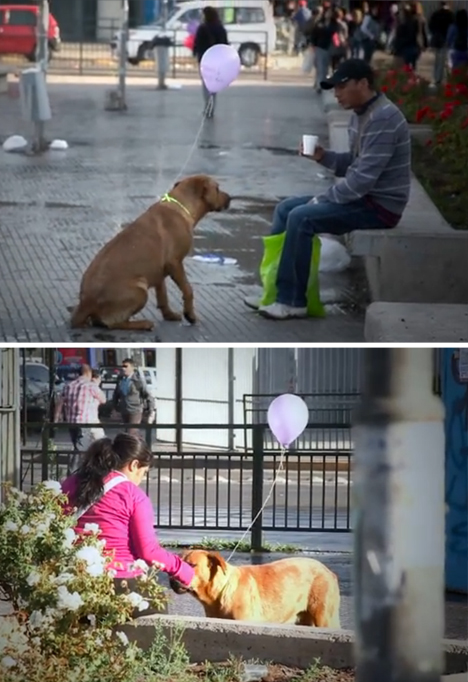
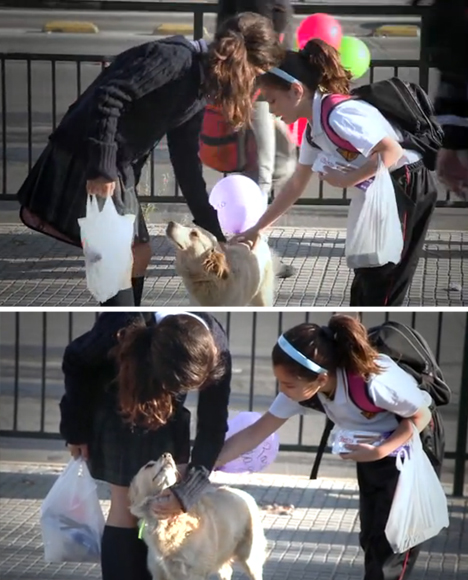
As the video demonstrates, the dogs with balloon additions got the attention of others on the street quite quickly. Man’s neglected best friend became visible once again, with passers by stopping to hand over leftovers and spend time with these estranged animals.

homeless dogs human interest

The project is titled ESTOY AQUÍ (Intervención Urbana), which translates to a simple plea: I AM HERE. Written on the balloons are phrases like ‘feed me’, ‘pet me’, ‘hug me’ and ‘scratch me’.

homeless stray dog project

From young puppies to older pals, thousands of homeless dogs roam the streets of this city. Most of them are friendly and simply in search of scraps – in turn, they are normally humanely avoided but largely ignored as the daily bustle of urban life takes place around them.

homeless pet feed play

Aside from human interest, the dogs themselves sat up and took notice as well, in many cases playing with their own balloons and strings, or interacting with one another’s new colorful accessories.

Share on Facebook


[ By WebUrbanist in Global & Travel & Places. ]

[ WebUrbanist | Archives | Galleries | Privacy | TOS ]


WebUrbanist

 
Comments Off on Human Interest: Homeless Dogs Given Hope-Filled Balloons

Posted in Creativity


Painted People: 31 Works of Art on Human Canvas

29 May

[ By Steph in Drawing & Digital. ]

Painted people main
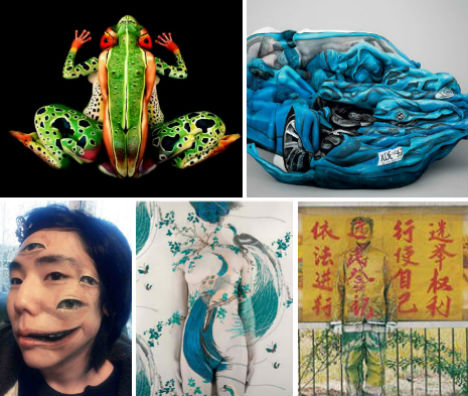
Human bodies become exotic animals and crashed cars, or blend almost seamlessly into intricate backgrounds, with careful application of body paint and a bit of acrobatics. These 31 works of art turn people into living canvases, sometimes celebrating the graceful shapes and movement of their bodies, and at other times, disguising it.

Alexa Meade’s 2D Paintings on 3D People

Painted People 2D 1
Painted People 2D 2

Those aren’t two-dimensional paintings on a flat surface; they’re real, live people transformed into human canvases by artist Alexa Meade. “The models are transformed into embodiments of the artist’s interpretation of their essence,” says Meade. “When captured on film, the living, breathing people underneath the paint disappear, overshadowed by the masks of themselves.

Wallpaper People by Emma Hack

Painted People Wallpaper 1
Painted People Wallpaper 2

Painted models virtually disappear into patterned backgrounds in works by artist Emma Hack. The models must be painstakingly hand-painted to match up perfectly with backgrounds that are often very complex, and then remain perfectly still so the scene can be photographed. It can take as long as nineteen hours to apply the makeup for a single scene.

Human Animals by Gesine Marwedel

Painted People Animals

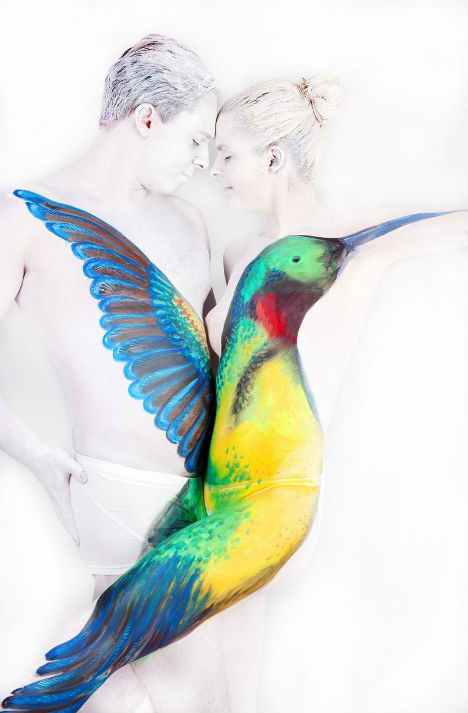
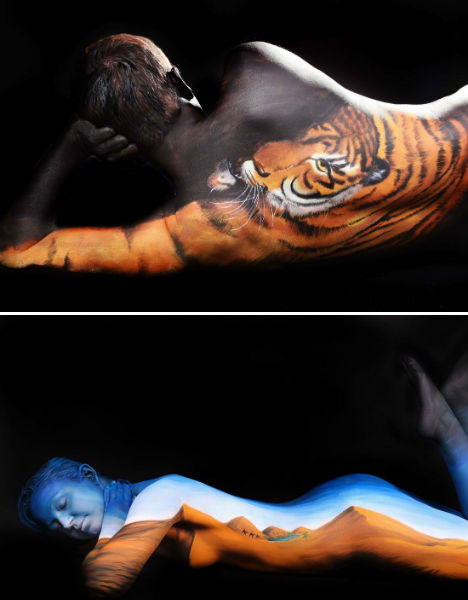
The graceful, flexible bodies of performance artists are an ideal medium for artist Gesine Marwedel, who uses paint to turn them into animals like flamingos, dolphins, hummingbirds and tigers. “Body painting is not just paint on a living canvas, it is picking up the body shapes in a subject and the painting on the body,” Marwedel told PSFK. “It is the transformation of a human being into a breathing, moving, living work of art.”

Painted Alive: Brilliant Work by Craig Tracy

Painted People Alive Tracy

Owner of the world’s first gallery dedicated to fine art body painting (located in New Orleans), Craig Tracy creates his own beautiful and surreal body painting portraits that blend human models into backgrounds or turn them into psychedelic works of art. Rather than hiding the models, however, Tracy celebrates the shapes of their bodies, often exaggerating them and using them for creative effect.

Next Page:
Painted People 31 Works Of Art On Human Canvas

Share on Facebook


[ By Steph in Drawing & Digital. ]

[ WebUrbanist | Archives | Galleries | Privacy | TOS ]


WebUrbanist

 
Comments Off on Painted People: 31 Works of Art on Human Canvas

Posted in Creativity


Frightening Archaeological Finds: 15 Odd Human Remains

03 Apr

[ By Steph in Culture & Cuisine & Global. ]
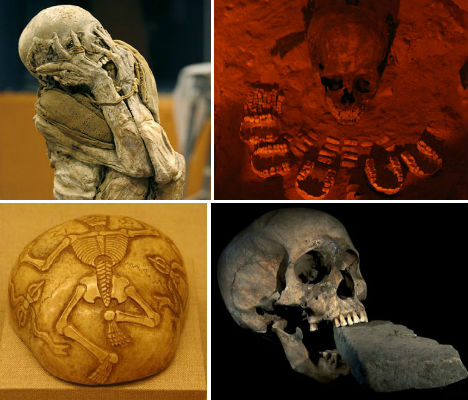
Human Bones main

What bizarre and terrifying ‘treasures’ from long-gone ancient civilizations are still hidden in crypts, caves and deep within the earth? Most archaeologists may spend their days painstakingly brushing sand off pieces of pottery, but occasionally, they unearth evidence of the darker side of humanity – cannibalism, sacrifice, mass murder, deadly paranoia about vampires and witches, and even chemical warfare. These 15 archaeological finds of ancient human remains are among the most grisly, frightening and fascinating.

Vampire of Venice
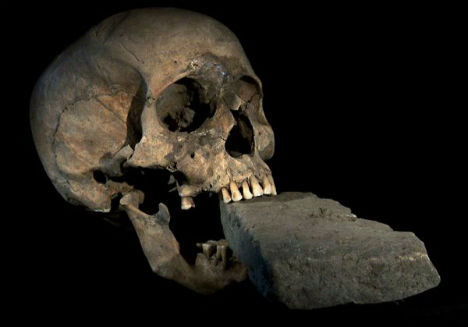
Human Bones Vampire of Venice
Among the corpses of medieval plague victims was one very curious find: a skull with a brick shoved so forcefully between its jaws, they were broken. The technique was used on suspected vampires in Europe during this time, especially when natural biological processes after death resulted in dark blood-like liquid streaming from the mouth. Researchers have determined that not only was this elderly woman feared a vampire after her death, she may have been accused of witchcraft before she met her end. Most people didn’t live to be her age, estimated at 60-71 years, and many medieval Europeans believed that the devil gave the elderly powers to cheat death. Older women were particularly suspect because it was assumed that they had little to live for, and were vulnerable to offers of power.

The Screaming Mummies

Human Bones Screaming Mummies 2 Human Bones Screaming Mummies

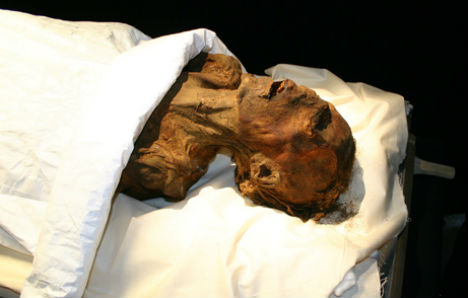
Imagine opening a sarcophagus to find a mummy that seems to be screaming for all eternity. In the past, when ‘screaming mummies‘ were discovered, archaeologists assumed that they must have been buried alive or killed in some other painful manner. Now, however, they usually agree that mummies are commonly found with their jaws open due to their heads falling back after death. The most famous screaming mummy is Unknown Man E, an Egyptian mummy found in 1886, who could be the murderous son of Ramses III. Another is even more shocking, with its hands covering its face in apparent terror; it was among the remains of the Chachapoya Indians of Peru.

Pile of Headless Vikings

Human Bones Headless Vikings

Evidence of a shocking massacre was discovered when archaeologists unearthed 51 thousand-year-old skulls – along with another pit containing their headless bodies – in Weymouth, UK. Found in 2009, these young male Vikings were brutally slain sometime between 910 and 1030 CE. Analysis of their teeth confirmed that they were from Scandinavia. They were likely war captives of the Anglo-Saxons, executed by having their heads hacked off.

Neanderthal Cannibals
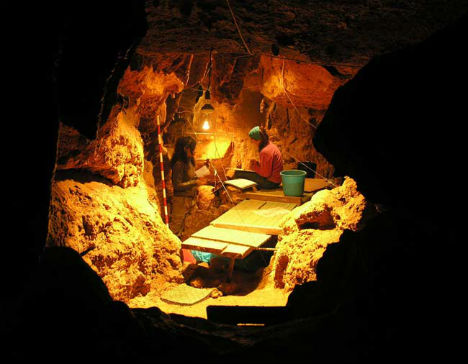
Human Bones Neanderthal Cannibals

The bones of twelve neanderthals found in a cave in Spain were cut and snapped, indicating that they were likely ‘processed’ by fellow neanderthals as food. The possible family group, which included three adult males, three adult females, three adolescents, two children and an infant, is one of the most significant examples of cannibalism among neanderthals. “There are many different markings in many different bones in all 12 individuals, including traditional cut marks to disarticulate bones and remove muscle insertions, snapping and fracturing of long bones to extract the marrow,”researcher Carles Lalueza-Fox told LiveScience.

Bathhouse Baby Disposal

Human Bones Bathhouse Babies

How and why were the bones of nearly 100 infants discarded like trash in a late Roman, early Byzantine sewer beneath a bathhouse in Israel? Found in 1988 in Ashkelon, the remains indicate that the babies died before three days of age, and show no signs of disease or skeletal malformation. While scholars hypothesized that the babies were girls, since female infanticide was common during that time, tests have since shown that many were male. The reasoning behind their death is still a mystery.

The First Leper
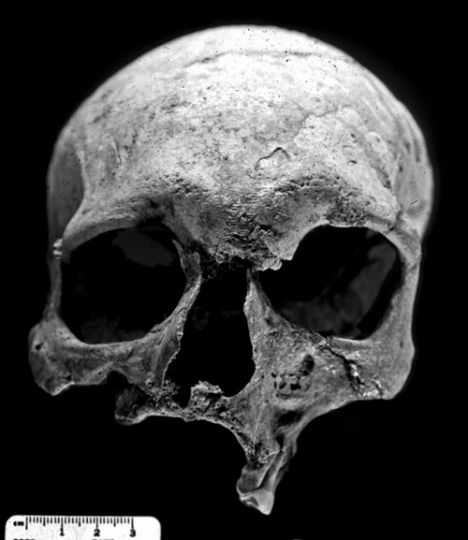
Human Bones First Leper

The earliest archaeological evidence of leprosy is found in a 4,000-year-old skeleton unearthed in India in 2009. Leprosy is difficult to study because the bacteria that causes it is tricky to culture for research, and scientists are still unsure of exactly when and where it originated. This skeleton was not only the oldest leper ever found, it was also the first evidence of leprosy in ancient India, supporting the idea that the disease migrated between Africa and Asia during a period of urbanization, growing population density and new trade routes.

Murdered Bog Bodies
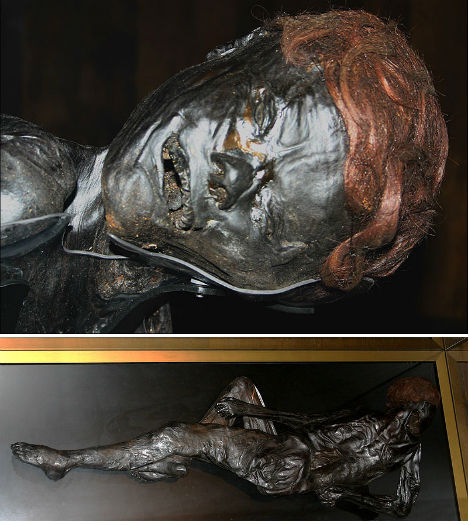
Human Bones Bog Bodies

The peat bogs of northwestern Europe have turned out to be one of the richest sources of ancient human remains in the world, preserving bodies so perfectly that they sometimes still contain blood and stomach contents. ‘Bog bodies‘ such as the Grauballe Man, pictured, date from 8,000 B.C.E. to the early medieval period. It seems that these people were not buried in the peat bogs, nor did they simply die there – they died violently. Researchers believe they were most likely sacrificed, or executed as punishment for crimes or perceived flaws.

Skulls Used as Cups
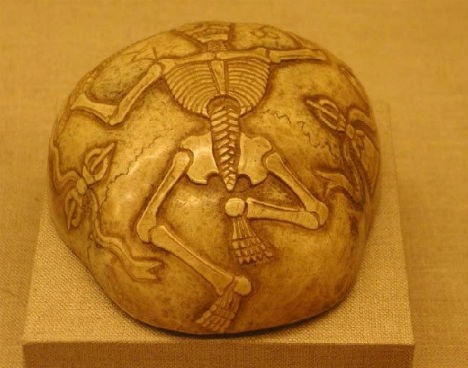
Human Bones Skull Cups

Three human skulls found in Gough’s Cave, Somerset, England were carefully worked into the shape of bowls, indicating that they were used to drink from. At 14,700 years old, these are the oldest skull cups ever discovered, and they were surrounded by other human remains that had been snapped to get to the marrow inside, suggesting cannibalism.

Next Page:
Frightening Archaeological Finds 15 Odd Human Remains

Share on Facebook


[ By Steph in Culture & Cuisine & Global. ]

[ WebUrbanist | Archives | Galleries | Privacy | TOS ]


WebUrbanist

 
Comments Off on Frightening Archaeological Finds: 15 Odd Human Remains

Posted in Creativity


Body Paint Illusions Transform Human Models into Animals

22 Mar

[ By Steph in Art & Drawing & Digital. ]

Body Paint Illusion Marwedel 1
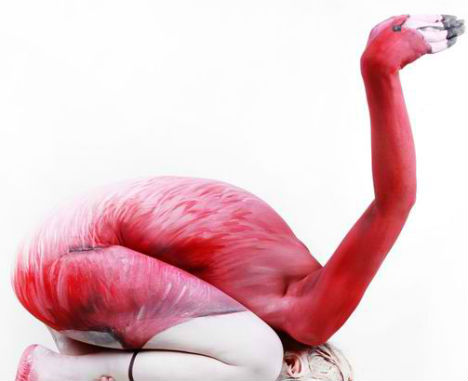
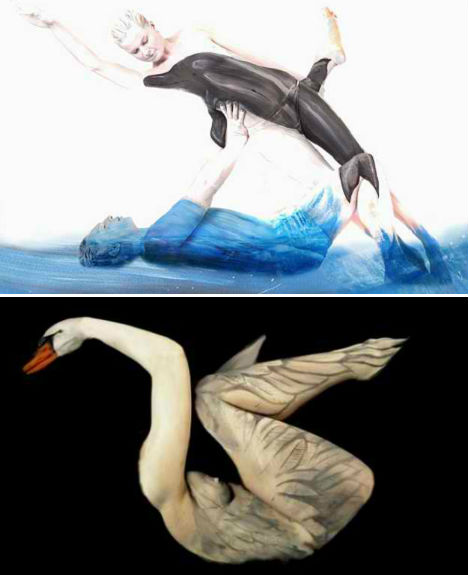
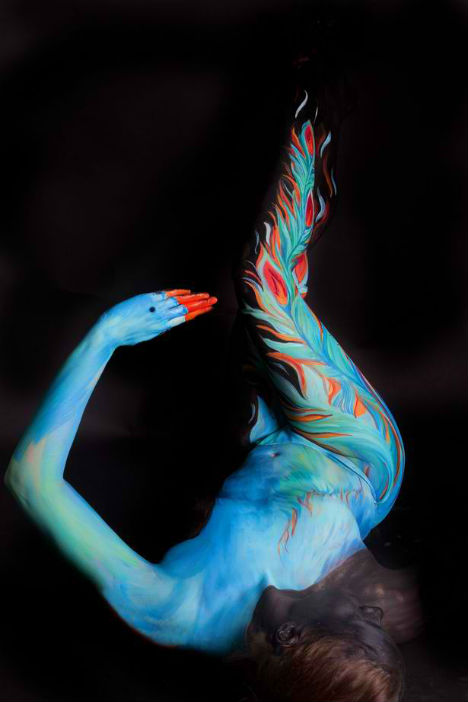
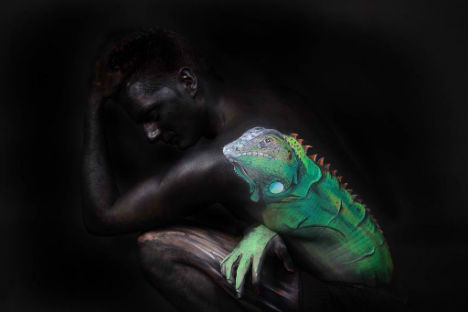
Intricately painted and carefully posed, the human bodies serving as canvases for artist Gesine Marwedel are virtually unrecognizable as they morph into swans, flamingos and iguanas. The 25-year-old German painter employs performance artists to bring her colorful illusions to life, leaving their faces and other body parts visible as part of each composition.

Body Paint Illusion Marwedel 2

The ability to contort into unusual positions is a crucial element of making each of these incredible three-dimensional paintings work. Each photograph depicts not only the painted animal, but also its grace and movement.

Body Paint Illusion Marwedel 3

Body Paint Illusion Marwedel 4

“Body painting is not just paint on a living canvas, it is picking up the body shapes in a subject and the painting on the body,” Marwedel told PSFK. “It is the transformation of a human being into a breathing, moving, living work of art.”

Body Paint Illusion Marwedel 5

Body Paint Illusion Marwedel 6

Marwedel began to explore body art after providing therapy for disabled and autistic children through speech and music. See more of her work at her website, or in person at the World Body Painting Festival, to be held in Austria in July 2013.

Share on Facebook


[ By Steph in Art & Drawing & Digital. ]

[ WebUrbanist | Archives | Galleries | Privacy | TOS ]


WebUrbanist

 
Comments Off on Body Paint Illusions Transform Human Models into Animals

Posted in Creativity


Grow Your Photography Business By Growing As A Human Being

07 Nov

Most articles which talk about improving your photography business will tell you about how to become a better photographer. Some will tell you about the need to improve your business skills. Sure, those are important. But I think they’re missing something. And it’s ironic that they’re missing the most obvious and most important part of your business – you. You Continue Reading
Photodoto

 
Comments Off on Grow Your Photography Business By Growing As A Human Being

Posted in Photography


Will These 5 Robot Photographers Replace Human Photogs as We Know It?

02 Nov

photoBot photo by Claudine Quinn

No, they won’t.

But they’ll take over when you want to take a break from shooting at a party or want to document your day without having to stop what you’re doing!

Meet the anthropomorphic party cameras:

  • photoBot is a ‘bot that uses an ultrasonic ranger to detect where people are in a room. Like an adorable T2, he detects people to shoot and shoots them.
  • NAO is a humanoid robot that can shoot based off the rule of thirds and the golden ratio. It actually learned what makes a good photo based on these two photography principles.

These robo-photographers are meant to be worn, so they’ll document your day from your perspective:

  • The Autographer has 5 sensors that use a super smart algorithm that decides when it’s just the right moment to take a photo.
  • The Memoto comes with no buttons because it simply shoots a photo every 30 seconds. Similar to the Autographer, you clip it on and have your day documented!

Other robo-cameras of note are Sony’s Party-Shot camera that sits on a base and takes photos of your party for you and the Instaprint, a little box that prints out Instagram photos based on hashtags.

It’ll be a while before humans are completely replaced with robots, but we wouldn’t mind handing over the duties when our hands are full. How about you?

photoBot, the Anthropomorphic Camera [via It’s Nice That]

p.s. Win a JPEG necklace to wear around your neck with pride, just follow our Pinterest today!

Related posts:

  1. End-of-Summer Photo Projects in Celebration of the Human Body Small monkeys madeAugust’s Photojojo possible. (Really) ~Have a cool photo…
  2. 20 Photographers Whose Work You Can Actually Afford ~Have a cool photo product or site? Reach 260,000 photo…
  3. How to Shoot Dreamy Double Exposure Portraits + 5 Awesomely Inspirational Photographers Haunting, dreamy, and gorgeous all at once, double exposures of…


Photojojo

 
Comments Off on Will These 5 Robot Photographers Replace Human Photogs as We Know It?

Posted in Equipment


Seeing Beyond the Human Eye | Off Book | PBS

01 Aug

Technology defies the boundaries of human perception. From photomicrography to astrophotography, size and distance are no longer barriers, and through slow-mo and timelapse, we are allowed to see time and humanity in a new light. Through our curiosity and thirst for the unknown, the beauty of the universe can now be explored beyond the limits of the naked eye. Featuring: Liza A. Pon, PhD, Columbia University Peter Lipschutz, Hayden Planetarium Mike Nichols, Albecine Jonathan Bregel, Variable Cameron Michael “8 Hours In Brooklyn” vimeo.com “Holi” vimeo.com “The Manhattan Project” vimeo.com Additional Slow-mo Footage: Mark Warner, vimeo.com Tom Guilmette, vimeo.com Rick & Lynne, vimeo.com Final Cut King, www.youtube.com Photographs: old microscopy images: cwfp.biz Hubble Telescope images: hubblesite.org Nikon Small World Images: www.nikonsmallworld.com Music: The Time To Run – Dexter Britain vimeo.com Sintaxis B – Da Robotz www.jamendo.com Synth Horizons – ERH www.freesound.org Goodbye Now – Ghosts soundcloud.com Weightless – Luke F soundcloud.com Our Memory – James Reesor soundcloud.com Star Trek Theme – RAC Remix freemusicarchive.org Follow Off Book: Twitter: @pbsoffbook Tumblr: pbsarts.tumblr.com Produced by Kornhaber Brown: www.kornhaberbrown.com
Video Rating: 4 / 5