RSS
 

Posts Tagged ‘Human’

TwoEyes VR stereoscopic camera simulates human vision

21 Jan

Another VR camera has launched on Kickstarter, but this one does things a little differently: TwoEyes VR features two horizontally-oriented cameras spaced 65mm apart that record footage in a stereoscopic arrangement. The resulting 3D video simulates the way someone would see the subject with their own eyes.

TwoEyes VR features two F2.0 180-degree lenses spaced 65mm apart, which is said to be the average distance between human eyes. The two cameras (CMOS 1/2.3” sensors), when used together, can record 3D videos in both 180 and 360 degrees, while recording with just one camera results in 360-degree non-3D footage. The camera also supports generating red-cyan 3D footage.

Content is stored to an internal 128GB drive, while other camera features including a 4K image processor, 2,000mAh battery, Bluetooth 4.1, dual-band WiFi, WiFi Direct, and a gyro sensor. The related Android and iOS mobile apps offer users live video previews from the camera, two-button shooting controls, and a post-processing tool for generating either 3D, VR, or 360 videos. 

The team behind TwoEyes is seeking funding on Kickstarter, where they have raised more than double their $ 40,000 goal with 36 days remaining in the campaign. A ‘Kickstarter Pack’ is offered to backers who pledge at least $ 239 — it includes the camera and global shipping. Shipments to backers are expected to start this upcoming August.

Via: Kickstarter

Articles: Digital Photography Review (dpreview.com)

 
Comments Off on TwoEyes VR stereoscopic camera simulates human vision

Posted in Uncategorized


Daredevil Santa: Human Flying Drone Enables Sky-High Snowboarding Tricks

24 Dec

[ By SA Rogers in Gadgets & Geekery & Technology. ]

human-flying-drone-1

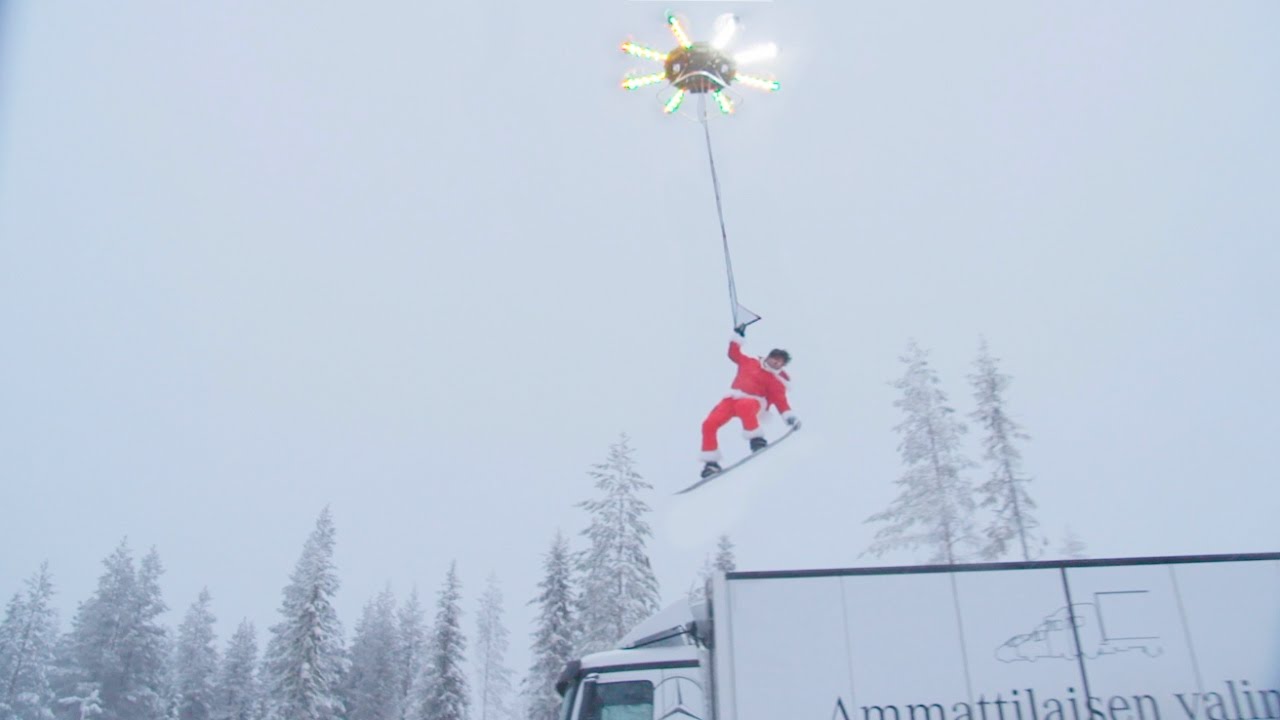
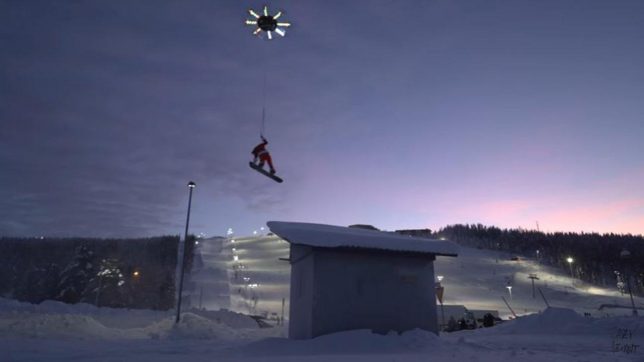
“This isn’t fake, I promise,” said filmmaker Casey Neistat as he announced the impending debut of his ‘Human Flying Drone Holiday Movie’ on Twitter with a dubious-looking graphic. Anyone who saw that tweet could be forgiven for their skepticism, especially since Neistat was teaming up with fellow YouTube star Jesse Wellens of the channel PrankvsPrank to pull off the stunt. But by all accounts, this footage of the ‘world’s largest homemade drone’ is real, and a Santa-suited Neistat is actually flying 25 feet in the air.

human-flying-drone-5

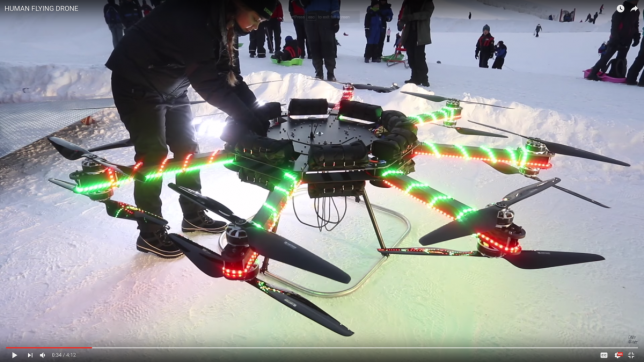
No one in the world sells a drone that can lift a human being, so Neistat and his team set out to create one. The octocopter drone, which is augmented with a Samsung Galaxy Gear 360 action camera, reportedly took over a year to build, and the video clip was shot at a ski resort in Finland over the course of four days. In it, the daredevil YouTuber zooms down a slope on a snowboard and then takes off into the sky, going higher and higher before the final jump takes him 100 feet into the air, as smoke bombs fastened to his feet emit vivid pink plumes.

human-flying-drone-2

human-flying-drone-3

One thing that’s not quite what it seems is Neistat’s single-handed grip on the handle: he’s actually securely fastened to the drone, dubbed ‘Janet,’ by a body harness. The rest of it, as far as anyone can tell, is legit. Looks like fun! Check out how it’s done in the behind-the-scenes video above.

Share on Facebook


[ By SA Rogers in Gadgets & Geekery & Technology. ]

[ WebUrbanist | Archives | Galleries | Privacy | TOS ]


WebUrbanist

 
Comments Off on Daredevil Santa: Human Flying Drone Enables Sky-High Snowboarding Tricks

Posted in Creativity


Art Hacker: Famous Masterpieces Recreated with Painted Human Bodies

22 Nov

[ By SA Rogers in Art & Photography & Video. ]

liu-bolin-guernica

Chinese body painting artist Liu Bolin explores the concept of ‘art hacking’ through reinterpreting two of the world’s most famous paintings with human figures as canvases, and manipulating image search results on Google and Baidu to replace the originals with his own. Dozens of painstakingly painted human bodies faithfully recreate both Leonardo da Vinci’s Mona Lisa and Pablo Picasso’s Guernica with all subjects remaining perfectly still to complete the illusion for a photo.

liu-bolin-guernica-detail

The two works of art are juxtaposed with an image depicting the devastating Tianjin explosion at a container storage station in 2015, and large-scale prints of the three photographs are currently on display at Klein Sun Gallery as part of the Art Hacker exhibition. Neon signs hung throughout the space display URLs so visitors can see the internet ‘hacking’ aspect of the show.

liu-bolin-mona-lisa

liu-bolin-mona-lisa-2

Bolin is best known for his ‘disappearing acts’ carried out through camouflaging himself and additional models into urban environments around the world. This is his first foray into the digital realm, but the questions he raises in his work continue to work within similar themes.

liu-bolin-tianjin-explosions

liu-bolin-tianjin-explosions-detail

“Recreating the imagery of human suffering and devastation of war symbolized in the painting Guernica, Liu Bolin’s relives the history of the Spanish civil war, making a plea for humanity and freedom,” says the Klein Sun Gallery in a statement about the exhibition. “In Mona Lisa (2016), Liu Bolin imbeds himself into the masterpiece as well as its historical legacy. Touching upon the fact that the world was stolen from the Louvre more than 100 years ago, Liu Bolin aims to reenact the ‘disappearing and reappearing’ of the work through techniques behind the network.”

“Provocatively challenging the viewer to question what is above and beneath the surface, the work intends to reflect upon the complex relationship between the past and present, the reality and the illusion, as well as individuality and history.”

Share on Facebook


[ By SA Rogers in Art & Photography & Video. ]

[ WebUrbanist | Archives | Galleries | Privacy | TOS ]


WebUrbanist

 
Comments Off on Art Hacker: Famous Masterpieces Recreated with Painted Human Bodies

Posted in Creativity


Chinsekikan: Japanese Museum of Found Stones that Look Like Human Faces

18 Nov

[ By WebUrbanist in Art & Sculpture & Craft. ]

japanes-rock-faces

An unusual collection of found-object art in Chichibu, Japan is home to nearly 2000 rocks that naturally feature what appear to be facial expressions.

japan-rock-faces

japanese-face-stone

A jinmenseki (or: rock with human face) can look like anything from an abstract emoji to a famous figure, including ones in this array that are purported to resemble Donkey Kong, Nemo and Elvis Presley.

japan-elvis-presley-head

japan-face-rocks

japanese-stone-collections

The founder of the museum, Shozo Hayama, passed away after 50 years of collecting and left the space and its collection to his wife Hayama six years ago. The key criteria: nature is the only artist in the mix (no modified rocks allowed).

rock-museum

japanes-faces

japan-evil-face

japan-rock-collector

Some of the rocks are named while others simply set on the shelves, left open to interpretation. Visitors can simply show up but are advised to call ahead since the hours of opening are not entirely consistent or predictable (h/t Spoon & Tamago).

Share on Facebook


[ By WebUrbanist in Art & Sculpture & Craft. ]

[ WebUrbanist | Archives | Galleries | Privacy | TOS ]


WebUrbanist

 
Comments Off on Chinsekikan: Japanese Museum of Found Stones that Look Like Human Faces

Posted in Creativity


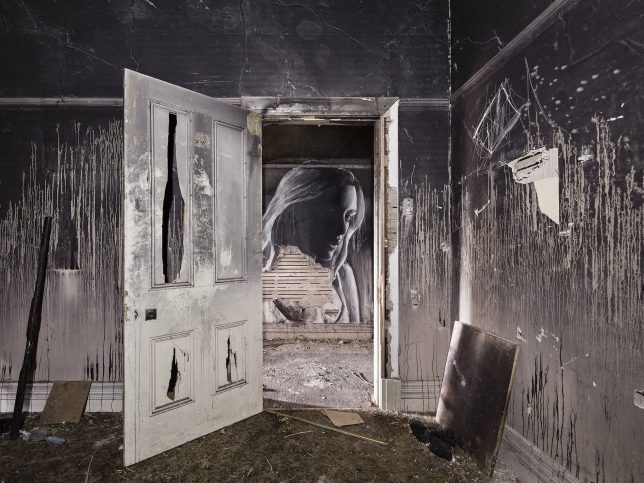
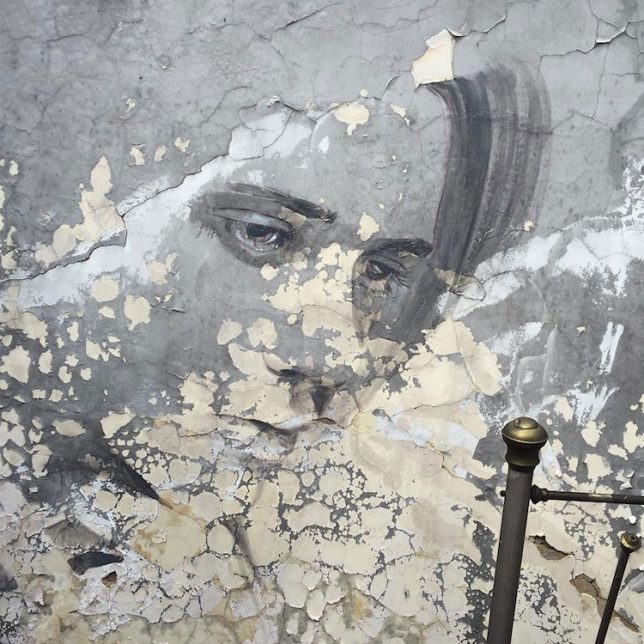
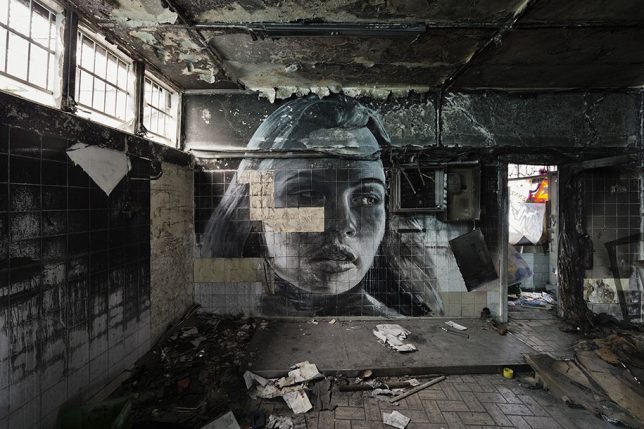
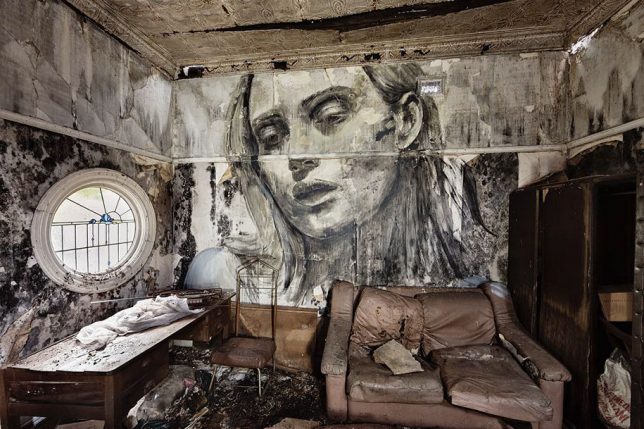
Beauty in Decay: Moody Murals Bring Human Faces Back to Abandoned Places

25 Oct

[ By SA Rogers in Art & Installation & Sound. ]

rone-murals-abandoned-places-1

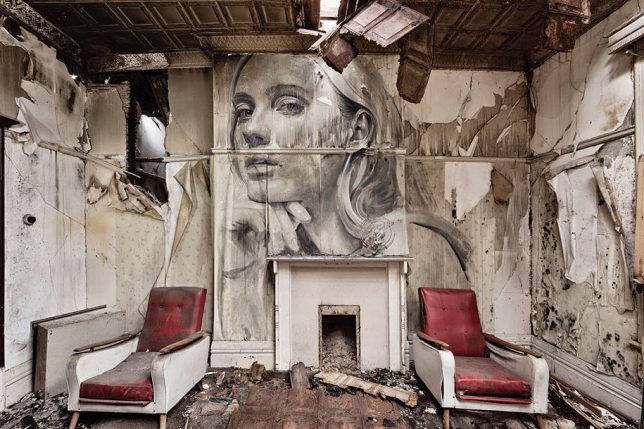
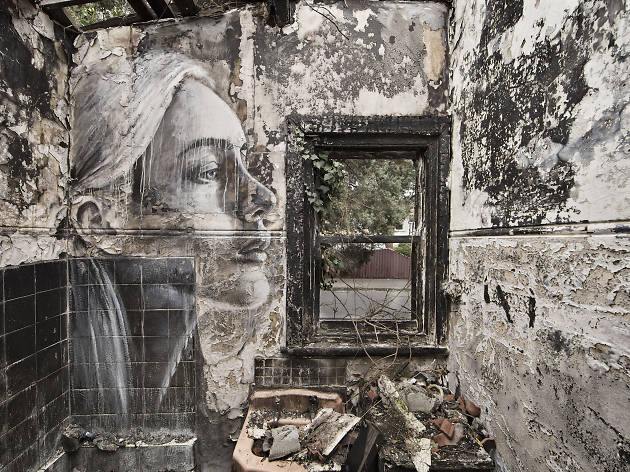
Abandoned places are often steeped in a mixture of emotional impressions, commingling a sense of loss and a confrontation of our own mortality with slivers of hopefulness for a new future, as nature begins to take over what we’ve left behind. As we move through these deteriorating spaces, strewn with the belongings of former inhabitants who seem to have simply disappeared, we wonder who they were and why the spaces that once sheltered them as they went about their lives have come to this. It’s these emotional qualities that make a new series of murals by Australian street artist Rone all the more poignant and powerful.

rone-murals-abandoned-places-2

rone

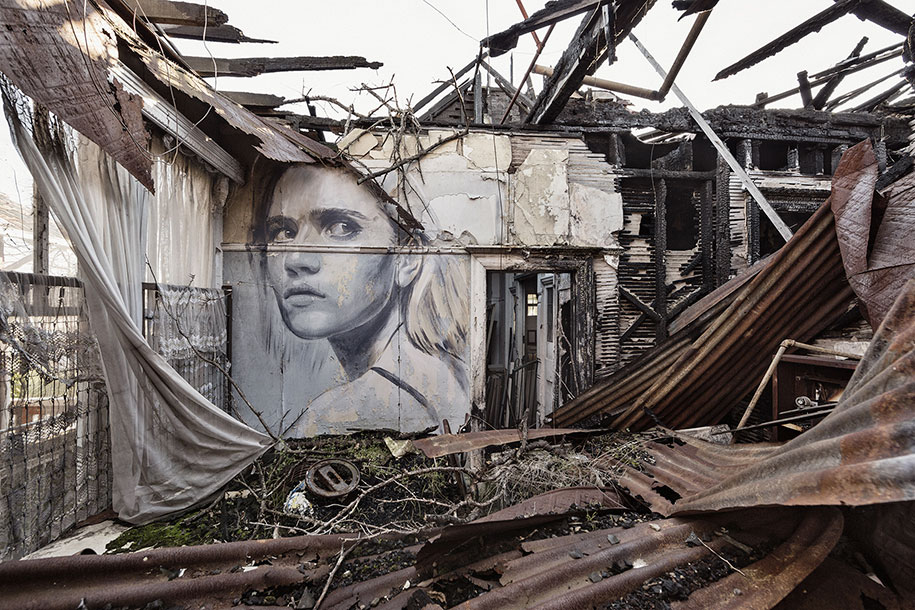
Entitled ‘Empty,’ the series places the artist’s signature portraits of women on the walls of abandoned interiors, deepening their emotional weight. Much of the subjects’ glamour is stripped away as their skin takes on the texture of peeling paint, the lines of their faces are interrupted by fallen tiles and their gazes are pointed down at the destruction of their environments.

rone-murals-abandoned-places-3

rone-murals-abandoned-places-4

For the Melbourne-based artist, this series represents a shift from the smooth, clean surfaces of his canvases and even the more clear-cut exterior walls upon which his murals are typically painted. But Rone has always found meaning in the temporary nature of these installations, as the artworks are gradually worn away by the elements or painted over by vandals and other artists.

rone-murals-abandoned-places-5

rone-murals-abandoned-places-6

rone-murals-abandoned-places-7

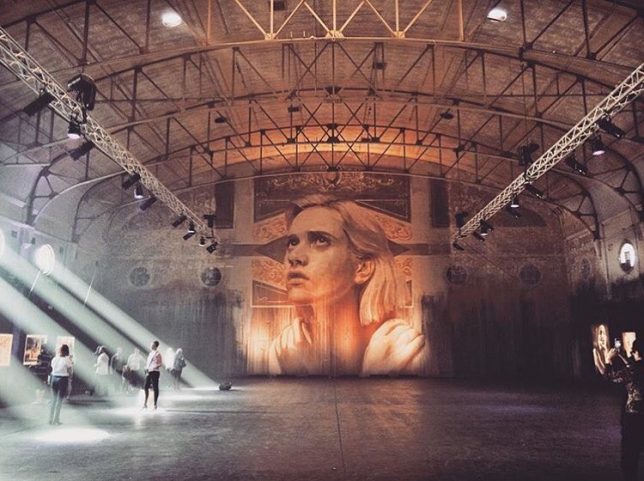
Rone exhibited ‘Empty’ at the soon-to-be-demolished Star Lyric Theatre building in Melbourne, presenting photographs of the murals in situ along with works on canvas and paper. The artist also painted a new mural directly onto the back wall of the theater, stretching nearly 33 feet from floor to ceiling. It’s a fitting way for the decaying Art Nouveau building to go out, with Rone’s canvases lining its blackened and stained surfaces. See more photos of the installation at Street Art News.

Share on Facebook


[ By SA Rogers in Art & Installation & Sound. ]

[ WebUrbanist | Archives | Galleries | Privacy | TOS ]


WebUrbanist

 
Comments Off on Beauty in Decay: Moody Murals Bring Human Faces Back to Abandoned Places

Posted in Creativity


Life After Death: Organic Burial Pods Turn Human Bodies into Living Trees

12 Oct

[ By WebUrbanist in Culture & History & Travel. ]

capsule-burial-pod

Amidst a huge array of natural burial initiatives and urban cemetery alternatives, the Capsula Mundi stands out as a sustainable solution that serves wishes of the deceased as well as the land of the living.

living-circle

Italian designers Anna Citelli and Raoul Bretzel developed this solution in part to challenge constrictive existing laws surrounding burials in their home country.

capsule-comparison

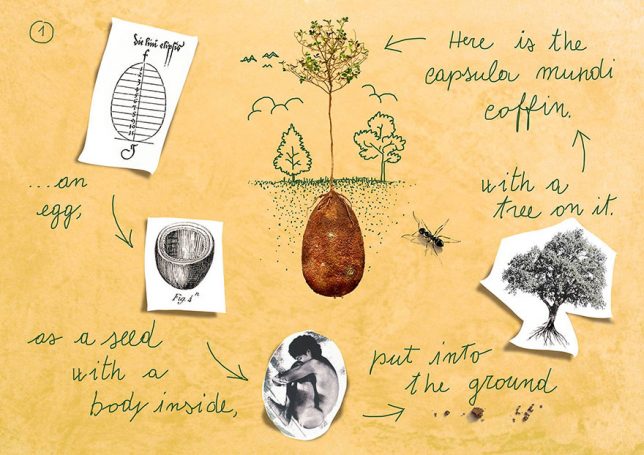
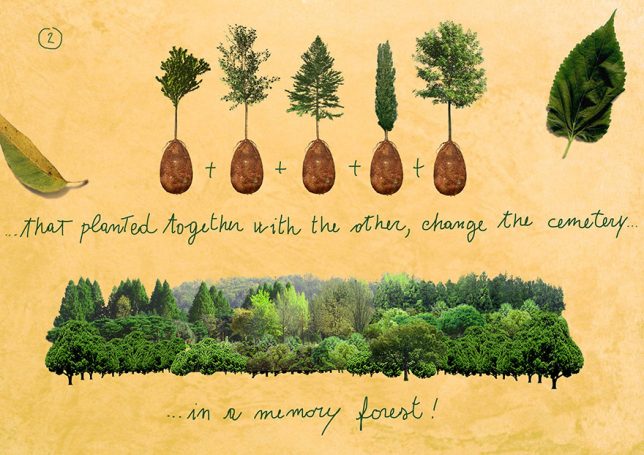
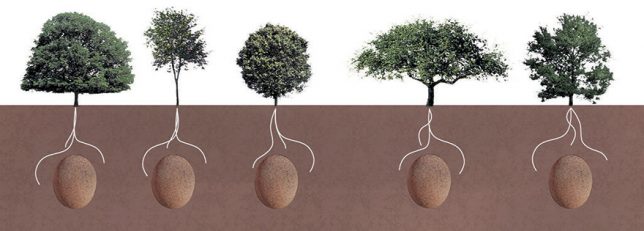
Essentially, a body is interred in an organic and biodegradable burial capsule situated beneath the seedling of a chosen tree. Instead of filling graveyards with caskets and stone monuments to the deceased, this system would populate parks with living memorials – trees over tombstones. In turn, family and descendants can come to visit and care for the plants in honor of their loved ones.

pod-concept

Many other “green” burial solutions are generally not as ecological as they would first appear. Cremations, for instance, generate huge amounts of carbon dioxide in the burning process. And, of course, traditional burials are not very sustainable – chemicals, caskets, concrete, stone and space are all wasted in an effort to preserve something that will inevitably return to nature, one way or another.

tree-of-death

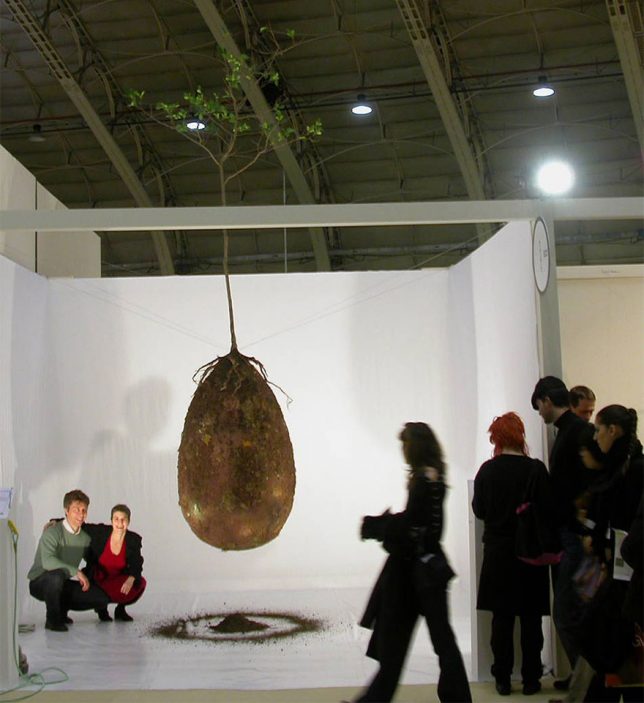
More from the project website: “Capsula Mundi is a cultural and broad-based project, which envisions a different approach to the way we think about death. It’s an egg-shaped pod, an ancient and perfect form, made of biodegradable material, where our departed loved ones are placed for burial. Ashes will be held in small Capsulas while bodies will be laid down in a fetal position in larger pods. The pod will then be buried as a seed in the earth.

pod-reality

“A tree, chosen in life by the deceased, will be planted on top of it and serve as a memorial for the departed and as a legacy for posterity and the future of our planet. Family and friends will continue to care for the tree as it grows. Cemeteries will acquire a new look and, instead of the cold grey landscape we see today, they will grow into vibrant woodlands. The project is still in a start-up phase, but encouraged by worldwide enthusiasm for our concept, we are working to make it become a reality.”

Share on Facebook


[ By WebUrbanist in Culture & History & Travel. ]

[ WebUrbanist | Archives | Galleries | Privacy | TOS ]


WebUrbanist

 
Comments Off on Life After Death: Organic Burial Pods Turn Human Bodies into Living Trees

Posted in Creativity


Living Street Art: Contorted Human Bodies in Urban Spaces

09 Jul

[ By SA Rogers in Art & Street Art & Graffiti. ]

Screen Shot 2016-07-08 at 9.48.16 AM

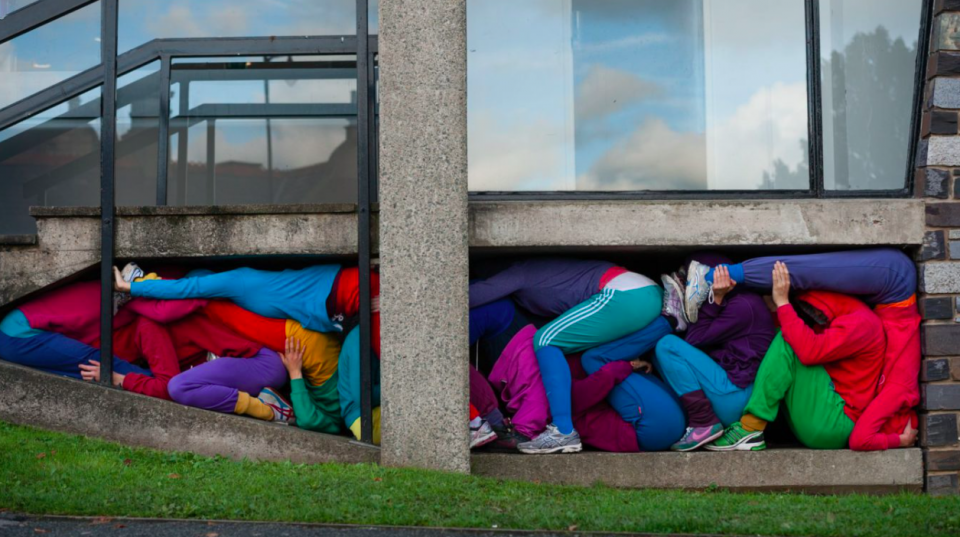
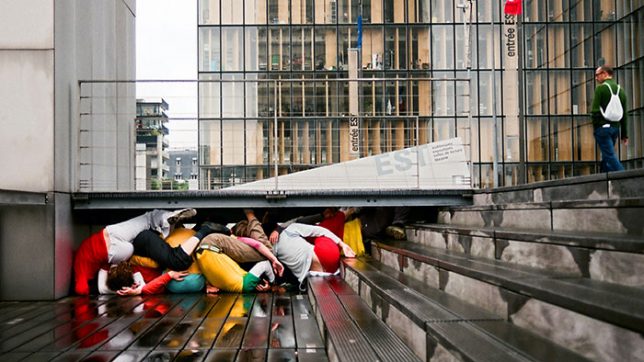
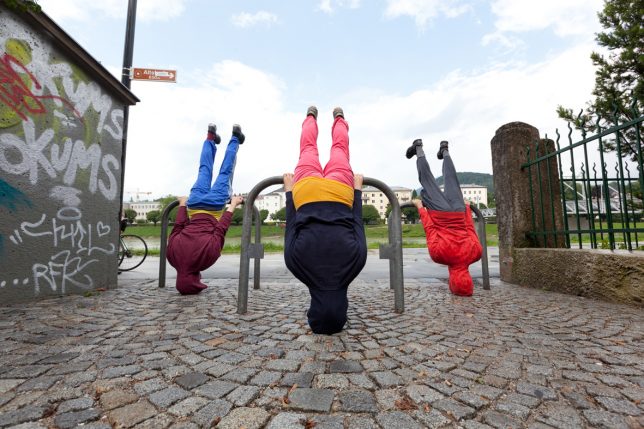
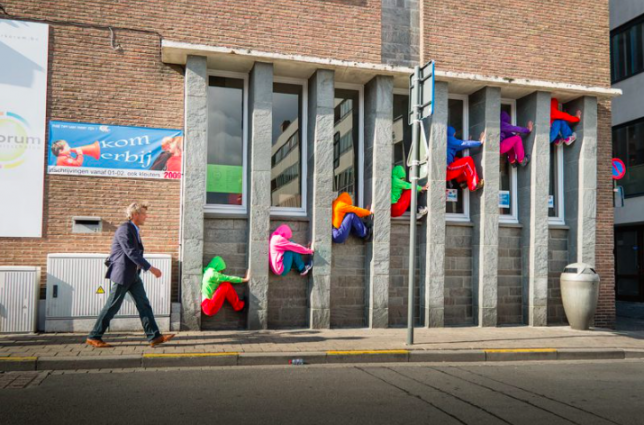
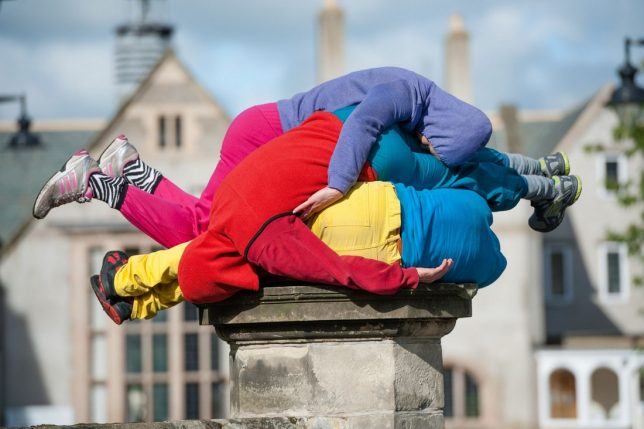
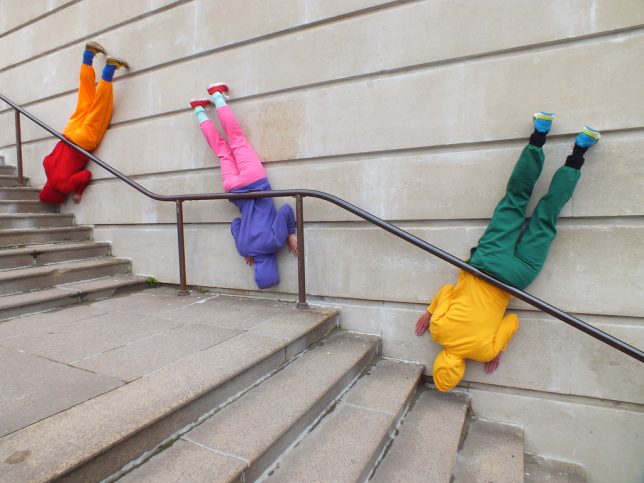
If you were to pass a bunch of colorfully-dressed human figures crammed into a crawlspace beneath a public staircase, you might think they’re mannequins at first, with their splayed limbs and claustrophobic positioning. The bodies are bent every which way, some hanging upside down, all of their faces obscured by hoodies, their positioning absurd. As you walk down the street, you spot more and more of them – folded beneath park benches, dangling from staircase railings, squeezed between utility boxes or piled on top of one another. But then a hand moves, or a muscle twitches, and you realize they’re alive.

bodies in urban spaces 3

The brilliance of choreographer Cie. Willi Dorner’s ‘Bodies in Urban Spaces’ lies as much in the chosen setting as it does in the extraordinary flexibility of his performers. Dressed in vivid track suits, the performers quickly assemble themselves into position, hold their poses for an uncomfortably long duration, and then disassemble themselves to run ahead to the next spot and repeat the process. The temporary urban interventions leave no trace when the performance is over, and aim to encourage residents to experience their cities in a different way.

Screen Shot 2016-07-08 at 9.48.30 AM

‘Bodies in Urban Spaces’ has been traveling the world since 2007, showing up all over the UK and Europe as well as Texas, New York, Istanbul, Russia and Japan. The performers lead an audience through each city, highlighting various architectural and urban features and how we interact with them as human bodies.

bodies in urban spaces 4

bodies in urban spaces 5

“‘Bodies in Urban Spaces’ is a temporary intervention in diversified urban architectonical environment,” says Dorner. “The intention of ‘Bodies in Urban Spaces’ is to point out the urban functional structure and to uncover the restricted movement possibilities and behavior as well as rules and limitations. By placing the bodies in selected spots the interventions provoke a thinking process and produce irritation. Passers by, residents and audience are motivated and prompted to reflect their urban surrounding and their own movement behavior and habits.”

Share on Facebook


[ By SA Rogers in Art & Street Art & Graffiti. ]

[ WebUrbanist | Archives | Galleries | Privacy | TOS ]


WebUrbanist

 
Comments Off on Living Street Art: Contorted Human Bodies in Urban Spaces

Posted in Creativity


Living Light: Human Figures Dance Inside 3D-Printed Zoetrope

02 Jul

[ By SA Rogers in Drawing & Digital. ]

zoetrope gif main

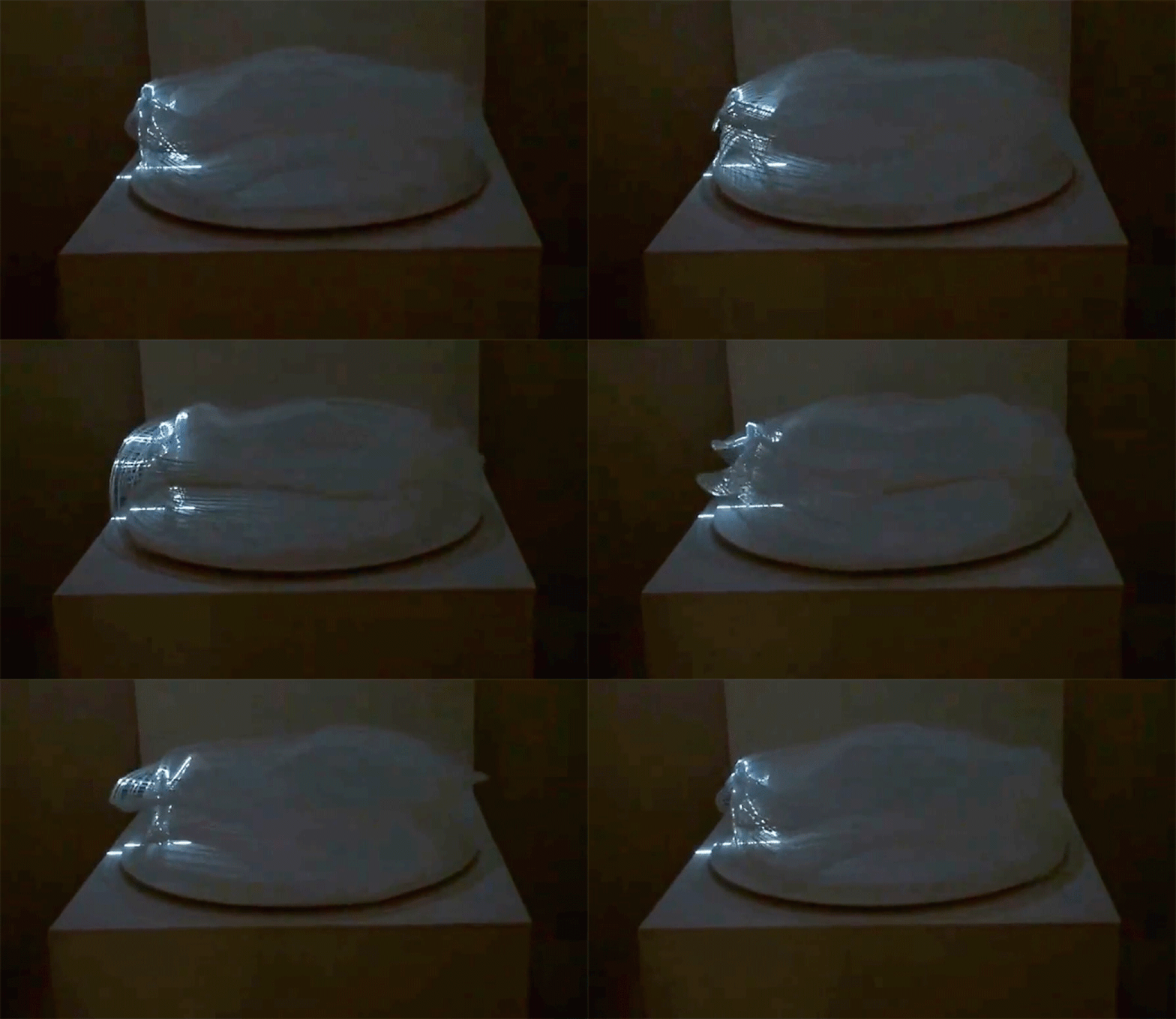
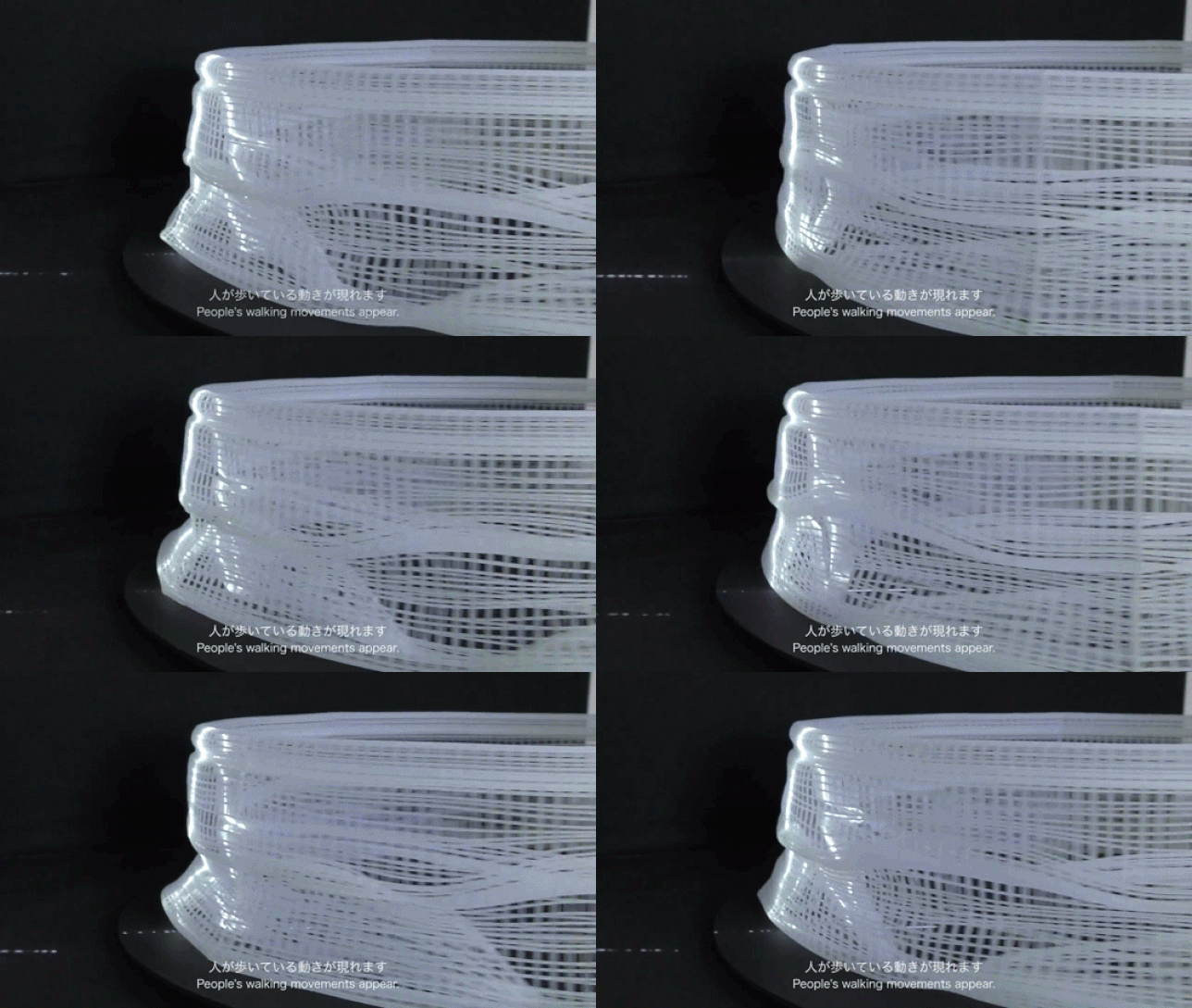
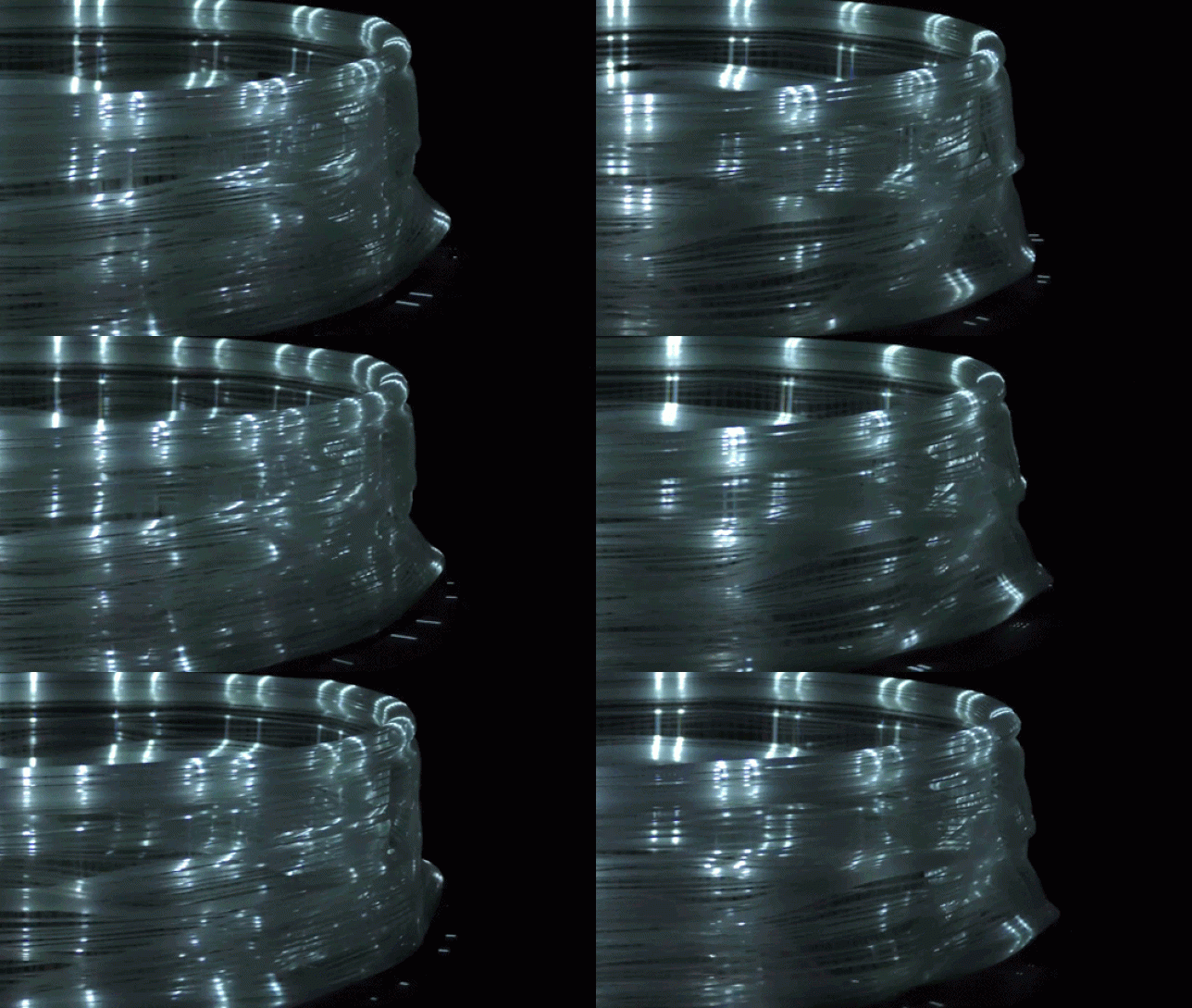
All it takes are a few highly focused beams of light and a spinning zoetrope to make a human figure spring to life, walking or even dancing in a barely-visible translucent circle. ‘Process and WALK’ explores the relationship between time and movement, taking a two-dimensional image of a person and applying it to a three-dimensional object. In effect, the person’s movements are stretched out to take up the entire circle, each fraction of an inch containing its own particular shifts of the arms and legs.

zoetrope gif 2

zoetrope light 2

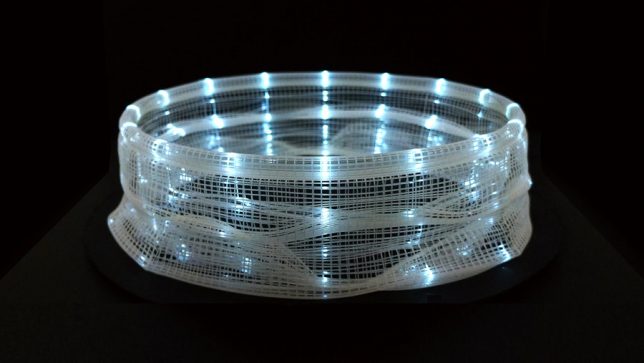
Artist Akinori Goto lays out the whole process in the video above, showing how he transforms a animation of a person walking into a 3D axis that can then be translated into data for a 3D printer. The result looks like no more than a warped piece of plastic mesh, with no discernible shapes embedded within it. Place it on a turntable and it still won’t look like much – until beams of light highlight just one segment of the edge.

zoetrop gif 1

Once that happens, the walking figure appears. Every few seconds, the illuminated figure seems to multiply, sending additional figures to other points along the zoetrope. It’s simple and complex at the same time, pairing a pre-film animation device that’s been in use for centuries with cutting-edge small-scale manufacturing technology

Share on Facebook


[ By SA Rogers in Drawing & Digital. ]

[ WebUrbanist | Archives | Galleries | Privacy | TOS ]


WebUrbanist

 
Comments Off on Living Light: Human Figures Dance Inside 3D-Printed Zoetrope

Posted in Creativity


Urban Human Habitats: 13 Compact Concepts for Growing Cities

07 Jun

[ By SA Rogers in Architecture & Cities & Urbanism. ]

compact cities coastal cliffs 1


How will various cities around the world adapt to rapid population growth while maintaining quality of life and responding to their unique environments and cultural context? In some cases, new ideas for maximizing urban density require building new cities from the ground up, while others reclaim industrial areas and depressed suburbs or simply keep building higher and higher into the sky. These proposals – some fanciful, others currently under construction or completed – represent a diverse variety of urban growth solutions, each with its own pros and cons.

Lush Pedestrian-Oriented Vision for Singapore

PARKROYALonPickering_Ext-ViewofSkyTerraceFromClubLounge02_(c)PatrickBingham-Hall

ParkRoyal_Dwg-GardenDown_(c)WOHA


PARKROYALonPickering_Ext-DistanceStreetViewFromAcrossUrbanPark_(c)PatrickBingham-Hall

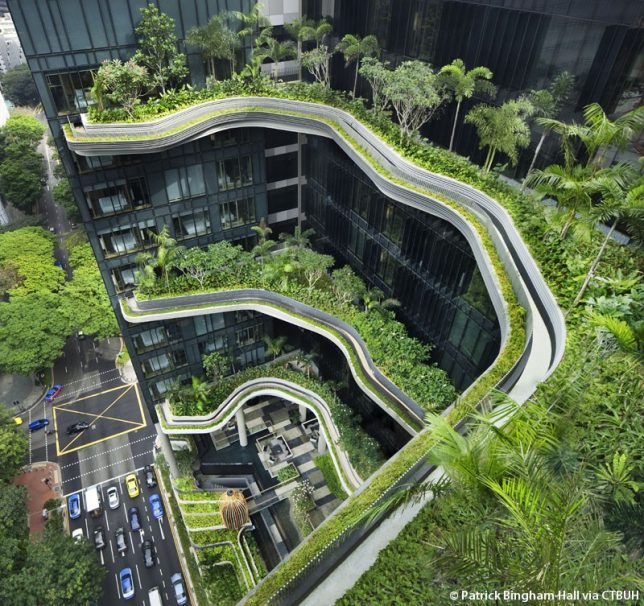
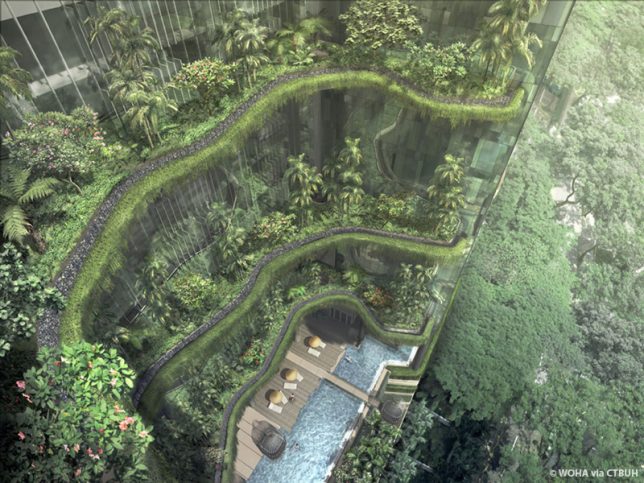
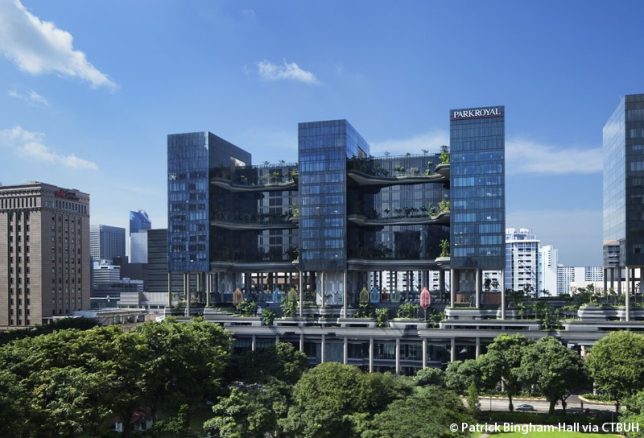
The ‘PARKROYAL on Pickering’ is a pedestrian-oriented elevated neighborhood for Singapore with lush greenery planted on nearly every level and a porous layout encouraging daylight, cross-breezes and free circulation between the various elements of the structure. The 2015 winner of the Urban Habitat Award by the Council on Tall Buildings and Urban Habitat (CTBUH), the Parkroyal was praised for being “intelligently influenced by both its environmental and cultural context.” A contoured podium draws inspiration from terraced landscapes like rice paddies, and a series of columns resembling trees makes the entire building seem to hover above the street, establishing a shaded pedestrian thoroughfare on the ground level. By stretching upward, the building design with all of its integrated greenery adds 215% new green space to the plot area, proving that increasing density in cities doesn’t have to mean losing parks and gardens.

Cities Carved Into Coastal Cliffs

compact cities coastal cliffs 1

compact cities coastal cliffs 2

copact cities coastal cliffs 3

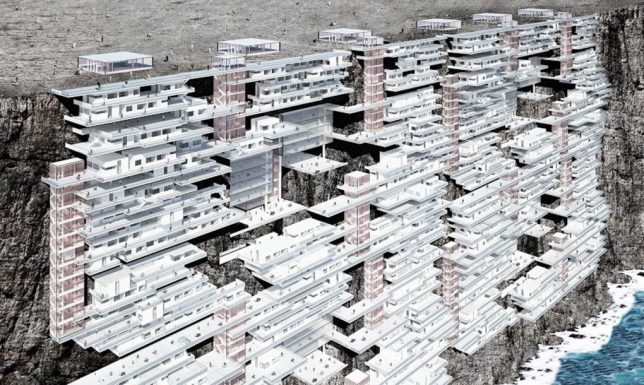
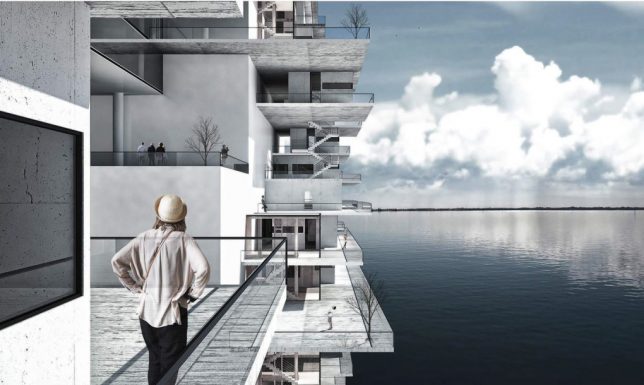
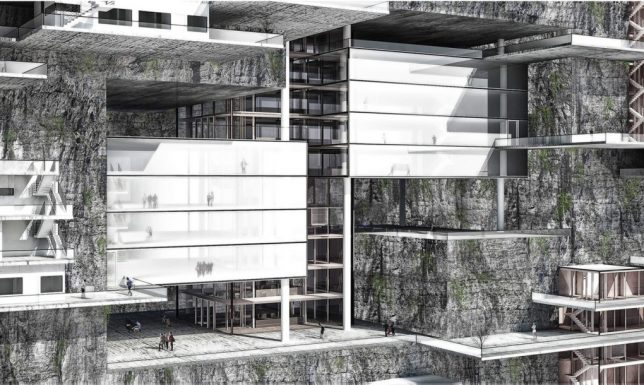
The ‘Living on the Edge’ project imagines building new cities right into coastal cliffs around the world, forming new urban environments. While it would seem like expanding human developments into areas that are currently in their natural state isn’t exactly desirable (not to mention the threat of rising seas), the designers contend that making use of these spaces high above the water level would be better than allowing currently-existing cities to keep sprawling outside their urban boundaries into surrounding forests and agricultural land.

Shop-Top Neighborhood in Beverly Hills

compact cities MAD 1

compact cities MAD 2

compact cities MAD 3

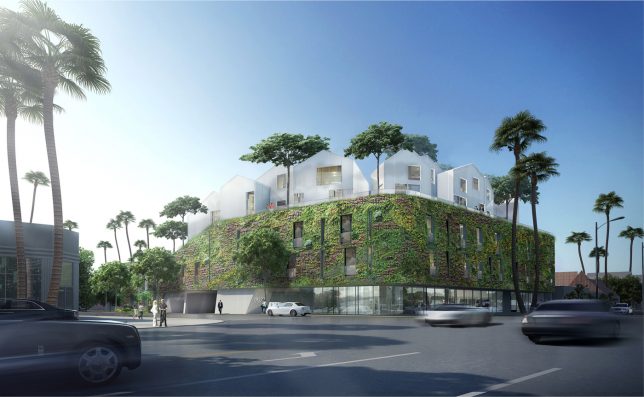
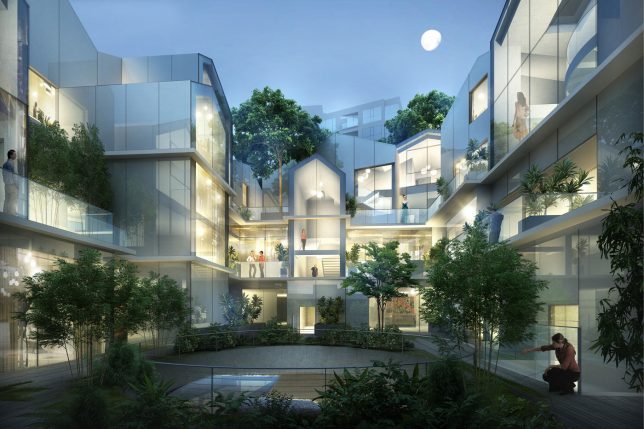
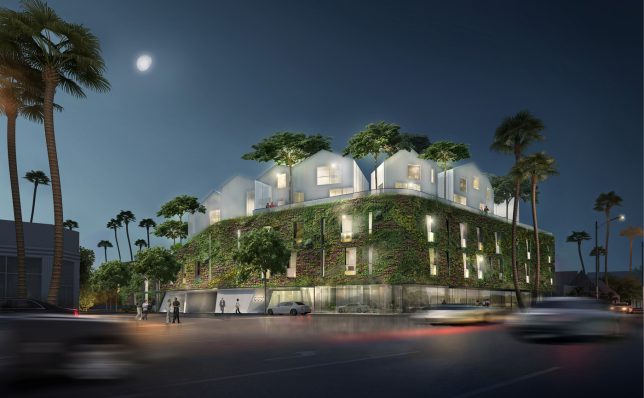
As multiple functions compete for space in crowded cities, the answer is often to build tall structures full of apartments that sacrifice the classic suburban neighborhood feel for density and walkability. But what if we could have both? 8600 Wilshire by MAD Architects places a relatively traditional neighborhood complete with green spaces and trees right on top of a retail block in Beverly Hills. The clustered white glass villas offer 18 residential units in the form of a ‘hillside village,’ with the houses appearing opaque from the street but facing the inner courtyard with transparent facades.

High-Density Urban Development Inspired by Chinese Mountains

compact cities shanshui 1

compact cities shanshui 2

compact cities shanshui 3

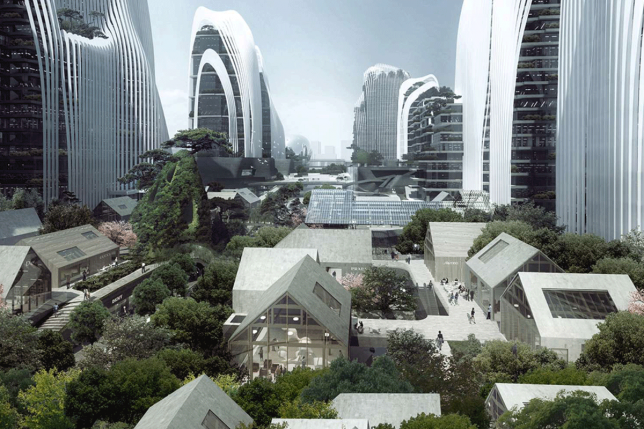
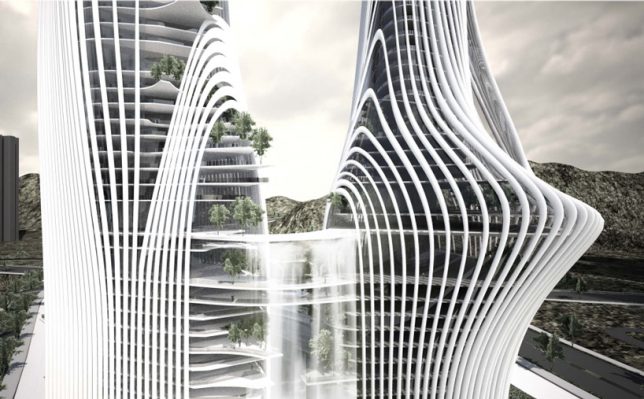
Another MAD project “treats architecture as a landscape,” integrating waterfalls, trees and gardens into a high-density urban development with curvaceous structures mimicking traditional Chinese paintings of mountain ranges. ‘Shan-shui City’ is a concept that can be applied to all sorts of building projects, and MAD aims to make use of it in both all-new construction projects in China and as supplements to existing cities. They will apply it to a mixed-use urban development that’s half a million square meters in size, and new plaza development in Beijing’s central business district.

Next Page – Click Below to Read More:
Urban Human Habitats 13 Compact Concepts For Growing Cities

Share on Facebook


[ By SA Rogers in Architecture & Cities & Urbanism. ]

[ WebUrbanist | Archives | Galleries | Privacy | TOS ]


WebUrbanist

 
Comments Off on Urban Human Habitats: 13 Compact Concepts for Growing Cities

Posted in Creativity


Landscape Photography and the Human Element

03 Sep

2-for-1 special

As part of Landscape Photography Week here on dPS, we’re offering TWO for the price of ONE on our best-selling Living & Loving Landscape Photography ebooks!

Click here to take advantage of this offer.


When I think of landscape photography, my mind conjures up a towering mountain vista with a glowing tarn sprawled out in the foreground, or a tumbling torrent flanked by evergreens.

It’s hard to not be drawn in by a great landscape image. After all, most of us yearn for wilderness or a connection to nature, especially in our electronics-dominated lifestyles. Of course the landscape that unfolds in front of us isn’t always the wilderness, on the contrary, sometimes it’s a concrete jungle.
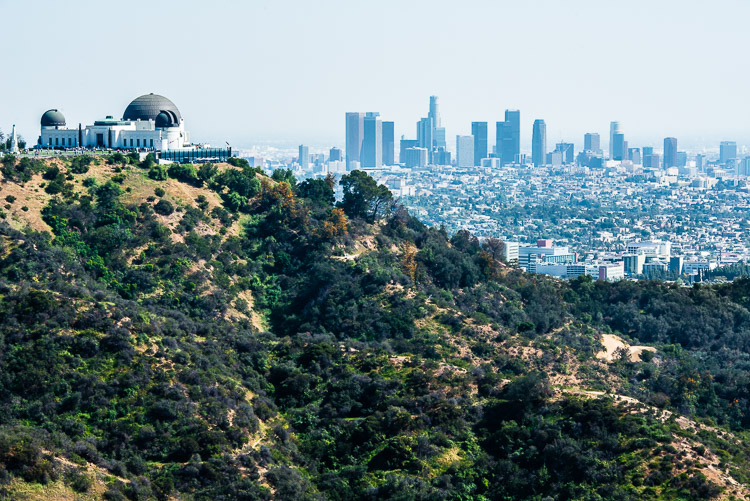
The Los Angeles urban landscape

Urban landscapes focus on the human element as the subject.

What does it mean to have a human element in a landscape image? By definition landscape photography should be purely natural, but as is often the case with art, it is subjective and the lines delineating the rules are blurred.

I find that sometimes adding a human element – whether it is a person or something that hints at the presence of people – can help humanize the image and bridge our connection to the story within. Every photo can tell a story if you open your mind and look into it deep enough. Even pictures of nature tell the tale of an eternity of geologic processes at work or the incredible diversity of life that has blossomed out of seemingly nothing.

One thing about photographing the world, that I’ve learned over the years, is that many images offer more intrigue, or become more powerful by including a person. A landscape image can certainly evoke a host of emotions, but seeing another human being in the photo seems to help nudge us in a certain direction.

A tiny person among a huge landscape can give you perspective and scale, while an expression or form can suggest a feeling of awe, contemplation, or any number of emotions.
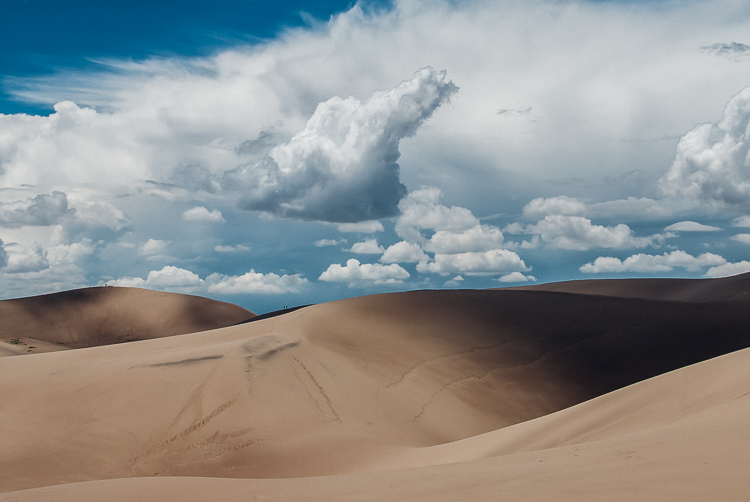
People in a landscape photo for sense of scale

They shouldn’t be the main subject of the image, but including people in a landscape photo can help provide a sense of scale.

This photo below of Vernal Falls in Yosemite Valley could have easily excluded people as well as the stairs – also a human element. This waterfall is visited by hundreds of people per day and has been photographed from a million angles. After reviewing my photos from this little excursion, I realized that I liked this one the best. I like seeing the steps which were obviously very difficult to construct. I picture workers toiling for weeks or months to build them decades ago. They also reveal the steep incline you must climb to get a good view. The girl’s posture and expression shows her relaxing after the climb and obviously happy with the reward.
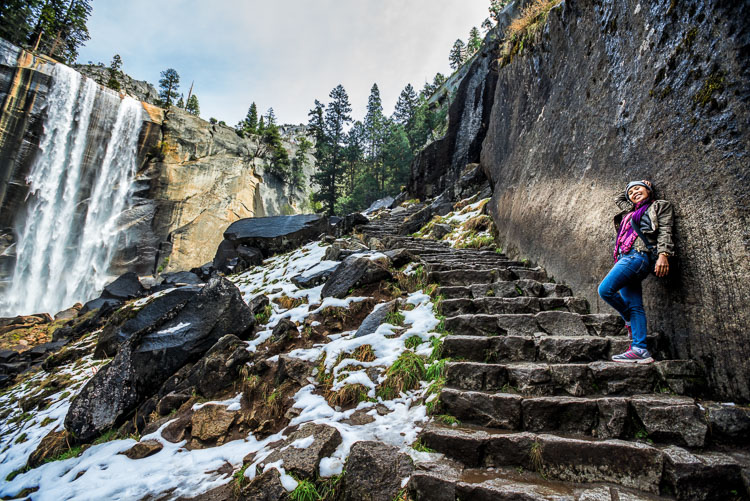
Lanscape including a person for balance and mood

Photographic genre lines are often blurred, like this image which lies in the realm between a landscape image and an environmental portrait.

Although this next photo doesn’t show people, it provides evidence that the mountains aren’t just empty wilderness. With just a small plume of smoke sneaking into the frame, you now have more than a dramatic vista of the late day sun trickling over these mountains in northern Thailand. Even though you don’t have all the details, you know there’s a story. Are there people camping in that spot? Is there a village? A wildfire just beginning?
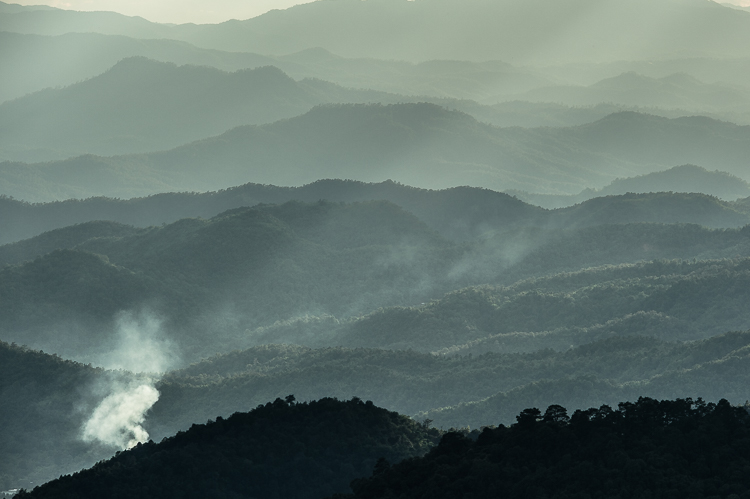
Smoke from a mountain village

Sometimes simply hinting at the presence of people can add intrigue.

The wisps of smoke also give another point of focus. Without it, whatever this photo has to offer is quickly recognizable with just a quick glance – a pretty pic of some rolling hills. In this case the human element adds intrigue and a bit of mystery.

In the summer of 2012 Colorado was hot, dry, and on fire. Several fires torched mountainsides, as well as the houses perched on their slopes. There was a lot of smoke, and even some ash floating around. Later in the day, the low angle sun would illuminate the smoke and make it glow all sorts of colors, which simultaneously looked both beautiful and apocalyptic.

I wandered out with camera in hand and found this lake, which I thought would be a nice elemental balance of water in the foreground with dry, burning hills behind, and that brilliant glowing reflection. It was a private lake with a barbed wire fence around it, which I included in some of the frames I shot.

The human element adding symbolism

The human element can be used to add symbolism.

I found that the barbed wire helped accentuate that apocalyptic feeling while insinuating symbolism at the same time. That symbolism could be interpreted many ways. To me, I have studied some fire ecology and learned of the dangerous conditions we have created by suppressing wildfires for decades, and the barbed wire symbolized that maybe we should keep out of nature’s business.

What do landscape photos mean to you? Do you prefer them devoid of any hint of human presence?


Here on dPS this is landscape week – the first of several articles and tips was posted earlier today. You can see it here: 6 Tips for Better Low-Light Landscape Photography. Watch for a new article (or two) on landscape photography daily for the next week.

googletag.cmd.push(function() {
tablet_slots.push( googletag.defineSlot( “/1005424/_dPSv4_tab-all-article-bottom_(300×250)”, [300, 250], “pb-ad-78623” ).addService( googletag.pubads() ) ); } );

googletag.cmd.push(function() {
mobile_slots.push( googletag.defineSlot( “/1005424/_dPSv4_mob-all-article-bottom_(300×250)”, [300, 250], “pb-ad-78158” ).addService( googletag.pubads() ) ); } );

The post Landscape Photography and the Human Element by Jeremie Schatz appeared first on Digital Photography School.


Digital Photography School

 
Comments Off on Landscape Photography and the Human Element

Posted in Photography