RSS
 

Posts Tagged ‘Help’

5 Steps to Building Relationships to Help You Get More Photography Clients

01 Apr

How to Build Relationships to Get More Photography Clients

So you’re trying to make a go of it as a freelance photographer. Maybe you are just looking for a few paid gigs on the side, or perhaps you really want to go pro. But the problem is actual paying gigs are still few and far between, even though you’ve tried everything.

Shooting every day. Doing free portrait sessions for family or friends. Spent hours and hours editing photos in Photoshop or organizing images in Lightroom.

So what should you do? Well, I have some good news – it may not be your photography. In fact, you may be an excellent photographer. But here’s the rub: being a successful freelance photographer takes more than artistic skills and technical knowledge. It takes something most photographers would rather not acknowledge is important.

Hang tight, because what I’m about to say may shock you.

By thinkpanama

Successful Photographers Know the Value of Relationships

Really successful photographers are good at developing relationships. That’s right, I said it. You need to focus on relationships. (I realize this is a photography blog so you can burn me for witchcraft now.)

You need to build the right relationships with key individuals who can help you to achieve your freelance dreams.

Now, this may not sit well with you, especially if you consider yourself a little shy. But the good news is you don’t need to be the life of the party to be good at developing key relationship to support your freelance work.

You just need to have some discipline and focus your energies in the right direction.

How Cultivating Relationships Can Support Your Freelance Photography Career

There are many ways in which cultivating and maintaining key relationships can help your freelance career. For example:

  • Clients like to hire service professionals they already know, like and trust.
  • According to public opinion surveys, 45 percent of people find work through other people. Thus, keeping in touch with a wide network is crucially important for landing gigs.
  • By keeping in touch with editors, publishers and clients, you’ll be top of mind when new gigs come up.
  • You may find out about photography gigs and projects that are not advertised.

Now, let’s turn to how you can be proactive about identifying the people who you want to establish relationships with and then go about nurturing relationships with them.
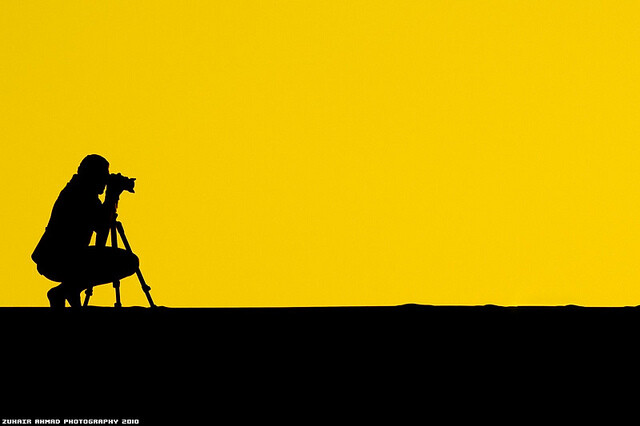
By Zuhair A. Al-Traifi

How to Establish and Nurture Relationships to Grow Your Freelance Photography Career

Below, I have laid out five specific steps you can take to start establishing, and building relationships that will help your freelance photography career.

1. Create a list of key relationships

By Eric Heupel

One of the biggest mistakes I see aspiring freelance photographers make, is they fail to think in advance about the types of people they need to be meeting and getting to know better. In other words, they let their relationships evolve naturally and organically. That works well for friendships, but it’s a poor strategy for if you want to make a living using your photography skills.

A much better approach is to sit down and proactively make up a list of at least 50 people who you want to develop a deeper relationship with over the next 12 months. I call this list your “Conversations List” because that’s really all you’re aiming to do – to have an ongoing conversation with people who matter.

Who do you include on this list? Well, picture yourself five years from now as a famous and in-demand photographer. Who is in your ideal circle of contacts? Who are the photographers, editors, agents, publishers or bloggers who you’d like to count as friends and peers five years from now?

Whoever you picture being in this group, write them down. These are the people who you are going to focus on getting to know better.

2. Choose your relationship-building tools
By zzpza

Once you’ve identified who you want to focus on getting to know, the second step is to decide on what tools you plan to use to develop and nurture relationships. These tools may include:

  • Lunches and coffee meetings. One of the best sources of getting new gigs is the simplest. Invite a person off the list you created in Step 1 to lunch or coffee. Get to know one another. Repeat.
  • Interviews. I am a huge fan of using interviews to develop relationships. For example, dPS’s own managing editor Darlene Hildebrandt and I got to know one another better when I interviewed her for my podcast and when she interviewed me on photography and the law. You also generate useful content that can lead to new clients finding you.
  • Business meetings. There may be local business community meetings (such as Chamber of Commerce meetings) that present a good opportunity for you to meet and connect with others.
  • Industry Conferences. You should identify conferences where you can meet and get to know people from the list you created in Step 1.

Next, let’s talk about your mentality as you do begin to reach out to others.

3. Give to others long before you ask for anything
By Brandon Warren

Steps 1 and 2 are critical, but may not be as important as Step number 3, which is to provide value to others before asking for anything for yourself.

Dr. Ivan Misner, the founder of BNI (Business Network International) says you need to make deposits into the relationship bank before you can make withdrawals. In other words, you need to help others before you can ask for help for yourself.

Too often, people try to make withdrawals before they’ve made any deposits. They ask before they give. That’s a recipe for failure. What you “give” of value doesn’t need to be big. It can be simple suggestions or recommendations of a restaurant to try or a new TV show.

For example, let’s say you manage to get to know an editor at a publication or website which just purchased some of your photos. You want to sell them more photos in the future.

You should try hard to learn as much about that editor as you can, so you can be as helpful to him or her as possible. In other words, be human and be useful, helpful and giving. As a result, the editor will have a positive feelings for you because you were so giving, and they will be more likely to want to work with you again.

4. Create an easy follow-up system

By slackorama

So far, we’ve identified who you are going to connect with, talked about the tools you are going to use to connect with them, and discussed a philosophy of giving value first.

Now, the challenge is to keep it up over time. If you want your connections to think of you first when a freelance gig comes up, then you need to always be “top of mind” with that connection. And to be “top of mind,” you need to have a good system for following up.

What does that entail? A follow-up system is simply a dedicated means for checking in with people in your network.

You can create a manual follow up system, or put reminders on your calendar, but neither works well. I suggest using a simple CRM (customer relation management) system such as Insightly or SugarCRM. I use a system called Contactually. Whatever system you use, following up is an excellent way to manage your relationships, particularly with people you do not see often.

5. Revisit and revise your conversation lists annually

Around once a year, revisit your Conversation Lists and determine who you should cut out and who you should add. You will naturally meet new people over time. You may decide that certain people on your list are not a good fit for you. And you may even decide to take your photography career in a different direction. These are all perfectly fine.

By revisiting and updating your lists annually, you can make sure you are developing and nurturing the right relationships, proactively, to support your photography career.

Now get out there and start meeting people

Now it’s time to put these ideas to work. The last thing I want you to do after reading this far is to give up now without acting on what you’ve learned.

So sit down and write out your list of the 50 people who you want to get to know better. Then use your chosen relationship-building tools to start developing relationships with them. And have some fun.

How do you nurture relationships to support your freelance photography career? Share your tips in the comments!

The post 5 Steps to Building Relationships to Help You Get More Photography Clients by John Corcoran appeared first on Digital Photography School.


Digital Photography School

 
Comments Off on 5 Steps to Building Relationships to Help You Get More Photography Clients

Posted in Photography


The Selfie Help Book

24 Mar
Extra photos for bloggers: 1, 2, 3

Selfie taking is a solitary pursuit, but that doesn’t mean we can’t help each other with our selfie snapping technique.

After extensive research (and many a photographic self portrait) the Photojojo Institute of Selfie Studies is pleased to share their collection of the very best selfie taking tips, apps and gadgets, for the good of society.

Read on to become a true master of the selfigraphical arts.

Then before you go forth and selfie, please, forward this invaluable guide to all your friends. Let’s get better at taking photos alone, together!


Whether you need to prove you met Bono, are checking your face for post-lunch food particulates or it’s time for a new profile pic … Sometimes you just have to take a photo or yourself.

Before you tap that shutter button, please complete the following selfie prep:
– Arm stretches. These are essential to avoid strain from the shoulder-down arm-out stance of proper selfie taking form.
– Check your vicinity for a toilet. If you can see one, now is not the time to selfie.
– Think. Have you taken 5 or more selfie today? No? Carry on then…


      Selfie Enhancing Apps

Everyday app reminds you to take a selfie every single day. Then, compiles your pics into a neat-o timelapse.
Everyday App

Take a photo from farther than one arms length. CamMe lets you trigger your camera from afar with a wave of your hand.
CamMe

 
Solo Selfie Gear

No flash for your front facing camera? Add soft even light with…
The Pocket Spotlight

No outstretched arm in your pics! This guy helps your phone stand up for itself.
The Keyprop

Add kaleidoscope, starburst and wide angle effects with these filters over your lens.
Jelly Camera Phone Filters

With sharp optics and a big ‘ol sensor, the QX beams your pix straight to your phone.
Sony QX Lens Cameras


Group Selfie (gro?op ‘self?) n. Any photo featuring two or more people, when one of those people is you.

Once you master the group selfie you’ll never have to leave someone out of the group shot again!

Group selfie tip: Don’t forget the silly one! Once you’ve documented your best smiles, yell “silly one” and snap one more. Your true friends know what to do.

 
Great Groupfie Apps

Document your group and yourself at the same time. Dblcam app takes photos through your front and back facing cams and puts them side by side.
Dblcam

Self-timer apps are great for group pix! Trigger the countdown, then run to join your friends in the shot.
TimerCam


      Groupfie Gadgets

No need to grow your arm. Fisheye lenses fit more pals in the pic.
Fisheye Phone Lenses

Pose with your posse and snap photos at a distance with a handy remote.
Smartphone Shutter Remote

This tripod folds up for ultimate portability. Take it anywhere the party.
The Folding Tripod

The Glif will prop up any phone and attaches to any tripod (folding or not).
The Glif


Now that you’re a classic and group selfie expert, ask yourself: Would you selfie in a box? Would you selfie with a fox? If yes, you’re ready for extreme selfies!

Extreme selfies are not just about documenting your face. X-selfies show your creative side, your masterful skillz with a phone cam and your zest for life.


      Extreme Selfie Apps

You never sit still, why should your selfies? Selfie360 take pix as you spin and stitches them into a magical shareable gif.
Selfie 360

Turn your phone cam to pano mode and just try to take a selfie (the results are bound to be silly).
Pano Selfie Tutorial

 
Extreme Selfie Gizmos

Ready for your close up? Macro lenses capture stunning detail at close range.
Macro Lens Band

Adorn your portrait with splashes of rainbow-y color.
Phone-o-Chrome Filter

Snap underwater selfies all while keeping your iPhone safe and sound.
Optrix Adventure Suit

A charging cable and phone stand, Une Bobine bends to capture your best angle.
Une Bobine


© laurel for Photojojo, 2014. |
Permalink |
No comment |
Add to
del.icio.us

Post tags:


Photojojo

 
Comments Off on The Selfie Help Book

Posted in Equipment


5 Steps to Help you Take Better Landscape Photos

10 Mar

When photographing landscapes, it can sometimes be difficult to produce a an image that is focused in its content, that leads the viewer’s eye exactly where you as the artist want it to go.   Sometimes, even though you may be presented with a beautiful vista, an image may not present itself and you have to work to find it.  Here are five basic steps to help you take better landscape photos. I follow these any time I’m looking to create a landscape image.

#1 Find your subject

Sometimes it’s easy. You choose a building, or a rock formation, or a tree, and it all just comes together.  Other times, it becomes more difficult.   Sometimes nothing in particular stands out.  Look around the scene, find something that draws your eye. Look through your viewfinder, and see how things frame up through your camera’s eye.  Once you have found your subject, you have more decisions to make.

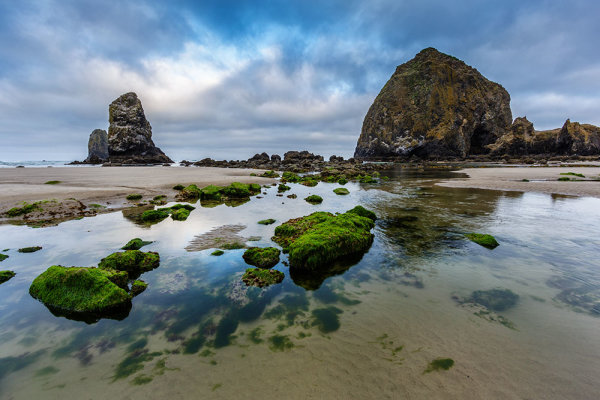
Haystack Rock is a fairly obvious subject. But there are myriad options when it comes to photographing it.  For this image, I decided to use a tidal pool and some rocks in the foreground, but also wanted to include plenty of sky since there was so much interest in the clouds.

Haystack Rock is a fairly obvious subject. But there are a myriad options when it comes to photographing it. For this image, I decided to use a tidal pool and some rocks in the foreground, but also wanted to include plenty of sky since there was so much interest in the clouds.  The rocks and water create some nice lines leading right to Haystack Rock.  EOS 5D Mark III with EF 14mm f/2.8L II, at f/16, ISO 100.

#2 Where is your subject in the composition?

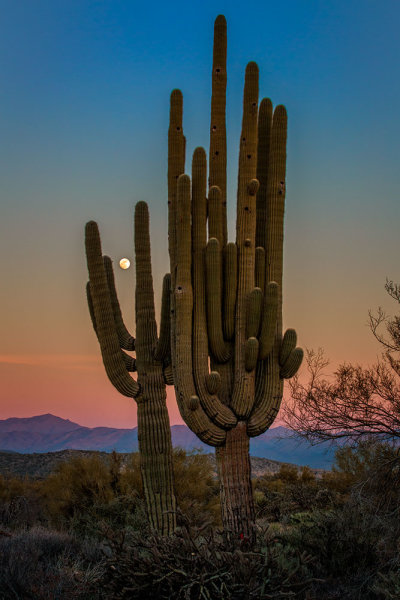
There was no real foreground to speak of here. Just a lot of sand and some uninteresting brush.  What I did see was the way the moon was rising between the arms of the saguaro, and the soft gradation from orange to blue as the sun set behind me.  Taken with EOS 5D Mark III, EF 70-200 f/2.8L IS II, 1/20 @ f/22, ISO 1000.

There was no real foreground to speak of here. Just a lot of sand and some uninteresting brush. What I did see was the way the moon was rising between the arms of the saguaro (cacti), and the soft gradation from orange to blue as the sun set behind me. Taken with EOS 5D Mark III, EF 70-200 f/2.8L IS II, 1/20 @ f/22, ISO 1000.

This will partly be dictated by its location in relation to you, but also by what else is in your scene. Look for interest in relation to what you’ve chosen as the subject. Is there an interesting object or pattern in the foreground, which could lead the viewer’s eye to the subject? Is there something in the foreground that frames your subject or otherwise adds interest without being distracting?  I will often use water or rocks in the foreground if I can.  If it’s water, can you get a reflection of your subject in it?  Sometimes it’s leaves, sometimes trees or a fence.

If there is nothing in the foreground, try minimizing it by putting the subject as the foreground, and looking for background interest.  Interesting clouds or sky, buildings, or trees, can all create a backdrop for the landscape. Sometimes, you’re lucky enough to get both an interesting background AND foreground. These are the times to play with your composition and vary the amounts of foreground and background to see what works best, or what doesn’t work at all.   Generally speaking, if the sky is flat and lacks interest, I will place it in the top third of the frame, using the rule of thirds.  If the foreground lacks interest, I place that in the bottom third.

#3 Tie it together

Once you decide where your subject goes in the frame, what’s in the foreground and what your background will be, it’s time to find a way to tie it all together. Are there leading lines that will lead your viewer from foreground to background?  Leading lines are an easy way to tie your composition together.  Framing is another way, which I included in my discussion of choosing your foreground.  Without tying your composition together, it can often seem like you have two separate images in one.  Creating a composition that pulls the viewer through it and leads them where you want them to look is the best way to create an effective landscape image.

For this image of Kaaterskill Creek, I knew the small cascade was my main subject.  There were some rocks to create interest in the foreground, and the water creates a nice leading line back to the cascade in the middle ground, and then to the foliage in the background.  EOS 5D Mark III with EF 16-35mm f/2.8L II. I was zoomed into 35mm on this one. Exposure was 1.6" at f/20, ISO 100.

EOS 5D Mark III with EF 16-35mm f/2.8L II. I was zoomed into 35mm on this one. Exposure was 1.6″ at f/20, ISO 100.

For this image of Kaaterskill Creek (above), I knew the small cascade was my main subject. There were some rocks to create interest in the foreground, and the water creates a nice leading line back to the cascade in the middle ground, and then to the foliage in the background.

#4 Read the light

Are you at your location at an optimal time? Some locations are better in the early morning, some in late afternoon.  Some are good no matter what time you are there. The difference in the light at these times can mean the difference between a dramatic landscape image, or a snapshot of a pretty place. To find out where the sun will be in a given location at a given time, use an app such as The Photographer’s Ephemerus, or Sunseeker Pro, which will show you the sun’s exact location.  This will enable you to plan when to be a location for optimal light.

Side lighting will create dramatic shadows and show off textures. Backlighting will help create silhouettes, which can be very effective for dramatic images with prominent features breaking the horizon. Front lighting will reveal detail everywhere. Often, I will photograph the same location at different times, as different light will create a variety of images from the same location.

Montauk Point is a great location with lots of photo opportunities, but it's a much better location at sunrise than later in the afternoon or at sunset, due to the shadows created by high cliffs. At sunrise, it can be magical. EOS 5D Mark II, EF 17-40 f/4L. Exposure was 15 seconds, f/11, ISO 800.

EOS 5D Mark II, EF 17-40 f/4L. Exposure was 15 seconds, f/11, ISO 800.

Montauk Point (above) is a great location with lots of photo opportunities, but it’s a much better location at sunrise, than later in the afternoon or at sunset, due to the shadows created by high cliffs. At sunrise, it can be magical.

#5 Choose your shutter speed

Finally, think about what your shutter speed will do to the image.  If you’re shooting water, shutter speed has a lot to do with the water’s appearance in your image. If there are trees, and it’s a breezy day, a faster shutter speed will be necessary to freeze the leaves and avoid motion blur. These are things to be aware of when composing your image.  Learning to visualize these effects in your mind before pressing the shutter button will go a long way toward making you a better photographer.

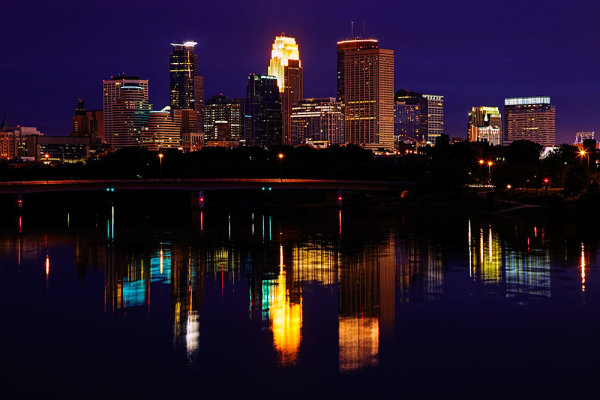
The Minneapolis skyline was an obvious choice for subject here. But the sky was flat for a background, so I pushed the skyline to the top of the frame.  Thankfully, I caught the Mississippi River on an uncharacteristically calm day and was able to get a nice reflection for foreground interest.  EOS 5D Mark II with EF 24-105 f/4L IS. Exposure was 10 seconds at f/11, ISO 400.

EOS 5D Mark II with EF 24-105 f/4L IS. Exposure was 10 seconds at f/11, ISO 400.

The Minneapolis skyline was an obvious choice for subject here. But the sky was flat for a background, so I pushed the skyline to the top of the frame. Thankfully, I caught the Mississippi River on an uncharacteristically calm day and was able to get a nice reflection for foreground interest. I used a slow shutter speed  (or long exposure) to smooth the waters even more.

Do you have some great landscape tips you’d add to this list? Please share in the comments below.

The post 5 Steps to Help you Take Better Landscape Photos by Rick Berk appeared first on Digital Photography School.


Digital Photography School

 
Comments Off on 5 Steps to Help you Take Better Landscape Photos

Posted in Photography


Kodak API to help app developers take photos from phone to print

18 Oct

2013-10-15_11.18.16.jpg

One of the remaining arms of the Kodak legacy, Kodak Alaris, is working to remain relevant by focusing its efforts on moving photos from smartphone to print, via one of its 105,000 photo printing kiosks worldwide. The company recently released its API to lure developers into adding Kodak kiosk printing capabilities directly into their mobile photography apps. Learn more at connect.dpreview.com.

News: Digital Photography Review (dpreview.com)

 
Comments Off on Kodak API to help app developers take photos from phone to print

Posted in Uncategorized


Smarter cameras may help bring autonomy to space robots

12 Sep

texturecam_thumb.jpg

Space robots, including the Curiosity rover currently roaming Mars, have been great at following orders. Now, scientists are looking for ways to put more decision making power within the grasp of the rover itself. A team at NASA’s Jet Propulsion Laboratory is developing a camera system called TextureCam to do just that. They’ve developed an algorithm to allow the rover to analyze 3D images and determine whether an object in front of it deserves further investigation. Click through to read more.

News: Digital Photography Review (dpreview.com)

 
Comments Off on Smarter cameras may help bring autonomy to space robots

Posted in Uncategorized


National Geographic drones help capture Serengeti wildlife close up

11 Aug

12-afternoon-nap-robo-cam-view-670.jpg

What’s the safest way to get close up photos of lions on the Serengeti? Send in a robot. And an aerial drone. That’s what photographer Michael Nichols and his team did, producing incredible images for a National Geographic feature. From a nearby car, Nichols and crew directed a small remote-controlled robot outfitted with a Canon camera toward lion prides as they hunted, slept and well, do everything lions do. And we do mean everything.

News: Digital Photography Review (dpreview.com)

 
Comments Off on National Geographic drones help capture Serengeti wildlife close up

Posted in Uncategorized


6 Accessories to help you Improve your Landscape Photography

15 Jul

At the most basic level, all that you need to take landscape photographs is a camera and a location.  One of the reasons that landscape photography is so popular is that it is so accessible, without the necessity for the newest camera bodies or most expensive lenses.  You can pick up any entry-level DSLR and kit lens and be able to make great landscape images.

However, there are a few extra tools that, if included in your camera bag, will help you improve your landscape photography in terms of both your technique and resulting images.  Below is a selection of accessories that serious landscape photographers do not leave home without and the majority are cheaper than a basic kit lens.

1. Tripod

This has the potential to be the most expensive item on this list, but it is probably the most crucial accessory for every landscape photographer.  They come in all weights and sizes, and therefore costs, however a tripod can be key to ensuring you can capture sharp landscape images.  A lot of landscape photographs are captured at the beginning and end of the day, under low light conditions, meaning that it is not always possible to handhold the camera and still achieve shake-free images.  Also, a tripod is a good way of becoming more methodical in your approach to composing your landscape images, forcing you to slow down and critically assess the view through your viewfinder

2. Graduated ND Filters

Graduated neutral density (ND) filters are crucial for balancing the exposure between bright sky and dark land, overcoming the limited dynamic range of most DSLR sensors.  Generally, half of the filter is darker to reduce the amount of light allowed though across half of the frame.  Without them, if you expose for the sky the land will be in silhouette or if you expose for the land, the sky will be blown out.  You can use exposure bracketing to overcome this, however that will then require more time spent in front of a computer blending the multiple exposures.  Using graduated ND filters allows you to capture both the sky and land, correctly exposed, in one shot.

ND Grad fitlers

Graduated neutral density filters.  A ‘hard’ grad is shown on the left, a ‘soft’ grad is shown on the right.

Check out this recent article on the basics of choosing, buying and using graduated ND filters.

3. Hot shoe spirit level

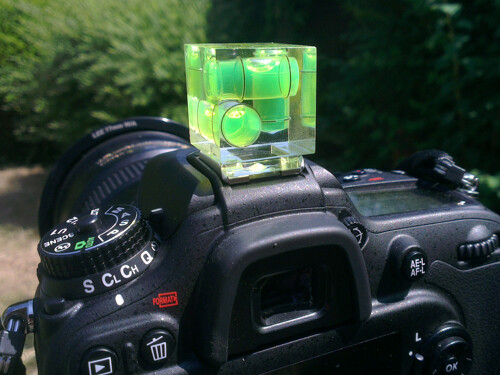
Probably the cheapest accessory on this list, but a valuable tool none the less.  Just slide the spirit level in to the hot shoe to help ensure your horizons are perfectly level.  Some of the latest cameras now come with in-built level gauges, however they struggle to match the fidelity of an actual spirit level.

Hot-shoe spirit level

A three-axis hot shoe spirit level

4. Remote Shutter Release

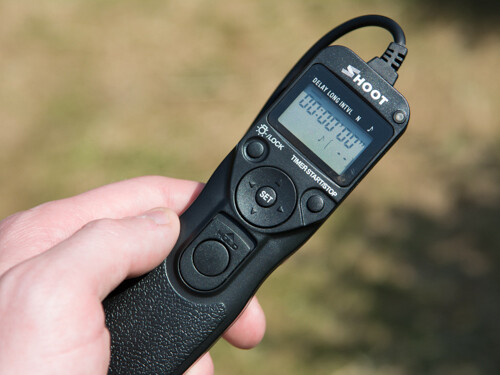
A remote shutter release allows you to release the shutter, when your camera is on a tripod, without touching the camera and introducing any movement.  Also, as these remotes allow you to lock the shutter open, they are very useful if you want to make exposures over 30 seconds, using ‘bulb mode’.  In some instances, the remotes also have a digital display telling you how long the shutter has been open or a programmable timer mode so you can define the exposure length before taking the shot.

remote shutter release

Remote shutter release – if you avoid the official accessories from the big brands, you can find these relatively cheap on eBay.

5. Neutral Density Filters

Similar to the graduated filters mentioned above, however in this instance, the entire filter is of uniform density, meaning that light is blocked out across the entire frame.  You can get them 1-stop, 2-stop or 3-stop densities if you want to marginally slow the shutter speed for shooting waterfalls or introducing some movement, or you can get them as dense as 10-stops for seriously long shutter speeds.

10 stop neutral density filter

An example of the use of a 10-stop neutral density filter to achieve a long exposure time of 5 minutes

6. Polarising filters

Polarising filters are often used to increase the saturation of blue skies, however they are more useful in suppressing reflections from non-metallic objects, such as foliage or water.  This helps to increase the saturation of foliage, even on overcast days, and remove glare from the surface of any water in the scene, revealing detail below the waters surface.  An invaluable tool when shooting landscape scenes that include water.

Effect os using a polarising filter

A polarising filter was used to reveal the detail in the stones beneath the surface of the heavily reflective lake

The items above could almost be considered the essentials to go along with your camera and lens.  There are options that cater to all budgets meaning that you can build your self an effective landscape photographers toolbox without breaking the bank, and once you start using them, you will find you can exert much greater creative control over your landscape photography, and improve the images you make.

Post originally from: Digital Photography Tips.

Check out our more Photography Tips at Photography Tips for Beginners, Portrait Photography Tips and Wedding Photography Tips.

6 Accessories to help you Improve your Landscape Photography


Digital Photography School

 
Comments Off on 6 Accessories to help you Improve your Landscape Photography

Posted in Photography


Love Hurts: First Aid Kit to Help Survive a Broken Heart

08 Jul

[ By WebUrbanist in Design & Products & Packaging. ]

breakup survival med kit

Nothing but time can heal broken hearts, but there are some salves that can at least help bridge the gap between a breakup and happier times.

breakup med style kit

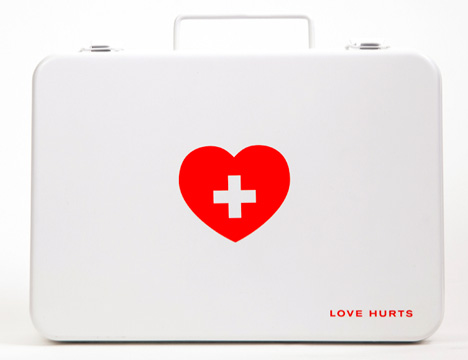
That is the idea behind this half-serious (and currently conceptual) relationship survival kit titled Love Hurts by New York graphic, product and packaging designer Melanie Chernock (images by Luke Nilsson).

breakup survival chocolate candy

About its contents: “Love Hurts contains all of the essentials for going through a rough breakup such as dark chocolate, vodka, bubble bath soap, a candle with matches, candy hearts, a mix CD, and if all else fails, tissues. All of the products come neatly packaged in a compact kit.”

breakup emergency supplies contents

Modern minimalist gift box meets traditional metal medical case in the simple red-and-white-themed design. The contents are a combination of cute, cliche and pragmatic  – really, no one should have to go through the end of a long-temr relationship without access to chocolate.

Share on Facebook


[ By WebUrbanist in Design & Products & Packaging. ]

[ WebUrbanist | Archives | Galleries | Privacy | TOS ]


WebUrbanist

 
Comments Off on Love Hurts: First Aid Kit to Help Survive a Broken Heart

Posted in Creativity


10 Travel Photography Tips to Help Avoid Regrets When You Get Home

03 Jul

By Hélio Dias.

I have lost count of how many times I’ve came home and regretted not having done something to get better pictures when I was traveling.

Luckily, each time that happened I learned from my mistakes. Now I want to share them with you so you don’t need to learn the worst way.

The tips apply for professional jobs and for your vacation pictures.

1. Make a List

Search on the internet – Google, Flickr, 500px, etc. – for images of the places you are going to visit and have a first look on them. Pay attention to the light, the colors, the possibilities to explore in the field and find out the best locations to take your photos.

On Flickr, for instance, it’s even possible to check the time in which the picture was taken, so you can know how the light is in that particular site at that time. A little geeky, but really helpful for me.

The possibilities of the research on the web are pretty amazing and endless. For food photography, for example, you don’t need to find a restaurant with pictures on the menu, or spend some time inspecting what people around you are eating before ordering your meal. You can find information and pictures of local food in advance and choose the best looking dishes, so when you go to a restaurant you know exactly what to order to take photos of.

Don’t run the risk of finding out later about a great place you missed when you where there.

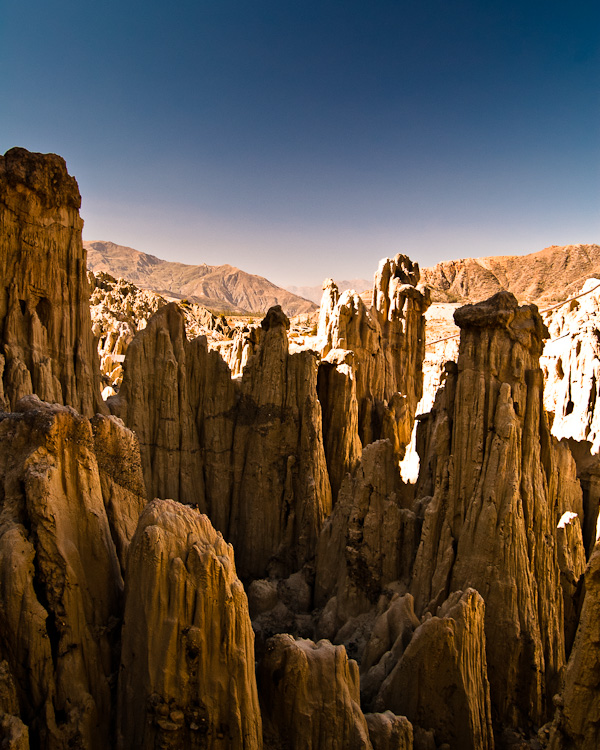
Moon Valley, a beautiful place I missed in my first visit to La Paz, Bolivia.

Moon Valley, a beautiful place I missed in my first visit to La Paz, Bolivia.

2. Take your Time

Definitely not something you haven’t heard yet, but sure the most important photography advice I’ve ever got: work the scene.

Spend some time trying to make the best possible photo from something you see potential on. Always remember: it’s not about getting 200 nice snapshots. It’s about 5 to 10 great photos. Invest your time and effort on these few ones.

Don’t rush. Never get satisfied with your first shot. There is a 99,9% chance you will get a better one if you study the scene more carefully.

Try different perspectives and angles. Walk around, get closer, get further. Try other lenses. Pay attention to details – they might be the center of interest you are looking for. Find the best background.

Drain your possibilities to the last drop. Then move on to the next shot.

There’s nothing more disappointing than looking at your photos when you are home and wish you had shot that particular picture from a different perspective.

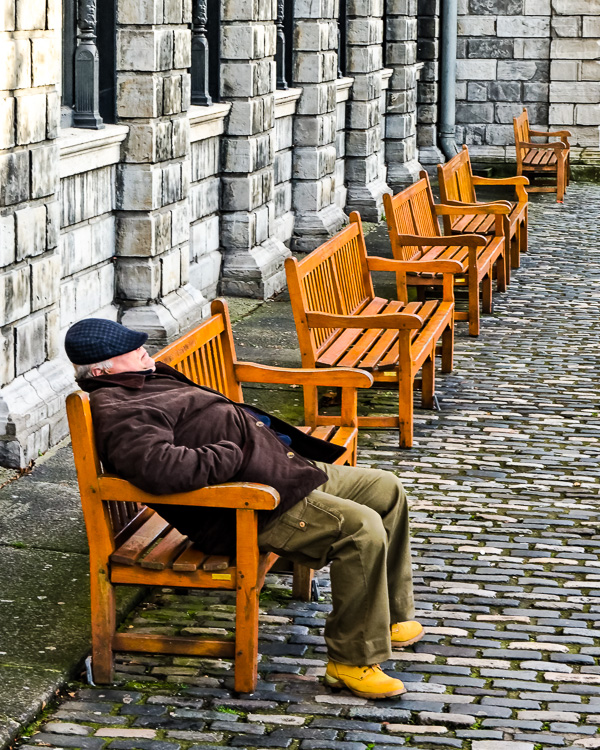
Dublin, Ireland. This one was about my 15th try. Totally worth the time and the shots.

Dublin, Ireland. This one was about my 15th try. Totally worth the time and the shots.

3. Wait for It

Kind of the same advice as the previous one. Just this time I want to point out the time you spend in a certain location after finding your best angle. You worked the scene, you found your composition. Now it’s time to add a little sugar to it.

There are 2 situations in which you may wait some time to get the best shot.

1) The scene is great, but you think it would be perfect with some random person walking by. Or a dog. Or a bird flying. Or a crowd passing by. Or a woman dressed in red. Wait for it until you get it.

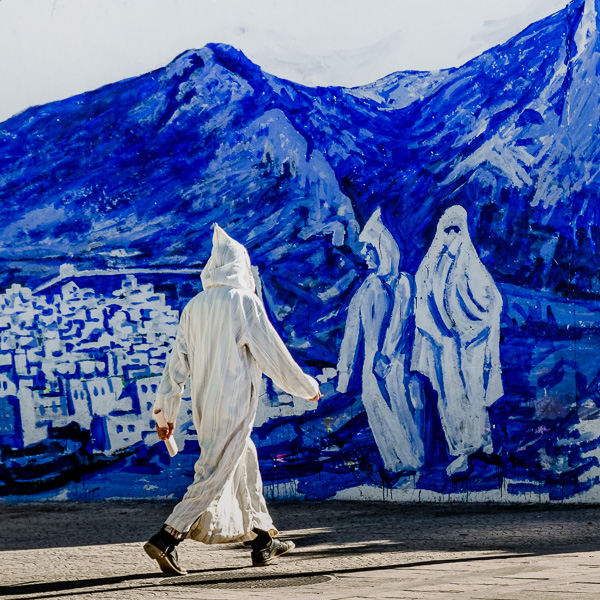
Chefchaouen, Morocco. I wanted to portray someone wearing the same outfit as the people in the painting, so I waited until the perfect subject passed by.

Chefchaouen, Morocco. I wanted to portray someone wearing the same outfit as the people in the painting, so I waited until the perfect subject passed by.

2) Many times you will have to wait for the best light. If that’s the case and it is too soon, take a picture, memorize your position and come back later.

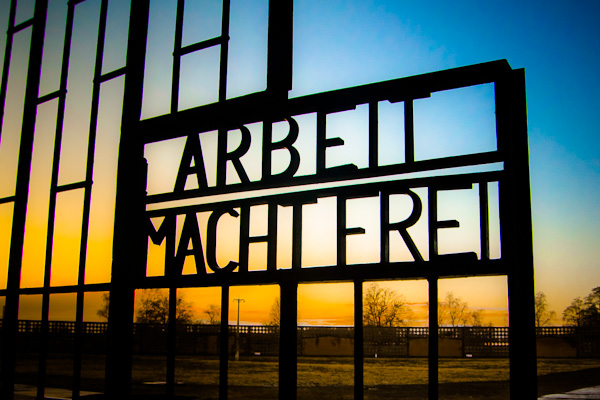
Sachsenhausen Concentration Camp - Oranienburg, Germany. I noticed the potential for a good picture when I arrived there earlier. So I calmly visited the site and, by the time I finished, the light was already perfect.

Sachsenhausen Concentration Camp – Oranienburg, Germany. I noticed the potential for a good picture when I arrived there earlier. So I calmly visited the site and, by the time I finished, the light was already perfect.

In both cases, you will need even more patience than when you were looking for the best framing. Now you just wait there, as long as it takes.

It’s really hard to keep the concentration while you are waiting there. But it’s really easy to regret not having waited when you are home sorting your photos later.

4. Don’t be Lazy

Wake up early and take advantage of the early morning light.

It will sound like the worst possible idea when your alarm clock beep at 5 AM, but you will be pleased with the awesome pictures you will take – a lot better than the ones you’d take around noon.

By shooting in the morning and in the afternoon on both golden hours, you raise 100% your photography time with good light. Plus: Other tourists may take pictures at the same sites, but as most of them won’t wake up early and because the sun in the morning lights up everything from the opposite side, your pictures will look different from theirs. Also, you can take advantage of the fact that it’s usually quieter in the morning than it is in the afternoon.

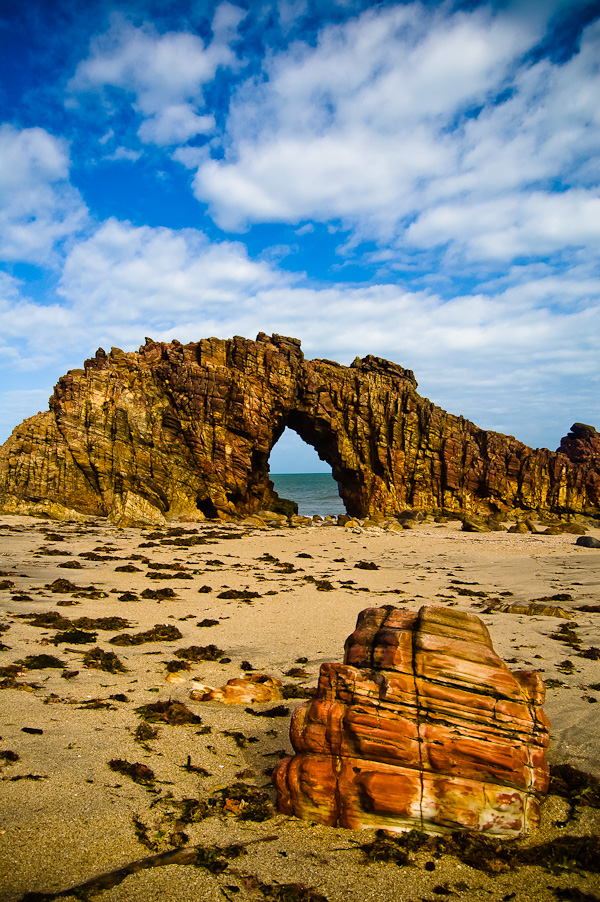
"Bored Stone" - Jericoacoara, Brazil. Many friends question me why this place looked so different when they visited and why their pictures look so dull. The "big" secret is to go there in the morning.

“Bored Stone” – Jericoacoara, Brazil. Many friends question me why this place looked so different when they visited and why their pictures look so dull. The “big” secret is to go there in the morning.

You will never regret having woken up so early when you get home and see the beautiful pictures you brought.

5. Have Options
It’s always good to explore some possibilities and to have more options when you are sorting and cropping your pictures.

For example, even after composing carefully and finding the best image, shoot a horizontal and a vertical photo of the same scene.

If you are using a random person to help composing a shot, do it with a man, a woman, a kid, a couple, etc.

Don’t shoot too tight. It’s better to have a wider picture and crop afterwards if needed – to adequate the picture to the available format in a magazine, for example. Give your editor (and yourself) room to edit.

Choose the best option later, when you can look carefully at each image, or let your editor choose if it’s a paid job.

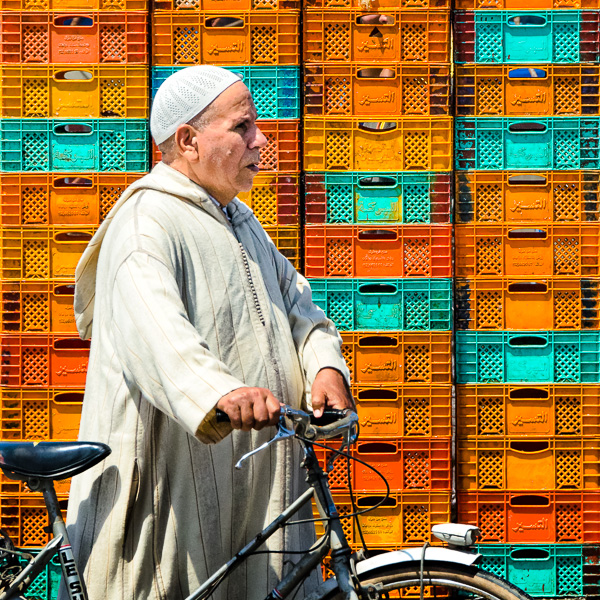
Essaouira, Morocco. I waited many minutes in front of this colored plastic boxes wall and took the same picture with other men, women, couples and kids. In the end, the guy in a white dress with a bicycle seemed like the best choice.

Essaouira, Morocco. I waited many minutes in front of this colored plastic boxes wall and took the same picture with other men, women, couples and kids. In the end, the guy in a white dress with a bicycle seemed like the best choice.

6. Ask Strangers to take their Portrait

How many times I have regretted not having asked someone to take his picture!

It’s a big think to step up and go ask a stranger to take his photo. I’ve lost count of the many thousands of great portraits I’ve lost in the past because I was too shy to ask permission.

But what has to be done has to be done. At one point you stop being silly and go ask the first stranger.

The second one will be almost as difficult as the first one. And the third just a little less. But by the 100th time you do it, it will be as easy as 1, 2, 3. The first no’s are very disappointing, but at some point you get used to it. Trust me.

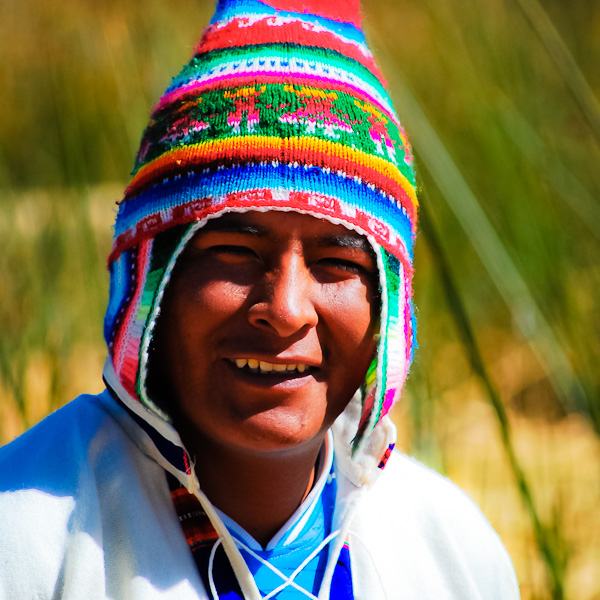
Peruvian man. "Can I take your picture?". "It's my pleasure!".

Peruvian man. “Can I take your picture?”. “It’s my pleasure!”.

7. Check it out Before Moving On

When you finally make that great picture, check carefully on your LCD screen if it’s not shaky or out of focus.

Also check the histogram and observe if the picture isn’t under or over exposed (don’t trust the image on the LCD to check this, especially in a bright day).

8. Always Keep your Gear Clean

Sometimes you’ll only find out how dirty your camera’s sensor or lenses’ glass were when you tweak the contrast of your photos while editing and see the dark spots pop out.

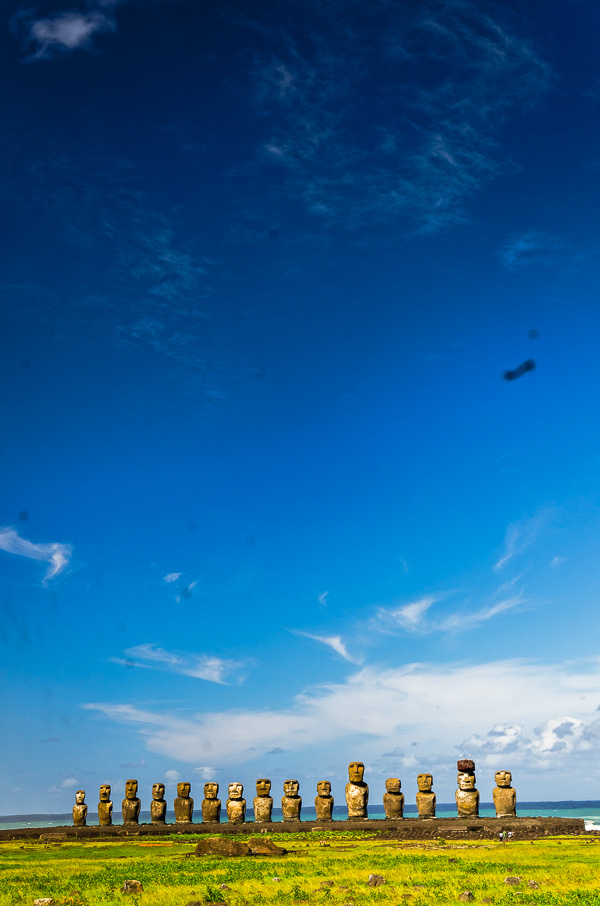
Ahu Tongariki, Easter Island. It's been a while, but I'm still cleaning out all the dirty spots on many pictures from that trip.

Ahu Tongariki, Easter Island. It’s been a while, but I’m still cleaning out all the dirty spots on many pictures from that trip.

Use a bulb blower, a brush or proper cleaning fluid to clean your camera’s sensor, and a clean cloth to clean your lenses’ glass and filters.

You could clean those spots later on Photoshop, but it’s really annoying and will take some time. Better to avoid the extra work.

9. Take Notes

When you get to the PC to sort and organize your travel photos you will want to know the names of the places and landmarks you photographed, especially when you find yourself uploading a picture and need a caption for it.

Take notes or, if it’s possible, take a picture of a sign or plaque related to the subject.

Sometimes you can find the information you need later on the internet, but even then it’s more time consuming than just writing it down in a small notebook.

10. Take Care

Be safe. Watch your stuff.

You can buy new equipment, but the pictures on your stolen memory card are lost forever.
Reduce the risks. Be prudent.

The best picture I've ever taken, from my trip to Colombia. Lost by carelessness. Put the memory card in my pocket, and when I looked for it, it was gone.

The best picture I’ve ever taken, from my trip to Colombia. Lost by carelessness. Put the memory card in my pocket, and when I looked for it, it was gone.

What about you? What have you already regretted?

Hélio Dias is a Brazilian photographer and travel writer. Visit his website and follow him on Facebook and on Twitter at @diashelio.

Post originally from: Digital Photography Tips.

Check out our more Photography Tips at Photography Tips for Beginners, Portrait Photography Tips and Wedding Photography Tips.

10 Travel Photography Tips to Help Avoid Regrets When You Get Home


Digital Photography School

 
Comments Off on 10 Travel Photography Tips to Help Avoid Regrets When You Get Home

Posted in Photography


Spinpod wants to help you snap better panorama pictures

06 Jun

spinpod_crop.jpg

Capturing the perfect panorama shot with a smartphone can be tricky. A new gadget currently gaining ground on Kickstarter could help you achieve a perfect panning motion, and even aid in motion time lapse photography. Spinpod works with both iOS and Android devices, as well as cameras. See it in action on connect.dpreview.com.

News: Digital Photography Review (dpreview.com)

 
Comments Off on Spinpod wants to help you snap better panorama pictures

Posted in Uncategorized