RSS
 

Posts Tagged ‘Help’

When disaster strikes, photo editors can help save memories

22 May

TS520x0~cms_posts_8882903403_Screen_Shot_2013-05-21_at_11.13.25_AM.png

When homes are damaged, often the most important items cannot be replaced. For victims of fire, floods and other natural disasters, family photos are among the worst things to lose. Operation Photo Rescue brings together victims with professional photo editors to turn damaged images back into clear memories. Learn more on connect.dpreview.com.


News: Digital Photography Review (dpreview.com)

 
Comments Off on When disaster strikes, photo editors can help save memories

Posted in Uncategorized


How to Use Photography to Help in Natural Disasters — Operation Photo Rescue

21 May

You’ve run through this fire drill a million times over: first, you grab the family cat, then your family photos.

Sadly, it doesn’t always work out that way. While many are grateful to survive a natural disaster, they’re still left devastated from the loss of everything they own.

The worst of it might just be the loss of irreplacable family photos.

Operation Photo Rescue is a league of photographers and graphic designers who set out to help survivors get their treasured memories back.

OPR’s first mission was Hurricane Katrina in 2005. Since then, they’ve restored 9,000+ photos in other disasters like Hurricane Sandy.

If you’re itching to help, OPR’s always looking for skilled photo restorers and fundraising.

You can help folks get back photos from their wedding day, that regal portrait of their great of grandpa, and snapshots of their daughter’s first birthday.

Won’t that feel awesome?

Operation Photo Rescue

p.s. WE ARE HIRING A WEB DEVELOPER. If you love photography and San Francisco and codes, APPLY HERE.

p.p.s. WE ARE ALSO HIRING AN EVANGELIST/BIZ DEV HERO. Creative deal-maker types, APPLY HERE.

Related posts:

  1. 100 Cameras — How to Improve Kids’ Lives Through Photography Photo by Brooke Schwab Photography is a solo sport. It’s…
  2. No light? No hot shoe? No problem. The Metz 28 CS-2 Digital Slave Flash to the Rescue! Nothing will ruin a shot quicker than on-camera flash. Unless…
  3. How Street Photography Can Turn into Astrophotography Those Star Trek special effects guys are going to feel…


Photojojo

 
Comments Off on How to Use Photography to Help in Natural Disasters — Operation Photo Rescue

Posted in Equipment


How to Help Your Clients Feel Comfortable In Front of Your Camera

09 May

Introduction

This article is an excerpt from the newly released and critically acclaimed Natural Light Couples Photography Workshop by SLR Lounge. This 8 hour workshop on DVD has been designed from the ground up to teach photographers how to create professional portraiture using just a camera, reflector and their creative eye. Master planning, posing, lighting, shooting and post producing beautiful natural light portraiture in this gold standard workshop. Learn more by clicking on any of the links above, or at the end of this article.

Article Overview

If you have ever shot portraiture, then you probably know how difficult it can be to get your subjects to be comfortable when in front of the camera. Probably one of the biggest challenges in creating a great portrait is getting your subject to emote the types of expressions that you want for your imagery. It is a challenge that every portrait photographers will face virtually on every single shoot, which is why it is such a large area of focus in our workshop.

We have found that the majority of people have a hard time in front of your camera for two primary reasons. If you can address and resolve these two issues, then you will immediately find an improvement in the emotion you are capturing within your subjects and images.

So, let’s jump in and discuss these two issues and how we can resolve them.

Reason 1. Clients Lack Basic Posing Experience

Professional actors and models are comfortable with being in front of a camera because for the most part they know how to act/pose in front of a camera. But, let’s be honest, as portrait photographers, the majority of our clients are going to be people that aren’t professional actors and models.

Instead you will generally have clients with little or no experience at all in front of a camera. Due to this lack of experience, your subjects are naturally going to be nervous because they do not know how to pose or what looks good in front of a camera.

The beginning of every shoot for our studio, Lin & Jirsa Photography, starts the exact same way. We start each portrait session by teaching our clients several simple posing techniques. We refer to our posing system as “Foundation Posing Framework” and we teach it extensively on the Natural Light Couples Photography Workshop and all the images that we will be showing here are from the workshop.

Now, when we instruct clients, we are avoiding a lot of the details and technical explanations. What we are doing, is simply giving them a foundation of what to do in general when posing. This Foundation Posing Framework creates a simple and common set of posing vocabulary making it incredibly simple to communicate poses to your subjects.

When starting the instruction, I ask my clients, “Have you ever wondered why celebrities always look good when they pose on the red carpet? It’s cause they know the posing basics! Do these things, and all your friends will wonder why you guys are so photogenic in every photo you take.”

Before teaching them the basics, I generally will take a quick photo of them. Once they have learned the basics, I take another portrait simply with the intent of showing them how big of a difference the posing tips made, and how great they look in the photo. Virtually every time my clients see that first great looking shot, they immediately and visibly relax. They now know that look great, and that they can rely on you, as the professional, for posing instruction. At this point, I remind them that I will be helping pose them throughout the shoot, so they don’t need to feel like they have to remember everything they just learned.

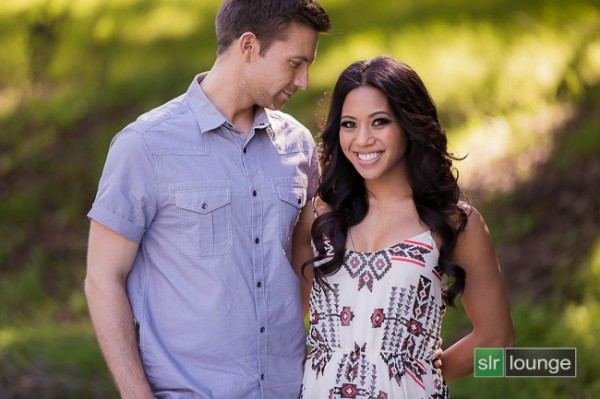
01-lack-of-experience

Now this entire process only takes about 10 minutes. You will not only start capturing better photos and expressions from the start of your shoot, you will also find that about half way through a portrait session, your clients will start doing all the posing on their own! All you have to do is use keywords from the Foundation Posing Framework and say, “V-up and look at each other” and boom, they do it all by themselves!

02-lack-of-experience

Reason 2. Your Clients Don’t Know You Yet

The second reason reason why your clients will feel awkward during the photo shoot is really common sense. It is simply because they are not comfortable with you yet. Hence, they will be more reserved with their emotions, (especially if they have just barely met you for the first time!) making it difficult to capture natural and genuine expressions.

The bottom line is that you will have to connect with your clients in a personal way, as quickly as possible, and have more than just a surface level “photographer-subject” relationship.

On the Natural Light Couples Photography Workshop, we show a lot of the interaction that I have with Ryan and Jackie. Ryan and Jackie are our actual clients, and this is my first time shooting them. So you can literally watch me build up this relationship during the shoot as I joke around and have fun with them.

Since each photographer has their own personality and shooting style, they will connect with their clients differently. I tend to joke around a lot with my clients, self-deprecate, poke fun, tell stories, etc. Anything I can to help them feel like I am their friend, not just their photographer.

Interestingly enough, I find that if I focus on the guy, making sure he is having a good time, the girl is quick to relax as well. This is because in general, we have found that guys generally are not into taking photos. Instead, the guy is going along with it essentially as a “favor” and the girl is constantly worrying about whether he is bored, having fun, acting natural, etc. So, once the guy is having a good time, the girl stops worrying about him and relaxes as well.

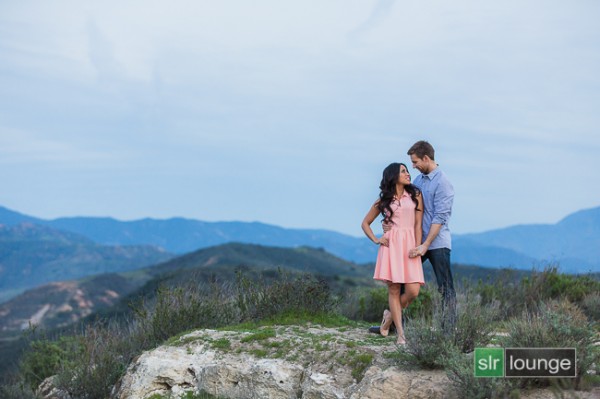
03-they-dont-know-you

04-they-dont-know-you

When Working with Solo Subjects Repeat Everything Above

The same rules still apply when shooting a subject solo, whether it is for portraiture, editorial or fashion. Prior to the photo shoot, we talk about everything except for photography with the client. Instead, get to know your client and just have a good time. This conversation before the shoot helps to break the ice and will make your client feel comfortable during the shoot since your client will look at you as more of a friend, a real person, and less as a photographer.

Once you start the shoot, remember to still coach your subject and show them some shots taken at the very beginning of the shoot. Seeing great photos of themselves right at the start of the shoot will again help them to realize they already look great, so they can relax and have a good time.  

If they point out something that they don’t like in your initial photos, you can keep that in mind throughout the rest of the shoot and maybe show them images again here and there to make sure they are happy with the photos.

Conclusion & Learn More!

If you are interested in learning more, join us on the Natural Light Couples Photography Workshop. This 8 hour workshop on DVD teaches photographers how to create professional portraiture using just a camera, reflector and their creative eye. We cover how to:

1. Plan and prepare a moodboard with clients
2. Pose and instruct clients using the Foundation Posing Framework
3. Modify and perfect the scene’s natural lighting with a simple reflector
4. Work through 5 different scenes and locations utilizing different set props and activities
5. Compose and shoot consistent, creative imagery
6. Post produce a professional final product

Learn more by Clicking Here.

Post originally from: Digital Photography Tips.

Check out our more Photography Tips at Photography Tips for Beginners, Portrait Photography Tips and Wedding Photography Tips.

How to Help Your Clients Feel Comfortable In Front of Your Camera


Digital Photography School

 
Comments Off on How to Help Your Clients Feel Comfortable In Front of Your Camera

Posted in Photography


11 Core Principles To Help You Win An International Fine Art Photography Award

11 Apr

Have you ever won a photography competition? The answer, for most of us, is no. As with the lottery, we always enter with hope, but the reality is that the winners’ circle is a pretty exclusive club. Why do we enter? Because we want to have our work seen by a wider audience. (Cash prizes and opportunities for exhibition are Continue Reading

The post 11 Core Principles To Help You Win An International Fine Art Photography Award appeared first on Photodoto.


Photodoto

 
Comments Off on 11 Core Principles To Help You Win An International Fine Art Photography Award

Posted in Photography


Picfari wants to help you take the best vacation photos possible

28 Mar

picfari.png

If you strive for postcard-perfect images to document your travels, Picfari may pique your interest. Available via a website or as a free iOS app for mobile devices, Picfari offers photo maps of various tourist attractions around the world with easy access to EXIF data to help inform your take on the perfect shot of the landmarks. Users can pick from a curated Picfari photo tour featuring geotagged Flickr photos, or build their own tour using Picfari’s library of images along with their own uploaded photos. Read more about the app at connect.dpreview.com.

News: Digital Photography Review (dpreview.com)

 
Comments Off on Picfari wants to help you take the best vacation photos possible

Posted in Uncategorized


30 Things you Should Know to Help you Start a Photography Business

21 Feb

14“Follow your bliss and the universe will open doors for you where there were only walls.” – Joseph Campbell

1. Find the best photography course or workshops that work for you

If you are going to invest in a photography course/workshop do some serious research first.

It’s a huge investment so find out who the teachers are. Are they industry professionals that are going to be teaching you relevant styles and techniques?

Is the style of teaching suited to your personality and photography?

Who are the ex students that have gone on to create successful careers?

Consider weekend workshops and online courses held by experts in their fields.

2. Find a great mentor

A mentor should be someone who has had a successful career, whose work you admire and is passionate about what they do. They should be available for at least one hour a month.

3. Get as much industry experience as you can

Intern with as many different photography businesses as you can, both large and small. My first interning gig was with a food photographer. I’ve also worked with high-end commercial product photographers, car photographers, and fashion and wedding photographers. I came away with valuable skills that I still use today.

4. Be Flexible when looking for an internships

When you are looking for an internship it’s often easier to offer your services on a casual daily basis or weekends or even nights rather than trying to find someone who will commit to a long-term internship.

5. Sweep the floor and scrub the toilet

I landed a full time assisting job with a fashion and celebrity photographer because he noticed I scrubbed his toilet and cleaned his studio when I had nothing to do

6. Hang around with people who inspire and support you

Some of your friends and family are going to try and talk you out of pursuing your dreams.
They have good intentions but it’s your dream not theirs.

7. It takes 10,000 hours of work to become a master of your craft

If you spend 3 hours a day photographing and editing photos you will become a master at it in 10 years. There are no short cuts or magic formulas, just hard work.

8. Photography is not a job it’s a passion

When you love what you do it never feels like work.

9. Learn to embrace failure

Some of the world’s greatest entrepreneurs had spectacular failures before they found success.

Henry Ford had 5 businesses fail before he founded the successful Ford Motor Company.

Thomas Edison failed 10,000 times trying to invent the light bulb and after the 10,000th time; he succeed

Don’t be afraid to make mistakes

10. Your uniqueness is the most important asset you have

The photography industry does not need another Ansel Adams, Annie Leibowitz, or Alfred Stieglitz. Develop a unique style that sets you apart from everyone else

11. The most common cause of failure is quitting

Most people give too early. Building a business takes years, there will be set backs. Commit to the long haul.

Fact: the average entrepreneurial millionaire has been broke or nearly broke 3.2 times

12. There is no such thing as overnight success

It took me 5 years to actually make a profit. It took me ten years before that profit was enough to afford me a decent lifestyle

13. Having a full time or part time job while you build your business is a great idea

I worked full time in an Italian restaurant for the first 5 years

Having another job while I built my business had the following positive effects

  • It gives you something positive do everyday while you are waiting for your first breaks
  • It removes that “desperate” energy around you. Trying to find new clients in this headspace is really difficult. Nobody wants to hire someone that appears desperate it makes them wonder what is wrong with you.
  • Your part time job may be the source of photography leads or your first big break. It was for me.

14. You will constantly be surprised by where your big breaks come from

I landed my first paid advertising shoot from waitresses I worked with. She introduced me to her husband who ran an advertising agency. One day he asked me to do a shoot for his agency. It was a simple product shot that should have taken an hour. I worked on it for 2 days, made a loss but earned a very happy and lucrative client.

15. Every time you are rejected means you are one step closer to success

Collecting new clients is a numbers game. In my early years I discovered that when I was showing my folio to Art Directors and Editors I was getting 30-50 “no’s” to every “yes”.

It took me many, many years to work out that this rejection is never personal. It often just comes down to potluck if you meet with someone on the same day they happen to have an assignment that suits you.

There are some very famous examples of people who experienced countless rejections before they achieved success

  • Author, J.K Rowling’s manuscript Harry Potter was rejected 12 times before she found a publisher
  • Walt Disney was knocked back 302 times before he got financing for creating Disney World
  • Several record labels rejected The Beatles
  • Colonel Sanders, the founder of KFC had his famous secret recipe knocked back a staggering 1009 times

16. Seek constructive criticism and learn from it

One of my greatest learning periods was during a 3-month stint working in a photo lab printing Black and white prints. Yes, last century when we marveled at the new mobile phone that was the size of a small refrigerator and twice as heavy.

I was shooting models tests all weekend and bringing them into the lab to print and process during the week. Two of my co-workers were 30+ year veterans who would critique my work and give me suggestions on improving technique and style.

Show your photos to as many industry professionals as you can. Ask for constructive criticism and learn from it. This is a great time of growth and learning.

Be grateful for all the praise your family and friends will always give your work but remember they will always love everything you do and may find it difficult to point out any faults.

17. Dress to impress

If you want people to take you seriously then you should take your appearance seriously.

18. Always read the fine print

Never sign a contract before reading the fine print. If you don’t understand it then find someone who does.

19. Work your strengths, hire your weaknesses

Aim towards outsourcing all the things that take you away from earning money for your business like book keeping and web design. Your time would be better-spent blogging or marketing.

20. Social Networking

Blog, tweet, flickr, facebook, instagram, google+, linkedin do it all and do it often.

Share your work, support other artists whose work you love and be generous with your information.

21. Shoot personal projects that inspire you

Unless you are lucky enough to be working for cutting edge magazines or alternative clients who love to push the envelope shooting only paid work will give you a very generic looking folio.

Shooting personal projects give you a chance to test new lighting styles, lenses, locations and it’s a brilliant way to showcase your personality.

22. Have a consistent workflow

Name and number and file every shoot in a consistent way. If you’ve ever spent hours looking for an image or even worse lost files you will understand the importance of this point.

23. Back up twice

Keep one hard drive on location and another off site. Hard drives fail. Protect your files.

24. If you pay peanuts you get monkeys

Use professional assistants. Having a great assistant means you never have to sweat the small stuff. Everything is taken care of. This means you can focus on getting the shot

25. An inexperienced make up artist or stylist can ruin and entire shoot

Work with a variety of different Hair and Make Up artists and Stylists till you find the ones that compliment your shooting style.

26. Always shoot in RAW

A RAW image file contains all the original data that the camera censor captured.

A JPEG is a compressed file that only retains about half the data of a RAW file.

Give image the best possible chance from the start. No excuses. Just shoot RAW.

27. Never store your memory cards in your back pocket and don’t shoot an entire job on one card

Pockets get holes in them and cards fail. I found out the hard way.

28. Be quiet

If you depend on your creativity for your living, then your most valuable piece of equipment is your mind. Taking time out everyday is a great way to do this and

29. Make friends with other photographers

The best advice on equipment and technique has come from spending time with other photographers. Social networking makes it really easy to connect with different photographers from all around the world.

30. Just start. Today

“Whatever you can do, or dream you can, begin it.” -Johann Wolfgang von Goethe

The first thing I did when I decided to become a photographer was to get business cards printed that said Gina Milicia PHOTOGRAPHER. Even if I wasn’t 100% convinced I was ready or good enough the simple act of printing cards made it real to me.

I started out with a basic SLR camera and a cheap zoom I borrowed from my brother. I photographed only in daylight for the first 2 years because I could not afford flash gear and worked hand held because I also could not afford a tripod.

There will never be a time when you are 100% ready. There will always be something missing. Just start. Today.

A few great books that inspired me.

  • Think and Grow Rich: – Napoleon Hill
  • Power Stories: The 8 Stories you MUST tell to build an epic business: Valerie Khoo
  • Outliers: The Story of Success: Malcolm Gladwell
  • The Alchemist: Paolo Coelho

Enjoy this post? Check out more of Gina’s advice in her new eBook – Portraits: Making the Shot (and get a bonus one free for the next 24 hours only).

Portraits_468x190px.jpeg

Post originally from: Digital Photography Tips.

Check out our more Photography Tips at Photography Tips for Beginners, Portrait Photography Tips and Wedding Photography Tips.

30 Things you Should Know to Help you Start a Photography Business


Digital Photography School

 
Comments Off on 30 Things you Should Know to Help you Start a Photography Business

Posted in Photography


Penguin ‘spy’ cams help BBC filmmakers create a fascinating documentary

14 Feb

_65794011_penguincam.jpg

A new BBC documentary uses tiny disguised cameras to take an intimate look at the lives of penguins. Wildlife producer John Downer and his team shot ‘Penguins: Spy in the Huddle’ with fifty ‘spy cameras’ disguised as rocks, eggs and even penguins themselves. The team shot footage of Emperor penguins in Antarctica, Rockhopper penguins on the Falkland Islands and Humboldt penguins in the Atacama Desert of Peru. Click through for photos, video and more information about the cameras.

News: Digital Photography Review (dpreview.com)

 
Comments Off on Penguin ‘spy’ cams help BBC filmmakers create a fascinating documentary

Posted in Uncategorized


What Would Help Improve Your Photography?

07 Feb

I recently asked this simple question on social media: “What do you think would help improve your photography?” Your answers prompted me to try to come up with some tips and possible solutions that could benefit everyone.

Time

The number one answer was finding the time to go out and shoot more. Yes, we all wish that our days were a few hours longer or that we could function on less sleep…  Let’s assume you cannot make any big changes to your schedule but you crave more time with your camera. Consider the following options:

Stuck in an office all day? Skip lunch at the cafeteria, bring a sandwich and your camera and spend your lunch break shooting! You will enjoy three immediate benefits: You will save money, get physical exercise, and exercise your vision! The more you shoot, the better you’re going to get. Shoot every day if possible!

Busy mom? Offer to swap childcare with another mom for a couple of hours here and there. If that is not an option, get creative and include your kids in your photo walks. If they are old enough to hold a camera, give them a cheap point and shoot and let them imitate mom!

Start a photo walk group! Schedule regular photo walks and be there! If it’s an early morning shoot and you’d rather stay in bed, you will have to get up because others are counting on you. As a result you’ll be happy you didn’t waste any more time in bed when you’re out experiencing the early morning sun with friends who share the same passion for photography.

Find ways to trim the fat in your weekly schedule. How much time do you spend on social media or watching TV? Can you cut a few minutes here and there? Those minutes add up to hours that could be spent behind the camera improving your craft.

TIME was the number one answer to my question “What do you think would help improve your photography?”

Perfect light

Light was also a common answer. Yes, we all wish for perfect light every time we are out with a camera but limiting ourselves to shooting in perfect light will not help us grow. Try to take a different approach. There is no such thing as bad light. As long as there is light, there is opportunity to make amazing images. Make a habit of noticing the light around you, whether you have your camera or not. Soon you will start seeing potential in the most ordinary situations and realize that images are waiting to be made everywhere and at any time of the day. Also, keep in mind that the most adverse weather conditions are perfect for making the most beautiful images.

Learning the settings on my camera

Most cameras come with an instruction manual… How many of you actually took the time to go through it? I’m guilty of that myself. I’m more hands-on, I learn best by experimenting. But before you can truly experiment, you need to know what aperture, ISO, shutter speed, white balance, exposure compensation, etc. actually mean. Start by opening the manual and take it one step at a time. Then Google search articles and tutorials to learn about each technical aspect of photography and practice as you learn. There has never been a better or easier time to learn. You can stay on the Digital Photography School site and learn everything you need to know about the technical aspects of photography. The important part is to pace yourself so that you don’t get discouraged or overwhelmed.

Better gear

I was pleased that this was not the most common answer. Start saving but use what you have to its full potential in the meantime. Most photographers have gear lust but rarely outgrow their gear. Limiting yourself will help you grow until you can afford to get the camera and lenses of your dreams. By then you will also be better equipped to use it at its full potential. A new camera will not make you a better photographer. Period. To become a better photographer, you have to learn to see. It’s true that a more advanced – and expensive – camera system can improve your work, but only if you already know how to make great pictures with your current equipment.

Confidence and more learning

Confidence comes with practice. Experiment with genres of photography that you never thought you’d enjoy shooting. Get out of your comfort zone to grow and gain confidence!  Learning is something photographers do until they stop clicking that shutter. Embrace new techniques and technologies and don’t be afraid to fail. We learn best by trial and error, not trial and success!

A trip

Shooting the same subject over and over again?  Seeing the same people, the same streets, the same scenery day in and day out? If an exotic vacation to perk up your pixels is not an option right now, you can still change the way you see your familiar surrounds and get excited about your regular photo walks by giving yourself a photo assignment!

A photo assignment is a self-driven project that can require one hour or several months – it’s your assignment, so it’s up to you!  It’s a way to get out with your camera and hone your skills by challenging yourself. Most importantly, it’s a way to keep your passion for the craft fresh and alive!

Quitting my full time job

Don’t quite your day job yet! Achieving success is hard work and no one becomes successful overnight. Okay, that can happen, but so is winning the lottery…  It takes years to gain experience and to build a good reputation. Start your photography business on the side while keeping your full time job. This will give you the time to decide if that is really what you want to do full time, and you will find out if your work and your skills are good enough to sell. Set a goal for when you want to quit the day job and work toward that. You can always adjust that goal later.

Living with a photographer 24/7

This was not one of the top answers but it made me smile and I wanted to include it. I always say that photographers should date other photographers. We are definitely a breed of our own. My best friends are photographers and I can’t imagine ever getting tired of being in their company. You should schedule time for yourself to hang out with other photographers only. This can be done through photo walks in your town or even via Skype or Google Hangouts to share tips and ideas.

If your significant other is not a ‘photography nut’ like you, that’s okay too, just make sure you surround yourself with friends who are. What you should expect and deserve from non-photographer people in your life is support. You also have to be understanding and sensitive about the fact that they don’t share your passion and know when to leave the camera at home once in a while…

Please share your thoughts. If you ran into the same issues listed above, can you share tips that worked for you?

Post originally from: Digital Photography Tips.

Check out our more Photography Tips at Photography Tips for Beginners, Portrait Photography Tips and Wedding Photography Tips.

What Would Help Improve Your Photography?


Digital Photography School

 
Comments Off on What Would Help Improve Your Photography?

Posted in Photography


Q&A: Will You Help Us Get a Studio for Our Photo Program?

28 Jan

An unnamed student at the Digital Photography program at Ravensbourne (UK) asks, via Twitter:

"Our photography degree course has no studio! (Will you) help us tell the management we need one?

No, anonymous student at Ravensbourne, I will not. Firstly, I think your petition signatures should be from students in the program. But more important, I probably would not equip you with a studio even if I were your dean.

For several reasons… Read more »
Strobist

 
Comments Off on Q&A: Will You Help Us Get a Studio for Our Photo Program?

Posted in Photography


Boy Meets World – Can I Help to Cheer You?

21 Dec

Cory and Topanga continue to pursue their plans for a wedding.
Video Rating: 0 / 5

 
Comments Off on Boy Meets World – Can I Help to Cheer You?

Posted in Photography Videos