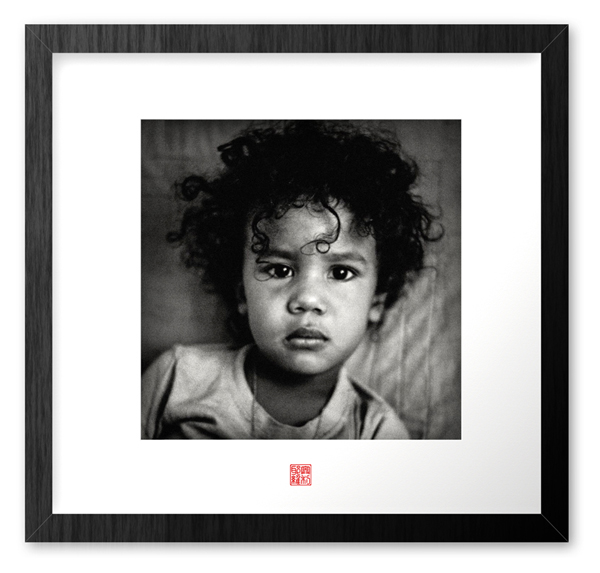
RSS
 

Posts Tagged ‘Help’

10 Tips to Help You Grow as an Artist in Photography

27 Oct

UmbrellasinTokyo

Over the past few days, I’ve thought about what’s helped me become a better photographer over the years. It’s a constant journey, and developing as an artist is a never ending pursuit that extends beyond owning any camera. In addition to practicing as much as possible with your camera, here are 10 tips to share that you may wish to consider while you continue on your own path in photography to help you grow as an artist.

1. Wait to look at your photos

I discovered this piece of advice over time, though a number of other photographers have suggested the same thing. Wait to look at your photographs if that’s possible. I know after a shoot you may feel anxious to go through and edit your pictures, but your anxiety and perception will often skew how you see your photos because this is at the height of your emotional attachment to your images. I’ve found that waiting a few days or better yet a couple of months to really go through a batch of photographs will be enough time to break down some of that attachment and reduce any biases you may carry.

2. Only delete the obviously bad shots

Some photographers even argue not to delete any of your shots because in the future, software developments may actually exist to fix super blurry or unfocused images. It’s your call, but if you see an image that you just don’t like, consider waiting a bit before you delete it. I’ve come across images that I marked with an X in my Lightroom, but interestingly, I’ve found that sometimes my perception of what I think is “good” changes. Photography is a learning experience as you expose yourself to other work and different styles. Down the road, you may rediscover some of your images in light of new ways you learn how to see. Besides, it’s always good to keep some of the bad shots around to really get an idea of the progress you make through the years.

3. Shoot some film

Shooting film can be more expensive, but it’s a great tool in becoming a better artist and photographer. With only a fixed number of exposures, you’re more selective of the images you shoot and the cost of developing film will keep you from shooting hit or miss style which forces you to think more. When shooting film, you’re in a different state of mind because of its limitations which challenge you to become more selective and refined before you press the shutter button.
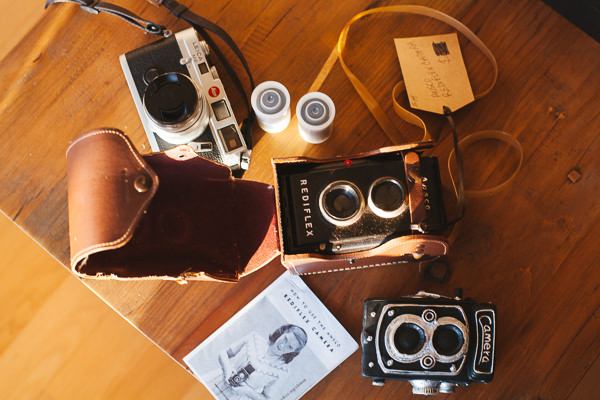
Shootfilm

4. Study other artists’ work

You have no idea how good your stuff is until you have something to compare it to. You can shoot a ton and feel pride in your images, and as you grow, you should feel good about this progress. Studying from great artists and photographers you admire is really the best way keep you humble; but it also prevents you from falling into creative stagnation. I find this to be one of my biggest sources of inspiration, and it’s a great motivator for when you start to feel a little bored with your images.

5. Take a drawing or painting class

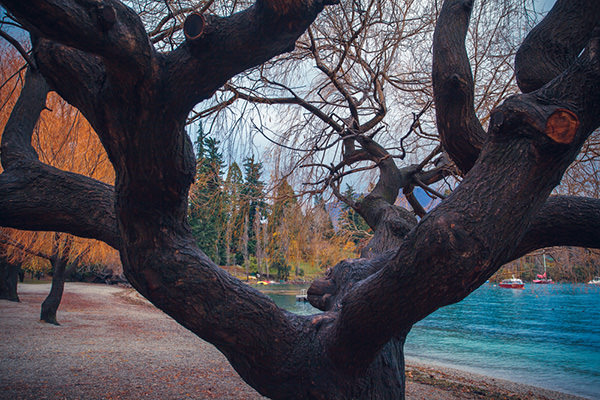
Years ago, before I ever even picked up a camera, I wanted to learn how to paint. I loved mixing colors and the thought of learning how to compose a scene and conveying my own impressions upon a subject interested me. So I enrolled in a class at a local art college which served as the foundational cornerstone as my development in photography. My teacher sat with us intimately every class and taught us about reading light and composition. She told us flat out at the beginning of the class that we would never see the same way again, and she was right! She taught us about negative space, composition, and all the basic concepts that artists are supposed to know, things which photographers should know too. My teacher was right and I did learn to see for the first time. If you have the time or haven’t been through art school already, consider signing up for a drawing or a painting class. It will take you a long way toward your artistic growth.
Tree

6. Don’t listen to your friends and family

I come across this advice often and it’s useful. Your friends and family are your biggest supporters, but because of this, they make it hard to get an objective, unbiased, perspective on your work. They all love your photos and they’ll even like or love all your pics on every social media site. But I’ve found that so much praise can become counterproductive or even misleading when you put too much stock into their opinions. Instead, you can join critique forums online or contact artists you admire to get them to review your work, as in my next point.

7. Ask for a portfolio review from a professional artist that you admire

This can often have an associated fee, but it’s a great way to get some professional feedback on your images. You can even seek help in sequencing the photographs in your portfolio as well. Better yet, join a workshop with a photographer you really admire and they’ll surely give you some substantial feedback.

8. Capture the essence of a place

Capturing the essence of a place in a photograph is its soul and without this connection, it’s hard to connect the story behind your images. It’s easy to get sidetracked or overwhelmed with seizing photo opportunities on a trip or when you’re traveling somewhere. But before you get too carried away with shooting, let your senses rest a little and try to feel the essence of the place and connect with it. Sometimes it takes a couple days or so to slow down and catch on to its vibe. When I went visited Sydney for the first time, I shot this photo of the ice cream truck on the beautiful day because I felt it perfectly captured both the beauty and the pace of life in the city.

Sydney

9. Fall in love with photography

Becoming a photographer can feel downright intimidating in a world full of talent. If you’re running a full-time business then it’s easy to lose sight of why you fell in love with photography in the first place. Don’t forget to continue to immerse yourself in other people’s work, indulge in the history of photography, and enjoy the art of photography for its own existential reasons.

10. Focus more on books and less on gear

It’s impossible not to appreciate the craftsmanship of a nice camera or a beautiful lens, but fixating upon having the latest and best gear won’t make your photos any better if you have a limited artistic vocabulary. Instead, invest in some inspirational photography books from a variety of different artists; look at the sequencing and learn from their styles. I feel this is even more important if you are self-taught. Learning what a good photograph looks like can’t be accomplished by just shooting alone. There’s a rich number of artistic styles you can potentially gain inspiration from. Even more important, brushing up on color theory, composition and lighting techniques will take your photographs to a whole new level. You don’t need to follow these rules all the time, but it’s important to know they exist so you can manipulate your camera and subject matter with more purpose in mind. I like the image below because it uses a simple compositional technique of aligning the foreground with the background. But without first reaching out and learning these kinds of ideas, you most likely won’t even know they exist.

Yokohamabridge

In the end, Mark Twain gives some excellent advice, “You cannot depend on your eyes if your imagination is out of focus.” I’d love to hear about your tips as well for honing your own artistic side as a photographer.

The post 10 Tips to Help You Grow as an Artist in Photography by Stephanie Huynh appeared first on Digital Photography School.

Digital Photography School

 
Comments Off on 10 Tips to Help You Grow as an Artist in Photography

Posted in Photography


Britain’s American Air Museum seeks help identifying US personnel who served in UK

02 Oct

The American Air Museum, which is part of Britain’s Imperial War Museum, has launched a new wiki-style website designed to allow members of the public to help identify the service men and women depicted in the site’s online galleries. Based on 15,000 prints from The Roger Freeman Collection documenting the lives of the US Army Air Forces personnel who served in England during the Second World War, the site records the thoughts and memories of the local population who worked and lived alongside them. Learn more

Articles: Digital Photography Review (dpreview.com)

 
Comments Off on Britain’s American Air Museum seeks help identifying US personnel who served in UK

Posted in Uncategorized


Mobile Triggers Compared to Help You Choose the Right One

25 Sep

When it comes to mobile triggers or cable releases photographers often have multiple responses:

  • I got the knock-off brand and it doesn’t work when I need it
  • I got the basic button kind and have to count the time on my own
  • The intervalometer is way too expensive
  • I could save money and build a DIY release but that’s too much effort
Triggertrap

Image from Triggertrap site

Image from the Triggertrap website.

I hear comments like that on almost a daily basis. In my previous article on long exposure photography accessories I mentioned Triggertrap and Trigger Happy. In this article I’m going to discuss both of those (with a bonus tip at the end) and also discuss some other options that are available to you.

This article is not a review of the products but rather just an overview of what each offers. It is worth noting that I do own each of the products and will share my personal recommendation at the end of the article. So if you don’t care so much about the comparison then please skip down to the bonus tip and my recommendation.

However, if you’re considering a mobile trigger for your camera, but haven’t purchased one yet, then please continue reading.

Triggertrap

Triggertrap started as a Kickstarter project, and really set the bar high for its standards and features. The Triggertrap software is open source and can be found on Github. The quality of the physical cables is top notch, very durable, and they’re also attractive.

The mobile kits are available for Nikon, Canon, Fuji, Sony, Olympus, Samsung, Panasonic, Pentax, Sigma, Leica, Lytro, Hasselblad, Contax, Konica Minolta and Kodak.

A mobile kit is available for nearly every camera you could possibly want. It connects to the headphone jack of your phone and then the cable release part of your camera. The mobile kits start at $ 37.46 USD.

Triggertrap 1

The mobile app (iOS and Android) has a variety of trigger options that can go way beyond just pushing the button. Here is a list of all the trigger options:

  • Sound sensor
  • Vibration sensor
  • Motion sensor
  • Facial recognition
  • Time-lapse
  • TimeWarp
  • DistanceLapse
  • Bramping
  • Star Trail
  • Long Exposure HDR
  • Long Exposure HDR time-lapse
  • Press and Hold
  • Timed Exposures
  • Simple Cable Release
  • Wifi Trigger
  • Triggertrap also includes a neutral density filter calculator, which is convenient. Although I prefer Slower Shutter, it is convenient having a calculator in the same place as the trigger. The app also includes local sunrise and sunset times which is very convenient.

It is worth noting two more things about Triggertrap. First, all the features of the apps are not available on both iOS and Android. Second, that is likely to change quick because Triggertrap is always working on improvements and new features.

The apps are free so while you are paying for the mobile kits, you are not paying for the software side.

Trigger Happy

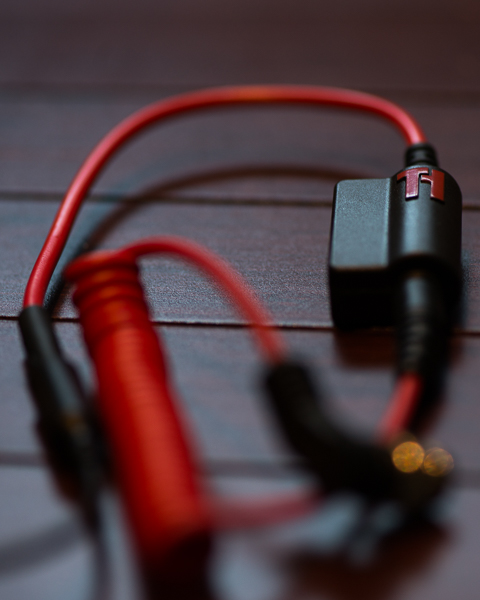
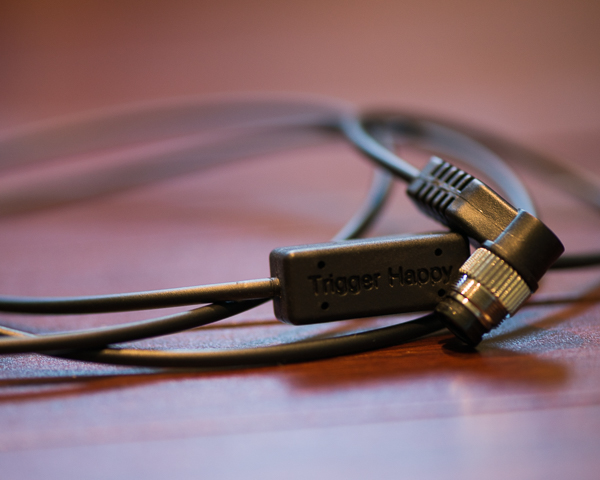
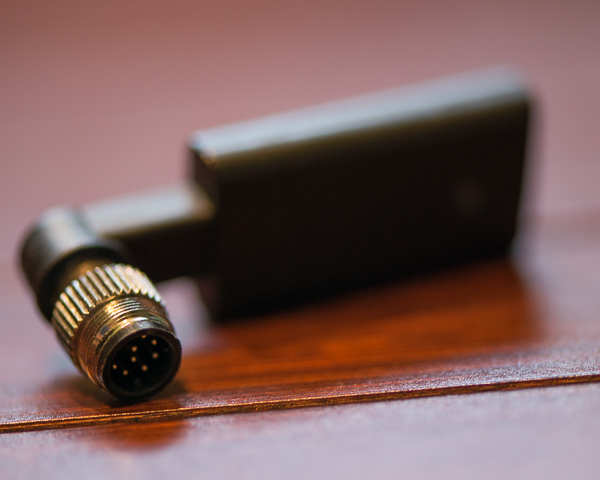
Trigger Happy also began as a Kickstarter project and was successfully funded. It works the same way at Triggertrap, using the headphone jack of your mobile device.

NOTE: Since writing this article, TriggerHappy has closed for business, but some of the products are still available. They decided to open their software up to the world and made it Open Source available on GitHub.  They are also recommending people to check out Triggertrap.

Triggerhappy

The kits are available for Canon, Nikon, Pentax, Olympus, Sony only and retail at $ 29-49 USD. The apps are limited to the most basic features including the following trigger options:

  • Simple camera trigger
  • Bulb
  • Time-lapse mode / Intervalometer
  • HDR mode
  • Bramping

This system was the first I owned, via the Kickstarter project; it’s changed since then but even the original still works very well. The apps are also free, so while you are paying for the kit you are not paying for the software side.

SmartShutter

SmartShutter is from a company called Zesty Accessories in Japan, and is different than the other mobile releases as it uses Bluetooth to trigger instead of a wired release. Cool, right? The product sells for between $ 39.99 and $ 64.99 direct or through Amazon.

It works very well, but the app is extremely limited. I do have some issues with the design of the Nikon version, but instead of re-stating it here you can see to my full review and video of the product here.

Zesty

I mentioned that the product uses Bluetooth, but you should know that it relies on your camera’s battery for power. That means if you’re using a camera like the Sony A7, which has poor battery life, then this device will drain your camera battery faster. But if you have a camera like the Nikon D810 your battery life will continue performing well.

The devices are available for Nikon, Canon, Sony, Olympus, Pentax, Konica Minolta, Contax, Fuji, Sigma, Hasselblad and Samsung.

The free app allows for a quick trigger of the camera or a timed exposure. But the timed exposure allows for intervals, a delayed start, and even the number of photos to capture. In addition, the app has the ability to geotag your photographs using your phone’s GPS as well. The app is only available for iOS and is also free.

ioShutterPro

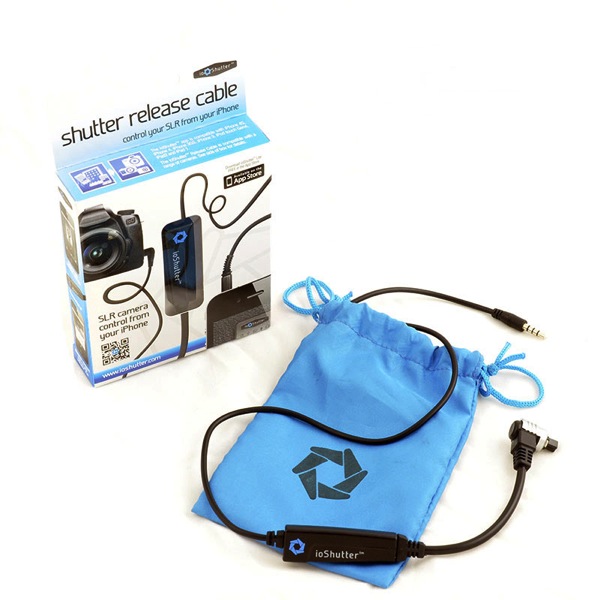
ioShutter is made by enlighten photo, the people who created Orbis and other amazing products for photographers. ioShutter is also the priciest of each of the triggers coming in at $ 69.99 for the cable kit. They do have a limited number available right now at 50% off due to what seems to be damaged packaging.

It comes in a nice package and includes a pouch to hold the cable when not in use. The design is actually very similar to the Triggertrap where there is a module with a cable that connects the module to the camera. That way if one part breaks only half of the cable needs to be replaced.

IoShutter

Photo from enlighten photo website

ioShutter is available for Canon, Nikon, Fuji, Pentax, Samsung and Hasselblad. But the mobile app(s) are only available for iOS at the time I’m writing this. Yes, I used plural because the ioShutter app comes in two versions: Lite which is free and Pro, which is an additional $ 5.99.

ioShutter Lite gives you the standard shutter release function you’d expect to find in a cable release. However the Pro version comes with other trigger options:

  • Timed exposure
  • Time-lapse
  • ClapToSnap
  • ShakeToTake

You can also stack features like creating a time-lapse with timed exposures.

Bonus Time

There are two quick things I want to mention before moving on to my recommended product.

The first is for Lifeproof case users. Your case comes with a headphone adapter. I leave mine connected to my earbuds all the time. So I picked up a second adapter, which connects, to my mobile kits.

The second tip is if you already own one of the cables mentioned above, but you want to try another app. I started with Trigger Happy but do not use their app anymore because I now use my favorite of them all, Triggertrap. Before I got my hands on a Triggertrap mobile kit I was using my Trigger Happy cable with the Triggertrap app. So it’s worth knowing that your cable kits should work fine with other apps. I also tested the Trigger Happy cable with ioShutter so I know it works there as well.

Suggested Product

My favorite mobile trigger is Triggertrap for two reasons. For one the app is amazing and contains so many useful features that shouldn’t and can’t be ignored. The team at Triggertrap is also looking for more ways to innovate in the industry, and they’re working on amazing things. For the price of the mobile kits, and the quality of the product itself, on top of the incredible mobile apps, the product is truly a winner.

So there you go – a simple comparison of your options, some tips and my recommendation. Feel free to comment with questions and comments as I’m sure you have your own preferences.

The post Mobile Triggers Compared to Help You Choose the Right One by Scott Wyden Kivowitz appeared first on Digital Photography School.

Digital Photography School

 
Comments Off on Mobile Triggers Compared to Help You Choose the Right One

Posted in Photography


3 Tips to Help Keep Your Photography Passion Alive

19 Sep

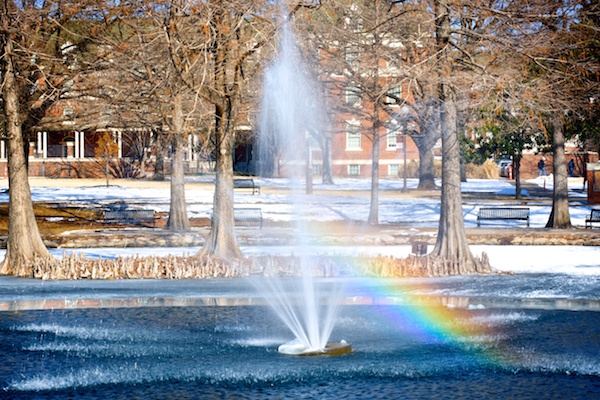
Fountain rainbow

Photography is like any other pursuit in life, in that it requires a great deal of time and practice. Unless you make a living as a professional photographer, you might find that you simply don’t have enough hours in the day to devote to taking pictures. With work, family, school, and plenty of other obligations in our lives, it’s easy to let photography take a back seat to everything else. So, unfortunately we often find our expensive cameras gathering dust on the shelf, and our vibrant photo libraries growing ever more stagnant as the months and years pass. How in the world is it possible for hobbyist or enthusiast photographers, much less beginners who are just entering this brave new world for the first time, to find chances to learn, stretch, and grow, or just do what they enjoy doing? Thankfully there is hope, and I’d like to share a few tips that have worked for me.

1. Hold yourself accountable

When most people get their first camera, or upgrade to a better one, they go through a similar process. Initially it seems like anything and everything is worthy of a photograph – kids, pets, food, cars, flowers, clouds, friends, skylines – nothing is off limits. There’s a newness and excitement to the whole endeavour that seems almost childlike. People in this early phase never seem to have an issue with finding time to indulge their new infatuation, and often they find it hard to stop taking pictures! But soon the veneer wears off, the pressures of life start to add up, and cameras often end up spending more time on shelves and dresser drawers.

Leaves rain

There is beauty all around, but sometimes you have to stop and look for it.

If this sounds like you, one of the best things you can do is find a way to hold yourself accountable for keeping your photography passion alive. Some people decide to take a picture every day or each week. Others join an online photo community and start posting on a regular basis. Most cities have photography clubs where members gather to discuss techniques, photo opportunities, and gear. dPS, and plenty of other sites, have weekly assignments or challenges that are a great way to try something new, while also keeping your photography hobby alive.

When I was in this rut a while ago I started my own blog, Weekly Fifty, where I post one photo each week taken with a 50mm lens. Doing this has forced me not only stay active with my hobby, but to seek out new opportunities that I otherwise might have missed. Having some type of assignment or challenge that forces you to use your camera will often help rekindle the flame that was once burning so bright, and help you fall in love with photography all over again, even if you do have other things going on in your life.

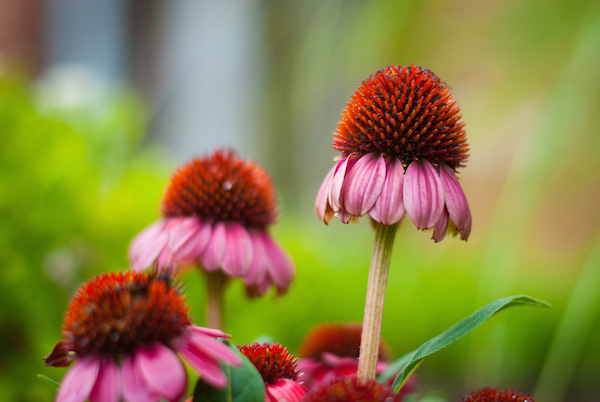
Coneflower

I had to find a photograph for my blog, so I walked around a flower garden for a few minutes and got this shot of a coneflower. Without something to hold me accountable, I probably would never have gotten this shot.

If you do go this route it’s important to find a method that is fun and enjoyable, rather than a burden. Photography should not be a chore, and I have known some individuals who have grown to resent their accountability methods because they took on more than they could handle. If you already find yourself stretched too thin, signing up for a daily challenge will probably not help. But a weekly challenge, monthly assignment, or local club meeting might be just what you need to fit photography into your already busy life.

2. Bring your camera and keep your eyes open

Whether you decide to participate in a photo assignment or not, one thing you can do to fit photography into your packed schedule is simply bring your camera with you. Most of us have similar daily routines involving home, work, school, or other obligations and you might think that the photogenic moments in your daily life are few and far between. But if you keep your camera close at hand, and keep your eyes peeled, you might learn to turn the mundane into the magnificent. That might sound like hollow grandiosity, but it’s true: if you start looking for the beauty in your everyday life, you will likely find a whole new world of picture-taking possibilities that you never noticed before. It’s a great way to keep your love for photography alive without adding another burden to your already crowded lifestyle.

Case in point: the other day I walked up to the office building at work and saw a patch of mushrooms by the door. At first I thought it was nothing special at all:

Mushrooms iphone

Shot with my iPhone

But because I almost always have my DSLR with me I was able to take this picture of what might otherwise have been an entirely forgettable scene.

Mushrooms d200

Circumstances like this are all around you, and finding them is not a matter of time but of observation. If you find your expensive camera spending more time gathering dust than taking photos, it wouldn’t hurt to simply start bringing it with you more often and keeping your eyes opened.

3. Get out of your comfort zone and try something new

It’s human nature to grow complacent and comfortable. We are creatures of habit, and change can be difficult, especially when it threatens to upset a careful balance we have achieved in our lives. But stepping away from your comfortable surroundings and trying something new is a fantastic way to inspire you to find photographic opportunities in your life. Whether it’s a new lens, a new filter, a new technique, a new piece of software, or even a new camera, trying something new is a great way to spice up your photography and help you get your camera off the shelf and into your hands again.

Here at dPS there are hundreds of articles with a myriad of tips, tricks, and techniques to try – and that’s just the start. There is no shortage of articles on the internet filled with new ideas, and doing so won’t add any more hours to your day. But it might help you find ways to squeeze more time in for photography than you might otherwise think. For example, when I found myself stuck in a rut several months ago I read some articles on a technique known as panning. Then my friend, (and photography mentor) Ryan, rode around on a bike while I practiced with my camera, and we ended up with this shot. While it’s not perfect, it gave me an idea of a whole new aspect of photography to explore.

Biking

One of the main selling points of DSLRs and mirrorless models is that they have interchangeable lenses. While the kit lens that comes standard with most cameras is fine for many situations, shooting with a different lens can radically alter your perception of what the camera can do. In the process, you will likely experience the same spark of inspiration and creativity that you had when you first got your camera.

Think of your camera body as a mobile device, and the lenses like applications. Every app on your phone or tablet has a different purpose and allows your device to do different things; in the same way every lens gives you different photographic possibilities for your camera. Using a camera with only one lens, especially the kit lens, would be like buying an expensive new smartphone or tablet but never downloading a single app. You might enjoy it, but you would be severely limiting the capabilities of what your device can actually do. If you want to inject a renewed sense of vitality into your photography, buying, renting, or just borrowing a new lens can do exactly that.

General index

This simple shot of some books in a dimly-lit library would not have been possible with a kit lens, but switching to a 50mm prime lens with wider f/1.8 aperture opened up a whole new set of possibilities like this.

You are busy with plenty of demands on your time; it might seem impossible to fit photography in with everything else going on. But hopefully these tips give you a starting point, and if you have any others that have worked for you feel free to leave them in the comment section below.

The post 3 Tips to Help Keep Your Photography Passion Alive by Simon Ringsmuth appeared first on Digital Photography School.

Digital Photography School

 
Comments Off on 3 Tips to Help Keep Your Photography Passion Alive

Posted in Photography


7 Tips to Help Improve Your Seascape Photos by Controlling the Waves

18 Sep

When photographing outdoors, you generally take the world as you find it, and you have very little control over the elements. You cannot control the weather. The terrain is a given. You certainly cannot control the skies or the clouds.

But when photographing seascapes there is one thing you can control, and that is the waves. At least, you can control the appearance of the waves. This is a fundamental difference between landscapes and seascapes.

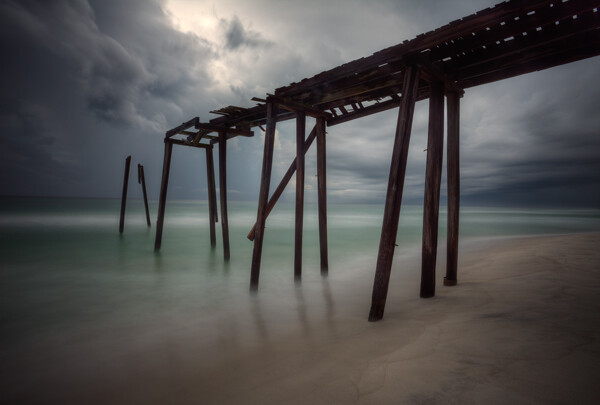
Picture1 Pier

In landscapes you have generally static ground and foreground elements, while in seascapes you are dealing with a fluid substance that is in constant motion. If you just treat a seascape as a landscape, you will get an ordinary photo, but with some attention to the waves you can get extraordinary pictures.

You can actually control the appearance of the waves in order to add just the right mood and interesting effects to your photos. It is actually very simple to do; it’s all about controlling your shutter speed. In general, the slower the shutter speed, the more calm and serene the water will appear, while a very fast shutter speed implies power and action.

In this article, I will walk you through some shutter speed ranges that you might try in your own seascape photography next time you are at the coast. So here are some tips to help you take better seascape photos:

#1 Minimal Gear Needed

To photograph moving water successfully at various speeds, you will not need much in the way of extra gear. Other than a camera, a tripod, and perhaps a remote shutter release, the only necessity is a neutral density filter.

It is best to have a few different strengths of neutral density filters. A 10-stop filter is a must, and from there I recommend adding a 3-stop and a 6-stop filter. In a pinch, remember that polarizing filters typically reduce the amount of light reaching the camera by two stops, so you can use a polarizer as well.

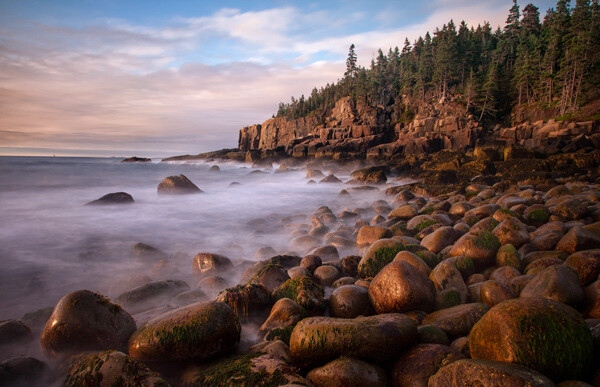
Picture2 AcadiaRocks

#2 Controlling Shutter Speed

Coastal pictures are all about controlling the shutter speed, and you will usually find yourself trying to slow down the shutter speed. If you are shooting in one of the automatic modes, this is a good opportunity for you to step up Manual (M) mode. Just set the shutter speed where you want it, then if you can get the proper exposure by changing the aperture settings, great. But if not, use your neutral density filter to cut down on amount of light entering the camera.

This is also a rare instance where you might consider Shutter Priority (Tv or S) mode. Once you set the shutter speed, the camera will set the aperture for you. Of course, you could also use Aperture Priority (Av) mode and set the aperture with an eye toward where the camera is setting the shutter speed.

When you get to the coast, take a few test shots, Keep an eye on the histogram to make sure your exposure settings work for the mood you are trying to create.

Picture3 SchoodicSunset

#3 Creating Flat Seas with Extremely Long Shutter Speeds (at least 10 seconds)

Most of my favorite seascapes were taken at shutter speeds of 10 seconds or more (sometimes a lot more). Under calm conditions this adds a sense of serenity to the seascape. Under other conditions the slow shutter speed can add some drama to the scene.

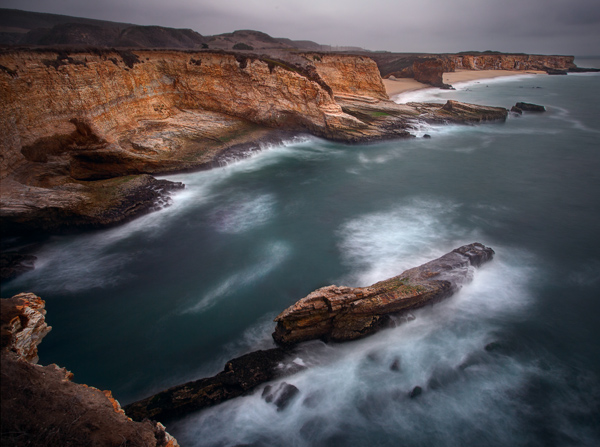
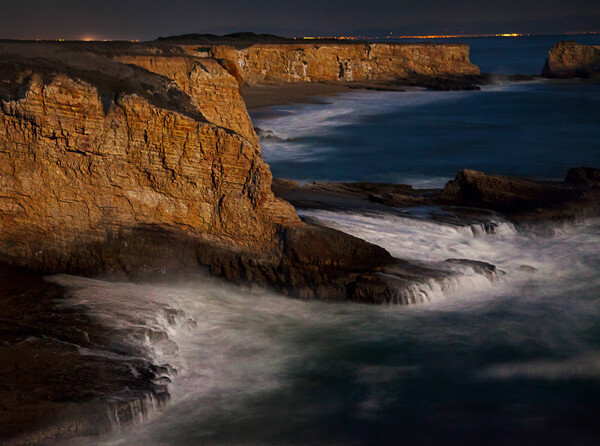
Picture4 DavenportCliffs

To accomplish this effect, you are probably going to need to use the 10-stop neutral density filter. If you are set up for a proper exposure before you put the filter on the lens, you will need to add 10 full stops of light to get the proper exposure once the lens is on the camera. If your camera is set up to adjust in 1/3-stop increments, that will mean 30 clicks (of your dial) of additional light.

This filter is so powerful that it leads to some challenges. You are going to need to focus and set your exposure before you put the filter on the camera. Once you put the filter on, you will not be able to see anything or focus. A great process for these long exposures is this article: Step-by-step Guide to Long Exposure Photography

In addition, keep in mind that the exposure will be quite long and the camera will need to be very stable. If you are on sand or other unstable surface, be sure to jam the legs deep into the sand to make it as stable as possible. If you are near the water, let a wave or two touch the tripod’s feet before shooting because the first wave will shift the tripod a little bit.

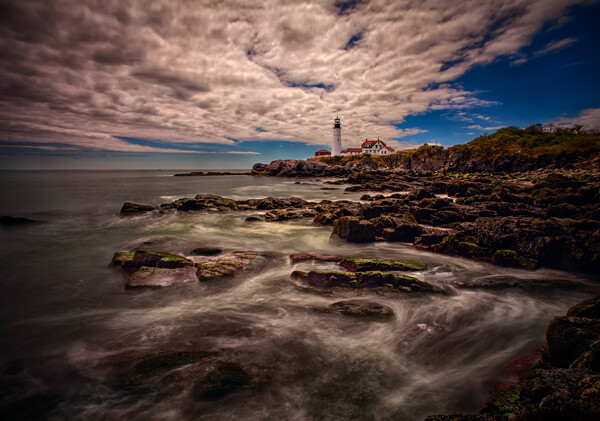
Picture5 PortlandHeadLight

#4 Ocean Trails: Long shutter speeds (2-8 seconds)

Another great way to capture the sea is with a long shutter speed of at least a few seconds, but not so long as to blur everything out. The advantage of the speed is that it gives the viewer an idea of the rhythm, or currents, of the ocean. This range of shutter speed will often show trails in the ocean and give a general sense of the location of the waves.

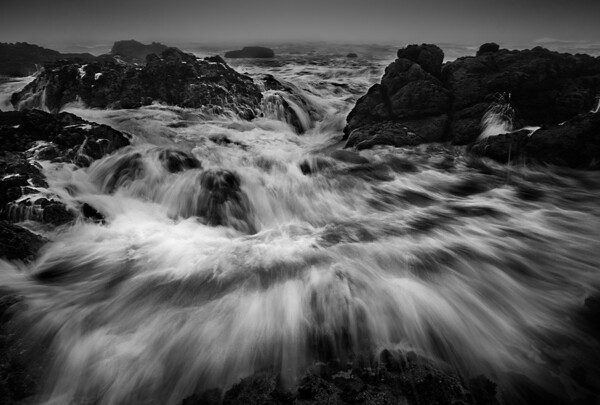
Picture6 DavenportSurf

To capture this look, the shutter speed will ordinarily be between two seconds and eight seconds. That also means a neutral density filter, but often not the 10-stop filter. If you have a 3-stop or 6-stop density filter, those usually work best in this situation, depending on the amount of light available.

Picture7 WaveApproaches

#5 Motion and Power: Moderate shutter speeds (1/8 – 1/2 second)

Sometimes you want the viewer to see the actual wave. It still helps to have a little motion to the wave though. This will convey both a sense of motion and give a sense of the power.

To accomplish this, you will typically need to slow the shutter speed down just a little bit. You will find the best shutter speeds for this range are between 1/8th and 1/2 of a second. At these speeds, you can still clearly see the waves, but the slower shutter speed takes the jagged edges off of them.

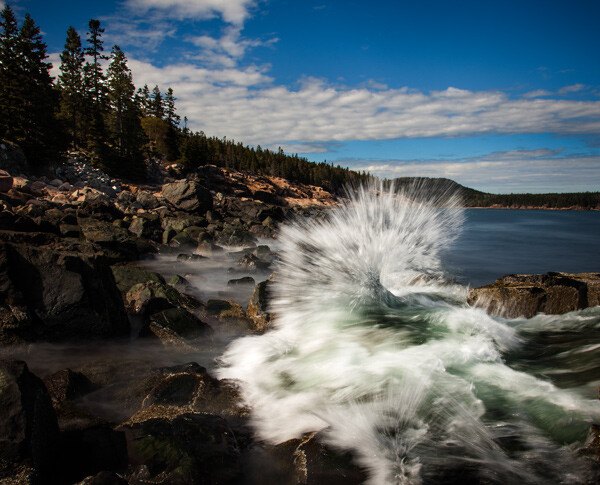
Picture8 AcadiaWave

While you will still need a tripod at these shutter speeds (they are too slow to hand-hold your camera and get sharp images), you can often get away without using a neutral density filter by stopping down the aperture.

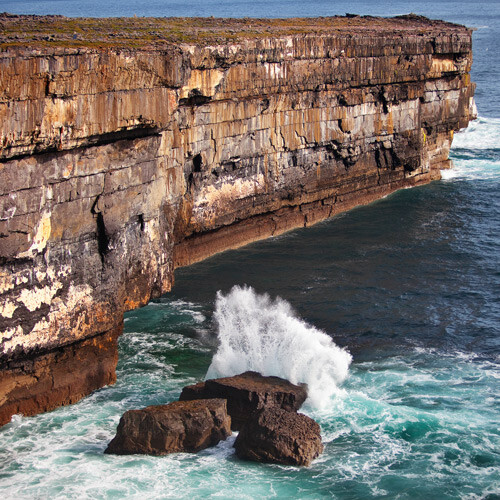
Picture9 DunDochathair

#6 Pure Power: Fast shutter speeds (1/500 and up)

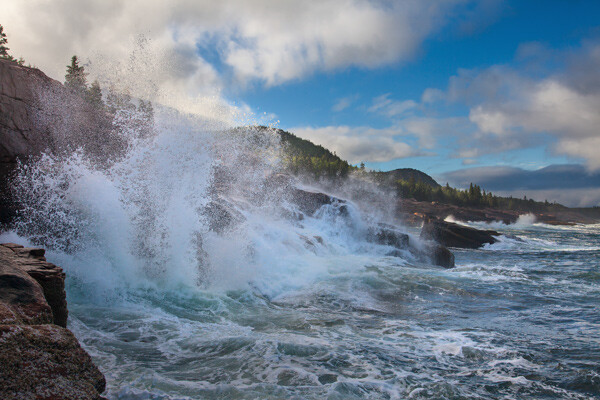
Finally, there are days when the ocean is very active where you will want to stop the motion and really capture the power of the sea. A great way to do that is with a fast shutter speed. Speeds of 1/500 of a second and faster work best.

Picture10 CrashingWave

The good news here is that you will not need to use a neutral density filter. You can also ditch the tripod and just hand-hold your camera. These shots offer maximum flexibility and mobility.

A fun thing to do is try to time the wave at it crashes into a rock or the surf. This means a lot of trial and error, but when you hit one, the results can be spectacular.

#7 Before You Go

Remember that the sea coast is a harsh and unforgiving environment. Salt water and electronics do not mix very well, and just the spray of the ocean can lead to serious camera problems (which, unfortunately, I have experienced firsthand). In addition, the terrain can be slippery and treacherous. If you are not careful, you can also find yourself stranded on some rocks in a rising tide (learned this one the hard way too, I’m afraid).

But if you are careful about what you are doing, there is no better place to be than on the coast at dawn or sunset. So get out there and give it a try, and if you have questions or need additional information just use the comments below.

The post 7 Tips to Help Improve Your Seascape Photos by Controlling the Waves by Jim Hamel appeared first on Digital Photography School.

Digital Photography School

 
Comments Off on 7 Tips to Help Improve Your Seascape Photos by Controlling the Waves

Posted in Photography


8 Quick Composition Tips to Help Improve Your Images

10 Sep
Using different composition techniques can result in more dynamic images

Using different composition techniques can result in more dynamic images

You have likely heard of the Rule of Thirds, in fact it seems as if this is the only rule of composition. To be fair though, the Rule of Thirds is a good go to tool when you are unsure of how to put a scene together compositionally. There are many other techniques that can be used to improve your composition. Techniques like balance, leading lines, symmetry, depth of field, and so on, can all make a big difference to your image.

In many ways a photograph is very similar to a painting. Photographers learned early on that composition is a key component to engage people in an image. Composition literally means to put together, so when you think about composing an image, you need to think about the visual elements that you will put together in your image.

As a photographer, you need to decide when to use certain techniques, and when not to use them. Most compositional techniques are simply guidelines, or frameworks, there are very few hard and fast rules.  What they do offer is a starting point for putting an image together. Perhaps you may look at a scene and not know how to capture it. That is a good time to put some of the techniques into action and work the scene from there. They have been tried and tested by visual artists (painters, photographers and moviemakers) around the world for decades. The only constraint is don’t be dogmatic about applying them. Once you understand how to use the rules, you will then know how to break, and break out of them. By doing this, you will take your photographic creativity to a new level and your images will become that much better.

As always, with anything photographic, you need to experiment and practice. Know your equipment, experiment by shooting different scenes under different lighting conditions. Find what works for you and hone that skill. The art of composition is not a particularly technical art, but it can make an amazing difference to your images.

Good composition can make any subject interesting

Good composition can make any subject interesting

The great thing about composition is that you don’t need specialist equipment. The most important pieces of equipment are your camera and your tripod. I know, I know, we all sigh when we hear about the tripod. Once you see how much easier your photographic life becomes with a tripod, you will not be so reluctant to carry it around. There are also  better options for tripods nowadays (think Gorillapod and other travel-style ones). Remember though, a tripod is a key piece of equipment for successful composition. A tripod will help you to compose your image and keep that composition. Whenever possible, use a tripod to set up your shots, that way you can be sure that there is no movement when you photograph.

A lot of the time, you will be shooting images handheld. That is perfectly fine, and you can apply the compositional techniques to handheld shots. Sometimes you may need to take more than one image and adjust your composition to correct or change it.

Here are eight additional composition tips to help improve your images.

The yellow funicular and the blue house add an element of balance to this scene

The yellow funicular and the blue house add an element of balance to this scene

1. Balance

Often when you place an image on one of the thirds, the rest of the frame may be left without much in the way of anything of interest. This is often referred to as negative space, not because it is bad, it is simply to point out that it is not the centre of interest. In some images, negative space can work well, but in other images there may need to be another object in the frame, or even a colour to balance the centre of interest. Photographers use this compositional tool to do exactly that, balance the centre of interest with another object.

2. Leading Lines

We look at an image in the same way that we read a page of words. In the western world that means we look at an image from left to right. Our eyes are naturally drawn into the image by lines. If you have a road or a river winding through your image, the viewers eye will automatically run along those lines. If your centre of interest is at the end of that river or road, that is a good way to compose the image. Sometimes it is enough to have the river or road meandering through the image as it makes the image interesting to look at.

The lines pull us into, and through the scene. The lines can be straight, diagonal, curving, zigzag, S – Shape and many other types. The important thing is to create as dynamic an entry point to an image if possible.

The numerous lines in this scene direct your eyes down the street

The numerous lines in this scene direct your eyes down the street

3. Symmetry and Patterns

We live in a world that is defined by symmetry and patterns. They are all around us in so many ways. There are natural patterns that are captivating to photograph and there are man-made objects that accentuate balance. It is very gratifying to photograph a perfectly uniform scene. The symmetry brings order to the scene and gives a sense of peace and harmony to your image. Sometimes it is good to break the symmetry, show it in a different way, and by doing so create a sense of tension.

A symmetrical doorway

A symmetrical doorway

4. Viewpoint

Kneel down or lie down to get the eye level of your subject

Kneel or lie down to get to the eye level of your subject

Changing your viewpoint when shooting a subject makes a huge difference to the visual impact. It is natural to shoot everything from your eye level. By doing that you tend to create images that have been seen before. By changing your viewpoint, you immediately give a different perspective on very familiar subjects. If you are taking photos of small children or pets and animals, try and get down to their eye level. This is a view that most adults won’t see very often and will make a big difference in the impact of your image. To change your viewpoint, try a few of these tips:

  • Stand on a chair or ladder to get up higher than your subject
  • Kneel or lie down to get underneath a subject, i.e. for shooting a field of flowers
  • Photograph the subject directly from the top
  • Shoot from a diagonal angle to emphasize shape or texture

The important thing here is to make sure that you change YOUR viewpoint and by doing that, you will breathe new life into a well known subject.

5. Background

A distracting background can completely ruin an image. The human eye will naturally settle on the area of an image that is: the brightest, most colorful, sharpest and has the most contrast. Be aware of what is behind your centre of interest. If there is a pole, a distracting pattern, an awkward colour or some other object, you may need to reconsider your shooting angle. This is not always possible, but sometimes, taking two or three steps to the left or right can make all the difference. Look around for an unobtrusive background, or change your aperture settings to achieve a shallow depth of field and by doing so, soften the background.

Move around your subject until the background is nit distracting to the rest of the image

Move around your subject until the background is not distracting viewers from the subject

6. Depth

Photography is a two-dimensional art form. As a result, you use certain techniques to imply three-dimensionality. One way to do this is to have subject matter in the foreground, middle and background. This creates depth, and the eye will naturally walk through the image. This implies a deep depth of field from a technical point of view, so ensure that you use a smaller aperture (i.e. f/8, f/11 or f/16) making everything in the scene in focus. This technique is particularly important when photographing landscape images.

Sometimes, it is great to have a whole scene in focus

Sometimes, it is great to have a whole scene in focus

7. Framing

The world is full of natural objects that can be used to frame a subject (e.g., archways, tree lined streets, holes, and so on create natural frames). By placing your subject in the middle of these natural frames you will create a strong visual pull towards your centre of interest.

Use natural elements to frame your scene

Use natural elements to frame your scene

8. Get in Tight

Sometimes, closer is better and less distracting.

Sometimes, closer is better and less distracting.

It is often tempting to put more detail into a frame to show more about what was happening, but this can lead to confusion. The important maxim to remember is this: less is more. The art of simplifying an image is not easy, but if done correctly can make an image far more dramatic. When you find that your composition has more than one centre of interest, or seems confusing, try these steps:

  • Get in as close as you can to your subject
  • Simplify the composition
  • Be sure to avoid any distracting colours or objects in the background
  • Use a shallow depth of field

Finally

Composition and the rules around it are flexible. There really is no right or wrong way to compose an image, but there are better ways to do so. Some composition techniques can make a huge difference to an image and take it from being a snapshot to becoming a truly great photo. The important thing is to experiment with these techniques. Combine them wherever possible. Try them out as often as you can on different subject matter, and know when NOT to use them. The important part is to make sure that you master them. Use them when you need to. Find out what works for you and go from there. By doing this, not only will your images improve, so will your ability to see an image in a scene.

This is the most important part of photography and very often what separates an average photographer from a great photographer. The ability to see an image in a scene makes all the difference and these compositional techniques help you to do that.

Don't forget to experiment and break the rules where necessary

Don’t forget to experiment and break the rules where necessary

The post 8 Quick Composition Tips to Help Improve Your Images by Barry J Brady appeared first on Digital Photography School.


Digital Photography School

 
Comments Off on 8 Quick Composition Tips to Help Improve Your Images

Posted in Photography


20 Superb Infographics & Cheat Sheets to Help You Grow Your Photography Business Fast

01 Aug

You probably know that a picture is worth a thousand words. If a reader has a choice between 1000-word articles and the infographic that needs just a few scroll downs…he’ll obviously go with the infographic! Visual information is more likely read and understood than other types of data presentation. That’s why I collected helpful infographics and cheat sheets on photography for Continue Reading

The post 20 Superb Infographics & Cheat Sheets to Help You Grow Your Photography Business Fast appeared first on Photodoto.


Photodoto

 
Comments Off on 20 Superb Infographics & Cheat Sheets to Help You Grow Your Photography Business Fast

Posted in Photography


Three Tips to Help you Capture Beauty in the Everyday Moments

27 Jul

When it comes to creating family photo albums, there can be a tendency to create a book filled with your family’s “greatest hits”, the best moments of the year, if you will. Of course, those special moments like birthdays, vacations, and that one perfect Christmas card photo are important to include, but for most of us, they really don’t do a good job of capturing the little moments that make up the majority of our lives.

MeredithClark6

The other day, I was looking through a photo album with my four-year-old daughter Lizzy. As usual she skipped right past all the formal photos of her and her sister, and went right to a candid snapshot of her crying on the floor when she was about two. She’s heard the story of why I took that photo a number of times, but she always asks to hear it again, and so I told her;

“You were crying because I made us blackberry cobbler with whipped cream for breakfast one morning, can you believe that? I thought it would be a special treat, but you just wanted cereal like you had every day, and you were so mad at me that I’d made you something else!”

We both sat on the couch long after that laughing, talking, and telling stories about what Lizzy was like when she was two. To her, those are the important pictures – not the sunset sessions, not the formal portraits of her and her sister, not the perfectly composed family photos (which carefully observe the rule of thirds). To her, the little day-to-day moments really are the big things in life. They are the things that she remembers, and the more I think about it, the more I have realized that they really do belong in our family photo albums, perhaps more than anything else.

So, without further ado, here are my top three tips to help you capture the moments of beauty in the everyday:

1. Tell a Story

MeredithClark1

Look through the camera with the goal of capturing what’s happening in your life right at this moment. Maybe it’s the way your girls are sitting together, heads touching, reading a book. Maybe it’s the collection of coffee mugs on your table that speak to late nights at work. Maybe it’s the dirty feet of your kiddos hanging off the swings that speak to summers spent playing in the backyard.

MeredithClark2

Maybe it’s the collection of bottles drying on the counter that you really wish would hurry up and dry so that you could put them away and not look at them again until tomorrow. I’ve been there. Trust me when I tell you to take a picture of them before you put them away today. Because in a few years, when your kids are older and bottles are the last thing on your mind, you’ll look back on that photo and instantly be transported back to what life was really like with a young baby, counter full of bottles and all.

2. Look For Beauty Everywhere

MeredithClark3

It can be easy to overlook people, places, and things that you see every day, but there’s still beauty there if you take some time to look for it. Last fall, I was commissioned by a client to take some photos of the town that we live in. At first, I had a very difficult time thinking of any place that I’d want to photograph, because everything just felt ordinary to me. I wanted to do something unique and special, and had a difficult time thinking of how to make that happen. It took a few weeks of walking around town while holding my camera, shooting nothing, and sighing heavily before I started to be able to look at things with fresh eyes. I began to see color texture, and character, even in the old wooden house that I drive by all the time. It may be a normal and everyday thing for me, but that doesn’t mean there’s no beauty in it.

MeredithClark4

Is your dinner preparation particularly colorful? That can be beautiful. Are your kids holding hands on the couch one morning? That can be beautiful too. Is that homemade vanilla ice cream slowly dripping down a waffle cone? There’s beauty there. Those weeds outside that really need to be mowed, but in the meantime have grown into tall, prickly, textured creatures? I think they can be pretty beautiful as well.

MeredithClark5

3. Sit Back and Watch

One of the best ways to make sure that your family photos truly capture your family’s personality is to make sure that you include many candid photos. But of course, capturing true candid shots can be easier said than done, especially with children around! My best tip is to spend a lot of time sitting, watching, and holding your camera. It may not happen the first time you bring out your camera (or even the second!), but as your family realizes that you’re not going to be saying “Look right here and say cheese!” over and over, they’ll start to relax and do their own thing, and that’s when the real magic happens. Quietly pick up your camera and start shooting. You’ll start to see their real smiles and expressions, and when it comes to photos of your family and friends, those genuine smiles are always the best ones!

MeredithClark7

For more family photo ideas and projects check out these articles:

  • 10 Ways Photography Makes You a Better Parent
  • How to Create a Family Photo Essay
  • Documentary Photography – Six Tips for Creating a Legacy

The post Three Tips to Help you Capture Beauty in the Everyday Moments by Meredith Clark appeared first on Digital Photography School.

Digital Photography School

 
Comments Off on Three Tips to Help you Capture Beauty in the Everyday Moments

Posted in Photography


5 Tips to Help You Slow Down and Take Better Photos

18 May

When you go out to take photos it can be tempting to start shooting right away with the goal of getting the ideal image or capturing the perfect picture. But before you get your camera out, it might be good to take the opposite approach and slow down. Way down. Let’s take a minute to consider some lessons you can learn from the age-old tale of the tortoise and the hare. Ironically, one of the most important things you can do when inspiration strikes is to move slowly like the tortoise, rather than rush along like the hare. The tortoise might not have been the quickest animal in the meadow, but he stuck it out and made it to the finish line while the hare had long since grown weary of the race and gave up altogether. As a photographer, it’s tempting to be a hare and race to photographic perfection, but if you look to the tortoise you see a much better example to follow.

image-001-mockingbird

Here are five tips to help you slow down and take better photos:

1. Study your surroundings

One of the most important elements of a good photograph is that of framing; how is your subject positioned relative to the environment? You might have already considered the subject of your photo (your child, your vehicle, a statue, a flower, etc.) but before you start racking up those pictures on your SD card, take a few minutes or more to consider where the subject is with respect to everything else in the area. Are there buildings, houses, or man-made structures that you could use to help make your subject stand out? Are there natural elements, like trees, shrubs, or rock formations that you could use to highlight features or colors of your subject? By pausing to consider everything else aside from your subject, you will be able to make better decisions about how to get the moments you are really striving to capture.

image-002-saint-francis

When I took this picture of Saint Francis on an overcast morning I had to consider not just the bust itself, but what else might help frame the photo. The quickest and most convenient option would have been to point my camera down and snap a picture, but by slowing down and taking time to consider everything else besides the statue it resulted in a much more pleasing image. I ended up crouching down low to the ground, and using the background elements to give the viewer a sense of space and context. By considering the environment and using that to inform my choice about how to take the photo, I was able to get a much better picture than I would have otherwise.

2. Wait for the light

You might not have a giant flash, or studio-style strobes and softboxes, but you can still get amazing pictures by using the best source of light anywhere – the sun. The downside is, you have to be patient if you really want to use it to its full potential. It might not be easy, but one of the best techniques you can utilize to take advantage of natural light is be patient and wait until it suits the needs of your photograph. Bright daylight is often not the best time to be outside and shooting, as the sun’s direct rays can be too harsh and create too much contrast especially if there are trees, building, or other elements casting big shadows.

image-003-bronze-man


Instead, take the tortoise approach and wait until the sun is lower on the horizon. An hour or so before sunset is one of the best times to be out taking pictures, as the low angle of the sun creates a much more pleasing source of light than when it’s directly overhead. Another good time to be shooting in nature is right after sunrise, as you still get the low angle and warm colors. I had to get up early to take this picture of a bronze pedestrian whom someone had bedecked with a bit of garland. But by waiting for the sunlight to be what I needed, rather than what happened to be available, I was able to get a much better photo.  It might not have been the quickest option, but it certainly yielded a much better image.

3. Be part of nature

Taking photos of wildlife does not always require a telephoto lens, but it does require patience. If you want to get good pictures of the animals around you, whether it’s in your backyard or on a hike up the mountains, it’s often best to be patient and let nature come to you. Animals will hear you coming and quickly scamper off, but if you stake out a good spot to wait for them you can be rewarded with some compelling photographic opportunities. A few weeks ago I wanted to get a picture of a squirrel, so I started chasing this one around while he looked for nuts and acorns. I soon realized this was an exercise in futility, as he kept running away from me! So instead I picked out one spot and just waited. After a while he crept back and started poking around near me, and I was able to get a decent picture.

Image003 squirrel

Nature can be a fickle mistress, and will often refuse to comply with what might seem like quite reasonable requests (“Hold still, little birdie! No, don’t fly away!”). But if you take time to be part of nature, and even let nature come to you, you will often be rewarded with much better photos than you could get by rushing into things.

image-005-snake

4. Let kids be kids

Trying to get a good picture of children can take all the fun out of a birthday party or an afternoon at the park. For many of us, our instinct is to be in control: “Look here everyone! Now say cheese!” Inevitably one kid will be smiling, one will be blinking, one will be staring off to the side, and one might even be crying. It might seem like getting a good picture of kids is almost impossible! Thankfully, there is hope. Instead of rushing like the hare to construct a greeting-card-worthy photograph, try taking the opposite approach and just let the kids play. Keep your camera ready, and use it to capture the kids just being themselves. The catch is, you could be waiting quite a while, but you (and the kids) will have much more fun in the process.

Image004 girl

I took this photo of my friend’s daughter while she and my son were playing around in the dirt, and even though it took a while and I got myself rather muddy in the process, I ended up with a picture that was far more interesting than all the posed ones we took earlier. Another advantage of this approach comes months later when you are looking through your pictures. Posed photos of children smiling at the camera might seem like a good idea at the time, but afterwards you will often find that these are not nearly as interesting as the ones where the kids are just playing around and acting natural. But if you are not willing to be patient and wait for these moments to happen, they will often slip by and be lost forever without you ever even noticing.

image-007-kids2

No fancy studio, no special camera gear- just sunlight and patience

5. Learn one new camera function, and learn it well

Cameras today have so many options, buttons, and dials it’s no wonder so many people shoot in Auto mode, and I can hardly blame them for doing so! Learning to operate your camera can be a daunting task, and if Auto takes pictures that are generally good enough, why bother with all the menus and knobs? I have seen so many people try to learn how to operate their cameras to take better pictures, but give up in frustration because it’s so overwhelming. The trick is to pick one thing and learn it thoroughly, and in doing so the various elements of exposure and photography will slowly start to come together.

For example if you shoot in Auto, try choosing the Aperture Priority mode (Av or A on your camera) and learn how to control the aperture of your lens to get better shots. Don’t worry about shutter speed, ISO, white balance, AE-L, or anything else just yet. All that is important, but it can wait. Once you spend a few days, weeks, or even longer getting the hang of adjusting the aperture, then move on to something else like the Shutter Priority mode (S or Tv on your camera) where you control the shutter speed and let the camera figure out the rest. You will soon start to see how the various elements of exposure (Aperture, Shutter, and ISO) affect one another, and how to control them to produce the amazing shots that have somehow always eluded your grasp.

By sticking with just one new camera function at a time you might not learn everything about your camera as quick as you would prefer, but you will likely avoid the frustration and burnout that often comes with trying to learn too many new concepts at once. After all, the hare might have gotten off to a quick start but we all know how that turned out. In photography, it pays to be more like the tortoise: slowing down might not seem ideal at first, but it will help you produce brilliant results in the end.

The post 5 Tips to Help You Slow Down and Take Better Photos by Simon Ringsmuth appeared first on Digital Photography School.


Digital Photography School

 
Comments Off on 5 Tips to Help You Slow Down and Take Better Photos

Posted in Photography


10 Photography Tips to Help You Take Your Photography up a Level

03 Apr

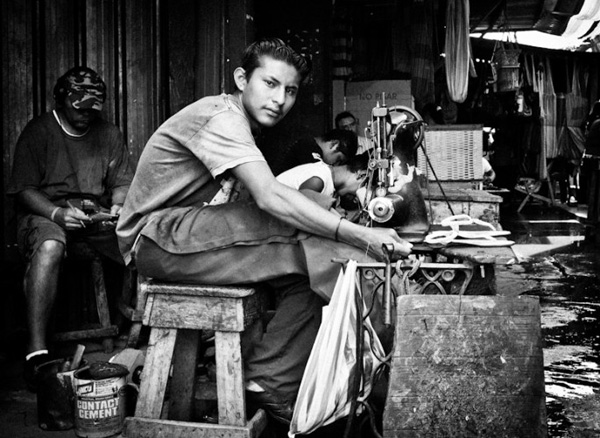
Man working

The best lessons are the ones you learn the hard way. Here are 10 photography tips I learned after lots of frustration, discouragement, money lost, and forever lost opportunities. These tips are not very common, I never heard them hence you probably never heard of them either. I hope they help you avoid the mistakes I made, and help you improve your photography. Let’s get to it shall we?

10 Photography Tips

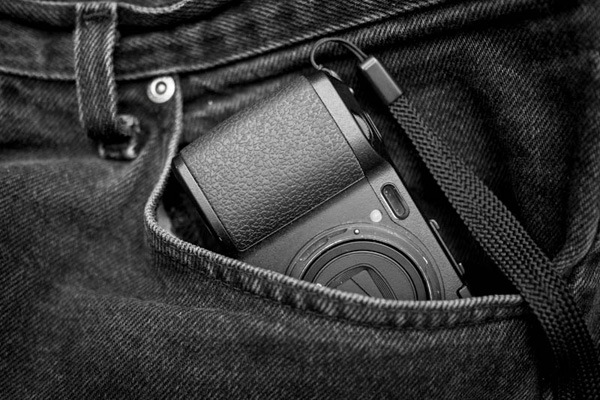
1 – Always have a camera in your pocket. Always. Or else.

Pocket Camera Ricoh GRD IV

How many times have you been a situation where you kinda wanted to take your camera bag, but ended up not doing so because of the thought of lugging the bag, or even the DSLR itself?

It’s understandable. Do you want to take that DSLR everywhere you go? Who would want to dangle that thing while going to the grocery store? Nah. But one thing I’ve learned, is that images don’t wait for you. I’ve been through too many “I wish I had my camera with me” scenarios to know so.

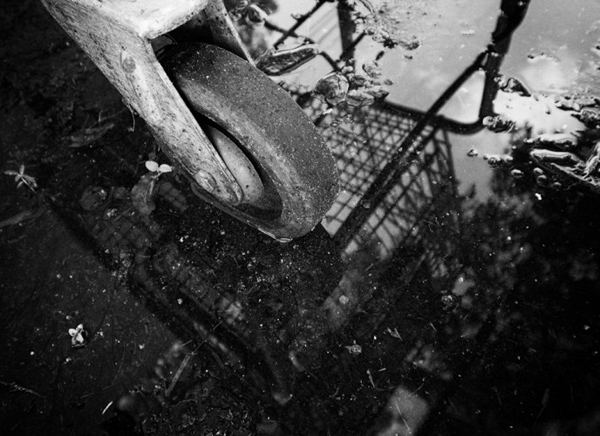
Abandoned Cart Ricoh GRD IV

Caption: An abandoned cart on my way to get a sandwich

One of the best things I did as a photographer was to get myself a pocket camera (The Ricoh GRD III, now I have the Ricoh GRD IV) and take it everywhere with me. It freed me photographically, and it made me stop thinking in terms of “photo shoots” and start thinking in terms of “life photography”.

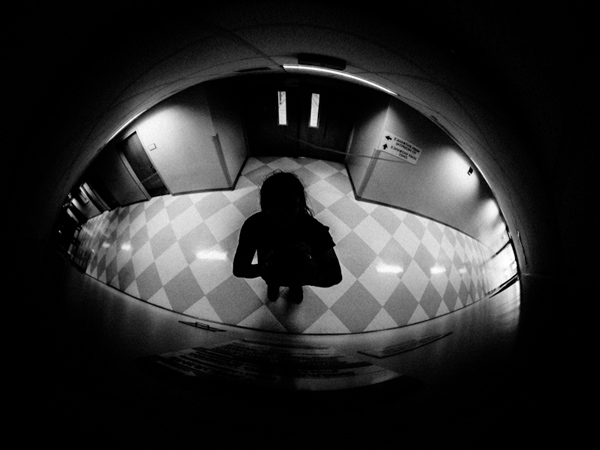
Distorted figure Ricoh GRD IV

Caption: At a hospital for a baby checkup

While the small compact ended up being my main camera, you don’t have to do the same, but do get a pocket camera. You have no idea how many images pop up in otherwise mundane situations like grocery shopping, or taking a stroll at the park.

In the park

Caption: In the park

In a nutshell: photographs don’t wait for you, get a pocket camera to fill in the gaps where your DSLR is absent.

P.S: Your phone might do but I don’t know about you but I can’t stand using it, there’s no buttons nor dials! Also check out the Canon S120,

2 – Your background is as important as the subject

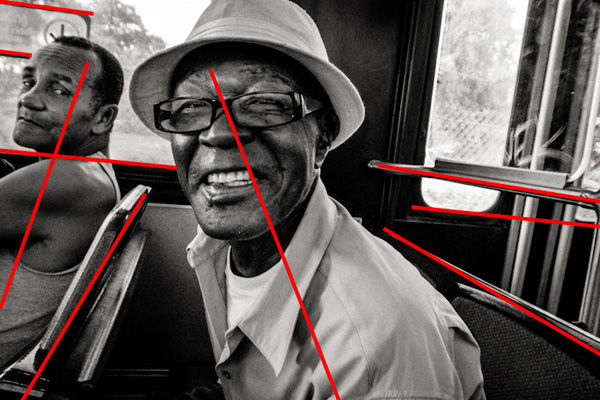
Man bus Ricoh GRD IV

When making an image, there’s bound to be a subject. But the subject is rarely alone, there’s the background to deal with. When looking through the viewfinder and you spot your subject, the first thing to do is not to press the shutter release button….it’s to pay attention to your background first.

There’s only two things a background can do for your subject: it can either bring attention to it, or detract from it. Say you are having a conversation with a friend, you wouldn’t want someone else’s voice distracting from your own, would you? So why let your subject be distracted by the background?

Man bus explanation Ricoh GRD IV

This guy was on the bus and was just priceless, after some entertaining conversation (too much, he was drunk and the whole bus was watching), I told him I would make his portrait. Even before rising my pocket camera, while talking I was wondering how I could draw attention to him.

At first I wasn’t going to include the guy on the left, but by changing the guy in the back leaned back and bought further attention to my subject. I happily made the shot.

In a nutshell: be attentive to your background, ask about every object, line, color: Does this distract or enhance what I am trying to focus on?

3 – Everything is light

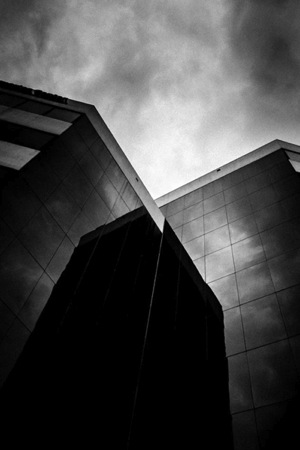
Building black white

What is the first thing you notice when you see your child or significant other? A person, right? Well that’s fine and all if you are dealing with them as another person, but when it comes to photography, you are dealing with LIGHT, so you have to train yourself to see everything in terms of LIGHT.

Did you ever notice how the face lights up when someone is watching TV? Did you notice that you feel differently when a landscape is shot at twilight versus dawn? Do you notice how there’s ugly shadows in the eye area when there’s harsh light?

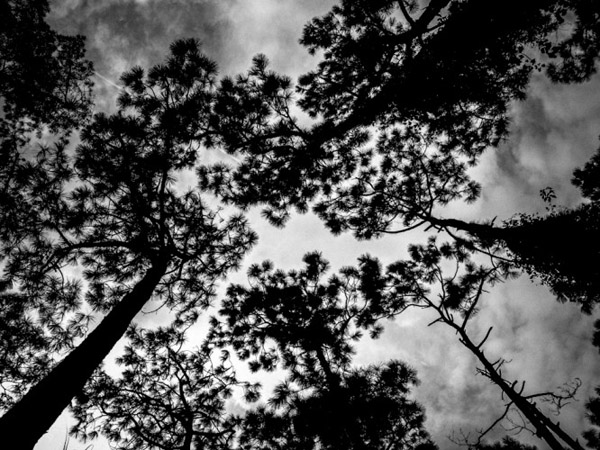
The examples are infinite, but the skill starts when you force yourself to pay attention to the light. In the image above of the building, I was going to the bank and it was pretty overcast out, and I looked up. While I didn’t go to the bank to get this image, I knew what to expect (soft light, nice reflections of the clouds) and simply looked up and made the image.

In a nutshell: start noticing light, its qualities, the shadows it makes, the shapes it forms.

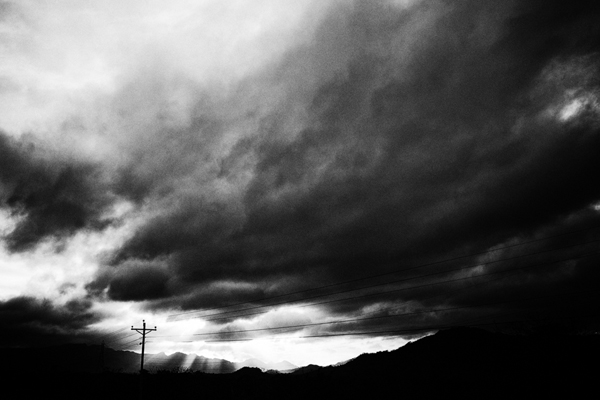
Clouds

4 – Treat your work as wine

Some photographs are either made by luck, or maybe you’re just a genius and you didn’t know it. I’ll vote for the second option because I like you. In all seriousness though, while your best photos might be made tomorrow, you could potentially have gold in your older work.

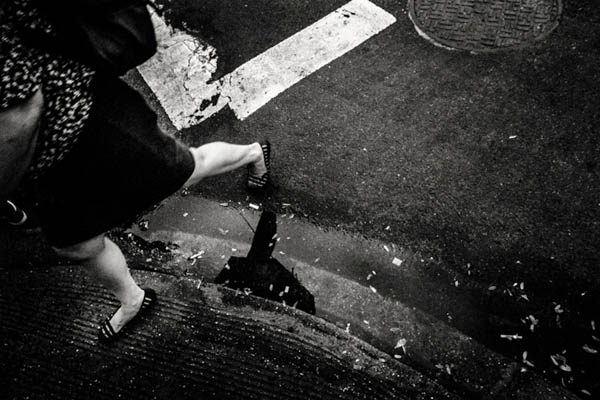
Woman walking

Caption: An image I found months later, I overlooked at first

Fact is, you might have something that you wouldn’t know the value of until you look at it with more mature eyes. I have shots from 10 years ago, (I never dreamed of becoming a photographer back then) that are stellar.

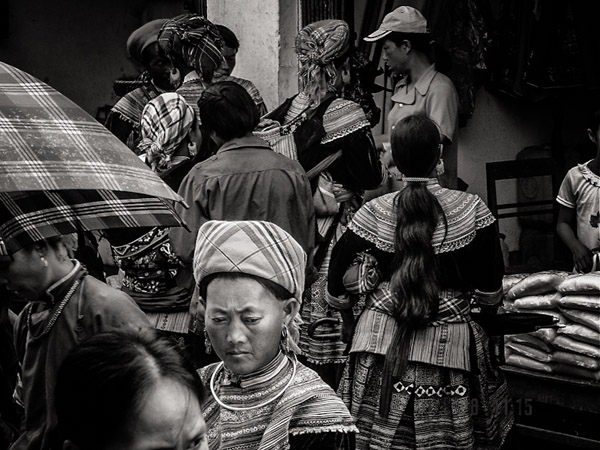
Vietnam hmong

I wouldn’t have seen them if I didn’t revisit the work. The image above was shot 10 years ago. Granted, there were only a few nuggets of gold in the whole pile, but who says no to gold? Plus after time has passed you won’t be as emotionally connected to the images, making you able to judge the images more objectively. Sometimes I go through my old stuff and I can’t believe what I missed! Or I am amazed at how I can recover images I believed were ruined.

In a nutshell: your photos are like wine, they get better with age, but you have to dig them up

5 – Shoot with your heart first

You know your stuff. You know what aperture is, when to bump up your ISO, you know how to expose well. But when you look at your images, you just can’t put your finger on what exactly is missing. Let me suggest that it’s the heart element that’s missing. You are not emotionally engaged with your work.

Photography is not about capturing what’s out there in the world, it’s about capturing what’s inside your heart. Shoot what matters to you and put more of yourself in the images.

Here I was in a dark spot:

Dark photograph

Don’t judge me by this image, I was just in a really bad spot. Here I was more optimistic:

Hopeful

Here I was feeling the familial spirit:

Family

In a nutshell: shoot how you feel, your images will be more powerful. Plus, humans are hardwired to relate emotionally.

6 – Ask why

Not everyone is into photography for the same reasons. Some want to get rich, others do it because they like it, others for fame or to document their kids growing up – you get the point. We all have different motives for doing photography.

Question your motives and your photography path will become clearer. Knowing your why is like having a loupe in front of a light source, it will help you focus and get where you want faster. I can’t tell you your reasons because only you know that.

For me, photography is my way to dream awake. Don’t worry, my mom knew she had a dreamer in her hands early on. Don’t call the looney bin on me, but everyday I SEE things, no, not dead people, but slithers in the fabric of time that reveal my imagination. Take this image:

Take on life

When I saw this guy, I saw a hero ready to take on life itself. In reality, it was just a guy going to the beach. That’s my reason for photography: It helps me be in the world and in my imagination at the same time.

In a nutshell: it’s your turn, what’s your reason for photography? What is it about photography that attracts you so much?

7 – You are less limited by your gear than you think

Airplane

Take it from a guy that lost $ 1000s in gear buying and selling, it’s not about what gear you have, it’s what you do with it. As a photographer, there are things that can keep you from doing your work, one of them is being too focused on your next purchase.

All the images in this article, (with the exception of 3-4) were made with a pocket, small sensor camera, with a 28mm fixed lens which I used with its upgrade for 4 years (the Ricoh’s mentioned above). Other cameras used were other compacts, my phone and one image with the NEX7 (the next point’s portrait).

Man running

Believe it or not you are more creative with less than more. The puzzle-solving brain is much more creative when limited in some way or another. For example, if we could fly, we wouldn’t have invented airplanes.

In a nutshell: whatever gear you have, find new ways to use it. Plus having too much simply makes you miserable anyways (been there).

8 – Let go of technical perfection

Son portrait

I think you should learn to expose correctly, learn when something is in focus, etc., and then let it go. I think too much time has been spent arguing on how a photo is slightly out of focus, or other small technicalities.

Some of the world’s most iconic photographs are slightly soft, some are outright blurry (Robert Capa – D.Day soldier), some even have white skies (Alberto Korda’s iconic image of Che Guevara – Guerriero heroico) amongst others.

Why didn’t you notice these imperfections? Well you didn’t seek them out, so you didn’t see them. The artistic qualities of a photograph are superior to its technical imperfections, so let go of them. Heck the Japanese have a concept, “Wabi-sabi” that basically means beauty in the imperfect.

So stop worrying about if you are 10000% in focus, if your white balance is the neutral greyest of neutral greys and start looking at what the photograph is about and how it makes you feel.

In a nutshell: let go of technical perfection, and focus on emotional impact.

9 – Think making photographs, not taking pictures

Being a photographer is an attitude, and one of the fundamental shifts that must happen is making the difference between taking a picture and making a photograph. What are you doing when you rise your camera up to your eye?

  • Are you taking a picture? In other words, are you content replicating what’s in front of the lens?
  • Or are you making a photograph? In other words using what’s in front of your lens as a starting point to communicate what’s inside you?

If you learned how to use your camera through the dPS Newsletter, you have the power the express yourself. Now you have to understand that you don’t take pictures, camera owners do that; you make them, photographers do that.

Angel heaven

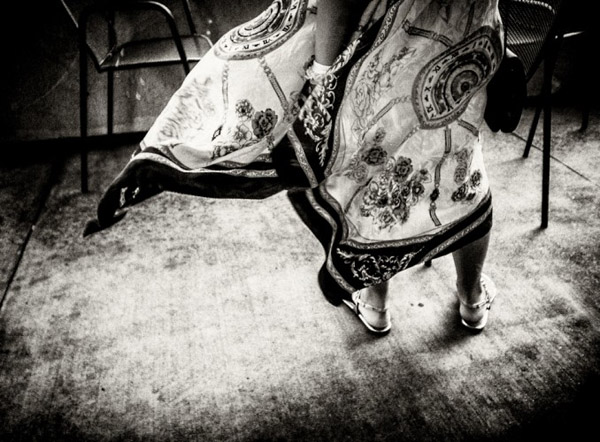
I was at a coffee shop, sitting down, writing on my device when I saw this dress flow in front of me. For one second I believed I was in heaven and looking at an angel. I used what was in front of me (a girl’s dress, how boring) and made a photograph, replicating the feeling I felt.

In a nutshell: start thinking like a painter, focus on making something, not taking.

10 – Make your photographs sticky

Picture this with me for a moment: a beautiful van is driving down a road, a soothing voice enumerates all the features of the van, AC, GPS, windows, kids are smiling in the back. Ah, life is good, the van flows nicely in the streets. The van is making a turn when all of a sudden, a nasty crash happens. Shock!

“You didn’t see that coming” says the tagline. It wasn’t a commercial for a van, it was one for safety.

This commercial stuck in the minds of many because the ad spent its time building up a pattern (that of a typical van commercial) and then broke it. The human brain sees in terms of patterns and expects things to go in a certain way, when it doesn’t, it forces us to remember to be ready for next time.

You can also do that with photographs. You can create a pattern and then break it. Roland Barthes, a philosopher, named the pattern the Studium, and the pattern breaker the Punctum in his book Camera Lucida. So, if you want your images to stand out, seek the Punctum.

Studium punctum

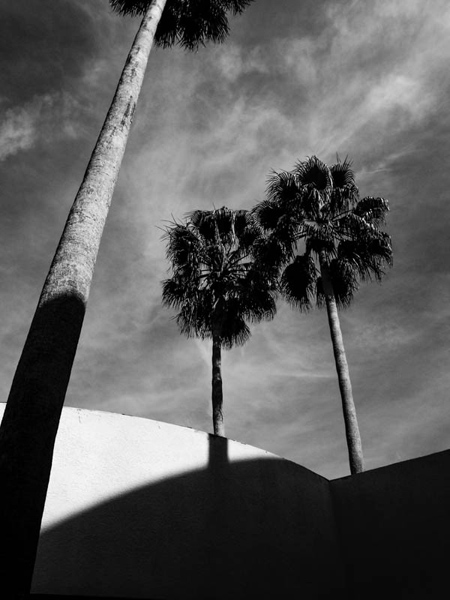
Meh. How many palm tree images have you seen in your lifetime? Well I’ve seen them a lot too, so in order to make this one stick out from the crowd, I decided to align the shadow of a tree that was behind me, to the tree in the middle in front of the camera. What started as an average palm tree image is now much more interesting because of that pattern breaker. It’s unexpected. You expected a complete tree trunk and I replaced it with a shadow.

In a nutshell: anticipate the expected in your photograph, then break it.

So what other tips do you have for beginners? If you are just beginning yourself what do you struggle with the most? Share with us in the comments below.

The post 10 Photography Tips to Help You Take Your Photography up a Level by Olivier Duong appeared first on Digital Photography School.


Digital Photography School

 
Comments Off on 10 Photography Tips to Help You Take Your Photography up a Level

Posted in Photography