RSS
 

Posts Tagged ‘Guide’

Gift Guide 3Seven New Gifts for Photographers

09 Dec

Gifting time is inching closer and we’ve got another bunch of new products to wrap up in paper and bows.

From the adorablest backup battery to the magical gizmo we used to light paint those floaty words ^^ up there ^^, these gifts are sure to add a little merry and bright to your holidays.

See Photojojo’s Gift Guide #3 of 2014
(…)
Read the rest of Gift Guide 3
Seven New Gifts for Photographers (0 words)


© laurel for Photojojo, 2014. |
Permalink |
No comment |
Add to
Seven New Gifts for Photographers”>del.icio.us

Post tags:


Photojojo

 
Comments Off on Gift Guide 3Seven New Gifts for Photographers

Posted in Equipment


DSLR versus Mirrorless: Guide to help you decide which is right for you?

07 Dec

Recently there has been a great deal of buzz in the photographic community regarding a few terms that might sound a little odd or strange, like “mirrorless” or “micro four thirds.” These refer to different types of cameras that might not be as popular as standard DSLR models right now, but many think are the future of photography. However, just understanding what everything means can be an exercise in frustration, especially when all you likely want to do is buy a camera you can enjoy using.

Nadir Hashmi

By Nadir Hashmi


To that end, I’m going to try and dispel a bit of the confusion regarding mirrorless cameras and hopefully give you some information so as to make an informed choice the next time you are in the market for a new piece of photography gear. We’ll explore some of the history of how cameras are constructed, as well as discuss some of the benefits and drawbacks to this new technology, but I’m going to stop short of making the subjective judgement call about whether mirrorless cameras are better than DSLRs. For me it’s not about which camera is better than the other, it’s about finding one that works with your style and lets you shoot the photographs you want. You can debate all this in the comment section if you like, but what I’m here to do is simply present information and try to be as unbiased as possible.

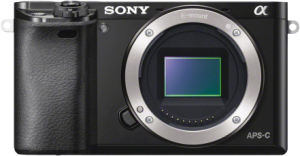
a6000

The Sony a6000 mirrorless camera has all the features of most standard DSLRs, but is much smaller and weighs far less. (Image courtesy Sony)

What is a mirrorless camera?

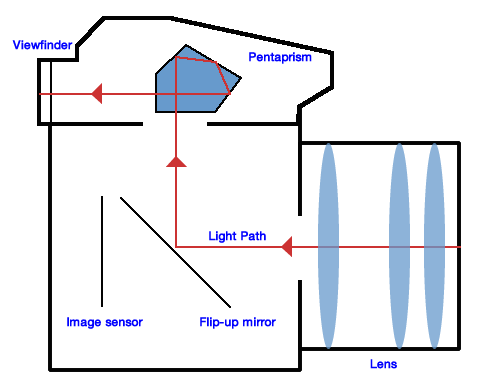
To understand the word mirrorless it helps to know a bit about the way most DSLR cameras are built. Almost all Canon, Nikon, Sony, and Pentax interchangeable-lens cameras share a similar industrial design: light enters through the lens and gets bounced off a mirror, through a special prism, to end up at the viewfinder. When you click the shutter button, the mirror flips up, which allows light to hit the actual image sensor on the camera, and voila your photograph is taken. This process might seem like a high-tech solution, but it’s actually a bit of an anachronism. Long before digital cameras existed, most of their film-based counterparts employed this same method to get light to the viewfinder, because it was a useful way to compose your photo before clicking the shutter. But thanks to advances in modern technology, this flip-up mirror method is no longer necessary, and a whole new breed of cameras is beginning to make inroads into modern digital photography. These new models have no flip-up mirror, and thus the term “mirrorless” was born.

There are many different types of mirrorless cameras on the market: some have interchangeable lenses, others offer a single built-in lens, and some with their own types of image sensors and other characteristics that are suited to more niche markets. But the one thing they all have in common is the absence of a flip-up mirror.

CameraDiagramDPS

Believe it or not, you probably already own a mirrorless camera. All smartphone cameras are mirrorless, as are most point-and-shoot models. Instead of a tiny little viewfinder that you hold up to your eye, you can see a preview of your image right on the phone or on the back of the camera itself. And if you like shooting your DSLR in “Live View” mode, where you look at the rear LCD screen to compose your shots instead of the viewfinder, you are essentially using it as a mirrorless camera already. (The click you hear when you enter Live View is the mirror flipping up. It stays like that until you exit Live View.) In fact, many of the higher-end mirrorless cameras have even gone so far as to replicate the traditional eyepiece viewfinder, but instead of reflecting incoming light from a mirror, it simply shows a very tiny version of what would normally be displayed on the back of the camera.

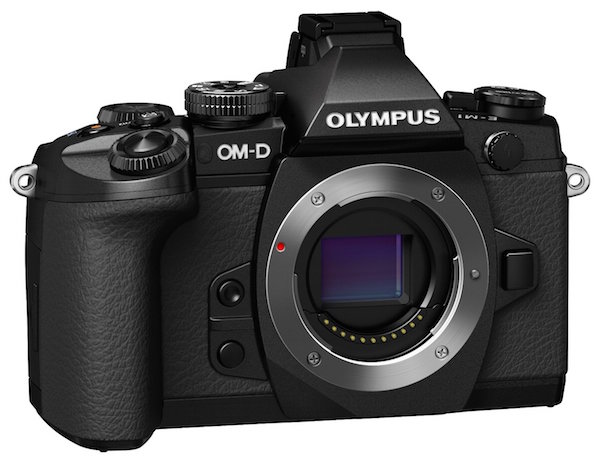
OMD-EM1

The Olympus OM-D EM-1 is a mirrorless camera that also includes a traditional-style viewfinder. (Image courtesy of Olympus)

Sensor size

Another component of mirrorless cameras that is a bit more technical in nature, but just as important to understand, is that of sensor size. In digital cameras the image sensor is essentially a piece of digital film that captures light, in much the same way actual film does. Full-frame DSLR cameras have image sensors that are the same size as a piece of 35mm film, but most consumer-grade DSLRs, and virtually all mirrorless models, are crop-sensor cameras. This means that the image sensor is smaller, which has two notable implications:

  1. They are not as sensitive to incoming light as full-frame cameras.
  2. They affect the way lenses behave when it comes to focal lengths and depth of field.

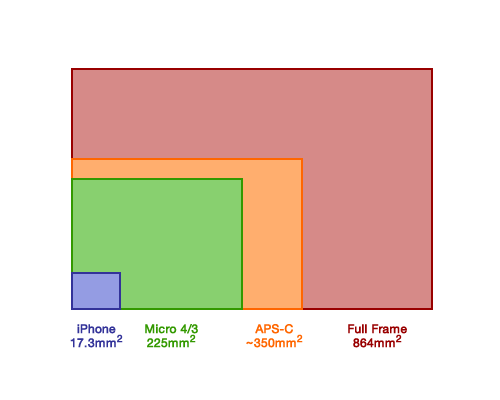
The most common format of mirrorless cameras are in a category developed by Olympus and Panasonic called Micro Four Thirds, which refers to the size and shape of the image sensor itself as well as the types of lenses that can be used on these models. Other mirrorless cameras use an APS-C sensor, which is the same size sensor used in common DSLRs such as the Canon Rebel T5i and Nikon D3200 (however, even Canon and Nikon use slightly different image sensor sizes), but there are some models such as the Sony A7R that use full-frame sensors as well.

SensorSizeDPS

In terms of surface area, full frame image sensors reign supreme. But cameras with smaller sensors are still quite capable, and there is more to a camera than the size of its sensor.

While it’s doubtful we will see crop-sensor cameras (whether micro four thirds or APS-C) reach the same high ISO sensitivities as full-frame models, many of them today are perfectly capable of shooting at values such as 3200 or 6400 without too much degradation in image quality.

As for the lens behavior, shooting on a crop sensor camera means that your focal lengths will not look the same as on a full-frame camera. For example, on a micro four thirds camera a 30mm lens behaves similar to a 60mm full-frame lens. A 100mm lens acts like a 200mm, and so on. For most people this is fine, and they learn to adapt to the differences in lens behaviour over time. For some photographers this a significant detriment that, combined with how depth of field behaves a little different on crop versus full frame cameras, ends up being a deal breaker.

As I mentioned earlier, it’s not about finding out which type of camera is better – that question is unanswerable. Instead, it’s important to simply know the various details of micro four thirds and other mirrorless cameras, in order for you to make an informed decision if you are thinking about purchasing new gear.

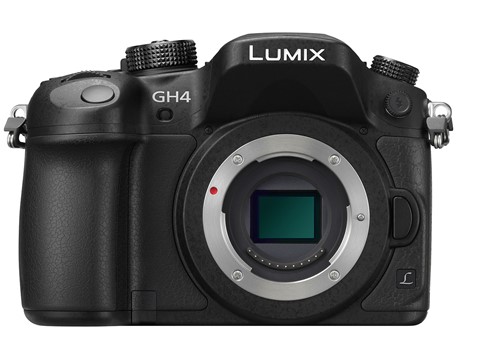
lumix-gh4

Even though the Panasonic Lumix GH4 is uses a smaller micro-four-thirds sensor, it produces photos on par with most APS-C sensors and even shoots 4K video. (Photo courtesy of Panasonic)

However, one benefit of crop sensor cameras that is important to note is their price; they are significantly cheaper than their full-frame counterparts. The cheapest full-frame camera costs around $ 1500 and they can easily cost many times that amount. On the other hand, some micro four thirds models start at a couple hundred dollars which makes them much more affordable for most people. It’s important to know that mirrorless cameras are not just for beginners, or those who like to shoot in Auto. Many photographers are buying these cameras, and some professionals have even switched entirely from heavy, expensive, DSLR models to their much lighter and more portable mirrorless counterparts.

As you can see, thanks to advances in modern technology the age-old flip-up mirror design in most cameras is not really needed anymore, but we are still a little way off from mirrorless replacing traditional DSLR designs entirely.

Benefits of mirrorless cameras

These new types of cameras offer some significant benefits over traditional DSLRs, but come with some important limitations as well. Remember, we’re not here to discuss which one is better – that’s something that only you can answer, given your unique needs as a photographer. It is important to know that mirrorless cameras do have some notable selling points, but also some drawbacks as well.

Size

K?rlis Dambr?ns

By K?rlis Dambr?ns

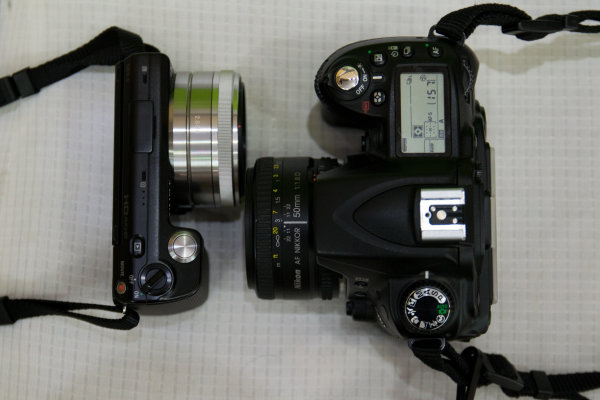
Perhaps the most significant difference between mirrorless and traditional DSLRs is their size: because the flip-up mirror mechanism, combined with the light-reflecting prism, are no longer needed these cameras are typically much smaller in size and weigh less too. This can be important if you are someone who likes to take your camera with you wherever you go, especially if the weight of your DSLR starts to drag you down after a day of shooting. It also means the lenses are smaller too, so you can fit several in your camera bag whereas before you might have only had room for one or two.

More accurate image preview in the viewfinder

Another benefit that mirrorless cameras enjoy over DSLRs, is a viewfinder that displays a more accurate representation of what your final photograph will look like. If you look through the viewfinder of your DSLR and adjust settings like ISO, aperture, and shutter speed, you might notice that the image in the viewfinder doesn’t change. It’s not until you actually take a photograph that you see what effect your alterations had on the photograph. At that point you can look at the picture on the rear screen and judge whether you need to change things for subsequent pictures. Because mirrorless cameras use electronic viewfinders, you can see in realtime the effect that things like aperture and ISO adjustments will have on your pictures before you press the shutter. This can have a dramatic effect on how you shoot, as it removes some of the guesswork with your camera settings.

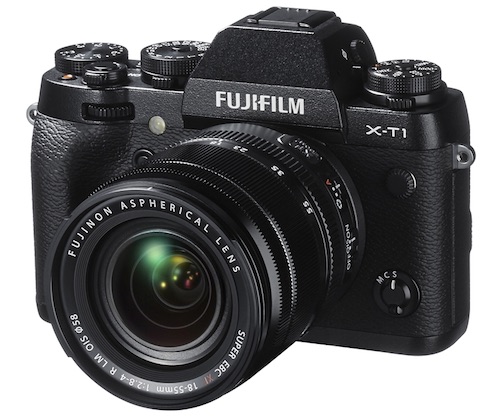
The mirrorless Fuji XT1 uses an APS-C size sensor but is much smaller than traditional DSLRs, making it a compelling option for photographers who value portability along with excellent image quality.

The mirrorless Fuji XT1 uses an APS-C size sensor but is much smaller than traditional DSLRs, making it a compelling option for photographers who value portability along with excellent image quality. (Photo courtesy of Fujifilm)

Focus peaking and sound

There are other benefits to mirrorless cameras as well such as focus peaking (the ability to see, when focusing manually, the exact pixels on your image that are in focus), quieter operation due to the lack of a flip-up mirror, and fewer overall moving parts which means a longer theoretical lifespan. But in order to get an accurate view of the situation, let’s take a look at some of the disadvantages as well.

Drawbacks of mirroless cameras

Things are looking quite promising over in Mirrorless Land, but it’s not all sunshine and roses just yet. There are some notable drawbacks to this technology, and if you don’t look at all the details you might end up with a camera that is ill-suited to your needs as a photographer.

Battery life

Currently one of the most significant limitations is that of battery life: they just don’t last as long. The only time a traditional DSLR draws power, when not in Live View mode, is when it is actively metering the scene or writing picture data to the memory card. No power is used at all if you hold the camera up and look through the viewfinder, and because of this it is fairly common to get up to a thousand pictures or more on a single battery charge. Power usage is a bit different on mirrorless cameras for two reasons. First, batteries are smaller because the cameras themselves are smaller, and second they essentially operate in live view mode 100% of the time. Mirrorless cameras generally get a couple hundred shots on a single battery charge, which is nothing to sneeze at, but nonetheless a significant difference between them and their old-school brethren.

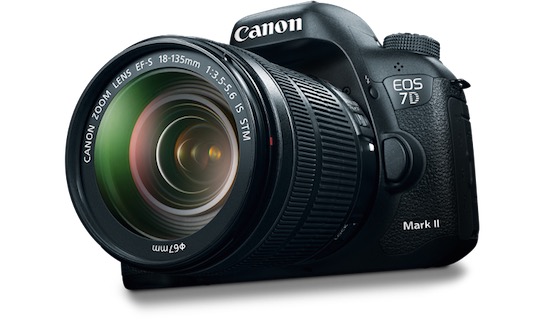
Canon7DMarkII

DSLRs might be based on old technology, but don’t count them out just yet. They are preferred by many photographers, and still have some advantages over mirrorless cameras. (Photo courtesy of Canon)

Focusing system

Another limitation that is worth mentioning is the focusing system. Most mirrorless cameras use a technology called contrast detection, which is simply not as fast as the traditional phase-detection method used in DSLRs. While the former gives you access to a wider area of the frame in which to focus, it simply cannot match the speed of the latter which limits the appeal of mirrorless camera for things like sports and fast-moving wildlife photography. Some manufacturers are starting to utilize phase detection in their mirrorless models, as well as hybrid systems that offer the best of both worlds, but for now it’s safe to say that standard DSLRs are generally better suited for sports, wildlife, and other types of action photography.

Other

Of course there are other limitations such as fewer lens options, LCD screen refresh rates that can’t always keep up with DSLR viewfinders, and more, but as technology advances much of this is being addressed.

Which is best for you?

Will mirrorless cameras ever reach full parity with DSLRs? Some think so, but others are not fully convinced. The important thing to remember is it’s not about what other people think; it’s about what matters to you. If you find a camera you like, and it serves your purposes as a photographer, then it really doesn’t matter whether it’s a DSLR, micro four thirds, full frame, medium format, or plain old 35mm film camera. If it can take the pictures you want to take, then it’s probably the right camera for you.

googletag.cmd.push(function() {
mobile_slots.push( googletag.defineSlot( “/1005424/_dPSv4_mob-all-article-bottom_(300×250)”, [300, 250], “pb-ad-78158” ).addService( googletag.pubads() ) );
} );

The post DSLR versus Mirrorless: Guide to help you decide which is right for you? by Simon Ringsmuth appeared first on Digital Photography School.


Digital Photography School

 
Comments Off on DSLR versus Mirrorless: Guide to help you decide which is right for you?

Posted in Photography


Woohoo! It’s Gift Guide 2

04 Dec

The tree is up. Ornaments abound. It’s time to pile up the presents underneath it.

Well, you’re in luck! This gift guide contains 6 BRAND NEW photo gifts (and stocking stuffers too).

See Photojojo’s Gift Guide #2 of 2014
(…)
Read the rest of Woohoo! It’s Gift Guide 2 (0 words)


© laurel for Photojojo, 2014. |
Permalink |
No comment |
Add to
del.icio.us

Post tags:


Photojojo

 
Comments Off on Woohoo! It’s Gift Guide 2

Posted in Equipment


Guide to Buying Your First DSLR

04 Dec

Your First DSLR

For whatever the reason, you’re ready to buy your first DSLR. It could be that your point-and-shoot isn’t cutting it anymore in regards to features, speed, or image quality, or it could be that you’d like to turn photography into more than a rarely-touched hobby.

Romain Ballez

By Romain Ballez

DSLR (Digital Single Lens Reflex) cameras are what the vast majority of professional photographers use to get the job done. Unlike point-and-shoot camera models, which record light (and therefore an image) onto an electronic sensor directly, a DSLR uses a mirror to bounce the light from a scene through an internal system and into a viewfinder or an electronic sensor, in the case of an open shutter.

These cameras also allow for interchangeable lenses, giving you a wide array of options in regards to focal lengths and quality. There are, of course, advantages and disadvantages to DSLR systems, but at the end of the day, these cameras offer the features and quality required by advanced hobbyists and professionals.

What You’re Looking For

There’s no denying it, this is a big purchase for you. No, you’re not looking for a top-of-the-line, full-featured beast this go round; you need the best possible piece of equipment for a reasonable price. You need bang for your buck.

Whether photography is a passionate hobby or a hopeful profession of the future, you are in a learning phase, and need a camera that will compliment that objective well. While current-generation point-and-shoots can be great products, DSLR’s do have a few advantages.

Larger Sensors

As a rule, DSLRs have a larger photo-sensitive digital sensor, which usually translates to better image quality. Please note that this has nothing to do with megapixels or resolution, neither of which are, by themselves, indicators of image quality.

Interchangeable Lenses

While there are some point-and-shoot systems beginning to offer interchangeable lenses, by and large, DSLR’s have the market dominated in this area. Not only do the big camera companies have their own lenses, third-party companies such as Sigma and Tamron offer great selections as well. There is a lens out there for virtually every application you can imagine.

János Csongor Kerekes

By János Csongor Kerekes

A Viewfinder

Instead of the usual LCD screen present in point-and-shoot cameras, DSLR’s collect light from the lens, direct it to the mirror, and through the viewfinder, giving you an almost exact representation of what is being captured on the sensor.

Advanced Features and Controls

Namely, manual controls. While point-and-shoots usually feature the ability to modify settings, DSLR’s are built from the ground up with manual control in mind. ISO ranges are higher with reflex cameras, and larger sensors combined with precise aperture controls allow for controlled depth of field in your photos.

Speed

DSLR’s are known for their faster shutter and system speeds, and in the world of photography, speed is usually a good thing.

There are countless brands of equipment, but as far as DSLR’s go, there are the big three – Canon, Nikon, and Sony.

Recently, Pentax has been gaining ground again, and there are more expensive offerings available from companies like Leica and Hasselblad. For our purposes, we’ll stick to the big three, as they are all known for offering outstanding entry-level cameras within their product lines, and can be relatively inexpensive.

Elias Ruiz Monserrat

By Elias Ruiz Monserrat

What to look for when buying that all-important first SLR camera?

Image Quality

Image quality is usually the most important requirement of a new camera for photographers, and it’s also one of the most subjective. The quality of the photos a camera produces is dependent on several factors, including sensor size, lens quality, and the optics of the camera itself.

Feature Set

While almost all DSLR’s have a common set of features (such as the ability to shoot manually), some brands and models have automated some features, while others have not, or do not have those features at all. Different cameras have varying usable ISO ranges, autofocus points, and resolution (in megapixels).

Design

Although usually not the first thing you think of with an entry-level camera, buying a model with a solid design is still important. Some less expensive cameras have all plastic housing, whereas others may use more heavy-duty materials such as metal; others still may be weatherproof to a certain degree.

Even at the price points we’re discussing, it’s a good idea to research that aspect of the prospective camera as well, and buy as solid a model as possible.

Jung-nam Nam

By Jung-nam Nam

Cost

We’re talking entry-level, for the scope of this article, so cost will be a factor. Obviously, the more money you’re able to spend, the more advanced system you can get. Keep in mind however, that often with entry-level models, differences between the cameras can come down to feature sets, with image quality staying more or less the same.

Remember that the quality of the lens you’ll be attaching to the camera is more of a determining factor in the quality of the photo.

Where to Buy

Luckily, you have several options in this area. Gone are the days where you could only buy a camera at your local Wolf Camera (and unfortunately, gone are the Wolf Camera stores, as well). Now there are virtually limitless retail outlets and sellers online, carrying every system and component a photographer could need. You can order your camera from your living room and have it delivered to your house a few short days later, without ever leaving home.

Amazon, B&H Photo, and Adorama are all large, respectable retailers you can shop with, and are among the most popular today.

The Contenders

Canon EOS Rebel T5i

The Canon Rebel series has a long-standing tradition on solid, quality cameras at a reasonable price. While I won’t start a brand war here, it’s well-known that most photographers end up settling on either Canon, or Nikon.

The Rebel series has come a long way from the days of the XS, and the latest generation of Rebel cameras are much closer to Canon’s midrange line than before, with better sensors, more features, and hardier construction.

t5i_586x186

Canon Rebel T5i

The T5i is an 18MP (megapixel) camera, with an ISO range of 100 – 12800 (expandable to 25600). It also features a 3 inch Vari-angle Touchscreen LCD, 9 AF (autofocus) cross points, 5 fps (frames per second) continuous shooting speed, and shutter speeds up to 1/4000 second.

As with most entry level systems, if you opt for the full kit, you’ll get the standard 18-55mm IS (image stabilization) zoom lens. While very good for learning novices, you’ll want to upgrade to a cheap prime such as the excellent Canon EF-S 50mm f/1.8 or something similar, as the cheaper build and documented chromatic aberration issues with the kit lens could leave you wanting a bit more. Note that this applies to all kit lenses on the entry-level cameras we’re discussing here.

Nowadays, as systems get more advanced, HD video recording is becoming more of a requirement, and the T5i delivers this as well. As of this writing, the T5i kit is selling for $ 649.99.

Nikon D3300
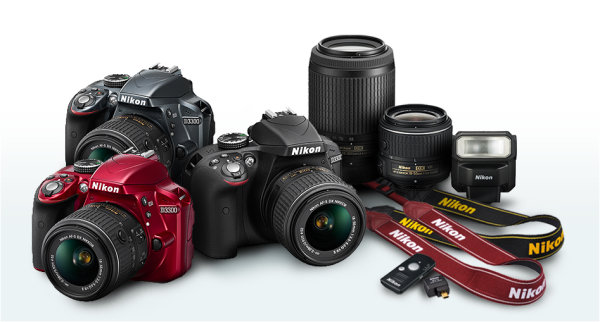
D3300

Image courtesy Nikon

Nikon upped their game with the D3300, equipping the camera with a generous 24 megapixels of resolution in a solid, compact, carbon fiber enhanced body. This model gives you, the budding photographer, an ISO range up to 12,800 (expandable up to 25,600), 11 autofocus points, and 5 frames per second of continuous shooting, along with a 3″ LCD screen that matches the Canon model.

Just as with the Canon T3i, the D3300 supports shutter speeds up to 1/4000th of a second and allows for 1080p HD video recording.  Retailing around the $ 500 mark, the body and lens bundle includes the Nikkor 18-55mm 5.6 VR II lens, a relative equivalent to Canon’s 18-55mm kit lens.

Sony A58

Usually considered the third wheel of the big three, Sony is known more for their other forays into the electronics world than their digital cameras, but don’t let this fool you; they know how to make a good DSLR, and the SLT-A58 is a wonderful example of that.
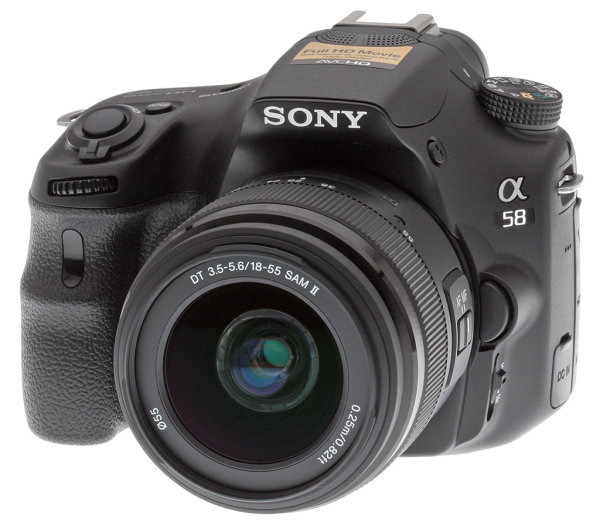
sony-a58

Image courtesy Sony

Dipping even lower in price and the lowest of all three at $ 450, the A58 gives you quite a bit for that price point. This 20.1 megapixel camera offers a respectable ISO range up to 16,000, and is expandable up to 25,600. Leading the pack, this model offers 15 autofocus points, but forces you to give up a little bit with the smallish 2.7″ LCD screen.

Battery life has been improved fairly drastically on the A58 in comparison to previous entries in the series, and for such a budget-friendly camera, it features a surprisingly big and bright viewfinder.

Conclusion

So which one is right for you? Any of these – or none of these. The answer lies in what you’re looking for, and what concessions you’re willing to make for the budget you have. All of these are excellent cameras, and were chosen because of what they offer for the price, but that doesn’t mean there aren’t other cameras that would serve the purpose just as well or even better.

The prices we’ve discussed all include a kit lens to get you started, but be aware, these are usually the lowest-end optics available, and you’ll want to upgrade as soon as possible to another piece of glass. Also, in most cases you have the option of buying the camera body only, and picking out your lenses separately, which reduces your upfront cost of the DSLR itself. There are literally hundreds of lenses to choose from; just ensure they will fit your camera’s mount before purchasing.

At the end of the day, you want a camera that will facilitate the learning process you’re going through, so choose a camera that assists in that purpose, without breaking the bank.

Bought Your First DSLR? Here’s How to Learn How to Use it!

Check out our Ultimate Guide to Learning How to Use Your First DSLR.

Also check out our Photography Tips for Beginners page for lots of great photography tutorials suitable for first time DSLR buyers.

googletag.cmd.push(function() {
mobile_slots.push( googletag.defineSlot( “/1005424/_dPSv4_mob-all-article-bottom_(300×250)”, [300, 250], “pb-ad-78158” ).addService( googletag.pubads() ) );
} );

The post Guide to Buying Your First DSLR by Tim Gilbreath appeared first on Digital Photography School.


Digital Photography School

 
Comments Off on Guide to Buying Your First DSLR

Posted in Photography


It’s Here! Gift Guide 1Six NEW Photo Gifts

24 Nov

The holidays snuck up on you a bit last year resulting in some less than stellar “gifts”… a stocking stuffed with actual socks and canned fruit?

Get a jump on things now and grab the stuff your friends and fam really want!

Take a gander at these 6 six brand new photo goodies (and a few old faves) we hand-picked to maximize your gift giving glory this year.

See Photojojo’s Gift Guide #1 of 2014 (…)
Read the rest of It’s Here! Gift Guide 1
Six NEW Photo Gifts (0 words)


© laurel for Photojojo, 2014. |
Permalink |
No comment |
Add to
Six NEW Photo Gifts”>del.icio.us

Post tags:


Photojojo

 
Comments Off on It’s Here! Gift Guide 1Six NEW Photo Gifts

Posted in Equipment


The Photographer’s Guide to Self-Promotion

17 Nov
Deanna Wardin

By Deanna Wardin

Have you ever been told by your parents “Don’t talk about yourself too much; people won’t like you!” or “Don’t show off!”? Talking too much about your achievements leads not only to criticism, but can also lead to disappointment. There is always going to be someone who worked harder and who has done more than you. The minute you realize you’ve achieved so much in your personal and work life, the reality smacks you and shows you that you’re too big for your boots. Some of us engage in far too much self-adulation and bragging, while the rest of us are afraid of being criticized and afraid to talk about ourselves.

In the photography industry we are met with obstacles that challenge our motivation to market themselves effectively. Self-promotion is an art that allows you to sell yourself – your personality, your knowledge, your experience – as a brand. Learn how to do it properly to achieve the best results. Here are some tips and tricks on how to overcome your fear of self-promotion and make people believe in you and your products.

The importance of self-promotion

Obviously, photographers want to spend most of their time taking photos. However, if you take yourself seriously and want to set up a successful photography business, then you need to dedicate some time to raise your profile and promote your work. Running any kind of business means you’ll have to wear many different hats, and in this instance you’ll need to be both a good photographer and a good marketer for your business.

You may be brilliant in what you do, but if no one knows about your products and services, there is no point in bothering. By being a self-promoter, you’ll be given an opportunity to demonstrate your talent. There is nothing shameless in creating something beautiful and wanting to share it with people who can benefit. Nobody will hire you until you tell and show people who you are and what you can do. If you’re not comfortable talking about your achievements and promoting yourself, it’ll be difficult, if not impossible, to get ahead in your photography career.

Fear of self-promotion

You may be shy or afraid to tell others what you can do and what you have achieved. No matter who you are, if you are afraid of self-promotion, there is a 100% likelihood that this fear stems from somewhere. Your main goal should be to identify what the fear. Once you find the root of this fear, you will be able to reduce its power on you.

Where could this fear be coming from? It could be a fear of rejection, a fear of showing off your artwork as it’s deeply personal to you, or a fear of success and its influence on your life. For most of us this fear is what other people would think or say about us. Therefore, your major task is to identify your personal fears and try to overcome them from within. You never know before you try, so give it a try before imagining your worst fears.

1 fear of self promotion

Photo by SplitShire

Most likely, the fear of self-promotion is accompanied by the fear of failure. To promote yourself means taking some risks. It means coming out from your comfort zone and putting yourself out there in front of other people.

Everybody fails. Even the billionaire Steve Jobs failed; back in 1984 he was fired from Apple. He co-founded Apple Computer at the age of 21. At 23 he became a millionaire. He was a global celebrity and highly successful man, but he still got fired! In 2005 he said the following words about that incident:

“I didn’t see it then, but it turned out that getting fired from Apple was the best thing that could have ever happened to me. The heaviness of being successful was replaced by the lightness of being a beginner again, less sure about everything. It freed me to enter one of the most creative periods of my life.” – Steve Jobs

In other words, failure is a path to success, even if you don’t see it at first. If everything goes smoothly all the time, you’ll have no reason to move forward and change things for the better. There are many other bright examples throughout history, when famous and successful people were not recognized at first. Don’t be afraid to give it a try!

Four Essential self-promotion tactics

It’s essential to know how to promote your brand and your business effectively. I hope that with the help of these tips you’ll have a grasp of what is required to make your work more visible and to build a successful career in photography.

Get your business online

As a photographer, you need a portfolio to back up your title. A portfolio website is the easiest place for you to showcase your work in the best way and is also the easiest place for people to find your photography. Your portfolio is what the client will use to evaluate whether they want to use your services. It will be what they judge you on. For the digital world, where browsing for photographers is as easy as clicking on the screen, it might even take them five seconds to discard you or to like you based on the images you are displaying in your portfolio. It’s critically important for self-promotion, it’s your image and the face of your company.

There are many ways to build your portfolio online these days. You can order a website from a creative agency or use one of the numerous software solutions available to create a website yourself. Fortunately, this market evolves really fast and brings some really advanced yet affordable options. For instance, Defrozo is an all-in-one marketing platform that helps you better display and market your business online. It’s currently available in Beta version, but it’s totally free and will remain so forever, according to the developers – that’s a great option if you are just getting started with your own business.

2 zenfolio screenshot

For established photography brands, there is Zenfolio and PhotoShelter that offer a long list of advanced features for hosting and selling your work online. These are just a few options to mention, you can find more website building solutions in this list here on Digital Photography School.

Aside from a portfolio, set up your profiles in all the major photo sharing services like Flickr, 500px, Pinterest, Facebook, Twitter, and Google+. The links from those websites alone will contribute to better ranking in search engines. Done wisely, social media can become your most important source of leads and clients. So get your name out there, and more importantly, invest your time and effort in building a credible, socially engaged online presence.

Help and over-deliver

Every time you have a client, they are a potential word-of-mouth marketer, so be sure to be on the top of your game when it comes to customer service.

Not only must the time you spend with your client while shooting be an amazing experience, but the whole overall experience you deliver should be excellent. Take care of the process of delivering photos to your client. You could even send beautiful “Thank You” cards displaying your logo with a flash drive or DVD.

VancityAllie .com

By VancityAllie .com

Another great way to make people talk about you is to HELP. This tip can be easily misunderstood so let me be clear. I’m not talking about helping someone for selfish gain. What I mean is that people are usually happy to recommend someone who helped them in a time of need and this additional buzz is a nice bonus, an amazing feeling you get when you do a kind gesture for someone else. Therefore, a blog post sharing your expert advice, taking part in a charity project, or simply photographing your new neighbors’ kid’s birthday party for free can bring you some really great self-fulfillment, and boost your incoming referrals for sure.

Finally, don’t forget about your social media presence. Spend time where your clients are and share something they might care about. For instance, post a few photos shortly after the shoot and tag your clients. Then grab a cup of coffee and expect a phone call from customers who are sure to be pleasantly surprised. Learn the specifics of each social network and make the best out of it: use Quora to share your expertise and Pinterest to give inspiration to those seeking it. Remember, the key word in “social media” is “social”, so be social and give some likes and comments to your friends’ recent posts as well.

Study psychology

If you want to get ahead using self-promotion and become really successful, consider learning some psychological tips and tricks on how to communicate with clients and talk about yourself correctly. You, as a photographer, have to talk about yourself a lot. However, sometimes it’s challenging to write a proper bio or a good recommendation of yourself. This could sound disappointing, but remember that your potential customers are not visiting your site to hear about you, they want to hear about themselves!

They’ll read the information about you not like “Look how cool I am!”, but “Look how well we could work together!”. See the difference. Your bio or story about yourself is just one more chance for your potential customers to hear: “Hey! I’m here to solve your problems”.

In fact, people love to talk about themselves. That’s why selfies and all these social media sites are so popular. Harvard neuroscientists have found that we share our thoughts because it triggers the same sensations in our brain that food and money do.

4 study psychology pleasure of talking about ourselves

Their studies also shows that people even tend to pay money to talk about themselves. So, listen to your clients more and talk less. But make them understand that you’re experienced enough to solve their problems, for instance, with their wedding photo session.

Network online and offline

Last but not least, utilize the power of in-person meetings. The internet, and social media in particular, have given us enormous opportunities in terms of communication. However, after spending just an hour with your clients face-to-face, you’ll have a considerably better understanding of who they are and what they need. So be sure to get out there a couple times a week and practice your ninja social skills in real life.

Carry your business cards around with you at all times. Don’t be shy to “sell” yourself and give your card to family and friends. Leave them at the nearest coffee shop or a bookstore, exchange them with other media artists and vendors, you never know the source of your next clients!

Creative examples of self-promotion

These days the market grows rapidly and it takes a lot of effort and time to create a truly outstanding self-promotional campaign. Sometimes, it can happen that success comes to a person who even didn’t expect it. Along with the tips shared above I’d like to showcase a few creative examples of photographers’ self-promotion that worked out and brought fame to their creators.

The most epic self-promotion piece ever made

Photographer Jens Lennartsson created 400 GI Jens action figures of himself to send out as promotional materials.

Ami Vitale – Instagram

Ami Vitale, a National Geographic photojournalist who has visited over 85 countries, made a name for herself by uploading her travel images to Instagram.

Sam Horine – Instagram

Sam Horine is a photographer who is most well known for his images of New York City which he posts to Instagram. He has over 370,000 followers there and has worked with such prominent brands as Delta Airlines, NBC/Universal, Sony Electronics and Nike just to name a few.

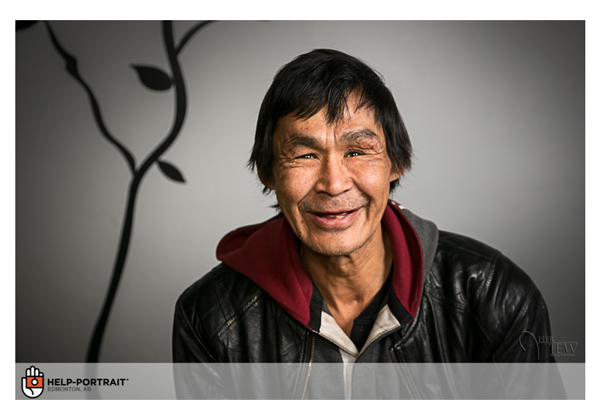
Jeremy Cowart – Help Portrait

John carver help portrait yeg

The Help Portrait charity project

Jeremy Cowart, a celebrity photographer, became famous with his charity project Help Portrait. The project was founded in 2009 as a community of photographers who gather in cities all across the globe to take portraits for people in need.

John artist help portrait yeg2

Images by dPS Managing Editor Darlene Hildebrandt – Photos of John Carver, sculptor – Help Portrait customer.

Danny Cohen – a 43 Foot banner on a bridge

Photographer Danny Cohen wanted to work for David LaChapelle so much that he opted to plaster a 43 foot sign on a bridge in Melbourne the night before LaChapelle was scheduled to shoot at that location.

Elena Shumilova

Photograph Untitled by Elena Shumilova on 500px

Untitled by Elena Shumilova on 500px

You have probably heard about Elena Shumilova by now. She is a Russian photographer who came into the spotlight when 500px ISO interviewed her. After that her heart-warming photography quickly spread around the internet, from Reddit, BoredPanda, and ABC news.

Roof Topper

Photograph I dont usually take selfies by Roof Topper on 500px
I dont usually take selfies by Roof Topper on 500px

You’ve probably also seen Roof Topper’s pictures on Facebook or Pinterest many times before. Tom Ryaboi who became famous for his spectacular view photos from the highest buildings in his city.

Over to you

There’s no right or wrong formula for successful self-promotion. Your business is like your baby – you need to experiment and try a number of things to understand what works. Try, mix, and discover different marketing tactics to see what works for YOUR photography business.

What are your most effective self-promotion tactics? Share your tips in the comments.

The post The Photographer’s Guide to Self-Promotion by Nancy Young appeared first on Digital Photography School.


Digital Photography School
 
Comments Off on The Photographer’s Guide to Self-Promotion

Posted in Photography


Mastering Family Portrait Part III: Posing Guide

11 Nov

It might be the redheaded stepchild of photography, the gum under your shoe, the backwash left in the glass when you think you’re drinking champagne, but posing is one of the most important parts of any photograph. I am not a traditional poser, so I’m not going to get into thumbs in or out of pockets, or serious or smiley, Continue Reading

The post Mastering Family Portrait Part III: Posing Guide appeared first on Photodoto.


Photodoto

 
Comments Off on Mastering Family Portrait Part III: Posing Guide

Posted in Photography


FroKnowsPhoto guide to DSLR video now available

02 Nov

Our friend Jared Polin, otherwise known as the Fro behind FroKnowsPhotos, has just launched a comprehensive six-hour video guide to producing DSLR video. Aimed at both beginners and advanced photographers, the guide offers an introduction to basic concepts like selecting frame rate and shutter speed, and includes how-tos for shooting a variety of video types. Read more

Articles: Digital Photography Review (dpreview.com)

 
Comments Off on FroKnowsPhoto guide to DSLR video now available

Posted in Uncategorized


Fall Foliage Photography Guide for Taking Better Autumn Photos

29 Oct

The world is filled with Red and Gold…Get out there and Shoot!!! So, as many of you know, I have never actually lived in a place with true fall. I’m from Los Angeles, lived in Hawaii, both of which basically are perfect always, did an eight year stint in North Dakota, where it’s frigid for ten months, then there’s a Continue Reading

The post Fall Foliage Photography Guide for Taking Better Autumn Photos appeared first on Photodoto.


Photodoto

 
Comments Off on Fall Foliage Photography Guide for Taking Better Autumn Photos

Posted in Photography


Guide to Winning Guest Blogging for Photographers

25 Oct

Guest blogging is one of the marketing techniques that many bloggers and site owners make use of and serves at least two purposes. Firstly, it’s great exposure for the guest blogger, and secondly, it’s a new post for the site owner that they haven’t had to spend any time creating. You may be a brilliant blogger with huge experience and Continue Reading

The post Guide to Winning Guest Blogging for Photographers appeared first on Photodoto.


Photodoto

 
Comments Off on Guide to Winning Guest Blogging for Photographers

Posted in Photography