RSS
 

Posts Tagged ‘Great’

5 Secrets for Finding Great Indoor Portrait Locations

04 Apr

156

Not all photographers choose to have a dedicated indoor studio, but sometimes you need to shoot a session indoors. Maybe it’s freezing outside, and you don’t want to be out in that weather. Maybe you have a bride who wants bridals, but is worried about her dress getting dirty. Maybe you just want something fresh and a little quirky. Maybe the building has special meaning to you or the person you are photographing.

Whatever your reasons, in this article you are going to learn all my secrets to finding indoor locations, and getting permission to use them. Hopefully they’ll help you find the perfect spot for your next session!
174

Secret #1: Always be on the lookout

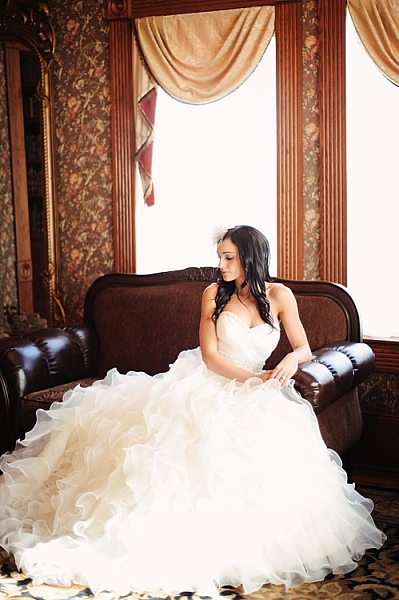
Wherever you go, keep your photographer eyes open. You may be surprised at how many places transform into a great location once you really start looking. Some unique and exciting photography locations could be: family photos in the library, model portfolio shots in the city building, engagement session in the laundromat, dance group session in a hotel lobby, mom and toddler portraits in a grocery store, bridal session in a grand old house, a museum, a quaint bed and breakfast, a roller-skating rink, a university building, a furniture store, a toy store, or candy store – the list is endless.

Look for great lighting, open spaces, interesting backgrounds, and fun things to interact with. Notice if there are lots of people that you might be disturbing, or if it’s a relatively calm place that you could photograph in peace. Use your imagination and creativity to turn the ordinary into something extraordinary.

192

Secret #2: Always ask permission

Once you’ve found a place you’d like to try, make sure you ask permission before you bring a client there. I find, if possible, that asking in person is usually the best, because they can see who they are talking to, and are often less resistant if they can see your smiling friendly face. If you need to call, be professional and friendly on the phone, so they feel comfortable letting you come with your camera.

If you aren’t sure who owns the building, check with city or county records, or ask a neighboring building or house if they know who owns it. Do the legwork to find out who owns the property before you barge in uninvited. It gives all photographers a bad name if you trespass. I’ve had many times where I call to ask permission, and the owner thanks me profusely for asking permission. They express their frustration that other photographers just start shooting without asking. They allowed me to photograph on their property, so obviously they don’t mind people being there, but they always appreciate being asked first.

Some locations, like museums, or theme parks, are fine with you taking photographs inside, but you have to pay the entrance fee.
148

Some places charge a fee for photography, and some don’t allow photographers at all. If you whip your camera out in either of those types of places without asking permission first, you could be fined huge amounts. It’s not worth it. If you ask permission and get a no, just move on and find another place. However, it never hurts to ask. Most of the time you get a yes, and often they are pleased that you think their building is worthy of being a photography location.

112

Secret #3: Find an owner who will also benefit

I needed a place to have adorable kids come for Valentine’s Day photos, but I didn’t know who would want multiple kids and families traipsing in and out of their establishment. Then I came across an adorable little candy shoppe that was decorated perfectly, and full of delicious sweets and treats. My photography clients came in and out all day for their sessions, and ended up buying lots of candy in the process. Many who came had never noticed the little hometown shop, with homemade caramel apples and every kind of candy you can think of, and they were happy to have discovered it. I ended up having a great place for my Valentine’s Day photos, and the owner got a lot of new business.

177

Look for places that might have a similar situation, and chances are the owner will be more than happy to let you use their location, free of charge. Many small locally owned places need a couple of photos of their establishment for websites and advertising purposes, or maybe even a quick headshot, and would be thrilled to let you photograph there in exchange for a photo or two.

146

Secret #4: Explore any connections

Sometimes a friend may own a quaint little bed and breakfast, or maybe she works at a museum. If you are photographing that friend, that may be an especially smooth way to get your foot in the door. If things go really well, they may be okay with you bringing other people to their property again. Even if they aren’t the one that you are photographing, you could ask what they think about letting you use the property that they have a connection to.

Be careful not to ask for too much, and be careful not to put anyone in an uncomfortable position. If you sense that they are hesitant about having a camera there, don’t push it. A little respect goes a long way, and you don’t want to be the photographer that people avoid at all costs. Relationships are more important than having a cool place to photograph, so be extra sensitive when using this secret.

171

Secret #5: Be the best guest

When you’ve gotten permission to use a place, never, never, never ever let anything get destroyed, damaged, or left in any way other than how you found it. If you need to move something out of the way, ask if it’s okay first, and then put it back where you found it. Be mindful of what is going on around you, especially if you are photographing kids. You are responsible for what happens with your session, and you never want to pay a big repair bill, or lose a friendship because you were careless.

You are not only representing yourself, but all photographers everywhere, when you use a public or private property for photographs. If you make it a horrible experience for the owners, you have more than likely ruined it for future sessions for yourself, and for all other photographers who might think to ask permission. Please don’t be that careless photographer who ruins it for everyone. Instead, leave such a great impression that all photographers will be welcomed with open arms into almost every establishment, to create beautiful and unique photographs.

111

Do you have any other tips for finding great indoor portrait locations? Have you found any gems? Please share your comments and images of your favorite spots below.

googletag.cmd.push(function() {
tablet_slots.push( googletag.defineSlot( “/1005424/_dPSv4_tab-all-article-bottom_(300×250)”, [300, 250], “pb-ad-78623” ).addService( googletag.pubads() ) ); } );

googletag.cmd.push(function() {
mobile_slots.push( googletag.defineSlot( “/1005424/_dPSv4_mob-all-article-bottom_(300×250)”, [300, 250], “pb-ad-78158” ).addService( googletag.pubads() ) ); } );

The post 5 Secrets for Finding Great Indoor Portrait Locations by Melinda Smith appeared first on Digital Photography School.
Digital Photography School

 
Comments Off on 5 Secrets for Finding Great Indoor Portrait Locations

Posted in Photography


8 Steps to Great Long Exposure Landscape Photography

21 Mar

longexposure_landscape2

In this article I will outline eight steps, that will help visualize what you’ll need to capture beautiful, well-planned, and unique images that you’ll be happy with.

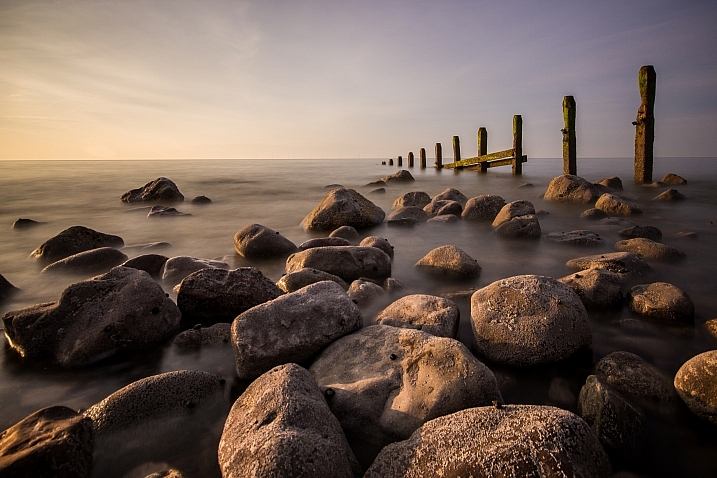
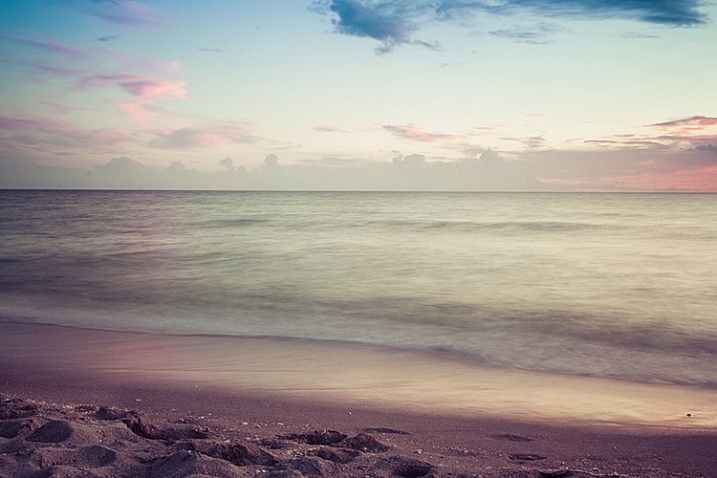
Long exposures are the true artworks of photography; a normally static and bland scene can become a dynamic masterpiece when the shutter is left open, and the capturing of movement occurs. Surf on a beach becomes a swirling, cloud-like mass, and grasses flowing in the wind become a single, beautiful entity. This is a situation where what you see, and what you end up with, are usually two very different things, and the results are often breathtaking.

But capturing that beauty can be challenging. So what do you need to focus on to make a long-exposure landscape shot work? Let’s explore that a bit more.

David McAughtry

By David McAughtry

1. Choose your location wisely

Before you even shoot your landscape, you’ll need to decide what type of shot you’ll tackle, and what environment you’d like to shoot in – whether it be a grassy plain, a seascape, or a busy highway.

Long exposure photography is about capturing, and translating movement within a frame. Spend some time deciding what you’re trying to capture, and what movement you want to accentuate. Rolling waves? Swaying grass? Flowing clouds?

Take a moment to envision what your scene will look like, and what parts of it will be stationary, and which parts will be fluid.

Aaron

By Aaron

2. Be patient and wait for the right time

Long exposures, at their very basic premise, require one of two things to work properly. Either very dim light situations such as the golden hour time periods, very early, or very late in the day – OR modifiers added to the camera to diminish the light that is coming in through the lens.

The reason you need one of these is because leaving the shutter open for longer periods of time, monopolizes one corner of the exposure triangle. When a normal amount of light strikes the camera’s sensor for an extended period of time, you’re guaranteed an overexposure. Therefore, you’ll need to change one of the variables to reduce that amount of light.

longexposure_landscape

The solution? Plan your shoot for very early in the morning, and very late in the evening. The darker it is outside, the longer you’ll be able to leave your shutter open, and therefore the more motion you’ll be able to capture in your image.

If you’re unable to shoot at those times, you’ll need to invest in a neutral density filter, preferably one with the ability to reduce the amount of light coming in to your lens by 10 stops, or more. These filters also add an extra layer of uniqueness to your images, because they allow you to shoot these long exposures at times of the day you normally don’t expect to see them.

3. Select the perfect lens

Of course, there are no hard and fast rules about which lens you’ll need to use, but traditionally, landscapes are captured with wide-angle lenses, to broaden the view and translate a sense of expansiveness.

Can you capture a landscape with a standard 50mm lens? Of course you can! But to maximize the open feel of a scene, consider using something wider. Keep in mind that the more you capture within the frame, the more movement it will contain.

070515_

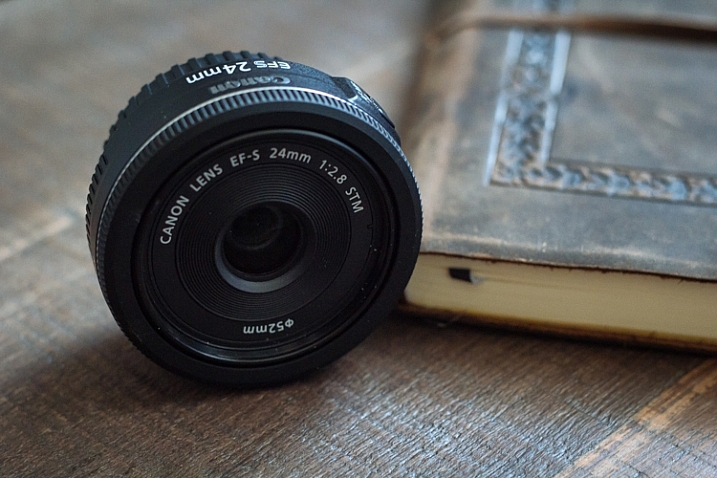
I personally use a 24mm f/2.8 pancake lens for most of my landscape shots. While it’s not as wide as what some people use, I find it gives me a good middle ground, with a wide focal length, and very little of the distortion traditionally associated with super-wide glass.

4. Bring the proper equipment

While we’re speaking about the planning phase of your shoot, it’s a perfect time to consider what gear you’ll need to pull off a long exposure landscape. As it happens, it’s the same equipment you’d need for any other long exposure shot.

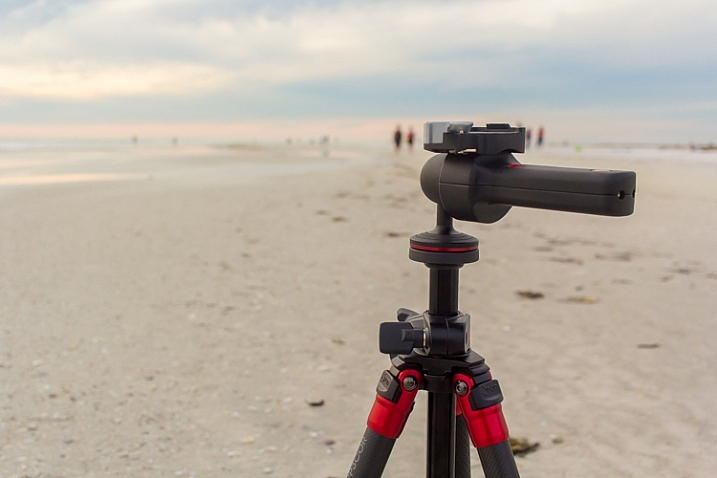
A tripod is a invaluable piece of gear for any landscape photographer, and for a long exposure, it’s an absolute requirement. Exposures of several seconds, which are required to produce movement within the image, need a stable base for the camera. The slightest amount of movement can cause blurriness, and that is amplified with longer and longer shutter times. Invest in a good, sturdy tripod, and ensure nothing will blow or bump into the unit while in operation.

013016_

Another essential accessory for this situation is a remote shutter release. There’s really no excuse for any landscape photographer to not have one, as they can be found for your camera model for $ 10, or so. These releases connect to your camera, and allow you to activate the shutter without ever touching the camera body itself. This keeps the vibration during the shutter click to an absolute minimum.

5. Use the correct camera settings

Since you’re using longer exposure times to pull off this type of shot, you’ll need to make adjustments to other parts of the exposure triangle. Generally, this means you need to stop your aperture down as far as you can, while maintaining sharpness, and reducing your ISO to the lowest setting. These two settings will allow you to bump your exposure time up, to long enough to capture movement in your image.

Fortunately this also gives you some bonus advantages; a lower ISO (such as 100), will keep the noise and artifacts in your shot to a minimum, giving you the best possible image quality. In addition, lenses tend to be sharper in the middle aperture ranges. Using apertures such as f/8, f/11 or f/16 will give you a nice, deep depth of field throughout the picture, while also taking a sharper, clearer photo than what you’d generally get with an extreme aperture of f/22 (due to diffraction).

022916_

As always, shoot in RAW. This will capture as much data as possible, and allow you to make non-destructive edits to the file later. Shooting in RAW format also negates the need to fiddle with white balance while shooting, since that can be adjusted in post-production.

If you do set white balance at the time of the shot, it’s usually a good idea to select the Daylight preset, or a custom white balance setting of your own, that counterbalances the extreme warmth encountered at sunset, and vice-versa for a shot at sunrise, which is a cooler time of the day, color temperature-wise.

6. Focus on your composition

Ekaitz Arbigano

By Ekaitz Arbigano

When you have your equipment and settings where they need to be, it’s time to take a moment to compose your shot. What are you capturing? The movement of a body of water like the surf from the ocean? Adjust your composition to allow for more of the water to be in the composition, instead of the sky. Are you trying to focus on the movement of clouds across the sky? Then give that part of the scene more attention within your frame to accentuate it.

7. Envision and anticipate movement

Shooting a moving scene, and attempting to capture that movement involve a bit of foresight, not unlike a marksman leading his target, by visualizing where the target will be when the shot gets there.

longexposure_landscape3

How far will the clouds move in the duration of the exposure? In which direction? Plotting this out before you click the shutter will improve your final image.

For example, capturing the ebb and flow of surf pounding a beach, requires knowing where the surf-line will end, and begin to recede back into the ocean, to properly compose it. Watching the movement of the subject you’re shooting, will help anticipate where it will appear in the final image. It’s always pays to plan ahead!

8. Enhance beauty in post-production

Finally, (and yes, this can be a touchy subject), learn to excel with the post-production process. A long-exposure image will already by eye-catching just by its inherent properties, but it’s important to take time during editing to enhance the beauty you’ve already captured in camera.

This shot initially had a cooler white balance, due to being shot in the morning, as opposed to during sunset.

This shot initially had a cooler white balance, due to being shot in the morning, as opposed to during sunset.

Since you’ll be shooting early or late in the day, tones will most likely already be dramatic, but may require some light boosting of the colors, or dodging and burning in Photoshop to add a bit more.

Since you shot at a low ISO to begin with, you likely won’t have to deal with noise reduction. After your exposure and tones have been taken care of, a little sharpening is all that stands between you and the final image.

Aaron

By Aaron

So that’s it folks, the eight steps to get you started on the path to taking great long exposure landscape shots. What other tricks of the trade do you use to get the perfect capture? Sound off in the comments below, and as usual, let your voice be heard.

This week on dPS we are featuring articles on special effects. Check out the others that have already been published here:

  • How to Photograph the Full Band of the Milky Way
  • Fire Spinning with Steel Wool – A Special Effects Tutorial
  • Special Effect – How to Create Multiple Flash Exposures in a Single Frame
  • Stacking Light Trails for Night Photography Special Effects
  • 26 Unique Special Effects Photos to Spark Your Creativity
  • Weekly Photography Challenge – Special Effects
  • Tips for Shooting Through Objects to Create a Special Effect
  • How to Add Vintage Frame Overlays Using Alien Skin Exposure X

googletag.cmd.push(function() {
tablet_slots.push( googletag.defineSlot( “/1005424/_dPSv4_tab-all-article-bottom_(300×250)”, [300, 250], “pb-ad-78623” ).addService( googletag.pubads() ) ); } );

googletag.cmd.push(function() {
mobile_slots.push( googletag.defineSlot( “/1005424/_dPSv4_mob-all-article-bottom_(300×250)”, [300, 250], “pb-ad-78158” ).addService( googletag.pubads() ) ); } );

The post 8 Steps to Great Long Exposure Landscape Photography by Tim Gilbreath appeared first on Digital Photography School.

Digital Photography School

 
Comments Off on 8 Steps to Great Long Exposure Landscape Photography

Posted in Photography


Great Eight: Panasonic Lumix DMC-GX8 review

10 Mar

Key Features

  • 20MP Four Thirds MOS sensor
  • Dual IS capability
  • Depth from Defocus AF system
  • 2.36M-dot tilting OLED EVF
  • 1.04M-dot, vari-angle OLED touchscreen display
  • 4K video / photo
  • Weatherproof magnesium alloy body
  • Wi-Fi with NFC

The Panasonic Lumix DMC-GX8 is the company’s flagship Micro Four Thirds interchangeable lens camera, and the followup to the popular GX7. While sharing some similarities with its predecessor, such as a tilting electronic viewfinder and rangefinder-styled body, the majority of the specs and features are dramatically improved.

The GX8 was the first Micro Four Thirds camera to leave the world of 16 Megapixel sensors behind, moving to 20MP. This increase in resolution allows the GX8 to appear to be closer in spec to other ILCs, many of which have 24MP sensors. When combined with Panasonic’s latest Venus Engine processor, the GX8 is capable of 4K video capture, 10 fps burst shooting (8 with the mechanical shutter), and a top ISO of 51200. 

The camera has also received a big upgrade in the autofocus department. While we’ll explain how Panasonic’s Depth from Defocus technology works later, it impressed us with its speed and subject tracking abilities when we reviewed the DMC-G7.

Another very useful new feature on the GX8 is ‘Dual IS’. The camera already has built-in sensor-shift IS and, when selected stabilized lenses are attached, can combine the two systems for even better shake reduction. Panasonic claims a 3.5x improvement at wide-angle and 1.5x at telephoto compared to the GX7 (which relied solely on its less advanced in-body IS system). 

The GX8 has also gained 4K (UHD) video capture support that surpasses the DMC-G7 in terms of features, though it’s not as robust as the GH4. 4K support also extends to stills, via the camera’s 4K Photo mode, a tool which helps capture moments that you might otherwise miss.

One last thing to mention in this introduction is the design of the DMC-GX8. The camera is considerably bulkier than its predecessor, closer in size and weight to Fujifilm’s X-Pro2. That’s good, though, as build quality has increased and the camera is now splash and dust resistant. The tilting EVF remains but now it’s larger and uses OLED rather than LCD technology. The tilting rear LCD on the GX7 has made way for a fully articulating OLED screen on the GX8. A few dials have moved around as well, and there’s now direct control for exposure compensation on the camera’s top plate.

The Lumix GX8’s feature set comparable to both mirrorless cameras like the Olympus PEN-F and Fujifilm X-Pro2, but also DSLRs such as the Canon 80D and Nikon D7200. As you’ll see throughout the review, the GX8 offers some features that none of those cameras can compete with.

Spec comparison

   Panasonic GX7  Panasonic GX8  Olympus PEN-F
 Sensor  16.0MP MOS   20.3MP MOS  20.3MP MOS 
 Image stabilization  Sensor-shift (2-axis)  Sensor (4-axis) + lens shift*  Sensor-shift (5-axis)
 AF system  23-pt CDAF  49-pt CDAF  81-pt CDAF
 Max shutter speed  1/8000 (mechanical)  1/8000 (mechanical)
 1/16000 (electronic) 
1/8000 sec
1/16000 sec
 Flash x-sync  1/320 sec  1/250 sec 1/250 sec
 Burst rate
 (mech./elect.)
 5 / 40 fps  8 / 10 fps 10 / 20 fps 
 EVF resolution  2.8M-dot equiv.  2.36M-dot 2.36M-dot
 EVF type/mag  Tilting LCD / 0.7x  Tilting OLED / 0.77x  Fixed OLED / 0.62x
 LCD type/res  3″ tilting touch
 1.04M-dot LCD
 3″ vari-angle touch
 1.04M-dot OLED
3″ vari-angle touch
1.04M-dot LCD
 Built-in flash  Yes (GN 7 @ ISO 200) No No**
 Video  1080/60p @ 28MBps 2160/30p @ 100MBps 1080/60p @ 77Mbps 
 Mic/headphone sockets  No / No Yes / No No / No
 Wi-Fi  Yes, with NFC Yes, with NFC Yes
 Weather-sealing  No Yes No 
 Battery life   320 shots*** 330 shots*** 330 shots
 Dimensions  123 x 71 x 55mm 133 x 78 x 63mm 125 x 72 x 37mm
 Weight (CIPA)  402 g  487 g 427 g 
* When using lenses with built-in image stabilization
** External flash included
*** With 14-42mm kit zoom

As you can see, the GX8 is a pretty big leap forward from its predecessor. It is very close in spec to the Olympus PEN-F, though it’s weather-sealed, supports 4K video, and has a considerably larger EVF. One could argue that the GX8 is targeted more toward the video crowd, while the PEN-F is for those looking for a classic ‘camera-loving’ audience.

Pricing

The DMC-GX8 is sold in a body-only configuration for $ 1199 / £919 / €1099. The camera may be bundled with a lens in certain regions.

If you're new to digital photography you may wish to read the Digital Photography Glossary before diving into this article (it may help you understand some of the terms used).

Conclusion / Recommendation / Ratings are based on the opinion of the reviewer, you should read the ENTIRE review before coming to your own conclusions.

We recommend to make the most of this review you should be able to see the difference (at least) between X, Y, and Z and ideally A, B, and C.

This article is Copyright 1998 – 2016 and may NOT in part or in whole be reproduced in any electronic or printed medium without prior permission from the author.

Articles: Digital Photography Review (dpreview.com)

 
Comments Off on Great Eight: Panasonic Lumix DMC-GX8 review

Posted in Uncategorized


How to Find a Great Sunset Photography Location

05 Mar

We all know that one essential ingredient to a great photograph is beautiful light, and that some of the best light happens during sunset. But what truly makes a great sunset photography location?

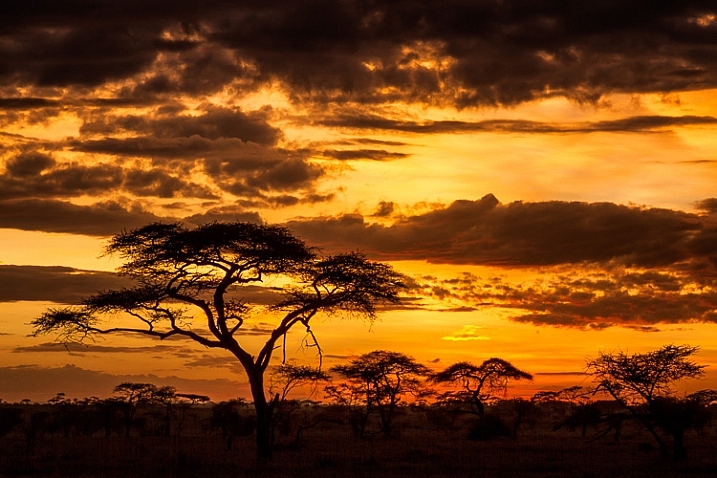
Acacia tree or umbrella thorn in Serengeti National Park, Tanzania.

Acacia tree or umbrella thorn in Serengeti National Park, Tanzania.

In my experience, the best locations are ones where you can find two different compositions, that will work under different lighting situations, to double your chances of making a spectacular sunset image.

To understand what I’m getting at, first think about the direction of light. As the sun descends in the sky and approaches the horizon, the last of the sun’s rays have a wonderful warm hue, that can light up the tips of mountains, and cast a golden glow on the land in the direction opposite the sun. Then there’s usually a lull for a few minutes when nothing much happens, giving you a chance to change position to face the sun. When the sun falls below the horizon, you’ll have an opportunity to make backlit or silhouette photos.

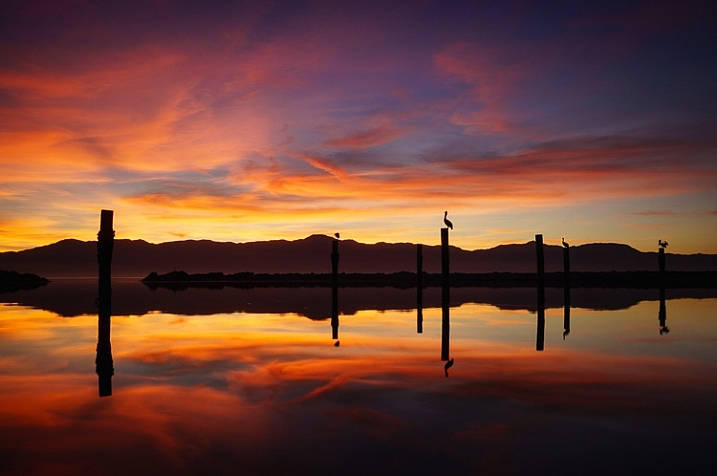
Salton Sea Moments

Finding Your Location

It’s best not to leave location scouting for the last minute, or you won’t have enough time to find a spot with two good compositions, in both directions. Scouting a location is a good activity for mid-afternoon, when you’re probably not going to be photographing anyway, due to the harsh light. Leave your gear at home, or only take minimal equipment to record the scene, so you don’t have a heavy load and you can move quickly and easily.

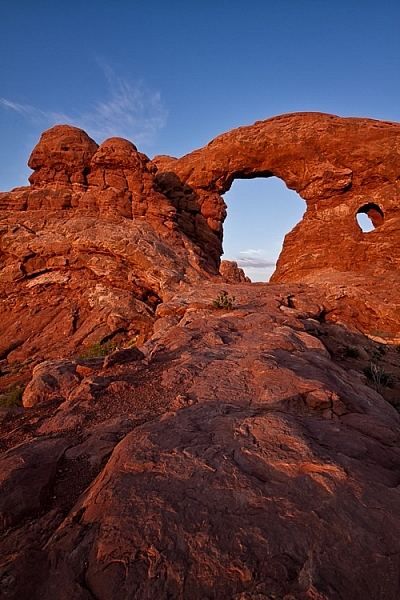
Arches National Park, Utah

Arches National Park, Utah

Before you go scouting, don’t forget to find out the exact direction where the sun will set. This is easy to find with a quick internet search and a compass, or using an app on your phone or tablet.

When you are scouting, what you’re looking for is a good composition for both a front-lit scene and a backlit scene. They don’t necessarily have to be at the exact same spot, but it should take you no more than a few minutes to walk between them.

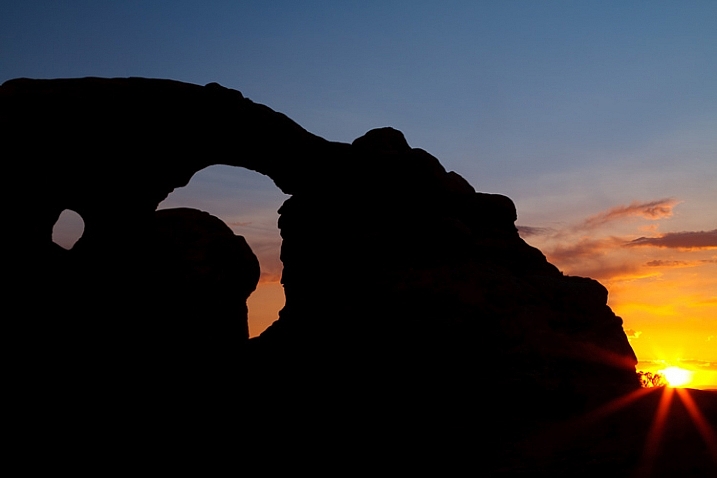
Sunset at Arches National Park, Utah.

Sunset at Arches National Park, Utah.

Composition Tips for Front-lit Scenes

For your front-lit scene, you are going to have nice golden light throughout the landscape, and if there are any mountains in your frame, they will have dramatic bright light on the top. What I usually look for in this kind of a scene is depth, by using foreground elements to emphasize the distance between foreground and background.

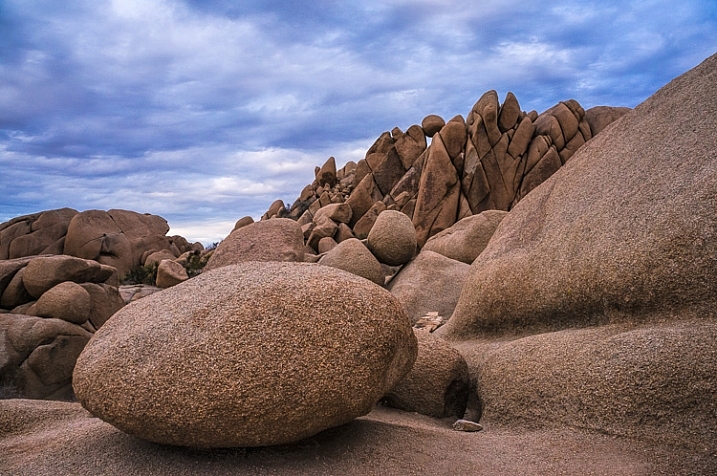
Jumbo Rocks

Try to find some leading lines that will guide the viewer’s eye through the image, and ideally lead to something in the background. Or, find other interesting features, such a plant or colourful rocks, to place in the foreground of the scene.

Composition Tips for Backlit Scenes

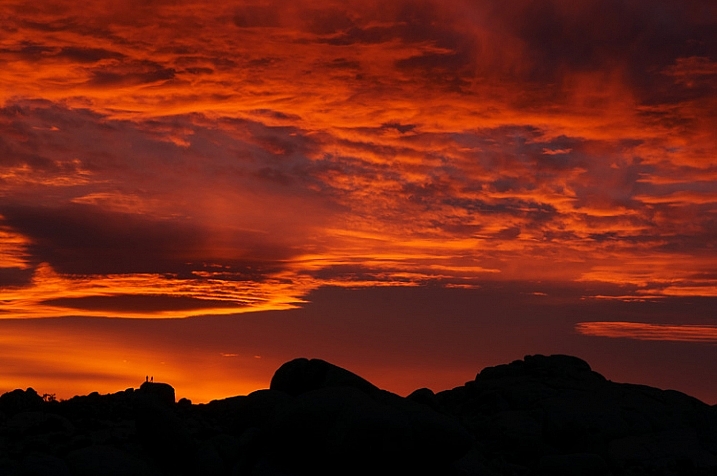
Once those final rays have disappeared from your front-lit scene, you’re ready to change positions and get ready for the backlight. In a backlit scene, everything on the ground is going to be in shadow, so you no longer need to worry about depth – it’s all going to be black anyway. So now what you are looking for is something with a great shape, to make an interesting silhouette against the colourful sky. This can be jagged mountains, sea stacks on the ocean, a cactus, or anything else that has a really strong shape. Don’t pick anything that is going to just look like a vague blob of darkness.

Sunset at Joshua Tree National Park, California

Sunset at Joshua Tree National Park, California

In the Field

Keep these composition ideas in mind when you scout your location, and if you need to, mark your chosen spots with a GPS while you are scouting, to make it easier to find your location when you return to the scene for sunset.

Go early! If there are any clouds on the horizon where the sun will set, the last rays for your front-lit scene will come sooner than expected.

Boondocking spot off Ogilby Road near Yuma, Arizona.

Ogilby Road near Yuma, Arizona.

Exposure for Front-lit Scenes

As the sun descends in the sky and approaches the horizon, your scene will have a more even exposure than it would have earlier in the day. But you still may want to use a graduated neutral density filter, to even out the exposure between the brighter sky and the darker land.

Exposure for Backlit Scenes

When exposing for a backlit scene, it’s important not to use an exposure setting that takes the whole frame into account, like matrix or evaluative metering. Instead use spot metering, and meter on a sky portion of your image, which will capture the dramatic colours in the sky, while allowing your subject in the foreground (the one with the great shape) to become a silhouette.

Ogilby

Conclusion

You can only plan so much when it comes to sunset photography, the rest is up to mother nature. You can only guess what is going to happen with the clouds and the light. When you get there, you may only have clouds for your front-lit scene and not the backlit one. But at least if you plan out two different shots, you’ll double your chances of coming home with a stunning sunset photo.

googletag.cmd.push(function() {
tablet_slots.push( googletag.defineSlot( “/1005424/_dPSv4_tab-all-article-bottom_(300×250)”, [300, 250], “pb-ad-78623” ).addService( googletag.pubads() ) ); } );

googletag.cmd.push(function() {
mobile_slots.push( googletag.defineSlot( “/1005424/_dPSv4_mob-all-article-bottom_(300×250)”, [300, 250], “pb-ad-78158” ).addService( googletag.pubads() ) ); } );

The post How to Find a Great Sunset Photography Location by Anne McKinnell appeared first on Digital Photography School.

Digital Photography School

 
Comments Off on How to Find a Great Sunset Photography Location

Posted in Photography


10 Tips for Photographing Great Headshots

04 Mar

Photographing a headshot can seem like a daunting prospect. To have one person in front of your camera, looking to you for direction and positivity, is an intense environment. People are generally very critical of themselves in photographs, and feel very nervous. However, there are some simple things that you can do to make it a lot easier for everyone.

Headshot on Black Background 1

Here are 10 tips to help you photograph headshots:

1. Have a pre-session consultation

Before your session make sure you know how the images will be used and what style they would like. This can be on the phone or face to face. Talking to them, will help them relax so much more than email. This will allow you to help them prepare for the session. Make sure they know what to expect, and are as relaxed as possible.

Headshot on White Background 1

Find out about what profession your subject is involved in; a corporate lawyer may well opt for a clean white background look (above), while a more relaxed style of business (yoga instructor) may prefer a more colourful, environmental image (below). Find out in the consultation what they want so you are prepared on the day.

Indoor Headshot

2. Help them to choose the right clothes

Generally speaking, solid, neutral colours, work best for headshots, as you want to avoid anything that distracts away from people’s faces. If it is a formal style you are looking to achieve, make sure that everyone gets the message, and remembers to bring formal work clothes with them. Men often forget their jackets, so for a consistent look, try and have a spare one on hand, even if you need to clip it at the back. If you have time with a person, get them to bring a few items of clothing. Remind them to iron their clothes as well.

Here are some example of good clothing choices:

What to wear

What to wear 2

What to wear 3

3. Create separation from the background

Make sure that your subject doesn’t stand too close to the background. If you are using a studio background (or wall in an office) and you stand someone close to it, you may see shadows on the wall, which makes the images look less professional. For environmental headshots outdoors, I still recommend separation from the background. The bokeh creates a nice nondescript background, especially when shot at a wide aperture. Typically I aim for an aperture of f/4 for environmental and natural light sessions, and f/8 for studio style sessions with lights.

4. Starting the session

Whether you are photographing headshots for a single person, or a whole team, make sure you have a general chat with each person first, to help them relax. This can be just a 10 second, confident handshake, and a “how are you?”. People generally feel very tense about having their photograph taken, and talking about something in their comfort zone (where they live, if they have children or pets, etc) will really help them appear and be more comfortable.

5. Silly Faces!

A great way of helping people to relax in front of the camera, if you don’t have much time with them, is to ask them to pull a funny face for the first frame. Use this as a lighting test for a new person as well. This is great at breaking the ice, and very few refuse to do it. Once they have pulled a daft face, everything else is easy!

Funny faces

Headshot Photography London 0997

6. Lighting and positioning

For business and actors’ headshots, I tend to light quite evenly. There are a few circumstances when the images are low-key, but for the main part, they are evenly lit. A classic beauty lighting setup works well, with one light above, and a second light, or a reflector filling from below.

I ensure the subject is turned with their body 45 degrees away from the camera, and towards the main light source (if your lighting allows for this). Their face should be straight towards the camera. You may need to guide people to look straight down the lens. It’s surprising how many people look off camera, at the flash, or somewhere random.

Headshot setup

Posing example

7. Sit people down

People may be more comfortable sitting down, and by asking them to rest their hands on the tops of their thighs, it gives them something to do with their hands. It also ensures that the subjects all know where they need to be, and they don’t move around too much.

8. It’s all about the little adjustments

What separates a great headshot from an average one, are generally very small changes. These little adjustments can make all the difference. The slight tilt to the head, leaning forward, a gentle but intriguing smile. Don’t be afraid to ask someone to make very specific changes to their expression and position, until you get the image you’re looking for.

Headshot Photography London 1052

9. Keep talking and be positive

When you’re in the midst of taking photographs, make sure that you keep talking to your subject. Reassure them that they’re doing it right, and you’re getting great images. Even if you’re not satisfied with the images when someone turns their head in a certain direction, or how the light is falling on them, never express that to your subject. Silence will kill the atmosphere, so no matter what is happening, just keep chatting and being positive.

10. Shoot tethered

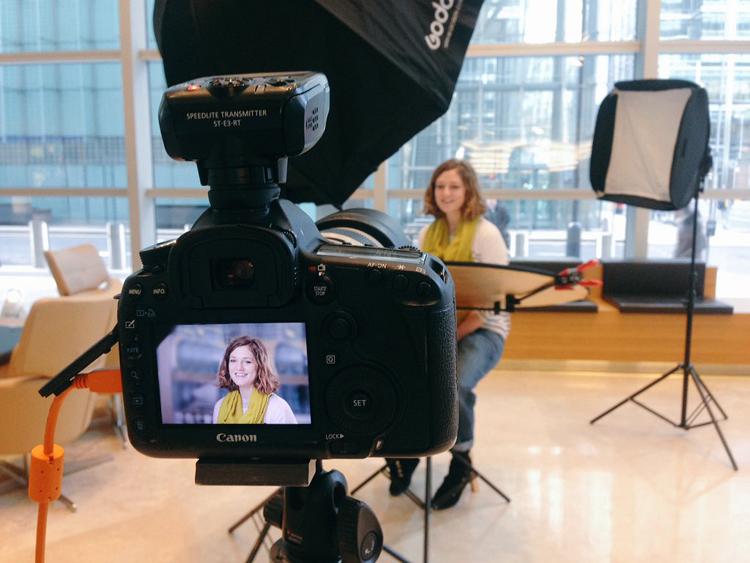
If you have all the necessary equipment, shooting tethered is a fantastic way the get great headshots. When people see a couple of shots on the screen, they can very quickly get an idea of what needs to be changed. The immediate feedback on the screen will help everyone massively.

I hope you find these tips for better head shots helpful. Do you have any others we missed? Please share them, and your headshot photos in the comments below.

googletag.cmd.push(function() {
tablet_slots.push( googletag.defineSlot( “/1005424/_dPSv4_tab-all-article-bottom_(300×250)”, [300, 250], “pb-ad-78623” ).addService( googletag.pubads() ) ); } );

googletag.cmd.push(function() {
mobile_slots.push( googletag.defineSlot( “/1005424/_dPSv4_mob-all-article-bottom_(300×250)”, [300, 250], “pb-ad-78158” ).addService( googletag.pubads() ) ); } );

The post 10 Tips for Photographing Great Headshots by Sean Gannon appeared first on Digital Photography School.

Digital Photography School

 
Comments Off on 10 Tips for Photographing Great Headshots

Posted in Photography


All cameras are great, but that doesn’t make choosing one any easier

22 Jan

It’s often said all modern cameras are good. And it’s true: That’s the reason most of the cameras we review get some kind of award. But it’s also close to meaningless. It seems to imply that it doesn’t matter which camera you buy, yet that’s as far from the truth today as it’s ever been.

The thing that stood out to me as we selected our recommendations in our recent roundups was that, no matter how much technology improves and cameras converge, there’s still a huge difference in terms of what each camera does well and what it falls down on. Which means there’s still a right and a wrong camera for you.

Not just any camera will do

It is also true of course that it’s your own skills, rather than the limitations of technology, that are most likely to hold you back. But again, this doesn’t mean that just any camera will do.

One of the most witless arguments I regularly see is: ‘it won’t improve your photography – Ansel Adams would get better photos using an iPhone.’ (And it’s always Ansel Adams, isn’t it?).

Follow that logic to its conclusion and none of us would ever use a proper camera. Sure, a great photographer will be able to take better photographs using any old camera, but they’ll probably take an even better photo if you give them a better camera – especially if it’s a better camera for them. And, while it’s obvious that a better camera won’t instantly make me a better photographer, it could result in me enjoying photography more.

There is no ‘best’ camera

Predictably enough, there were howls of outrage at the cameras we recommended, with owners of other brands passionately advocating for the camera they’ve chosen. And it’s easy to see how this comes about: along with a healthy dose of post-purchase justification I’d like to think that a lot of these people have bought cameras that are well suited to their needs. But this doesn’t mean they’d be well suited to everybody else’s.

We recommended the Sony a6000 in our roundups because it’s probably the best all-rounder in its class: it’s got a viewfinder, really good video, excellent autofocus and competitive image quality (despite its age). Yet it’s not the camera I’d buy for myself, in this category.

Just look at the mid-range interchangeable lens camera category. There is no camera that’s best at everything so in the end we selected the Sony a6000. It no longer offers the very best image quality or the very best specs, nor is it the stand-out leader for video at this point. However, without knowing more about the person we’re recommending it to, it stands out as the best all-rounder because it’s consistently competitive in every respect. By this same logic, we didn’t end up recommending a couple of cameras that we as a team really like.

The Fujifilm X-T10, for instance, is a cracking little camera, it borrows most of its technology from the much more expensive X-T1 and retains just about everything we like about that camera (the JPEGs, the controls, the choice of lenses…). However, its continuous autofocus simply isn’t a match for the likes of the a6000, NX500 or D5500 and its video is a significant weak spot, meaning it was never going to be one of our overall recommendations. And yet, for a certain type of photographer, it’s the best camera in its class.

Know your needs and be willing to grow

One of the key lessons, then, is that it’s important to think hard about what you want to use a camera for and what your priorities are. And just as a good camera can encourage you, a limited camera can limit you.

The Nikon D5500 offers some of the best image quality in its class, a well worked-out user interface, great autofocus and excellent battery life. But it’s also one of the bulkiest cameras in its class, one of the least video-friendly and one of the few not to include twin control dials for the price.

I regularly see comments saying ‘I don’t care that my camera isn’t very good at Movie shooting/Dynamic Range/Autofocus tracking, I never use it.’ Which increasingly prompts me to wonder whether that person might use the feature more it their camera was better at it. As I review cameras it’s occasionally frustrating to have to continue to use a feature that doesn’t work very well. I know I’d just stop using it if it wasn’t my job to persevere. So, before you consider your next upgrade, think carefully: might you use a feature more if it was easier to use or gave better results?

It still matters

This is why I think saying ‘all cameras are great’ is such an unhelpful statement: because they’re not equally great at everything and the differences still matter.

The Fujifilm X-T10 is the last camera I’d choose for video work and its continuous autofocus isn’t a match for the best of its peers. Yet there are plenty of people I’d recommend this camera to. Or the Olympus E-M10 II, for that matter.

The difference between the best and worst autofocus performance is the difference between it being easy to get the shot and there being a high chance you’ll miss the moment. The difference between the best sensor and the weakest is the difference between you having the latitude you need when you get to Lightroom and having to work out how to hide the noise. The difference between the best movie shooting camera and the worst is the difference between being able to easily capture great-looking footage and finding yourself thinking ‘can I really be bothered with this?’

So yes, most modern cameras are amazing, but not all of them will encourage, support and inspire you in your photography. And that’s got to matter, hasn’t it?

Articles: Digital Photography Review (dpreview.com)

 
Comments Off on All cameras are great, but that doesn’t make choosing one any easier

Posted in Uncategorized


Still GReat: Ricoh GR II studio scene and real-world samples

22 Jan
The Ricoh GR II and a predecessor from the days of film – the Ricoh GR1

The Ricoh GR II is a modest update to the well-regarded Ricoh GR, as well an evolution of a beloved film camera, the Ricoh GR1. In this version, the high-quality formula remains: an 18.3mm (28mm equiv.) F2.8 lens in a compact body with a 16MP CMOS APS-C sensor inside. While the update doesn’t bring any image quality changes, it does offer a chance to run the new camera through our studio test scene, as it will be an obvious competitor to the Fujifilm X70 when it arrives. Take a look at how it holds up against other 16MP compacts, and see how the street-friendly camera performs out-and-about.

Articles: Digital Photography Review (dpreview.com)

 
Comments Off on Still GReat: Ricoh GR II studio scene and real-world samples

Posted in Uncategorized


48 Hours Left to Save up to 90% on These Great Photography Deals

30 Dec

photography deals

Over the past two weeks we’ve put together some great photography deals to help you improve your photography in the new year but as 2015 comes to a close so will the deals.

As this post goes live you have approximately 48 hours to take advantage of this promotion.

Each year at this time we announce the most popular deals so I thought I’d list them here in order of popularity.

Congratulations to Sebastian Michaels for topping the list again – this year with his new Black and White Photo Artistry course.

  1. Black and White Photo Artistry
  2. Cole’s Classroom Lightroom Course
  3. Landscape Photography Bundle
  4. Mike Newtons 104 Lightroom Presets Pack
  5. Phil Steele’s Event Photography Course
  6. Photography Concentrate Composition Skills and Light Skills Guides (or get the bundle)
  7. Photo Nuts Photography Courses
  8. Natural Light Photography eBooks
  9. Portraits eBook Bundle
  10. 101 dPS Lightroom Presets
  11. $ 10 eBooks Day (plus Ed Verosky eBook Bundle)
  12. Snapn Motion eBook (and Snapn Motion eBook Bundle)

Which deals did you snap up this year?

googletag.cmd.push(function() {
tablet_slots.push( googletag.defineSlot( “/1005424/_dPSv4_tab-all-article-bottom_(300×250)”, [300, 250], “pb-ad-78623” ).addService( googletag.pubads() ) ); } );

googletag.cmd.push(function() {
mobile_slots.push( googletag.defineSlot( “/1005424/_dPSv4_mob-all-article-bottom_(300×250)”, [300, 250], “pb-ad-78158” ).addService( googletag.pubads() ) ); } );

The post 48 Hours Left to Save up to 90% on These Great Photography Deals by Darren Rowse appeared first on Digital Photography School.

Digital Photography School

 
Comments Off on 48 Hours Left to Save up to 90% on These Great Photography Deals

Posted in Photography


Today Only: Get 4 Great Snapn Guides for just $10 (Save 73%)

21 Dec

It’s time for our 8th deal in our 12 Deals of Christas and today we have a fun one for you today – and cheap too!

Today we have two great deals on our must read Snapn guides.

Snapn guides

SnapnMotion for just $ 5

Capturing motion is no easy feat. With this never before released guide, you’ll learn all the techniques for snapping away with a memory card full of keepers, not blurry “what was that?” images.

Get SnapnMotion here.

Or Bundle Together ALL 4 SnapnGuides for $ 10 and Save 73%

Snapn Motion (our brand new guide to photographing ‘Motion’), along with Snapn Food (how to photograph Food), Snapn Paws (how to photograph Pets) and Snapn Travel (a guide to Travel Photography). This super Snapn bundle is just $ 10 today only.

That’s just $ 2.50 per guide and a real bargain at 73% off their normal retail price.

If it’s just one snapn, or a snapn frenzy, these handy mini-guides are worth every penny.

Grab them for a bargain whilst you can

Yesterdays Presets Deal Extended

Lastly – we’ve extended yesterdays deal because we had some real server issues and many of you missed out.

It seems more of you wanted the deal than the servers could handle so we’ve extended the $ 10 deal on Mike Newton’s 104 Lightroom Presets.

You can grab them here for the next 24 hours only. Our sincere apologies for those of you who had issues accessing the deal yesterday.

googletag.cmd.push(function() {
tablet_slots.push( googletag.defineSlot( “/1005424/_dPSv4_tab-all-article-bottom_(300×250)”, [300, 250], “pb-ad-78623” ).addService( googletag.pubads() ) ); } );

googletag.cmd.push(function() {
mobile_slots.push( googletag.defineSlot( “/1005424/_dPSv4_mob-all-article-bottom_(300×250)”, [300, 250], “pb-ad-78158” ).addService( googletag.pubads() ) ); } );

The post Today Only: Get 4 Great Snapn Guides for just $ 10 (Save 73%) by Darren Rowse appeared first on Digital Photography School.

Digital Photography School

 
Comments Off on Today Only: Get 4 Great Snapn Guides for just $10 (Save 73%)

Posted in Photography


dPS 12 Days of Christmas: Save up to 94% on Some Great Photography Training

13 Dec

It’s that time of year where we at dPS kick off our annual 12 days of Christmas campaign!

12 deals christmas dps

This is the sixth time we’ve run this and this year we’ve got our biggest deals yet!

Here’s how it works.

Every day between now and Christmas we have put together a fantastic deal on some photography training products. We’ll set them live on this page (the first one goes up tomorrow).

In the coming 12 days you’ll see some of our own dPS eBooks at discounts we’ve never offered before as well as some deals from other photography sites that we’ve negotiated on your behalf.

Deals this year are as high as 94% off!

Each deal only lasts for 24 hours so you’ll need to be quick!

Get Notified of Each Deal

To get notified of each deal as soon as it goes live simply subscribe via email here:


(function($ ) {window.fnames = new Array(); window.ftypes = new Array();fnames[0]=’EMAIL’;ftypes[0]=’email’;fnames[1]=’FNAME’;ftypes[1]=’text’;fnames[2]=’LNAME’;ftypes[2]=’text’;}(jQuery));var $ mcj = jQuery.noConflict(true);
Don’t worry we keep your email completely private and you can unsubscribe at any point if you find the deals are too many!

We’ll also be updating the deals here on the blog and on our Facebook page.

Our first deal goes out to those who are subscribed in the next 24 hours so keep an eye on your inbox and don’t forget you only get 24 hours to grab each one!

googletag.cmd.push(function() {
tablet_slots.push( googletag.defineSlot( “/1005424/_dPSv4_tab-all-article-bottom_(300×250)”, [300, 250], “pb-ad-78623” ).addService( googletag.pubads() ) ); } );

googletag.cmd.push(function() {
mobile_slots.push( googletag.defineSlot( “/1005424/_dPSv4_mob-all-article-bottom_(300×250)”, [300, 250], “pb-ad-78158” ).addService( googletag.pubads() ) ); } );

The post dPS 12 Days of Christmas: Save up to 94% on Some Great Photography Training by Darren Rowse appeared first on Digital Photography School.

Digital Photography School

 
Comments Off on dPS 12 Days of Christmas: Save up to 94% on Some Great Photography Training

Posted in Photography