RSS
 

Posts Tagged ‘Good’

26 Images with a Hunger for a Good Meal – Photos at the Dinner Table

19 Feb

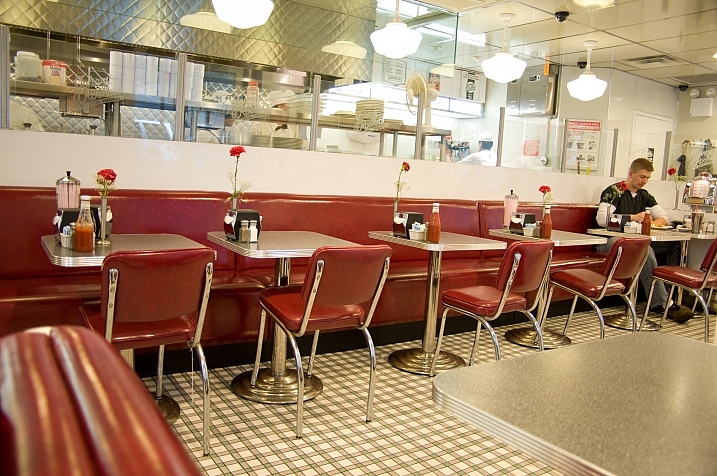
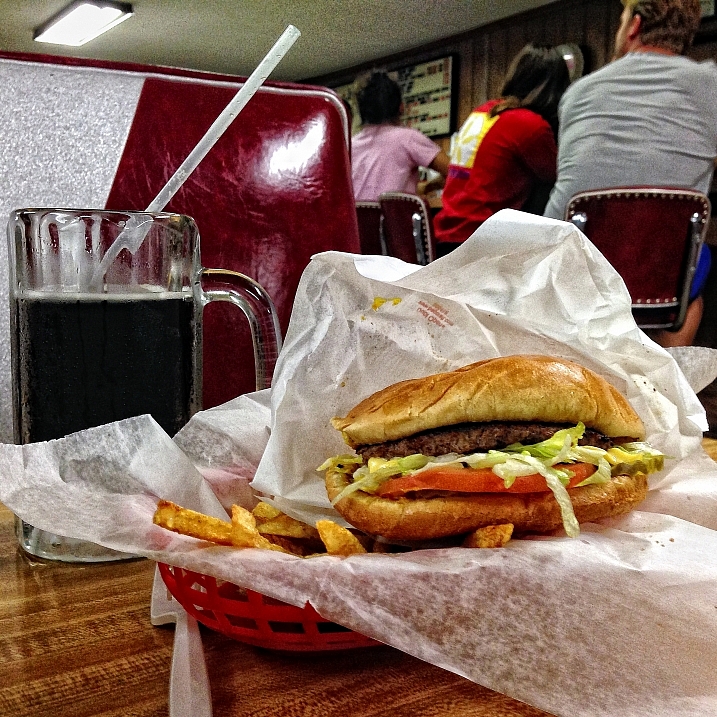
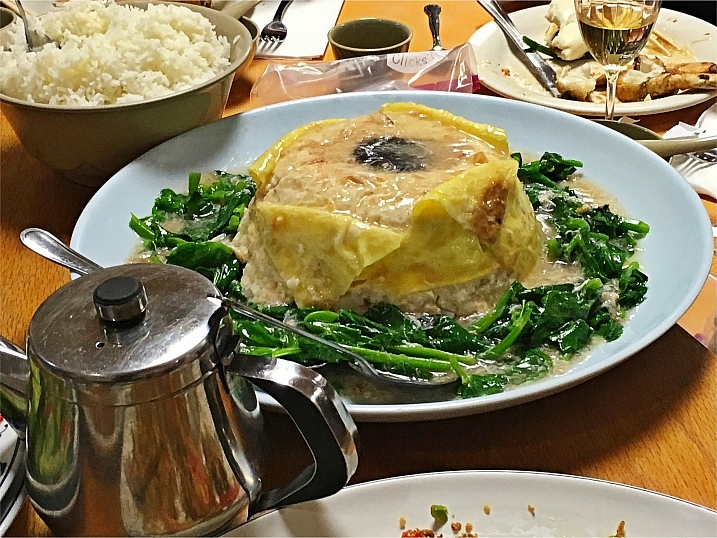
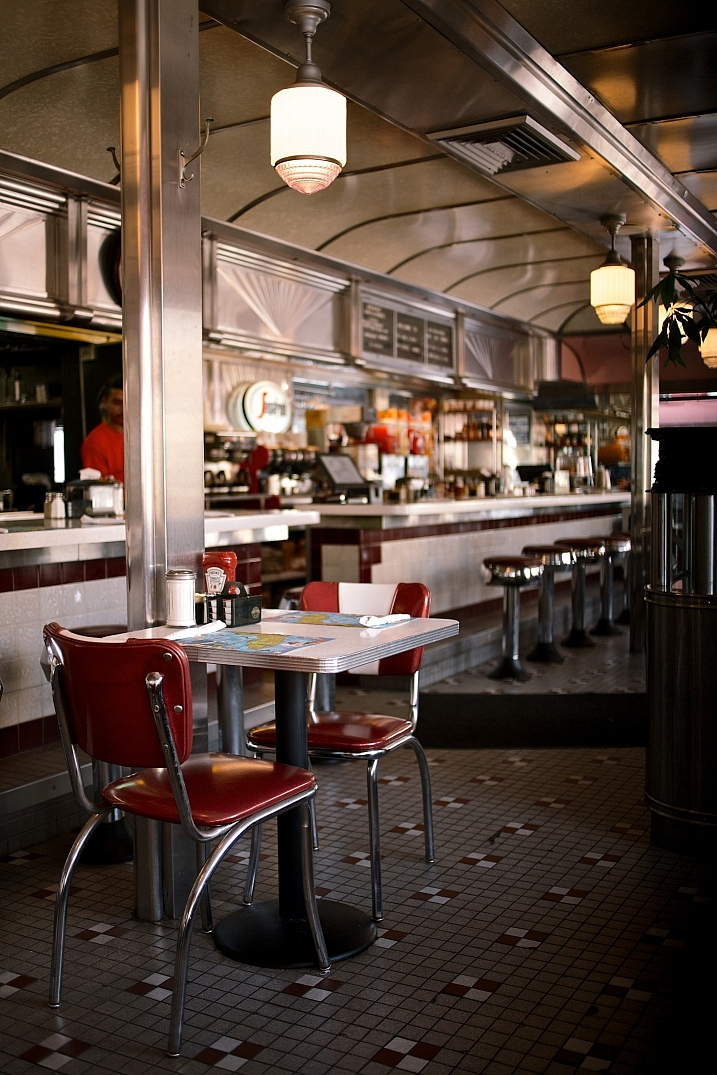
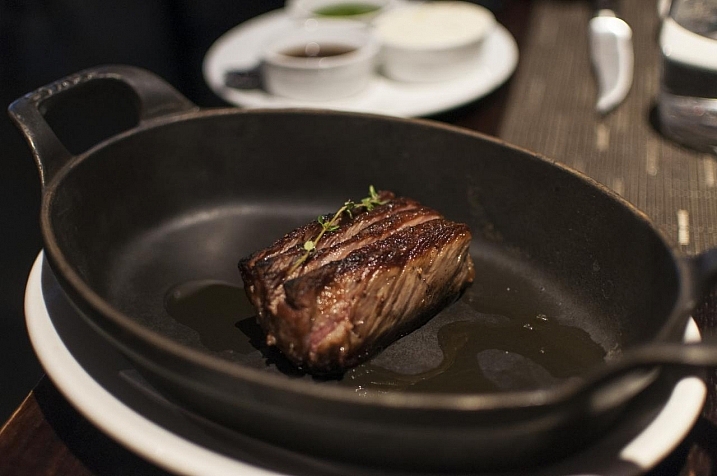
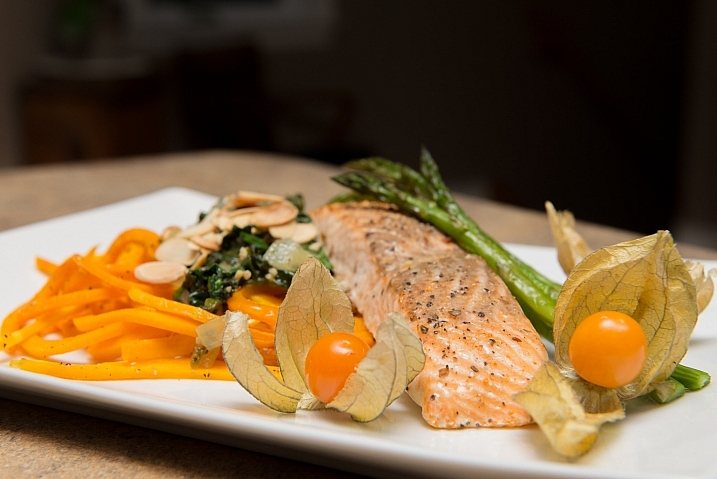
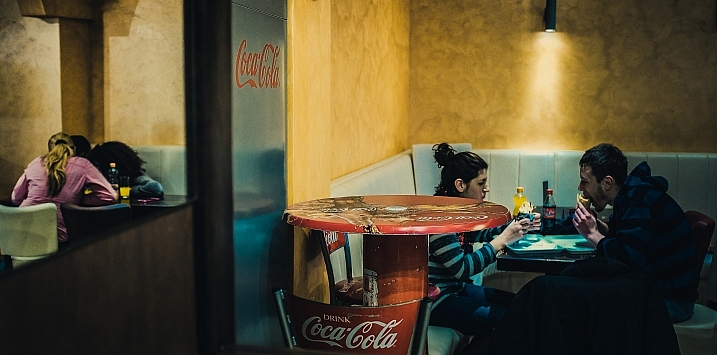
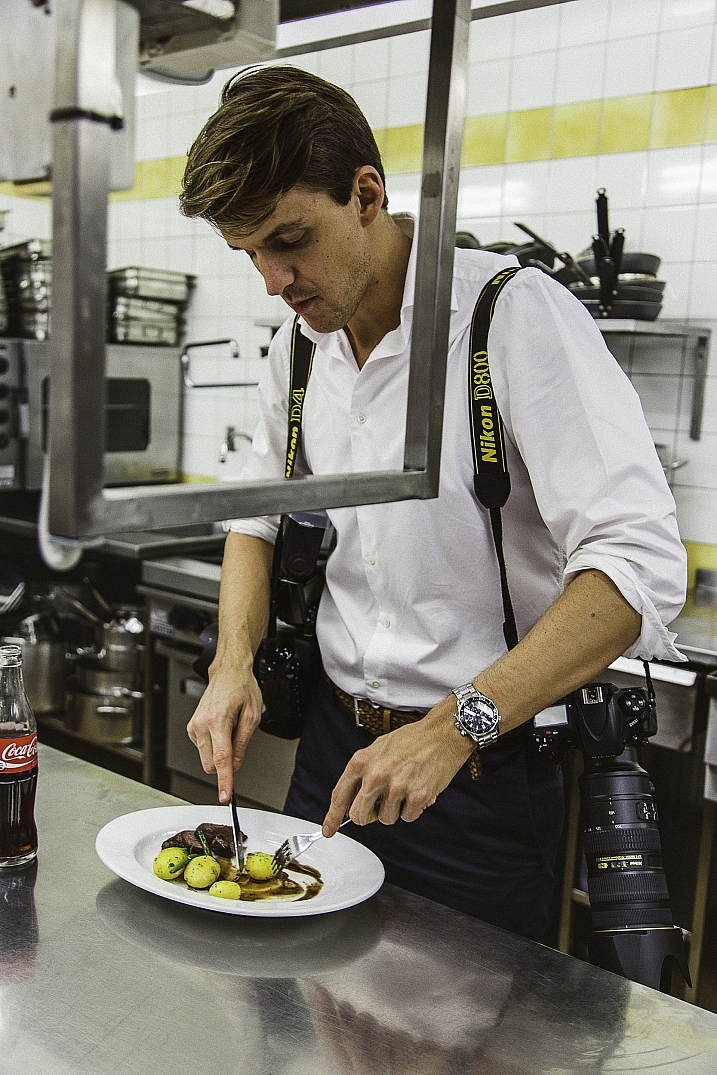
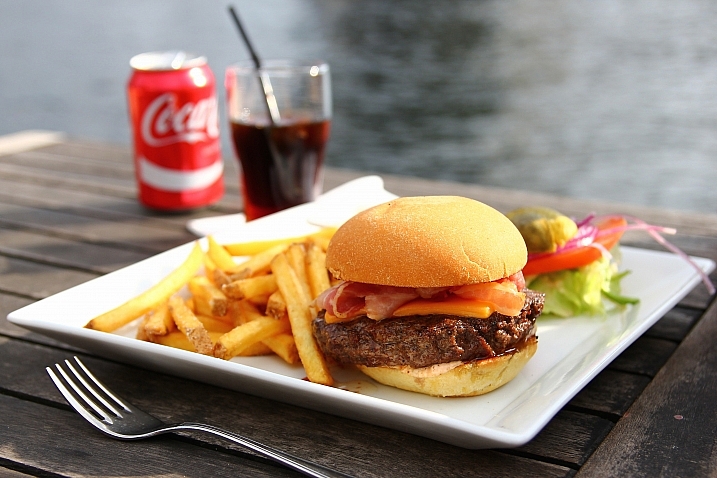
Whether it be a fancy feast at a special occasion, a romantically set table for two, or burger and fries on a plate – the following images satisfy a hunger for not only a good meal, but some great photos at, and around the dinner table.

Are you one to photograph your food in restaurants? Entire Instagram accounts are made up of such images. Note: remember to follow dPS over on Instagram! Even if you aren’t prone to that kind of photography, let’s see if these photos at the dinner table can inspire you, and/or make you hungry too!

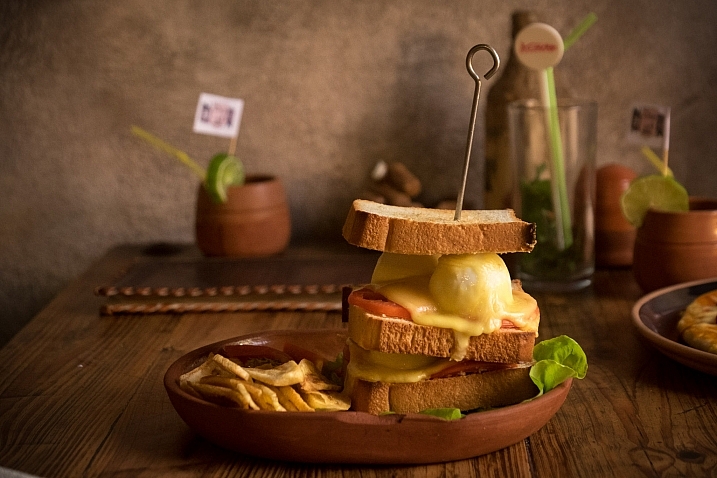
This is actually my photo taken of someone else's sandwich in Trinidad, Cuba. It just looked so amazing!

This is actually my photo taken of someone else’s sandwich in Trinidad, Cuba. It just looked so amazing I had to photograph it!

Radiowood

By radiowood

Antonin Rémond

By Antonin Rémond

Snugg LePup

By Snugg LePup

Dave Hensley

By Dave Hensley

Ron Frazier

By Ron Frazier

The Hamster Factor

By The Hamster Factor

JAPANKURU

By JAPANKURU

Ames Lai

By Ames Lai

Jitter Buffer

By Jitter Buffer

Shawn Harquail

By Shawn Harquail

Laura Thorne

By Laura Thorne

Marketa

By Marketa

Adam Wyles

By Adam Wyles

Mark Manguerra

By Mark Manguerra

Zlatko Vickovic

By Zlatko Vickovic

Tobias Lindman

By Tobias Lindman

Gunilla G

By Gunilla G

Kai Chan Vong

By Kai Chan Vong

Brian Wolfe

By Brian Wolfe

Foodswings

By foodswings

Brook Ward

By Brook Ward

Elias Quezada

By elias quezada

Stijn Nieuwendijk

By Stijn Nieuwendijk

Georgie Pauwels

By Georgie Pauwels

Renaud Camus

By Renaud Camus

googletag.cmd.push(function() {
tablet_slots.push( googletag.defineSlot( “/1005424/_dPSv4_tab-all-article-bottom_(300×250)”, [300, 250], “pb-ad-78623” ).addService( googletag.pubads() ) ); } );

googletag.cmd.push(function() {
mobile_slots.push( googletag.defineSlot( “/1005424/_dPSv4_mob-all-article-bottom_(300×250)”, [300, 250], “pb-ad-78158” ).addService( googletag.pubads() ) ); } );

The post 26 Images with a Hunger for a Good Meal – Photos at the Dinner Table by Darlene Hildebrandt appeared first on Digital Photography School.


Digital Photography School

 
Comments Off on 26 Images with a Hunger for a Good Meal – Photos at the Dinner Table

Posted in Photography


Good sport: a closer look at Canon’s EOS-1D X Mark II

02 Feb

Introduction

The Canon EOS-1D X Mark II is the company’s latest pro-level DSLR, now built around a 20.2MP CMOS sensor with Dual Pixel AF technology. It uses a body that’s the most subtle possible evolution of the classic 1D design, which makes sense, given how many of its long-standing professional users will need to find it familiar the moment they use it. Inside, though, almost every aspect of the camera’s feature set has been overhauled – from the autofocus system to the video capability, the ISO range to the card format it uses. Let us talk you through the biggest changes.

Autofocus improvements

The EOS-1D X II features a similar AF module to that found on the previous flagship 1D X, as well as on the 5D Mark III and 5DS/R, but comes with some notable improvements. For a start, the coverage is larger, with the central region expanding vertically by 8% and the 20 points on the left and right flanks extending vertically 24% more than before.

All 61 points can now focus at F8, which will be very useful when shooting telephoto lenses with 1.4x and 2x teleconverters. 41 of those points are cross-type, having both horizontal and vertical line sensitivity. 5 central points are dual cross-type and have wider baselines that offer high precision focusing for F2.8 and faster lenses. The center point works down to -3EV in One-Shot AF. It’s not available in AI Servo because it requires a longer sampling interval, which would slow down AI Servo.

Also improved is AF point illumination, based particularly on feedback from wedding and event photographers. Points can now remain lit red when focusing, which helps you keep your AF point over your subject in dim situations. Additionally, two brightness levels are available so you can fine tune brightness based on your preference.

You can read more specifics about the very similar previous 61-point module in our EOS 5DS coverage here.

Metering Sensor

The 1D X Mark II gets a new metering module. It’s now a 360,000 pixel sensor that is used both for metering and to provide scene awareness to Canon’s ‘Intelligent Tracking and Recognition’ (iTR) autofocus system.

The sensor itself is a two-layer CMOS chip, with red, green and blue information captured by the top layer and infrared detected further down into the silicon.

Touchscreen LCD

The LCD screen on the back of the camera has received a significant upgrade. It’s now 1.62 million-dot, up from 1.04 million-dot. This represents a move from 720 x 480 to 900 x 600 pixels and the increase in resolution is noticeable. Images look crisp and clear on the back, thanks especially to Canon’s ‘Clear View’ technology that uses optical coatings to reduce reflections.

The LCD is also touch-enabled, but you can only use touch to select a focus point in Live View, either for stills shooting, or to refocus on subjects during movie shooting. It cannot be used to operate menus, nor (annoyingly) is it enabled in playback.

Battery

The Canon EOS-1D X Mark II ships with a new battery, which allows for 1210 shots on one charge. The nice thing is, the battery compartment remains backwards compatible with the older 1D X battery. However, if you use the older battery, frame rates will drop to 1D X levels (12 fps with AF, 14 fps in live view or with the mirror locked up). Heartbreakingly slow, we think you’ll agree. 

Dual Pixel AF

Dual Pixel AF makes its debut on a full-frame sensor with the 1D X II. Every pixel on the sensor is split into two separate photodiodes, one left-looking and one right-looking. Comparing the phase difference between strips of left-looking vs. right-looking pixels essentially allows the camera to determine exactly how much to move the focus element to acquire focus, much as the dedicated phase-detect module in DSLRs do. Approximately 80% of the frame is available for focus using Dual Pixel AF, and the technology is particularly useful not just for this extensive coverage, but for the inherently accurate focus it provides – because focus is performed at the imaging plane, there’s little possibility for mis-focus and the inaccuracy issues dedicate phase-detect sensors in DSLRs display.

Perplexingly, Dual Pixel AF can only be used in One-Shot AF in Live View, meaning it can’t be used to continuously focus (though it can for movies). We weren’t given any reasons as to this limitation, and given that continuous focus is certainly possible – as it works during movie shooting – it seems an odd omission.

Read our original coverage of Dual Pixel AF, with an in-depth look at how it works, here.

Canon embraces CFast (and Compact Flash)

Canon has decided to adopt the CFast standard while also providing a CompactFlash slot for backwards compatibility. The logic of this move is to ‘futureproof’ the camera. For now, Canon has provided the option for super high-speed data rates without alienating its existing audience, who most likely have a large collection of CF cards.

Should you own a CFast card, you’ll be able to capture 170 Raw files in a burst: just a fraction below the 180 JPEGs that its predecessor could manage (the Mark II will shoot JPEGs continuously until you run out of card space). CFast is also required for 4K video recording.

Video capabilities

On paper, the EOS-1D X Mark II has very impressive video specifications – moving far beyond what its predecessor was capable of and incorporating most of what the more niche EOS-1D C offered. The standout spec is the ability to shoot DCI 4K footage (4096 x 2160 pixels) at up to 60 frames per second. This capability is the same as the 1D C, though the X II doesn’t include that camera’s Log Gamma option.

To give faster access to video shooting there’s a Video/Live View switch around the live view button just to the right of the viewfinder. In addition, the camera gains a headphone socket for audio monitoring during recording.

Full HD options

In terms of 1080 video, the camera can record at up to 120 or 100 frames per second (without audio) or at 60, 50, 30, 25, and 24 frames per second, depending on whether you’ve got the camera set to PAL or NTSC mode. Interestingly there’s also the option to capture true 24p footage, as well as the 23.98p approximation offered in NTSC mode.

The camera can output a ‘clean’ signal across its HDMI port, for use with an external recorder or monitor (which could be used to provide focus peaking and zebra warnings, if needed), but this stream is 1080 only, not 4K.

Touch-to-focus video

The other video-friendly hardware change on the 1D X II is the addition of touch sensitivity to the rear LCD. This is only used for a very limited number of features but one of these is to position and re-position with autofocus point during video recording. Combined with the camera’s Dual Pixel AF sensor design, this should make it easy to adjust focus in video without the risk of the lens over-shooting or adding distracting focus wobble to video clips, as can happen with contrast detection autofocus.

Touch to focus can also be used for One-Shot AF in stills Live View shooting. 

Articles: Digital Photography Review (dpreview.com)

 
Comments Off on Good sport: a closer look at Canon’s EOS-1D X Mark II

Posted in Uncategorized


How to Find Good Locations for Family Portraits

28 Jan

When you’re shooting a family portrait, about nine out of 10 times the client will ask, “Do you have a place you typically like to shoot?”

We all do, of course, but if you take every portrait client to the same location, your portfolio will develop an undesirable, repetitive consistency. So, it’s important to thoroughly scout the area where you live and work, to build a list of go-to spots for any scenario, circumstance, and style.

2015 12 26 0002

Think about your city, and build a list of these places where you can shoot:

  • A field or shoreline with broad vistas to capture the aura and glow of twilight
  • A similar outdoor venue with features like tall grass or trees to provide backdrop
  • An outdoor area with full shade, appropriate for shooting midday
  • A covered outdoor space like a gazebo or covered porch, for shoots in inclement weather
  • An indoor space with high ceilings and lots of windows for natural light

Because most family portrait sessions will include a variety of backdrops and poses, the perfect shooting location contains all of these elements. But that’s rare to find.

Finally, make sure that you have the required permits, permissions, and licenses to shoot in your desired locations, whether they’re public or private (many municipalities require a business license to shoot in public places like parks and beaches).

2015 12 26 0003

Once you’ve built your list of go-to locations, you’re ready to schedule a session with a client. Here are the two scenarios that could play out:

1 – The client has already chosen a location

It’s surprisingly rare for a client to be dead set on a location, but sometimes there’s a family home, or a special place with memories where they’d like to be photographed. Or perhaps there’s extended family gathered together already, and they’d like to keep the photo shoot as easy as possible by having you come to them. If you’re shooting for next year’s holiday portrait or another special event, they may also choose a place that fits the theme, such as an evergreen forest or a snowy landscape.

If you’re not familiar with the location, ask questions about it while confirming the shoot. You may discover that you need to bring extra equipment like lighting to fill in shadows, if they’re hoping for a family portrait underneath a moss-strewn oak tree at two o’clock in the afternoon.

Likewise, indoor shots — such as people gathered around the fireplace or the Christmas tree, for example — may present difficulties with lighting that you’ll want to work out and be prepared for, prior to the actual shoot. When feasible, visit the site of any shoot before arriving for the actual job.

2015 12 26 0005

2 – The client is open to your location suggestions

This is the more common scenario, where you pull out that list of locations you’ve already scouted.

Start by getting a sense of the feeling the family wants to capture in their photos. If it’s a holiday family portrait, they may prefer a warm and rustic theme over something bright and urban, for example. Or they may want a look that’s relevant throughout the year.

Timing will also have a lot of influence over your decision on where to shoot. When possible, schedule sessions for an hour, to an hour-and-a-half before sunset, giving you time to arrive and chat, get the family comfortable with your presence and style, and then be fully ready to capture beautiful, stunning portraits just when the changing light is at its peak.

2015 12 26 0004

Sunset (and sunrise) shoots

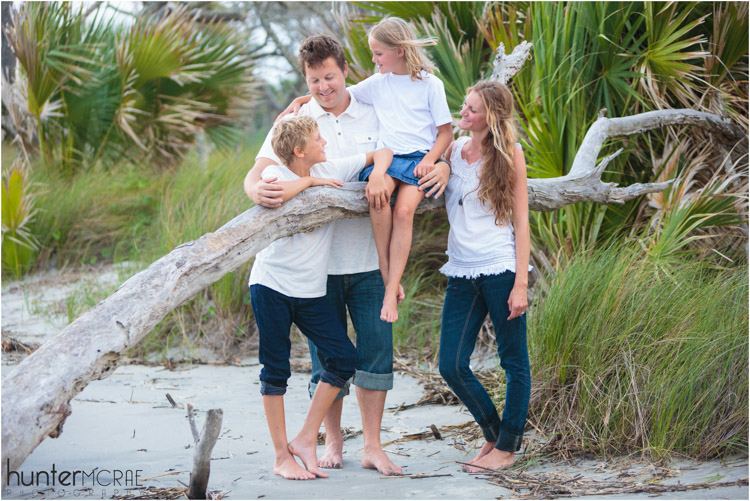
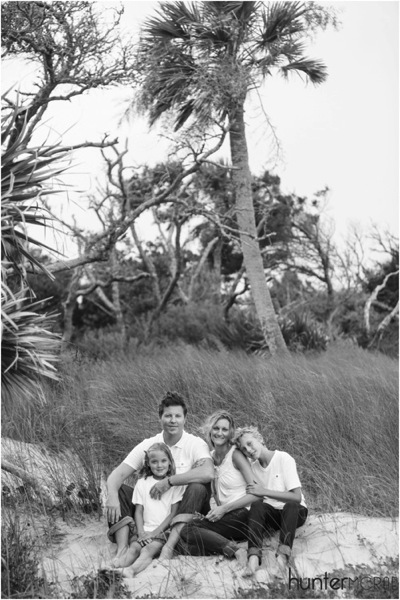
For golden hour sessions, just after sunrise and before sunset, choose a location that ideally has both broad vistas, and objects of interest. For example, if you’re shooting on the beach, don’t just choose a spot with wide open beach (plus houses and passersby) – aim to find a section of beach with sand dunes, tall grass, driftwood, or even distant trees. These objects help frame the image and make it more interesting, without distracting from the subjects of the photograph. The same rules apply in a desert, lake, or city park scenario.

Midday shoots on a sunny day

The challenge with shooting at midday is shadows. You don’t want your subjects to squint in full sun, and you don’t want shadows from tree branches, or manmade obstructions, blocking portions of their faces. The key to shooting in midday on a sunny day is to put your subjects fully in the shade.

2015 12 26 0006

When a client wants to schedule midday, I often lean toward urban areas with architectural interest. If your city or town has a historic neighborhood, seek out alleyways, parks, cobblestone streets, or even sidewalks that are shaded at midday, but present a beautiful surrounding for subjects.

Cloudy day shoots

It’s a huge misconception that overcast days are bad for family portraits. Clients may be discouraged by the threat of rain, but encourage them with the news that even cloud coverage actually makes for beautiful outdoor shots — there’s no squinting and nice even light.

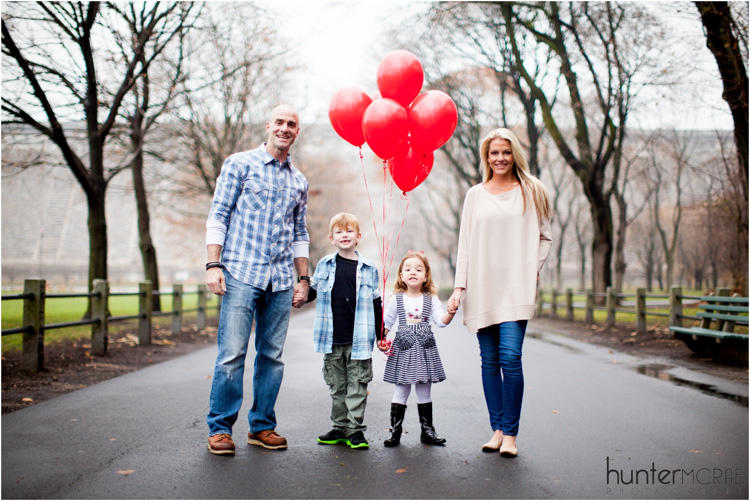
But, if there’s no drama in the sky (dark clouds swirling on the horizon), an overcast day may be less exciting when shooting with broad vistas and open spaces. Turn to your surrounding objects (trees, historic buildings) to provide the intrigue in the photograph. Or bring in a pop of color with balloons or other props.

2015 12 26 0007

On an overcast day, a local mural can actually make a perfect backdrop — just make sure your subjects wear muted tones (black, white, gray, beige) rather than colorful attire that might clash with the art.

2015 12 26 0001

Final tips and tricks

Start by putting together your list of places. Keep the same principles in mind that helped you choose those spots, when giving feedback to a client on their suggested locations. In addition, make sure that wherever you decide to shoot won’t be crowded at the time you’re there — the last thing you want is a bunch of strangers in the background.

Finally, be flexible. Not every shoot will be perfect, but it’s your job as the photographer to ensure that your clients have an enjoyable experience. Have confidence in your skills, and work around obstacles as they arise. If you are engaged and the subjects are happy, it’s possible to create gorgeous family portraits that your clients can share on cards, calendars, and gifts throughout the year.

Do you have any other location scouting tips? Please share in the comments below.

googletag.cmd.push(function() {
tablet_slots.push( googletag.defineSlot( “/1005424/_dPSv4_tab-all-article-bottom_(300×250)”, [300, 250], “pb-ad-78623” ).addService( googletag.pubads() ) ); } );

googletag.cmd.push(function() {
mobile_slots.push( googletag.defineSlot( “/1005424/_dPSv4_mob-all-article-bottom_(300×250)”, [300, 250], “pb-ad-78158” ).addService( googletag.pubads() ) ); } );

The post How to Find Good Locations for Family Portraits by Hunter McRae appeared first on Digital Photography School.


Digital Photography School

 
Comments Off on How to Find Good Locations for Family Portraits

Posted in Photography


The good, the bad and the analog: CES 2016 ‘best of’

13 Jan

Best of CES 2016

CES 2016 just wrapped up in Las Vegas and during the course of the week-long trade show, in between meetings and demos, we had the chance to roam the floor and check out a lot of cool new products; from big releases like the Nikon D500 and D5 to pleasant surprises like the new Kodak Super 8 camera (pictured above). Take a look through our gallery and see for yourself all the cool new stuff CES 2016 had to offer.

Zeiss Optics + ExoLens for iPhone

Zeiss and Fellowes Brands teamed up to launch three new Zeiss-branded iPhone attachment lenses that work with ExoLens iPhone mounts, including a wide-angle, telephoto and macro lens. The wide angle lens offers an 18mm equiv. FOV, the telephoto a 58mm equiv. FOV and the macro a 40-80mm FOV depending on distance from subject. We had the chance to check out the wide-angle and telephoto options in person, and were quite impressed with the quality of these iPhone accessories.

We also chatted with a Zeiss rep on the show floor and he told us that the whole idea in developing these lens attachments was to create something that would not degrade image quality in any way, when affixed to an iPhone. We also joked that these are the most affordable Zeiss lenses on the market (though pricing has not officially been announced). It seems likely that these units will initially hit the market as a kit, which will include the wide, tele and ExoLens mount; the Macro lens will likely be sold as a stand-alone product.

Sony HDR-AS50 Action Camera

The Sony HDR-AS50 is the company’s latest mid-level action camera. It features an 11MP 1/2.4-inch BSI sensor with an F2.8 lens and can capture 1080/60p video as well as 720/120p slow-motion video. While it isn’t waterproof, a newly-designed underwater housing will be available bundled with the camera (and also sold separately).

Unlike GoPros, Sony Action Cameras are stabilized, and the HDR-AS50 utilizes the company’s newest version of SteadyShot. It also features a new button layout and a rearranged menu, with an easy-to-use grid design. It should be available come February and can be yours for $ 200, making it a mean competitor to the GoPro HERO4 Session.

360Fly VR Camera

The 360Fly camera, which was technically launched prior to CES, caught our attention because of its unique design and ease-of-use. We had the chance to briefly demo one on the show floor and were impressed with the fact that users can view their footage in real-time on a smart device, as well as edit and share with great ease.

Video captured with the 360 Fly can also be viewed using standard cardboard VR glasses. And unlike VR cameras that use multiple lenses and stitch in post, the 360Fly has only one lens (so no awkward seams). It is also smaller than most 360 cameras we’ve seen, about the size of a tennis ball. The 360Fly is available now for $ 400.

Olympus M.Zuiko Digital ED 300mm F4 IS Pro

Olympus’ new 300mm F4 IS Pro offers a 600mm equivalent field of view in a reasonably-sized/weighted package. It is weather-sealed, dust-sealed and freeze-proof. It is also the first Olympus Micro Four Thirds lens to offer built-in image stabilization, for easy hand-hold-ability. When paired with an Olympus OM-D E-M1 (firmware version 4.0) or E-M5 Mark II (firmware version 2.0), Olympus claims it will give up to 6 stops of image stabilization.

We had the chance to check out this beautiful lens prior to the show, and found it to be incredibly sharp. Take a look through our sample gallery and see for yourself.

LaCie Porsche Design Desktop Drive

LaCie’s new Porsche Design Desktop Drives utilize USB-C connectivity for file transfer speeds up to 5 Gb/sec. But what’s even cooler about these drives is the fact they can also be used to power your laptop – simply plug the drive into the wall, and USB-C cable from the drive to your computer. Available in 4TB, 5TB and 8TB, these drives will be available in March starting at $ 209.95.

Kodak Super 8

The new Kodak Super 8 camera was easily on of the most talked about product releases of CES 2016 (Nikon DSLRs aside), at least amongst nerdy camera folks. And for good reason: it not only has us feeling nostalgic, it also gives us hope that Kodak, the film company (not the licensed name) is here to stay.

The unit records movies on Kodak Super 8 film cartridges but uses an internal prism to split the image and display what is being captured on an LCD. It also has a built-in microphone and SD card slot for recording audio, which can be synced up later. When available, the Kodak Super 8 camera will ship with either a Ricoh 6mm or 6-48mm lens, both of which are C-Mount.

One of the coolest things about the launch of this new Super 8 camera is that Kodak also announced they will start including processing costs in the price of each Super 8 film cartridge. So when you’re done shooting, simply send the cartridge off to Kodak and they’ll send the physical film back, along with digital scans of your movie, which can then add your sound to/edit.

Pricing and availability details are not set in stone, but it looks like the unit will be available in fall 2016 and will cost between $ 400 and $ 750. The film should cost between $ 50 to $ 75 per cartridge, including processing.

MindShift Gear UltraLight Dual 36L

MindShift Gear is a funky little company owned by Think Tank Photo that specializes in bags for adventure-seeking photographers. What makes the new UltraLight Dual 36L so cool is the ability to remove the gear compartment completely from the backpack, and use it as a stand-alone bag. The gear compartment has both a belt loop and shoulder strap for easy transportation when not in the backpack. However, when it is tucked within the bag, gear can easily be accessed via a side zipper.

We love the idea of camera bags that can serve double duty, hauling one’s gear, as well as one’s personal items. Also, as the name might suggest, the UltraLight Dual is one of MindShift Gear’s lightest daypacks, weighing 3.3 lb / 1.5 kg. It can also carry up to a 15″ laptop and includes a rain cover. The UltraLight Dual 36L is available now for $ 200.

Nikon SB-5000

The Nikon SB-5000 was announced at the same time as the flagship Nikon D5 and D500 DSLRs. It is the first Nikon flash to offer built-in radio triggers. Smaller than an SB-910, the SB-5000 has a range of 30 meters and can control up to 6 groups of flashes, or a total of 18 units. It features a redesigned cooling system and can fire 120 continuous shots at 5-second intervals.

The Nikon SB-5000 will be available in March for $ 599.95.

DJI Phantom 3 4K

DJI might be the most recognizable name in consumer drones. The company’s latest release, the Phantom 3 4K offers the same exact video quality as the higher-end Phantom 3 Professional, but for $ 200 cheaper. 4K video is captured at 30 fps with a 60Mbps compression rate.

The main difference between the $ 1000 Phantom 3 4K and $ 1200 Phantom 3 Professional is the operating range. The 4K uses Wi-Fi to stay connected and stream footage while the Professional uses DJI’s LightBridge system, which has a greater range, and can stream higher-res video. Still, it’s nice to see DJI offering quite a few drone options at different price points to meet different budgets. For those looking to invest in their first drone, DJI also offers the Phantom 3 Standard for $ 800, which is capable of 2.7K video and also uses Wi-Fi to stay connected.

Kodak/JK Imaging PixPro SP360

The Kodak PixPro SP360 4K action camera is one of those products that took us by surprise at CES. In general, we were on the lookout for any cool virtual reality or 360 cameras, but Kodak was one of the last names we expected to be attached to such a product. Technically, JK Imaging has licensed the Kodak name for this product, but that is neither here nor there.

The SP360 4K uses a 12MP BSI CMOS sensor and an F2.8 aperture lens; 4K video is captured at 2028 x 2028. It is being touted as the World’s first 4K 360-degree action camera. Though there were some hiccups with the unit during our booth demo, the sample footage from it looks very good. Users can record footage in 10 different modes including a full 360-degree mode, a super-wide 235-degree mode, and a Front mode that gives a more traditional (less distorted) action-cam POV. The SP360 4K is Wi-Fi and NFC enabled for pairing with a device. It is also freeze, dust and shockproof as well as water-resistant, though not waterproof. It ships with dedicated editing software and footage from the SP360 4K is both YouTube and Facebook-compatible.

The camera is being sold in two different kits, as a stand-alone unit for $ 500, and Dual Pro pack that includes both cameras and a mount for $ 900 (pictured above). Check out a sample video here.

Olympus Tough TG-870

Olympus makes some of the best rugged cameras in the business and the TG-870 is the company’s latest Tough Camera release. Slotted right below the flagship TG-4, the TG-970 features an improved GPS with faster synchronization times (compared to its predecessor), and a brighter, higher resolution 920K-dot LCD.

It is waterproof down to 50 feet, shockproof from 7 feet, crushproof up to 220 pounds and freeze proof down to 14 degrees F. Basically, this camera is built to last, making it a solid option for both adventure-seekers, or those needing a kid-friendly family camera.

Other cool features include Live Composite mode, new Nightscape movie and still modes, built-in Wi-Fi and 1080/60p video. Also cool: the LCD flips up 180 degrees and a front-facing shutter release ensures the ability to take epic selfies, no matter how extreme the situation. The Olympus Stylus Tough TG-870 will hit shelves in April for $ 279.99.

Nikon D5

The fact that Nikon ‘pre-announced’ the D5 didn’t make it any less exciting to see it in person and get our hands on it. Taking over the high performance flagship position in Nikon’s lineup from the D4S, the D5 is poised to create its own legacy. The D4S was a beast; the D5 is an even beastier beast.

The D5 is built around a new 20.8MP CMOS sensor and and Nikon’s EXPEED 5 image processor. Key to its high performance is a new 153 point autofocus system which includes 99 cross-type sensors. In addition, the 180,000-pixel RGB metering sensor is double the resolution of the one in the D4S, which should make Nikon’s already good 3D focusing system work even better. Nikon also made a big deal about high ISO performance on this camera: when fully expanded its ISO range reaches into the stratosphere at ISO 3,280,000. You may not want to shoot quite that high to get optimal image quality, but Nikon emphasized that they want users to be able to shoot in dark environments, such as poorly lit sports arenas, without having to use a strobe.

Although the D5 isn’t the type of camera someone is likely to buy as a primary video tool it can capture 4K video footage, though with the caveat that you get a 1.52x crop factor and a 3 minute record limit per shot.

You can read more about the Nikon D5 in our hands-on article from CES.

Nikon D500

Nikon gave its users an unexpected New Year’s gift in the form of the D500 DSLR, the long awaited follow-up to the D300S, which was introduced way back in 2009. Just in case you did a double take, yes… 2009. Though some users inevitably gave up hope along the way the Nikon faithful never did, and they’ve been rewarded with a camera that may have been worth the wait.

Nikon has managed to cram as much of a D5 into a smaller APS-C body as humanly possible. For the most part, they’ve pulled it off with finesse. The D500 gets the same 153-point AF system as its bigger brother, though on the DX sensor it covers almost the entire frame. It uses the same EXPEED 5 image processing engine as the D5 and shoots 10 fps with a 200 shot Raw buffer. Birders are going to love this thing. 

At 20.9MP the D500 doesn’t have quite the resolution as the more common 24MP we see on many cameras nowadays, but we’re guessing that most users of this camera are less worried about total resolution than performance. Like its big brother the D500 can also shoot 4K video, though at a 2.3x crop relative to full frame.

One feature we’re really excited to see is ‘Auto AF Fine-Tune’, which is designed to use the live-view image on the sensor to auto-calibrate the phase detect autofocus system for any lens.

You can read more about the Nikon D500 in our hands-on article from CES.

Samsung Gear VR

Virtual reality goggles were everywhere at CES, but none more than Samsung’s Gear VR headset that uses one of the company’s Galaxy smartphones for its display. I sat through a demo in Samsung’s booth in which you ride a virtual roller coaster while sitting in chairs that simulate the ride’s movement and vibration, and I have to admit it was shockingly realistic. It may be obvious to your eyes that you’re looking at a smartphone, but your brain still leaves your stomach behind when the roller coaster drops down some steep track. 

The good news for photographers and videographers is that the conversation around VR seems to be changing. Whereas marketers used to just talk about the technical capabilities of headsets (and let’s face it, they still will if you give them a chance) we seem to have reached the point where everyone realizes that VR content will be what drives the market. Riding roller coasters at trade shows is fun, but tools that give individual content creators the ability to create unique VR experiences or immersive films should really open up creative possibilities.

Panono Camera

Speaking of creating VR content, one of the tools we saw at CES that will help you make it is the Panono spherical camera. At less than five inches in diameter, and weighing in at just over a pound, the Panono packs 36 fixed-focus cameras that capture a total of 108MP of image capture capability. You control the camera with a simple smartphone app that uploads the data to Panono’s servers to perform the processor-intensive stitching process.

We had the opportunity to play with the Panono at CES and you can see an example of a shot we took in the Nikon booth. It’s worth noting that the camera couldn’t capture the wide dynamic range of lighting in the convention center – it probably would have been a challenge for many small cameras – but the folks at Panono showed us a soon-to-be-released update that adds HDR to the camera, with fairly nice results.

Nikon KeyMission 360

We were expecting to see a lot of action cameras at CES, but this one caught us by surprise. After wowing us on Tuesday with its new D5 and D500 DSLRs, Nikon unexpectedly gave us the the KeyMission 360.

The company says the name reflects the nature of the camera; when you’re out having a serious adventure your ‘key mission’ is to get footage. OK, we’ll be the first to acknowledge that the name doesn’t exactly roll off your tongue, but the camera itself looks pretty exciting. It’s a shockproof, waterproof, spherical 360-degree action camera which includes electronic VR stabilization and generates 4K (UHD) video using two ultra-wide angle field of view cameras.

Unfortunately, the KeyMission was still locked under glass at CES, but to our eye the footage from the camera looked pretty impressive. We’ll reserve final judgement until we have a chance to run our own tests, but there are already arguments around the office about who gets to do the playing testing. The KeyMission 360 is scheduled to be released in spring 2016.

Ambarella Electronic Image Stabilization (EIS)

Many consumers may not recognize the name Ambarella, but that doesn’t mean they’re not customers. Ambarella makes many of the processors that power the small, mobile imaging devices now in use, such as action and drone cameras. Chances are if you have one of these devices it probably has Ambarella technology inside.

Ambarella showed us a number of new technologies at CES 2016, but the one that really caught our attention was the company’s electronic image stabilization (EIS) technology. Historically, processing power limited just how much manipulation could be done to video in realtime; for example, you could have effective image stabilization on a small drone camera, but only at 1080p. With Ambarella’s newest chips, such as the H2, it’s now possible to record in UHD 4K with fully enabled EIS. 

How good is it? To provide an example the company set up two cameras on a vibrating platform, one with EIS enabled and one without, and two TVs showing live feeds from each camera. The results? The image from the camera without EIS enabled was bouncing all over the place, while the camera with EIS enabled looked almost as if it was mounted on a tripod. Ambarella is a component provider to other manufacturers so it will probably take a while before this technology starts appearing in consumer products, though a spokesman said we should be seeing shipping products by CES next year.

Panasonic DMC-ZS100

Readers of the site will know that we’re generally big fans of Panasonic’s high end compact cameras, so the new Panasonic ZS100 (TZ100 outside North America) definitely got our attention. It’s a compact model with a 20MP 1”-type sensor and a 25-250mm equivalent lens. Despite the rather generous 10x zoom range it still collapses down into a package that will fit in many pockets.

But it’s not just the 1” sensor and versatile zoom range we like. The camera features two control dials (one on the top plate and one surrounding the lens), four customizable buttons, and a touch screen, meaning you get plenty of control. Top it off with 4K UHD video and it makes a very nice package.

Of course, there are always tradeoffs with long zooms, and the ZS100 is no exception. Although it starts out at F2.8 at the wide end, it stops down to F5.9 at the long end. If you can work within those parameters, however, the ZS100 could make a great compact travel zoom.

InVisage Quantum Film

The top two devices in this image are an iPhone and a ‘popular Android phone.’ The bottom device is a prototype phone incorporating InVisage’s QuantumFilm sensor technology.

A couple months ago we wrote about an innovative sensor technology from InVisage called Quantum Film. You can read our earlier article for specifics on how the technology works, but the abbreviated version is that instead of using silicon as the light sensitive medium in its sensors, InVisage Quantum Film uses a layer of nano-scale crystals that respond to specific frequencies of light. The primary benefits of the technology are expanded dynamic range (compared to silicon-based sensors) and global shutter, which eliminates the jello effect often seen in CMOS sensor designs.

In a private meeting with InVisage we finally had a chance to see these sensors in action, and we’re excited. To show off dynamic range InVisage set up a mini studio scene with color charts in high contrast bright and dark areas (see photo above). Three phones – an iPhone, an ‘popular Android phone,’ and an unreleased phone with an InVisage sensor – were lined up for comparison. To our eye the InVisage sensor definitely captured more dynamic range, appearing a bit similar to Log video footage. We were also able to see global shutter in action in a side-by-side comparison to an iPhone. In this video, you can see the difference global shutter makes when capturing certain types of motion such as a vibrating guitar string.

The good news is that you won’t have to wait long to get your hands on this technology: InVisigen tells us the first phones with their sensors are expected to ship in Q1.

olloclip Studio

Smartphone photography has gone mainstream, and one company that has been supporting users almost from the beginning is olloclip, known for its cases and add-on lenses. At CES 2016 olloclip introduced its new olloclip Studio, an integrated case and accessory solution for the iPhone 6/6 Plus series of phones. 

The core of the Studio is a highly protective case that includes a rail-mounting system to which accessories can be attached. Accessories include two screw mounts for attaching tripods or grips, two cold-shoe adapters for add-ons such as microphones or LED lights, a very sturdy finger grip to facilitate one-handed operation, and a kickstand. It’s enough to build out an entire filming rig in the palm of your hand. 

Samsung T3 SSD

It’s not exactly photography equipment, but the Samsung T3 portable SSD is an appealing solution for photographers and videographers who need lots of fast, compact storage while working in the field. Available in capacities up to 2TB, the T3 weighs in at under 2 ounces (51 grams, to be exact) and its longest edge is only 3 in / 7.6 cm long – small enough to fit in a shirt pocket. See that connector on the end? That’s a USB type-C connector, giving you an idea of how small it is.

Despite its size, the T3 offers data transfer speeds up to 450MB/sec, likely fast enough for all but the most demanding applications of most photographers.

Articles: Digital Photography Review (dpreview.com)
 
Comments Off on The good, the bad and the analog: CES 2016 ‘best of’

Posted in Uncategorized


Feline Good: 15 Modern Cat Perches, Houses & Scratchers

07 Jan

[ By Steph in Design & Products & Packaging. ]

cat houses ceiling 2

We don’t own our cats, they own us – and these fun feline furniture designs celebrate their rightful places in our homes. That is, sneering down at us from elevated perches on the walls and ceiling, as is befitting of their status. From modern cat beds that look right at home beside Arne Jacobsen chairs and modular cardboard box play sets to entire custom habitats built into their humans’ houses, these cool cat-centric products go way beyond what you’ll find at your local pet store.

All-Seeing Cats: Ceiling-Mounted Feline Playgrounds
cat houses ceiling 1

cat houses ceiling 3

cat houses ceiling 4

cat houses ceiling 5

cat house ceiling 6

Our feline overlords can literally look down upon us from their elevated perches in this series of wall- and ceiling-mounted cat furniture by Goldtatze. German company Goldtatze designs modular elements that can be combined in various ways to create unique feline playgrounds with bridges, hammocks, scratching posts, beds and little covered houses with holes so they can stay hidden while silently judging you from above.

4 Sculptural Modern Cat Houses by Architecture
cat houses arcatecture 1

cat houses arcatecture 2

cat houses arcatecture 3

cat houses arcatecture 4

A group of architects teamed up to produce sculptural modern cat furniture for the Giving Shelter fundraiser, which donated its proceeds to the non-profit, cat-focused organization FixNation. The same attention to detail that you’d see in a human house was applied to these structures , many of which combine cat comfort with functionality for their human owners.

Meyou Cat Cocoons
cat houses cocoon 1

cat houses cocoon 2

cat houses cocoon 3

For everyone who’s ever lamented the gaudy cat bed selection at a local pet store, there’s Meyou, a line of modern minimalist cat furniture by Parisian designer Aude Sanchez. These cocoon-like beds feature spherical, replaceable inserts that allow cats to scratch the temptingly nubbly surface to their hearts’ content.

Cat Study House: A Tent for Cats
cat houses tent 1

cat houses tent 2

cat houses tent 3

Give your kitty (or small dog) her very own tent with Cat Study House, a portable yet sturdy little shelter made from canvas, a bamboo framework and joints made of copper and acrylic. It’s lightweight, washable and features a little porthole at the top so your pets can keep an eye on you.

Next Page – Click Below to Read More:
Feline Good 15 Modern Cat Perches Houses Scratchers

Share on Facebook


[ By Steph in Design & Products & Packaging. ]

[ WebUrbanist | Archives | Galleries | Privacy | TOS ]


WebUrbanist

 
Comments Off on Feline Good: 15 Modern Cat Perches, Houses & Scratchers

Posted in Creativity


4 Good Reasons Why You May Want to Wait to Share Client Photos

14 Dec

A few decades ago the Heinz company ran a series of commercials featuring people patiently waiting for their ketchup to be poured from glass bottles, each ending with the tagline, “The best things come to those who wait.” Even though these ads seem kind of silly now, they do have a lesson for photographers: sometimes it pays to be patient, especially when sharing photos with your clients.

Almost every time I return from a photo shoot, and start going through the pictures on my computer, I get caught up in the excitement and have a nearly unbearable urge to start sending pics, previews, and first-looks to my clients. I often can’t wait to share my work with them so they can see for themselves how things turned out. However, if you take the opposite approach and apply the brakes a bit, you and your clients will have a much more positive experience, and you will be better prepared for the long run and the rewards it brings. If you are the type of person who, like me, wants to send your clients a few sneak peeks or previews before you deliver your finished pictures, here’s a few reasons you might want to reconsider that practice.

wait-to-share-photos-family-kids-park

1 – Put your best foot forward

Recently I spent an hour in the park taking pictures of a family, and as I was going through nearly a thousand images in Lightroom later that evening, I came across a few that I just had to share with the parents. They were so precious, and their little girl looked like she was having the time of her life, so I knew they would be thrilled to get a couple photos right away. I sent them to the mother’s mobile phone and she responded with ecstatic adulations, and a few minutes later the pictures showed up on Facebook where they immediately got dozens of likes and a handful of comments like “Great shot!” and “Lovely family!” So far so good, right? I mean, where’s the harm in sending a few pictures the evening after a photo session if that is the result?

My goal in sending a few initial photos was to give my clients a sneak peek (that’s literally what I said when I texted her: “Here’s a sneak peek from today’s session!”) which would whet her appetite for the rest of the photos, but in doing so I essentially ruined the surprise. It’s like sneaking a peek, to use the expression, beneath the wrapping paper a week before Christmas and getting a glimpse at your presents–it’s fun, but it makes the actual unwrapping a bit anticlimactic, since you already know what to expect.

Another problem with this approach is I found a few other pictures later on that were even better, but by then the surprise had worn off. Yes the clients were still thrilled to get their images, but by the time I had the official gallery all put together, with watermarked proofs for sharing on social media, the excitement had worn off and her friends were not as interested as they were initially. I basically sacrificed quality on the altar of immediacy, and in doing so hurt my brand just a tiny bit in the process.

wait-to-share-photos-family-tree

If I had simply waited until all the photos were finished and given my clients everything when I was truly ready to do so, I would have had much better results overall. Every photo would have been personally selected, properly edited, and appropriately watermarked for sharing on social media. My client’s photos would have looked better and so would my photography operation in general. This same scenario has repeated itself time and time again, and often my wife has to talk me down from the edge. I’m eager to share a few quick photos, but if I just wait a week or two until they are actually ready for sharing, the results are always better for everyone involved.

2 – Initial edits are usually not the final edits

wait-to-share-photos-senior-brick-wallThis second lesson is more practical and less emotional, but it rings true for me every time. My initial edits to my pictures are almost never the same as my final edits, and thus rushing to share images right away inevitably leads me to getting an inferior product into the hands of my customers. My editing workflow in Lightroom looks something like this:

  1. Import all photos
  2. Apply custom portrait presets
  3. Pick out my favorites
  4. More editing
  5. Cut out more photos
  6. Edit again
  7. Cut down again
  8. Edit, tweak, enhance
  9. Export the best of the best for printing and sharing

If I share a preview of the session with my clients, it’s usually after step 4, or worse, step 3. (Which sadly has been known to happen more times than I care to admit.) That means I am giving my client, and everyone with whom they share those sneak peeks, images that are quantitatively inferior to what I am capable of producing. If you were baking a cake that you know needs 30 minutes in the oven, would you serve it after 25 minutes because you can’t wait for your guests to taste it? No way! You would serve it only when it’s done and give your friends the highest quality dessert possible as a result. We should give our photographs, and the people with whom they are shared, no less than the time they need to be the quality they deserve.

wait-to-share-photos-child-red-shirt

3 – People think things that take longer, are higher quality

Think for a moment about something special you have in your life: a physical object, a trinket or knicknack, or something with function or purpose like a bookshelf or cabinet. More likely than not, the things we hold dear, and to which we assign greater value, have one thing in common – they were constructed with care over time. Humans often assign greater significance to things that we know took a long time to create. Spelunkers gaze in awe at natural rock formations and crystals that were formed bit by bit, over millions of years. We pay more for wines that has been aged over time, even though they are often no better than their one-year-old counterparts. Rome itself, so the saying goes, was not built in a day. Why then are we, as photographers, so quick to share photos with our clients, if people expect that quality takes time?

I know how tempting it can be to want to share a few pictures right after you are done with a photo session. It hapens to me almost every time! It might get you some immediate accolades from your clients, but can be somewhat counterproductive in the long run. Early sharing can send the wrong signal to your clients, and their friends, about the quality of your pictures. Think about it from your clients’ perspective – would you feel good about spending $ 500 on a photo session if the photographer finished editing your images in one day, or would you rather know that he or she spent a week or two to get the colors, the cropping, and other edits just right?

wait-to-share-photos-baby-basket

If your clients have to wait a week or two for their pictures they will assign a much greater value to them, because they know it took you longer to arrive at the final product. When I think about giving clients a preview or sneak peek, my wife, ever the voice of reason, usually pulls me back from the edge and reminds me that we’re only helping our business in the short term. That is not creating the type of high-quality perception we want people to have when they think about having us do their pictures.

4 – Sharing photos early cheapens your talent and skill

One of the nice things about the prevalence of smartphones is that everyone has a camera. Of course the downside to this is many people also consider themselves photographers, when they may not have all the training, experience, and skill that most of their professional counterparts possess. While I’m not one to judge, and far be it from me to say whose work has value and whose work does not, I do know that if you want people to spend money on your photography services, you need to give them a reason to do so.

Why should I pay someone $ 1500 to shoot my wedding if my friend says he can do it for half that with his new Canon Rebel and a kit lens? Why should I pay $ 300 for pictures of my kids when my sister can just use her  iPhone with its really nice camera? The reason is because you, as a photographer, are much more than just a person with a camera. People are paying you for your knowledge and skills, your ability to work with people and capture their emotions, and to create beauty and art with the press of a shutter button. You have experience shaped by years of trial and error. Sharing pictures within hours of taking them can send your clients a signal that your work is no different than anyone else with a halfway decent camera.

wait-to-share-photos-birthday-cake

It was so tempting to share this photo with the girl’s mother right away, but after a week I had taken more time to properly edit it to where it was much better than the original.

By carefully culling your photos from a session, taking time to edit them to perfection, and choosing only the best of the best to eventually give to your clients, you are sending a message that you might not be the fastest game in town, but you mean business, and do quality work. To use another food analogy, anyone can stop at a fast food burger joint and get a quick meal. For a quality top-notch hamburger you need a sit-down restaurant where your food takes a decent amount of time to prepare. Even if both establishments get their beef from the same distributor, the public perception of the latter will almost always be greater than the former, partly for the simple reason that you don’t get your food right away. The same holds true for photography – the best things come to those who wait.

wait-to-share-photos-baby-basket-park

Of course one obvious problem here is how long to wait. As a general rule I like to give my clients their images within two weeks, and often a bit sooner. Much more than that and they can get a bit annoyed, as you would also have a problem waiting two hours for a hamburger, no matter how tasty it was. Every photographer is different, and the length of time depends on many different variables, but as long as you set your clients’ expectations upfront you should be fine. You might even benefit from over-estimating the length of time it will take, and then delivering your pictures a bit sooner. This type of under-promising and over-delivering can go a long way towards building goodwill with your clients, and give them an even more positive impression of you and your work.

What about you? Do you like to share your photos online right away or take your time? I’m interested to hear your thoughts in the comments section below.

googletag.cmd.push(function() {
tablet_slots.push( googletag.defineSlot( “/1005424/_dPSv4_tab-all-article-bottom_(300×250)”, [300, 250], “pb-ad-78623” ).addService( googletag.pubads() ) ); } );

googletag.cmd.push(function() {
mobile_slots.push( googletag.defineSlot( “/1005424/_dPSv4_mob-all-article-bottom_(300×250)”, [300, 250], “pb-ad-78158” ).addService( googletag.pubads() ) ); } );

The post 4 Good Reasons Why You May Want to Wait to Share Client Photos by Simon Ringsmuth appeared first on Digital Photography School.


Digital Photography School

 
Comments Off on 4 Good Reasons Why You May Want to Wait to Share Client Photos

Posted in Photography


Upgrading? Here are Some Good Cameras Under $1000

21 Nov

Thinking of upgrading to a newer camera but don’t want to spend a fortune?  Here are two videos that will give you some options for both DSLR and Mirrorless in the under $ 1000 USD price range.

Best Mirrorless Camera Under $ 1000

The one they recommend in the video about is the Fuji X-T10 which comes in at $ 999 with the 18-55mm kit lens.

Other Cameras Under $ 1000

The guys at Digital Rev TV do a humorous comparison between the Canon 700D (T5i) at $ 649 with the 18-55mm lens, and the Panasonic Lumix DMC-GM5 at $ 669 USD with the 12-32mm kit lens.

An alternative choice

Or you could take the approach in the video below (he’s talking about doing video but the same applies to sill photography). You could save your money, and work on your photography education instead. This is a great place to start right here on dPS – do a search for topics you’re interested in, invest in some ebooks or a video course.

googletag.cmd.push(function() {
tablet_slots.push( googletag.defineSlot( “/1005424/_dPSv4_tab-all-article-bottom_(300×250)”, [300, 250], “pb-ad-78623” ).addService( googletag.pubads() ) ); } );

googletag.cmd.push(function() {
mobile_slots.push( googletag.defineSlot( “/1005424/_dPSv4_mob-all-article-bottom_(300×250)”, [300, 250], “pb-ad-78158” ).addService( googletag.pubads() ) ); } );

The post Upgrading? Here are Some Good Cameras Under $ 1000 by Darlene Hildebrandt appeared first on Digital Photography School.


Digital Photography School

 
Comments Off on Upgrading? Here are Some Good Cameras Under $1000

Posted in Photography


Good Crop Bad Crop – How to Crop Portraits

16 Nov

All images © Gina Milicia 2015

“Learn the rules like a pro, so you can break them like an artist.” ? Pablo Picasso

When it comes to knowing what is right for me there are a few things I know for sure: First, garlic and ice cream are never meant to be mixed together. Secondly, even if I colour my hair blonde I’m never going to look like madonna, and finally when my mechanic warns me that the timing chain in my car should be fixed as soon as possible, I need to listen up and act.

If who have read my other articles or ebooks, you will know that I’ve also learned many lessons in my photography career from stupid mistakes, or lapses in judgement. It’s through learning from failure, and trial and error, that I’ve managed to discover what works best for me.

When it comes to how I crop my portraits there are a few cropping styles I try to avoid because just like eating garlic ice cream I have learnt what works best for me.

How I crop my portraits is just as important to defining my style as the lens I use, the way I light, and how I process my files. I believe the way an image is cropped can change the look from “meh” to “amazing”.

Goodcrop 2B

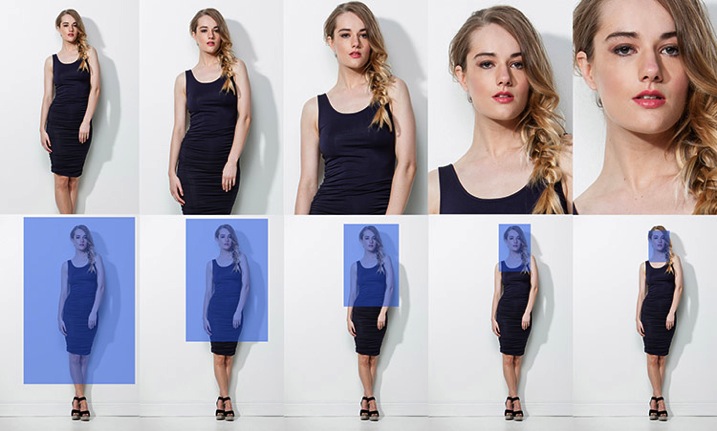
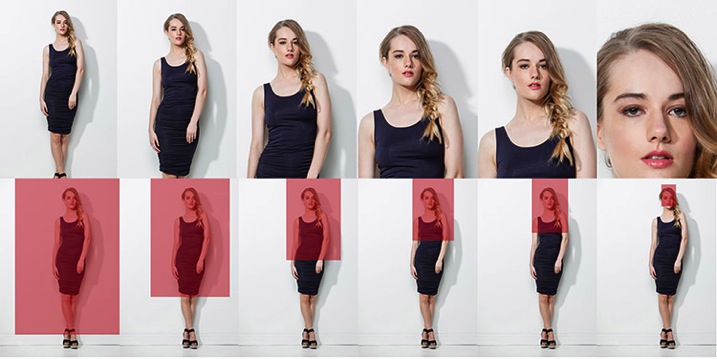
I always crop a shot below the knee, mid-thigh, at the waist, across forearm, or through the top of head. If I’m going to crop through my model’s waist I will usually ask my model to bring their arms up so I don’t have to crop through their arms.

BadCropW

I avoid cropping at any of the joints of the body. This includes fingers, toes, elbows, knees and wrists. I also think cropping through the model’s chin looks odd.

It took me many years of trial and error, and studying the work of my favourite photographers, to learn that there are actually a few golden rules of cropping worth following. Ones that make a huge difference to the visual impact my portraits make, and how flattering these portraits can be for the subject.

Like all rules there are always exceptions, and the art world would implode if these rules were not constantly tested and broken. Pablo Picasso, Vincent Van Gogh, and Jackson Pollack are examples of artists whose styles broke every rule in the, “how to paint book” and in their time they were mocked and ridiculed by other artists and critics alike, yet today their paintings are priceless. Having said that, they all studied conventional painting rules of their time, and then went on to break those rules, and create their own signature styles. I wonder if they ever considered changing their hair colour to look like Madonna…

My shooting,lighting,posing, and post-production style has developed and evolved over the years, but the way I crop my images has remained the same.

Here are my top five tips for how to crop portraits:

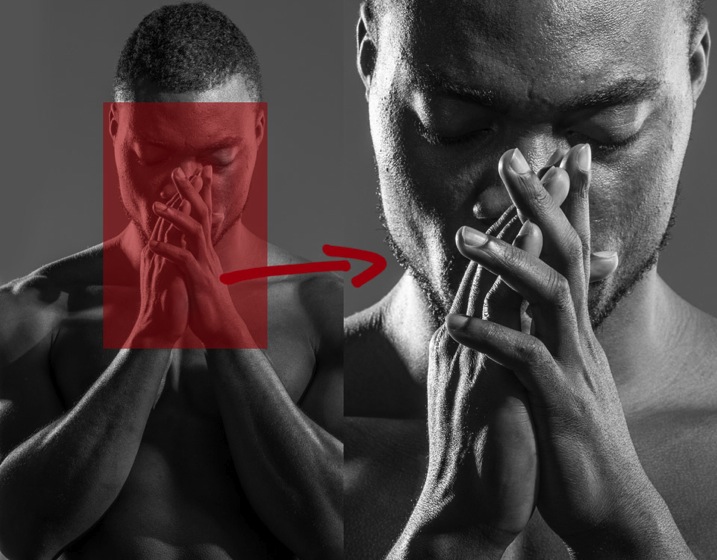
#1 Crop In-Camera

Tightcrop A

Cropping in-camera basically means that you compose your image exactly how you want your final crop to look when you are taking the photo, rather than shooting loosely and cropping the shot in post-production. There are two reasons for this:

  1. Firstly, images cropped in-camera look totally different to images that are cropped in post-production. Filling the frame and cropping tight means that you will create great background blur (bokeh), which removes any background distractions and focuses more attention on your model, which is always a good thing.
  2. The other advantage of cropping in-camera is that your file size is not affected. A loosely photographed cropped image may only leave you with 10-15% of your file size, so a file that was originally 30MB as a full size image, is reduced to 3MB with a tight crop. Lower resolution images have less detail and won’t be as sharp as a full size image.

#2 If it bends don’t crop it

BadCrop 2Bad crop Crop3Good crop

I think cropping mid thigh looks visually more pleasing than doing so at the knee. Seeing just part of the knee where the dress ends also looks untidy.

There are also certain ways to pose models that are more flattering to the body. I’m always looking for ways to pose my models that elongate, rather than shorten, their body parts. I try and emphasize their best features, and hide or diminish the features that are not as strong.

As a general rule I crop in a way that will elongate and flatter the body. Cropping at the knees, waist, elbows, toes, fingers, ankles, or wrists can make your model look stumpy. Cropping off the arms or legs can make your model look square, or larger than they really are.

#3 Avoid cropping into the chin and keep the eyes in the top third of the frame

BadCrop 6Bd crop Crop6Good crop

Keeping the eyes in the top third of the frame is visually better than cropping into someone’s chin, which to my eye looks like I wasn’t paying attention when I took the shot, and visually this crop (above left) looks awkward.

I find my portraits look much stronger visually when the eyes are positioned in the top third of the frame. Cropping into the chin is visually jarring in the same way that garlic ice cream was jarring to my tastebuds.

Rulethirds

This is the original framing of a shot I took for the cover of my dPS book, Portraits – Striking the Pose. I wasn’t sure how much of the shot we would be using, so I deliberately shot wider, and left space on the left of my frame to allow for text and other images.

Rulethirds 1 Rulethirds 1B

Rulethirds 2B

Rulethirds 2

The final shot for the cover was cropped very tightly because I felt including the hands looked a bit messy. I cropped this image with the eyes in the top third of the frame because this was visually the strongest option.

#4 Give yourself options

The explosion of social media has radically changed how I shoot my portraits. When a client booked me for a session a few years ago, I would shoot the majority of their portraits as vertical images. Now I make allowances for websites and social media platforms that run both vertical, square, and horizontal images.

I will usually start with portraits framed as vertical images and then rotate my camera to shoot some horizontal frames.

I generally position my model to fill the left or right hand third of the frame. This adds interest to the portrait, and makes it visually more dynamic. Having said that, there are times when I will frame my portrait in the centre of the shot because I personally love the way it looks.

I also love cropping into people’s heads, but this is not everyone’s cup of tea, so I always shoot a few frames with space above the head just in case.

You never know where the final image may end up in a few weeks or a few years, so I think it’s a good idea to plan ahead. It only takes a couple of minutes to shoot slightly wider, vertical, and horizontal at the end of each setup.

#5 Crop like you mean it!

Use these suggestions as a starting point, and find a style that works for you. Start with a full length portrait and first try cropping using traditional rules, then try breaking the rules and see which way you prefer the most.

Each person, location, and pose you shoot will always be different, so don’t be afraid to mix it up a bit and create your own signature style. The one question I always ask myself when I’m cropping my images is, “Does this crop look deliberate or does it look like a mistake?”

Tightcrop 2 Tightcrop 3

Sometimes following cropping rules to the letter will still leave my portraits looking visually jarring. An example of this is if I photograph a model wearing 3/4 sleeves and crop at a point which is technically correct, leaving a tiny amount of arm showing just below the sleeve. This looks like a mistake and would look better if I cropped a little higher to remove the skin.

The more you shoot, the more you will start to get a feeling for what looks right to you. If you’re still not sure, do two versions and compare them.

You might like to deliberately create a series of portraits that are visually jarring because they will evoke an emotional reaction.

How do you like to crop your portraits? Do you like to crop in-camera or in post-production? Do you think a tighter crop looks best ,or do you like to let your portraits have lots of space around them? Is there anything I’ve missed? I’d love to hear your thoughts and see your images. Please feel free to share in the comments section below.

This week on dPS we’re featuring a series of articles about composition. Many different elements and ways to compose images for more impact. Check out the ones we’ve done so far:

  • Using Framing for More Effective Compositions
  • 7 Tips to Improve Your Skyline Photos
  • 33 Images that Exemplify Compositional Elements
  • Weekly Photography Challenge – Composition Craziness
  • How to Take Control of Aperture and Create Stronger Photos
  • How Cropping in Post-Production Can Improve Composition

googletag.cmd.push(function() {
tablet_slots.push( googletag.defineSlot( “/1005424/_dPSv4_tab-all-article-bottom_(300×250)”, [300, 250], “pb-ad-78623” ).addService( googletag.pubads() ) ); } );

googletag.cmd.push(function() {
mobile_slots.push( googletag.defineSlot( “/1005424/_dPSv4_mob-all-article-bottom_(300×250)”, [300, 250], “pb-ad-78158” ).addService( googletag.pubads() ) ); } );

The post Good Crop Bad Crop – How to Crop Portraits by Gina Milicia appeared first on Digital Photography School.


Digital Photography School

 
Comments Off on Good Crop Bad Crop – How to Crop Portraits

Posted in Photography


Good genes: Samsung NX500 review posted

09 Nov

The Samsung NX500 is the baby brother to the company’s superb NX1 mirrorless camera. It brings over many of the features of the NX1, including its 28MP BSI CMOS sensor and AF system, and puts them into a compact body at a price competitive with other midrange mirrorless models. Read more

Articles: Digital Photography Review (dpreview.com)
 
Comments Off on Good genes: Samsung NX500 review posted

Posted in Uncategorized


Got Your Goat: Portable Drinking Horn Coffee Mug is Good to Go

04 Nov

[ By WebUrbanist in Design & Products & Packaging. ]

drinkinghorn

Its shape inspired by goats, the creatures that helped humans discovered coffee, this modern-day drinking horn is curved to make drinking easier and capped to let you take your java on the road.

goat mug to go

goat mug portable

Designed by desnahemisfera in cooperation with Equa, the Goat Story drinking device comes equipped with a leather holder to act as a heat barrier while walking or a stand while sitting.

goat mug

The travel-ready cup also comes with a short and long leather carrying strap, which can also be combined to form an even longer version.

goat mug office

goat mug travel

From its creators: “As easy as 1-2-3, your GOAT STORY coffee mug will be able to stand on your office desk and it will be at a hand´s reach all the time. Just take the handle off, turn it around, place the mug in it. Voila! The ergonomic shape will help you drink your coffee. Have we mentioned that it won’t fall over?”

goat mug for coffee

goat mug with holder

“It comes with a cross body strap, which lets you carry your business case in one hand while replying e-mails on your phone, in between sips. Also, you can use the shorter strap to attach it to your bag or carry it around your wrist and keep your hands free.”

Share on Facebook


[ By WebUrbanist in Design & Products & Packaging. ]

[ WebUrbanist | Archives | Galleries | Privacy | TOS ]


WebUrbanist

 
Comments Off on Got Your Goat: Portable Drinking Horn Coffee Mug is Good to Go

Posted in Creativity