RSS
 

Posts Tagged ‘Fujifilm’

Faster flagship: Hands-on with the Fujifilm X-T2

07 Jul

Faster flagship: Hands-on with Fujifilm X-T2

When the X-Pro2 was announced earlier this year, it seemed only a matter of time before Fujifilm unveiled a replacement to its ‘other’ flagship, the X-T1. The just-announced X-T2 boasts the company’s newest 24MP sensor, an AF joystick and a significant speed boost.

Faster flagship: Hands-on with Fujifilm X-T2

Externally, the X-T2 looks virtually identical to the older X-T1, which is no bad thing. Fujifilm got a lot right in the X-T1, and its replacement doesn’t change the basic recipe. The new camera is about 70g heavier, but side-by-side, you’d be hard pushed to tell it apart from its predecessor.

Faster flagship: Hands-on with Fujifilm X-T2

The traditional Fujifilm top-plate, with its array of dials. From left: ISO > Shutter speed > exposure compensation.

One of the very few ergonomic differences between the X-T2 and its predecessor is the omission of a movie recording button from the upper-right of the top plate. This is made up for (sort of) by the addition of a movie recording position on the main exposure mode dial, but we’re not sure why Fujifilm would remove this button completely. 

Since we’re looking at the hot shoe, it’s worth mentioning that the camera can sync with flashes at 1/250 sec. The overall shutter speed range on the X-T2 is 30 – 1/8000 sec with the mechanical shutter, with a top speed of 1/32000 when you switch to the e-Shutter.

Faster flagship: Hands-on with Fujifilm X-T2

Keen eyes will spot the new movie recording position on the mode dial (upper left in this image). The X-T2 offers by far the most advanced movie recording specification of any Fujifilm camera, including 4K (3840 x 2160) video, which to be honest, was a major surprise when we first saw the camera’s spec sheet.

Traditionally a major weak point of Fujifilm’s X-series it seems like the company is really stepping up its efforts when it comes to video.

The X-T2’s electronic viewfinder appears to be unchanged from the excellent 2.36 million-dot, 0.5″ OLED found in the original X-T1, which is absolutely fine by us. 

Faster flagship: Hands-on with Fujifilm X-T2

A predictable – but very welcome – addition to the X-T2 is a dedicated AF joystick (shown here just beneath the ‘Q’ button). Inherited from the X-Pro2, this joystick makes placing the AF point extremely fast and easy – something that could definitely not be said of previous X-series cameras (and many mirrorless cameras in general). 

A less obvious change to the X-T2’s rear controls is a slightly longer travel and more positive tactile response from the buttons surrounding ‘Menu/OK’. These controls on the X-T1 were disconcertingly mushy. On the X-T2, when you push a button, you know it.

Speaking of autofocus, the Hybrid AF system on the X-T2 has 325 points in total, 169 of which are phase-detect. Fujifilm says that the data readout speed has been doubled compared to previous (undisclosed) models and that all focus points are sensitive to -3EV.

Faster flagship: Hands-on with Fujifilm X-T2

Speaking of tactile feedback, we were really hoping that the X-T2 would feature a touchscreen, like its baby brother the X70. No such luck. But at least it’s partially articulating – unlike the X-Pro2’s LCD. 

Faster flagship: Hands-on with Fujifilm X-T2

As well as tilting straight out, the rear screen can also be folded out to 45 degrees….

Faster flagship: Hands-on with Fujifilm X-T2

…and hinged sideways!

Faster flagship: Hands-on with Fujifilm X-T2

The major benefit of this kind of articulation is that it makes waist-level shooting easy even in the vertical orientation. 

Faster flagship: Hands-on with Fujifilm X-T2

Twin card slots can be found under a sprung door located on the X-T2’s grip. A rubber gasket seals the slots against dust and moisture incursion. 

Faster flagship: Hands-on with Fujifilm X-T2

The X-T2’s NP-W126S battery can be found nestled inside the grip, accessible from a door on the base of the camera. According to Fujifilm, a single battery should be expected to last for approximately 340 images. Not great, but typical for a mirrorless interchangeable lens camera.

You can’t quite see in this shot, but one deceptively major change in the X-T2 compared to its predecessor is that the tripod socket on the camera’s base has been centered to the lens axis, meaning that on most tripods, you won’t need to unscrew the camera from the tripod plate before you can access the battery compartment – a point of occasional frustration with the X-T1. 

Faster flagship: Hands-on with Fujifilm X-T2

If you need greater endurance (or you just have big hands) you might be interested in the optional VPB-XT2 grip. This grip takes two additional batteries, making three in total, extending the camera’s total battery life to more than 1000 shots.

There’s a ‘boost mode’ on the camera which uses the grip, increasing burst shooting from 8 to 11 fps (with the mechanical shutter), reducing shutter lag and blackout times and permitting up to 30 minutes of 4K video capture. Do note that if you want continuous autofocus, you’ll need to drop the frame rate down to 5 fps.

Faster flagship: Hands-on with Fujifilm X-T2

The two additional batteries slot into a neat little tray which fits into the grip like so. Here you can also see a plug that accepts a 9V power adapter, so the grip can be charged separate from the camera.

Faster flagship: Hands-on with Fujifilm X-T2

Any self-respecting battery grip offers duplicated vertical controls, and the VPB-XT2 is no different. Here you can see the duplicated shutter button, rear control dial (there’s another one on the front) and secondary AF positioning joystick. 

Faster flagship: Hands-on with Fujifilm X-T2

The X-T2 ships with a dedicated compact flashgun, the EF-X8. This can be used to command a group of external flashguns wirelessly – always a welcome feature on high-end cameras.

A new high-end flash – the EF-X500 – will also be available when the X-T2 launches. It has a guide number of 50m at ISO 100, supports high speed sync, includes a video lamp and covers a range of 24-105mm (or down to 20mm with the included wide panel). It’ll be priced at $ 449 when it ships in September.

Faster flagship: Hands-on with Fujifilm X-T2

The Fujifilm X-T2 will retail for $ 1599 body-only or with an 18-55mm F2.8-4.0 lens for $ 1899, and will be available in September. We’re headed to New York soon to interview senior Fujifilm executives – what should we ask them? Let us know in the comments. 

Articles: Digital Photography Review (dpreview.com)

 
Comments Off on Faster flagship: Hands-on with the Fujifilm X-T2

Posted in Uncategorized


Elevating X-Trans? Fujifilm X-T2 First Impressions Review

07 Jul

The Fujifilm X-T2 is an updated version of the company’s top-level DSLR-shaped APS-C camera. It’s built around the same 24MP X-Trans sensor as the X-Pro2 but ends up being much more than an X-T1 with more pixels. Instead, the X-T2 is a camera that does much to address the X-System’s remaining weaknesses, which can only broaden its already considerable appeal.

Fujifilm X-T2 Key Features:

  • 24MP X-Trans CMOS III sensor
  • 325 AF points (169 of which offer phase detection)
  • AF point selection joystick
  • 2.36M-dot OLED EVF with 0.005 sec refresh time (60 fps or 100 fps in boost mode)
  • 3″ 1.04M-dot articulating LCD
  • 4K UHD video at up to 30 fps for up to 10 min (30 min with booster grip)
  • F-Log flat profile and 4K out over HDMI
  • 8 fps continuous shooting with AF (11 fps with booster grip)
  • 5 fps continuous shooting with live view updates between capture
  • Dual SD card slots (UHS-II compatible)
  • USB 3.0 socket

The X-Pro2 represented a good step forward for image quality within the system and the X-T2 gains all of that improvement, but there are also some considerable changes in terms of autofocus, video and flash control, suggesting Fujifilm wants its the X-T2 to be an all-round more capable camera than its predecessor, rather than just building on its existing strengths.

The body seems broadly unchanged at first glance but there’s a clever doubly-hinged flip-out screen that seems to offer many of the flexibility advantages of a fully articulated monitor while retaining the more compact form of a tilting screen.

There’s also a Performance Boost mode that speeds up several aspects of the camera’s behavior (at the expense of some battery life), but that really comes into its own when the optional ‘Power Boost Vertical Grip’ is added. None of these additions comes for free, though: at $ 1599, body only, the X-T2’s launch price has jumped $ 300, compared to its predecessors’.

Autofocus

Part and parcel of that 24MP sensor are the 169 phase-detection points that we saw in a large central square region of the sensor on the X-Pro2. Beyond this, the X-T2 now gains an extra two columns of 13 contrast-detection AF points down each side of the frame, widening its AF area and bringing it to a total of 325 AF points in total.

Fujifilm also promises a more powerful processor and revised algorithms, along with faster sensor read-out, to improve the camera’s speed, regardless of whether it’s using a combination of phase detection and contrast detection (Hybrid AF), or simply the latter alone.

To get the best-possible performance out of the newly refined AF system, the X-T2 introduces a use case-based AF-C setup system. Much like the one we’ve seen on high-end Canon DSLRs, this lets you specify the types of movement you’re expecting from your subject, so that the camera can try to respond appropriately.

Video

The X-T2 makes a bigger leap forward into video than we were expecting. There was much chatter around the time of the X-Pro2’s launch that the camera’s hardware was, theoretically, capable of 4K capture, but that the company hadn’t pursued its development for such a stills-orientated model. Well, it has now.

The X-T2’s movie capabilities are a big step forward for the system.

But Fujifilm has done more than just do enough to be able to emblazon the phrase ‘4K capable’ on the box: the camera also gains a mic socket and on-screen audio monitoring with the ability to assign mic volume to a Fn button. There’s also an ‘F-Log’ flat profile to give flexibility while color grading.

The good news is that our first shots of our test scene suggest the camera’s 4K footage is much more impressive than the 1080p that the first X-Trans cameras could muster. Combine this with 4K output over HDMI and the X-T2 looks like the first X-Trans camera that might appeal to shooters interested in shooting both stills and video.

Flash control

One of the missing pieces of an increasingly well fleshed-out XF mount system has been the lack of advanced flash control – something that the X-T2 is looking to address. Up until now, users have had to turn to third-party makers if they wanted to communicate TTL flash information to remote flash units.

The newly introduced EF-X500 flash allows high speed flash sync and remote TTL flash control for the first time, making it significantly easier to use the X-T2 with strobes.

Optional ‘Power Booster Grip’

Along with the X-T2, Fujifilm has introduced the VPB-XT2, a vertical battery grip that holds two extra batteries. As well as significantly extending the camera’s battery life, the grip also extends the camera’s ‘Boost’ mode. With the grip attached, this is able to draw power from multiple batteries, increasing the camera’s maximum continuous shooting rate, as well as extending its video recording time to 30 minutes.

The entertainingly-named ‘Vertical Power Booster Grip’ can house two addition batteries (without displacing the camera’s internal unit), helping increase capacity to around 1000 frames between charges. It also adds a headphone socket and a ‘Boost’ switch that improves responsiveness and ups the frame rate to 11 fps.

This grip features the same level of environmental sealing as the camera body and also plays host to a headphone socket for audio monitoring while shooting video.

Review History

Review History
6 July 2016 First Impressions, Studio Scene and Beta Gallery published,
based on pre-production camera running f/w 1.34

Articles: Digital Photography Review (dpreview.com)

 
Comments Off on Elevating X-Trans? Fujifilm X-T2 First Impressions Review

Posted in Uncategorized


Fujifilm launches Instax SP-2 with faster printing speeds

28 Jun

Fujifilm has announced a new and improved version of its Instax printer. The SP-2 follows on the SP-1 and comes with improved Wi-Fi connectivity and faster printing speeds, producing a print in 10 seconds rather than the previously required 16 seconds. Fujifilm says the SP-2 is also quieter than its predecessor. It prints a card-sized format at a 800 x 600 resolution and 320 dpi and uses 256 levels per color. The battery is charged via a microUSB port and the printer supports JPEG and PNG files. 

Fujifilm has also improved the accompanying SHARE app which is available for iOS and Android devices and now comes with custom filters as well as collage and split templates. It also allows for image transfer from social networks and the overlay of geographic and climate information onto your printed image. 

The Fujifilm SP-2 printer comes in Silver or Gold body colors and will start shipping in mid-July. The printer is priced at $ 200 and the Instax Mini film that is used as printing media will set you back $ 20 per pack of 20 sheets. More information is available on the Fujifilm website.

Articles: Digital Photography Review (dpreview.com)

 
Comments Off on Fujifilm launches Instax SP-2 with faster printing speeds

Posted in Uncategorized


Review: Fujifilm X-Pro2 Mirrorless Camera

15 Jun

Ever since Fujifilm unveiled their debut consumer camera in late 2010, the fixed-lens x100, the brand has become a favorite for professionals, and enthusiasts who seek an advanced digital camera experience, that still retains much of the look and quality of the classic film era.

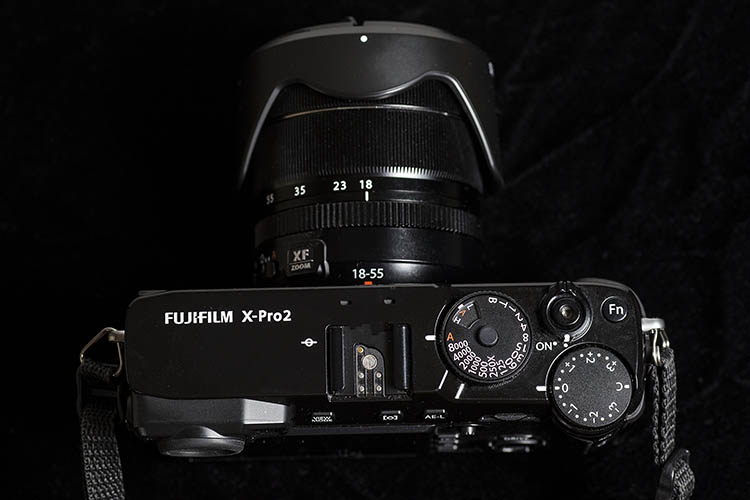
Fujifilm’s very first mirrorless interchangeable-lens camera, the X-Pro1, was released in March 2012 to much praise from critics and users, and was recently replaced with its successor, the X-Pro2. Given the four year gap between camera models, there are many upgrades and improvements in the new X-Pro2, all achieved without adding significant weight or bulk to the camera. Prices are clearly a big differentiator at this point, with the older X-Pro1 going for as little as $ 799, and the X-Pro2 currently set at $ 1,699. But pricetag aside, just how many more features are packed into the X-Pro2, and is it worth it?

Fujifilm X-Pro2 Review

What’s in the Box

The Fuji X-Pro2 can be purchased body-only for $ 1,699; this basic kit comes with the following accessories in the box:

  • NP-W126 Li-Ion Battery Pack
  • BC-W126 Battery Charger
  • Body Cap
  • Shoulder Strap
  • Strap Clip
  • Clip Attaching Tool
  • Protective Cover

Recommended Accessories

While the X-Pro2 has a slightly better battery life than its predecessor, it’s still on the low side. As a result, it doesn’t hurt to have a spare NP-W126 Li-Ion Battery, or two, on you for longer shoots. Since the X-Pro2 has dual SD card slots, having one or two memory cards is also handy, although in testing I never fully maxed out a single 32GB SD card.

In terms of lenses, this X-Pro2 was tested specifically with the Fujifilm 35mm f/2 WR, a beautiful prime lens that equates to about 56mm on a crop sensor, and the Fujifilm 18-55mm f/2.8-4, a compact mid-range zoom that’s about 28-88mm on a crop sensor. Both lenses are relatively affordable ($ 399 and $ 699 respectively) and together made for a solid, compact, travel photography kit. Lens preference will, of course, depend on your shooting style, and Fujifilm has many other lens choices available.

Fujifilm X-Pro2 Review

Technical Specs

Sensor and Image Capture

First, let’s review the X-Pro2’s specs, which are vastly improved over its predecessor.

  • The X-Pro2 has an upgraded 24.3MP CMOS III APS-C sensor, giving it a significantly higher pixel count compared to the X-Pro1’s 16.3MP CMOS I sensor.
  • The processor is also the new X Processor Pro.
  • Native ISO range has also increased from 200-12800 (or 100-51200 in expanded mode).
  • Continuous shooting on the X-Pro2 is also slightly faster at 8fps, up from 6fps on the X-Pro1, and a continuous high buffer of up to 83 JPEG frames compared to 21 frames on the X-Pro1.
  • Metering is still 256 zone TTL, but besides Multi, Spot, and Average metering, the X-Pro2 adds Center-Weighted metering, which was absent on the X-Pro1.
Fujifilm X-Pro2 Review

Sample image shot at sunset. No tripod or extra lens filters.

Perhaps one of the biggest feature additions on the X-Pro2 is a shutter that allows for both mechanical and electronic capture; the latter allows for more flexibility. The mechanical shutter speed has increased to as high as 1/8000th, compared to 1/4000th on the X-Pro1. The X-Pro2 also enables the use of an electronic shutter speed with an even wider range of one second to 1/32,000. The X-Pro2 also includes Face and Eye Detection, meaning it will seek out faces and eyes when shooting. This is a very handy feature for photographing people, and it proved to be highly accurate during test shots.

Viewfinder and LCD

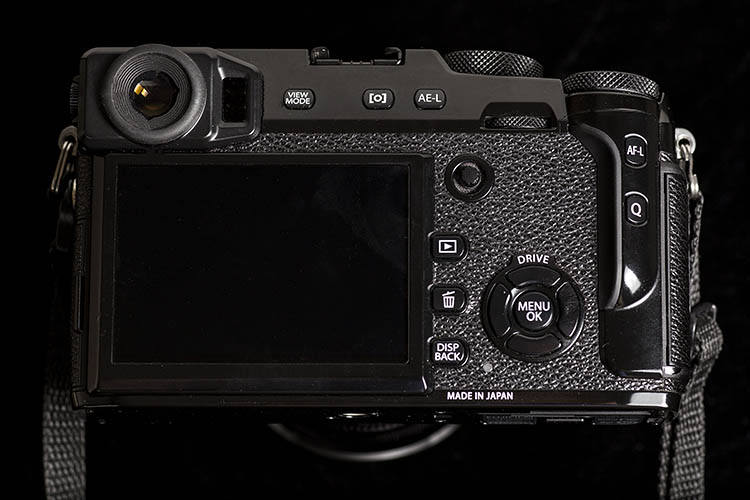
While both viewfinder and LCD sizes really didn’t change much in terms of physical size, both received a bump in resolution, and an updated User Interface in the X-Pro2. The viewfinder also finally allows for diopter adjustment, and the electronic viewfinder (EVF) has a wicked fast refresh rate of 85 frames per second. Still absent is a pop-out LCD screen.

Fujifilm X-Pro2 Review

Sample image. Shot handheld without a tripod.

Autofocus

The X-Pro2 has made some pretty giant leaps in the realm of autofocus. This camera now has 273 autofocus points, which is quite a bit more than 49 on X-Pro1. It also includes single, zone, wide/tracking autofocus modes, all of which were lacking on the X-Pro1. Finally, the X-Pro2 adds a physical feature that Canon DSLR users will find familiar: a mini joystick button which Fujifilm calls the focus lever. Besides acting as a button, the focus lever enables quick selection for all 273 autofocus points, and also helps you navigate through the menu.

Body and Handling

When it comes to the X-Pro2’s build, it is still comprised of a sleek, half matte black body, with a distinctly retro look. However, the build material is now magnesium-alloy versus aluminum for the X-Pro1. Despite using lighter material, the X-Pro2 is still slightly heavier than its predecessor, weighing in at 495 grams (17.5 oz.) versus 453 grams (16 oz.). In terms of dimensions, the X-Pro2 is a tiny bit wider and deeper, but it still looks about the same size as the X-Pro1.

The battery life on the X-Pro2 has been slightly improved, up to 380 frames, versus 300 frames on the X-Pro1. That’s still on the low side, so carrying a spare battery or two certainly won’t hurt. Camera startup time is a hair faster at 0.4 seconds, compared to 0.5 seconds. Also, the X-Pro2 now has dual SD card slots, which will certainly help with the increased size 24.3MP files. A built-in flash is still not included, but flash sync speed is now at 1/250 of a second, up from 1/180.

WiFi has been added to the X-Pro2 allowing for geotagging, wireless image transfer, and remote camera control. Finally, the X-Pro2 comes with improved weather sealing with 61 points of dust, water, and cold resistance. This doesn’t make the X-Pro2 waterproof, but it does allow for shooting in more diverse conditions.

Fujifilm X-Pro2 Review

Sample image shot with the Fujifilm 35mm f/2, handheld without a tripod.

Is It Worth It?

This is a difficult question to answer, given the plethora of vastly different digital camera options available today. Whether you go for the X-Pro2 or not, will really come down to your personal preferences and budget.

Personally, I loved the image quality of the X-Pro2, as well as its retro buttons and controls. With that said, the retro controls are unique to Fujifilm digital cameras, and can take some getting used to if you’ve been using a point and shoot, DSLR, or another brand of mirrorless camera. It’s also worth noting that while the X-Pro2 is definitely not as bulky and heavy as a professional DSLR, it’s not as compact and lightweight as other mirrorless cameras such as the Sony a6300, which has very similar technical specs, packed into a much smaller body.

Fujifilm X-Pro2 Review

Sample image shot outdoors, handheld with no extra filters.

Overall Thoughts

With higher shutter speeds of 1/8,000 or even 1/32,000 using the electronic viewfinder, higher ISO ranges, vastly improved autofocus, and enhanced weather sealing, the X-Pro2 has officially become a serious contender for professional photographers. If you’re looking to invest in a Fujifilm mirrorless interchangeable camera, it’s hard to go wrong with the X-Pro2. While deals can certainly be had with the older X-Pro1 model, the significant upgrades in the X-Pro2 make it a worthy investment if you have the money to spare.

googletag.cmd.push(function() {
tablet_slots.push( googletag.defineSlot( “/1005424/_dPSv4_tab-all-article-bottom_(300×250)”, [300, 250], “pb-ad-78623” ).addService( googletag.pubads() ) ); } );

googletag.cmd.push(function() {
mobile_slots.push( googletag.defineSlot( “/1005424/_dPSv4_mob-all-article-bottom_(300×250)”, [300, 250], “pb-ad-78158” ).addService( googletag.pubads() ) ); } );

The post Review: Fujifilm X-Pro2 Mirrorless Camera by Suzi Pratt appeared first on Digital Photography School.


Digital Photography School

 
Comments Off on Review: Fujifilm X-Pro2 Mirrorless Camera

Posted in Photography


Bolt-on 21: Fujifilm WCL-X70 sample images

12 Jun

The Fujifilm WCL-X70 is a wideangle converter that fastens to the front of the 28mm equivalent F2.8 lens of the Fujifilm X70. Its approximately 0.8X focal length multiplier results in a 14mm focal length, or 21mm in 35mm format equivalent. Check out our sample images to see how it performs.

Articles: Digital Photography Review (dpreview.com)

 
Comments Off on Bolt-on 21: Fujifilm WCL-X70 sample images

Posted in Uncategorized


Fujifilm X70 User Review: Sweet for Street

01 Jun

Fujifilm x70 is the newest little beast in Fujifilm lineup of premium compact cameras. This camera is targeted towards enthusiast and professional photographers (thanks to retro styling and large APS-C sensor) who want to travel light and want image quality at the same time. Fuji x70 is a trade-off between the legendary Fujifilm x100T and more travel oriented point and Continue Reading

The post Fujifilm X70 User Review: Sweet for Street appeared first on Photodoto.


Photodoto

 
Comments Off on Fujifilm X70 User Review: Sweet for Street

Posted in Photography


X-ray: iFixit looks inside the Fujifilm X-M1

22 May

iFixit looks inside the Fujifilm X-M1

We’re curious people at heart, and we like to know what’s going on inside of our prized electronic possessions. But taking screwdriver to camera isn’t a wise idea if you want to keep you gear functioning with a valid warranty. Thankfully, the folks at iFixit help satisfy our curiosity with their disassembly guides. So let’s enjoy a look under the hood of the Fujifilm X-M1 – from a safe distance, shall we?

iFixit looks inside the Fujifilm X-M1

With the lens and battery removed, the project may begin by pulling back the faux-leather covering on the camera body to access some screws.

Image courtesy of iFixit

iFixit looks inside the Fujifilm X-M1

More screws await under the lens mount…

Image courtesy of iFixit

iFixit looks inside the Fujifilm X-M1

…and with the hot shoe cover and a few more screws gone, the back of the camera is free.

Image courtesy of iFixit

iFixit looks inside the Fujifilm X-M1

What’s heard but never seen? The speaker inside your camera! You knew it was there. This is what it looks like.

Image courtesy of iFixit

iFixit looks inside the Fujifilm X-M1

Behind the LCD you’ll get a glimpse of the motherboard, veiled by a plastic covering.

Image courtesy of iFixit

iFixit looks inside the Fujifilm X-M1

Here’s a clear view of the motherboard underneath, with Fujifilm’s image processor in plain sight.

Image courtesy of iFixit

iFixit looks inside the Fujifilm X-M1

And here’s the back of the sensor assembly, just underneath the motherboard.

Image courtesy of iFixit

iFixit looks inside the Fujifilm X-M1

There’s not a whole lot of camera left to disassemble at this stage, and the top plate can be removed cleanly with the appropriate ribbon cable disconnected.

Image courtesy of iFixit

iFixit looks inside the Fujifilm X-M1

Here’s a look at the LCD and its articulated arm away from the camera body.

Image courtesy of iFixit

iFixit looks inside the Fujifilm X-M1

And there you have it, the inner workings of the X-M1 laid out neatly for inspection.

Image courtesy of iFixit

Articles: Digital Photography Review (dpreview.com)

 
Comments Off on X-ray: iFixit looks inside the Fujifilm X-M1

Posted in Uncategorized


Weather-resistant Fujifilm 2x teleconverter brings 1219mm focal length to X-Series

19 May

$ (document).ready(function() { SampleGalleryV2({“containerId”:”embeddedSampleGallery_9762657470″,”galleryId”:”9762657470″,”isEmbeddedWidget”:true,”standalone”:false,”selectedImageIndex”:0,”startInCommentsView”:false,”isMobile”:false}) });

Fujifilm X-Series users will soon be able to purchase a 2x teleconverter compatible with two of the company’s telephoto zoom lenses, delivering a maximum equivalent focal length of 1219mm for its interchangeable lens compact system. The XF2X TC WR teleconverter will be weather and dust-resistant when used with the X-T1 and X-Pro2 camera bodies combined with the XF50-140mm F2.8 R LM OIS WR and XF100-400mm F4.5-5.6R LM OIS WR lenses.

Fujifilm says that the teleconverter will deliver an angle of view equivalent to that of a 1219mm lens on a full frame camera when it is used with the 100-400mm lens, once the crop factor of the APS-C format is taken into account.

The converter consists of nine elements in five groups and adds 30.2mm to the physical length of the camera/lens set-up. With the 2-stop light loss, the AF system of the X-cameras will revert to contrast detection with the 100-400mm F4.5-5.6 lens, but phase detection will still work with the 50-140mm F2.8. Both lenses will need a firmware update in order to operate with the new teleconverter so that adjusted aperture and focal length values can be recorded in the EXIF data and displayed on-screen.

Fuji suggests that the converter will be compatible with other lenses in the X-Series range, and has set up a website on which it promises to post information about future lens compatibility.

The Fujifilm XF2X TC WR teleconverter will be available in June priced £349. For more information visit the Fujifilm website.


Press release:

Fujifilm announces the FUJINON XF2X TC WR Teleconverter

High-performance weather and dust resistant teleconverter with excellent optical design to be added to the X-Series interchangeable lens line-up in June

FUJIFILM Corporation (President: Shigehiro Nakajima) is proud to announce that the new FUJINON TELECONVERTER XF2X TC WR, a teleconverter extending the telephoto area of some X Mount lenses*1, will be added to the mirrorless digital camera X-Series interchangeable lens line-up in June 2016.

The FUJINON TELECONVERTER XF2X TC WR is a high-performance teleconverter, capable of multiplying the focal length of mounted lenses*1 by two. It features excellent optical design with a construction of 9 elements in 5 groups to maintain the optical performance of the original lens.

In addition, thanks to the unified design when mounted to a compatible lens*1, the teleconverter is weather and dust-resistant and operates at temperatures as low as -10°C. This makes it possible to be used with confidence outdoors when used with the weather and dust-resistant X-T1 and X-Pro2 camera bodies, and the XF50-140mmF2.8 R LM OIS WR and XF100-400mmF4.5-5.6 R LM OIS WR lenses.

*1 Compatible lens (As of May 19, 2016)
XF50-140mmF2.8 R LM OIS WR = 100-280mmF5.6 with teleconverter mounted (Equivalent to 152-427mm on a 35mm format)
XF100-400mmF4.5-5.6 R LM OIS WR = 200-800mmF9-11 with teleconverter mounted (Equivalent to 305-1,219mm on a 35mm format)

1. Main Features

(1) High image quality design which maintains the optical performance of the original lens

  • Construction of 9 elements in 5 groups maintains the optical performance of the original lens.
  • By using the optimal image quality parameters for the overall characteristics of the original lens and 2x teleconverter, excellent imaging performance with great aberration suppression is still achieved.
  • The aperture becomes two f-stops higher when the teleconverter is mounted, and the camera displays and records information reflecting the change in aperture and focal length.

(2) Autofocus performance

  • Phase detection AF is still available when using the XF50-140mmF2.8 R LM OIS WR with the 2x teleconverter mounted.
  • Contrast Detection AF is still available when using the XF100-400mmF4.5-5.6 R LM OIS WR with the 2x teleconverter mounted.
  • Accurate focusing at super-telephoto focal lengths with shallow depth of field is possible thanks to the AF performed by the image sensor, thanks to the ‘Live View’ feature on the cameras.

(3) The optical image stabilization performance

  • The camera’s optical image stabilization performance*2 is unaffected by the addition of the teleconverter

*2CIPA guidelines, at telephoto end.

(4) Weather and dust-resistant and -10°C low-temperature operation

  • Using the teleconverter with a weather-resistant camera, such as the FUJIFILM X-T1 or X-Pro2 mirrorless digital camera and the FUJINON XF50-140mmF2.8 R LM OIS WR or FUJINON XF100-400mmF4.5-5.6 R LM OIS WR lens does not affect the weather resistance of the system.

(5) High-grade subtle appearance

  • The teleconverter’s high grade metal exterior has been designed with the X system in mind. When attached to a compatible FUJINON lens, the two products appear as one single lens.

2. Main Specification

Type FUJINON LENS XF2X TC WR 
Lens construction 9 elements 5 groups
Focal length 2x that of original lens
Max. aperture 2 additional stop
Min. aperture 2 additional stop 
Focus range Approx. same as that of original lens
Max. magnification 2x that of original lens 

External dimensions: Diameter x Length (distance from camera lens mount flange)

 
Approx. ?58mm x 30.2mm
Weight
(excluding lens caps)
 
Approx.170g

4. Support Information

A firmware update is required for the FUJINON XF50-140mm F2.8 R LM OIS WR and FUJINON XF100-400mm F4.5-5.6 R LM OIS WR lenses in order to provide full compatibility. This firmware is planned to be available at the beginning of June 2016. Please note that when updating firmware, make sure to update the latest camera firmware before updating the lens.

Please refer to the following website for information on how to confirm your firmware version and its update methods. http://www.fujifilm.com/support/digital_cameras/software/fw_table.html
Please be sure to check the following website as we will continue to update it with information regarding mountable lenses. http://fujifilm.com/products/digital_cameras/x/fujinon_lens_xf2x_tc_wr/

Articles: Digital Photography Review (dpreview.com)
 
Comments Off on Weather-resistant Fujifilm 2x teleconverter brings 1219mm focal length to X-Series

Posted in Uncategorized


Fujifilm facilities resume some production following Kumamoto earthquakes

03 May

Fujifilm is slowly but surely bringing a key subsidiary’s production facilities back online after earthquakes forced a shut down, and expects to be back at full production by the end of May. In a statement issued today, Fujifilm confirmed that trial operations began on April 23 at the facilities and were ultimately successful. Barring any further problems, the company anticipates being back at pre-earthquake production levels by the end of this month.

Fujifilm Kyusyu Co., Ltd operates the facilities that were impacted by the earthquakes that struck Japan’s Kumamoto prefecture on April 16. These facilities are responsible for manufacturing a key component of LCD panels. A few days after the event, the company announced that operations in the area would be stopped while assessments were performed. None of the facilities were found to be seriously damaged, but at the time the company said it hadn’t yet decided when operations would restart, and that it would hold a trial run on April 23 and 24.

Inspections of warehouse stock are still underway; as of April 19, Fujifilm says it has been shipping out products that pass inspections. ‘Fujifilm Kyusyu is doing its utmost to resume all operations,’ says the company; the rate at which it does so is determined in part by the number and intensity of aftershocks.

Articles: Digital Photography Review (dpreview.com)
 
Comments Off on Fujifilm facilities resume some production following Kumamoto earthquakes

Posted in Uncategorized


Down to the wire: iFixit Fujifilm X30 disassembly guide

23 Apr

iFixit Fujifilm X30 disassembly guide

Few of us will ever be so bold as to take a screwdriver and a spudger to a beloved camera. But how do we satisfy the urge to know what’s going on inside of it? For curious types with a weak constitution for taking things apart, there’s iFixit. The good people at iFixit publish product-specific disassembly guides, written to help common folk make simple repairs to their own electronic devices. They’re also an easy way to peek inside a modern digital camera without voiding your warranty. This week, we look inside the Fujifilm FinePix X30.

iFixit Fujifilm X30 disassembly guide

Like so many other things, it’s best to start this project at the bottom. After removing the battery, you’ll go about removing screws from the camera’s chassis, including these three on the bottom plate.

Image courtesy of iFixit

iFixit Fujifilm X30 disassembly guide

Once you’ve removed enough screws, the bottom and back panels can be pulled back. So what’s underneath? A whole mess of ribbon cables. 

Image courtesy of iFixit

iFixit Fujifilm X30 disassembly guide

For starters you’ll have to detach these five ribbons that are connected to the motherboard. 

Image courtesy of iFixit

iFixit Fujifilm X30 disassembly guide

After a little spudger action and disconnection of cables from the surrounding circuitry, the copper plate underneath it all is revealed. The copper plate is likely for heat dissipation.

Image courtesy of iFixit

iFixit Fujifilm X30 disassembly guide

Attached to the other side of the copper plate is the X30’s 12MP, 2/3″-type sensor. Lifting it out of the way reveals the lens.

Image courtesy of iFixit

iFixit Fujifilm X30 disassembly guide

With a few screws removed the motherboard can be tilted upward. To completely remove it you’ll need to desolder the black, grey and red wires seen here.

Image courtesy of iFixit

iFixit Fujifilm X30 disassembly guide

And now we come face-to-face with the lens assembly. Remove a few screws… 

Image courtesy of iFixit

iFixit Fujifilm X30 disassembly guide

…and the lens is free for removal. It’s a 28-112mm equiv. F2-2.8 zoom, by the way.

Image courtesy of iFixit

iFixit Fujifilm X30 disassembly guide

Working with the flash capacitor requires some careful maneuvering. As the circuits store charge to power the flash unit, touching the leads at the bottom of the circuit could result in a nasty shock. More desoldering is required here to get this board free.

Image courtesy of iFixit

iFixit Fujifilm X30 disassembly guide

With the eyepiece removed and just a couple more screws taken out of the LCD panel, you’ll have successfully disassembled your Fujifilm Finepix X30. Congratulations, you’re a monster.

Image courtesy of iFixit

Articles: Digital Photography Review (dpreview.com)

 
Comments Off on Down to the wire: iFixit Fujifilm X30 disassembly guide

Posted in Uncategorized