RSS
 

Posts Tagged ‘Fujifilm’

Fujifilm X-E2S real-world samples

02 Aug

The Fujifilm X-E2S takes everything we loved about the X-E2 and its latest firmware updates and adds… well, not much. But that doesn’t mean it isn’t a capable and relevant camera in today’s market. With great build quality, plentiful external controls, retro styling and Fujifilm’s gorgeous film simulations, the X-E2S just begs you to slap on a prime lens and go out shooting. The substantial drop in MSRP compared to the original X-E2 doesn’t hurt, either. Take a look at what we came up with when we took the X-E2S for a spin.

Articles: Digital Photography Review (dpreview.com)

 
Comments Off on Fujifilm X-E2S real-world samples

Posted in Uncategorized


Throwback Thursday: the Fujifilm FinePix S5100 Zoom and all those shiny new compacts

28 Jul

Twelve years ago today Fujifilm announced six new compacts all at the same time, which is something that camera manufacturers used to do a lot. Here’s a fun game: ask anyone who writes about cameras to tell you about CES in the mid-to-late 2000’s, but don’t be surprised if they start babbling incoherently about megapixels and run screaming from the room.

The Fujifilm E550 Zoom. Similar to its more elegant sibling, the F810, it offered a high ISO 800 setting at a reduced 3MP.

Back in August 2004, Fujifilm launched its FinePix E Zoom compact series, describing it as ‘no-nonsense’ and ‘sure to bring even the most hardened sceptic round to digital photography.’ The E500 and E510 boasted conventional 4.1MP and 5.2MP sensors respectively, while the FinePix E550 offered a 6MP SuperCCD HR sensor, Raw shooting and sold for a ‘competitive’ $ 350/£300. Also introduced was the FinePix F810 Zoom, with many of the same specifications at the E550, but with a few premium touches like a metal body and a 2.1″ widescreen LCD.

But there was more! Also announced were the FinePix S3500 and S5500/S5100 Zoom SLR-style bridge cameras (the latter being our own Richard Butler’s first digital camera). The S5100 used a conventional 4MP sensor rather than the Super CCD sensor used by its predecessor, and offered such luxuries as Raw shooting, VGA 30 fps video recording (with sound!), a 115,000-dot LCD and PictBridge compatibility.

The Fujifilm FinePix S5500, or S5100, depending on where you live. 

Priced at $ 399/£250, we liked the S5100’s ‘fuss-free operation’ but wished it included optical image stabilization for its 10x zoom lens. It falls just a bit short of the 50x zoom lenses we routinely see in superzooms these days, but all in all it was a great value proposition in its time.

Did you own any of these cameras? Let us know in the comments.

Articles: Digital Photography Review (dpreview.com)

 
Comments Off on Throwback Thursday: the Fujifilm FinePix S5100 Zoom and all those shiny new compacts

Posted in Uncategorized


Adobe ACR 9.6.1 update supports Fujifilm X-T2

26 Jul

Adobe has updated its Camera Raw application to make it compatible with Raw files created by Fujifilm’s new X-T2 camera. The latest version, 9.6.1, also fixes some reported bugs that prevented the opening of uncompressed DNG files that had been converted from Fuji X-E2 RAF format files, and an issue that meant panoramas couldn’t be created from two HDR DNG images.

This version of Camera Raw, and the fixes that it brings, are available now to users of Photoshop CC and the Creative Cloud application.

For more information and to download the update see the Adobe Lightroom Journal blog.

Manufacturer information:

Camera Raw 9.6.1 now available

Camera Raw 9.6.1 is now available through the update mechanism in Photoshop CC and the Creative Cloud application. Our focus with this release was to fix reported customer issues.

Thank you for all your feedback and passion for Camera Raw.

Bugs Fixed in Camera Raw 9.6.1

  • Uncompressed DNGs files converted from Fuji X-E2 RAF source images were are unable to be read
  • Errors that preventing customers from creating a panorama from two HDR DNG source images.

New Camera Support in Camera Raw 9.6.1

  • Fujifilm XT-2

Installation Instructions

Please select Help>Updates to install the update. See Keeping Photoshop & Camera Raw up-to-date.

Please note – If you have trouble updating to the latest ACR update via the Creative Cloud application, please refer to the following plugin installation:

http://helpx.adobe.com/x-productkb/multi/camera-raw-plug-in-installer.html

DNG Converter Links: Win | Mac

Articles: Digital Photography Review (dpreview.com)

 
Comments Off on Adobe ACR 9.6.1 update supports Fujifilm X-T2

Posted in Uncategorized


Fujifilm X70 User Review: Sweet for Street

25 Jul

Fujifilm x70 is the newest little beast in Fujifilm lineup of premium compact cameras. This camera is targeted towards enthusiast and professional photographers (thanks to retro styling and large APS-C sensor) who want to travel light and want image quality at the same time. Fuji x70 is a trade-off between the legendary Fujifilm x100T and more travel oriented point and Continue Reading

The post Fujifilm X70 User Review: Sweet for Street appeared first on Photodoto.


Photodoto

 
Comments Off on Fujifilm X70 User Review: Sweet for Street

Posted in Photography


New resolution: how much progress has the Fujifilm X-T2 made for video?

18 Jul

4K video capability was one of the big surprises in the X-T2’s specification. We’ve taken a closer look at how the camera operates in movie mode and added a sample video to our First Impressions Review.

Only beta firmware exists at present, so there’s no F-Log mode available yet, and the operation may yet change, so we explain where the X-T2 has improved and how it could be made still better.

As well as our (beta) video sample, we’ve also expanded our still image sample gallery.

Articles: Digital Photography Review (dpreview.com)

 
Comments Off on New resolution: how much progress has the Fujifilm X-T2 made for video?

Posted in Uncategorized


Fujifilm X-Pro2 versus X-T2: Seven key differences

17 Jul

Fujifilm X-Pro2 versus X-T2: Seven key differences

In the X-T2 and X-Pro2, Fujifilm offers two flagship cameras that have a lot in common, but are designed for slightly different purposes. So which one should you buy? We’ve broken down the key differences.

Video

Let’s get probably the biggest differentiator out of the way right up front – the X-T2 offers 4K video, while the X-Pro2 makes do with standard HD. The addition of 4K to the X-T2 surprised us a little when we first saw it on the spec sheet, but it’s clear that Fujifilm sees this feature as an important ‘must have’ in a camera as versatile as the X-T2. The X-T2 can record video in clips up to 10min duration, or 30min when the optional power booster grip is attached. 

The X-Pro2, on the other hand, is meant for a different kind of photographer – one who is more stills-oriented, and more likely to shoot with prime lenses than zooms. The addition of 4K to the X-Pro2 would have certainly increased its cost – and the engineers tell us that it would also have increased its size and weight as a consequence of the necessity for a beefed-up heat sink. So if you need 4K, the X-T2 is the camera for you. 

Rear LCD screen

The X-Pro2, being the more ‘traditional’ of the two cameras, has a simple, fixed rear LCD. In contrast, and in keeping with its ultra-versatile ‘do anything’ design philosophy, the X-T2 features a complex, multi-articulating screen that enables easy framing from high and low angles in both landscape and portrait orientations. This articulating design is also more useful for video work.

The decision by Fujifilm (which actually manufactures capacitive membranes for touchscreens) not to include touch sensitivity in either camera is a little disappointing. Also a bit odd is the resolution difference between the screens on the back of the X-T2 and X-Pro2. The X-Pro2’s screen resolution is 1.6 million dots – somewhat higher than the 1.04 million-dot screen on the back of the X-T2 (it’s the difference between 900 x 600 rather than 720 x 480 pixels).

So in summary: If you want screen articulation, go for the X-T2. If you don’t mind a fixed screen, you’ll get slightly higher resolution from the X-Pro2.

Viewfinder

At a quick glance, the electronic viewfinder specifications of the X-Pro2 and X-T2 are very similar. Both are centered around the same 2.36 million-dot OLED display, and both offer a window on the world that is both sharp and detailed. But the X-T2’s electronic viewfinder is the better of the two, for a couple of important reasons.

First is the addition of ‘burst mode’ to the X-T2, which increases the refresh rate of the live view image in the camera’s viewfinder to 100fps. And second is the complex optical assembly (shown above) that focuses the viewfinder’s image into your eye. The X-T2’s EVF is one of the best electronic finder that we’ve ever used. Its unusually high magnification of 0.77X and 100% frame coverage place it a level above the 92% coverage and 0.60X of the X-Pro2.

But before we dismiss the X-Pro2 altogether…

Viewfinder

The X-Pro has one major trick up its sleeve – its viewfinder is a ‘hybrid’ type, that also offers a rangefinder-style optical view, which employs frame-lines to preview composition.

The difference between an optical and electronic viewfinder experience is hard to explain until you’ve compared them directly, but if you’re shooting with prime lenses between 28 and 50mm equivalent, the X-Pro2’s optical finder is a delight. Electronic manual focus assist in optical finder mode is an added bonus. The X-T2’s fully electronic finder is a better choice if you’re primarily a zoom lens user.

Ergonomics

While the basic control logic of the X-T2 and X-Pro2 is very similar (and more or less standard across the entire X-series) the two cameras are ergonomically quite different. The rangefinder-style X-Pro2’s viewfinder is positioned off to the left of the camera (with its back facing you) while the X-T2’s finder sits in a DSLR-style ‘hump’ in line with the lens axis. 

Which of these designs appeals more to you is a matter of personal preference (skip back to the previous slide for a better explanation of the technical differences between the two cameras’ viewfinders) but the experience of shooting with them is subtly different as a result.

The X-Pro2 (shown above) is designed with stills shooters primarily in mind, and more specifically, stills shooters who like to use prime lenses. The X-Pro2 doesn’t handle quite as well with Fujifilm’s longer, heavier zooms, whereas these are the kinds of lenses that the X-T2 is specifically designed to be paired with. With the optional power booster grip attached, the X-T2 balances nicely, even with Fujifilm’s beefiest lenses. And of course, that grip also duplicates key controls for vertical format shooting. 

Faster…

Of these two cameras, the X-T2 is the faster. Designed to cater to the needs of sports and action photographers the X-T2 boasts a maximum continuous shooting rate of 8 fps, with continuous autofocus. This can be increased to 11 fps in boost mode, with the optional grip. The fastest framerate with live view maintained is less, at 5 fps, but this is still plenty fast enough for most subjects. In fully electronic shutter mode, maximum framerate caps out at 14 fps.

The X-Pro2, in contrast, is limited to 8 fps with autofocus, and a mere 3 fps with live view maintained in the viewfinder.

These are different horses designed for different courses. The speed-oriented X-T2 also boasts a USB 3.0 interface, capable of considerably greater data transfer rates than the USB 2.0 interface of the X-Pro 2. In addition both the X-T2’s SD card slots are compatible with the latest UHS-II interface type, whereas only the #1 slot of the X-Pro2 can make full use of these cards.

…and longer

As well as increasing the X-T2’s speed and duplicating its controls for vertical format shooting, the optional power booster grip also triples the camera’s battery life. It’s not magic – the grip simply accommodates an additional two batteries, bringing the total number of available cells to three. Hence three times the endurance, to a rated ~1000 exposures.

The X-Pro2 lacks an accessory grip, and endurance caps out at around 250 exposures with the EVF, and ~350 when the optical finder is used (CIPA ratings in all cases).

Autofocus

The X-T2 incorporates Fujifilm’s most advanced autofocus system yet. It boasts 325 AF points (169 of which offer phase detection) which work in concert to offer a ‘hybrid’ autofocus system. Extensive customization of the X-T2’s continuous autofocus performance is made possible with Canon-style AF setting ‘sets’.

For now, the X-T2’s AF is superior to the very similar system found in the X-Pro2, but this is Fujifilm we’re talking about – the most firmware updatey company of them all (except perhaps Samsung – RIP). As such, we’re told that the X-Pro2’s autofocus system will be brought up to par with the X-T2’s in terms of baseline performance by way of a firmware update scheduled for autumn.

Autofocus

Note that the X-T2’s AF-C customization options (above) will remain unique to this model though, meaning that the X-T2 will remain a better choice if AF performance – or action photography in general – are your priorities. 

Which one should you buy?

If you’re in the market for a new camera and the Fujifilm X-Pro2 and X-T2 are on your list, chances are that both will keep you pretty happy. As far as image quality is concerned, we’re very pleased by the output from their 24MP APS-C sensor, and in video mode, both models are lightyears ahead of previous-generation X-series cameras. The X-T2 scores over the X-Pro2 in terms of video simply by the addition of a pretty impressive 4K specification, and both cameras produce good-looking HD footage.

Beyond the basics, the X-Pro2 is probably a better choice for prime lens photographers, thanks to its off-center hybrid viewfinder which offers both electronic and optical viewing options. If you mostly shoot candids, street portraits or non-moving subjects in general, its lower maximum shooting rate, (slightly) more basic AF system and non-articulating LCD screen might not bother you at all.

In contrast, the faster, more action-oriented X-T2 is a better all-rounder. It can take pictures more quickly, its viewfinder can refresh more quickly, the rear LCD articulates in useful ways, and with the optional power booster grip attached, it offers a vastly better battery life. It’s also much more comfortable to use with Fujifilm’s heavier zoom lenses than the boxier X-Pro2.

Did we miss anything? Let us know in the comments. 

Articles: Digital Photography Review (dpreview.com)

 
Comments Off on Fujifilm X-Pro2 versus X-T2: Seven key differences

Posted in Uncategorized


Side by Side Comparison: The Sony a6300 Versus Fujifilm X-Pro2

17 Jul

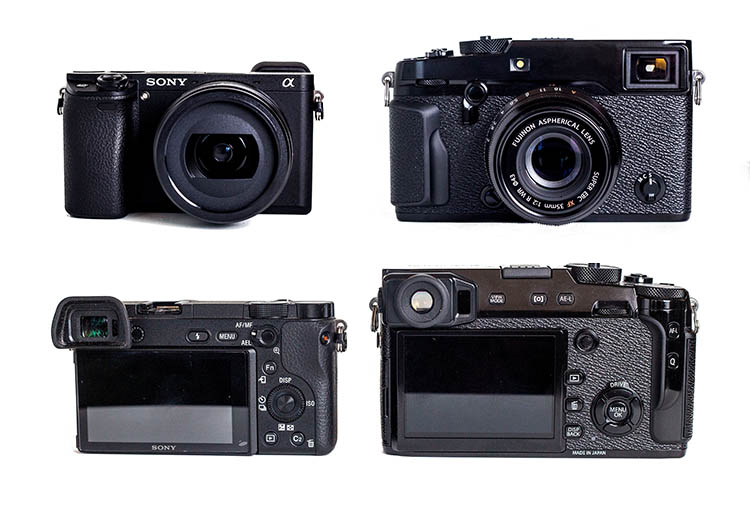
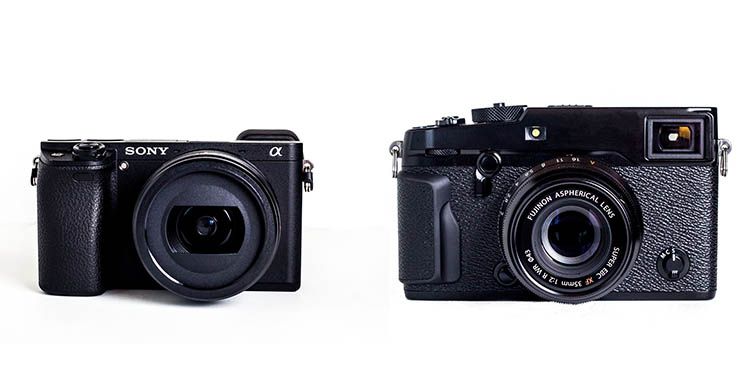
The Sony a6300 and Fujifilm X-Pro2 are two mirrorless cameras that debuted very recently as updated versions of their popular and beloved predecessors. Both cameras are comparable in technical specs and appeal, but how does each fare when compared side-by-side? Find out below!

Fujifilm X-Pro2 versus Sony a6300 6

Technical Specs: Main Similarities

Camera Sensors and Format

Both the a6300 and X-Pro2 are APC-C crop sensor bodies with a 1.5x crop factor. Each has a CMOS sensor with 24-megapixel resolution and is capable of shooting in both JPG and RAW on SD memory cards.

Solid, Weather-Resistant Body

Perhaps the biggest cosmetic upgrade that Sony made to the a63000 was including a tougher, more weather-resistant body. Like the X-Pro2, the a6300 is composed of magnesium alloy promises to be dust and moisture resistant.

Fujifilm X-Pro2 versus Sony a6300 6

In-Camera Wi-Fi

Like most modern digital cameras, both the X-Pro2 and a6300 have built-in Wi-Fi, making it a snap to transfer photos from your camera to your mobile phone, or shoot remotely via a mobile app.

Technical Specs: Main Differences

Price

The a6300 can be purchased body-only for $ 998.00, while the X-Pro2 is quite a bit more expensive at $ 1,699.00. Accompanying Fujifilm lenses also tend to be pricier than Sony equivalents.

Size and Weight

The X-Pro2 is quite a bit bulkier and heavier, weighing in at 15.70 ounces (445 g) body-only compared to the a6300’s 14.25 ounces (404 g). In terms of dimensions, the X-Pro2 is also slightly bigger with dimensions of 5.5 x 3.3 x 1.8″ (141 x 83 x 56 mm), compared to the a6300’s dimensions of 4.7 x 2.6 x 1.9″ (120 x 67 x 49 mm). Accompanying Fujifilm lenses are also heavier and larger than Sony equivalents.

Sony a6300

Sony a6300

Fuji X-Pro2

Fuji X-Pro2

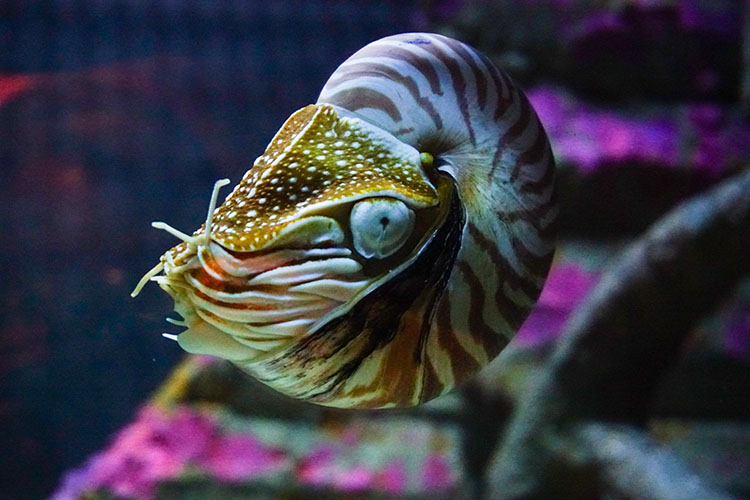
Both shot with the same settings. Images are straight from the camera, unedited.

Video

The a6300 can record 4K video, while the X-Pro2 can only record video at 1080p. Interestingly, the Fujifilm offers two SD-card slots compared to the Sony’s single SD-card slot. You’d think Sony would squeeze in another slot to accommodate their higher-quality video formats.

Viewfinders

Among the unique features of Fujifilm’s digital cameras is their signature hybrid viewfinder which really shines on the X-Pro2. For those unfamiliar, the hybrid viewfinder offers the ability to switch between optical (rangefinder style) and electronic viewfinders , which can be a huge advantage for photographers who dislike shooting with electronic viewfinders only, which is what you get with the a6300.

Focus Tracking

Besides the inclusion of 4K video, the main selling point of the a6300 was its brand new sensor, and what Sony claims is the world’s fastest autofocus (dubbed “4D focus”) with 425 phase detection autofocus points. Combined with the Sony’s ability to shoot at up to 11 frames per second and accurate lock-on AF, the a6300 is a beast for shooting sports and action photography.

Comparatively, the X-Pro2 sports a total of 273 AF points including 169 embedded phase-detect AF points, plus a maximum burst rate of 8 frames per second.

Sony a6300

Sony a6300

Fuji X-Pro2

Fuji X-Pro2

Display Screen

While both cameras have a 3-inch rear LCD screen, the a6300 has a pop-out tilting screen, while the Fujifilm’s screen is melded to the camera body.

Built-in Flash

The a6300 offers a small pop-up flash that can be angled to bounce off the ceiling, in addition to a hot-shoe mount, while the X-Pro2 does not have a built-in flash (only a hot-shoe mount).

In Practice

Given the technical similarities and differences above, how did it actually feel to handle both cameras? The Fujfilm’s weight and size were definite factors, especially while switching between the smaller, lighter-weight Sony. With that being said, one could definitely argue that Fujifilm’s heavier, more solid camera and lenses felt like a higher-quality investment compared to some of Sony’s lightweight, plastic-based lenses.

Sony’s newly engineered 4D focus tracking was incredibly spot-on and accurate, especially compared to the Fuji. However, unless you’re shooting a ton of action scenes, Sony’s ultra-fast autofocus is a luxury that isn’t a make or break feature. One feature on the Sony that did come in handy was the flexible pop-up flash that would have been nice to have on the Fuji.

Fujifilm X-Pro2 versus Sony a6300 6

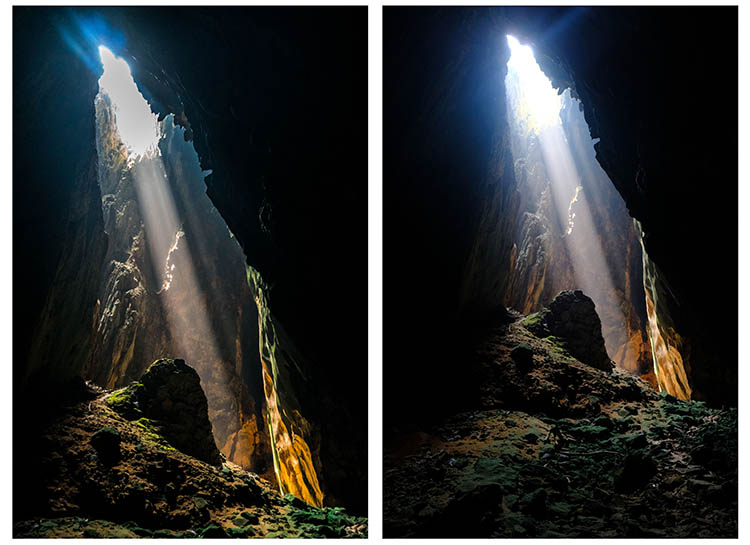
Sony a6300 photo on the left; Fujifilm X-Pro2 photo on the right. Both shot with the same settings. Images are straight from the camera, unedited.

The X-Pro2 has a clear vintage, rangefinder look and feel to it, which some photographers may prefer. Personally, I preferred the feel and overall button placement of the Sony, and was ultimately able to customize buttons and settings to operate it similarly to my Canon 5D Mark III.

On both cameras, the built-in Wi-Fi was a little tricky to set up, but from then on was incredibly intuitive and easy to wirelessly transfer images straight from the cameras to cell phones.

Sony a6300

Sony a6300

Fuji X-Pro2

Fuji X-Pro2

One last consideration – lens availability

Since both the a6300 and X-Pro2 are interchangeable lens cameras, compatible lens selection is another crucial difference between the two brands. Fujifilm lenses, while more solid and often more expensive, are contained to primes with a rather limited selection of zoom lenses, most of which have variable maximum apertures. In comparison, Sony offers a slightly more varied selection of lenses from primes and wides to mid-range and telephoto zooms.

Which is better for you?

Both the X-Pro2 and a6300 are feature-packed, brand new cameras that will appeal to different types of photographers.

Go Sony: If you value wicked fast autofocus, enhanced video recording capabilities, and/or are on a bit of a budget, the Sony a6300 is probably best for you.

Go Fuji: If you love the look and feel of a rangefinder camera, value Fuji’s unique hybrid viewfinder, and/or have a larger budget, the X-Pro2 will be your new favorite camera.

Sony a6300

Sony a6300

Fuji X-Pro2

Fuji X-Pro2

Have you tried either or both of these cameras? What are your thoughts?

googletag.cmd.push(function() {
tablet_slots.push( googletag.defineSlot( “/1005424/_dPSv4_tab-all-article-bottom_(300×250)”, [300, 250], “pb-ad-78623” ).addService( googletag.pubads() ) ); } );

googletag.cmd.push(function() {
mobile_slots.push( googletag.defineSlot( “/1005424/_dPSv4_mob-all-article-bottom_(300×250)”, [300, 250], “pb-ad-78158” ).addService( googletag.pubads() ) ); } );

The post Side by Side Comparison: The Sony a6300 Versus Fujifilm X-Pro2 by Suzi Pratt appeared first on Digital Photography School.


Digital Photography School

 
Comments Off on Side by Side Comparison: The Sony a6300 Versus Fujifilm X-Pro2

Posted in Photography


‘Our goal is to satisfy everyone’: an interview with Fujifilm execs

16 Jul

Following the launch of the Fujifilm X-T2 last week, we sat down with senior executives from Fujifilm.

  • Yuji Igarashi, general manager of Fujifilm’s Electronic Imaging Division.
  • Takashi Ueno, manager of Fujifilm’s Electronic Imaging Group Sales and Marketing and Optical Device and Electronic Imaging Products Divisions.
  • Ryouichi Takamoto, Optical Device & Electronic Imaging Products Division, Sales and Marketing Staff.

We talked about the X-T2, Fujifilm’s plans for lenses, and why the company is putting a lot of energy into video. 

The following interview is taken from on-record portions of our conversation, and has been edited slightly for flow and clarity. 


Fujifilm now has two flagship product lines – the X-Pro and the X-T. How do you see these two lines as being distinct?

We think that the character of the two cameras is completely different. The X-Pro series are special cameras for snapshooting, reportage and so on. But the X-T2 is a multipurpose camera, so we’re trying to sell the X-T2 to DSLR users, compact camera users – all photo enthusiasts and professional photographers. That’s the target with the X-T2.

The X-Pro 2 doesn’t have a 4K movie function, because we see the X-Pro 2 as being a stills camera. But the X-T2 needed 4K movie.

The X-T2 is compatible with a new ‘Vertical Power Booster Grip’ which can accomodate two batteries, making a maximum of three in total. This takes the X-T2’s endurance to a CIPA-rated total of 1000 shots.  

Apart from the 4K movie function, what other features differentiate the X-T2?

Durability. And that doesn’t just mean toughness, but also battery consumption. That’s why we made the Power Booster grip for the X-T2. And autofocus performance. We want the X-T2 to be able to capture all subjects. The X-Pro 2 doesn’t need such fast AF, because for snap-shooting and portrait shooting it’s not necessary. But our target users for the X-T series include sports photographers.

If you look at the body shape and balance, we have the booster grip for the X-T2 which works well if you’re using telephoto lenses, whereas with the X-Pro 2 it’s designed to be more discrete, and for use with prime lenses. The body style itself is different.

Some of our readers have expressed disappointment that the X-T2 costs more than the X-T1. Why is this?

It’s a combination of two factors. One is the exchange rate, of course [editor’s note: the value of the yen relative to the dollar fluctuated significantly from 2014-16] and the other is the features included in the camera. We’ve added 4K video, a new 24MP sensor, a new shutter and so on. These factors have resulted in an increase in price.

In the X-T2, is the autofocus system different to the X-Pro 2?

Yes, the algorithm is completely different. But we’re planning to add this [improvement] to the X-Pro 2 in FW 2.0, in October. But the AF-C custom functions will only be available in the X-T2.


 The X-T2 offers several Canon-style AF ‘sets’, which allow the camera’s continuous autofocus performance to be tweaked depending on the subject. Although the X-Pro 2’s autofocus will be updated with firmware this autumn, these AF sets will remain unique to the X-T2.

Why did you choose to include 4K video in the X-T2?

The movie function is one of the most important functions of digital cameras. Many of our competitors had offered 4K, but we didn’t. Fujifilm is a popular company in the broadcast industry, because we’ve developed so many lenses for broadcast cameras. So we are familiar with the industry, we just been able to utilize that knowledge [until now].

Video has long been a weak area in the X-series…

Yes. Our X-Trans color filter array is more complicated than that of bayer array, but we have developed a new, very powerful processor – the X Processor Pro. This can read data faster than the processor in previous X-series cameras, which means we could add 4K movie recording to the X-T2. But we don’t think that the X-Pro 2 necessarily needs 4K.

Could 4K movie recording be added to the X-Pro 2 with firmware?

No. Because of hardware issues. We’d need to add a heatsink, which the X-Pro 2 doesn’t have because we wanted to maintain its body size.

Does that explain the slight weight increase from the X-T1 to the X-T2?

Yes.

In adding 4K video to the X-T2, were you responding to existing X-series users’ demands, or to market expectations?

People are taking more movies now. In the past, maybe it was OK for us to release video that was not great, but now, the movie specification is one of the most important reasons why someone might buy a camera. Even if someone takes primarily stills. So the importance of video has grown and grown and we’re trying to make improvements. Hopefully video will be one of our strengths in the future. Every day our X-series photographers are asking us to improve movie quality.

Despite having an articulating rear LCD screen, the X-T2 is limited to physical dial and button-based controls. It seems that touch-sensitivity is still some way off, in high-end X-series cameras.  

Why did you decide not to include a touchscreen on the X-T2?

One reason is that a key feature of the X-series is dial operation. And dial operation and touch operation are completely different, so combining them could be confusing. The typical way of shooting with X-series cameras is with your eye to the viewfinder, and to use a touchscreen you’d have to take your eye away from the finder.

Our priority for the X-T2 for now is to focus on the viewfinder. We’d like the user to use the finder primarily, with dial operation. But the X70 for example we introduced a touch sensitive screen, because that camera doesn’t have a viewfinder.

Will future X-series cameras continue to look much the same, or will you experiment with ergonomic changes?

Dial operation is part of our identity. This concept and style of operation will be maintained in order to distinguish our cameras from competitors. We also think that this design is the most intuitive for general photography.

A lot of our readers continue to be a little disappointed by the AF speed of some of the X-mount lenses. Is this something you’re working on improving?

Lenses like the 35mm F1.4 and 60mm F1.4 use DC coil motors, and the focusing elements are very heavy. For example the weight of the focusing group in the XF 35mm F1.4 is more than 100g. It’s almost unbelievable compared to most current autofocus lenses. On the other hand, in the XF 18-55mm zoom lens, the weight of the focusing group is only around ten grams.

Because of the weight of these groups in this fast prime lenses, we cannot make them focus faster. But that’s why we’re making new F2 lenses. Our 35mm F1.4 is designed for the best image quality, whereas our 35mm F2 – while we also care about image quality – is designed for fast autofocus and lighter overall weight.

Most autofocus lenses have only one focusing element, but our 35mm F1.4 for example, all of the elements in that lens move [to achieve focus].

Still on the topic of lenses, where do you see the biggest gaps in your XF lens lineup, right now?

Long focal length prime lenses, fisheye lenses, and tilt/shift lenses. Of course, the demand for these lenses is very small, and we have to prioritise. Currently we are prioritizing lenses like the 35mm F2, 23mm F2 and 50mm F2.

 Hasselblad’s X1D is a relatively compact medium-format camera. Exactly the same kind of camera, in other words, that Fujifilm used to be known for, back when a roll of Velvia was the memory card of choice for enthusiast photographers.  

Hasselblad just released the X1D – a relatively compact medium format camera. Do you think there is an opportunity for Fujfilm in this market in the future?

We’re keeping our eye on that market, and the full-frame market too, but we’re still focusing on our APS-C range.

Are you interested in attacking the full-frame market in the future?

We’re attacking this market with our X-series. And with X-Trans III, we think that when people actually see what our cameras can deliver, we think there’s a good chance that photographers will use our X-series in the future.

The question of sensor size depends on what the user wants, as an output. If you’re using a medium format camera and you definitely need that for the work you’re doing, maybe APS-C is too small. But for general use, I think our [current] APS-C sensor is comparable to full-frame image quality. I think we can satisfy most people. But in future our goal is to satisfy everyone.

Is Fujfilm committed to the sub-APS-C market anymore, or are you focused now on APS-C?

We still do well with tough cameras. Because smartphones haven’t been able to replace them. So we’ve not completely abandoned that market. As long as there’s opportunity we’ll continue to look into it.

Some manufacturers are moving into virtual reality imaging with products like the Nikon Key Mission, the Samsung Gear and so on. Is this a market segment that Fujifilm is interested in?

At the moment we don’t have anything planned.

When a photographer thinks about Fujifilm as a brand, what kind of qualities do you want them to associate with the company?

Image quality. We are a photography company – not a camera company. That’s what our boss is always saying to us (Toru Takahashi – interviewed in January). That’s very important. We are still a film maker. So image quality and color reproduction. 


Editor’s note:

In many ways, the on-record portions of this interview offer a message consistent with that delivered by Mr Takahashi and Mr Iida when I spoke to them earlier this year. Fujfilm is committing to two flagship APS-C platforms, X-Pro and X-T, and with the release of the X-T2, this strategy has reached a degree of maturity.

The similarities between the two cameras are arguably less interesting than the differences. The X-T2 is the faster of the two, and is designed to appeal to a wider audience. Not necessarily a more professional audience, but perhaps a more commercial one. Several times, the executives I spoke to stressed the importance of satisfying the needs of sports photographers and the inclusion in the X-T2 of Canon-style AF ‘sets’ is clearly intended to ease the hypothetical transition for prospective DSLR defectors. Meanwhile, 4K video (and from what we can tell at present, pretty good 4K video) is of course, a feature that is currently unavailable to most DSLR photographers, regardless of brand.

Whether or not the X-T2 can actually attract these dyed-in-the-wool DSLR shooters is of course another matter altogether. Ironically, I get the sense that it is the rangefinder-style X-Pro and X100-series that have attracted more attention among traditional enthusiasts, possibly because they are so un DSLR-like. Fortunately, the X-T2 is an excellent camera. Both ergonomically and in terms of image quality, the X-T2 continues to impress us in studio and real-world testing, and as we’d expect from a product with this kind of lineage, it’s a pleasure to shoot with. I like how the X-Pro2 looks, but I must say, I greatly prefer how the X-T2 handles.

Publicly, Fujifilm is fully committed to its APS-C system, with its twin flagships, but I’d be very surprised if some of the company’s engineers aren’t looking jealously westward to Sweden, where Hasselblad recently announced the X1D. This, after all, is precisely the kind of medium format camera that Fujifilm used to be known for, back in the film days. Lightweight (ish), easy-to-use, and relatively affordable next to more traditional SLRs.

One of the gentlemen I spoke to last week said that ‘in future our goal is to satisfy everyone’. Only he knows exactly what he meant by that, but it’s fun to speculate. What do you think? Let us know in the comments.

Articles: Digital Photography Review (dpreview.com)

 
Comments Off on ‘Our goal is to satisfy everyone’: an interview with Fujifilm execs

Posted in Uncategorized


Fujifilm to update X-Pro2 firmware, releases new lens roadmap

07 Jul

Fujifilm has announced new firmware for its X-Pro2 mirrorless camera which, most notably, updates the autofocus algorithm to be in-line with the just-announced X-T2. The company promises better AF speed and accuracy, but notes that the use case-based system on the X-T2 will not be available on the X-Pro2.

The firmware update also improves parallax correction when using the OVF and adds support for the new EF-X500 external flash. 

X-Pro2 owners will be able to get their hands on the new firmware this October.

Along with the new firmware, Fuji has also refreshed its X-mount lens roadmap (shown below), adding three new XF lenses: 23mm F2 R WR, 50mm F2 R WR and 80mm F2.8 R LM OIS WR Macro. The 23mm will be shipping this year, while the other two will arrive in 2017.

One lens that was removed is the 120mm F2.8 R Macro, which has been replaced with the aforementioned 80mm Macro. Fuji states that this is ‘to meet the market demand for compact and lightweight lenses.’

Press release:

FUJIFILM ANNOUNCES NEW FIRMWARE UPDATE FOR THE X-PRO2 AND UPDATED XF LENS ROADMAP

Valhalla, N.Y., July 7, 2016 – As a leader in advanced digital camera technology and outstanding image quality, FUJIFILM North America Corporation today announced a new Firmware Update Version 2.0 for the FUJIFILM X-Pro2 that includes improvements to the autofocus system, compatibility with the new FUJIFILM EF-X500 flash, new power management options and a more accurate and easier-to-use Optical Viewfinder.

Firmware Update V.2.0 Key Features:

  1. The new autofocus algorithm* (found in the new FUJIFILM X-T2) produces faster and more accurate autofocus.
    * Excludes the new AF-C Custom Settings functions.
  1. Compatibility with the new hot-shoe mount FUJIFILM EF-X500 flash. The camera will now support high-speed flash sync and multi-flash lighting.
  2. AUTO POWER OFF will now have 15 second, 30 second, and 1 minute options, allowing more customizable power management.
  3. The parallax correction function will be improved to provide a more accurate and easier-to-use Optical Viewfinder.

Availability

The new firmware will be available for download in October 2016. 

Updated XF Lens Roadmap

Also announced is an updated roadmap for developing interchangeable lenses for the X Series line of mirrorless digital cameras. The latest roadmap adds three new lenses: the compact, lightweight and stylish semi-wide angle lens XF23mmF2 R WR, the compact mid-telephoto lens XF50mmF2 R WR and the mid-telephoto 1:1 macro lens XF80mmF2.8 R LM OIS WR Macro. The expanded 25-lens lineup covers extensive angles of view from ultra-wide angle to ultra-telephoto, and will now expand the macro category to further enhance photographic versatility.

Changes from the previous roadmap released in February 2015

The XF120mmF2.8 R Macro lens, listed in the previous roadmap, has been replaced with the XF80mmF2.8 R LM OIS WR to meet the market demand for compact and lightweight lenses. To support our customers who were expecting a telephoto macro lens, this new lens is compatible with the existing teleconverters to extend its reach into the telephoto range.

Articles: Digital Photography Review (dpreview.com)

 
Comments Off on Fujifilm to update X-Pro2 firmware, releases new lens roadmap

Posted in Uncategorized


Now with 4K: Fujifilm X-T2 offers 24MP, improved AF and video specs

07 Jul

$ (document).ready(function() { SampleGalleryV2({“containerId”:”embeddedSampleGallery_6056057871″,”galleryId”:”6056057871″,”isEmbeddedWidget”:true,”standalone”:false,”selectedImageIndex”:0,”startInCommentsView”:false,”isMobile”:false}) });

Fujifilm has updated its premium SLR-style X-series lineup with the X-T2, bringing 4K video capture to its lineup for the first time.

The camera uses the 24.3MP X-Trans CMOS III APS-C sensor first seen in the X-Pro2 and also includes an upgraded hybrid AF system with more focus points, as well as an AF-point selection joystick a la the X-Pro2. There’s also a faster top mechanical shutter speed of 1/8000 sec (1/32,000 sec with the electronic electronic), an improved AF-C algorithm and an overall boost in response times when using the camera. Like the X-T1, this camera is weather-sealed.

The X-T2 offers an unchanged 2.36 million-dot OLED EVF carried over from its predecessor, but the 1.04 million-dot 3″ LCD has an additional hinge for waist-level portrait-orientation shooting. An optional ‘Vertical Power Booster Grip’ is offered. The grip houses two batteries and lives up to its name by ‘boosting’ mechanical shutter burst shooting to 11 fps (from 8 fps), reducing shutter lag and blackout time slightly and allowing for 30 minutes of 4K capture (as opposed to 10). 

An EF-X500 hot shoe flash is also introduced for the system, offering a guide number of 50 with a tilting flash head.

The Fujifilm X-T2 will be available in September for $ 1,599.95 body-only, or bundled with the XF18-55mm for $ 1,899.95. The EF-XF500 flash will also be available in September for $ 449.99.


Press release:

Fujifilm Unveils the New X-T2, the Ultimate Mirrorless Camera with New Autofocus System and 4K Video Shooting

X-T2 gives users cutting-edge performance that delivers premium imaging quality in a classic design that is a joy to use; New FUJIFILM EF-X500 flash arrives

Valhalla, N.Y., July 7, 2016 – As a leader in advanced digital camera technology and outstanding image quality, FUJIFILM North America Corporation today announced the new FUJIFILM X-T2, a splash-resistant premium interchangeable lens camera with a large OLED electronic viewfinder (EVF). The X-T2 houses the latest generation 24.3MP X-Trans CMOS III with an APS-C sensor with no low-pass filter, boasting the highest performance in the history of X Series. The new X-T2 produces crisp image resolution comparable to that of cameras equipped with larger sensors and higher pixel counts, all in a more compact and classically-designed body.

And for the first time, the new FUJIFILM X-T2 now supports 4K video recording that can use each available Film Simulation mode, including ACROS, to easily produce premium-quality footage that is as unique as the photographer behind the viewfinder.

Dramatic improvement to auto focus system The FUJIFILM X-T2 receives a dramatically improved auto focus system (AF) that increases the overall single AF points to 325, and the number of Zone focusing points to 91 (expanded from 49 in previous models). Approximately 40% of the imaging area (center area containing 49 focusing points) is covered with phase detection auto focus pixels to form a fast and precise phase detection auto focus area that can be used in a variety of scenes.

With the high-speed X-Processor Pro and the use of improved algorithms, the X-T2 now refocuses more frequently, enabling predictive AF of advanced accuracy.

The X-T2 also has an enhanced ability to autofocus on small points of light, low-contrast objects and subjects with fine and delicate textures such as bird feathers and animal fur.

The X-T2’s performance of contrast detection AF, enabled for approximately 65% of the imaging area, has also been improved. The data read speed has been doubled compared to previous models to achieve AF performance of higher speed and precision. Photographers will enjoy accurate focusing is all shooting situations, even in low light with a -3EV.

Another area of improvement is the AF-C algorithm that has been significantly enhanced for even higher accuracy when focus-tracking moving subjects in the AF-C mode. According to the type of movement, users can choose individual settings for Subject Retention Characteristic, Acceleration / Deceleration Tracking Characteristic and Focus Zone Characteristic, or select one of five presets or customize specific settings for these three elements.

Image Quality
Fujifilm’s commitment to superior image quality remains a guiding principle, and the FUJIFILM X-T2 is the latest effort to deliver outstanding picture resolution, all from a compact and sophisticated body that is both weather-sealed and easy to travel with in any location. With Fujifilm’s proprietary image design technology, produced through the development of photographic films, the X-T2 reproduces warm skin tones, bright blue skies and rich green foliage in beautiful colors, just as you remember seeing in real life. The X-T2 includes the ACROS Film Simulation for smooth gradation, deep blacks and beautiful textures to create monochrome images that far outperform even the most demanding expectations.

The X-T2 also has the Grain Effect function for reproducing distinctive graininess seen in photographs taken with film cameras. The function is available in Strong and Weak options, and can be combined with any of the Film Simulation modes. You can easily obtain the effect of film-based photos, notable especially when the image is printed out.

Speedy throughout
Basic response specifications, such as startup time, shooting interval and shutter release time lag, have all been improved to the extreme in pursuit of a camera that operates exactly as the photographer demands. The high-speed processing power and the use of improved algorithms have significantly improved the basic autofocus performance, and X-T2 now gives users AF-C Custom Settings for even higher accuracy in focus-tracking moving subjects.

The X-T2’s electronic viewfinder, which is used to continuously track a moving subject, is capable of displaying up to 100 frames per second, while also maintaining the magnification ratio of 0.77x and the display time lag of 0.005 seconds. The duration of the viewfinder blackout, in which the evf blacks out temporarily while the camera reads picture data, has been reduced by more than half, enabling continuous shooting to ensure tracking subject movements.

Body and grip offer ultimate stability
The X-T2’s body is fully made of magnesium alloy making it not only compact and lightweight, but also solid and highly durable. The X-T2 body has weather-proofing at 63 points to achieve a high level of resistance to dust and moisture, and coupled with its ability to operate in temperatures down to 14°F, is ready for full-fledged field photography. Similar ruggedness is applied to the new Vertical Power Booster Grip.

The Vertical Power Booster Grip (optional VPB-XT2) is a dust-resistant grip, rugged and capable of operating at temperatures as low as 14°F that maximizes the performance of the X-T2 beyond expectations. It fits two batteries, bringing the total number of batteries the X-T2 can use to three, including the one in-camera, to increase the maximum number of frames that can be taken per charge to approximately 1,000 (Normal mode). In the Boost mode, multiple batteries can operate at the same time to give a boost to camera performance in continuous shooting, shooting interval, shutter release time lag and blackout time, while also extending the duration of 4K video recording to approximately 30 minutes.

The Vertical Power Booster Grip also features a shutter release button, focus thumbstick, AE-L button, AF-L button, command dials, Q button and Fn button and headphone jack to enable audio monitoring during video recording to provide the same level of excellent operability in vertical shooting as you get in horizontal operation. The grip itself has battery-charging functionality where by using the AC adapter supplied (AC-9VS), users can fully charge two batteries at the same time in about two hours.

FUJIFILM EF-X500 Flash
The new high-end multi-function external FUJIFILM EF-X500 Flash is now official for the lineup of accessories for the X Series of digital cameras. The EF-X500 is a hot-shoe mount flash with a maximum guide number of approximately 50, and includes support for the FP mode (high-speed flash sync) so that the flash can be fired at any shutter speed. Photographers can now concentrate on shooting when a faster shutter speed is required, for example, in order to use a near-maximum aperture to produce beautiful bokeh.

The EF-X500 also supports multi-flash lighting. Users can set up multiple flashes to freely control light on a subject and background for a creative result. Through-the-lens (TTL) lighting control is available with single flash and also in the multi-flash setup, so that users can start shooting without having to make cumbersome adjustments to light output.

EF-X500 Flash key features: 

  • Maximum guide number of approximately 50 (ISO100?m) / 164 (ISO100·ft) • Zooming the illumination angle for the focal lengths of 24mm – 105mm, and covering the illumination angle of approximately 20mm when the wide panel is used
  • Flash head that can be tilted up by 90° degrees, down by 10° degrees, to the left by 135° degrees and to the right by 180° degrees for bouncing light
  • Equipped with LED video light that can also be used as AF assist light and catch light
  • Registers up to ten combinations of various setting to suit specific shooting conditions in advance for quick activation when needed

FUJIFILM X-T2 key features:

  • 24.3MP X-Trans CMOS III Sensor
  • Dust and moisture-resistant body with approximately 63 points of weather sealing; Freeze resistance to 14°F
  • X-Processor Pro
    – Fast AF of 0.06 seconds
    – Startup time of 0.3 seconds
    – Shutter time lag of 0.045 seconds
    – Shooting interval of 0.17 seconds
    – Phase detection AF and motion predictive AF for continuous shooting up to 8 frames per second (fps)
    – Up to 11fps using Booster Grip
  • High-precision 0.48-inch, 2.36 million dot OLED viewfinder
    – Viewfinder magnification for digital cameras of 0.77x
    – Wide viewing angle (diagonal 38° and horizontal 31°)
    – Ultra-fast Real Time Viewfinder with a lag-time of 0.005sec (less than 1/10 of existing models)
    – Automatic Brightness Adjustment function
    – EVF refreshes at a rate of 60fps, or as high as 100fps in the Boost mode
    – Continuous shooting of 5fps in Live View
  • Full 4K 3840×2160 30P/25P/24P shooting (Using a card with the UHS Speed Class 3 or higher)
    – Continuous recording: up to approximately 10 minutes
    – Full HD 1920×1080 60P/50P/30P/25P/24P, Continuous recording: up to approximately 15 minutes
    – HD 1280×720 60P/50P/30P/25P/24P, Continuous recording: up to approximately 29 minutes
  • Four different display modes: Full, Normal, Dual and Vertical
    – Full mode: Displays shooting information at the top and bottom of the screen to avoid obstruction of the view
    – Dual mode: Adds a small second screen for checking focus point with Focus Peak Highlight or Digital Split Image
    – Normal mode: Lets you concentrate on framing the shot in Auto Focus mode while keeping you aware of how the shooting conditions are changing, making it the perfect setting for sports and action photography
    – Portrait mode: When in Full or Normal modes, it rotates the shooting information interface when the camera is turned vertically
  • Tempered glass 1.04 million dot high-precision 3” tilting LCD monitor
  • Digital Split Image and Focus Highlight Peaking
  • Wi-Fi and remote camera operation
  • ISO200 – 6400, extended ISO 100, 12800, 25600, Auto(maximum ISO setting from ISO 400 – ISO6400 available) with High ISO 51200 setting
  • Lens Modulation Optimizer technology maximizes each lens’ performance
  • In-camera RAW converter
  • Die-cast magnesium body provides a sturdy and durable, while compact and lightweight design
  • Two command dials and six Function buttons for instant control and customization
  • Interval timer shooting for Time Lapse photography is available with intervals of 1 second to 24 hours and up to “?” frames
  • Advanced filters and Film Simulations, including ACROS

FUJIFILM X-T2 Accessories:

  • Vertical Power Booster Grip (optional VPB-XT2) New
  • X-T2 Metal Hand Grip (MHG-XT2) New
  • X-T2 Bottom Leather Case (BLC-XT2) New
  • X-T2 Cover Kit (CVR-XT2) New
  • NP-W126S Rechargeable Battery New
  • Five dedicated flash models to choose from depending on requirements (EF-X500 New, EF-X8, EF-X20, EF-20, EF-42)
  • Battery Pack EF-BP1, compatible with EF-X500 New
  • Protective Filters (PRF-39, PRF-52, PRF-58, PRF-62 and PRF-72)
  • M Mount Adapter for additional lens compatibility
  • Remote Release (RR-90)
  • Stereo Microphone (MIC-ST1)

Availability and Pricing
The new FUJIFILM X-T2 (body only) will be available in September 2016 in the U.S. for USD $ 1,599.95. The X-T2 and XF18-55mm (27-84mm) kit will be available in September 2016 in the U.S. for USD $ 1,899.95.

The FUJIFILM EF-X500 Flash will be available in September 2016 in the U.S. for USD $ 449.99.

Fujifilm X-T2 specifications

Price
MSRP $ 1599 (body only), $ 1899 (w/18-55mm)
Body type
Body type SLR-style mirrorless
Body material Magnesium alloy
Sensor
Max resolution 6000 x 4000
Other resolutions 3:2 (4240 x 2832, 3008 x 2000), 16:9 (6000 x 3376, 4240 x 2384, 3008 x 1688), 1:1 (4000 x 4000, 2832 x 2832, 2000 x 2000)
Image ratio w:h 1:1, 3:2, 16:9
Effective pixels 24 megapixels
Sensor size APS-C (23.6 x 15.6 mm)
Sensor type CMOS
Color space sRGB, Adobe RGB
Color filter array X-Trans
Image
ISO Auto, 200 -12800 (expands to 100-51200)
Boosted ISO (minimum) 100
Boosted ISO (maximum) 51200
White balance presets 7
Custom white balance Yes (3 slots)
Image stabilization No
Image stabilization notes Lens only
Uncompressed format RAW
JPEG quality levels Fine, normal
File format
  • JPEG (Exif v2.3)
  • Raw (Fujifilm RAF, 14-bit)
Optics & Focus
Autofocus
  • Contrast Detect (sensor)
  • Phase Detect
  • Multi-area
  • Center
  • Selective single-point
  • Tracking
  • Single
  • Continuous
  • Face Detection
  • Live View
Autofocus assist lamp Yes
Manual focus Yes
Number of focus points 325
Lens mount Fujifilm X
Focal length multiplier 1.5×
Screen / viewfinder
Articulated LCD Tilting
Screen size 3
Screen dots 104,000
Touch screen No
Live view Yes
Viewfinder type Electronic
Viewfinder coverage 100%
Viewfinder magnification 0.77×
Viewfinder resolution 2,360,000
Photography features
Minimum shutter speed 30 sec
Maximum shutter speed 1/8000 sec
Maximum shutter speed (electronic) 1/32000 sec
Exposure modes
  • Program
  • Shutter priority
  • Aperture priority
  • Manual
Built-in flash No (Small external flash included)
External flash Yes
Flash modes Auto, standard, slow sync, manual, commander
Flash X sync speed 1/250 sec
Continuous drive 14.0 fps
Self-timer Yes (2 or 10 secs)
Metering modes
  • Multi
  • Center-weighted
  • Spot
Exposure compensation ±5 (at 1/3 EV steps)
AE Bracketing ±2 (3 frames at 1/3 EV, 1/2 EV, 2/3 EV, 1 EV, 2 EV steps)
WB Bracketing Yes
Videography features
Resolutions 3840 x 2160 (29.97p, 25p, 24p, 23.98p), 1920 x 1080 (59.94p, 50p, 29.97p, 25p, 24p, 23.98p), 1280 x 720 (60p, 50p, 30p, 25p, 24p)
Format MPEG-4, H.264
Microphone Stereo
Speaker Mono
Storage
Storage types Dual SD/SDHC/SDXC UHS II
Connectivity
USB USB 3.0 (5 GBit/sec)
HDMI Yes (micro-HDMI)
Microphone port Yes
Headphone port No
Wireless Built-In
Wireless notes 802.11b/g/n
Remote control Yes (via smartphone or wired remote)
Physical
Environmentally sealed Yes
Battery Battery Pack
Battery description NP-W126S lithium-ion battery & charger
Battery Life (CIPA) 340
Dimensions 133 x 92 x 49 mm (5.24 x 3.62 x 1.93)
Other features
Orientation sensor Yes
Timelapse recording Yes
GPS None

Articles: Digital Photography Review (dpreview.com)

 
Comments Off on Now with 4K: Fujifilm X-T2 offers 24MP, improved AF and video specs

Posted in Uncategorized