RSS
 

Posts Tagged ‘from’

5 HOT Posts From Our Archives You Would Have Seen if You Were Following us on Facebook

09 Nov

At dPS we have a little problem.

As of this morning dPS has now published 4109 tutorials since we were founded back in 2006!

That’s a lot of photographic learning hidden away in our archives and we’re increasingly aware that many of our readers have not seen some of our most helpful tips and tutorials.

As a result – our team has been coming up with some strategies for highlighting some of the gold in our archives and have begun to experiment with some new ways of sharing it.

How to See the Best Stuff in Our Archives

The most successful experiments so far have been centred around our Facebook page. Over the last few weeks we’e started sharing some of our best content from the past there to those who follow us – and the response has been amazing!

Dps facebook

In the past week alone we’ve had hundreds of thousands of people view, like, share and comment upon these links to old posts and have received a lot of positive feedback about sharing them.

So if you want to explore our archives please Like Our Facebook page.

If you do you’ll see us update around 4 times per day – the updates will be a combination of our new posts and old ones – as well as some fun challenges and discussions.

To get a taste for what you’re missing – here’s the top 5 Facebook posts we’ve done this week:

  • 10 DIY Lighting Hacks for Photographers
  • 15 Tips for Low Light Landscape Photography
  • Get out of Your Photography Rut by Creating Sketches
  • 50 Must Have Wedding Photography Shots
  • 21 Poses for Photographing Kids

Also hot this week was a Facebook only challenge that we ran asking followers to submit a photo on the theme of CUTE.

Following us on Facebook but Not Seeing Our Updates?

Over the last few months Facebook have made changes that mean you don’t always see every post that people and pages you follow make.

If you would like to see all our updates here’s what to do (this should take you 15 seconds at most):

1. Head to our Facebook Page

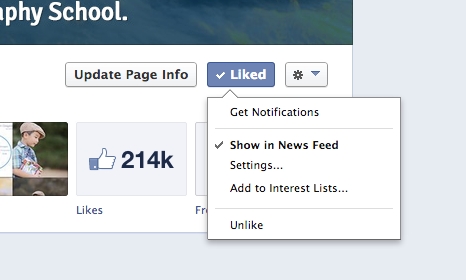
2. Make sure you’ve clicked our ‘like button’ (it should say ‘liked’ and have a tick next to it).

3. Once you’ve liked us – hover your cursor over the ‘liked’ button until a drop down menu appears (like the one pictured below).

Facebook dps

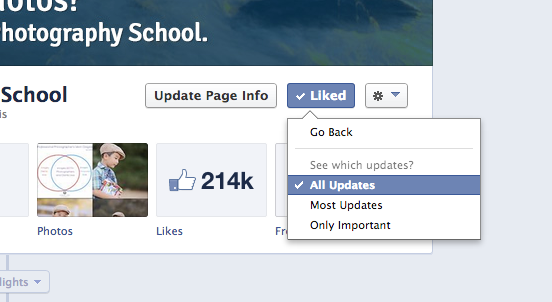
4. Click the ‘settings’ option and you’ll see an option to choose ‘all updates’ (as you see below). If you select it you’re telling Facebook you want to see all of our updates.

Facebook dps

5. You’re done – you should start seeing all our updates (that is if you check Facebook regularly).

PS: we’ve also started featuring some of our new and old posts on our Google Plus page and plan to keep getting more active there too.

Post originally from: Digital Photography Tips.

Check out our more Photography Tips at Photography Tips for Beginners, Portrait Photography Tips and Wedding Photography Tips.

5 HOT Posts From Our Archives You Would Have Seen if You Were Following us on Facebook

The post 5 HOT Posts From Our Archives You Would Have Seen if You Were Following us on Facebook by Darren Rowse appeared first on Digital Photography School.


Digital Photography School

 
Comments Off on 5 HOT Posts From Our Archives You Would Have Seen if You Were Following us on Facebook

Posted in Photography


Sending Panorama Sequences from Lightroom to Photoshop

09 Nov

Sending Panorama Sequences from Lightroom to Photoshop

In addition to being able to send single images from Lightroom to Photoshop for editing you can also send a series of images to Photoshop to assemble into a panorama. This is a useful because the Photoshop panorama merge feature is pretty good (certainly since the improvements in Photoshop CS3 & CS4) and other Photoshop tools such as Content Aware Fill and the Lens Correction Filter are handy for finishing your panoramas. When you are done, click Save and the completed panorama will be sent back to Lightroom for further processing.

To see how this is done, begin inside Lightroom and select the images to assemble into a panorama. I like to put these into a collection so they are handy if I want to try multiple panorama options to select the best of them. I don’t typically process the images before sending them to Photoshop and, instead, I process the completed panorama when it returns to Lightroom. One exception to this is fixing the white balance if it were incorrectly set on the camera at capture time, for example.

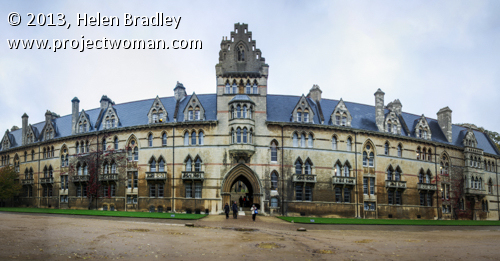
Photoshop can assemble panoramas both vertically and horizontally and it can also take a mix of images such as I used here. This sequence is six shots horizontally across the front of a building and one extra shot to handle the building’s tower which wasn’t captured in the original sequence. If I’d been thinking, I would have captured some extra sky to use but we can solve that in Photoshop.
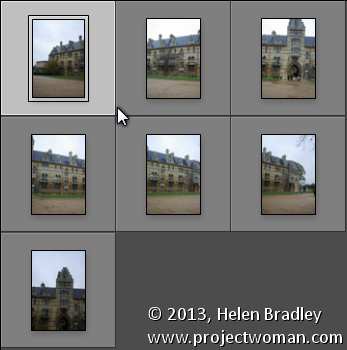
Sending Panorama Sequences from Lightroom to Photoshop 1

Select the images, right click and choose Edit In > Merge to Panorama in Photoshop.
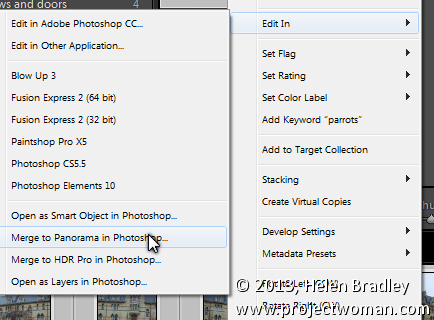
Sending Panorama Sequences from Lightroom to Photoshop 2

Photoshop will open with the images you sent to Photoshop listed in the Photomerge dialog. Now you need to determine the Layout to use. In most cases the Auto setting will be a good choice – when you select this, Photoshop will analyze the images and determine the best of the other layout alternatives: Perspective, Cylindrical and Spherical to use.
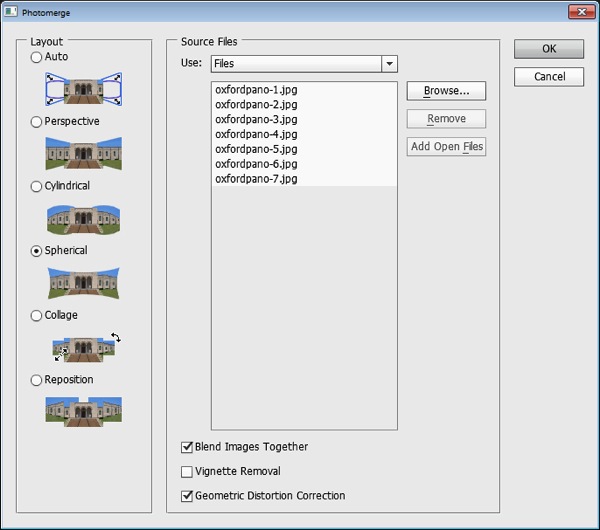
Sending Panorama Sequences from Lightroom to Photoshop  3

Check the Blend Images Together checkbox so that the images will be seamlessly blended together – then you won’t have to do it yourself. You can also click Geometric Distortion Correction to remove the effect of any barrel, pincushion or fisheye distortion in the original images. If the edges of your images have some edge vignetting click Vignette Removal. If you’re unsure what to choose, check all three checkboxes. Click Ok and wait as the images are aligned and blended.

Once the panorama is assembled you can straighten the image if desired. To do this select all the layers and target the Ruler tool. Now drag along a line in the image which should be perfectly horizontal – you won’t be able to click the Straighten Layer button to rotate the image because you will have multiple layers selected. Instead, choose Image > Image Rotation > Arbitrary and click Ok to straighten the entire image to the angle of the Ruler line.
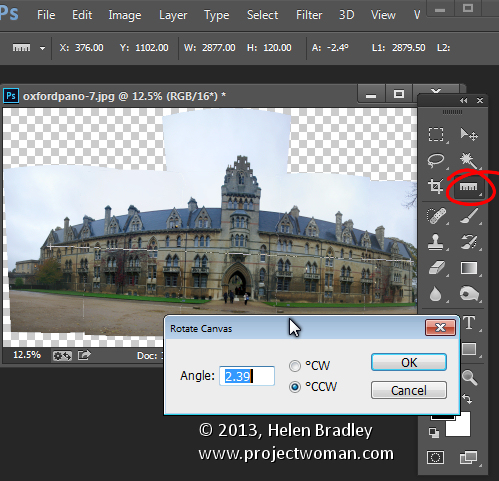
Sending Panorama Sequences from Lightroom to Photoshop  4

Most panoramas will then need to be cropped to a rectangle to eliminate uneven areas around the edge of the image. However, before you do this you may want to fill in some of the empty areas of the image using the Content Aware Fill tool so you can crop larger than you would otherwise be able to do. To do this you’ll either need to flatten the image to a single layer or you will need to create a new layer with the entire image on it to use. To flatten the image choose Layer > Flatten Image. To make a new layer with the image on it (but still retain the individual layers below) click the topmost layer and press Control + Alt + Shift + E (Command + Option + Shift + E on the Mac).
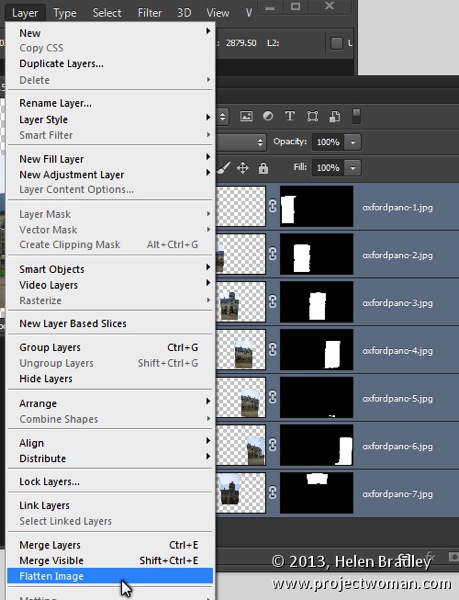
Sending Panorama Sequences from Lightroom to Photoshop  5

Select the area that you want to fill and then choose Edit > Fill, from the Use list choose Content Aware and click Ok. Photoshop will attempt to fill the missing area with details from the image around it. If the image contains sufficient detail you should be able to build up missing areas of sky and foreground, for example.

If you encounter problems with the Content Aware Fill feature this post will show you how to mask a layer to get better results when using it: http://digital-photography-school.com/smarter-content-aware-fill-in-photoshop. Crop the image when you have filled the edge area.
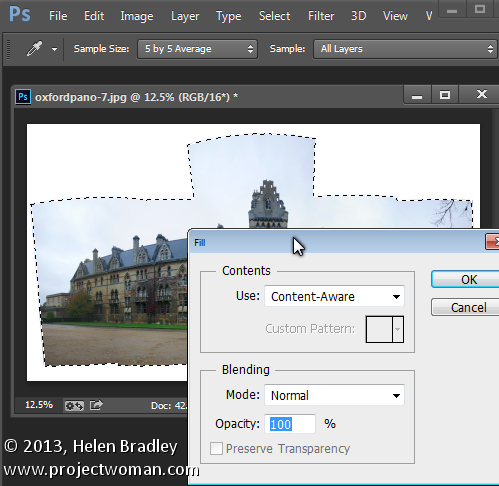
Sending Panorama Sequences from Lightroom to Photoshop 6

To fix unwanted distortion in an image you can use the Lens Correction tool. This tool works on a single layer and you run it by choosing Filter > Lens Correction > Manual. Adjust the Horizontal Perspective slider to fix problems with an image which has not been captured face onto the point of interest. Use the Vertical Perspective slider to adjust for keystoning – generally you will drag this slider to the left. Use the Geometric Distortion slider to remove barrel and pincushion distortion.
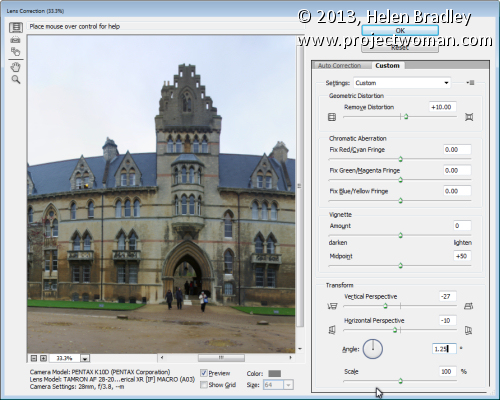
Sending Panorama Sequences from Lightroom to Photoshop 7

Once you have finished assembling the panorama choose File > Save to save the image and return to Lightroom where your panorama will be ready for further editing.
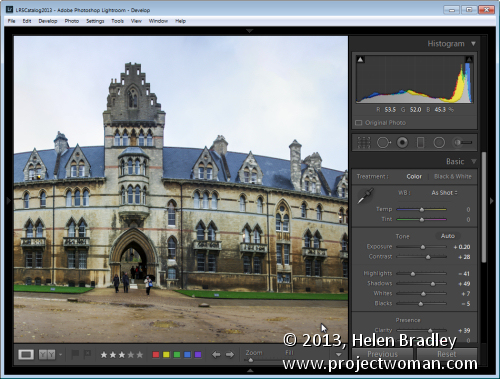
LR PS panoramaMerge 8

If you are not using Lightroom you can assemble a panorama from Bridge or from inside Photoshop. In Bridge select the panorama sequence and choose Tools > Photoshop > Photomerge in Bridge. In Photoshop, first open the images to use then choose File > Automate > Photomerge and click the Add Open Files button. In either case you will probably want to fix the image in Photoshop once the panorama is complete. If you are using Lightroom you may prefer to finish processing the panorama in Lightroom.

Layout Options

Each of the panorama Layout options in Photoshop results in a different looking panorama. Choosing Auto tells Photoshop to select the best of the options Perspective, Spherical and Cylindrical for your particular sequence of images.

Here is the result of each of the other Layout options used with our image sequence, these results haven’t been edited except to straighten the image and brighten it a little. You may want to experiment with any given sequence of images to see which of these options gives you the most pleasing result:

Perspective Layout

The panorama is assembled in relation to the middle image of your sequence of images. The middle image is placed in position and the other images arranged either side of it and skewed and repositioned as needed. This often results in edges which are taller than the middle giving rise to the term ‘bow-tie” distortion.
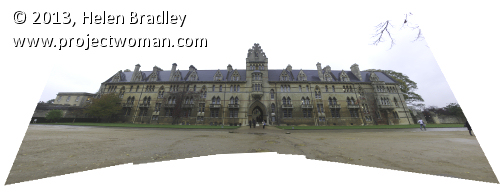
LR PS panoramaMerge perspective

Cylindrical Layout

This layout avoids the bow-tie distortion by showing the images as they might look if placed on an unwrapped cylinder.
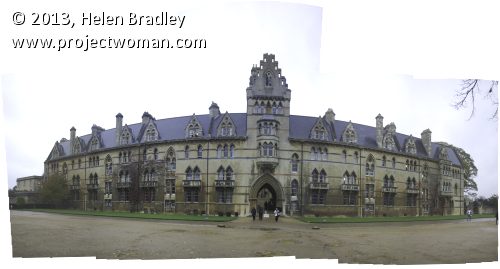
LR PS panoramaMerge cylindrical

Spherical Layout

This layout arranges the images as if to cover the inside of a sphere. It is a good choice for 360 degree panoramas and can also give good results with other shorter panorama sequences.
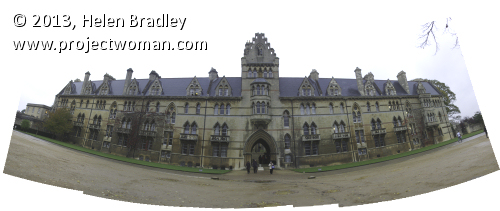
LR PS panoramaMerge spherical

Collage Layout

This layout aligns the images matching overlapping content. If necessary, image layers are transformed and rotated.
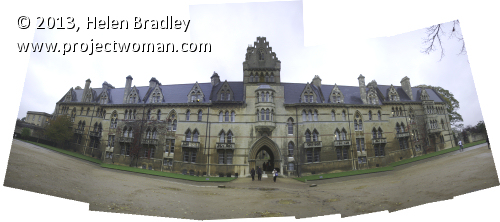
LR PS panoramaMerge collage

Reposition Layout

This layout aligns the images matching overlapping content but without transforming or rotated the images.
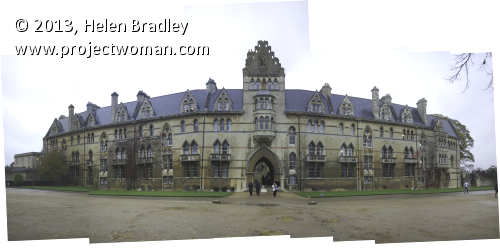
LR PS panoramaMerge reposition

Post originally from: Digital Photography Tips.

Check out our more Photography Tips at Photography Tips for Beginners, Portrait Photography Tips and Wedding Photography Tips.

Sending Panorama Sequences from Lightroom to Photoshop

The post Sending Panorama Sequences from Lightroom to Photoshop by Helen Bradley appeared first on Digital Photography School.


Digital Photography School

 
Comments Off on Sending Panorama Sequences from Lightroom to Photoshop

Posted in Photography


Removing Noise from Non-Dark Framed Long Exposures

05 Nov

One of the big disadvantages of taking long exposures with DSLR cameras is the introduction of noise especially when higher ISO settings are used. Camera manufacturers have addressed this by using Dark-Frame Subtraction, but taking advantage of Dark-Frame Subtraction (DFS) isn’t always possible.  If you’re shooting a sequence of images either for a night time-lapse or startrail photo DFS will introduce unwanted gaps or breaks. If you’re shooting extremely long exposures then your camera battery might not last long enough to complete your exposure, the dark-frame exposure and record the exposure to your memory card.   In regard to my pursuit of low-light or night photography for extreme long-exposures, star trails and time-lapses I’ve resorted to shooting without Dark-Frame Subtraction / Long Exposure Noise Reduction and addressing the noise in post-production.

The Technique

Here’s the technique I employ to manage the digital noise and hot pixels in my extreme long exposure photographs:

  1. Import & Edit in Lightroom

    After each shoot my photos are imported into Adobe Lightroom where I post-process my image to my personal taste adjusting exposure, black/white levels, vibrance, clarity, curves, etc.  Note: if you’re curious about the file formats I work with read DNG, RAW and JPEG: What I Use & Why 

  2. Lightroom Noise Reduction

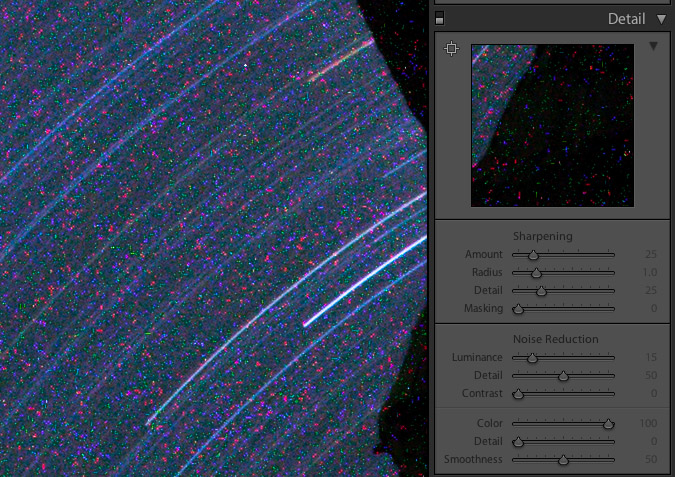
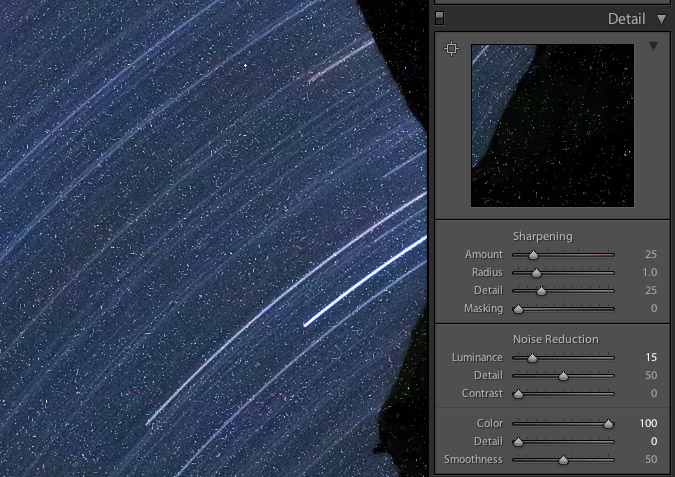
    Toward the end of my post-processing I remove chromatic and luminance noise in Lightroom “Develop > Detail” module. To remove chromatic (color) noise it’s not uncommon that I crank the “Color” adjustment all the way to 100 leaving only dust or grain like noise that is white. (see images below)

  3. Open Image in Photoshop

    In Lightroom I right click on my image and “Edit In > Photoshop”. This opens my file with all my Lightroom edits applied in Photoshop.

  4. Duplicate the “Background” Layer

    When my photo is opened in Photoshop a single layer appears titled “Background”. I duplicate this layer which by default is named “Background copy”.

  5. Dust & Scratches

    To the “Background copy” layer (the top layer) I apply “Filters > Noise > Dust & Scratches”. A dialogue box will open allowing you to specify how drastically or minimally you want to apply the filter. This filter will remove noise by blurring the photo. Ideally you want to keep the Radius as low as possible and the Threshold as high as possible. Once doing this your image will look quite blurry and seemingly useless.

  6. Employing the Blending Mode “Darken”

    To the “Background copy” layer, that has had the “Dust & Scratches” filter applied, I change the blending mode to “Darken”. Magically this will allow the sharper lighter elements of the layer below to show through while keeping the noise free darker elements of the top layer. Once done the last signs of digital noise are removed.

Here’s How It Looks

To show an extreme example below are 1 to 1 crops of The Ancients a 91 minute single exposure taken on my Canon 5D Mark II.

1:1 crop in Lightroom straight out of the camera

Note the seemingly horrific amount of chromatic noise appearing as splotchy colors.

1:1 Crop in Lightroom after color noise reduction

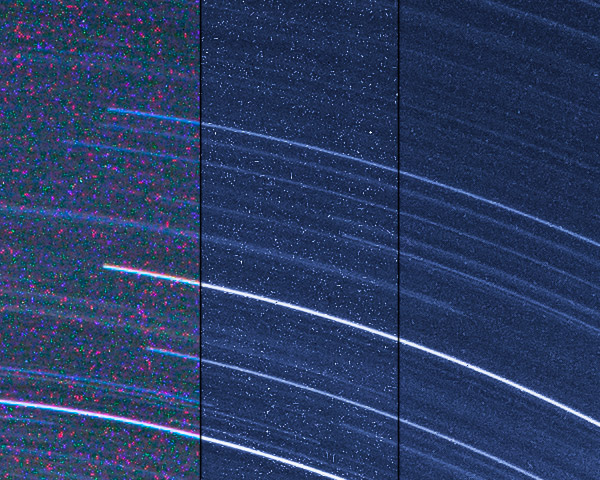
With the Color slider at 100% all that is left are millions of white specks


1:1 crop with noise  

Even with chromatic noise removed it would seem there are too many white specks to make this a useable image

1:1 crop without noise

Applying Dust & Scratches and Blending it with the original image magically removes the white specks.

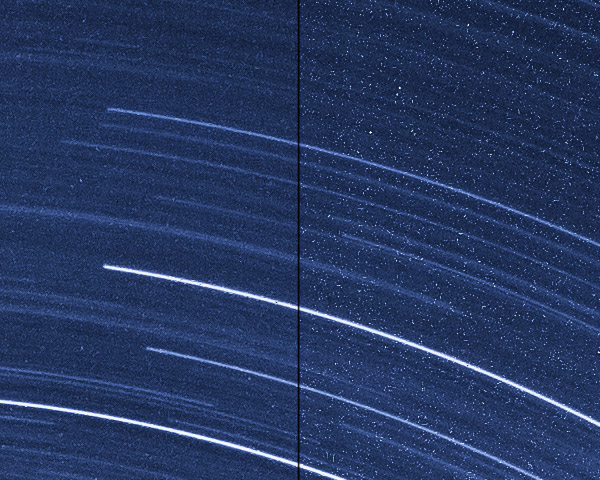
1:1 crop with comparing final vs noise

The same image showing the before and after to highlight the stark difference

1:1 crop from RAW import to Final


What does the end result look like on a web sized image?

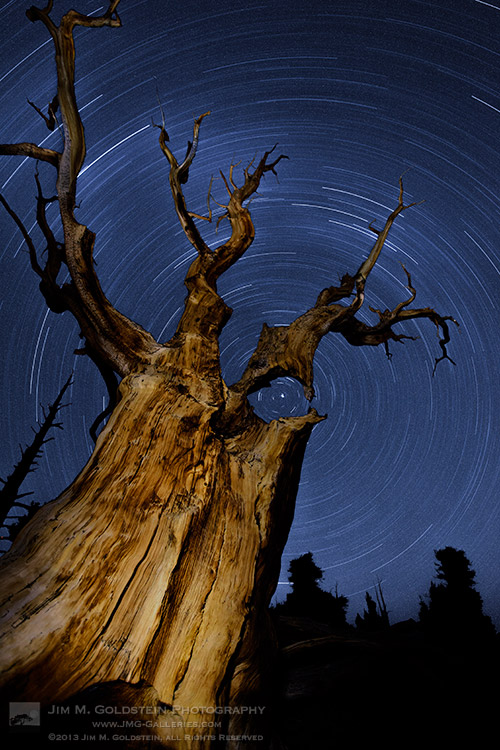
  Web version with noise

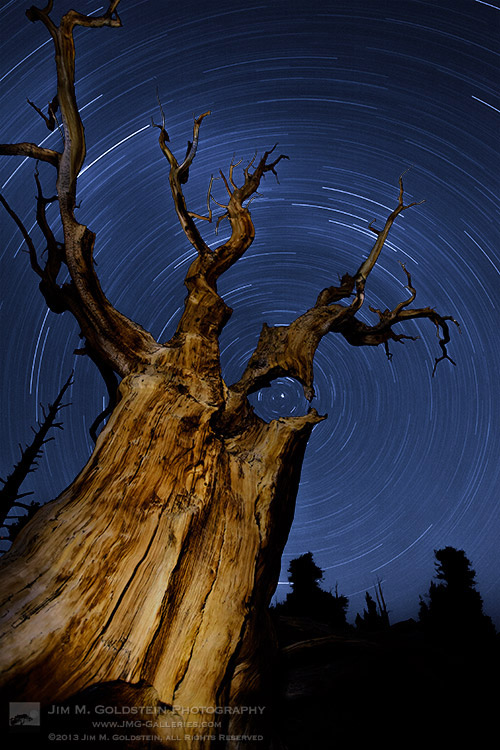
Web version without noise

For web display the improvement may be marginal, but for prints this technique will make a notable improvement. My lone disclaimer is that your mileage may vary with this technique depending how much noise your camera produces, how long your exposures are and what ISO setting you use.

For more on long exposures check out my ebook Photographing the 4th Dimension – Time

Copyright Jim M. Goldstein, All Rights Reserved

Removing Noise from Non-Dark Framed Long Exposures

The post Removing Noise from Non-Dark Framed Long Exposures appeared first on JMG-Galleries – Landscape, Nature & Travel Photography.


Related Stories

  • Removing Noise from Non-Dark Framed Long Exposures – Enclosure
  • Photo Term Series #21: Dark-Frame Subtraction
  • Photo Term Series #21: Dark-Frame Subtraction – Enclosure
Feed Ads by FeedBlitz
powered by ad choices


JMG-Galleries

 
Comments Off on Removing Noise from Non-Dark Framed Long Exposures

Posted in Equipment


Retro Nikon ‘DF’ emerges from the shadows

01 Nov

DF-shadow.png

The much rumored retro-styled full frame camera from Nikon looks to be coming. The latest teaser video from Nikon offers the clearest view of what the camera will look like, with close-up shots of the camera’s side, back, and top-plate (including traditional shutter speed dial). The fifth of November looks like it could be memorable for more than just our UK audience. Watch video, see screen shots

News: Digital Photography Review (dpreview.com)

 
Comments Off on Retro Nikon ‘DF’ emerges from the shadows

Posted in Uncategorized


Nokia shows off first Raw file samples from Lumia 1020

31 Oct

sunset_jpg.jpg

Nokia is sharing the first examples of its new Raw DNG file format, soon available on both its forthcoming Lumia 1520 phablet and the Lumia 1020 smartphone. Available for download from the company’s blog, Nokia promises that its DNG files are high quality. See for yourself on connect.dpreview.com.

News: Digital Photography Review (dpreview.com)

 
Comments Off on Nokia shows off first Raw file samples from Lumia 1020

Posted in Uncategorized


Fresh from Tennessee: Sony A7R real-world samples

30 Oct

DSC00080-horse.jpg

We’ve been able to get our hands on the highly anticipated full-frame Sony Alpha 7R again, and have posted a gallery of real-world samples using a final production camera. Follow the link for some shots taken in the Volunteer State – Tennessee.

News: Digital Photography Review (dpreview.com)

 
Comments Off on Fresh from Tennessee: Sony A7R real-world samples

Posted in Uncategorized


Converting from Android Back to the iPhone, Initial Observations

22 Oct

I’ve been using smartphones for a long time. I was an original owner of what I believe was the very first smart phone, the Kyocera PDQ 800 back in 2000. I had a couple of Microsoft Windows based phones after that. I waited in line down in Palo Alto with my pal Robert Scoble to get the very first iPhone when it was launched back in 2007. I then upgraded to an iPhone 3G, then an iPhone 3Gs. I skipped the iPhone 4 opting instead to give Android a run for the money. I switched to a Samsung Vibrant in 2010 and then in 2011 to a Samsung Galaxy Nexus.

On Friday my new iPhone 5s arrived.

I returned to the dark side of Apple for a lot of different reasons. I hated the poor battery life on both of my previous Android phones. I hated that it felt like the only way to get updates on Android phones was to buy a new Android phone. I thought it sucked how difficult it was getting updated software and I thought Google didn’t do enough to pressure the hardware manufacturers and carriers to better support Android updates in the aftermarket.

A lot of things felt broken on my Android phones all the time. Things crashed, didn’t work, etc. People kept suggesting that I “root” my phone to fix things — but I didn’t want to root my phone. I’m not a phone geek. I just want something really good that consistently works with little effort.

On my recent trip to New York City last month, I felt like I spent the whole trip apologizing to people who couldn’t get a hold of me on my Nexus because it was constantly dead. I didn’t dare listen to music on it or it would die even faster.

It’s totally unfair to compare my new iPhone with a 2 year old Galaxy Nexus, but I’m going to do it anyways. Maybe Android’s come a long way since my Nexus, but I’m not interested in shelling out $ 500 to see if in fact this is the case — not after feeling like I’ve been burned twice with my last two Android phones.

I’ve only been using my new iPhone for a few days, but here are my initial observations.

1. The iPhone battery is wayyy better than my old phone. Last night I went to bed with my iPhone fully charged, but unplugged. This morning it had 98% of it’s battery life still. That was amazing to me. My Nexus would have been dead. It’s so nice having a phone that actually has a battery life.

2. The internet reception is better on this phone than my Nexus. For the last two years I’ve thought that Verizon just had really crappy internet service in the Ferry Building here in San Francisco. It turns out it was my phone! All the places in the Ferry Building where I couldn’t get Verizon LTE service on my Android, now work perfectly with Verizon LTE on my iPhone. I was so frustrated all the time when my LTE connection wouldn’t work on my old phone. I was constantly blaming Verizon when the real culprit was MY PHONE! Verizon LTE works GREAT. I just needed the right phone.

3. I didn’t care about the fingerprint technology on the new iPhone. I never locked my Nexus and didn’t think I’d lock this one — I’m one of those optimists who never thinks they will lose their phone. It turns out that the fingerprint tech is so easy that I do now lock my iPhone. I totally get that the NSA likely now has my fingerprint, but I don’t care about stuff like that.

4. It’s nice to be able to hear my music again. One of the things that I disliked about my old Nexus was the music volume. It was too low at max volume. Sometimes when you are on a train or something you want the music louder. The iPhone music can go louder and that’s nice.

5. It’s nice having my iPhone sync with my iTunes. I transferred about 7,000 of my favorite songs on it. I tried downloading doubleTwist to somehow port my iTunes to my old Nexus, but I could never get it working. I think my music library was too large for doubleTwist or something. Letting iTunes manage my music flawlessly with my iPhone is great.

6. My new iPhone just feels better. I don’t know how to describe it. It feels more responsive, more accurate, faster. It feels smoother. The Flickr and Google+ apps flow easier on it.

7. The first shocker for me was how much smaller the phone and the screen felt to me. I got over this quickly and barely notice at this point.

8. I don’t really feel like I’m missing the best Google stuff from my Nexus. I can get Google Maps on my iPhone. I can get Gmail on my iPhone. I can get Google Chrome on my iPhone. All of the best things that sort of set Google apart initially for me as an incentive to go Android feel like they are now on iPhone.

9. Setting up my new iPhone took me a lot longer than I thought it would. Some of this was my fault and some was the phone’s I think. I couldn’t activate it at first. My phone couldn’t connect to the activation server. I finally got it activated and it wouldn’t connect with my wifi at home initially (now it works fine). I had to download all of my favorite apps. It seemed to take longer to download my apps than I would have liked. I had to reset some passwords because I’m always forgetting my passwords (on Flickr now your password must include upper and lowercase letters, a number, a special character AND be at least 8 digits!) I spent about an hour trying to figure out how to get my Google Calendar into my iPhone calendar. It turns out what was screwing me up was two step authentication. Once I turned that off at Google it worked.

Thanks to everyone online on Twitter, Google+, Facebook, etc. who gave me input on what phone I should buy next. Rosa Golijan was especially helpful. :)


Thomas Hawk Digital Connection

 
Comments Off on Converting from Android Back to the iPhone, Initial Observations

Posted in Photography


Can cheap filters damage your lens? A cautionary tale from Roger Cicala

21 Oct

front2.jpg

Can cheap filters damage your expensive lenses? LensRentals’ Roger Cicala decided to look into the possibility, after seeing a number of lenses returned with odd circular scratches on the front element. His investigations provide a cautionary tale against skimping on buying a new protective filter after buying an expensive lens. Click through for a link to his full article.

News: Digital Photography Review (dpreview.com)

 
Comments Off on Can cheap filters damage your lens? A cautionary tale from Roger Cicala

Posted in Uncategorized


Back from the dead: Fujifilm boosts X100 with major firmware upgrade

18 Oct

x100.jpg

Following recent updates to the X-Pro1 and X-E1, Fujifilm has released a major upgrade to the X100, the original (now-discontinued) X-series model, which was announced back in 2010. Since its release, the X100 has benefitted from a series of major firmware improvements, and the latest – likely to be the last – offers faster startup time, and improvements to automatic and manual focus. Firmware v2.0 is available for download today. Click through for our opinion on this announcement, and the official press release.

News: Digital Photography Review (dpreview.com)

 
Comments Off on Back from the dead: Fujifilm boosts X100 with major firmware upgrade

Posted in Uncategorized


Kodak API to help app developers take photos from phone to print

18 Oct

2013-10-15_11.18.16.jpg

One of the remaining arms of the Kodak legacy, Kodak Alaris, is working to remain relevant by focusing its efforts on moving photos from smartphone to print, via one of its 105,000 photo printing kiosks worldwide. The company recently released its API to lure developers into adding Kodak kiosk printing capabilities directly into their mobile photography apps. Learn more at connect.dpreview.com.

News: Digital Photography Review (dpreview.com)

 
Comments Off on Kodak API to help app developers take photos from phone to print

Posted in Uncategorized