RSS
 

Posts Tagged ‘from’

New York, New York: Low light Sony a7S II stills and 4K sample videos from the Big Apple

15 Oct

The Sony a7S II looks a lot like its full-frame Alpha mirrorless counterparts, but behind the familiar face are some important new features – namely, the ability to record 4K video internally. Its specifications are tuned to videography, with features like Full HD recording at 120fps, but its low light stills potential is equally compelling. We had the opportunity to shoot with the camera, so naturally we put its internal 4K and still photo capabilities to the test. Read more

Articles: Digital Photography Review (dpreview.com)

 
Comments Off on New York, New York: Low light Sony a7S II stills and 4K sample videos from the Big Apple

Posted in Uncategorized


5 Tips to Take Your Landscape Photography from Good to Great

15 Sep
The beauty of the scenery in Antarctica

The beauty of the scenery in Antarctica

Landscape photography is one of the most favoured genres of photography. It also happens to be the one genre that is not easy to master. The reason is simple, to become really good at landscape photography, you need to spend hours trying to master it. Most photographers are not able to dedicate that amount of time, so it becomes frustrating. Many photographers end up being disappointed with their images, but there are few things that you can do to make sure you get better results, in a short space of time.

1. Foreground interest

This is a common tip, but one that makes a lot of sense. Having a subject in the foreground, anchors the image. It tells the viewer where to look first and once they have looked at that, their eye will explore the rest of the image.

You can place your foreground subject anywhere in the lower third of your image, but it might be a good idea to put it more to the left side of the frame. This is not a rule (I really don’t believe there are any rules in photography), but rather a suggestion. We read text from left to right, so if your foreground interest is on the left hand side, it makes it feel easy for the viewer to interact with the image. The foreground interest could be anything, a piece of driftwood, a rock, a tree, anything that works for the scene.

Foreground interest anchors a scene

Foreground interest anchors a scene

2. Color in your scene

Your image will have inherent color based on the time of day and subject you are shooting. If you are shooting a forest, your scene might be predominantly green, if you are doing a seascape, there may be lots of blue because of the colour of the water.

Be aware of the colour in your scene and work with the opposite colors on the visual colour wheel. As an example, there are three primary colors that your camera sees, they are: Red, Green and Blue. The additive colors (opposite colors) are Cyan, Magenta and Yellow. To be clear, Cyan is the opposite color to Red, Magenta is the opposite to Green and Yellow is the opposite to blue. These opposing colors can work well in a scene, particularly yellow and blue.

Look at the colors in your scene and decide what you want to emphasize. To make sure you have great colours to work with, you will want to shoot during the golden hours and emphasize the warm colors.

Rich colours will enhance the drama in your image

Rich colors will enhance the drama in your image

3. White Balance

When you are shooting landscapes, you will want to be shooting at golden hour, or the blue hour. These are the times of day when the light works really well for dramatic landscape shots. In the golden hours, the light will be warm tones of yellow, orange, or red. Check your white balance setting when you are shooting at this time. If your camera is set to Auto White Balance, it will cancel out much of the warm tones in your image as it tries to neutralize any color casts you may have in your scene.

If the golden hour light is really strong in your scene, Auto White Balance will make the scene look really bland and colorless. Try and shoot on Daylight White Balance instead. That way, the camera will be capturing the light as it truly is in the scene. You could even turn your white balance to cloudy or shade to enhance the warm tones even more. Use this settings as a creative tool, it can really make a good impact on your image.

Use white balance creatively, this image was shot using shade white balance

Use white balance creatively, this image was shot using the Shade preset.

4. Movement

Some of the best landscape images have some form of movement in them. The movement can be caused by water, wind, or both. Subjects that work well with movement are rivers, waterfalls, seascapes and even stars. A long exposure image of the sea with water looking all silky and wispy is ethereal, and adds drama to the image. We don’t see this smooth silky water naturally with our eyes, it is only possible with the camera. The results are often very appealing, and it gives a serenity to the scene that is almost magical. You will need a tripod to get this right, you will also need to use a longer exposure of a few seconds. Timing is also important, particularly with seascapes. You may have to time the shot for when the water comes rushing over the rocks, or up the beach. That way, the image will be filled with silky streaks of water and it will look amazing.

Movement in water can make a scene look dramatic

5. Less is more

Landscape images become more dramatic if there is a very clear subject in them. If you are unsure about what should be included in your scene, ask yourself this question as you look around the scene, “Does that rock, tree, river, etc., add to the scene or not?” If you think it is not adding to your scene, remove it. Even if you are unsure, remove it and take a shot to see how the image looks. In many images, less is more. If you have less items in your scene, there is less to distract the eye, there is less that can make the scene confusing, so give it a try. Set up a shot, take a photo and then start minimizing the distracting elements.

Sometimes, less is more

Try these five tips and share your results in the comments below. Do you have any other tips to add?

googletag.cmd.push(function() {
tablet_slots.push( googletag.defineSlot( “/1005424/_dPSv4_tab-all-article-bottom_(300×250)”, [300, 250], “pb-ad-78623” ).addService( googletag.pubads() ) ); } );

googletag.cmd.push(function() {
mobile_slots.push( googletag.defineSlot( “/1005424/_dPSv4_mob-all-article-bottom_(300×250)”, [300, 250], “pb-ad-78158” ).addService( googletag.pubads() ) ); } );

The post 5 Tips to Take Your Landscape Photography from Good to Great by Barry J Brady appeared first on Digital Photography School.


Digital Photography School

 
Comments Off on 5 Tips to Take Your Landscape Photography from Good to Great

Posted in Photography


Stacked Ceramics: Shop Floor Made from 25,000 Pieces of Pottery

13 Sep

[ By WebUrbanist in Design & Fixtures & Interiors. ]

ceramic surface side view

A 400-year-old ceramics studio in Japan has completely remodeled their store with a most remarkable addition: a walkable surface constructed from a stack of tens of thousands of scrapped pieces of crockery.

ceramic walkable surface

ceramic stacked tableware discards

Yusuke Seki (photos by Takumi Ota) collected plates, saucers, bowls and cups for this creative endeavor, all to create a display platform for Maruhiro Ceramics in Hasami, Nagasaki.

ceramic steps display level

ceramics on display

To facilitate a more intimate experience, a pair of stairs is placed by the display platform, allowing visitors to walk up and peruse wares, all while enjoying a sense of wonder from the layers of history right beneath their feet.

ceramic platform in use

ceramic wood display cases

Traditionally, flawed ceramics are simply thrown into dedicated landfills, while this rethought application brings pieces of history back up to the surface.

ceramic top detail

ceramic space exxterior

Since the discards are eliminated before the coloring and glazing process, there is an aesthetic consistency to the materials reused in this creative context.

ceramic stairs side

ceramic view outside

Individually fragile, the tableware was turned into modular bricks by being filled with concrete, but their individual shapes and sizes still made this a daunting endeavor to actually deploy. Still, the result is compelling and interactive – not so much of a crackpot idea after all, as it turns out.

Share on Facebook


[ By WebUrbanist in Design & Fixtures & Interiors. ]

[ WebUrbanist | Archives | Galleries | Privacy | TOS ]


WebUrbanist

 
Comments Off on Stacked Ceramics: Shop Floor Made from 25,000 Pieces of Pottery

Posted in Creativity


Landscape Photography from the Side of the Road

04 Sep

2-for-1 special

As part of Landscape Photography Week here on dPS, we’re offering TWO for the price of ONE on our best-selling Living & Loving Landscape Photography ebooks!

Click here to take advantage of this offer.


For most people the idea of landscape photography means getting a good backpack that can carry everything, then hiking for miles to a destination. You need to be fit, and prepared for anything that might happen. You might have to camp, and sleep, out in the wilderness. It would be an adventure, and you get to photograph some areas that others never get to see.

I don’t do that. Never have, and I can’t see it happening anytime in the near future. I don’t think there is anything wrong with it, but I would never do that on my own, especially not here in Australia. The hiking part would be okay, but, again, only if I had company. There are just so many other ways of doing landscape photography.
cole-landscape-road-side-photography-0002

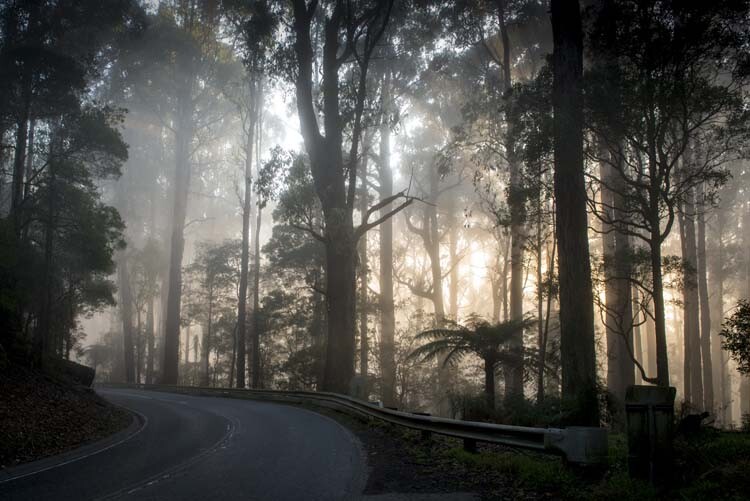
The sun trying to break through the trees meant we had to find somewhere to stop and take some photos.

One of those methods is car trunk photography, also known as roadside photography.

It sounds easy right? It’s simply about doing photography that isn’t far from your car.
cole-landscape-road-side-photography-0004

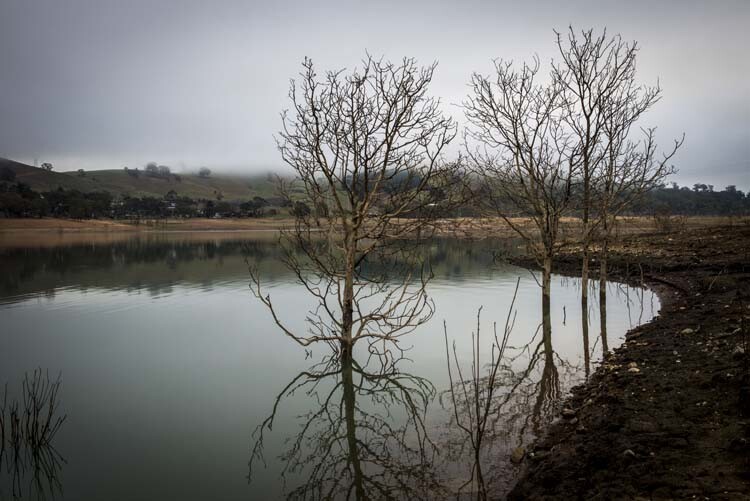
Lake Eildon water level was down and these trees were reflected in the water beautifully, but we had to walk to get to them. We could still see the car in the distance.

One of the most famous photographers of our time was well known for using his car to take photos, Ansel Adams. You likely have seen the photo of him on top of his car with his camera, setting up an image. Boards were put over his roof racks so he could stand up there with his big view camera. My car has roof racks, maybe I should consider doing the same.

Moose Peterson is another photographer that loads up the trunk of his car with his full set of gear, and has a second bag to carry some of it around.  He has full knowledge that the car isn’t too far away if he needs to grab something.

Gear

One of the best advantages of doing this kind of photography is that you can take as much gear as you like with you. You aren’t restricted by how much you can carry, you can take everything you think you might need.
cole-landscape-road-side-photography-0007

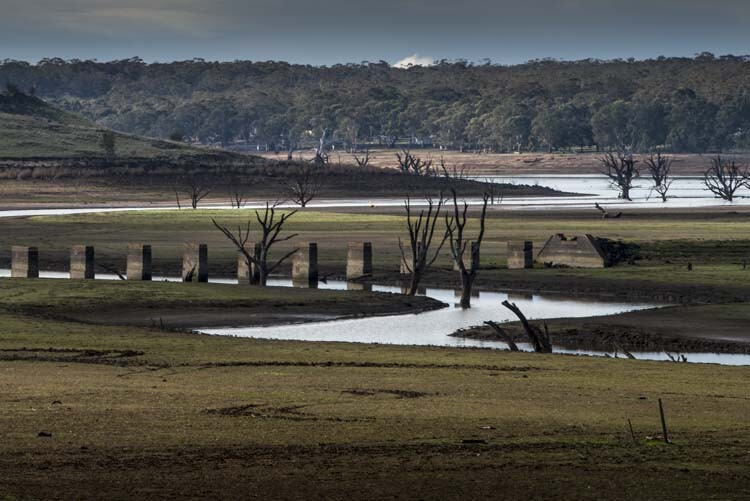
The car was right behind me, I got out my zoom and took this shot of a dam showing an old bridge that had emerged as the dam water level went down.

You may just have a compact camera and not a lot of photography gear, but you may also decide to take your umbrella, coat, scarf, gloves and hat, or other weather appropriate clothing. If it is hot take your sunscreen and sunhat, don’t be silly with the sun.

But if you are doing this type of photography you will likely be using a DSLR or Mirrorless camera, and you might have a lot more to take with you. If you do have a lot of gear, it may be best to use two bags – one as the main bag to hold everything, usually the bigger one, and the second one to carry what you need for any particular place you stop.

Once you get out and look around, you often find you don’t have the right lens, but as the car isn’t that far away you can go and change it easily. This also means you can take tripods, filters, monopods, anything that there might be a possibility of using. You just never know.
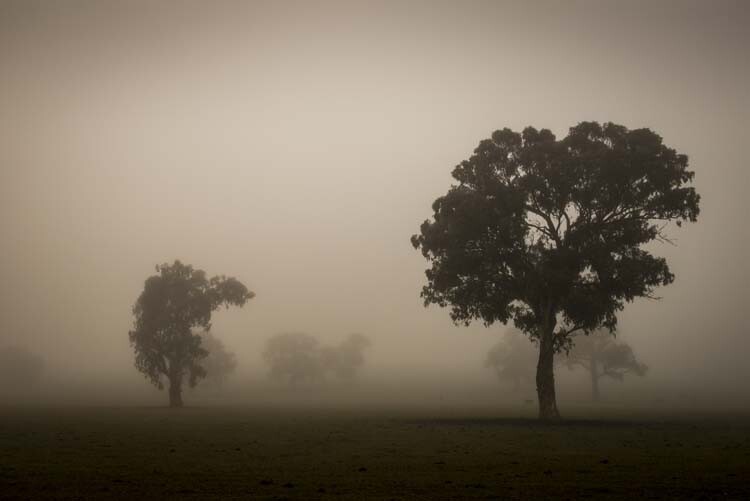
cole-landscape-road-side-photography-0001

A foggy morning along the road. Just pull over, take some photos and get back in the car before you get too cold.

Safety

It is all very well pulling up on the side of the road to do what you want to do, but you also have to make sure that it is safe as well. When you pull up, get right off the road and as you get out of your car, or back in again, look for cars or trucks that might be driving past so you don’t get hit.

Look at the sides of the road before you pull off. Make sure the road is not wet and you won’t get stuck. Find out if there has been lots of rain. If you are in Australia in summer, be careful about long grass and snakes hiding in it.

When you are moving away from the car, lock it. While someone might not steal the car they might take all the gear you have left inside. You need to take the normal precautions that you would take if leaving your car anywhere else.
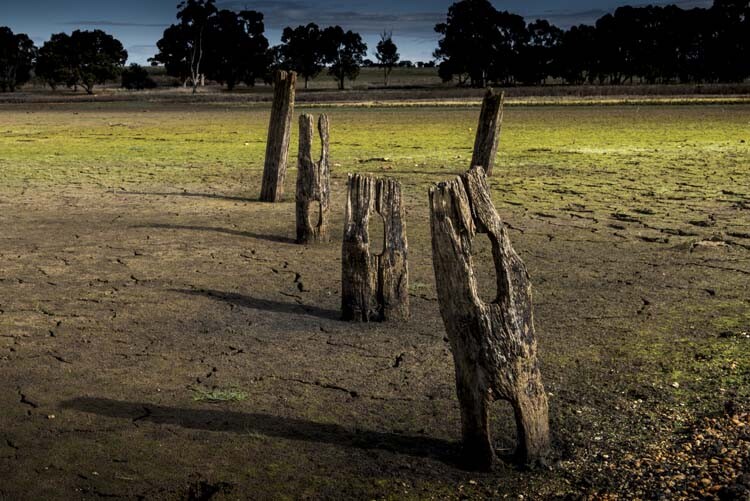
cole-landscape-road-side-photography-0006

We pulled into the side track, but then had to take a short walk to see these old fence posts in the dried out dam.

Planning Your Trip

It is something you can do on your own, or with others. You can do it on a day trip to somewhere, or go away for a few days exploring countrysides to see what you can find.

The most common way is to pick a day with friends and then decide on a destination. Discuss what are you going to look for and where will you find it. You need to decide if you are going to do any small hikes. Roadside photography doesn’t mean you can’t leave your car on the side of the road while you explore somewhere close.
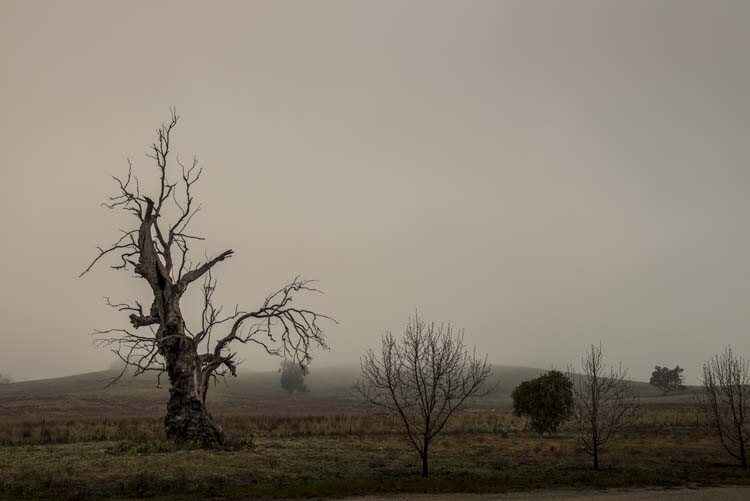
cole-landscape-road-side-photography-0002

Like a scene from a movie, fog, and a gnarly dead tree. We saw this going to Mansfield and on the way back knew we had to stop.

There has to be a warning, while it is best to take roads that are not the normal route, so no freeways or highways, you can get very distracted. You might find that you want to stop constantly, and if you have a final destination it can mean that when you get there you don’t have enough time or light left to shoot.

It is best to decide one way or the other if you are going to stop on the way. From experience, it is good to decide so you know how much time you will have when you get where you want to go. It can also be fun to drive aimlessly and stop at anything you find interesting along the way. You never know what you might find.

Looking for a Subjects to Photograph

One of the advantages of doing things on the roadside is that you aren’t trespassing, and in most cases, can’t get into trouble for photographing things you see over the fence. As long as you don’t go over the fence you should be fine. Sometimes you might find the person who owns the land and get permission to enter.

cole-landscape-road-side-photography-0005

I see this all the time, but it was the first time I was on the right road to photograph the old flour mill.

There are lots of different things to take photos of, it depends on what you find interesting. There are the beautiful, big landscapes showing the scenery of the area, although one thing that many photographers look for are the old sheds or houses that have been abandoned, and are now falling apart. When you drive on the roads you can often see them, though sometimes you need a big zoom to get good photos.

The coast can be great for this kind of photography too. You nearly always want to explore more than one area. So, with the smaller bag, you can go to one area, then drive to another.

Don’t think that the only way to take landscape photos is to pack the bag and slog through lots of harsh land to get the ideal image. Do it from the luxury of your car, take a friend, and make a day of it.


Here on dPS it is landscape week. You can see the previous ones listed below. Watch for a new article (or two) on landscape photography daily for the next week.

  • 6 Tips for Better Low-Light Landscape Photography
  • Landscape Photography and the Human Element
  • 5 Ways a Telephoto Lens Can Improve Your Landscape Photography

googletag.cmd.push(function() {
tablet_slots.push( googletag.defineSlot( “/1005424/_dPSv4_tab-all-article-bottom_(300×250)”, [300, 250], “pb-ad-78623” ).addService( googletag.pubads() ) ); } );

googletag.cmd.push(function() {
mobile_slots.push( googletag.defineSlot( “/1005424/_dPSv4_mob-all-article-bottom_(300×250)”, [300, 250], “pb-ad-78158” ).addService( googletag.pubads() ) ); } );

The post Landscape Photography from the Side of the Road by Leanne Cole appeared first on Digital Photography School.


Digital Photography School
 
Comments Off on Landscape Photography from the Side of the Road

Posted in Photography


Lights Out: Hong Kong Bans Iconic Neon Signs from City Streets

30 Aug

[ By WebUrbanist in Art & Sculpture & Craft. ]

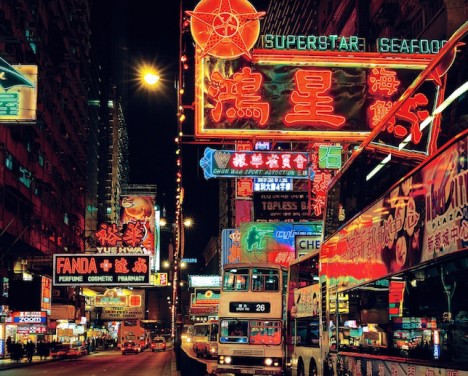
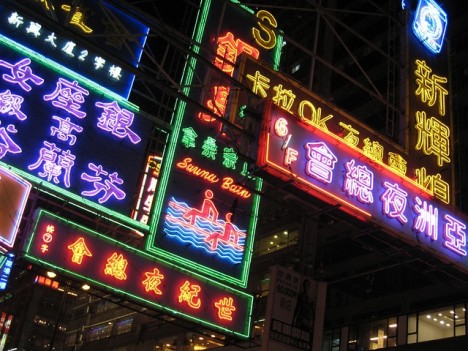
kowloon hong kong lights

In an effort criticized by local businesses as well as global visitors, Hong Kong has deemed neon signage illegal and is ramping up its systematic removal of these historic place-making lights.

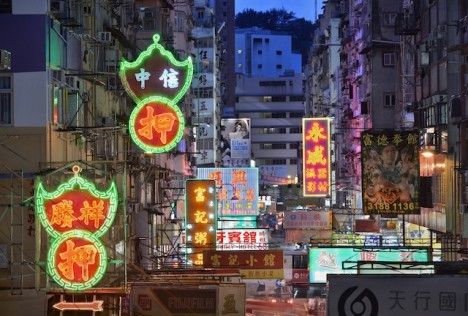
hong kong neon

To fans of the city’s vibrant nighttime glow, such signs define the bustling metropolis as much as any work of architecture or public art, featured prominently in many images taken and movies set on or around Hong Kong Island and Kowloon.

hong kong signage

In the last decade, thousands of signs have been removed through incremental city initiatives while preservationists scramble to save, store and display them. Populated with curators and directors from around the world, including the Tate in London and MoMA in New York City, the new M+ Museum is becoming the de facto guardian of many of these castoffs, collecting physical signs as well as videos, images, maps and other documentation.

sammys kitchen sign

More about the digital arm of their endeavor: “Presented by M+, Hong Kong’s museum for visual culture, “Mobile M+: NEONSIGNS.HK” is an online exhibition that celebrates a key feature of the city’s streetscapes by exploring, mapping and documenting its neon signs. Alongside curatorially-produced essays, videos, slideshows and artist commissions, over 4,000 photos were submitted by the public from 21 March to 30 June 2014 to collectively create a unique neon map of Hong Kong. The site will remain as a lasting record and examination of Hong Kong’s fast disappearing neon signs.”

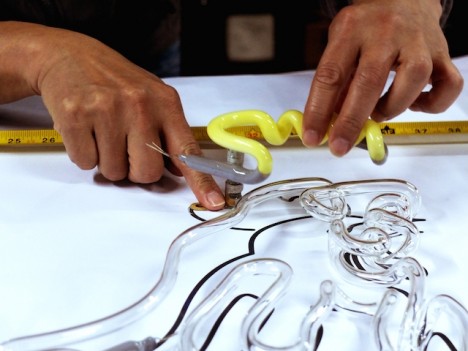
signmaking project

The classic art of neon sign-making involves electrified gas-filled glass pipes, originating in Europe but dating back nearly a century in China. Today, factory-made LEDs are becoming the industry standard. Around the world, the old methods are fading, but many artisanal practitioners continue to fight to restore old signs and keep such practices alive (images by Keith Macgregor, Romain Jacquet-Lagrèze and Mark Pegrum via TheCreatorsProject).

Share on Facebook


[ By WebUrbanist in Art & Sculpture & Craft. ]

[ WebUrbanist | Archives | Galleries | Privacy | TOS ]


WebUrbanist

 
Comments Off on Lights Out: Hong Kong Bans Iconic Neon Signs from City Streets

Posted in Creativity


NASA employs 150-year-old photography technique to measure shock waves from supersonic flight

28 Aug

NASA has turned to a process devised in 1864 to help it measure shockwaves created by supersonic aircraft flight. The method, schlieren photography, was invented by German scientist August Toepler to observe the effect of objects moving through transparent media, such as water or air. Read more

Articles: Digital Photography Review (dpreview.com)

 
Comments Off on NASA employs 150-year-old photography technique to measure shock waves from supersonic flight

Posted in Uncategorized


Workin’ From Home:Perks and Pro-Tips!

27 Aug

Working from home sounds pretty terrific, whether you’re a full-time freelancer or starting a semester of Photo 101!

But how do you get work done with at-home comforts and distractions around every corner?

We asked a freelance photog and several Photojojo team members how they focus on work while resisting the allure of procrastination.

Read their tips and fave “working from home” perks!

(…)
Read the rest of Workin’ From Home:
Perks and Pro-Tips! (712 words)


© Taylor for Photojojo, 2015. |
Permalink |
No comment |
Add to
Perks and Pro-Tips!”>del.icio.us

Post tags:


Photojojo

 
Comments Off on Workin’ From Home:Perks and Pro-Tips!

Posted in Equipment


10 Best Photos from the Summer Landscape Photo Contest – Pick the Winner Now!

21 Aug

Our Summer Landscape Photo Contest is entering the final stage. HUGE THANKS to all the participants who uploaded their photos to our Flickr group pool. It’s great to know that so many talented and creative photographers read our blog. The contest jury had difficult time selecting only 10 photos from all the beautiful images submitted. But the finalists are picked and now only YOU decide Continue Reading

The post 10 Best Photos from the Summer Landscape Photo Contest – Pick the Winner Now! appeared first on Photodoto.


Photodoto

 
Comments Off on 10 Best Photos from the Summer Landscape Photo Contest – Pick the Winner Now!

Posted in Photography


Leica M9 falls from balcony onto granite, granite comes off worse

20 Aug

Leica has a reputation for making pretty rugged cameras, going back more than 100 years. But nobody would expect a rangefinder to survive a fall from a balcony, onto granite tiles. However, if a recent post on Chinese social network Sina Weibo is to be believed, that’s exactly what happened to a Leica M9 recently, and somehow it survived the experience. Click through to read more

Articles: Digital Photography Review (dpreview.com)

 
Comments Off on Leica M9 falls from balcony onto granite, granite comes off worse

Posted in Uncategorized


How to Create an Incredible Street Photography Project from A to Z

20 Aug

With a camera in hand anyone can proclaim himself or herself a street photographer. However, urban imagery requires vision. Most street photographers operate in a spontaneous way, but if you take a closer look at their projects they all have a key-element at the heart of their work, an idea that drives them. Street photography translates into emotional reactions to Continue Reading

The post How to Create an Incredible Street Photography Project from A to Z appeared first on Photodoto.


Photodoto

 
Comments Off on How to Create an Incredible Street Photography Project from A to Z

Posted in Photography