RSS
 

Posts Tagged ‘from’

Your Last Holiday Guide and Special FREE Gift From Us!

14 Dec
GG4

It’s our *sniff* last gift guide of the season and we’ve saved the very best for last. A game-changing camera for your phone, our incredible Iris lens set and all the best selling gifts of the year. We’re also throwing a sweet enamel pin into every cart today only! So if you’ve waited until now to get all your shopping done, you clearly made the right choice.

(…)
Read the rest of Your Last Holiday Guide and Special FREE Gift From Us! (0 words)


© Erin for Photojojo, 2015. |
Permalink |
No comment |
Add to
del.icio.us

Post tags:


Photojojo

 
Comments Off on Your Last Holiday Guide and Special FREE Gift From Us!

Posted in Equipment


Painstaking Paper Plane: Model Made from 100 Manila Folders

10 Dec

[ By Steph in Art & Sculpture & Craft. ]

paper plane 1

It only took 100 manila folders, 50 X-Acto blades, a bottle of glue and 1,000 hours of time to create one 1:60 scale model of a Singapore Airlines A380 airplane featuring fully operational sliding doors and properly folding landing gear. This isn’t Luca Iaconi-Stewart’s first model airplane – the 23-year-old, New York-based designer is known for a series of paper planes with amazingly complex parts.

paper plane 9

paper plane 2

paper plane 3

The artist first started building his own miniatures after finding a highly detailed diagram of an Air India 777-300ER online. He replicated the forms in Adobe Illustrator, printed them onto manila and sliced them out with his X-Acto knife. It took Iaconi-Stewart five years to complete a scale model of a Boeing 777, with an entire summer dedicated to perfecting the seats. While economy seats can be finished in a mere 20 minutes, first class seats take eight hours each.

paper plane 6

paper plane 7

paper plane 8

The new Singapore Airlines model consists of 3,000 pieces of folded and cut paper, the smallest being a 2.5 x 1mm pin used to hold each business class seat together. The artist notes that manila folders are surprisingly strong when engineered correctly.

paper plane 4

paper plane 5

Considering that Iaconi-Stewart spent a month designing the engines and fourth months assembling them, perhaps it’s no surprise that his classes at Vassar soon started getting in the way, and he ultimately dropped out to focus on full time model-making. He’s now known as the world’s best paper airplane maker. You can follow his creations on Flickr.

Share on Facebook


[ By Steph in Art & Sculpture & Craft. ]

[ WebUrbanist | Archives | Galleries | Privacy | TOS ]


WebUrbanist

 
Comments Off on Painstaking Paper Plane: Model Made from 100 Manila Folders

Posted in Creativity


PIX 2015: Benjamin Von Wong and the journey from ordinary to extraordinary

04 Dec

In his first year learning photography, Benjamin Von Wong created over 50,000 photographs, but none of them struck him as extraordinary. It wasn’t until he tried out a flash gun that he began to see new possibilities that could make his work stand out. Many more photos later, Benjamin Von Wong is well-known for imagery that blends practical effects, fantastic locations and post-processing into something surreal and extraordinary. Find out how he got his start and what inspires his elaborate shoots in his PIX 2015 talk.

$ (document).ready(function() { SampleGalleryV2({“targetContainerClass”:”sampleGalleryImageViewerContainer”,”galleryId”:”2052247638″,”isEmbeddedWidget”:true,”selectedImageIndex”:0,”startInCommentsView”:false,”isMobile”:false}) });
Articles: Digital Photography Review (dpreview.com)

 
Comments Off on PIX 2015: Benjamin Von Wong and the journey from ordinary to extraordinary

Posted in Uncategorized


Reuters will no longer accept edited Raw files from freelance photographers

19 Nov

In an email to freelance photojournalists this week, Reuters has confirmed a change in its photo submission policy requesting that photographers submit JPEGs rather than edited Raw files to the news agency. The message also states that original JPEGs with ‘minimal processing’ are acceptable, for example, level corrections and cropping. Read more

Articles: Digital Photography Review (dpreview.com)

 
Comments Off on Reuters will no longer accept edited Raw files from freelance photographers

Posted in Uncategorized


Best from Above: Drone Views of 6 Philadelphia Abandonments

18 Nov

[ By WebUrbanist in Abandoned Places & Architecture. ]

Some of the most fascinating parts of certain deserted buildings in Philadelphia cannot even be seen from below, making this drone footage shot by Matt Satell of Philly by Air all the more revealing.

Spring Garden School

Take the Spring Garden Public School, for instance, the roof of which is enclosed in a an arched grid of fencing that wraps an outdoor gym and recreation area for students. “This abandoned public school was built in 1931 and designed by the Philadelphia School District” explains drone pilot and urban photographer Matt Satell. “There have been proposals discussed to convert the structure into a residential building, but nothing has been finalized yet.”

The PECO Delaware Station is situated adjacent to the Penn Treaty Park in Fishtown, its outcroppings of both natural overgrowth and artificial stacks far more visible by air. “This coal-fired power plant first opened its doors in 1920. It was originally designed by John T. Windram, who also designed the Franklin Institute. The plant was owned by Exelon Generation until 2015 when it was sold to Bart Blatstein and Joseph Volpe who have plans to build boutique hotels.”

Quaker Storage Building

Other buildings featured are on historical registers, or the subject of redevelopment plans or (as in the case of the Richmond Power Station) are already famous for being featured in films such as 12 Monkeys, Transformers 2 and The Last Airbender. The Quaker Storage Building, Dreuding Brothers Building and Willow Steam Plant (each shown in the embedded video above) all have elements best captured – and are perhaps only truly comprehensible as a whole – when viewed from above as well as below.

Meanwhile, if you enjoyed your brief tour of Philadelphia’s most prominent abandonments, you can take a further aerial flight around the city with the video above, likewise documented via Philly by Air.

Share on Facebook


[ By WebUrbanist in Abandoned Places & Architecture. ]

[ WebUrbanist | Archives | Galleries | Privacy | TOS ]


WebUrbanist

 
Comments Off on Best from Above: Drone Views of 6 Philadelphia Abandonments

Posted in Creativity


Stark Suburbs of Paris: Scenes from a Former Utopia

12 Nov

[ By Steph in Architecture & Houses & Residential. ]

dystopian paris 2

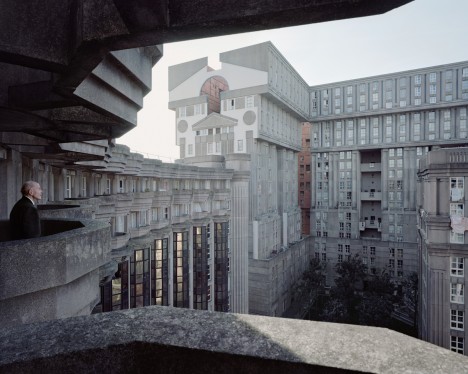
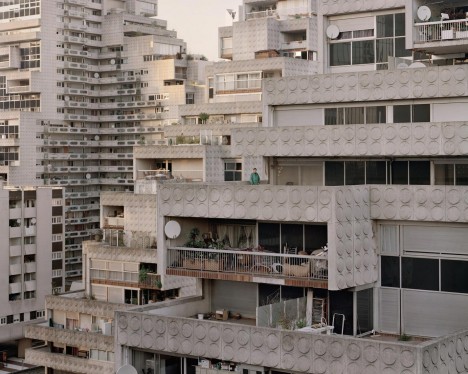
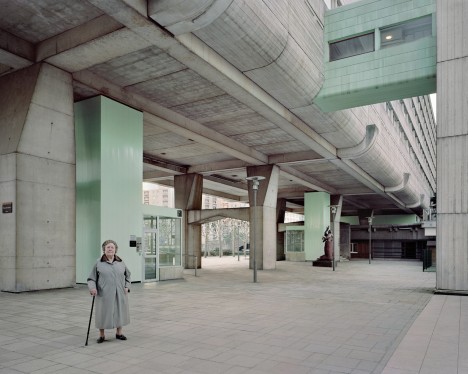
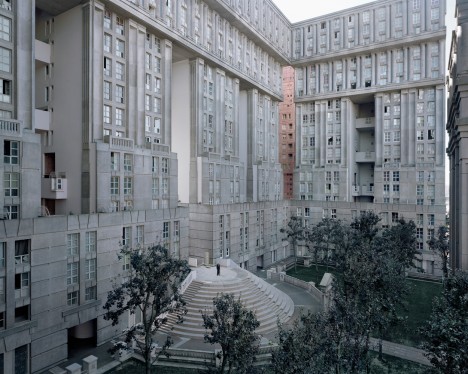
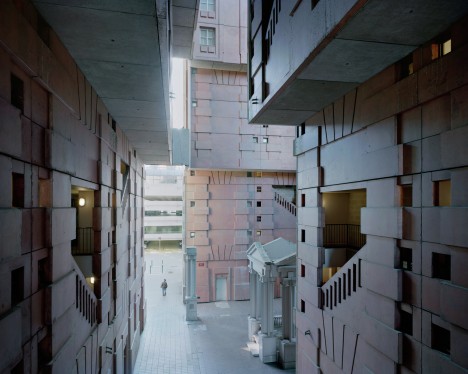
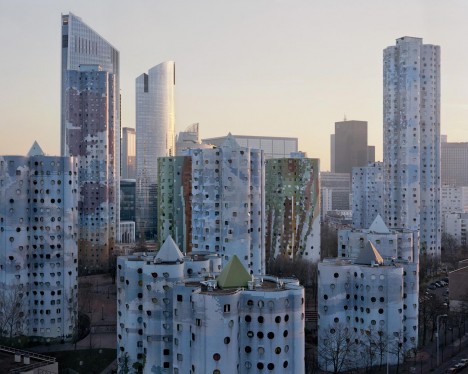
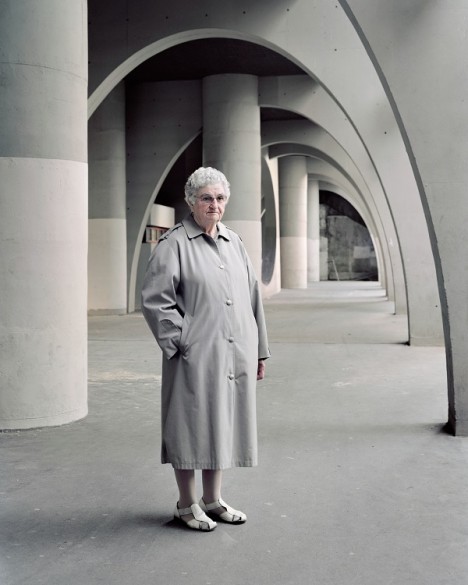
Dull gray concrete volumes stacked in irregular shapes stretch across the landscape just beyond Paris like a set from a dystopian film, dwarfing the mostly elderly residents who wander their halls. The ‘Babel-like’ housing estate known as Noisy-le-Grand began, in fact, as a utopian dream: a postmodern wonderland built between the ‘50s and ‘80s to welcome a migrant population of refugees from rural areas of France and other nations.

dystopian paris 1

dystopian paris 12

dystopian paris 7

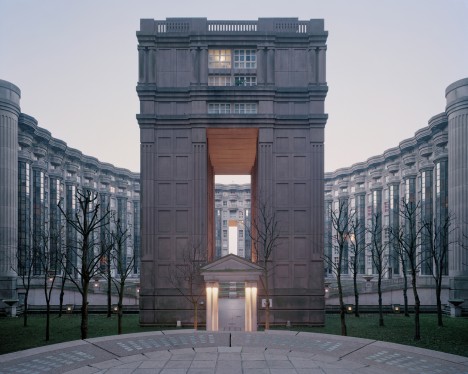
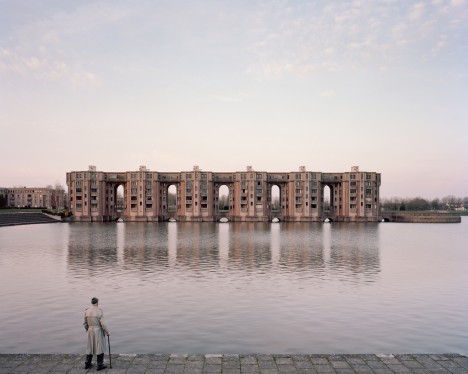
Standing in stark visual opposition to the gleaming glass and steel of Paris’ more modern architecture and all of its centuries-old Gothic grandeur, Noisy-le-Grand was envisioned as a counterpoint to the boxy white creations of Le Corbusier, which the architects deemed unimaginative. Ricardo Bofill and Manuel Nunez-Yanowsky designed the Espaces Abraxas and Arénes de Picasso with a postmodern sensibility.

dystopian paris 8

dystopian paris 10

dystopian paris 9

But while the structures certainly aren’t lacking in imagination, ambition or scale, they are often – not unreasonably – compared to fortresses, prisons and industrial architecture. Unsurprisingly, the estate has been used as a set for everything from Terry Gilliam’s classic 1984 film ‘Brazil’ to ‘The Hunger Games: Mockingjay.’

dystopian paris 3

dystopian paris 4

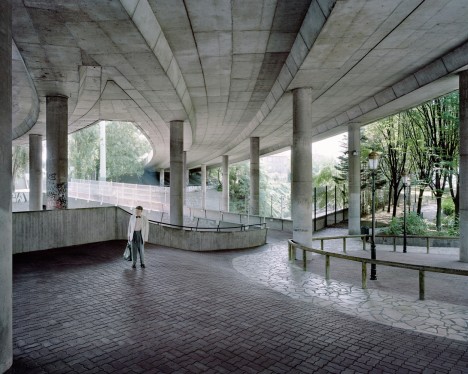
The fact that the residents of this strange suburb are almost all elderly reinforces the somewhat dystopian feel, especially when they’re photographed under vast concrete archways in this compelling photographic series by Laurent Kronental. Their humanity and the warmth and personality of their interior spaces contrast against the coldness of the architecture.

dystopian paris 5

dystopian paris 6

Entitled ‘Souvenir d’un Futur,’ the series is the result of four years of visits. According to his artist statement, Kronental “felt a need to examine their living conditions and shed light over a sometimes-neglected generation. Exposing these unsung and underestimated suburban areas is a means to reveal the poetry of aging environments slowly vanishing, and with them, the memory of modernist utopia.”

Share on Facebook


[ By Steph in Architecture & Houses & Residential. ]

[ WebUrbanist | Archives | Galleries | Privacy | TOS ]


WebUrbanist

 
Comments Off on Stark Suburbs of Paris: Scenes from a Former Utopia

Posted in Creativity


Photo Tips From Our Furry Favorites, the #dogsofinstagram!

09 Nov
dogs

We took a crash course in barking, then asked our favorite #dogsofinstagram for their secrets to taking the perfect pup pic.

Read through the tips below, peep the “paw”esome photos and enter yourself in our #dogsofinstagram Giveaway.

Don’t have a dog (yet)? Share this post with friends who do, so they’ll post more photos of their furry friend for all to see (and to give them a chance to win big).
(…)
Read the rest of Photo Tips From Our Furry Favorites, the #dogsofinstagram! (722 words)


© Erin for Photojojo, 2015. |
Permalink |
No comment |
Add to
del.icio.us

Post tags:


Photojojo

 
Comments Off on Photo Tips From Our Furry Favorites, the #dogsofinstagram!

Posted in Equipment


6 Tips for Protecting Your Gear from Any Hazard and Being Prepared

03 Nov

There is no such thing as a magic camera, lens, filter, flash, or tripod that does it all – hence the variety of brands, focal lengths, composite materials, etc., that are available is endless. Actually, part of the fun is not just having what you need, but sometimes what you want. Like something different, even though it doesn’t have the best reviews and specs by others, or something to experiment with, to broaden your creative horizons.
Tiffany Joyce

By Tiffany Joyce

But, there is one thing we all must consider when going out for a shoot, and that is what to bring, or even more importantly, what NOT to bring. Oh that agonizing decision of going through the pros and cons of each widget you could bring. There countless variables depending on personal tastes, what you will be shooting, and how long you will be on your photo shoot, just to mention a few.

There is one constant though, stuff goes wrong, things break, bags get lost, and it is not always easy to get a replacement in time, or even at all. Most of us don’t have sponsors who pay for our gear, and that last lens you just picked up was a financial hardship (that you were happy to endure). So, there are some simple pieces of advice that I have picked up from my own stupid mistakes, and from others, professionals and avid amateurs alike, which might save you and your gear in a pinch.

There are many articles on, what’s in my bag, and while it is fun to see what others are doing, the real question is what should you be doing? How much of everything do you want, and what specifics are you really going for? Do you want to bring your best gear, or will something more average do just fine with much less worry? Here are some tips for protecting your gear and being prepared for anything.
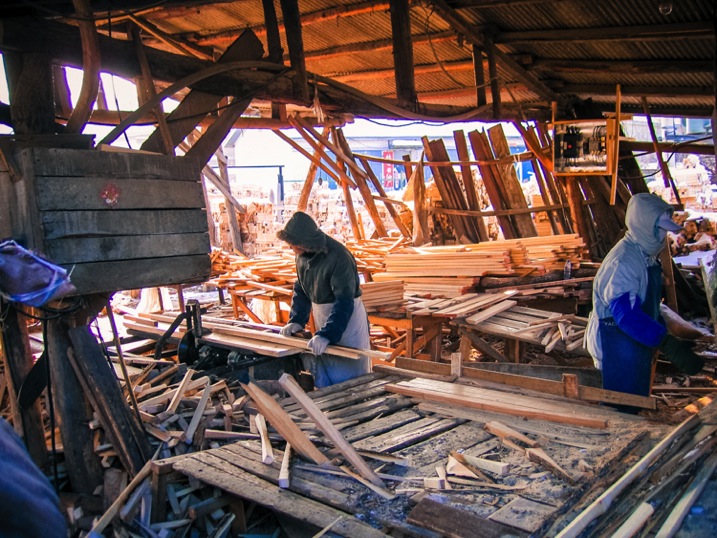
001 UV filter

In the far NE of China this longing village was cutting down full trees, and making them into dowels to be shipped to the US to make hammers. With all the flying wood chips and dust, a UV filter was added protection.

1 – UV Filters

Better than me telling you the answer here, you can google, “Should I Use a UV Filter on my lens?”. You will find results galore, and many varying opinions. But, let me show you a picture and it may just persuade you to use one.

My lens hood was on, but I had just turned it backwards to save space while I was going to eat. My lens cap was also on. Sitting down on a street market bench to indulge, I brushed the lens cap pinching the hinges just enough that the cap popped off. Then, as momentum carried me down, a steel bench post smashed into my camera and I heard glass break. My heart sank, as horrible thoughts of my lens dying raced through my head.

It could have been my front lens element, but it wasn’t! It was my $ 35 UV filter, not my $ 900 dollar lens. For casual use, keep a UV filter on! If it breaks like mine did, a circular polarized filter can be a great backup too. Just don’t forget to turn it, to make sure you are getting the best out of your filter.
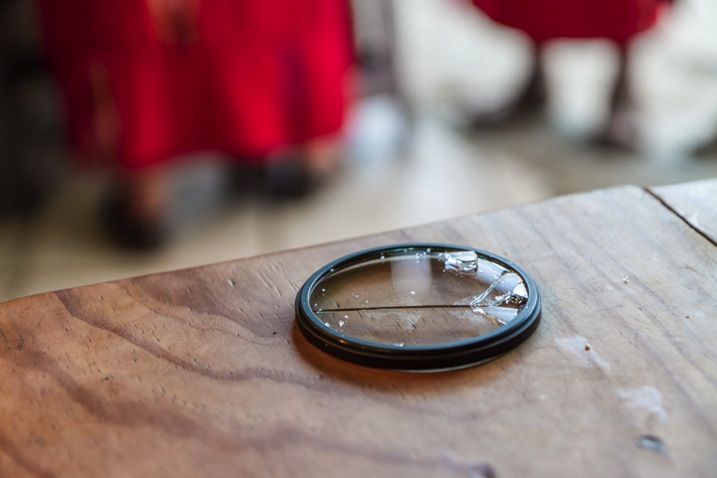
002 UV filters

This is the glass that broke and saved my front lens element. I was in a small mountain town in central Guatemala with no possibility of replacing the lens.

2 – Lens Hoods

When I generally think of my lens hoods, image quality is what first comes to mind. Less glare, less flair, better saturation and contrast, etc. Sometimes the tulip hoods look nice on a lens, so cosmetically it can be pleasing as well. But they do add significant length, and even when screwed on backwards, not protruding outwards, they increase the diameter, especially on larger lenses, making it tough to cram into your travel bag.

Recently, in Cuba I ran across another amateur photographer, and one of his first comments after exchanging pleasantries was, where is the hood for your lens? The 70-200mm f2.8 IS is a big lens, and making it 25% longer while trying to not impose on subjects, was my deciding factor for leaving the hood at the hotel. I replied, “I have my UV filter on.” He quietly said to me that he was a glass engineer, and he politely suggested, with total altruistic intention, to keep my lens hood on. It has been on ever since.

Protection value is even better than a UV filter and image quality improvements are worth it!
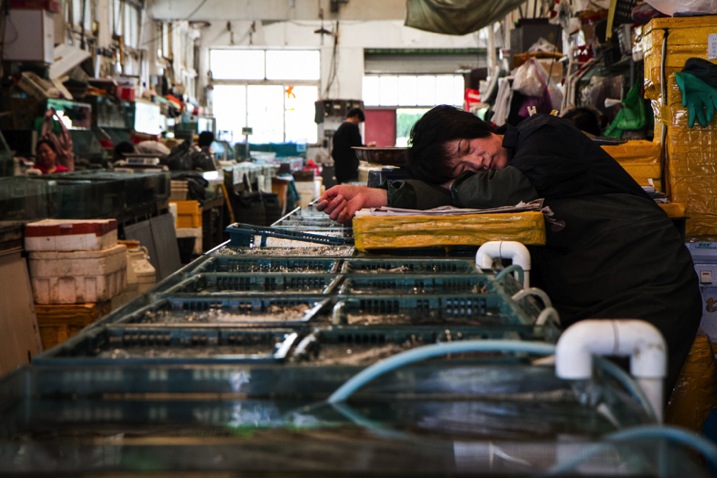
003 lens hood

In a seafood market in a coastal city in NE China, squirming fish, spitting clams and twitching shrimp will definitely get salt water on your lens. Only a UV filter would leave you with water spots, but a lens hood helps keep the salt water off of the front element.
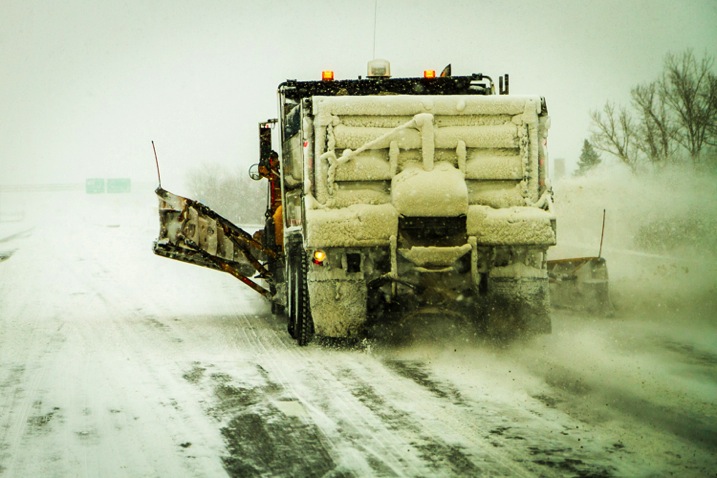
004 lens hood and UV

In New York State during the 2015 super snow year, following this plow, that lays gravel and salt, with my camera out the window is dangerous for a front lens element. Having all the protection of a lens hood and a UV filter is important to protect your gear.

3 – Lens Cap (front and rear)

The little lens cap: This one goes out to amateurs more than the enthusiast. If you are not shooting, keep your lens cap on. This is a very good line of defence for your front lens element. A doctor doesn’t examine a patient without protective gloves, nor should a photographer leave his lens exposed, while enjoying carnival rides or waterfalls. Keeping your lens protected is most important, but clean is essential as well.

Also, if you are switching lenses, keep an extra cap for the back of your lens in your bag. They are all the same size, unlike the front lens cap, so if you lose one it is no big deal as one size fits all. Cleaning dust, dirt, hair or oil from the inside of the lens is a nightmare.

4 – Extra things to think about when travelling

Access to your camera shop or online retailer is not possible when you’re away from home. Maybe your favorite online shop could overnight you something in any developed country, but outside the US, Canada, and some parts of Western Europe, you are out of luck.

UV filters can be found at many small electronic stores at a 20% markup or so, but the sizes available may be limited. Kit lenses these days usually have a 58m or 67mm thread size, and maybe you might get lucky if they have a 72mm filter. Anything in the 77mm or higher range will be near impossible to find. Underdeveloped nations don’t have the ability to hold stock for the occasional guy who smashed his fancy gear, (that which could feed a whole village for a week). Thus, don’t bring more, simplify. Think how you can adapt if something breaks? Like using a polarized filter or an ND filter if your UV filter bites the dust. Using an ND filter and bringing your tripod might just help you broaden your portfolio for the trip; a little blessing in disguise.

5 – CF cards

It used to be no film, no picture. Now it is no memory, no picture. Recently, I was in Central America and one trip got cancelled, and another one came up. It was a photographer’s delight, Cuba! I didn’t have my computer, and didn’t want to plug my gear into a sketchy internet bar computer. The solution in a developed country is to just stock up on a few more CF cards.

The reality is that in developing markets CF cards are not available. Finding a name brand CF card that will have 30mb/second or more, is near impossible. Developing nations are still using basic point and shoot cameras, if they have any at all, and even more popular are mobile phones with mini SD’s in them. SD cards are abundant, along with mini SD cards with adapters, but that does you no good for the higher end DSLRs. CF cards are relatively cheap and tiny compared to lenses, camera bodies and flashes. Stuff a couple extra in your bag.
IMG 9188 bw

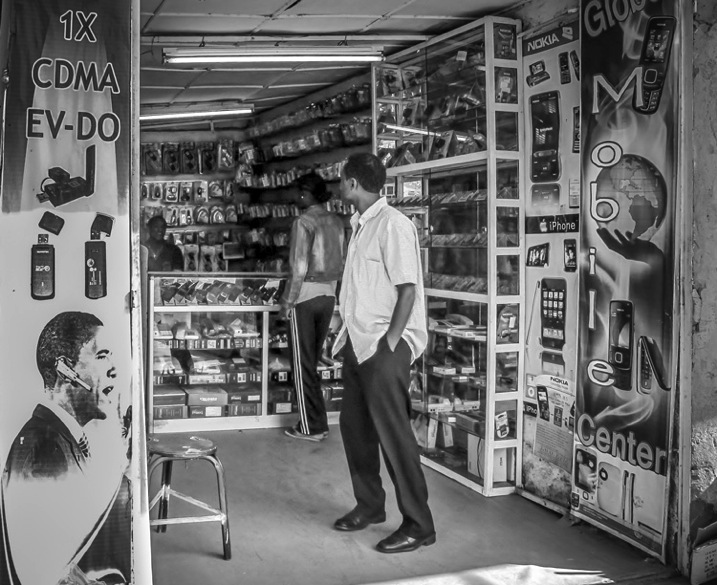
In northern Ethiopia this was the one of two stores that carried electronic goods. Most items are mobile phone related.

Getting into other parts of the world, like SE Asia and China, both of which are still in the developing stage, you will find much better luck. CF cards are available, and SD cards are going to be much cheaper. UV filters will also be available for any size. If they don’t have them in that store, ask them to get you one by the end of the day, and they will call up partner stores and send them over on the back of a moped. But you know the catch, it might not be real despite how legit it looks. In a bind, strike a deal, and you will have solved your solution at least temporarily.
006 Electronic store 2bw

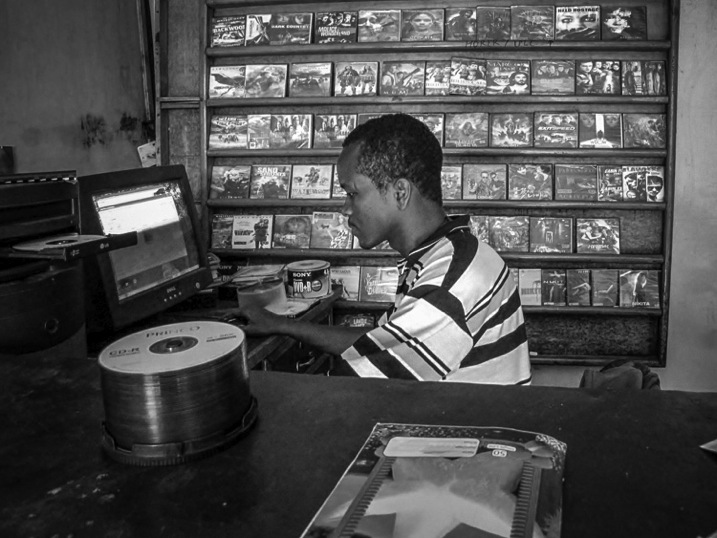
This was my second option for electronics. A desktop computer which was used for burning pirated movies and music. No possibility of finding higher end camera supplies.

6 – The Lens Pen

A final item that is a must is the lens pen. These are so compact, and convenient, to keep your front and rear lens elements clean. Make sure you use the brush first, then the moistened concave end for smudges. Ideally you would have air to blow off the lens first, but don’t use your mouth. No matter how careful you are particles of your saliva will appear on the lens giving you double duty. The lens pens are tiny and do wonders. Keep one in your bag, and one in your pocket, so you can get up close and personal to the crashing waves, market activity, or the big sports event. By the way, these lens pens can be found all over the world now. Grab a couple before you go, but if you lose one, or give one away to a local photographer, you may be able to find another.

Bottom line

So, when you are off on your next photo shoot, be prepared. You can’t anticipate everything, but even combined, all of the items on this list could easily fit in your pant’s pocket. Put all of them in a sturdy Ziploc bag, and you just added another element of protection. Wrap your camera or lens in the bag in really treacherous situations.

These tips provide a pretty good insurance policy for keeping your gear safe, and in proper working condition. Keeping your gear protected in harsh environments lets you focus on your creative ability to see and capture your favorite photographic styles, and do it with confidence too. Now, you still need to decide what major pieces of gear you want: super wide angle lens, telephotos, primes, single flash or multiple flashes, tripod, and the list goes on.

But be sure you have your UV filters screwed on, your hoods attached, your front and rear lens caps, and some extra memory, along with the most portable and simple cleaning lens pens.

What essentials do you have in your bag when you leave for a long photo shoot out of your home range?

googletag.cmd.push(function() {
tablet_slots.push( googletag.defineSlot( “/1005424/_dPSv4_tab-all-article-bottom_(300×250)”, [300, 250], “pb-ad-78623” ).addService( googletag.pubads() ) ); } );

googletag.cmd.push(function() {
mobile_slots.push( googletag.defineSlot( “/1005424/_dPSv4_mob-all-article-bottom_(300×250)”, [300, 250], “pb-ad-78158” ).addService( googletag.pubads() ) ); } );

The post 6 Tips for Protecting Your Gear from Any Hazard and Being Prepared by Branson Quenzer appeared first on Digital Photography School.


Digital Photography School

 
Comments Off on 6 Tips for Protecting Your Gear from Any Hazard and Being Prepared

Posted in Photography


Neolithic Modernism: History Museum Appears Carved from Stone

30 Oct

[ By WebUrbanist in Architecture & Public & Institutional. ]

cave museum

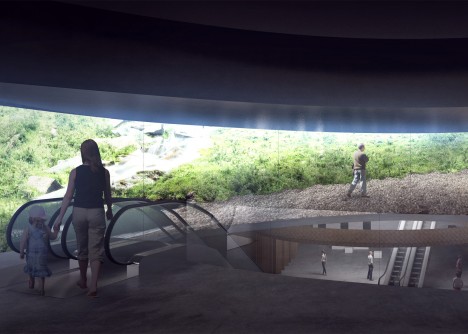
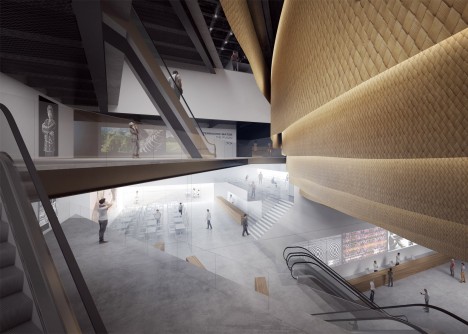
A bold break from traditional closed-box museums, this gorgeous open Museum of Indigenous Knowledge design is as much an interactive rock-hewn landscape as a work of contemporary architecture.

cavernous neolithic history museum

Kengo Kuma & Associates of Japan are the team behind this stoney structure slated for construction in Manila and designed to showcase Philippine history starting in the Neolithic period, known for its huge stoneworks.

ave museum contrast

Populated with tropical plants, waterfalls and pools, the carved-out center of the structure is made to feel both organic and inviting, encouraging visitors to climb up, wander and explore their environs.

cave museum interior spaces

The building is meant to stand out in contrast not only to more minimalist and austere museums but the surrounding urban environment as well, providing relief from the relentless urban cityscape on all sites.

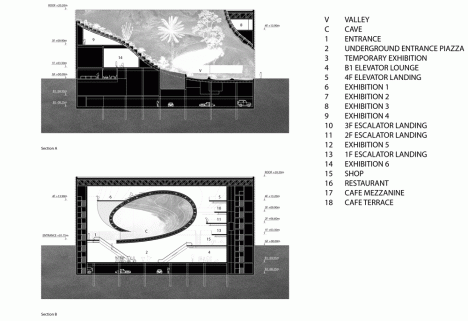
cave museum sections

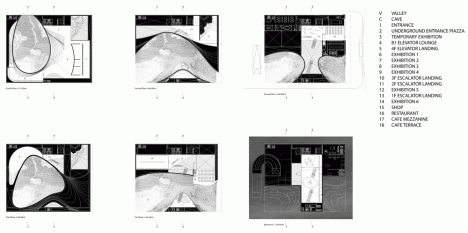
cave museum floor plates

Restaurants and shops are located along the artificial ravine toward the base of the building, meant to be accessible independently but also a gateway to the galleries and exhibition spaces on the floors above.

Share on Facebook


[ By WebUrbanist in Architecture & Public & Institutional. ]

[ WebUrbanist | Archives | Galleries | Privacy | TOS ]


WebUrbanist

 
Comments Off on Neolithic Modernism: History Museum Appears Carved from Stone

Posted in Creativity


Floating Forest: Trees Rise From Corpse of Abandoned Ship

29 Oct

[ By Steph in Abandoned Places & Architecture. ]

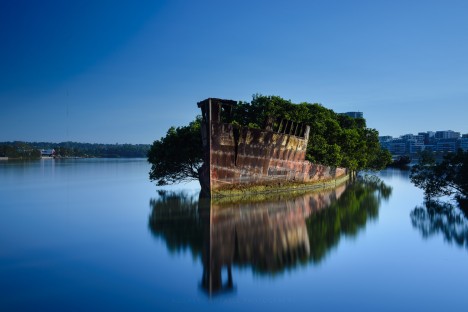
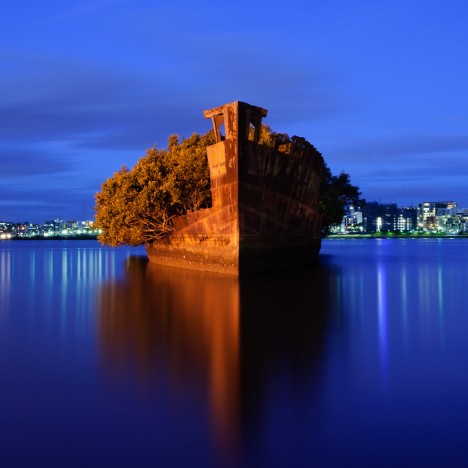
floating forest 6

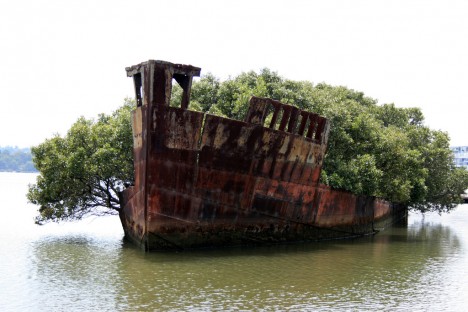
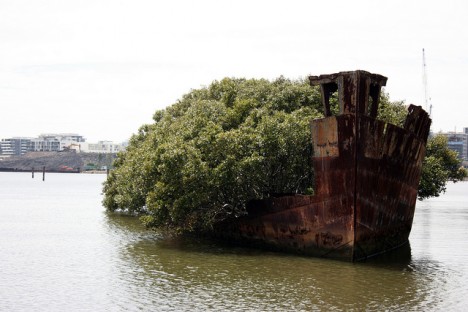
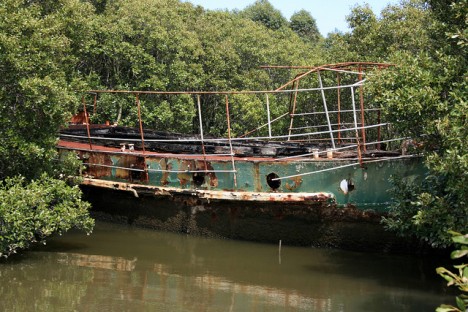
Rusted and half-sunken yet still somehow afloat on the waters of Sydney’s Homebush Bay, the remains of a century-old ship have become fertile ground for a thriving forest. Located on the south bank of the Parramatta River on the inner west side of the city, the bay was a hub for industrial activity in the mid-20th century and became a dumping ground for unwanted materials of all kinds, from busted ships to toxic waste.


floating forest 7

floating forest 4

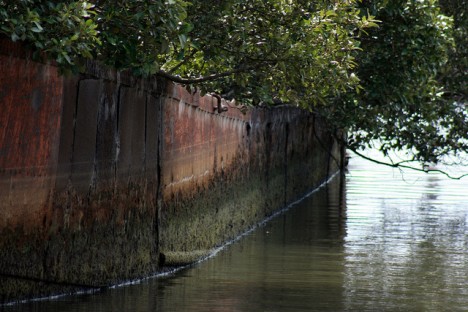
The bay was ultimately rehabilitated, but many of the ships remain, lurking among a tangle of mangrove trees. Among them is the SS Ayrfield, which the mangroves clearly found quite hospitable, transforming it into a sort of artificial floating island. In its former life, the Ayrfield was used to transport supplies to American troops stationed in the Pacific during World War II before operating as a collier. It was sent to Homebush for disposal in 1972 after sixty years of service.

floating forest 1

floating forest 2

floating forest 3

floating forest 5

Awash in brilliant hues of red and orange, the hull of the 1,140-ton SS Ayrfield pokes up from the surface of the water, the Sydney skyline looming in the distance. Other ghostly ships in the bay include the steam tugboat SS Heroic and the steel boom defense vessel HMAS Karangi, which helped defend Darwin Harbour from Japanese attack in 1942.

Photos: Jason Baker, gerryligon, rodney campbell / Flickr Creative Commons

Share on Facebook


[ By Steph in Abandoned Places & Architecture. ]

[ WebUrbanist | Archives | Galleries | Privacy | TOS ]


WebUrbanist

 
Comments Off on Floating Forest: Trees Rise From Corpse of Abandoned Ship

Posted in Creativity