RSS
 

Posts Tagged ‘Frame’

Canon announces C700 FF cinema camera: now with full frame

28 Mar

$ (document).ready(function() { SampleGalleryV2({“containerId”:”embeddedSampleGallery_3397567171″,”galleryId”:”3397567171″,”isEmbeddedWidget”:true,”selectedImageIndex”:0,”isMobile”:false}) });

Canon has announced the newest member of its Cinema EOS camera family, the EOS C700 FF. As the name implies, it’s an updated version of Canon’s C700 cinema camera that includes a full frame sensor in place of a Super 35 sensor.

On most cameras we generally think of ‘full frame’ as representing a 24x36mm frame with a 3:2 aspect ratio, but the C700 FF defines this a bit differently. The Canon-developed sensor used in the camera has a native resolution of 5952 x 3140 pixels, providing a 17:9 cinema-friendly aspect ratio, and has an imaging area of 38.1×20.1mm in size.

While that’s a bit wider and shorter than a standard full frame sensor, it requires the same image circle size as a full frame DSLR,* meaning the C700 FF can use Canon’s entire line of EF-mount lenses at their standard focal lengths. For maximum flexibility, the C700 FF can be ordered with either EF or PL-mount.

Canon claims the new sensor exceeds 15 stops of dynamic range when shooting with either the Canon Log2 gamma curve or in Raw

With 5.9K resolution, the camera is able to record oversampled 4K video internally, which should provide superior results to a native 4K sensor. Users can choose between two codecs to capture footage internally: Canon’s own XF-AVC or Apple ProRes. Additionally, the C700 FF can record Raw video when using an optional Codex recorder mounted to the back of the camera, recording at up to 5.9K/60p in Raw.

In addition to impressive video resolution, Canon claims the new sensor exceeds 15 stops of dynamic range when shooting with either the Canon Log2 gamma curve or in Raw, which should make it an effective tool for producing HDR video content.

The EOS C700 FF has an estimated retail price of $ 33,000, and will be available in both EF and PL mount versions. It’s expected to be available in July. Existing C700 owners will have the option of upgrading their camera from a Super 35 sensor to the new full frame sensor, though upgrade pricing has not been announced.

$ (document).ready(function() { SampleGalleryV2({“containerId”:”embeddedSampleGallery_9136022742″,”galleryId”:”9136022742″,”isEmbeddedWidget”:true,”selectedImageIndex”:0,”isMobile”:false}) });

In addition to a new camera, Canon announced a couple other useful tools for filmmakers. The new CN-E20 mm T1.5 L F is a fully manual, 20mm cinema prime lens, filling a hole between Canon’s existing 14mm and 24mm cinema primes. The lens includes 300 degrees of focus rotation, minimized focus breathing, and an 11-blade diaphragm for high quality bokeh even when stopping down. It will be available in fall 2018. Pricing was not announced.

Canon also announced a couple professional 4K HDR reference displays: the 24-inch DP-V2421 and 17-inch DP-V1711. With features like 12G-SDI terminals supporting 4K 60p footage, support for Canon’s Log gamma curves, built-in waveform monitor, and built-in HDR metering, these displays should deliver impressive results – but it will cost you. The 24-inch model will sell for $ 39,000 and the 17-inch model for $ 18,000, and both will be available at the end of April.

* The image diagonal of a 3:2 ratio full frame camera is 43.2mm while the image diagonal of the C700 FF’s 17:9 sensor is 43mm.

Press release:

?INTRODUCING CANON’S FIRST FULL-FRAME CINEMA CAMERA, ?THE EOS C700 FF

MELVILLE, N.Y., March 28, 2018 – Canon U.S.A. Inc., a leader in digital imaging solutions, is excited to announce the EOS C700 FF, the Company’s first full-frame cinema camera. The beauty and majesty of full-frame digital cinema is now becoming a new creative reality. Since the introduction of the EOS 5D Mark II DSLR camera in 2008, Canon has been a part of the full-frame video movement, and the introduction of the C700 FF has reinforced Canon’s commitment to this market. At the heart of the camera is a novel Canon-developed CMOS image sensor having a total of 5952 (H) x 3140 (V) photosites with a digital cinema 17:9 aspect ratio, which gives it the same image circle size as the full frame EOS 5D camera series. This supports a wide range of shooting options.

Available in both PL and EF Mount, the EOS C700 FF provides users with the same outstanding performance, operation and modular design as the EOS C700 (released in December 2016). The camera is being shown publicly for the first time at the Canon booth (C4325) at the NAB Show 2018 in Las Vegas from April 9-12.

“Since the launch of Canon’s Cinema EOS line of products in November 2011, the goal was to one day develop a cinema camera worthy of being the ‘A’ camera on major Hollywood productions, and Canon met that goal with the introduction of the EOS C700,” said Yuichi Ishizuka, president and COO, Canon U.S.A., Inc. “After listening to our customers and closely monitoring market trends, Canon set forth a new goal: to launch a full-frame cinema camera. With this introduction, we are very excited to see the C700 FF in the hands of industry professionals as they shoot their latest projects.”

Existing owners of Canon’s original EOS C700 cinema camera will be pleased to know they can have their Super 35mm sensor upgraded to the new Full-Frame sensor for a fee*. Authorized Canon facilities such as Canon Burbank are ready to process C700 upgrades as well as lens mount swaps, and offer equipment drop off, on-site repairs and upgrades, as well as equipment testing and demonstration.

The Sensor

The newly developed sensor featured in the EOS C700 FF has an active image area of 38.1 x 20.1mm and supports readout at full size, as well as Super 35mm, Super 16mm and anamorphic modes. In addition to full-frame lenses, it can be used with conventional Super 35mm lenses to originate 4K / UHD standardized production formats and Super 16mm lenses (with an adapter) to originate 2K / HD production formats in crop modes. The sensor captures wide tonality exceeding 15 stops of dynamic range and a wide color gamut meeting ITU-R BT.2020 standards. This offers broad latitude when grading, providing outstanding effectiveness in HDR video production.

Recording

The EOS C700 FF embodies a choice of two high-performance codecs for on-board recording –Canon XF-AVC or Apple ProRes. Like other cameras in the 4K Cinema EOS family, the EOS C700 FF uses CFast cards to capture 4K / UHD or 2K / HD. A striking feature of the C700 FF is the Oversampling 4K Processing that processes a 5.9K image capture to produce 4K (DCI or UHD) having enhanced image sharpness, curtailed moire, and a lowered visibility of noise at the higher ISO settings. This is especially advantageous for on-board anamorphic image capture. Low-rate 2K/HD proxy data including metadata, can be recorded to SD cards, ideal for offline editing. The camera also allows high-frame-rate recording of up to 168fps in 2K crop and relay or simultaneous recording onto both CFast cards. In addition, the C700 FF can shoot at a Full HD high-frame-rate recording at a maximum of 168 fps. Additional formats are planned with future firmware updates.

To further complement the features of the EOS C700 FF, Canon has turned to its trusted partner Codex to provide a fully integrated (no cables) recording and workflow option. The combination of the optional Codex CDX-36150 recorder docked onto the back of the EOS C700 FF enables 5.9K 60 fps RAW recording, 4K RAW up to 72 fps (in 24p mode), 4K ProRes up to 60 fps and 2K ProRes up to 168 fps (in Super 16mm mode).

The C700 FF also supports the latest version (1.0) of the ACESproxy, the ACES (Academy Color Encoding System) color management transmission standard.

HDR

For users looking to create High Dynamic Range (HDR) imagery, the EOS C700 FF is an excellent solution, providing 15 stops of latitude (with Canon Log2 only), along with Canon’s proprietary Log Gammas (Canon Log3, Canon Log2 and Canon Log) and renowned color science. Canon Log2 is recommended when originating HDR imagery containing both highlight details and deep shadowed details. In comparison with Canon Log, Canon Log3 offers a wider dynamic range while retaining performance in darker regions.

Additionally, these cameras seamlessly integrate with Canon’s latest professional 4K UHD Reference Displays for on-set review and color management that conforms to SMPTE ST 2084 standards of HDR display.

The look of a cinematic production begins with the lens, and the EOS C700 FF offers both PL and EF lens mount options which are interchangeable at a Canon authorized service center. For full frame imaging, the EF lens mount version of the new EOS C700 FF is compatible with Canon’s family of seven Cinema Prime lenses, including the newly announced CN-E20mm T1.5 L F lens, as well as the diverse lineup of over 70 interchangeable EF lenses. The EF mount supports Canon’s Dual Pixel CMOS AF technology and Dual Pixel Focus Guide. The Focus Guide assists operators with a precision visual indicator in the viewfinder when pulling focus. Alternatively, for certain demanding shooting situations the reliable capabilities of Dual Pixel CMOS AF can be deployed. The EOS C700 FF PL mount version is also compatible with Cooke’s /i metadata communication technology.

The EOS C700 FF EF and EOS C700 FF PL are scheduled to be available in July 2018 for an estimated retail price of $ 33,000.00. For more information on the EOS C700 FF please visit, usa.canon.com/provideo.

Articles: Digital Photography Review (dpreview.com)

 
Comments Off on Canon announces C700 FF cinema camera: now with full frame

Posted in Uncategorized


Sony launches a7 III: sub-$2000 24MP full frame mirrorless with a7R III’s advances

27 Feb

Sony has announced the a7 III, a sub-$ 2000 image-stabilized 24MP full frame mirrorless camera that incorporates many of the features and improvements brought in with the a7R III. Primary among these are the introduction of a BSI sensor, along with the larger capacity ‘Z’ battery, AF joystick and the EyeAF feature that impressed us so much on the 42MP model.

The company says the AF system is derived from the one in the a9 and performs twice as fast as the one on the a7 II. Its 693 AF points offer 93% frame coverage and are supported by 425 contrast-detection AF points.

$ (document).ready(function() { SampleGalleryV2({“containerId”:”embeddedSampleGallery_0896959303″,”galleryId”:”0896959303″,”isEmbeddedWidget”:true,”selectedImageIndex”:0,”isMobile”:false}) });

The a7 III gains the same ‘Front End LSI’ pre-processor that enabled many of the feature and speed improvements in the a7R III. This includes 10 frame per second shooting that can be combined with continuous AF and a buffer of up to 177 JPEG images.

24p 4K video capture is taken from a 6K region of the sensor, while 30p shooting comes from a roughly 5K region with a 1.2x crop. The camera offers both S-Log2 and S-Log3 gamma curves for shooting wide dynamic range scenes or Hybrid Log Gamma for playing back directly on high dynamic range displays without the need for post-processing.

Both internal video capture and HDMI output remain limited to 8-bit, which can limit the degree of processing flexibility for Log footage. Internal recording is up to 100 Mbps 8-bit 4:2:0, while HDMI out is 8-bit 4:2:2, meaning twice the color resolution. It can also shoot 1080/120p, which can be output either as normal-speed video or conformed down as slow-motion footage.

As with the a7R III, the a7 III inherits the same body shape and battery first introduced in the sports-orientated a9. This not only means a more comfortable hand grip but also the NP-FZ100 battery that gave a 2.2x increase in battery life on the high-res model. The Z-type battery allows the camera to offer 610 shots per charge (710 using the rear screen). This is a little more than double that of its predecessor an the most of any mirrorless camera yet.

The larger body also means the a7 III gains the AF joystick and button layout from the a7R III, including dedicated AF-On and Protect/Rate buttons. These, along with the revised menus, made the a7R III easier than ever to configure and work with, so should be a similarly big step forward for the basic a7 series. The a7 III also gains touchscreen control.

The a7 III uses the same 2.36m dot OLED viewfinder as its predecessor, giving a 1024 x 768 pixel view, rather than the higher-res version in the a7R III. However, updated optics mean the panel now provides a larger view with 0.78x magnification, up from 0.71x on the previous camera.

In keeping with recent Sony models, there is no support for the in-camera ‘Playmemories Camera Apps.’

The camera will be available from April at a cost of $ 1999, body-only or will be available in a kit with a 28-70mm lens.

$ (document).ready(function() { SampleGalleryV2({“containerId”:”embeddedSampleGallery_4145978292″,”galleryId”:”4145978292″,”isEmbeddedWidget”:true,”selectedImageIndex”:0,”isMobile”:false}) });

Press Release:

Sony Expands Full-frame Mirrorless Lineup with Introduction of New ?7 III Camera

Versatile New Model Combines all the Latest Imaging Technologies into a Compact Package

  • Newly Developed Full-frame 24.2MP[i] Back-Illuminated Exmor R™ CMOS Image Sensor with Evolved Image Processing
  • Wide ISO range of 100 – 51200 (expandable to ISO 50 – 204800 for still images) and 15-Stop[ii] Dynamic Range at low sensitivities
  • World Class AF system featuring 693 phase-detection AF points covering 93% of image area, 425 contrast AF points and fast and reliable Eye AF
  • Continuous Shooting at up to 10 fps[iii] with either Mechanical Shutter or Silent Shooting[iv] and full Auto Focus/Auto Exposure tracking
  • 5-axis optical in-body image stabilization with a 5.0 step[v] shutter speed advantage
  • High Resolution 4K[vi] Movie Shooting with full pixel readout and no pixel binning across full-width of full-frame sensor
  • The longest rated battery life of any Mirrorless camera[vii] at 710 shots[viii] per charge
  • Upgraded operability and functionality including addition of joystick for adjusting focus points, Dual SD Card Slots, SuperSpeed USB (USB 3.1 Gen 1) USB Type-C™ Terminal and more

LAS VEGAS, Feb. 26, 2018 – Sony Electronics, a worldwide leader in digital imaging and the world’s largest image sensor manufacturer, has today introduced yet another impressive addition to their full-frame mirrorless camera lineup, the ?7 III (model ILCE-7M3).

Sony’s unmatched innovation within the image sensor space is at the forefront of the new ?7 III, as it features a brand new 24.2MPi back-illuminated Exmor R CMOS image sensor with increased sensitivity, outstanding resolution and an impressive 15 stopsii of dynamic range at low sensitivities. By combining this sensor with a variety of impressive features including extreme AF coverage of 93%, fast shooting at up to 10 fpsiii with either mechanical shutter or silent shootingiv, diverse 4Kvi video capabilities and more, Sony has created a new tool that gives all types of creators – from enthusiast to professional – the ability to capture content in new and different ways than they ever have before.

“We are continually pushing to deliver more for our customers – more versatility, more functionality and most importantly, more innovation,” said Neal Manowitz, Vice President of Digital Imaging for Sony Electronics. “With the new ?7 III, we’ve taken many of our newest and most advanced imaging technologies from the acclaimed ?9 and ?7R III models and paired them with an all-new 24.2 MP back-illuminated sensor to deliver the ultimate full-frame camera for enthusiasts, hobbyists and professionals alike. It’s a camera that punches far above its weight class in every capacity. Combined with our impressive selection of 26 native full-frame E-mount lenses, it provides a level of performance that is simply unmatched in the industry.”

Spectacular Full-frame Image Quality

The newly developed 24.2MPi back-illuminated Exmor R CMOS image sensor is paired with a front-end LSI that effectively doubles the readout speed of the image sensor, as well as an updated BIONZ X™ processing-engine that boosts processing speed by approximately 1.8 times compared to the ?7 II. These powerful components work together to allow the camera to shoot at faster speeds while also enabling its impressive ISO range of 100 – 51200 (expandable to ISO 50 – 204800 for still images) and an overall 1.5 stopix improvement in image quality. The camera also features a massive 15-stopii dynamic range at low sensitivity settings, ensuring outstanding overall performance at all settings and in all shooting conditions, with significant advancements in accurate color reproductions of skin tones and the vibrant colors of nature.

This new full-frame model can also output 14 bit RAW format[ix] even in silent and continuous shooting modes, and is equipped with a 5-axis optical image stabilization system that results in a 5.0 stepv shutter speed advantage.

Significant Advances in AF Speed and Performance

The innovative new ?7 III full-frame mirrorless camera features a level of AF performance that has been largely improved over the ?7 II, including the addition of 4D FOCUS™ capabilities. The new camera has 425 contrast AF points that work with a 693-point focal-plane phase-detection AF system inherited from the acclaimed ?9 model. This innovative AF system covers approximately 93% of the frame, ensuring reliable focusing and tracking for even the most difficult to capture subjects.

AF response and tracking has also been greatly improved in the new camera, with almost 2xii the focusing speed in low-light condition and 2xii the tracking speed compared to the previous model as a result of the faster image sensor readout. This allows complex and unpredictable motion to be captured with far greater precision and accuracy.

The acclaimed Eye AF feature is also available in the new camera, even in AF-C mode, which is extremely useful for situations where the subject is turning around, looking down or otherwise obstructed. It also works when the ?7 III is being used with Sony’s A-mount lenses with an optional LA-EA3 adaptor[x]. Additional improvements in focusing flexibility include the addition of a multi-selector or ‘joystick’ for moving focusing points quickly, the addition of touch focusing capability, AF availability in Focus Magnifier mode, an ‘AF On’ button and much more.

Speed to Capture Every Decisive Moment

The new ?7 III is equipped with an updated image processing system that allows it to shoot full resolution images at up to 10 fpsiii with continuous, accurate AF/AE tracking for up to 177 Standard JPEG images, 89 compressed RAW images or 40 uncompressed RAW images[xi]. This high speed mode is available with either a mechanical shutter or a completely silent shootingiv, adding to the immense flexibility of the camera. The camera can also shoot continuously at up to 8 fpsiii in live view mode with minimal lag in the viewfinder or LCD screen.

For added convenience, while large groups of burst images are being written to the memory card, many of the cameras key functions are operable, including access to the ‘Fn’ (Function) and ‘Menu’ buttons, image playback and several other menus and parameters including image rating and other functions that facilitate on-location image sorting.

Additionally, if there is fluorescent or artificial lighting present in a shooting environment, users can activate the Anti-flicker[xii] function to allow the ?7 III to automatically detect frequency of the lighting and time the shutter to minimize its effect on images being captured. This minimizes any exposure or color anomalies that can sometimes occur at the top and bottom of images shot at high shutter speeds.

High Quality 4K Video

The new ?7 III is an outstanding video camera as well, offering 4Kvi (3840×2160 pixels) video recording across the full width of the full-frame image sensor. In video mode, the camera uses full pixel readout without pixel binning to collect about 2.4x[xiii] the amount of data required for 4K movies, and then oversamples it to produce high quality 4K footage with exceptional detail and depth.

An HLG (Hybrid Log-Gamma)[xiv] picture profile is available on the ?7 III as well, which supports an Instant HDR workflow, allowing HDR (HLG) compatible TV’s to playback beautiful, true-to-life 4K HDR imagery. Further, both S-Log2 and S-Log3 are available for increased color grading flexibility, as well as Zebra functionality, Gamma Display assist and proxy recording. The camera can also record Full HD at 120 fps at up to 100 Mbpsvi, allowing footage to be reviewed and eventually edited into 4x or 5x slow motion video files in Full HD resolution with AF tracking.

Upgraded Build, Design and Customization

Sony’s newest full-frame camera is equipped with a variety of enhanced capabilities that were first implemented in the ?9 and then again in the ?7R III. These include dual media slots, with support in one slot for UHS-II type SD memory cards. Users have a variety of options for storing their content in each of the cards, including separate JPEG / RAW recording, separate still image / movie recording, relay recording and more. Battery life has been greatly extended as well – with a CIPA measurement of up to 710 shots per chargeviii, it offers the world’s longestvii battery life of any Mirrorless camera, as the new camera utilizes Sony’s Z series battery NP-FZ100 that have approximately 2.2 times the capacity of the W series battery NP-FW50 utilized in the ?7 II.

The new camera features “My Menu” functionality which allows up to 30 menu items to be registered for instant recall when needed. Users can also apply star ratings to their still images through the camera controls for easier image playback and review, and edit the first three characters of all still image files. Additionally, there is a total of 81 functions that are assignable to 11 custom buttons, and the camera is both dust and moisture resistant.[xv]

The ?7 III features high-resolution, high-contrast, fast-start XGA OLED Tru-Finder™ with approximately 2.3 million dots for extremely accurate, true-to-life detail reproduction. “Standard” or “High” display quality settings are also available for both the viewfinder and monitor as well. It also is capable of seamlessly transferring files to a smartphone, tablet, computer or FTP server via Wi-Fi®, while also offering a SuperSpeed USB (USB 3.1 Gen 1) USB Type-C™ Terminal for increased flexibility in power supply and faster image transfer speed during tethered shooting.

The ?7 III model also comes with Sony’s new software suite “Imaging Edge”, which extends the creative capabilities of the entire shooting process – from pre-processing to post-processing. “Imaging Edge” provides three PC applications called ‘Remote’, ‘Viewer’ and ‘Edit’, available for free download, which support live-view PC remote shooting and RAW development. In the latest Version 1.1, several improvements have been implemented including about 10%[xvi] faster data transfer speed for remote shooting from PC (PC tether shooting) and about 65%[xvii] improvement in the response speed for RAW image editing. For more information, please visit Imaging Edge support page. www.sony.net/disoft/d/.

The camera is also compatible with a wide variety of Sony E-mount accessories including the BC-QZ1 Battery Chargerxviii, VG-C3EM Vertical Grip.

Pricing and Availability

The Sony ?7 III Full-frame Interchangeable Lens Camera will ship this April for about $ 2000 US for the body and $ 2200 in a kit with the FE 28?70 mm F3.5?5.6 kit lens. In Canada, it will be sold for $ 2600 CA for the body and $ 2800 in a kit with the FE 28?70 mm F3.5?5.6 lens. The camera and kits will be sold at a variety of Sony authorized dealers throughout North America.

A variety of exclusive stories and exciting new content shot with the new ?7 III camera and other Sony ? products can be found at www.alphauniverse.com, a site built to educate and inspire all fans and customers of the Sony ? brand.

The new content will also be posted directly at the Sony Photo Gallery and the Sony Camera Channel on YouTube. Detailed information pages within Sony.com for the new products can be found at:

  • (US) – LINK
  • (CA) – LINK

[i] Approximate, effective
[ii] Sony test conditions
[iii] In continuous “Hi+” mode. Max. fps depends on camera settings.
[iv] Some distortion may occur with fast-moving subjects.
[v] CIPA standards. Pitch/yaw shake only. Planar T* FE 50mm F1.4 ZA lens. Long exposure NR off.
[vi] Class 10 or higher SDHC/SDXC card required for XAVC S movie recording, UHS speed class 3 or higher for 100 Mbps recording.
[vii] Among non-reflex interchangeable lens digital camera equipped with auto focus function as of February 2017, based on Sony research.
[viii] CIPA standards. When using the LCD monitor. 610 images when using the viewfinder.
[ix] Limited to 12 bits during compressed RAW continuous shooting, BULB exposure, or when Long Exposure NR is ON.
[x] With SSM or SAM lenses only. With the LA-EA3 mount adaptor. Eye AF not supported for movie recording. AF-C can only be used when the “Phase detection” AF system is selected, but focus is fixed at the first frame during continuous shooting in any mode other than “Continuous: Lo” (Hi+, Hi, Mid).
[xi] Continuous “Hi+” mode. UHS-II compatible SDXC memory card required. Sony test conditions.
[xii] Only 100 Hz and 120 Hz flicker is detected. Continuous shooting speed may decrease. Flicker-free shooting is not available during silent shooting, BULB exposure, or movie recording.
[xiii] 24p recording. Approx. 1.6x at 30p.
[xiv] Connect to an HDR (HLG) compatible Sony TV via a USB cable to view HDR (HLG) movies.?
[xv] Not guaranteed to be 100% dust and moisture proof.
[xvi] The transfer speed has been measured with multiple images using ?7R III, SuperSpeed USB (USB 3.1 Gen 1), and Uncompressed RAW ( L: 7952 x 5304)?JPEG Extra fine.
[xvii] Measured with: CPU Intel® Core™ i7-6700 Processor 3.40GHz, Memory 8GB, OS Windows® 7 Professional, and Uncompressed RAW (?7R III ?L: 7952 x 5304)
[xviii] Not supplied in box

Sony a7 III specifications

Price
MSRP $ 2000
Body type
Body type SLR-style mirrorless
Body material Magnesium alloy
Sensor
Max resolution 6000 x 4000
Other resolutions 6000 x 3376, 3936 x 2624, 3936 x 2216, 3008 x 1688, 3008 x 2000
Image ratio w:h 3:2, 16:9
Effective pixels 24 megapixels
Sensor photo detectors 25 megapixels
Sensor size Full frame (35.8 x 23.8 mm)
Sensor type BSI-CMOS
Processor Bionz X
Color space sRGB, AdobeRGB
Color filter array Primary color filter
Image
ISO 100-25600
Boosted ISO (minimum) 50
Boosted ISO (maximum) 204800
White balance presets 11
Custom white balance Yes
Image stabilization Sensor-shift
CIPA image stabilization rating 5 stop(s)
Uncompressed format RAW
JPEG quality levels Extra fine, fine, standard
File format
  • JPEG (DCF 2.0, EXIF 2.3)
  • RAW (ARW 2.3)
Image parameters
  • Standard, Vivid, Neutral, Clear, Deep, Light, Portrait, Landscape, Sunset, Night Scene, Autumn Leaves, Black & White, Sepia, Style Box (1-6), (Contrast (-3 to +3 steps), Saturation (-3 to +3 steps), Sharpness (-3 to +3 steps))
Optics & Focus
Autofocus
  • Contrast Detect (sensor)
  • Phase Detect
  • Multi-area
  • Center
  • Selective single-point
  • Tracking
  • Single
  • Continuous
  • Touch
  • Face Detection
  • Live View
Autofocus assist lamp Yes
Digital zoom Yes (4)
Manual focus Yes
Number of focus points 693
Lens mount Sony E
Focal length multiplier 1×
Screen / viewfinder
Articulated LCD Tilting
Screen size 3
Screen dots 921,600
Touch screen Yes
Live view Yes
Viewfinder type Electronic
Viewfinder coverage 100%
Viewfinder magnification 0.78×
Viewfinder resolution 2,359,296
Photography features
Minimum shutter speed 30 sec
Maximum shutter speed 1/8000 sec
Exposure modes
  • Auto
  • Program
  • Aperture priority
  • Shutter priority
  • Manual
  • Scene Selection
  • Slow & Quick Motion
  • Movie
Scene modes
  • Portrait, Landscape, Macro, Sports Action, Sunset, Night Portrait, Night Scene
Built-in flash No
External flash Yes (via Multi Interface shoe)
Flash X sync speed 1/250 sec
Drive modes
  • Single, continuous, speed priority continuous, self-timer, bracketing (AE, white balance, DRO)
Continuous drive 10.0 fps
Self-timer Yes (2 or 10 sec; continuous (3 or 5 exposures))
Metering modes
  • Multi
  • Center-weighted
  • Highlight-weighted
  • Average
  • Spot
Exposure compensation ±5 (at 1/3 EV, 1/2 EV steps)
AE Bracketing ±5 (3, 5 frames at 1/3 EV, 1/2 EV, 2/3 EV, 1 EV, 2 EV steps)
WB Bracketing Yes
Videography features
Resolutions 3840 x 2160 (30p, 24p) 1920 x 1080 (120p, 60p, 60i, 24p), 1440 x 1080 (30p), 640 x 480 (30p)
Format MPEG-4, AVCHD, XAVC S, H.264
Videography notes Supports XAVC S codec (100Mbps), S-Log2 and S-Log3, and HLG
Modes
  • 3840 x 2160 @ 30p / 100 Mbps, XAVC S, MP4, H.264, Linear PCM
  • 3840 x 2160 @ 24p / 100 Mbps, XAVC S, MP4, H.264, Linear PCM
  • 3840 x 2160 @ 30p / 60 Mbps, XAVC S, MP4, H.264, Linear PCM
  • 3840 x 2160 @ 24p / 60 Mbps, XAVC S, MP4, H.264, Linear PCM
  • 1920 x 1080 @ 120p / 100 Mbps, XAVC S, MP4, H.264, Linear PCM
  • 1920 x 1080 @ 120p / 60 Mbps, XAVC S, MP4, H.264, Linear PCM
  • 1920 x 1080 @ 60p / 50 Mbps, XAVC S, MP4, H.264, Linear PCM
  • 1920 x 1080 @ 30p / 50 Mbps, XAVC S, MP4, H.264, Linear PCM
  • 1920 x 1080 @ 24p / 50 Mbps, XAVC S, MP4, H.264, Linear PCM
  • 1920 x 1080 @ 60p / 25 Mbps, XAVC S, MP4, H.264, Linear PCM
  • 1920 x 1080 @ 30p / 16 Mbps, XAVC S, MP4, H.264, Linear PCM
  • 1920 x 1080 @ 60i / 24 Mbps, AVCHD, MTS, H.264, Linear PCM
  • 1920 x 1080 @ 60i / 17 Mbps, AVCHD, MTS, H.264, Linear PCM
Microphone Stereo
Speaker Mono
Storage
Storage types SD/SDHC/SDXC, Memory Stick Duo/Pro Duo/Pro-HG Duo
Connectivity
USB USB 3.1 Gen 1 (5 GBit/sec)
HDMI Yes (micro-HDMI port with 4K still, uncompressed video output)
Microphone port Yes
Headphone port Yes
Wireless Built-In
Wireless notes with NFC and wireless control via PlayMemories Mobile app
Remote control Yes (wired)
Physical
Environmentally sealed Yes
Battery Battery Pack
Battery description NP-FZ100 lithium-ion battery and charger
Battery Life (CIPA) 610
Weight (inc. batteries) 650 g (1.43 lb / 22.93 oz)
Dimensions 127 x 96 x 74 mm (5 x 3.78 x 2.91)
Other features
Orientation sensor Yes
Timelapse recording No
GPS None

Articles: Digital Photography Review (dpreview.com)

 
Comments Off on Sony launches a7 III: sub-$2000 24MP full frame mirrorless with a7R III’s advances

Posted in Uncategorized


How to Show More with Your Photographs by Thinking Outside the Frame

19 Feb

In its simplest form, a photograph is a representation of a very limited part of space at a very limited point in time. This article is about choosing which tiny bit of reality to represent and how that choice can make a photograph into much more than just a record of time.

01 photography tips thinking outside the frame

The most obvious elements of any photograph are the subject, the foreground, and the background. The light and the time it takes to create the photo are equally essential. In this article, I’ll be focusing on an ingredient which may be less obvious, sometimes even overlooked, but never absent: the frame.

What is the frame?

By frame, I don’t mean a picture frame, but the edges of the photo.

02 photography tips thinking outside the frame

Take a look at the photo above. What’s going on? There’s the subject (a cat) the foreground, a bench, the background (a pink wall) and a branch of some kind. So what does the frame have to do with all this?

The frame of a photograph is what separates the obvious from the inferred. It’s part of why a good photograph means different things to different people because that which is inferred is subjective.

Consider the photograph of the cat again. The cat is about to pounce, which means that there’s something going on outside the frame. Maybe another cat is walking by, or maybe there’s a delicious-looking bird on the ground.

What’s outside the frame is just as important

03 photography tips thinking outside the frame

What is left outside the frame can tell a story of its own or be an essential part of the subject of the photo? By creating tension between the obvious and the inferred you wield a powerful tool to make even better photographs. Every image has a relation to the rest of the world, even though the immediate surroundings aren’t obvious or don’t seem to add anything.

04 photography tips thinking outside the frame

So how do you start thinking outside the frame?

I will show you a few examples so you get the idea.

1 – Make it obvious

The obvious way is to make it clear that there is something outside the frame that isn’t being shown. The easiest way to do this is to capture an interesting gaze or photograph a detail.

05 photography tips thinking outside the frame

In the image above, the groom is not looking at the camera, but towards something more interesting outside the frame. For those who recognize the setting, it may be obvious that he is looking towards the church door, which will soon reveal the bride; for others, the interpretation could be different.

06 photography tips thinking outside the frame

These photos show a part of something larger. The hands suggest a person, and might even reveal something about that person. The spiraling tree creates a looping line that continues outside the frame.

2 – Tie the subject to the setting

The scene inside the frame can be tied to a larger setting without the subject directly or indirectly touching the frame. This can make the subject seem large or small, create an open or claustrophobic feeling, or give the surroundings a sense of continuity.

07 photography tips thinking outside the frame

Take a look at the photo above. By surrounding a tiny subject with a single, strong color, that color almost always feels like it continues on and on. In this picture, does it give you a sense of comfort or claustrophobia?

08 photography tips thinking outside the frame

The idea with the photo above is somewhat similar, but the feeling of it is quite different. Here is a playful animal in its seemingly limitless element, suggesting unlimited enjoyment. Or do you see something quite different?

3 – Use pattern or rhythm

By using a pattern or rhythm in the photo, you can create an effect that allows the viewer to imagine infinity. The idea is the same as in the example above, but the execution and effect are different. Here, the pattern or rhythm itself can be the subject, and it’s that subject that leads the viewer outside the frame.

09 photography tips thinking outside the frame

The pattern of cracked sea ice works like a block of color. But since it’s more interesting than just a single color, it can stand by itself and let the eye wander through the details in the photo and the mind continue beyond.

10 photography tips thinking outside the frame

A seascape like the one in the image above can suggest an infinitely large ocean just by showing an unbroken horizon. The ocean doesn’t only continue into the photo, though, it also continues sideways and beyond the edges of the photo. The rhythm of the clouds emphasizes this illusion.

4 – Reflections

Reflections are also an effective way of suggesting a wider world outside the constraints of the photograph. It’s a more direct way of pointing to the wider context.

11 photography tips thinking outside the frame

Concrete walls can suggest many things, but thanks to the reflection in the window it becomes quite clear that the photo is not taken in a concrete jungle, but in a verdant and sunny place. Reading the expression on the subject’s face becomes quite different thanks to the wider context.

Conclusion

Photography is always about choices, conscious or not. The more photography you do, the more deliberate your choices will become. Being aware of this gives you more control over your creative process. The creative decisions you can make based on those choices is what makes photography art.

How you frame your photographs is just one of the things to keep in mind when you photograph.

Do you pay attention to what you leave out when you take a photo? Do you have any examples or thoughts you’d like to share about how you’ve used the frame and what’s beyond as an element in your photography? I’d love to hear about it and see your photos in the comments below.

The post How to Show More with Your Photographs by Thinking Outside the Frame by Hannele Luhtasela-el Showk appeared first on Digital Photography School.


Digital Photography School

 
Comments Off on How to Show More with Your Photographs by Thinking Outside the Frame

Posted in Photography


SLC-1L-02: One light, Inside the Frame

06 Feb

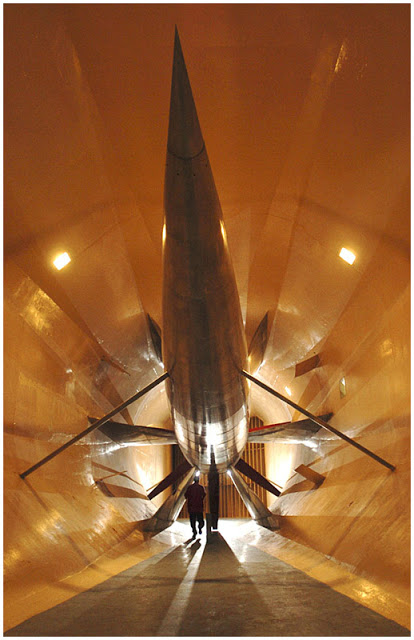
Long-time readers will recognize this shot, of the Glenn L. Martin Wind Tunnel in Maryland, as the photo from the very first post on Strobist in 2006. I was happy with it when I shot it. And to some degree, I still am.

But looking at it today, there are definitely some things I would approach differently. So let's walk through it, bearing in mind what we've learned since way back then.Read more »
Strobist

 
Comments Off on SLC-1L-02: One light, Inside the Frame

Posted in Photography


Full Frame or APS-C for Wildlife Photography – Which is Best?

20 Nov

Choosing between a full frame or cropped sensor camera for wildlife photography can be a tough decision. Both options offer their own benefits, so choosing between the two can cause quite the headache. Lots of photographers have their opinions, but choosing what’s right for your own use will largely come down to your personal style of shooting. So let’s break it down.

FX full frame and APS-C - Full Frame or APS-C for Wildlife Photography - Which is Best?

The Basics

Most modern camera companies use either full frame or APS-C (crop) type sensors in their DSLR (and mirrorless) cameras. The former is often classed as the professional standard, with the sensor size being a close replica to that of a 35mm film negative.

APS-C on the other hand, is roughly two thirds the size of a full frame sensor, resulting in the field of view being multiplied by a factor of 1.5-1.6x that of a standard full frame model. These sensors feature mostly in the lower tiered offerings by camera companies, with the chips being less expensive to produce.

Full Frame or APS-C for Wildlife Photography - Which is Best?

Working with APS-C means you can travel lighter.

Crop Factor

For APS-C models one of the largest benefits for wildlife photographers is that of the additional crop factor. The 1.5-1.6x magnification of your optics can be hugely beneficial when working out in the field, trying to photograph small birds or distant wildlife.

The crop factor also allows you to get a similar angle of view with a far smaller lens, helping to reduce the gear you need to carry while still giving you great telephoto reach. This is something a lot of photographers find as a huge benefit, as they can minimize the size and weight of the gear they need to carry out into the field.

For example, a 70-200mm lens on a 1.5x crop-factor body gives you the equivalent of a 105-300mm lens. A perfect compact wildlife setup.

APS-c cameras crop factor can be a great benefit for wildlife photography - Full Frame or APS-C for Wildlife Photography - Which is Best?

APS-C cameras crop factor can be a great benefit for wildlife photography.

ISO Sensitivity

One of the large benefits of a full frame camera is that of better image quality when shooting at high ISO. The larger sensor means in the individual pixels (and light sensitive photo sites) are larger than those on an APS-C type camera. This means as a general rule they are more sensitive to light, allowing cleaner noise-free images at high ISO settings, something that is fabulous when trying to work and photograph wildlife in low light conditions.

Now with modern sensor advances, APS-C models of the past few years have come up leaps and bounds in terms of ISO performance – easily being useable to ISO 6,400. But, if low light usability is key for the subjects you’re working with, a full frame camera is still king.

Full Frame or APS-C for Wildlife Photography - Which is Best?

APS-C cameras can still make great results at a high ISO.

Depth of Field

When comparing that of full frame sensors with APS-C models, one extra thing to consider is the depth of field characteristics and how areas are rendered out of focus.

With the smaller sensor in APS-C models, they give the effect of having a larger depth of field at equivalent apertures when compared to a full frame camera. This means that if you are going after images that render clean bokeh and have a very restricted depth of field to isolate and direct your viewer’s attention to your subject, a full frame model will be better suited.

Full Frame or APS-C for Wildlife Photography - Which is Best?

Full frame cameras are great for shallow depth of field effects.

Of course, if you do a large amount of macro work and want to maximize the depth then an APS-C camera might be right up your alley.

Resolution

In the past few years, technology has advanced in resolution steadily, with cameras being introduced that have high 36-42 megapixel sensors. For the most part, ultra high-res sensors have been used in the realms of advertising and commercial photography for years. But of course, now having been brought into DSLRs they offer photographers more flexibility.

The high resolutions models are mainly full frame sensors, as packing huge numbers of pixels onto small sensors can heavily impact their quality. The FX models that have high resolution offer a unique advantage, as they make the most of the benefits of full frame models, yet offer the ability to crop heavily to replicate the crop factor of those advanced APS-C DSLRs.

Often a disadvantage is that these high-resolution cameras are slower in terms of frames per second, due to internal data writing limitations. But this is advancing all the time, especially with new forms of storage media offering faster write times.


Full Frame or APS-C for Wildlife Photography - Which is Best?

High megapixel full frame cameras offer great all-around performance.

The full frame camera with a high-resolution sensor can be somewhat of a perfect compromise for those wanting the ISO performance and bokeh rendering benefits of full frame, combined with the ability to crop. Providing, of course, that they aren’t to hung up on needing blazing fast frame per second shooting rates.

Cost

One factor that always plays a part when looking to buy new gear is that of cost. Full frame bodies by their nature are more expensive, with the chips inside being harder to engineer and more expensive to produce. APS-C cameras are often found at lower price points, but this depends on the body design and extra features such as speed, construction, and technologies implemented.

Some full spec APS-C cameras are significantly more expensive than full frame models due to the advanced autofocus features, frame rates, and build quality.

So what to choose?

For wildlife photography, it largely depends on your target subjects.

If you love photographing birds and small creatures, a high-end APS-C body that combines the crop factor with speed will serve you well. The crop factor is also a huge benefit if you want to get a longer telephoto reach without having to shell out for ultra-expensive super telephoto lenses. Meaning you can have a small set up that offers a good compromise for most situations.

If you want to truly get the best performance and quality, full frame models are where to look. The high-resolution sensors and excellent low light performance make for great image quality. However, of course, you’ll also need to invest in the best optics to make the most of them.

These are both costly and a large burden to carry around. However, if you want the best quality imaginable that’s what it takes. For those starting out investing, an APS-C model would be my recommendation. Save your funds to buy decent quality lenses, as these will largely make more of a difference to your images than a single stop of ISO or a slightly higher resolution sensor.

The post Full Frame or APS-C for Wildlife Photography – Which is Best? by Tom Mason appeared first on Digital Photography School.


Digital Photography School

 
Comments Off on Full Frame or APS-C for Wildlife Photography – Which is Best?

Posted in Photography


Nikon patents 35mm F2.0 lens for camera with curved full frame sensor

23 Jul
Nikon’s never-released DL18-50. Did Nikon abandon this series of 1-inch sensor compacts in order to focus on creating a full-frame mirrorless camera?

A new Nikon lens patent is causing quite a stir in the photo world today, but it’s not because of the lens itself. Instead, the patent has people excited because it describes a lens that is made for a curved full-frame sensor, possibly inside a mirrorless camera.

The latter bit is pure speculation—as Nikon Rumors points out, “the patent does not provide sufficient technical information to determine if this is a mirrorless or a DSLR lens,” especially since Nikon has patented curved sensors in the past—but the 35mm F2.0 lens described is definitely made to work with a full-frame curved sensor.

It’s possible this camera could be a fixed-lens system, bypassing the need to design multiple lenses or figure out how to make zoom lenses work on a curved sensor. For that matter, it’s also possible this design never makes it to market. But the fact that Nikon is dabbling in patents here, spending R&D time and money on some real innovation, is at least mildly heartening.

With multiple curved sensor patents and prototypes out in the wild, the correct question now seems to be “when” rather than “if” this technology will make it to the general public. Well, “when” and “who will get there first?”

You can see more diagrams from this patent here: P2017-125904A. And, of course, feel free to speculate your heart out in the comments.

Articles: Digital Photography Review (dpreview.com)

 
Comments Off on Nikon patents 35mm F2.0 lens for camera with curved full frame sensor

Posted in Uncategorized


This is what happens when your camera’s frame rate matches a bird’s wing flap

19 Jul

Here’s a neat trick you might not have realized is possible. If your camera’s frame rate matches the flapping rate of a bird’s wings, you can create a video where it seems like the bird is floating ‘magically’ on frozen wings.

The video above is going viral today after YouTuber Ginger Beard shared it on his nascent channel. As he explains on Reddit, the video was captured with a Hikvision DS-2CD2342WD-I security camera set to “max resolution” at 2688×1520 and 20 frames per second. Apparently, the bird’s wings were also set to 20fps, because this ‘magic’ video is what popped out the other side.

And if you like this, check out this similar video shared on the DPReview forums a few months ago. In that one, the camera’s frame rate is perfectly synced to a helicopter’s rotor.

Articles: Digital Photography Review (dpreview.com)

 
Comments Off on This is what happens when your camera’s frame rate matches a bird’s wing flap

Posted in Uncategorized


Impossible launches special edition Polaroid 600 and metallic frame color film

14 Jun

Impossible has released a special edition of its Polaroid 600 instant camera with a two-tone black and white design. The new model is an online-shop exclusive and will set you back $ 179 in the US or €149 in Europe.

In addition, the company has revealed the Metallic Frame Edition color film pack for 600-type cameras which places your analogue instant photos into shimmering foil frames of different colors. Each photo in the pack of eight features a different colored metallic frame, including gold, blue, purple and pink. The Metallic Frame Edition film pack is $ 24.49 in the US and €21.00 in Europe. More information is available on the Impossible website.

Press Release:

CAPTURE THE MAGIC OF SUMMER WITH IMPOSSIBLE

Impossible curate a selection of instant cameras and vibrant frames that will help you capture the essence of summer

Summer is the perfect time to go outside and start shooting. As the weather gets warmer and the days get longer, there’s no better time to get armed with an instant camera and film from Impossible, to help you chase the magic of summer light. Shooting with instant film is all about slowing down, producing something tangible that can be shared – taking time out from the world of all things digital. Impossible now offer a range of styles for both beginners and avid photographers alike, this carefully curated selection of vivid frames and classic Polaroid® cameras will allow you to leave reality behind for just a moment and escape into the hazy hot days, and long balmy nights.

ALL THE COLORS OF THE RAINBOW, BUT METALLIC.
The latest release in our popular colorful frame series, Impossible has created the Metallic Frame Edition color film pack for 600-type cameras, placing your analog instant photos in a range of shimmering foil frames. Each photo in the pack of eight film features a different colored metallic frame, from gold and blue to purple and pink. You never know which color you’ll get next, making this the perfect pack for creating instant photos with a touch of chance this summer. Films priced at £18.99/€21.00/$ 24.49

IT’S ALL ABOUT MINT AND PINK THIS SUMMER.
Expanding Impossible’s Special Edition film series, this release has been specially created for use with Polaroid® 600 type and Impossible I-type cameras. First up, Impossible offers the original format color instant film in a bold and blushed Hot Pink that’s perfect for summer days and hazy nights. This is countered by the cooler tones of the Mint frame edition which provides an ideal palette for seaside scenes and nature photography.This release continues in the spirit of summer, allowing you to create unique and fresh photos for every occasion this season. Films priced at £18.99/€21.00/$ 24.49

A CLASSIC CAMERA WITH A MONOCHROME TWIST.
Offering a monochrome twist to the original Polaroid® camera, Impossible’s special edition Polaroid® 600 Two-Tone Black & White elevates the playful point-and-shoot classic with a custom black & white finish. Stand out from the crowd this summer and make real photos with a Polaroid® camera you’ll want to take everywhere, every day, for every occasion. 600 type is the perfect camera for anyone who’s just getting started with instant photography. Cameras priced at £129.00/€149.00/$ 179.00
http://www.impossible-project.com

Articles: Digital Photography Review (dpreview.com)

 
Comments Off on Impossible launches special edition Polaroid 600 and metallic frame color film

Posted in Uncategorized


Rokinon 20mm F1.8 and Cine DS 20mm T1.9 Full Frame Super Wide Angle lenses now available

30 Dec

Rokinon has announced the launch of its new Rokinon Digital Photo 20mm F1.8 and Cine DS 20mm T1.9 Full Frame Super Wide Angle lenses. Both lenses are made from high-strength aluminum alloy and feature a super-wide 94.8-degree view, a non-rotating 77mm filter mount, Rokinon’s Ultra Multi-Coating, and a quiet, smooth focusing control.

These prime lenses, say Rokinon, offer both fast aperture and ‘the full frame perspective of 20mm,’ offering a solution that falls between the maker’s similar 14mm and 24mm models. These 20mm lenses have a 7.9in / 0.20m minimum focusing distance, 13 elements in 12 groups, three extra-low dispersion elements, and a pair of aspherical elements.

In addition to the ‘common’ features shared between the lenses, the Cine DS lens features geared aperture and controls, a de-clicked aperture control ring, and dual right/left side distance and t-stop scales. 

The Digital Photo lens is available for Canon, Nikon AE, Sony E, Micro Four Thirds, Pentax K, and Fuji X mounts (MSRP $ 599), while the Cine DS lens ($ 799 on B&H Photo) is available for Canon, Nikon, Sony E, and Micro Four Thirds mounts.

Articles: Digital Photography Review (dpreview.com)

 
Comments Off on Rokinon 20mm F1.8 and Cine DS 20mm T1.9 Full Frame Super Wide Angle lenses now available

Posted in Uncategorized


Full frame 48MP sensor with global shutter and 8K video hits market from CMOSIS

13 Nov

The Belgian manufacturer that makes some of the sensors used in Leica’s cameras has announced a new offering that features 48MP and a global shutter. Although the CMV50000 CMOS sensor is described as medium-format in the press release, it is actually nearer to being 35mm-sized and measures 36.43 x 27.62mm (the width of a 35mm ‘full-frame’ sensor but elongated out to 4:3 aspect ratio).

The new sensor is also designed to record 8K video at a rate of 30fps and offers, according to the manufacturer, a dynamic range of 64dB at full resolution and a signal-to-noise ratio of 41.4dB. The sensor can increase the dynamic range of its output by recording alternate row of pixels at different exposures (a process comparable with the DR mode of Fujifilm’s EXR CCD designs).

The global shutter design of the sensor allows all pixels to record at the same time instead of in sequence as is usually the case. This means fast moving objects traveling across the frame can be captured without distortion in cameras when using a fully electronic shutter. While some of the company’s target market is industrial inspection the sensor is also said to be suited to still photography and professional and broadcast video.

At the moment the sensor is only available in black and white, but a color version is on its way for the end of the year. The existing sensor costs €3450 (approx. $ 3800). For more information visit the CMOSIS website.

Press release:

Industry’s first global shutter 48Mpixel CMOS image sensor from CMOSIS supports 8k image resolution at 30 frames/s

CMV50000 features low noise, high frame rate, and high dynamic range; easy-to-design-with sensor excels in automated optical inspection systems, machine vision uses and prosumer video applications

Premstaetten, Austria — CMOSIS a member of the ams AG (SIX: AMS) group, a leading provider of high performance sensors and analog ICs, today launched the CMV50000, an industry first global shutter CMOS image sensor offering high resolution of 48Mpixels, more than twice the resolution of its previous generation CMOSIS global shutter CMOS image sensors.

The CMV50000 is a medium format 48Mpixels sensor with 7920 x 6002 4.6-µm sized pixels using the patented 8-transistor pixel architecture to offer low noise and excellent electronic shutter efficiency. Global shutter operation means, that images of fast-moving objects can be captured without distortion.

Its pixel offers 64dB optical dynamic range at full resolution and up to 68dB in subsampled 4k mode, and the imagers benefits from the implementation of sophisticated new, on-chip noise-reduction circuitry such as black level clamping to enable it to capture high quality images under low-light conditions.

Operating at a fast 30 frames/s with 12 bit pixel depth at full resolution or a binned 4k mode, and at up to 60 frames/s with pixel subsampling to 4k resolution, the sensor is suitable for use in high-speed machine-vision systems, as well as in TV broadcasting and video cameras.

The CMV50000 provides detailed views of a large surface area required in factory automation applications such as automated optical inspection (AOI) systems and systems for the inspection of displays of mobile phones, tablets, laptops and TVs. The combination of high frame rate and high re-solution allows further increase of the already high throughput rates at consumer product assembly plants.

A High Dynamic Range (HDR) mode is supported by an odd/even row dual-exposure operation.

The CMV50000 is expected to replace high pixel-count charge-coupled device (CCD) image sensors used in machine-vision cameras and high-end security cameras. Compared to the older CCD sensor technology, CMOS image sensors are easier to integrate in camera designs, use less power, and can operate at much higher frame rates.

“The introduction of the 48Mpixel CMV50000 gives camera manufacturers the opportunity to enjoy the design and operating advantages of a CMOS image sensor while gaining the ultra-high resolution, which has previously only been available through the use of CCD sensors”, said Wim Wuyts, Marketing Manager for image sensors at ams.

“The CMV50000’s advanced noise-reduction features such as black level clamping combined with its high optical dynamic range, results in high picture quality at full operation speed without the need for complex analog output matching required for multi-tap CCD image sensors and therefore also decreases the camera development time significantly.”

The monochrome version of the CMV50000 is sampling now. The color version will be available for sampling by the end of 2016. Unit pricing is €3,450.

Articles: Digital Photography Review (dpreview.com)

 
Comments Off on Full frame 48MP sensor with global shutter and 8K video hits market from CMOSIS

Posted in Uncategorized