RSS
 

Posts Tagged ‘Food’

8 Tips for Food Photography Newbies

08 Apr

Making food look appetizing, is not quite as simple as photographing your plate. There are a number of tricks that you can use to really enhance the subject. By using your camera creatively, you can capture the scrumptious side of food. Whether it’s your favorite dessert, or a full meal, these tips will help take your food photography to the next level.

8 Tips for Food Photography Newbies

1) Use a very shallow depth of field
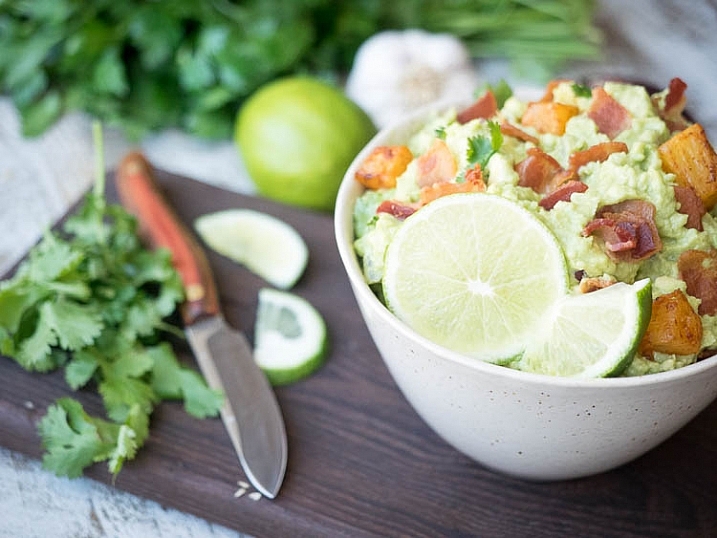
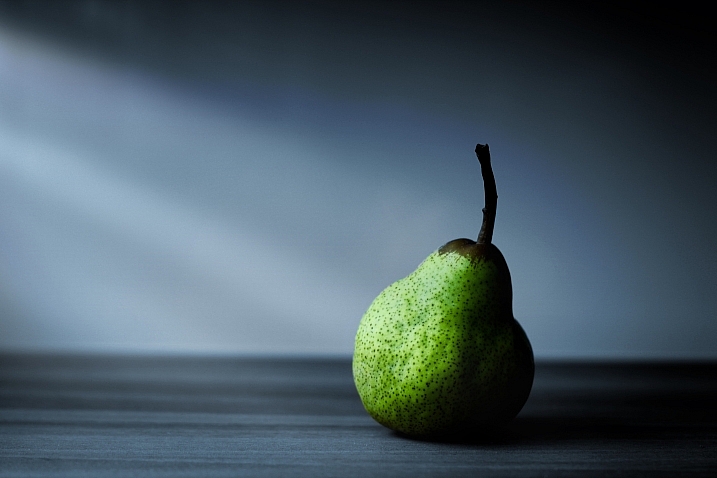
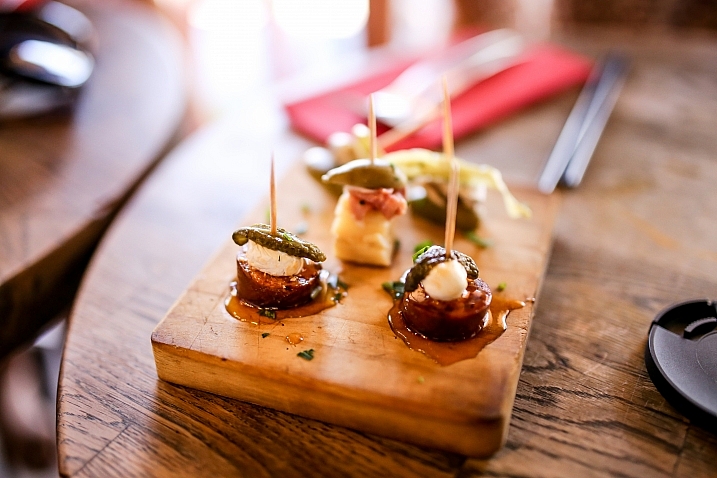
When you’re about to take a photo, the first technical question you want to ask is, “What kind of background would be best?” With food photography, you typically only want a sliver of the subject sharp, and the rest of the plate to be a soft blur. To do this, choose the widest aperture your lens allows. At f/2.8 the opening in your lens is physically wide open, creating what’s known as shallow depth of field. If you’re using a kit lens, the effect will be enhanced if you use your lens at a longer focal length, and get closer to the food.

2) Less is more
N I C O L A

By N i c o l a

Irudayam?

By Irudayam?

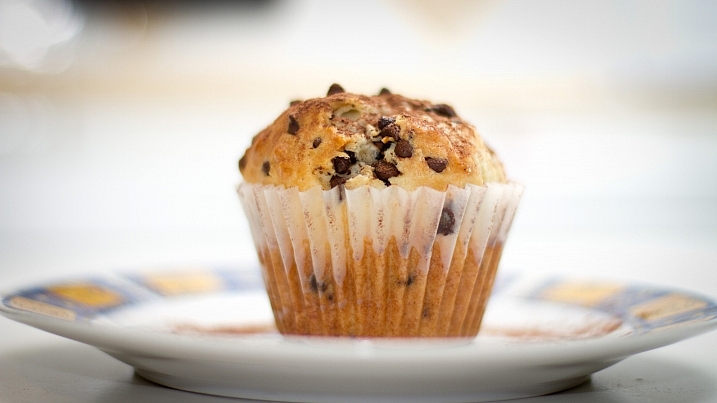
While looking at the scene through your camera, ask yourself, “What’s really the subject here?” This simple question will help to shape your composition. While this may seem rudimentary at first, the impact is undeniable once applied. For a helpful reminder, consider taping a small note to the inside of your lens cap. Check all four corners of the frame carefully. Anything that does not work towards emphasizing the chosen subject should be eliminated. The goal is to create a clean frame as opposed to visual clutter.

3) Design your composition
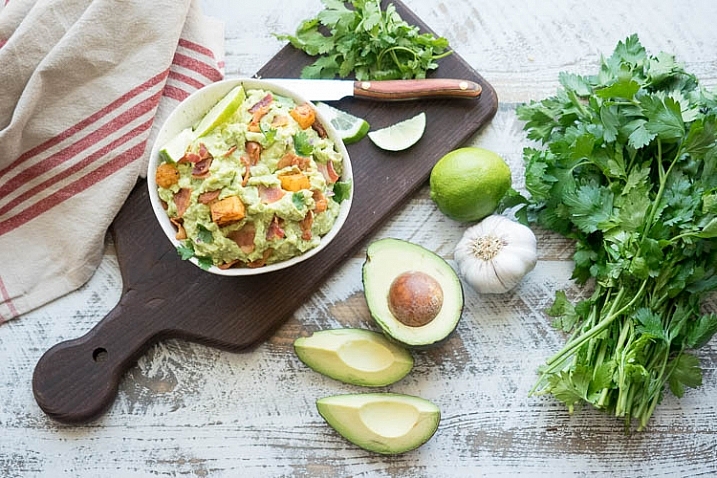
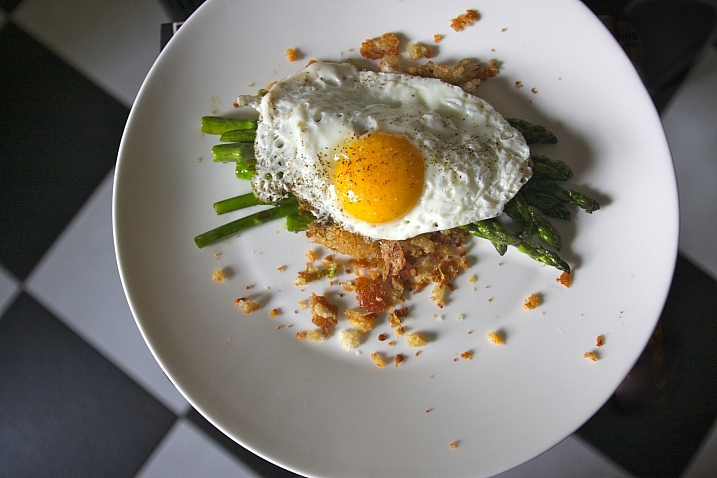
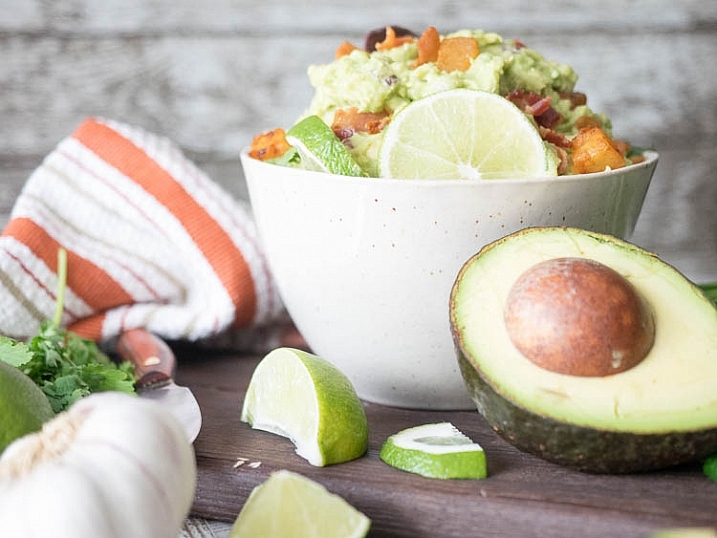
Think beyond the obvious subject, and consider shape and form when crafting your composition. Adding a knife for instance, can balance a composition if placed in the rule of thirds. By shooting from directly overhead you create an elegant frame. In the image above, the towel in the left hand corner adds a pop of color, while the parsley, lime and avocado all add various shades of green. To add more shine to your silverware or reflective objects, in this case the knife, use a reflector board to bounce in extra light.

4) Get messy
Tracy Benjamin

By tracy benjamin

Stefano

By Stefano

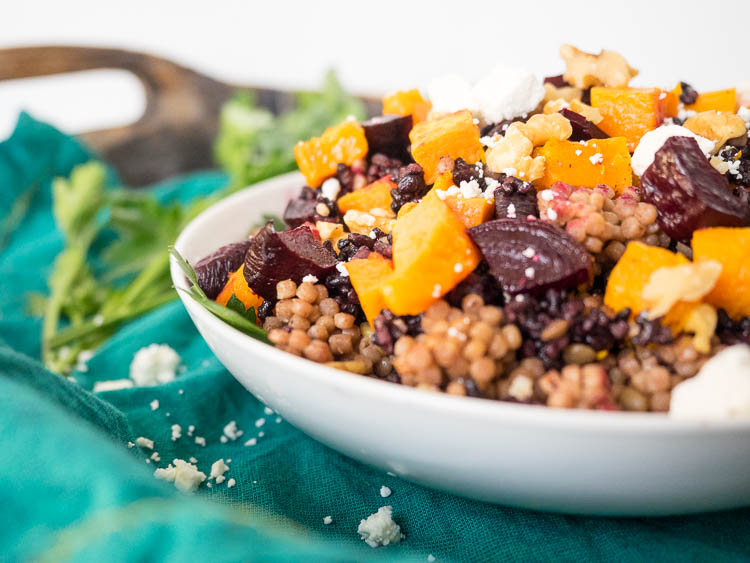
To make your food photography look real and not staged, try adding crumbs to the set. This imperfection may seem odd at first, but it adds visual appeal. A bit of cheese sprinkled over the plate is an easy way to accomplish this. A little bit goes a long way here, so be subtle with your approach.

5) Use a high ISO
Simply put, the higher the ISO number is, the faster light can get into the camera. At ISO 800 you will get light into the camera faster than you would at ISO 100 or 200. When shooting food indoors you will often need to be at 1600 or even 3200. I generally do not recommend using ISO 6400 or higher as they will show an increased amount of digital noise, also known as grain. If noise is an issue for your camera, try using Lightroom’s noise reduction tool.

Editor’s note: as this article is aimed at newbies the author assumes you’ll be shooting handheld. If, however, you will be shooting with a tripod, it is recommended to use the lowest ISO possible to keep noise to a minimum and get the sharpest, crispest images possible.

6) Use natural light to your advantage
Felipe Neves

By Felipe Neves

Terence Lim

By Terence Lim

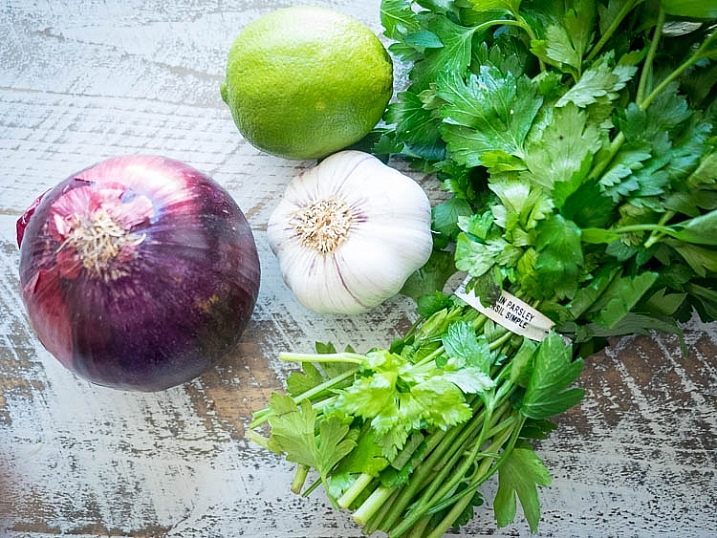
Rather than adding flash, or working with harsh artificial light, take advantage of the beautiful natural light available. This can give a food picture a feeling of bright airiness. Look for spaces where sunlight streams through a window to set up your shot. The morning is typically the best time of day for this, as the light is softer, with less contrast. You can keep shooting in the afternoon but you’ll want to move the food into an area with even light, to avoid harsh shadows.

7) Try black and white
David Pacey

By david pacey

Jazz Guy

By Jazz Guy

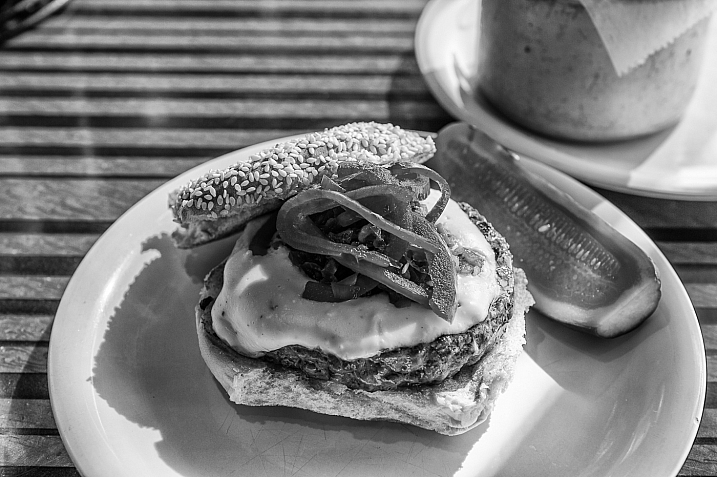
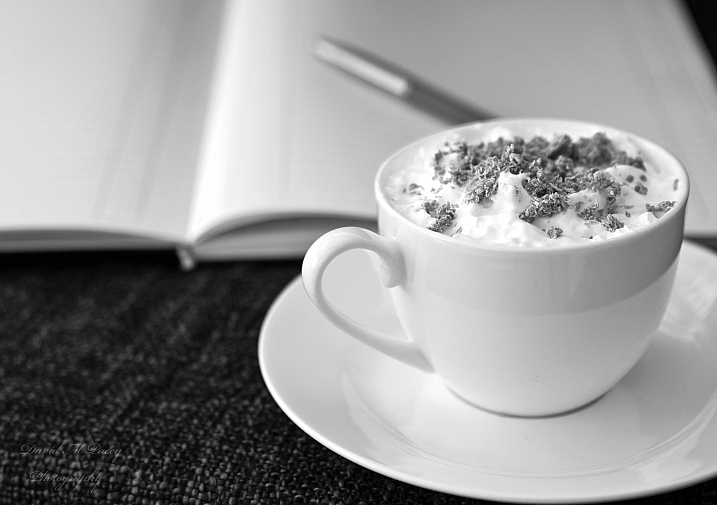
Perhaps the most famous food photo of all time is Edward Weston’s “Pepper No. 30”. It was captured in black and white, and shows the shape and form of the subject beautifully. In your food photography, try shooting in monochrome from time to time. Not only does the lack of color simplify the shot, but it also works well to reveal contrast, highlight, and shadow. If shooting in RAW, convert the shot to black and white in post-production. One of my favorite tools to do this is Exposure X by Alien Skin, as they have a large array of creative options.

8) Take a bite
DLG Images

By DLG Images

Xsomnis

By xsomnis

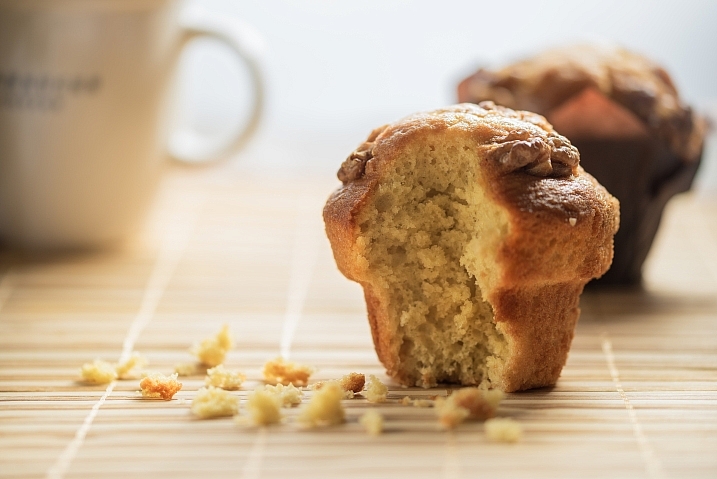
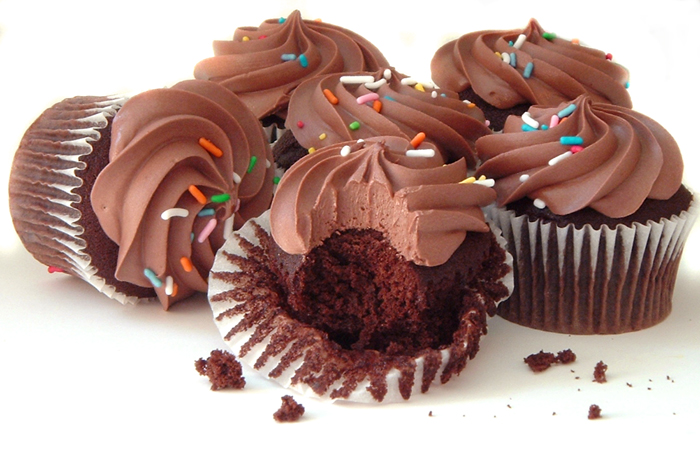
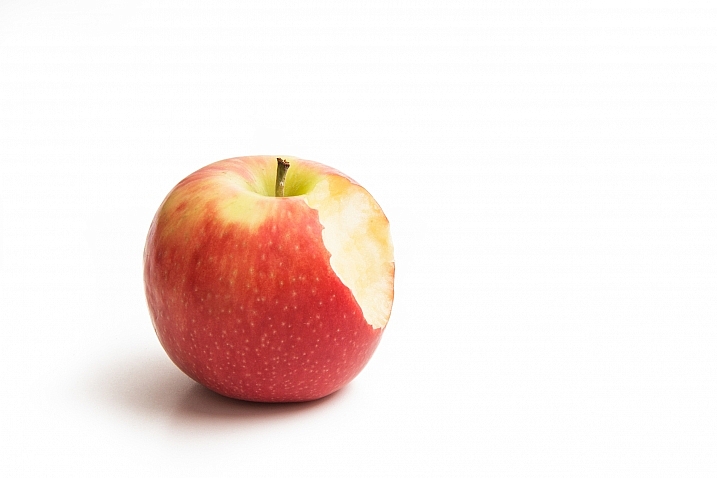
Great food photography doesn’t need to be staged. Once you are done with your shoot, go ahead and take a bite. This photo adds a sense of authenticity to your shoot. If you’ve made the viewer want to take their own bite, you’ve succeeded in your goal of creating scrumptious food photographs.

googletag.cmd.push(function() {
tablet_slots.push( googletag.defineSlot( “/1005424/_dPSv4_tab-all-article-bottom_(300×250)”, [300, 250], “pb-ad-78623” ).addService( googletag.pubads() ) ); } );

googletag.cmd.push(function() {
mobile_slots.push( googletag.defineSlot( “/1005424/_dPSv4_mob-all-article-bottom_(300×250)”, [300, 250], “pb-ad-78158” ).addService( googletag.pubads() ) ); } );

The post 8 Tips for Food Photography Newbies by Chris Corradino appeared first on Digital Photography School.

Digital Photography School

 
Comments Off on 8 Tips for Food Photography Newbies

Posted in Photography


Visual appetite: Eric Wolfinger’s food photography

03 Mar

Eric Wolfinger is a traveling food photographer who spent six years cooking and baking professionally before working behind the lens. An immersive photographer known for weaving practical instruction with powerful storytelling, the cookbooks he shoots go on to become the classics of their category. His first project, ‘Tartine Bread,’ was nominated for a James Beard Award and is now in its ninth printing. Twelve books later he is still hungry and on the move.

In this presentation from PIX 2015, Eric takes us on a journey that includes baking bread in San Francisco, scuba diving in Korea to photograph fishermen, and details the challenges of photographing an entire book within the confines of a restaurant kitchen in Manhattan. He also reminds us that no job is too small in pursuit of your dreams.

If you’re feeling hungry and want to see more mouthwatering food photos, visit Eric’s website for a visual feast.

Articles: Digital Photography Review (dpreview.com)

 
Comments Off on Visual appetite: Eric Wolfinger’s food photography

Posted in Uncategorized


Takeout Shakeout: 10 Abandoned Chinese Food Restaurants

22 Feb

[ By Steve in Abandoned Places & Architecture. ]

abandoned_chinese_restaurant_1a
What’s on the menu at these abandoned chinese restaurants? Stereotypical architecture and signs displaying near-racist “oriental” fonts, for starters.

Maybe we shouldn’t be so quick to play the race card – countless structures in the orient are more flamboyantly exaggerated than the worst of these over-the-top chinese restaurants. Besides, show us an “ethnic” eatery that DOESN’T lay on the “culture” with a trowel: setting the mood for a foreign-style feast means ya gotta go there.

abandoned_chinese_restaurant_1b

abandoned_chinese_restaurant_1c

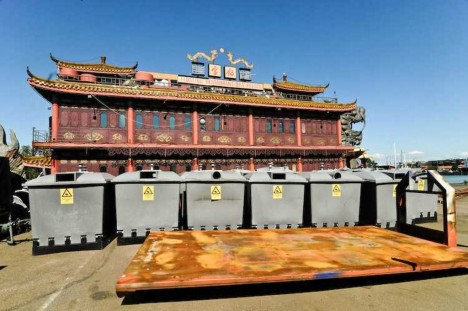
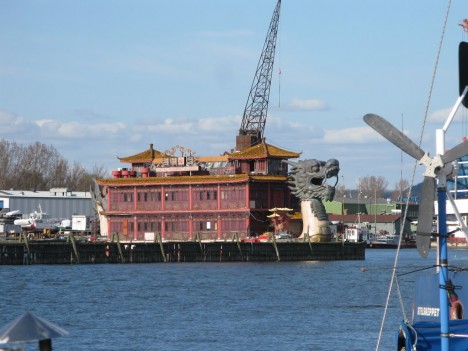
That said, chinese restaurants have a tradition of going the extra mile when it comes to cultural embellishment. Take the Floating Restaurant Sea Palace in Gothenburg, Sweden. Moored at the Gullbergskajen docks since 2002, the dragon-headed (and tailed) restaurant soon went bankrupt and was abandoned by its owners.

abandoned_chinese_restaurant_1d

abandoned_chinese_restaurant_1e

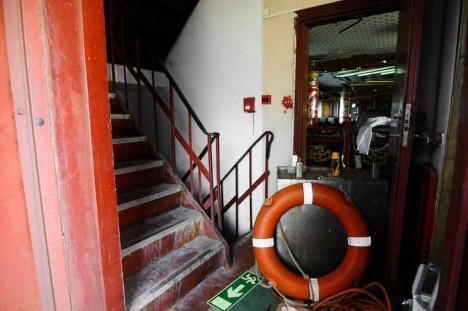
After becoming a hangout for homeless people, the City complained and forced the owner, John Wang, to relocate the barge to the comparatively inaccessible Gullbergsvass marsh. Wang states he intends to repair and relaunch the restaurant but as of May 2013, no action had been taken.

Oh Man…

abandoned_chinese_restaurant_3a

abandoned_chinese_restaurant_3b

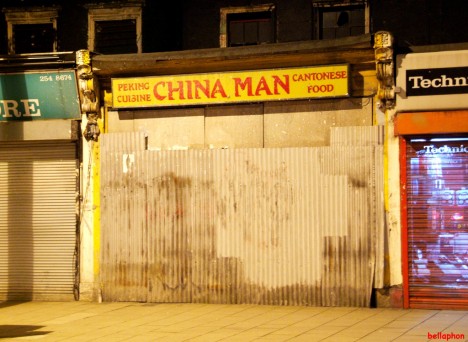
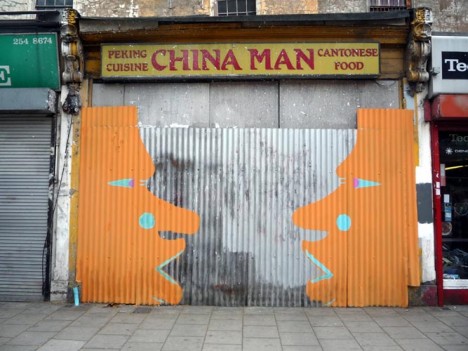
The good news is that this visually wrong-on-many-levels chinese restaurant in east London, UK is abandoned. The bad news is, nobody thought to remove – or at least cover – that distressing sign. OK, we get it, it was “the olden days” (note “Peking”) and nobody batted an eyelash but puh-lease… we expected better of you, Hackney. Flickr user Fat Les (bellaphon) snapped the offensive ex-eatery on March 17th of 2010 while runABC posted an artistically decorated version that ignored that glaring eyesore of a sign.

No JOY in Dublin

abandoned_chinese_restaurant_2d

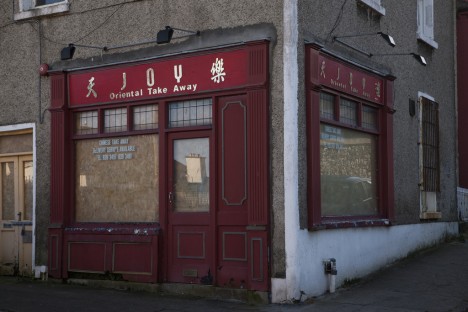
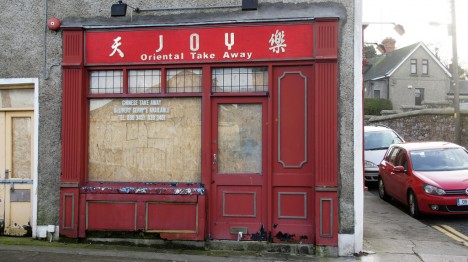
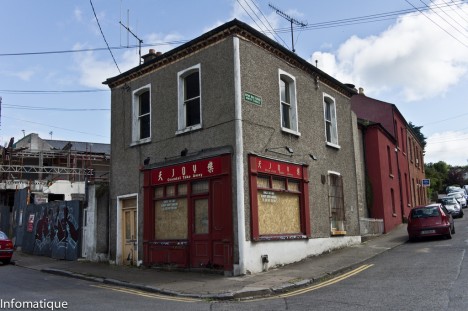
Flickr user William Murphy (infomatique) snapped the abandoned JOY Oriental Take Away restaurant on January 30th of 2010, then again a year later, and returned for yet another shot in July of 2011. It would seem restaurant turnaround in Dublin, Ireland isn’t exactly brisk. What a Seamus.

Remember the Mein

abandoned_chinese_restaurant_4a

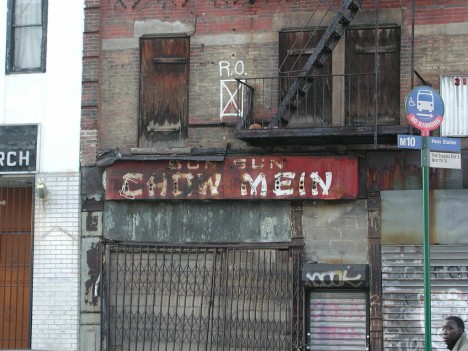
Who can say when the above uber-decrepit Sun Sun Chow Mein restaurant on Frederick Douglass Boulevard in NYC’s Harlem closed… can anyone living even recall eating there? In any case, Flickr user Margie & James snapped this warts-and-all photo of the abandoned business way back in 2001 – it was demolished sometime after 2004.

Next Page – Click Below to Read More:
Takeout Shakeout 10 Abandoned Chinese Food Restaurants

Share on Facebook


[ By Steve in Abandoned Places & Architecture. ]

[ WebUrbanist | Archives | Galleries | Privacy | TOS ]


WebUrbanist

 
Comments Off on Takeout Shakeout: 10 Abandoned Chinese Food Restaurants

Posted in Creativity


PhotoShelter releases free professional food photography guide

22 Oct

PhotoShelter has launched ‘The Professional’s Guide to Food Photography,’ a new free guide dedicated to the art and business of photographing food. The guide includes tips for breaking into the industry, in-depth interviews with food photographers and a how-to on building a portfolio. Read more

Articles: Digital Photography Review (dpreview.com)

 
Comments Off on PhotoShelter releases free professional food photography guide

Posted in Uncategorized


7 Tips for Better Commercial Food Photography

14 Sep

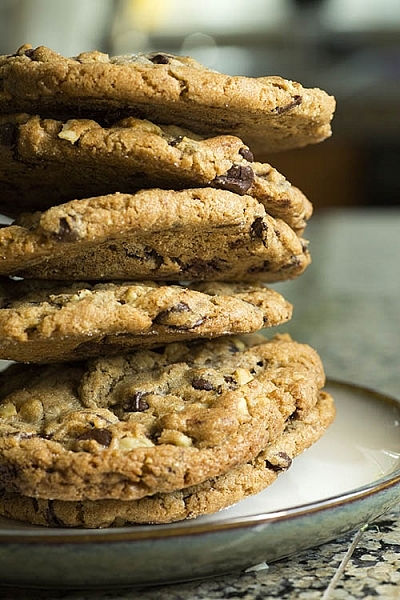
Earlier this summer, I was awarded a dream photo shoot to photograph chocolate chip cookies for my local grocery store. What sounded like a simple job at first, ended up being more challenging than expected, and in this article, I’ll walk through the process of approaching a commercial food photo shoot for a real client, with seven key tips to keep in mind.

Select your gear

One of your best friends in food photography is a macro lens, as it lets you zoom-in and capture small details and perspectives, that your client’s camera phone can’t. In a day where just about everyone has the ability to take pretty good food photos with their cell phone, it’s important to always create photos that your client couldn’t easily capture themselves using low level gear. Personally, I always photograph food with two camera bodies (a Canon 5D Mark III and Canon 6D) and two lenses (24-70mm f/2.8 and a 100mm f/2.8 macro lens).

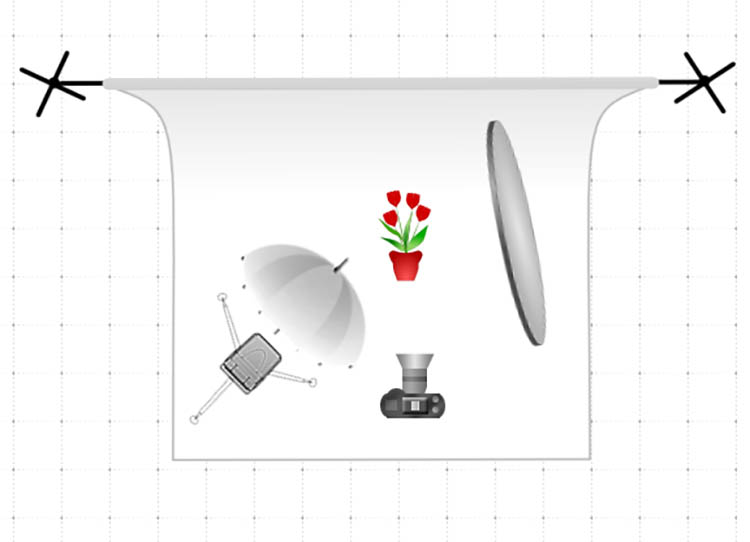
Lighting-wise, you can easily use reflectors and natural lighting if it’s at your disposal, but I prefer a simple and cheap off-camera flash setup consisting of a Canon 580 EXII Speedlight flash, Yongnuo wireless flash triggers, a simple lighting stand, and a shoot through umbrella. My lighting setup is in the diagram below.

Food photography tips

Depending on what kind of food photography quality you’re aiming for, it may also be wise to invest in a food stylist. In this case, I did not use one, but started to wish I did at certain key moments, which I’ll address later.

Set up the shot

Generally speaking, food photography can be done just about anywhere, but you should always check with your client to see if they have a preference of shooting on site in a particular location, or if they want you to conduct the shoot in your space. In this case, the latter scenario applied. Since the photo style we were going for would be pretty cropped and zoomed in, I didn’t need a fancy kitchen or dining room setup. But I would need a variety of surfaces and props to enhance those heavily cropped images.

Tip #1: Understand the client’s photo needs

There tend to be two main scenarios when it comes to food photography. Sometimes the client will have a menu of dishes prepared and you need to shoot as many as possible in a given time frame, OR the client has one particular dish or menu item that they want highlighted. This assignment falls into the latter category, as the whole point was to take images of one particular item: an extraordinary large chocolate chip cookie, dubbed “The Cookie.”

My local grocery store had spent a year experimenting in the kitchen to come up with a recipe for a gigantic chocolate chip cookie, and they needed photos of the product to help with promotional marketing. These photos in particular had a very specific purpose of being blown up into large decals and posters, that would be plastered on walls and windows throughout the store, so the highest resolution photos would be needed.

Food photography tips

Tip #2: Research with Pinterest

After understanding the client’s basic photo needs, I always conduct research on Pinterest to get inspired and visually identify patterns among other similar photo shoots. While many clients encourage photographers to add their own twist or dose of creativity, it’s also a good idea to have a sense of traditional ways that others have executed similar photo shoots, in case your client ends up wanting a more traditional image. A quick search for “chocolate chip cookies” on Pinterest gave me a slew of ideas on different ideas to effectively photograph, “The Cookie.”

Tip #3: Use a variety of surfaces

Per the researched examples that I had found, plus my personal approach to food photography, I set out to shoot these cookies using three main surfaces: a ceramic plate on a granite countertop, a wooden cutting board, and the white paper napkins and packaging that came with each cookie. The purpose was to offer the client a variety of surfaces and textures to choose from, in addition to a variety of implied settings in which “The Cookie” might be consumed.

Food photography tips

Tip #4: Incorporate people and action into the scene

The next photographic approach I took involved having a human model interact with my photo subject. Incorporating a human element, either by simply including a body part such as a hand holding the cookie, or a partially eaten cookie, gives the photo subject a sense of purpose and utility that the client might find helpful. It also adds a sense of scale – important to show the size of “The Cookie”.

Food photography tips

Tip #5: Use ingredients and pairings

Pretty much every food has a logical pairing, such as white wine and fish, beer and burgers, and milk and cookies. Instead of just focusing on one component, why not set the scene by introducing a natural pairing to the photo subject? This not only sets the scene, but it can also help provide scale, in this case showing how large “The Cookie” is compared to a glass of milk.

Food photography tips

Tip #6: Be open to feedback and further collaboration

After going through the above scenarios, and putting together a first batch of photos for client feedback, I was a bit surprised when they replied saying, “These are great, but not quite fitting our ideal vision.” Luckily, I asked for feedback early in the shoot and was able to collaborate further with the client to hone in on what they were actually looking for, which were photos more to the tune of this:

Food photography tips

While the client’s initial instructions were to produce a variety of photos of the cookie, like the ones I first delivered, it took an extra conversation with them to realize that there were two main points they really wanted to illustrate:

  1. Size mattered: Since “The Cookie” was truly large, similar in size to that of a DVD, we really needed to emphasize its huge size.
  2. Have to see the goo: The selling point of “The Cookie” is the super gooey melted chocolate center of each cookie.

With these two points really emphasized, the resulting images ended up being purely macro shots, but the challenge was capturing the gooey melted chocolate centers. This is when a food stylist probably would have come in handy, but through trial and error, I was able to use my oven and microwave to re-create the melted chocolate look in my own kitchen.

Tip #7: Find the finished product and document it!

Whenever you perform photography services for a client, make every effort to get your hands on the final product that has your photo(s) in use. Having proof of your published photos is excellent for building your portfolio and credibility as a photographer, not to mention it just feels really good to see your images blown up on the side of a building.

Food photography tips

The final product: my photos used in decals on the side of a building.

Conclusion

Do you have any other tips or approaches for tackling commercial food photography jobs? Let me know in the comments below!

googletag.cmd.push(function() {
tablet_slots.push( googletag.defineSlot( “/1005424/_dPSv4_tab-all-article-bottom_(300×250)”, [300, 250], “pb-ad-78623” ).addService( googletag.pubads() ) ); } );

googletag.cmd.push(function() {
mobile_slots.push( googletag.defineSlot( “/1005424/_dPSv4_mob-all-article-bottom_(300×250)”, [300, 250], “pb-ad-78158” ).addService( googletag.pubads() ) ); } );

The post 7 Tips for Better Commercial Food Photography by Suzi Pratt appeared first on Digital Photography School.


Digital Photography School

 
Comments Off on 7 Tips for Better Commercial Food Photography

Posted in Photography


Abandoned McBarge: Floating Fast Food Restaurant in Ruins

14 Jul

[ By Steph in Abandoned Places & Architecture. ]

abandoned mcdonalds 1

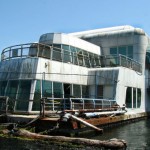
Built in 1986 in the hopes of enticing diners who were gravitating toward more high-end fare, this now-abandoned floating McDonalds might just be the saddest-looking fast food ruin around. Known as the ‘McBarge,’ it’s been anchored in Burrad Inlet near Vancouver, Canada since its debut and served its last Big Mac in 1991.

abandoned mcdonalds 4

The idea was to show off the future of technology and architecture while also attempting to regain some of the market share it lost during an ‘80s trend toward bistros and boutiques.

Abandoned Mcdonalds 3

How, exactly, McDonald’s aimed to do that with a clunky-looking barge serving the same old menu is unclear. The chain dropped $ 12 million on the floating fast food joint and four other locations built just for Expo ’86 in Vancouver, thinking they could simply move the barge elsewhere if it didn’t catch on.

Abandoned Mcdonalds 2

For whatever reason, it was never reopened, and hasn’t budged from its apparently permanent spot in the inlet. Owner Howard Meaking proposed renovating it into the showpiece of a new waterfront development along the Fraser River in 2009, but the city council still hasn’t approved the idea.

A group called ‘Vancouver’s Worst Ghost Hunters’ took a tour of the abandoned barge, using a legal loophole to get aboard and filming the experience. Check out the (surprisingly vermin-free) interior in the video (Images via Wikimedia Commons, Ashley Fisher/Flickr Creative Commons).

Share on Facebook


[ By Steph in Abandoned Places & Architecture. ]

[ WebUrbanist | Archives | Galleries | Privacy | TOS ]


WebUrbanist

 
Comments Off on Abandoned McBarge: Floating Fast Food Restaurant in Ruins

Posted in Creativity


5 Tips That Will Make Your Food Photos Stand out from the Crowd

01 Jul

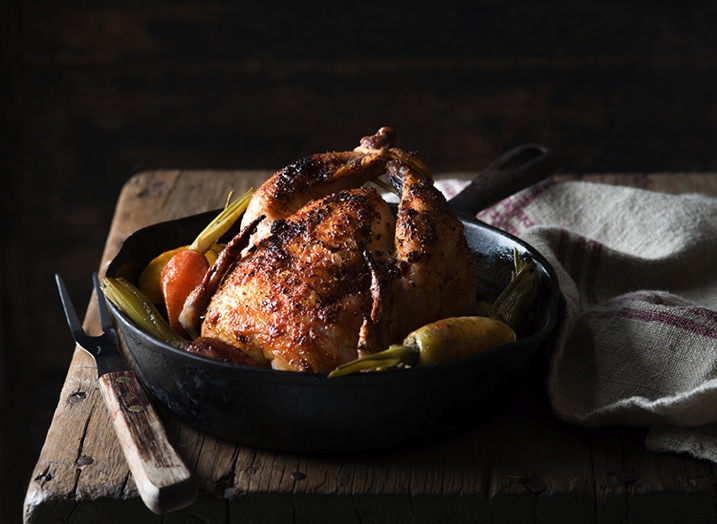
1 Cornish Game Hen

Food photography may be more popular now than ever before. The blogosphere is exploding with pictures of food, and social media sites like Pinterest and Instagram are flooding you with never-ending streams of food photos 24/7. Creating food images that stand out in this massive sea of content is a difficult task. Here are five tips to help you get your food photos noticed.

#1 Don’t be afraid of shadows

Shadows make a scene look realistic, give your food texture, and create mood, so don’t hesitate to make them part of your food photo. To create nice, dark shadows let your light fall onto your food either from the back or the side at a fairly low angle, from just a little bit above the surface of your set. Use reflectors sparingly, or not at all. Reflectors bounce light back into the areas of your photo that your light source doesn’t reach, in other words, into the shadows. So to keep the shadows dark, don’t reflect the light.

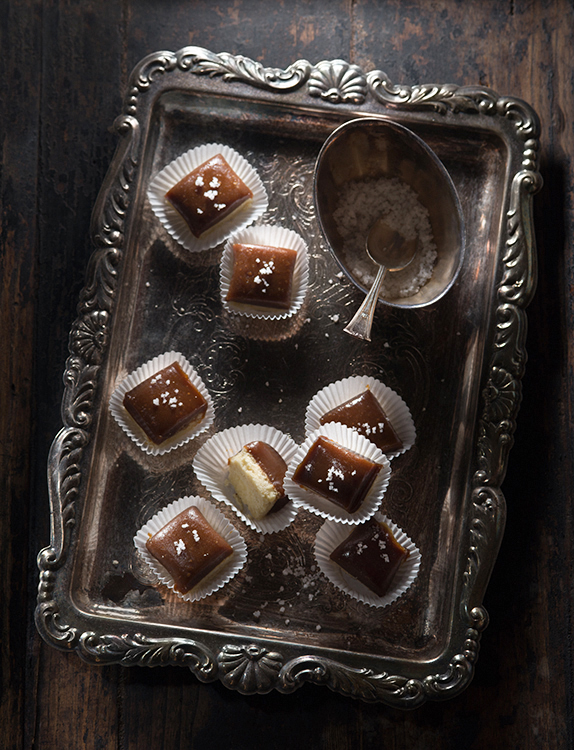
1 Salted Caramel Candy

In the salted caramel candy photo above my light was falling onto the set from the back at a low angle and I didn’t use any reflectors.

#2 Imply action

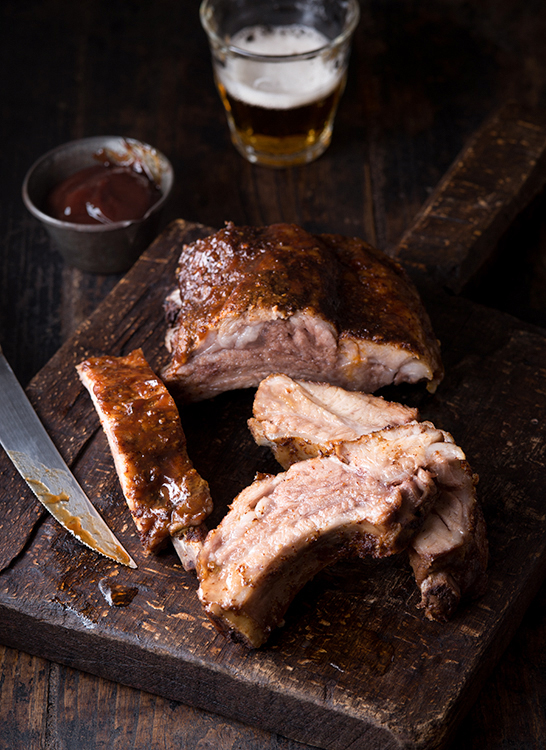
Action makes your viewers feel as if they are part of your scene; that kind of engagement is always a good thing. Action can be literal, such as a hand holding a hamburger or pouring syrup over a stack of pancakes, but there are other (and actually easier) ways for you to suggest that something is happening in your photo. One example is a glass of freshly poured beer. Your viewers likely know that the lifespan of the foam top on a beer is only a minute, so seeing a fresh beer tells them that someone must have just been at the scene to pour it.

2 BBQ Ribs

#3 Point your lens up at food that is tall and stacked

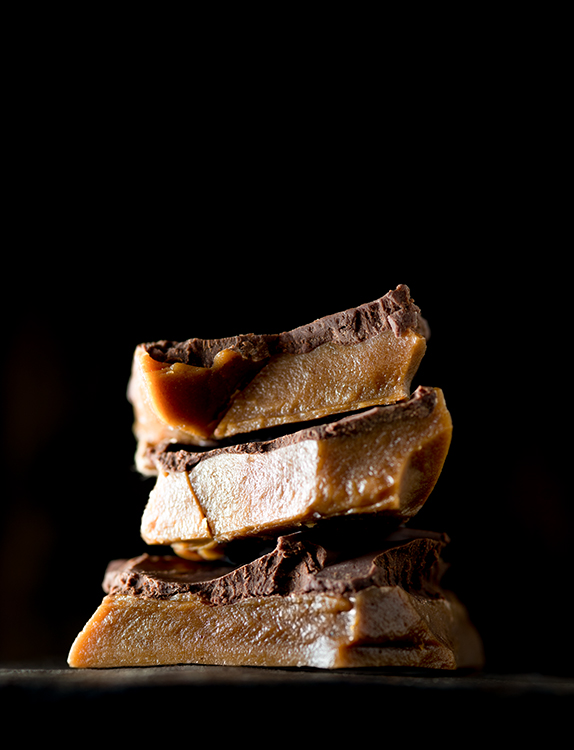
Shooting up from slightly below the food is an unusual angle for food photography; but it can create really compelling images of tall items such as cakes, and things that are stacked, like burgers or, as in the example below, shards of toffee. The food will be towering above the viewer which makes it look big and impressive. Needless to say this angle doesn’t work for flat food, so don’t shoot a pizza with this method.

3 Toffee

#4 Create visual contrast

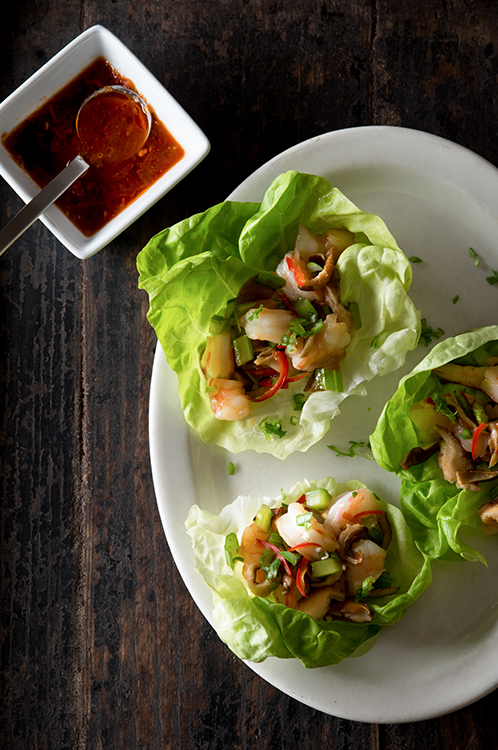
Contrast comes in many varieties and helps make your food photo look interesting. You can create contrast by incorporating different shapes into your photo, such as round and rectangular (or square). You can also create contrast by including colors in your photo that are on opposite sides of the color wheel (complementary), like red and green, or blue and orange. The lettuce cup photo below illustrates both of these concepts, the square dish contrasts the round lettuce cups and the red sauce provides contrast to the green lettuce.

4 Lettuce Cups

#5 Leave negative space in the image

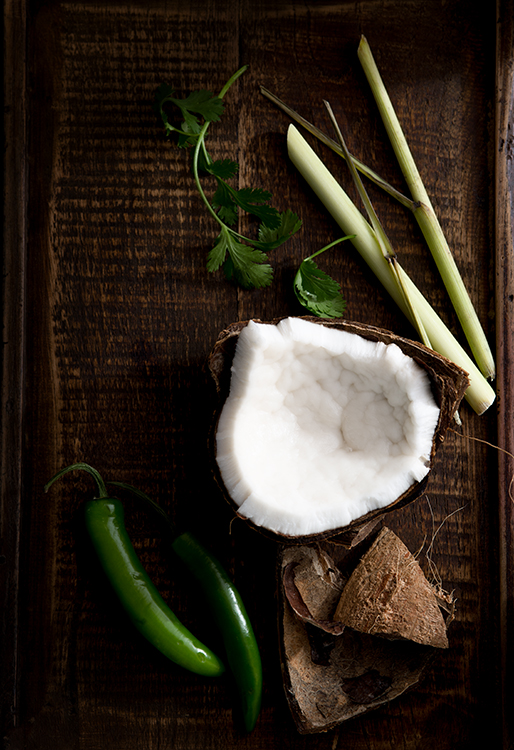
Don’t feel that you have to fill every square inch of the frame with food or props. A little negative (empty) space gives the food room to breathe, and will keep your viewers from getting overwhelmed and feeling claustrophobic. There are no hard and fast rules that dictate where to leave negative space in a food photo but the rule of thirds is always a good place to start. Imagine your photo dissected into thirds, both vertically and horizontally, and place your subject on or near one of the four points where those lines intersect. Leave the rest of your photo empty and take a test shot. Does the scene look good to you or is it too barren? If it looks like it’s missing something, add more elements to the frame, one by one and along the imaginary lines that dissect your frame, until you have a composition that looks pleasing to you. That’s how I went about composing the Thai curry ingredients shot below.

5 Thai Curry Ingredients

I hope these tips give you some new ideas for your food photography. If you have any others please share them in the comments below.

googletag.cmd.push(function() {
tablet_slots.push( googletag.defineSlot( “/1005424/_dPSv4_tab-all-article-bottom_(300×250)”, [300, 250], “pb-ad-78623” ).addService( googletag.pubads() ) ); } );

googletag.cmd.push(function() {
mobile_slots.push( googletag.defineSlot( “/1005424/_dPSv4_mob-all-article-bottom_(300×250)”, [300, 250], “pb-ad-78158” ).addService( googletag.pubads() ) ); } );

The post 5 Tips That Will Make Your Food Photos Stand out from the Crowd by Nicole Branan appeared first on Digital Photography School.

Digital Photography School

 
Comments Off on 5 Tips That Will Make Your Food Photos Stand out from the Crowd

Posted in Photography


Ideas for Photo Fun With Water & Food Coloring

21 May

“Wow! Oh my gosh! Cool!”

This is what your friends will say when they see your gorgeous photos of food coloring in water.

These shots are not only incredible but surprisingly easy! And with our setup tips and ideas you’re gonna get the most vibrant and unique results possible.

Just don’t get so mesmerized by all those dancing colors that you forget to take the shot!

Make Photo Magic with Food Coloring

(…)
Read the rest of Ideas for Photo Fun With
Water & Food Coloring (630 words)


© Taylor for Photojojo, 2015. |
Permalink |
No comment |
Add to
Water & Food Coloring”>del.icio.us

Post tags:


Photojojo

 
Comments Off on Ideas for Photo Fun With Water & Food Coloring

Posted in Equipment


Floating Island: Self-Sufficient Home Produces Food & Power

17 May

[ By WebUrbanist in Architecture & Houses & Residential. ]
floating island home vancouver

Powered by solar panels and sustained by a half-acre plot of farmland, these 12 connected buoyant platforms together form an autonomous off-the-grid dwelling for the couple that built the complex over the course of more than 20 years.
freedom cove architecture buildings

Located off the coast of Vancouver Island in Canada, Freedom Cove, as it is called, has everything one could wish from a dream home including pools, beaches, gardens, greenhouses, galleries, towers, workshops and guest rooms

floating island pools plants

Its creators, artists Wayne Adams and Catherine King, spend their time painting, writing, carving and making music as well as entertaining guests – visitors are welcome in the summer, but can only reach this remote location by chartering special boat taxis.

floating island complex platforms

Like the science-fictional floating city of Armada in China Mieville’s novel The Scar, each piece is tied together and seems to have been accrued almost organically over time.

floating island fruits vegetables

Living off the land (and water), the couple fishes for food off the sides of the platforms and grow their own vegetables and fruits in a half-acre farm area above. An array of solar panels provides energy with generators used for backup.

freedom cove cloating home

“A retired ballerina, Catherine maintains these floating gardens while Wayne’s incredible sculptural talents support them. The gardens host frequent visits from whale and bear watching groups in the area. Guests leave with a candle casted from the moulds of various sculptures. They live on a very meagre annual income. “

Share on Facebook


[ By WebUrbanist in Architecture & Houses & Residential. ]

[ WebUrbanist | Archives | Galleries | Privacy | TOS ]


WebUrbanist

 
Comments Off on Floating Island: Self-Sufficient Home Produces Food & Power

Posted in Creativity


IKEA 2025: Futuristic Modular Kitchen Caters to Food Drones

29 Apr

[ By WebUrbanist in Design & Fixtures & Interiors. ]

futuristic interactive surface design

In a world of increasing automation but decreasing resources, these kitchen concepts include interactive surfaces, flexible storage for on-demand food and responsive innovations to teach people how best to cook, prepare and store meals either made at home or delivered by drone.

Each premise of IKEA’s Concept Kitchen 2025 seems like a sound extrapolation of current trends: easy-to-order ingredients and automated meals mean less need for conventional storage space and greater attention to rising demand for modular storage, water use and recycling.

temporary futuristic kitchen design

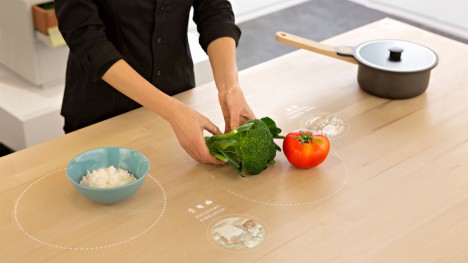
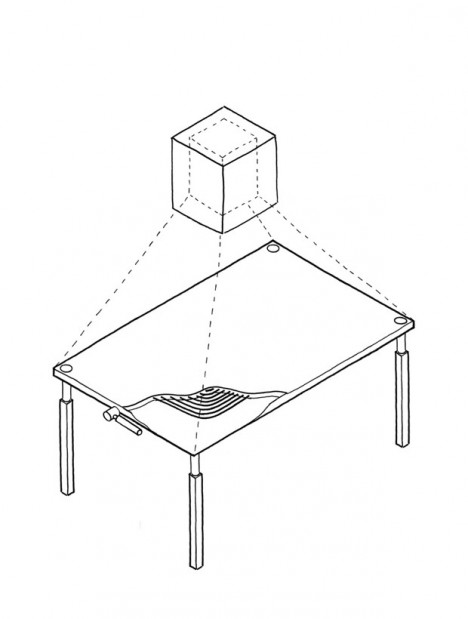
Fast (sharing economy or drone) delivery of food and automated repurchasing means pantries can be slimmer, reducing spatial as well as energy needs. At the core of the design is a multi-functional kitchen surface that includes an induction cooking element and other fancy features: “as the world changes, so will our needs. That means that the table of the future will be designed to do so much more: it’s our preparation surface, hob, dining table, work bench and children’s play area.”

responsive kitchen tabletop design

It is not too much of a stretch to imagine a Kinect-like device hovering over your kitchen island, sensing and responding to your movements below, whether you are in the process of cooking, working or playing with your kids.

kitchen overview

graywater system

It also seems like a logical extension of current conditions and technology to assume kitchens will be better equipped to sort out our recycling and help save water through graywater systems and other measures.

kitchen trash concept

futuristic kitchen pantry concept

Presented in Milan for Design Week in collaboration with IDEO and dozens of industrial design students, this IKEA “exhibition is just one part of an ongoing investigation by IKEA into how people’s relationship to food is changing. It serves to tangibly show what we might be doing in 2025: how we’ll be growing our food, storing it; how we’ll be cooking, eating, living and working in the kitchen.”

Share on Facebook


[ By WebUrbanist in Design & Fixtures & Interiors. ]

[ WebUrbanist | Archives | Galleries | Privacy | TOS ]


WebUrbanist

 
Comments Off on IKEA 2025: Futuristic Modular Kitchen Caters to Food Drones

Posted in Creativity