RSS
 

Posts Tagged ‘Food’

Sustainable Food in the City: 10 Smart Urban Farm Designs

19 Mar

[ By Steph in Architecture & Cities & Urbanism. ]

urban farming korea 3

The world’s largest indoor farm has already proven just how amazingly successful food production can be outside of standard agricultural setups, and these 10 urban farm designs and concepts take the possibilities even further by taking advantage of disused spaces, reaching high into the sky and employing modular, portable, prefabricated configurations.

Jenga-Like Urban Farming Ecosystem by OVA Studio

urban farming jenga 1 urban farming hive inn 2

The Hive-Inn City Farm is a prefabricated, modular farming structure that could brig fresh, locally grown food to busy urban districts. The structure reclaims shipping containers and stacks them in a Jenga-like configuration, with each container dedicated to a specific function from growing a certain type of food to recycling waste. The design echoes that of OVA Studio’s original Hive Inn concept, which uses the containers as individual hotel rooms.

SPARK Senior Living Center and Vertical Farm Concept

urban farming spark 1

urban farming spark 2

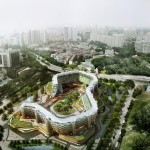
This concept by SPARK Architects solves two problems in one by combining housing for Singapore’s rapidly aging population with urban food production. The ‘home farm’ creates a lush, vibrant garden environment that’s pleasant to live in while also catering specifically to the needs of seniors and using a vertical system to grow edibles, offering part-time employment for residents in the gardens

Mini Harvesting Station for Forgotten City Spaces

urban farming harvesting station

urban farming harvesting station 2

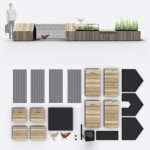
On a smaller scale, various spaces around the city that aren’t being put to good use could serve as temporary locations for miniature farms. The Harvesting Station by Conceptual Devices can grow up to 200 plants within 43 square feet, and is topped with a water harvesting tower that irrigates the plants automatically.

Vertical SkyFarm for Korea

urban farming korea 1

urban farming korea 2

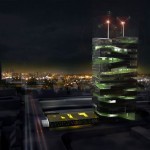
Downtown Seoul, South Korea could become a powerhouse food production center if concepts like Aprilli’s vertical farm are actually built, potentially sustaining a significant number of the city’s large population. The tree-shaped structure frees up space on the ground while raising ‘leaf’ platforms far above street level for access to sunlight, and serves as an iconic symbol of sustainability.

Geodesic Rooftop Greenhosue for Urban Farmers

urban farming geodesic 1

Another small-scale rooftop ming solution is the Globe (Hedron) by Conceptual Devices, a geodesic dome for flat urban rooftops that’s framed with bamboo and functions as an aquaponic system to produce both fish and vegetables. Each greenhouse can feed four families of four year-round.

Next Page – Click Below to Read More:
Sustainable Food In The City 10 Smart Urban Farm Designs

Share on Facebook


[ By Steph in Architecture & Cities & Urbanism. ]

[ WebUrbanist | Archives | Galleries | Privacy | TOS ]


WebUrbanist

 
Comments Off on Sustainable Food in the City: 10 Smart Urban Farm Designs

Posted in Creativity


Yum! Ideas for Fun,Flavorful Food Photos

05 Mar

Taking photos of food is a tasty endeavor (especially if you get to stuff your belly afterwards).

But because food photos are so popular, it can sometimes be hard to get a shot that is not only appetizing but original.

So we’ve put together some unique food photo ideas with tips ranging from backdrops to dainty dishware. Whether you’re a foodie-photo pro or a nom-nom-photo novice, the results will be both yum and fun. Bon appétit!

5 Delish Ideas for Food Photography

(…)
Read the rest of Yum! Ideas for Fun,
Flavorful Food Photos (621 words)


© Taylor for Photojojo, 2015. |
Permalink |
No comment |
Add to
Flavorful Food Photos”>del.icio.us

Post tags:


Photojojo

 
Comments Off on Yum! Ideas for Fun,Flavorful Food Photos

Posted in Equipment


Food Photography – How to Shoot A Beverage With Only Two Lights

30 Jan

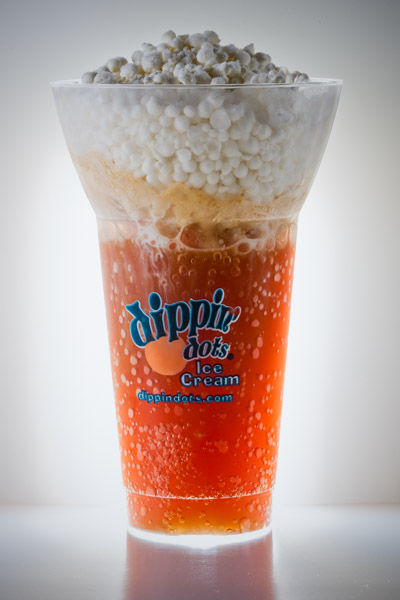
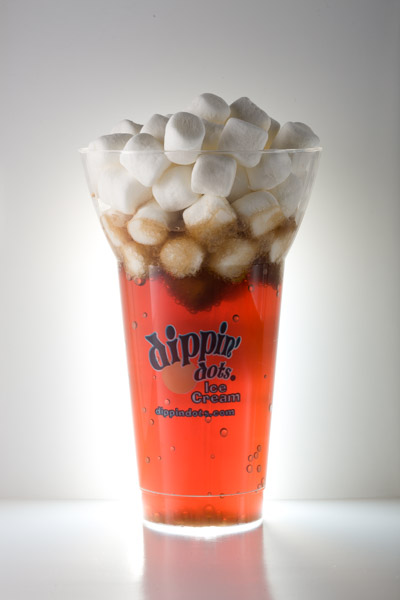
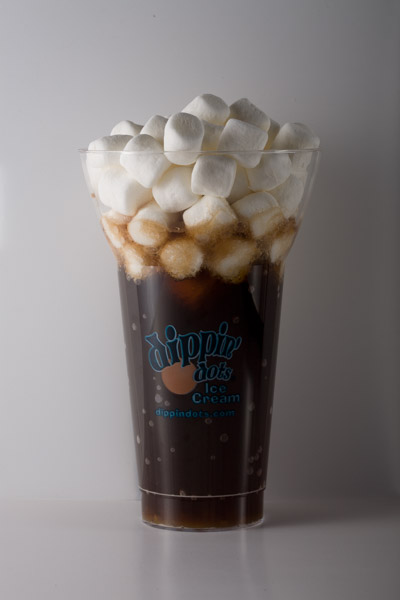
The wonderful thing about food photography is that you can easily turn your apartment, home, or garage into a studio. This image was shot for a local ice cream franchise that offers a different spin on the traditional root beer float. The set was constructed on a coffee table with common household items, and was lit with just two lights.

Final image with real ice cream

Final image

You might be thinking that the featured photo does not look like your normal, every-day root beer float, and you would be right. The ice cream pellets in the float were created by flash freezing ice cream mixed with liquid nitrogen.

Because the ice cream was made up of these small pellets, it melted quickly, leaving little time to get the “money shot”. To solve this problem, I created a stand-in cup that was filled with soda and mini marshmallows. This stand-in allowed me to tweak my lights while the ice cream was safely stored in an ice chest filled with dry ice.

Marshmallow stand-in

Marshmallows used as stand-in for ice cream, during set up phase.

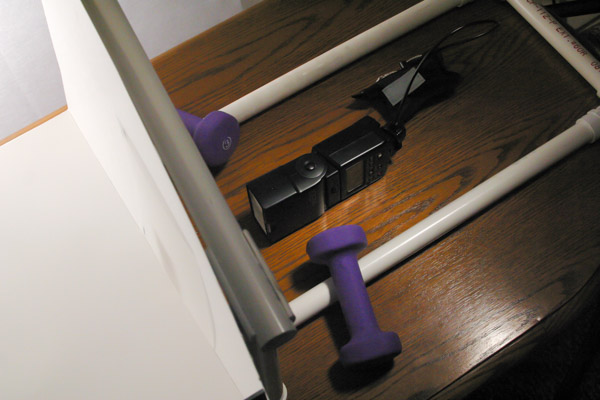
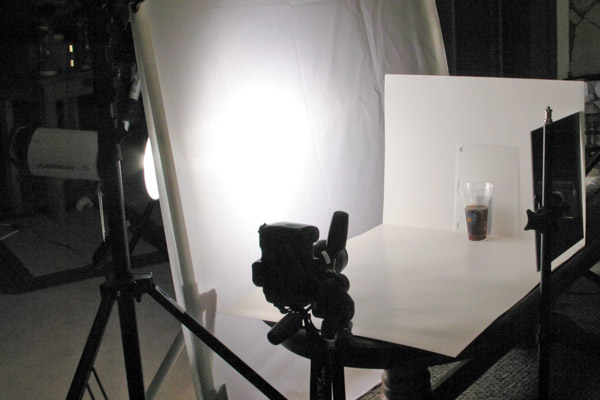
Two pieces of white poster board were used to construct the set. One for the floor and one for the background. The background piece was attached to sections of PVC tubing, which were re-purposed from homemade DIY light panel frames. Small one pound dumbbells were placed on top of the PVC frame to secure it and keep it from moving around.

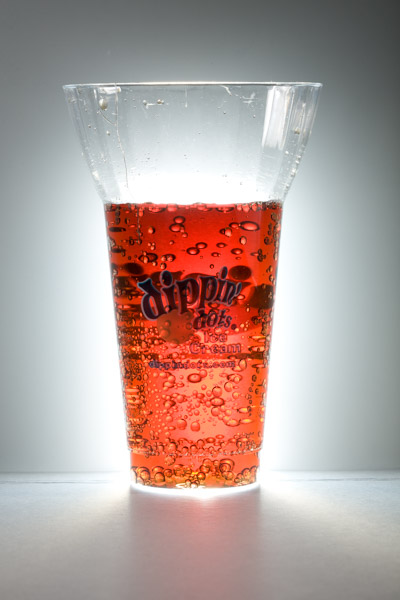
Whenever you photograph beverages, it is important to backlight them in order to show the transparency of the container and/or liquid. That is what makes soda, iced tea and beer ads look so delicious.

For this shot, I decided to achieve the effect by creating a really tiny pseudo-softbox behind the glass of root beer. I started by cutting a rectangular hole in the back of the poster board. Careful attention was taken to insure that the hole was large enough to cover the entire lower portion of the glass, while still being hidden from the camera’s view.

A small off-camera flash fitted with a radio trigger was then placed behind the background. Since the hole and glass were tall and narrow, the strobe was placed on its side, to match.

View from behind background

View of PVC frame and hotshoe flash with radio receiver. Notice how flash is placed on its side, vertically.

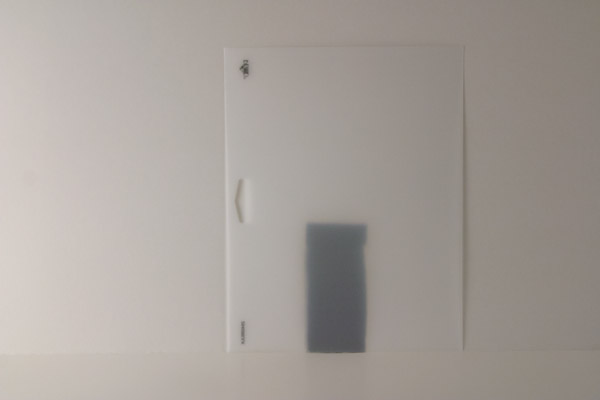
Next, a small sheet of frosted stencil paper purchased from a local hobby store was placed in front of the hole, to evenly diffuse the light across the opening. The translucent properties of the paper also created a soft falloff to the background, as if it were being lit from the front instead of the back.

frosted stencil paper

Frosted stencil paper was butted against the background, behind the glass, to evenly diffuse the light shining through the hole in the poster board. The sheet was moved so that the edges, logo and holes were not seen from the camera’s angle of view.

backlit root beer

First backlight test, before marshmallows were added.

Now that the liquid was backlit, we needed to add a light to illuminate the ice cream. To do this, a large piece of diffusion fabric attached to a PVC frame was placed just out of frame, towards camera left. A strobe light was then placed behind the panel. The diffusion fabric created a large source of illumination, which created a very soft transition from the highlights to the shadows.

float without backlight

Light shining through diffusion panel with back light turned off

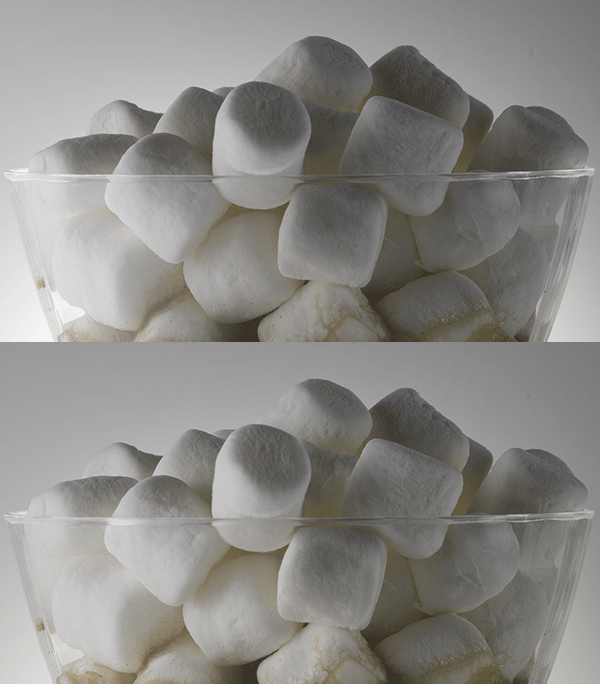
Finally, an acrylic mirror was attached to a light stand and placed just out of frame, towards camera right. The mirror reflected and bounced some of the light from the large panel back into the shadows.

Before and After of Mirror Fill

Mirror fill: Before and After

setup view

View of entire setup.

The final image was shot using a Canon EF 100mm f/2.8 Macro lens. The camera was set to f/14 at ISO 100.

Final image with real ice cream

Final image using real ice cream.

With a little imagination and ingenuity you too can create professional looking food images on a budget, with minimal equipment. In fact, here are a few cheaper alternatives that could have been used to create the image above:

CFL or LED Light Bulbs

The wonderful thing about still photography is that your subject is “still”. This means you can use regular household bulbs to light your scene if you do not have the money for strobes. All you have to do is lower and adjust the shutter speed of your camera, since the bulbs do not emit as much light as a strobe or off-camera flash. Experiment with different bulb wattages, or try alternating the amount of bulbs to create different lighting ratios. Just make sure you have the bulbs placed behind some source of diffusion. By diffusing the lights, you will create a single large light source; otherwise, you will create multiple shadows and weird reflections from the various sources of light.

White Twin Bed Sheet

A white bed sheet is an inexpensive and great form of diffusion. You can attach it to a PVC frame or stretch it between two light stands using spring clamps. The sheets are also great for portrait work. Need a GIANT softbox? Try a king size sheet!

googletag.cmd.push(function() {
tablet_slots.push( googletag.defineSlot( “/1005424/_dPSv4_tab-all-article-bottom_(300×250)”, [300, 250], “pb-ad-78623” ).addService( googletag.pubads() ) ); } );

googletag.cmd.push(function() {
mobile_slots.push( googletag.defineSlot( “/1005424/_dPSv4_mob-all-article-bottom_(300×250)”, [300, 250], “pb-ad-78158” ).addService( googletag.pubads() ) ); } );

The post Food Photography – How to Shoot A Beverage With Only Two Lights by Joel Dryer appeared first on Digital Photography School.


Digital Photography School

 
Comments Off on Food Photography – How to Shoot A Beverage With Only Two Lights

Posted in Photography


Food Futures: Arctic Seed Vault Adds 100,000 New Varieties

30 Jan

[ By WebUrbanist in Architecture & Public & Institutional. ]

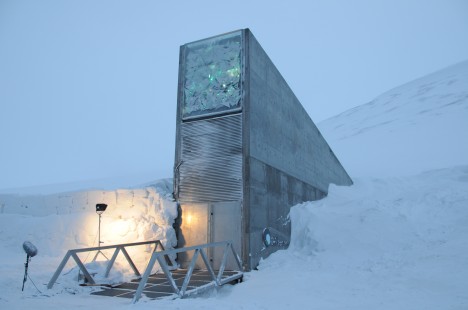
seed vault main entrance

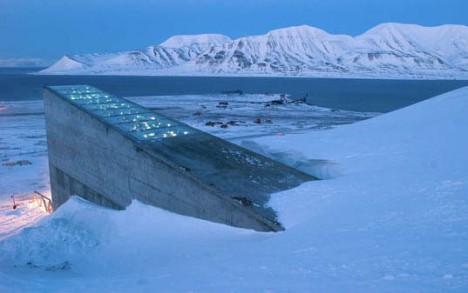
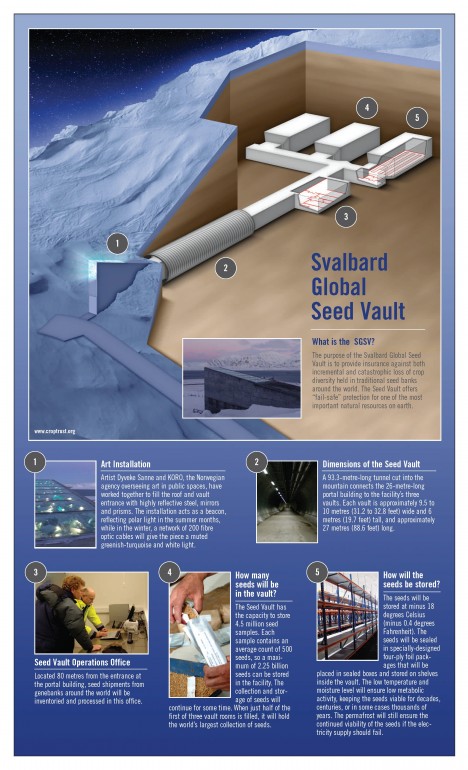
Adding to its existing collection of over 800,000 seeds, the Svalbard Global Seed Vault has just received a series of 4 deliveries representing species from 100 countries around the world. Started in 2008, this ambitious project is designed to safeguard our agricultural heritage for present and future generations and in the face of climate changes, but also to provide a catalog that inventories available types for future accessibility.

seed vault image

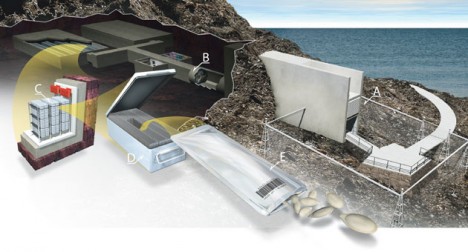
The growing store, managed by the Global Crop Diversity Trust, represents a critical repository of agricultural history and a meat-space (or more apt: seed-space) backup for both global crops and other smaller gene banks scattered around the world.

seed vault interior diagram

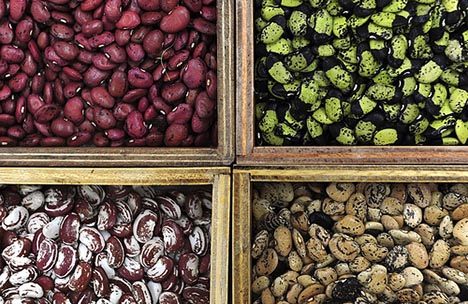
Though the contents were collected in a few cities prior to packaging and reshipment, their types and strains are myriad. “The shipments include types of wheat, barley, corn, sorghum, peal millet, chickpea, groundnut, Asian and African aubergine. Seeds of a number of indigenous African vegetables, including okra, amaranth, spider plant and jute mallow are also being deposited.”

seed vault interior stacks

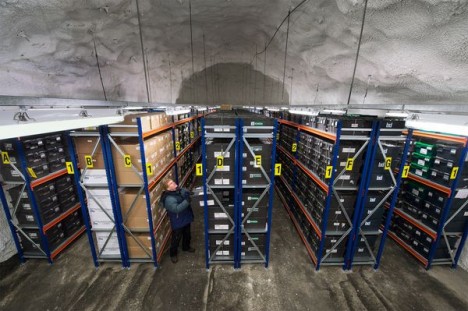
Svalbard, is a Norwegian archipelago in the Arctic Ocean. Situated north of mainland Europe, it is about midway between continental Norway and the North Pole. The seed vault is cut into rock in this remote location, and the seeds within it continuously refrigerated for long-term storage. The vault structure itself, as currently constructed, can theoretically store up to 2.5 billion seeds representing 4.5 million varieties.

seed vault types varieties

There are many dimensions to the vault trust’s mission. According to the trust, “preserving different food plant varieties will help breed and develop crops that can withstand a changing climate, for example, by being more drought resistant or able to cope with higher temperatures” As a form of genetic wealth, crop diversity provides security for the future of food for farmers and world citizens alike. The GCDT is seeking additional donations from individuals, institutions, businesses and governments to maintain and grow its endowment (approaching $ 1 billion USD) for the sake of humanity and in the face of climate change.

seed vault images diagram

Fortunately for those who worry about the future, there are other repositories around the world providing a cloud-like backup network bolstering the mission of this seed bank. “Worldwide, more than 1,700 genebanks hold collections of food crops for safekeeping, yet many of these are vulnerable, exposed not only to natural catastrophes and war, but also to avoidable disasters, such as lack of funding or poor management. Something as mundane as a poorly functioning freezer can ruin an entire collection. And the loss of a crop variety is as irreversible as the extinction of a dinosaur, animal or any form of life.”

Share on Facebook


[ By WebUrbanist in Architecture & Public & Institutional. ]

[ WebUrbanist | Archives | Galleries | Privacy | TOS ]


WebUrbanist

 
Comments Off on Food Futures: Arctic Seed Vault Adds 100,000 New Varieties

Posted in Creativity


Restaurant Menu Food Photography Using Natural Light

22 Dec

There are many ways to approach food and drink photography, from big budget shoots with food stylists and complicated lighting setups, to low budget natural lighting setups. For a formal restaurant photo shoot, which setup would you choose? I’ve had successes doing both types of photo shoots, but in this particular example, I’ll show you super low budget ways to pull off professional, tasty-looking food photos appropriate for a menu.

restaurant photography tutorial natural lighting

Client Brief

Based in Seattle, this client is an American restaurant going in a new direction with the hiring of a new chef and his decision to revamp the menu into one with distinctive Southern and Creole flavor.  This client reached out in need of 10-20 menu photos for use in their press release announcing the rebranding efforts. I had photographed their interiors previously and knew that the multi-room restaurant and bar was vintage themed with diverse backgrounds, patterns, and lighting schemes throughout the restaurant. Based on the budgeted resources for this shoot, I decided against making it a big production with a food stylist and opted for a low budget approach.

Planned Setup

Initially, I planned a simple lighting setup using a Canon 580 EX-II Speedlite, a shoot-through umbrella, Pocket Wizards, and a compact Manfrotto 5001B Nano light stand. This is my favorite relatively compact and affordable lighting setup for everything from quick portraits to food and drink photography. However, I realized when I got onsite that I was missing a crucial piece of my setup: the flash and umbrella mounting adapter, meaning I had no way of connecting my flash and umbrella to the lighting stand. Oops…time to improvise!

Actual Setup

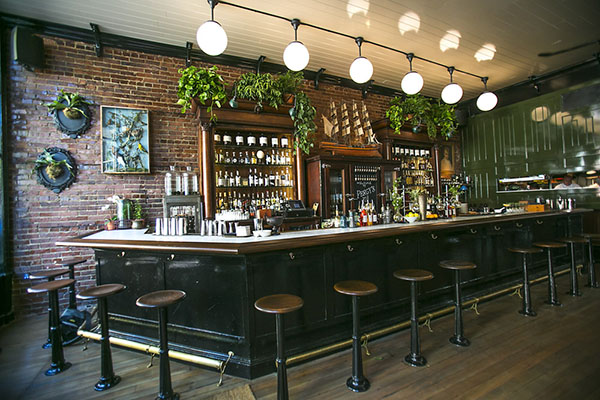
Since I had photographed the interiors of the venue before and knew that there were two areas that had copious natural lighting: the bar area near the front entrance with huge floor to ceiling windows, and a large room with glass panels for a ceiling. Luckily, it was a typical cloudy day in Seattle, so there was nice diffused natural light flowing through the ceiling, making these two areas the perfect spot for food and drink photography without any flash or external lighting.

In terms of gear, I shot all of these photos with a Canon 6D camera and a 24-70mm f/2.8 lens. I also used the 580 EXII Speedlite on occasion when I needed some fill light.

Composing and Shooting

I photograph a lot of restaurant interiors and as a result I’ve learned that there is a lot of thought and strategy that goes into the design of the space. As a result, I like to find distinct elements of the restaurant to fuse into the food photos that I create. This does two things: 1) it highlights unique features that a designer or architect spent a lot of time working on, and 2) incorporating aspects unique to the restaurant places the dishes in different atmospheres, thus creating more diverse imagery.

Photos at the Bar

Cocktail photography

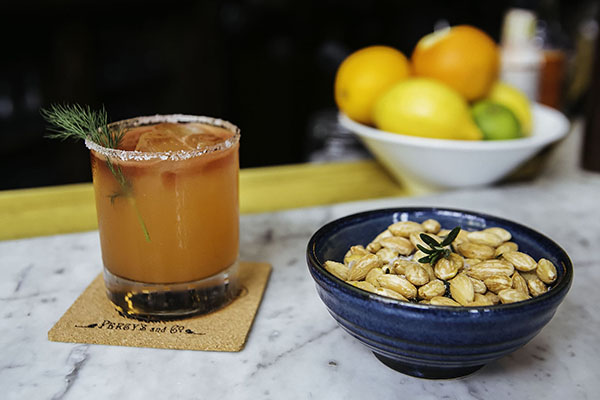
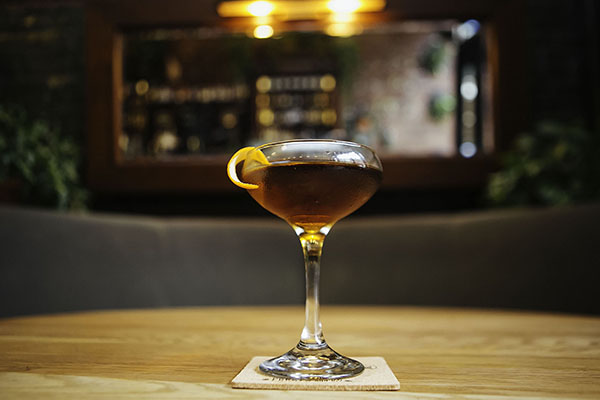
I started off with two appetizer and cocktail dishes, photographing them at the bar that was naturally lit by the huge floor to ceiling window. The white granite bar top was a nice contrast to the warm colors of the food and drinks. I shot this first image at f/4 to keep the main elements of the glass and bowl of nuts mostly in focus. The first few shots looked like they were missing some depth, so on a whim I moved the pairing in front of a bowl of citrus fruits placed at the bar. The color and placement of the fruits ended up being nice complimenting elements, contributing to the image below.

restaurant photography tutorial natural lighting

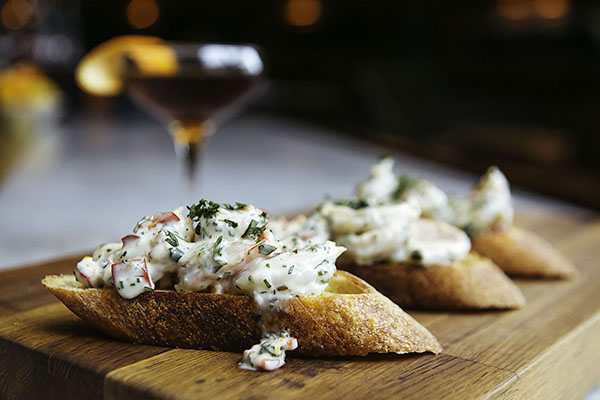
This second dish that was shot at the bar was presented on a super long wooden cutting board. It was actually too long for such a small appetizer, and I solved this problem by zooming in to the image and shooting at f/3.2 to keep the focus on the main element: the chunky shrimp remoulade topping the bread!

remoulade photography

Photos in the Dining Area

Percy's in Ballard, Seattle, WA

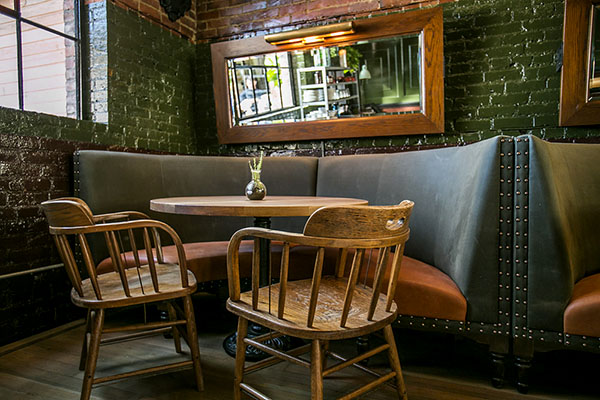
Another intriguing section of the restaurant that offered nice, albeit darker, lighting was the dining area. Featuring an illuminated mirror behind circular booth seats and a light colored wooden table, this was a great space to utilize for cocktail shots. This particular beverage was shot at f/2.8 to keep the glass and its elements in focus and give a nice blur of the mirror background.

FINAL-Cocktail

Photos on the Patio

FINAL-Percys 01

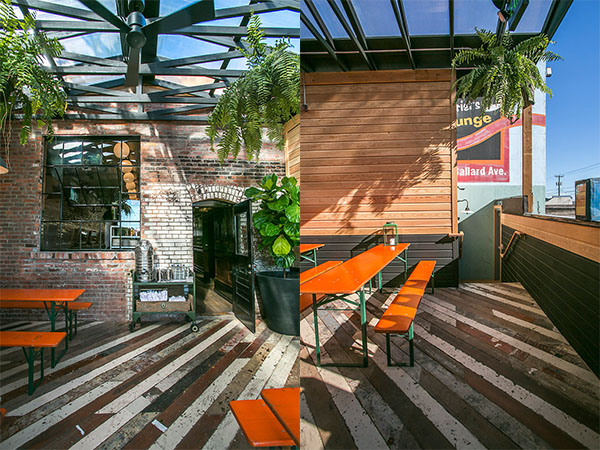
Finally, the bulk of the food and drink photos I shot were taken in the aforementioned covered patio area in the back. As you can see from the images below, the space has a huge glass ceiling, brick walls, long colored picnic tables, and a nicely textured wooden floor panels. All of these elements made for great textures and backgrounds for shooting each dish in a variety of settings.

Final-Kale

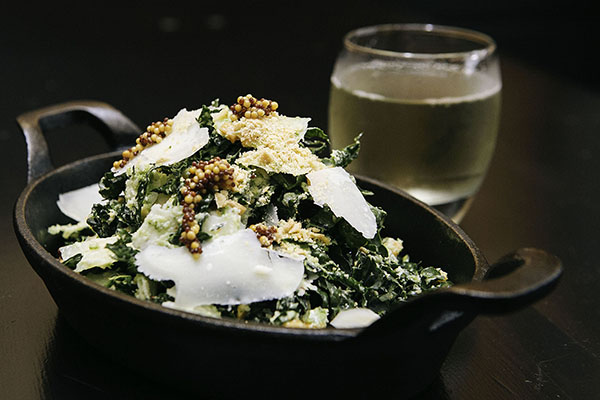
Salads can be a bit tricky to shoot because there can be so many competing elements to focus on. In the case of this kale salad, I chose an aperture of f/5.6 to make sure more parts of the salad were in focus other than the shredded cheese and mustard seeds.

Final-Chicken

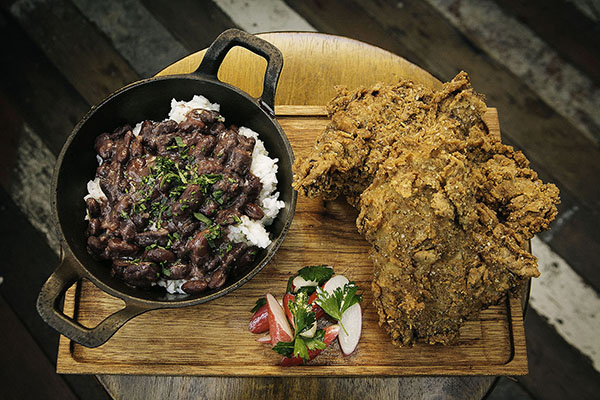
The winning dish of them all was this epic made-from-scratch fried chicken entree with rice and beans. Again, lots of different parts of this dish competing for attention, so I used an aperture of f/8 to make sure the most important parts were clearly in focus.

Wrap Up

Overall, this photo shoot of 10 dishes, each paired with cocktails took me about two hours to photograph. I had a bit of a challenge by forgetting one key piece of my lighting kit, but was able to improvise thanks to copious natural lighting and using my handy 580 EXII Speedlite. All photos received light post-processing treatment and were turned over the next day for the client.

What do you think? Is a lighting kit essential for professional food photography, or is natural lighting the way to go?

googletag.cmd.push(function() {
tablet_slots.push( googletag.defineSlot( “/1005424/_dPSv4_tab-all-article-bottom_(300×250)”, [300, 250], “pb-ad-78623” ).addService( googletag.pubads() ) ); } );

googletag.cmd.push(function() {
mobile_slots.push( googletag.defineSlot( “/1005424/_dPSv4_mob-all-article-bottom_(300×250)”, [300, 250], “pb-ad-78158” ).addService( googletag.pubads() ) ); } );

The post Restaurant Menu Food Photography Using Natural Light by Suzi Pratt appeared first on Digital Photography School.


Digital Photography School

 
Comments Off on Restaurant Menu Food Photography Using Natural Light

Posted in Photography


Weekly Photography Challenge – Festive Food

20 Dec

Well it’s that time of the year again. We spend days cooking and preparing for the big feast, then we stuff ourselves and retire to the sofa. Yup it’s holiday time.

Grant Frederiksen

By Grant Frederiksen

Whichever religion or faith you practice, and wherever you live – there is likely some sort of festivities going on this month. I’m spending the holidays in Nicaragua so it will be very different that back home in Canada with my family. I’m sure we’ll have a big meal but it may not be the traditional turkey with all the trimmings – it could look like grilled meat of some kind with rice and beans.

View this set of mouthwatering holiday food photos on dPS.

Your job this go around for the weekly photography challenge is to photograph your festive food.

We have lots of great articles here on dPS to help you out with food photography tips including:

  • 10 Tips to Improve Your Food Photography
  • Using Focus Creatively with Food Photography
  • 5 Tips to Seriously Improve Your Food Photography Techniques
  • 8 Steps to Create Mouth Watering Food Photography
  • 11 Quick Food Photography Tips to Make Mouth Watering Images

Need more examples?

FLORENTIN Marius

By FLORENTIN Marius

Randy OHC

By Randy OHC

FLORENTIN Marius

By FLORENTIN Marius

Guilherme Kardel

By Guilherme Kardel

Orangejon

By orangejon

Sabina\?????? Panayotova\??????????

By Sabina\?????? Panayotova\??????????

Share your festive food images here:

Simply upload your shot into the comment field (look for the little camera icon in the Disqus comments section) and they’ll get embedded for us all to see or if you’d prefer upload them to your favourite photo sharing site and leave the link to them. Show me your best images in this week’s challenge. Sometimes it takes a while for an image to appear so be patient and try not to post the same image twice.

googletag.cmd.push(function() {
tablet_slots.push( googletag.defineSlot( “/1005424/_dPSv4_tab-all-article-bottom_(300×250)”, [300, 250], “pb-ad-78623” ).addService( googletag.pubads() ) ); } );

googletag.cmd.push(function() {
mobile_slots.push( googletag.defineSlot( “/1005424/_dPSv4_mob-all-article-bottom_(300×250)”, [300, 250], “pb-ad-78158” ).addService( googletag.pubads() ) ); } );

The post Weekly Photography Challenge – Festive Food by Darlene Hildebrandt appeared first on Digital Photography School.


Digital Photography School

 
Comments Off on Weekly Photography Challenge – Festive Food

Posted in Photography


25 Mouthwatering Holiday Food Photos to Wet Your Appetite

19 Dec

With the holiday season upon us that also means big family gatherings and festive meals. Food photography is a great way to capture some of the festivities and color of the season. Whether you celebrate Christmas, Hanukkah, Kwanzaa, Ramadan, Omisoka or something else – likely it involves food.

Enjoy this set of holiday food photos to help you get in the mood or maybe even get some menu or photo ideas or both!

Photograph Dream House by Siggi B on 500px

Dream House by Siggi B on 500px

Photograph Christmas tiramisu by Darius Dzinnik on 500px Christmas tiramisu by Darius Dzinnik on 500px

Photograph Untitled by Julia Hernandez on 500px

Untitled by Julia Hernandez on 500px

Photograph x mas cocktail by Peter Harasty on 500px x mas cocktail by Peter Harasty on 500px

Photograph Hot drink with whipped cream for Christmas by Beatrix Boros on 500px

Hot drink with whipped cream for Christmas by Beatrix Boros on 500px

Photograph Christmas gingerbread cookies by Sergey Kumer on 500px Christmas gingerbread cookies by Sergey Kumer on 500px

Photograph Red Velvet Christmas Pancakes by Sebrina Wareham on 500px

Red Velvet Christmas Pancakes by Sebrina Wareham on 500px

Photograph Christmas duck by Darius Dzinnik on 500px Christmas duck by Darius Dzinnik on 500px

Photograph Roasted turkey with fruits by Elena Shashkina on 500px

Roasted turkey with fruits by Elena Shashkina on 500px

Photograph Traditional Sliced Honey Glazed Ham by Brent Hofacker on 500px Traditional Sliced Honey Glazed Ham by Brent Hofacker on 500px

Photograph festive sandwiches by Jevgeni Proshin on 500px

festive sandwiches by Jevgeni Proshin on 500px

Photograph Champagne glass by Vadim Kolobanov on 500px Champagne glass by Vadim Kolobanov on 500px

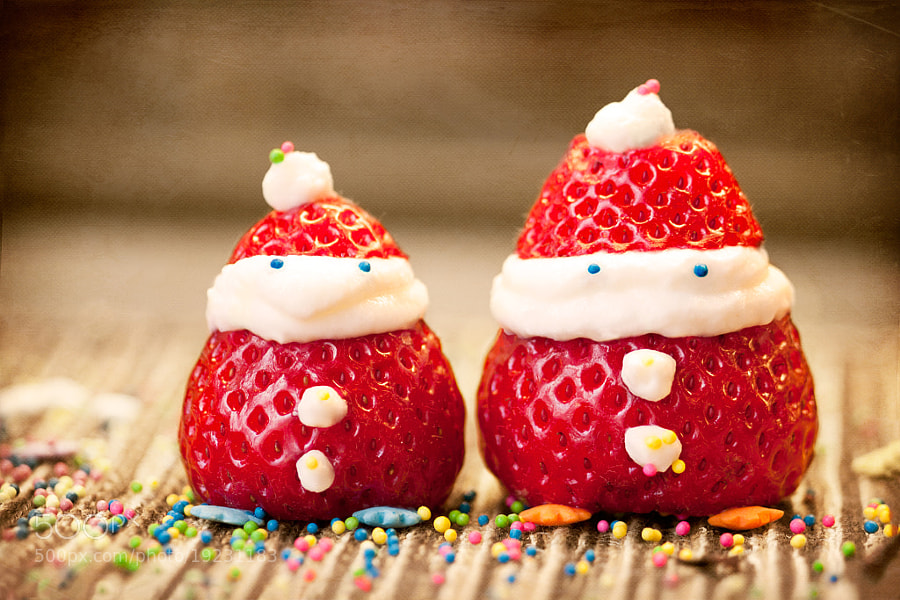
Photograph Santa Berries  by Tetyana Kovyrina on 500px

Santa Berries by Tetyana Kovyrina on 500px

Photograph ????????? ? ????????? ???? by Natalia Lisovskaya on 500px ????????? ? ????????? ???? by Natalia Lisovskaya on 500px

Photograph Homemade Festive Cinnamon Eggnog by Brent Hofacker on 500px

Homemade Festive Cinnamon Eggnog by Brent Hofacker on 500px

Photograph Christmas traditionals by Delia Cozma on 500px Christmas traditionals by Delia Cozma on 500px

Photograph Tangerines on a dark blue background - New Year by Anastasiya Kononenko on 500px

Tangerines on a dark blue background – New Year by Anastasiya Kononenko on 500px

Photograph ?????????? ?????????? by Natalia Lisovskaya on 500px ?????????? ?????????? by Natalia Lisovskaya on 500px

Photograph Sweets for Christmas by Bettina  on 500px

Sweets for Christmas by Bettina on 500px

Photograph Whishes by Szabolcs Szlavik on 500px Whishes by Szabolcs Szlavik on 500px

Photograph Jam Tarts by Aisha Yusaf on 500px

Jam Tarts by Aisha Yusaf on 500px

Photograph Christmas Fruits by Pete Franks on 500px Christmas Fruits by Pete Franks on 500px

Photograph Christmas by Danilo Fisichella on 500px

Christmas by Danilo Fisichella on 500px

Photograph Navidad by Gary Alvarado on 500px

Navidad by Gary Alvarado on 500px

Stéphanie Kilgast

By Stéphanie Kilgast

googletag.cmd.push(function() {
tablet_slots.push( googletag.defineSlot( “/1005424/_dPSv4_tab-all-article-bottom_(300×250)”, [300, 250], “pb-ad-78623” ).addService( googletag.pubads() ) ); } );

googletag.cmd.push(function() {
mobile_slots.push( googletag.defineSlot( “/1005424/_dPSv4_mob-all-article-bottom_(300×250)”, [300, 250], “pb-ad-78158” ).addService( googletag.pubads() ) ); } );

The post 25 Mouthwatering Holiday Food Photos to Wet Your Appetite by Darlene Hildebrandt appeared first on Digital Photography School.


Digital Photography School

 
Comments Off on 25 Mouthwatering Holiday Food Photos to Wet Your Appetite

Posted in Photography


Urban Transformer: Bus Unfolds into Mobile Fresh Food Market

07 Dec

[ By WebUrbanist in Technology & Vehicles & Mods. ]

mobile food market bus

Bringing healthy and organic fruits and vegetables into low-income areas of Toronto lacking grocery stores, this converted bus is much more than a normal food truck – it looks like an ordinary vehicle until it stops and deploys its colorfully-stocked shelves (images by Laura Berman).

converted food truck side

As in many cities, there are ‘food deserts’ in Toronto in which it is hard to find fresh seasonal produce. Using a vehicle donated by the Toronto Transit Commission, LGA Architectural Planners helped convert this vehicle to address this issue.

Mobile Good Food Market bus launch

“Even in a city as dynamic as Toronto, there remain neighbourhoods where residents are unable to access the foods essential to a healthy diet. This happens for a variety of reasons, including low-income, lack of access to public transit, and long distances to groceries and markets. Such conditions make it extremely difficult for individuals and families without access to a vehicle to find and purchase healthy foods. Senior citizens who might be less mobile are hit especially hard by this type of isolation.”

mobile food desert vehicle

Lettuce, berries, okra, yucca, broccoli, apples and more fill the fold-out shelves extending out from the side of the Mobile Good Food Market. Inside, bins of additional veggies and fruits can be accessed by walking or wheelchair, a handy feature for cold and wet weather.

mobile food interior exterior

The project  was commissioned by FoodShare Toronto in partnership with the City of Toronto and United Way Toronto in a joint effort to help supplement unhealthy local options in neighborhoods starved for good and fresh foods.

Mobile Good Food Market bus launch

“The design also offered the opportunity to shop from the inside in inclement weather,” notes Dean Goodman of LGA, pointing out that as a former Wheel-Trans bus, ramps for ease of entry and exit were already in place. “Good food is beautiful when displayed well, so when we decided we wanted this to be a feature we worked out the mechanism so one person could fold out the shelves, restock as necessary and display the food so it was attractive.””

Share on Facebook


[ By WebUrbanist in Technology & Vehicles & Mods. ]

[ WebUrbanist | Archives | Galleries | Privacy | TOS ]


WebUrbanist

 
Comments Off on Urban Transformer: Bus Unfolds into Mobile Fresh Food Market

Posted in Creativity


10 Tips to Improve Your Food Photography

25 Aug

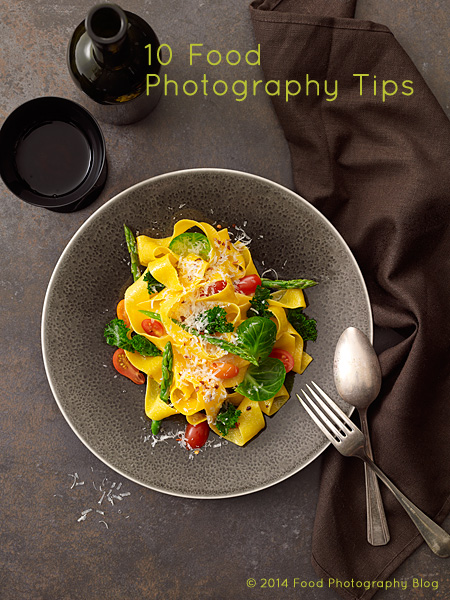
Have you ever tried shooting food? If you have, then you know how hard this can be. There are so many things you have to think about while making sure your food looks as fresh as it can be at the same time. Here is a beginner’s guide to help you get the food shots you’ve always wanted.
01 Food Photography Tips

#1. Do NOT use your on-camera flash

You probably know this already, but I just have to mention this here to make sure. After all, this is Digital Photography School. Your on-camera flash looks horrible on food. You will get loads of specular highlights on any area that has moisture, and these specular highlights are not only distracting, but will make your food look greasy instead of moist. You will also get strange and unattractive shadows either on your food, on the plate, or both. On-camera flash is so harsh. Food usually looks its best with soft light. The shot below on the right has soft backlight coming from a window in a restaurant.

02 No On Camera Flash

#2. Shoot on a tripod

Ok, I just heard all the booing and hissing from this tip but, since I just told you not to use your on-camera flash, you are going to have to shoot using a tripod instead. I actually love shooting on a tripod and I use one anytime I can. Try it! It will completely free up your hands to style your dish, in order to work on your shot. I am a commercial food photographer, so I am either shooting in my studio or some other controlled environment where I can use tripods, so this tip is for those situations.

03 Use a Tripod

Notice in the image above right, there is a a nifty tripod arm extension enabling me to get the camera out over the set. If you are trying to hand hold a camera AND shoot overhead, just schedule an appointment with your chiropractor right now! Not only is it back-breaking to shoot overhead like that, but it’s impossible to line up your shot exactly the same way each time you take a shot. Lock it down on a tripod, focus your set once, then start styling your food.

#3. Or use a high ISO instead of a tripod (last resort)

Now, if you can’t shoot on a tripod for some reason, for example maybe you are shooting an event and have to gets shots of the food, then you have the option of raising your ISO setting on your camera to accommodate for the lack of light. I use this as a last resort. You must keep in mind that raising your ISO will increase the digital noise in your file. Depending on your camera, the digital noise could be very severe if you are in a very low light situation. See in the image below the difference between shooting at ISO 100 and ISO 1600 on a Canon 5D Mark II.

04 High ISO Grain2

For the most part, you can get away with digital noise when using images for the web because of the lower resolution. However, if you need to have the image printed, then this is where you might run into problems with the digital noise. It can be very hard to correct out of the image AND keep the image in sharp focus at the same time. Applications that can correct digital noise in software do so by softening the edges of the pixels creating the noise. This gives the appearance of the image being a little soft with the focus afterwards.

#4. Please use props – but not too many

I see so many food blogs with shots of food in a plate, or a bowl, with nothing else in the shot. This to me is just a documentation of a food dish. There’s no story behind the image when you have no props. I get it – it takes more time. But, if you start real simple, props can dramatically improve your photos. Notice in the shots below that all the props are secondary – meaning the first thing your eye goes to is the pasta in both shots. All the props are low key and not distracting. It’s still all about the food, but it gives the food some visual support to get your viewer to look at your photos. There is a fine balance between just the right amount and too many props that take your eye away from the food.

05 Props Pasta Dishes

You are telling a story with your props. The story of the two images above is that these are nice pasta dinners. That’s it, real simple. You need to use the placement of your props to get the viewer’s eye where you want them to look. The first thing we see in an image is text, if there is any. Second will be a blaring highlight or a very bright color. Third, we look at what’s in focus. Your props should guide your viewer’s eye to look exactly where you want, and eliminate any distractions along the way. If you have a blaring highlight on something that is catching your eye, then guess what, your viewer is going be looking at that same highlight too, so get rid of it, or put a prop in front of it. Get your viewer to look at your food.

#5. Stay away from bold patterns on plates and fabrics

Food photography is all about creating an image that naturally has the viewer’s eye looking right at your beautiful food. As I mentioned above, all the fabulous props in the shot are just the supporting actors in your story. If you have a crazy pattern on a plate, your reader is going to look at the crazy pattern first, then your food (hopefully) second. Your story is not about the plate. Your story is about your food. You might be in love with that pattern on the plate but that’s probably not what your image is about. Beloow is a shot before props have placed, to give you a sense of how the food looks on different plates.

Biscotti Plates

I will test plates with food just like this to find the right one for the photo I’m doing. The problem with patterns is there will be areas of the pattern that will be in focus and competing with the food. A colored plate can be great as long as the color is complementary or a nice contrasting color. Then, white or cream will always make your food stand out.

The same rules generally applies to table clothes and fabrics as well. We never use bold patterns on the surfaces we shoot on. I’m saying “we” here because when I am shooting a job I have a food stylist AND a prop stylist. We all work together in making a shot for our client that is all about their food. When you are shooting on fabric with a bold pattern, that bold pattern will absolutely compete with your food. It’s just human nature. Our eyes are so easily distracted and you only have a few seconds to get your point across to your viewer, don’t blow it on some crazy pattern on the table.

# 6. Get vertical!

07 Get Vertical

Many people take all their photos in a horizontal format. I understand why, it’s a lot more comfortable to work that way. When shooting vertically, all your settings are now on the side and if you’re on a tripod you have to keep cranking your head over to see them. Well, you just have to suffer through it! Shooting vertically can give you nice depth in a photo from foreground to background. This also enables you to have large photos on your blog, if you have one. Shooting vertically can give you room for text like a title. Many sharing sites like Pinterest are better with vertical shots, so think about how this image will be shared and go from there. Mix up the images on your blog. Have some vertical photos and some horizontal ones as well. If you do everything the same way it can get very boring.

#7. Go ahead, crop that plate

The other habit I see a lot of new students doing is being afraid to crop into plates. Here are two shots. One full frame and one cropped in. Now, of course it depends on how the images will be used, and sometimes you might even need two formats of the image, but play around with cropping an image to see if you like it better. It’s okY to crop the plate. You are not selling the plate, remember, so show off that food a little more.

08 Crop 1

Now for the cropped version – a lot fewer distractions and it’s all about the food.

09 Crop 2

#8 – Back up and zoom in

Every student wants to know, what is the best lens for shooting food. For my 35mm DSLR (full frame), I’m always using my 100mm macro lens. I use this about 90% of the time. You really can get great depth of field with that lens. Here is shot I took with three lenses. Many people have a 50mm lens because that is what came with their camera. The only time I use that lens is when there are several dishes on the table that I have to get in one shot. That type of shot requires a wider angle lens, like the 50mm or the 35mm. When I am only focusing on one dish in the shot, I will always use my 100mm macro lens.

10 3 lenses

When using wider lenses, like the 50mm or the 35mm lens, you will need more background in your shot. Also, the wider the angle of your lens, the harder it will be to get very shallow depth of field, unless you get real close to your food, and open up that lens by opening your aperture. Depth of field is referring to how much is in focus versus out of focus in your shot. Which leads me to the next tip…

#9. Use a small f-stop number to get shallow depth of field

The f-stop, or aperture, controls the opening of your lens that lets light into the camera. The f-stop also controls how much of your image will be in focus, and how much will be out of focus.

Here is an f-stop grid showing the most common f-stops that many lenses have. Some lenses don’t open as wide as f/1.4. It seems to be that the more expensive the lens, the wider the f-stop. For instance, the higher end 50mm lenses will go to f/1.2, but you’ll pay for that in cost.

11 Apertures

When you are just starting out, f-stops, or apertures, are very confusing to learn about. You see, the smaller the f-stop number, the LARGER the opening. It’s very counter intuitive. What I always say in class is, the smaller the f-stop number, the smaller your depth of field and the larger the f-stop number, the larger your depth of field. This gives you such creative control with your images. I always suggest you shoot your food with a very “shallow depth of field”. This means less things in focus. See the two images below:

12 Apertures examples

The image on the left has shallow dept of field because I am shooting at f/5.6 on a 100mm macro lens. This shot is all about the olive oil, so that was the only thing I wanted in focus. The shot on the right was shot at f/16 and has a much larger depth of field (more things in focus). I find this distracting. There’s too much in focus and your eye bounces all over the place (see more in my article: Using Focus Creatively with Food Photography. You use your f-stop to control what you want to show in focus. As a very general guide, the f-stops for shallow depth of field are usually from about f/5.6 and below (this can also depend on how wide your lens is as well).

Now, if I was photographing a Thanksgiving table with loads of dishes on it that I wanted in focus, then I would definitely use an f-stop like f/16 or even f/22 with a wider lens, like a 50mm or even a 35mm lens.

#10. Keep your food looking fresh on set

Here I am painting a steak with butter to make it look nice and moist. I’m using butter because when they serve this steak at the restaurant they have melted butter all over it. You can also use vegetable oil, or water and glycerin, or just water on foods. If the food has an oily or fatty content, like meats and poultry do, then use vegetable oil. If you are keeping salad moist, you can just spray it with water.

When shooting burgers, I am always painting an TON of oil on the beef to keep it looking really juicy. There is nothing worse than a dry looking steak. Yuck. Who wants to eat that?

13 Food Fresh

To keep foods that can oxidize looking fresh, use Fruit Fresh or Accent on them. You can usually find these in the spice section of the super markets. I highly suggest you do not eat the foods that you treat with this stuff. It’s actually MSG. I use it two ways. I will soak things that turn brown, like artichokes and pears in a solution of 2 cups water with a few tablespoons of the MSG. The other way I use it is by taking the same solution and painting it onto the food once it’s on set to make sure it doesn’t turn brown.

When I tell people this trick they say, “oh, you can just use lemon”. Lemon works, just know that you will have to keep reapplying it.

14 Food Fresh

This image below would not be possible without using Accent or Fruit Fresh. Artichokes turn brown right away when you cut into them. I soaked both sides in a bath of a lot of Accent and water. I soaked them for 30 minutes too. This artichoke didn’t turn brown for hours!

15 Artichoke

All right! There’s so much more I can say here but hopefully some of these tips will inspire you to try to take your food photos to the next level.

For more food related articles check these out:

  • Food Photography Tips – Some Video Tutorials
  • 5 Tips to Seriously Improve Your Food Photography Techniques
  • 8 Steps to Create Mouth Watering Food Photography
  • 11 Quick Food Photography Tips to Make Mouth Watering Images
  • Snapn Food Guide a sister dPS ebook company

The post 10 Tips to Improve Your Food Photography by Christina Peters appeared first on Digital Photography School.


Digital Photography School

 
Comments Off on 10 Tips to Improve Your Food Photography

Posted in Photography


Using Focus Creatively with Food Photography

30 May

There are ways to use selective focus, or shallow depth of field, to completely control how you look at an image. Selective focus is using a large aperture, like f/4.5 or wider, to show only a small part of your image in focus. You can control where you want your viewer to look in your image by using this technique.

Eliminate Distracting Elements

If you have a potentially busy scene or environment, you can use selective focus to calm things down a bit and get your viewer to look where you want.

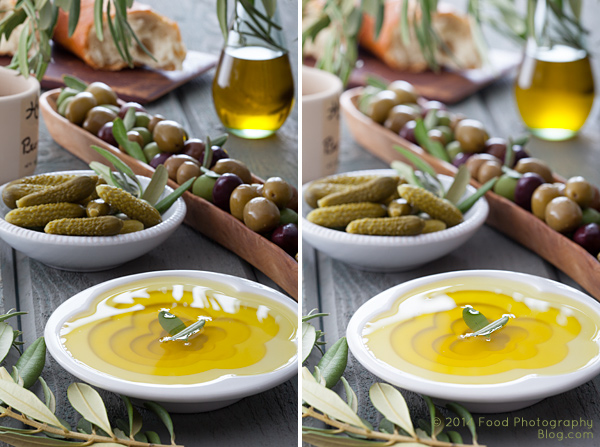
Selected Focus Olives

The left image was shot at f/16 while the right image was shot at f/5.6

When you compare the two images above pay attention to what you are looking at first, and how your eye moves around the images. There’s a lot going on in the image on the left. You really don’t know where to look at first. In the image on the right your eye goes right to the olive oil in the front, which is exactly where I wanted you to look. I wanted to make sure you didn’t get distracted by the text on the jar on the left side, so I focused on the garnish in the olive oil and blurred everything else out. I wanted the first read to be the olive oil, then all other items become secondary. Your eyes naturally look at what is in focus in an image.

Which Element is the Hero?

You can use focus in some shots to clearly show which element the image is about – this element is your hero element. In food photography we call this the hero food.

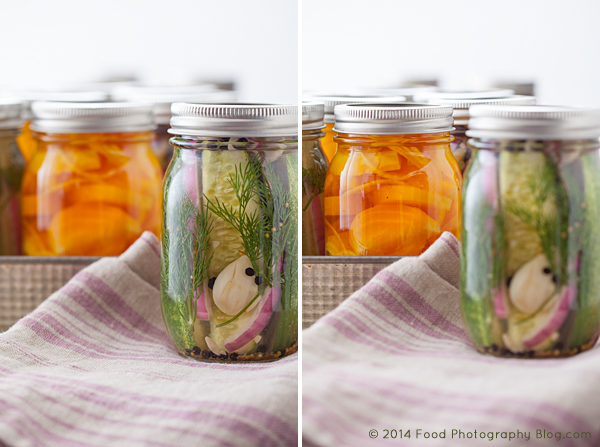
Who Is Your Hero

In each shot the focus is shifted to change which jar of pickles is the hero jar, the one I want you to look at.

Here are some pickles that I made. You can use selective focus to tell the viewer where they should be looking. If this image was for a recipe of dill pickles, then you would use the image on the left. If this image was for a recipe on golden pickled beets, then you’d use the image on the right.

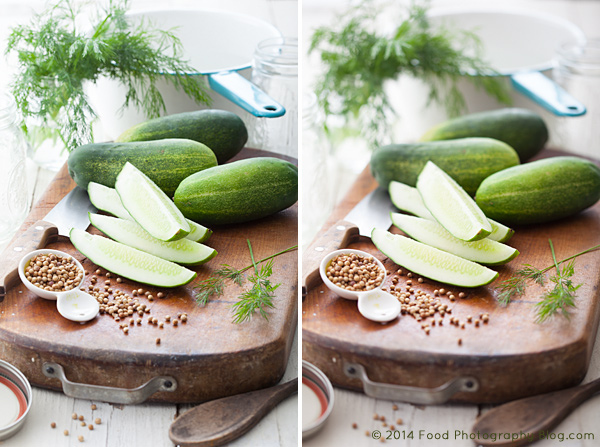
Pick Your Focus Point

Pick Your Focus

The image on the left was shot at f/8 while the image on the right was shot at f/4.5

I focused on the dill pickle laying on top of the cut pickles. In the left image you really can’t tell where my focus point is so your eye goes all over the place. In the image on the right, it’s a little more obvious. My hero food is the cut dill pickles.

All the images including pickles were styled by my good friend and prop stylist, Amy Paliwoda. We work on a lot of jobs together. Amy is always talking about using props to tell your story. It’s my job as the photographer to make sure I use the proper aperture to have the props help with the story, not cause distractions. With everything in focus, a simple prop can take away from your story. Once you pick your focus, take several shots at different apertures to see which one works the best to tell your story.

When One Aperture Isn’t Enough

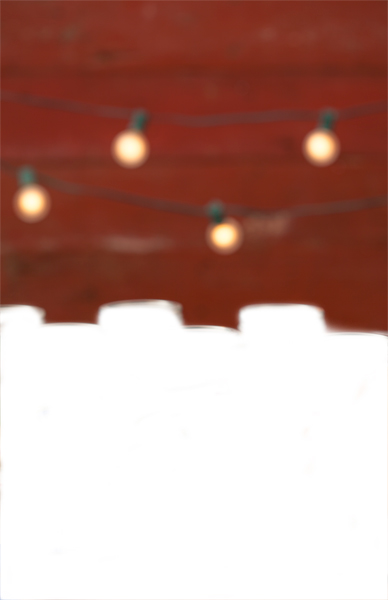
Now I’m going to show you a technique I use a lot. I take two images at different apertures, with different depth of fields and then I composite them together in Photoshop by using layer masks. I use this technique when I want the background to be more out of focus, yet keep the food or product in focus.

I have to mention that I ALWAYS shoot with my camera on a tripod. This type of compositing would be very difficult with files that were handheld.

Two Images for Composite

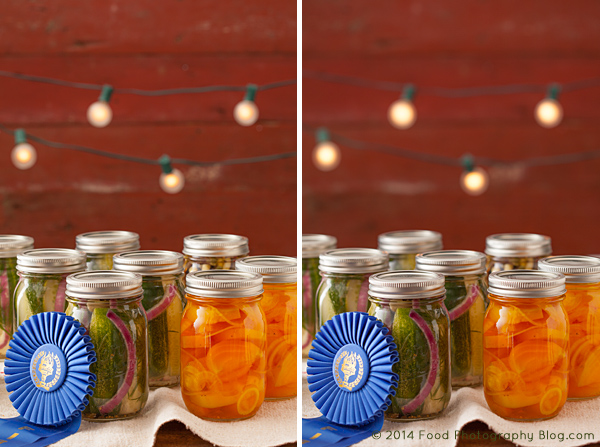
The image on the left was shot at f/8 and the image on the right was shot at f/4.5

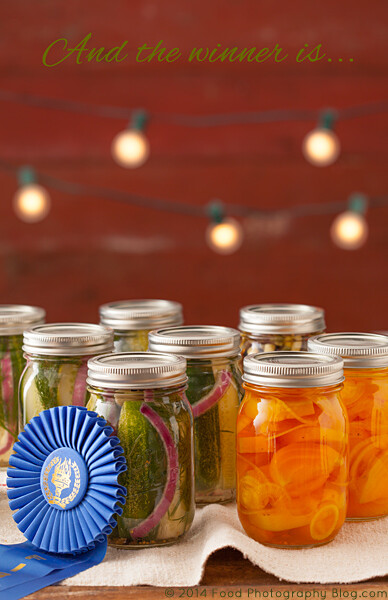
For this image I really like how the jars look at f/8, but I prefer the background shot at f/4.5, so I’m going to put the two together in Photoshop by creating a layer mask and put the best background, on top of the preferred foreground.

Making a Layer Mask

There are many ways to do the same thing in Photoshop. My favorite way to do a composite of multiple images is to use layer masks.

In the final composite I will be putting the background of one image onto another image, and also making a duplicate of one light bulb and pasting it onto the background.

I first open both files that are to be put together in Photoshop.

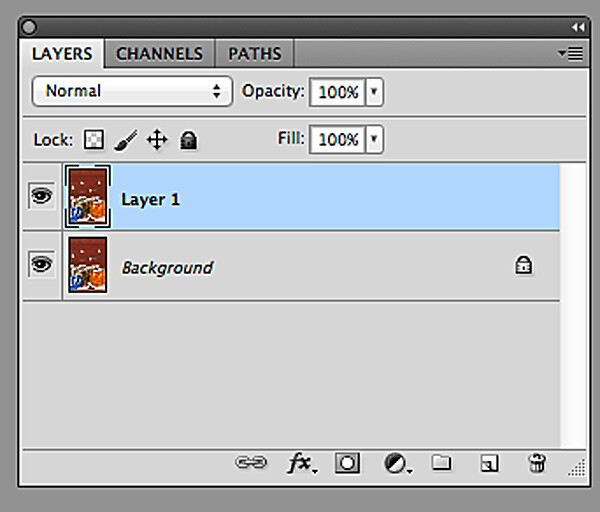
Next, I copy the image with the desired background and then paste the entire image into the file with the jars that I like. Now I have one file with two layers.

Two Layers

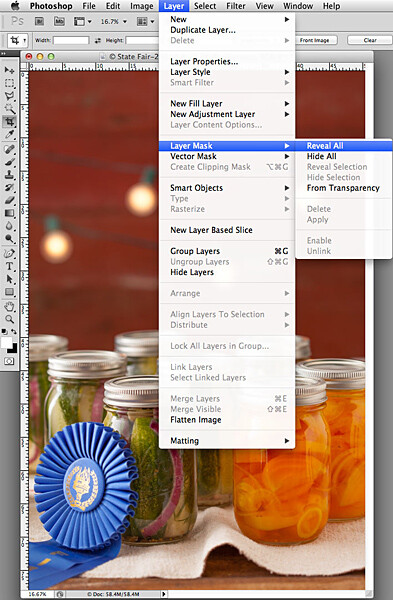
Now I need to make the top layer into a layer mask:

  1. Go to the top menu
  2. Click on “Layer”
  3. Scroll down to “Layer Mask”
  4. Scroll over to “Reveal All”

Converting Layer Mask2

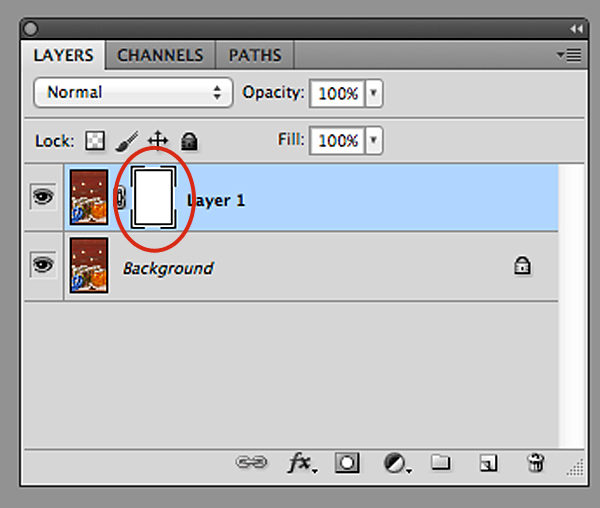
Now, look in your layers palette. Your image should look similar to what you see below – the two files, with the top one having a white box next to the image. That is the layer mask.

New Layer Mask

You can see the new layer masked circled in red.

To start working inside the layer mask, you have to use the brush tool. Then make sure your color palette is set to black on top of white for masking through the image. If you mask too far in one area, you can correct it by reversing the color palette to white on top of black and then go back over the area.

In this image I am using a soft edge brush (brush set to a hardness of “0″) for masking through the foreground of the top layer so that only the red background with the lights are left. The image below is how my layer looks mask work completed.

Background Layer Mask

This only took me a few minutes to create in Photoshop.

Now for the final composite below. I also added some text, then copied and pasted an additional light bulb in Photoshop to balance things out in the background.

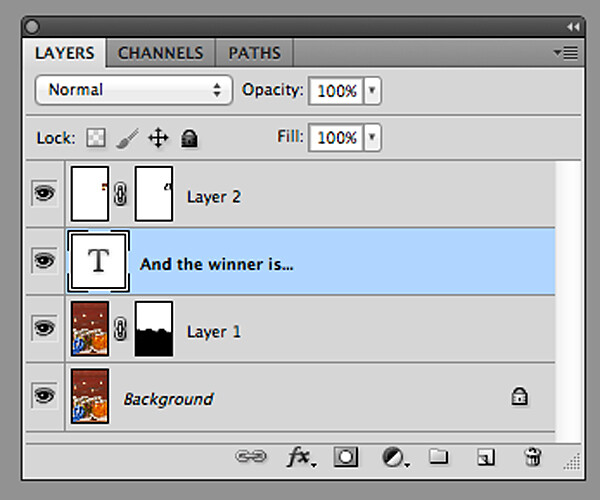
The additional light bulb was also turned into a layer mask so that I could blend the edges of the image I pasted on top of the file.

Final Composite

Final Layers

Here is what all the layers look like. Layer “2″ is the extra light bulb. If this was a file with a lot of layers, I would name each layer so that I knew what they were. In this case it’s easy to figure out, so I didn’t do that. You can see in the mask of layer “1″ that the bottom half of the frame is black. This is the part of the image that I masked.

So, next time when shooting on a tripod, experiment a little and take your shot with multiple apertures to bracket your depth of field, and maybe you’d like to composite a couple of files together.

The post Using Focus Creatively with Food Photography by Christina Peters appeared first on Digital Photography School.


Digital Photography School

 
Comments Off on Using Focus Creatively with Food Photography

Posted in Photography