RSS
 

Posts Tagged ‘Flash’

Sony announces compact HVL-F45RM radio-controlled flash

08 Feb

$ (document).ready(function() { SampleGalleryV2({“containerId”:”embeddedSampleGallery_0529851436″,”galleryId”:”0529851436″,”isEmbeddedWidget”:true,”standalone”:false,”selectedImageIndex”:0,”startInCommentsView”:false,”isMobile”:false}) });

Sony has announced its new HVL-F45RM external flash. This compact flash is ‘ideally suited for a7-series’ and offers a guide number of 45m (at ISO 100), 2.5 sec recharge time and the ability to take 210-shot bursts. It also has a built-in LED lamp for video recording.

The HVL-F45RM can control up to five groups of radio-controlled flashes, with a 30m range. With three flashes per group, that’s a total of 15 external strobes. It can also control three groups via ‘optical’ control. As you might have guessed, the F45RM can also serve as a receiver. 

The flash can rotate 180° in either direction and tilt up 150° and down 8°. It has an intuitive interface and a 4-way controller with customizable buttons. The F45RM is sealed against dust and moisture incursion.

The HVL-F45RM will ship this May for about $ 400 US and $ 550 CA.

Press Release

Sony Introduces 100mm F2.8 STF G Master™ with Highest Ever Quality Bokeh for an ? Lens

New Full-frame 85mm F1.8 Mid-telephoto prime lens and Compact Radio-Controlled Flash announced as well

LAS VEGAS, Feb. 7, 2017 – Sony Electronics, a worldwide leader in digital imaging and the world’s largest image sensor manufacturer, has today introduced two new lenses for their popular line of E-mount interchangeable lens cameras.

Sony’s new lenses include one of their flagship G Master Series – an FE 100mm F2.81 STF GM OSS mid- telephoto prime lens (model SEL100F28GM) built to deliver breathtaking bokeh with a unique STF™ (Smooth Trans Focus) design, and a new compact, lightweight FE 85mm F1.8 mid-telephoto prime lens (model SEL85F18) that is a welcome addition to the bag of any hobbyist or enthusiast photographer looking to create amazing portraits.

They have also introduced a new powerful, compact flash (model HVL-F45RM) with radio-controlled wireless communication that is ideal for professional shooting with Sony’s lineup of ?7 full-frame cameras.

FE 100mm F2.81 STF GM OSS Telephoto Prime Lens

A specially designed mid-telephoto, full-frame prime lens, the new 100mm STF is built to produce truly unique, magnificent and beautiful bokeh while maintaining the exceptional standard of resolution that is showcased by Sony’s entire line of flagship G Master series lenses, making it a powerful photographic tool for any portrait, fashion, nature or wedding photographer.

These impressive defocus capabilities are made possible by the lens’ advanced optical structure, as it features a newly designed 11-bladed aperture and a unique optical apodization lens element. Similar to a neutral density filter that increases in density towards the edges, the apodization element creates beautiful transitions of in-focus to out-of-focus areas within an image, making for exceptionally soft, smooth bokeh that adds depth and dimensionality. This allows the subjects to stand out against beautifully defocused elements in both the foreground and background, producing an image that is naturally pleasing to the eye. The design of the lens also ensures that vignetting is kept to an absolute minimum, ensuring optimum image quality.

Additionally, the new 100mm lens supports both contrast AF and focal-plane phase detection AF2, and has a high-precision, quiet direct drive SSM (Super Sonic Motor) system that ensures exceptionally fast and accurate AF performance. The SEL100F28GM also offers up to 0.25x close-up capabilities with a built-in macro switching ring, built-in Optical SteadyShot™ image stabilization, a customizable focus hold button, AF/MF switch, aperture ring and more. It is dust and moisture resistant as well3.

FE 85mm F1.8 Telephoto Prime Lens

The new 85mm F1.8 mid-telephoto prime lens offers an extremely versatile, lightweight and compact telephoto prime lens solution for a variety of Sony camera owners ranging from working professionals to emerging enthusiasts that have stepped up to full-frame or APS-C cameras for the first time. With its wide F1.8 aperture, it can produce impressive, exceptionally sharp portraits with soft background defocus that take advantage of its 85mm focal length and wide F1.8 maximum aperture.

The new prime lens features a 9-bladed circular aperture mechanism that ensures smooth, natural looking bokeh, and a double linear motor system to allow for fast, precise and quiet focusing. It also has a focus hold button that can be customized and assigned together with functions in the camera body like the popular Eye AF feature. There is a smooth, responsive focus ring and AF/MF switch as well, and the lens is also dust and moisture resistant3.

New Compact Radio-controlled Flash

Sony’s new HVL-F45RM flash enhances the radio-controlled lighting system capabilities of their growing system, offering a compact professional shooting solution when combined with the currently available wireless remote controller FA-WRC1M and receiver FA-WRR1.

The new flash, which is designed to complement the compact bodies of Sony’s E-mount camera lineup including full-frame ?7 models, produces a maximum lighting output as expansive as GN454. This ensures sufficient illumination even when shooting with bounce lighting or high-speed-sync (HSS) flash. The radio capabilities of the HVL-F45RM allow it to be used as a transmitter or a receiver at up to 30m (approx. 98 feet5), making it an ideal fit for creative lighting with multiple flashes. Additionally, unlike optical flash systems, radio-control flashes do not require a direct line-of-sight between components to function properly, while also minimizing any impact that bright sunlight has on signal transmission and control.

The HVL-F45RM flash has an impressive battery life of up to 210 bursts, and can tilt up to 150o vertically, a complete 360o horizontally and up to 8o downward to maximize versatility. Usability has been maximized with a new large, bright and highly visible LCD display, an LED light, dust and moisture resistant design3 and a revamped menu system that mimics those of Sony’s newest camera systems.

Pricing and Availability

Both of the new lenses and the new flash unit will ship to authorized dealers throughout North America.

The new FE 100mm F2.8 STF OSS GM Telephoto Prime Lens will ship this March for about $ 1,500 US and $ 2,050 CA.

The new FE 85mm F1.8 Mid-Telephoto Prime Lens will ship this March for about $ 600 US and $ 800 CA.

Replacement lens hoods for each of the new models will also be available for purchase as well.

The new HVL-F45RM flash will ship this May for about $ 400 US and $ 550 CA.

1. T-number (T) =5.6
2. With compatible ?camera bodies. Please visit Sony support webpages for details.
3. Not guaranteed to be 100% dust and moisture proof.
4. Guide Number (GN) 45 (105mm, in meters at ISO 100)
5. Sony internal measurement
Articles: Digital Photography Review (dpreview.com)

 
Comments Off on Sony announces compact HVL-F45RM radio-controlled flash

Posted in Uncategorized


4 Beginner Tips for Creating Dramatic Portraits with One Flash

02 Feb

In this article, I will explain how you can use a transmitter/receiver, or transceiver system to achieve simple dramatic portraits using only one flash. Below is a step-by-step guide on how to get you started.

Background

I used to fear using anything other than natural light. One of the reasons was that I had a notion that using artificial lights such as off-camera flash and strobes is too difficult and requires deep technical knowledge. Well, yes and no. To master it, you have to understand lighting ratios and learn to make mental calculations of light from various sources and suchlike. But to start using it, not really.

My first experience of off-camera flash was using the Creative Lighting System (Nikon) capability between my speedlight and my camera. Most of my early attempts were unsuccessful especially with the limitations of the line of sight infrared system. It was unreliable too, especially when shooting under pressure or caught on the hoof. I also used overexposed my light with my very untrained and inexperienced eye when I was just starting out.

4 Beginner Tips for Creating Dramatic Portraits with One Flash

Wireless triggers

Enter wireless radio transmitters and receivers (or transceivers) such as the Pocket Wizard, CyberSyncs, brand’s own (Nikon and Canon) and the super affordable Yongnous. A transmitter which is connected to your camera sends the message to the receiver which is attached to the flash unit. Transceiver units, on the other hand, can act as both receiver and transmitter so that you can use them on either the camera or the speedlight but you would still need one unit to attach to each piece of equipment.

These wireless transceivers are a game changer without a doubt. They are simple to use and are reliable most of the time as well. I use Cybersyncs for my studio strobes and Yongnous for my speedlights and find the Yongnous are incredibly reliable and user-friendly with hardly any misses. However, the Yongnous cannot be used for strobes.

#1 Choose the look and mood for your portrait

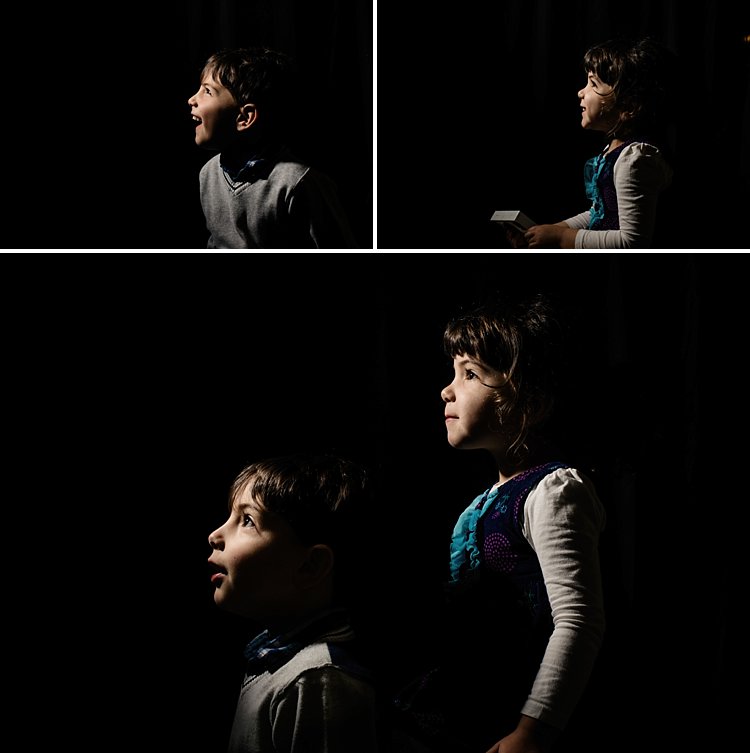
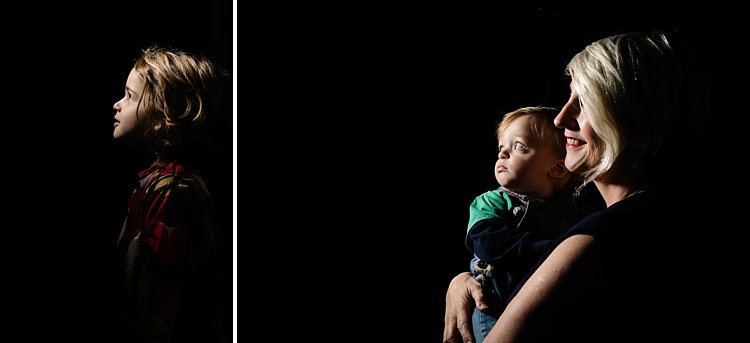
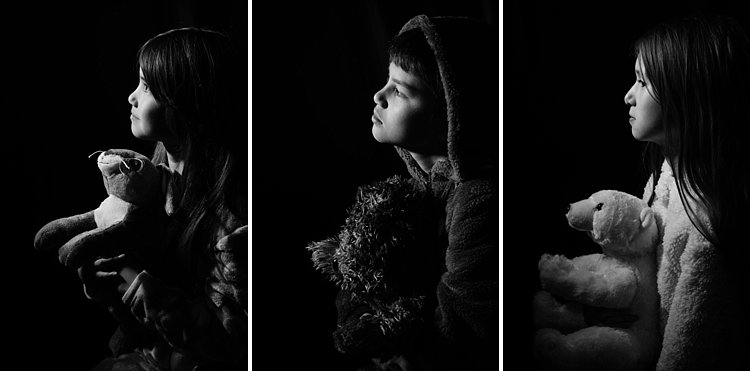
Do you want super dramatic low key portraits or the other end of the spectrum – high key, bright and airy? The mood of your picture will dictate your background and of course the camera and flash settings. I have chosen a black background for these portraits to achieve a high contrast between the brightest parts of the image and the shadows. This will keep the overall mood dramatic and the lighting low key with plenty of black areas.

#2 Set up your equipment

If you have transmitter and receiver units, attach the transmitter to the hotshoe of your camera while the receiver needs to be attached to the flash (speedlight or strobe). If you have a transceiver, this can go on either camera or flash but you still need two units, one on each piece of equipment.

It’s also a good idea to put your flash unit on a light stand. I used a studio strobe mounted on a light stand but attached it to a boom arm for more flexibility in angling the light. Note: A boom arm is not necessary at all for a simple beginner setup. Without a light stand, you can always mount your flash on a cabinet or steady surface, making sure it doesn’t topple over. Most speedlights come with little plastic feet that are handy for this purpose.

4 Beginner Tips for Creating Dramatic Portraits with One Flash

#3 Modify your light

One of my rules is to always modify the light. The only time I shoot with a bare flash is when I use it as a kicker light at wedding receptions or to light a backdrop. At all other times, I will always modify it somehow or bounce it to maximize the softness of the light or to minimize the harshness depending on the situation.

For this look, I wanted the flash to point directly at the subject, in a narrow beam and not have any spill onto the background. A gridded snoot would do the job controlling the light direction, but I didn’t have one. Plus I probably would have found that the light was still a bit harsh without further modification. I ended up McGyvering my own modified snoot using a black card and the diffuser panel of a 5-in-1 reflector. I twisted the reflector (like you would when putting it away) so that it was only a fraction of its size and I then had a 3-layer diffusion panel. This was taped to the strobe and with black card wrapped around it to direct the light onto my subject like a beam.

There are two factors that are crucial for getting soft light; the distance between your subject and the light and the size of the light. The closer the light is to the subject, the softer it is. The larger your light source is, the softer it will be. My light source was not very big at all, so to leverage maximum softness I decreased the distance to the subject. The light was positioned about an arm’s length away from the subject, quite high up at a 45-degree angle. This was to mimic natural light coming from a high window.

#4 Try various settings

I wanted to shoot at f/8 so I metered the flash. You don’t require a handheld light meter to do this, by the way, you can just start with a few trial and error test shots to find the correct setting. I started off with the lowest power on my strobe but ended up cranking it up as the 3-layer diffusion cut out quite a lot of the light. My settings for these were: f/8, 1/60th,  ISO 400 and my strobe power high at 7. The strobe settings will vary depending on the brand you are using.

4 Beginner Tips for Creating Dramatic Portraits with One Flash

This is just one of the many ways you can create portraits with one flash. Try it and experiment with other angles, moods, and light settings and you may be amazed at what one light can do!

Share your portraits here too in the comments below.

googletag.cmd.push(function() {
tablet_slots.push( googletag.defineSlot( “/1005424/_dPSv4_tab-all-article-bottom_(300×250)”, [300, 250], “pb-ad-78623” ).addService( googletag.pubads() ) ); } );

googletag.cmd.push(function() {
mobile_slots.push( googletag.defineSlot( “/1005424/_dPSv4_mob-all-article-bottom_(300×250)”, [300, 250], “pb-ad-78158” ).addService( googletag.pubads() ) ); } );

The post 4 Beginner Tips for Creating Dramatic Portraits with One Flash by Lily Sawyer appeared first on Digital Photography School.


Digital Photography School

 
Comments Off on 4 Beginner Tips for Creating Dramatic Portraits with One Flash

Posted in Photography


Adorama introduces Canon RT radio controlled TTL studio head and hotshoe flash

02 Feb

$ (document).ready(function() { SampleGalleryV2({“containerId”:”embeddedSampleGallery_9533390039″,”galleryId”:”9533390039″,”isEmbeddedWidget”:true,”standalone”:false,”selectedImageIndex”:0,”startInCommentsView”:false,”isMobile”:false}) });

Camera store Adorama has announced that it is to introduce a new line of monoblock studio heads that are designed to work directly with Canon’s RT radio TTL flash system. The company claims that the Orlit Rovelight RT 610 TTL Wireless Monolight, with its RT system built-in, is the first of its kind. The head can also be used with all Canon and Nikon DSLRs using the Orlit TR-611C and TR-612N TTL Transceivers that have been launched alongside the head. These transceivers allow TTL control of the head even with Nikon cameras.

The Orilt Rovelight RT 610 TTL is a 600Ws head with a guide number of 201ft/61m @ ISO 100 that features modes for Canon’s ETTL and Nikon’s iTTL metering systems. It is powered by a rechargeable 6000mAh lithium ion battery pack that Adorama claims is good for 450 full-power flashes per charge. The longest recycle time will be 2.5 seconds at full power, but the head offers output settings down to 1/256th in 1/3EV steps across the nine-stop range. There is said to be a variance of only 150 K across the output range from the standard color temperature of 5500 K, and a high speed sync mode allows for shutter speeds of up to 1/8000sec. The modeling bulb is a 20W LED that has a 3200 K tungsten color balance and three brightness levels.

The head accepts Bowens S-type modifiers and has an integrated umbrella shaft slot. The flash control system can be divided into five groups, while 16 channels are provided to avoid interference with other systems in the vicinity.

The new studio head can also be controlled by or work alongside the company’s Orlit RT-600C TTL Speedlite. This new flash unit can sit in the camera’s hotshoe to act as a master or it can join a group of other RT flashes as a slave. The unit has a guide number of 160ft/48m @ ISO 100.

The new studio head, flash unit and transceivers will ship later this month but can be ordered now on the Adorama website.

  • Orlit Rovelight RT 610 TTL Wireless Monolight – $ 699.95
  • Orlit RT-600C TTL Speedlite – $ 169.95
  • Orlit TR-611C Transceiver – $ 69.95
  • TR-612N TTL Transceiver – $ 69.95

Press release

Adorama Announces Orlit, and “The First Canon RT Wireless Compatible Monolight”

Adorama, one of the world’s largest photography, video, audio, imaging and electronics retailers, has announced Orlit, the brand new line of TTL flash solutions for photographers. Available exclusively at Adorama, the line consists of the Orlit Rovelight RT 610 TTL Wireless Monolight, the first monolight to ship with the Canon RT radio system built in; the Orlit RT-600C TTL Speedlight for Canon, ideal for Canon users who want to use the unique Canon 600EX-RT wireless radio system; and the Orlit TR-611C and TR-612N TTL Transceivers, which enable shooters to achieve a more extensive and powerful lighting solution with wireless control for Orlit Canon and Nikon systems.

Optimized for exceptional, true TTL performance, the all-new Orlit flash lighting line is now available for pre-order, exclusively from Adorama, and will begin shipping in February 2017. The Orlit product line-up includes:

Orlit Rovelight RT 610 TTL Wireless Monolight: The only 600ws wireless TTL monolight that breaks the Canon RT radio barrier and also works with Nikon wireless systems. The Orlit RT610 TTL brings additional professional radio-based and infrared remote flash options to loyal Canon RT users, who can now use the Canon 600EX-RT as a master and the Orlit RT610 as the slave.

With an outstanding Guide Number of 201 (ft. at ISO 100), and manual levels from full to 1/256 power with fine 0.1 stop graduations, this monolight from Orlit boasts a bright 20 watt LED modeling lamp with a tungsten 3200K color temperature. The HSS Mode allows sync shutter speeds up to 1/8000, while Freeze Mode achieves an additional reach of 1/19000 to capture split second moments.

The Orlit Rovelight RT 610 user interface features a large, full-color LCD display, simplified menu system, and a generous power and function control dial. Future technologies and camera sync are firmware updated through the USB port.

The Orlit Rovelight RT 610 TTL Wireless Monolight is now available for preorder and retails for $ 699.95 USD.

Orlit RT-600C TTL Speedlite for Canon:

This versatile Canon RT/ETTL wireless radio-compatible speedlight, which transmits both the Canon RT radio and optical systems, can act as a master to up to five independent groups or slave unit for remote power control. A Guide Number of 160 (ft. @ ISO 100, at 200mm zoom) in combination with the compact and lightweight design of the flash makes the Orlit Speedlite a top choice for professional Canon shooters.

Using the Orlit Speedlite for Canon is a breeze, with a flash head that rotates 180 degrees in any direction and tilts over 90 degrees for any type of bounce or modifier use. The head zooms automatically or manually from 20-200mm, ensuring the necessary coverage without light spill. The Orlit RT-600C also has a holder to place color balancing gels before the flash head. Like the Orlit Rovelight, the Orlit RT 600C user interface features a clear LCD display with a simplified but extensive menu system, with future technologies incorporated via firmware updates.

The Orlit RT-600C TTL Speedlite for Canon is now available for preorder and retails for $ 169.95 USD.

Orlit TR-611C TTL Transceiver & Orlit TR-612N TTL Transceivers:

Designed for Canon and Nikon cameras, respectively, adding 980ft/300m of remote lighting freedom. Using an Orlit transceiver on the camera’s hot shoe, Canon and Nikon photographers can easily adjust the exposure for the Orlit Rovelight RT610 TTL Monolight, while the Canon TR-611C adds control to the Orlit RT600C Speedlite.

This TTL wireless flash transmitter from Orlit can trigger one or more receivers for studio flash and speedlights. Featuring direct group access, multi-group triggering, stable signal transmission, and sensitive reaction, photographers can achieve wide flexibility and control over their strobist setups. And with the Orlit TTL Transceivers, high speed synchronization is available for most Orlit camera flashes, with a max speed up to 1/8000s.

The Orlit TR-611C & TR-612N TTL Transceivers are now available for preorder and will each retail for $ 69.95 USD.

Designed with Users in Mind
The Orlit TR-611C and TR-612N Transceivers feature an efficiently designed user interface with a clear LCD display, simplified but extensive menu system, and are graced by soft menu touch control buttons for all options. Future technologies are firmware updated through the USB port.

The Future of TTL Flash is Now
Coming soon, the Orlit smartphone app seamlessly integrates the latest in wireless command into studio life. A rich array of screens give touch control to the myriad of Orlit features without going near the set, from the convenience of a smartphone.

Articles: Digital Photography Review (dpreview.com)

 
Comments Off on Adorama introduces Canon RT radio controlled TTL studio head and hotshoe flash

Posted in Uncategorized


SanDisk announces 256GB microSDXC card and ‘world’s fastest, highest capacity’ USB flash drive

09 Jan

SanDisk has unveiled its new 256GB Ultra microSDXC UHS-I Premium Edition card. Meeting A1 performance standards, it’s designed to expand smartphone storage for photos and videos as well as provide space to store and run apps. It’s said to achieve transfer speeds ranging up to 95MB/s. At this capacity, the card is able to store up to 24 hours of 1080p Full HD video.

The A1 performance standard means this microSD card can handle random read input-output access per second, also called IOPS, of 1,500, as well as a write IOPS of 500. As such, SanDisk says this card is suitable for handling in-app permissions, graphics and audio, and save profiles on a smartphone. The A1 spec is particularly useful in in light of Android Marshmallow 6’s option for storing and launching apps from the microSD card.

SanDisk also announced a 256GB USB 3.1 solid state flash drive. Claimed to be the world’s fastest, highest capacity drive, it offers read speeds up to 420MB/s and write speeds up to 380MB/s. SanDisk claims that’s fast enough to transfer an entire full-length 4K movie to the drive in 15 seconds.

The new Ultra microSDXC Premium Edition card will be available globally later this month for $ 199. The 256GB SanDisk Extreme Pro USB 3.1 drive arrives at the same time, and will sell for $ 179 through Best Buy and Amazon.

Press release:

SANDISK® UNVEILS WORLD’S FIRST MICROSD CARD DESIGNED TO DELIVER A NEW DIMENSION OF MOBILE APPLICATION PERFORMANCE
JAN 4, 2017

THE 256GB SANDISK ULTRA® MICROSD CARD WITH THE LATEST A1 SD SPECIFICATION OFFERS MOBILE USERS EVEN MORE STORAGE EXPANSION OPTIONS

LAS VEGAS, Jan. 4, 2017 – Western Digital Corporation (NASDAQ: WDC), a global storage technology and solutions leader, today unveiled the world’s first microSDTM card that meets the Application Performance Class 1 (A1) requirements from the latest SD Association’s SD 5.1 specifications. By meeting the A1 performance standard, the 256GB SanDisk Ultra® microSDXCTM UHS-I card, Premium Edition, delivers capacity, speed and enhanced capability to deliver a better smartphone experience1.

Since the popular memory card format launched more than a decade ago, microSD cards have been instrumental in driving new segments in digital imaging like action cameras, drones, dashboard cameras and surveillance systems, and have significantly impacted the evolution of the smartphone. Today, approximately 75 percent of smartphone models on the market contain microSD slots, according to data from Strategy Analytics2. The 256GB* SanDisk Ultra microSD card offers the capacity and performance consumers need to capture all of life’s moments without having to worry about what to delete. The card can hold up to 24 hours of Full HD video3 and with premium transfer speeds of up to 95MB/s**. With A1 performance, the card can launch and run apps at blazing speeds.

“The microSD card has been an integral part of the digital revolution by providing more options for high performance, high capacity storage for smartphones,” said Dinesh Bahal, vice president of product management, Client Solutions Business Unit, Western Digital. “SanDisk® cards are at the center of more than two billion consumer devices, and now with this A1 card, we’re proud to play a significant role in continuing to advance the trusted format.”

Long used by billions to expand capacity for photos, videos, music and many other digital files, the, microSD card now must evolve to support application-intensive environments, paving the way for a new dimension of memory card performance. With the introduction of the Android Marshmallow 6 operating system, users can expand storage capacity on smartphones by selecting the microSD card as preferred or adoptable storage, which means apps can now be loaded and launched directly from the A1 microSD card.

The A1 spec allows the new card to manage random read input-output access per second (IOPS) of 1,500 and write IOPS of 500, so it can quickly open apps and process accompanying tasks, such as audio, graphics, saved profiles and in-app permissions. With this in mind, the new SanDisk Ultra microSD card with A1 is designed to provide consumers a faster, more powerful app experience using cards.

“SD technology is trusted by consumers around the world for its reliable, backwards compatible and

highly interoperable storage, making it the world’s leading memory format with billions of SD memory cards and devices in the market,” said Brian Kumagai, SDA president. “The A1 specification will help consumers identify the appropriate card to ensure an optimal experience when running and launching apps on their smartphone. We are pleased that SanDisk will release an A1 card, and continues to contribute to breakthrough technologies enabled by the microSD format.”

The new SanDisk Ultra microSD card with A1 is compatible with the SanDisk® Memory Zone app for Android™, giving users an easy way to manage and back up content on their device. The app is available for free through the Google Play™ Store4. The card will be available worldwide in January 2017 with a U.S. MSRP of $ 199.99.

The complete line of SanDisk® microSD cards can be purchased at more than 300,000 retailers worldwide.

SANDISK® LAUNCHES ITS FASTEST, HIGH-CAPACITY USB FLASH DRIVE EVER
JAN 4, 2017

NEW SANDISK EXTREME PRO® USB 3.1 SOLID STATE FLASH DRIVE NOW FEATURES SSD PERFORMANCE IN A PORTABLE, ALUMINUM METAL FORM FACTOR

LAS VEGAS, Jan. 4, 2017 – Western Digital Corporation (NASDAQ: WDC), a global storage technology and solutions leader, today announced its fastest, high-capacity USB flash drive to date with the launch of its high-performance 256GB* SanDisk Extreme PRO USB 3.1 Solid State Flash Drive. The new drive delivers the speed, capacity, and reliability of an SSD in the convenient form factor of a small USB flash drive, and is ideal for creative professionals, tech enthusiasts, or anyone who creates and shares massive files.

A game-changer in the USB storage category, the drive is capable of read speeds up to 420MB/s and write speeds up to 380MB/s1. With its unprecedented speeds, you can transfer full-length 4K movie to the drive in less than 15 seconds2. With its USB 3.1 interface, people can rapidly access and move files on the go, without having to worry about a cable. The new drive also features a sophisticated design with a durable aluminum metal casing and a retractable connector for ultimate style and reliability.

“The combination of SSD performance and a compact USB form factor offers the ultimate performance and convenience for moving files easily and quickly,” said Sven Rathjen, vice president of marketing, Client Solutions Business Unit, Western Digital. “With its increased capacity and blazing speeds, the SanDisk Extreme PRO USB 3.1 Solid State Flash Drive is our sleekest, most powerful SanDisk USB device yet.”

The SanDisk Extreme PRO Solid State Flash Drive is available up to 256GB, giving consumers plenty of room to manage large files. For added file protection, it includes the SanDisk SecureAccess® software, which offers 128-bit file encryption and password protection3. The drive also comes with a limited lifetime warranty4.

Pricing and Availability
The new 256GB SanDisk Extreme PRO USB 3.1 Solid State Flash Drive will be available in late January 2017 at Amazon.com and Best Buy at an MSRP of $ 179.99.

SanDisk storage solutions can be purchased at more than 300,000 retailers worldwide.

Articles: Digital Photography Review (dpreview.com)

 
Comments Off on SanDisk announces 256GB microSDXC card and ‘world’s fastest, highest capacity’ USB flash drive

Posted in Uncategorized


Metz mecablitz M400 compact wireless flash unit now available

06 Dec

German flash manufacturer Metz has launched a new compact sized flash unit that offers wireless TTL control and coverage to match 24-105mm lenses. First announced at Photokina, the Metz mecablitz M400 has a guide number of 40m/131ft at ISO 100 at the 105mm zoom setting, along with a tilt and swivel head for bouncing the light. The gun is compatible with Canon, Fujifilm, Nikon, Micro Four Thirds, Pentax and Sony multi-interface cameras and offers TTL metering with each. All but the Fujifilm model will support wireless TTL flash as well, with the M400 being used either as a slave or commander in a group. A USB socket is provided for future firmware updates.

High speed sync mode is available, as is the choice of first and second curtain triggering, and 25 steps of manual control. The unit also has a 100 Lux/1m video light built-in that provides six stages of illumination.

The Metz mecablitz M400 is available now and costs $ 280/£122. For more information visit the Metz website.

Press Release

M400 launched by Metz

Compact and powerful flashgun

Metz has launched the mecablitz M400, a compact system flash suited to mirrorless system cameras and is ideal for any photographer or film-maker looking for a convenient, compact flash unit. It is available in Canon, Nikon, Micro FourThirds, Pentax, Sony and Fuji fittings.

Powered by four AAA sized NiMH, alkaline-magnesium or lithium batteries, the Metz mecablitz M400 has a zoom-swivel head covering a FOV range matching that of a full-frame 24-105mm lens, with a guide number of 40 (in metres at ISO 100/21°) at the 105mm position. Depending on your camera, the mecablitz M400 with master and slave mode also offers wireless TTL flash functionality. The M400 comes with an adjustable LED video/modelling light, bounce card and integrated wide-angle diffuser. Other highlights include high-speed flash synchronisation, second-curtain sync and red-eye reduction plus it can always be kept up-to-date via the USB interface for receiving firmware updates.

Features / Tech Spec:
High max. guide number 40m (131feet) for ISO100 and 105mm
Vertical (+90°) and horizontal (360°) bounce/swivel head
Clear OLED display
Integrated high-performance LED video light (100 Lux @ 1m)
Motorised zoom for 24–105mm illumination
Integrated wide-angle diffuser (12mm) & flip-out reflector card
Flash readiness indicator, correct exposure display on unit and on camera (camera dependent)
Flash range shown in OLED display
Automatic unit shut-off
Dimensions: (W x H x D) 65 x 92 x 87mm
Fittings available: Canon / Nikon / Fuji / Sony / Pentax / Olympus – Panasonic

Prices & Availability
Metz M400 Flashgun – all fittings. £121.99 inc VAT
Available immediately

Articles: Digital Photography Review (dpreview.com)

 
Comments Off on Metz mecablitz M400 compact wireless flash unit now available

Posted in Uncategorized


Meizu Pro 6 Plus features 12MP Sony sensor and LED ring flash

01 Dec

Chinese smartphone maker Meizu has today unveiled the Pro 6 Plus, a high-end model with metal housing and large 5.7″ pressure-sensitive AMOLED screen with Quad-HD resolution. The Sony Exmor IMX386 sensor in the camera module has been deployed in some previous Meizu models but at 1/2.9″ and a pixel-pitch of 1.25µm it is a touch smaller than the 12MP Sony chips used in some of the other current high-end devices.

The camera also features optical image stabilization, a lens with F2.0 aperture and laser-assisted autofocus. The front-facing camera is surrounded by 10 dual-tone LEDs forming a ring flash, and comes with a 5MP sensor and F2.0 lens.

The Android OS is powered by the same Exynos 8890 chipset that can be found in the Samsung Galaxy S7 and 4GB of RAM. Buyers can choose between 64 and 128GB storage versions. The Pro 6 Plus also features a fingerprint reader that doubles as a heart-rate monitor and a dedicated audio chip. Power is supplied by a 3,400mAh battery that is charged via a USB Type-C port with fast charging. 

The new model will be available in Champagne Gold, Deep Ash and Moonlight Silver. The 64GB version will set you back approximately $ 435 while the 128GB requires an investment of $ 480. No detail on availability outside China has been provided yet. 

Articles: Digital Photography Review (dpreview.com)

 
Comments Off on Meizu Pro 6 Plus features 12MP Sony sensor and LED ring flash

Posted in Uncategorized


Canon releases new firmware for EOS 5D IV to correct varying flash color

30 Nov

Canon has introduced an update for its EOS 5D Mark IV DSLR that corrects a color issue when using flash, and improves the camera’s performance when the company’s new tele-converters are in use.

Firmware version 1.0.3 fixes an issue that created different color temperatures in flash output according to the metering mode in use at the time, and makes communication between camera and lens more reliable with the EF1.4x III and EF2x III tele-converters. The company says an additional fix corrects the way the level gauge is displayed when the camera is held in portrait orientation with the grip below the lens.

For more information visit the Canon website.

Manufacturer’s release notes

Changes in the Firmware

Firmware Version 1.0.3 incorporates the following fixes and improvements:

1. Corrects a phenomenon in which the color of images varies depending on the metering mode selected during flash shooting.

2. Improves the reliability of communication when using the EF1.4X III or EF2X III extender.

3. Corrects the level display when the camera is held in the vertical orientation with the hand grip pointing downward.

4. Improves the reliability of communication via USB cable when using the Lens Data Registration function with EOS Utility 3.

Firmware Version 1.0.3 is for cameras with firmware Version 1.0.2 or earlier. If your camera’s firmware is already Version 1.0.3, it is not necessary to update the firmware.
When updating the firmware of your camera, please review the instructions thoroughly before you update the firmware.

The firmware update takes approximately 4 minutes.

Articles: Digital Photography Review (dpreview.com)

 
Comments Off on Canon releases new firmware for EOS 5D IV to correct varying flash color

Posted in Uncategorized


Godox launches mini radio flash unit for Sony mirrorless cameras

23 Nov

Flash and accessory manufacturer Godox has announced a new small flash unit that it says is designed to go with the Sony mirrorless range of cameras. The Godox TT350S features 2.4GHz radio control and TTL exposure metering, and offers a guide number of 36m@ISO 100. The company says that the unit is compatible with the Sony a7R II, a7R, as well as the a58 and a77ll SLT cameras. Some RX models are also able to pair with the unit.

The radio controlled system allows the TT350S to work alongside other Godox radio flash units and studio heads, and the flash can operate as a master or slave in multiple-head set-ups. Three groups are programmed into the control system along with 16 channels, while the maximum working range is said to be 30m. High speed sync is provided via an HSS mode that can work with shutter speeds of up to 1/8000 sec, and the unit can be switched from TTL to manual operation to make use of 22 output levels from 1/128th power. An automatically zooming head covers focal lengths of 24-105mm, and a hinge allows the head to tilt but not to swivel.

The TT350S is powered by two AA batteries which the company claims should be good for 210 full power bursts. There is no official pricing yet, but one UK ebay seller is offering pre-orders for £73 and says delivery is expected early January.

For more information about the TT350S visit the Godox website.

Articles: Digital Photography Review (dpreview.com)

 
Comments Off on Godox launches mini radio flash unit for Sony mirrorless cameras

Posted in Uncategorized


Olympus STF-8 Macro Flash is first weatherproof model of its kind

08 Nov

Olympus has announced what it says is the first ever macro twin flash with a weatherproof construction: the new STF-8 Macro Flash. This model is, according to Olympus, both splashproof and dustproof with construction that can withstand temperatures as low as -10°C / 14°F. Features include a guide number of 8.5 when both heads fire and of 6 when one head fires, as well as full TTL auto-sync, removable heads, customizable positioning, and manual output control down to 1/128.

The new Macro Flash is compatible with the following lenses:

  • M.ZUIKO Digital ED 30mm F3.5 Macro
  • M.ZUIKO Digital ED 60mm F2.8 Macro
  • M.ZUIKO Digital ED 12-40mm F2.8 Pro

Says Olympus, users can also attach third-party step-up and step-down rings to use other lenses. The STF-8 is available to preorder from some retailers now, including B&H Photo, for $ 479 / $ 600 CAD. Shipping will start in January 2017. 

Source: Olympus

Articles: Digital Photography Review (dpreview.com)

 
Comments Off on Olympus STF-8 Macro Flash is first weatherproof model of its kind

Posted in Uncategorized


How to Make Beautiful Portraits Using Flash and High-Speed Sync

04 Nov

The scene: Outdoors with full sunlight. The gear: Your camera, lens, and flash. The problem: You find that your flash only works at 1/200th or below so you need to be at f/16 or f/22 to get the shot. Everything is in focus, including all the cars and other distractions in the background. Those dust spots you keep meaning to clean are also perfectly visible. Why won’t it work with a higher shutter speed so you can have a wider aperture? Well, it’s all down to the issue of sync speed, more specifically using flash and high-speed sync.

A typical portrait shot with off camera flash. To overpower the sun and stay below the camera’s sync speed, you’re forced to use a narrow aperture. Here we’re at f20 just to stop the backlight overpowering the hair and stop the sky blowing out. The resulting aperture means that everything is pretty much in focus, leaving the background looking cluttered. This shot is for example only, you should generally make a point of choosing clutter free backgrounds

A typical portrait shot with off-camera flash. 

To overpower the sun and stay below the camera’s sync speed, you’re forced to use a narrow aperture. Here I’m at f/20 just to stop the backlight overpowering the hair and the sky from blowing out. The resulting aperture means that everything is pretty much in focus, leaving the background looking cluttered. This shot is for example only, you should generally make a point of choosing clutter-free backgrounds

Sync Speed

Sync Speed is the fastest shutter speed where the camera exposes the whole frame at once. When you fire any shot below this speed, the first shutter curtain opens fully, revealing the entire sensor to light. At the end of the exposure time, the second shutter curtain moves across the frame to finish the capture. Both curtains then reset together (this means you get no light leaking in).

Generally, the sync speed varies between 1/125th and 1/250th, depending on your camera. You’ll find some quoted sync speeds are not indicated correctly. For instance, the Canon 5D series are rated at 1/200th but often show a black band at the bottom of the screen at this speed when it’s used with flash.

When you go above the sync speed, the second curtain starts to move before the first one has completed its journey. As your shutter speed gets shorter and shorter, the gap between these curtains narrows to a tiny slit. Despite this, all parts of the sensor receive light, and a full exposure is made. On a bright day, with a prime lens, you can easily shoot at 1/8000th at f/1.4 and have a perfect exposure. All parts of the frame still receive light, because it’s continuous throughout the exposure.

The Sync Speed Problem

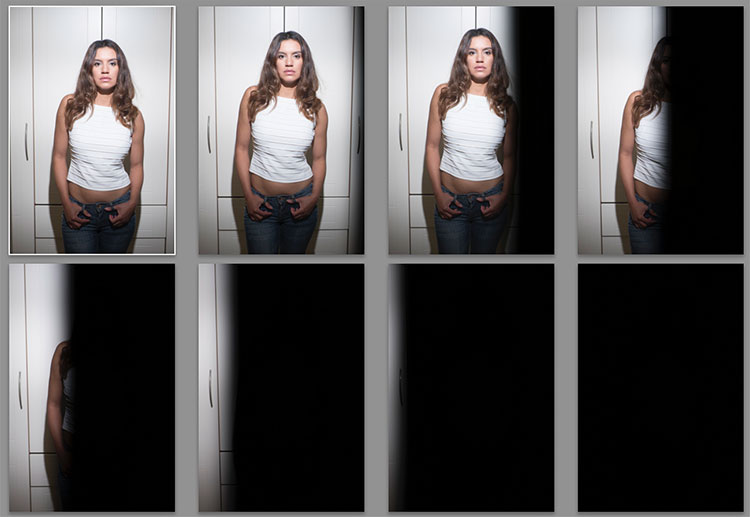
It’s when you introduce flash that you start to have problems. You see, when a flash is fired (usually when the first curtain is opened) all the light from it comes out in a very short space of time (in order of milliseconds). When you go above (faster than) the sync speed, the position of the curtains doesn’t reveal the entire frame at the time the flash fires. The means the shutter curtain blocks part of the flash and prevents it from reaching the sensor. Any ambient light will expose normally, but the flash gets hidden in part of the frame. As your shutter speed gets faster and faster, more and more of the flash is blocked until it’s no longer visible in the shot.

portraits with flash and high-speed sync

Here’s a set of images taken at 1/3 stop increments with a flash. Shot on the Fuji X-T2, the first is at 1/250th, the native sync speed of the camera. In order (left to right, top to bottom) 1/250th, 1/320th, 1/400th, 1/500th, 1/630th, 1/800th, 1/1000th, and 1/1250th. Even 1/320 is useable if the subject being lit is away from the edge.

Everything in Focus

Normally when you use flash outside in daylight, you end up having everything in focus. Remember the Sunny f/16 Rule? If your subject is in direct sunlight during the day, you can set your aperture to f/16 and your shutter speed will be one over your ISO value. So if your ISO is set to 100, your shutter speed would be 1/100sth (and f/16). As another example, if your ISO is 200, then the shutter speed would be 1/200th. To get a richer sky, you’d really need to be at f/22, making it a tough job for your flash. Because you can’t get faster than 1/250 (sync speed), you have to increase the aperture to expose the shot correctly.

portraits with flash and high-speed sync

Shooting at f/20, 1/160 to get a richer sky for this band promo shot. It’s quite an old shot, so there were few options for reducing the aperture at the time. Even the hills in the background are in clear focus. The beach isn’t exactly pretty either.

portraits with flash and high-speed sync

A behind the scenes shot – two flashes on full power.

Softer light

Most speedlights at full power, bare bulb, in close, can give you just enough power to look natural at these settings. Bare flash is not flattering, though it can add character. If you want softer, more flattering, light, you need more power. Most modifiers that give soft light will take two stops of power compared to the bare flash. That’s a lot of power. You could use a more powerful light, like the Godox AD360, the Elinchrom Quadra, or the Profoto B1. Alternatively, you could use a bracket that takes multiple speedlights. Either option allows you to get soft, flattering, light while outdoors.

portraits with flash and high-speed sync

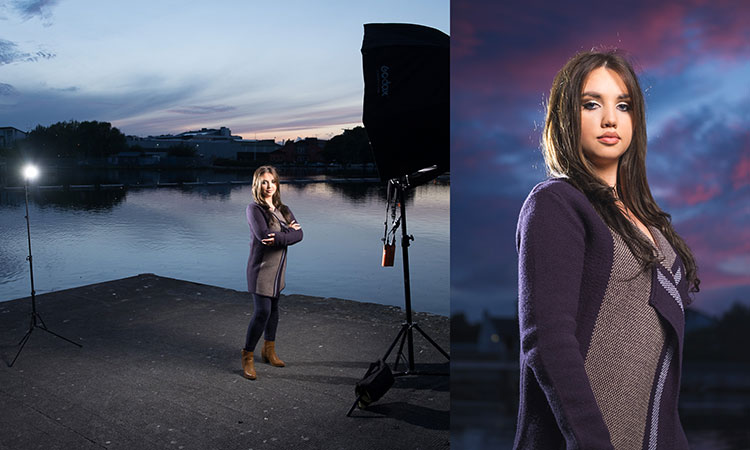
A higher power option is the Godox AD360. This is coupled with the Godox 120cm Octa for softer light. This is shot at f/2.8, ISO200 and 1/125th. Because it’s after sunset, you can easily get wider apertures. just one of the options you have for the shallow depth of field look.

This solves the soft light issue, but it doesn’t solve your aperture issue. For creamy bokeh (the soft out of focus background look), you need to get our aperture down. If you’re shooting in the early morning or late evening, you can do this easily, but during the day it’s an issue.

The Solution: High-Speed Sync

You’ll need to find a way to get around the issue of sync speed for daytime shooting. Fortunately, there is a solution. It’s not perfect, but it does work. It’s called High-Speed Sync, also known as Focal Plane Sync. High-Speed Sync (HSS) works in a unique way. Instead of firing the flash at the start of the shot, HSS pulses the flash throughout the whole exposure, trying to simulate the effects of a continuous light.

portraits with flash and high-speed sync

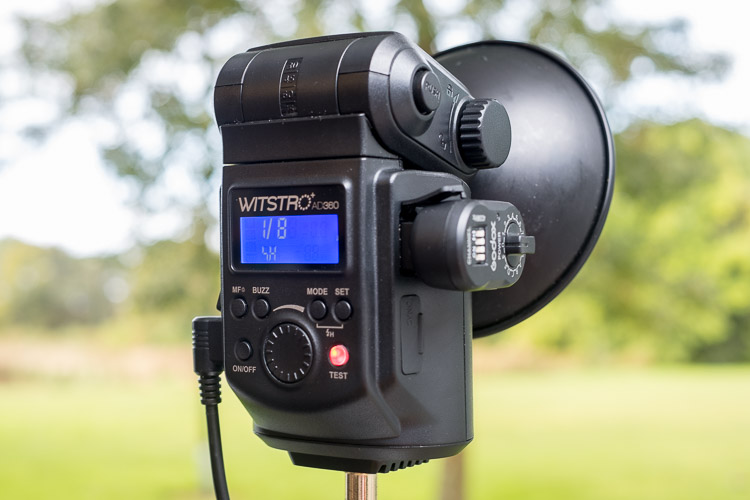
The AD360 set to High-Speed Sync. Usually, there’s a single button hold, or a double button combination to turn HSS on.

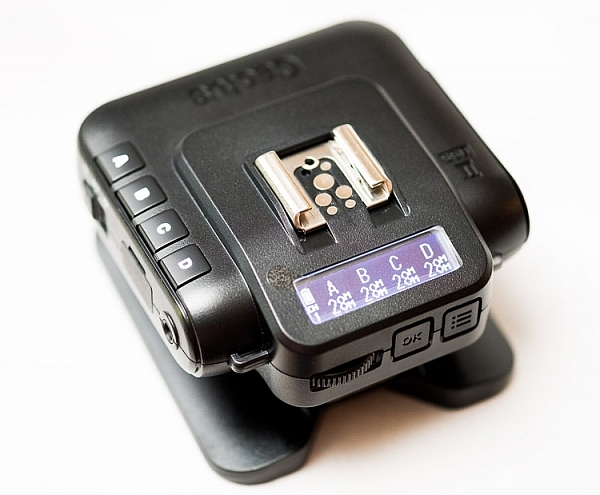
It works well, but it comes at the expense of power, and heat. HSS works the flash really hard. After a few shots, the flash may even shut down for cooling. For HSS to work, you need the camera to transmit HSS to flash, and for the flash have HSS built-in. All major brands allow it, though Fuji only just introduced it. Cactus Image makes a trigger called the V6II which allows you to use any HSS flash with any camera. Read my review of the Cactus V6II trigger here.

portraits with flash and high-speed sync

The Cactus Image V6II allows power and zoom control over a wide range of speedlights, as well as offering High-Speed Sync abilities.

The Look of HSS

You can use HSS to go over the sync speed barrier, so settings like 1/4000th at f/1.4 are achievable with flash. You get the complete control of the light using flash, but with the wide aperture you usually associate with natural light photographs. Yes, please!

Photographers like Dylan Patrick use this technique to create cinematic portraits. By shooting wide shots with shallow depth of field, you really have the option to create images that look like they were stills from the silver screen.

Settings for High-Speed Sync

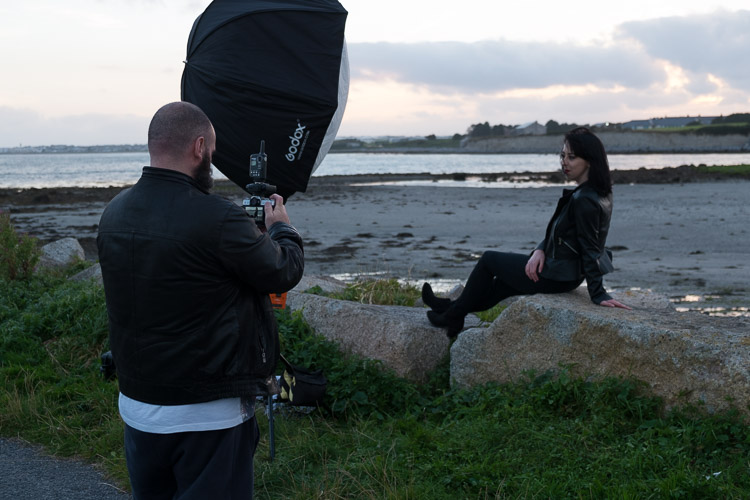
Let’s look at a typical setup and settings for a shoot using HSS. This shoot happened to be done on an evening, but I really wanted shallow focus. The camera was set to f/1.4 for super shallow depth of field. To get the clouds properly exposed, I had to drop the shutter speed to 1/4000th. To get the flash (an AD360) to work I had to set it to HSS. Using a Cactus V6II trigger, I could easily get my Fuji X-T10 to shoot with HSS.

portraits with flash and high-speed sync

An evening HSS photo shot at 1/4000th, ISO200, f/1.4. Notice the shallow depth of field in the image.

portraits with flash and high-speed sync

The BTS, an AD360 with 120cm Octa, shot by my assistant Ola.

If you use Canon, the Cells II trigger provides HSS with the AD360. It would also work speedlights like the v850.

portraits with flash and high-speed sync

Using HSS on the AD360, I captured this shot at about 3:00 in the afternoon with the sun high in the sky. Shot with an 85mm lens at 1/2000th at f/2.5, ISO100 on a Canon 5DIII. The sun acts as a second light in the shot. Again the background is nicely out of focus.

Another High-Speed Sync portrait example.

portraits with flash and high-speed sync

1/1000th, f/4, ISO800. An issue with shooting outdoors on overcast days is your shutter speeds can be low enough to cause camera shake. By bumping up the ISO, you can get a faster shutter speed, keeping you safe from camera shake. Using HSS then lets the flash do the work. I’ve shot to keep the flash looking as natural as possible here.

The Alternative

High-Speed Sync isn’t the only way, you’ve got other options. The first has been mentioned. Shoot at the beginning or end of the day. You can get great sky color and you’re not fighting strong sunlight. Of course, if you’re doing any work, even as favors, you often have to work to the subjects schedule rather than your own. So, you may have to shoot at midday to suit them. That leads to the next option.

portraits with flash and high-speed sync

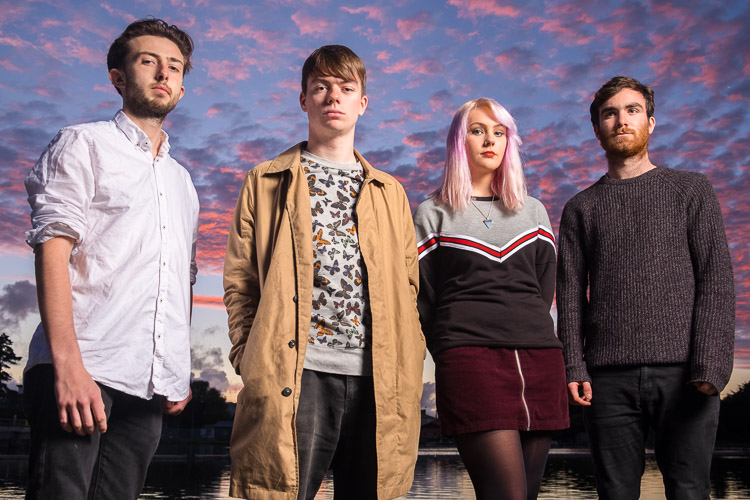
A shot of the band Drown for The Thin Air magazine. The evening light makes the shot. I needed a higher aperture to get the whole band in focus, so opted not to use HSS here.

Using Neutral Density Filter

If you shoot landscape photography, you will be familiar with Neutral Density (ND) filters. This filter allows you to slow the shutter speed down to get nice silky water. Neutral means that it adds no color, while the density part refers to blocking light. You can get them in a range of values from 1 stop to 16 stops.

For portraits, these allow you to drop the aperture down instead of shutter speed. So a 4 stop ND would take you from f/16 to f/4. The drawback is that as you block light, focusing can become harder. Another potential issue is that not all ND filters are actually neutral. Some tend to have a color cast. I have a Firecrest 10-stop for landscapes, which is neutral, but the older 4-stop I have from the same company is slightly pink.

portraits with flash and high-speed sync

Without the ND filter applied, the entire scene is in focus. ISO 200, f/16, 1/250th.

portraits with flash and high-speed sync

With the 4-stop ND filter applied, the background can be rendered out of focus. The flash is still at the same power as the shot above without the filter. The filter does have a color cast, which is hard to remove completely. ISO 200, f/4, 1/250th.

Conclusion

I hope this gives you some options and ideas for how you can make portraits outdoors even when the sun is bright, by using flash and high-speed sync. Please put your questions and comments below, and share your high-speed sync portraits as well.

googletag.cmd.push(function() {
tablet_slots.push( googletag.defineSlot( “/1005424/_dPSv4_tab-all-article-bottom_(300×250)”, [300, 250], “pb-ad-78623” ).addService( googletag.pubads() ) ); } );

googletag.cmd.push(function() {
mobile_slots.push( googletag.defineSlot( “/1005424/_dPSv4_mob-all-article-bottom_(300×250)”, [300, 250], “pb-ad-78158” ).addService( googletag.pubads() ) ); } );

The post How to Make Beautiful Portraits Using Flash and High-Speed Sync by Sean McCormack appeared first on Digital Photography School.


Digital Photography School

 
Comments Off on How to Make Beautiful Portraits Using Flash and High-Speed Sync

Posted in Photography