RSS
 

Posts Tagged ‘first’

Above and beyond: Lenovo Moto G Plus first impressions review

17 May

The Moto G Plus is a brand new model in Motorola’s Moto G mid-range series, but its camera specification looks pretty much top-notch. A 1/2.4-inch Omnivsion OV16860 16MP sensor with a large pixel size of 1.34um is paired with a fast F2.0 aperture. Its contrast detect autofocus is supported by on-sensor phase detection and a laser to measure subject distance. A dual-LED flash is on board for shooting in very dark conditions, and in the camera app a new Professional mode allows for manual control over the most important shooting parameters like shutter speed and ISO.

The new Professional mode allows for manual control over shutter speed and other shooting parameters via a range of virtual dials. It’s also possible to display just one dial at a time.

We have had the chance to use the Moto G Plus for a couple of days before launch and shot a good number of samples in a variety of situations. Read on for our first impressions of the new smartphone and its camera. 

Image Quality

In bright light the Moto G Plus 16MP camera module does a very good job at resolving detail. Thanks to very well balanced sharpening and noise reduction, fine textures and low contrast detail, such as the trees in the distance in the left sample below, are rendered very nicely. The lens in our test unit is sharp,  with only some minor softness toward the edges. Skin tones look natural and color is overall pleasantly neutral, without any white balance issues in natural light. 

 ISO 64, 1/1236 sec  ISO 64, 1/137 sec
 100% crop  100% crop

Some luminance noise is visible in blue skies but it is finely grained and not too intrusive. In the shadow areas some smearing of detail is noticeable, but again this is well within acceptable limits. Shadow noise is very well controlled as well.

 ISO 64, 1/2836 sec  ISO 64, 1/450 sec
 100% crop  100% crop

The well-balanced approach toward noise reduction is maintained throughout the ISO range and while noise and the effects of noise reduction inevitably become more evident in lower light the Moto G Plus performs very well in dimmer conditions. 

 ISO 160, 1/33 sec  ISO 400, 1/30 sec
 100% crop  100% crop

In lower light shutter speeds are reduced down to 1/15 sec which, without optical image stabilization, can result in the occasional shaky image. However, as long as you keep your hands steady the Moto captures very good detail, color and exposures in lower light. Both images below were shot in fairly dim conditions. In the one on the right the camera deals particularly well with the mix of artificial and very low natural light.

 ISO 640, 1/20 sec  ISO 800, 1/15 sec
 100% crop  100% crop

Like on the higher-end Moto models, the Moto G Plus offers a multi-frame Night Mode that kicks in when things get too dark. This allows for decent exposures of even very dark scenes, such as the image on the left below which was captured in a museum in very low light. We also liked the Moto G Plus flash performance which delivered well-exposed images with good color and detail during our brief test. 

 ISO 1250 1/15 sec  ISO 2000, 1/15 sec, flash on
 100% crop  100% crop

Special modes

The Moto G Plus comes with the same panorama mode as previous Moto devices and image output is very similar. Stitching is generally very good but panorama mode does not deal well with moving subjects in the scene. At under 3000 pixels the output size is very small. 

 Vertical panorama, 2472 x 704 pixels

HDR mode works in the conventional way and combines several exposures into one. On the Moto G Plus the effect is much more pronounced in shadow areas, which are noticeably lifted while highlights are only recovered minimally. 

ISO 64, 1/1196 sec,  HDR off  ISO 64, 1/1158 sec, HDR on

In video mode the Moto G Plus can capture 1080p footage at 30 frames per second that is digitally stabilized. Detail is good, the autofocus tends to be stable and the stabilization works efficiently, making for smooth panning and stable hand-held recording.

First impressions

During our testing we were impressed with the image output produced by the Moto G Plus. The large pixels in combination with very well-balanced image processing result in image quality that we would typically expect from devices in a higher price category. Images show good detail and well-controlled noise levels across the ISO range. Colors are pleasantly natural, even in difficult light situations, and thanks to its night mode the Moto is capable of capturing decent exposures even at very low light levels. On the downside, in dim conditions camera shake can lead to some image blur, though it is typically only noticeable at a 100% view.

The new Professional mode is good news for those mobile photographers who want maximum control over the capture process, and the large 1080p display is nice for viewing and composing images. The fingerprint sensor performs very swiftly and increases the security of your image and video files that are stored on the device. The plastic back is in line with a mid-ranger but overall the Moto G Plus looks like a great option for consumers who want excellent camera performance without spending money on a flagship device.

Articles: Digital Photography Review (dpreview.com)

 
Comments Off on Above and beyond: Lenovo Moto G Plus first impressions review

Posted in Uncategorized


First Look and Field Test of the Canon 80D

01 May

Recently Canon released their latest upgrade in the EOS line, the 80D. It’s a direct update of its predecessor the 70D but it competes well in many areas when compared to the older 5D Mark III, and the 7D Mark II bodies.

See what Chris and Jordan from The Camera Store think as they put the Canon 80D through various tests.

It has some great dynamic range, focus pull features while doing video, and a rotating tilting screen. The guys feel that the 80D is the best DSLR in the Canon range right now, and that it’s a step in the right direction for Canon.

What are your thoughts? Have you tried it out?

googletag.cmd.push(function() {
tablet_slots.push( googletag.defineSlot( “/1005424/_dPSv4_tab-all-article-bottom_(300×250)”, [300, 250], “pb-ad-78623” ).addService( googletag.pubads() ) ); } );

googletag.cmd.push(function() {
mobile_slots.push( googletag.defineSlot( “/1005424/_dPSv4_mob-all-article-bottom_(300×250)”, [300, 250], “pb-ad-78158” ).addService( googletag.pubads() ) ); } );

The post First Look and Field Test of the Canon 80D by Darlene Hildebrandt appeared first on Digital Photography School.


Digital Photography School

 
Comments Off on First Look and Field Test of the Canon 80D

Posted in Photography


How to Take Better Wildlife Photos: Be a Naturalist First

29 Apr

I love birds. In fact, I’ve dedicated much of my adult life to the study of birds. In college, I spent days exploring the beaches, forests, and wetlands surrounding southern Puget Sound, strictly in the interest of finding and watching birds. Birds lured me north to current home in Alaska, when I took a job banding songbirds in Denali National Park. My interest in migrant birds carried me into graduate school where I spent several years studying the spring migration in the Sierra de Los Tuxtlas of eastern Mexico. After grad school, I took a job as a Research Biologist here in Fairbanks, where I looked into all kinds of questions about breeding and migrating birds around the state.

Now, though I no longer work as a full-time research biologist (writing, photography, and guiding now rule my life), my passion for feathered creatures is no less strong.
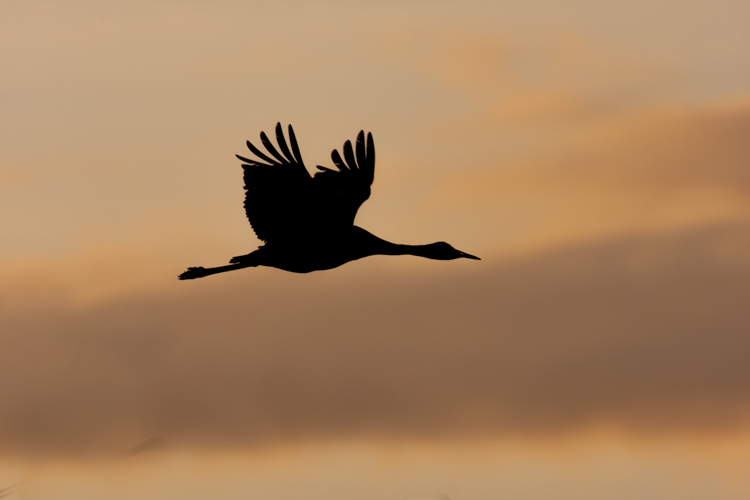
AK-FAI-CreamersField-Migration-Aug2009-39

I give you these biographical tidbits, because I want you to understand something about me: I care about, and understand birds. Knowledge and passion are the two most important tools I know of for better wildlife photography.

Ask someone what a wildlife photographer needs and the first thing you are likely to hear is a big lens. That helps, make no doubt, but it’s hardly the most important. No, the most important thing is an understanding of the critters you want to photograph. It doesn’t matter if your lens is as long as your leg, if you can’t find the animal you’re after.
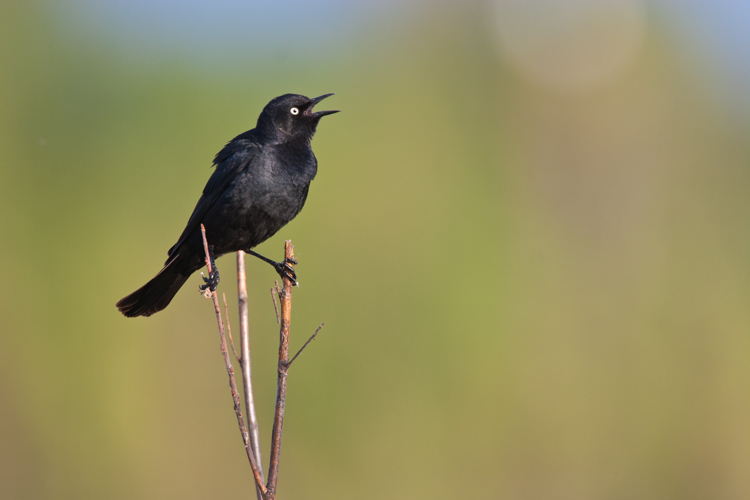
AK-FAI-RUBL-17

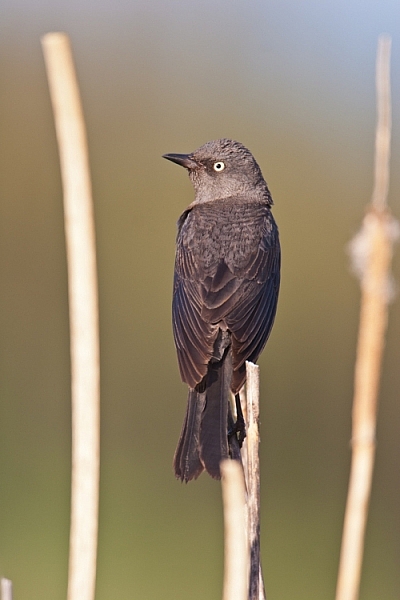
An example: During my years as a Research Biologist, I spent several seasons studying an imperiled species of songbird that breeds in the wetlands of the Boreal Forest, the Rusty Blackbird. This species has been declining in abundance across its range for the past 50 to 100 years, and no one really knows why. In the winter, they are easier to find, when they mix with flocks of other blackbirds in the south-central United States, or forage in small groups in the wetlands of the southern Mississippi basin.

In summer, however, when the males are attired in their crisp, shiny, black plumage, they are very difficult to find. Rusty Blackbirds nest in some pretty unpleasant places: thick, mosquito-infested swamps in the northern forest of Alaska, Canada, and the northeastern states.
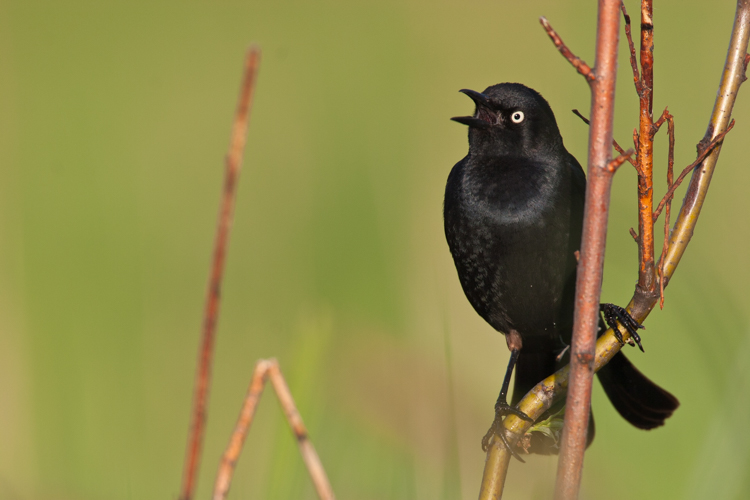
AK-FAI-RUBL-44
Having studied them for years, I had a distinct advantage when I set out to photograph this species. I knew where to find them, right down to a specific pair of birds, and I knew where to position myself for the best chance of getting foraging birds to appear within the range of my camera.
AK-FAI-RUBL-48

Thanks to that personal knowledge, I got some great photos of both males and females in breeding plumage, and the rarity of these images has made them some of my most published wildlife photos.

Though it helps, you don’t need the extensive personal knowledge that I was lucky to have of Rusty Blackbirds. You do, however, need a basic understanding of your quarry.

Some things to consider:

Seasonality

Many species migrate, or are difficult (or easy) to find during certain times of year. Birds are an obvious example. If you want to photograph congregations of migrating Sandhill Cranes and waterfowl, then you need to know when the birds are going to be present. A hint: It isn’t during the summer.
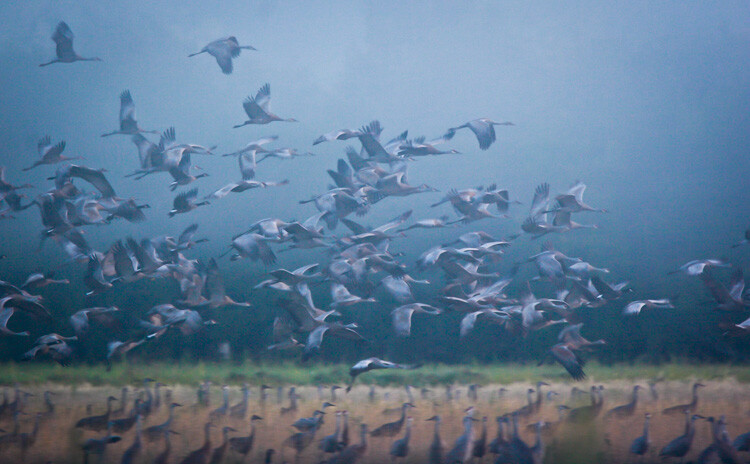
A flock of Sandhill Cranes during migration. You only get a few weeks each years to catch big flocks of this species, so you need to be ready.

A flock of Sandhill Cranes during migration. You only get a few weeks each years to catch big flocks of this species, so you need to be ready.

Seasonality isn’t limited to birds, many mammal species may only be available during a narrow time window. The Brooks River in Katmai National Park, Alaska is a famous spot to photograph bears. Though bruins are present in the area just about anytime from May to early October, if you want to photograph them catching salmon at the falls, you are likely to be disappointed if you schedule your trip in any month but July.
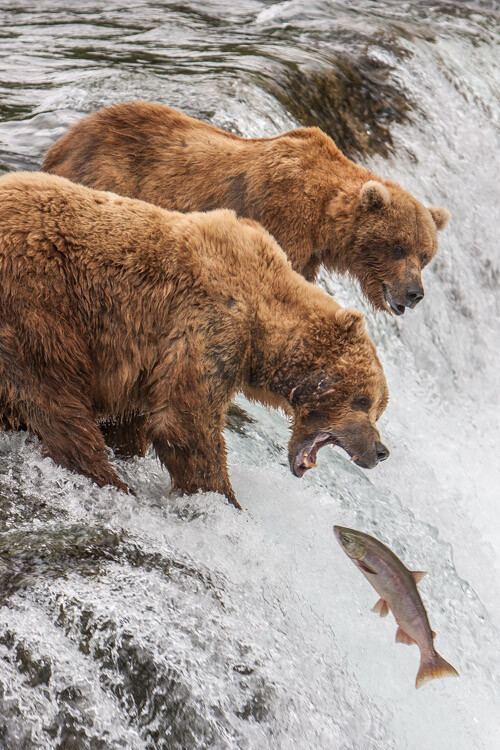
Red Salmon, which run up the Brooks River and leap the falls, are most abundant in July. If you don't catch the run, you won't see the bears trying to catch them at the falls.

Red Salmon, which run up the Brooks River and leap the falls, are most abundant in July. If you don’t catch the run, you won’t see the bears trying to catch them like this.
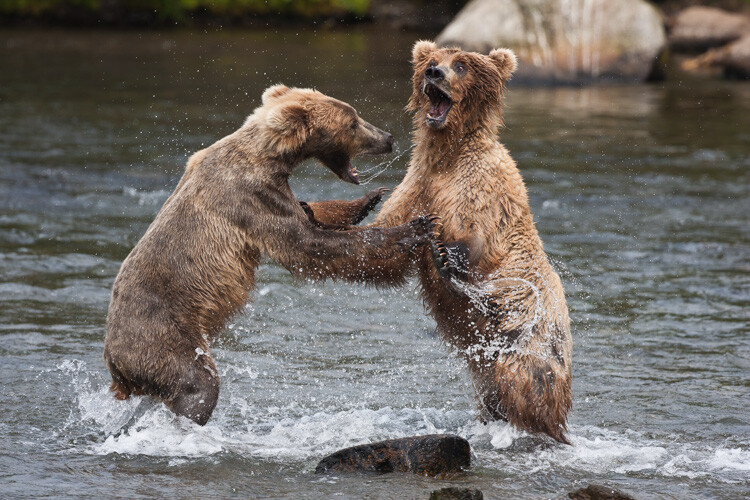
During the salmon run, the bears get close together and juveniles like these, are forced to bicker for a good fishing spot.

During the salmon run, the bears get close together, and juveniles like these are forced to bicker for a good fishing spot.

Range and habitat

Some species have a continent-wide distribution, others may be extremely limited. Almost all wildlife has preferred habitat that will dictate where, within their larger range, they are likely to be found. The range of Pronghorn includes the better part of the American west, but their habitat, intact grass and sagebrush prairie, is much less abundant. Pronghorn habitat also changes with the season, so you can see how range, habitat, and seasonality, all interact to guide you to the best place at the best time.
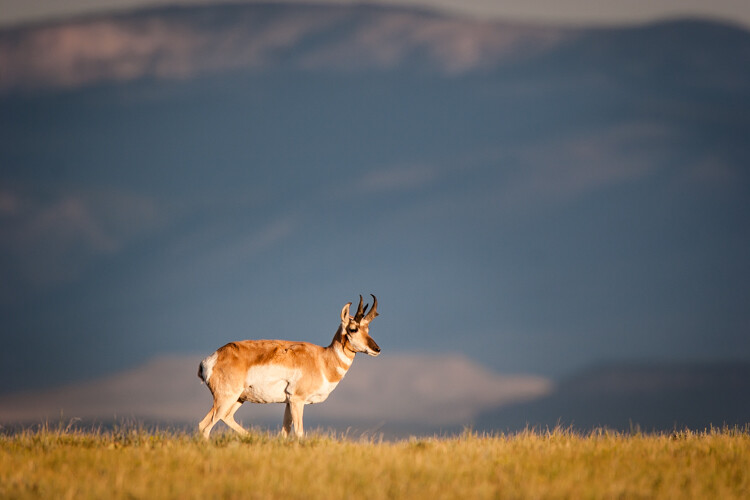
A Pronghorn in southern Wyoming, first light.

A Pronghorn in southern Wyoming, first light.

Behavior

You may have particular behavior that you’d like to observe or photograph. Many bird species look their best, and are most active during the breeding season, but for some species, that season can be very, very short. Where I live in the interior of Alaska, the courtship period is extremely short, lasting only a few days to a couple of weeks depending on the species. Birds like the Horned Grebe are commonly found on small boreal forest ponds near my home, but they are most easily photographed during a couple of weeks in late May, when the males are setting up territories.
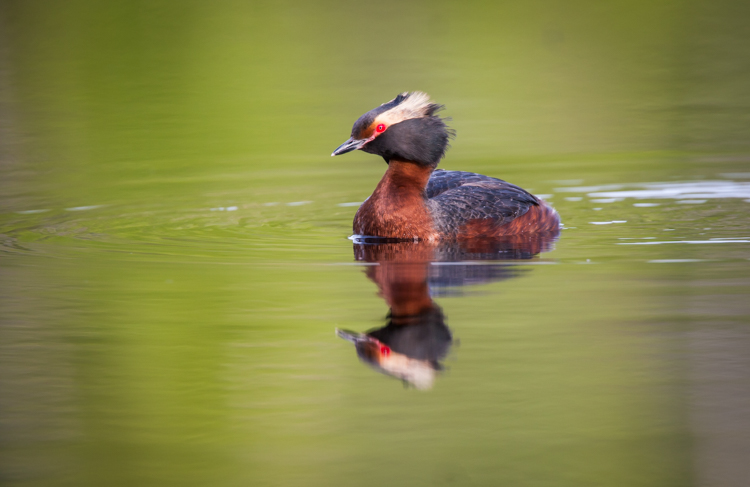
AK-FAI-HOGR-10

Resources

Thanks to the internet, most of the information you need to explore your target species is available right at your finger tips. In fact, they are so numerous, that there isn’t nearly enough space here to list them all, but I do want to make not of a few of my favorites:

  • eBird:  This site, run by the Cornell Lab of Ornithology is a citizen science site where you can document your sightings of birds. While great for birders, it is also a useful tool for photographers. You can explore data here submitted by birders from across the country and world. The mapping function allows you to look, in very close detail, about where different species are found during the year.
  • iNaturalist:  Though put together in a similar way to eBird, iNaturalist is not limited to birds. Here you can find sighting and identification information on plants, mammals, insects, birds and just about everything else.
  • Field Guides:  Classic paper, or digital field guides are still one of the best sources of information on distribution and behavior of wildlife. I’ve got dozens in my collection, and I use them all.
  • Experts:  You can outsource your research by hiring an expert guide to get you where you need to go. If you want to photograph bears or caribou in Alaska, or the wildebeest migration in Africa, there are people who can help you decide on the best time to do it, get you where you need to go, and even point your camera in the right direction for you. Local expertise is very valuable, and though it saves time, it costs money, and may not be as rewarding as learning about, then finding and photographing your target species on your own.
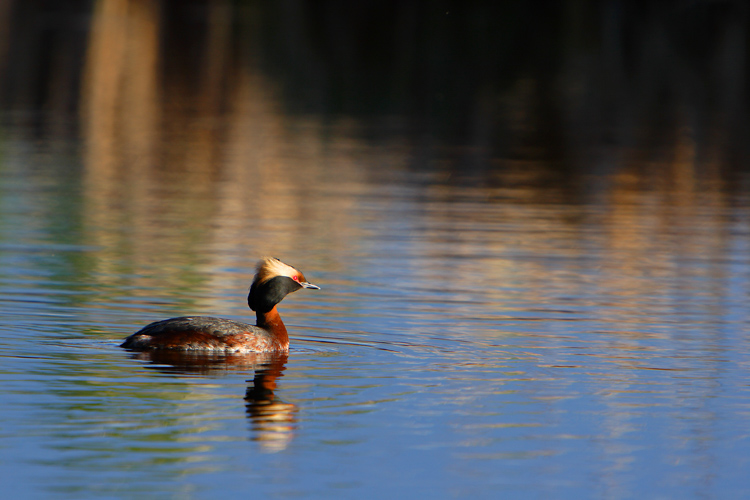
AK-Tflats-HOGR-02

Ethics

Though a discussion of ethics in wildlife photography warrants a post of its own, I want to emphasize the importance of being respectful of the animals you are trying to photograph and the people with whom you share the view. Don’t disturb the animal, if it moves away, bolts, or flushes, you have gotten too close. Such impacts, when they occur again and again, can cause stress, low reproductive success, nest abandonment, or any number of other problems for wildlife. The animal’s welfare matters more than your image, so please, please, please be careful and respectful.

Conclusion

I take great pleasure in being a naturalist. I’d say I’m a naturalist first and foremost, and a photographer second. That might sound strange, but for me, the two go hand in hand. I find a greater understanding of the creatures I photograph leads to better images, and just as importantly a much more rewarding experience. To be a better wildlife photographer, put down the camera, and pick up a book.

googletag.cmd.push(function() {
tablet_slots.push( googletag.defineSlot( “/1005424/_dPSv4_tab-all-article-bottom_(300×250)”, [300, 250], “pb-ad-78623” ).addService( googletag.pubads() ) ); } );

googletag.cmd.push(function() {
mobile_slots.push( googletag.defineSlot( “/1005424/_dPSv4_mob-all-article-bottom_(300×250)”, [300, 250], “pb-ad-78158” ).addService( googletag.pubads() ) ); } );

The post How to Take Better Wildlife Photos: Be a Naturalist First by David Shaw appeared first on Digital Photography School.

Digital Photography School

 
Comments Off on How to Take Better Wildlife Photos: Be a Naturalist First

Posted in Photography


HTC 10 is the first smartphone with OIS in front and rear cameras

13 Apr

Taiwanese smartphone maker HTC has today launched its latest flagship model, the HTC 10. While the predecessors we tested were frankly disappointing in the camera department, looking at its specs it seems like the 10 has the potential to turn things around for HTC. Read more

Articles: Digital Photography Review (dpreview.com)

 
Comments Off on HTC 10 is the first smartphone with OIS in front and rear cameras

Posted in Uncategorized


First Time in 100 Years: Forbidden City’s Secret Garden to Open

06 Apr

[ By WebUrbanist in Destinations & Sights & Travel. ]

forbidden city secret garden

The Forbidden City in Beijing, China, is one of the most-visited landmarks in the world, but now its secret garden, closed to the public for close to a century, is scheduled to open its gates.

forbidden space hidden garden

Built in the 15th Century, the Forbidden City was a center of power for hundreds of years, a vast and sprawling complex of residential, cultural and political spaces. While tourists are welcome to explore much of the complex, the Secret Garden within its walls was shut off from view after the last emperor was deposed.

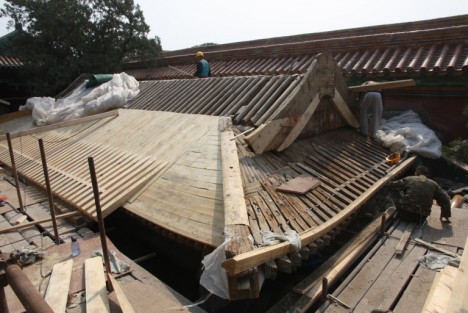
secret garden roof

Current conservation efforts are underway, aimed at making the space historically accurate down to the last detail. For better and worse, the Secret Garden has been largely untouched for hundreds of years, closed off and left theoretically intact but also subject to decay. The first stage of the project was completed in 2008, and the final phases are scheduled to finish by 2020, at which time visitors will be able to enter once more.

secret garden space interior

More details from Hyperallergic: “The Qianlong Garden Conservation Project is a joint initiative between the Palace Museum, which manages the Forbidden City, and the World Monuments Fund (WMF). Last month WMF Senior Advisor Henry Ng discussed the project’s progress at a gathering of WMF’s Moai Circle at the bar Lumos. ‘Many of the threads were lost for how this place was built,” he explained, adding that the major challenge is retrieving traditional Chinese crafts that vanished in the country’s 20th-century cultural upheaval.’” (images via Si Bing/Palace Museum, the Palace Museum/World Monuments Fund and David Stanley via Inhabitat).

Share on Facebook


[ By WebUrbanist in Destinations & Sights & Travel. ]

[ WebUrbanist | Archives | Galleries | Privacy | TOS ]


WebUrbanist

 
Comments Off on First Time in 100 Years: Forbidden City’s Secret Garden to Open

Posted in Creativity


Our Top 10 Posts from Our First 10 Years

01 Apr

Today, April 1st is Photojojo’s 10th Birthday (no foolin’)!

What started as a photo idea and inspiration newsletter, is all grown up now.

We’re a photo idea and inspiration blog, with a top-notch photo gear shop, a fun community across social media and of course, a darn good newsletter.

What exactly have we been up to for the last ten years? We’ll let the internet decide the greatest things we’ve done. Here are the 10 most popular Photojojo articles of all time!

(…)
Read the rest of Our Top 10 Posts from Our First 10 Years (125 words)


© laurel for Photojojo, 2016. |
Permalink |
No comment |
Add to
del.icio.us

Post tags:


Photojojo

 
Comments Off on Our Top 10 Posts from Our First 10 Years

Posted in Equipment


First sample images from 20MP Sony Cyber-shot RX10 III

31 Mar

DPReview is in San Francisco checking out the new Cyber-shot RX10 III. The RX10 III maintains the ergonomics and key specifications of its predecessor, but incorporates a massive 24-600mm equivalent F2.4-4 lens. We’ve been doing some shooting with the camera in a range of different situations, and we’ve created a (JPEG only, for now) gallery. 

Articles: Digital Photography Review (dpreview.com)

 
Comments Off on First sample images from 20MP Sony Cyber-shot RX10 III

Posted in Uncategorized


Upwardly mobile: Sony a6300 First Impressions Review

17 Mar

The Sony a6300 is the company’s latest mid-range mirrorless camera. Like the a6000 it still offers 24MP resolution but the autofocus ability, video capability, build quality, viewfinder resolution and price have all been increased.

The most exciting change from our perspective is the a6300’s new sensor. Although the pixel count remains the same, the a6300’s sensor has a whopping 425 phase-detection AF points ranged across the sensor. The a6000 already offered one of the best AF systems in its class, when it comes to identifying and tracking subjects, so an upgrade in this area sounds extremely promising. The sensor is also built using newer fabrication processes that use copper wiring to help improve the sensor’s performance and possibly contributing to the camera’s slightly enhanced battery life.

The a6000 has been a huge success and has dominated its field to the extent that its combination of capability and price still looks impressive even as it enters the twilight of its career (Sony says it will live on, alongside the a6300*). That model represented a dip down-market for the series, with a drop in build-quality and spec relative to the NEX-6 that preceded it. The a6300 corrects that course, and sees the model regain the high-resolution viewfinder and magnesium alloy build offered by the older NEX-6.

Key features:

  • 24MP Exmor CMOS sensor
  • 425 phase detection points to give ‘4D Focus’ Hybrid AF
  • 4K (UHD) video – 25/24p from full width, 30p from smaller crop
  • 2.36m dot OLED finder with 120fps mode
  • Dust and moisture resisitant magnesium alloy body
  • Built-in Wi-Fi with NFC connection option
  • Built-in microphone socket

As with the previous 6-series E-mount cameras, the a6300 features a flip up/down 16:9 ratio screen. The shape of this screen hints at the 6300’s intended uses: video shooting as well as stills. The a6300’s movie features have been considerably uprated. It not only shoots 4K (UHD) at 24p or 25p from its full sensor width (or 30p from a tighter crop). It also gains a mic socket, the video-focused Picture Profile system (which includes the flat S-Log2 and S-Log3 gamma curves), and the ability to record time code.

This added emphasis on video makes absolute sense, since the camera’s stills performance is likely to be competitive with the best on the market but its video capabilities trounce most of its current rivals. The a6300 not only includes focus peaking and zebra stripes but, if its on-sensor phase detection works well, the ability to re-focus as you shoot with minimal risk of focus wobble and hunting, should make it easier to shoot great-looking footage.

All this makes it hard to overstate how promising the a6300 looks. A latest-generation sensor can only mean good things for the camera’s image quality and an autofocus system that moves beyond the performance of one of our benchmark cameras is an enticing prospect. Add to that excellent, well-supported video specifications, a better viewfinder and weather-sealed build, and it’s tempting to start planning for the camera’s coronation as King of the APS-C ILCs. Perhaps with only the price tag floating over proceedings, threatening just a little rain on that particular parade.

Specifications compared:

As well as comparing the a6300 with the a6000 as its predecessor/sister model, we’ll also look at what you get if you save up a bit more money and opt for full frame, rather than APS-C. We think at least some enthusiast users will find themselves making this decision, so are highlighting the differences.

  Sony a6000 Sony a6300 Sony a7 II
MSRP (Body Only) $ 650 $ 1000 $ 1700
Sensor size APS-C (23.5 x 15.6mm) APS-C (23.5 x 15.6mm) Full Frame (35.8 x 23.9 mm)
Pixel count 24MP 24MP 24MP
AF system Hybrid AF
(with 179 PDAF points)
Hybrid AF
(with 425 PDAF points)
Hybrid AF
(with 117 PDAF points)
Continuous shooting rate 11.0 fps 11.0 fps 5.0 fps
Screen 3″ tilting 921k dot LCD 3″ tilting 921k dot LCD 3″ tilting 1.23m dot LCD
Viewfinder OLED 1.44m dots OLED 2.36m dots 120fps refresh option OLED 2.36m dots
Movie Resolution 1920 x 1080 / 60p 4K 3840 x 2160 / 30p, 1920 x 1080 / 120p, 60p 1920 x 1080 / 60p
Image stabilization In-lens only In-lens only In-body 5-axis
Number of dials Two Two Three (plus Exp Comp.)
Maximum shutter speed 1/4000sec 1/4000sec 1/8000sec
Built-in flash  Yes Yes No
Hot shoe Yes Yes Yes
Flash sync speed 1/160sec 1/160sec 1/250sec
Battery life
(with EVF)
360 shots
(310 shots)
400 shots
(350 shots)
350 shots
(270 shots)
Weight (w/battery) 344 g (12.1 oz) 404 g (14.3 oz) 599 g (21.1 oz)
Dimensions 120 x 67 x 45 mm (4.7 x 2.6 x 1.8″) 120 x 67 x 49 mm (4.7 x 2.6 x 1.9″) 127 x 96 x 60 mm (5 x 3.8 x 2.4″)

A hit-for-six, slam-dunk, home-run?

If it’s successful in its attempts to step up from the performance of the a6000 then the a6300 could be sensational. However, there are three questions that we’d like to see addressed. The first relates to handling: why does a camera costing this much only have one dial that you can access without changing the position of your grip? The rear dial isn’t the worst we’ve encountered, but at this price point, we’d usually expect to find a dial under the forefinger and another under the thumb while maintaining a shooting grip.

The second relates to lenses. Sony is bundling the a6300 with the 16-50mm power zoom that’s far more notable for its convenience than its optical consistency, a move that’s likely to raise the question of what other lenses to fit. Sony offers a handful of reasonably-priced APS-C specific prime lenses as well as some more expensive FE-compatible full frame primes. However, in terms of standard zooms, you’re currently limited to the inexpensive 16-50mm or the considerably better 16-70mm F4 Zeiss that costs around the same amount as the camera again. The success of Sony’s full frame a7 cameras is only likely to improve third-party lens availability but there’s a risk that Sony’s focus will be on those full frame users for the foreseeable future.

Our final concern is the lack of joystick or touchscreen to reposition the AF point. This may be mitigated during stills shooting if the lock-on AF system works well enough (starting AF tracking and then recompose your shot in the knowledge that the AF point will stay where you want it), but it appears to be a real omission for refocusing while shooting video. We’ll see how significant all these concerns turn out to be, as the review unfolds.

Price and kit options

 The 16-50mm power zoom is far more notable for its convenience than its optical consistency.

The a6300 will sell for around $ 1000/£1000/€1,250, with a 16-50mm F3.5-5.6 power zoom kit commanding an MSRP of $ 1,150/£1,100/€1,400. This is a significant step up from the a6000’s $ 650/$ 800 launch price and even an increase compared to the similarly well-built NEX-6’s $ 750/$ 900 MSRP.

 Review History
17 March 2016 Intro, Specs, Body and Handling, Operations and Control and Studio Comparison published

*Unusually, the manufacturer’s claim that it’ll live on, alongside its apparent replacement model seems plausible. The differences in spec and price could allow them to sit fairly comfortably alongside one another, rather than the claim simply meaning ‘we’ll keep saying it’s a current model until most of the unsold stock has gone, to avoid angering retailers.’


If you're new to digital photography you may wish to read the Digital Photography Glossary before diving into this article (it may help you understand some of the terms used).

Conclusion / Recommendation / Ratings are based on the opinion of the reviewer, you should read the ENTIRE review before coming to your own conclusions.

We recommend to make the most of this review you should be able to see the difference (at least) between X, Y, and Z and ideally A, B, and C.

This article is Copyright 1998 – 2016 and may NOT in part or in whole be reproduced in any electronic or printed medium without prior permission from the author.

Articles: Digital Photography Review (dpreview.com)

 
Comments Off on Upwardly mobile: Sony a6300 First Impressions Review

Posted in Uncategorized


First “Drawn in Place” Architecture Made with a 3D-Printing Pen

29 Feb

[ By WebUrbanist in Conceptual & Futuristic & Technology. ]

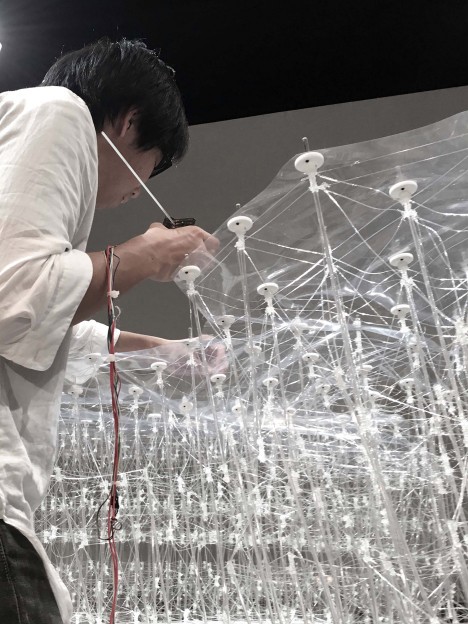
3d printed architecture pen

A group of students from the University of Tokyo have created the world’s first work of 3D pen-drawn architecture, extruding thermoplastic filament to generate a structurally-stable arch installation.

3d pen modeling student

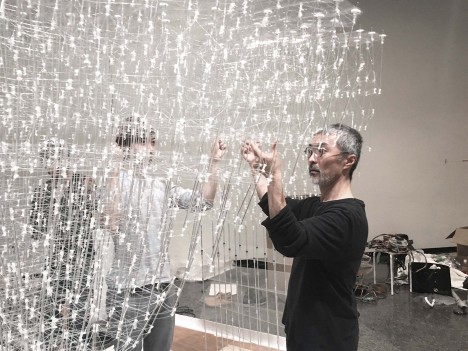
A digital tracking system helped builders connect rods with extruded supports, generating a lattice-like system of interconnected trusses (resulting in a kind of lightweight, smaller-scale space frame). The combination of rigid rods and fluid connectors helps the whole structural network, providing tension as well as compression capabilities.

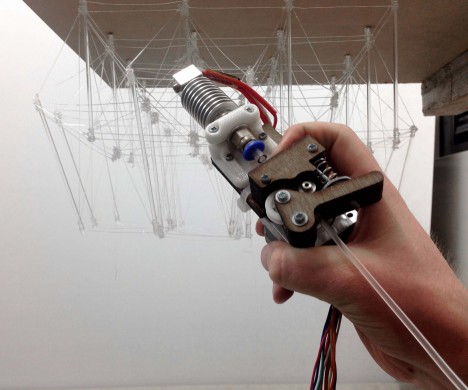
3d pen in use

The handheld device enabling the extrusions operates much like a hot glue gun or static 3D printer, heating the constituent material and making it malleable before it hardens upon deployment. Unlike large-scale printers, this approach enables minute on-site work by anyone trained to use the machine, reducing costs and complexity.

3d connected network structure

“Technology has traditionally been used to automate and replace human labour,” design team member Kevin Clement, said in an interview with Dezeen. “The issue with this approach is that it fails to take advantage of human intuition during fabrication. We believe our approach can bridge the current dichotomy between machine and human-made production.”

Share on Facebook


[ By WebUrbanist in Conceptual & Futuristic & Technology. ]

[ WebUrbanist | Archives | Galleries | Privacy | TOS ]


WebUrbanist

 
Comments Off on First “Drawn in Place” Architecture Made with a 3D-Printing Pen

Posted in Creativity


Oppo announces first sensor-based IS for smartphones

26 Feb

Chinese smartphone manufacturer Oppo has a history of launching smartphone models with novel camera features and concepts, and has just launched the first sensor-based image stabilization system for smartphones at MWC. Oppo calls it the smallest image stabilizer of its kind, and claims it’s able to correct for shake with greater precision than current optical stabilization systems. Read more

Articles: Digital Photography Review (dpreview.com)

 
Comments Off on Oppo announces first sensor-based IS for smartphones

Posted in Uncategorized