RSS
 

Posts Tagged ‘first’

First impressions review: Lenovo Moto Z Force shows promise

26 Jul

The Moto Z Force is Lenovo’s brand new, top-of-the-line smartphone. Currently exclusive to the Verizon network in the US as the Moto Z Force Droid Edition, we expect an international launch of the device in the near future. 

The device packs a 21MP image sensor with a 1.12 µm pixel size, an F1.8 aperture, on-sensor phase detection, laser-assisted AF and an optical image stabilization system into its camera module. The camera app offers full manual control and the Moto Z Force can save DNG Raw files with third party apps, such as Manual Camera.

The metal and glass body is just under 7mm thin and comes with a shatterproof 5.5″ Quad-HD AMOLED display and a beefy 3,500 mAh battery. The Android 6.0.1 Marshmallow OS is powered by a Qualcomm Snapdragon 820 chipset and 4GB of RAM. Mobile photographers will also appreciate the microSD-slot for easy storage expansion. 

In addition, Moto Z Force users can select from several Moto Mods accessory modules which connect to the back of the device magnetically and via 16 connection points. So far there are the InstaShare projector, a JBL Soundboost 6 Watt speaker and a 2220 mAh battery pack. The Moto team has promised more Moto Mods for the future and according to rumors, one of them could be a camera grip. For now we’ll have to make do without the latter, but that hasn’t stopped us from shooting with the brand new Moto device. Read on for our first impressions. 


Image Quality

In bright light conditions the Moto’s 21MP sensor resolves a good deal of detail. Under close inspection some smearing of fine detail and textures is noticeable, but on the other hand luminance noise is very well controlled. During our brief testing, exposure was reliable but in very bright scenes, such as the one below, the image processing’s strong contrast can results in some clipped highlights. That said, overall the Moto Z Force does well in these conditions.

 ISO 50, 1/760 sec

Color tends to be quite saturated, but neutral and without any notable casts. This includes bright red tones which many smartphone cameras struggle with, especially under strong illumination.

 ISO 50, 1/452 sec

At higher ISOs the camera finds a good compromise between noise reduction and detail retention. The ISO 320 shot below was captured in a fairly well-lit interior space and shows very good edge detail. 

 ISO 320, 1/33 sec

The ISO 500 shot below shows some more luminance noise in the mid-tone areas of the frame but the noise pattern has a fairly fine grain and is not too intrusive. Chroma noise is well under control and the image still shows a very good amount of fine textures and detail.

 ISO 500, 1/25 sec

The Moto Z Force maintains good exposure and color down to very low light levels. The challenging lighting conditions in the shot below lead to some channel clipping in the illuminated stage area, but overall the scene is captured very nicely. The slow shutter speed of 1/10sec results in some blur on moving subjects but the optical image stabilization does a very good job at counteracting camera shake. 

 ISO 1250, 1/10 sec

Special modes

The Moto Z Force comes with Motorola’s usual HDR mode which does an efficient job of protecting the highlights in high-contrast scenes, such as the one below. Using the standard auto exposure mode, some clipping occurs on the light colored elements in the frame. Using HDR mode, image clipping is noticeably reduced. Shadows are lifted very slightly but overall the image still looks pleasantly natural.

 ISO 50, 1/1468 sec, standard exposure
 HDR exposure

Night mode is not a new feature for Moto devices but the latest incarnation works in a slightly different way than before. In low light scenes the camera automatically triggers multi-frame capture which produces clean images but struggles with moving subjects, which often show pronounced motion blur. On the new device, night mode now saves a standard exposure in addition to the night mode image, allowing the user to pick the version which best suits their purposes.

The sample images below both report ISO 1000 and a shutter speed of 1/10sec in the EXIF data. However, as you can see at close-up view they look very different. The multi-frame night mode image on the left is cleaner but shows motion blur, even on slow-moving subjects. The accompanying standard exposure shows better edge definition on moving subjects but noticeably higher levels of luminance noise. 

Night mode Standard exposure
100% crop 100% crop

In video mode the Moto Z Force is capable of recording both 1080p Full HD and 4K footage. The combination of digital and optical stabilization keeps things steady and allows for smooth panning. The 1080p video below shows similar tonal characteristics to the still images and decent detail but very occasionally we found the lens refocusing for no obvious reason.

The 4K video mode offers noticeably better detail for those who need it. It also allows users to grab 8MP video stills for those occasions when the full 21MP still resolution is not needed.

First impressions 

With its solid build, large high-resolution screen and metal frame the Moto Z Force looks and feels like a premium device. The Snapdragon 820 chipset under the hood ensures the performance of the Android operating system matches the device’s high-end exterior and the 3,500 mAh battery lets you shoot, edit and share images for a long time away from a power outlet.

The camera module’s 21MP captures a good level of detail and offers plenty of scope for cropping. There are the usual signs of smearing of fine textures at base ISO, but in low light the camera finds a good balance between noise reduction and detail retention. In addition, night mode lets you pick between a clean multi-frame image that works best for static scenes, and a standard exposure that shows more noise but is capable of freezing at least some motion. 

Colors are mostly quite saturated and contrast is strong which can lead to some highlight-clipping in high-contrast scenes. However, HDR mode does a very efficient job of protecting highlight detail, and in addition the Moto Z Force allows for the capture of DNG Raw files with third party camera apps, such as Manual Camera. This allows you to apply your very own mix of contrast, saturation, noise reduction and other image parameters in post processing. Add the camera app’s full manual control into the mix, plus the potential of a camera-grip add-on module in the nearer future, and the Moto Z Force is one of the year’s most interesting mobile photography products thus far.

Articles: Digital Photography Review (dpreview.com)

 
Comments Off on First impressions review: Lenovo Moto Z Force shows promise

Posted in Uncategorized


Phase One introduces first Schneider Kreuznach ‘Blue Ring’ zooms

19 Jul

$ (document).ready(function() { SampleGalleryV2({“containerId”:”embeddedSampleGallery_0196598875″,”galleryId”:”0196598875″,”isEmbeddedWidget”:true,”standalone”:false,”selectedImageIndex”:0,”startInCommentsView”:false,”isMobile”:false}) });

Phase One has announced two Schneider Kreuznach ‘Blue Ring’ lenses designed with the XF system in mind, the first zooms in the series. The Schneider Kreuznach 40-80mm LS F4.0-5.6 and the Schneider Kreuznach 75-150mm LS F4.0-5.6 are optimized for the company’s full frame (53.7 x 40.4mm) medium-format system.

The new Blue Ring lenses join the recently announced Schneider Kreuznach 110mm LS F2.8 and 240mm LS F4.5. Both feature the ability to sync flash at shutter speeds up to 1/1600sec and built-in electronics that allow autofocus to be individually calibrated. Phase One claims this series of lenses is built to its highest quality assurance standards

Phase One Announces First Schneider Kreuznach Blue Ring Zoom Lenses

Prime Lens Quality Featuring Full Frame Sensor Coverage, Improved Precision, and Advanced Electronics

COPENHAGEN, July 18, 2016 – Phase One, creator of the world’s finest open-platform high-end camera systems and professional imaging software, today added two new Schneider Kreuznach lenses to its comprehensive family of lenses. These two Blue Ring zoom lenses feature impressive front glass elements, with front lens diameters of 63mm and 65mm respectively, delivering edge-to-edge coverage of full frame 645 format. Used on a Phase One XF 100MP system, the lenses are able to take full advantage of the sensor’s resolution; a 100MP capture renders a 100MP image with breathtaking fidelity.

— The Schneider Kreuznach 40-80mm LS f/4.0-5.6 Zoom lens renders ultra sharp resolution on all zoom distances from wide to normal focal length;

— The Schneider Kreuznach 75-150mm LS f/4.0-5.6 Zoom lens delivers great versatility. It’s preferred for on-location fashion shoots, with a range from normal to telephoto.

Together, these two lenses comprise an effective zoom range from 40mm to 150mm. Each lens is equipped with a zoom lock function on its barrel and is designed to maintain focus position while zooming. They each support flash synchronization up to 1/1600s. The new built-in electronics permit individual focus calibration when used with the Phase One XF Camera System.

“Creating optics this large with such tight tolerances is quite an achievement, “said Espen Beck, Phase One Senior Product Manager. “A Phase One full frame 100MP medium format sensor is 1.5 times larger than the cropped size 50MP medium format and 2.5 times larger than sensors found in high-end 35mm DSLRs. Capturing the full resolution of a square sensor this size with a round lens and avoiding crop means that the entire lens must be larger, which requires larger movements of individual lens elements while meeting the requisite standards for speed and precision.

“Schneider Kreuznach lenses are designed to deliver the ultimate analogue input to be shaped and refined with the Phase One XF 100MP Camera System and Capture One software. This design also benefits the Phase One XF 50MP system, which can exploit the ‘sweet spot’ of the lens, producing impeccable results.”

Designed by Schneider Kreuznach and produced by Phase One Japan, Schneider Kreuznach “Blue Ring” zoom lenses are refined with robust, aerial-grade mechanics and manufactured to meet Phase One’s highest quality assurance standards. Their enhanced precision, mechanical build, and look and feel complement the Phase One XF Camera System design.

For more information, including specifications for the two new “Blue Ring” lenses, please go to: https://www.phaseone.com/en/Products/Camera-Systems/Lenses

There will be a hands-on Webinar demonstration of the lenses on Tuesday, July 19.

For more information, times and to register, please go to:

https://attendee.gotowebinar.com/rt/2633991530877302018

Availability and Pricing

The two new Blue Ring Zoom lenses are available to order now. They are compatible with the Phase One XF, Phase One 645DF+ and Mamiya 645DF+ or DF camera systems.

The Schneider Kreuznach 75-150mm LS f/4.0–5.6 Zoom is shipping now. Manufacturer suggested retail price: 5.490 EUR / 5,990 USD

The Schneider Kreuznach 40-80mmLS f/4.0–5.6 Zoom is expected to ship by August 1, 2016. Manufacturer suggested retail price: 7.990 EUR / 8,990 USD

Phase One Camera Systems and all accessories are available through Phase One photography partners worldwide: www.phaseone.com/partners.

For a demo of a Phase One Camera System, please sign up here: www.phaseone.com/demo

About Phase One

Phase One A/S is the world-leading provider of medium format digital photography systems and imaging solutions for professional photographers and industrial applications. Established in the early 1990s, Phase One is a true digital photography pioneer with a passionate commitment to image quality excellence and creative freedom. Phase One’s engineering and design expertise has produced imaging breakthroughs from high- resolution camera systems to advanced software for better photographic workflows and raw file editing. Phase One’s understanding and ability to optimize hardware and software integration underscores their award winning Capture One Pro software – widely preferred by professional photographers.

Phase One’s industrial division focuses on imaging accuracy for industrial applications ranging from aerial image acquisition to cultural heritage preservation – from mapping the globe, to protecting priceless works of art and documents.

Today, with control over all aspects of the medium format camera system supply chain, Phase One is uniquely positioned to help photographers and imaging experts everywhere stand out above the competition and realize their creative visions without compromise.

Based in Copenhagen Denmark and embracing the high demand of Scandinavian design excellence, Phase One is dedicated to delivering the best image quality and user experience. With offices in New York, London, Tokyo, Cologne, Hong Kong, Shanghai and Tel Aviv, and with its expert teams of global partners, Phase One is committed to serving and supporting its customers worldwide.

Phase One and Capture One are registered trademarks of Phase One A/S. All other brand or product names are trademarks or registered trademarks of their respective holders.

Learn more here:

Phase One at: http://www.phaseone.com

Twitter at: http://www.twitter/PhaseOnePhoto

Facebook at: http://www.facebook.com/pages/PhaseOnePhoto

Google+ at: http://plus.google.com/+phaseone/posts

LinkedIn at: http://www.linkedin.com/company/16665

Articles: Digital Photography Review (dpreview.com)

 
Comments Off on Phase One introduces first Schneider Kreuznach ‘Blue Ring’ zooms

Posted in Uncategorized


Samyang introduces XEEN 135mm T2.2, first ‘summer blockbuster’ lens

19 Jul

Samyang is making good on its promise of a new lens every week for five weeks, kicking things off with a XEEN 135mm T2.2 cinema lens. It slots into the company’s relatively new lineup as the longest lens in the range.

Like its siblings, the XEEN 135 is offered with interchangeable mount fittings for PL, Canon EF, Nikon F, Sony E and Micro Four Thirds bodies. Its manual focus only and uses an 11-blade aperture. No price is given, but XEEN series lenses have averaged around $ 2500 each.

Articles: Digital Photography Review (dpreview.com)

 
Comments Off on Samyang introduces XEEN 135mm T2.2, first ‘summer blockbuster’ lens

Posted in Uncategorized


Zenmuse Z3 is DJI’s first aerial zoom camera

15 Jul

Drone maker DJI has today announced its first aerial zoom camera, the Zenmuse Z3. The new model is optimized for still photography and combines a 3.5x optical zoom with 2x digital magnification, resulting in a 7x overall zoom factor, covering equivalent focal ranges from 22-77mm. Aperture ranges from F2.8 at wide angle to F5.2 at the long end of the zoom. Inside the 262-gram camera body images are captured on a 12MP 1/2.3-inch Sony sensor that can also record 4K video at 30fps and save DNG Raw files. 

 Drone shot at 22mm equivalent focal length
 Done shot at 77mm equivalent focal length (7x zoom)

The camera can be used on the DJI’s Inspire 1, Matrice 100 or Matrice 600 drones and the company’s dedicated HD video downlink allows for transmission from a distance of up to 3.1 miles (5km) away. The zoom is operated via the DJI GO app or the Drone remote control. DJI says it has refined and improved image stabilization, as any camera movement is magnified at the longer end of the zoom lens.  The Z3 also comes with an upgraded gimbal. The camera will be available from July 28th and retail for $ 899.

SHENZHEN, July 14, 2016 – DJI, the world’s leading aerial-imaging company, on Thursday announced the Zenmuse Z3, DJI’s first integrated aerial zoom camera optimized for still photography.

The Zenmuse Z3 will offer up to a 7x zoom. The camera incorporates DJI’s leading gimbal technology, which has been upgraded to work optimally with its zoom capabilities.

“The Zenmuse Z3 pushes the possibilities of use for industrial applications,” said Senior Product Manager Paul Pan. “Before this camera, the only way to zoom in on a subject or object was to fly closer to it. Now, pilots in a search-and-rescue situation, or conducting surveys or inspections, can maintain distance and still zoom in for sharp, detailed images.”

The zoom camera is aimed at providing new capabilities for industrial applications, such as inspection and surveying.

The Zenmuse Z3 is compatible with the Inspire 1, Matrice 100 and Matrice 600 drones and uses the company’s dedicated HD video downlink, Lightbridge and Lightbridge 2, providing up to 3.1 miles (5.0 kilometers) of HD transmission range.

The Zenmuse Z3 is fully integrated into the DJI GO app and provides a seamless user experience, including a live feed from the camera and the ability to change camera settings, swipe to zoom in and out, capture photos or video and to activate intelligent flight modes. Users may also choose to employ camera controls, such as capturing photos and video and zoom, through their drone’s remote controller.

The Zenmuse Z3 weighs 262-gram and achives up to a 7x zoom via a 3.5x optical zoom, combined with a 2x digital zoom. This gives the Zenmuse Z3 an effective zoom range of 22 millimeters to 77 millimeters. It has a maximum aperture of F2.8 and F5.2 at 22 millimeters and 77 millimeters, respectively.

When the camera zooms in, the smallest movements are magnified. Adding an additional layer of fine-tuning to the yaw control of the Z3 is a custom-designed reaction wheel. This works in tandem with the normal yaw motor to allow for more refined and controlled movement and greater stability.

The Zenmuse Z3 features the same highly refined Sony 1/2.3-inch sensor that is found on the Inspire 1 and the Phantom 4, leading the class in image quality. It can shoot still images at 12 megapixels with additional Adobe DNG Raw Support for maximum editing options in post-production. The camera also shoots video at up to 30 FPS in 4k resolution.

Flight time with the Zenmuse Z3 is up to 19 minutes on the Inspire 1. Pilots can extend flight time up to 30 minutes with the dual-battery-equipped M100 and up to 39 minutes with the M600.

The Zenmuse Z3 is priced at USD899 and will start shipping after July 28, 2016.

For more details please visit:
www.dji.com/product/zenmuse-z3

Articles: Digital Photography Review (dpreview.com)

 
Comments Off on Zenmuse Z3 is DJI’s first aerial zoom camera

Posted in Uncategorized


Samsung launches first removable UFS memory cards

09 Jul

Samsung has announced that it intends to produce the first removable versions of a new format of memory cards designed, it says, to replace the microSD card in portable electronic devices such as cameras, drones and phones.

The Universal Flash Storage cards are as small as microSD cards but boast enhanced read/write speeds, with the company claiming that 5GB can be read in just 10 seconds at a rate of 530MB/s. The write speeds a less impressive however, with a quoted maximum of 170MB/s, but Samsung says that is still almost twice the speed of a top end microSD card. The company says its cards will write at 170MB/s, which compares well to the 100MB/s rate quoted by SanDisk for its Extreme Pro UHS-II cards. The same SanDisk card reads at 275MB/s.

Although the format was announced in a white paper (pdf) in 2013, and Samsung announced its plans in February, this is the first time the cards appeared to become a reality with compliance with the Joint Electron Device Engineering Council (JEDEC) standards.

The company expects to introduce capacities of 32, 64,128 and 256GB, but hasn’t said when or whether there will be devices to take them.

Press release:

Samsung Introduces World’s First Universal Flash Storage (UFS) Removable Memory Card Line-up, Offering up to 256-Gigabyte (GB) Capacity

Samsung Electronics, the world leader in advanced memory technology, today unveiled the industry’s first removable memory cards based on the JEDEC Universal Flash Storage (UFS) 1.0 Card Extension Standard*, for use in high-resolution mobile shooting devices such as DSLRs, 3D VR cameras, action cams and drones. Coming in a wide range of storage capacities including 256, 128, 64 and 32 gigabyte (GB), Samsung’s UFS cards are expected to bring a significant performance boost to the external memory storage market, allowing much more satisfying multimedia experiences.

“Our new 256GB UFS card will provide an ideal user experience for digitally-minded consumers and lead the industry in establishing the most competitive memory card solution,” said Jung-bae Lee, senior vice president, Memory Product Planning & Application Engineering, Samsung Electronics “By launching our new high-capacity, high-performance UFS card line-up, we are changing the growth paradigm of the memory card market to prioritize performance and user convenience above all.”

Samsung’s new 256GB UFS removable memory card ? simply referred to as the UFS card will provide greatly improved user experiences, especially in high-resolution 3D gaming and high-resolution movie playback. It provides more than five times faster sequential read performance compared to that of a typical microSD card, reading sequentially at 530 megabytes per second (MB/s) which is similar to the sequential read speed of the most widely used SATA SSDs. With this UFS card, consumers have the ability to read a 5GB, Full-HD movie in approximately 10 seconds, compared to a typical UHS-1 microSD card, which would take over 50 seconds with 95MB/s of sequential reading speed. Also, at a random read rate of 40,000 IOPS, the 256GB card delivers more than 20 times higher random read performance compared to a typical microSD, which offers approximately 1,800 IOPS.

When it comes to writing, the new 256GB UFS card processes 35,000 random IOPS, which is 350 times higher than the 100 IOPs of a typical microSD card, and attains a 170MB/s sequential write speed, almost doubling the top-end microSD card speed. With these substantial performance improvements, the new 256GB UFS card significantly reduces multimedia data downloading time, photo thumbnail loading time and buffer clearing time in burst shooting mode, which, collectively, can be particularly beneficial to DSLR camera users. To shoot 24 large/extra fine JPEG photographs (1,120 megabyte (MB)-equivalent) continuously with a high-end DSLR camera, the 256GB UFS card takes less than seven seconds, compared to a UHS-1 microSD card which typically takes about 32 seconds, at 35MB/s.

To achieve the highest performance and most power-efficient data transport, the UFS card supports multiple commands with command queuing features and enables simultaneous reading and writing through the use of separately dedicated paths, doubling throughput.

As the leading memory storage provider, Samsung has been aggressive in preparing UFS solutions for the marketplace, while contributing to JEDEC standardization of the Universal Flash Storage 2.0 specification in September 2013 and the Universal Flash Storage (UFS) 1.0 Card Extension standard in March 2016. Following its introduction of the industry-first 128GB embedded UFS chip in January 2015, the company successfully launched a 256GB embedded UFS memory for high-end mobile devices in February of this year. As of earlier this month, Samsung also completed the Universal Flash Storage Association** (UFSA)’s certification program that evaluates electrical and functional specifications for compatibility of a UFS card, and Samsung’s new UFS card products were approved as UFSA-certified UFS cards with the right to use the official UFS logo for the first time in the industry.

Articles: Digital Photography Review (dpreview.com)

 
Comments Off on Samsung launches first removable UFS memory cards

Posted in Uncategorized


Elevating X-Trans? Fujifilm X-T2 First Impressions Review

07 Jul

The Fujifilm X-T2 is an updated version of the company’s top-level DSLR-shaped APS-C camera. It’s built around the same 24MP X-Trans sensor as the X-Pro2 but ends up being much more than an X-T1 with more pixels. Instead, the X-T2 is a camera that does much to address the X-System’s remaining weaknesses, which can only broaden its already considerable appeal.

Fujifilm X-T2 Key Features:

  • 24MP X-Trans CMOS III sensor
  • 325 AF points (169 of which offer phase detection)
  • AF point selection joystick
  • 2.36M-dot OLED EVF with 0.005 sec refresh time (60 fps or 100 fps in boost mode)
  • 3″ 1.04M-dot articulating LCD
  • 4K UHD video at up to 30 fps for up to 10 min (30 min with booster grip)
  • F-Log flat profile and 4K out over HDMI
  • 8 fps continuous shooting with AF (11 fps with booster grip)
  • 5 fps continuous shooting with live view updates between capture
  • Dual SD card slots (UHS-II compatible)
  • USB 3.0 socket

The X-Pro2 represented a good step forward for image quality within the system and the X-T2 gains all of that improvement, but there are also some considerable changes in terms of autofocus, video and flash control, suggesting Fujifilm wants its the X-T2 to be an all-round more capable camera than its predecessor, rather than just building on its existing strengths.

The body seems broadly unchanged at first glance but there’s a clever doubly-hinged flip-out screen that seems to offer many of the flexibility advantages of a fully articulated monitor while retaining the more compact form of a tilting screen.

There’s also a Performance Boost mode that speeds up several aspects of the camera’s behavior (at the expense of some battery life), but that really comes into its own when the optional ‘Power Boost Vertical Grip’ is added. None of these additions comes for free, though: at $ 1599, body only, the X-T2’s launch price has jumped $ 300, compared to its predecessors’.

Autofocus

Part and parcel of that 24MP sensor are the 169 phase-detection points that we saw in a large central square region of the sensor on the X-Pro2. Beyond this, the X-T2 now gains an extra two columns of 13 contrast-detection AF points down each side of the frame, widening its AF area and bringing it to a total of 325 AF points in total.

Fujifilm also promises a more powerful processor and revised algorithms, along with faster sensor read-out, to improve the camera’s speed, regardless of whether it’s using a combination of phase detection and contrast detection (Hybrid AF), or simply the latter alone.

To get the best-possible performance out of the newly refined AF system, the X-T2 introduces a use case-based AF-C setup system. Much like the one we’ve seen on high-end Canon DSLRs, this lets you specify the types of movement you’re expecting from your subject, so that the camera can try to respond appropriately.

Video

The X-T2 makes a bigger leap forward into video than we were expecting. There was much chatter around the time of the X-Pro2’s launch that the camera’s hardware was, theoretically, capable of 4K capture, but that the company hadn’t pursued its development for such a stills-orientated model. Well, it has now.

The X-T2’s movie capabilities are a big step forward for the system.

But Fujifilm has done more than just do enough to be able to emblazon the phrase ‘4K capable’ on the box: the camera also gains a mic socket and on-screen audio monitoring with the ability to assign mic volume to a Fn button. There’s also an ‘F-Log’ flat profile to give flexibility while color grading.

The good news is that our first shots of our test scene suggest the camera’s 4K footage is much more impressive than the 1080p that the first X-Trans cameras could muster. Combine this with 4K output over HDMI and the X-T2 looks like the first X-Trans camera that might appeal to shooters interested in shooting both stills and video.

Flash control

One of the missing pieces of an increasingly well fleshed-out XF mount system has been the lack of advanced flash control – something that the X-T2 is looking to address. Up until now, users have had to turn to third-party makers if they wanted to communicate TTL flash information to remote flash units.

The newly introduced EF-X500 flash allows high speed flash sync and remote TTL flash control for the first time, making it significantly easier to use the X-T2 with strobes.

Optional ‘Power Booster Grip’

Along with the X-T2, Fujifilm has introduced the VPB-XT2, a vertical battery grip that holds two extra batteries. As well as significantly extending the camera’s battery life, the grip also extends the camera’s ‘Boost’ mode. With the grip attached, this is able to draw power from multiple batteries, increasing the camera’s maximum continuous shooting rate, as well as extending its video recording time to 30 minutes.

The entertainingly-named ‘Vertical Power Booster Grip’ can house two addition batteries (without displacing the camera’s internal unit), helping increase capacity to around 1000 frames between charges. It also adds a headphone socket and a ‘Boost’ switch that improves responsiveness and ups the frame rate to 11 fps.

This grip features the same level of environmental sealing as the camera body and also plays host to a headphone socket for audio monitoring while shooting video.

Review History

Review History
6 July 2016 First Impressions, Studio Scene and Beta Gallery published,
based on pre-production camera running f/w 1.34

Articles: Digital Photography Review (dpreview.com)

 
Comments Off on Elevating X-Trans? Fujifilm X-T2 First Impressions Review

Posted in Uncategorized


Lenovo Phab2 Pro is the first Project Tango phone

10 Jun

At its TechWorld conference Lenovo has not only announced the modular Moto Z and Moto Z Force smartphones but also the first Google Project Tango enabled device, the Lenovo Phab 2 Pro. The phone provides an Augmented Reality (AR) experience, thanks to its ability to sense 3D-motion and geometry. It can capture 3D-scans of its surroundings and use the data to create 3D-maps, recognize places or track objects. The technology can project virtual effects in real-world spaces, help navigate indoor areas or provide information about objects it has recognized. 

To achieve this the Phab2 Pro has a total of four cameras. In addition to the 8MP front module and the 16MP rear camera there are a depth and a motion tracking camera, both also located on the back. Underneath the 6.4″ Quad-HD IPS display there is a Qualcomm’s Snapdragon 652 chipset running Android 6.0. 4GB RAM and 64GB of microSD-expandable storage are on board as well, along with a fingerprint reader and Dolby Atmos surround sound technology. Energy is provided by a 4,050 mAh battery. All the high-end technology is nicely wrapped up in metal unibody that is available in gold or silver. 

The Lenovo Phab2 Pro will be available to purchase online in August and one month later in stores globally. In the US it will cost $ 499. Lenovo promises that by the time of shipping a special Tango App Store will contain around 25 apps and is planning to expand this number to 100 by the end of the year. The new technology certainly looks promising, and it will be interesting to see how it catches on with consumers and developers. Additional information on how Tango works on the Phab2 Pro can be found in the Lenovo promotional video below.

Articles: Digital Photography Review (dpreview.com)

 
Comments Off on Lenovo Phab2 Pro is the first Project Tango phone

Posted in Uncategorized


World’s First 3D-Printed Office Building Unveiled in Dubai

27 May

3d office front dubai

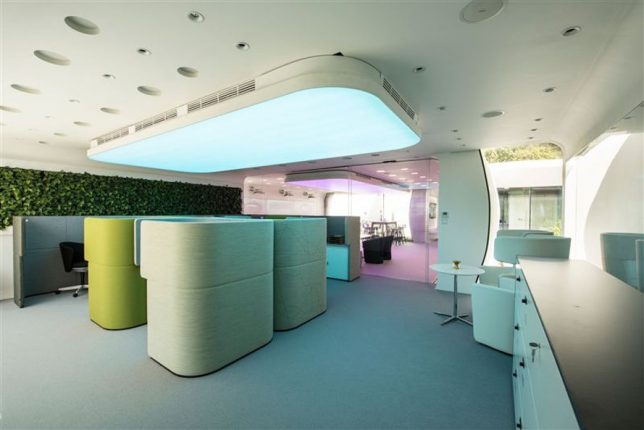
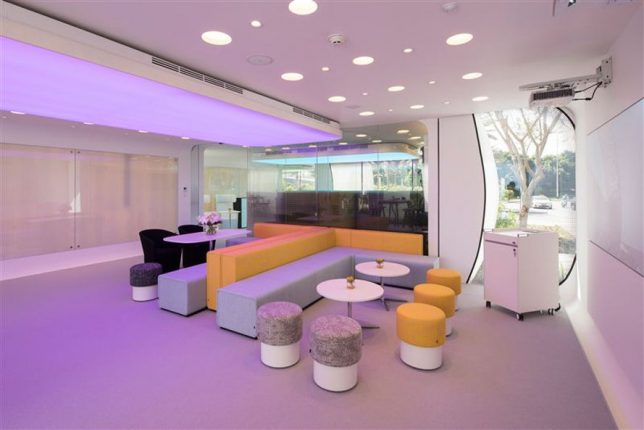
Printed layer by layer from the ground up using a special cement mixture, this rapidly-produced curvilinear structure is a functional example as well as proof of concept, illustrating the architectural potential of 3D printing.

3d printed office

3d scultupre interance

The entire 2,700-square-foot structure was built for a relatively modest $ 140,000, requiring just one operator to oversee the printer plus an array of electricians, plumbers and detailers to outfit the completed shell for power, water, lighting and telecommunications. The modular machine assembled to do the printing measured approximately 120 by 40 feet and stood 20 feet high, able to build while sitting in one place.

3d interior curves

3d interior

The new building will (aptly enough) be home to the Dubai Future Foundation, providing space for offices, workshops and events. Global architecture firm Gensler designed the building in partnership with structural experts from Thornton Tomasetti and Syska Hennessy.

3d lounge meeting area

3d future foundation

Complex curves on the interior and exterior were both considered part of the visual design but also a way to showcase the possibilities of 3D printing technology.

3d office person

3d bakc yard

“We announce today the opening of the first 3D-printed office in the world, after less than one month of launching Dubai 3D printing strategy which showcases a modern model of construction. This is an experience we present to the world on utilizing future technology in people lives. It also represents a new milestone for the UAE as a global leader in strategic achievements,” Sheikh Mohammed said.


WebUrbanist

 
Comments Off on World’s First 3D-Printed Office Building Unveiled in Dubai

Posted in Creativity


Your First 100,000 Photos are Your Worst

22 May

Henri Cartier-Bresson once said that your first 10,000 photos are your worst. The point of that statement was that photography ought to be an art that is perfected with practice, hard work and repetition. It takes time before a photographer feels as one with their camera. Over time though you eventually learn your camera backwards and forwards, the two of you are old friends and you handle it with the skill of an expert. Likewise, after enough experience you begin to develop your own style. You find what works for you compositionally. Light and color take central stage as you do what you do best, naturally, borne out of habit and experience.

I would change Cartier-Bresson’s quote in the modern digital age to say that your first 100,000 photos are your worst. Maybe it really ought to be your first 1,000,000 photos are your worst.

America Coast to Coast Bicycle Trip, First Photos with an SLR, 1983

My love affair with photography began early when I was given my first camera, a Kodak Instamatic at the age of 7 or so. When I really became most interested in photography though was at the age of 15 when my parents bought me my first SLR. It was a Sigma camera with a zoom lens. The very first photos I took with that camera were the Summer between 9th and 10th grade when I rode my bicycle across America. I did the trip with a group called Wandering Wheels out of Taylor University. I rode my bicycle from Lincoln City, Oregon to Rehoboth Beach, Delaware over the course of about six weeks. It was one of the best things I did in my youth and seeing and photographing America in my youth has carried on with me as I continue documenting America now at the ripe old age of 48.

On my coast to coast trip in 1983 I shot Kodak slide film. I had the slides developed back in 1983 but I’ve never scanned or published any of these images. Today I finally got around to spending some time with Epson V700 and scanned in the 100 or so images I took on that trip. The slides are old, dirty and scratched, but here are some of my first 100,000 images.

America Coast to Coast Bicycle Trip, First Photos with an SLR, 1983

America Coast to Coast Bicycle Trip, First Photos with an SLR, 1983

America Coast to Coast Bicycle Trip, First Photos with an SLR, 1983

America Coast to Coast Bicycle Trip, First Photos with an SLR, 1983

America Coast to Coast Bicycle Trip, First Photos with an SLR, 1983


Thomas Hawk Digital Connection

 
Comments Off on Your First 100,000 Photos are Your Worst

Posted in Photography


Nikon D500: First impressions review

18 May

The Nikon D500 is a 20MP APS-C DSLR capable of shooting at up to 10 frames per second and featuring an autofocus system derived from the one in the D5. In other words, it’s exactly the kind of high-end DX format body that appeared to have become extinct with the D300S.

The six-and-a-half years that have passed since the D300S’ launch have seen the camera market move on considerably but the D500 does much to reclaim the position as one of the pre-eminent APS-C camera on the market.

As you might expect, much of the improved capability of the camera centers around sports and high-speed shooting, with significant upgrades to the shooting rate and autofocus system, but there are also major upgrades to the viewfinder, video capabilities and connectivity options which expand its utility beyond one particular niche.

Key Features

  • 20.7 MP APS-C (DX Format) sensor
  • 153 point AF module with 99 cross-type points
  • 180,000 pixel RGB sensor for metering and subject recognition
  • AF point joystick
  • 10 fps shooting for up to 200 shots (lossless compressed 14-bit Raw to XQD card)
  • 4K (UHD) video from 1.5x crop of sensor
  • 100% coverage viewfinder with 1.0x magnification
  • 2.36m dot tilt up/down touchscreen
  • Wi-Fi and Bluetooth connectivity with NFC for setup
  • Mic and headphone sockets
  • USB 3.0 connector
  • Anti-flicker option for working under artificial lighting

A good sport

Much of the D500’s capability is built around the ability to focus and shoot very quickly. Its 153-point AF module offers near full-width coverage and is linked to a 180,000 pixel RGB metering sensor to further improve its AF tracking capabilities. Interestingly, and like the D5, the D500’s AF system now offers two parameters for fine-tuning the autofocus tracking behavior, letting the user specify the type of subject movement and the correct response to another object blocking the targeted subject. Existing Nikons only let you specify duration, suggesting Nikon is trying to expand the range of shooting situations for which the AF system can be optimized.

Only 55 of the camera’s AF points can be directly selected and the D500 gains both a joystick and a touchscreen to make it as fast as possible to select the point you want to use. Add to this the ability to shoot up to 200 Raw frames before slowing down (if you use an XQD card), and it becomes obvious that the D500 is intended as a high-speed pro/semi-pro camera in a way the D7000 series never was.

How’s that for coverage? The D500 doesn’t just boast a lot of autofocus points, it also offers them across most of the width of the frame, which is useful whether you’re manually selecting a point or letting the camera track your subject.

The D500 also gains an anti-flicker option designed to ensure the camera shoots in-sync with the brightest point in the flickering cycle of artificial lights. It’s a feature we first saw on the Canon EOS 7D Mark II and we’d expect it to be particularly valuable for shooting indoor sports such as basketball.

Another sign that this is a true high-end camera is the inclusion of a larger viewfinder. Like previous DX00 class cameras it has 100% coverage but it also offers 1.0x magnification, which is the largest optical viewfinder we can remember seeing in an APS-C camera (electronic viewfinders are a different matter, since size and brightness isn’t constrained by sensor/mirror size).

The D500 can also shoot 4K video and includes both an input for using an external mic and a headphone socket for audio monitoring. The camera also offers a flat picture profile to provide more post-processing flexibility, on-screen highlight warnings and power aperture control that allows you to select and change the aperture when in movie mode. There’s no focus peaking option, though, and you can’t zoom-in while you record to confirm or adjust focus as you record.

Connectivity

One of the other big features Nikon is touting is its Snapbridge system that uses Bluetooth LE (a low-power variant of Bluetooth also known as Bluetooth Smart), and Wi-Fi to maintain a connection between the camera and a smart device. This includes the ability to auto-transfer images from the camera, as well as initiating the Wi-Fi connection for remote shooting or manual image transfer.

Context

To show where the D500 sits in the lineup, here are the major feature differences between it and the less expensive D7200, along with a comparison back to the D300S – not because we expect anyone to be choosing between them, but to show how much of a step forward the camera represents.

   Nikon D500 Nikon D7200 Nikon D300S
Sensor Resolution 20MP 24MP 12MP
AF points 153 (99 cross type) 51 (15 cross-type) 51 (15 cross-type)
Max frame rate 10 fps
  • 6 fps
  • 7 fps in 1.3x crop mode
  • 7 fps
  • 8 fps with battery grip
Buffer depths 200 lossless compressed 14-bit Raw

~17 14-bit Raw
~28 12-bit Raw

30 lossless compressed 14-bit Raw
Shutter durability rating 200,000  150,000  150,000
Viewfinder
  • 1.0x magnification
  • 100% coverage
  • 0.94x mag
  • 100% coverage
  • 0.94x mag
  • 100% coverage
Rear screen
  • 2.36m dots 3.2″
  • Tilting
  • Touch sensitive
  • 1.23m dots 3.2″
  • Fixed
  • 920k dots 3.0″
  • Fixed
Video Resolution
  • UHD/30p
  • 1080/60p
  • 1080/60p
  •  720/24p
Mic/Headphone? Yes/Yes Yes/Yes Yes/No
Wi-Fi? Yes (and Bluetooth) Yes No
Built-in flash? No Yes Yes
AF-On Button? Yes No Yes
Body construction Magnesium Alloy + Carbon fiber composite Magnesium Alloy + Carbon fiber composite Magnesium Alloy
Battery Life (CIPA) 1240 shots/charge 1100 shots/charge 950 shots/charge
Weight (Body Only) 760g 675g

840g

Review History

Review History
26 April 2016 Studio scene and Raw dynamic range published.
16 May 2016 Introduction, Body and Handling, Operation and Controls, Wi-Fi and Connectivity and Video pages published

Articles: Digital Photography Review (dpreview.com)

 
Comments Off on Nikon D500: First impressions review

Posted in Uncategorized