RSS
 

Posts Tagged ‘favorite’

Writer’s Favorite Lens the Nifty Fifty on a Cropped Sensor Camera

18 Nov

50mm1Growing up, the first letter of my last name was towards the end of the alphabet, which meant that I was one of the last kids who got to choose my electives in high school. It was for this reason that I ended up with strange electives such as Physics, Advanced Placement Composition, Metal Shop, and eventually Black and White Photography. I was less than thrilled about taking Photography – I had SATs to take, colleges to get in to, and certainly did not have time for a photography class taught by the Psychology teacher who was notorious for making kids walking around campus with their hands in the shape of a rectangle, “visualizing” the shot. Despite my best efforts, somewhere between the enlarger and placing my paper in the developer for the first time, I fell in love.

I clung to black and white film photography for a number of years, until husband bought me my first DSLR – a Canon Rebel XS. One of the very first things I noticed was that something was wrong. Even when shooting with some of my favorite focal lengths, something looked off. After consulting Dr. Google, I quickly realized that the difference was that I learned photography in 35mm film format, and that the cropped sensor of the Canon XS made my lenses function in a different way than I was used to. There are plenty of articles that go into great depth explaining the hows and whys of cropped sensors, but what you need to know is that if you own an entry-level DLSR, you probably have one. If you do have a cropped sensor camera, you also need to know that a 50mm lens on a cropped sensor camera doesn’t actually act like a 50mm lens. Rather, APS-C (cropped sensor) cameras have a magnification factor of either 1.6x (Canon) or 1.5x (Sony & Nikon). So, you need to multiply the length of the lens on your camera by the magnification factor above in order to see what focal length that particular lens will function as on your camera. For example, if you put a 50mm lens on a cropped sensor camera, you have to multiply by 1.6x which means that your 50mm lens is actually functioning more like an 80mm lens.
50mm3

This is important because when you see reviews of lenses, or even when professional photographers talk about lenses, chances are that the images that they include will be taken with a full frame camera, which does not have a cropped sensor. In other words, even if you buy exactly the same lens, your photos will probably not look similar if you are using a cropped sensor camera. Now, please hear me when I say that this doesn’t mean that your camera is “bad” or that you need to upgrade your gear – you are capable of taking some absolutely amazing photos with a cropped sensor camera and a nifty fifty lens. There is a TON of potential there at a fairly low price point, which is why the 50mm f/1.8 lens is the first upgrade that a lot of new photographers make, and rightfully so! Today, I’d like to showcase a few of my favorite uses of a 50mm lens on a cropped sensor camera. In fact, every photo in this article was taken with a Canon 50mm f/1.8 lens and either a Canon XS or Canon 60D, which are both cropped sensor cameras.

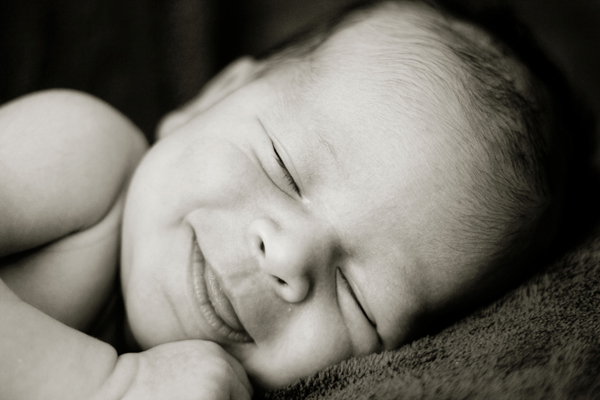
Newborn Photography
50mm2

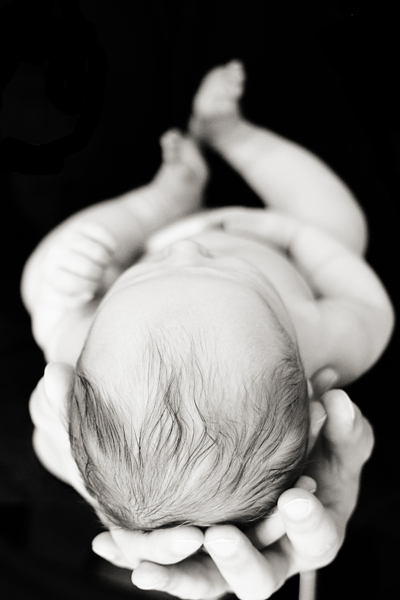
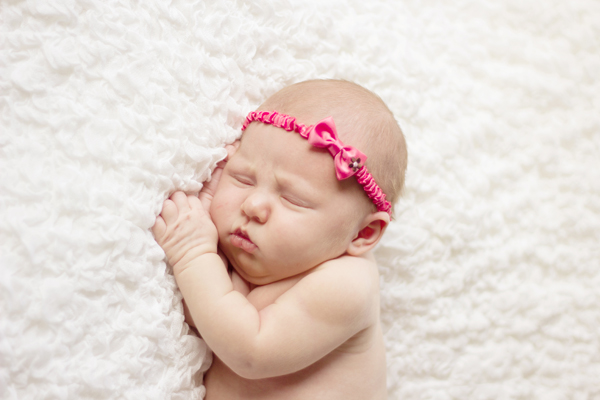
When I’m photographing newborns, I’d say that the 50mm lens is on my camera 90% of the time. I like to go to the new parents rather than have them come to me whenever possible because I tend to find that mom and baby relax a bit faster in their own space, and I like to include a lot of “lifestyle” images in the session as well. However, doing so comes at a trade-off, which is that I don’t have as much control over the light in their home as I would in my space. Yes, I can move furniture if necessary or even shoot in the kitchen if that’s where the best natural light is, but it’s also nice to have a lens that can accommodate lower-light situations if needed, and the 50mm certainly can do just that when I shoot wide open or close to it. I find that the sweet spot in terms of aperture with this lens is around f/2.5, which is typically sufficient, but I like the fact that I can go down even further if I want to bring the focus to little feet, hair, or newborn features.

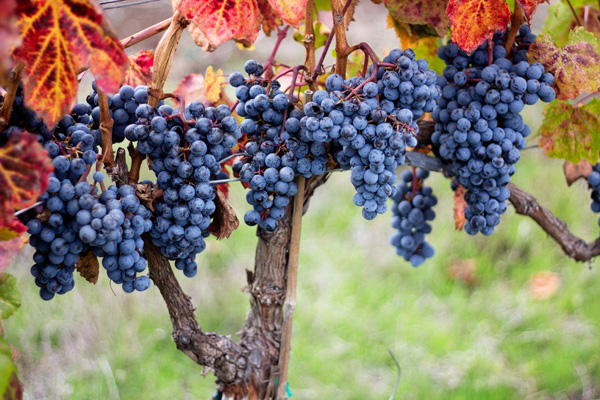
Nature Photography
50mm4

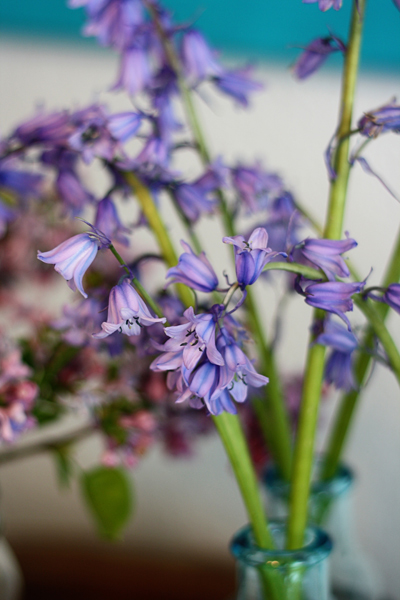
While I have experimented with landscape photography using my 50mm lens, I prefer a wide angle lens (somewhere around 35mm) for that purpose. That said, while the 50mm may not be your best option for capturing waterfalls or beautiful mountain ranges, the 50mm lens shines in capturing the smaller details of nature – think flowers, vegetables, fruit, leaves, snow covered branches, and buds on trees.
50mm5

Portraits

Of course, one of the most common uses for the 50mm lens is for standard portraits. I use my 50mm lens most often for portraits of one or two people, but have pulled it out quite frequently for groups of about three to six people as well (any more than six, and I prefer a wider angle lens). When I first purchased the 50mm lens, I was so excited about the ability to create a blurred background in portraits that I almost always shot wide open, with the aperture at f/1.8. It was so exciting to be able to achieve that bokeh!

However, I also created a lot more work for myself and ended up with a lot fewer photos that nailed focus because the depth of field was so shallow, and any small movement of a kid could throw the focus out of whack . Now, I tend to set the aperture around f/2.5 when I’m shooting portraits, which still gives plenty of blur in the background but also makes my life a little easier. This is especially true when it comes to photographing toddlers and young kiddos that are often moving even when they’re “sitting still”. The bottom line? Don’t fall into the trap of shooting wide open all the time just because you can!

50mm6

Unexpected Surprises

When I’m out and about, I often toss my camera with the 50mm lens in my purse or in the car. As I’ve mentioned, it’s my favorite lens, and the one that gets the most use, so it’s a generally safe bet. That said, there have been a handful of occasions in which my 50mm lens may not have been my first choice if I had other options with me, but it performed better than expected nonetheless.

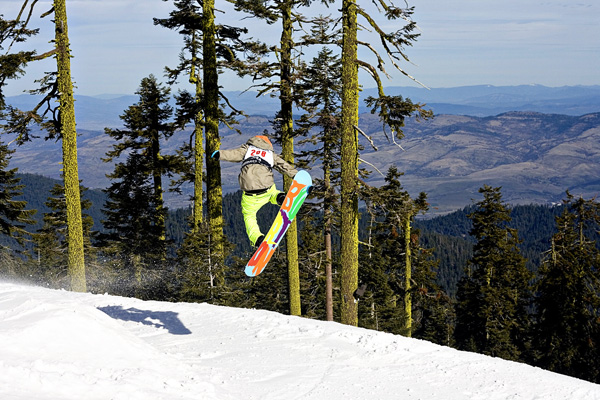
One such instance was when we ended up at a ski resort on the day of their high school snowboarding competition. I grabbed my camera just for fun, and was surprised at how well the 50mm lens handled a shot that I’d typically prefer a wider angle for. So, don’t be afraid to experiment with a 50mm lens even beyond the standard portrait applications, there’s a whole lot of potential there!
50mm8

Your Thoughts?

Do you own a 50mm lens? What do you find yourself using it for most often? Do you have a cropped sensor or full frame camera?

The post Writer’s Favorite Lens the Nifty Fifty on a Cropped Sensor Camera by Meredith Clark appeared first on Digital Photography School.
Digital Photography School

 
Comments Off on Writer’s Favorite Lens the Nifty Fifty on a Cropped Sensor Camera

Posted in Photography


Writer’s Favorite Lens – the Canon 40mm Pancake Lens

16 Nov

Like many beginning photographers, I’ve been a long-time fan of zoom lenses throughout much of my four year photography career. This past year, however, something in my brain shifted and I began to first accumulate and suddenly prefer using prime lenses. I began with the humble Canon 50mm f/1.8, eventually adding a 100mm f/2.8 macro lens. For many months, this combination of lenses paired with my Canon 6D became my preferred travel photography kit, replacing my beloved 16-35mm f/2.8. I loved the compact, significantly lighter kit that I was now able to tote around in my discrete Kata DSC 437 camera bag.

DPS 08

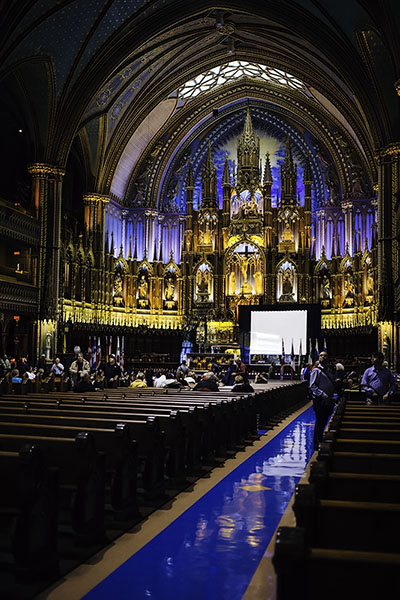
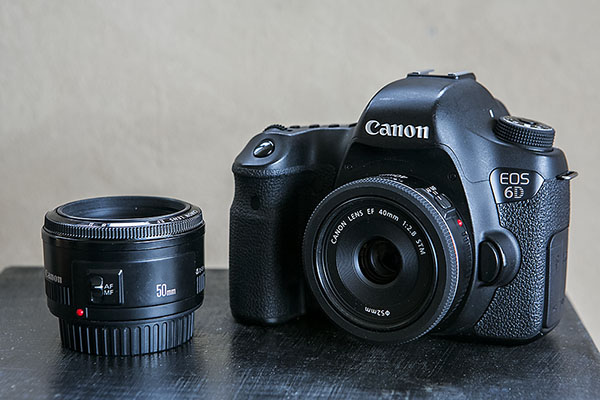
Several weeks ago, I decided to pull the trigger on another prime lens: the Canon EF 40mm f/2.8 STM pancake lens. Announced by Canon in June 2012, this is a relatively new lens and is the smallest ever made by Canon. Intrigued by its smaller size and slightly wider focal length, I decided to use it in place of my nifty fifty lens on a two week trip to New York and Montreal. The resulting images I took and overall experience shooting with the 40mm have secured it as my favorite new all-around shooting lens. Here are some reasons why you too may want to consider adding the 40mm pancake lens to your collection.

DPS Pancake lens 03

Makes DSLR cameras even more compact

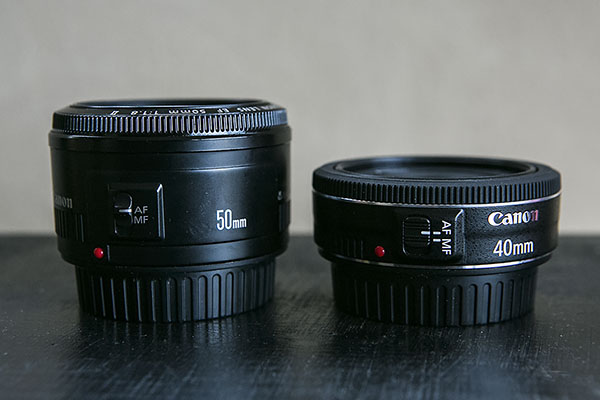
At 22mm (0.86″) deep, the 40mm is significantly shorter than the 50mm f/1.8, which measures 41mm (1.6″) deep. The 40mm’s shortened length makes it easy to slip it into a relatively small camera bag, or even a medium sized purse.

DPS Pancake lens 02

Allows for the “perfect normal” focal length for full-frame cameras at a reasonable price

While the 40mm will work on every Canon DSLR ever made, it is optimized for use on full-frame digital cameras. I always found 50mm to be slightly too long for most of the casual street photography or travel shots that I want to take, and Canon doesn’t make a 35mm for less than $ 500. Priced brand new at $ 199.99, the 40mm is the perfect balance in terms of focal length and cost, providing an incredibly natural perspective to images at a reasonable cost.

DPS FINAL 05

Solidly built with instant manual focus override

Despite being drastically shorter than the 50mm f/1.8, the 40mm actually weighs about the same at 4.6 ounces (130 grams). This is likely due to the 40mm being constructed of both metal and plastic, giving it a very solid and secure feel, especially when compared to the mostly plastic 50mm f/1.8. Like the 50mm f/1.4, the 40mm also has an outer focus ring that can be adjusted at any time for instant manual-focus override when shooting in Canon’s One Shot focus mode.

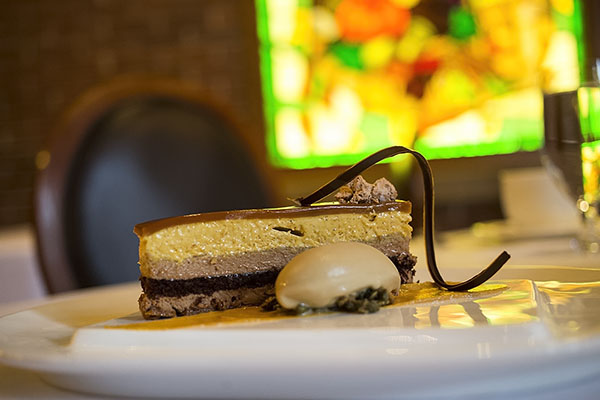
DPS New York Food

Ideal for street, architectural, and food photography

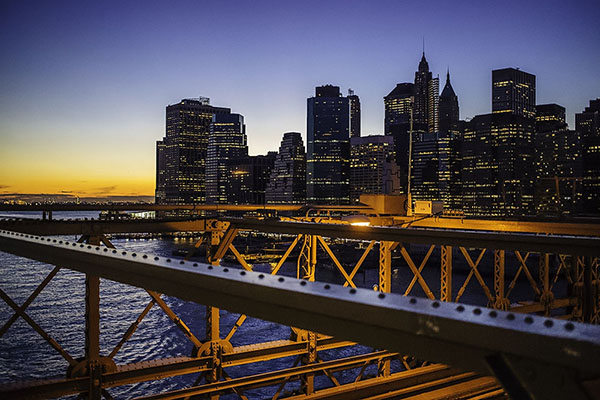
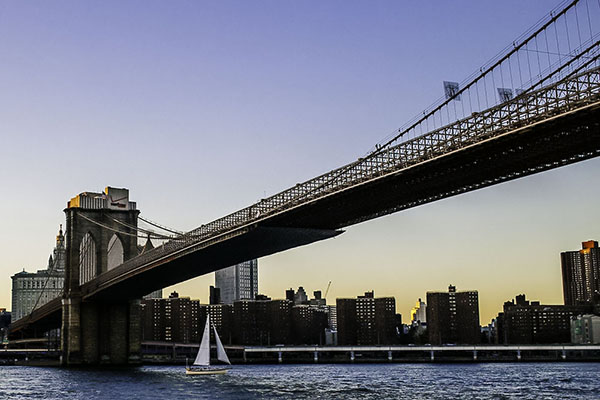
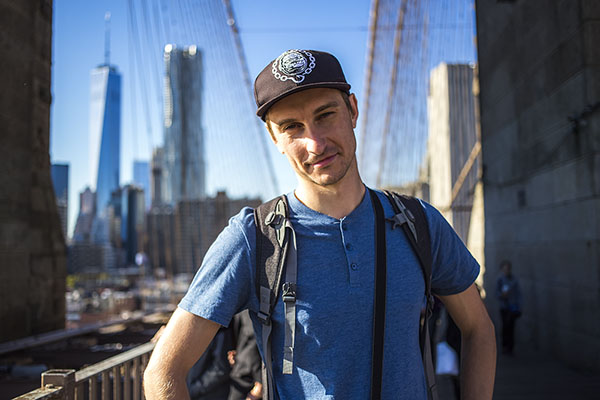
The 40mm’s compact build makes it very easy to stow in casual bags of nearly any size. Its size also makes it more inconspicuous, making it ideal for street or documentary photography, as opposed to the popular 24-70 f/2.8 lens, which always seems to stick out. My travels through New York and Montreal saw many tall buildings and skyscrapers which were admittedly harder to shoot with the 40mm, making me miss my wider 16-35mm.

DPS FINAL 02

However, the 40mm was still wide enough to capture certain architectural scenes, and the benefit was the lack of distortion when captured at 40mm versus 16mm. This meant far less lens correction in post-processing. Another area of photography that is immensely easier with the 40mm is food and drink photography for the casual shooter.

DPS New York Food

If you want to make less of a show of grabbing a few snaps of a dish while being seated at a restaurant, the 40mm’s wider focal length and minimum focusing distance of 0.3m (11.8″)  – compared to 0.45m (17.7″) on the 50mm f/1.8 – is perfect for capturing what is immediately in front of you without having to stand up and fuss with angles.

DPS Portrait 02

The One Downside to Having a Pancake Lens

Throughout my three weeks of shooting with the 40mm, I had only one minor complaint that to me is the compromise of having a slimmer lens: lack of space to properly handle the lens during lens changes. It is much harder to attempt spur of the moment lens changes without accidentally getting fingerprints on one side of the lens or potentially dropping it.

Do you have a favorite lens? Have you tried this little gem? Share your thoughts in the comments.

The post Writer’s Favorite Lens – the Canon 40mm Pancake Lens by Suzi Pratt appeared first on Digital Photography School.

Digital Photography School

 
Comments Off on Writer’s Favorite Lens – the Canon 40mm Pancake Lens

Posted in Photography


Writer’s Favorite Lens – 70-200mm Zoom

14 Nov

What is the best lens for taking flattering portraits? ZOOM, ZOOM, ZOOM!

Zoom Main

Model credits left to right: Sherri Lee Bigs/Image courtesy Nine Network Australia, Nicole Di Silva/Foxtel, Jocelyn Idriss. All images copyright Gina Milicia

“I’ve learned that people will forget what you said, people will forget what you did, but people will never forget how you made them feel.” – Maya Angelou

My love affair with the zoom lens began in the late 80’s. I started my career as a portrait photographer using an entry level Nikon with an 80-200mm Sigma zoom lens. Back in the day “zoom lens” was code for paperweight or doorstop because they had the similar optics to a pair of cheap sunglasses and were about as sharp as a butter knife.

Zoom lenses were for amateurs, pros used prime lenses.

After I’d been shooting for a few years and could afford better gear, the zoom was shunned to the back of my kit. It only saw the light of day on the rare occasion I photographed a wedding or a corporate event. Then in 2004 I met and fell in love with the Canon 70-200mm zoom. I have to be honest here and tell you that it wasn’t love at first sight. I’d been burned before by zoom lenses that promised so much and yet delivered very little. But, it didn’t take much to convince me that this lens was different and completely revolutionized the way I worked.

The Good

Zoom Good 1 Zoom Good 2
Zoom Good 3

Model credit: Mimi Elashiry, John Scott Personal PR, Next Models Hair and Make-Up by Rachid

This is a typical way I might use the 70-200mm zoom in a portrait shoot. The first image is set up as full length shot at a focal length of 70mm, then I zoom in to create a three-quarter shot at 150mm, and again to create a tight headshot at 200mm.

Many of my clients suggest that I just shoot full length, and then they will crop to headshot or three-quarter in post-production.
This sounds great in theory, but there are two problems with cropping in this situation. First, you end up with less than twenty percent of the original file, which is a drastic reduction in quality, and reduces a 60MB file to approximately 10MB. Second, the lens compression factor at 70mm is very different than at 200mm.

Zoom Good 8

Model credit: Tommi Pitsas

Zoom Good 8A

A tight headshot at 200mm creates the most beautiful blur (or bokeh) in the background (top image of Tom) that is not as prominent if the image were photographed at full length and cropped (bottom image of Tom above).

I love working with a zoom lens when I’m taking portraits because it means I can set up my shot and create full length, three-quarter and tight head shots without having to move the camera. I can stay out of my model’s personal space, which can be intimidating or confronting, and keep the momentum of the shoot flowing.

Zoom Good 6

Zoom Good 7

Zoom Good 9

Model credits: Images Gina Milicia, Courtesy Nine-Network Australia

Being able to work this quickly is perfect for editorial and celebrity photo shoots, which are always fast paced and high pressure.

Zoom Good 4

Model credit: Boone Freund and Jocelyn Idriss. Try capturing this beautiful moment with a wide angle lens. The only way you could get close enough is if you were on the bike too!

The long zoom lens is also perfect for capturing intimate photos of couples or children, and even pets. I’m often shooting well back at 200mm, and this makes it much easier for my model to forget I am even taking their picture.

Zoom Good 5

Model credit: Jocelyn Idriss

The whole “look” and feel of a portrait can be radically changed by focal length choice. A focal length less then 50mm will distort facial features. Some photographers love this look and have successfully incorporated it into their shooting style.

I love to work with a focal length between 100mm and 200mm. Facial features are compressed slightly, which is flattering for portraits. I don’t like the way a wide focal length looks and it doesn’t suit my shooting style.

The Bad

The 70-200mm is a heavy lens to carry around all day long. The extra weight can make handheld shooting difficult. Its size and length also makes it stand out, making it incredibly difficult for you to shoot incognito, such as at an event or when taking street photos or travel pics. In these cases, I opt for my walk-around zoom, the 24-105mm Canon f/4, which is perfectly suited to these situations and is much lighter!

The other downside of shooting with a long lens is I’m often backed into corners or having to shoot through windows or doorways just to be able to get the shot. I’m constantly shooting with my back to the wall. Literally!

The Ugly

The most annoying part about working with zoom lenses is the zoom action is continually sucking dust onto my camera sensor. Unwanted dust means I need to get my sensor professionally cleaned more often which is an added cost, and extra down time I wouldn’t have if I stuck to prime lenses.

My Choice

70 200L

I work with the Canon 70-200mm IS F2.8 L series. It’s my workhorse, and I use it on 70-80% of my shoots. An average photo shoot for me will consist of approximately 2000-4000 frames, and I can’t think of another lens in my kit that would give me the consistency, ease, speed and high standard of the 70-200mmm.

If you are considering buying a zoom there are now many excellent ones on the market. The price drops significantly if you choose a slower lens (f/4 instead of f/2.8) and one without image stabilization, that is almost unnecessary these days because cameras can shoot at a much higher ISO. If your budget is tight, you might also consider buying second hand. Yes, zoom lenses are pricey, but remember your lenses should last you a minimum of 10 years if you look after them. I’ve had mine for 10 years now, and it’s outlasted three cameras. This fact alone makes the 70-200mm my most cost effective investment.

The other option you may like to consider is renting a long lens for a weekend. Prices are very reasonable.

It took me ten years of experimentation with different focal lengths before I found my happy place. Do you like to shoot long? Which lens do you think is the most flattering lens for portraits? I’d love to hear your thoughts.

The post Writer’s Favorite Lens – 70-200mm Zoom by Gina Milicia appeared first on Digital Photography School.

Digital Photography School

 
Comments Off on Writer’s Favorite Lens – 70-200mm Zoom

Posted in Photography


Writer’s Favorite Lens – the 50mm f/1.4 Lens

12 Nov
005

1/400, f/4.0, ISO 320

It’s easy to love the 50mm f/1.4 lens. It’s a jack-of-all-trades. It’s that best friend that never lets you down. It’s the cowboy of all the lenses; it can pretty much do anything you ask it to do. If I was forced to only keep one lens, I’d have to choose this one. I’d even go as far as to say that most of you probably have this lens, and if you don’t, you should.

Sometimes the 50mm f/1.4 doesn’t get appreciated as much as it deserves to be. It’s unassuming. It doesn’t look intimidating and professional on your camera. It doesn’t cost you an arm and a leg or your first-born child. It’s definitely not showy, and not really a lens that you’re going to brag about to your photographer friends. But man, when you need a lens that’s got your back, this is the one.

Before I go on, I want to clarify that I’m talking about my Nikon 50mm f/1.4 lens on a full frame body. If your camera is a cropped sensor, the 35mm f/1.4 lens will have similar results. You can also get the 50mm 1.8 lens for less money, but if you can spend a few extra dollars, get the sturdier, faster, 50mm f/1.4 (or even the 50mm f/1.2 if you’re a Canon user).

008

1/400, f/3.5, ISO 400

Convenient and Lightweight

The 50mm f/1.4 is great to take just about anywhere when you want to capture life around you. If you don’t want to lug around a bunch of heavy equipment, throw this lightweight gem on your camera, and go. Sure, there will be some shots that won’t be perfect with the 50mm, but you’re going to be able to get most of what you want. If you’re a smaller person like I am (5’3″ if I’m on my tiptoes), a little less weight can make a big difference if you’ve got a lot of walking around to do. I’ll admit that my arm gets really tired with the bigger lenses sometimes.

The freedom of smaller and lighter weight will allow you to move around more, without the restriction of maneuvering a big long lens, or pulling out a tripod. You can get it in and out of your camera bag easily, and keep it close to you, which will lessen the chance of gear getting stolen or broken.

You’ll be able to get up close if you need to, if you’re in a public place, or you can pull back a bit and get the whole scene. Your 50mm sees about the same as how things look to your eye in real life. So if you see something you want to capture, you just put the camera up, and there it is, pretty much how you just saw it. You don’t have to worry about everything being closer or farther away than you expect.

Ready for Anything

006

1/500, f/2.8, ISO 400

If your 50mm is on your camera most of the time, you’re ready to capture the unexpected. You won’t be stuck with a lens that absolutely won’t work for the situation. There are few situations that the 50mm can’t at least do a decent job. Sometimes you don’t have time to change to a different lens, because deer don’t come knocking at your front door very often, and they don’t stay for tea and cookies!

I’m not saying that you can’t ever use another lens, but the 50mm is a great lens to have on-the-ready.

Great at Capturing Details

001

1/1250, f/1.8, ISO 400 // 1/640, f/2.5, ISO 400

The 50mm lens is great to capture those details around you. Your feet make great zoomers, and you can easily move back to get more of the scene or closer to get those details in the shot. It feels like an extension of your eyes and brain, so taking photos becomes second nature.

Expert at Depth of Field and Bokeh

007

1/125, f/2.2, ISO 800

The 50mm f/1.4 offers awesome depth-of-field options. You can have just one small part in focus with the rest of the photo dropping away into creamy bokeh. You can also open that aperture all the way up to f/1.4 when you don’t have much light to work with. Those extra couple of f-stops can make a huge difference when every bit of light counts. If you’ve never owned a faster lens like this one (for example, if you’ve only been using the kit lens that comes with your camera), this will open up a whole new world to you!

Perfect for Portraits

009

1/1250, f/1.8, ISO 400

The 50mm can be a great portrait lens. Yes, there are lenses that might be better for portraits, but sometimes I really love the portraits I can make with my 50mm. You don’t have to get so close to your subject that you’re breathing on their face, but you don’t have to get so far away that you’re shouting instructions to them.

I find that sometimes the 50mm allows me to have the best connection to my subjects. I can touch their arm to move them into a better position, and talk to them and connect. Then I step back slightly and capture exactly what I just worked on, before I lose the connection and natural look we just achieved. Also, sometimes those big lenses can feel intimidating to your subject; the 50mm doesn’t look quite so scary.

Best All-Around Lens

004

1/320, f/2.0, ISO 800

You can also use your 50mm for other things besides people, of course (sometimes I do forget about that, because I’m kind of attached to photographing human beings). You can use the 50mm for still-life photos, scenery, and even some wildlife (especially if a deer comes right up to your house). There aren’t many things that the 50mm is useless for. It’s a great lens to have when you don’t know for sure what kind of photography you want to do, and you want to experiment for a little while.

Essential for Indoor Shooting

003

1/100, f/3.2, ISO 800

The 50mm is almost essential if you want to shoot indoors. If you want to read more ideas on using this lens indoors with natural light, go check out Tips For Great Indoor Portraits Using Natural Light. I love that I can maneuver in almost any space, even small homes, and still get everything I want in the photo. It’s also great if you don’t have tons of natural light available indoors, and you don’t want to use additional lighting and flash equipment.

002

1/250, f/4.0, ISO 400

The 50mm f/1.4 is so versatile that you can capture a family with their beautiful surroundings, or you can capture the most intimate close-up detail. It’s so easy to carry around that you won’t dread taking it along with you on your adventures. It’s so intuitive that you will feel like your heart is making photos, and your brain doesn’t have to work as hard. It’s so inexpensive that most photographers can add it to their collection.

Are you in love with your 50mm lens? Share in the comments why or why not. I’d love to hear what you think.

The post Writer’s Favorite Lens – the 50mm f/1.4 Lens by Melinda Smith appeared first on Digital Photography School.

Digital Photography School

 
Comments Off on Writer’s Favorite Lens – the 50mm f/1.4 Lens

Posted in Photography


Writer’s Favorite Lens – the Tamron 18-270mm

09 Nov

Darren recently suggested that the dPS writers to contribute to a semi-regular series featuring our favorite lenses, and I knew, hands down, which lens I wanted to feature: my daily workhorse, the Tamron 18-270mm lens. All photographs in this article, with the exception of the lens itself were taken with the Tamron 18-270mm.

church, fall, autumn, architecture, framing, fall leaves, Tamron18-270mm

Introducing the Tamron 18-270mm

The full name of this lens is the Tamron 18-270mm f/3.5-6.3 Di II VC PZD lens. It is a great all-in-one zoom lens and covers a wide-range of photography situations. Vibration control (VC) allows you to handhold at slower shutter speeds, and the proprietary piezodrive autofocus is quiet and fairly fast. Tamron makes versions of this lens compatible with Canon, Nikon, and Sony camera bodies. While some may argue that this lens is a “jack-of-all-trades but master of none,” I would contend that the Tamron is a perfect fit for the photographer looking to get a lot of use out of a single lens.

camera lens, tamron, tamron18-270, all-in-one zoom, zoom lens, photography

Ideal Uses for the Tamron 18-270mm

The Tamron 18-270mm is a perfect lens for travel photography and for the photographer-on-the-go who does not want to spend time constantly switching lenses or hauling large amounts of gear. In a single lens, you have the capability of shooting everything from wide angle, to 50mm, to a pretty substantial zoom.

When I made the decision to upgrade and replace my two kit lenses (the Canon 18-55mm and 55-250mm), I knew that I wanted a lens or lenses that would cover a similar range of photography situations and offer an improvement in image quality. I was also preparing for some extensive traveling (including backpacking) and did not have an endless budget, so both weight and cost were important considerations.

hiking, backpacking, Badlands, tent, camping, travel photography, Tamron18-270mm

At 450 g (0.99 lbs) this is not a light lens, but it compares favorably to other long zoom lenses, such as the Canon 55-250mm I was replacing (390 g or 0.86 lbs), the Canon 24-105mm (525 g or 1.16 lbs), or the Canon 70-300mm (630 g or 1.39 lbs). After a long day of hiking and photographing, you will know that you have been carrying your camera around, but you would be hard-pressed to find another lens for a DSLR that will give you this range and flexibility that is any lighter.

Price-wise, the Tamron is a steal. This lens retails today for around $ 450 USD, and its newly-released upgrade, the Tamron 16-300 f/3.5-6.3 Di II VC PZD Macro currently retails for $ 599 USD, after rebate. This is a great value for a quality lens for those who lack unlimited funds to spend on multi-thousand dollar lenses.

Advantages of All-in-One Zooms

The main advantage of an all-in-one zoom lens, like the Tamron, is the flexibility. You can go from shooting a wide-open landscape shot to a close-up zoom of an individual bird in the flick of a wrist. These two photographs at Mammoth Hot Springs were taken just moments apart, at the two extremes of the Tamron’s range. If look carefully in the middle left of the wide view, you can just make out the bird. You will no longer have the excuse of “not having the right lens” if you miss a prime photographic opportunity.

Yellowstone, Mammoth Hot Springs, landscape, photography, National Park, wide angle, Tamron18-270mm

Yellowstone, Mammoth Hot Springs, landscape, photography, National Park, zoom lens, Tamron18-270mm, bird, wildlife

Never having to change lenses also keeps my camera and sensor cleaner, my reaction speed faster, and my backpack and purse emptier. I rarely travel around with a full camera bag, since I can slip an extra battery or a few filters into a pocket or my purse. In fact, I can easily stow the entire camera, with the Tamron lens attached, in my fairly-small purse without incident (though I usually use a neoprene wrap around it).

Tamron18-270mm

The Tamron 18-270mm lens is a great lens for you if you do not want to specialize or you want to shoot a wide range of subjects and situations. You can go from shooting close-ups in the mornings, to architecture at midday, to your child’s soccer game in the afternoon, and still have the same lens on for shooting a few shots of the moon before bed.

closeup, macro, bee, bumblebee, Tamron18-270mm

architecture, theater, blackandwhite, Tamron18-270mm

moon, full moon, eclipse, night photography, astrophotography, Tamron18-270mm

The main downside to an all-in-one zoom is that you have a range of aperture values across the different focal lengths. With the Tamron 18-270mm, I can shoot as wide as f/3.5 at 18mm but only have f/6.3 at 270mm. Prime lenses offer much wider aperture values. As a workaround, backing up and using the longer focal lengths still allow you to capture decent blur and bokeh.

If you want a zoom or all-in-one zoom lens with a wider aperture value across the whole range, you need to be prepared to shell out significantly more money (say, a cool $ 2199 USD for the Canon EF 70-200mm f/2.8L IS II USM or $ 1450 for the version without image stabilization).

Why I Love the Tamron 18-270mm

In the end, your favorite lens comes down to what you want to shoot and how much you can afford. For me, the Tamron 18-270mm was an excellent choice to satisfy my wide-ranging photographic interests on a limited budget. The majority of photographs that I take, including those for my articles here on dPS, have been shot using my trusty Tamron 18-270mm lens. With this single lens, I am ready for nearly any photographic opportunity that comes my way.

6 month old, newborn photography, infant, baby, mother and child, mom, Tamron18-270mm, portrait

What will you shoot? What’s your favorite lens?

The post Writer’s Favorite Lens – the Tamron 18-270mm by Katie McEnaney appeared first on Digital Photography School.

Digital Photography School

 
Comments Off on Writer’s Favorite Lens – the Tamron 18-270mm

Posted in Photography


The Canon EF 8-15mm f/4L Fisheye USM, My New Favorite Wide Angle Canon L Series Lens

30 Oct

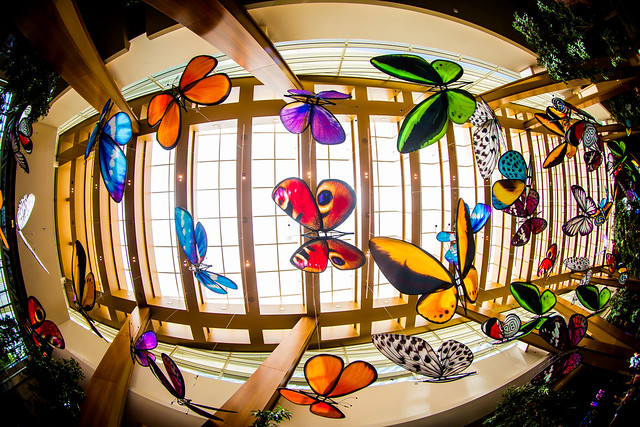
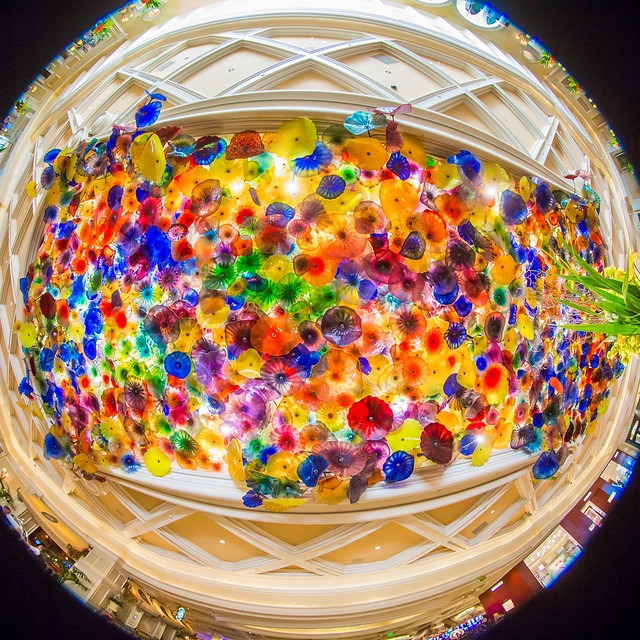
My Friend Chihuly Says Hi

I almost didn’t purchase the Canon EF 8-15mm f/4L Fisheye USM lens. I remember a conversation when I bought it a few years back on Google+ with my good pal Gordon Laing where I was really debating buying it. It was in pre production and I had an order in with B&H but it hadn’t shipped yet. At around $ 1,400 the lens felt expensive for what I worried might be an oddball lens, a lens useful for making a few high impact fisheye shots but not good for much else.

I’m happy to say that I did buy the EF 8-15mm fisheye lens and that I couldn’t be more happy about that decision.

My main dilemma with the EF 8-15mm fisheye was that I already owned the excellent EF 24mm f/1.4 lens and EF 14mm f/2.8 lens, and so I felt like I had the whole wide angle world covered. Now I find that I use this lens at 15mm much more than either my EF 24mm f/1.4 lens and EF 14mm f/2.8 lens and get what feels to me to be a remarkable more normal non fishy looking wide angle shot. Yes, you can tell it came from a fisheye lens at 15mm, but barely and I love the slightest degree of distortion I get there artistically speaking.

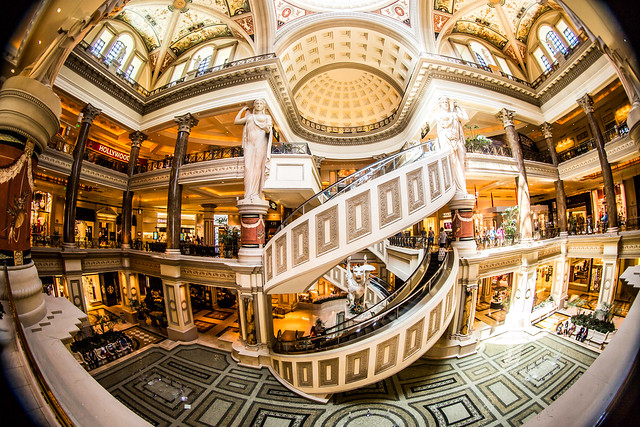
Welcome to Caesars

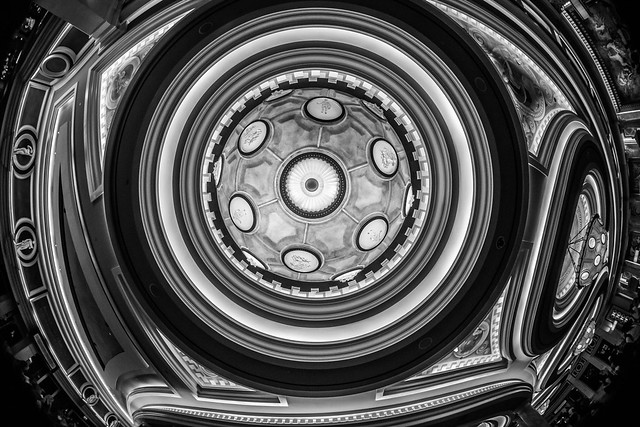
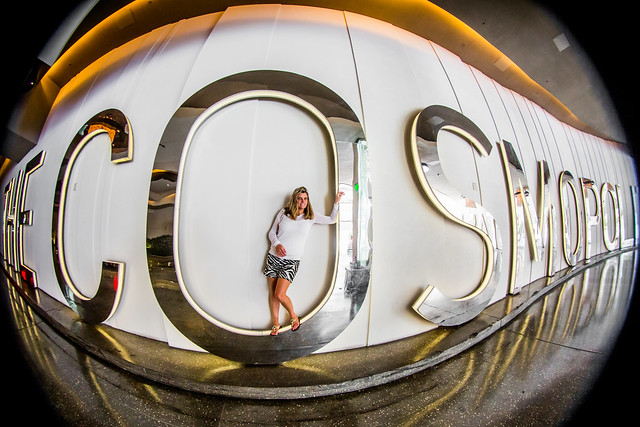
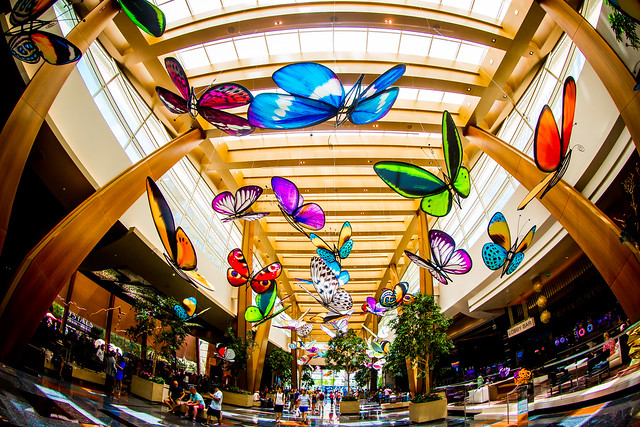
Of course I have way more fun shooting this lens at 8mm and have found that beyond traditional fisheye subjects, this lens has opened up a whole new world to me when it comes to shooting more abstractly — especially with architecture. I find these days my EF 14mm lens stays in my bag and instead I put on my EF 8-15mm fisheye lens for almost every ceiling photo I take.

I find this lens gets me my highest impact shots. Shots that make you go wow and make people notice.

Underground

On a full frame lens this lens gives you a perfect circle at 8mm. I love the square crop format and frequently shoot it at 8mm and then crop square afterwards.

The lens is super sharp and great if you want to get the entire ceiling of Chihuly’s amazing sculpture at the Bellagio like in the photo with this post.

While it’s not the best portrait lens, it can be fun to use as well with photographing people in new and creative ways (like this version of the human eye that I used it on).

As a reminder, my analysis of my Canon gear is being done in partnership with Canon and I am receiving compensation for this work with them.

Meet You at the Cosmopolitan

You Give Your Hand to Me

If You Can Find Her

Your Love is My Favorite Color

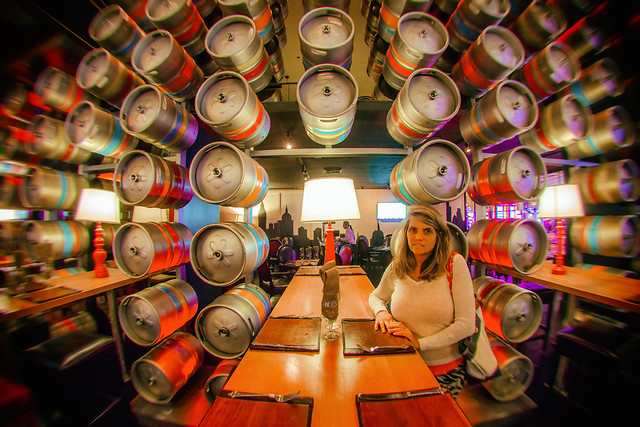
Time for a Beer?

Your Love is My Favorite Color

Penchant


Thomas Hawk Digital Connection

 
Comments Off on The Canon EF 8-15mm f/4L Fisheye USM, My New Favorite Wide Angle Canon L Series Lens

Posted in Photography


My Favorite Lens of All, the Sharp, Smooth, Feel of the Canon EF 135mm f/2L USM

26 Oct

One Last Hand

For those of you who know me or follow my work, you probably already know about my love affair with the Canon EF 135mm f/2L USM telephoto lens. Simply put, this is my favorite lens I have ever used in my life. It’s also the lens I use for probably 70% of the photographs which I produce. This is a workhorse lens and I believe it is the sharpest lens that Canon makes. If I could only own a single Canon prime lens, this would be it.

Bet Red

Professional grade Canon L series lenses are not cheap. Canon’s L series represent their top of the line optics. They are what almost all Canon professional photographers shoot with. That said, I think the EF 135mm f/2L USM is one of the best values as far as Canon L series lenses go. The lens costs a little over $ 1,000 and is amongst the most economical L series lenses you can buy.

I probably shoot this lens at f/2 the majority of the time. This gives you a super clean point of focus, with the beautiful out of focus bokeh away from your primary point of interest. For those low light shallow depth of field photos, it does not get better than this lens in my opinion. The portraits you can make with this lens are beautiful — sharp as tack but with the subtle bokeh around the edges that a lens like this can produce.

Two Hearts Can't Be Wrong

The autofocus on this lens is the most responsive of any lens I’ve ever used. It autofocuses so lightning fast and allows you to quickly lock in on the action that you want to see. It’s a very quiet and very smooth feel when you hit your focal point perfectly on the mark.

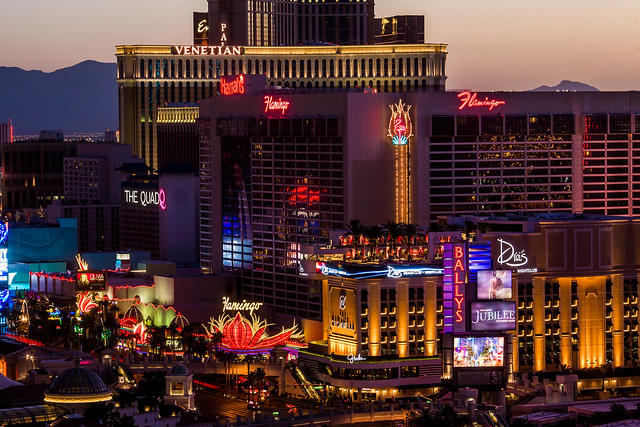
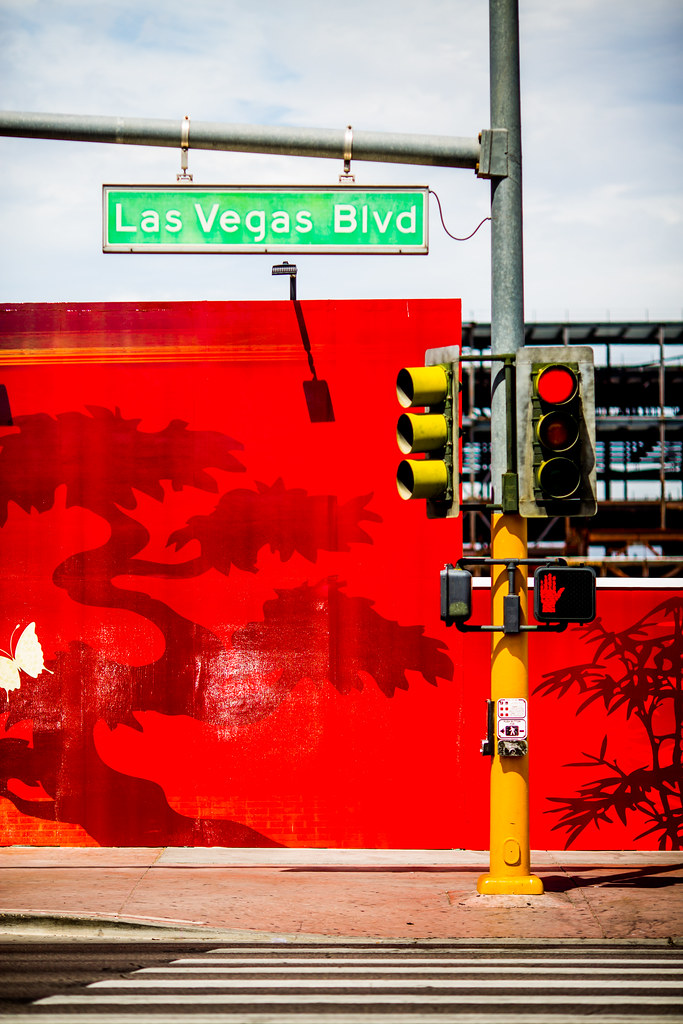
The photos in this blog post were all taken on my recent trip to Vegas with this lens. I cannot recommend this lens strongly enough. An example of why I like this lens so much can be seen in the first photo in this post. Forget about it as it appears in this post, click here to see it in full high res glory. Look at how sharp the details are on that photo. Notice the individual neon tubes as visible in the Harrahs and Flamingo signs. I took this photo from the balcony of the Cosmopolitan of Las Vegas, a great distance away. The 135mm EF f/2L USM gave me the distance I needed to shoot down with such clarity on the neon signs in the photo.

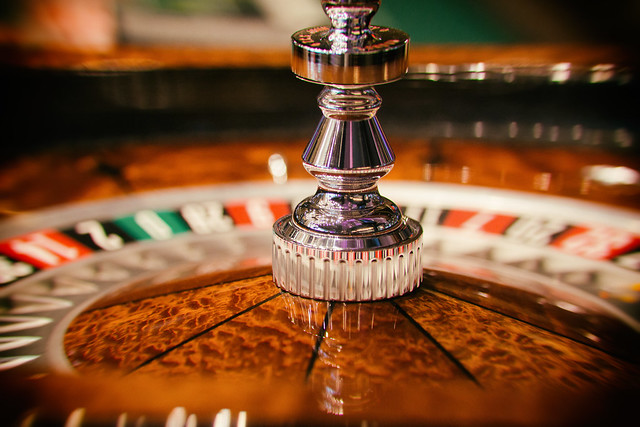
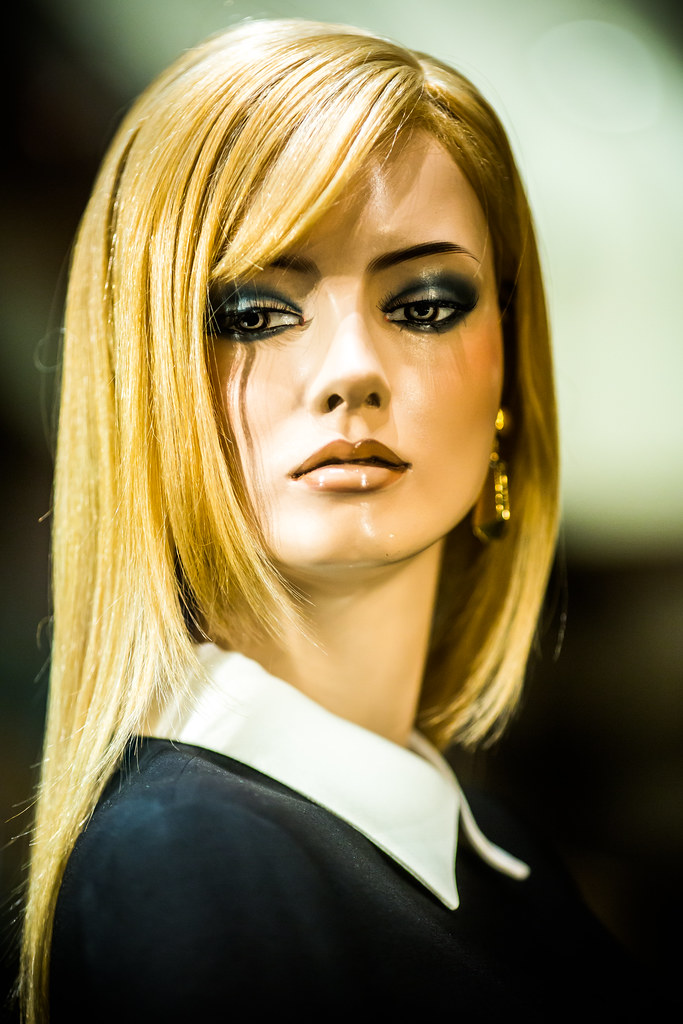
The photo of the roulette wheel and the mannequin in the post show how great the bokeh and depth of field is around an isolated focus point. This is another of my favorite characteristics of this lens. Shooting portraits at f/2 on this lens feels just perfect to me.

In addition to portraits, this lens is great for street photography, sports, concerts, abstracts, and so many other types of photography.

As a reminder, my analysis of my Canon gear is being done in partnership with Canon and I am receiving compensation for this work with them. More on Canon telephoto lenses here.

Teardrop

I'll Take Two

Seeing Red


Thomas Hawk Digital Connection

 
Comments Off on My Favorite Lens of All, the Sharp, Smooth, Feel of the Canon EF 135mm f/2L USM

Posted in Photography


Art of Building contest: Vote for your favorite photo

16 Dec

Lady_in_Waiting_by_Linda_Wride.JPG

An eerie view from Alcatraz, the use of child labor in India and a symbol of the Soviet Union’s past industrial rush are some of the finalists in this year’s international Art of Building photography competition run by the Chartered Institute of Building. A panel of judges shortlisted 15 images. Now the contest turns to you to decide the winner. Learn more

News: Digital Photography Review (dpreview.com)

 
Comments Off on Art of Building contest: Vote for your favorite photo

Posted in Uncategorized


3 of My Favorite Photography Books

19 Aug

We are all familiar with the old refrain, “Those who can, do.  Those who can’t, teach.  Those who can’t teach, teach gym.”  I’m still not sure about that last part, but I think by now we’ve pretty much debunked the middle part.  The photography world is full of incredibly successful, highly talented photographers who willingly and eagerly pass along their knowledge and expertise to a new wave of hobbyists, enthusiasts, and professionals.  From workshops and photo walks, to seminars and tutorials, there is a lot of solid information to be found.  As great as live face-time with many of these photographers is, however, it’s not always feasible, possible, or even affordable.  As amazing as a five-day seminar at a four-star hotel in the Virgin Islands might sound, in my world things like food, shelter, and a growing 12-year-old son have to come first.

That’s when I hit the books.  And I’m not talking about an e-book or an on-line forum or magazine (not that there’s anything wrong with them).  I’m talking about an actual collection of pages, bound together in a single unit, containing useful information and insight.  Something I can highlight and bookmark.  But just like not every workshop is everything it’s cracked up to be, not every book is full of secrets bound to catapult you to the next level.  I’ve amassed a fairly sizable photography library over the years.  Some have been disappointing, while others have been worth every penny.  My philosophy on photography books is simple.  A photography book is worth its price tag and earns a permanent place on the shelf if I learn even just one or two things that can noticeably impact my photography in a positive way.  Regardless of whether it is geared towards shooting, editing, or running my business, a good photography book will have at least one shiny nugget that changes the way I do things.
In no particular order, these are three of my favorites.

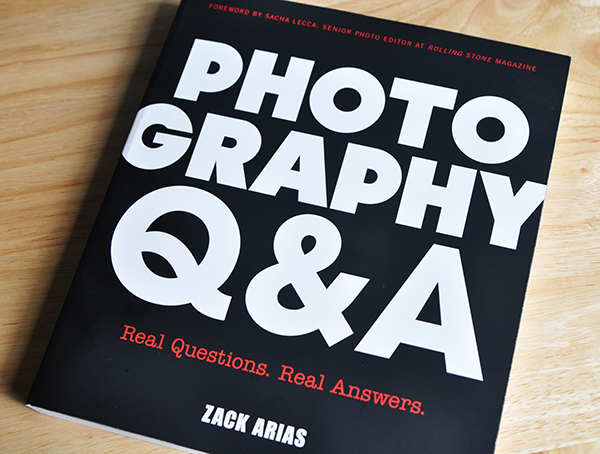
1.  “Photography Q&A – Real Questions. Real Answers,” by Zack Arias

I had the pleasure of writing the first published review of  Zack’s book back in June.  Since then, I have re-read it cover-to-cover twice.  In August of 2012, Zack, an Atlanta-based commercial/editorial photographer, embarked on a mission to save us all from really bad advice.  He launched his popular Tumblr blog, “Phtography Q&A – Ask Me Anything About Photography”, with the goal of answering 1,000 reader-submitted questions.  It was this collection of questions and answers that became the rough draft for the Q&A Book.   There are several things I love about this book.  For starters, it’s not about any one topic.  The questions range from gear, lighting, and confidence, to portfolio-building, submitting your work, and selling yourself.  I wouldn’t call this a book about photography,  but I would call it a book about being a photographer.  Covering topics as widely varied as the photographers who submitted them, PQ&A reads like you’re sitting across the table from Zack, having a beer, as he shares not only his advice and expertise, but the personal experiences that taught him those lessons in the first place.

JJG-001

I summed up my original review like this: “While this book may help improve your photography, I think its greater goal will be improving your quality of life as a photographer– or at least the quality of your head space.  If you’re anything like I am– still grappling with crises of confidence, fighting and clawing through creative and practical ruts, or still occasionally convinced that ‘my photography/business will skyrocket if I can just buy THAT,’ then this book is for you.”

Our playing field has changed drastically in recent years.  PQ&A cuts to the chase and tells it like it is.  The advice you’ll find in these pages is worth way more than the price tag.

2.  A Tie Between “The Moment it Clicks” and “The Hot Shoe Diaries,” both by Joe McNally

Joe McNally has to be one of the most dynamic photographers and educators working today.  And no, I’m not exaggerating.  If you’ve ever had the privilege of attending one his seminars you know what I’m talking about.  If you haven’t, read both of these books.  Both are written in Joe’s signature conversational style and will leave you chomping at the bit to get out and put what you’ve learned into practice.

A typical Joe McNally seminar or workshop tends to be filled with sentences that begin with things like, “The photo editor at National Geographic once told me…” or “My editor at Life Magazine used to say…”  These are your cues to start feverishly writing down every word that follows.  “The Moment it Clicks” is an entire book of these one-liners, with each two-page spread combining Joe’s words of wisdom with a stellar photograph and the story behind it to illustrate the point.

JJG-004

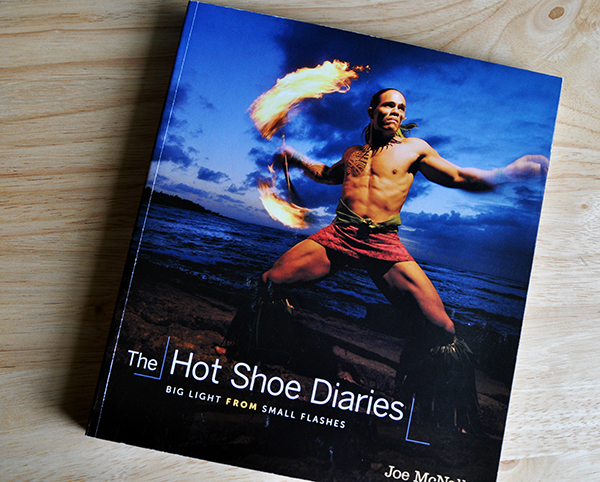
“The Hot Shoe Diaries” should absolutely be required reading for anyone who even gives passing thought to off-camera flash.  I know I sound like a gushing fanboy when I say this book changed my life, and I’m okay with that.  With sections like “Up to Your Ass in Alligators,” “Strobe Strategy,” and “Do You Have a Bedsheet?” you know that a whole heap of knowledge and information is about to fall in your lap.  As with “The Moment it Clicks,” each lesson is illustrated with one of Joe’s amazing images.  One of the most valuable sections comes at the very beginning of the book.  “What I Use…and Why and When I Use It” sets the stage for each of the many off-camera flash lessons.

JJG-006

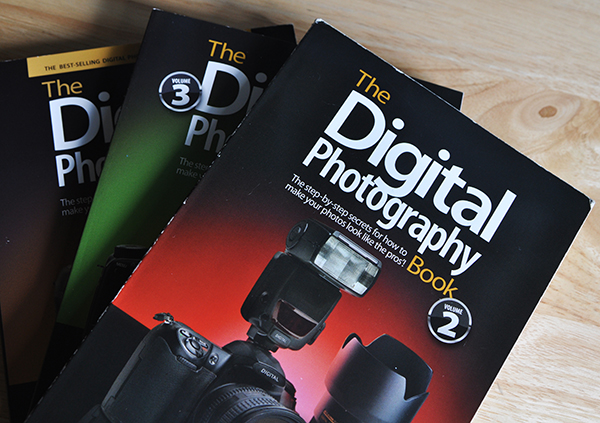
3. “The Digital Photography Book – Volume 2,” by Scott Kelby

The name Scott Kelby has pretty much become synonymous with photographic education, from shooting to post production, and everything in between.  There are currently four volumes in this series.  Volume 2 is my favorite.  Just like the other authors mentioned here, Scott Kelby lays it all out on the table, sharing his setups, his experiences, and why he does things the way he does them.  Each chapter (all named “Shoot ________ Like a Pro”) sets out with a singular goal– to improve a specific aspect of your photography.  Topics include flash, portraits, landscapes, weddings, travel, and macro.  There is also excellent information on “Building a Studio from Scratch” and “Pro Tips for Getting Better Photos,” as well as Scott’s “Recipes to Help You Get ‘The Shot.’”

JJG-008

Photography is one of those things where you only get better by doing it.  A LOT.  You can read all the photography books you can get your hands on, but until you get out there and repeatedly apply what you’ve read (over and over again), nothing is going to change.  I’ve chosen the three (okay…four) books here for three very different reasons.  Scott Kelby’s “The Digital Photography Book” series is bursting at the seams with useful information for the beginning to intermediate photographer looking to take their photography to the next level.  Nobody beats Joe McNally when it comes to teaching everything from the basics to the finer points of off-camera flash, but you need to have a solid foundation and firm grasp of certain photographic principles before tackling advanced lighting techniques.  Zack Arias’ book departs from the traditional photography book in that it is less about technique and more about getting your photographic head screwed on straight.  All three are important, and all three will benefit every photographer at some point on their journey.

Post originally from: Digital Photography Tips.

Check out our more Photography Tips at Photography Tips for Beginners, Portrait Photography Tips and Wedding Photography Tips.

3 of My Favorite Photography Books


Digital Photography School

 
Comments Off on 3 of My Favorite Photography Books

Posted in Photography


My Favorite Photography Comic “What the Duck” is Back

18 Apr

My favorite photography comic What the Duck is back as a daily.
whattheduck.net
If you’re unfamiliar with What the Duck it’s authored by Aaron Johnson, whom I interviewed several years ago when I was running my EXIF and Beyond podcast. While I’ve never met Aaron I consider him a friend as he’s done such a great job adding to the sense of community amongst photographers with his wit, humor and creativity.

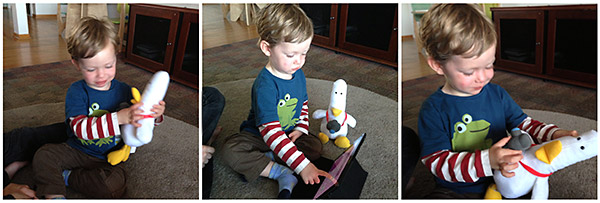
If you’d like to support Aaron he’s selling What the Duck plush dolls of his most popular characters at incredibly reasonable prices with some being limited editions. I picked up one of each and gave an extra to my son. They came out great!

I highly recommend visiting WhatTheDuck.net daily now that he’s back and for old time sake here is the recording of my interview with Aaron in February of 2009.

var flashvars = {
width: “530”,
height: “253”,
autostart: “false”,
repeat: “false”,
backcolor: “111111”,
frontcolor: “cccccc”,
lightcolor: “66cc00”,
stretching: “fill”,
enablejs: “true”,
mute: “false”,
skin: “http://www.jmg-galleries.com/blog/wp-content/plugins/proplayer/players/skins/stylish.swf”,
logo: “http://www.jmg-galleries.com/blog/wp-content/plugins/proplayer/players/watermark.png”,
image: “http://www.jmg-galleries.com/blog/wp-content/plugins/proplayer/players/preview.png”,
plugins: “”,
javascriptid: “5265pp-single-516f895e2eafc”,
image: “http://www.jmg-galleries.com/blog/wp-content/plugins/proplayer/players/preview.png”,
file: ‘http://www.jmg-galleries.com/blog/wp-content/plugins/proplayer/playlist-controller.php?pp_playlist_id=5265pp-single-516f895e2eafc&sid=1366264158’
};
var params = {
wmode: “transparent”,
allowfullscreen: “true”,
allowscriptaccess: “always”,
allownetworking: “all”
};
var attributes = {
id: “obj-pro-player-5265pp-single-516f895e2eafc”,
name: “obj-pro-player-5265pp-single-516f895e2eafc”
};
swfobject.embedSWF(“http://www.jmg-galleries.com/blog/wp-content/plugins/proplayer/players/player.swf”, “pro-player-5265pp-single-516f895e2eafc”, “530”, “253”, “9.0.0”, false, flashvars, params, attributes);


Copyright Jim M. Goldstein, All Rights Reserved

My Favorite Photography Comic “What the Duck” is Back

The post My Favorite Photography Comic “What the Duck” is Back appeared first on JMG-Galleries – Landscape, Nature & Travel Photography.


JMG-Galleries – Landscape, Nature & Travel Photography

 
Comments Off on My Favorite Photography Comic “What the Duck” is Back

Posted in Equipment