ZEISS has introduced the 21mm F2.8 to its Loxia lineup for full-frame Sony E-mount cameras, joining the 35mm F2 and 50mm F2. Like its siblings, the 2.8/21 allows the user to de-click the aperture ring for video recording. Read more
Tag: f/2.8
-
Ricoh announces 24-70mm F2.8 for upcoming full-frame Pentax DSLR
We’re still waiting for the much-teased full-frame DSLR, but Ricoh has today announced another full-frame zoom lens – the HD PENTAX-D FA 24-70mm F2.8 ED SDM WR, which features a weatherproof design and bright, constant maximum aperture. Read more
-
Canon EOS 7D Mark II firmware improves AF with EF 16-35mm F2.8L and EF-S 17-55mm F2.8 lenses
Canon has released firmware version 1.0.5 for the EOS 7D Mark II. This update fixes a couple of bugs and claims to improve AF accuracy when the camera is used with the EF 16-35MM F2.8L USM or EF-S 17-55mm F2.8 IS USM lens. Read more
-
Writer’s Favourite Lens – Nikon 24-70 mm F2.8
I’ve had the Nikon 24-70 mm f/2.8 lens for about three years now, and it is by far my most used lens, and really my go-to when I am heading out to take photos. It is mid-range when it comes to focal length, but for shooting most landscapes and architecture, it is nearly always enough. It is not a cheap lens ($ 1749 USD without VR, $ 2396 with VR), but it was a special treat, one I have to thank subsidies for. One year after getting a special payout I was able to afford this lens, just.
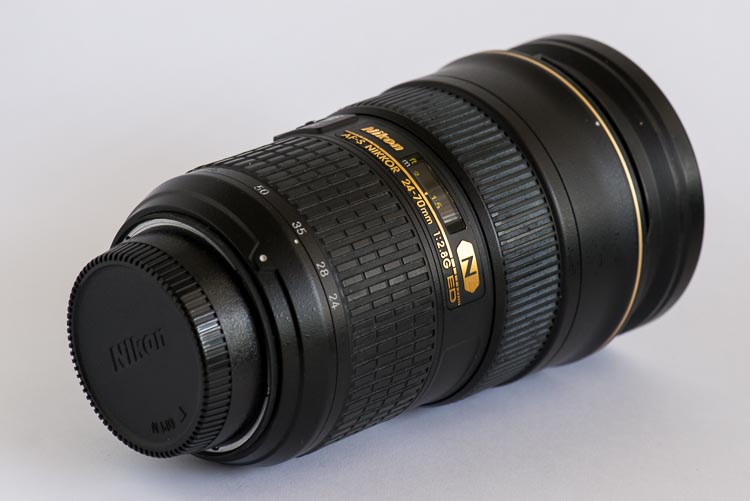
Nikon-24-70mm lens
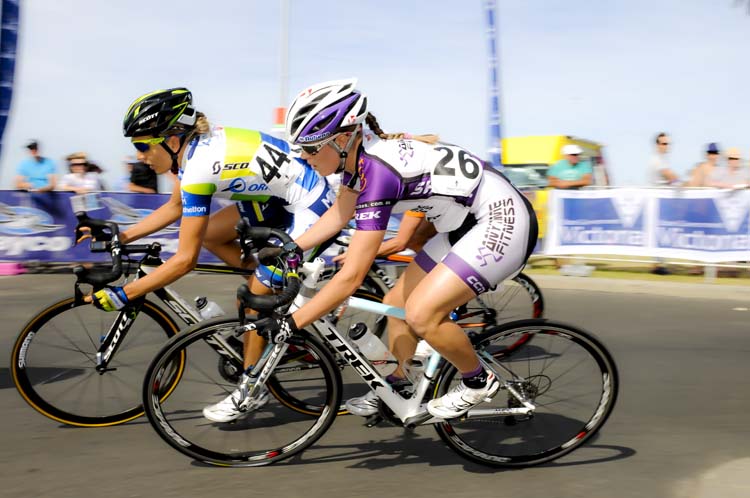
When I got the lens I was shooting cycling, both on the road and the track, and I was looking for a better lens to use rather than the cheap one I bought when I first started. This one seemed perfect. A good shorter, wide angle, and the focal length was almost a perfect match for my 80-200mm. I also thought I was going to start doing portraits and it seemed like the ideal lens.

Portrait style photography
For personal reasons, I had to give up photographing cycling and never really got into portraits. It was something I never felt comfortable doing. I ended up concentrating more on architecture and landscape. This lens saw me through all that with its ability to be so versatile, I could really do anything with it.
Pros:
Lovely clear images
You notice it, you really do. If you’ve been shooting with a cheap lens, the moment you start taking photos with one of this quality, you will see the difference. There was something about how clear the images were; they seemed to shine. There is a clarity with the images, and if you get great conditions to take photos, such as a good day and good light, then it really shows in the images.
Bay Crits racing
Fast lens
With the widest aperture being f/2.8, you know you have a fast lens, which means it gives you more choices. With the cycling, it meant I didn’t have to go to such a high ISO to be able to get photos inside the velodrome. I could still get great images that didn’t have a lot of grain/noise.
It is the same if you are doing astrophotography, as the f/2.8 means that you don’t need to have your ISO up as high, so you won’t get really grainy shots of the night sky.
Good size
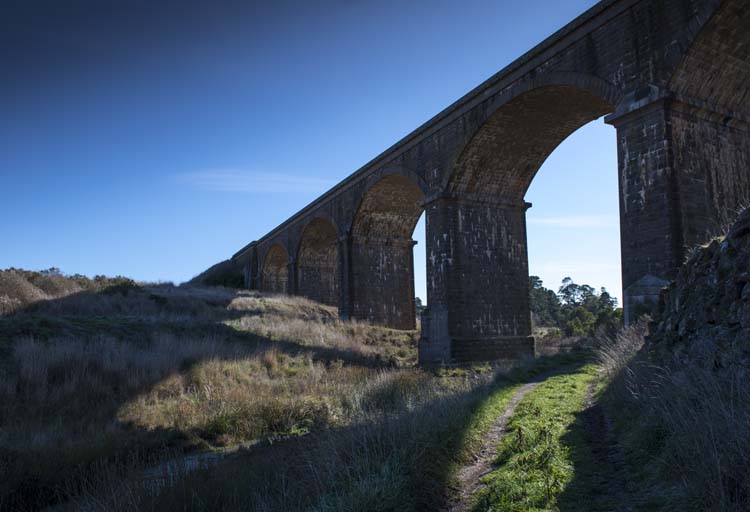
The size works well for what I want, and what I am doing. I’m more of a wide angle person, but the extra length to 70mm is really fantastic, and gives me more options when I am out taking photos. It is, ultimately, the best of both worlds. I have the wide angle, but I can also zoom in a little bit.
Rail Viaduct Malmsbury
Sometimes I wish it was a little longer, maybe to 100mm or 120mm, but it isn’t, so I have to compensate. I don’t often zoom right in on subjects, so it is rarely a problem.
Fits filters
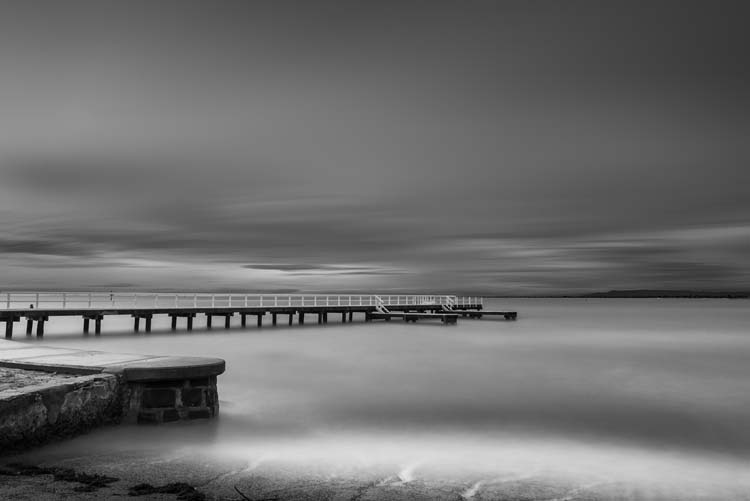
Doing long exposures is something that I have spent a lot of time learning, and this lens is a great choice for this. The 77mm filter size means that I can use filters. I also have the 14-24mm lens, and not being able to put filters on that has been frustrating, but the 24-70mm still gives me the wide angle view, and the option of using filters.
Long exposure of bay
Can photograph things close-up
One of the unexpected bonuses has been how close I can get to objects to take photos. Nowhere near as close as a macro, but very close nonetheless. It’s great when I’m out to be able to take close-up photos of objects that I see, like flowers, cakes, etc.

Flowering gum
Versatility
This is one of those lenses that you know could photograph anything. I purchased the lens for portraits and cycling, but it soon became apparent that I could use it for almost anything I wanted to do. I now shoot landscapes and architecture primarily, and it has been great for doing both of those. The lens is very versatile, and I am confident that no matter what I need to shoot it will do a great job.
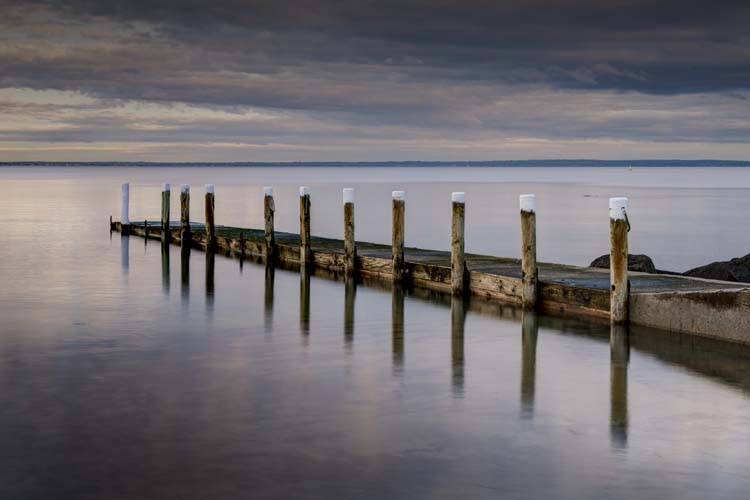
Pier at bay
Cons:
Weight
There is no doubt that it is a heavy lens, weighing in at 1.98 lbs. (900 g). Most people are shocked at how heavy it is when they pick it up alone, or with my camera attached. It isn’t something I notice anymore. I have been using heavy cameras for quite a few years and it is just normal now. When I was still photographing cycling events, I would use two cameras, one with the wide angle, and the other with a telephoto lens. People asked me how I carried it all, and I said the two cameras helped balance me. You just get used to it.
If you are someone who has issues with their hands or arms, and find it hard to carry or use heavy objects, this wouldn’t be a good lens for you. You may find it too heavy to hold up to take photos. Don’t forget, it isn’t just about holding it up when shooting, it is also about carrying it around as well. I have to admit that often, at the end of the day, I’m very happy to put the camera down.
Price
It isn’t a cheap lens in any way, but quality always comes with a price tag. The lens is approximately USD $ 1800, but, if you are serious about your photography, it is worth it. I definitely think it was.
Finally
I wouldn’t go anywhere without my Nikon 24-70 mm f/2.8 now. It has been rained on, had the hot sun beaming on it, been sprayed with salt spray, it’s dirty, it’s well-used. You can be sure that it will always be in my camera bag, whether it is attached to my camera or not. I love using it, and am never disappointed with the images that I get from it.
Do you have a favorite lens? Tell us. Read about some other dPS writer’s favorite lenses here:
- Writer’s Favorite Lens: Olympus Zuiko 12-40mm f/2.8
- Writer’s Favorite Wildlife Lens – Tamron 150-600mm
- Writer’s Favorite Lens: 50mm f/1.8
- Writer’s Favorite Lens – The Canon 24-105mm f/4
- Writer’s Favorite Lens – the Canon 40mm Pancake Lens
- Writer’s Favorite Lens – the Tamron 18-270mm
googletag.cmd.push(function() {
tablet_slots.push( googletag.defineSlot( “/1005424/_dPSv4_tab-all-article-bottom_(300×250)”, [300, 250], “pb-ad-78623” ).addService( googletag.pubads() ) ); } );googletag.cmd.push(function() {
mobile_slots.push( googletag.defineSlot( “/1005424/_dPSv4_mob-all-article-bottom_(300×250)”, [300, 250], “pb-ad-78158” ).addService( googletag.pubads() ) ); } );The post Writer’s Favourite Lens – Nikon 24-70 mm F2.8 by Leanne Cole appeared first on Digital Photography School.
-
Nikon introduces 24-70mm F2.8 VR, 24mm F1.8 and 200-500 F5.6 FX lenses
Nikon has released three new full-frame lenses, including a prime and both standard zoom and super telephoto zooms. The one that will likely garner the most attention is the replacement for the venerable 24-70mm F2.8. The latest version adds Vibration Reduction, electromagnetic aperture control, a new optical construction and more. Also introduced is a 24mm F1.8 prime and a 200-500mm F5.6 super telephoto. More details
-
Canon EF-S 24mm f/2.8 Pancake Lens Review
In November of 2014, Canon introduced us to its newest member of their low-cost prime lens family, the EF-S 24mm f/2.8 STM pancake lens. Canon gave us the 40mm version in 2012, and hoped to up the stakes by adding a wide-angle version this past year.
Sitting at the extreme end of what can be considered wide-angle, the EF-S 24mm (full-frame equivalent of 38mm on an APS-C sensor) does so in the form of a small, light, and inexpensive prime lens that is easily accessible to all Canon enthusiasts.
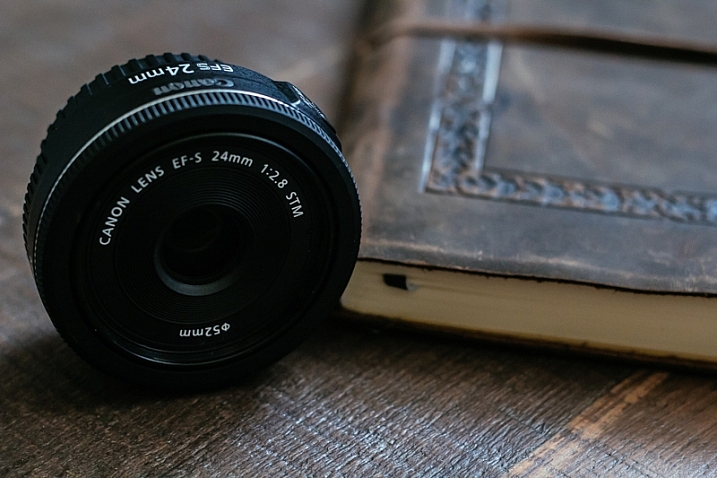
The first features that will strike you about the 24mm are its inconspicuous qualities; the lens is incredibly thin at only 2.75 inches, and weighing under five ounces. Street shooters wanting a wider angle of view will be pleased at how reserved the profile of this glass is, as it makes even a large camera body appear smaller, and less noticeable.
In addition to being visually unobtrusive, the STM (stepping motor) feature of this lens allows for faster, and much quieter autofocusing, compared to the USM (ultrasonic) motor system used on many other lenses. Manual focus is available in full, and Canon maintains this lens is capable of a minimum focusing distance of six inches.
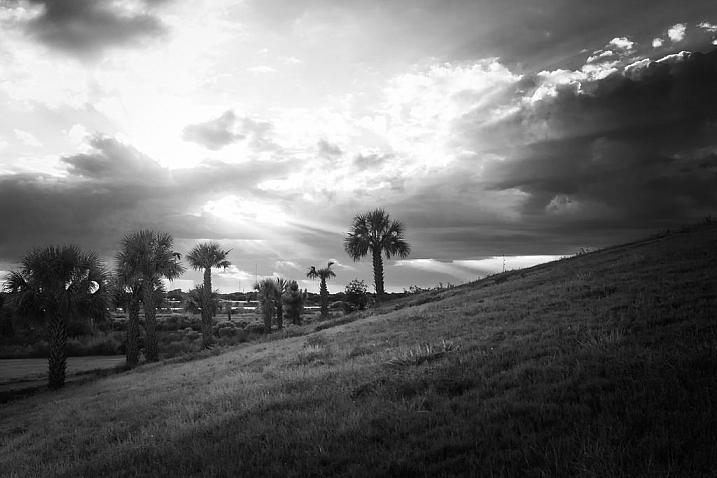
Aperture f/4.0, Shutter speed 1/800, ISO 200
For filter users, the lens uses a standard 52mm fitting, and will accept all filters of that size. Also keep in mind that as this lens is part of Canon’s EF-S line, it cannot be used on full-frame systems, such as the Canon 6D, and will only fit APS-C (crop sensor) cameras.

Aperture f/4.5, Shutter speed 1/400, ISO 250
As far as my personal experiences with the lens, they were generally very positive, despite my preconceived worries about image quality that were bolstered by rather mixed pre-release reviews. I was pleasantly surprised to find that the 24mm pancake performed admirably well in this area, giving me very sharp and accurate photos throughout the full range of aperture stops.
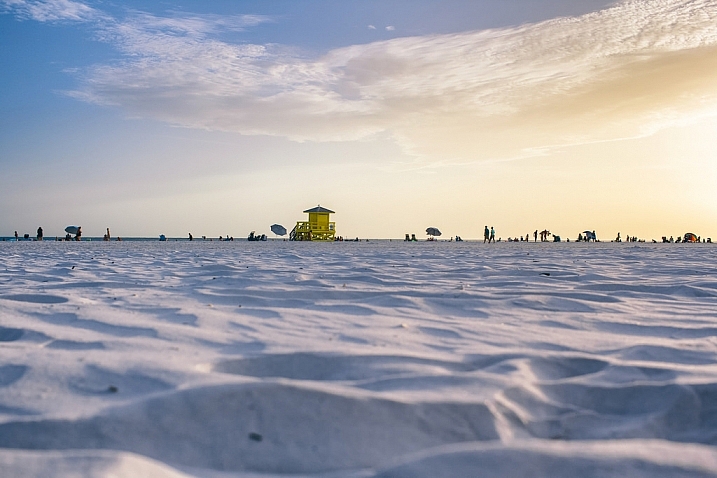
Aperture f/8, Shutter speed 1/640, ISO 250
The shot above showcases the clarity of the 24mm pancake. The beachgoers far to the back of the frame are sharp, details are well-defined, and I was still able to create a soft blur on the sand directly in front of the camera.

Aperture f/3.2, Shutter speed 1/2000, ISO 200
The image above highlights how well the 24mm pancake handles blurring and bokeh at wider apertures, especially for a wide-angle lens. I usually take this shot with my 50mm f/1.8, but I wanted to see what the 24mm could do. The foreground blurring, sun glare, and porch details were all handled in a pleasant manner.

Aperture f/8, Shutter speed 1/200, ISO 100
Textures are captured very accurately with this lens, as you can see with the water in the picture above. Ripples and the smoothness of the surface translate well also, and great tonal range helps define the lake from front to back.
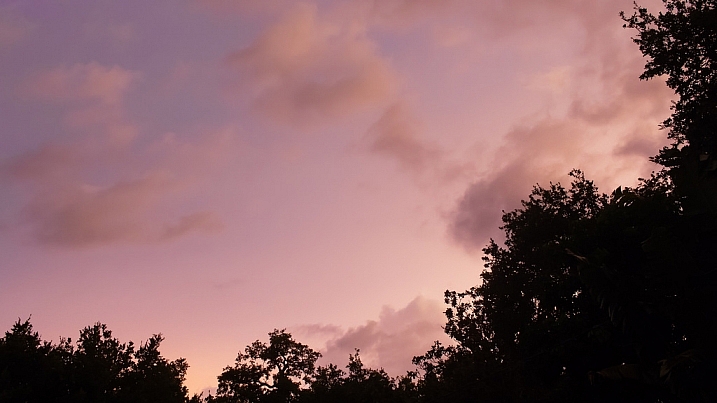
Aperture f/8, Shutter speed 1/50, ISO 1250
Colors are deep and accurate, as shown in the photo above. Other than sharpness, noise reduction, and a bit of contrast adjustment, this image is as it appears right from the camera. I didn’t have to go crazy with the noise reduction, and had a great looking image even with sensitivity set at ISO 1250.
Obviously, being a wide-angle affair, this lens doesn’t produce bokeh or blurring as easily or smoothly as my 50mm f/1.8. This isn’t an issue as I’m usually doing landscape shots using a smaller aperture.
This little jewel is available (at the time of this writing) for $ 149.00. I’d highly recommend giving this lens a try, especially if you’re in the need of a backup at this focal length, or even an affordable wide-angle starter lens.
Have you shot with the 24mm f/2.8 STM? What did you think? Share your experiences with us below!
googletag.cmd.push(function() {
tablet_slots.push( googletag.defineSlot( “/1005424/_dPSv4_tab-all-article-bottom_(300×250)”, [300, 250], “pb-ad-78623” ).addService( googletag.pubads() ) ); } );googletag.cmd.push(function() {
mobile_slots.push( googletag.defineSlot( “/1005424/_dPSv4_mob-all-article-bottom_(300×250)”, [300, 250], “pb-ad-78158” ).addService( googletag.pubads() ) ); } );The post Canon EF-S 24mm f/2.8 Pancake Lens Review by Tim Gilbreath appeared first on Digital Photography School.
-
Lens Comparison 24-70mm f/2.8 – Canon Versus Tamron
If you’re looking to upgrade from your kit lens the 24-70 f/2.8 lens is a common choice. It’s got a good range zoom and wide largest aperture of f/2.8 for the entire range. But which one to choose? Brand name or third party?
In this video Matthew Gore does a really comprehensive lens comparison between the brand name Canon brand name version, and the Tamron third party one. He takes a look at focusing and how much noise each produce, sharpness at different focal lengths and apertures and chromatic aberration.
There is a significant price difference, as he mentioned. Take a look at both:
- Canon EF 24-70mm f/2.8L II USM Standard Zoom Lens – $ 1899 USD
- Tamron SP 24-70mm Di VC USD – $ 1299 USD
Also available are:
- A Nikon version – the Nikon 24-70mm f/2.8G ED AF-S Nikkor – $ 1887 USD
- A Sigma version which can be purchased for many different camera bodies (as can the Tamron) – $ 385 USD (make sure you read some reviews on this lens if you decide you want to go for this option)
- Sony 24 -70mm f/2.8 Carl Zeiss Vario Sonnar T Zoom Lens – $ 1998 USD
At $ 600 more (almost 50% higher) is it worth it to you? See which he recommends in the video and which he would purchase and why.
Do you own one of these lenses? Which one and why did you select it? Please share your thoughts in the comments on whether you feel the third party lenses measure up to brand name ones.
googletag.cmd.push(function() {
tablet_slots.push( googletag.defineSlot( “/1005424/_dPSv4_tab-all-article-bottom_(300×250)”, [300, 250], “pb-ad-78623” ).addService( googletag.pubads() ) ); } );googletag.cmd.push(function() {
mobile_slots.push( googletag.defineSlot( “/1005424/_dPSv4_mob-all-article-bottom_(300×250)”, [300, 250], “pb-ad-78158” ).addService( googletag.pubads() ) ); } );The post Lens Comparison 24-70mm f/2.8 – Canon Versus Tamron by Darlene Hildebrandt appeared first on Digital Photography School.
-
Writer’s Favorite Lens: Olympus Zuiko 12-40mm f/2.8
One of the primary reasons I built my mirrorless kit with Olympus gear, was their wide array of high quality lenses. From fast primes to convenient zooms, they have all of the important focal lengths covered. It wasn’t until I picked up the Olympus Zuiko 12-40mm f/2.8 however that I really experienced the true potential of this micro four thirds system. Since purchasing the lens a few months ago, it has rarely left my camera body. Not only are the optics incredible, but it features many surprising benefits. Here are some of the main reasons it has become my favorite lens.
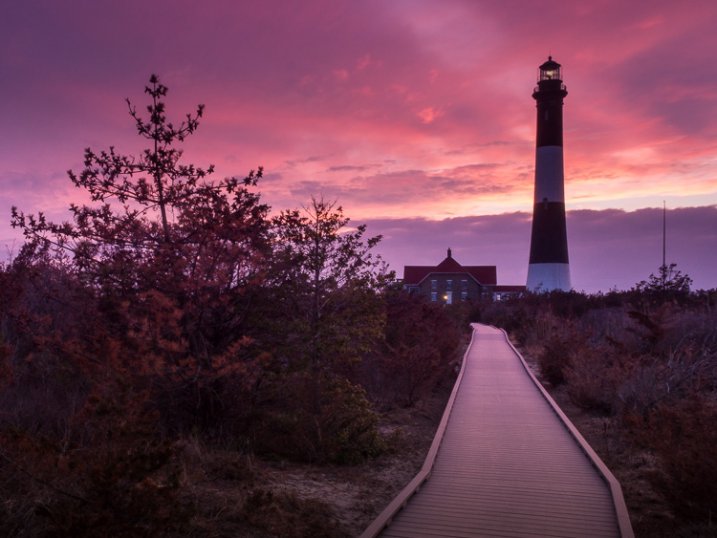
Image Quality
The Olympus 12-40mm has an effective focal length of 24-80mm making it extremely versatile. This fits my needs well, as I shoot a wide variety of subjects. With a constant aperture of f/2.8, it’s possible to shoot wide open throughout the entire range. Unlike other kit lenses, there is no need to stop down for optimal performance. Results are stellar wide open, with no noticeable chromatic aberration or diffraction. This makes it a workhorse for low light work, whether indoors or out.
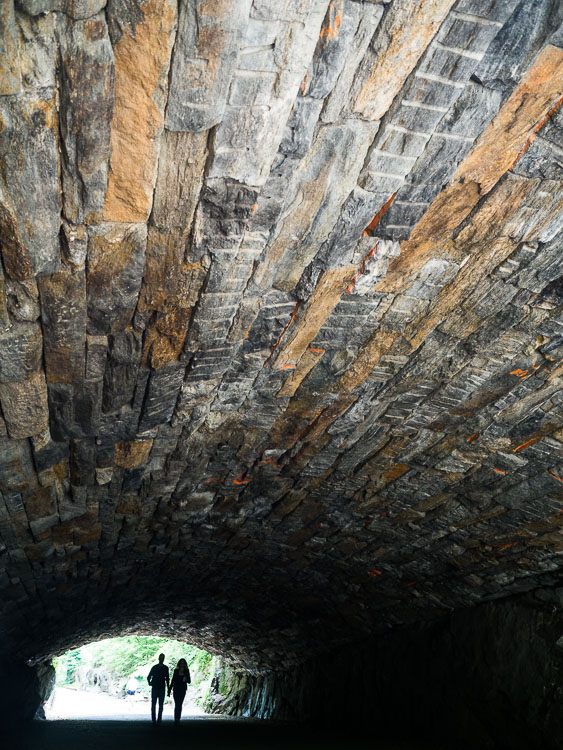
From corner to corner, the 12-40mm is the sharpest lens I’ve ever owned. That makes it invaluable for landscape and travel work, particularly when great depth of field and critical focus is desired. I have done side by side comparisons with DSLRs and pro lenses, and to my eye, the Olympus lens is sharper. Granted, these were not scientific tests, but for me, a real world study is perhaps more valuable than any static chart. While many zoom lenses compromise clarity for convenience, this lens has the rare combination of both.
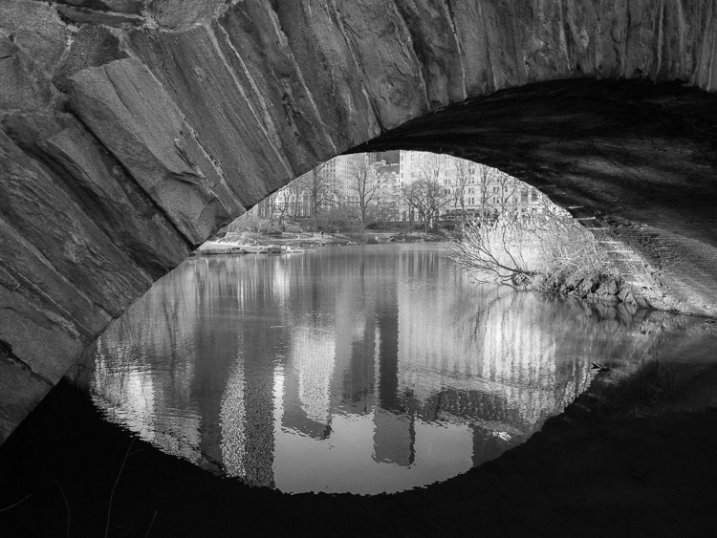
Size and Cost
When compared with the equivalent offering for DSLRs, a number of additional benefits are revealed. For example, the Canon 24-70mm f/2.8 weighs 28.40 ounces (805 g), more than twice as much as the Olympus at 13.47 ounces (382 g). After a long day of hiking and traveling, with gear on by back, this makes a big difference. With the lighter kit, I’m ready to go further, and faster. It’s also small enough to keep with me everyday, greatly reducing any missed opportunities. In addition to the weight savings, it’s also quite reasonably priced. The Canon and Nikon version of this focal length averages $ 1899 while this Olympus model can be purchased for around $ 899.

Macro Surprise
Perhaps the most unexpected benefit is the ability to shoot extreme close-ups. In fact, I recently sold my 100mm Canon macro lens as this satisfies my macro needs. With a minimum focusing distance of 20 centimetres (7.9 inches), it is ideal for flowers, plant life, and butterflies. Having this type of capability in a single lens makes it possible to do more while traveling lighter.

Shift into Manual Focus
Manual focus is activated by gently pulling the lens barrel down. With no buttons to find or push, this can be done without taking your eye from the viewfinder. Coupled with focus peaking, it has never been easier to achieve sharp focus manually. I particularly enjoy this feature when doing creative multiple exposures. This involves auto focus for the first shot, followed by a shift to manual focus to purposely create an out of focus second frame.

Built for Adventure
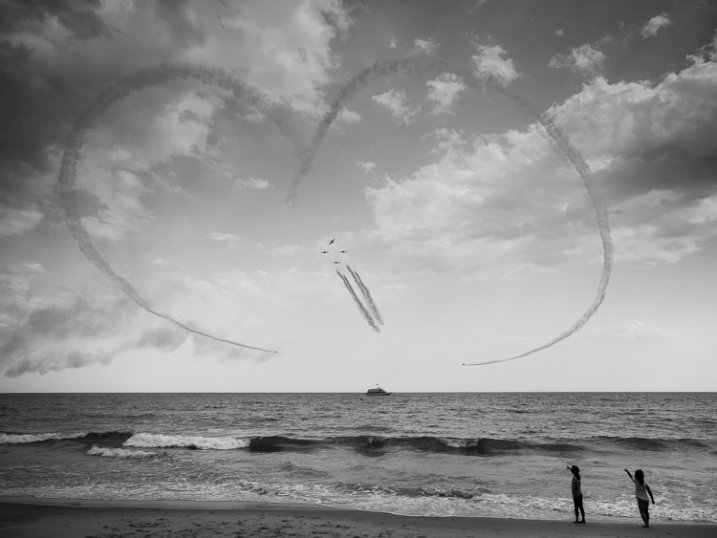
When paired with a weatherproof body, the lens completes a rugged combo that can withstand heavy rain, snow, dust, and even freezing conditions. I was able to test the weatherproof capabilities of the system during an airshow at the beach. As rain fell from the stormy sky several DSLR users frantically packed away their gear and headed for cover. Meanwhile, I continued to shoot the action and captured some unique shots with ominous dark clouds. Sure I could purchase and use a rain cover which are reasonably effective. They are clumsy enough however, to negatively affect my shooting technique.
Nice Bokeh
Despite what some critics have reported, it is quite possible to achieve shallow depth of field with a micro 4/3 system. Admittedly, the background won’t be as out of focus as an equivalent lens on a full frame camera, but it absolutely gets the job done. With this particular lens at f/2.8 I’ve found the bokeh to be very pleasing. In fact, I have no problems reaching for this lens should shallow depth of field be necessary.

Fast to Focus
Perhaps there’s no worse feeling than struggling to find focus as the magic light fades. Unlike many zooms, this lens does not hunt for focus. Whether you are using a camera with contrast or phase detection, it locks onto the subject, and fast. Not only does this benefit outdoor work, but also those indoor situations when the light levels are very low.
No Compromises
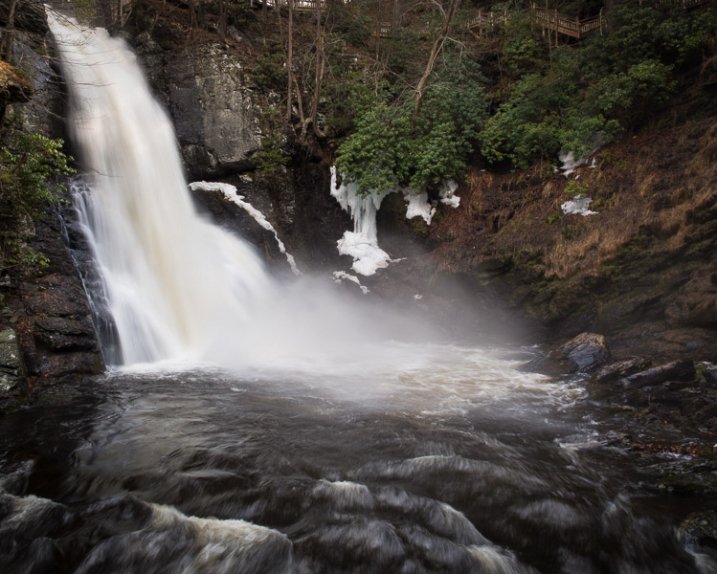
I’ve used a great deal of lenses throughout my career, many of which were stellar. Still, this lens really shines not only for its optical quality, but its versatile focal range. You can use it for just about anything, making it the first lens you’ll grab for most situations. Typically a lens with this many features would come at the price of other compromises, but this in not the case with the 12-40mm. Olympus has done a stellar job in creating what I find to be the perfect lens for micro 4/3 users.
googletag.cmd.push(function() {
tablet_slots.push( googletag.defineSlot( “/1005424/_dPSv4_tab-all-article-bottom_(300×250)”, [300, 250], “pb-ad-78623” ).addService( googletag.pubads() ) ); } );googletag.cmd.push(function() {
mobile_slots.push( googletag.defineSlot( “/1005424/_dPSv4_mob-all-article-bottom_(300×250)”, [300, 250], “pb-ad-78158” ).addService( googletag.pubads() ) ); } );The post Writer’s Favorite Lens: Olympus Zuiko 12-40mm f/2.8 by Chris Corradino appeared first on Digital Photography School.
-
Ricoh delays new Star series Pentax 70-200mm F2.8 for design change
Ricoh has announced it is to push back the availability date of its premium Pentax-D 70-200mm lens, as it needs more time to ensure it meets the standards required for a member of the Star-lens series. Initially due this Spring, the HD Pentax-D FA* 70-200mm F2.8ED DC AW is now set to arrive in Autumn. Read more
-
dPS Writer’s Favorite Lens – the Nikon 70-200mm f/2.8 VR2
We all have favorites; colors, cars, movies, and dogs. For one reason or another, they grow on you and the more you’re exposed to it, the more partial you become.
When it comes to photographers, we have favorites too. Brands, camera bodies, software, and of course, lenses. I’m no different.
Over the years many lenses have passed through my hands. I have also had experience with a slew of other lenses through newspaper jobs and loaners from friends; everything from fisheyes to 400mm, Sigma to Zeiss.
Each new lens gets to be a favorite for a time – I call it the honeymoon phase. But to really work its way into your heart and truly be that solid go-to favorite, you have to have the lens for an extended period of time. You also need the opportunity to put it through its paces under a multitude of conditions.
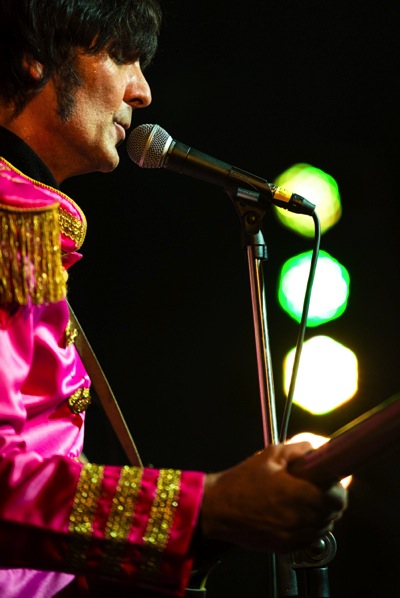
The lens that fits the bill for me is the Nikon 70-200mm f/2.8 VR2.
Now, I am fully aware that the quality of this lens has never been in question. It is, after all, Nikon’s flagship fast telephoto zoom – with a price tag to match. Let’s start with the bad news: it costs a pension, it’s the size of a small tree, it weighs as much as a newborn baby, and its minimum focusing distance is about a mile away.
For some photographers any or all of these reasons can easily make this lens a deal-breaker. The price is a non-issue if you are a pro. I paid over $ 2000 for mine more than four years ago and I wouldn’t flinch to do it again. The resale value stays fairly high as well, which may help enthusiasts justify it to themselves.
The size and weight (3.4 pounds); well, you have to pay to play. I’m a bigger guy so I don’t often have the same complaints about the size and weight of a pro body and lens setup, and actually find smaller cameras a bit awkward to use for extended periods of time.
One reason I don’t mind the size of the 70-200mm is because I find the long barrel gives me ample space to get a solid grip. This provides stability for hand-held shots as well as providing a good pivot point for panning shots.

The longer barrel of the 70-200mm has space to get a solid grip which can help obtain sharper panning shots.
The minimum focusing distance is 4.6 feet which, in contrast to the 10.8 inches of my second go-to lens – the Nikon 17-35mm f/2.8 – seems absurd. Would I trade any of the 70-200’s other features for closer focusing? Not a chance.
Those are my justifications for tolerating this lens’ shortcomings.
So why is this the lens that spends most of its life hanging off the front of my camera? Performance is definitely a factor. This is the sharpest lens corner to corner, throughout the aperture and zoom range I’ve ever used. While capturing dangerously sharp images, it maintains very impressive contrast, color rendition, and saturation under any conditions.

The front lens element coating reduces ghosting and flaring, and produces great contrast and saturation in challenging lighting conditions.
Even compared to the tried and true Nikon 80-200mm f/2.8 (which I have used extensively) that many still stand by and the subsequent VR1 model (which I have also owned), the VR2 with Nano coating blows them out of the water. Backlighting, cross lighting, or shooting right at the sun don’t even phase it.
Some maintain that with camera bodies’ ever-increasing high ISO performance, optical stabilization isn’t as necessary as it once was. Perhaps. However, even compared to the previous iteration of this lens, the VR feature makes a very noticeable difference. I have scored sharp images shooting at quarter-second exposures hand held. Paired with its ability to focus in pitch darkness, it almost feels like cheating.
Since I don’t get any commission for selling Nikon products, and performance is reason enough for anybody to use this lens, let me explain why this is the lens for me.
Photojournalism, sports and weddings are what I primarily shoot.
For photojournalism assignments it is imperative to carry at least a couple lenses. I can almost guarantee that no photojournalist in the last 10 years has walked out the door in the morning without a 70-200mm on one camera and probably something like a 24-70mm or a wide fixed lens on another body. If I had to head out into the unknown and could only bring one lens it would be the 70-200mm.

A wider lens would have resulted in the planes looking tiny in the far distance. Being able to quickly zoom in and compress the scene can be very advantageous.
The 70-200mm is a no-brainer for sports. Although it is nice to have a second body with a wide lens, that camera spends 98% of the event unused, while the workhorse does its thing.

The 70-200mm is a mainstay for sports photography. Being able to quickly zoom out to 70mm allowed me to grab this shot.
Another handy feature of this lens is its ability to be matched to a teleconverter. Dedicated career sports shooters mortgage their houses to buy a fast 300mm or 400mm lens. For the somewhat rare occasions where I can’t get as close to the action as I would like, I can compromise and use a 2x teleconverter. Yes, this leaves me with a f/5.6 maximum aperture and less overall sharpness, but it is a much smaller price to pay.

Although image quality and aperture suffers, a 2x teleconverter turns the 70-200mm into a 140-400mm opening up a new range of possibilities.
Personally, I love this lens for portrait-type work as well. While 85mm and 105mm lenses are favorite focal lengths for portrait work, the 70-200mm has both of these lenses built-in essentially. Maybe not at a super fast aperture but I much prefer to have the added versatility.

Although some may not consider it a dedicated portrait lens, the 70-200mm delivers creamy backgrounds and its focal length doesn’t distort facial features.
Even getting up close I will keep this lens mounted. I find 70mm to be wide enough that you don’t have stay too far from the action, while being able to get those tightly-cropped detail shots with creamy bokeh.
Another reason why I stick with a longer lens is that depending on what I’m shooting, I often prefer to stay away from the action. We have all heard someone say something like, “who needs a zoom lens when you have feet”. I have found that if you have to get too close to the action, you inevitably become part of it. My feeling is that in many cases a photographer’s responsibility is to capture an event unfolding and not distract or divert attention from it. It’s not a hard and fast rule, but one I adhere to as often as possible to maintain the fly-on-the-wall philosophy.

Sometimes you can’t, or don’t want to, get too close to the action.
Everyone has an opinion, with reasons to support it, and those are mine. Anyone agree? Anyone think I’m full of it? If this is your go-to lens as well, what are your reasons?
googletag.cmd.push(function() {
tablet_slots.push( googletag.defineSlot( “/1005424/_dPSv4_tab-all-article-bottom_(300×250)”, [300, 250], “pb-ad-78623” ).addService( googletag.pubads() ) ); } );googletag.cmd.push(function() {
mobile_slots.push( googletag.defineSlot( “/1005424/_dPSv4_mob-all-article-bottom_(300×250)”, [300, 250], “pb-ad-78158” ).addService( googletag.pubads() ) ); } );The post dPS Writer’s Favorite Lens – the Nikon 70-200mm f/2.8 VR2 by Jeremie Schatz appeared first on Digital Photography School.