
Ich habe in verschiedenen fotografischen Praxis-Situationen getestet, was das Objektiv hergibt und für wen es sich meiner Meinung nach besonders eignet.
kwerfeldein – Fotografie Magazin | Fotocommunity
Ich habe in verschiedenen fotografischen Praxis-Situationen getestet, was das Objektiv hergibt und für wen es sich meiner Meinung nach besonders eignet.
kwerfeldein – Fotografie Magazin | Fotocommunity
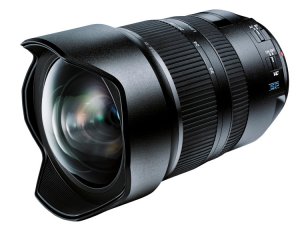
While I was at WPPI this past year I got to meet our illustrious managing editor Darlene Hildebrandt. We walked the expo floor for a bit and I was introduced to a number of people by Darlene. We talked with some of the people over at Tamron and had some of their snacks and coffee that they offered at their booth. One of the perks of writing for Digital Photography School is gaining access to new equipment and software for review. It was there at WPPI that I got to see the Tamron SP 15-30mm F/2.8 for the first time (to be perfectly honest, I didn’t even know it existed!). A few weeks later, a loaner lens arrived at my apartment in Brooklyn, and I spent the next week taking it to a wedding, a travel trip to Seattle, a portrait session with a ballerina, a shoot with a fashion blogger, a corset ball, and a yoga party. Here are some my thoughts in this mini lens review:
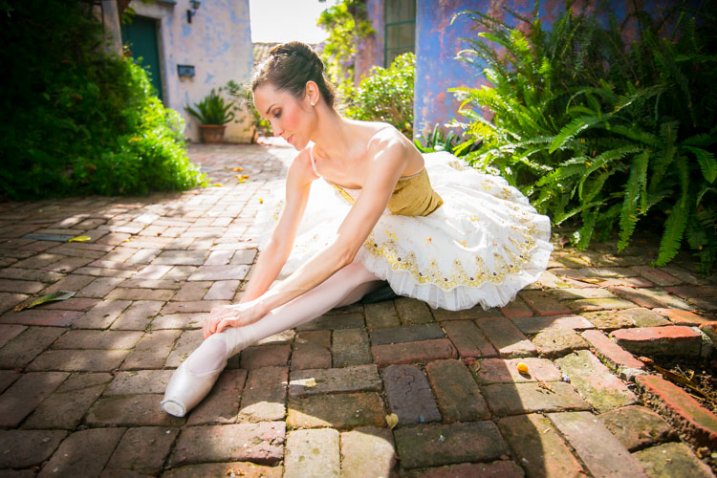
Tiffany the ballerina (@glitteringpointe) looking lovely on the other side of the Tamron SP 15-30mm f/2.8. Taken at 1/1000 of a second at f/2.8, ISO 250
This is a Tamron SP 15-30mm f/2.8 Di VC USD. Let’s define some of the named elements of this lens so we know what we are dealing with:
Basically this lens is a beast. It’s at the top of the food chain in terms of quality, build, and performance.
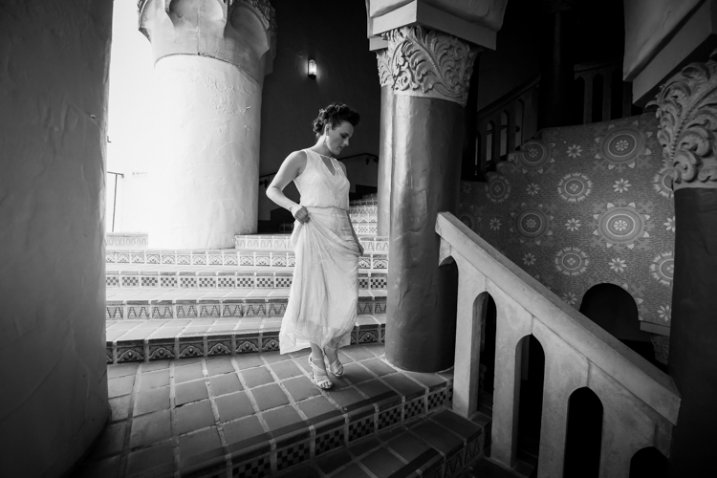
Tarisa the bride descending the spiral staircase at the Santa Barbara Courthouse. Taken at 1/640th at f/2.8, ISO 1000.
This lens feels like a tank. It is super solid, heavy, and durable. I had no worries about bringing it out in some weather in NYC (and Seattle) since it has lens coating and moisture resistant construction to keep water away (still – don’t drop it into a pool). The front end has an enormous bulbous lens element that looks impressive when on the camera.
As I used the lens throughout my various shoots there was one funny thing that I had to get used to, and that was that the direction that I twisted the lens to zoom in or out was opposite that of my Canon lenses. There was some “learnability” involved when using the lens.
One thing I like about wide angle lenses, and shooting with a wide open aperture at f/2.8, is the natural vignetting that occurs. I think it is moody, cool looking, and natural.
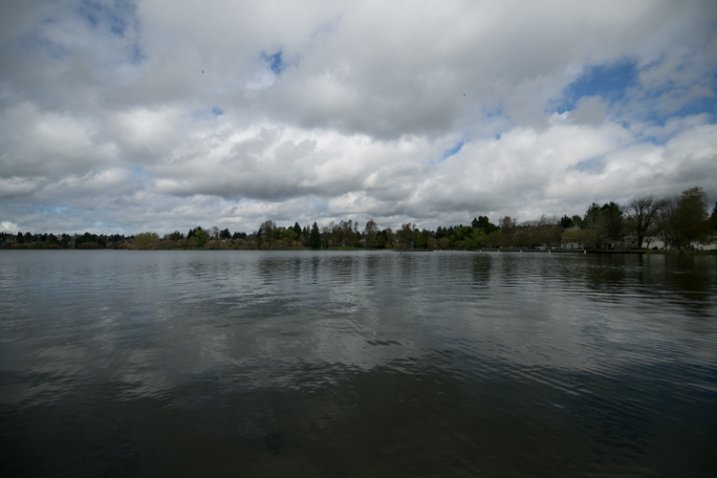
1/4000th at f/2.8, ISO 100, at 15mm. Notice the natural vignetting around the edges of this unedited photo.
One area that I think the lens performed spectacularly was shooting in low-light environments, when I had to focus in the dark. I really noticed this because every other lens I use always ends up “searching” a bit in the dark before focusing, or it just doesn’t focus at all. So it was extremely satisfying pressing my focus button and having the lens lock in right away. There is nothing more embarrassing than telling people to wait a moment while you try to focus in the dark, then ending up with a blurry picture anyway.

Focusing in the dark was a breeze at this corset and gown ball.
My last observation was that this is a big, heavy lens. This is not a lens I would take traveling around the world. For this New Yorker, who doesn’t have a car and travels with everything on his back, I could definitely feel the weight of this lens throughout the day as I went up and down the stairs into subways, airports and gigs. For the rest of you non-urban travellers, throw this in your bag, put it in your car and you’ll be fine.
Although this is not something I normally notice on a lens, the Tamron SP 15-30mm is consistently sharp from edge to edge. Lack of sharpenss around the edges is a complaint heard often with regards to ultra wide lens. They perform fairly well in the center of the image, but tend to get a bit fuzzy as you move closer to the edges. You can see in the ballerina picture and the accompanying cropped in photos how consistent the lens is across the image (below). Again, another point in favor of the Tamron SP against the big names debate.


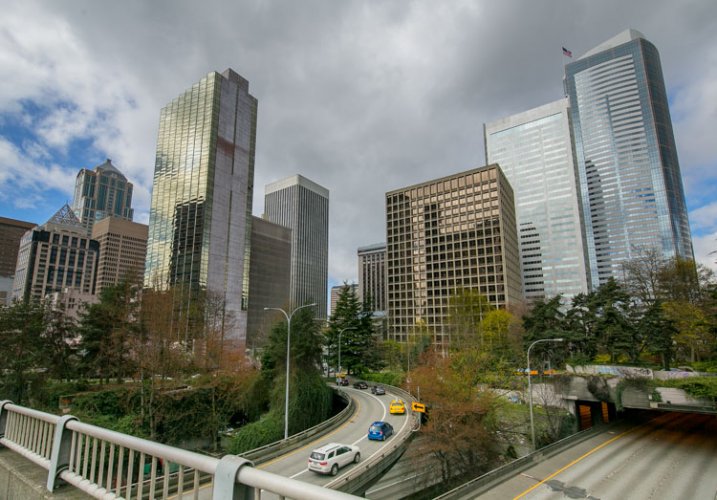
View of Seattle through the eyes of the Tamron SP 15-30mm f/2.8
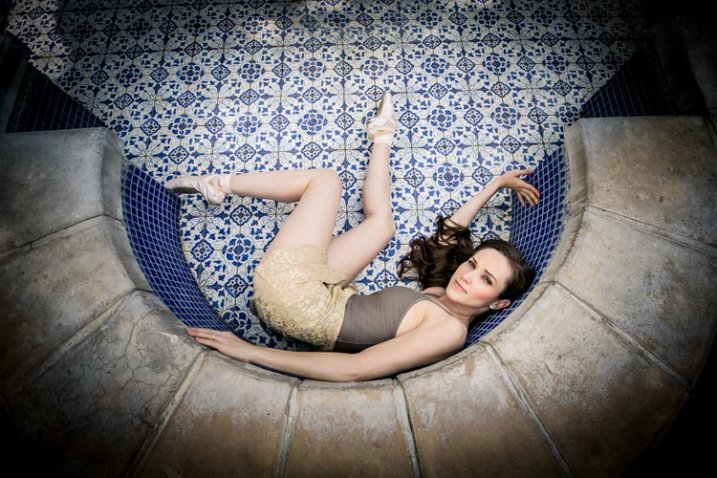
Tiffany the ballerina hanging out in an empty fountain. Taken at 1/400th at f/4.5, ISO 100, 15mm.
This is really a great lens and Tamron is making a point to set itself apart from the competition by it being the least expensive lens with the widest aperture, fastest focus, while also incorporating image stabilization. I would definitely use this for interior photography all the time, and for great urban or natural landscapes. I would not bring this along for long travel trips abroad because of its size and weight.
On Amazon.com you can find the Canon mount here or the Nikon mount here.
googletag.cmd.push(function() {
tablet_slots.push( googletag.defineSlot( “/1005424/_dPSv4_tab-all-article-bottom_(300×250)”, [300, 250], “pb-ad-78623” ).addService( googletag.pubads() ) ); } );
googletag.cmd.push(function() {
mobile_slots.push( googletag.defineSlot( “/1005424/_dPSv4_mob-all-article-bottom_(300×250)”, [300, 250], “pb-ad-78158” ).addService( googletag.pubads() ) ); } );
The post Tamron SP 15-30mm f/2.8 Di VC USD Lens Review by Phillip Van Nostrand appeared first on Digital Photography School.
Olympus has just announced a pair of wide-angle ‘Pro’ Micro Four Thirds lenses, and over the past few days we’ve been able to do a little shooting with them. The M.Zuiko Digital ED 7-14mm F2.8 and 8mm F1.8 Fisheye bring some new options to the table for Micro Four Thirds shooters – click through for a link to our sample galleries
Pricing and availability for Tokina’s AT-X 24-70mm F2.8 Pro FX lens has appeared on the company’s website. Announced at CP+ earlier this year, the lens will be released in a Nikon mount in June and then for Canon in July. Retail price is listed at ¥150,000 before tax, which is around $ 1250 US (final US pricing is not yet confirmed). Read more
Sigma’s 19mm F2.8 DN, 30mm F2.8 DN and 60mm F2.8 DN Art lenses were launched at the CP+ show in Yokohama way back in January 2013. We’ve been using these inexpensive primes on both Sony E-mount and Micxro Four Thirds cameras for a while now, and our man in London, Damien Demolder has written up his impressions. We pooled our sample images for this field test. Read more
Voigtländer is one of the oldest names in photography, with a long history of making cameras and lenses. Recently, the company has turned its focus from affordable M-mount lenses to lenses with digital cameras in mind. We recently got our hands on the 40mm VM f/2.8 Heliar, made specifically for full-frame and APS-C Sony E-mount cameras. Read more
Lomography has introduced the LC-A Minitar-1 f/2.8 32mm to its ‘Art’ line of lenses. Like that of the original Lomo LC-A 35mm camera (and more recent LC-A+) the lens features a pancake design and Russian optics, aiming to preserve the ‘unique character of its vintage’ origins. The lens will be sold in a Leica M-mount, and is available for pre-order. Read more
Tamron claims that its new SP 15-30mm F2.8 Di VC USD offers prime lens quality across its focal length range, paired with a fast maximum aperture and – uniquely in its class – an optical vibration compensation system. We’ve been impressed by how this wideangle zoom performs in our studio, but that’s only half the story. Our latest video field test follows DPReview technical editor Rishi Sanyal as he uses the Tamron 15-30mm to shoot architecture, cityscapes and waterfalls. Watch the video
On March 27, Samyang and Rokinon teased a new lens on Facebook, saying that it would offer ‘immense focus and unparalleled features’. That lens was officially introduced today, and it’s a 100mm f2.8 Macro offering with 1:1 magnification and a 1ft. minimum focusing distance. Though it won’t be shipping until next month, the lens is available to pre-order from retailers now. Read more