RSS
 

Posts Tagged ‘f/2.8’

Tamron SP 90mm F2.8 DI Macro VC USD real-world sample gallery

19 Apr

Tamron’s venerable 90mm F2.8 Macro is re-born. This iteration, announced in February of this year, offers stabilization, 1:1 magnification and focusing as close as 13.9cm/5.5in. And as far as full-frame primes go, it’s on the less-expensive side at $ 650. Spring is definitely springing in Seattle, and an abundance of tulips (we’re really not kidding, there are tons of them) provided a great starting point for our real-world Tamron 90mm F2.8 sample gallery. 

Articles: Digital Photography Review (dpreview.com)

 
Comments Off on Tamron SP 90mm F2.8 DI Macro VC USD real-world sample gallery

Posted in Uncategorized


Zeiss unveils super-wide Batis 18mm F2.8

15 Apr

$ (document).ready(function() { SampleGalleryV2({“containerId”:”embeddedSampleGallery_1690428628″,”galleryId”:”1690428628″,”isEmbeddedWidget”:true,”standalone”:false,”selectedImageIndex”:0,”startInCommentsView”:false,”isMobile”:false}) });

Zeiss has added the 2.8/18, a super wide-angle autofocus lens, to its Batis line for Sony E-mount. The full-frame lens joins the current 25mm F2 and 85mm F1.8 offerings. The 18mm lens provides the same dust and weather seals as its siblings, along with an OLED to display focus distance and depth of field information.

The Batis 18mm F2.8 comprises 11 elements in 10 groups, and four of those elements are aspheric on both sides. The lens provides a minimum focus distance of 0.25m/9.8in. Weighing in at 330g/0.74lb it measures 80mm/3.1in in length.

Scheduled to arrive in May, the Zeiss Batis 2.8/18 will cost $ 1499/€1260. 


 Press release:

New ZEISS Super Wide-Angle Lens with Autofocus

ZEISS Batis 2.8/18 Expands Full-Frame Lenses for Sony Cameras with E-Mount

OBERKOCHEN/Germany, 14/04/2016.

The ZEISS Batis 2.8/18 expands the Batis range of lenses with a super wide-angle lens. For the Sony1) á system with E-mount the new lens, which features a diagonal angular field of 99 degrees, is currently the shortest full-frame fixed focal length with autofocus. The new ZEISS Batis 2.8/18 with innovative OLED display to show focus distance and depth of field is also impressive thanks to its high image quality across the entire image field. The lens will be available from May 2016.

“The ZEISS Batis 2.8/18 follows on from the highly successful first two focal lengths the ZEISS Batis 2/25 and the ZEISS Batis 1.8/85. In spite of the extremely wide angle, we have succeeded in adapting the image quality of the ZEISS Batis 2.8/18 perfectly to the two different lens types,” says Dr. Michael Pollmann, Product Manager of ZEISS Camera Lenses. “With the expansion of the ZEISS Batis range of lenses, we are offering creative and discerning photographers yet another professional tool,” says Pollmann. With the ZEISS Batis 2.8/18 customers can now enjoy the super wide-angle full-frame lens they’ve been waiting for. 

A vast range of applications

The new ZEISS Batis 2.8/18 is impressive on account of its high image quality across the entire image field. “By virtue of the large diagonal angular field of 99 degrees, this lens is ideal for capturing unique images in landscape, architectural and astro photography and for impressive interior shots of small spaces,” continues Pollmann.

Features for discerning users

The super wide-angle camera lens has 11 lens elements in ten groups and draws on the ZEISS Distagon optical design. Four of the lens elements are aspheric on both sides and seven are made from special types of glass. The Floating Elements design permits constantly high image performance in the focal plane – from the minimum object distance to infinity.

The new ZEISS Batis 2.8/18 also features an innovative OLED display to show focus distance and depth of field depending on the camera sensor used. “The electronic display is easy to read even in low light,” explains Pollmann. The fast, quiet AF drive with linear motors keeps the subject sharply in focus. In addition to the autofocus, a handy, rubberized focus ring supports precise manual focusing – meaning the photographer has full creative freedom when it comes to image composition. ZEISS Batis lenses are also equipped with dust and weather seals, allowing them to be used in even the harshest weather conditions. All ZEISS Batis lenses support all the operating modes and functions of the current range of E-mount cameras.

The origins of the name Batis

Since 2013, new ZEISS lenses in one series have been given the same family name that conveys a common identity. These family names have been derived from the Latin names for birds. The name Batis is derived from a small bird that is found in the forests and scrub of Africa. These birds are characterized by great speed, excellent reflexes and boast a plumage rich in contrasts. Metaphorically speaking, this also applies to the ZEISS Batis lenses, whose fast autofocus enables photographers to capture stunning shots rich in contrasts.

In addition to the ZEISS Batis range of lenses, there are two further ZEISS ranges for Sony E-mount cameras: the ZEISS Touit and the ZEISS Loxia. 

Available from May 2016

Orders are now being accepted for the ZEISS Batis 2.8/18. The lens will be available from May 2016. The suggested retail price is €1,260 or US$ 1,499 (excl VAT) 2).

Zeiss Batis 2.8/18 specifications

Principal specifications
Lens type Prime lens
Max Format size 35mm FF
Image stabilisation No
Lens mount Sony E (NEX)
Aperture
Aperture ring No
Optics
Elements 11
Groups 10
Special elements / coatings 4 aspherical, 7 'special glass' elements
Focus
Minimum focus 0.25 m (9.84)
Maximum magnification 0.11×
Autofocus Yes
Motor type Linear Motor
Full time manual Unknown
Focus method Internal
Distance scale Yes
DoF scale Yes
Physical
Weight 330 g (0.73 lb)
Diameter 78 mm (3.07)
Length 80 mm (3.15)
Sealing Yes
Colour Black
Filter thread 77.0 mm
Hood supplied Yes
Tripod collar No

Articles: Digital Photography Review (dpreview.com)

 
Comments Off on Zeiss unveils super-wide Batis 18mm F2.8

Posted in Uncategorized


Along the coast: Sony FE 24-70 F2.8 GM real-world samples gallery updated

01 Apr

With Springtime finally kicking in to high gear on the West Coast, we took advantage of the change in weather and brought the Sony FE 24-70mm F2.8 GM lens along with us on a couple of trips. From razor-clamming in Long Beach, WA to pounding the streets (and stairs) of San Francisco, the 24-70 G Master continued to impress us in terms of sharpness, out-of-focus rendering and overall build quality. This class of lens is a staple in many professionals’ and advanced amateurs’ kits; to see if it’s worthy of earning a spot in yours, take a look through our updated samples gallery below.

Note: all additional images in the sample gallery feature both out-of-camera JPEGs and JPEGs processed from Raw. Both will have the original, uncompressed Raw file associated with them for download. 

Please do not reproduce any of these images on a website or any newsletter / magazine without prior permission (see our copyright page). We make the originals available for private users to download to their own machines for personal examination or printing, we do so in good faith, please don’t abuse it.

Articles: Digital Photography Review (dpreview.com)

 
Comments Off on Along the coast: Sony FE 24-70 F2.8 GM real-world samples gallery updated

Posted in Uncategorized


Writer’s Favorite Lens – the Canon 400mm f/2.8

20 Mar

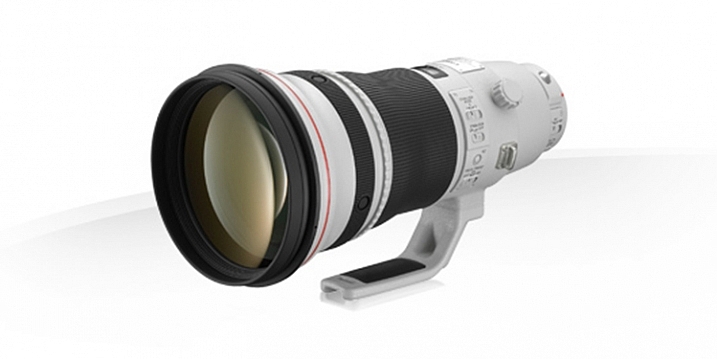
Being a sports photographer, covering things ranging from soccer (football) and rugby, to horse racing, I often have the Canon 400mm f/2.8L IS II USM on one of my camera bodies. It’s this lens’ focal length and fast aperture that is most helpful. I love this lens for its image quality and performance, but also its versatility.

Fig 12

Image courtesy of Canon.

So let’s have a look at the specs of this lens:

  • Focal length: 400mm (560mm APS-C approximate)
  • Maximum aperture: f/2.8
  • Maximum diameter x length: 163mm x 343mm (6.41 x 13.50″)
  • Weight: 3.85 kg (8.48 lbs)
  • Image stabilized? Yes, four stops
  • Minimum focusing distance: 2.7m (8.85′)
  • Weather sealed: Yes

PROS

Ideal Sports Lens

The 400mm focal length of this lens is ideal for many field based sports such as soccer (football) and rugby as it’s not too long, such as a 500mm for example, but at the same time it’s gives more pull than a 300mm. Its fast f/2.8 aperture is very handy when photographing in low-light situations, such as at night matches where the light is often quite low, as it allows me to use a lower ISO and still be able to maintain a shutter speed that is fast enough to freeze the action. This maximum aperture is also ideal to nicely isolate the subject from a busy background and make them pop more. Although I don’t always shoot at f/2.8 (generally hovering around f/3.5-f/4) having the ability to use f/2.8 is quite handy.

As far as focussing speed goes, this lens is blazingly quick and spot-on accurate, especially when coupled to a 1D X, for example. It easily locks on to a subject without any search or lag whatsoever.

In the following images, the 400mm focal length has been fantastic at pulling the subject in closer than what a 70-200 or 300mm for example, would be able to offer. These images have still been cropped, but not as much as would be needed if I had used a shorter focal length.

© Daniel Smith / Getty Images.

© Daniel Smith / Getty Images.

© Daniel Smith / Getty Images.

© Daniel Smith / Getty Images.

Versatility

Being quite heavy and long, with no zoom, you may think that this lens would only be suited to use on the sidelines of a sports field, attached to a monopod. However, this lens is much more versatile than that. Being the series two version of this lens, it is significantly lighter than its predecessor. This reduction in weight means that I am now able to use this lens hand-held (if I’m using it for extended period of time, I do use a monopod; it’s not that light!) which opens up more options. For example, I have photographed live concerts with this lens; a lens that is rarely used because of its long focal length. But it’s this focal length, coupled with an f/2.8 aperture, that I love. Photographing through the crowd is fantastic, as I am able to create abstract shapes through the silhouettes created by the audience, and use them to frame my subject.

The longer focal length can also be great when covering conferences, as I am able to photograph further back. This is especially helpful if the speakers are on a stage, as standing further back will reduce the angle in which you look up, and enable you to reduce the distortion that looking up can cause.

Fig 3

This was taken from further back. The speaker was on a stage. By standing back I was able to photograph the speaker and be closer to his level. The aperture also provided some great bokeh with the lights in the background.

Fig 1

400mm, 1/500sec, f/3.2 ISO 6400. The singer raising her hand is made stronger by the abstract hand being raised by the fans.

Fig 2

400mm, 1/500sec, f/3.5 ISO 6400. Shooting through the fans with their hands in the air adds some great foreground interest to this image.

In addition, its fast f/2.8 aperture lends itself to use with teleconverters if extra reach is needed. When adding one, you multiply the aperture and focal length by the strength of the teleconverter; so if you are using a 2x, it would make this lens an 800mm f/5.6. And because its image quality is so good, the degradation to image quality when using converters isn’t really noticeable with this lens. Its AF also does not really take much of a hit, either. So for the price of a couple of teleconverters, I potentially have three lenses in one:

  • A 400mm f/2.8 as it is
  • A 560 f/4 with a 1.4x teleconverter
  • a 800 f/5.6 with a 2x teleconverter

CONS

Cost

This lens is not the cheapest lens on the market; Amazon has it listed at $ 9,999 USD, so this lens is definitely not something many photographers would consider purchasing.

An alternative to this would be the Canon 400mm f/5.6L USM which sells for a much more affordable $ 1,199 USD. The biggest drawback with that lens, however, is its maximum aperture of f/5.6, which would not be very useful in low-light situations, where a wider aperture is much more beneficial.

Image courtesy of Canon.

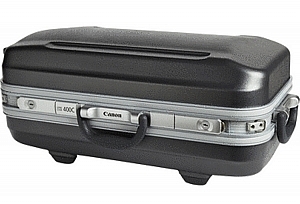
Image courtesy of Canon.

Size

This isn’t the smallest lens either, and you will generally be very noticeable with it. Using this as a street photography lens would not be ideal, and would make you quite a target! You will also need quite a large bag to carry this in, although it does come with its own hard-case as seen here.

Weight

Even though this is the series two, and much lighter that its predecessor, at nearly 4kg (almost 8.5 pounds) this is definitely not a light lens! You will need a monopod with this lens if you intend to use if for long periods of time. Transporting it also requires quite a large bag; a roller bag being ideal as you don’t have to carry it. I transport all of my equipment in the one bag generally – a ThinkTank Photo Airport Security V2.0 roller bag. This makes carrying not only this lens, but all of my equipment much easier, and saves injuring my back.

ALTERNATIVES

This lens is not for everyone, primarily because of its high cost. If you would love to have one of these in your kit but don’t have the finances available, going second hand is an option. A used 400mm f/2.8L IS USM (non-Series II) is still a fantastic lens and can be found relatively (compared to the new version) cheaply at around $ 4,000-$ 5,000 USD.

If that’s still pushing the financial friendship a little consider these:

  • Canon 100-400mm f/4.5-5.6L IS II USM at $ 2,099 USD (or the original for $ 1389)
  • Canon 400mm f/5.6L USM at $ 1,149 USD
  • Or the many offerings from Sigma, Tamron and Tokina which have the 400mm focal length covered

CONCLUSION

While this is the heaviest lens it my kit, the image quality and performance from it is unmatched, and definitely make it worthwhile carting around. With a little practice using a prime super-telephoto, you can create some striking images that you just cannot achieve with shorter focal lengths. The large aperture and the bokeh it produces at 400mm is dreamy, too!

I really enjoy using this lens in areas that it typically would not be used. It doesn’t always work in those situations, but is a lot of fun nonetheless. Do you have a long telephoto lens? What do you shoot with it? Please share your thoughts in the comments below.

amzn_assoc_placement = “adunit0”;
amzn_assoc_enable_interest_ads = “true”;
amzn_assoc_tracking_id = “dpsgeneral-20”;
amzn_assoc_ad_mode = “auto”;
amzn_assoc_ad_type = “smart”;
amzn_assoc_marketplace = “amazon”;
amzn_assoc_region = “US”;
amzn_assoc_linkid = “59b2c6e145b8854217845ac445c9a2b8”;
amzn_assoc_emphasize_categories = “13900861”;
amzn_assoc_fallback_mode = {“type”:”search”,”value”:”Digital Cameras”};
amzn_assoc_default_category = “Photo”;

googletag.cmd.push(function() {
tablet_slots.push( googletag.defineSlot( “/1005424/_dPSv4_tab-all-article-bottom_(300×250)”, [300, 250], “pb-ad-78623” ).addService( googletag.pubads() ) ); } );

googletag.cmd.push(function() {
mobile_slots.push( googletag.defineSlot( “/1005424/_dPSv4_mob-all-article-bottom_(300×250)”, [300, 250], “pb-ad-78158” ).addService( googletag.pubads() ) ); } );

The post Writer’s Favorite Lens – the Canon 400mm f/2.8 by Daniel Smith appeared first on Digital Photography School.


Digital Photography School

 
Comments Off on Writer’s Favorite Lens – the Canon 400mm f/2.8

Posted in Photography


Crowd pleaser: Sony FE 24-70mm F2.8 GM real world images

11 Mar

Sony’s new FE 24-70mm F2.8 G Master is as pro-level as pro-level lenses come. Dust and moisture-sealed, it offers impressively fast AF speeds due to Direct Drive SSM, especially when paired with the Sony a7R II (which we used to shoot this gallery). Though we only spent about 24 waking hours with it, images shot throughout the focal range show the lens is sharp, even wide open. Note that chromatic aberration was turned on in-camera and is therefore applied even to the Raws. Please note, we’ve included Raw files for download for a selection of the images, and you can look at CA performance in a non-profile aware Raw converter (like RawDigger).

Note: This sample gallery was shot while on a Sony-sponsored shooting event in Miami. Part of the excursion included photographing models in scenes that call back to famous Miami-based TV shows and movies including Scarface, Miami Vice and CSI Miami. No actual gangsters or cops were photographed during the making of this gallery.

Articles: Digital Photography Review (dpreview.com)

 
Comments Off on Crowd pleaser: Sony FE 24-70mm F2.8 GM real world images

Posted in Uncategorized


Ricoh adds 15-30mm F2.8 SDM WR and 28-105mm F3.5-5.6 ED DC WR to full-frame lens range

20 Feb

$ (document).ready(function() { SampleGalleryV2({“containerId”:”embeddedSampleGallery_1703565933″,”galleryId”:”1703565933″,”isEmbeddedWidget”:true,”standalone”:false,”selectedImageIndex”:0,”startInCommentsView”:false,”isMobile”:false}) });

Ricoh has expanded its full-frame lens range, announcing the HD Pentax-D FA 15-30mm F2.8 and FA 28-105mm F3.5-5.6 alongside the introduction of the full-frame K-1 DSLR. The 15-30mm F2.8 brings a fast, constant wide-angle zoom to the lineup offering a Supersonic Direct-drive Motor, rounded nine-blade aperture, and close focus distance of 28cm. The 28-105mm offers a DC motor and a minimum focus distance of 0.5m.

The ‘WR’ in their names means that these lenses are weather-resistant, with SP (Super Protect) coatings on the front lens element to repel water.

The 15-30mm F2.8 and 28-105mm F3.5-5.6 join two Pentax full-frame lenses announced last year, the HD Pentax D FA* 70-200mm F2.8 and FA 150-450mm F4.5-5.6.

Press releases:

Ricoh announces HD PENTAX-D FA 15-30mm f/2.8 lens for new PENTAX K-1 full-frame DSLR

Weather-sealed, ultra-wide-angle zoom lens, ideal for landscapes and nightscapes

DENVER, Colo. February 17, 2016 – Ricoh Imaging Americas Corporation today announced the HD PENTAX-D FA 15-30mm f/2.8ED SDM WR lens. This new lens is designed to work seamlessly with the full-frame sensor of the new PENTAX K-1 camera, also announced today.

When mounted on the PENTAX K-1 camera body, the lens covers a focal-length range from 15mm ultra-wide-angle to 30mm wide-angle.(Note: with a PENTAX  APS-C-size digital SLR camera body, the lens covers a focal-length range from 23mm to 46mm.) Its exaggerated ultra-wide perspective and state-of-the-art optical design enable capturing high-resolution, dynamic, sweeping views of subjects, ideal for landscape photography. Treated with PENTAX-developed HD Coating, the lens produces well-defined, fine-detailed images with ample light levels even at the edges of the image field, while effectively reducing chromatic aberration and distortion to a minimum. 

Its large f/2.8 maximum aperture is also well-suited for photographing nightscapes and starry skies. The built-in SDM (Supersonic Direct-drive Motor) provides quiet, high-speed autofocus operation.

| Pricing and Availability | 

HD PENTAX-D FA 15-30mm f/2.8ED SDM WR lens will be available in April 2016 at www.ricohimaging.com and retail outlets nationwide for a manufacturer’s suggested retail price of $ 1,499.99.

Main Features

1. Exceptional imaging power

When mounted on the PENTAX K-1 35mm full-frame digital SLR camera body, the lens provides an ultra-wide-angle focal-length coverage from 15mm to 30mm. Its exaggerated perspective helps the photographer produce spectacular landscape photographs. With a 30mm focal length at the telephoto end, the lens is also well-suited to portrait and street photography.

2. State-of-the-art optical design

The zoom lens incorporates three ED (Extra-low Dispersion) glass optical elements and three aspherical optical elements in its 18-element, 13-group optics to deliver high-resolution images rich in contrast even at the edges of the image field, while effectively minimizing chromatic aberration, distortion and coma. 

3. Large-aperture zoom lens, with a maximum aperture of f/2.8

Since this zoom lens provides a maximum aperture of f/2.8 over its entire zoom range, it is versatile enough to be used for many different subjects and scenes, ranging from sweeping landscapes to nightscapes and starry skies. Despite its ultra-wide-angle perspective, it can capture the subject with an excellent bokeh (defocus) effect on the background. Even in macro photography from its minimum focusing distance of 28 centimeters, it can capture subjects with a well-defined sense of depth.

4. Built-in SDM (Supersonic Direct-drive Motor)

The incorporation of a new-generation SDM (Supersonic Direct-drive Motor) assures that this zoom lens provides quiet, high-speed autofocus operation, letting the photographer react swiftly to all types of subjects.

5. Weather-resistant construction

Special seals applied throughout the lens body provide this zoom lens with dependable weather-resistant construction, effectively preventing the intrusion of water into the lens interior. By pairing it with a weather-resistant PENTAX digital SLR camera body, the photographer has a durable, dependable digital imaging system that performs superbly under demanding shooting conditions — even in the rain or mist, or at locations prone to water splashes or spray.

6. HD Coating to improve image description

The lens is treated with high-grade, multi-layer HD (high-definition) coating. Compared with conventional multi-layer coatings, this PENTAX-original coating assures higher light transmittance and less reflection to deliver bright, high-contrast images free of flare and ghost images, even under demanding lighting conditions such as backlight. 

7. Other features

  • Quick-Shift Focus System for instant switching from autofocus to manual-focus operation, by holding the shutter-release button halfway down and turning the focus ring after the subject is captured in focus by the camera’s AF system.
  • Rounded diaphragm with nine blades produces a smooth, beautiful bokeh (defocus) effect, while minimizing the streaking effect of point light sources.
  • SP (Super Protect) coating applied to the front surface of the lens to effectively repel water and grease.

Ricoh announces 28-105mm lens for new PENTAX K-1 full-frame DSLR

Compact, lightweight and weather-sealed lens offers popular zoom range, is ideal companion to new PENTAX K-1 full-frame DSLR

DENVER, Colo. February 17, 2016 – Ricoh Imaging Americas Corporation today announced the             HD PENTAX-D FA 28-105mm f/3.5-5.6ED DC WR lens. This new, compact and lightweight zoom lens provides the most frequently requested focal-length range for general photography, from wide angle to medium telephoto.

This versatile zoom lens is designed to cover the large full-frame sensor found in the new PENTAX  K-1 camera, incorporating state-of-the-art optics and high-performance optical elements. When mounted on the K-1 camera body, it delivers high-resolution imaging power, and is an ideal every day-use lens for the new camera.

| Pricing and Availability | 

The HD PENTAX-D FA 28-105mm f/3.5-5.6ED DC WR lens will be available in April 2016 at www.ricohimaging.com and retail outlets nationwide for a manufacturer’s suggested retail price of $ 499.99.  

| About Ricoh Imaging Americas Corporation |

Ricoh Imaging Americas Corporation is a subsidiary of Ricoh Company Ltd., a global technology company specializing in office imaging equipment, production print solutions, document management systems and IT services.  Headquartered in Tokyo, Ricoh Group operates in about 200 countries and regions.

The company now known as Ricoh Imaging Americas Corporation, was originally founded in 1919, under the name Asahi Optical Joint Stock Co. and launched its first SLR camera in the 1950s under the PENTAX name. Today, Ricoh Imaging Americas Corporation continues to produce the heritage-rich, award-winning line of PENTAX DSLR cameras, lenses and sport optics equipment as well as Ricoh’s offering of stylish and compact digital cameras, known for their wide-ranging, rich set of features.

For further information, please visit www.ricohimaging.com/pentaxff

Main Features

1. Standard zoom lens covering most frequently-used range

This standard zoom lens accommodates the image circle of a 35mm full-frame image sensor, and covers focal lengths between 28mm wide angle and 105mm medium telephoto. By incorporating the latest optics and a number of high-performance optical elements, it retains a sufficient brightness level even at edges of the image field, while effectively compensating for aberrations. It delivers high-resolution images by optimizing the imaging power of the PENTAX K-1 camera’s approximately 36.4 effective megapixels. Its compact, lightweight body and excellent cost performance make this lens a perfect companion lens to the PENTAX K-1.

2. Excellent image resolution, complementing the PENTAX K-1 full-frame digital SLR camera performance

With 15-element, 11-group optics, this zoom lens incorporates two high-precision aspherical optical elements, one ED (Extra-low Dispersion) glass optical element and one anomalous-dispersion glass optical element to deliver bright, sharp images with minimal chromatic and spherical aberrations. The optics are designed to deliver ample resolving power for the large, high-pixel image sensor, producing well-defined, fine-detailed images.

3. HD Coating to improve image quality

This lens is treated with the high-grade, multi-layer HD (high-definition) coating. Compared with conventional multi-layer coatings, this PENTAX-original coating assures higher light transmittance and less reflection to deliver bright, high-contrast images that are free of flare and ghost images, even under demanding lighting conditions such as backlight. 

4. Quick-Shift Focus System

This PENTAX-developed system allows for flawless, delay-free switching from autofocus to manual-focus operation, after the subject is captured in focus by the camera’s AF system.

HD Pentax-D FA 15-30mm F2.8 SDM WR and FA 28-105mm F3.5-5.6ED DC WR Specifications

  HD PENTAX-D FA 15-30mm F2.8 ED SDM WR HD PENTAX-D FA 28-105mm F3.5-5.6 ED DC WR
Principal specifications
Lens type Zoom lens
Max Format size 35mm FF
Focal length 15–30 mm 28–105 mm
Image stabilisation No
Lens mount Pentax KAF3
Aperture
Maximum aperture F2.8 F3.5 – F5.6
Minimum aperture F22.0 F22.0 – F38.0
Aperture ring No
Number of diaphragm blades 9
Optics
Elements 18 15
Groups 13 11
Special elements / coatings Three ED and aspherical elements + HD and SP coatings One ED and two aspherical elements + HD and SP coatings
Focus
Minimum focus 0.28 m (11.02) 0.50 m (19.69)
Maximum magnification 0.2× 0.22×
Autofocus Yes
Motor type Ultrasonic Micromotor
Full time manual Yes
Focus method Internal
Distance scale Yes
DoF scale No
Physical
Weight 1040 g (2.29 lb) 440 g (0.97 lb)
Diameter 99 mm (3.9) 73 mm (2.87)
Length 144 mm (5.67) 87 mm (3.43)
Sealing Yes
Colour Black
Power zoom No
Filter thread 62.0 mm
Hood supplied Yes
Hood product code PH-RBC62
Tripod collar No

Articles: Digital Photography Review (dpreview.com)

 
Comments Off on Ricoh adds 15-30mm F2.8 SDM WR and 28-105mm F3.5-5.6 ED DC WR to full-frame lens range

Posted in Uncategorized


Heavy hitter: Sony FE 24-70mm F2.8 GM first shots

06 Feb

$ (document).ready(function() { SampleGalleryV2({“containerId”:”embeddedSampleGallery_9303055313″,”galleryId”:”9303055313″,”isEmbeddedWidget”:true,”selectedImageIndex”:0,”startInCommentsView”:false,”isMobile”:false}) });

Note: if you’re viewing on mobile, please click here.

Sony has made some strong claims about its new G Master lens series. Unveiled earlier this week, the FE 24-70mm F2.8 GM is one of three in the lineup to make its debut, giving Sony’s full-frame mirrorless customers a fast, constant standard zoom for the first time. We had a few moments to shoot with the lens at Sony’s press event in New York, and while we only provide a small sampling of shots at this time, we will be updating this gallery as soon as we can. 

Our initial impressions are extremely positive: sharpness appears to rival prime levels wide open, and there’s very little axial chromatic aberration to speak of. Sony’s claims may not be exaggerated at all.

We need to make a note about lens corrections: it seems that the camera we were handed had vignetting and chromatic aberration corrections turned on. The way this feature works is that these corrections are applied even in Raw mode (technically, vignetting correction is applied prior to writing the Raw file, while chromatic aberration correction information is embedded in the Raw and irreversibly applied by ACR).

The good news is that we’ve looked at Raw conversions from third-party converters that ignore the CA correction profile, and CA from this lens appears to be very minimal. Watch this space for more sample images, hopefully very soon.

Articles: Digital Photography Review (dpreview.com)

 
Comments Off on Heavy hitter: Sony FE 24-70mm F2.8 GM first shots

Posted in Uncategorized


Fujifilm X70 puts 28mm equivalent F2.8 lens into compact X100-style body

17 Jan

$ (document).ready(function() { SampleGalleryV2({“targetContainerClass”:”sampleGalleryImageViewerContainer”,”galleryId”:”0302545666″,”isEmbeddedWidget”:true,”selectedImageIndex”:0,”startInCommentsView”:false,”isMobile”:false}) });

Fujifilm has announced the X70, a fixed-lens compact camera designed in the spirit of the company’s X100-series.

The X70 takes the design of the X100, shrinks it down, and adds a 28mm equivalent F2.8 lens (compared to the 35mm equiv. F2 optics on the X100). The cool hybrid viewfinder from the X100 is gone, but in exchange users get Fujifilm’s first touchscreen LCD (3″ in size), which can also tilt 180 degrees. The X70 has direct controls for aperture, shutter speed and exposure compensation, just like its big brother.

The guts of the camera are similar to that of the X-T10, meaning that the X70 has a 16.3MP X-Trans CMOS II sensor and Hybrid AF system. The AF system offers 49 points in single-point mode and 77 in zone and wide/tracking modes. The lens itself has nine rounded aperture blades and a minimum focus distance of 10cm. The mechanical shutter stops at 1/4000 sec but the electronic shutter goes all the way to 1/32000 sec.

The X70 has a standard ISO range of 200-6400, which expands to 100-51200. It can shoot continuously at 8 frames per second, though only for ten photos. Naturally, it has the full set of Film Simulation Modes, save for the new ACROS mode on the X-Pro2. Video can be recorded at 1080/60p, with a maximum bitrate of 36Mbps. As one would expect, the X70 also has built-in Wi-Fi with remote control from your smartphone.

The X70 will be available in all-black or silver and black in February at a price of $ 699.95.

Online resellers are selling the X70 for $ 799 – Fujifilm tells us that the $ 699 price in the press release is indeed correct.

FUJIFILM ANNOUNCES NEW ADDITIONS TO THE X-SERIES LINE OF CAMERAS AND LENSES

X-Pro2, X-E2S, X70 and XF100-400mmF4.5-5.6 R LM OIS WR join the X-Series; all-weather FinePix XP90 gets the shot from sand to slopes

Valhalla, N.Y., January 14, 2016 FUJIFILM North America Corporation, a leader in digital imaging, today announced new additions to the award-winning X-Series line of premium fixed and mirrorless cameras, and ultra-high quality lenses, including: the FUJIFILM X-Pro2, FUJIFILM X-E2S, FUJIFILM X70 and FUJINON XF100-400mmF4.5-5.6 R LM OIS WR.  Fujifilm also introduced the new rugged and waterproof FinePix XP90, perfect for capturing amazing images everywhere, from underwater to mountain tops.

FUJIFILM X70

The FUJIFILM X70 is a newly designed premium fixed lens digital camera that features a FUJINON 18.5mmF2.8 lens (28mm in 35mm format equivalent), suitable for a range of applications from landscapes to everyday snapshots. The new X70 elegantly combines simple manual operation with superior image quality and versatile picture-taking functions, and is the first X-Series camera to offer a touchscreen display that rotates 180 degrees, enabling users to shoot from up high, down low and capture selfies.

The compact FUJIFILM X70 uses a 16.3MP APS-C X-Trans CMOS II Sensor for extraordinary image resolution, and gives photographers milled aluminum dial controls, as well as aperture settings in 1/3 stop increments, and the new Auto Mode Switch lever for selecting its fully automatic Advanced SR Auto mode. In this mode, the camera automatically chooses the optimum settings for great results on any scene.

The new FUJIFILM X70 features a responsive touchscreen – a first for the X-Series. Now, photo enthusiasts can use the Touch Panel for operations during shooting and playback modes. For shooting, users can select their focus area and touch-to-shoot. During playback, users can swipe their finger to scroll through images, double-tab to enlarge images, and drag to view different points on the picture, and pinch-out and pinch-in to enlarge and reduce the image view.
Users can also disable the touchscreen functions at any time by turning the Touch Panel Settings to “off.”

FUJIFILM X70 key features:

  • 16.3MP APS-C X-Trans CMOS II Sensor
    • Fast AF of up to 0.06 seconds
    • Start-up time of 0.5 seconds
    • Shutter time lag of 0.05 seconds
    • Shooting interval of 0.5 seconds
  • Uses the FUJINON 18.5mm F2.8 lens with 7 elements in 5 groups, and  2 high-performance aspherical elements
    • 9 blade aperture
    • FUJINON’s unique HT-EBC coating
  • High-definition, touchscreen 3” tilting (180o) LCD display with 1.04 million dots
  • Maximum ISO performance up to 51200 sensitivity
  • New  AF system offers the 49-point Single Point mode for fast, precise focusing, and a  new Zone and Wide/Tracking modes with a 77-point area to capture moving subjects
  • Up to ±3 stops of exposure compensation on the top-plate dial
  • 8 function buttons (1 customizable)
  • Latest CLASSIC CHROME Film Simulation mode that delivers muted tones and deep colors
  • Interval timer for shooting time-lapse sequences of one second to 24 hours, up to 999 frames
  • Completely silent electronic shutter capable of exposures up to 1/32,000 second
  • Digital teleconverter offers additional focal ranges of 35mm and 50mm
  • Full HD video 1080p at 60fps; bit rate of 36Mbps for clear capture of delicate movements; frame rates of 60 fps, 50fps, 30fps, 25fps and 24fps, supporting worldwide motion picture formats
  • Free FUJIFILM Camera Remote application and Wireless Communication function allows users to remotely shoot images from smartphones and tablets via WiFi
  • Photos can be sent to the INSTAX Share Printer using the free INSTAX Share App (iOS and Android) SHARE Smartphone Printer
  • Advanced creative filters


The FUJIFILM X70 will be available in February 2016 for USD $ 699.95 and CAD $ 899.99.

Fujifilm X70 specifications

Price
MSRP $ 799/£549
Body type
Body type Large sensor compact
Sensor
Max resolution 4896 x 3264
Other resolutions 3:2 (3456 x 2304, 2496 x 1664), 16:9 (4896 x 2760, 3456 x 1944, 2496 x 1408), 1:1 (3264 x 3264, 2304 x 2304, 1664 x 1664)
Image ratio w:h 1:1, 3:2, 16:9
Effective pixels 16 megapixels
Sensor photo detectors 17 megapixels
Sensor size APS-C (23.6 x 15.6 mm)
Sensor type CMOS
Processor EXR Processor II
Color space sRGB
Color filter array X-Trans
Image
ISO Auto, 200-6400 (expandable to 100-51200)
Boosted ISO (minimum) 100
Boosted ISO (maximum) 51200
White balance presets 7
Custom white balance Yes
Image stabilization Unknown
Uncompressed format RAW
JPEG quality levels Fine, standard
File format
  • JPEG (Exif v2.3)
  • Raw (RAF format, 14-bit lossless compressed or uncompressed)
Optics & Focus
Maximum aperture F2.8 – F16.0
Autofocus
  • Contrast Detect (sensor)
  • Phase Detect
  • Multi-area
  • Center
  • Selective single-point
  • Tracking
  • Single
  • Continuous
  • Touch
  • Face Detection
  • Live View
Autofocus assist lamp Yes
Digital zoom Yes (35mm, 50mm digital teleconverter)
Manual focus Yes
Normal focus range 10 cm (3.94)
Number of focus points 77
Screen / viewfinder
Articulated LCD Tilting
Screen size 3
Screen dots 1,040,000
Touch screen Yes
Screen type TFT LCD
Live view Yes
Viewfinder type None
Photography features
Minimum shutter speed 30 sec
Maximum shutter speed 1/4000 sec
Maximum shutter speed (electronic) 1/32000 sec
Exposure modes
  • Program
  • Shutter priority
  • Aperture priority
  • Manual
Built-in flash Yes
Flash range 7.90 m (at ISO 1600 (5.5m at ISO 100))
External flash Yes
Flash modes Auto, Forced Flash, Slow Synchro , Suppressed Flash, Commander
Drive modes
  • Single
  • Continuous (hi/lo)
  • Self-timer
  • Interval
Continuous drive 8.0 fps
Self-timer Yes (2 or 10 secs)
Metering modes
  • Multi
  • Center-weighted
  • Spot
Exposure compensation ±3 (at 1/3 EV steps)
AE Bracketing ±1 (at 1/3 EV, 2/3 EV, 1 EV steps)
WB Bracketing Yes
Videography features
Resolutions 1920 x 1080 (60p, 50p, 30p, 25p, 24p), 1280 x 720 (60p, 50p, 30p, 25p, 24p)
Format MPEG-4, H.264
Microphone None
Speaker None
Storage
Storage types SD/SDHC/SDXC
Connectivity
USB USB 2.0 (480 Mbit/sec)
HDMI Yes (micro-HDMI)
Microphone port No
Headphone port No
Wireless Built-In
Wireless notes 802.11b/g/n
Remote control Yes (Wired or via smartphone)
Physical
Environmentally sealed No
Battery Battery Pack
Battery description NP-95 lithium-ion battery & charger
Battery Life (CIPA) 330
Weight (inc. batteries) 340 g (0.75 lb / 11.99 oz)
Dimensions 113 x 64 x 44 mm (4.45 x 2.52 x 1.73)
Other features
Orientation sensor Yes
Timelapse recording Yes
GPS None

Articles: Digital Photography Review (dpreview.com)

 
Comments Off on Fujifilm X70 puts 28mm equivalent F2.8 lens into compact X100-style body

Posted in Uncategorized


Nikon 24-70mm F2.8 ED VR real-world sample gallery

14 Jan

Winter can be a stark wonderland in the Pacific Northwest, especially east of the Cascade mountain range. Editor Barney Britton spent some time with the new Nikon 24-70 F2.8 ED VR lens amongst the snow-covered rolling hills, waterfalls, forests, and even sunny beaches our beautiful state provides. VR brings a level of hand hold-ability to a popular range of focal lengths that should make it easier to make sharp images with the 36MP Nikon D810.

Before you follow the link below to see how the lens performed in the set of real-world samples we provide here, it’s worth keeping some things in mind. A high-resolution camera demands critical focus: even the slightest misfocus will be easily visible, and small focus errors aren’t uncommon when using DSLRs in the field. Furthermore, on full-frame, even an aperture of F8 has limited depth-of-field, so infinity-focused shots may show a slight decrease in sharpness for objects closer in the foreground. With these caveats in mind, we still found the sharpness of the lens to be somewhat lacking relative to our high hopes.

We’ve only tested one copy of this lens, and it’s always hard to determine if the sample we received is truly a representative sample. We’ll be requesting a second copy to verify that our sample isn’t an outlier, but based upon findings from both DxOMark and Roger Cicala over at LensRentals, the less-than-stellar sharpness results aren’t too surprising. 

While sharpness is generally good, particularly across the field, absolute sharpness in the center doesn’t appear to be better, or even as good as, the original non-VR 24-70mm F2.8 Nikkor. Roger’s results, as well as DxO’s findings, confirm somewhat decreased central sharpness but increased consistency across the frame. Roger suggests this may in part be due to a prioritization of minimal field curvature and astigmatism with absolute sharpness perhaps being the cost. Our samples do appear to confirm a relatively flat field of focus – which will be useful for many applications. Close-up sharpness sometimes suffers, as does sharpness at the long end, while chromatic aberration continues to be an issue much like the original.

That said, overall build appears to be – at least subjectively – improved, and Nikon’s Vibration Reduction (VR) promises to be a boon for photojournalists. Paired with the D810, our experience and preliminary testing indicates VR to be incredibly effective, and we expect it’ll prove indispensable at times, while overall raising the convenience factor of the body and lens combo. For some, this may even make up for the less-than-ideal sharpness which, by the way, we only call out because of the high bar set by recent primes and venerable zooms like the Canon 24-70 F2.8 II (which lacks VR, mind you). In isolation, this new lens is plenty sharp. 

But without further ado, have a look at the sample gallery yourself, and let us know what you think in the comments!

Articles: Digital Photography Review (dpreview.com)

 
Comments Off on Nikon 24-70mm F2.8 ED VR real-world sample gallery

Posted in Uncategorized


dPS Writer’s Favorite Lens: Rokinon 14mm f2.8

10 Nov

“What do you mean it’s a manual lens?”

That is usually the first response I receive when I tell people about one of the favorite lenses I keep in my bag: The Rokinon 14mm f/2.8. I understand their confusion. I never dreamed that I would succumb to the seeming devolution of using fully manual lenses.

Allow me to attempt to dispel the myth that manual focus/aperture lenses are difficult, and ungainly in the field. In mere months the Rokinon 14mm f/2.8 has quickly became a workhorse of my photo arsenal – let me tell you why. Grab a tissue, because it is a love story.

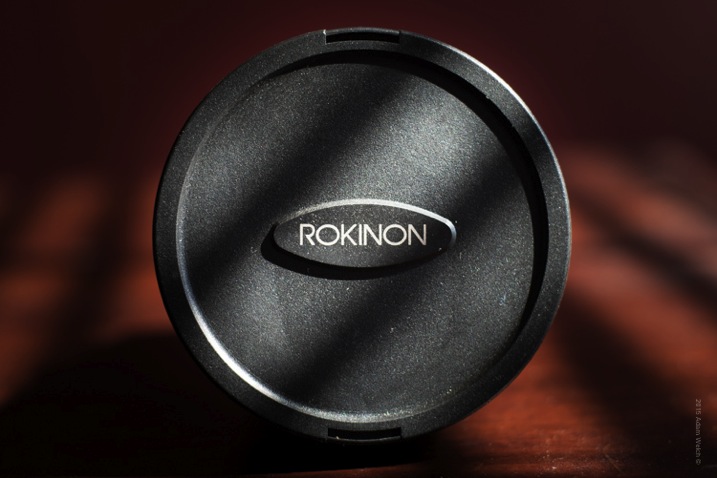
Lens Logo

When I say that the Rokinon is a fully manual lens, what I mean is that there is no autofocus, and that the aperture must also be selected manually, using an aperture ring. This is a sticking point for most photographers, who have only used fully automated lenses. Personally, I have used fully manual legacy lenses for years, and have come to love the tangible control they require while I’m shooting. I really feel connected to the experience, more than I do when using an autofocusing lens.

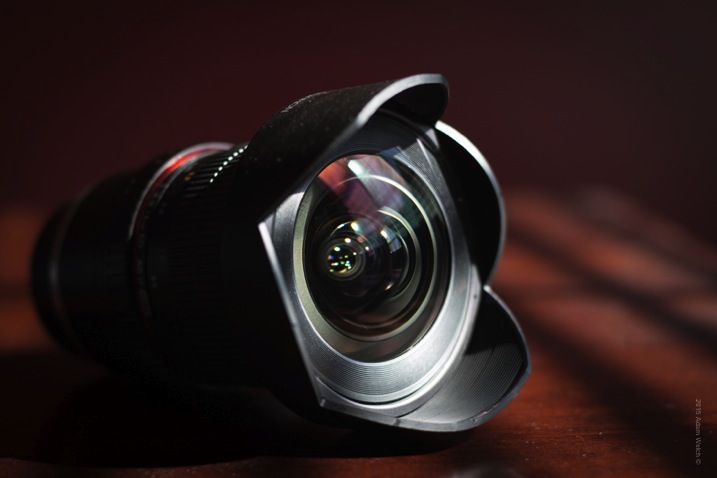
Lens Full

I will still admit, however, that a fully manual lens is not always ideal for every situation. So what type of photography suits the Rokinon best? The reason I purchased this lens in the first place was because I needed a fast, wide-angle lens, that can function as a main piece of glass for my astrophotography work. I find myself aiming my camera toward the sky more and more, so I really needed a quality lens that could serve as my go-to for most, if not all, of my nightscapes.

The wide-angle view, and relatively large aperture of f/2.8, makes the Rokinon ready-made for night photography, but of course, it is also a great tool for ultra-wide landscape shots. Some may find the 14mm focal length to be just a little too wide for a general purpose landscape lens, but it is most definitely capable of filling the role.

The most incredible quality about the Rokinon 14mm f/2.8 is just that, its quality. For the price, I can honestly say I have never encountered such a well-made lens, that produces tack sharp results throughout its aperture range. My initial test shots surpassed any expectations I could have hoped for from such a budget lens. Reading comments and testimonials from other users of the lens really left me with a healthy dose of, it’s too good to be true, doubt lingering in my mind.

Lens Element

The quality of the build, and the subsequent image sharpness, are virtually on par with lenses which cost literally ten times as much as the Rokinon. I’m not suggesting that a lens with an average cost of $ 324 will be exactly the same as a lens costing $ 1,300 – but the gap between price and performance is, for lack of a better word, incredible. The aperture ring is comfortable to use, and produces a click at each f/stop, marking that is solidly satisfying.

Something that I really like about the Rokinon is the focusing ring. I has a very long travel when acquiring focus; meaning that adjusting occurs relatively slowly. This allows you to achieve tack sharp focus while shooting with the lens wide open at f/2.8, and makes honing in on stars very easy without over or under focusing.

Sample 2

A common point of discussion concerning the Rokinon, in regard to its suitability for night photography, is the extreme low occurrence of “coma” when imaging the stars. Coma refers to an optical phenomena called “comatic aberration” (not to be confused with chromatic aberration). Coma is the distortion of small points of light when the light rays enter the lens at sharp angles, which makes small points of light, such as stars, appear to look like comets with small tails. Coma is amplified by imperfections in the lens geometry itself, or in the lens elements, and usually gets worse the further you move from the center of the lens. Yet strangely enough, the Rokinon excels in low coma aberrations, even to the point of OUTPERFORMING higher priced lenses of the same focal length and aperture ranges.

The Rokinon 14mm f/2.8 lens is one that I have grown to love in a relatively short time. The majority of my work revolves around landscapes, and shooting at wide-angles, often in low light. The Rokinon fills the requirements of my shooting needs, and then some.

Sample 3

The full manual functionality of the lens could be odd if are not used to shooting that way, but for me I find it in no way slows me down, or hinders the quality of my images – in fact quite the opposite. The build quality, sharpness, low-light performance, and low coma are bundled together at a price that hovers in the $ 320 USD end of the pool.

In my opinion, if you are looking for a great landscape and astrophotography lens, or if you’re just wanting to get creative with wide angles, look no further than the Rokinon 14mm f/2.8.

What you’ve all been waiting for…here are some images shot using the Rokinon 14mm f/2.8! All images shot with a Sony A7r and processed using Adobe Lightroom CC.

Sample 1

Sample 4

Sample 5

googletag.cmd.push(function() {
tablet_slots.push( googletag.defineSlot( “/1005424/_dPSv4_tab-all-article-bottom_(300×250)”, [300, 250], “pb-ad-78623” ).addService( googletag.pubads() ) ); } );

googletag.cmd.push(function() {
mobile_slots.push( googletag.defineSlot( “/1005424/_dPSv4_mob-all-article-bottom_(300×250)”, [300, 250], “pb-ad-78158” ).addService( googletag.pubads() ) ); } );

The post dPS Writer’s Favorite Lens: Rokinon 14mm f2.8 by Adam Welch appeared first on Digital Photography School.


Digital Photography School

 
Comments Off on dPS Writer’s Favorite Lens: Rokinon 14mm f2.8

Posted in Photography