RSS
 

Posts Tagged ‘Don’t’

Look. Think. Click. Don’t Rush Into Taking Those Action Photos

27 Jul

How can you improve your action photography? Everything moves so fast that it is a real challenge to make decent action photos.

The best way to improve your high-speed action photography is to slow down. Don’t be mistaken that because your subject is moving rapidly that you must do the same.

Expert action photographers achieve their outstanding results by carefully anticipating and planning. Then they pick up their cameras to begin making photographs.

Hmong New Year kart racing - Action Photos

My best action photo. Sometimes it’s more than just good planning. My timing was lucky!

Here are three basic steps to improving not only your action photos but all of your photography. You can apply these principles each time you shoot, no matter your chosen subject.

Look First

Before you bring your camera to your eye, even before you turn it on, look carefully at what you have chosen to photograph. Look at:

  • Your subject
  • The background behind your subject
  • Foreground in front of the subject
  • Lighting
  • Weather
  • Obstacles – people, traffic, cows, etc. (Anything that might hinder you from taking pictures.)

Being observant is one of the key things photographers need to be experts at. You need to know what is around you and how it will help or hinder your photograph making process.

Hmong New Year top spinning - Action Photos

Then Think

Once you have chosen your subject and had a sufficient look at your surroundings, it’s time to piece together the picture you want to make.

Think about your shooting spot

One of the most important things to consider is where you will take your photos from. You need to think about how your subject will look from different angles and which one you will choose. You may need to take photos at a few different locations before finding one you are happy with.

For any action photography your subject will be moving, so your background may not remain the same. Ask yourself if you will get better photos if you are moving with your subject or if you are stationery.

Moving with your subject will be more difficult. There will be a greater risk of not getting any usable photos. It might pay to stay in one spot until you are confident you have some good pictures and then move with your subject.

Hmong New Year kart racing - Action Photos

Be conscious of others

If you are at a sports event you will need to be conscious of other people. Photographing your kid’s football game, there will be other parents on the sidelines that you will need to consider. They may not consider you and step in front of your camera ruining that shot where your kid scores.

So choose a location where you will not be hindered. Sometimes this will mean getting in front of others or getting further back.

Think about the light

Is it bright enough to achieve a fast enough shutter speed? If not you will need to raise your ISO to a higher setting.

Where is the light coming from? Will your subject be lit from the front or back? Maybe from the side? Maybe from multiple angles as they move around.

Looking at how the light is falling on your subject will help you choose a location at which to position yourself. Look and see at what angle the light is best for the type of photo you want.

Hmong New Year kart racing - Action Photos

Think about the weather

Photographing outdoors you may also have to give some thought to the weather. On clear sunny days or cloudy dull days when weather conditions are unlikely to change there’s not much to think about. When there’s a good wind blowing that might cause dust or sand to hinder you photo session you will need to be careful.

Clouds are the thing that you need to think about the most. On a day when clouds are moving across the sky and the sun is being obscured some of the time, you will need to pay attention. As the light changes your exposure will need to be altered and this may affect your shutter speed, depending on the settings you are using.

Think about your composition

Composition requires careful thought. So often people will try and take a quick snap of the action. They may be successful at capturing the decisive moment, but the composition is often terrible.

That is because it was unplanned. Choosing a good location and anticipating the action will also help you plan your composition.

Hmong New Year kart racing - Action Photos

Lastly, Click

Now that you have thought everything through you can start taking photos. The thinking stage does not always have to take long. It can happen very quickly at times. This depends on how familiar you are with your subject and the location you are shooting.

The more familiar you are with both, the easier and quicker it will be for you.

Camera settings

Setting your camera well for action photos is important. Your shutter speed and focusing mode are especially critical.

To stop the action you will need to chose a fast enough shutter speed. The faster the action the faster shutter speed you will need to freeze your subject.

Hmong New Year kart racing - Action Photos

To blur your subject the opposite applies. Choose a shutter speed sufficiently slow enough to let your subject appear blurred by their motion, but not so slow that you cannot recognize it anymore.

With really fast action I typically set my camera and lens to manual focus. I will pick a spot to focus on and only make photographs when my subject is within my focus zone. I do not practice a lot of action photography these days so I find this method suits me well. Of course, this technique will depend on the type of action you are photographing.

Most importantly with action photography, make sure to squeeze your shutter button and take your photos at the decisive moment when the action is at its peak.

Hmong New Year - Action Photos

Conclusion

If you just grab a few frames without first looking and then planning before you shoot, your results will often be lacking. Being ready when the action happens will more often lead to better action photos.

The more familiar you are with your subject and surroundings the easier is will be. So, if you are just starting out and trying some action photography, picking a subject you know well might mean you have early success.

The photographs I have used in this article are all from a Hmong New Year celebration I photographed a few years back. The day features various sports activities that individuals and village teams compete in. There’s always loads of action and tons of fun.

Please check out this video for some more tips on looking, thinking, and clicking your way to improved photography.

?

The post Look. Think. Click. Don’t Rush Into Taking Those Action Photos appeared first on Digital Photography School.


Digital Photography School

 
Comments Off on Look. Think. Click. Don’t Rush Into Taking Those Action Photos

Posted in Photography


What to Do When You Forget Your Tripod (or You Don’t Have One)

26 Apr
What to Do When You Forget Your Tripod (or You Don’t Have One)

This shot was taken during my DPS Night Photography class using a bridge railing to stabilize the camera.

I suspect we’ve all been there. You are headed out on non-photography business, but you grab your camera on the way out the door – just in case. Well, wouldn’t you know it, “just in case” turned into a reality? A beautiful scene unfolds before your eyes. The trouble is that it is a low-light scene, and you didn’t grab your tripod. Uh oh. What do you do?

The worst option, of course, is to do nothing and miss the shot. Even if you try and fail you are no worse off than if you do nothing. So you might as well give it a go, even with no tripod.

There is no magic to a tripod

The main thing to remember is that a tripod is just a glorified shelf. That is, it is just a place to prop your camera. Granted, there are a lot of controls that make it a very convenient and easy to use support for your camera, but it is still just a shelf. With that in mind, look around for something else you might use.

Speaking of shelves, they work great and they often provide a nice high vantage point for your scene. If you are near civilization (not out in the woods somewhere), tables and chairs work great as make-shift tripods. Scoot one around to where you want to shoot and place your camera on it.

When placing your camera on something, you will find that the weight of your lens will cause the camera to tip forward. To remedy that, just place something under the front of the lens. If there is nothing available, dig through your bag and see what you can find. I have used lens hoods, filter cases, and even spare batteries. Is that the ideal situation? Not by a long shot. But they work in a pinch.

No tripod – no problem

Let me show you a recent example of this. This is a shot I took of a night scene in Oklahoma City.

What to Do When You Forget Your Tripod (or You Don’t Have One)

Shutter Speed: 30 seconds; Aperture: f/8; ISO 100 (with NO tripod).

I was visiting that city and staying in a hotel. My wife and I were sitting in the bar on the top floor and as it got dark I thought it was a nice scene that I would like to photograph. As I really had no prior plans to photograph, while I did have my camera, I had no tripod or remote shutter release.

This picture required a shutter speed of 30 seconds (I could have gone shorter, but I wanted the light trails on the road). Without a tripod, I had to muddle through. I pushed a cocktail table up to the edge of the balcony to get the angle I wanted. Then I used an ashtray that was laying around to prop up my lens.

That still leaves the issue of avoiding touching the camera during the shot. If you are without your tripod, odds are you will be without your remote shutter release as well.  You can still take shots without touching the camera by using the camera’s built-in timer.

For the shot above, I used the 2-second timer to get the image. Even if you have set the camera to take bracketed exposures, it will take all the shots in the bracket when the timer goes off (note: this only applies to some camera models). It is actually so handy that I find myself using a remote shutter release less and less.

Adding a touch of stabilization

Other times you don’t really need to set your camera down anywhere, you just need a little stabilization. How do you know if you need stabilization? Through something called the Reciprocal Rule. This rule says that your shutter speed should be at least the reciprocal of your focal length.

To make it simple, it just means that if you are shooting at 50mm your shutter speed should be 1/50th or faster. If your focal length is 16mm your shutter speed should be 1/16th or faster. As you can see, the more wide-angle you shoot, the slower the shutter speed you can get away with.

Shoot wide

So that’s another tip. Shoot wide-angle in low light scenes where you don’t have a tripod. That won’t always work, of course, because sometimes your compositions just demand longer focal lengths. But as you are walking around without a tripod, think wide-angle.

What to Do When You Forget Your Tripod (or You Don’t Have One)

Sometimes you just go places where tripods are not allowed. I couldn’t even bring my tripod up to this location (Reunion Tower in Dallas). So I braced my camera on the perimeter fencing to stabilize it a bit. Shutter Speed: 1/8th second; Aperture f/8; ISO 800.

Lens stabilization

You might have image stabilization/vibration reduction in your lens as well. If so, this will buy you a few stops of light. What that means in this context is that you can set your shutter speed a few stops slower than you could otherwise.

For example, if you have 3-stops of image stabilization in your lens (different lenses are rated differently), and you are shooting with a focal length of 50mm, you might now be able to get away with a shutter speed of 1/6th of a second. (Remember that a stop is a doubling of light, so if you start at 1/50th of a second, then one stop is 1/25th, two stops go to 1/12th, and three stops takes you to 1/6th.

These numbers are EFL though (Effective Focal Length) so if you are shooting with a camera with a smaller sensor than full frame you will need to account for that.

Other forms of stabilization

When you run afoul of the Reciprocal Rule, you will need to stabilize your camera, often only a little bit. Let’s say for example that you are shooting at 24mm, and a proper exposure (using the ISO and aperture settings you want) requires a shutter speed of 1/10th second. What to do? Just stabilize the camera a bit by propping it against something.

Use a wall or a doorway if you are inside. Use a tree or a light post if you are outside. Those things are stable, and by propping the camera against them you are borrowing some of that stability. You will be less likely to move the camera during the exposure. If you cannot prop your camera against them, even leaning against these items while you shoot will help a little bit.

What to Do When You Forget Your Tripod (or You Don’t Have One)

For this shot, I was actually inside the Louvre (shooting through a window).  Therefore, I didn’t have a tripod. I used a door frame to stabilize my camera and took several shots in the hopes that one would be sharp. Shutter Speed: 1/8th second; Aperture f/4 (wide open on this lens); ISO 3200.

Shoot many frames

Don’t just take one picture though. Give yourself the opportunity to get a sharp one by taking several. Even if you think you got it right the first time, it is hard to tell on those little LCD screens (you can zoom in to check). There is nothing worse than getting home and discovering that a picture you thought was sharp is actually blurry. Remember that it is free to take pictures with digital, so make good use of that and take lots to be sure.

Finally, don’t be afraid to crank up the ISO. Doing so will allow you to use a much faster shutter speed. Of course, that also leads to an increase in digital noise, but don’t worry about that so much.

First of all, cameras keep getting better and better at handling digital noise, and it isn’t as much of a problem as it used to be. In any case, it can usually be fixed in post-processing pretty easily and without much loss of detail in your picture. Remember it is easy to fix digital noise, but very hard or impossible to fix blur (from a slow shutter speed).

What to Do When You Forget Your Tripod (or You Don’t Have One)

I ran into this staircase while on a business trip and was able to use my exposure settings to ensure a sharp shot. I raised the ISO to 1600 and opened the aperture all the way (to f/4). That allowed me to use a shutter speed of 1/25th second. Since I was using a focal length of 19mm, I complied with the Reciprocal Rule and I could expect the shot to be reasonably sharp.

Putting it into practice

None of this is to say that you don’t need a tripod or that you shouldn’t carry one with you. If you do landscapes, city scenes, or other types of outdoor photography, having and using a tripod is super important.

But when you find yourself without one, all is not lost. You might be able to get the shot anyway.

The post What to Do When You Forget Your Tripod (or You Don’t Have One) appeared first on Digital Photography School.


Digital Photography School

 
Comments Off on What to Do When You Forget Your Tripod (or You Don’t Have One)

Posted in Photography


5 Reasons Why Your Sunrise or Sunset Photos Don’t Look So Stunning

20 Apr

The holy grail of travel photography is a stunning photo looking into the vast distance taken at sunrise or sunset. It seems to just work as a blend of color, composition, and light to create something that often makes the viewer utter that famous word that any photographer wants to hear, “Wow!”.

But why is it then that so often when you look at your own sunrise or sunset photos they don’t look so stunning? Here are 5 reasons why your sunrise or sunset photos don’t live up to your expectations.

5 Reasons Why Your Sunrise or Sunset Photos Don’t Look So Stunning - sunset on the coast

#1 – What’s the point?

I remember a picture editor once told me, “This might sound controversial, but a sunrise or sunset is actually pretty boring.” What he was referring to was the lack of compelling subject matter in a photo of a sunrise or sunset like for example an empty beach with just the setting sun.

While sitting on a beach and seeing a sunset can seem like a wonderful experience, unfortunately, the camera cannot replicate that. Most successful photos of sunrises or sunsets have a point of interest in them, in that there is a subject that is the main story and the sunrise or sunset is providing the light and the atmosphere.

That story doesn’t necessarily have to be a person or an object in the frame. The story could be the beautiful scenery or the crashing waves against the coast. But the key point is that there is something that gets the viewers’ attention. So, don’t just rely on the sunrise or sunset, try to build your composition using it as an addition rather than the story.

boring sunset photo - 5 Reasons Why Your Sunrise or Sunset Photos Don’t Look So Stunning

This photo just isn’t very interesting. There’s a lack of interesting clouds or even water movement.

In this image, the big rock in the foreground, footsteps in the sand and the people all add interest and context to the photo.

#2 – Clouds or no clouds?

For example, one element that can dramatically improve your sunrise or sunset photos is some clouds. Take your generic empty beach scenario from above, but this time add some dramatic clouds that the light can bounce off and suddenly you’ll go from something mundane to something that looks fantastic.

The clouds here add drama to the scene.

Of course, you can’t control the elements and no clouds in the sky means, there’s nothing you can do. In that scenario, you just have to work harder to frame your shot and give the viewer a point of interest.

While you generally want some clouds in the sky, too much cloud cover and you will often find the light seems flat and dull and the whole photo looks uninteresting (unless the sun can set below the clouds and light them up from underneath). So, in conclusion, while you ideally want some clouds, it’s important not to have a completely overcast day. You can, of course, plan your shoots around times when you will have the best conditions.

5 Reasons Why Your Sunrise or Sunset Photos Don’t Look So Stunning

#3 – Are your highlights and shadows correct?

One of the big challenges in photographing sunrise or sunsets is the vast contrast you get between highlights and shadows. Your highlights are the light areas of your photo (such as the sky for example) and your shadows are the dark areas in the photo (for example your foreground).

If either is pushed too far you will get completely white areas for highlights and completely black areas for shadows. This means that these areas contain no pixel details and is something you want to avoid.

The problem you face when photographing sunsets or sunrises is that your sky will be bright, and your foreground will be dark (a high dynamic range). The way that you can ensure that your highlights and shadows are exposed correctly in this scenario is to use a graduated neutral density filter to balance out the difference in the highlights and shadows.

There are also other techniques such as exposure bracketing as well that can help you achieve this in post-production and actually just brightening or darkening these areas in a software like Adobe Photoshop or Lightroom. But whatever you decide, just make sure that your highlights and shadows are exposed correctly and fine-tune them if you need to in post-production.

5 Reasons Why Your Sunrise or Sunset Photos Don’t Look So Stunning - clipped shadow areas

The blue areas on this photo indicate where the shadows are being clipped (black with no detail).

Here the same image has been adjusted in post-processing to hold more detail in the shadow areas. 

#4 – The image isn’t framed correctly

One of the key elements in ensuring the final photo looks great is to frame your composition correctly.

The easiest way to do this and a good starting point for any photographer is the famous Rule of Thirds where you try to place key points of interest on the intersection of the lines. But the Rule of Thirds is also worth remembering for your horizon line. Usually, you will find that placing the horizon either on the top third or the bottom third will look better than slap bang in the middle.

Horizon centrally framed.

Using the rule of thirds, the horizon here is on the lower third – off-center.

But try to consider the whole picture when framing your shot. Think if there are any areas that are just wasted space where you can crop in tighter. Or if your camera angle is slightly off and you can benefit by just moving a little to either side.

The beauty of photography these days is that you can usually take as many photos as it takes to get your shot framed right. So, play around with your composition and capture a few alternatives that you can then review later in post-production.

5 Reasons Why Your Sunrise or Sunset Photos Don’t Look So Stunning

Your camera may have the option to display the Rule of Thirds grid when you’re shooting or in image playback mode.

#5 – You haven’t fixed mistakes

Usually, the first bit of feedback that I often give newbie photographers when I look at their sunrise or sunset photos is on elements that could easily be fixed in post-production. Whether you are an advocate of post-production or not there are certain things that you simply should not forego on any photo.

The two biggest of these are:

  1. Ensuring that your photos are straight, that means the horizon line needs to be dead straight.
  2. Making sure you have the correct white balance for the photo (if you haven’t already done so when taking the photo). Think about the scene that you are showing, is it a warm and golden scenario or is it a cool and crisp setting? Either way, tweak your white balance until it is correct.

If you do nothing else in post-production, just making sure these two settings are correct will immediately improve your photos.

5 Reasons Why Your Sunrise or Sunset Photos Don’t Look So Stunning - crooked horizon line

This image is clearly not straight as can be seen from the horizon line.

Here the image tilt has been corrected.

Conclusion

Sunsets and sunrises are wonderful times in the day to photograph things. The soft golden light can transform an ordinary scene into an extraordinary one. When done well, they are often the photos that will be the “show stoppers” in any portfolio.

But always remember that a sunset and sunrise needs to work in combination with your composition and subject matter to create a wonderful photo. Follow these tips and you’ll be on your way to capturing great photos of sunrise and sunsets.

Now it’s your turn to get involved. Share your great sunrise and sunset photos below.

The post 5 Reasons Why Your Sunrise or Sunset Photos Don’t Look So Stunning appeared first on Digital Photography School.


Digital Photography School

 
Comments Off on 5 Reasons Why Your Sunrise or Sunset Photos Don’t Look So Stunning

Posted in Photography


Don’t buy the phone with the ‘best camera,’ buy the phone you like as a phone

14 Apr

If your job entails giving people on the internet buying advice about photo gear, you field a lot of questions from friends who want to make a camera purchase. It sounds corny, but we at DPR actually love these questions – it’s a chance to put an otherwise somewhat useless store of knowledge to work. We get something out of the transaction too: a data point about the needs and wants of people who are actually buying cameras. It’s like a pop quiz we spend 40 hours a week studying for.

Lately, it’s not just cameras we’re asked about. Friends have seen plenty of advertising declaring this or that smartphone as having the ‘best camera.’ More and more, we see people treating their smartphone purchase as a camera purchase too, so it makes plenty of sense that these claims hold a lot of sway. People who seek our advice are now debating between a couple of flagship devices, sometimes within the same operating system, and sometimes not. But the question is the same – “‘Such and such phone’ has the best camera, should I buy it?”

Here’s the short answer: Not necessarily.

The flagship phones from the major manufacturers all have pretty darn good cameras at this point. Sure, there are slight advantages in image quality in different scenarios, but overall, any minor shortcomings are going to be easier to live with than an operating system you don’t like. This is especially true if you’re upgrading from a phone that’s several generations old. Manufacturers have been leaning hard into camera tech innovation for the past few years, so you’ll probably see plenty of improvement even upgrading from a device several years old to last year’s flagship.

You’ll probably see plenty of improvement even upgrading from a device several years old to last year’s flagship

There’s a slight caveat here: while quality from most smartphone cameras is good, a few of them do offer unique hardware-based camera features. The LG V30’s super-wide-angle lens is a good example – if a wider lens is something you really want, it’s worth checking the V30 out because it’s basically one-of-a-kind right now.

It’s also worth remembering that the demands on image quality in smartphones are, in most cases, much lower than on dedicated cameras. Photos taken with phones will likely only ever be viewed at lower resolution on another device screen or in smaller printed formats, like Chatbooks. In many situations, even the image quality benefits of a dedicated camera will be negligible when images are downsized for viewing on a 5″ screen.

So why even test phone cameras if they’re all good enough at this point? The same reason why we test cameras: so you can make an informed buying decision. We also fully expect them to eventually challenge more traditional cameras, but that’s another story for another day. Even if we could declare one traditional camera as the objective ‘best camera,’ that would be a pretty meaningless award. Size and cost, for example, are two huge factors to consider when buying a camera. It doesn’t matter if you bought the ‘best’ camera of all time; if it’s too heavy and you leave it at home most of the time then it wasn’t the best camera for you.

How you get along with your smartphone is an important consideration since many of us spend an embarrassing amount of our waking hours using them

How you get along with your smartphone is an important consideration since many of us spend an embarrassing amount of our waking hours using them. It has taken the place of a dedicated camera for lots of folks, but it’s not just our camera – it’s also our communication hub, media player, notepad, grocery list, bank, travel agent, the list goes on. How you like using it and how it feels in your hand should be given as much, if not more consideration than whether the camera scored three points higher than another.

We’ll keep testing smartphone cameras so we can help inform your decision and point out where there’s still room for improvement. In the meantime, if you’re debating upgrading to a new phone and you’ve got an eye on the one with the ‘best camera,’ consider heading to a wireless retail store and see if that’s the one you like best as a phone. You’ll be glad that you did.

Articles: Digital Photography Review (dpreview.com)

 
Comments Off on Don’t buy the phone with the ‘best camera,’ buy the phone you like as a phone

Posted in Uncategorized


Landscape photography: Don’t miss the moment for the photo

07 Feb

In the pursuit of timeless landscape photography, it’s easy to miss the forest for the trees. That is, to miss the moment for the photo.

Too often, photographers—myself included—focus on tiny imperfections in their images, yet miss the grandeur of the scene before their eyes. We can scrutinize over every pixel, while neglecting the people who are there with us sharing in nature’s spectacle. We search and yearn for perfect sunsets, only to set ourselves up to feel dejected when our idealized expectations fail to meet ‘mediocre’ realities.

Yet, over time, we begin to discover that the endearing value of landscape photography lays not in the final image itself, but in everything behind it and beyond it. In the effort—the literal blood, sweat, and tears—we exert to capture the image. In the memories forged along the way; the memories preserved decades later through the photo. The lasting value lies in the process itself.

In landscape photography, the means do not merely justify the end. The means are a worthwhile end in and of themselves.

Natural beauty, appreciated

The pursuit of capturing stunning landscapes exposes photographers to moments of wonder the majority of the population will rarely if ever have the privilege of experiencing. It grants us opportunities to witness scenes ignorant observers may dismiss as being ‘photoshopped’. Little do they know, these views do exist beyond the wallpapers of their desktop computers—should they have the curiosity and desire to look for them.

Once bitten by the landscape bug—and for those of you who have been, you know what I mean—the unscratchable itch encourages us to get out there as often as possible. To see the sun rising over Sydney Harbour while the city sleeps. To brave freezing winter nights and gaze up at the tapestry of stars in the Milky Way. To hike through forests, in the rain, in order to experience the torrential fury of waterfalls at full flow.

It encourages us to see the artistic potential in scenes taken for granted by untrained eyes. To look for alluring elements in seemingly mundane scenes—a fallen tree trunk acting as a leading line or a coastal rock channel aligned to catch the rising sun for a few fleeting weeks each year. To truly appreciate when the sky explodes in color on sunset, knowing all too well the countless times it doesn’t.

It’s these moments that open our eyes to the wealth of beauty that our natural world has to offer. Moments that leave those who witness them all the richer for it.

Explore with wonder

Not only does the pursuit grant us picturesque scenes to reflect fondly upon, it also exposes us to an emotion not often felt since childhood: a daring sense of wonder.

When viewing the work of my peers, I’m regularly exposed to fantastical scenes so different from what I know. It leaves me inspired to wander through these foreign lands and see how I might put my own unique spin on capturing them. From the scarred canyons of Iceland to the sandstone monuments carved into the American West.

Yet this act of discovery needn’t—and shouldn’t—only apply to grand overseas adventures. It can be found just as easily closer to home.

There’s a sense of wonder in humbly exploring your local countryside in search for the perfect skeleton of a tree. In researching familiar locations on Google Earth and then driving down ungraded side-roads not knowing what the next bend holds. Or in hiking out under the light of the crescent moon on way to an astrophotography shoot.

Express yourself

Life is full of customs to limit how you behave, to restrict what you can and can’t do. And for good reason. There’d be utter chaos should we wake up wanting to drive on the wrong side of the road…

But in our approach to photography, and the work we create, we can be our true selves. We can pursue the facets we like best while leaving behind those we don’t.

Two photographers can look at the exact same scene, yet walk away with starkly different images. One may focus on the weathered bark of an old tree and produce an elegant black and white, while another captures the entire grand scene, opting for an an ethereal Orton Effect in post-processing. Neither method is wrong. Nor is either more correct. Both are merely personal interpretations by the artist.

Dedication to the ongoing pursuit—the capturing, processing and sharing of work—allows us to experiment with new approaches, gear and techniques. It’s a humble process of trial and error to see what works for us and what doesn’t. Ultimately, through this continual refinement of our craft, we establish a look and feel to our images that becomes uniquely our own.

Personal achievement

Succeeding in landscape photography requires a healthy amount of discipline. Discipline to wake at 4am. To drive for an hour out to location. To battle the elements as we set up our gear. To wait and watch the sunrise fizzle out. And to then return home without taking a single decent image.

All to do it again next week, and the week after that.

It takes grit to push through the disappointment in failing to capture the ideal image you had envisioned. Grit to push on through the lows, so that when you reach the highs of a great image—and you will—you have the perspective to truly appreciate what you have created.

As landscape photographers, we must push ourselves. To reach beyond the known, safe certainties of our comfort zones. Be it leaving the warmth of our bed on a dark winter’s morning or embarking on an overnight hike through the bush. The pursuit allows us to challenge and exceed what we think we can achieve. We persevere with our craft and come through the other side the better for it.

Not just a solo pursuit

Who said landscape photography was a lonely pursuit?

Social media has changed the game for photographers. Instagram in particular has become the default portfolio of work for many. The platform allows us to not only draw inspiration from the works of others, but to directly engage and communicate with them. To discover new locations and new ways of viewing tried and true ones.

This works both ways, too. When you share your unique take on a location, no doubt it encourages like-minded photographers to get out and discover those locations for themselves. While it’s tempting to view their work as piggybacking off your hard work, it needn’t be a zero sum game. Through open sharing, we can teach and inspire one another to work harder, to create more. And as a profession, we are the better for it.

If you’ve ever struggled with the discipline aspect to landscape photography (I know I have) try to arrange meet-ups on location with like-minded peers in the field. Not only will their attendance commit you to venturing out, but it then becomes a shared learning opportunity for you both. Local Instameets and Facebook groups are great opportunities to better know the photographic community in your area.

But the social component isn’t limited to just other photographers. Consider inviting those closest to you on the next location scout. Or offer to act as tour guide for a friend, introducing them to new locations they never knew existed.

Case in point

Consider this photo above. On a recent trip across The Ditch, we were staying on New Zealand’s east coast. I knew I wanted to capture the famed Wanaka Tree under the light of dawn, but we were at the end of our travels and the tree was far away on the other side of the island. So, like all mad photographers, I decided to drive four hours through the night to get there in time.

Beside me on the road trip was my 75-year-old grandma, a former Kiwi-turned Aussie. The drive through the night proved to be a great opportunity to bond with her—a rarer opportunity with each passing year. As we drove through the towns of her childhood, she told stories of her past growing up in NZ. And likewise, I had time to share with her my current creative pursuits.

However, once we arrived in Wanaka, the clouds had rolled in to block out the rising sun. And so too our chance of capturing the image we had sought.

And in the car we waited, laughing to each other after coming all this way to be met by less than ideal conditions. Yet, after some time, a fleeting gap in the clouds lit up the fresh new growth on the foreshore and on the tree itself. Together, we hurried down to the lake and both snapped a handful of shots before the clouds returned again.

We couldn’t stop pinching ourselves on the drive back for having been so fortunate to have those brief few moments to take the shot, but upon reflection, it wasn’t getting the shot that made it worth it. Rather, it was the time spent bonding, and the moment shared. While it turned out to be a pretty picture, for me it was an even more memorable moment.

Take a moment for the moment

The classic adage states that it’s the journey, not the destination, that’s of greater importance. And that’s an apt mantra to keep in mind when we go about our landscape photography—both literally and figuratively.

Landscape photography demands much from the photographers who pursue it. It demands we invest our time and our effort into the craft. That we invest without guarantee we’ll walk away with the stunning award-winning image we so dreamed of.

With that in mind, the next time you find yourself on a beach on sunrise or on a hike through the bush… stop. Stop to appreciate the effort you’ve put into preparing for the photo. Stop to take solace in knowing that you’re in the thick of life, immortalizing the scene in front of you through your art. Stop and take a moment, to appreciate the moment.

And then take the shot.


Mitch Green is a Melbourne based Travel and Landscape photographer. He can be found via his website, through Instagram, or down by the beach at 5am waiting for sunrise.

Articles: Digital Photography Review (dpreview.com)

 
Comments Off on Landscape photography: Don’t miss the moment for the photo

Posted in Uncategorized


Don’t Fear Photo Post-Processing – Shooting is Only the First Part of the Image Creation Process

14 Sep

You have just bought your new bright shiny camera and you are sure that it is just the thing that will help you create better images. You’re shooting JPG with the camera’s automatic program modes, but you’re not getting the results you wanted. You keep upgrading your cameras thinking that will do the trick, only to find that the quality of your imagery isn’t getting any better. What’s going on?

Lightroom Banner - Don’t Fear Photo Editing - Shooting is Only the First Part of the Image Creation Process

You may be missing an important part of digital photography, post-processing, with a state of the art processing program like Adobe Lightroom or Photoshop.

Before and after

Iceland Light Before - Don’t Fear Photo Editing - Shooting is Only the First Part of the Image Creation Process

This image of a lighthouse in Iceland was taken on a bright yet overcast day. In a matter of moments with the help of Lightroom, it became a favorite.

Iceland Light After - Don’t Fear Photo Editing - Shooting is Only the First Part of the Image Creation Process

The role of post-processing in photography is not new

There are several integral parts to digital photography. The technical and creative aspect of using your camera, and the technical and creative application of post-processing your images. Each part is equally important and when all the pieces are put together, that’s when the magic starts to happen.

Unfortunately, many people are still thinking about the days of film when you took it to a lab and the post-processing was done for you. You never had to think twice about how the image was processed. Did you ever notice that different labs gave you different results? That’s because of their level of post-processing.

Now it’s time for you to understand the importance of post-processing if you are going to create better imagery. It will take some time and some dedication to learn, but it will improve your photography by ten-fold.

The first step – shooting with post-processing in mind

First of all, start shooting in RAW format and stop letting the camera make the decisions for you. When you shoot JPG format, it will automatically process your images in camera, even though you may even not be aware of it.

Have you ever taken a JPG and a RAW image and compared the two photographs? The JPG may appear bright and saturated and the RAW file looks flat. That’s because the JPG has been processed by the camera and the RAW file is an unprocessed digital negative.


That RAW file is ready for you to make your own creative adjustments and apply your photographic vision in Lightroom or Photoshop. Only then can you start to recreate that scene you saw when you first took the image.

What kind of post-processing decisions will the camera make for your JPGs? Depending on your camera, it can automatically increase saturation, sharpness, and contrast, but it will also compress your image. There are settings in your camera where you can make blanket adjustments for every JPG (Picture Styles), however, the camera is still making the decisions for you. That gives you zero creative control.

Raw format gives you control

RAW files contain more information and will allow you to have a wider range of tones (called dynamic range) to work with when you bring your images into Lightroom or Photoshop. When shooting in the JPEG format, image information is compressed and lost forever. In a RAW file, no information is compressed and you’re able to produce higher quality images while correcting problem areas that would be unrecoverable if shot in the JPEG format.

The Histogram

Once you start shooting in RAW, it’s very important to be conscious of the histogram. You can bring up the histogram on your Live View shooting screen or after you have taken the shot in your image review screen. Check your camera’s manual for the location of the histogram.

Note: If you shoot with a mirrorless camera you may be able to see the histogram on the screen before you shoot. Check your settings this is very handy.

Why is the histogram important for your photographic success?

If used correctly while shooting, the histogram will give you the information you need to know to bring up the shadows or bring down the highlights and pop out exposure and detail in an image.

The histogram shows you the brightness of a scene and it can be measured as you are shooting, or after you have captured the image. When look at the histogram and see the bulk of the graph pushing towards the right, this means you have an image that may be overexposed (or a really light toned subject).

Overexposed - Don’t Fear Photo Post-Processing - Shooting is Only the First Part of the Image Creation Process

If the data is mostly on the left of the graph, it’s an image that might be underexposed.

Underexposed - Don’t Fear Photo Post-Processing - Shooting is Only the First Part of the Image Creation Process

If the graph spikes on either the left or right “wall” of the histogram, that means that “clipping” has occurred. Clipping happens when you have areas in your photo with no information as a result of over or underexposure. When an area has no information, it is either pure white or pure black which is often referred to “blown out”.

Generally, it is undesirable to have large areas of your image that have highlights or shadows clipping. See the image below. The red areas show highlight clipping, and the blue areas show shadow clipping.

Clipping - Don’t Fear Photo Post-Processing - Shooting is Only the First Part of the Image Creation Process

Because of the limited dynamic range of a camera’s sensor, the area registering as clipped usually leaves the image with no information in the shadows or highlights. A spike touching the left edge of the histogram means that there is shadow clipping. A spike touching the right edge of the histogram means that there are highlights clipping.

What is possible with post-processing?

Many photographers have frustrating results with their images because they don’t embrace digital editing and post-processing. They are doing everything right when they shoot and are good at composition. They know how to expose correctly for the scene, but don’t know where to go with the image once they get home.

For example, maybe they are in a high contrast area and have taken an image with the histogram in mind. Then they open the image on-screen and throw it out because it looks over or underexposed. They don’t know what the post-processing possibilities are even though they may have a viable image. This is where they are missing a large part of the potential in their digital photography post-processing.

Here’s a great example. This image was taken in the Eastern Sierra in California.

Alabama Hills Before - Don’t Fear Photo Post-Processing - Shooting is Only the First Part of the Image Creation Process

It is obvious that the shadows are way underexposed and it creates an interesting silhouette. But, if you look at the histogram, you can see there is space on the left side of the graph which represents the shadows. This means there is more information there, and a good possibility of bringing up the shadows to create a whole different image.

Here is the result after brightening shadows in Lightroom. This adjustment took just seconds and creates a whole new scene.

Alabama Hills After - Don’t Fear Photo Post-Processing - Shooting is Only the First Part of the Image Creation Process

Start with Lightroom

Almost every image needs post-processing. Some people think that’s “cheating”. It’s not, it’s all part of the digital artistic process.

With post-processing, you can create the image you saw when you photographed the scene. Your eyes have the capability of seeing a wider range of light and color than your camera does, so the images need help in post-processing to duplicate the full range of light and shadows. The problem with a lot of beginners, is they tend to oversaturate or over-sharpen an image. So this talent comes with time and practice, practice, practice.


Once you have mastered the basics, there is a lot more you will be able to do with your digital post-processing that will add drama and interest to your photos. The above image of Bridal Veil Falls in Yosemite looks rather flat in the RAW version (left). Once you add saturation, sharpening, and a vignette to the whole picture it starts to pop. Then you can enhance the brightest areas by “painting with light”, and it now becomes a much more interesting image.

Start your post-processing journey with a full featured program like Adobe Lightroom. It is the standard in the industry for professionals, but it is also user-friendly for beginners and helps with both post-processing and image organization. Just be sure that your computer has enough memory and RAM to run these full featured programs. Check the requirements at adobe.com.

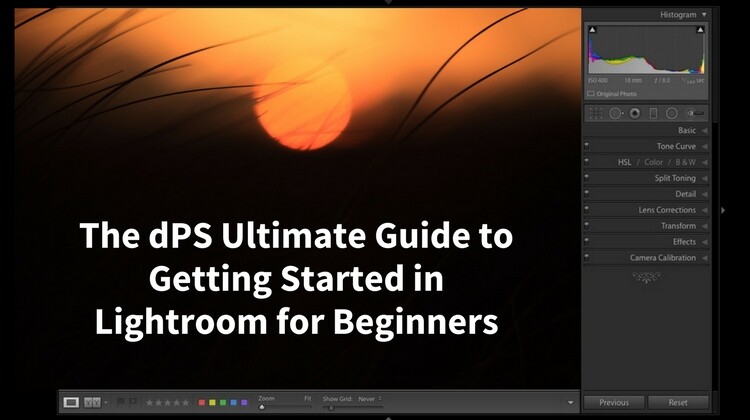
Check out our guide to LR:  The dPS Ultimate Guide to Getting Started in Lightroom for Beginners

Nothing is more satisfying than when you have a catalog of 30,000 images and you’re able to find your favorites in literally seconds by entering a few keywords and star ratings. Take some time to set it up, add a class or two, and you’ll be up and running!

Conclusion

Photo editing or post-processing is an integral part of the digital photography puzzle. Don’t think that you can skip this part and come away with satisfying images. It’s just as important to learn photo editing as it is to learn the basic functions of your camera. Only then, will you be able to bring that intentional photographic vision into post-processing and create great images

How are you going to start your post-processing journey? Is shooting in RAW and learning Lightroom in your future? Please share your thoughts with me on this subject.

The post Don’t Fear Photo Post-Processing – Shooting is Only the First Part of the Image Creation Process by Holly Higbee-Jansen appeared first on Digital Photography School.


Digital Photography School

 
Comments Off on Don’t Fear Photo Post-Processing – Shooting is Only the First Part of the Image Creation Process

Posted in Photography


Don’t buy another lens, buy a flash instead

21 Aug

Introduction

A bounced, on-camera flash was a quick way for me to take some photo booth snaps in a very dark room without having to set anything up off-camera.

When people really get into photography and start saving their pennies for new gear, one of the first things they buy tends to be a lens, like a telephoto or a fast prime. However, if you’ve already got a lens or two and you’re thinking you’d want another, let me suggest that you pick up an external flash instead.

Why, you ask? What’s wrong with natural light? After all, those insert-name-brand-here flashes are just way too expensive.

With the abundance of cheap flashes pouring out of China these days, you should be able to get a TTL, or ‘through the lens’ metering flash for around $ 50 US. If it’s your first flash, a cheapie one will do just fine, and TTL metering will help you get out and get shooting with it in no time.

If you’re ‘into photography’ enough to have a couple of lenses, then it’s time to consider one of these as well.

Even a ‘natural light’ shooter can benefit immensely from a better understanding of how light works, and what better way to experiment with light than controlling your own? You may even find that, using artificial lights, you can spend less time looking for shade or big bay windows, and sometimes, you can get away with shooting at the ‘wrong’ time of day.

‘Even a ‘natural light’ shooter can benefit immensely from a better understanding of how light works, and what better way to experiment with light than controlling your own?’

Lastly, having a flash simply provides you with another tool with which to create images. It’s just another option you didn’t have before. It can open up new possibilities, and perhaps lead you in a creative direction you never expected. And as you grow, you may find there are some situations that you’d simply never get away with not using strobes.

Getting started using TTL

Even if you tend to use your camera in ‘Auto’ or ‘P’ modes, you can gain instant benefits from a small, inexpensive flash. As stated earlier, it’ll be important to get TTL capability, which is kind of like ‘Auto’ or ‘P’ for flash.

Room a bit dim? A ceiling-bounced flash is one of the easiest ways to brighten it up without looking too unnatural.

So how does TTL work? Before taking the photo, the flash fires a quick burst that reflects off your subject and travels through the lens to the imaging or metering sensor in the camera, which then takes a reading and tells the flash what power it should use. And because this is all happening at the speed of light, there is no perceptible lag in this process.

The best part is that if you’re finding your flash is looking too bright or too dim, you can dial in exposure compensation on the flash itself, just like you can on your camera. These are two separate exposure compensations; the flash exposure compensation value will only affect the flash output.

And TTL isn’t just to be pooh-pooh’d as the ‘amateur’ option either, as it can work incredibly well. Many of Joe McNally’s excellent shoots with both speedlights and bigger strobes are controlled using TTL and biasing them up or down with exposure compensation.

On-camera flash Bounce flash
Taken on a Nikon D3400 in full auto.

One of the best ways to get instantly better pictures as a result of your new flash is to mount it to the top of you camera, point it up at the ceiling, and photograph some friends indoors. Instead of producing portraits with very bright faces and an almost black background, which built-in flashes tend to do, you’re bouncing the light off the ceiling, where it cascades down and lights everything a little more softly.

It’s like the difference between shooting in direct sunlight versus shooting on a cloudy day. In direct sunlight (like with direct flash pointed at your subject), you get pretty harsh shadows and more contrast between those shadows and the highlights. With the flash pointed at the ceiling, it’s spread out more, similar to how clouds will diffuse sunlight, and shadows are much softer as a result.

A practical case for TTL, or ‘How I Shoot Dimly Lit Events’

One of my favorite aspects of TTL metering actually involves keeping my camera in full manual, with the flash doing all of the ‘automatic’ work for me. This is particularly useful at dimly lit events and wedding receptions, where I’m moving around quickly and almost always using bounce flash, as described just above.

Ambient lighting only.

This first shot is a good example of an approximate base exposure for the ambient lighting in the room. By that I mean that the ambient lights aren’t totally blown out, and the background is a little dark but still provides a bit of context. This is important as I mostly want the flash to bring out my main subject without the entire rest of the frame looking horribly under-or-overexposed.

In this particular case, I actually like this dark, moody look for the sax player. But these sorts of ambient, ‘moody’ shots won’t work for everyone all the time. So let’s see what difference a flash can make, and how I like to incorporate it in these situations.

Added bounce-flash with TTL.

This second image has some exposure adjustments to bring up the ambient a little more, but I’ve added a flash mounted to the top of the camera. It was bounced at the ceiling in TTL mode and the flash exposure compensation was adjusted to underexpose slightly.

Of course, these images are extremely different in terms of ‘mood,’ but I’ve found that this method of adding ‘pops’ of bounce flash to subjects at events can allow me to more effectively freeze motion without raising my shutter speed, as well as shoot my lenses a little more stopped down to give me some leeway for focus errors.

What about you?

Image taken with a single off-camera flash through an umbrella.

Are you a flash shooter, or a natural light purist? TTL or all manual, all the time? Let us know in the comments if you’ve got any strobe tips or tricks that have made a difference to the types of photography you enjoy.

Articles: Digital Photography Review (dpreview.com)

 
Comments Off on Don’t buy another lens, buy a flash instead

Posted in Uncategorized


No, you don’t need a $100 permit to take snapshots in Laguna Beach

23 Jun
Photo by Don Graham. Licensed under CC 2.0

The city of Laguna Beach has cleared up some confusion about its photography permit policy. A broad interpretation of one of its two photography permits created a minor uproar recently, as many people took it to mean that the city was requiring a $ 100 permit for anyone taking photos. It seems now that this wasn’t the intention.

As it stands, the city has two permits for two different types of photography: commercial and ‘non-commercial’; the latter has a $ 50/hr rate with a minimum of two hours required. This meant, as the policy was interpreted, that anyone taking photos – including personal photos – in Laguna Beach were required to buy a $ 100 permit.

The non-commercial permit category’s vague description resulted in quite a bit of public complaint, and the city has chosen to rename it as a result, leaving only talk about true commercial photography on its website’s related permit page. The category was never intended to cover casual personal photography, according to a city official speaking to OC Weekly. Rather, the ‘non-commercial’ permit category was created as a cheaper alternative to the primary commercial permit, giving photographers an option for ‘less complicated photo shoots such as engagement photos.’

The city’s website still specifies two different photography permits, but one with a new name: commercial and ‘professional still photo.’ The latter carries the same $ 100/2hr minimum as the former ‘non-commercial’ category, explaining that this option is for ‘single camera shoots such as engagement photos, wedding photos, family portraits, holiday cards, etc.’ Nothing about the permit policy except the ‘non-commercial’ verbiage has changed. However, it is now clear that personal, non-compensated photography doesn’t require a permit.

Via: OC Weekly

Articles: Digital Photography Review (dpreview.com)

 
Comments Off on No, you don’t need a $100 permit to take snapshots in Laguna Beach

Posted in Uncategorized


Don’t forget: Challenge of Challenges 2016 voting closes Friday

15 Feb

Nearly 1000 images won DPReview challenges last year. From that pool we chose our favorite 25 images, and now it’s your turn to pick a winner. Our Challenge of Challenges competition closes this Friday, so if you’ve been putting it off now is the time to rate your favorite images. Pick your top five and keep your eyes peeled as we announce winners next week.

Explore and vote for the best
challenge-winning images of 2016

Articles: Digital Photography Review (dpreview.com)

 
Comments Off on Don’t forget: Challenge of Challenges 2016 voting closes Friday

Posted in Uncategorized


Study: people don’t actually like looking at selfies

11 Feb

A couple of weeks ago a Sony-sponsored study found that consumers are ready to embrace selfies as a tool. Now a research paper, published by Sarah Diefenbach and Lara Christoforakos of Ludwig-Maximilians-University Munich published in Frontiers in Psychology in January suggests that a majority of smartphone users enjoys taking selfies, but very few people like looking at selfies of others.
The paper is titled ‘The Selfie Paradox: Nobody Seems to Like Them Yet Everyone Has Reasons to Take Them’ and is based on a study that surveyed 238 people from Austria; Germany and Switzerland. Of those who responded, 77% said they take selfies at least once a month and 49% said they receive selfies from others at least once a week. While respondents thought of their own selfies as somewhat ironic and playful, they had less favorable views on others’ selfies.

‘Altogether, participants expressed a distanced attitude toward selfies, with stronger agreement for potential negative consequences (threats to self-esteem, illusionary world) than for positive consequences (e.g., relatedness, independence), and a clear preference (82%) for viewing more usual pictures instead of selfies in social media.’

Many respondents also thought selfies could have an adverse effect on self-esteem and create a superficial and inauthentic image of the person taking and sending them. 90% of participants regarded others’ selfies as self-promotion. However, only 46% of respondents said the same about their own selfies. The research team acknowledges that the results are potentially biased towards the surveyed regions, and that other cultures have more accepting attitudes towards selfies. As so often in science, further study is required.

Articles: Digital Photography Review (dpreview.com)

 
Comments Off on Study: people don’t actually like looking at selfies

Posted in Uncategorized