RSS
 

Posts Tagged ‘Digital’

17 Signs That You Were Alive Before Digital Photography

02 Aug

bulk_film_loader.jpg

Feeling old? Photoshelter has published a humorous list of 17 signs that you were around before digital photography became the norm. For those of us that were, the list is a nostalgic look at some tools and accessories that have fallen into disuse, as well as a reminder, possibly, that some things remain useful, even in the digital age. If you’re too young to remember anything before digital, you should take a look at the list anyway. You might learn something. 

News: Digital Photography Review (dpreview.com)

 
Comments Off on 17 Signs That You Were Alive Before Digital Photography

Posted in Uncategorized


31 July, 2013 – The Digital Print – a review and video interview

31 Jul

Our friend and colleague Jeff Schewe has written a new book titled The Digital Print. It has just been published and is available as of today from leading book sellers.

We now have a review of the book online. The page also includes a ten minute long streaming video interview with Jeff conducted by Kevin Raber.


"Having been to Antarctica with Michael and Kevin, I would say after having traveled the world and shot nearly my entire life as an exhibiting photographer,  it was one of my highlights in my life and I talk about it, all the time.  The images and experience of seeing something visionary and nearly extinct from the world, to see and experience the wildlife and scenery that does not fear humans is amazing.  The images I shot there won me two Smithsonian awards and nearly 18 other international awards". – Tim Wolcott

 Find Out More Now
These Expeditions Will Sell Out Quickly. They Always Do.


The Luminous Landscape – What’s New

 
Comments Off on 31 July, 2013 – The Digital Print – a review and video interview

Posted in News


Digital Still Life Photography [Book Review]

30 Jul

Digital Still Life PhotographyThis is a sumptuous book in a number of departments: it’s large, beautifully printed and full of useful, easily navigated information.

So why the word ‘digital’ in the book’s title?

Author Sint explains ‘I hate using Photoshop to correct my mistakes because I feel the time required to do so is both unproductive and unprofitable. … what I really love more than Photoshop is downloading pictures that I find pretty close to perfect the moment I open the image’s file.’

The book’s style is thoroughly disarming and direct to the point: when approaching a still life photograph the first step, Sint suggests, ‘is to spend a moment thinking about what type of photograph you are trying to create.’

He then describes the techniques in shooting simple setups on a plain background, the need for speed and the need to plan your shoot efficiently. After all, time is money and the more shots you can pack in per hour the higher your financial return. This book Sint affirms is about ‘how to make a living taking pictures …’

An initial step is to select a suitable shooting space. It should ideally be a big space, one that includes an office, shooting area, storage for props etc, conference area, makeup room and maybe a kitchen. However, in an effort to describe how little you really need, the author describes his own first studio: a room 250 square feet in area, containing his own twin bed, a dresser, small nightstand … with the remaining 225 square feet dedicated to the studio!

Next, you should assemble the necessary tools to make the space work: timber and the necessary power and hand tools; some form of canned compressed air or even a compressor and more. This is followed by three simple building projects: building a simple set flat; a diffusion screen; a light table.

The important subject of lighting gets serious attention, with tips on how to assemble and use a continuous light array, electronic flash, reflectors, barn doors and snoots, hair lights, scrims, a lighting umbrella etc. The variations in continuous and flash light are explained thoroughly and examples given as to which type suits what subjects.

To give an idea of the depth of detail found in the book, just go to pages 150 and 151 on clamps but not just ordinary clamps but ‘super clamps’! These can do so many more things on a still life shoot than merely position a light as they come in handy to build backgrounds etc.

More follows on soft and hard lighting, the colour of light sources, how to vary a lamp’s colour balance and filtration plus a useful primer on working with fluoro lighting and how to mix it with flash. Fluoros may be 20-30 per cent green in hue so you may filter the flash output with green gels and then add a magenta filter to the camera lens to bring everything back to a daylight balance.

A superb eight page section takes you step-by-step through the shoot of an expensive Cartier watch: how to pose it, light it, position fill lamps. And then there is the fundamental advice never to perform post editing on the original digital file: duplicate! And only work on a copy.

This book will be invaluable to the photographer who wants to move into the studio. Big time!

Author: S Sint.
Publisher: pixiq.
Distributor: Capricorn Link.
Size: 28x22x2cm.
Length: 271 pages.
ISBN: 978 1 4547 03273 3.
Price: Get a price on Digital Still Life Photography at Amazon (currently 50% off).

Post originally from: Digital Photography Tips.

Check out our more Photography Tips at Photography Tips for Beginners, Portrait Photography Tips and Wedding Photography Tips.

Digital Still Life Photography [Book Review]


Digital Photography School

 
Comments Off on Digital Still Life Photography [Book Review]

Posted in Photography


Escher + Inception: Tour a Digital World that Defies Physics

27 Jul

[ By WebUrbanist in Conceptual & Futuristic & Technology. ]

surreal human interface cube

This video thrives on convention – specifically: breaking with it. In the same vein as M.C. Escher, The Matrix or, more recently, Inception (or even the building flips and slides in Transformers), this surreal experience calls into question everyday architectures that surround us.

Imagine a world where urban fabric was what the latter implies: a delicate, woven-together series of structures and infrastructure forever flipped and rearranged at the whim of … whom? Perhaps you, perhaps another consciousness, or perhaps something created by a blind watchmaker, as it were, rotating city blocks like rows on a Rubik’s Cube.

surreal cube water bridge

Be sure to view the above realistic animated video in full size for the complete effect. Our brain recognizes patterns, then expects those things within such patterns (like trains on rails, or a waterfall) to conform to known laws of physics and thermodynamics – strip away that certainty and you start to learn something about human cognition and our relationship to world.

surreal room glowing light

From the project creator, Chris Kelly, who created this as a graduate project: “Our understanding of space is not always a direct function of the sensory input but a perceptual undertaking in the brain where we are constantly making subconscious judgements that accept or reject possibilities supplied to us from our sensory receptors,” he says. “This process can lead to illusions or manipulations of space that the brain perceives to be reality.”

surreal bionic eye reality

The thesis that goes with these videos and images:  Time and Relative Dimensions in Space: The Possibilities of Utilising Virtual[ly Impossible] Environments in Architecture. “The redirection techniques and the use of overlapping architecture allow the same physical space to hold a much larger virtual space”, giving it all kinds of applications in collaborative gaming and interactive art as well as architectural and urban design.

surrealist virtual reality cube

More on the project: “The aim of the rubix project was to develop an animation that described a conceptual tool for deploying these malleable virtual environments that could be used by their creators to shift space around us. The rubix concept stemmed from the need for an algorithmic formula for controlling the use of redirection techniques; it allows for many different spatial combinations whilst a level of control is constantly maintained. In the animation the initial Escher-esque space is a representation of our perceptual system where huge amounts of information arrive in the brain from multiple streams. The process of perception involves the brain selecting and rejecting contradicting pieces of information leading to a perception of reality that only gives us glimpses into the world we are in.”

Share on Facebook


[ By WebUrbanist in Conceptual & Futuristic & Technology. ]

[ WebUrbanist | Archives | Galleries | Privacy | TOS ]


WebUrbanist

 
Comments Off on Escher + Inception: Tour a Digital World that Defies Physics

Posted in Creativity


9% of dPS Readers Have Owned More than 10 Digital Cameras

10 Jul

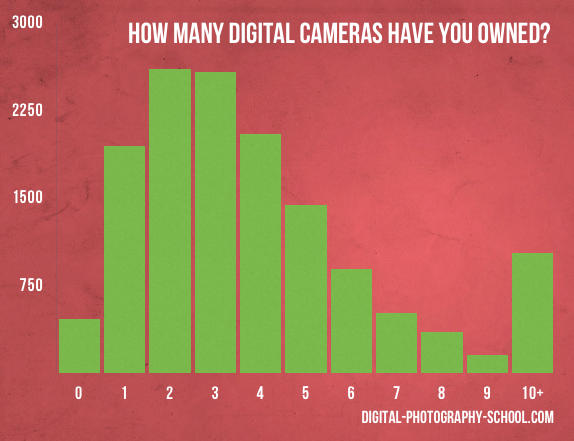
Last month 14,002 readers responded to the question in our monthly poll which asked how many digital cameras they had owned.

The results are in!

Screen Shot 2013 07 02 at 9 34 03 PM

It seems there was a fairly even spread among readers who have owned between 1-5 digital cameras – with 10-20% of respondents in each category.

The interesting category to me was the 10+ category with just under 9% of our readers having owned more than 10 cameras! The comments that accompanied the original poll post showed that many of those who voted in this category reported having had significantly more than 10 too! It looks like we’ve got some enthusiasts in our midst! :-)

Post originally from: Digital Photography Tips.

Check out our more Photography Tips at Photography Tips for Beginners, Portrait Photography Tips and Wedding Photography Tips.

9% of dPS Readers Have Owned More than 10 Digital Cameras


Digital Photography School

 
Comments Off on 9% of dPS Readers Have Owned More than 10 Digital Cameras

Posted in Photography


Photographic Digital Printing [REVIEW]

30 Jun

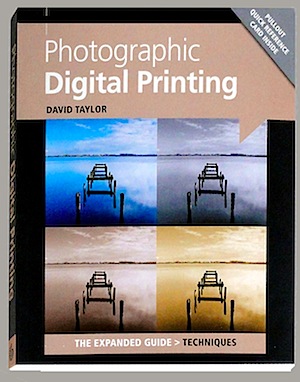
Photographic Digital Printing.jpgIn my experience, personal printing is a declining art. Walk through any retail photo dept and you’ll see hordes of people sitting at digital print stations pumping out bundles of 6×4 inch prints from their precious memory sticks and CDs.

Many of these keen printers will be women, turning happy snap family digi shots into photo records, destined for albums.

The Photographic Digital Printing book will be of no use to them… after all, those auto digi printers do a fine job!

However, it’s the real, rusted on photographers who want quite a bit more from their printing efforts.

As author David Taylor says: ‘It used to be so simple. Once, there was little choice if you wanted a printer. Generally, the same manufacturer made the only printer available for a particular computer printer model. … Printers allow a photographer to control every aspect of image making, from the initial exposure through to the final print.’

Things have sure changed since then: the range of printer types has exploded for one thing. The range of media has similarly expanded, as has the ‘ink’ used.

Ink? Well, for starters there are colour laser printers at affordable prices. Possibly, the only brake on laser printers moving into photo printing further is their inability to use coated papers due to the laser’s heat.

Dye sublimation printers are another type that have positive aspects but, again, fall foul of a limited range of papers and size limits.

Inkjet printers are ubiquitous and are able to produce prints at relatively low cost onto an amazing range of papers and surfaces.

Inkjet printers are divided into two subsets: dye-based and pigmented. The book goes into considerable detail on each type, with descriptions about how ink is placed onto paper, the technology involved and their comparative benefits and disadvantages. This information should be of considerable benefit to new buyers tossing up on the pluses and minuses of each.

Other topics follow: computer to printer communication; printer makers; the various media you can print to. In this area, the range is truly amazing: paper in a wide variety of surfaces, weights and types. Then there is canvas media, transparent film and other surfaces.

On the topic of paper alone, the book spends 20 pages delving into the fibres used, weight, opacity, sizes, surfaces, finish, brightness and texture. Would you like to use Baryta paper, water coloured, calendared or resin coated paper? Perhaps your printing needs will be answered by using artisan papers made by such companies as Hahnemüle or Canson or St Cuthbert’s Mill?

If you have reached around page 50 in the book you will need to make a commitment to take the whole business seriously, commit yourself to the whole technology — or simply head back to your local photo print shop! It’s a serious game!

Strapped in? With David Taylor at the helm, let’s explore more topics: colour and calibration; colour channels; colour management; profiling; image preparation; bit depth; using JPEG or RAW files; understanding histograms.

There is much information about the role of Photoshop in print making. A great deal of this information will cross over and be of help in your original image capture. After all, it’s difficult to print an incorrectly exposed or post processed image. So the book moves into detailed descriptions on how to work with curves, layers, sharpening, etc.

In the closing chapters of the book we finally get to make a print! And even then the info keeps rolling!

How to store a print. How to mount a print. Book binding. Exhibiting. Black and white printing. And troubleshooting.

For me, the big surprise is that there is so much information in such a small book and information which is camera and printer non-specific — unlike some other publications which are dedicated to brand name printers.

An excellent book on the subject.

Author: D Taylor.
Publisher: Ammonite Press.
Distributor: Capricorn Link.
Size: 18x15x1cm. 192 pages.
ISBN: 978 1 90770 874 9.
Price: Get a price on Digital Printing (The Expanded Guides: Techniques) by (David Taylor) at Amazon (currently 24% off).

Post originally from: Digital Photography Tips.

Check out our more Photography Tips at Photography Tips for Beginners, Portrait Photography Tips and Wedding Photography Tips.

Photographic Digital Printing [REVIEW]


Digital Photography School

 
Comments Off on Photographic Digital Printing [REVIEW]

Posted in Photography


Triggertrap Flash Adapter harnesses smartphones for high-speed digital photography

29 Jun

splash_trigger.jpg

Triggertrap’s new flash adapter activates any hot shoe-equipped flash from an iPhone using a specialized mobile dongleflash adapter and iOS app – ideal for freezing high-speed action using your off-camera flash. If you’re trying to catch a bullet mid-flight, it is very difficult if the flash is connected to your camera, but Triggertrap’s sound-activated system makes it a little easier. Learn more about how it works on connect.dpreview.com.

News: Digital Photography Review (dpreview.com)

 
Comments Off on Triggertrap Flash Adapter harnesses smartphones for high-speed digital photography

Posted in Uncategorized


Social Signage: Digital Street Sign Gives Dynamic Directions

28 Jun

[ By WebUrbanist in Gaming & Computing & Technology. ]

digital signpost display

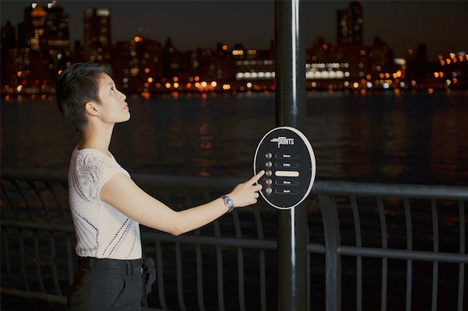
The shape is a familiar classic – a central post pointing toward different destinations, sometimes near and other times a world away. This evolved version, however, replaces static locations and fixed directions with interactive ones.

Designed by Breakfast of Brooklyn, Points lets you input a query and receive both a written response and an orientation to go with it, giving distance and location along with other information.

digital all points sign

The device is programmed with API data from real-time sources including regional public transit and, more broadly,Twitter, FourSquare and RSS feeds.

digital street sign design

The resulting database gives passers by up-to-the-minute info as requested, displayed on 16,000 LED lights. It can also potentially display default local information automatically – about current news, events, performances or venues – when not otherwise (manually) engaged.

digital interactive local directions

The intention here is to go beyond a simple touch screen, creating something recognizable at a distance, familiar to pedestrians and interactive both digitally and physically.

digital sign technology design

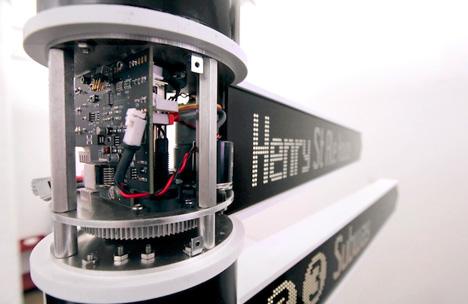
Aside from the creative challenges, fitting the required mechanisms for a smoothly-rotating effect into such a small space proved difficult but the designers are close to a finished product.

Share on Facebook


[ By WebUrbanist in Gaming & Computing & Technology. ]

[ WebUrbanist | Archives | Galleries | Privacy | TOS ]


WebUrbanist

 
Comments Off on Social Signage: Digital Street Sign Gives Dynamic Directions

Posted in Creativity


Best Digital Cameras for Kids

22 Jun

cams4kids.jpg

If they’re young enough, your kids have always known a world in which smartphones are the most-popular devices for taking photos. That’s too bad. In this article we’ve rounded up a selection of cameras that will suit aspiring young photographers of all ages from under-10s to teenagers. Click through for a link. 

News: Digital Photography Review (dpreview.com)

 
Comments Off on Best Digital Cameras for Kids

Posted in Uncategorized


Video Guide: Smartphone vs Digital SLR

14 Jun

newas.jpg

We’ve just posted the first in what we hope will be an ongoing series of short videos aimed at the novice photographer. In this first segment our hosts Jordan and Mark compare the results from a smartphone and an entry-level digital SLR in everyday shooting conditions such as low light, moving subjects and the challenge of capturing a flattering informal portrait. In future spots we’ll be covering more practical shooting advice and diving into creative techniques in an effort to help beginners choose the right gear. Click on the thumbnail to watch the video right here on the homepage.

News: Digital Photography Review (dpreview.com)

 
Comments Off on Video Guide: Smartphone vs Digital SLR

Posted in Uncategorized