RSS
 

Posts Tagged ‘Digital’

Nikon video hints at long-desired ‘digital FM’

26 Oct

Nikon-retro-FX-DSLR-camera-teaser.jpg

The rumors of Nikon creating a stripped-down, film-era-style camera are exciting because it’s something people have been calling on for years. Nikon Rumors has been reporting possible specifications all week. Adding fuel to the flame, Nikon recently released a short teaser video and ad campaign for a “pure photography” camera. >Watch the video

News: Digital Photography Review (dpreview.com)

 
Comments Off on Nikon video hints at long-desired ‘digital FM’

Posted in Uncategorized


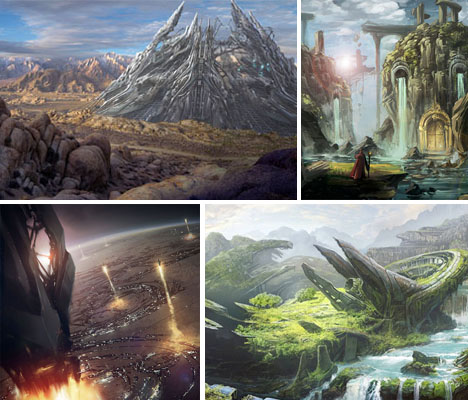
Imaginary Landscapes: 18 Digital Art Fantasy Worlds

02 Oct

[ By Steph in Drawing & Digital. ]

Imaginary Landscapes Main
Alien planets, fantasy worlds and visions of Earth in the distant future are envisioned in stunning detail in these 17 digital paintings by a variety of artists, from students to renowned industry veterans. These otherworldly imaginary landscapes range from game concepts and imagery inspired by fiction to scenes that are entirely borne of the artists’ imaginations.

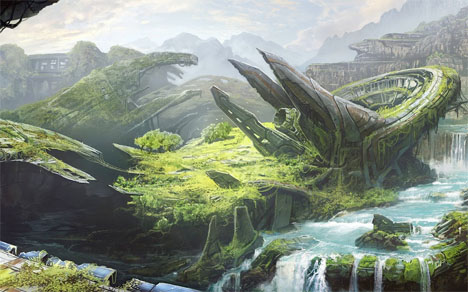
Spaceship Wreck Yard by Maciej Wojtala

Imaginary Landscapes Wojtala

“I wanted to visualize an idea of an environment covered with old spaceship wrecks, being absorbed by nature and decaying for many years,” writes artist Maciej Wojtala of this piece.

Fantasy Island, Peter Lee

Imaginary Landscapes Fantasy Island Lee

Artist Peter Lee envisions a fantasy island in which people who live harmoniously with and worship nature might just be mistaking nature for technology from another world.

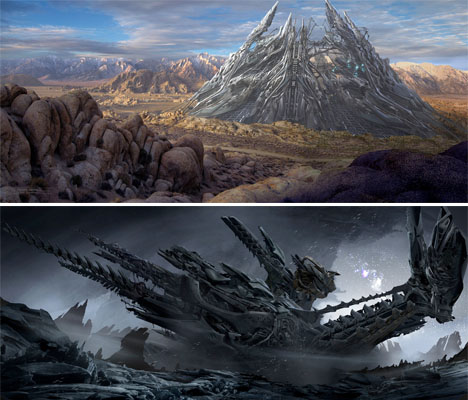
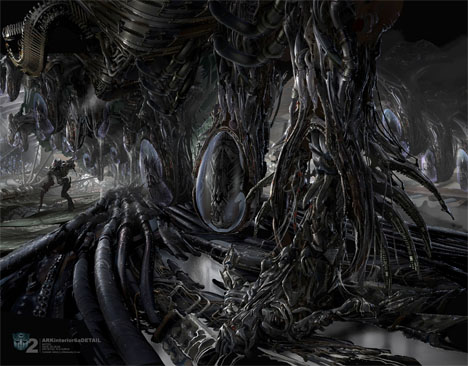
Revenge of the Fallen Concept Art by Ryan Church

Imaginary Landscapes Revenge 1

Imaginary Landscapes Revenge 2

Get a good look at some locations that weren’t seen in detail in the film Transformers: Revenge of the Fallen in the concept art of Ryan Church.

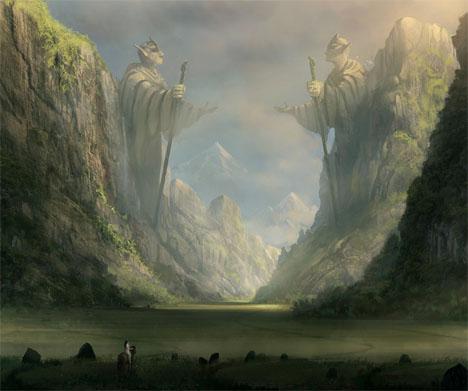
Through the Ancient Valley, Blinck

Imaginary Landscapes Through the Ancient Valley

Inspired by Lord of the Rings, ‘Through the Ancient Valley’ by Blinck depicts on young girl on horseback making her way through a valley featuring statues on a massive scale.

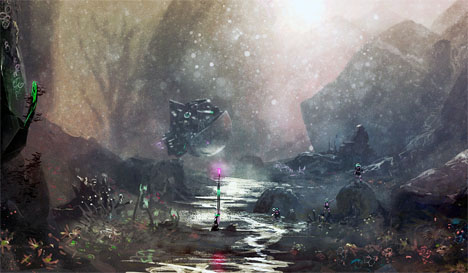
The Extra Planet by Zack Moores

Imaginary Landscapes Extra Planet

A spaceship lands on another planet only to find bizarre life unlike anything ever seen before in this work by Zack Moores.

Tropical Islands by Eva Kedves

Imaginary Landscapes Eva Kedves

Waterfalls, temples and faces carved into the rock make this fantasy landscape by Eva Kedves a unique Southeast Asian-inspired paradise.

Next Page:
Imaginary Landscapes 18 Digital Art Fantasy Worlds

Share on Facebook


[ By Steph in Drawing & Digital. ]

[ WebUrbanist | Archives | Galleries | Privacy | TOS ]


WebUrbanist

 
Comments Off on Imaginary Landscapes: 18 Digital Art Fantasy Worlds

Posted in Creativity


Nikon 1 AW1 is world’s first rugged, waterproof digital mirrorless

19 Sep

AW1_11_27.5_WH_front.png

Nikon has announced the 1 AW1, the world’s first rugged, waterproof mirrorless interchangeable lens camera. It has also made AW versions of its 11-27.5mm f/3.5-5.6 and 10mm f/2.8 lenses that are both shock and waterproof. The Nikon 1 AW1 features similar underlying specifications to the J3, featuring a 14MP sensor capable of shooting at up to 15 fps with continuous AF (60 fps with focus fixed), but is waterproof to a depth of 15m (49ft) and shockproof from a height of 2m (6.6 ft). It will cost around $ 800/£750 with 11-27.5mm lens and $ 1,000/£950 with the 10mm f/2.8 added to make a two-lens kit.

News: Digital Photography Review (dpreview.com)

 
Comments Off on Nikon 1 AW1 is world’s first rugged, waterproof digital mirrorless

Posted in Uncategorized


Digital Grotesque: Intricate Full-Scale 3D Printed Room

19 Sep

[ By Steph in Gadgets & Geekery & Technology. ]

Digital Grotesque 3D Printed Room 1

Stacked sections of intricate 3D-printed columns of the most baroque nature imaginable make up a cube-shaped, full-scale room. Designers Michael Hansmeyer and Benjamin Dillenburger made ‘Digital Grotesque‘ out of eleven tons of sandstone, its outside smooth and flat, with an impossibly ornamented interior. It measures 16 square meters, and has 260 million surfaces.

Digital Grotesque 3D Printed Room 2

These complex, interwoven details and the ways in which the various layers of them join together wouldn’t be possible to craft by hand. Many elements look fractal in nature, repeating endlessly. One side is mirrored by the other in perfect symmetry. The architectural scale, for the designer, has been reduced from bricks to grains of sand.

Digital Grotesque 3D Printed ROom 4

This scale and detail is made possible by a new sand-printing technology that overcomes some of the limitations of 3D printing, enabling large-scale elements that can be layered into a whole. “The design process thus strikes a delicate balance between the expected and the unexpected, between control and relinquishment,” write the design team. “The algorithms are deterministic as they do not incorporate randomness, but the results are not necessarily entirely foreseeable. Instead, they have the power to surprise.”

Digital Grotesque 3D Printed Room 3

“Digital Grotesque is between chaos and order, both natural and the artificial, neither foreign nor familiar. Any references to nature or existing styles are not integrated into the design process, but are evoked only as associations in the eye of the beholder.”

Share on Facebook


[ By Steph in Gadgets & Geekery & Technology. ]

[ WebUrbanist | Archives | Galleries | Privacy | TOS ]


WebUrbanist

 
Comments Off on Digital Grotesque: Intricate Full-Scale 3D Printed Room

Posted in Creativity


Physical Filters Versus Digital Filters! Which One Wins the Battle?

09 Sep

The age old battle between physical and digital filter stirs once more. It’s difficult to pick a   winner because both are integral to the entire photographic process, and, individually, each has its advantages for different effects that you’re trying to achieve. Some view the physical filter as an unnecessary piece of baggage, needlessly weighing down your kit, as you Continue Reading

The post Physical Filters Versus Digital Filters! Which One Wins the Battle? appeared first on Photodoto.


Photodoto

 
Comments Off on Physical Filters Versus Digital Filters! Which One Wins the Battle?

Posted in Photography


The Magic of Digital Nature Photography [BOOK REVIEW]

08 Sep

The Magic of Digital Nature PhotographyI like these books for more than the obvious reason that they contain a wealth of help in their pages.

For one thing they’re an easy read so, after a hard day behind the camera, you can relax at home and read it for pleasure, not only soaking up all the useful info but enjoying the largish pictures within its pages.

Author Rob Sheppard intentionally laid out all the practical info and creative suggestions you would need to take your images to a higher level: which lenses and accessories are best for the purpose; the pluses and minuses of RAW vs JPEG; how do you stalk an animal? How about landscape composition?

Satisfying it may be, but many amateurs are unaware their work is just that: amateur. Sure, it takes effort, but it is worth while to lift your game, tune up your senses and place your image making on a higher plane.

Sheppard confesses that he has enjoyed photography since he was a kid and remembers entering a B&W print of a local scenic spot in the local newspaper’s photo contest and recalling his pride in the photo — but it didn’t win!

He still enjoys being out and about with a camera, having shot images from Peru to Newfoundland, Florida to Washington and admits he wants to ‘get you excited about getting out and taking photographs of your own special subjects.’

First the spiritual: Sheppard believes that ‘nature photography definitely deepens, widens and expands our sense of life. He believes you can shoot pictures of your favourite subjects; most times you can shoot many shots of your favourite subjects and yet capture totally different images than another person may take.

A touchy feely sort of book? You betcha!

In a chapter titled ‘Connections’ Sheppard asserts that whilst we may have many connections to the natural world, these are not always recognised. He suggest you connect with the subject in the picture, then connect again with the subject when you look at the final image. The final pleasure comes in sharing the image with others, helping them also to connect with the subject.

Then down to practicalities: choice of camera is important but what may work well for one person may not be OK with another. Educate yourself about differing camera types, decide on which type of nature photography you wish to pursue and make sure you can tote your camera into the field, making sure you don’t spoil your adventures with a pile of gear that weighs you down.

In a section titled ‘Megapixels and Quality’ he comes down heavily on the hype over pixel count: after all, megapixel counts are less about image quality and more about size.

Useful chapters follow on lenses, suitable focal lengths for scenic work, suitable camera mounts. Then follow discussions on exposure; lens aperture vs shutter speed; working in auto vs Program AE vs aperture or shutter priority vs manual exposure; reading a screen histogram; ISO settings; how to determine white balance.

Without light you can’t capture too much in the way of a digital scenic! That much is obvious. But what quality of light? Hard or soft? Front lit or backlit? And its colour?

There follows some handy help on how to model and shape the light on your scenic using reflectors or diffusers, by warming it with a change to the white balance, a change to the exposure, adding another light source, adding a grad filter etc.
The general tone of the book is more in the nature of help rather than a pile of techy details, which makes it an easy and encouraging read.

If you’re into scenics, this is for you!

But, as I said, don’t expect ‘a pile of techy details!’

Author: R Sheppard.
Publisher: Pixiq.
Distributor: Capricorn Link.
Length: 192 pages.
Size: 28x22x12mm.
ISBN: 978 1 4547 0813 1.
Price: Get a Price on The Magic of Digital Nature Photography at Amazon (currently 39% off)

Post originally from: Digital Photography Tips.

Check out our more Photography Tips at Photography Tips for Beginners, Portrait Photography Tips and Wedding Photography Tips.

The Magic of Digital Nature Photography [BOOK REVIEW]


Digital Photography School

 
Comments Off on The Magic of Digital Nature Photography [BOOK REVIEW]

Posted in Photography


100 Clever Digital Photography Ideas [Book Review]

02 Sep

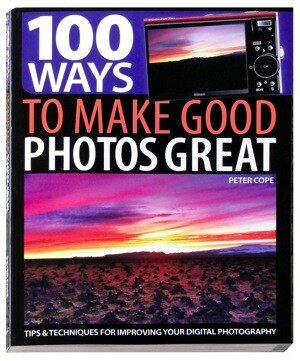
100 Ways to Make Good Photos GreatSometimes you need more than a guide to specifics in using a digital camera for ambitious image making. It is possible to overload your brain with info on lenses, lighting, camera controls and the rest of the tech jungle.

Sometimes it’s better to just look behind the curtain and pick up some tips on how to make good photos great. As the book says!

Author Peter Cope makes the point early in the book that during the 2012 London Olympics ‘exciting, emotional and iconic images flashed around the world …’

He observes that ‘What made these images unique and different from those that press photographers’ captured was that most came from amateur or casual photographers … grabbed shots ‘taken on a purely opportunist basis.’

Little thought went in to these ‘point and shoot’ pictures, much as they may have been enjoyed. But sometimes we need more: photos rather than snaps. Cope’s book sets out to help you not only shoot technically excellent photos but to create images that have something to say. The layout of the book is ideal for the purpose: for one thing, the size is enough to accommodate large pictures along with concise blocks of text that explain the issues.

For example, the page on red eye from flash suggests ways to avoid the dreaded issue: increase the ISO; use an external flash unit; and — last resort! — remove it in post.

Similarly, with the chapter on how to conceive great landscape photos which, after people, are possibly the most photographed subjects there are!

Cope’s tips go this way: great landscape photos should be in sharp focus from the nearest point to the most distant; follow the rules of composition closely, including the rule of thirds; use lead in lines to draw peoples’ attention to the landscape’s main subject; shoot at different times of day; watch the effect of weather on the scene; use polarising or graduated filters.

You won’t find much specific techy stuff in the book, except for a few pages on such matters as lens choice, exploiting your camera’s aperture controls, mastering ISO settings, astro photography, macro photography and then there’s a longish section on software manipulation. Most of the book is encouraging, handholding help.

The techy section also includes includes optimum ways in successfully sharpening an image, using ‘auto fixes’ such as auto enhance, auto tone and auto levels. Some will shy away from such easy fixes but, in Cope’s view, if the ‘adjustment works and delivers a great image’ — use it.

Within its pages are chapters on a whole variety of people photography, along with subtle suggestions on how to deal with human subjects. Like: shoot plenty of shots of children … they move fast! And, when shooting people at work, shoot fast! In straight portrait photography, establishing eye contact can establish a strong connection or sometimes be unsettling.

There are also whole pages devoted to ideas like ‘transplanting’ a whole sky, creating scenes that might otherwise not exist … if it were not for the magic of our old friend Photoshop!

An excellent publication that’s highly readable just as a book or as a complete reference guide.
Oh and it would make an excellent ebook that you could take with you on a shoot!

Author: P Cope.
Publisher: David & Charles.
Distributor: Capricorn Link.
Length: 144 pages.
Size: 25x19x11mm.
ISBN 1 4463 0300 9.
Price: Get a price on 100 Ways to Make Good Photos Great

Post originally from: Digital Photography Tips.

Check out our more Photography Tips at Photography Tips for Beginners, Portrait Photography Tips and Wedding Photography Tips.

100 Clever Digital Photography Ideas [Book Review]


Digital Photography School

 
Comments Off on 100 Clever Digital Photography Ideas [Book Review]

Posted in Photography


Ten unique cameras from the dawn of consumer digital photography

21 Aug

coolpix100_hand-trans2.png

Do you remember having to change floppy disks on your Sony Mavica? Or perhaps plugging your Coolpix 100 into the side of your laptop? The early days of consumer digital photography were filled with cameras that broke new ground, though not necessarily in directions that were widely adopted. In this article, DPReview’s Jeff Keller takes a look back at ten unique cameras from the era of PC Cards and SCSI ports. Follow the link to explore some of the interesting dead-ends of early digital photography.

News: Digital Photography Review (dpreview.com)

 
Comments Off on Ten unique cameras from the dawn of consumer digital photography

Posted in Uncategorized


PhotoFuture: 13 Innovative & Intelligent Digital Cameras

14 Aug

[ By Steph in Gadgets & Geekery & Technology. ]

Bizarre Digital Cameras Main

Digital photography innovations have led to cameras that can capture images at the speed of light, see the world from the compound eye of an insect or describe scenes via speech for the visually impaired. Some of these strange and amazing digital cameras will even remember your preferred settings using iris recognition software, spit out descriptive text with the help of virtual workers around the world, or activate only at the touch of strangers.

Touchy Camera for Social Anxiety

Amazing Cameras Touchy

The wearer of this odd-looking camera helmet is entirely in the dark – literally – until touched by another person. When continuous physical contact is maintained between the camera, ‘Touchy’, and an outside person, the eye-hole shutters are activated. This gives the wearer back his or her own vision, and captures images every ten seconds. The creators note that we’re all separated into social bubbles, avoiding connection with strangers. “However, technologies like internet social networking or the mobile phone loosens social boundaries, hence dehumanizing physical communication. to a certain extent, it generates social anxiety such as the one experienced in the ‘hikikomori’ and ‘otaku’ cultures in Japan. Touchy criticizes this phenomenon and suggests a solution by transforming the human being into a social device: a camera. the touchy project investigates how such a device improves social life, presupposing that a camera is a known tool for sharing memories, valuable moments, enjoyment, emotions, beauty and so forth’.

Iris Camera

Amazing Cameras Iris 1

Amazing Cameras Iris 2

Iris is an eye-tracking camera that you control by blinking and squinting. It uses biometric technology to recognize users’ faces through their unique iris signatures, automatically loading their preferred settings including aperture, ISO and screen display. Zoom in and out by widening your eyelids, and take a photo by holding your gaze before double-blinking.

Panoramic Camera Ball

Amazing Cameras Panoramic ball

This incredible throwable camera captures photos of scenes from thirty-six individual lenses to create a continuous spherical landscape. The modules are mounted in a 3D-printed enclosure resembling a soccer ball, which is padded with foam and contains an accelerometer that helps predict rise time to the highest point of a throw. At that point, the exposure is triggered. Once the ball is caught, pictures are downloaded automatically via USB and shown in a spherical panoramic viewer so you can explore the full representation of the scene.

Descriptive Camera

Amazing Cameras Descriptive

Imagine having an army of virtual slaves at your command who help you organize your photo collection by printing a description of what each picture contains. That’s essentially what the Descriptive Camera by Matt Richardson achieves, taking advantage of people who perform menial online tasks for a few pennies at a time via the Amazon Mechanical Turk API. You take a photo and a worker receives it instantly via IM, typing up a description that the camera will then print on a receipt. The whole process takes three to six minutes, and the quality of the description may vary. One example: “Looks like a cupboard which is ugly and old having name plates on it with a  sturdy lamp attached to it.”

Next Page:
Photofuture 13 Innovative Intelligent Digital Cameras

Share on Facebook


[ By Steph in Gadgets & Geekery & Technology. ]

[ WebUrbanist | Archives | Galleries | Privacy | TOS ]


WebUrbanist

 
Comments Off on PhotoFuture: 13 Innovative & Intelligent Digital Cameras

Posted in Creativity


Ricoh issues fifth feature-enhancing upgrade for GR Digital IV

09 Aug

shared:download-button.png

Ricoh has released firmware v2.30 for its GR Digital IV enthusiast compact. The latest update is the fifth for the GRD IV, and adds a couple of features, slightly modifies the camera’s behavior and fixes some minor bugs. The latest update brings the white balance options of the GRD IV into line with the more recent, large sensor, GR model, for which Ricoh has also said it will provide function-enhancing firmware.

News: Digital Photography Review (dpreview.com)

 
Comments Off on Ricoh issues fifth feature-enhancing upgrade for GR Digital IV

Posted in Uncategorized