RSS
 

Posts Tagged ‘Digital’

Reader showcase: Using a Sony NEX as a digital back on an antique camera

29 Jun

Our DIY forum isn’t a month old and we’ve already seen it fill with interesting projects. Some solve a problem, while others are pure fun. Decidedly in the latter category, dpreview forum member vkphoto has put a Sony NEX-F3 ‘digital back’ on a vintage ICA Toska camera from the early 1900s and a Carl Zeiss Tessar 135mm 1:6.3. See how he brought new life to an antique with a $ 15 modification. Learn more

related news: Digital Photography Review (dpreview.com)

 
Comments Off on Reader showcase: Using a Sony NEX as a digital back on an antique camera

Posted in Uncategorized


Reader showcase: Using a Sony NEX as a digital back on an antique camera

25 Jun

1.jpg

Our DIY forum isn’t a month old and we’ve already seen it fill with interesting projects. Some solve a problem, while others are pure fun. Decidedly in the latter category, dpreview forum member vkphoto has put a Sony NEX-F3 ‘digital back’ on a vintage ICA Toska camera from the early 1900s and a Carl Zeiss Tessar 135mm 1:6.3. See how he brought new life to an antique with a $ 15 modification. Learn more

News: Digital Photography Review (dpreview.com)

 
Comments Off on Reader showcase: Using a Sony NEX as a digital back on an antique camera

Posted in Uncategorized


How to do Surreal Digital Infrared Photography Without Expensive Gear or Camera Conversions

17 Jun

Photos made with invisible infrared light, rather than visible light, yield wildly strange and eerie photographs that always have the “WOW Factor.”  For landscapes or scenic imagery, infrared (IR) photography is highly regarded as fine art. But back in the days of film photography, shooting infrared was complicated, expensive and the results were often not great. For those with determination though, that one image that did ‘work” was always worth the trouble.
But now the complexity of capturing infrared photos has changed – digital cameras have made the technique almost foolproof, inexpensive, and a lot of fun! All you’ll need is a tripod, a special infrared filter, and any camera that is sensitive to infrared light. With a few easy steps you’ll be shooting infrared photos in no time at all.

But before I get into the process, it’s not my intention in this article to delve into the physics of infrared light, and all the scientific mumbo jumbo that goes along with understanding WHY infrared light creates amazing images, but rather to give you some simple steps to get you started in this super creative technique.
_DSC1747W

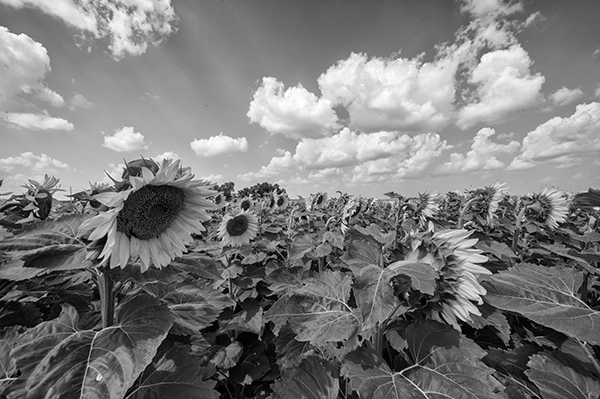
Visible Light Black and White Image

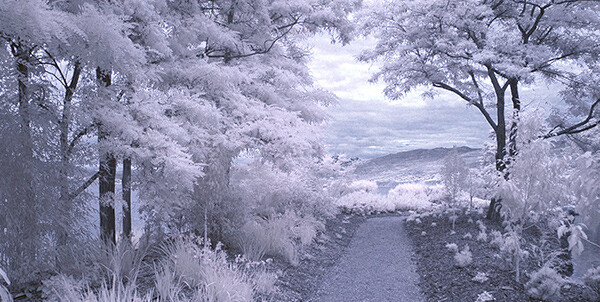
Just know that anything that is alive will reflect a greater amount of infrared light than inanimate objects. Leaves, foliage, and grass, along with skin, reflect the greatest amounts of infrared light, and so will be the whitest objects in your image. Stones, concrete, mountains, water and sky tend to absorb infrared light and so appear as darker objects in your images.  The tonality is very different from that of visible light black and white photography though. Notice how the tones of the leaves, seeds and sky are quite different in the infrared image below.

Digital Infrared Image

Digital Infrared Image

Okay, are you ready to give this a try? Here are the simple steps you need to follow so your images will turn out into hauntingly beautiful, surreal infrared photographs. The first steps deal with equipment and settings, and the last steps are all about how to best capture beautiful infrared light.

Step 1: Test your Camera

Before you go out and buy an infrared filter test your camera to make sure it’s sensitive to infrared light.  Not all digital camera sensors are able to “see” infrared light. In fact the newer the camera, the less sensitive to infrared light it may be. Try this simple test to see if your camera will give you good results.
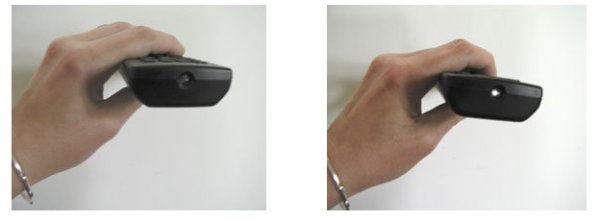
Testing your camera for infrared sensitivity.

Testing your camera for infrared sensitivity.

Hunt down a TV, VCR or DVD player remote control. Look at the end that points to the TV (or VCR etc), and you’ll see a little bulb or flat back plastic window. This is the transmitter that sends the signal from the remote to your device. That signal usually uses infrared light. You can see that it is invisible light – i.e. when you look at the remote with your eye, you can’t see anything when you press the buttons. But just wait until you do this looking through your camera! You’ll be able to see invisible light – the infrared spectrum that makes such cool photos.

If you have a point & shoot camera look through your LCD viewer while pressing any button on the remote. If you see the bulb light up, your camera can see infrared light.  If you have a DSLR you’ll have to take a photo to see the results, or if you camera has a live view feature, you will be able to see the the results on your LCD as well.

The whiter and brighter the light you see from the remote, the more sensitive your camera is to infrared. If the light is more purple or red your camera may not be a good candidate for shooting infrared photos.

Step 2: Equipment

If your camera passed the sensitivity test, you’ll need two more pieces of equipment before you can shoot infrared photos, a tripod and an infrared filter. The tripod will help you take a sharp shot, as your exposure times will be quite long. The filter will  block most of the visible light from reaching your camera sensor, but will allow the beautiful infrared light to pass through.

When I first started shooting infrared images, I used  a Hoya R72 screw-on infrared filter. B+W, Tiffen and other manufacturers also have equivalent infrared filters.  If you are using a slide in filter system, such as Cokin or Lee, they also make infrared filters to work with their holders. If this is the filter you’ll be using, make sure to slide it into the slot closest to the camera to prevent unwanted visible light from sneaking in. The R72 refers to the amount and type of infrared light that passes through to your sensor and I recommend using this to start. It allows some visible light to pass to the sensor so it will allow you do to all sorts of creative post processing with your images.
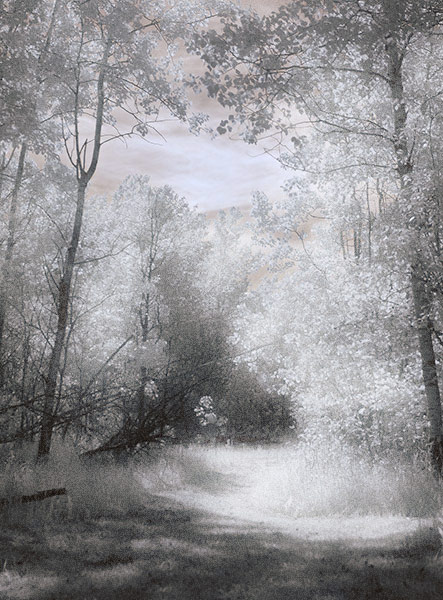
Infrared Image with creative post processing.

Infrared Image with creative post-processing

Step 3: Camera settings

Because the infrared filter blocks out most of the visible light, your exposures will be quite long. You’ll have to adjust your camera settings to ensure you get a good exposure, while keeping noise to a minimum.  Set up your camera on your tripod and make these adjustments:

  1. Set your ISO between 200 and 400, keep it as low as you can
  2. Set your Long Exposure noise reduction to ON
  3. Set your camera to shoot in RAW mode
  4. Set your camera to Aperture Priority (Av mode on a Canon), and your aperture to around f/8 for maximum sharpness
  5. If your camera does auto bracketing (refer to your owner’s manual), set your bracketing to +/-1 EV.  Your series should be -1 EV, 0 EV, good exposure, and + 1 EV. You can also bracket manually.

Shooting in RAW will give you a bit more latitude for processing and adjusting.  Bracketing will help you find the sweet spot for exposure at your preferred aperture and ISO.

I’m not going to go deep into the White Balance setting, as this could be an entire article on its own. But for now set your White Balance to the Sunny or Daylight preset.

Step 4: Composition

Just as in regular light photography, composition is a critical component of infrared photography. However there are a few additional considerations to keep foremost in your mind when planning your infrared composition.
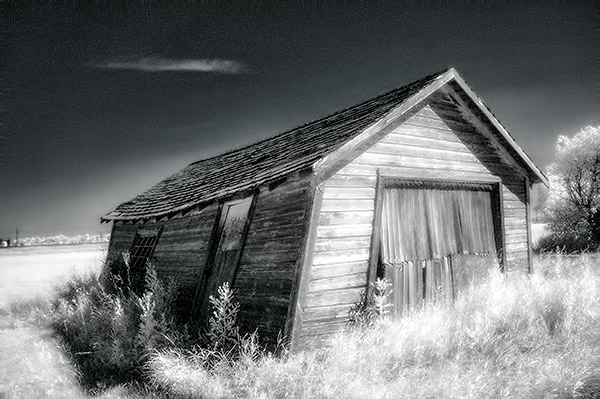
A variety of textures make the image more dynamic.

A variety of textures make the image more dynamic.

Infrared photography is similar to black and white photography, in that you are dealing with a limited number of tones. To add more dynamism and energy to your infrared shots, add contrasting elements. By this I mean using dark and light objects in close proximity to each other. But also use smooth and textured objects together. You can mix and match for artistic composition and design.

 COLUMN 1  COLUMN 2
  • light
  • white
  • smooth
  • large patterns
  • light with fine textures
  • light with large textures
  • dark
  • black
  • textured
  • small patterns
  • dark with fine textures
  • dark with large textures

In every infrared shot you make, include at least one element from Column 1 with the corresponding one from Column 2. You can add as many elements as you want, but it’s best to keep your composition simple. You can use light and small patterns, with dark and large patterns and so on. Foliage and clouds will always be a light element in your image; the sky, stones, bark, water  and concrete will be darker. Leaves from a distance are a rough texture, with many small elements appearing rough and textured; while human skin is very smooth.  This should give you a great starting point for infrared compositional considerations.

Step 5: Shooting Infrared

There is only one critical thing to remember when shooting infrared – you must shoot when there is lots of sunshine, and in the summer when there is lots of deciduous foliage. Overcast days won’t give you great results, and because living things reflect the most infrared light, snowy winter days are usually devoid of anything that reflects infrared.  If there are clouds in the sky these can add an element of interest, but don’t make your capture until the sun is out, and shining on your subject.

Find a great place to shoot and adjust the settings on your camera. I like graveyards, parks, and old abandoned buildings. The contrast between the stones, the pathways, the old wood and leaves and grass provides outstanding tonality for infrared images. If you can get a few wisps of cloud in your sky all the better.

Put your camera on your tripod, and compose your image. Place the infrared filter on your camera, and use your autofocus as usual. Yes, it works just fine for infrared photos! Your light meter will work too but be sure to bracket on either end to make sure you have at least one usable exposure. Then click the shutter.  You’ve just made an infrared photograph.

Skin looks like alabaster when shot using infrared light.

Skin looks like alabaster when shot using infrared light

For techniques and ideas for post-processing our infrared images, watch for my article on post processing infrared photos coming soon!

The post How to do Surreal Digital Infrared Photography Without Expensive Gear or Camera Conversions by Alex Morrison appeared first on Digital Photography School.


Digital Photography School

 
Comments Off on How to do Surreal Digital Infrared Photography Without Expensive Gear or Camera Conversions

Posted in Photography


Canon Japan announces Digital Photo Professional and EOS Utility updates

17 Jun

shared:Canon_Logo_Lrg.png

A press release that appeared on Canon Japan’s website today indicates that Canon will be upgrading its Digital Photo Professional and EOS Utility applications. According to a translation of the release, DPP will be a ‘significant’ upgrade and will be available free as of June 26th. Read more

News: Digital Photography Review (dpreview.com)

 
Comments Off on Canon Japan announces Digital Photo Professional and EOS Utility updates

Posted in Uncategorized


DPReview is hiring for an Editorial Writer (digital cameras & photography)

14 May

DPRlogo.png

DPReview is hiring! We’re looking for an editorial writer to join our growing editorial team based in Seattle, WA. Responsibilities will include testing and producing reviews of digital system cameras, compact cameras, smart phone cameras, lenses and other photographic equipment. Successful applicants will have have a store of solid practical knowledge about the theory and practice of photography, and a strong understanding of dpreview, our principles and our community. Click through for more details.

News: Digital Photography Review (dpreview.com)

 
Comments Off on DPReview is hiring for an Editorial Writer (digital cameras & photography)

Posted in Uncategorized


Famatic connects generations through digital picture frame

26 Apr

Screen_Shot_2014-04-23_at_3.41.10_PM.png

A new Kickstarter project is aiming to make digital images more accessible to those without social media accounts. Famatic is a digital picture frame that connects to Facebook and Instagram – or you can email pictures as well. The idea is to place Famatic on your parents’ or grandparents’ mantelpiece and send them images of their grandkids and family events straight to the frame. Learn more

News: Digital Photography Review (dpreview.com)

 
Comments Off on Famatic connects generations through digital picture frame

Posted in Uncategorized


Digital Street Eraser: Rubbing Out Reality, Photoshop-Style

20 Apr

[ By WebUrbanist in Art & Street Art & Graffiti. ]

street eraser graffiti wall

Analog stickering is taking on a new dimension in the hands of these street artists, a pair of creatives selectively defacing signs, billboards, mailboxes, graffiti and more.

street eraser construction process

street eraser red paint

From DsgnWrld: “Guus Ter Beek and Tayfun Sarier , two creatives behind the Street Eraser blog, are merging the digital world with the analog, sticking their adobe-inspired art throughout London’s urban fabric.”

street eraser fried chicken

Anyone who has used Adobe Photoshop should be familiar with the circular edges of the default tool and the spaces it creates.

street eraser no entry

And then there is the square checkered background that shows up when you wipe out all the layers in front of it to reveal the void.

street eraser bilboard face

The concept is clear: the world becomes a facade and the backdrop a digital no man’s land, or, better yet, a blank slate on which to re-add another layer of creative art.

Share on Facebook


[ By WebUrbanist in Art & Street Art & Graffiti. ]

[ WebUrbanist | Archives | Galleries | Privacy | TOS ]


WebUrbanist

 
Comments Off on Digital Street Eraser: Rubbing Out Reality, Photoshop-Style

Posted in Creativity


[MODIFIED] Buying a Digital Camera – Hidden Costs with Higher Megapixel Cameras

18 Apr

Higher-megapixel digital cameras may have hidden costs besides just the cost of the camera.

High megapixel modern digital cameras generally allow one to take photos with much greater clarity than with cameras made in years past. Mistakes can be cropped out, larger photos can be printed, and more details can be made clearly visible, allowing one to take photos that more accurately represent a treasured memory. Modern cameras also may let you shoot HD video, offering even more enjoyment from your investment.

However, before you plunk down money on a new high megapixel digital camera, recognize there may be some ‘hidden’ costs to use this technology to its fullest:…

Read more at MalekTips.
New Computer and Technology Help and Tips – MalekTips.Com

 
Comments Off on [MODIFIED] Buying a Digital Camera – Hidden Costs with Higher Megapixel Cameras

Posted in Technology


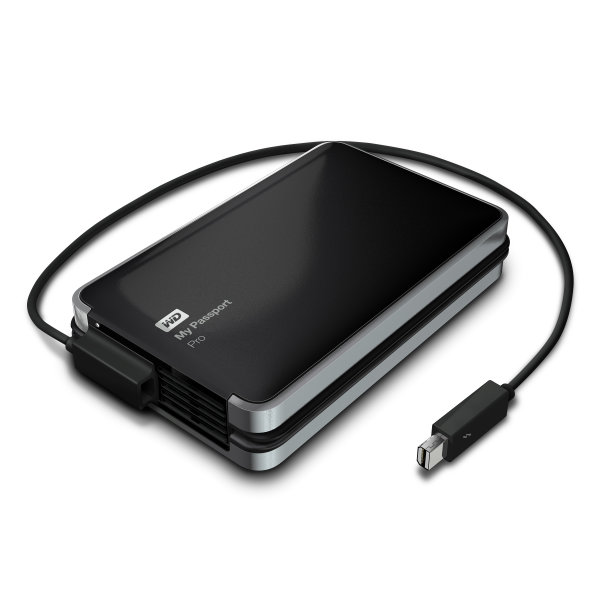
Western Digital announce My Passport Pro Thunderbolt Raid storage

10 Apr

Western Digital have just announced a new portable storage solution for photographers and digital content creators! The My Passport® Pro Thunderbolt Raid, the first portable, Thunderbolt™-powered dual-drive solution, comes in a 2 or 4TB  flavour and has the cable built into the drive as you can see in the photographs below.

My Passport Pro_thunder2_HigRes

Here’s the official press release;

SYDNEY, Australia, – Mar. 28, 2014 – WD®, a Western Digital (NASDAQ: WDC) company, and world leader in storage solutions for the connected life, today introduced My Passport® Pro, the first portable, Thunderbolt™-powered dual-drive solution, providing creative professionals and enthusiasts high performance and capacity in a truly mobile solution. For Mac systems, My Passport Pro has user-selectable RAID functionality to deliver needed performance for the most demanding applications in the field, without the need for power adapters or extra cables. My Passport Pro is available in 2 TB and 4 TB capacities.

“The only Thunderbolt dual-drive solution that’s bus-powered, WD’s My Passport Pro enhances the workflow of mobile creative professionals by providing fast transfers and data protection for the large amounts of digital content they generate outside the studio,” said Jim Welsh, executive vice president of branded products and worldwide sales, WD. “From photographers, videographers and musicians to graphic designers and architects, people who depend on portable storage for their livelihood will find My Passport Pro defines a new level of performance, reliability and especially portability.”

“Thunderbolt™ technology makes new approaches possible for high-performance workflows,” said Jason Ziller, Intel’s Director of Thunderbolt Marketing. “By combining dual storage drives on a portable, bus-powered device, the My Passport Pro from WD is a uniquely powerful storage solution with high capacity for today’s demanding users.”
Directly powered via the integrated Thunderbolt cable — a design unique to WD — performance of My Passport Pro clocks in at speeds up to 233 MB/s, providing super-fast transfer, edit and backup capabilities. Another key feature of the dual-drive My Passport Pro is its user-selectable RAID function, which lets users choose data striping (RAID 0) for high performance or mirroring (RAID 1) for data redundancy, depending on the user’s needs. Superior to both FireWire 800 and USB 3.0, the integrated Thunderbolt technology of My Passport Pro makes video manipulation quick and easy—with the ability to copy a 22 GB high-definition video file in half the time typically required by a USB 3.0 drive working in RAID 0 format.

Consisting of two 2.5-inch hard drives housed in a sleek aluminium enclosure, My Passport Pro is thoroughly shock-tested for extra durability to perform reliably when working on the go.

simon_pollock_wd_my_passport_pro_intro

Here’s what I think;

I’ve had the “My Passport Pro” for a few days now and this is by no means enough time to fully get used to working with a new device, but having worked with storage of all different kinds for so long, it’s enough to get a good feeling about something. Now I just want something to fulfill a certain storage need that I have, so I was very impressed when the WD team pulled out this little beast and handed it to me over a nice chicken schnitzel sandwich (yes, really). The build is solid with little rubber feet to keep it steady, and a fan that’s built in to keep the temperature within its working range. The fan doesn’t come on much – I’ve had the drive sitting running for a couple of days, and even under a lot of load it hasn’t activated – nice and quiet.

I have it configured to speedy Raid 0 for now, checking out the performance of the drive. The 2TB version is going to be more than enough for almost any shoot, even when setup in Raid 1 (mirrored) giving you just under 1TB of useable space. The real test of this device will be in a couple of months when I take it to Israel for a week long photo tour with Kinetis (and our very own dPS writer Oded Wagenstein) and will be writing about the drive and how it performs along the way!

gtvone_wd_my_passport_pro

The My Passport® Pro has filled a gap in my workflow and has filled it nicely – time will tell in terms of drive stability and build quality, nothing beats three copies of important content, but a mirrored raid disk in the field is a great start.

You can buy one of these little beauties on Amazon:

The post Western Digital announce My Passport Pro Thunderbolt Raid storage by Sime appeared first on Digital Photography School.


Digital Photography School

 
Comments Off on Western Digital announce My Passport Pro Thunderbolt Raid storage

Posted in Photography


Extreme X-Class Solar Flare Is Erasing Digital & Film Photos Worldwide

01 Apr

This mornings Solar flare corruption of my photography library

In a stunning event shocking NASA, the European Space Agency and the Russian Federal Space Agency the Sun flexed its power last night with an unprecedented X-Class solar flare (Update: some astrophysicists are contending it’s the first detected Z-Class solar flare). Unlike extreme solar events like the Carrington Event this solar storm has erased film and digital photos world-wide. Prints, film negatives and digital files have shockingly been affected equally being erased into oblivion. Neil deGrasse Tyson was quoted as saying,

iPhone Image Library Corrupted by Solar Flare

“The sun once again has humbled us with its power. With a single awe inspiring brush stroke of  projected radiation, the Sun has erased our visual history leaving us to remember moments of times past with only our heart and minds.”

Completely confused this morning seeing blank sheets of paper where my favorite family photos and wall prints once existed I rushed to my computer and phone to see the state of my digital libraries. Everything was gone. In a fit of amazement and cursing I rushed to check my slides and negatives from the 90′s and they too are now history being completely blank. In hindsight I now wish I savored the moments I photographed to better remember them verses my fuzzy memory of these moments as seen through a small view finder. Now that this fast moving storm of radiation has passed new photos are now again possible. Even though I am now again able to take photos seeing the fragility of our imaging technologies it begs the questions…

Is humanity’s creativity, existence & legacy what we see, feel, or leave behind?


Copyright Jim M. Goldstein, All Rights Reserved

Extreme X-Class Solar Flare Is Erasing Digital & Film Photos Worldwide

The post Extreme X-Class Solar Flare Is Erasing Digital & Film Photos Worldwide appeared first on JMG-Galleries – Landscape, Nature & Travel Photography.


Related Stories

  • Don’t Miss The Big Picture Natural World Photography Competition – Enclosure
  • Modern Day Astrolatry – Enclosure
  • In Defense of Pretty Pictures – Enclosure
Feed Ads by FeedBlitz
powered by ad choices


JMG-Galleries

 
Comments Off on Extreme X-Class Solar Flare Is Erasing Digital & Film Photos Worldwide

Posted in Equipment