RSS
 

Posts Tagged ‘Digital’

The Optimum Digital Exposure

29 Oct


One of the most popular articles on Luminous-Landscape is by Michael Reichmann Expose (to the) Right from 2003.  It’s an article that has been referenced numerous times and even today makes total sense.  Today, Bob DiNatale revisits this concept in his article The Optimum Digital Exposure.  It’s a different take on achieving a good exposure with today’s digital cameras.

Michael and Kevin are traveling this week.  Michael is headed to PhotoPlus East (PPE) and Kevin is headed to Scotland to lead a Rockhopper Workshop.  Michael will publish an update from PPE and Kevin will publish articles from Scotland (if the internet cooperates).  We will be back full force the week of November 10th.


The Luminous Landscape – What’s New

 
Comments Off on The Optimum Digital Exposure

Posted in News


Apps for Architects: 12 Handy Digital Tools for Home Design

27 Oct

[ By Steph in Design & Fixtures & Interiors. ]

Architect Apps Photomeasures 2

Remodeling your house, decorating a room or designing an entire structure gets a lot easier with a range of mobile apps that let you draw to scale, save measurements on top of photos, access thousands of inspirational images and more. These 12 handy tools will ensure that you ever buy a piece of furniture that’s too big for your space, lose the ideas you scrawled on paper or stand around staring at bedding wondering whether it’ll clash with your drapes again.

Photo Measures
Architect Apps Photomeasures 1

Save measurements right on your photos with the Photo Measures app. Snap images of rooms or objects and immediately save their exact dimensions so you can be sure whether furniture will fit in a given space, or give contractors all the info they need for a renovation.

Phaidon Design Classics
Architect Apps PHaidon Design Classics

Architect Apps Phaidon Design Classics 2
You can buy the 10-inch-thick Phaidon Design Classics book for $ 175, or just get the iPad app for $ 19.99. Either option will give you access to 1,000 iconic design projects, but the app is definitely more portable. It’s a handy reference for anyone trying to style an interior, providing visuals for everything from Eames chairs to antique glassware.

Remodelista
Architect Apps Remodelista

Sort through thousands of inspirational interior design images, save them to your own customized folders and share them with the Remodelista app for iPad, iPHone and Android. It puts the entire archive of Remodelista.com posts at your fingertips, along with a list of products featured in each post.

Penultimate
Architect Apps Penultimate

Architect Apps Penultimate 2

Want the ease and comfort of writing on paper, with the search functions and shareability of digital? The Penultimate app is a replacement for your physical notebook, allowing you to write and sketch with a stylus. Even better, you’ll never lose another important note again – everything you create in the app is synched to your Evernote account automatically so you can view, search and share them across a range of devices.

Next Page – Click Below to Read More:
Apps For Architects 12 Handy Digital Tools For Home Design

Share on Facebook


[ By Steph in Design & Fixtures & Interiors. ]

[ WebUrbanist | Archives | Galleries | Privacy | TOS ]


WebUrbanist

 
Comments Off on Apps for Architects: 12 Handy Digital Tools for Home Design

Posted in Creativity


Rounded Market Hall: Huge Digital Mural Wraps 118,000 Sq Ft

15 Oct

[ By WebUrbanist in Architecture & Public & Institutional. ]

market hall night view

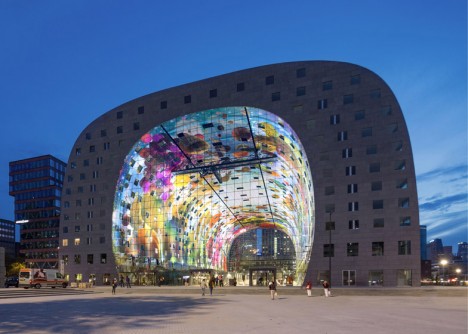
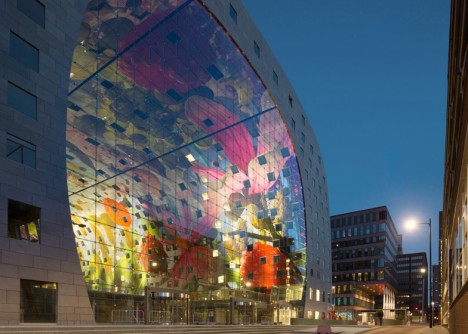
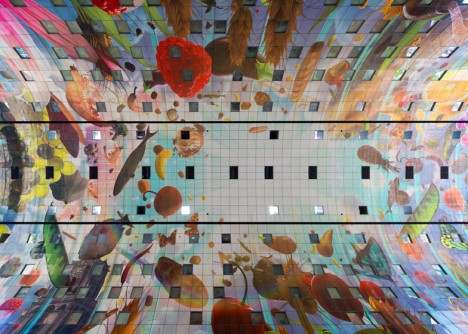
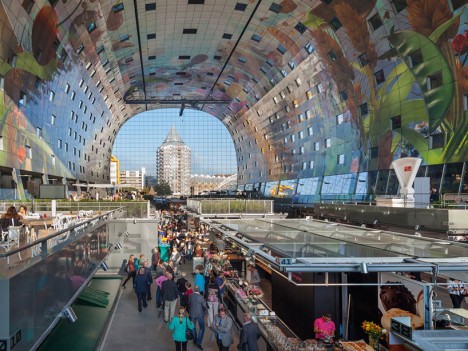
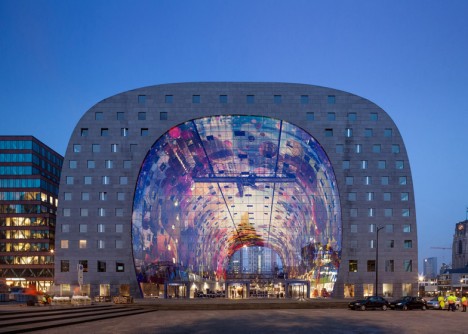
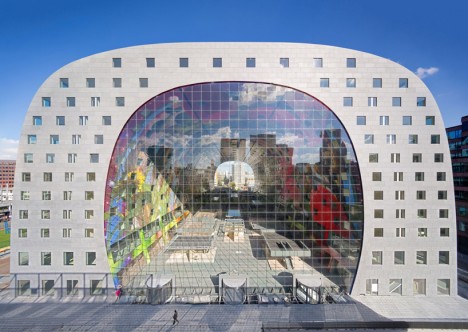
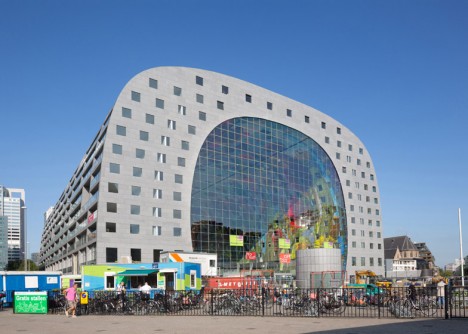
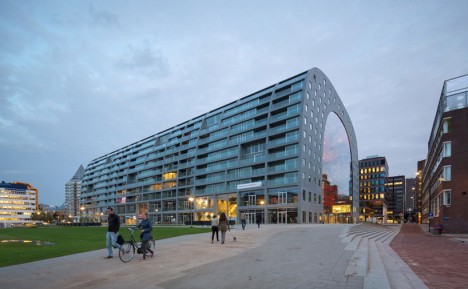
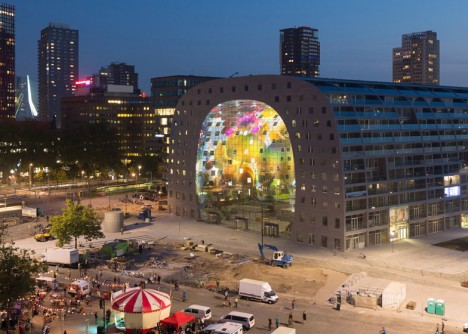
A massive mixed use project in Rotterdam by MVRDV, this newly-opened building wraps vertically around an open central space but also features one of the largest works of art in the Netherlands: an incredible digital display spanning over 100,000 square feet of the interior surface area.

market hall lit up

market hall ceiling shot

markte hall shop view

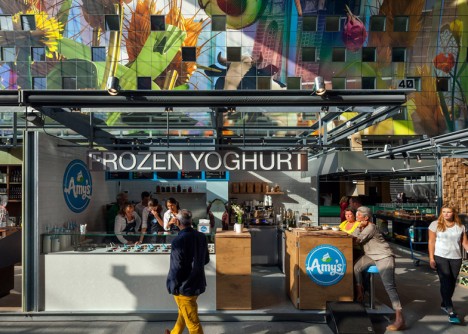
The closed-but-open solution is a response to new Dutch legislation requiring produce markets to be enclosed, balanced with a desire to keep an open-air feeling to the space.  The resulting design with its vibrantly-colored displays makes the place seem inviting from the outside, drawing people in to visit the nearly 100 shopping stalls within. The complex is expected to have over 5 million annual visitors.

market hall interior display

market hall flowers fruits

market hall apartment view

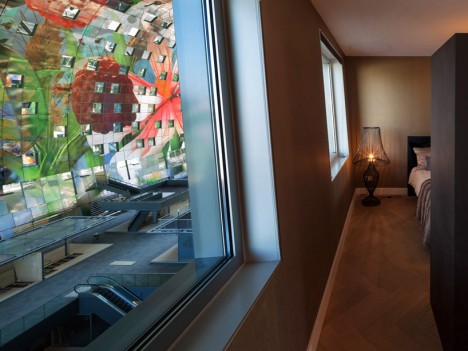
Glazed on two sides with transparent glass, apartments wraps the others sides and top of the structure, giving over 200 residents views down into the market below as well as balconies toward the outside world on the exterior skin of the structure. The suspended glass panels are held in tension by thin wires, making the supports as invisible as possible while providing protection against strong winter winds.

market hall at nights

market hall inside levels

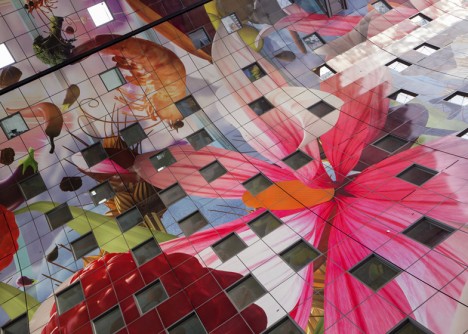
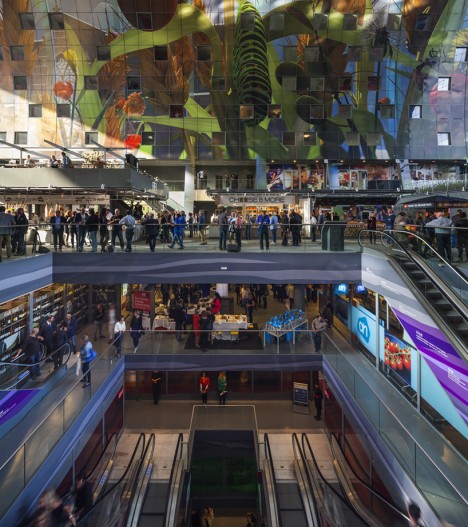
From the firm’s press release: “The large mural which covers the vaulted interior, ‘Cornucopia’ by artists Arno Coenen and Iris Roskam has a total surface of 11.000 m² and shows oversized images of market produce which can be bought at the market, as well as flowers and insects referencing the work of Dutch still life masters from the 17th century. In order to achieve the required sharpness, the image was rendered by Pixar software. It was printed onto perforated aluminium panels, then attached to acoustic panels for noise control. The print resolution of the art work is comparable to a glossy magazine.”

market hall facade windwos

market hall urban context

markte hall exterior view

market hall night angle

More about the layout: “Markthal comprises 96 fresh food stalls and shop units, ranging from Rotterdam based businesses and market vendors to established local heroes. They will offer a diverse range of products: from fresh fish to game, from cappuccino to cheese, from Chinese to Dutch, from ice cream to local produce, from bargains to exclusive slow food. The ground and first floor accommodate 20 retail units, restaurants and cafés. All shops are food-related and include a crockery- and a wine shop. A supermarket is located on the 1st underground level allowing the shoppers to complete their shopping under one roof.”

Share on Facebook


[ By WebUrbanist in Architecture & Public & Institutional. ]

[ WebUrbanist | Archives | Galleries | Privacy | TOS ]


WebUrbanist

 
Comments Off on Rounded Market Hall: Huge Digital Mural Wraps 118,000 Sq Ft

Posted in Creativity


HTC introduces the RE digital camera

10 Oct

Smartphone maker HTC has introduced its first stand-alone camera in the shape of the HTC RE. With no viewfinder, screen or controls other than a shutter release button, the RE is designed to be used either as an independent still and video camera, or as a connected device controlled via a smartphone. Housing a 1/2.3-inch CMOS sensor that features 16 million pixels, the RE uses a fixed-focus f/2.8 lens that HTC says has a 146 degree angle of view – equivalent to a 6.5mm focal length on a full frame body. Read more

Articles: Digital Photography Review (dpreview.com)

 
Comments Off on HTC introduces the RE digital camera

Posted in Uncategorized


Canon Digital Photo Professional software update boosts camera support

01 Oct

Canon’s Digital Photo Professional software, commonly referred to as DPP, has just received updates to versions 4.0.2 and 3.14.41. Both of these were joined by updates to a roster of the company’s other photography-centric software, including the EOS Utility, EOS MOVIE Utility, and Picture Style Editor. Read more

Articles: Digital Photography Review (dpreview.com)

 
Comments Off on Canon Digital Photo Professional software update boosts camera support

Posted in Uncategorized


Western Digital launches My Passport Wireless hard drive with built-in SD card reader

06 Sep

Western Digital has launched a new wireless-enabled hard drive that uniquely features a built-in SD card reader. The My Passport Wireless might be coming to the market after other wireless options like the LaCie Fuel drive, but it’s the inclusion of the SD card reader that makes this product of particular interest to photographers. Read more

Articles: Digital Photography Review (dpreview.com)

 
Comments Off on Western Digital launches My Passport Wireless hard drive with built-in SD card reader

Posted in Uncategorized


Extreme X-Class Solar Flare Is Erasing Digital & Film Photos Worldwide

22 Aug

This mornings Solar flare corruption of my photography library

In a stunning event shocking NASA, the European Space Agency and the Russian Federal Space Agency the Sun flexed its power last night with an unprecedented X-Class solar flare (Update: some astrophysicists are contending it’s the first detected Z-Class solar flare). Unlike extreme solar events like the Carrington Event this solar storm has erased film and digital photos world-wide. Prints, film negatives and digital files have shockingly been affected equally being erased into oblivion. Neil deGrasse Tyson was quoted as saying,

iPhone Image Library Corrupted by Solar Flare

“The sun once again has humbled us with its power. With a single awe inspiring brush stroke of  projected radiation, the Sun has erased our visual history leaving us to remember moments of times past with only our heart and minds.”

Completely confused this morning seeing blank sheets of paper where my favorite family photos and wall prints once existed I rushed to my computer and phone to see the state of my digital libraries. Everything was gone. In a fit of amazement and cursing I rushed to check my slides and negatives from the 90′s and they too are now history being completely blank. In hindsight I now wish I savored the moments I photographed to better remember them verses my fuzzy memory of these moments as seen through a small view finder. Now that this fast moving storm of radiation has passed new photos are now again possible. Even though I am now again able to take photos seeing the fragility of our imaging technologies it begs the questions…

Is humanity’s creativity, existence & legacy what we see, feel, or leave behind?


Copyright Jim M. Goldstein, All Rights Reserved

Extreme X-Class Solar Flare Is Erasing Digital & Film Photos Worldwide

The post Extreme X-Class Solar Flare Is Erasing Digital & Film Photos Worldwide appeared first on JMG-Galleries – Landscape, Nature & Travel Photography.


Comments

  • By: A Roundup of April Fools' 2014 Jokes in the World of Photography by A Roundup of April Fools’ 2014 Jokes in the World of Photography
  • Indeed! Thanks for the comment by jimgoldstein
  • Glad you enjoyed the post Russ by jimgoldstein
  • Thanks! by jimgoldstein
  • Beautiful abstracts Jim! Like something your son (I mean sun) … by Russ Bishop
  • Plus 3 more…

Related Stories

  • Wilderness Protection – Only As Strong As The Wilderness Act
  • Wilderness Protection – Only As Strong As The Wilderness Act – Enclosure
  • The Insightful Landscape – A New Landscape Photography Book


JMG-Galleries

 
Comments Off on Extreme X-Class Solar Flare Is Erasing Digital & Film Photos Worldwide

Posted in Equipment


Where’s the red dot? Leica releases new M-P Digital rangefinder

22 Aug

Under the slogan ‘Perfect understatement’ Leica has quietly released a new M-series rangefinder, the M-P Digital (240). Featuring a full-frame 24MP CMOS sensor and 2GB of built-in RAM, Leica claims that the new M-P digital is ‘twice as fast’ as the standard M (Typ 240). The original Leica MP (no hypen) announced in 2003, took the film M-series back to its 1950s roots by featuring unflashy ergonomics inspired by the M3. The new model updates the same approach, omitting the iconic Leica red dot. Click through for more details.

Articles: Digital Photography Review (dpreview.com)

 
Comments Off on Where’s the red dot? Leica releases new M-P Digital rangefinder

Posted in Uncategorized


19 August, 2014 – Tribute To Uwe Steinmueller & Digital Zone System

20 Aug

Today Alain Briot shares a tribute to recently departed friend and fellow website master that many of have known for years Uwe Steinmueller.  We are deeply saddened by Uwe passing and thank Alain for helping us remember the good times and contributions made by Uwe.

We also share today and article by Christopher Schneiter – The Digital Zone System.  Christopher writes on the concept of how the analog idea of a zone system can be equated to digital photography today.

Rockhopper Workshops, the exclusive provider of photography workshops for Luminous-Landscape is presently running a workshop in the Palouse.  This is beautiful area of southeast Washington state.  The harvest is happening right now.  Check the Rockhopper Site’s blog over the next few days for updates.  The workshop officially kicked off Monday afternoon.


The Luminous Landscape – What’s New

 
Comments Off on 19 August, 2014 – Tribute To Uwe Steinmueller & Digital Zone System

Posted in News


The Secret to Capturing the Best Image Quality with Your Digital Camera

16 Jul

Many modern digital cameras boast incredible ISO speeds. Where ISO 400 or 800 was the top speed in the film era, usually accompanied by grain the size of golf balls, today’s digital cameras can give you top ISOs of 6400, 12,800, 25,600 or even higher. Camera makers boast of these high speeds and use this information to increase camera sales.
Photodune 2896107 digital camera xs

Inexperienced photographers will be tempted to jack up the ISO on their new cameras, and keep it there. However, just because the feature is there doesn’t mean you should use it all the time. In fact, the best practice is to keep your camera set at its lowest ISO setting by default so you will capture the best possible image.

With experience you will learn that higher ISO settings are more appropriate when shooting sports, street photography, photojournalism, and low-light situations where you need to stop action. Low ISO images will be cleaner (no digital noise), have a wider dynamic range (more shadow and highlight details), and produce better color depth (smoother color transitions). This is a better choice for travel, landscape and portrait photography, where good detail and accurate skin tone are important.

Let’s geek out

There are two ways you can understand the effect of low versus high ISO on digital images: by reading lab test results, and by looking at sample images. DxOMark Labs is a great resource for sensor tests. It’s an independent lab that tests most current digital camera sensors and publishes the results on their web site. For sample images, you can make your own. Continue reading to learn more.

Digital noise

Run any number of digital cameras through a battery of image quality tests and you’ll see a clear pattern emerge. At the lowest ISO setting, the signal to noise ratio, expressed in decibels (dB), is highest. That’s good, it indicates the lowest digital noise. As you increase ISO, the dB level decreases. The lower the dB level, the higher the digital noise, which degrades the image.

By lmvphoto

Example: If a Canon EOS 70D has a 41dB result at ISO 100, 30dB at ISO 1600 and around 17dB at its top ISO of 25,600, the image with the higher dB will have less noise than an image with a 17dB measurement.

Note: keep in mind that most images when viewed at the recommended distance will appear clean as low down as 30dB.

Dynamic range

Similarly, the dynamic range of a digital camera is widest at its lowest ISO. Depending on the camera, that range can be anywhere from 9 stops to around 14. Typically, with DSLRs, it is around 11-12 stops. In carefully exposed high-contrast scenes, both highlights and shadows will have more detail at low ISOs than at high speeds. In test result charts, dynamic range starts to decrease in more of a curve than a straight line; typically the first few ISO settings are acceptable, but once you pass ISO 800 or 1600 (depending on the camera) the range becomes more limited.

Dynamic range is acceptable at 10 stops or higher. Below that number shadows and/or highlights will become blocked up, especially in contrasty scenes.

Tip: RAW image capture is best for dynamic range. You can use the shadow and highlight sliders in your RAW image editor to reveal even more details in both the shadows and highlights, effectively stretching your camera’s dynamic range. The better your image’s dynamic range is, the more information you can reveal this way.

Tone and color

You may have noticed that some images that show the sky or other areas that should have smooth, subtle transitions, instead show subtle strips of color as the shading changes. This is called banding, and that’s what happens when the tonal range is limited. This is usually an artifact from compressing an image too much when preparing it for web use, but it happens in a more subtle form in photos that come straight out of the camera and, as above, this phenomenon is more apparent in high ISO images, but is imperceptible in low ISO photos.

A camera’s ability to capture subtle changes in tone and color (both expressed in bits) is best at its lowest ISO, and decreases steadily throughout the ISO range. Most DSLRs have a 21-24-bit maximum for color sensitivity, and it can degrade to half of that. Tonal range usually peaks at around 8-10 bit.

Testing your camera in the real world

Enough of the geeky stuff, let’s look at some pictures to see how this plays out in the real world. While the images here were shot with a Canon 7D, you can run your own tests:

  • With the camera on Program mode, take a sequence of photos
  • Start with your lowest ISO and work your way up to the highest
  • Mount the camera on a tripod to avoid shake, which is an unwanted additional variable, and turn off the anti-shake feature (Image Stabilization IS on Canon or VR on Nikon)
  • Shoot both landscapes and people pictures so you can see the effects ISO has on each
  • Make prints at your largest print size and see if you notice the distance at a typical viewing distance

Here are two image comparisons at a range of ISO settings.

Portraits show the difference

The effect of changing ISO is most obvious when you photograph people. In this example, the model was photographed on a sunny day while holding a reflector, against a low-key (darker) background. As the ISO setting is raised, the effect on her skin becomes obvious. Camera: Canon 7D with Canon 85mm f/1.8 lens.

ISO100 portrait full 600

ISO 100

ISO100 portrait detail 600

ISO 100

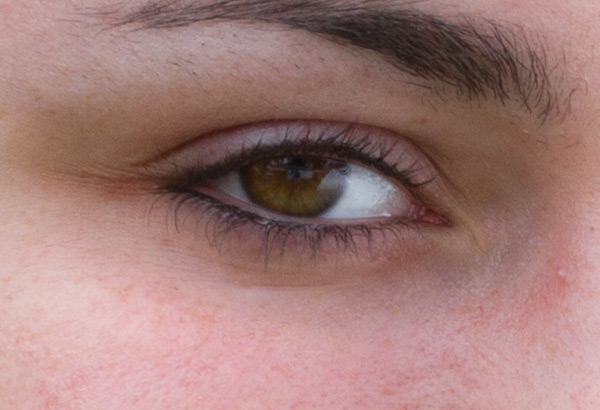
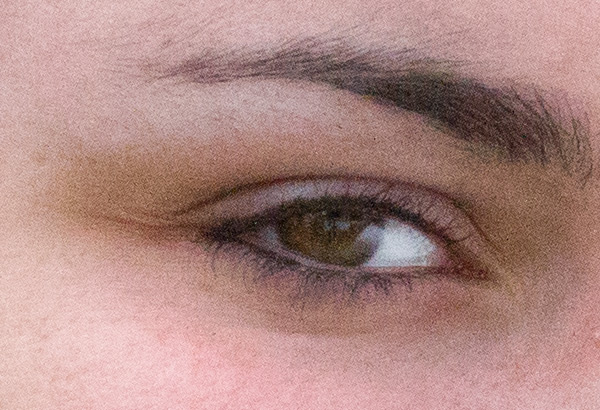
At ISO 100 (above), skin tone is accurate, with good contrast. In the 100% detail shot, there’s good, natural falloff of light, showing a wide range of tonality and good detail in the darker areas. You can especially see this in the eyes.

ISO800 portrait full 600

ISO 800

ISO800 portrait detail 600

ISO 800

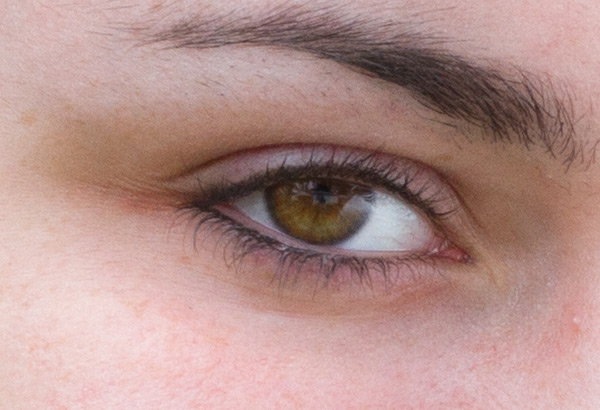
At ISO 800 there is a subtle increase in contrast, an indicator that dynamic range has decreased slightly. Noise has not yet become apparent in the detail photo.

ISO1600 portrait full 600

ISO 1600

ISO1600 portrait detail 600

ISO 1600

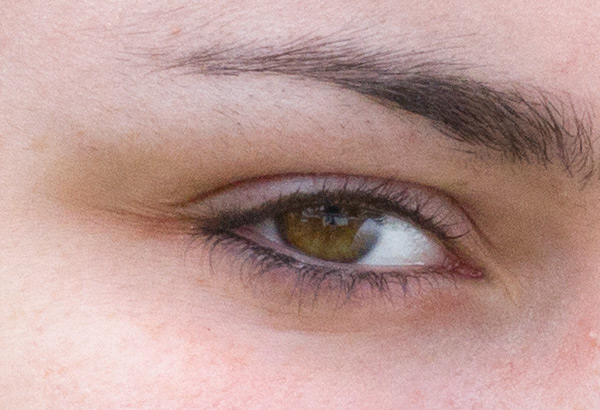
By ISO 1600 there is a little more contrast, but again, it is a subtle change. However, you can see the noise in the blow-up, and the smooth gradation from light to shadow is starting to become a bit rougher, indicating that the tone has degraded.

ISO3200 portrait full 600

ISO 3200

ISO3200 portrait detail 600

ISO 3200

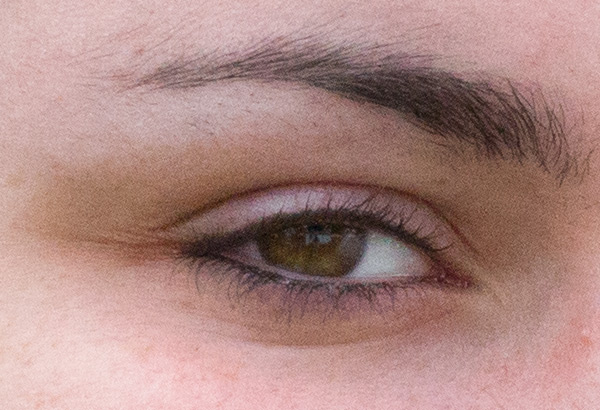
ISO 3200, at screen resolution it may still be hard to see the change when you compare this image to the one shot at ISO 100, but by ISO 3200 there is a pronounced decrease in highlight and shadow detail, and rougher color and light transitions.

ISO6400 portrait full 600

ISO 6400

ISO6400 portrait detail 600

ISO 6400

By ISO 6400, the Canon 7D’s highest resolution setting, even at screen resolution a difference is visible. If you look in the details of the shirt and hair, you can see that shadows are more blocked up. A quick glance at the 100% detail is all you need to see the graininess and reduced range of color and tone.

Bonus pointer: The advantage of shooting RAW

ISO100 portrait optimized 600b

Optimized

You can increase an image’s dynamic range by using your RAW image editor’s shadow and highlights sliders, which reveals more information in the highlights, and especially in the shadows. Compare this version of the ISO image with the ones above and notice how much more detail is visible in the shadows, thanks to tweaks done in the RAW image editor.

Landscape subtleties

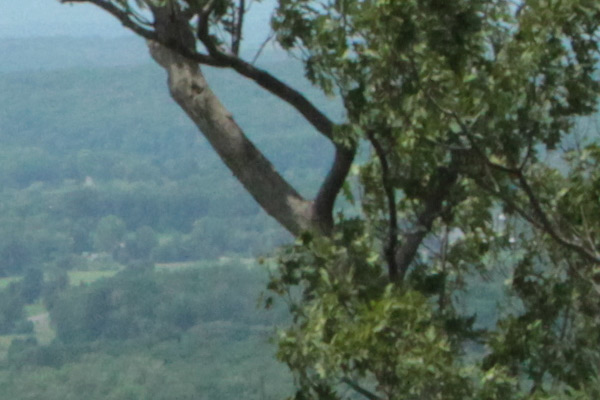
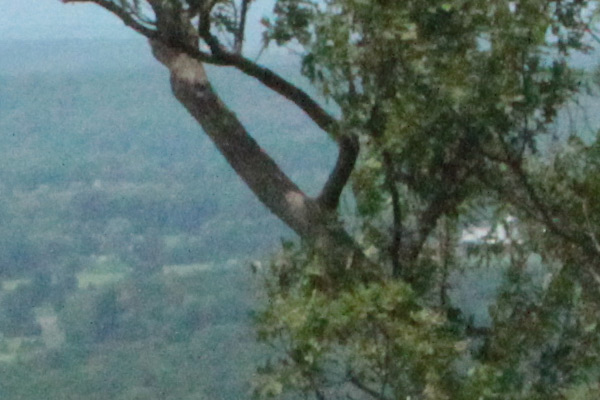
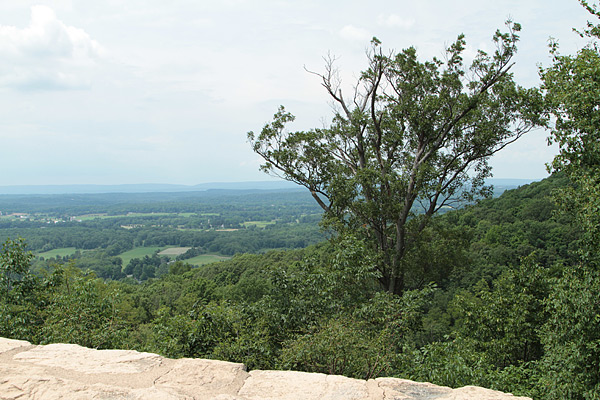
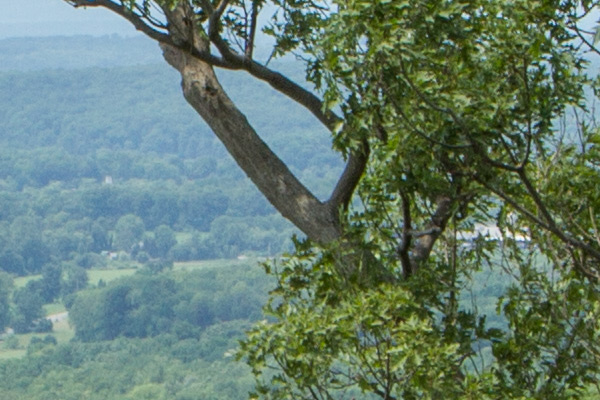
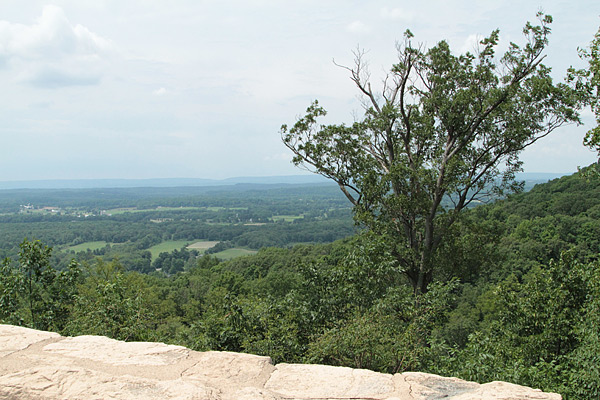
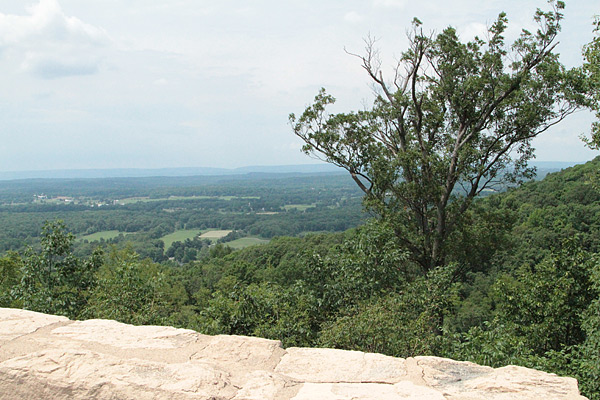
A scenic lookout in western New Jersey, shot in the middle of the day, at ISO 100, 800, and 3200 with a Canon 7D and Canon 24-70mm f/2.8L II USM zoom lens. While the dynamic range, tone and color only show minor differences here, the level of noise deteriorates at the faster speeds. After looking at these examples, you may wonder why anyone in their right mind would want to shoot above ISO 100 on a bright, sunny day. All samples are straight out of the camera.
ISO100 landscape sooc 600

ISO 100

At ISO 100, this is the full scene.
ISO100 landscape detail 600

ISO 100

In this detail of a 100% blow-up of the ISO 100 image, there is no apparent digital noise, as expected.
ISO800 landscape sooc 600

ISO 800

ISO800 landscape detail 600

ISO 800

At ISO 800, digital noise has started to become apparent in this 100% blow-up detail.
ISO3200 landscape sooc 600

ISO 3200

ISO3200 landscape detail 600

ISO 3200

By ISO 3200, digital noise is obvious, and the overall image quality has deteriorated. The graininess covers up the loss of color quality and tonality somewhat.
ISO100 landscape raw 600

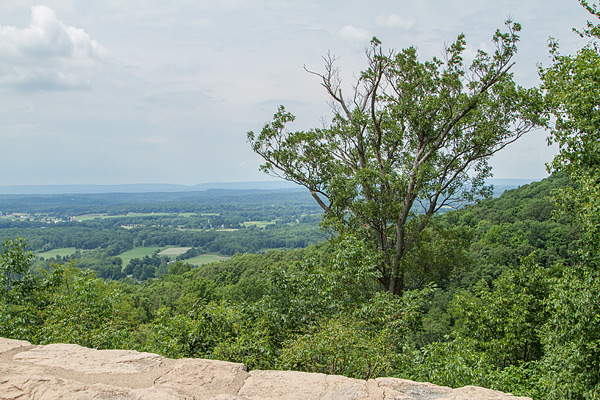
While the samples above are unadulterated JPEGs, what happens if you try to coax more detail out of a shot in RAW? You get more detail in the shadows and highlights. Compare this shot to the original and you’ll see more detail in the sky (highlights) and in the bark and branches of the tree (shadows) on the right.

Bottom line

The bottom line? There may be times when you must pump up your ISO settings, and it’s nice to know that you have that option. But when you are shooting in daylight under normal shooting conditions, you will bring back higher quality images when you shoot at, or near, your camera’s lowest ISO settings.

The post The Secret to Capturing the Best Image Quality with Your Digital Camera by Mason Resnick appeared first on Digital Photography School.


Digital Photography School

 
Comments Off on The Secret to Capturing the Best Image Quality with Your Digital Camera

Posted in Photography