RSS
 

Posts Tagged ‘Details’

How to Use Photoshop to Enhance Details in Your Photos

24 Jul

Do you think that your images lack details? Here is the way to extract the extra details that are already present in your photos, but are not visible, using Photoshop. Some methods like high pass sharpening will either give you a way too crunchy look or create halos around the edges of the different elements in your image. However, this Continue Reading

The post How to Use Photoshop to Enhance Details in Your Photos appeared first on Photodoto.


Photodoto

 
Comments Off on How to Use Photoshop to Enhance Details in Your Photos

Posted in Photography


All about the details: Hasselblad X1D pre-production samples

07 Jul

At a recent Hasselblad event in London I got some time with the new 50MP Hasselblad X1D mirrorless camera. The bodies are still very much at the pre-production stage, and many of the proposed features that will be available when the camera goes on sale have still to be implemented.

The unit I used didn’t have touch AF activated, so focusing had to be done with the central AF point or manually, and the Nikon-based flash system was not installed. Hasselblad also made it very clear that the AF speed experienced with this camera did not represent what the production models would manage, and that the image quality is still far from finished. The company has however agreed to let us publish some sample shots to allow readers to get an idea of the sort of resolution and colors the camera can achieve.

I shot Raw and JPEG files and processed them through both Adobe Camera Raw and Hasselblad’s own Phocus software. The difference in color, brightness and general quality is quite different between the two applications, and the JPEGs shown here are from Raw files processed in Phocus. The images have been approved by Hasselblad for publication, but they stress that the minor faults found will not be present in images from the production models. Of the twelve images I sent for approval only one was rejected.

As focusing on off-center subjects meant using the central AF point, locking the focus and recomposing, you’ll note that some images have the focus on the farther eye rather than the closer, but I’ve left these in as they still demonstrate other elements of the image quality. In other shots I focused manually and found that the 2.36-million-dot EVF is of excellent assistance and makes finding focus quite easy.

The camera has a large grip but it feels very secure in the hand, and the whole system is comfortable to hold and to use either to the eye or at arm’s length using the live view screen. The operating system will take a while for DSLR owners to get used to, but it matches the system used on the H6D so current Hasselblad customers will feel at home straight away.

I used the Hassleblad XCD 90mm F3.2 lens that delivers an angle of view we’d associate with a 71mm on a 35mm camera system. Shots taken at ISO 200 were lit with broncolor flash heads, and the ISO 400 and 1600 images were exposed with window light and a little tungsten fill.


Editor’s Note: Images have been sharpened to taste in Phocus software. That said, the fact that such high levels of sharpness can be attained with very little image noise cost is a testament to the light-gathering capability of larger, particularly Medium Format, sensors. 

Articles: Digital Photography Review (dpreview.com)

 
Comments Off on All about the details: Hasselblad X1D pre-production samples

Posted in Uncategorized


National Geographic details how it searches for altered photographs

06 Jul

The cover photo for National Geographic’s February 1982 issue featured a camel train in front of the Pyramids at Giza. Soon after publishing the issue, National Geographic was called out for having manipulated the image, altering it to place the pyramids closer together so that the horizontal photo would be better suited for the magazine’s vertical cover. Since then, National Geographic has been vigilant in monitoring for photo alterations, the process of which it described in a recent issue.

Speaking about manipulated photos, National Geographic Editor in Chief Susan Goldberg said, ‘At National Geographic it’s never OK to alter a photo. We’ve made it part of our mission to ensure our photos are real.’

As part of that mission, the publication requires its photographers to submit raw files with their images; this goes for members who submit photos to Nat Geo’s ‘Your Shot’, as well. In the absence of these raw files, Goldberg says the company asks the photographer ‘detailed questions about the photo.’ As well, the company’s director of photography Sarah Leen explains, ‘We ask ourselves, Is this photo a good representation of what the photographer saw?’

Ultimately, though, what is acceptable to one person or organization may not be acceptable to another, something Goldberg highlighted with an example. One of the publication’s photographers recently had a photo rejected by a contest panel of judges who deemed the image overprocessed. National Geographic didn’t share that view, however, and published the photo itself.

Articles: Digital Photography Review (dpreview.com)

 
Comments Off on National Geographic details how it searches for altered photographs

Posted in Uncategorized


How to Use Photoshop to Enhance Details in Your Photos

29 Jun

Do you think that your images lack details? Here is the way to extract the extra details that are already present in your photos, but are not visible, using Photoshop. Some methods like high pass sharpening will either give you a way too crunchy look or create halos around the edges of the different elements in your image. However, this Continue Reading

The post How to Use Photoshop to Enhance Details in Your Photos appeared first on Photodoto.


Photodoto

 
Comments Off on How to Use Photoshop to Enhance Details in Your Photos

Posted in Photography


8 Quick Tips to Improve Your Photos of Architectural Details

19 May

When you’re photographing architecture, it’s easy to get lost in the grandeur of some buildings. That’s not a bad thing. That’s how they were designed, to be a spectacle. Cathedrals, palaces, opera houses, and state buildings are all examples of architecture that’s meant to impress.

That’s the bigger picture. In terms of photography, however, it can be better to pull away from the grand, and look for opportunities in the details. All buildings and structures are sums of smaller parts, and it’s these parts that can often lead to visually interesting photos. Photographing these details comes with its own set of considerations. This article will point out a few things to look out for while you are out and about looking for the smaller picture, and 8 tip on how to improve your photos of architectural details.

#1 – Low contrast lighting

If the weather is poor and the sky is a drab, colorless grey, it may seem like a less than worthwhile opportunity for photography. That may be the case for some subjects, however, overcast days provide incredibly soft light that is quite suited for architectural details. This softness allows you to capture subjects with a lot of fine detail, that would normally be lost in the contrast.

8-tips-architectural-details-2448

Overcast days will help to bring out details that would have been lost in contrast.

Likewise, keep an eye out for photo opportunities in areas of shade. You may need a tripod to take advantage here, but the extra effort is worth it.
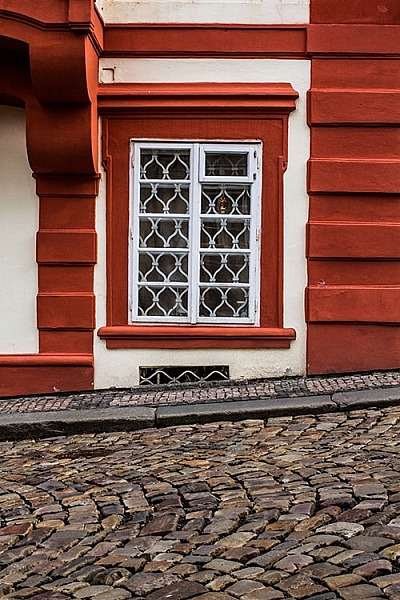
8-tips-architectural-details-1927

Photographing subjects in the shade provides soft, even lighting.

#2 – Side lighting

For bold images, look for scenes with strong light coming from the side. This type of lighting will increase contrast, especially in texture, and it will help to emphasize the shape of your subject.
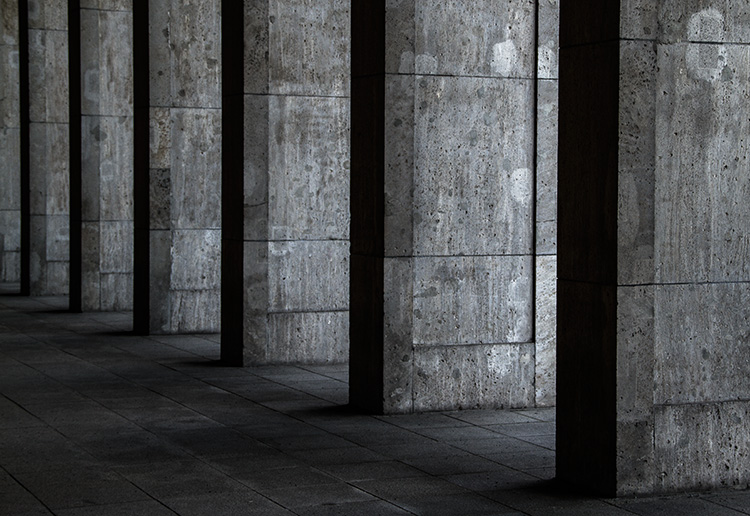
8-tips-architectural-details-9763

Side lighting helps to emphasise texture and shape.

#3 – Patterns in light and shadow

Pay close attention to how light falls on various subjects. When you’re photographing details, shadows and highlights can, themselves, become an important compositional element.
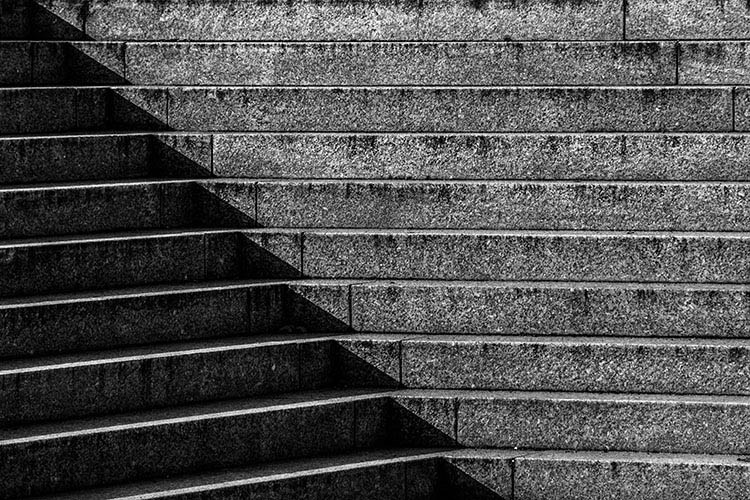
8-tips-architectural-details-9709

Shadows and highlight can become graphic elements in their own right.

#4 – Patterns

8-tips-architectural-details-1864

Repeating patterns can make for bold imagery.

To me, the best part of photographing architectural details is the wealth of compositional possibilities. Man-made structures are full of patterns and shapes that can be exploited for photos. Take advantage of them by filling the frame for an abstract feel.
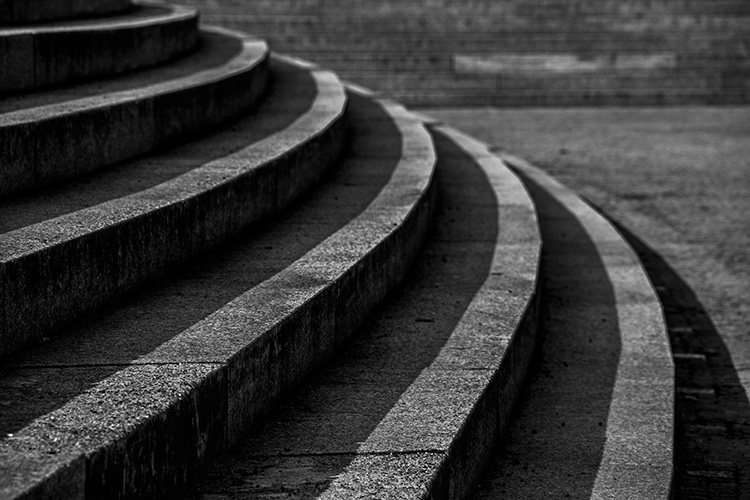
8-tips-architectural-details-9717

The curve in these stairs made for natural leading lines.

#5 – Reflections

For all of the wonderful architecture in the world, there’s at least as many drab and ugly buildings that appear to have little to offer photographers. They often do have something worth captuing, but it takes work to figure it out. One way to add interest to these subjects is to look for reflections. Reflections can add visual interest and color, to an otherwise lifeless and boring subject.
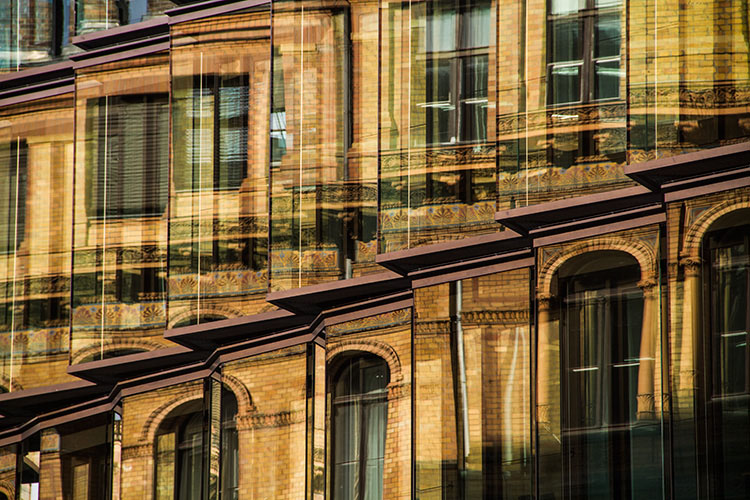
8-tips-architectural-details-9752

Reflections can add a boost to an otherwise lifeless scene.

#6 – Fixtures

It’s not always about the buildings, and only the buildings. Fixtures can often be overlooked, yet they can prove to be as compelling a subject as the architecture. When you’re considering a location, do look out for interesting fixtures like signs, light fittings, and security cameras.
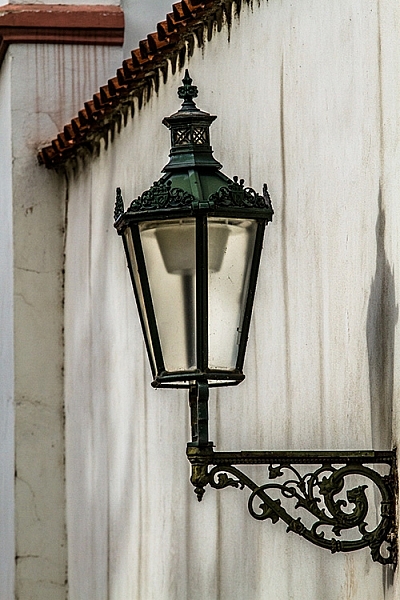
8-tips-architectural-details-1903

Keep an eye out for interesting fixtures that other may overlook.

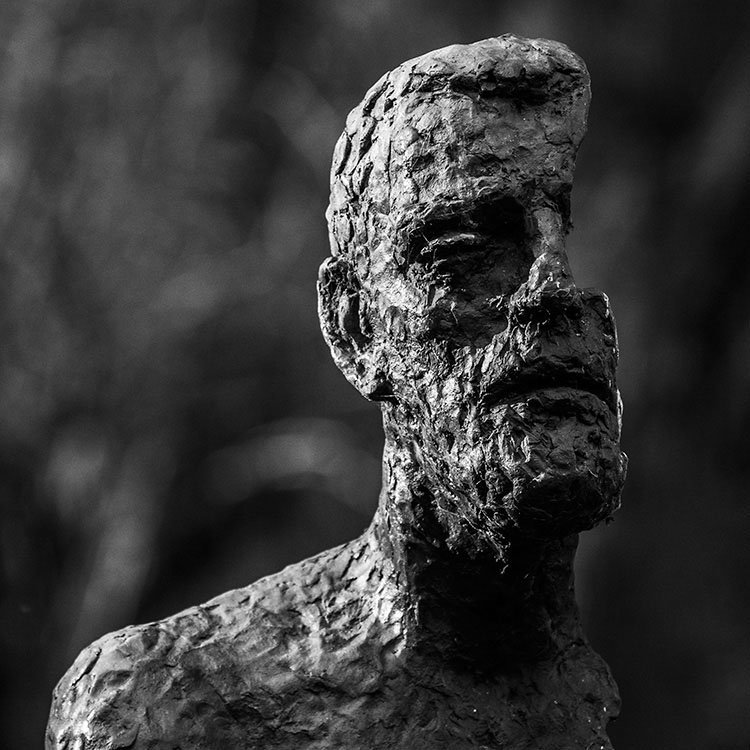
#7 – Statuary and monuments

When you think of architecture, statues are probably the last thing on your mind. However, they are a key element to a lot of buildings and monuments. For example, the Charles Bridge in Prague has 30 large, and very detailed, statues that beg to be photographed.
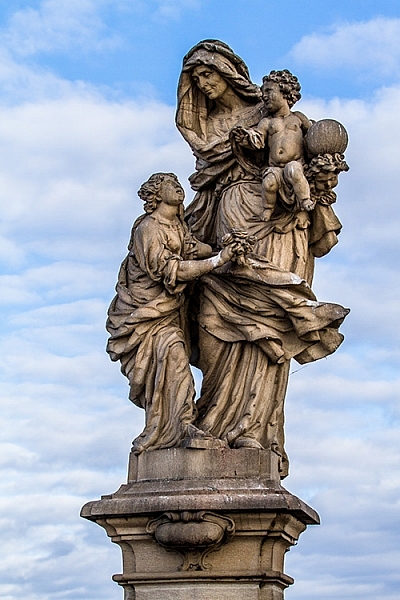
8-tips-architectural-details-2250

Statues are a common architectural features. Don’t neglect them with your camera.
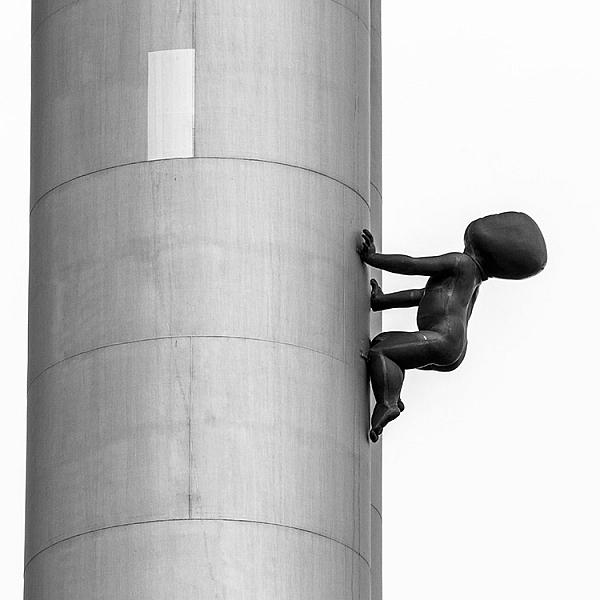
8-tips-architectural-details-2470

#8 – Black and white

This last tip is for when you’re back at home. If your images are full of texture or strong patterns, consider a black and conversion. Stripping the color element out of those images will help to emphasize your compositional elements, and can lead to much stronger photos.
8-tips-architectural-details-2595

Black and white processing can help to emphasise texture in a scene.

Experiment

These tips are hardly exhaustive, and only scratch the surface of the possibilities available to you when photographing architectural details. If there’s something man-made, there’s a photograph to be had somewhere. Just keep going until you find it.

Do you have a tip of your own? Please share it below!

googletag.cmd.push(function() {
tablet_slots.push( googletag.defineSlot( “/1005424/_dPSv4_tab-all-article-bottom_(300×250)”, [300, 250], “pb-ad-78623” ).addService( googletag.pubads() ) ); } );

googletag.cmd.push(function() {
mobile_slots.push( googletag.defineSlot( “/1005424/_dPSv4_mob-all-article-bottom_(300×250)”, [300, 250], “pb-ad-78158” ).addService( googletag.pubads() ) ); } );

The post 8 Quick Tips to Improve Your Photos of Architectural Details by John McIntire appeared first on Digital Photography School.


Digital Photography School

 
Comments Off on 8 Quick Tips to Improve Your Photos of Architectural Details

Posted in Photography


Leica announces price and details of its 35mm F1.4 lens for the T system

24 Mar

$ (document).ready(function() { SampleGalleryV2({“containerId”:”embeddedSampleGallery_3566641259″,”galleryId”:”3566641259″,”isEmbeddedWidget”:true,”standalone”:false,”selectedImageIndex”:0,”startInCommentsView”:false,”isMobile”:false}) });

Leica has formally announced the specifications and price of the Summilux-TL 35mm F1.4 lens for its T-series mirrorless camera. The lens, which is available now, will cost $ 2395/£1650. Leica says that the lens performs at its best wide open, with maximum resolution achieved at F1.4 – though its own MTF charts suggest this is only true in the center of the imaging circle.

Designed to suit the Leica T’s compact footprint, the Summilux-TL F1.4 can also be used on the Leica SL in crop-sensor mode.

Made with a total of 12 elements in 8 groups and a closest focus distance of 0.4m, the lens acts as a standard focal length for the APS-C sensor of the T. Focus can be achieved manually as well as in auto mode, and the smallest aperture on offer is F16.

The lens measures 77 x 70mm/3.0 x 2.7in, weighs 428g/15oz without the hood and will be available in anodized black or silver. Leica originally announced that it would make the lens when it released firmware 1.4 for the T at the end of 2015. We should expect a Leica APO-Macro-Elmarit-TL 60mm F2.8 ASPH in the autumn.

For more information see the Leica website.


Press release:

LEICA SUMMILUX-TL 35mm f/1.4 ASPH.

Introducing a new reference lens in the APS-C system category

Leica Camera has today introduced a new addition to the Leica T Camera System portfolio – the Leica Summilux-TL 35mm f/1.4 ASPH. – an extremely fast prime lens with a classic focal length. Set to become the reference lens in the APS-C category, it offers exceptional imaging performance.

The Leica Summilux-TL 35mm f/1.4 ASPH. delivers maximum sharpness, and superb resolution and colour reproduction when shooting wide open, throughout its aperture range, and at all distances from its closest focusing limit to infinity. It also produces stunning pictures with that unmistakeable ‘Leica look’ and a unique and beautiful bokeh.

Considering the outstanding speed and extraordinary image performance, this 35mm lens is surprisingly compact – and, thanks to the internal focusing system, its overall length remains unchanged in use. Furthermore, the lens’ manual focusing ring enables the smoothest adjustments to be made when shooting.

As with all other Leica lenses, the Leica Summilux-TL 35mm f/1.4 ASPH. has been designed by Leica’s own specialists in Wetzlar, Germany, and represents a perfect union of optical and technical expertise. This combination of cutting-edge technology and the highest quality materials ensures consistently excellent results

As indicated by the ‘TL’ in its name, the Leica Summilux-TL 35mm f/1.4 ASPH. is the first of two new prime lenses for the Leica T Camera System that is fully compatible with the bayonet mount of the Leica T, as well as the L-mount of the Leica SL-System. The second TL lens, the Leica APO Macro-Elmarit-TL 60mm f/2.8 ASPH., will be available from Autumn 2016.

Availability and pricing

The Summilux-TL 35 mm f/1.4 ASPH. is available now in a choice of black or silver anodised finish from authorised Leica stockists in the UK, at a suggested retail price of £1,650 including VAT. A matching lens hood is also available at an SRP of £65 including VAT.

Additional information can be found at uk.leica-camera.com

Articles: Digital Photography Review (dpreview.com)

 
Comments Off on Leica announces price and details of its 35mm F1.4 lens for the T system

Posted in Uncategorized


‘Details matter’: Ian Goode on visual storytelling

06 Mar

Ian Goode has over 12 years of experience working in advertising, and until recently owned a production company that specialized in photo illustration and compositing. He has a keen eye for the subtle influences that details can have on an image as a whole, and on the story that it tells. In his PIX 2015 talk, he brings his perspective from advertising to the creation of any imagery, stressing the importance of storytelling in photography and the elements of a photo that can contribute to a strong narrative. 

Articles: Digital Photography Review (dpreview.com)

 
Comments Off on ‘Details matter’: Ian Goode on visual storytelling

Posted in Uncategorized


Miniature Museum: Scaled Scenes with Jaw-Dropping Details

26 Sep

[ By Steph in Destinations & Sights & Travel. ]

miniature museum 1

Before special effects went digital with CGI, part of the magic of movie making included artists laboring over tiny scaled-down sets, creating little worlds that look totally real until a normal-sized human hand appears in the scene. One museum in France lets visitors explore over 100 such sets, each standing out for its incredible realism. At Musée Miniature & Cinéma in Lyon, you can gaze upon these miniatures as well as a collection of over 300 full-scale movie props.

miniature museum 11

miniature museum 8

miniature museum 2


miniature museum 13

Painstaking attention is paid to textures and weathering in the miniature scenes, like a kitchen with cooking implements smaller than sewing needles, peeling floor tiles and grimy windows. A thick layer of dust covers the floor of a brick-lined underground storage space.

miniature museum 5

miniature museum 3


miniature museum 6

miniature museum 4

A dimly-lit hair barber shop boasts photos of Elvis on the walls, with stained towels crumpled on the counters. The lighting is half of the magic, often coming in through windows or illuminating only one small section of a scene so the rest remains shadowy and mysterious.

miniature museum 14

miniature museum 12

miniature museum 10

miniature museum 9

Pick up a magnifying glass and examine the museum’s 1,000-piece collection of arts and crafts in miniature, including stringed instruments, origami, micro paper art and other tiny delicate creations. Then, move on to the Cinema Collection, which “unveils all the tricks that are used by cinema magicians” like masks, prop guns and robotic dinosaurs. Walk onto scaled sets that are somewhere between miniatures and full-size, which made train crashes and spaceship scenes a lot easier to film.

miniature museum 15

miniature museum 16

The Musée Miniature & Cinéma is owned and curated by Dan Ohlmann, himself a famed miniaturist responsible for many of the scenes that can be found within the museum. You can even go ‘backstage’ to watch him and other miniature artists work on commissioned pieces and restore artifacts from famous films, like the giant Alien Queen body from the movie Alien vs. Predator.

Share on Facebook


[ By Steph in Destinations & Sights & Travel. ]

[ WebUrbanist | Archives | Galleries | Privacy | TOS ]


WebUrbanist

 
Comments Off on Miniature Museum: Scaled Scenes with Jaw-Dropping Details

Posted in Creativity


Olympus announces details of major firmware updates for E-M1 and E-M5 II coming November

16 Sep

Olympus unveiled the details of two fairly significant firmware updates, both of which will be available for download, for free, come November. The flagship Olympus OM-D E-M1 will receive firmware version 4.0. while the not even one-year-old OM-D E-M5 II will receive firmware version 2.0. Read more

Articles: Digital Photography Review (dpreview.com)

 
Comments Off on Olympus announces details of major firmware updates for E-M1 and E-M5 II coming November

Posted in Uncategorized


The Devil’s in the Details: Macro Photography for Beginners

14 Aug

The world around us, that which we often consider mundane, if we consider it at all, is infinitely detailed. The carpet beneath your feet, the grass in your front yard and along the sidewalk you stroll down each day, the corners of your cupboard behind the cereal boxes, all of these places contain mind-boggling facets and edges and curves, if Continue Reading

The post The Devil’s in the Details: Macro Photography for Beginners appeared first on Photodoto.


Photodoto

 
Comments Off on The Devil’s in the Details: Macro Photography for Beginners

Posted in Photography