RSS
 

Posts Tagged ‘Details’

Sigma 16mm F1.4 DC DN ‘C’: hands-on and additional details

28 Oct

Hands-on with new Sigma 16mm F1.4 DC DN | Contemporary

Sigma has used the Photo Plus Expo show in New York as a launchpad for an all-new lens – the 16mm F1.4 DC DN | Contemporary is a fast, high-quality prime for cropped-sensor Sony E-mount and M43 cameras.

In person, the new lens is a relatively small, but beautifully well-made prime that fills a useful gap in focal lengths for both systems. On a Sony E-mount APS-C format camera, it is equivalent to 24mm, while on a Micro Four Thirds ILC it becomes an effective 32mm medium-wide.

Hands-on with new Sigma 16mm F1.4 DC DN | Contemporary

Sigma claims that despite being a ‘C’ (Contemporary) class lens, the new 16mm should have performance in line with the company’s premier ‘Art’ series. As far as build quality is concerned, that’s definitely true. Mechanically, this lens is gorgeous – something that is exemplified in the large, very smooth manual focusing ring.

Hands-on with new Sigma 16mm F1.4 DC DN | Contemporary

At 92.3mm (3.6 inches) long, the 16mm is relatively compact, but becomes a lot bigger with the included hood attached, beginning to dwarf the Sony a6300 shown in this image. But at 405g (14 oz) it’s relatively heavy for its size.

Hands-on with new Sigma 16mm F1.4 DC DN | Contemporary

Optical construction comprises 16 elements in 13 groups, including two aspherical, two SLD (super-low dispersion) and three FLD (“F” low dispersion) elements. That’s an impressive number of specialized elements and the just-published MTF graphs suggest that sharpness at optimal apertures will be impressive.

Nine rounded aperture blades should ensure pleasant bokeh at wide apertures.

Hands-on with new Sigma 16mm F1.4 DC DN | Contemporary

While Sigma typically doesn’t make any specific claims about weather-sealing, a thin rubber ring around the lens throat should help keep dust and moisture from entering the camera. As you can see from the engraved text in this shot, minimum focus is 0.25m (about 10 inches).

Hands-on with new Sigma 16mm F1.4 DC DN | Contemporary

No details on pricing and availability of the 16mm F1.4 have yet been released, but we’re looking forward to trying out a production sample as soon as they become available.

Articles: Digital Photography Review (dpreview.com)

 
Comments Off on Sigma 16mm F1.4 DC DN ‘C’: hands-on and additional details

Posted in Uncategorized


Deadly Pleasures: The Devil’s in the Details of These Dark Miniature Scenes

19 Aug

[ By SA Rogers in Art & Sculpture & Craft. ]

Every dumb thing we humans do in this modern-day ‘civilized’ world is laid out in excruciating detail in these miniature scenes by artist Frank Kunert – not to mention our fears and anxieties. A row of public toilets is placed on a stage so strangers can watch you poop. A bride and groom poise at the end of a diving platform far too high above a pool, their friends and family watching below. A children’s slide empties onto a highway, and a bassinet is equipped with a desk so the little one can get to work as soon as possible. Pipes funnel human waste straight from the toilet upstairs into a television set, and a balcony projects into the path of a train.

Each of these works is a darkly humorous critique mocking us for contemporary habits and practices, from setting ourselves up for danger a la the Darwin Awards to creating cycles of consumption that kill us instead of satisfying us. Art museums are literally out of reach. The only living tree visible in the neighborhood is solely accessible via a dangerous staircase. A beautiful modern villa cuts off sunlight to the hovel below.

Some of the scenes look ordinary upon first glance, and it takes a moment to realize what’s wrong with them. Doors on the side of an apartment tower might lead into nothing but air, or a single chair at a formal dining table is placed out in the cold while the rest are cozy indoors.

Kunert painstakingly crafts each of these miniature scenes as part of his series Photographs of Small Worlds, and then documents them for his portfolio. He works on each one until it captures the mood and message he’s aiming for without any digital manipulation. You can see more of his work at his website, which offers much of his portfolio in photo book form, or in person September 10th 2017 through January 28th 2018 at Germany’s Museum Boppard.

Share on Facebook


[ By SA Rogers in Art & Sculpture & Craft. ]

[ WebUrbanist | Archives | Galleries | Privacy | TOS ]


WebUrbanist

 
Comments Off on Deadly Pleasures: The Devil’s in the Details of These Dark Miniature Scenes

Posted in Creativity


Anatomical Street Art: Sliced Animal Murals Reveal Disturbing Details

04 Apr

[ By WebUrbanist in Art & Street Art & Graffiti. ]

sliced spider

Marvelous if also a bit morbid, these highly detailed murals show the complex workings inside giant-sized animals, revealing muscle, sinew, tendons, veins and bones in various different configurations.

animal mural

Nychos is a street artist from Austria who creates spectacular, detailed artworks. He “grew up in a little village near Graz (Styria, South of Austria). He calls it the green hell. Born into an Austrian hunter’s family, he saw, at a very young age, things which normal people would consider as cruel and brutal.”

exploded whale

The scale of works by Nychos plays to the level of detail, and each piece is crafted differently, almost like an experiment in sequential dissections by a scientist or medical student. His subjects span the animal kingdom as well, from kangaroos and rats to whales and alligators (as well as humans).

cut dog

Some of the murals are sliced cleanly while others operate like layered x-rays, revealing various depths at different points along their length.

anamial

sliced snake

Still others feature intertwined animals at various stages of dissection or translucency, like the two snakes above, or act alike exploded axonometric drawings with pieces pulled out from the core.

translucent

While Nychos also exhibits in galleries and makes smaller-scale prints, his large public pieces are particularly compelling (if somewhat disturbing).

Share on Facebook


[ By WebUrbanist in Art & Street Art & Graffiti. ]

[ WebUrbanist | Archives | Galleries | Privacy | TOS ]


WebUrbanist

 
Comments Off on Anatomical Street Art: Sliced Animal Murals Reveal Disturbing Details

Posted in Creativity


Broncolor ‘How To’ site details how to replicate lighting setups and more

14 Mar

Broncolor, maker of photography lighting equipment, has launched a ‘How To’ section on its website, including some helpful diagrams detailing the lighting setups used to create a variety of sample photographs. The tutorials cover many shooting scenarios, including portraits, outdoor scenes and product photography. Both written and video guides are offered.

The how-to content on Broncolor’s website is provided free of charge. There is, for example, a 20-part video how-to series detailing lighting with topics like ‘Cutlery,’ ‘White on White,’ ‘Still Life,’ and ‘Baseball swing,’ among others. Photographers seeking details on using specific lighting products can find guides under the site’s ‘Use this Light Shaper’ section, and there’s also a two-part ‘Eye school’ section detailing types of lighting. 

The full array of how-to content can be found here.

Via: DIYPhotography

Articles: Digital Photography Review (dpreview.com)

 
Comments Off on Broncolor ‘How To’ site details how to replicate lighting setups and more

Posted in Uncategorized


Google patent details a hat with a wearable camera and bone conduction speaker

03 Mar

Google was recently granted a patent it filed in 2013 that details a hat with a built-in camera system able to pair with a mobile device for the purpose of ‘interactive sessions.’ While a baseball cap in particular seems like a somewhat odd choice for a wearable, the system itself sounds fairly straight-forward as a portable studio of sorts for live broadcasting video and snapping photos.

The system revolves around the camera, but includes related technologies to encompass a complete system. This system includes a speaker that transmits audio to the user via bone conduction, a module that uses vibrations to direct the user’s attention from one side to another, and a microphone, as well as a built-in battery to power it all.

The intended purpose for the wearable camera system appears multifaceted. One obvious purpose is capturing content and sharing it via the mobile app whether directly or as a live broadcast. The patent indicates the system could also be used for more utilitarian things as well, though, such as getting help from a remote entity (a line worker sharing a problem with someone at a facility, for example).

Whether this patent will ever be turned into a consumer product — and whether that product would actually be based around a baseball cap — is unclear at this time.

Via: Mashable

Articles: Digital Photography Review (dpreview.com)

 
Comments Off on Google patent details a hat with a wearable camera and bone conduction speaker

Posted in Uncategorized


How to Photograph Close-Up Details of Newborns and Infants

29 Jan

Newborn portraits warm hearts and bring tons of joy to those who view them, especially if they are the new parents or extended family of the newborn. Often, we focus on capturing the new baby among their surroundings with various props and scenes setup. One area we might overlook in our quest to photograph their fresh new life is the tiniest of parts in comparison to the larger world around them. Parents love these special details of newborns just as much, and you’ll enjoy taking them, too.

newborns

The Gear

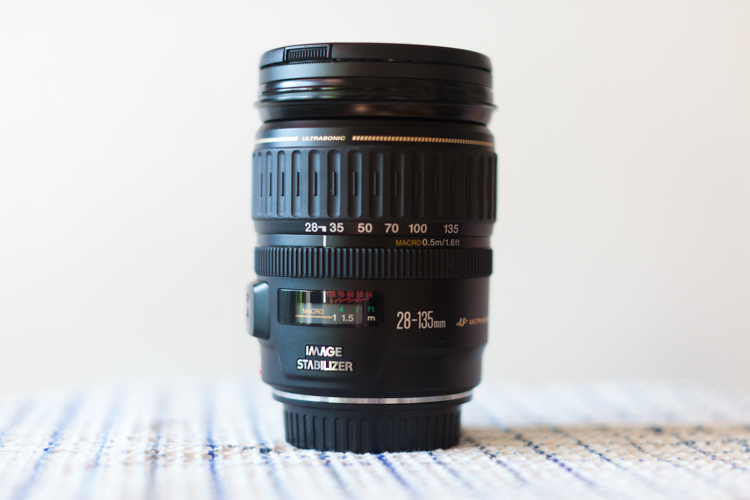
Using a macro lens or a close-up filter will help you get in tight without the need for cropping in post-processing which may degrade the image quality later. Ideally, you want to use a macro lens as they stay sharp while allowing you to get in closer than ever before.

Close-up details of newborns macro lens

If you don’t have a macro lens or close-up filter in your lineup, a zoom lens works well, too. You can be a short distance away and still get close-up without needing to crop. Post-processing may help with sharpness if you’re using a zoom lens.

Non-macro fixed lenses may be a little more challenging to use for getting close up, depending on their minimum focusing distance (how close you can be to the subject while still keeping it in focus). Investing in a fixed macro lens or close-up filters would be more suitable for this application.

The Hands

Everyone remarks on the small hands of a baby and how soft they are when they’re holding them. There are two ways to photograph close-up details of newborn hands to make an impact.

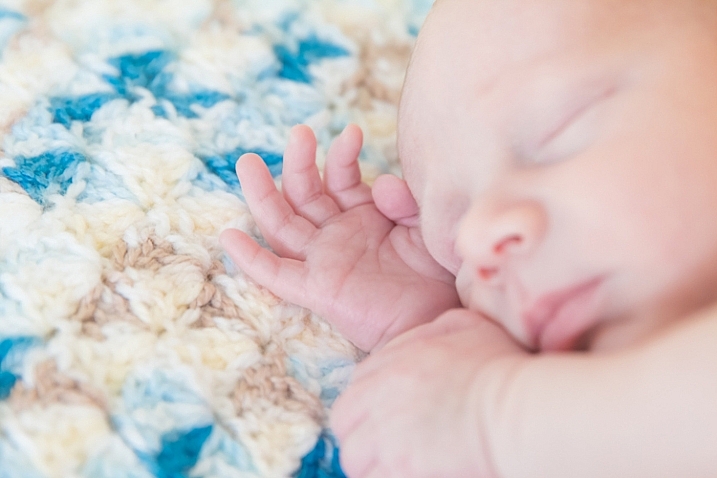
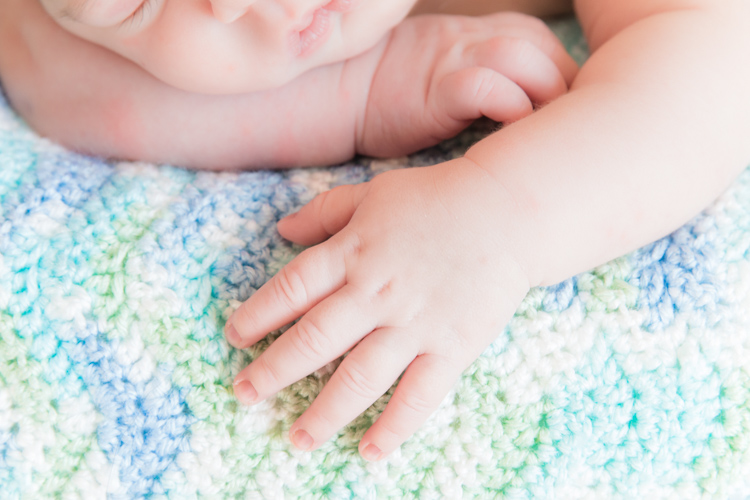
The first way to photograph new hands is up close. Hands resting near their body or close to their face shows the small details on their hands and provides a glimpse into how soft they are.

Close-up details of newborns hands

The second way to photograph their hands is against another person’s hand, finger, or an object that shows the actual size of their hand. By capturing hands near or holding an object, the viewer easily can gauge how small the baby’s hands are in comparison to the world around them.

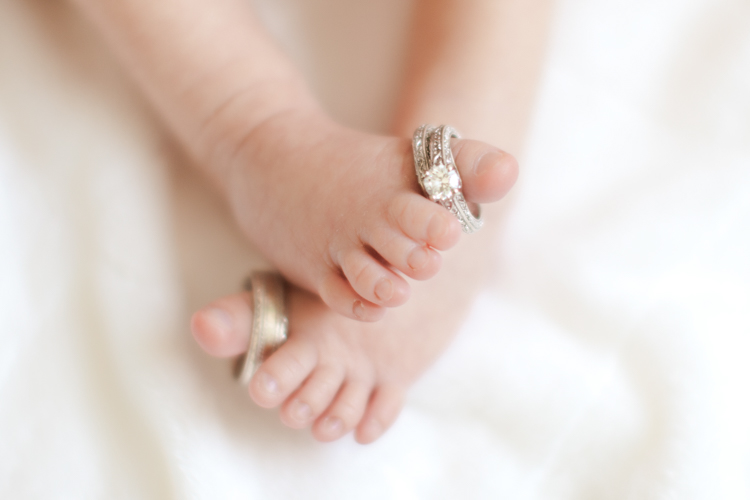
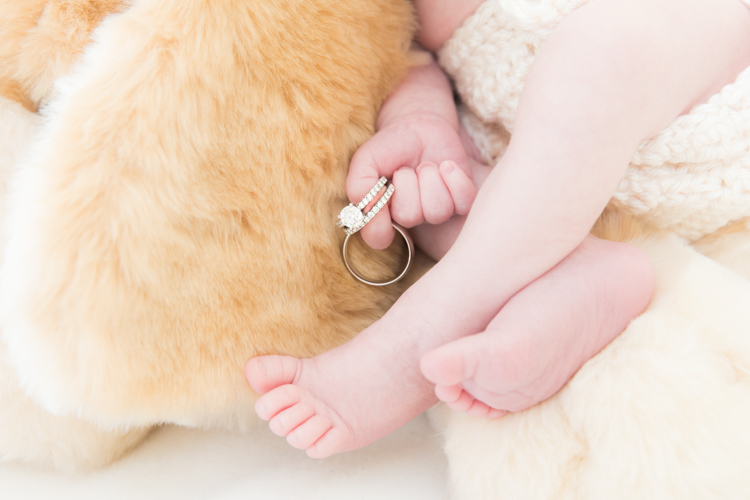
Place their hand around a parent’s finger, or a special family heirloom like wedding rings to show their true size.

Close-up details of newborns hands

As the newborn grows, hands become an integral part to how they begin to use their body or hold themselves steady. Make sure to give some focus to their hands in the coming months as they grow and start to grasp objects, use them for balance, or while they are relaxing in a seated position.

Close-up details of newborns hands

The Face

A newborn’s face is priceless to their parents. Photographing details of their face at various angles will give you more than just a straight-on standard image. Their tiny nostrils or eyelashes can have a tremendous impact on the viewer. Ears, lips, and hair are just as valuable to capture in an image when focusing close-up and on details.

Close-up details of newborns face

As the child grows, his or her face will change tremendously from those first few weeks. Photographing their face over the course of infancy will be a proud addition to their baby album as they morph features from one parent to another over a short time.

Close-up details of newborns face

The Feet

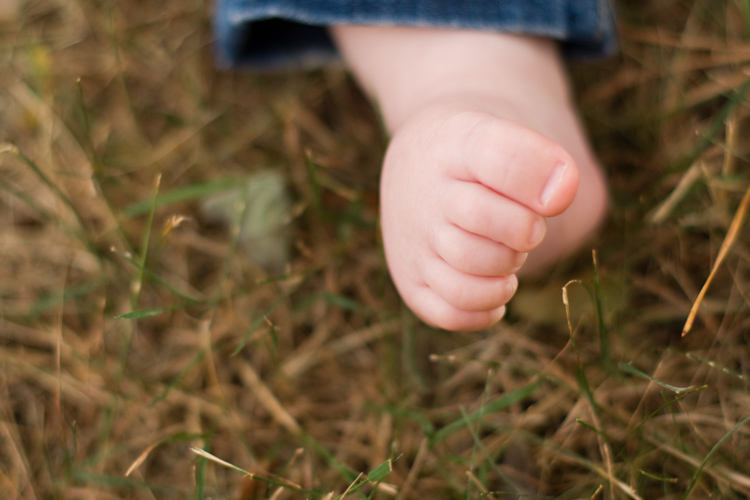
The feet are extra soft and cuddly, minus the wrinkles of age or use. They might be pricked and prodded before they get home, but photographing them alone is worth the additional editing time it may take to remove small pricks from hospital needles. Getting in close to shoot details of newborn feet makes the viewer almost want to touch them and feel how smooth and gentle they are.

Close-up details of newborns feet

Try capturing their feet while they are lying on their back and while also snuggled up on their stomach. Both angles will give you options to again add-in family heirlooms in addition to showing just how tiny they are in comparison to their parents’ fingers. Parents love these types of images that embody the love they have for their new addition.

Close-up details of newborns feet

Also, as growing infants become more aware of their feet, you’ll be able to capture them against a backdrop of their face while sucking on their toes, or pulling back from touching the green grass outdoors for the first time.

Close-up details of newborns feet

Wrap-up

Getting close-up with newborns is essential to telling the entire story of their fresh new life.

Photographing these little parts makes for beautiful wall decor, while also capturing the same features one might ordinarily try to get set in ink for their baby book. To cherish their growth over time, getting in close with macro or zoom lenses offers the best option when focusing on these tiniest of parts and parents will absolutely love these details shots.

Please share your newborn details photos in the comment below, or post any questions you have.

googletag.cmd.push(function() {
tablet_slots.push( googletag.defineSlot( “/1005424/_dPSv4_tab-all-article-bottom_(300×250)”, [300, 250], “pb-ad-78623” ).addService( googletag.pubads() ) ); } );

googletag.cmd.push(function() {
mobile_slots.push( googletag.defineSlot( “/1005424/_dPSv4_mob-all-article-bottom_(300×250)”, [300, 250], “pb-ad-78158” ).addService( googletag.pubads() ) ); } );

The post How to Photograph Close-Up Details of Newborns and Infants by Kate Nesi appeared first on Digital Photography School.


Digital Photography School

 
Comments Off on How to Photograph Close-Up Details of Newborns and Infants

Posted in Photography


24 Images That Show Details of Every Day Life

08 Oct

Every day we do a lot of the same things again and again. Yet we overlook things right in front of our faces.

Here is a set of images that show things from our every day lives in a new light. What do you pass every day that you don’t really see?

Henrique Simplicio

By Henrique Simplicio

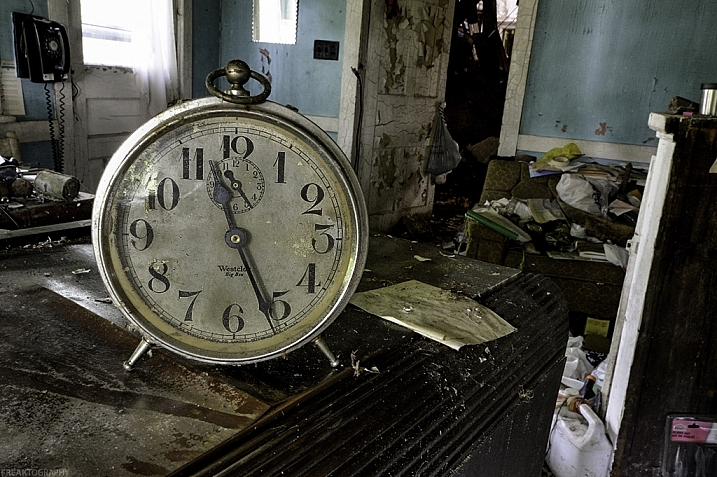
Freaktography

By Freaktography

Faungg's Photos

By faungg’s photos

Flood G.

By Flood G.

Lee Thatcher

By Lee Thatcher

Nicolas Alejandro

By Nicolas Alejandro

Tsaiproject

By tsaiproject

Patrick

By Patrick

Moyan Brenn

By Moyan Brenn

Tonzn

By tonzn

Greenzowie

By greenzowie

Jose Sepulveda

By Jose sepulveda

M01229

By m01229

Chris Chabot

By Chris Chabot

John Watson

By John Watson

Markus Spiske

By Markus Spiske

Victor

By Victor

Dave Fayram

By Dave Fayram

Emanuele

By Emanuele

Mikepmiller

By mikepmiller

Chris Campbell

By Chris Campbell

Jpellgen

By jpellgen

Janine

By Janine

Staceyjoy

By staceyjoy

googletag.cmd.push(function() {
tablet_slots.push( googletag.defineSlot( “/1005424/_dPSv4_tab-all-article-bottom_(300×250)”, [300, 250], “pb-ad-78623” ).addService( googletag.pubads() ) ); } );

googletag.cmd.push(function() {
mobile_slots.push( googletag.defineSlot( “/1005424/_dPSv4_mob-all-article-bottom_(300×250)”, [300, 250], “pb-ad-78158” ).addService( googletag.pubads() ) ); } );

The post 24 Images That Show Details of Every Day Life by Darlene Hildebrandt appeared first on Digital Photography School.


Digital Photography School

 
Comments Off on 24 Images That Show Details of Every Day Life

Posted in Photography


5 Tips for Developing an Eye for Details in Your Photography

20 Sep

I’m a firm believer in the power of photographing details. Take a particular scenario… let’s say you walk into a restaurant. It’s busy, packed with people, and perhaps a little on the noisy side, even. You have just been told by the staff that it’s a 30-minute wait for a table and you have seconds to make up your mind. You take another glance at the buzzing scene before you and decide you like the feel of the place so you wait patiently in the queue. And then you ponder why….what made you stay?

You made your decision on a whim, a gut feeling, a mere glance at the place. Surely, there has to be a reason why this place has evoked such feeling enough for you to stay and wait. So you look carefully and analyze why.

5-tips-photographing-details-tutorial_0003

What’s in the details

The lights, they are all moody, set at different heights and levels, in nooks and crannies, giving an atmospheric ambience to the room. The low slung sofas in the corners are covered with lush velvet cushions, inviting you to come sit and relax. You feel relaxed already just at the thought of hunkering down on one of those. You then notice the little fireplace, alit with slow burning crackling flames, some interesting contemporary art hung above it on the chimney breast.

Your eyes dart to and fro across the room as you see many mismatched chairs full of character and wear and tear from being loved over the years. Each one deserving of a good look and admiration. Wild flowers and plants on the tables, a shelf filled with books and another with vinyls next to a turntable. It’s like your eyes have been opened and the list of details goes on. Now you know why.

The details – they may seem small and insignificant but never underestimate their power. It is the details that make anything – a place, a wedding, a special birthday, an anniversary, a family photoshoot.

Training your eye to see details

However, it takes a special eye and some practice to notice details immediately. In fact, practice help make you look for details instantly. What is so unique about the place, the wedding, or your client’s home? What is the trademark of the couple that makes the photoshoot so them? The fabric and designs on the clothes they wear, their accessories, their props, the style they have decorated their home, the colors. What is the place known for, what makes them stand out from the crowd? Often, the answer is in the details.

I have been a professional photographer for eight years and over that time I have learned to see details so that they are the first things I look for at a location. If you are new to this concept of photographing details, here are five quick tips to get you started and you’ll be capturing places and people’s uniqueness in no time. You don’t need to practice on a photoshoot to see details. You can make your own detail-finding project, use a family day trip, or just go for a walk outside your house. Details are everywhere. The trick is in the selection and in the art of seeing them.

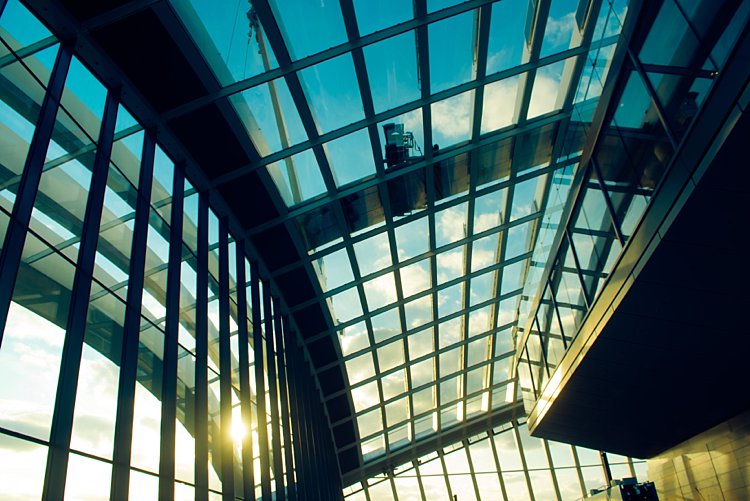
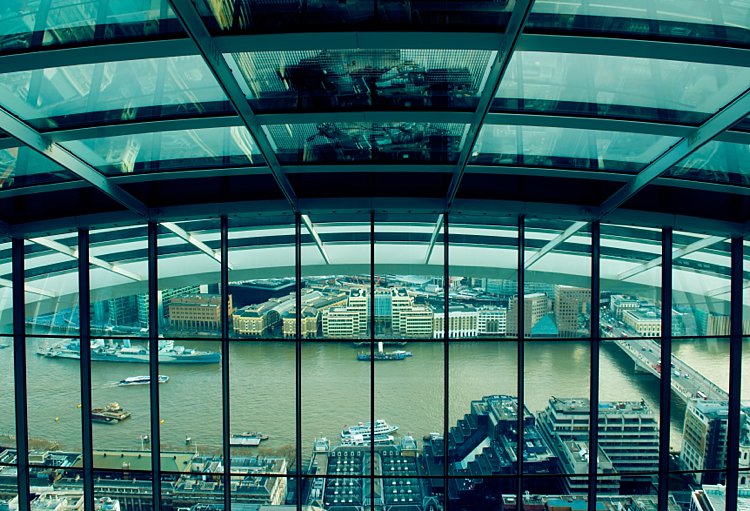
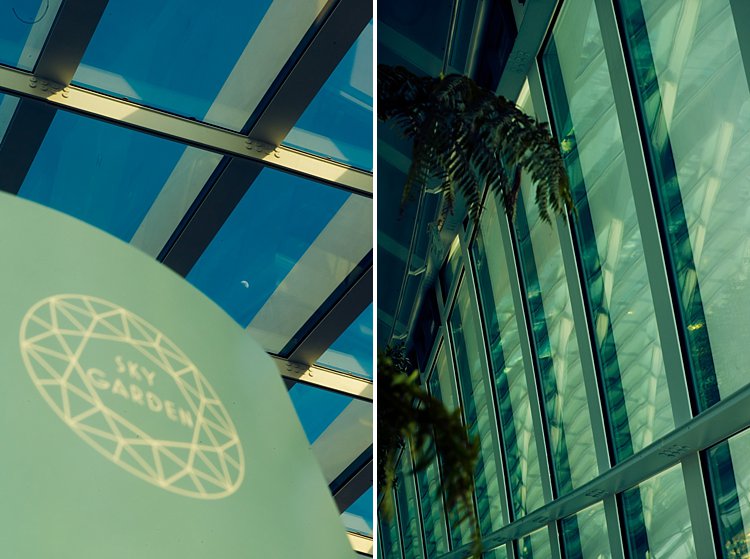
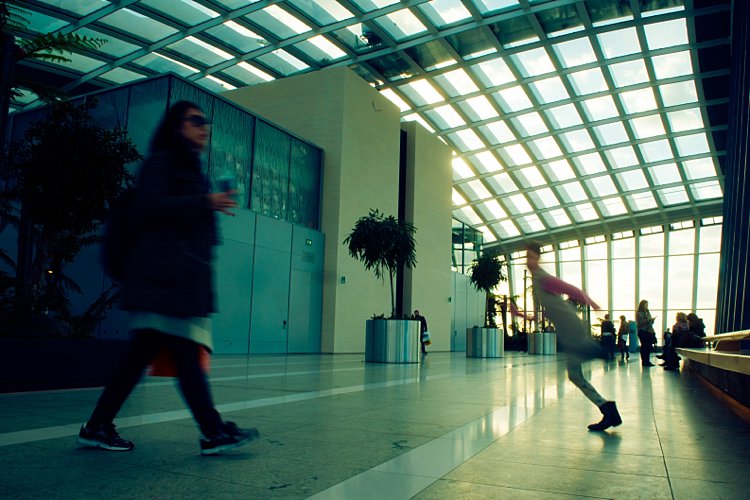
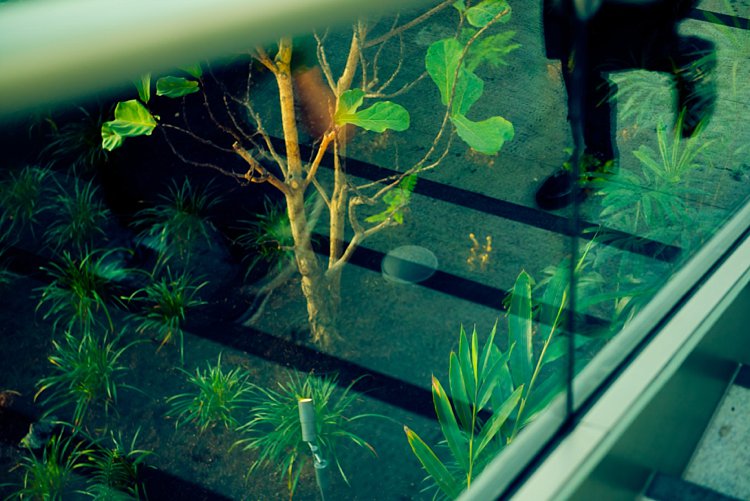
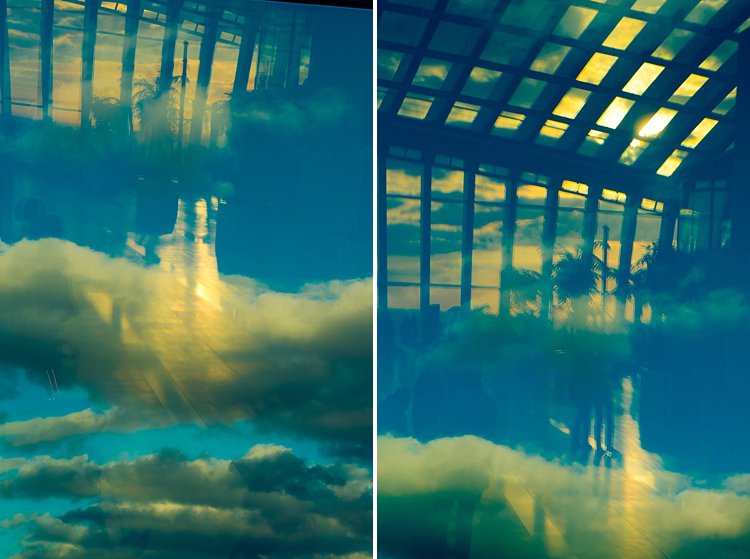
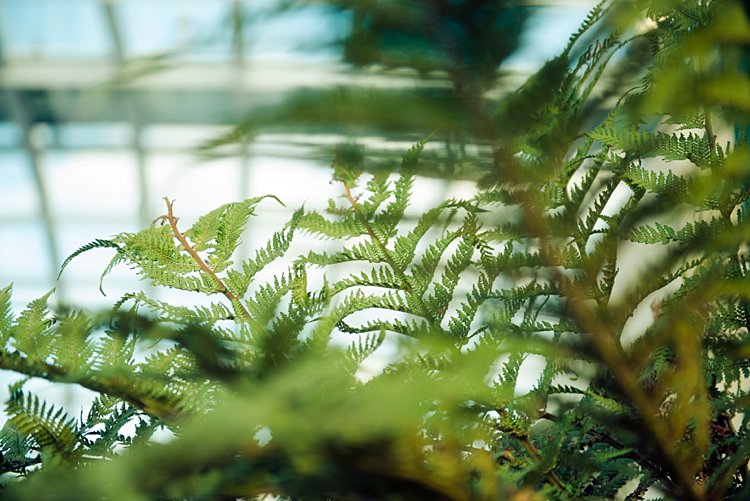
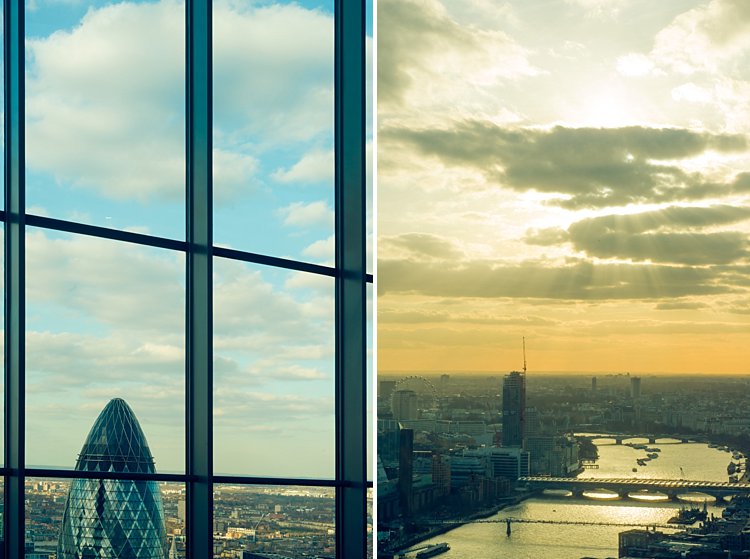
The photos below have been taken from a family visit to the Sky Garden in London.

#1 Follow the light

5-tips-photographing-details-tutorial_0000

Light is the most important element in photography. Study light, follow it, position yourself correctly in relation to the light when you take your image and you will be fine!

Soft light comes early and late in the day, filtering through at an angle, creating soft shadows. Adversely, harsh light often comes from when the sun is shining right over your subject or when they are facing the sun directly. This light creates harsh and dark shadows and is often avoided by photographers. Of course, there are ways you can counteract this effect by using strobes and light modifiers so that it is irrelevant at what time of day or night you shoot. It is important to understand light, its effect on your subject, and to look for light when you take your images.

#2 – Find patterns and shapes

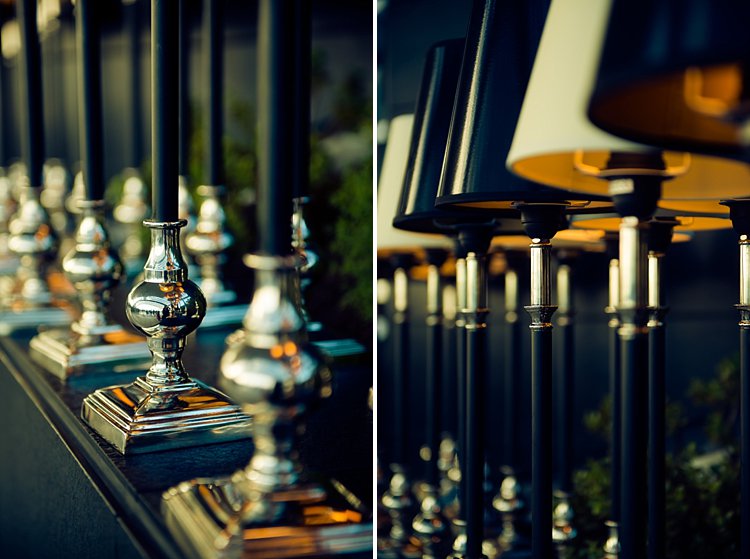
Anything that looks interesting or repetitive can be a good starting point for a good image. The images below were simply table lamps and candlesticks waiting to be placed on the tables, that were arranged at the back of the bar. I liked the different textures at play here: shiny against matte, metallic against vinyl.

5-tips-photographing-details-tutorial_0002

5-tips-photographing-details-tutorial_0011

5-tips-photographing-details-tutorial_0006

#3 – Look for contrast

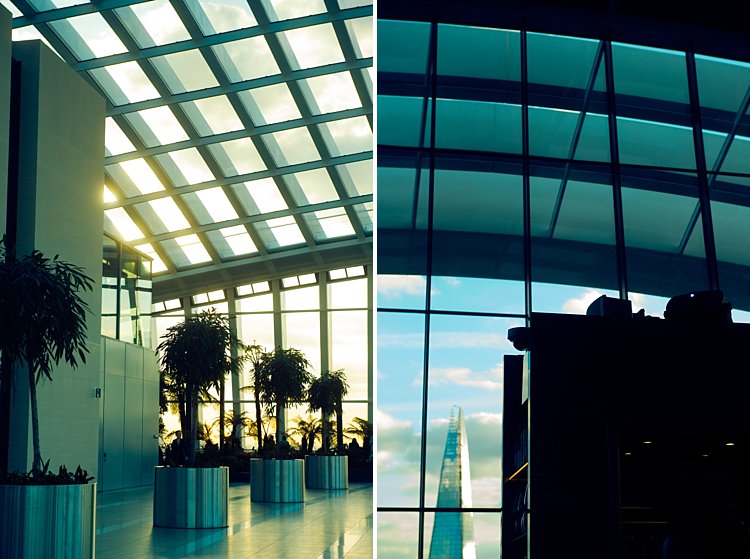
Contrast is so crucial in photography. Without it, you will have a very flat image. You want enough contrast going on in your image so that it looks more 3 dimensional, with details intersecting planes and adding more interest to your picture. Possible contrasts include:

  • Light and shadow
  • Round and straight
  • Warm light and cold steel
  • Silhouettes against clouds or sky
  • Solid against translucent or transparent
  • Opposing colors in the spectrum
  • Motion and a still structure

5-tips-photographing-details-tutorial_0015

5-tips-photographing-details-tutorial_0013

5-tips-photographing-details-tutorial_0014

#4 – Train your eye to see the unusual

This is one of my favorite challenges. Often I have to push myself to really see the unusual or have an original take on something that is otherwise cliche. Reflections help a lot here, as does layering. Positioning yourself at uncommon angles just to get a fresh view helps.

5-tips-photographing-details-tutorial_0005

5-tips-photographing-details-tutorial_0004

5-tips-photographing-details-tutorial_0008

#5 – Use juxtaposition

Quite possibly the most difficult thing to do out of these five tips is using juxtaposition. It is tricky and requires a strong sense of what goes together effectively. It is one of those times when you just have to trust your gut a bit more and listen to that inner voice that says ‘”That does not quite look right” or “Yes those two go perfectly together”.

This is difficult to describe and rationalize in my own opinion but something that will probably come to you naturally after training yourself at looking enough. So remember to be patient with yourself, take your time, and most of all enjoy the journey.

5-tips-photographing-details-tutorial_0012

5-tips-photographing-details-tutorial_0010

I hope you found these tips helpful. Do share in the comments below your images of details or any additional tips you may have.

googletag.cmd.push(function() {
tablet_slots.push( googletag.defineSlot( “/1005424/_dPSv4_tab-all-article-bottom_(300×250)”, [300, 250], “pb-ad-78623” ).addService( googletag.pubads() ) ); } );

googletag.cmd.push(function() {
mobile_slots.push( googletag.defineSlot( “/1005424/_dPSv4_mob-all-article-bottom_(300×250)”, [300, 250], “pb-ad-78158” ).addService( googletag.pubads() ) ); } );

The post 5 Tips for Developing an Eye for Details in Your Photography by Lily Sawyer appeared first on Digital Photography School.


Digital Photography School

 
Comments Off on 5 Tips for Developing an Eye for Details in Your Photography

Posted in Photography


Tips for Photographing Wedding Decor Details

26 Aug

Wouldn’t we all love to be the photographer for lavish, perfectly detailed weddings? It’s discouraging sometimes to follow the work of famous wedding photographers and feel like we’ll never measure up. The truth is that for most of us, we’re photographing weddings of average everyday people, who can’t afford those over-the-top perfect weddings.
700

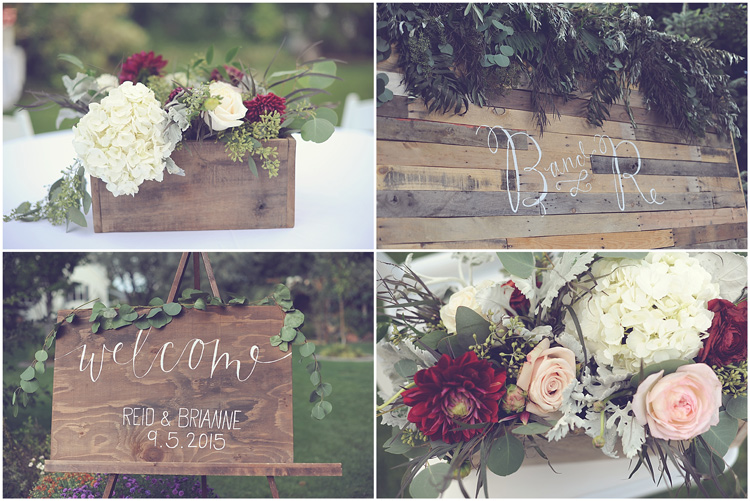
That doesn’t mean that the wedding we’re photographing is any less special, or any less important. The bride and groom have put so much time, effort, and thought into every detail of their wedding. Even if their budget is a fraction of some of those perfect weddings, they’ve most likely spent what amounts to a small fortune for them.

When I am hired to photograph a wedding, I want to treat each wedding as if it were the glamorous wedding of royalty. Whether you are the hired wedding photographer, or just a friend of the bride with a camera, I have a few hints to help you photograph the decor details of any wedding, and make it look like everything the bride and groom hoped it would be.
698

Get There Early

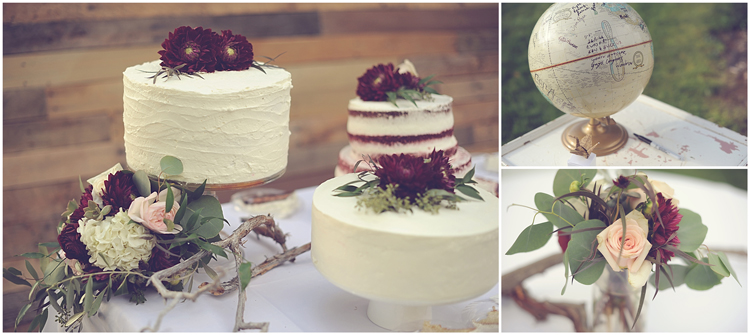
Arrive at the wedding or reception about half hour before it’s supposed to start. You will most likely have a small window of time where the decorations will be finished, but the guests have not arrived yet. You can photograph details with the guests there, but it’s harder to get clean photos without people in them, and sometimes the decorations have been moved or ruined later in the day. There are some things that you’ll need to photograph later, like if you want to show guest signatures on the guest book (or globe!), but try to get most of the details shots before the guests arrive.
696

Arrange the Details

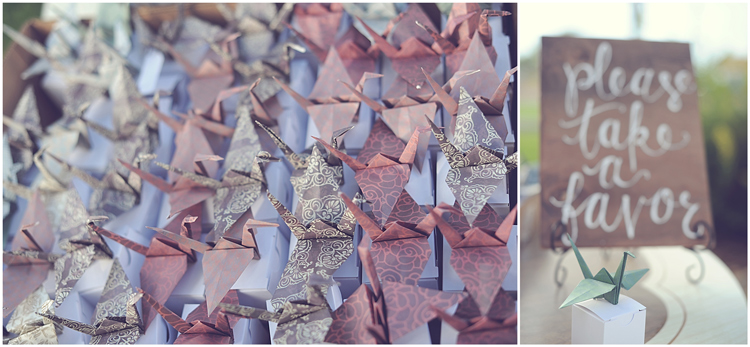
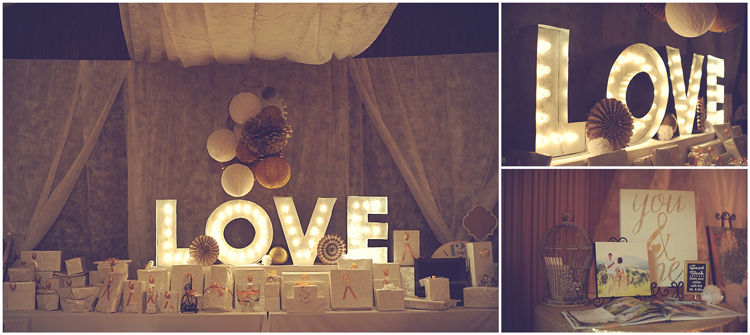
Sometimes you can move things around a little bit to get more of the story of the wedding theme. In the photo above I wanted to capture the mass amounts of origami cranes that the bride and groom had folded themselves, but I also wanted to pull one out to photograph with the sign telling the guests to “please take a favor”. Often I will open a favor box to photograph the contents inside, artfully arranged.

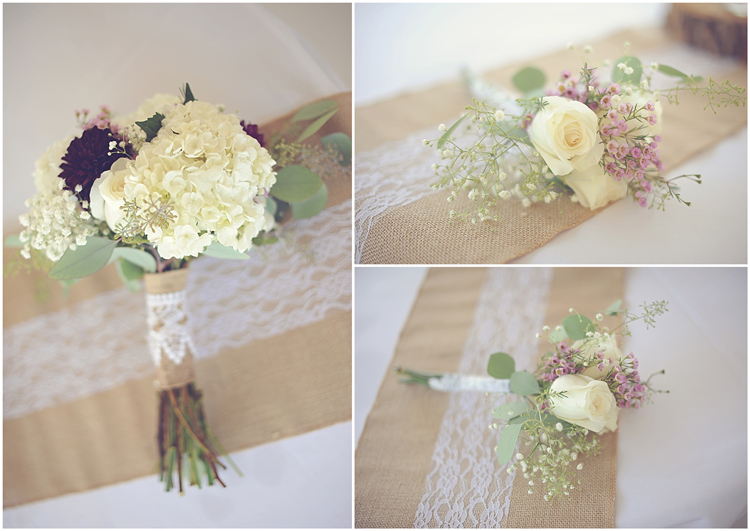
Sometimes you can photograph a centerpiece arrangement better if it’s moved slightly closer. You can borrow the bride’s bouquet if she has set it down for a bit (ask first), or borrow one of the bridesmaid’s bouquets to photograph. As long as you don’t do anything that can’t quickly be put back into place, you’ll be fine. Make sure to return everything how you found it when you’re done capturing that particular detail.
697

Shoot Wide Open

I like to photograph most wedding details with my lens almost wide open (with my aperture set between f/1.4 and f/2, usually). This can give the photograph more of an artistic feel, and help the focus be on exactly what you are photographing. If the wedding doesn’t have a lot of fancy details, or attention to perfection, you may want to blur out a lot of background.

I use a 50mm 1.4 lens, or an 85mm 1.4 lens, but most prime lenses will do. Be especially careful that your focus is exactly where you want it to be, and hold very steady. Your focus has to be tack sharp, or the whole thing will just look like a blurry mess. Shooting wide open is, of course, a matter of style and preference, and some may like an entirely different look.

Find Different Angles

I will often stand on a chair to get the angle I want when I’m photographing details. (This is where it’s definitely better to get there before the guests!) You have to get creative with your angles, so your photos don’t look like every other guest’s pics. (This is especially important if you are the hired photographer.) Pay attention to what you can see in the background, where the light is coming from, and which parts are the most important. Even a slightly different angle can transform a photo from “meh” to “wow”, so try lots of different angles to see which one looks the best.
693

Work With Difficult Lighting

Many weddings and receptions are held indoors, and sometimes they’ve created a specific mood with low lights. This can be a challenge as a photographer, but it’s completely doable. I prefer not to use flash, because I very much prefer the look of no flash in this instance, so I’ll be sharing how I work in dim lighting without flash.

Remember how we are shooting wide open? Not only does this give us an artistic look, but it really helps when there isn’t much light. Sometimes I’ll photograph an entire reception with my aperture at f/1.4 to let in as much light as possible. You will also need to crank up your ISO; keep going higher until you can shoot with a shutter speed that can safely be handheld (for me, that’s about 1/80th, but you may have a steadier hand and be able to go even slower than that). You may have quite a bit of noise in your photos when your ISO is that high, but I like that look, especially when there’s a moody low-light ambience.

In a pinch, if the lighting is extremely low, try shooting in RAW, underexposing to allow your shutter speed to be as fast as you need it to be, and then bringing the exposure up in post-processing.
694

Photograph Everything

It’s guaranteed that there was a lot of thought, time, and money put into creating the bride and groom’s perfect wedding and reception. I want to capture every detail for them, because although all of the food and flowers will be gone a few days after the wedding, my photos will be there forever.

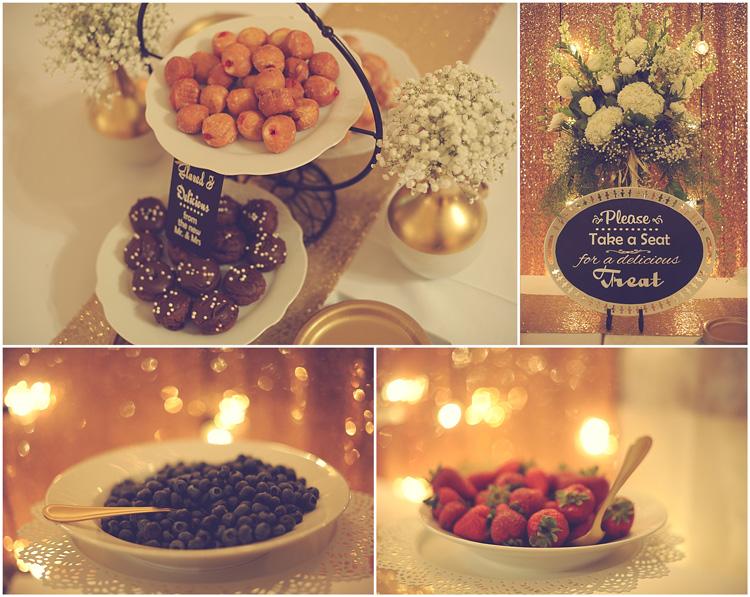
So I recommend that you photograph the food, the drinks, the centerpieces, the flowers, the favors, the guest book, and every single decor grouping around the room. It might seem silly to photograph a bowl of blueberries, but it will be so much fun for them to look back through the photos later, and remember all the little details of their wedding. If they want to make a book out of the photos, pretty detail photos can make the book have the same feel as the whole wedding did, and they really add to a collage. When in doubt, just take the photo. If their centerpieces are all the same, I’ll just photograph one of them, but if they are all different, I photograph most, or all of them.
695

Get the Whole Picture AND the Close-ups

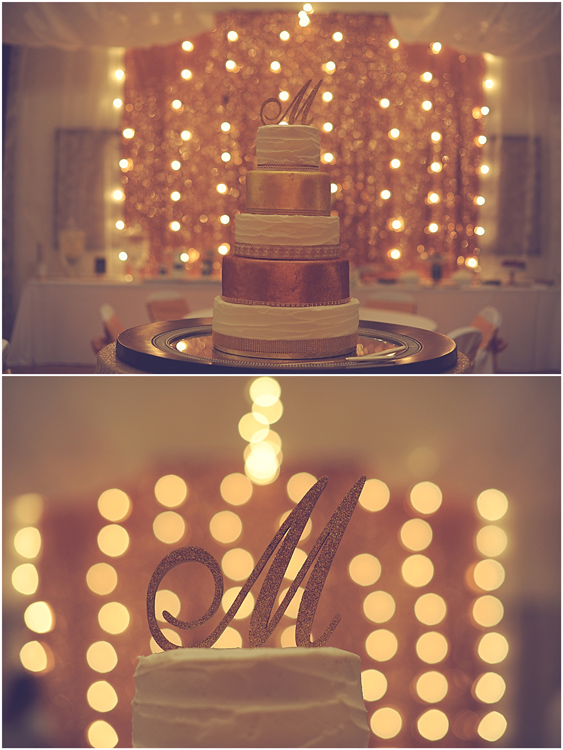
As you can see with the above photo, you can photograph the exact same thing, but get a whole different feel by stepping back, then getting in really close, focusing on one little detail. Get the surrounding setting, and then focus in on the parts that make it special.

If there’s a decor grouping in a corner, I’ll photograph the whole thing, and then pick parts of it to get in close. I’ll do the same thing with the centerpieces, floral arrangements, cake, food table, etc. This is a great way to really tell the story, and make your photos a lot more interesting.

Edit the Wedding Consistently

Make sure that all the photos from the same wedding or reception are edited consistently. My weddings each look different from each other, because every wedding is a different lighting and coloring situation, but each wedding is consistent with itself.

Batch editing can help with keeping things consistent, or using the same actions or presets on every photo can help too. Do not edit one photo with a “vintage” action, one photo with bright colors, and another matte. This will make them look unprofessional, and make it hard to put together a book or collage of their big day.
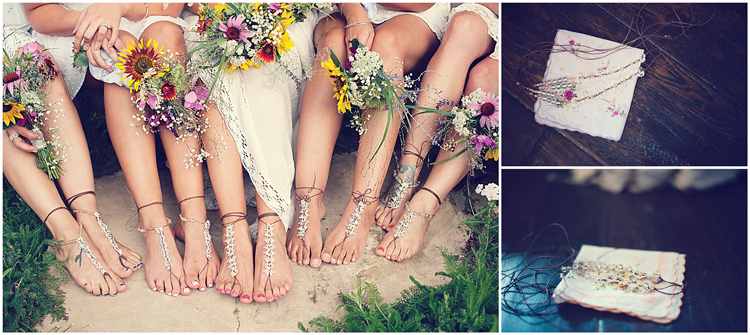
699

As you photograph any wedding or reception, remember that every little detail is important to the bride and the groom. They thought everything through from top to bottom, start to finish. Even if it’s not a picture perfect wedding, it still represents what they love, and everything is important to them. Help them remember their special day with photos that will last long after the last crumb of cake is eaten, and the final flower is withered.

googletag.cmd.push(function() {
tablet_slots.push( googletag.defineSlot( “/1005424/_dPSv4_tab-all-article-bottom_(300×250)”, [300, 250], “pb-ad-78623” ).addService( googletag.pubads() ) ); } );

googletag.cmd.push(function() {
mobile_slots.push( googletag.defineSlot( “/1005424/_dPSv4_mob-all-article-bottom_(300×250)”, [300, 250], “pb-ad-78158” ).addService( googletag.pubads() ) ); } );

The post Tips for Photographing Wedding Decor Details by Melinda Smith appeared first on Digital Photography School.


Digital Photography School

 
Comments Off on Tips for Photographing Wedding Decor Details

Posted in Photography


LensRentals details its top ten favorite products from the past decade

30 Jul
Ten years have passed since our friends at LensRentals first launched as a small business operating out of a garage. The company has seen many changes over those years, both in its own operation and in the spheres of photography and videography, and it has highlighted some of those changes in a new blog post. The LensRentals team has detailed their top ten favorite products from the last decade.

‘What we’ve found, is that there is no right piece of gear for everyone,’ they say, ‘and we all have varying tastes and expectations when it comes to gear.’

The products, which aren’t listed in any particular order, run the gamut from cameras to lenses and a few different accessories. Most notably, Canon products took four of the ten slots, with both the 5D Mark II and 5D Mark III making the list, as well as its EF 400mm F4 DO IS II and 11-24mm F4L lenses. 

Pentax, Leica, Freefly, Profoto, Sony, and Sigma products fill out the remaining six slots, though as LensRentals notes: ‘the photography and videography industries have changed faster than ever before, so some pieces of gear had to be left out on our list.’ It’s a somewhat long read, but the LensRentals team takes the time to explain why each product earned it place on the list, and it’s well worth giving it a look.

Articles: Digital Photography Review (dpreview.com)

 
Comments Off on LensRentals details its top ten favorite products from the past decade

Posted in Uncategorized