RSS
 

Posts Tagged ‘Design’

Design Copyright Debate: Cheap Replica Eames Chairs Sold for 90% Less

09 Jun

[ By WebUrbanist in Design & Furniture & Decor. ]

discount famous chair design

Seated at the center of a new design-related copyright conversation, a series of Eiffel chairs sold by discount superstore Aldi has designers arguing on both sides.

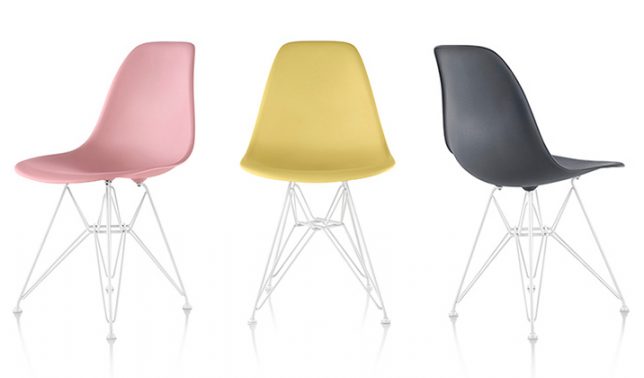
The chairs in question look significantly like the DSW Eames Plastic Chair (designed by Charles and Ray Eames in 1950), currently made by copyright holders Vitra in Switzerland.

eiffel eames chair copy

Critics point out that Aldi has been caught doing this before, selling things like Mies van der Rohe’s Barcelona Chair on countries where it can avoid copyright entanglements, either because the copyrights have expired or replicas are permitted by law.

Defenders of the discount retailer argue that the entire point of these plastic chairs was to create something cheap, comfortable and easy to mass produce. In other words: the fact that replicas sell for 40 GBP and licensed remakes sell for ten times that goes against the intent of the designers.

Either way, Aldi seems to way to stay out of the fray, perhaps planning to hide behind slight design differences when it comes to the structure, materials and details of the seats.

eamges moled chair original

In some places, like the United Kingdom, changes to laws have been proposed or are in the works, which may provide additional protections for rights holders now and into the future.

There is a larger question at work here though too: how close do designs have to be for them to risk creating intellectual property controversies? There are, after all, only so many ways to plan, design and construct a chair for a human occupant. These days, so many 3D models of seats have been uploaded to programs like SketchUp and it is easier than ever to simply cut, paste and print a copy of one’s own on a 3D printer.

Share on Facebook


[ By WebUrbanist in Design & Furniture & Decor. ]

[ WebUrbanist | Archives | Galleries | Privacy | TOS ]


WebUrbanist

 
Comments Off on Design Copyright Debate: Cheap Replica Eames Chairs Sold for 90% Less

Posted in Creativity


Diverging Diamond: Novel Highway Design Eliminates Hazardous Left Turns

02 Jun

[ By WebUrbanist in Architecture & Cities & Urbanism. ]

diverging diamond interchange design

The diverging diamond interchange has been heralded as the new cloverleaf and condemned as pedestrian unfriendly, but it does do at least one thing remarkably well: it eliminates dangerous left-hand turns that tend to cause the worst kinds of accidents.

As confusing as they look, studies so far suggest they reduce crashes by up to a third and fatal crashes by more than half. At first look, these interchanges appear incredibly complex to navigate, but, on the ground, drivers find it easy to follow their directions.

diamond interchange diagram

Drivers never have to turn to get left, which is the most dangerous part of a typical interchange, merging their way into position instead. To accomplish this the roads cross and uncross gradually.

no left turn interchange

While these diamonds date back decades in France, they were only recently imported to the United States. A graduate student named Gilbert Chlewicki thought he had designed the system, only to discover it existed in Europe. There are now dozens of diverging diamonds in over 20 states across the US.

All of their benefits aside, diverging diamonds still have critics. Charles Marohn, an engineer and writer about bad road designs, maintains these interchanges are terrible for bikers and pedestrians. Of course, so are classic clover leafs.

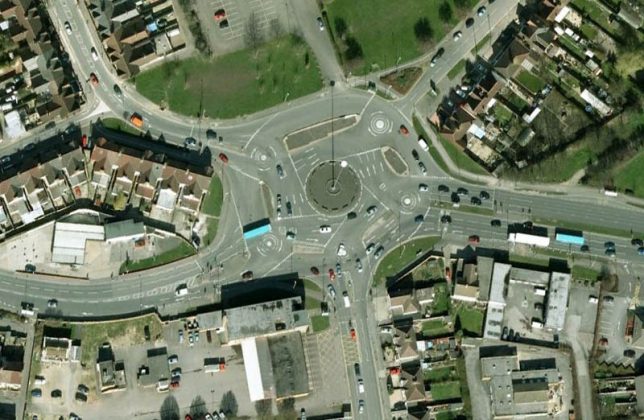
swindon roundabout

Like the infamous Magic Roundabout in England (with five smaller roundabouts circling a larger one), it may just take time for people to get used to the idea, too.

Share on Facebook


[ By WebUrbanist in Architecture & Cities & Urbanism. ]

[ WebUrbanist | Archives | Galleries | Privacy | TOS ]


WebUrbanist

 
Comments Off on Diverging Diamond: Novel Highway Design Eliminates Hazardous Left Turns

Posted in Creativity


Inverted Umbrella: Drip-Free Design Turns Canopy Inside Out

21 May

[ By WebUrbanist in Design & Products & Packaging. ]

umbrella double canopy layer

Like tableware or sliced bread, the umbrella is the subject of many reinvention attempts but few approach the sheer cleverness and ingenious simplicity of this design solution, which tackles drips, winds, crowds and compactness in one product.

inverted umbrella design

Created by engineer and inventor Jenan Kazim, the KAZbrella solves the core everyday issue of umbrellas bringing water into your home or vehicle, while also making them easy and safe to open in crowds as well as resistant to high winds (able to pop out then back into shape without breaking). When the umbrella is closed, a strap around the top seals the water inside, keeping it from dripping.

umbrella dry wrap

umbrella inversion process

“The patented design includes a string and pulley mechanism that allows the frame to open the opposite way to a traditional umbrella, though the action of pushing the slider up until the upper latch is engaged remains the same. It still looks and functions like a traditional umbrella when open, but when closed the spokes fold in so they point away from the handle and the outer surface is hidden inside.”

umbrella everyday use

inside out umbrella

umbrella in crowd

The KAZbrella also employs materials for lightweight durability, from its fiberglass spokes and aluminum frame to its double layer of woven polyester. It can be opened and closed through smaller gaps than its ungainly cousins, making it easier to keep dry while entering or exiting spaces. It can then be set down against a wall, in a stand or on your car seat without getting things wet.

Share on Facebook


[ By WebUrbanist in Design & Products & Packaging. ]

[ WebUrbanist | Archives | Galleries | Privacy | TOS ]


WebUrbanist

 
Comments Off on Inverted Umbrella: Drip-Free Design Turns Canopy Inside Out

Posted in Creativity


Peak Design launches smaller ‘Everyday Messenger 13’ bag

04 May

$ (document).ready(function() { SampleGalleryV2({“containerId”:”embeddedSampleGallery_9158310248″,”galleryId”:”9158310248″,”isEmbeddedWidget”:true,”standalone”:false,”selectedImageIndex”:0,”startInCommentsView”:false,”isMobile”:false}) });

Peak Design has launched a more compact version of its Everyday Messenger bag designed to hold a 13″ laptop. The bag maintains the same Everyday Messenger design, but offers it in a lighter 42oz/1.2kg (versus 47oz/1.33kg) package with two FlexFold dividers instead of three.

The Everyday Messenger 13 has a 6L to 14L capacity, whereas the original bag — now called the Everyday Messenger 15 — has an 8L to 18L capacity and room for a 15″ laptop. Though perhaps better suited for smaller mirrorless kits, the Everyday Messenger 13 can accommodate up to a full-frame DSLR with three lenses and assorted accessories.

Other Everyday Messenger 13 features include a MagLatch, a pair of dedicated Capture clip attachment points, a front access panel, upper zipper, 2″ padded shoulder strap, removable waist strap, a tablet sleeve that is separate from the dedicated laptop pocket, a pair of side pockets, Hypalon-reinforced and bar-tacked stress points, a waxed outer shell, and water-resistant exterior zippers.

The Everyday Messenger 13 is priced at $ 219.95, and the Everyday Messenger 15 is priced at $ 249.95. Both are available now through Peak Design’s website.

Articles: Digital Photography Review (dpreview.com)

 
Comments Off on Peak Design launches smaller ‘Everyday Messenger 13’ bag

Posted in Uncategorized


Accessory Review: Peak Design Slide Camera Sling strap

01 May

Peak Design Slide Camera Sling
$ 59/£45 | www.peakdesign.com | Buy Now

I admit, I’m generally not much of a camera strap user. Oh sure, I have a few straps, but they tend to be utilitarian affairs more there for emergencies or #dadlife convenience (‘What do you mean your feet hurt and I have to carry you the rest of the way through the zoo?’). Even when I was in the thick of my years as a working pro, I tended to work out of a bag far more often than I worked off my shoulder.

That said, shoulder straps have a lot going for them. They protect your camera from accidental drops, allow you to use both hands without putting your camera away, provide a way to keep multiple bodies at hand and the ease of access they offer cuts down on shots missed because you were digging your camera out of a bag or pack. So when I was asked to take a look at the Slide sling strap from Peak Design, I figured it was time to give straps another try.

Specifications

  • Maximum Length: 145cm/57in
  • Minimum Length: 99cm/39in<
  • Weight: 171g/6oz
  • Width: 45mm/1.8in
  • Strength Rating: 200lb (This is the rating for the Dyneema-corded Anchor Link anchors. The 45mm seat belt webbing could probably lift up your car.)

It is worth noting that Peak Design also offers a narrower version of the Slide, the SlideLITE, for mirrorless systems and other smaller cameras. Specs are virtually the same save for the width being 32mm/1.25in and the weight being cut to 141g/5oz. The reduction in weight is likely due to the narrower width and the fact that the SlideLITE is unpadded.

In Use

$ (document).ready(function() { SampleGalleryV2({“containerId”:”embeddedSampleGallery_8737464020″,”galleryId”:”8737464020″,”isEmbeddedWidget”:true,”standalone”:false,”selectedImageIndex”:0,”startInCommentsView”:false,”isMobile”:false}) });

Attaching the Slide took less time than any strap I have ever installed. The Anchor Link connector design is clever and quick. So much so, even when I wasn’t using the strap, I left the Anchor Link anchors installed on my camera. Sure, they look a little silly and flap around like little ears, but they don’t get in the way and allow me to install the strap again in seconds. With four anchors included, it would be easy to move the Slide between bodies. The anchors loop around your camera body’s strap eyelets and then click the anchor into the connector at the end of the Slide strap. To remove, you press down on the anchor and slide it back out again. You could easily do it in the dark and yet there is virtually no chance of it happening accidentally. 

There are two different options to connect the Slide to your camera. The first is the traditional connection to your body’s strap eyelets, suitable for the classic ‘neck strap’ style with the camera hanging down in front of you. The second makes use of the included Arca-Swiss compatible tripod plate.

The plate has small cutouts in each corner that allow attachment of an anchor. When connected to a strap eyelet and the plate, the camera hangs more naturally at your side when worn across your shoulder/chest as a sling. There are other products on the market that allow you to attach a strap to your camera’s tripod mount, but virtually all of them must be removed if you wish to use a tripod. Integrating an Arca-Swiss compatible plate into its design means that users of the Slide can easily tripod mount their camera without making any changes to the strap setup. 

The Slide is surprisingly comfortable. The wide soft seatbelt material combined with the internal padding makes carrying even heavy DLSRs manageable. It has been a long while since I’ve had a ‘padded’ camera strap. I have either found them exceedingly bulky or made out neoprene that allowed the camera to ‘bounce’ on my shoulder more than I liked. The Slide’s padding is only 1/4 of an inch thick or so, but it has enough firmness to it that it can support and distribute the weight of the camera. One side of the padded section is smooth and the other has rubberized ‘gripper’ lines added, allowing you to choose between the two options.

$ (document).ready(function() { SampleGalleryV2({“containerId”:”embeddedSampleGallery_1824827107″,”galleryId”:”1824827107″,”isEmbeddedWidget”:true,”standalone”:false,”selectedImageIndex”:0,”startInCommentsView”:false,”isMobile”:false}) });

The one drawback to the Slide’s padding is that it is somewhat stiff and doesn’t fold up particularly well. This isn’t noticeable on your shoulder, but can be a little awkward when putting your camera into a bag. I suspect that the padding will soften up with age and be more flexible, but I wonder if that will take away any of the cushioning abilities. Only time will tell I suppose.

Length adjustment is quick and easy, even one-handed. You just pull up on the quick adjust handle to release the strap and slide up or down to the desired length. It’s really handy to be able to lengthen the strap for when you are actively shooting and to tighten it back up again when you’ve got some hiking to do. This does, however, bring me to the most glaring problem with the Slide.

While the metal adjustment handles are nice looking and give a sense of quality to the strap, they are also a significant hazard to equipment for those of us who put our cameras in bags. I was constantly afraid that the handle was going to scratch a body or LCD or worse, chip a lens that had somehow been put away without a cap on. As far as I’m concerned, there is no way that the Slide should have used metal in this design. The added weight was unneeded and the danger to camera gear too great. I would love to see this exact design, but with plastic adjustment handles. 

What’s the Bottom Line?

The Peak Design Slide Sling Strap is a well-made, innovative camera strap with a premium price tag. Its construction and materials show quality. The namesake ‘slide’ feature works exceedingly well, the minimal padding and wide strap width tames even heavy DSLR/lens combos and the Anchor Link connectors are a clever and quick way to install and remove a strap.

However, for all the good points about the Slide, the fear that the aluminum quick adjustment handles will scratch or chip expensive equipment is a significant drawback. This is particularly true for those of us who tend to work out of a bag more often than we carry a camera around our shoulder or neck. If you are in that boat and want a strap that still offers many (though not all) of the Slide’s features, it might be worth checking out the Peak Leash strap. 

What we like:

  • Ease of length adjustment, even one handed
  • Innovative hidden non-bulky padding
  • Wide enough to be comfortable
  • Easily installed/removable, can use on multiple cameras
  • Versatile attachment system
  • Material is soft and flexible
  • Arca-Swiss style tripod plate attachment 

What we don’t like:

  • Stiffness of padding makes it difficult to put in bag
  • Metal adjustment buckles can bang against camera/gear in bag
  • Most would consider it expensive for a camera strap

Final Rating:

Articles: Digital Photography Review (dpreview.com)

 
Comments Off on Accessory Review: Peak Design Slide Camera Sling strap

Posted in Uncategorized


SanDisk iXpand Flash Drive for iPhone and iPad updated with flexible design

23 Apr

SanDisk has launched a refreshed iXpand Flash Drive with a flexible Lightning connector for Apple’s iPhone and iPad. The new model has an updated design that’s compatible with most device cases, according to SanDisk, as well as a USB 3.0 connector for rapid transfers to desktop. Additionally, SanDisk has updated the iXpand Drive mobile app with a new design and additional functionality.

Using the iXpand Drive app, users can open the iPhone’s camera, take photos or record videos, and have the content saved directly onto the iXpand Flash Drive rather than the device’s internal storage. The app can be set up to automatically backup photos and other content to social media, and supports direct music and video playback. For security purposes, the new iXpand drive also includes encryption software for password-protecting the flash drive.

The new iXpand Flash Drive is available in 16GB ($ 44.99), 32GB ($ 69.99), 64GB ($ 89.99), and 128GB ($ 129.99) capacities. The drive is compatible with the following Apple devices running iOS 8.2 or later:

  • iPhone 6s
  • iPhone 6s Plus
  • iPhone 6
  • iPhone 6 Plus
  • iPhone 5s
  • iPhone 5c
  • iPhone 5
  • iPad Pro (12.9-inch)
  • iPad Air 2
  • iPad Air
  • iPad mini 4
  • iPad mini 3
  • iPad mini 2
  • iPad mini
  • iPod touch (5th generation)

Via: SanDisk


Press release:

SANDISK REINVENTS ITS FLASH DRIVE FOR IPHONE AND IPAD

APR 21, 2016

COMPANY EXPANDS ITS INDUSTRY-LEADING MOBILE STORAGE PORTFOLIO WITH NEW IXPAND FLASH DRIVE

MILPITAS, Calif., April 21, 2016 – SanDisk Corporation (NASDAQ: SNDK), a global leader in flash storage solutions, today launched the next-generation iXpand™ Flash Drive, a mobile storage device designed to help people quickly and easily free up space on their iPhone and iPad  with up to 128GB of additional capacity1.  The iXpand Flash Drive features a new, modern design that fits with most iPhone and iPad cases, a USB 3.0 connector for faster transfer speeds to Mac or PCs, and a completely redesigned app to easily manage photos, videos and music.

According to a recent consumer survey2 conducted by SanDisk in the U.S., many iPhone users are looking to free up more space on their phones. “People are using their mobile phones to capture tons of photos and videos, and more than 70 percent of users transfer files off of their iPhones to another storage location,” said Dinesh Bahal, vice president, product marketing, SanDisk. “Our line of mobile storage offerings can immediately help them free up space. With the new iXpand Flash Drive, people can spend more time using their iPhone to capture what they love, and less time worrying about how and where to transfer these photos and videos.”

Designed to be the perfect storage companion for iPhone and iPad, the reinvented iXpand Flash Drive features a flexible Lightning connector and now a USB 3.0 connector so users can quickly and easily move photos and videos between their iPhone and iPad and Mac or PCs.  The iXpand Flash Drive allows users to automatically back up their camera roll and contacts, and watch popular video formats3 straight from the drive. The new drive also includes encryption software that password-protects files, allowing people to share their content while keeping sensitive files secure across devices4.

The product features a redesigned app, the iXpand Drive app, which offers new features and an improved user experience.  Giving users the option to save space instantly, the app now has a camera function so users can shoot and save photos or videos directly to the drive instead of on their iPhone or iPad.  The app also allows users to automatically back up content from popular social networking sites, as well as play back music within the app. 

Built for the next-generation iXpand Flash Drive, the iXpand Drive app is available for download from the App Store for iPhone and iPad. The app launches when the iXpand Flash Drive is plugged into an iPhone or iPad – allowing for immediate storage expansion, access to the user’s content and easy file management. 

SanDisk offers a full range of mobile storage solutions, making it easy for consumers to expand the memory and manage content on their favorite Apple and Android devices.  To see SanDisk’s complete line of innovative offerings, please visit: www.sandisk.com/home/mobile-device-storage

Pricing and Availability

The iXpand Flash Drive features a one-year limited warranty in the United States5. It’s available in 16GB, 32GB, 64GB and 128GB capacities, with MSRPs of $ 49.99, $ 69.99, $ 89.99 and $ 129.99, respectively.  The drive is compatible with iPhone 6s, iPhone 6s Plus, iPhone 6, iPhone 6 Plus, iPhone 5s, iPhone 5c, iPhone 5, iPad Pro (12.9-inch), iPad Air 2, iPad Air, iPad mini 4, iPad mini 3, iPad mini 2, iPad mini and iPod touch (5th generation) running iOS 8.2 or later. The new iXpand Flash Drive is available now at BestBuy.com, Amazon and SanDisk.com.

Articles: Digital Photography Review (dpreview.com)

 
Comments Off on SanDisk iXpand Flash Drive for iPhone and iPad updated with flexible design

Posted in Uncategorized


Huawei clarifies Leica involvement in P9 camera design

21 Apr

Huawei has released a statement clarifying Leica’s involvement in creating its P9 and P9 Plus camera module. Read more

Articles: Digital Photography Review (dpreview.com)

 
Comments Off on Huawei clarifies Leica involvement in P9 camera design

Posted in Uncategorized


For Everyman and Everywoman: Peak Design Everyday Messenger Bag Review

16 Apr

Peak Design Everyday Messenger
$ 249.95 | peakdesign.com | Buy Now

Peak Design isn’t a company that’s satisfied with the status quo. The San Francisco-based accessory design firm aims to produce highly functional and stylish photo gear, designing each detail from the ground up. The company has run a number of successful Kickstarter campaigns to help bring their designs into production, and that’s exactly how the Peak Design Everyday Messenger bag came to be. With a focus on style, substance and pockets for everything, the bag has been created specifically for photographers but can be used as a messenger bag by anyone with gear to haul.

The company was born out of the founder’s frustrations while traveling the world in 2010 with his camera gear. Peak Design’s ‘re-think the basics’ approach carries through in the Everyday Messenger, in ways that are immediately obvious – and some that aren’t. From its angular appearance to a proprietary closure system, no detail is too big or small for the company’s designers to re-think and re-tool. 

Inside and out, it’s obvious Peak Design has put effort into producing a bag that aims to get photographers of all levels through their day, whether they’re on a shoot or on the way to work. Take a look at what sets the Everyday Messenger apart, and whether or not its fresh approach indeed translates to a better bag for everyone.

Specifications

  • Empty bag weight: 2.5lbs
  • Average Outer dimensions: 30 x 43 x 18 cm / 12 x 17 x 7 in
  • Colors Available: Charcoal and Heritage Tan

In Use

The Everyday Messenger bag is comfortable to carry. I carried this bag while traveling on a couple of weekend trips, as well as around town for work and for shoots. I found it easy to use and comfortable to wear for the most part. A reversible, seatbelt style adjustable strap distributes the weight whether you decide to wear it as a traditional messenger bag, a low slung messenger bag, pop it on one shoulder or use the stabilizing straps as a waist belt.

Folks who are familiar with Peak Design’s camera straps will be familiar with the quick adjusting aluminum handle conveniently allowing you to adjust the length of the strap with one hand. This is a great feature for photographers who tend to hold their camera in one hand and might need to adjust their bag as they move along.

A patent-pending MagLatch closure system allows you to open and close the bag using one hand, and four latches allow the bag to expand and contract. A magnetic catch will close the bag shut and then a quick pull down on the latch lets you open and close the bag. The closure system did take a little getting used to, and when I filled the bag with my DSLR and a couple of lenses it didn’t feel as secure as I’d hoped; I felt the need to double check the latch to make sure it was closed and catching properly. I found when the bag wasn’t as wide or full, for example when I was using a mirrorless camera system versus a wider-bodied DSLR, that it became easier to manage. However, having to double-check the latch didn’t deter from how much I liked the other features.

The bag does tend to get a bit bulky and cumbersome if filled to maximum capacity, however for someone who over 6′ tall that is likely not an issue. 

Thoughtfully designed flexible inserts allow you to configure interior compartments however you want. The Everyday’s dividers are unique – while other camera bags offer rectangular foam pads that can be arranged to create space within a camera bag, the Everyday offers three 8-sided inserts. They are pre-folded so you can bend and flex them to your heart’s content, configuring custom areas to contain and protect your gear.

One of the bag’s best features is how the inserts fold over to create a box-like area, allowing you to store gear on top of each other. I managed to store an 85mm lens, protected by the folded insert, throw a flash on top of that, with my camera body with a 24-70mm lens right next to it, and then another lens in the next compartment. It became a well-filled bag and I was confident that all was secure and protected.

A convenient waterproof zipper allows access to the interior of the bag while wearing it, making it easy to grab gear on the go. You don’t have to take the bag off and put it down to get out your camera or a lens, rather just unzip and you can have your hands on your camera in no time. I did find it easier to pull out my camera body from the center of the bag rather than have it placed over to the side of the bag and wrestle the camera body from there. 

A zippered front pocket has eight color-coded interior mesh pockets: four red, four green, meant to denote which batteries and memory cards are fresh and which are spent. I found this system really user-friendly, and it’s just one more thoughtful detail that Peak Design has included for photographers. The front pocket zips all the way open and folds down to access whatever you have stored inside, or you can just zip down the top part and still get to your gear. 

Inside the main compartment is an interior pocket, perfect for passports, travel documents, phones, cash, credit cards, travel papers, small notebooks. This pocket is also conveniently accessed through the top zipper opening.

There is another smaller pocket on the inside flap of the bag but even better, behind that pocket is a built in carry option for most tripods. One of the tripod’s legs can slide through the back of the pocket, and with the flap closed the tripod can be carried braced on the front of the bag. This bag really does have hidden features everywhere.

Photo courtesy of Peak Design

The bag’s stabilizing straps tuck away into side pockets and behind them are additional pockets – perfect for a lens cap. But of course, there’s more: within one of those pockets is a tether with one of Peak Design’s anchor links that can be used to keep track of your keys.

On either side of the bag are anchor straps that can be used in conjunction with Peak Design’s quick-release Capture camera clips. As I didn’t have one of the clips I wasn’t able to test this out, and while it seems like a good idea in theory as someone who is shorter than average this might make the bag slightly unwieldy for me.

A zippered protected compartment holds a 15 inch laptop, and if you need, an additional pocket will hold a tablet or notebook. This bag is not super-flexible and the addition of a 15″ laptop makes it less so. Carrying photography gear and a laptop became a near impossibility for me, however, as it became too heavy and cumbersome.

The material is waxed, weather-proofed and looks smart too. I felt totally comfortable that my gear was protected while having to venture out in a downpour.

Summing Up

I enjoyed using this bag with and without my camera gear. It easily fit my DSLR, plus a couple of long lenses, or I’d put my laptop into the back pocket with a portable drive, plus a couple of notebooks and head off to a coffee shop. Where I found the bag worked less well for me was when carrying my laptop and DSLR plus lenses. I did that while traveling and found that carrying all of that gear for too long was just too heavy. 

There is no getting around the fact that the Everyday Messenger bag is big, and just because you can pack it to its limit doesn’t mean you necessarily should. Flexibility of the bag becomes a little more limited with a 15″ laptop in the back pocket. When the bag was full, I found myself double checking the Mag-Latch closure system just to make sure it was catching and closing.

The team at Peak Design seems to have thought of almost every detail and while the Everyday Messenger Bag is not cheap, it is certainly possible to use this as your everyday-everything bag, and you will certainly get your money’s worth.

What we like:

  • Comfortable shoulder strap
  • So many pockets make it functional and versatile
  • Sturdy and well-designed
  • Capture Clip anchor points on the sides of the bags
  • Plus Peak Design offers a lifetime guarantee, for fabric, straps or zippers that fail, not for normal wear and tear obviously

What we don’t like:

  • Can feel too big if you are smaller or shorter in stature
  • Bag becomes quite cumbersome with both a 15″ laptop and DSLR + lenses
  • Having to double check the closure system when the bag was more full

Articles: Digital Photography Review (dpreview.com)


 
Comments Off on For Everyman and Everywoman: Peak Design Everyday Messenger Bag Review

Posted in Uncategorized


Best of both worlds? Canon patent for DSLR hybrid viewfinder design published

01 Apr

Canon has applied for a patent for a viewfinder design that combines both optical and electronic displays in a DSLR style system. Via a system of mirrored prism the design allows users to benefit from all the advantages of both EVF and TTL optical systems through the same eye piece. Menus can be overlaid on a normal optical view, or a live view function can be used through the viewfinder – which would be of great benefit to video shooters.

In Canon’s new hybrid viewfinder design light passes through the lens as usual and is reflected through a ground glass screen into the pentaprism. As it exits the pentaprism is can be supplemented with light from a LCD panel (labelled ‘9’) that is projected through a series of lenses and bounced from a half-mirror (6b) and on to a reflective surface (6). The two sources of light combine and pass to the photographer’s eye via the eye piece (8). When the mirror is in the up position the image recorded by the sensor (12) can be sent directly to the LCD panel (9) so the photographer can get a live view of what the sensor is recording. Thus the system combines the best elements of electronic and optical viewfinders.

Through a clever use of optics and a mirrored prism, the new design allows a ‘full screen’ display across the whole viewfinder. The significance of the system is that DSLRs will be able to gain some of the advantages of mirrorless systems, such as full menus and playback in the viewfinder, and shooting information could be shown across the larger screen instead of just the bottom or sides of the screen. This would also make possible video shooting through the viewfinder, which could become important if technologies like Dual Pixel AF start to replace secondary-sensor PDAF systems. This would eliminate the need to switch between viewfinder and rear screen shooting to change from stills to video mode, creating a more consistent experience.

The system allows menus to be viewed and accessed as they are overlaid on the image produced by the optical finder

The patent description explains that one of the challenges has been to ensure that the image projected from the electronic screen matches that of the optical system, which is why the screen has been placed close to the viewfinder instead of before the prism, where there might have been more room. Being on the viewing side of the prism means less magnification is needed to create an image big enough to coincide with that of the optical view.

The projection system uses a complex set of lenses to reduce the size of the construction so that the manufacturer shouldn’t have to make physically larger cameras to accommodate it. Canon also indicated that it has taken steps to reduce the impact of the half mirror that has been placed in the optical path. It says that the angle of the mirror is optimized to allow as much light to pass as possible.

The heads-up display type viewing system is nothing new, and although it has been discussed in camera circles before we have yet to see a good example of technology combining optical and electronic views. The closest we have come is the hybrid viewfinders used by Fujifilm in the X-Pro and X100 series of cameras, but Canon’s method is the first to combine an EVF with a TLL viewfinder, rather than a more rangefinder-style arrangement.

Canon’s patent was applied for in 2014 and the information only just published, so the company may be in a position to introduce the system quite soon. However, as with any patent there’s a chance nothing will come of it, no matter how good an idea it is. We will just have to wait and see what, if anything, comes of it.

Articles: Digital Photography Review (dpreview.com)
 
Comments Off on Best of both worlds? Canon patent for DSLR hybrid viewfinder design published

Posted in Uncategorized


Future NYC: 12 Design Proposals to Reshape the Big Apple

28 Mar

[ By Steph in Architecture & Cities & Urbanism. ]

future nyc hive

A half century or into the future, will New York City even still exist as it stands today, or will these fanciful and sometimes bizarre proposals get a chance to become reality? These visions for future Manhattan aim to maximize available space by building new infrastructure right on top of transportation hubs as well as the Hudson River, and adapt to changing needs by creating new drone superhighways and building porous street systems that can absorb floodwaters.

Excavated & Walled Central Park
future nyc central park wall 1

future nyc central park wall 2

future nyc central park wall 3

Considering that the entire city is liable to be flooded at the first sign of a serious storm, let alone rising sea levels, sinking any part of Manhattan doesn’t seem like the greatest idea. Yet, the visuals associated with this crazy concept are too stunning to dismiss. The winner of eVolo’s 2016 Skyscraper Competition, ‘New York Horizon’ excavates the entire park to reveal a mountainous landscape, and wraps it in a 1,000-foot-tall mirrored megastructure. Tenants living inside the megastructure would have unparalleled access to the park, but views of it from any other buildings that aren’t skyscrapers would appear to be limited.

Bizarro Futuristic Coney Island
future nyc coney island

future nyc coney island 2

future nyc coney island 3

The New York CityVision Competition by London-based firm Squint/Opera imagines a dazzling new future for Coney Island Park that could save it from the current threats of being turned into a condominium park. Transporting the defunct ‘Southern Star Big Wheel’ ferris wheel all the way from Melbourne, Australia is crazy enough, but those giant clown heads in the sky are asking a little too much.

The Hive: Drone Hub in Midtown Manhattan
future nyc hive

future nyc hive 2

The modules on the outside of ‘The Hive’ skyscraper are designed to fit nine different types of drones, acting as one big dock and charging station for both personal and commercial usage. Incorporating a ‘vertical highway model’ around the tower, the design regulates drone traffic to prevent the sky from becoming one big buzzing traffic jam of flying robots. “To provide a safe landing environment, the tower projected a new method for drones to dock horizontally onto their corresponding platforms with the fitting shape and scale; the platform with docked drones can be flipped vertically to be in parallel with the tower facade. The facade is constantly animated as the platforms flip outwards and backwards to nest back into it.”

Floating Neighborhood
future nyc hudson 1

future nyc hudson 2

An entire neighborhood for 65,000 people will hover right over the congested island of Manhattan in a proposal that seems too crazy to be true, yet is under construction right now. Hudson Yards will rest on 300 concrete-sleeved caissons right on top of the 26-acre West Side Yard, which is a critical part of New York City’s transit system. The plan includes six skyscrapers, 100 shops, 20 restaurants, a school and 14 acres of parks, and will be completed by 2024.

Next Page – Click Below to Read More:
Future Nyc 12 Proposals To Reshape The Big Apple

Share on Facebook


[ By Steph in Architecture & Cities & Urbanism. ]

[ WebUrbanist | Archives | Galleries | Privacy | TOS ]


WebUrbanist

 
Comments Off on Future NYC: 12 Design Proposals to Reshape the Big Apple

Posted in Creativity