RSS
 

Posts Tagged ‘Creative’

Flickr says it will spare all Creative Commons photos, announces ‘in memoriam’ accounts

10 Mar

Last November, SmugMug announced a number of changes the photo-sharing site would be undergoing in the coming months as part of a clean-up operation of sorts to help streamline Flickr assets and unused accounts. One of those changes was the news that free accounts would be limited to 1,000 images and any images over that limit would be deleted.

Almost immediately, Flickr caught flack for the decision, especially surrounding the vast amounts of Creative Commons images hosted on the photo sharing site. Within a week, Flickr announced it was sparing Creative Commons and public domain images and also sparing non-profits from the 1,000 photo cap.

Now, Flickr is going a step further. In a blog post, Flickr says it will not be deleting any public, freely licensed images from its platform, regardless of who’s operating the account.

In this spirit, today we’re going further and now protecting all public, freely licensed images on Flickr, regardless of the date they were uploaded,’ reads the blog post. ‘We want to make sure we preserve these works and further the value of the licenses for our community and for anyone who might benefit from them.

Flickr isn’t just rolling over though. To combat accounts from simply switching all their photos to Creative Commons without understanding what all it entails in hopes of still hosting their photos on the site, Flickr has disabled the bulk license change tools in the Settings menu.

‘We’ve done this to prevent community members from flipping all their images to a new license without first understanding the significant implications of the various free licenses we support. Any member (Free or Pro) can still change the license of any of their photos on the photo page.’

Additionally, Flickr is introducing ‘in memoriam’ accounts. These accounts come after concern from users about what happens to their images after they pass away (or late photographers who still have images on Flickr).

Flickr says ‘in memoriam’ accounts ‘will preserve all public content in a deceased member’s account, even if their Pro subscription lapses […] The account’s username will be updated to reflect the “in memoriam” status and login for the account be locked, preventing anyone from signing in.

Flickr has created this dedicated form to help identify accounts in need of ‘in memoriam’ status.

To help preserve the accounts of members who have already passed away, Flickr is asking for help to identify existing accounts that are deserving of ‘in memoriam’ status. A dedicated article has been added on Flickr’s Help Center to help explain the process.

Articles: Digital Photography Review (dpreview.com)

 
Comments Off on Flickr says it will spare all Creative Commons photos, announces ‘in memoriam’ accounts

Posted in Uncategorized


5 Great Android Apps for Taking Creative Selfies

17 Feb

The post 5 Great Android Apps for Taking Creative Selfies appeared first on Digital Photography School. It was authored by Erin Fitzgibbon.

Selfies with a Creative Twist

Last year I wrote an article about pushing beyond the selfie. I wrote about trying to make self-portraits that spoke more deeply about who you are as a person; that we should all try to make a portrait that portrays more than just a smiling face. I still believe strongly in that premise. I’m not the type to shoot endless selfies and post them on Instagram. I want to show off the amazing energy and rich personalities of the people I photograph.

Using another app called Photo Lab I created this image in just a few quick minutes. The free version requires the Photo Lab logo.

Peer pressure

But the problem is I have friends who love taking selfies. Everywhere we go they want to make sure we capture the moment. You know the quick shots that commemorate a place and time and how much fun you’re having there. The creative in me wants to do more than just put a hand on my hip and smile. I want to do more. So as a tribute to my friends and salute to those of who you crave creative options I’ve compiled a list of Selfie and Photo Apps that can help you to take great images but also allow you some creative opportunities.

App #1

Sweet Camera – I love this app. If I’m taking a selfie (mostly for my gaming avatar) I use this app. It’s quick and easy to use, and I’ll admit it’s fun. There are a ton of free filters to download and if you want you can add endless combos of ears, sparkly fake earrings, etc. The app works nicely on Android and links quickly through the share option to all my social media accounts. My friends love this one for all the fun little options they can use. One of their favorites is the ability to change their hair color.

I created this image in just a few minutes using a large window for lighting and the Sweet Camera app.

App#2

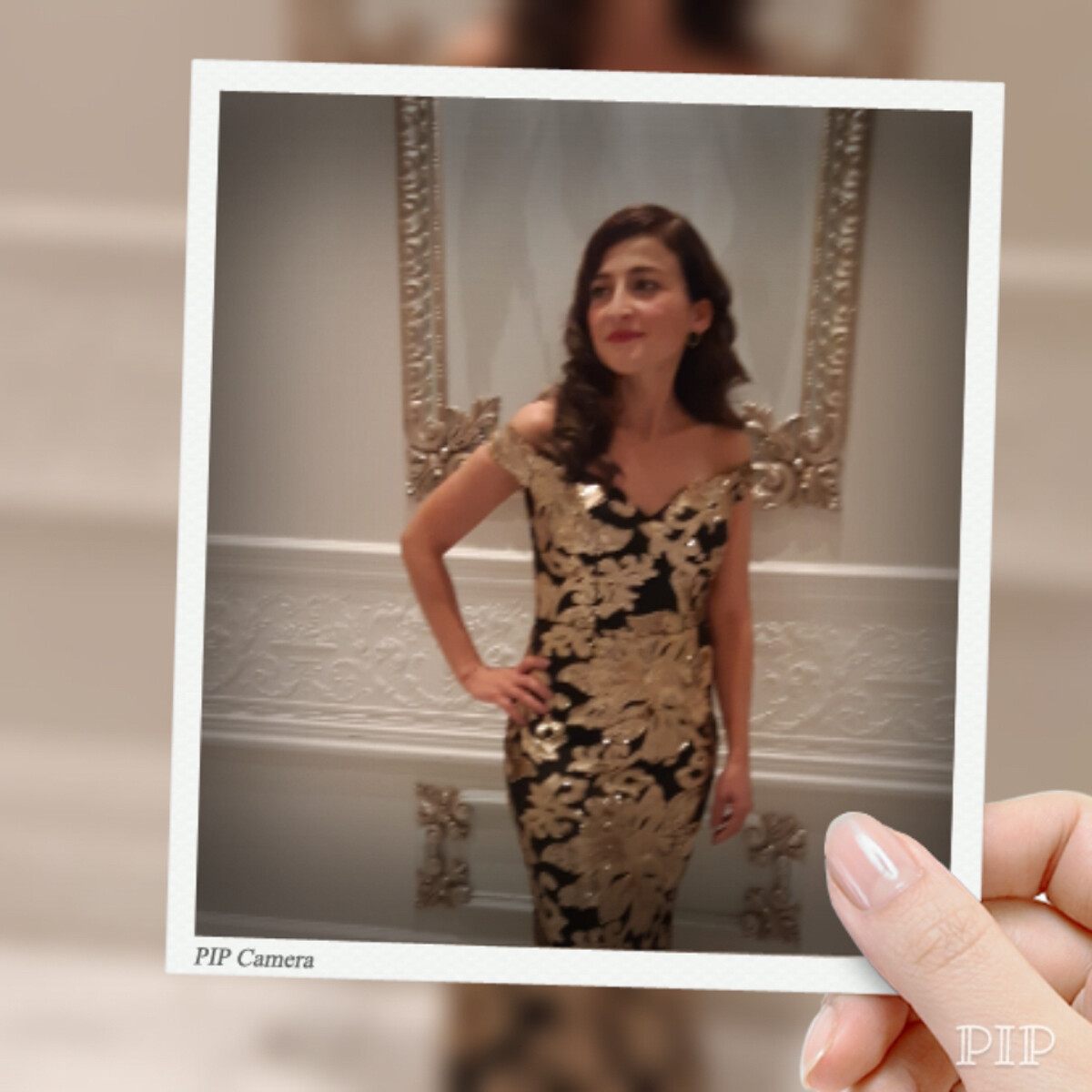
Pip Camera – Photo Editor Pro – this one is really about the different filters you can use. Pip camera allows you to take your photos and insert them into fun frames. Take a full length shot then insert yourself into a glass bottle. The effect is a lot of fun. There are also options to use polaroid frames. You can even take your photo and edit it, so it looks like the front page of a magazine. This app is about easily using options to make creative images. It’s more than just a selfie app that hides skin blemishes.

I used the bottle effect to take this photo of my friend. It’s the typical joyful jumping shot with a little adjustment.

App#3

Retrica – Yes, Instagram has many filters you can use for your selfies, but Retrica is probably one of the most comprehensive apps. Its got hundreds of different filters you can play around with and use for free. The editing power for managing blemishes and smoothing skin isn’t as powerful as other apps, but there’s a lot you can do with Retrica.

The filters on Retrica are a lot of fun to use in experiments.

App#4

Photo Overlays – this has lots of backgrounds that you can use to create interesting overlays. For those of you who use Photoshop, it’s really about blending layers. For those of you who know nothing about Photoshop, it’s plain fun to insert you and your friend’s face into the moon. Give it a try. Just be prepared to deal with advertisements. There are lots of opportunities for creativity with this app.

Photo Overlays lets you play around with layers in a really simplified manner.

App#5

VSCO– VSCO is more of a photo editor than a selfie app with lots of options for creativity. VSCO also works as a social media sharing platform in and of itself. It comes with lots of preset options as well as some pretty comprehensive editing tools. This app is more of an editing program for your mobile device than a quick and simple selfie app. However, it’s fun to use if you’re the type that wants to do more than add some fun stickers. VSCO lets you get creative with your mobile photos.


Processed with VSCO with b1 preset

Be creative!

So basically, the sky is the limit for all of those out there who want to tweak their selfies. You don’t have to stick to the simple little stickers and filters you find in your Instagram toolbox. There are a lot more options out there. Give some of these a try and show us what you create. The world of mobile photography is always expanding. The really cool part about it is that it is accessible to all. Some may turn down their noses at the idea of using these apps and filters but for the average user its a lot of fun to experiment. For me, these apps can never replace Photoshop and Lightroom – I love the creative flexibility of those programs too much to give up on them. I’m still a huge advocate for creating more than the quick and simple selfie, however, if you’re less inclined to take time to shoot something a little more original perhaps these options can fulfill your creative needs.

So now it’s time to see your creative endeavors. I’ll leave you with a few more fun experiments, but I know the rest of you are a lot better at this than me. I’m not the selfie type. So it’s your turn show me what you can do in the comments below.


The post 5 Great Android Apps for Taking Creative Selfies appeared first on Digital Photography School. It was authored by Erin Fitzgibbon.


Digital Photography School

 
Comments Off on 5 Great Android Apps for Taking Creative Selfies

Posted in Photography


Enhance Your Images with Creative Photo Editing

17 Feb

The post Enhance Your Images with Creative Photo Editing appeared first on Digital Photography School. It was authored by Stacey Hill.

Much effort goes into creating an image; you have to buy the camera gear, learn how to use it, and then get out there and take interesting photos. However, once they are taken and downloaded on our computers, many images never see daylight.  Perhaps we take too many shots and can’t choose the best ones? Maybe our editing skills are not where we would like them, and we are frustrated?  It could be that we find editing boring?

While there is a school of thought that minimal or no editing is a preferred choice, the other end of the scale is all about luminosity masks, HDR and Photoshop layers by the dozen.  In between, there is a middle ground where many of us fall.

Here, we’d like to edit our images better but don’t necessarily understand the capabilities within the software we have. We may be uncertain how much editing is too much (or conversely, not enough).  Perhaps we don’t know what all the tools and sliders do and get confused and frustrated as a result.

One of the most powerful things that had a positive impact on my editing was choosing to play and experiment freely – to go in completely different directions.  Many of the outcomes were unexpected and gave me results that I really liked.

Note for this article I work with Lightroom and Photoshop.

Beyond the basics

Let us assume you’ve completed the following steps with your image editing:

– you’ve uploaded your image to your computer
– its loaded into your software program of choice
– you’ve completed basic edits – exposure, contrast, highlights, shadows, etc
– you have applied any cropping, lens corrections, and other adjustments

So what is left?  You have a nice shot, that is well composed. The exposure etc is all right.  However, it may still feel lacking in some way?  Perhaps you feel you could do more to the image if only you knew how?

Let’s look at what else makes up your image and how you can work further with that to achieve a stronger picture.

Colour

Most likely your image is in color, and color has a significant impact on people’s brains.  A lot of the way we process and relate to color is instinctive and emotional. Our culture, society and personal experiences also contribute to how we relate to color.  Color psychology is a fascinating area to research.

As an example, in the Western world, white is the color of purity and innocence. However, in Eastern cultures, it is the color of mourning.

All colors have different emotional contexts associated with them, and people react differently as a result.  So the people viewing your images, (especially online around the world), may relate differently to the color in your work. How often do you consciously think about the color in your image from this point of view?

Contrast

Contrast can be several different things within your image. It can relate most directly to the tonal range, i.e. the contrast between the light and the dark areas.  However, it can also relate the different colors and how they interact together.  How your subject matter relates to the rest of the image can be part of the contrast too.  Does your subject stand out in a particular way?

Can you somehow use these different contrast ideas to process your image in an alternative way?

For example, using a spot of color in a black and white scene can provide a point of interest and color contrast and change the way the viewer sees the image.

Tonal Range

While the tonal range of the scene is part of the image as you shoot it, with some careful editing you can change it.  How can this be impactful?  Visualize very high-key fashion or wedding photography images where its all white and bright, and the tonal range can be quite restrained.  Professional images may be purposefully lit and shot that way, but we can still achieve a similar look via editing on the right image too.  This can completely change the mood of your image as well.

Texture

Adding textures to images has become relatively popular, especially in still life and flower photography.  Its also being used with portraits and landscapes. Imagine if you had a beautiful subject with a great pose and an awful background? What if you could remove the background and make it awesome instead?

Alternatively, add some extra depth and interest, elevating your image above the average approach?

Cropping

Sometimes a hard crop is called for to bring out the best in an image.  Alternatively, an abstract approach could make a big difference.

Some before and after examples

Color

For me, color is the most versatile and flexible option to work with.  By changing the color, you can instantly change the whole mood and feel of your image.

BEFORE – This image had basic edits done and a black and white process – this was originally shot to be a black and white image.  Nice depth of field, a bit of tweaking on the vignette to bring focus to the center, but it feels cold and unwelcoming.

AFTER – the addition of a sepia tone makes the skin tones more inviting and adds warmth to the image. Sepia invokes a feeling of nostalgia. Perhaps a reminder of careless childhood days where adventures were had?

Contrast

There are two types of contrast used in this image.  There is much contrast between the bright background and the heavy dark marble of the headstone.  Also, the pale stone behind the words offers tonal contrast as well.

This image was originally shot to be a black and white image, and as such, it looks quite good.  However, when I read the words on the headstone, I saw that a whole family was buried here over 200 years ago. Still, there was a bunch of flowers carefully poked into the corner of the headstone base. Who left the flowers and why?

BEFORE – unedited RAW


AFTER – I wanted to bring attention to the flowers, so I brought the color back into the final black and white image. The flowers were only a small part of the overall image, yet enough to catch the eye. My intention here was to ensure the flowers were part of the overall story.

Tonal range

Radically altering the tonal range is one of the tools that offer the most excitement in my editing process.  Being brave and going way up or down the histogram has resulted in some very creative and exciting results.

BEFORE – this is shot with my Lensbaby Velvet 56 which gives much softness when it is wide open.  This shows the unedited RAW file.

AFTER – This histogram has been pushed way to the right. Doing this overexposed the image. It removed most of the blacks and shadows, giving it more of a high-key tonality. The mood of this image now comes across as light, airy, floral, delicate and fragile. The original image was heavy and spiky and didn’t feel like a flower at all.

Texture

BEFORE  – I spent ages taking shots while this gorgeous steam train puffed up. The dark coal smoke against the white clouds of steam was very atmospheric.  The background is pretty awful and doesn’t do it any justice at all. So time to get creative!

AFTER – this one went through a range of edits. First, I played a bit with color.  I did a straight black and white treatment. Secondly, I added a sepia tone with an old vintage newspaper frame to add more of that vintage feel to the image. This is a side by side image for comparison.


AFTER continued – the background was annoying me, so I very carefully extracted the train and all the smoke from the background and then had some fun playing. This one had a Scribble Action along with a replacement background added.

AFTER continued – still wasn’t happy, so I put a new replacement background on the image. However, it was quite heavily textured and didn’t fit, so I ran a Topaz Impression over the whole lot to apply a painterly effect. I also added a subtle framing texture.  Doing so, finally provided the outcome I wanted.

Cropping

Sometimes a hard crop is what an image needs to bring the focus in or to tell the story that you want. People often seem afraid of a hard crop.  I let the image tell me its story and work from there. If it is only ever going to be a digital format, i.e. not printed, then a hard crop has little long term effect.

BEFORE – original unedited RAW file.  The flowers are pretty, and the focus is good, but the background ones are distracting.

AFTER a hard crop and a soft edit.  Now the focus is on the delicate veins in the petals, the water droplets and even the pollen grains on the anthers.

Conclusion

There are many things you can do in post-processing that can further enhance your images.  Any good RAW conversion program has reasonable editing capability included.  What you choose to do with it is really up to you.

Maybe one day you take a handful of images, forget the rules and play and see what you get?

I find presets are a great source of creative inspiration – where someone else has made up a recipe of settings. However, it can be a random lottery to what the outcome is.  Still, you can quickly click and get a very different result, cancel it and move on to the next one.  It might surprise you what you end up with.

What about the deliberate considerations you make when editing? Do you shoot with a specific outcome (like black and white) in mind?  Do you edit and then wonder what other possibilities there are and then dabble a bit until you find something you like?  Alternatively, maybe you have a definite outcome in mind and work hard to get there?

It is allowed and encouraged for you to color outside the lines!  Be brave!  Experiment!  No one ever needs to see it, but you might be surprised at what you can achieve, what you might learn and how much fun you can have.

Share your images with us in the comments below.

The post Enhance Your Images with Creative Photo Editing appeared first on Digital Photography School. It was authored by Stacey Hill.


Digital Photography School

 
Comments Off on Enhance Your Images with Creative Photo Editing

Posted in Photography


7 Easy Ways to be More Creative Every Day

20 Jan

The post 7 Easy Ways to be More Creative Every Day appeared first on Digital Photography School. It was authored by Anthony Epes.

I have been a photographer for as long as I can remember. As a visual person, I get excited when I see beautiful light and love to explore the world with my camera and create interesting images from this vast, magnificent world.

I suspect you are the same.

There is something about taking photos that is so enriching to our lives. Connecting us more closely to our surroundings, showing us how to observe the world in a deep and meaningful way.

And yet, it is so easy to be pulled away from the things that we love to do, and which are most likely listed in our minds as ‘not essential.’

Our explorations with our cameras aren’t our jobs, nor is looking after our children or cleaning our houses.

As a father to two young kids and running a more than full-time photography business, it can feel almost decadent to spend an afternoon on my own just wandering around, exploring and taking photos. After all, there are always more important things to do, right?

But I counter that, actually, taking photos is essential for our lives. It is what we are called to do.

Making something, whatever it is that you are passionate about, is what we are alive for, surely?

So with our busy lives, how do we become more creative?

Here are 7 Easy Ways to be More Creative Every Day

1. At any moment we can refine our ability to see the world around us

Taking photos isn’t just about taking photos – it’s about taking all of the experiences we have on a daily basis and turning them into an expression of how we think and feel about the world.

As photographers, we want to observe the world by looking at the moments of life. Even if it’s just for that one moment. After all, if we are not seeing the moments of our lives, you could say we are not seeing our lives at all.

When we wake early in the morning and see the light eagerly streaming into our room, between all the little gaps between the curtains and the wall, we stop and we watch. We pay attention, we don’t always rush off.

And when are driving home late from work. The night is so dark, so enveloping, as we meander through the city, with bursts of light and activity every now and again, around stop lights, or rows of shops or outside restaurants.

Beyond that, it’s just meditative darkness, with tiny flares of soft light along the road. The darkness is closing us into our car.

We don’t allow our minds to race off into thoughts of the day. We pay attention. Looking at the darkness, we feel it. We notice.

These are all sensations in our daily life that we can pay attention to. This all helps with the art of seeing, or as it could also be called, the art of paying attention to our environment.

It sounds very strange to say this, but unless you are consciously cultivating being present – or are naturally good at it – then it’s likely you spend most of your day totally lost in busyness.

There is nothing wrong with that. However, in order to create something you need to carve out time and space.

Don’t just wait until you have time. Because either it won’t come – there are always more things to do – or when you get time, the pressure to instantly create will be too great.

Spend time every day developing a practice of being present, of looking around you, of seeing what is really there. Then, when you actually pick up your camera, it will be easier to cultivate the mood within you of a creative, relaxed, present flow state.

2. Reject perfectionism

“Perfectionism is the voice of the oppressor, the enemy of the people. It will keep you cramped and insane your whole life.” Anne Lamott

One of the major barriers to being creative is the most insidious, painful and stressful emotion – perfectionism.

I call it an emotion because it envelops and paralyzes us when getting started with a project. It’s very hard to get up, push past perfectionism and get out the door.

For me, perfectionism can take many forms that seem logical, until I consciously pierce a hole in the flimsy argument. It used to be that I would become obsessed with having new gear. I couldn’t start a project until I had a new camera or lens, or the help of an assistant.

Then I realized this was the ultimate in procrastination. Either I did the project with the kit I had, or if that didn’t work, I found another project. I don’t mind buying new kit, in fact, I love it. However, I never buy a new kit because I am in a fit of perfectionism anymore.

Now perfectionism often comes to me in the form of: I have nothing unique to say about this place I want to photograph. It has been photographed so many times before by better photographers. What can I say that is new?

When I get emails from my students they often say: I don’t know enough about my camera/composition/ technique to take any good photos!

Even with very experienced amateurs, I see people who don’t believe in their skills and abilities with photography. They want just that little bit more advice or feedback. When really, they just need to keep taking photos.

As humans, we seem to have an innate ability not to recognize what we are doing well, and instead focus attention on the negative aspects of our skills.

Well, focusing on the negative is not going to get you very far. Like the writer, Anne Lamott says in the quote above, it will keep you oppressed your whole life.

It’s time to throw off the shackles of all that you are not and instead try to live with the ideas of imperfection instead.

If we are not trying to be perfect, we can just get started and not worry about being amazing.

We can go out and have some fun with our photography. We won’t worry if our shots are great – we’ll just practice, shoot, and have a good time.

The new mantra here is accepting imperfection. Celebrate it even. We are all on a journey, are all developing, and will never arrive at total perfection. It doesn’t exist.

So unhook yourself from the idea of perfection and do what every major artist, entrepreneur and anyone who creates anything for a living says: just go create.

3. Lower your expectations

Think about nurturing your photography as it needs to be nurtured. Think about your creativity as a journey, one in which you will keep persevering, weaving it into your life for as long as it engages you.

And if you’re like me, that’s probably your whole life.

We take so many photos now with digital that I think our expectations of the number of fantastic photos we should be getting is way higher than if we were shooting film.

When Ansel Adams said, “Twelve significant photographs in any one year is a good crop” he was talking obviously in the time of film when we were so much more careful with our shots. Making sure that we didn’t waste them unnecessarily.

The idea of expecting a small number of excellent shots is both realistic and freeing.

I spend a lot of time editing down hundreds, and sometimes thousands of photos after a shoot. To make sure that I get the few that are my very, very best.

When you lower your expectations about how many shots you should be getting, it means you can experiment and do things you might not normally do because the end result is unknown.

You can chase that strange light and see what your camera does with it. You can try lots of different subjects and shoot people/things/places that totally fascinate you – without thinking just about results.

It means you can practice perfecting your technique. Remember, when you are improving your technique – starting to shoot on manual for example – it is vitally important to constantly practice.

Practice takes time. Practice is about making mistakes and missing shots. But the more you do it, the better your understanding of your camera will get.

4. Use the power of silence

We all know the spiel that technology is ruining our lives, right? Well, I don’t totally agree. Technology has brought incredible things to my life. It has allowed my wife and me to become digital nomads. It has made photography truly accessible – no longer do you need a $ 3000 camera to get you started in photography.

Like everything fun and absorbing. However, moderation is key. When we check our emails 134 times per day (a statistic I read recently) instead of enjoying a beautiful sunrise, a great concert or a beautiful moment with our child, we rush to capture it instead of being in the moment. In that case, technology has become out of hand in our lives.

The downside to so much tech activity is you start to get lost in the constant stimulation of the world. You are so busy thinking and responding to that world that you leave your brain no space to…create anything new.

You will continue with the same habits, the same thoughts, and routines unless you consciously create space in your life.

Focusing on bringing more silence into your life is a beautiful way to allow new ideas in. It also helps to ‘clear the clutter’ of excessive thoughts in your mind. It cleanses your thinking a little, so you can turn your attention away from doing to creating.

What I like to ask my students sometimes is when they last listened to, and were totally absorbed, by silence.

And when I say absorbed, I mean totally aware and present for the silence. They weren’t thinking about what they were making for dinner, or their annoying work colleague or how much money they spent last night.

So it’s not just being surrounded by silence – it’s being actively absorbed by it. Listen to it and feel how the absence of noise affects your body.

For me, taking photographs is a total sensory experience. It’s not just about what I see, because all of my senses are heightened. Entering into silence is a way to connect more with my senses.

It’s feeling the different way that silence stimulates your senses, such as the feeling of melancholy on an empty high street on a grey winter’s day. Or the comforting nostalgia of a clear, cold autumn evening, with the smell of wood smoke wafting in the air.

Or the heady beauty of a spring morning full of the opulent perfume of flowers and the feeling of scorching, rich sunshine on your skin.

I know that it’s hard to pull your mind away from its busy thinking and doing. I get that being human means that thoughts endlessly appear in our mind, taking our attention and energy.

When this happens and you become conscious of it happening, take your attention gently back to the moment. Wrestle control from the thoughts and bring your mind back to what’s here in front of you. I like to say to myself – I’ll think about that later.

That way you can actually appreciate the life that you have in the moment, and you will develop seeing and awareness in your photography, regardless of where you are. Whether it be on your way to work, at the playground with your kids or even doing your shopping.

This awareness is a powerful catalyst for your creativity and will find you reaching for your camera more and more often because you have learned to listen to the silence and connect to the world around you.

5. Fear

Fear is certainly in the category of things that inhibit creativity in our lives. But if you can learn to work with fear, then you’ll automatically feel more inspired and confident to create and take photos.

There are two major fears I see in photographers at my workshops.

Firstly, fear of photographing their subject. This applies to street photography a lot. You very much want to take a photo of that magnetic looking stranger, or that strange event unfolding before your eyes, but you are gripped by fear.

You know you want to bring your camera up, you want to move closer to your subject but something stops you. You end up walking away without the shot and feel annoyed with yourself.

The second type of fear response I see in my students is a deep self-consciousness about shooting for too long in front of strangers.

Think about this scenario. You are walking along a busy city street on a rainy day when all of sudden a ray of golden sunshine bursts through the grey clouds, creating stunning reflections and patterns around you.

It’s mesmerizing! You want to shoot everything that this beautiful light is reflecting off. You start to shoot, but after a few minutes, you are hit by a wave of self-consciousness.

There are people everywhere. People shopping, coming home from work, tourists chatting, kids running. And here you are crouching down on the ground photographing puddles!

I’ve noticed that when this wave of self-consciousness hits, most people stop shooting and move on because it feels weird to be doing something that no one else is.

Now fear is normal in these situations. I think most photographers experience fear in certain situations. We know that our bodies produce a chemical response to new situations, which can make us want to run away.

Instead, we need to examine how to deal with this situation so that fear doesn’t overpower us. So how can I dispel my fear and get those great shots?

First, accept that like clouds, fear comes and goes. You will never live a life where fear disappears. You wouldn’t be human otherwise.

Even if you are a super-experienced photographer, there will always be times when you will be dogged by fear.

Secondly – allow it! This might seem counterintuitive, but I have found that if I try to run away from fear, or suppress or ignore it, it starts to get bigger and bigger until I am almost paralyzed by dread.

So I allow the fear. I just say – Ok, here is some fear. Welcome. OK, I don’t say welcome. I’m not that zen. But you get what I mean? I don’t fight it.

Carry on taking the photograph – and just let the fear be there. Eventually, like a cloud in the sky, it will leave. Fear always leaves! Maybe it will take a few seconds or a few minutes. Maybe longer.

Yet, the more you allow fear to be there, the quicker it seems to evaporate.

The good thing to understand is that the more you practice being in such situations as photographers, the more you will get used to these fear responses. They won’t overpower you and stop you from shooting.

If you suffer greatly from fear, then I suggest you practice getting comfortable being with your camera, so you can focus on the actual photography!

6. Stop consuming and start making

I don’t know why, but a day spent creating is a day that feels much more satisfying to me than a day spent consuming.

When I think about consuming, it’s not just buying things – it’s the endless stream of social media, checking Facebook, 24/7 news, and endless discussions about the politics of the day.

When we are just consuming, we definitely aren’t making anything.

To stop mindlessly consuming was an important realization for me to make in my life. Instead, I think to myself – what can I accomplish today?

7. Get started

With something as enjoyable and satisfying as taking photos, you should never be in a state of I should be doing my photography!

You don’t want to create a situation where photography is one of many things you should be doing – like going to the gym or eating less of your kids’ candy.

And yet, sometimes we need a push to get us out the door. We are all responsible humans beings and we are all keeping various plates spinning. And so taking time out can induce guilt.

But think about it: every single day of our lives is a day we will never experience again. And in every single day of our lives, we are given a choice of how to spend our time. We do the things we have to do but then we weave in the time to do the things we are passionate about.

If we don’t do it now, then when?

Taking time to cultivate our photography practice pays dividends across our lives too. Great by-products of a strong photo practice are that we are more present when we are in other spheres of our lives, we are more engaged and excited in life because of our inspirational photo practices.

I have to say I am a more interesting, inspired and happier person to be around when I have taken time out to do my personal photography. And in that, everyone in my life benefits!

I really hope you enjoyed those ideas about how to be more creative every day. They are ideas I feel passionate about and hope that you will too. I would love to know if these ideas have helped you, so do let me know in the comment box below.

The post 7 Easy Ways to be More Creative Every Day appeared first on Digital Photography School. It was authored by Anthony Epes.


Digital Photography School

 
Comments Off on 7 Easy Ways to be More Creative Every Day

Posted in Photography


13 Creative Exercises for Photographers [video]

05 Jan

The post 13 Creative Exercises for Photographers appeared first on Digital Photography School. It was authored by Caz Nowaczyk.

In this great video by B&H Photo & Video, photographer David Flores, along with the help of B&H’s Todd Vorenkamp, discuss 13 ways you can get your creative photography juices flowing.

In the video, David outlines the following 13 creative exercises for photographers.

13 creative exercises for photographers

1. 2 Dozen

Find a spot and stand in it. Take 24 photos while in that spot.

2. Ten of One

Take 10 photos of one small object. You may need to use close-up or macro.

3. Four Corners

Choose one subject and place it in each for corners of your frame.

4. Set artificial restrictions

Set yourself restrictions of using one of only the following: Color, black and white, photographing while lying down, shadows, only one location, one lens, over-exposing, under-exposing, filling the frame, or negative space. You may think of others you can use too.

5. Use Film

Buy a roll of film so you have to limit your max shooting number to 24 or 36.

6. 12 abstracts

Pick one single common object, take 12 photos.

7. A portable subject

Find something to carry with you and work it into your subject.

8. The Unselfie-selfie

Put yourself into the frame. Use a tripod and set up some nicely framed compositions.

9. The Mixing Bowl

Lot’s of exercises in one. Write a bunch of different exercises down onto a piece of paper and cut them into strips. Place them into a bowl/hat and pick one out. That is the exercise you focus on.

10. The Change-Up

Try a different genre of photography.

11. 9 elements

Include the 9 elements of art. Light, Shadow, line, shape, form, texture, color, size, depth. Add focus, tonality, quality of light, negative space. Take only one image per element.

12. Steps

Go somewhere you have always wanted to photograph. Pick a number of steps to take before stopping to take a photograph. Use this number over a few blocks and see what you end up photographing.

13. Two Trips

Go to a space without your camera and then go back with your camera afterward and photograph the things you had noticed.


You may also find the following articles helpful in finding photographic inspiration.

  • 25 Photography Projects Perfect for the New Year
  • How to Make Creative Photos with Prism Photography
  • 7 Ways To Take Your Photography To The Next Level
  • How To Stimulate Your Photography by Learning From the Best
  • 7 Steps to Find Inspiration so You Can Create Phenomenal Photographs
  • 200 Photography Assignments that Inspire, Motivate and Teach
  • 7 Tips for Finding Inspiration When You’re Stuck
  • 7 Ideas to Inspire Your Creativity

The post 13 Creative Exercises for Photographers appeared first on Digital Photography School. It was authored by Caz Nowaczyk.


Digital Photography School

 
Comments Off on 13 Creative Exercises for Photographers [video]

Posted in Photography


5 Creative Portrait Lighting Tricks Using Only Phone Light

21 Dec

The post 5 Creative Portrait Lighting Tricks Using Only Phone Light appeared first on Digital Photography School. It was authored by Caz Nowaczyk.

In this video by Derrick Freske, you’ll learn 5 creative portrait lighting tricks using only phone light!

?

Using only a phone light and some handy reflective props, you can achieve some of the great portrait photography looks in Derrick’s video.

Derrick’s tricks include using:

  1. A disco ball
  2. Scrapbooking paper
  3. Sequinned fabric
  4. Lace fabric
  5. Prism

Try these out and we’d love to see some in the comments section below.

Follow Derrick Freske on Instagram.


You may also find the following articles helpful:

How to use Colored Gels to Create Unique and Creative Portraits

How to Make a Dramatic Portrait with Light Painting Using Items Found in Your Home

Tips for Planning and Capturing a Creative Portrait

How to Make Unique Portraits Using Light Painting

One Speedlight Portrait Lighting Tutorial

The post 5 Creative Portrait Lighting Tricks Using Only Phone Light appeared first on Digital Photography School. It was authored by Caz Nowaczyk.


Digital Photography School

 
Comments Off on 5 Creative Portrait Lighting Tricks Using Only Phone Light

Posted in Photography


DJI launches ‘Pro’ website for creative photographers, videographers

18 Dec

In September, DJI introduced a new Pro brand targeted at professional photographers and videographers. Details about the brand were slim when it was first revealed, but the company is back with more information on its newly launched DJI Pro website.

‘DJI Pro is dedicated to professionals using DJI’s advanced aerial and gimbal technologies, such as the Inspire and the Ronin series,’ the company said in a statement today.

A screenshot from the website showing off a few of the BTS videos detailing DJI products in action.

The new DJI Pro website offers content across five categories, including product education, product information, examples of DJI’s hardware being used on film sets, information on workshops and events and the DJI Masters Program. Under the program, users are given the opportunity to learn from experts, including Tom Fitz, Hoonigan Media Machine, and Rufus Blackwell.

Ti Xie, DJI’s director of public relations had the following to say about the new website and platform:

Since the creation of the first Phantom to the Inspire and Ronin series, DJI has been dedicated to creating intuitive tools for every level of filmmaker. With the launch of the DJI Pro website, we now have a dedicated location where customers can learn about the application of our professional products and we also provide a learning-based platform for users to receive the latest information. We will continue to make more reliable, industry-leading tools for our growing customer base.

Tour the website at pro.dji.com to find out more and browse through the content.

Articles: Digital Photography Review (dpreview.com)

 
Comments Off on DJI launches ‘Pro’ website for creative photographers, videographers

Posted in Uncategorized


How to Make the Most of Creative Shutter Speed in Photography

16 Dec

The post How to Make the Most of Creative Shutter Speed in Photography appeared first on Digital Photography School. It was authored by Simon Bond.

This photo is all about the moment of capture. I used a fast shutter speed to capture it.

One of the most important settings on your camera is shutter speed, and it’s just as important to master this as it is to master aperture. If anything, shutter speed control allows you to become even more creative with your photography. Exciting techniques like light painting and panning both rely on the photographers’ use of this setting. In this article, you’ll learn techniques that need a creative shutter speed, and how you can apply this to your photography. So let’s begin with what shutter speed is, and why it’s important.

What is shutter speed?

A photograph relies on light to become exposed, and shutter speed controls how long that light sources can expose the photo. That means in general, lighter conditions mean fast shutter speeds, and dark conditions mean slow shutter speeds. Shutter speed is also controlled by opening or closing the aperture on your lens, adding filters to your lens, and, in some cases, adding external lighting to your scene. In DSLR camera’s it means the mirror locks up, and in mirror-less cameras, the shutter is merely open. Now, various techniques rely on shutter speed to work. Let’s sub-divide them by the how fast the shutter speed needs to be.

Fast shutter speed

Using super-fast shutter speeds allows you to freeze things that might be faster than the eye can appreciate. That may mean raindrops, wildlife, or photographing sport.

Freezing the action

The shutter speed you’ll need to freeze the action very much depends on what you’re photographing. Concerning creative imagery, you’re looking at freezing things that are too fast for the naked eye, and hence, you’ll get some unusual detail in the photo you’ve taken. Next is a simple guide to the type of creative shutter speed you’ll need to freeze the following types of action:

  • A waving hand – A shutter speed of 1/100th is fast enough to freeze this motion, to be sure use 1/200th
  • A flying bird – 1/2000th will get you a sharp photo of a flying bird.
  • Raindrop splashes – Look to use a shutter speed of 1/1000th or faster to freeze moving water. It’s possible to take water drop photos at slower speeds, but those often use a strobe flash to freeze the water rather than the shutter speed itself.

Freezing droplets of water require a fast shutter speed.

Moment of capture

Getting the right moment is what makes or breaks a photo. It is possible to take good moments of capture at slower shutter speeds, but generally, you’ll want to freeze the action. That means a fast shutter speed, and capturing that moment a baseball player swings their bat, or the archer loses their arrow. In both cases, these need a fast shutter speed to capture that moment.

Handheld photography

While not related to creativity in your photo, shutter speed is all important when it comes to avoiding camera shake. There is a nice rule of thumb that correlates your focal length to the slowest speed you can use handheld. Of course, there are those with steadier hands, and image stabilization helps too. That said, the correlation works like this and is easy to remember. If your focal length is 300mm, you’ll need to use a shutter speed of 1/300th second to avoid camera shake. You can use a much slower shutter speed at wider focal lengths though, so at 50mm 1/50th is adequate.

Creating motion.

Ahead of getting into long exposure, there are the shutter speeds that you can get away with handheld, but slow enough to move the camera and produce motion blur.

Panning is a popular technique, that needs a slower shutter speed.

Panning

This is a great technique and is a good example of how creative shutter speed can be used.

The technique requires a steady hand because it uses shutter speeds that wouldn’t usually get taken handheld. The idea behind this technique is that you follow a moving object with your camera, and take the photo with a slow enough speed to blur the background. You can follow any moving object from a pedestrian walking to a Formula 1 racing car. Amongst the easiest objects to pan with is a cyclist moving at a steady speed. Those new to the technique should practice panning with a cyclist first. A shutter speed of around 1/25th is a good starting point to blur the background while keeping the cyclist sharp.

Motion blur

An alternative strategy is to allow the moving object to blur, and keep the static object sharp. While panning is primarily done handheld, using a tripod for this type of photo achieves better results. In this case, you’ll be looking to show the background motion of things like cars, trains or buses against static objects. That might be people waiting to cross the road, or someone waiting for a bus or train. Once again, a shutter speed of 1/25th is often slow enough to blur the moving object in your frame.

This photo was taken from a moving train. The slower shutter speed created motion blur.

Camera rotation

It’s still possible to give a photo a more dynamic feel, even when everything in your frame is static. You can achieve this feel by moving the camera with a slow shutter speed of around 1/25th. With wide-angle lenses, you can experiment with even slower shutter speeds. However, this may impact your ability to keep a portion of your photo sharp. The idea behind camera rotation is to twist the camera around a central point in your photo while taking the photo. This technique can be used for kinetic light painting when even longer exposures are needed. It can be tricky to achieve because it is a difficult technique to do handheld, and most tripods won’t allow you to rotate around a central point in the way this technique needs. It’s also best to use a wide-angle lens when taking this variety of photo.

Zoom is a good way of giving a photo a more dynamic feel.

Zoom

A zoom burst is another popular way to use creative shutter speed. It is possible with any lens that allows you to change the focal length. So, a kit lens works very well for this technique. With the zoom burst it’s possible to take the photo handheld, but using a tripod gives you better results. While you’re moving the lens and not the camera body, any tripod helps with this type of photo. The aim is to produce motion by zooming into your primary subject matter during an exposure roughly 1/25th in length. Not all locations work well for this photo. For example, a location with lots of sky may not produce much blur. On the other hand, a tunnel with differing levels of light, such as a line of overhanging trees, works great.

Camera rotation can produce interesting effects.

Creative shutter speed for long exposures

At the extreme end of creative shutter speed usage is the long exposure. Here you’re looking at exposure times in excess of one second. There is an awful lot of creativity to be had in this area, so let’s look at what you can do.

Light painting

Light painting is a lot of fun, and among the most creative techniques you can use in photography. There are essentially two ways you can create light paintings. The first is where the light source is turned away from the camera, and you use it to light up an object within the frame. To do this use the light source like a brush, and shine it only on the area’s you wish to light up. The alternative to this is pointing the light source towards the camera. Light painting can be as low tech as using your torch. However, more ambitious forms of light painting include the use of wire wool, or LED light sticks. Light painting photos typically begin at two-second exposures, and if you use bulb mode they can last into the minutes.

You can use light painting to add more interest to a scene.

Kinetic light painting

The difference between kinetic light painting and light painting is that you move the camera, whereas, with light painting, you move the light source. Of course, it’s possible to use random movements of the camera for this. However, the best way is for more controlled movement, and that means camera rotation and zoom.

  • Camera rotation – Very similar to the above technique, but this uses longer exposure times. You’ll need a tripod this time. The technique involves rotating the camera in a nice smooth motion while attached to the tripod.
  • Camera zoom – Once again, following on from handheld zooming, are longer zooms at night taken using a tripod. To learn more about the experimental potential of zoom you can read this article.

This is an example of kinetic light painting. The camera was rotated around the tripod head.

Landscape long exposure

Using long exposure in landscape photography gives you a great way of interpreting a scene in a different way. This is most easily achieved at night, but daytime long exposure is also possible.

  • Neutral density filter – The use of a neutral density filter allows you to take daytime long exposures. This has the potential to transform your scene with moving clouds, and silky water. You will need a strong filter, so an ND110 or ND1000 is needed.
  • Blue hour – As most landscape photographers will know, this is one of the best times to photograph. You’ll be using long exposure because the light levels dictate that. That long exposure allows you to experiment with traffic light trail photography.
  • Astro-photography – Finally, and at the extreme end of long exposure photography, is astro-photography. Those wishing to photograph the Milky Way will need to use exposure times of around 20-30 seconds depending on the equipment you’re using. Another popular technique is to photograph star trails. This can be a sequence of 30-second exposures stacked together. The alternative is to use bulb mode, and exposure for at least 10 minutes!

Long exposure on days with fast-moving cloud creates dramatic skies.

It’s time to hit your shutter!

There are lots of ways to use creative shutter speed. Have you tried any of the above techniques? Are there any techniques you use that are different? As always, we want to hear your opinions. Likewise, we’d love to see any photos you have that showcase the creative use of shutter speed. So go out and try using shutter speed in different ways, and then share your experiences with us in the comments section.

The post How to Make the Most of Creative Shutter Speed in Photography appeared first on Digital Photography School. It was authored by Simon Bond.


Digital Photography School

 
Comments Off on How to Make the Most of Creative Shutter Speed in Photography

Posted in Photography


5 Photography Hacks to Improve Your Creative Photography

15 Dec

The post 5 Photography Hacks to Improve Your Creative Photography appeared first on Digital Photography School. It was authored by Caz Nowaczyk.

In this video by Brandon Woelfel, he outlines 5 Photography hacks to Improve Your Creative Photography.

5 Photography Hacks

1. Phones

Hold the phone up to your camera lens to reflect the image and light for a cool effect.

2. Thinking like an editor

Think of locations. Look at a scene in a way that your final edit will be applied. Mentally isolate a location in your head so when it comes to physically shoot your subject, you can apply what you had in your head.

3. No model hack

If you feel inspired but have no model, use your hands and a cool object such as glass ball, lights, and play with shallow depth of field.

4. Altering light

Manipulate natural light by using textured materials. Bounce light off a sequinned pillow. Shoot light through colanders, CDs, doilies etc.

5. Use an object near your lens

Hold a leaf or other object and hold it close to the edge of the lens

Follow Brandon on Instagram.

You may also find the following articles on our site useful:

10 More Photography Tips to Help Take Your Images to the Next Level

How to Make Creative Photos with Prism Photography

How to use Colored Gels to Create Unique and Creative Portraits

Copper, Prisms, and Orbs, Oh My! – 3 Creative Techniques for People Photography

4 Great Pieces of Camera Equipment to Help You Get Creative


The post 5 Photography Hacks to Improve Your Creative Photography appeared first on Digital Photography School. It was authored by Caz Nowaczyk.


Digital Photography School

 
Comments Off on 5 Photography Hacks to Improve Your Creative Photography

Posted in Photography


How to Make Creative Photos with Prism Photography

14 Dec

The post How to Make Creative Photos with Prism Photography appeared first on Digital Photography School. It was authored by Simon Bond.

1 - How to Make Creative Photos with Prism Photography

This image is a creative street photo. The overpasses lead the eye towards the image within the prism.

Taking photos has many facets to it, and getting these right gives you a successful photo. A key element is how you use the light, and in this article, you’re going to learn how to split the light! Using a prism in your photography can give you new possibilities, and is another way of utilizing refraction in your photography. So, read on to find out about prism photography, how to make rainbows, and create beautiful photos that look like multiple exposures!

What does a prism do to the light?

A prism is a glass object and is therefore subject to the effect of refraction. The light is bent as it passes through the prism, creating several effects that you can use in photography. You can’t use it in the same way as a crystal ball, which works like an external lens optic and inverts the background image within the ball. However, there are two ways you can use the prism.

  • Project a rainbow – The prism, and it’s triangular shape, acts to split the light, and reveals the different wavelengths of light in the form of a rainbow. That means you can use a prism to create a rainbow, that you can photograph within your scene.
  • Redirect the light – Light can get dramatically redirected as it passes through the prism. That means when you look through the prism it’s possible to see the scene that’s at a 90-degree angle to the side of you. This factor gives the possibility of creating double exposure like images with a single frame.
2 - How to Make Creative Photos with Prism Photography

You can clearly see the rainbow light from the Prism. Also visible are the shards of light emitted from different angles to the direction of the sun.

Prism photography for making rainbows

An excellent way for you to use the prism is making rainbows. The larger the prism you have, the larger the rainbow becomes. The other way to increase the size is by increasing the distance between the prism, and the surface you are projecting the rainbow onto. The catch with increasing the distance is the rainbow light becomes more diffused and less intense. You also need to pay attention to how high the sun is in the sky. This is because the angle the sunlight hits the prism effects the angle of the projected rainbow. It is easier to project the rainbow onto the ground during midday when the sun is high in the sky. To project the rainbow more horizontally aim to photograph when the sun is lower in the sky, after sunrise, and before sunset.

The rainbow as a detail photo

Rainbow light is colorful, and when projected onto a surface this can make for a beautiful photo. Look for a surface that has a neutral color such as gray or white. A surface that has some nice surface texture may add more interest to your photo. Now twist the prism until you’re able to see the rainbow projected onto the surface you’re photographing. It’s possible to take the photo while holding both the prism and the camera. If you have a friend to help hold the prism, your results can be improved. As this is a detail photo, using a macro lens for this type of photo is better, but you may find other interesting compositions by using another lens.

3 - How to Make Creative Photos with Prism Photography

It’s possible to create your own rainbow using a prism.

The rainbow with portrait photography

Undoubtedly one of the most popular forms of prism photography involves projecting a rainbow onto someone’s face. The rainbow you project won’t be large, and it would be best if another person held the prism. The small size of the rainbow means a head shot would work well. A play on David Bowie’s ‘Ziggy Stardust’ portrait is a good starting place in which to start. You’ll want to set this up as a standard portrait, so use a prime lens for this photo. Ideally, you’ll want to blur the background through the use of a large aperture.

Three images in one frame

The other way to use the prism bares similarities to using a glass ball. This time you’ll be shooting through the glass, at images that appear inside it. Hold up the prism, and twist it. You’ll notice how you can see images inside this glass. These images are not those directly ahead of you though. Also, depending on how you twist the glass, you may see one or two images. It’s these images you can work with to make a unique multi-exposure type image, with a single click of the shutter.

The choice of lens

The best lenses for prism photography are a wide-angle lens and a macro lens. Unless you’re lucky and have a friend to hold the prism, you need to hold the prism and photograph through it at the same time.

  • Wide-angle lens – Allows you to bring the background image more into the photo. However, the prism edge becomes more prominent in the frame. It won’t be as easy to blur out with the aperture available on most wide angle lenses.
  • Macro lens – The majority of prism photography is carried out using a macro lens. This lens lets you focus close to the prism, allowing you to avoid capturing your hand in the frame. The transition from background to the image within the prism is also harder to spot.
4 - How to Make Creative Photos with Prism Photography

This image uses a macro lens with the prism, and looks like an optical illusion

Aperture for prism photography

The aperture you use for these type of photos are mostly dependent on what you want to do with the background, and how sharp you want the image within the prism. A large aperture of f/2.8 or bigger certainly works to blur out the background. The majority of photos need that background though, to achieve the multiple exposure feel. That means an aperture of around f/8 is the right balance between a background with detail and avoiding the prism having too sharp a line in transition to the background.

The background image

A prism has a fairly small width, and even with a macro lens, the background is a high proportion of the frame. So what works as a background for this type of photo? Primarily, you’re looking to avoid it being too busy.

  • Leading lines – A background that draws attention to the images inside the prism is an effective use of the background. This might be a tunnel, or perhaps a road disappearing to infinity.
  • Texture background – More of a blank canvas for the images within the prism to sit against. It might be a brick wall, or perhaps leaves and flowers.
  • Symmetry – As your image gets split down the middle by the prism, using symmetry either side of this split is an effective strategy.
5 - How to Make Creative Photos with Prism Photography

The use of background symmetry can be effective with a prism.

The image in the glass

Now the tricky part – getting a good image within the prism. The images from the prism can be at 90-degrees to the way you’re facing, or perhaps 60-degrees and to the side and front of where you’re standing. Incorporating this into your composed background is the challenging aspect of prism photography.

  • Composition – You already have a good composition for your background. You now need to keep that good background composition, while simultaneously adding a point of interest that’s well composed within the prism. Use trial and error. Twist and change the angle of the prism. You can also walk backward and forward to compose the image within the prism.
  • Adding a model – An easier way to add interest to the image in the prism is to make this a portrait photo. The advantage here is you can ask the model to stand in the exact position from which refracted light is coming through the prism.
6 - How to Make Creative Photos with Prism Photography

Adding a model to this image made for an interesting cherry blossom portrait photo.

Using fractals

Fractals are yet another item that uses refraction in photography. They produce prism-like effects but aren’t in themselves a triangular-shaped prism. Working as a handheld filter, you can photograph through them without worrying about images being at 90-degrees to you. It’s often used to make creative portrait photos with soft edges. It can equally be used to make a more abstract looking photo.

Time to go and split the light!

If you are looking to try something different with your photography, you’ll love the prism. It’s a little challenging to photograph with, but that’s what makes it fun. Have you ever tried prism photography? We’d love to hear your thoughts, and see your photos in the comments section below. So, now it’s time to get hold of a prism, and go out and experiment with it!

The post How to Make Creative Photos with Prism Photography appeared first on Digital Photography School. It was authored by Simon Bond.


Digital Photography School

 
Comments Off on How to Make Creative Photos with Prism Photography

Posted in Photography