RSS
 

Posts Tagged ‘Creative’

Adobe announces Reuters partnership, Creative Cloud app updates

02 Nov
 Adobe Stock brings Reuters images like this one straight into Creative Cloud.

Adobe is teaming up with Reuters in an effort to strengthen its Stock app offerings. The move will bring Reuters entire video and still editorial collection into Adobe Stock, where users can license content directly within Creative Cloud. The company also announces a name for its machine learning and AI-based technologies: Adobe Sensei. Driving features like ‘content-aware face liquify,’ Sensei is also behind a new visual search tool that allows Stock users to search for images with similar content or a look and feel that matches a particular image.

Photoshop CC users will get a new universal search tool, and updates to Premiere Pro CC aim to make creating VR and 3D content easier. A new social publishing panel in Premiere Pro will facilitate video sharing and data analysis within the application. Design professionals will be most interested in the rest of Adobe’s CC updates introduced leading up to the company’s MAX conference, as Adobe Experience Design brings Photoshop tools like layers to an app for UX designers, and Dreamweaver CC gets an interface update. Photoshop Fix, Photoshop Sketch and Adobe Comp CC apps also see an Android release.

Articles: Digital Photography Review (dpreview.com)

 
Comments Off on Adobe announces Reuters partnership, Creative Cloud app updates

Posted in Uncategorized


Creative Currency: 33 Sculptural Works of Art Made From Coins

31 Oct

[ By SA Rogers in Art & Sculpture & Craft. ]

screen-shot-2016-10-30-at-5-57-20-pm

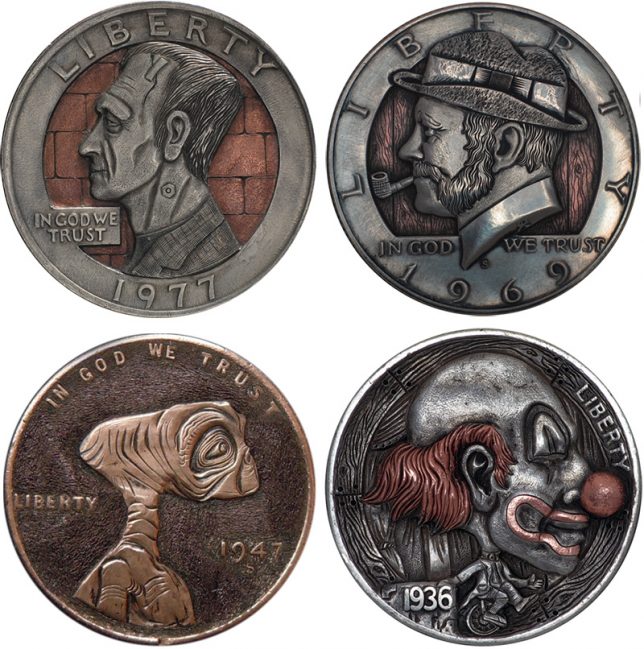
These works of art are literally made of money, yet worth more than the sum of their parts – but do they support or negate the argument that coins should be obsolete as currency? Artists use pennies, nickels, half dollars, Eurocents and other coins to craft murals, mosaics, sculptural busts and benches, or just carve into their faces, modifying them into pop culture icons like Frankenstein and E.T.

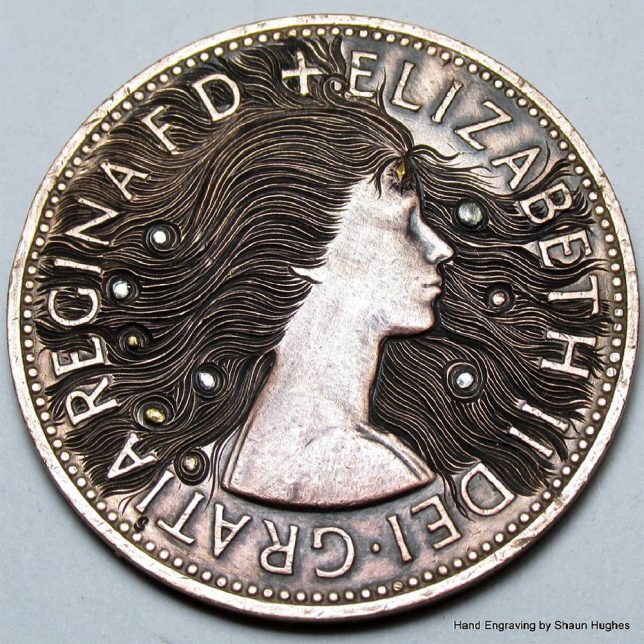
Hand-Engraved Coins by Shaun Hughes

coin-art-hughes-1

coin-art-hughes-2

coin-art-hughes-3

UK-based engraver Shaun Hughes etches decorative designs onto coin faces, embellishing therewith curlicue and floral patterns or adding flowing hair.

Hobo Nickels by Paolo Curcio

coin-art-hobo-nickels-1

coin-art-hobo-nickels-2

coin-art-hobo-nickels-3

coin-art-hobo-nickels-4

Following in the hobo nickel tradition, an inexpensive and highly portable art form involving the modificationn of coins, artist Paolo Curcio adorns a variety of coins with pop culture imagery, skulls and more, including the heads of clowns, Frankenstein and E.T.

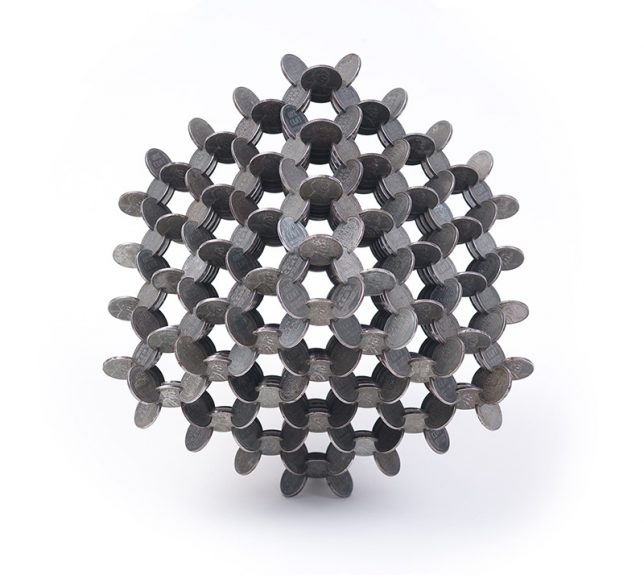
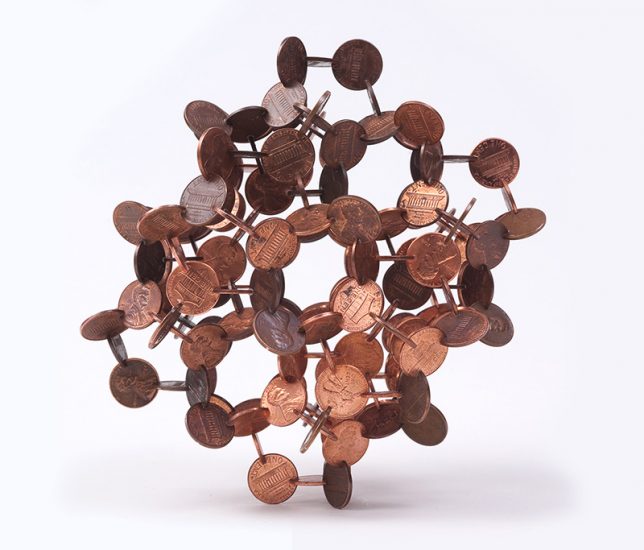
Geometric Coin Sculptures by Robert Wechsler

coin-art-geometric-sculptures-1

coin-art-geometric-sculptures-2

coin-art-geometric-sculptures-3

coin-art-geometric-sculptures-4

coin-art-wechsler-5

coin-art-wechsler-6

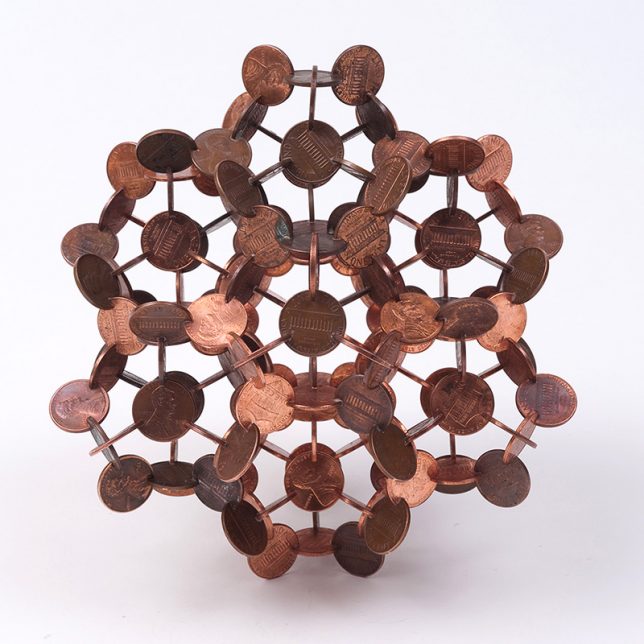
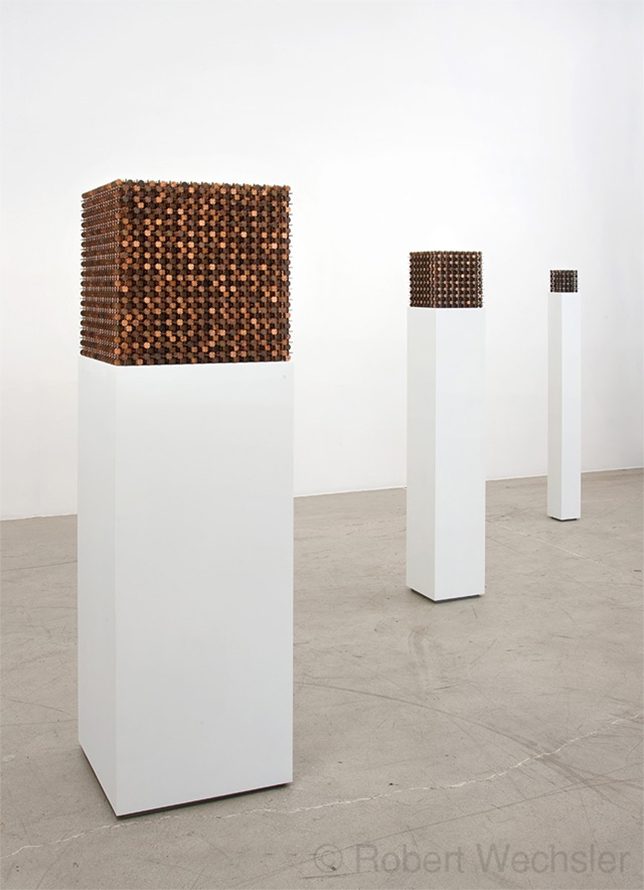
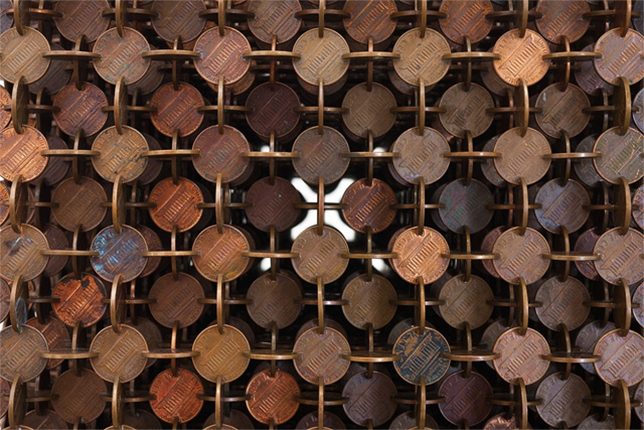
Artist Robert Wechsler cuts slits into coins that enable him to build complex three-dimensional sculptures, including a series for The New Yorker. The sculptures can consist of as few as four coins, up into the thousands.

Welded Euro Sculptures by Gabriel Rufete

coin-art-rufete-1

coin-art-rufete-2

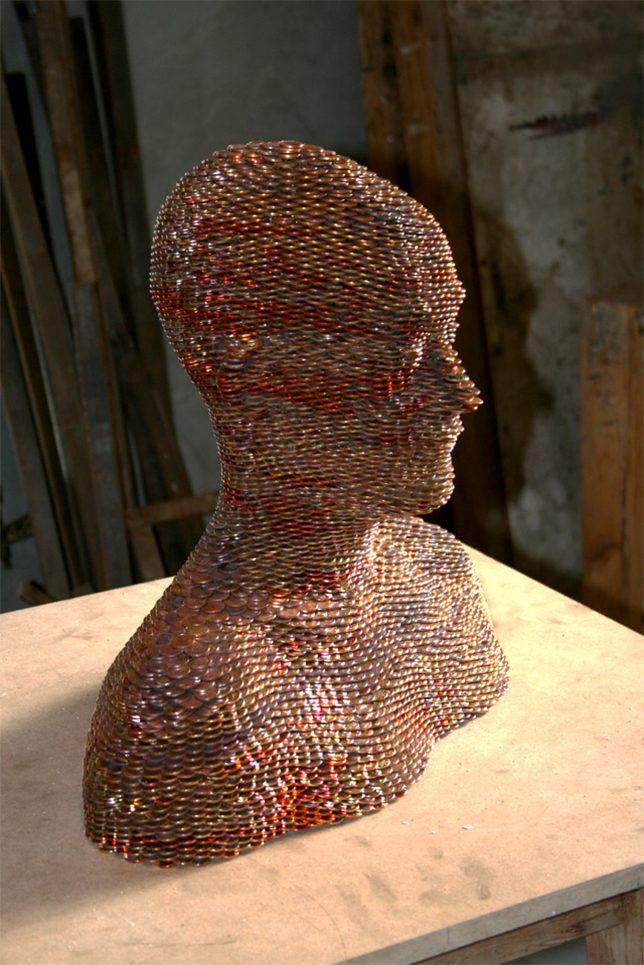
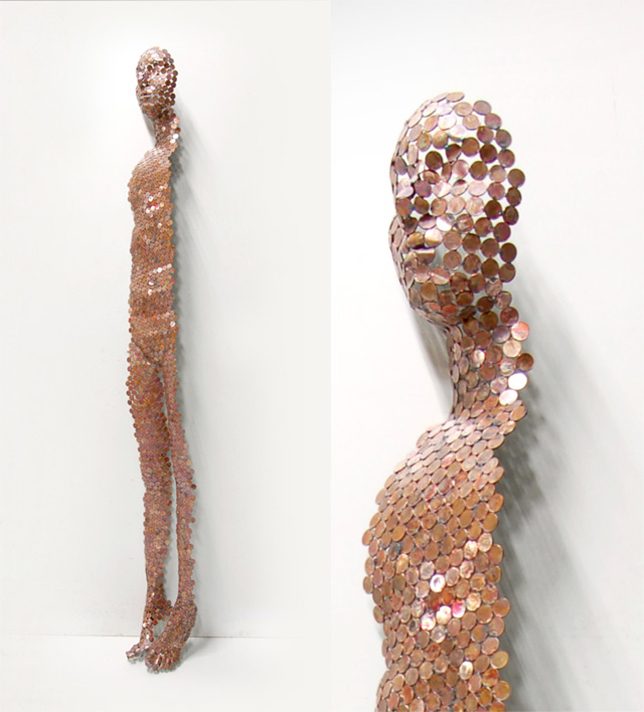
Whether stacked on top of each other or welded at their edges, coins provide the basis for surprisingly detailed sculptures of human forms by Gabriel Rufete.

Next Page – Click Below to Read More:
Creative Currency 33 Sculptural Works Of Art Made From Coins

Share on Facebook


[ By SA Rogers in Art & Sculpture & Craft. ]

[ WebUrbanist | Archives | Galleries | Privacy | TOS ]


WebUrbanist

 
Comments Off on Creative Currency: 33 Sculptural Works of Art Made From Coins

Posted in Creativity


Seeing Space in New Ways: 13 Creative Maps & Navigational Guides

03 Oct

[ By SA Rogers in Art & Drawing & Digital. ]

map-art-topographic-3

With the advancement of technology, the ways in which we perceive information have become increasingly visual, interactive and all around multi-dimensional – so why shouldn’t maps evolve to reflect it? These map concepts, installations and renderings in a variety of materials and forms let navigational data pop off the page into 3D creations, or blend the information with functional objects to tell a story.

3D Tube Map of London Made of Pipes

map-art-london-tube-1

map-art-london-tube-2

British designer Nick Fraser used a network of copper pipes on a black wall to create a map of London’s tube system, making the nickname literal. To differentiate the different lines, Fraser uses a series of colored washers.

Neon Subway Lights by Petr Koll

map-art-neon-1

map-art-neon-2

london_gif

Subway maps for various unnamed cities are rendered in vivid neon lights by designer Petr Koll for this fun series. What you can’t see in the still images is that the lines light up one at a time and then blink together.

‘Philadelphia Explained’ Installation Art by Paula Scher

map-art-philadeliphia

map-art-philadelphia-2

map-art-philadelphia-3

A hand-drawn map of Philadelphia is fitted to the interior surfaces of a gallery using dimensional modeling, immersing visitors in a navigational experience as “a personal reaction to information overload.” Famed designer Paula Scher worked with students at her alma mater, the Tyler School of Art, to create the installation.

Rijksmuseum Paper Pathfinder

map-art-paper-pathfinder-1

map-art-paper-pathfinder-3

How do you explain to visitors in clear visuals how they can navigate 8,000 objects spanning 800 years of art spread through 80 individual galleries in the same building? Graphic designer Marjin van Oosten came up with a refreshingly simple analog solution: a pop-up paper model of the building with color-coded and labeled ‘floors.’ It lets you see the whole building at once and physically hold a model of it in your hands to get a better idea of where things are.

3D Map of Tokyo’s Subway System

map-art-tokyo-subway-1

map-art-tokyo-subway-2

The surprising number of dips and turns in Tokyo’s subway system, hidden from sight, are revealed in this rollercoaster-like model by Takatsugu Kuriyama. Different colored liquids pulse through the various tubes to show movement in each line.

Next Page – Click Below to Read More:
Seeing Space In New Ways 13 Creative Maps Navigational Guides

Share on Facebook


[ By SA Rogers in Art & Drawing & Digital. ]

[ WebUrbanist | Archives | Galleries | Privacy | TOS ]


WebUrbanist

 
Comments Off on Seeing Space in New Ways: 13 Creative Maps & Navigational Guides

Posted in Creativity


Creative Live’s Photo Week starts tomorrow

26 Sep

Now that Photokina is over and we are impatiently waiting for the latest cameras and gear to ship, it’s a perfect time to hone up on our photography skills. Luckily, our friends at Creative Live are hosting their annual Photo Week this week, September 26 – 29.

Photo Week 2016 is four days of photo education, brought to you through 24 live classes taught by top photographers and educators. It is geared toward people who are comfortable with the basics of photography and are looking to expand their knowledge base into more advanced techniques.

Some of the classes we are really looking forward to include Brandon Stanton (the photographer behind the popular photo blog Humans of New York) discussing how his experiences have shaped his work as a storyteller, Vincent Laforet sharing ideas for how to move your business from stills to video, Jared Platt giving tips on a whole range of post-processing topics, and Chase Jarvis opening up about his experiences in the photo industry.

As with all Creative Live classes, you can watch the live classes online for free. If watching the live class won’t fit into your schedule, you can purchase on-demand access so that you can watch it on your own time. The price for the entire week (including all 24 classes) is normally US $ 499, but they are offering it for US $ 199 for a limited time.

But there’s more! DPReview readers can use the discount code ‘DPR10‘ to receive 10% off of any Creative Live class through December 31, 2016.

Check out the Photo Week schedule to see what’s available. What looks interesting to you?

Articles: Digital Photography Review (dpreview.com)

 
Comments Off on Creative Live’s Photo Week starts tomorrow

Posted in Uncategorized


Wet Look: 12 More Cool Creative Water Tanks & Towers

26 Sep

[ By Steve in Art. ]

water-tanks-towers-1a

Due to their sizes and shapes, water tanks and towers lend themselves to artistic embellishment as these dozen creative examples refreshingly illustrate.

water-tanks-towers-1c

water-tanks-towers-1b

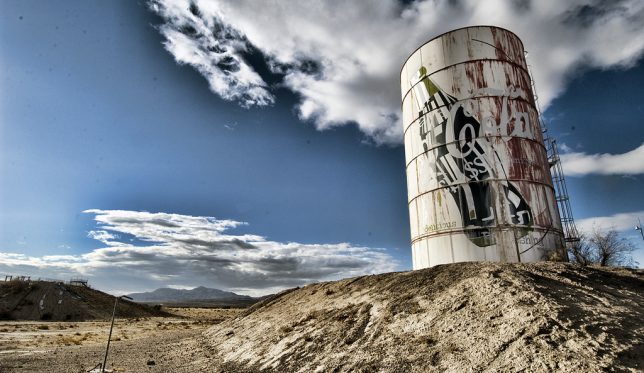
A waterpark? In the middle of MY Mojave Desert? It’s more likely than you think… or at least it was, before the Lake Dolores Waterpark (later the Rock-A-Hoola Waterpark and then the Discovery Waterpark) circled the drain for the final time in 2004. The water used to “power” the park(s) came from underground springs fed by the Mojave Aquifer and was stored in an enormous water tower shaped like – and painted to resemble – a Coca-Cola can.

water-tanks-towers-1d

While much of the park has been vandalized and scavenged for metal, the water tank can blame its current tattered & faded state on the Mojave’s blistering desert sun. Kudos to Flickr user Hans Proppe (shadowplay) and Imgur user loganbush for snapping the eerie and evocative images above.

Leggo My Necco

water-tanks-towers-2a

water-tanks-towers-2b

The circa-1927 New England Confectionery Company (NECCO, for short) building in Cambridge, MA is now occupied by offices of Swiss-based pharmaceutical firm Novartis, who graciously repainted the iconic Necco-wafer water tower in 1997. Flickr user Jill Robidoux (jylcat) snapped the tank on January 1st of 2003 and it’s a good thing she did: Novartis de-necco’d the tank in 2004 by painting it over in a boring-by-comparison pharma theme.

Behind The 8-Ball

water-tanks-towers-3a

water-tanks-towers-3b

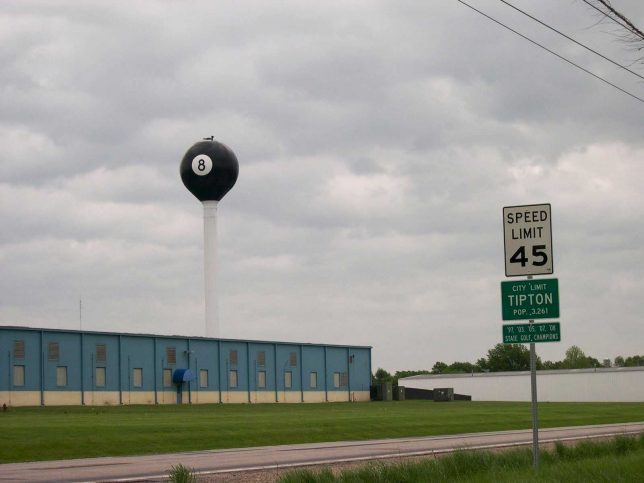
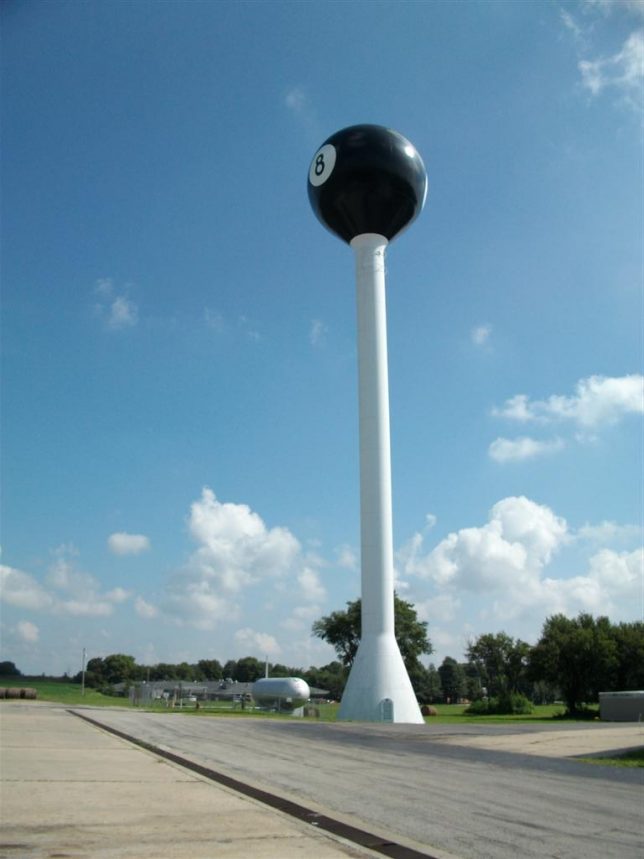
The giant 8-ball water tower in Tipton, Missouri came and went like a Fast Eddie Felson pool shot in the dark… and then it came back again, this time to stay. According to the Jefferson City News Tribune, in 1968 the water tower was creatively dressed in a billiard-ball theme by its owners, the Fischer Pool Table company. The water tower was ceded to the city and painted all-white after Fischer closed in 1977 but Tiptonians wanted their landmark back so in 1999, the tower was restored to its previous 8-ball livery. Minnesota Fats is likely looking down and smiling.

Cone Job

water-tanks-towers-4

The only paint on the Grand Central Water Tower in Johannesburg, South Africa, is the aqua blue corporate corporate logo near the top… anything else would be superfluous. The curious conical tower was built in 1997 and stands 40m (131.2 ft) tall, assuming it hasn’t already tipped over.

Next Page – Click Below to Read More:
Wet Look 12 More Cool Creative Water Tanks Towers

Share on Facebook


[ By Steve in Art. ]

[ WebUrbanist | Archives | Galleries | Privacy | TOS ]


WebUrbanist

 
Comments Off on Wet Look: 12 More Cool Creative Water Tanks & Towers

Posted in Creativity


Creative Crosswalks: Artist Adds Color to Brighten Crossings for Students

19 Sep

[ By WebUrbanist in Art & Street Art & Graffiti. ]

creative crosswalks

Part art project and part urban safety experiment, this series of Funnycross installations in Madrid have been positioned outside a cross section of city schools.

funnycross installation art

art crosswalk

Designed by Bulgarian artist Christo Guelov (images by Rafael Perez Martinez, the creative crossings weave diamonds, circles and other shapes into the visual language of existing horizontal wide lines.

colorful creatie sidewalk crossings

sidewalk art school

The brightly-colored interventions are designed to enliven the streets beyond conventional sign-posting while their eye-catching patterns are aimed at making the crossing points more visible.

dots circle cross

artistic crossing pattern

The artist also aims to raise larger questions about the role of color in cities, where infrastructure is often monochromatic, systematic and ultimately dull.

crosswalk geometries

“Opening up new horizons for human experience has always been the main source of creative energy, both in science and in art,” says guelov. “To inquire into something apparently non-existent or invisible to others and to provide it with real presence has always been the natural mechanism to generate usefulness for art objects.”

Share on Facebook


[ By WebUrbanist in Art & Street Art & Graffiti. ]

[ WebUrbanist | Archives | Galleries | Privacy | TOS ]


WebUrbanist

 
Comments Off on Creative Crosswalks: Artist Adds Color to Brighten Crossings for Students

Posted in Creativity


4 Tips for Using for Live View to Get Sharper and More Creative Images

02 Sep

Live View versus optical viewfinder on your DSLR, pros and cons?
Pascal

By Pascal

If you shoot with a DSLR you probably use the same method for taking pictures that most people do, holding the camera up to your eye and looking through the viewfinder before snapping the shutter button.

This tried-and-true method has several benefits, including letting you see precisely what you are going to take a picture of before you click the button. Also, allowing you to track fast-moving subjects without any lag time, and even stabilizing the camera due to the fact that it’s being held up against your face instead of away from your body.

Getting this shot using the optical viewfinder wouldn't have been impossible, but it would have been much more difficult.

Getting this shot using the optical viewfinder wouldn’t have been impossible, but it would have been much more difficult.

However, the Live View function that is built into most DSLR cameras has a few tricks up its sleeve that can greatly benefit you as well. While not useful in ever single photographic situation, Live View certainly is worth a second look if you are the type of person who normally casts it aside in favor of the traditional viewfinder.

#1 Make sure your subject is perfectly focused

When you look through the optical viewfinder on your camera, you will see an array of rectangles or dots which each represent points on which your camera can focus. This is a result of your camera’s phase detect focusing system which is present in nearly every DSLR. While it usually works just fine, there are situations in which it can present a bit of a problem.

For one, the subject on which you are focusing can sometimes be outside the boundary of your focusing points, which makes it quite difficult to get it tack sharp even with something like the focus-and-recompose technique. Also, even with using the built-in focusing points it’s not always a guarantee that your subject will be completely in focus, especially if it is very far away like when shooting landscapes or scenic vistas.

Live View helped me get this flower focused just how I wanted, and instead of laying in the mud I used the flip-out screen to help me compose the picture.

Live View helped me get this flower focused just how I wanted, and instead of laying in the mud I used the flip-out screen to help me compose the picture.

Zoom-in on Live View

Live View is the magic bullet in these situations, as you can use it not just to frame your shot, but to zoom in close on a specific area to make sure it is focused. Think of this as though you were holding a magnifying glass up to your camera’s viewfinder when focusing on your subject, and using that as the basis for judging whether it is tack sharp or just a bit fuzzy. This obviously works best if your camera is firmly attached to a tripod, but even if you just set it on a solid surface such as a shelf, rock, post, or other object, you should be fine.

Live View can be a good way to make sure your subjects are tack sharp and perfectly focused.

Live View can be a good way to make sure your subjects are tack sharp and perfectly focused.

Each camera handles the zoom-in function a bit differently, but for most DSLRs there will be an option in one of the menus to enable a button on your camera to zoom in during Live View, and even set the percentage of zoom which tells you how much it will magnify the image. If your subject is not moving, and neither is your camera, this technique is one of the best possible ways to make sure everything is tack sharp precisely how you want it to be (using manual focus in this instance can be helpful also).

#2 See previews of camera effects in realtime

One fun trick that many DSLR manufacturers have added to their cameras is the ability to do various types of effects like selective coloring, miniature, and black-and-white, among many others. Think of them as though you are adding Instagram filters, but in realtime, as you are taking your pictures instead of on your phone afterwards.

Using Live View as you activate various scene modes is a fun way to experiment with different types of creative image effects. It also has the added bonus of allowing you to play around and see how the options affect your photography before you even click the shutter.
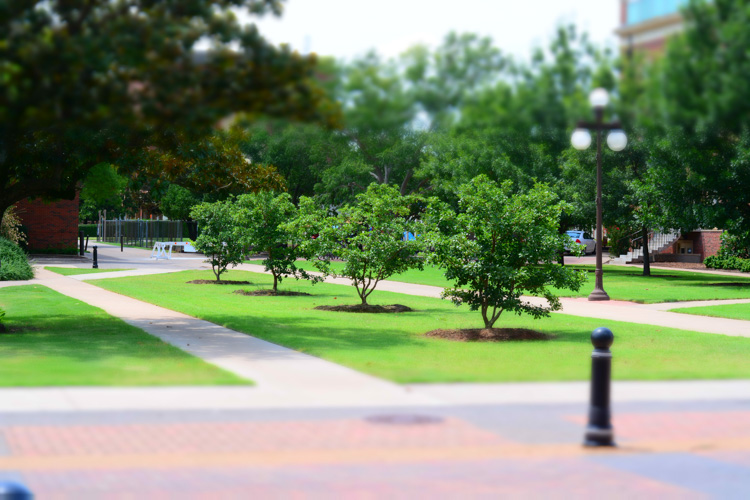
A common camera effect is "miniature," which mimics a tilt-shift lens. It's fun to play around with these built-in effects using Live View which shows you a preview of what the final image will look like as you compose it.

A common camera effect is “miniature,” which mimics a tilt-shift lens. It’s fun to play around with these built-in effects using Live View, which shows you a preview of what the final image will look like as you compose it.

Some photographers frown on this type of creative expression, and prefer to leave these effects and scene modes to Photoshop, where things can be endlessly controlled, changed, and tweaked to perfection (often ad nauseam). But, my own personal stance is, if you’re making pictures you enjoy by using simple in-camera effects, then why not keep doing it?

Some of the built-in modes are a little cheesier than others, and you usually can’t shoot in RAW format. But using Live View to preview the different sorts of photography effects you can explore, is a great way to try something new and add a little spark back to your creative juices at the same time.

#3 Depth of Field preview

This one piggybacks pretty well off of the previous item, but I wanted to list it separately because it is so useful on its own. When you change the aperture and focal length of your lens, you are also changing the depth of field, or area that is in focus. It’s a difficult concept to understand since it involves several different variables, including how close you are to your subject and how far away is the background.

This confusion can be compounded by the fact that your optical viewfinder doesn’t really show you what to expect when you click the shutter button. Some DSLR cameras have a Depth of Field Preview button that allows you to close down the aperture and see what it will look like when you take a photo (it also gets dark if you use a small aperture), but another way to do this is by using Live View.

It really helped to see a preview of the depth of field by using Live View when composing this image.

It really helped to see a preview of the depth of field by using Live View when composing this image.

How it works

When you look through the viewfinder on a DSLR camera you are seeing through the lens while it is opened to its widest possible value. But, when you click over into Live View the aperture blades close down to the value you’ve specified, or that which the camera thinks is appropriate, depending on the shooting mode you are using.

This makes it possible to see precisely what the picture will look like when you press the shutter button. So, if you focus on an object while in Live View, you will see a more accurate representation of the depth of field than looking through the viewfinder. This is incredibly useful when shooting macro photos, because it’s difficult to understand just what is in focus and what is not unless you can see it yourself using Live View.

Depth of field can be extraordinarily thin when shooting macro pictures, and using Live View to see a preview of the final result is a good way to get the photo to show up just how you want.

Depth of field can be extraordinarily thin when shooting macro pictures, and using Live View to see a preview of the final result is a good way to get the photo to show up just how you want.

#4 Tap to focus

One final trick that Live View offers, is the ability to actually use it for the act of focusing itself. As more cameras start implementing touch screens, manufacturers like Canon have started allowing users to tap on the screen itself to actually focus the camera, much in the same way you do on your mobile phone.

While this feature is not available on all DSLR cameras, and though some with touch screens don’t have focusing enabled, if you do have a camera that allows you to tap-to-focus you might find it incredibly useful and well-worth your time. This won’t do you any good if you are shooting sports, action, or wedding photos, since the touch-based focusing isn’t as quick. But if you are out shooting casually it’s something you might really enjoy trying.

It even has some advantages over traditional viewfinder-based focusing if you are shooting at extreme angles, such as very low to the ground. More and more cameras are offering flip-out screens so you can swivel it, instead of crouching down, and then tap it to lock focus.

If you have a touchscreen, using Live View can be a great way to make sure your subject is focused exactly how you want by simply tapping the area you want to be in focus.

If you have a touchscreen, using Live View can be a great way to make sure your subject is focused exactly how you want by simply tapping the area you want to be in focus.

Summary

These are just a few of the options available to you if you use Live View on a DSLR. If you are more of a traditional shooter who prefers the optical viewfinder I hope you at least give Live View a chance. It’s not going to be the best option in every situation, but you may find it to be more compelling and useful than you realize.

If you do like shooting in Live View and have your own tips to share, please leave your thoughts in the comments below!

googletag.cmd.push(function() {
tablet_slots.push( googletag.defineSlot( “/1005424/_dPSv4_tab-all-article-bottom_(300×250)”, [300, 250], “pb-ad-78623” ).addService( googletag.pubads() ) ); } );

googletag.cmd.push(function() {
mobile_slots.push( googletag.defineSlot( “/1005424/_dPSv4_mob-all-article-bottom_(300×250)”, [300, 250], “pb-ad-78158” ).addService( googletag.pubads() ) ); } );

The post 4 Tips for Using for Live View to Get Sharper and More Creative Images by Simon Ringsmuth appeared first on Digital Photography School.


Digital Photography School

 
Comments Off on 4 Tips for Using for Live View to Get Sharper and More Creative Images

Posted in Photography


How to Tell a Story with Portraits by Using Creative Composition

21 Aug

In this article, we will explore new ways of using composition and creative framing to tell a story in your portraits. We’ll do so by understanding the marvellous ways our brain (as viewers) construct a sense of story.

The common principle of the techniques I will describe here, is that they are all based on our mind’s ability to fill in missing gaps of information. A skill that helps us survive in a world of uncertainty.

F11A2018

Two things to note about creativity before we start

Skill, is not just a talent: Just like working on the flexibility of a muscle, I believe we can work on our creativity, with the “muscle” being our vision.

Being creative for the purpose of being creative: Creative compositions should be a vehicle for a purpose – an emotion or a story you want to evoke in the image. If you choose to add creativity to your images, just to be more creative, it will be an empty gimmick.

Half close up portrait – a full story

By showing only half of a close-up portrait, you stimulate the viewer’s mind and almost force it to delve into the image. We do so by activating their mind’s need to fill in gaps of missing information. This ability is rooted in us since ancient times, from which we evolved to understand that the two blurry spots between the trees, could be the hidden face of a tiger.

F11A6628

Good to know:

For best results, you can practice framing this kind of composition by using the crop tool in your editing software. Once you become comfortable with this technique (and framing); it will be easier to achieve a “half close-up portrait” in the field, without the need to crop it in the post-processing stage.

This kind of framing is like an exclamation mark, which one cannot ignore. Therefore, use it only on the most interesting faces, and not on every portrait.

F11A8534

Environmental portrait – a person in context

For me, this the most challenging and rewarding portrait framing style, the environmental portrait. This shows not only the person, which is the hero of your image, but also his or her environment: home, work place, country, etc. By doing so, you use the mind’s ability to conclude and understand a situation by connecting pieces of information.

14 the sleep

Good to know:

The biggest challenge in this type of composition is the balance between the main figure (hero) and environment. Keep in mind that the main figure must be dominant, and not overtaken by the background. Use light, color, and sharpness to make your subject significant.

Using a wide lens (below 50mm) is recommended for the environmental portrait framing, as it will allow you to capture the environment of your hero, even in small spaces.

F11A4931

Detail portrait – telling the story with small details

Like with the half portrait technique, in the detail framing we use the brain’s ability to fill in the gaps, by showing only a small fraction of the entire story. For a good detail shot, choose some with a connection to your subject. It can be a connection of similarity or difference. For example: take a close-up shot of his or her hands, shoes, the reading books on the shelf, the subject’s regular chair or smoking pipe, you name it! As long as this object, represent something which is bigger than the object itself.

12970960 1147522381976706 3379301587067512747 o

Good to know:

A good place to start is by examining your subject from head To toe. Looking for anything that other people might miss in that person. Did you spot anything special? Like a unique piece jewelry, a tattoo, or just a hole in their shoe.

Some of my best ideas came from my subjects. Ask your subject to show you an object to which he or she feel a strong connection. You do not even need to have any human presence in the detail shot, as long as the object represents or tell us something about its owner.

IMG 4005

Kuleshov effect – creating a meaning by interaction

In this technique, based on the groundbreaking experiment by the Soviet filmmaker Lev Kuleshov, we will use the brain’s ability to derive meaning from the interaction. Kuleshov demonstrated that the audience constructs the story not only by the content, but also by the order in which the images appear, and the connection between them.

In the experiment, Kuleshov used two different shots, which he put in sequence one after the other. The first shot, a close-up shot of the face of silent film actor Ivan Ilyich Mozzhukhin, remained the same throughout the experiment, while the second shot was replaced with every round of projection; a plate of soup, a dead young girl, a woman on a divan (sofa).

The audience praised the actor’s ability to express different feelings such as sadness and even hunger, using only his facial expressions, without knowing that they watched the same shot over and over, and the only thing that was changed was the second image.

Page 18

To use this effect in your work, just place two images side by side and try to evoke a connection between them. In the example, I combined between the portrait of Net, which I did with the half close-up composition, with an image of a swirling sea. Where does it take you?

Good to know:

You will be amazed by the power of creative composition. Challenge your audience. Don’t be afraid to create a connection which is too complicated to understand.

A good creative exercise which you can do is by collaborating with a different photographer. You will provide the first image, he or she will provide the second. In there you will have a connection, not only between the two side-by-side images but by two different points of view.

The author would like to thank Nicholas Orloff for his assistant in writing this article.

googletag.cmd.push(function() {
tablet_slots.push( googletag.defineSlot( “/1005424/_dPSv4_tab-all-article-bottom_(300×250)”, [300, 250], “pb-ad-78623” ).addService( googletag.pubads() ) ); } );

googletag.cmd.push(function() {
mobile_slots.push( googletag.defineSlot( “/1005424/_dPSv4_mob-all-article-bottom_(300×250)”, [300, 250], “pb-ad-78158” ).addService( googletag.pubads() ) ); } );

The post How to Tell a Story with Portraits by Using Creative Composition by Oded Wagenstein appeared first on Digital Photography School.


Digital Photography School
 
Comments Off on How to Tell a Story with Portraits by Using Creative Composition

Posted in Photography


Simply Creative Use of Space: 14 Modern Japanese House Designs

15 Aug

[ By SA Rogers in Architecture & Houses & Residential. ]

garage home

High-density neighborhoods with heavy foot traffic and tiny plots of land in Japan force architects to come up with some clever space-saving, privacy-protecting residential layouts. Strategically placed windows, curving floors, translucent panels and hidden terraces are among the innovative tricks in play to maximize daylight and views of the sky while dissuading peeping toms and making the most of every inch of available space.

Compact House by Takuro Yamamoto

compact house 1

compact house 2

compact house 3

compact house 4

compact house 5

For a client who wanted plenty of outdoor space in a dense Tokyo neighborhood without sacrificing privacy or building a big wall around the property, architect Takuro Yamamoto faced every window in this three-story home toward the wall of an open-ended, box-shaped terrace. “Through the process of designing this house, we tried to prove that having a rich private external space was important for making a crucial difference in the quality of life inside the house, as well as obtaining various possibilities of external activity. Considering that the client’s original request was having a big terrace for doing yoga freely under the sun, connecting the terrace to the living room and the bedroom with big windows was the best way to offer fresh air and daylight to the internal spaces – like having respiratory organ to let the house breathe.”

Re-Slope House by Tomohiro Hata

re-slope house 1

re-slope house 2

re-slope house 3

re-slope house 4

The massive windows on either side of this house on a slope by Tomohiro Hata are strategically located to direct views to the sky and a small back garden, encouraging cross-breezes and bringing slanted rays of light straight through the home. A wooden insert delineates the interior spaces, creating platforms, stairs and small rooms, so the residents can enjoy varying degrees of daylight and privacy.

Daylight Catcher House by La Riviére Frank Architects

daylight catcher house

daylight catcher house 2

daylight catcher house 3

daylight catcher house 4

Four ‘ears’ sticking out of the roof of this house act as daylight catchers for the interior, keeping it from becoming too dark for a client who wanted maximum privacy. The home is set up to be wheelchair-accessible with space for gardens and parking spots for two cars while staying at a single story for earthquake protection, all on a small budget. The four vertical windows allow daylight to diagonally penetrate the home, blocking views of the interior from outside while enabling views of the sky from within.

Boko Deko Curved Floor House by Mitsuharu Kojima Architects

boko deko house 1

boko deko house 2

boko deko house 3

boko deko house 4

Soundproof walls and one big window facing the sky protect this home from noisy neighbors and a busy street. Mitsuharu Kojima Architects came up with the highly unusual solution of a curving, green carpet-covered floor that gently slopes toward the wall of windows. The residents can choose to move their furniture around this space freely, lounging in the sun or staying in the shade. Storage is built into two walls full of cabinets and hidden rooms on either side, including loft-like lounge spaces.

Light Grain House by Yoshiaki Yamashita

light grain house

light grain house 2

light grain house 3

light grain house 4

A perforated steel facade lets little dots of light into the otherwise windowless front of this home in Osaka by Yoshiaki Yamashita. The clients, a young couple with a child, wanted natural light and ventilation as well as a high level of privacy. Two external terraces hidden within the outer envelope of the house act as giant skylights for the middle level, where the living space is located.

Next Page – Click Below to Read More:
Simply Creative Use Of Space 14 Modern Japanese House Designs

Share on Facebook


[ By SA Rogers in Architecture & Houses & Residential. ]

[ WebUrbanist | Archives | Galleries | Privacy | TOS ]


WebUrbanist

 
Comments Off on Simply Creative Use of Space: 14 Modern Japanese House Designs

Posted in Creativity


Close Calls: 12 Breathtakingly Creative Garage Doors

07 Aug

[ By Steve in Art & Street Art & Graffiti. ]

FINAL1

A garage door’s main function is keeping what’s inside safe from prying eyes but these creative garage doors keep all eyes focused on the outside.

creative-garages-1a

creative-garages-1b

creative-garages-1c

Sometimes great garage doors aren’t planned, they end up being thrust upon us. Such was the case of a corrugated garage door belonging to Imgur user elusive92. When the door’s owner discovered some unsightly and unskilled graffiti had disgraced his garage door one May morning in 2013, he didn’t get mad, he got even… even better.

creative-garages-1d

creative-garages-1e

creative-garages-1f

Taking the old adage “when life gives you lemons, make lemonade” to heart, elusive92 hired local graffiti artist Lake13 to not only cover the anonymous scrawling but replace it with a work of graffiti art – with the emphasis on the art part. We think he succeeded rather well, don’t you?

Community Communion

creative-garages-2a

“Every time I drive by this house, I marvel,” admits Flickr user William Keckler., who titles his photo taken in early December of 2012 “The Holy Sacrament of the Garage Door”. No telling what’s parked inside… perhaps the Popemobile.

“To The Broke-Ass Batcave!”

creative-garages-3a

creative-garages-3b

Looking to produce an ultra-low-budget Batman flick? Well look no further than South St. in Philadelphia, where one creatively painted corrugated roll-up garage door says so much with just two colors. Eric from Geekadelphia snapped the bargain-basement Batcave door way back in July of 2008 – let’s hope it hasn’t been painted over by Alfred since then.

Arts Of The West

creative-garages-4a

The above creative composition was included in a portfolio of garage doors by RC Cabinets & Closets as an example of a “garage door decal”. We’ve seen garage door decals and frankly, this ain’t no garage door decal. The above tableau doesn’t appear to be a decal at all – note how the painted portions extend off the garage door itself. Odds are this exquisite door is a unique creation as well.

Next Page – Click Below to Read More:
Close Calls 12 Breathtakingly Creative Garage Doors

Share on Facebook


[ By Steve in Art & Street Art & Graffiti. ]

[ WebUrbanist | Archives | Galleries | Privacy | TOS ]


WebUrbanist

 
Comments Off on Close Calls: 12 Breathtakingly Creative Garage Doors

Posted in Creativity